Change 'initiaive' into 'initiative', 'remainig' into 'remaining'
and change 'exected' into 'expected'.

Signed-off-by: Bart Van Assche <bvanassche@acm.org>
Signed-off-by: Robert Love <robert.w.love@intel.com>
Pull x86 spinlock changes from Ingo Molnar:
 "The biggest change here are paravirtualized ticket spinlocks (PV
  spinlocks), which bring a nice speedup on various benchmarks.

  The KVM host side will come to you via the KVM tree"

* 'x86-spinlocks-for-linus' of git://git.kernel.org/pub/scm/linux/kernel/git/tip/tip:
  x86/kvm/guest: Fix sparse warning: "symbol 'klock_waiting' was not declared as static"
  kvm: Paravirtual ticketlocks support for linux guests running on KVM hypervisor
  kvm guest: Add configuration support to enable debug information for KVM Guests
  kvm uapi: Add KICK_CPU and PV_UNHALT definition to uapi
  xen, pvticketlock: Allow interrupts to be enabled while blocking
  x86, ticketlock: Add slowpath logic
  jump_label: Split jumplabel ratelimit
  x86, pvticketlock: When paravirtualizing ticket locks, increment by 2
  x86, pvticketlock: Use callee-save for lock_spinning
  xen, pvticketlocks: Add xen_nopvspin parameter to disable xen pv ticketlocks
  xen, pvticketlock: Xen implementation for PV ticket locks
  xen: Defer spinlock setup until boot CPU setup
  x86, ticketlock: Collapse a layer of functions
  x86, ticketlock: Don't inline _spin_unlock when using paravirt spinlocks
  x86, spinlock: Replace pv spinlocks with pv ticketlocks
Get rid of MLDV2_MRC and use our new macros for mantisse and
exponent to calculate Maximum Response Delay out of the Maximum
Response Code.

Signed-off-by: Daniel Borkmann <dborkman@redhat.com>
Cc: Hannes Frederic Sowa <hannes@stressinduktion.org>
Acked-by: Hannes Frederic Sowa <hannes@stressinduktion.org>
Signed-off-by: David S. Miller <davem@davemloft.net>
i) RFC3810, 9.2. Query Interval [QI] says:

   The Query Interval variable denotes the interval between General
   Queries sent by the Querier. Default value: 125 seconds. [...]

ii) RFC3810, 9.3. Query Response Interval [QRI] says:

  The Maximum Response Delay used to calculate the Maximum Response
  Code inserted into the periodic General Queries. Default value:
  10000 (10 seconds) [...] The number of seconds represented by the
  [Query Response Interval] must be less than the [Query Interval].

iii) RFC3810, 9.12. Older Version Querier Present Timeout [OVQPT] says:

  The Older Version Querier Present Timeout is the time-out for
  transitioning a host back to MLDv2 Host Compatibility Mode. When an
  MLDv1 query is received, MLDv2 hosts set their Older Version Querier
  Present Timer to [Older Version Querier Present Timeout].

  This value MUST be ([Robustness Variable] times (the [Query Interval]
  in the last Query received)) plus ([Query Response Interval]).

Hence, on *default* the timeout results in:

  [RV] = 2, [QI] = 125sec, [QRI] = 10sec
  [OVQPT] = [RV] * [QI] + [QRI] = 260sec

Having that said, we currently calculate [OVQPT] (here given as 'switchback'
variable) as ...

  switchback = (idev->mc_qrv + 1) * max_delay

RFC3810, 9.12. says "the [Query Interval] in the last Query received". In
section "9.14. Configuring timers", it is said:

  This section is meant to provide advice to network administrators on
  how to tune these settings to their network. Ambitious router
  implementations might tune these settings dynamically based upon
  changing characteristics of the network. [...]

iv) RFC38010, 9.14.2. Query Interval:

  The overall level of periodic MLD traffic is inversely proportional
  to the Query Interval. A longer Query Interval results in a lower
  overall level of MLD traffic. The value of the Query Interval MUST
  be equal to or greater than the Maximum Response Delay used to
  calculate the Maximum Response Code inserted in General Query
  messages.

I assume that was why switchback is calculated as is (3 * max_delay), although
this setting seems to be meant for routers only to configure their [QI]
interval for non-default intervals. So usage here like this is clearly wrong.

Concluding, the current behaviour in IPv6's multicast code is not conform
to the RFC as switch back is calculated wrongly. That is, it has a too small
value, so MLDv2 hosts switch back again to MLDv2 way too early, i.e. ~30secs
instead of ~260secs on default.

Hence, introduce necessary helper functions and fix this up properly as it
should be.

Introduced in 06da92283 ("[IPV6]: Add MLDv2 support."). Credits to Hannes
Frederic Sowa who also had a hand in this as well. Also thanks to Hangbin Liu
who did initial testing.

Signed-off-by: Daniel Borkmann <dborkman@redhat.com>
Cc: David Stevens <dlstevens@us.ibm.com>
Cc: Hannes Frederic Sowa <hannes@stressinduktion.org>
Acked-by: Hannes Frederic Sowa <hannes@stressinduktion.org>
Signed-off-by: David S. Miller <davem@davemloft.net>
Pull x86 SMAP fixes from Ingo Molnar:
 "Fixes for Intel SMAP support, to fix SIGSEGVs during bootup"

* 'x86-smap-for-linus' of git://git.kernel.org/pub/scm/linux/kernel/git/tip/tip:
  Introduce [compat_]save_altstack_ex() to unbreak x86 SMAP
  x86, smap: Handle csum_partial_copy_*_user()
Pull x86 RAS changes from Ingo Molnar:
 "[ The reason for drivers/ updates is that Boris asked for the
    drivers/edac/ changes to go via x86/ras in this cycle ]

  Main changes:

   - AMD CPUs:
      . Add ECC event decoding support for new F15h models
      . Various erratum fixes
      . Fix single-channel on dual-channel-controllers bug.

   - Intel CPUs:
      . UC uncorrectable memory error parsing fix
      . Add support for CMC (Corrected Machine Check) 'FF' (Firmware
        First) flag in the APEI HEST

   - Various cleanups and fixes"

* 'x86-ras-for-linus' of git://git.kernel.org/pub/scm/linux/kernel/git/tip/tip:
  amd64_edac: Fix incorrect wraparounds
  amd64_edac: Correct erratum 505 range
  cpc925_edac: Use proper array termination
  x86/mce, acpi/apei: Only disable banks listed in HEST if mce is configured
  amd64_edac: Get rid of boot_cpu_data accesses
  amd64_edac: Add ECC decoding support for newer F15h models
  x86, amd_nb: Clarify F15h, model 30h GART and L3 support
  pci_ids: Add PCI device ID functions 3 and 4 for newer F15h models.
  x38_edac: Make a local function static
  i3200_edac: Make a local function static
  x86/mce: Pay no attention to 'F' bit in MCACOD when parsing 'UC' errors
  APEI/ERST: Fix error message formatting
  amd64_edac: Fix single-channel setups
  EDAC: Replace strict_strtol() with kstrtol()
  mce: acpi/apei: Soft-offline a page on firmware GHES notification
  mce: acpi/apei: Add a boot option to disable ff mode for corrected errors
  mce: acpi/apei: Honour Firmware First for MCA banks listed in APEI HEST CMC
The kmalloc* functions of all slab allcoators are similar now so
lets move them into slab.h. This requires some function naming changes
in slob.

As a results of this patch there is a common set of functions for
all allocators. Also means that kmalloc_large() is now available
in general to perform large order allocations that go directly
via the page allocator. kmalloc_large() can be substituted if
kmalloc() throws warnings because of too large allocations.

kmalloc_large() has exactly the same semantics as kmalloc but
can only used for allocations > PAGE_SIZE.

Signed-off-by: Christoph Lameter <cl@linux.com>
Signed-off-by: Pekka Enberg <penberg@kernel.org>
The current VFIO_DEVICE_RESET interface only maps to PCI use cases
where we can isolate the reset to the individual PCI function.  This
means the device must support FLR (PCIe or AF), PM reset on D3hot->D0
transition, device specific reset, or be a singleton device on a bus
for a secondary bus reset.  FLR does not have widespread support,
PM reset is not very reliable, and bus topology is dictated by the
system and device design.  We need to provide a means for a user to
induce a bus reset in cases where the existing mechanisms are not
available or not reliable.

This device specific extension to VFIO provides the user with this
ability.  Two new ioctls are introduced:
 - VFIO_DEVICE_PCI_GET_HOT_RESET_INFO
 - VFIO_DEVICE_PCI_HOT_RESET

The first provides the user with information about the extent of
devices affected by a hot reset.  This is essentially a list of
devices and the IOMMU groups they belong to.  The user may then
initiate a hot reset by calling the second ioctl.  We must be
careful that the user has ownership of all the affected devices
found via the first ioctl, so the second ioctl takes a list of file
descriptors for the VFIO groups affected by the reset.  Each group
must have IOMMU protection established for the ioctl to succeed.

Signed-off-by: Alex Williamson <alex.williamson@redhat.com>
Solution:
=========

- Synchronize linux's `include/uapi/linux/in6.h'
  with glibc's `inet/netinet/in.h'.
- Synchronize glibc's `inet/netinet/in.h with linux's
  `include/uapi/linux/in6.h'.
- Allow including the headers in either other.
- First header included defines the structures and macros.

Details:
========

The kernel promises not to break the UAPI ABI so I don't
see why we can't just have the two userspace headers
coordinate?

If you include the kernel headers first you get those,
and if you include the glibc headers first you get those,
and the following patch arranges a coordination and
synchronization between the two.

Let's handle `include/uapi/linux/in6.h' from linux,
and `inet/netinet/in.h' from glibc and ensure they compile
in any order and preserve the required ABI.

These two patches pass the following compile tests:

cat >> test1.c <<EOF
int main (void) {
  return 0;
}
EOF
gcc -c test1.c

cat >> test2.c <<EOF
int main (void) {
  return 0;
}
EOF
gcc -c test2.c

One wrinkle is that the kernel has a different name for one of
the members in ipv6_mreq. In the kernel patch we create a macro
to cover the uses of the old name, and while that's not entirely
clean it's one of the best solutions (aside from an anonymous
union which has other issues).

I've reviewed the code and it looks to me like the ABI is
assured and everything matches on both sides.

Notes:
- You want netinet/in.h to include bits/in.h as early as possible,
  but it needs in_addr so define in_addr early.
- You want bits/in.h included as early as possible so you can use
  the linux specific code to define __USE_KERNEL_DEFS based on
  the _UAPI_* macro definition and use those to cull in.h.
- glibc was missing IPPROTO_MH, added here.

Compile tested and inspected.

Reported-by: Thomas Backlund <tmb@mageia.org>
Cc: Thomas Backlund <tmb@mageia.org>
Cc: libc-alpha@sourceware.org
Cc: YOSHIFUJI Hideaki <yoshfuji@linux-ipv6.org>
Cc: David S. Miller <davem@davemloft.net>
Tested-by: Cong Wang <amwang@redhat.com>
Signed-off-by: Carlos O'Donell <carlos@redhat.com>
Signed-off-by: Cong Wang <amwang@redhat.com>
Signed-off-by: David S. Miller <davem@davemloft.net>
Pull timers/nohz changes from Ingo Molnar:
 "It mostly contains fixes and full dynticks off-case optimizations, by
  Frederic Weisbecker"

* 'timers-nohz-for-linus' of git://git.kernel.org/pub/scm/linux/kernel/git/tip/tip: (24 commits)
  nohz: Include local CPU in full dynticks global kick
  nohz: Optimize full dynticks's sched hooks with static keys
  nohz: Optimize full dynticks state checks with static keys
  nohz: Rename a few state variables
  vtime: Always debug check snapshot source _before_ updating it
  vtime: Always scale generic vtime accounting results
  vtime: Optimize full dynticks accounting off case with static keys
  vtime: Describe overriden functions in dedicated arch headers
  m68k: hardirq_count() only need preempt_mask.h
  hardirq: Split preempt count mask definitions
  context_tracking: Split low level state headers
  vtime: Fix racy cputime delta update
  vtime: Remove a few unneeded generic vtime state checks
  context_tracking: User/kernel broundary cross trace events
  context_tracking: Optimize context switch off case with static keys
  context_tracking: Optimize guest APIs off case with static key
  context_tracking: Optimize main APIs off case with static key
  context_tracking: Ground setup for static key use
  context_tracking: Remove full dynticks' hacky dependency on wide context tracking
  nohz: Only enable context tracking on full dynticks CPUs
  ...
When an NFSv4 client loses contact with the server it can lose any
locks that it holds.

Currently when it reconnects to the server it simply tries to reclaim
those locks.  This might succeed even though some other client has
held and released a lock in the mean time.  So the first client might
think the file is unchanged, but it isn't.  This isn't good.

If, when recovery happens, the locks cannot be claimed because some
other client still holds the lock, then we get a message in the kernel
logs, but the client can still write.  So two clients can both think
they have a lock and can both write at the same time.  This is equally
not good.

There was a patch a while ago
  http://comments.gmane.org/gmane.linux.nfs/41917

which tried to address some of this, but it didn't seem to go
anywhere.  That patch would also send a signal to the process.  That
might be useful but for now this patch just causes writes to fail.

For NFSv4 (unlike v2/v3) there is a strong link between the lock and
the write request so we can fairly easily fail any IO of the lock is
gone.  While some applications might not expect this, it is still
safer than allowing the write to succeed.

Because this is a fairly big change in behaviour a module parameter,
"recover_locks", is introduced which defaults to true (the current
behaviour) but can be set to "false" to tell the client not to try to
recover things that were lost.

Signed-off-by: NeilBrown <neilb@suse.de>
Signed-off-by: Trond Myklebust <Trond.Myklebust@netapp.com>
Add client side debugging to help trace socket connection/disconnection
and unexpected state change issues.

Signed-off-by: Trond Myklebust <Trond.Myklebust@netapp.com>
Pull x86 fb changes from Ingo Molnar:
 "This tree includes preparatory patches for SimpleDRM driver support,
  by David Herrmann.  They clean up x86 framebuffer support by creating
  simplefb devices wherever possible.  More background can be found at

     http://lwn.net/Articles/558104/"

* 'x86-fb-for-linus' of git://git.kernel.org/pub/scm/linux/kernel/git/tip/tip:
  fbdev: fbcon: select VT_HW_CONSOLE_BINDING
  fbdev: efifb: bind to efi-framebuffer
  fbdev: vesafb: bind to platform-framebuffer device
  fbdev: simplefb: add common x86 RGB formats
  x86: sysfb: move EFI quirks from efifb to sysfb
  x86: provide platform-devices for boot-framebuffers
  fbdev: simplefb: mark as fw and allocate apertures
  fbdev: simplefb: add init through platform_data
Pull x86/asmlinkage changes from Ingo Molnar:
 "As a preparation for Andi Kleen's LTO patchset (link time
  optimizations using GCC's -flto which build time optimization has
  steadily increased in quality over the past few years and might
  eventually be usable for the kernel too) this tree includes a handful
  of preparatory patches that make function calling convention
  annotations consistent again:

   - Mark every function without arguments (or 64bit only) that is used
     by assembly code with asmlinkage()

   - Mark every function with parameters or variables that is used by
     assembly code as __visible.

  For the vanilla kernel this has documentation, consistency and
  debuggability advantages, for the time being"

* 'x86-asmlinkage-for-linus' of git://git.kernel.org/pub/scm/linux/kernel/git/tip/tip:
  x86/asmlinkage: Fix warning in xen asmlinkage change
  x86, asmlinkage, vdso: Mark vdso variables __visible
  x86, asmlinkage, power: Make various symbols used by the suspend asm code visible
  x86, asmlinkage: Make dump_stack visible
  x86, asmlinkage: Make 64bit checksum functions visible
  x86, asmlinkage, paravirt: Add __visible/asmlinkage to xen paravirt ops
  x86, asmlinkage, apm: Make APM data structure used from assembler visible
  x86, asmlinkage: Make syscall tables visible
  x86, asmlinkage: Make several variables used from assembler/linker script visible
  x86, asmlinkage: Make kprobes code visible and fix assembler code
  x86, asmlinkage: Make various syscalls asmlinkage
  x86, asmlinkage: Make 32bit/64bit __switch_to visible
  x86, asmlinkage: Make _*_start_kernel visible
  x86, asmlinkage: Make all interrupt handlers asmlinkage / __visible
  x86, asmlinkage: Change dotraplinkage into __visible on 32bit
  x86: Fix sys_call_table type in asm/syscall.h
Pull scheduler changes from Ingo Molnar:
 "Various optimizations, cleanups and smaller fixes - no major changes
  in scheduler behavior"

* 'sched-core-for-linus' of git://git.kernel.org/pub/scm/linux/kernel/git/tip/tip:
  sched/fair: Fix the sd_parent_degenerate() code
  sched/fair: Rework and comment the group_imb code
  sched/fair: Optimize find_busiest_queue()
  sched/fair: Make group power more consistent
  sched/fair: Remove duplicate load_per_task computations
  sched/fair: Shrink sg_lb_stats and play memset games
  sched: Clean-up struct sd_lb_stat
  sched: Factor out code to should_we_balance()
  sched: Remove one division operation in find_busiest_queue()
  sched/cputime: Use this_cpu_add() in task_group_account_field()
  cpumask: Fix cpumask leak in partition_sched_domains()
  sched/x86: Optimize switch_mm() for multi-threaded workloads
  generic-ipi: Kill unnecessary variable - csd_flags
  numa: Mark __node_set() as __always_inline
  sched/fair: Cleanup: remove duplicate variable declaration
  sched/__wake_up_sync_key(): Fix nr_exclusive tasks which lead to WF_SYNC clearing
Signed-off-by: Shobhit Kumar <shobhit.kumar@intel.com>
Signed-off-by: Jani Nikula <jani.nikula@intel.com>
Acked-by: Dave Airlie <airlied@gmail.com>
Reviewed-by: Ville Syrjälä <ville.syrjala@linux.intel.com>
Signed-off-by: Daniel Vetter <daniel.vetter@ffwll.ch>
Pull perf changes from Ingo Molnar:
 "As a first remark I'd like to point out that the obsolete '-f'
  (--force) option, which has not done anything for several releases,
  has been removed from 'perf record' and related utilities.  Everyone
  please update muscle memory accordingly! :-)

  Main changes on the perf kernel side:

   - Performance optimizations:
        . for trace events, by Steve Rostedt.
        . for time values, by Peter Zijlstra

   - New hardware support:
        . for Intel Silvermont (22nm Atom) CPUs, by Zheng Yan
        . for Intel SNB-EP uncore PMUs, by Zheng Yan

   - Enhanced hardware support:
        . for Intel uncore PMUs: add filter support for QPI boxes, by Zheng Yan

   - Core perf events code enhancements and fixes:
        . for full-nohz feature handling, by Frederic Weisbecker
        . for group events, by Jiri Olsa
        . for call chains, by Frederic Weisbecker
        . for event stream parsing, by Adrian Hunter

   - New ABI details:
        . Add attr->mmap2 attribute, by Stephane Eranian
        . Add PERF_EVENT_IOC_ID ioctl to return event ID, by Jiri Olsa
        . Export u64 time_zero on the mmap header page to allow TSC
          calculation, by Adrian Hunter
        . Add dummy software event, by Adrian Hunter.
        . Add a new PERF_SAMPLE_IDENTIFIER to make samples always
          parseable, by Adrian Hunter.
        . Make Power7 events available via sysfs, by Runzhen Wang.

   - Code cleanups and refactorings:
        . for nohz-full, by Frederic Weisbecker
        . for group events, by Jiri Olsa

   - Documentation updates:
        . for perf_event_type, by Peter Zijlstra

  Main changes on the perf tooling side (some of these tooling changes
  utilize the above kernel side changes):

   - Lots of 'perf trace' enhancements:

        . Make 'perf trace' command line arguments consistent with
          'perf record', by David Ahern.

        . Allow specifying syscalls a la strace, by Arnaldo Carvalho de Melo.

        . Add --verbose and -o/--output options, by Arnaldo Carvalho de Melo.

        . Support ! in -e expressions, to filter a list of syscalls,
          by Arnaldo Carvalho de Melo.

        . Arg formatting improvements to allow masking arguments in
          syscalls such as futex and open, where the some arguments are
          ignored and thus should not be printed depending on other args,
          by Arnaldo Carvalho de Melo.

        . Beautify futex open, openat, open_by_handle_at, lseek and futex
          syscalls, by Arnaldo Carvalho de Melo.

        . Add option to analyze events in a file versus live, so that
          one can do:

           [root@zoo ~]# perf record -a -e raw_syscalls:* sleep 1
           [ perf record: Woken up 0 times to write data ]
           [ perf record: Captured and wrote 25.150 MB perf.data (~1098836 samples) ]
           [root@zoo ~]# perf trace -i perf.data -e futex --duration 1
              17.799 ( 1.020 ms): 7127 futex(uaddr: 0x7fff3f6c6674, op: 393, val: 1, utime: 0x7fff3f6c6470, ua
             113.344 (95.429 ms): 7127 futex(uaddr: 0x7fff3f6c6674, op: 393, val: 1, utime: 0x7fff3f6c6470, uaddr2: 0x7fff3f6c6648, val3: 4294967
             133.778 ( 1.042 ms): 18004 futex(uaddr: 0x7fff3f6c6674, op: 393, val: 1, utime: 0x7fff3f6c6470, uaddr2: 0x7fff3f6c6648, val3: 429496
           [root@zoo ~]#

          By David Ahern.

        . Honor target pid / tid options when analyzing a file, by David Ahern.

        . Introduce better formatting of syscall arguments, including so
          far beautifiers for mmap, madvise, syscall return values,
          by Arnaldo Carvalho de Melo.

        . Handle HUGEPAGE defines in the mmap beautifier, by David Ahern.

   - 'perf report/top' enhancements:

        . Do annotation using /proc/kcore and /proc/kallsyms when
          available, removing the forced need for a vmlinux file kernel
          assembly annotation. This also improves this use case because
          vmlinux has just the initial kernel image, not what is actually
          in use after various code patchings by things like alternatives.
          By Adrian Hunter.

        . Add --ignore-callees=<regex> option to collapse undesired parts
          of call graphs, by Greg Price.

        . Simplify symbol filtering by doing it at machine class level,
          by Adrian Hunter.

        . Add support for callchains in the gtk UI, by Namhyung Kim.

        . Add --objdump option to 'perf top', by Sukadev Bhattiprolu.

   - 'perf kvm' enhancements:

        . Add option to print only events that exceed a specified time
          duration, by David Ahern.

        . Improve stack trace printing, by David Ahern.

        . Update documentation of the live command, by David Ahern

        . Add perf kvm stat live mode that combines aspects of 'perf kvm
          stat' record and report, by David Ahern.

        . Add option to analyze specific VM in perf kvm stat report, by
          David Ahern.

        . Do not require /lib/modules/* on a guest, by Jason Wessel.

   - 'perf script' enhancements:

        . Fix symbol offset computation for some dsos, by David Ahern.

        . Fix named threads support, by David Ahern.

        . Don't install scripting files files when perl/python support
          is disabled, by Arnaldo Carvalho de Melo.

   - 'perf test' enhancements:

        . Add various improvements and fixes to the "vmlinux matches
          kallsyms" 'perf test' entry, related to the /proc/kcore
          annotation feature. By Adrian Hunter.

        . Add sample parsing test, by Adrian Hunter.

        . Add test for reading object code, by Adrian Hunter.

        . Add attr record group sampling test, by Jiri Olsa.

        . Misc testing infrastructure improvements and other details,
          by Jiri Olsa.

   - 'perf list' enhancements:

        . Skip unsupported hardware events, by Namhyung Kim.

        . List pmu events, by Andi Kleen.

   - 'perf diff' enhancements:

        . Add support for more than two files comparison, by Jiri Olsa.

   - 'perf sched' enhancements:

        . Various improvements, including removing reliance on some
          scheduler tracepoints that provide the same information as the
          PERF_RECORD_{FORK,EXIT} events. By David Ahern.

        . Remove odd build stall by moving a large struct initialization
          from a local variable to a global one, by Namhyung Kim.

   - 'perf stat' enhancements:

        . Add --initial-delay option to skip measuring for a defined
          startup phase, by Andi Kleen.

   - Generic perf tooling infrastructure/plumbing changes:

        . Tidy up sample parsing validation, by Adrian Hunter.

        . Fix up jobserver setup in libtraceevent Makefile.
          by Arnaldo Carvalho de Melo.

        . Debug improvements, by Adrian Hunter.

        . Fix correlation of samples coming after PERF_RECORD_EXIT event,
          by David Ahern.

        . Improve robustness of the topology parsing code,
          by Stephane Eranian.

        . Add group leader sampling, that allows just one event in a group
          to sample while the other events have just its values read,
          by Jiri Olsa.

        . Add support for a new modifier "D", which requests that the
          event, or group of events, be pinned to the PMU.
          By Michael Ellerman.

        . Support callchain sorting based on addresses, by Andi Kleen

        . Prep work for multi perf data file storage, by Jiri Olsa.

        . libtraceevent cleanups, by Namhyung Kim.

  And lots and lots of other fixes and code reorganizations that did not
  make it into the list, see the shortlog, diffstat and the Git log for
  details!"

[ Also merge a leftover from the 3.11 cycle ]

* 'perf-urgent-for-linus' of git://git.kernel.org/pub/scm/linux/kernel/git/tip/tip:
  perf: Prevent race in unthrottling code

* 'perf-core-for-linus' of git://git.kernel.org/pub/scm/linux/kernel/git/tip/tip: (237 commits)
  perf trace: Tell arg formatters the arg index
  perf trace: Add beautifier for open's flags arg
  perf trace: Add beautifier for lseek's whence arg
  perf tools: Fix symbol offset computation for some dsos
  perf list: Skip unsupported events
  perf tests: Add 'keep tracking' test
  perf tools: Add support for PERF_COUNT_SW_DUMMY
  perf: Add a dummy software event to keep tracking
  perf trace: Add beautifier for futex 'operation' parm
  perf trace: Allow syscall arg formatters to mask args
  perf: Convert kmalloc_node(...GFP_ZERO...) to kzalloc_node()
  perf: Export struct perf_branch_entry to userspace
  perf: Add attr->mmap2 attribute to an event
  perf/x86: Add Silvermont (22nm Atom) support
  perf/x86: use INTEL_UEVENT_EXTRA_REG to define MSR_OFFCORE_RSP_X
  perf trace: Handle missing HUGEPAGE defines
  perf trace: Honor target pid / tid options when analyzing a file
  perf trace: Add option to analyze events in a file versus live
  perf evlist: Add tracepoint lookup by name
  perf tests: Add a sample parsing test
  ...
Pull core/locking changes from Ingo Molnar:
 "Main changes:

   - another mutex optimization, from Davidlohr Bueso

   - improved lglock lockdep tracking, from Michel Lespinasse

   - [ assorted smaller updates, improvements, cleanups. ]"

* 'core-locking-for-linus' of git://git.kernel.org/pub/scm/linux/kernel/git/tip/tip:
  generic-ipi/locking: Fix misleading smp_call_function_any() description
  hung_task debugging: Print more info when reporting the problem
  mutex: Avoid label warning when !CONFIG_MUTEX_SPIN_ON_OWNER
  mutex: Do not unnecessarily deal with waiters
  mutex: Fix/document access-once assumption in mutex_can_spin_on_owner()
  lglock: Update lockdep annotations to report recursive local locks
  lockdep: Introduce lock_acquire_exclusive()/shared() helper macros
Pull RCU updates from Ingo Molnar:
 "Main RCU changes this cycle were:

   - Full-system idle detection.  This is for use by Frederic
     Weisbecker's adaptive-ticks mechanism.  Its purpose is to allow the
     timekeeping CPU to shut off its tick when all other CPUs are idle.

   - Miscellaneous fixes.

   - Improved rcutorture test coverage.

   - Updated RCU documentation"

* 'core-rcu-for-linus' of git://git.kernel.org/pub/scm/linux/kernel/git/tip/tip: (30 commits)
  nohz_full: Force RCU's grace-period kthreads onto timekeeping CPU
  nohz_full: Add full-system-idle state machine
  jiffies: Avoid undefined behavior from signed overflow
  rcu: Simplify _rcu_barrier() processing
  rcu: Make rcutorture emit online failures if verbose
  rcu: Remove unused variable from rcu_torture_writer()
  rcu: Sort rcutorture module parameters
  rcu: Increase rcutorture test coverage
  rcu: Add duplicate-callback tests to rcutorture
  doc: Fix memory-barrier control-dependency example
  rcu: Update RTFP documentation
  nohz_full: Add full-system-idle arguments to API
  nohz_full: Add full-system idle states and variables
  nohz_full: Add per-CPU idle-state tracking
  nohz_full: Add rcu_dyntick data for scalable detection of all-idle state
  nohz_full: Add Kconfig parameter for scalable detection of all-idle state
  nohz_full: Add testing information to documentation
  rcu: Eliminate unused APIs intended for adaptive ticks
  rcu: Select IRQ_WORK from TREE_PREEMPT_RCU
  rculist: list_first_or_null_rcu() should use list_entry_rcu()
  ...
Add support to the core direct-io code to defer AIO completions to user
context using a workqueue.  This replaces opencoded and less efficient
code in XFS and ext4 (we save a memory allocation for each direct IO)
and will be needed to properly support O_(D)SYNC for AIO.

The communication between the filesystem and the direct I/O code requires
a new buffer head flag, which is a bit ugly but not avoidable until the
direct I/O code stops abusing the buffer_head structure for communicating
with the filesystems.

Currently this creates a per-superblock unbound workqueue for these
completions, which is taken from an earlier patch by Jan Kara.  I'm
not really convinced about this use and would prefer a "normal" global
workqueue with a high concurrency limit, but this needs further discussion.

JK: Fixed ext4 part, dynamic allocation of the workqueue.

Signed-off-by: Christoph Hellwig <hch@lst.de>
Signed-off-by: Jan Kara <jack@suse.cz>
Signed-off-by: Al Viro <viro@zeniv.linux.org.uk>
Manual trigger for events missed as a result of splitting a
scatter gather list and DMA'ing it in batches. Add a helper
function to trigger a channel incase any such events are missed.

Signed-off-by: Joel Fernandes <joelf@ti.com>
Acked-by: Sekhar Nori <nsekhar@ti.com>
Signed-off-by: Vinod Koul <vinod.koul@intel.com>
HID_REPORT_TYPES defines the number of available report-types. Move it
closer to the actualy definition of the report-types so we can see the
relation more clearly (and hopefully will never forget to update it).

Signed-off-by: David Herrmann <dh.herrmann@gmail.com>
Signed-off-by: Jiri Kosina <jkosina@suse.cz>
This one didn't make it for 3.11 due to being applied too close
to release, queue it for 3.12 merge window.

Signed-off-by: Jiri Kosina <jkosina@suse.cz>
Sync with Linus' tree to be able to apply fixup patch on top
of 9d9a04ee75 ("HID: apple: Add support for the 2013 Macbook Air")

Signed-off-by: Jiri Kosina <jkosina@suse.cz>
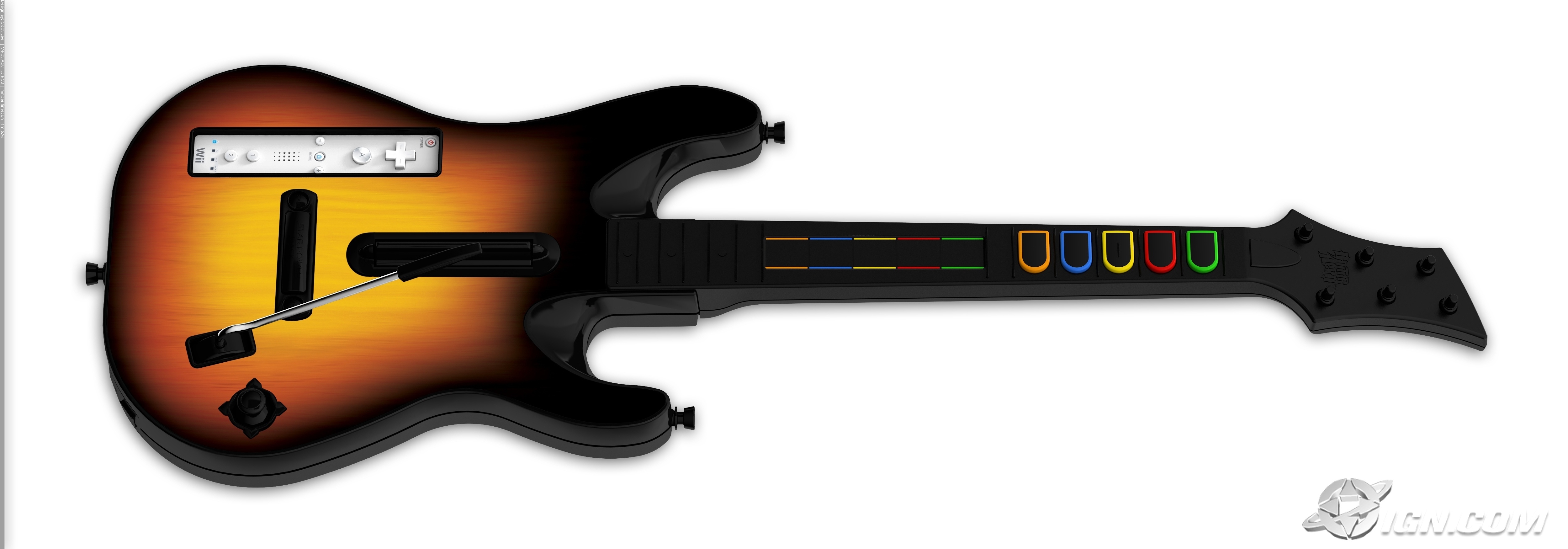
There are a bunch of guitar and drums devices out there that all report
similar data. To avoid reporting this as BTN_MISC or ABS_MISC, we
allocate some proper namespace for them. Note that most of these devices
are toys and we cannot report any sophisticated physics via this API.

I did some google-images research and tried to provide definitions that
work with all common devices. That's why I went with 4 toms, 4 cymbals,
one bass, one hi-hat. I haven't seen other drums and I doubt that we need
any additions to that. Anyway, the naming-scheme is intentionally done in
an extensible way.

For guitars, we support 5 frets (normally aligned vertically, compared to
the real horizontal layouts), a single strum-bar with up/down directions,
an optional fret-board and a whammy-bar.

Most of the devices provide pressure values so I went with ABS_* bits. If
we ever support devices which only provide digital input, we have to
decide whether to emulate pressure data or add additional BTN_* bits.

If someone is not familiar with these devices, here are two pictures which
provide almost all introduced interfaces (or try the given keywords
with a google-image search):
  Guitar: ("guitar hero world tour guitar")
    http://images1.wikia.nocookie.net/__cb20120911023442/applezone/es/images/f/f9/Wii_Guitar.jpg
  Drums: ("guitar hero drums")
    http://oyster.ignimgs.com/franchises/images/03/55/35526_band-hero-drum-set-hands-on-20090929040735768.jpg

Signed-off-by: David Herrmann <dh.herrmann@gmail.com>
Acked-by: Dmitry Torokhov <dmitry.torokhov@gmail.com>
Signed-off-by: Jiri Kosina <jkosina@suse.cz>
tcp_rcv_established() returns only one value namely 0. We change the return
value to void (as suggested by David Miller).

After commit 0c24604b (tcp: implement RFC 5961 4.2), we no longer send RSTs in
response to SYNs. We can remove the check and processing on the return value of
tcp_rcv_established().

We also fix jtcp_rcv_established() in tcp_probe.c to match that of
tcp_rcv_established().

Signed-off-by: Vijay Subramanian <subramanian.vijay@gmail.com>
Signed-off-by: David S. Miller <davem@davemloft.net>
The goal of this patch is to harmonize cleanup done on a skbuff on rx path.
Before this patch, behaviors were different depending of the tunnel type.

Signed-off-by: Nicolas Dichtel <nicolas.dichtel@6wind.com>
Signed-off-by: David S. Miller <davem@davemloft.net>
The goal of this patch is to harmonize cleanup done on a skbuff on xmit path.
Before this patch, behaviors were different depending of the tunnel type.

Signed-off-by: Nicolas Dichtel <nicolas.dichtel@6wind.com>
Signed-off-by: David S. Miller <davem@davemloft.net>
This function was only used when a packet was sent to another netns. Now, it can
also be used after tunnel encapsulation or decapsulation.

Only skb_orphan() should not be done when a packet is not crossing netns.

Signed-off-by: Nicolas Dichtel <nicolas.dichtel@6wind.com>
Signed-off-by: David S. Miller <davem@davemloft.net>
This argument is not used, let's remove it.

Signed-off-by: Nicolas Dichtel <nicolas.dichtel@6wind.com>
Signed-off-by: David S. Miller <davem@davemloft.net>
This argument is not used, let's remove it.

Signed-off-by: Nicolas Dichtel <nicolas.dichtel@6wind.com>
Signed-off-by: David S. Miller <davem@davemloft.net>
A set of patches makes the device tree documentation for the various PWM
 drivers more consistent. Device tree support is added to the Renesas TPU
 driver. The sysfs interface now makes use of dev_groups. Other than that
 there is a healthy assortment of fixes and enhancements for minor issues
 that have shown up.
 -----BEGIN PGP SIGNATURE-----
 Version: GnuPG v2.0.21 (GNU/Linux)

 iQIcBAABAgAGBQJSJcYRAAoJEN0jrNd/PrOhWaQQAJVGk8Q6vVrscLLx4/5b7tEV
 TXD1RqPwgCneNbRrxp0e/A3esMOBqkjh3cuFa6EozOoLDie7vNIHY/kxXmoScVIm
 n6DT6XzYNjYvfCil+r3Ckm3DxhREHyYeok2dH7OTgw/2Lj2DnrefhjB8FTLWhphn
 ne66dCO8VJu3TFpFeYz+zD89ZiXs2VHxXyZRZ23O77rrdN60CVWs9K4pbu6HguAb
 5CNQtG5OxYMOYEgikv7CTTBZpOk9Sj8EQ6M2u6mJze/5YkxA+Un40Wwmi9T2S7jQ
 09vo6cWU+l5zW3b7eO5cvwK/HC9es5e40gZFEnMy5Jqzi4RdtbDDQaiulhfvyIQn
 RgSk2s3t+OpOPsSp/HQTnQY6gLPwYoqR5kemerwbXyTuDRHQupI2drHsygn0bnan
 mb97e6EZVAkbagASvY8k0PxjpG4/TQ3t1WqVn7ciRP7uCM5c7IZSEPvLxI/N4PbO
 ++dULOTTHBh6niy5XRDT+A6gZcRjF+X/58qru9q3mSWeVS+aQfrdOnQBNqZpizgW
 E4yJqOoBegtj70ifutb8xb9K2N9kDMDJcJhKGa4Y2d4E4Px+U3k2hXKpvB38ynna
 Up6vcQmDHQk5qqoOKKnbywEPr5CqPE4yv7D1FdXwDfWB7jLNQkwcPMcoM6DmxDnc
 4+iNVyCfzEp4Rw4ZoXlW
 =uC2S
 -----END PGP SIGNATURE-----

Merge tag 'for-3.12-rc1' of git://gitorious.org/linux-pwm/linux-pwm

Pull pwm changes from Thierry Reding:
 "A set of patches makes the device tree documentation for the various
  PWM drivers more consistent.  Device tree support is added to the
  Renesas TPU driver.  The sysfs interface now makes use of dev_groups.
  Other than that there is a healthy assortment of fixes and
  enhancements for minor issues that have shown up"

* tag 'for-3.12-rc1' of git://gitorious.org/linux-pwm/linux-pwm:
  pwm: pxa: Use module_platform_driver
  pwm: tiehrpwm: add missing __iomem annotation
  pwm: tiecap: add CONFIG_PM_SLEEP to ecap_pwm_{save,restore}_context()
  pwm: simplify use of devm_ioremap_resource
  pwm: renesas-tpu: Add DT support
  ARM: dts: Use the PWM polarity flags
  pwm: Update DT bindings to reference pwm.txt for cells documentation
  pwm: Use the DT macro directly when parsing PWM DT flags
  pwm: Add PWM polarity flag macro for DT
  pwm: mxs: Check the return value from stmp_reset_block()
  pwm: convert class code to use dev_groups
generic pstore layer so that all backends can use the
 pitiful amounts of storage they control more effectively.
 Three other small fixes/cleanups too.
 -----BEGIN PGP SIGNATURE-----
 Version: GnuPG v1.4.12 (GNU/Linux)

 iQIcBAABAgAGBQJSJhMJAAoJEKurIx+X31iBcpsP/1DfQDD9IHEt7E+tTObIdKOx
 1yygmQu3IL2pvdUIkKRfblDP0PJRuwJmRPdp48Rb5CV+8i4WQuTCueOvNomIMZ4G
 1DkAzJPD2W4C+dSBD3rvWk4totXCsqLwCkaWp/FzWM7OW+cJN3Kj3Vdh3k01CVxn
 PqfCoZB5y8CVVd6EQiUmAU8z/LoGE0psxxO/CL7lBC1IsAlVqSO93hqHwE9cm/f4
 7EN069sHbKV5zOT1QsV7agn9TfHAHuj0fr3t8aDs/cC0rgz19VAsxg0sRkMHzKJD
 MGLqGCTHyQvYmo2xfHZLb1NjhL6EmHsQqhM9KQnkdDyQ3QgYOCSsglcYygSdZcN1
 ZjynLbD/OSkLABefyw/ZjW1GGzIqU6jWzj+0fmbkUa0Pe1B1aDuf/OiAcYMRJdmg
 clWE7RbnisSlrLYl3MI36T4XvyzzHVfumOVET6foWcnVb8/t/gHhC6Yf96FSUWVj
 jISE8ECfjkk7SQTYHE0ThvBmqv8M/IwUEg6wA9tnsQByLMAO+VqGoXcBMKOxz+hD
 7TPoQpa04Sqnplwx7HefbhErKH9TCQWUOgT5kjB7+bzbPpEG1cB3pb7izg3VFd7k
 l7d6vfXtAukeuYmU8PgY/ea6/Nnw7iMcDZCegzv+A4Ms/kWM9oH2ctvV6V/edYyb
 0x7BgSOu69HztW5IveB6
 =6H8r
 -----END PGP SIGNATURE-----

Merge tag 'please-pull-pstore' of git://git.kernel.org/pub/scm/linux/kernel/git/aegl/linux

Pull pstore changes from Tony Luck:
 "A big part of this is the addition of compression to the generic
  pstore layer so that all backends can use the pitiful amounts of
  storage they control more effectively.  Three other small
  fixes/cleanups too.

* tag 'please-pull-pstore' of git://git.kernel.org/pub/scm/linux/kernel/git/aegl/linux:
  pstore/ram: (really) fix undefined usage of rounddown_pow_of_two
  pstore/ram: Read and write to the 'compressed' flag of pstore
  efi-pstore: Read and write to the 'compressed' flag of pstore
  erst: Read and write to the 'compressed' flag of pstore
  powerpc/pseries: Read and write to the 'compressed' flag of pstore
  pstore: Add file extension to pstore file if compressed
  pstore: Add decompression support to pstore
  pstore: Introduce new argument 'compressed' in the read callback
  pstore: Add compression support to pstore
  pstore/Kconfig: Select ZLIB_DEFLATE and ZLIB_INFLATE when PSTORE is selected
  pstore: Add new argument 'compressed' in pstore write callback
  powerpc/pseries: Remove (de)compression in nvram with pstore enabled
  pstore: d_alloc_name() doesn't return an ERR_PTR
  acpi/apei/erst: Add missing iounmap() on error in erst_exec_move_data()
it's always equal to ->d_sb of the second argument (parent dentry),
due to either being literally that, or ->d_sb of parent's parent.

Signed-off-by: Al Viro <viro@zeniv.linux.org.uk>
Christopher reported a regression where he was unable to unmount a NFS
filesystem where the root had gone stale. The problem is that
d_revalidate handles the root of the filesystem differently from other
dentries, but d_weak_revalidate does not. We could simply fix this by
making d_weak_revalidate return success on IS_ROOT dentries, but there
are cases where we do want to revalidate the root of the fs.

A umount is really a special case. We generally aren't interested in
anything but the dentry and vfsmount that's attached at that point. If
the inode turns out to be stale we just don't care since the intent is
to stop using it anyway.

Try to handle this situation better by treating umount as a special
case in the lookup code. Have it resolve the parent using normal
means, and then do a lookup of the final dentry without revalidating
it. In most cases, the final lookup will come out of the dcache, but
the case where there's a trailing symlink or !LAST_NORM entry on the
end complicates things a bit.

Cc: Neil Brown <neilb@suse.de>
Reported-by: Christopher T Vogan <cvogan@us.ibm.com>
Signed-off-by: Jeff Layton <jlayton@redhat.com>
Signed-off-by: Al Viro <viro@zeniv.linux.org.uk>
Convert the llc_<foo> static inlines to the
equivalents from etherdevice.h and remove
the llc_<foo> static inline functions.

llc_mac_null -> is_zero_ether_addr
llc_mac_multicast -> is_multicast_ether_addr
llc_mac_match -> ether_addr_equal

Signed-off-by: Joe Perches <joe@perches.com>
Signed-off-by: David S. Miller <davem@davemloft.net>
The name of the function in the comment is __skb_alloc_page() while we
are actually commenting __skb_alloc_pages(). Fix this typo and make it
a valid kernel doc comment.

Signed-off-by: Florian Fainelli <f.fainelli@gmail.com>
Signed-off-by: David S. Miller <davem@davemloft.net>
RFC 4443 has defined two additional codes for ICMPv6 type 1 (destination
unreachable) messages:
        5 - Source address failed ingress/egress policy
	6 - Reject route to destination

Now they are treated as protocol error and icmpv6_err_convert() converts them
to EPROTO.

RFC 4443 says:
	"Codes 5 and 6 are more informative subsets of code 1."

Treat codes 5 and 6 as code 1 (EACCES)

Btw, connect() returning -EPROTO confuses firefox, so that fallback to
other/IPv4 addresses does not work:
https://bugzilla.mozilla.org/show_bug.cgi?id=910773

Signed-off-by: Jiri Bohac <jbohac@suse.cz>
Acked-by: Hannes Frederic Sowa <hannes@stressinduktion.org>
Signed-off-by: David S. Miller <davem@davemloft.net>
Marc Kleine-Budde says:

====================
this is a pull request for net-next. There are two patches from Gerhard
Sittig, which improves the clock handling on mpc5121. Oliver Hartkopp
provides a patch that adds a per rule limitation of frame hops.
====================

Signed-off-by: David S. Miller <davem@davemloft.net>
John W. Linville says:

====================
Please accept this batch of updates intended for the 3.12 stream.

For the mac80211 bits, Johannes says this:

"This time I have various improvements all over the place: IBSS, mesh,
testmode, AP client powersave handling, one of the rare rfkill patches
and some code cleanup."

Also for mac80211:

"And I also have some more changes for -next, just a few small fixes and
improvements, nothing really stands out."

And for iwlwifi:

"This time I have some powersave work (notably uAPSD support), CQM
offloads, support for a new firmware API and various code cleanups."

Regarding the Bluetooth bits, Gustavo says:

"Patches to 3.12, here we have:

* implementation of a proper tty_port for RFCOMM devices, this fixes some
issues people were seeing lately in the kernel.
* Add voice_setting option for SCO, it is used for SCO Codec selection
* bugfixes, small improvements and clean ups"

For the NFC bits, Samuel says:

"With this one we have:

- A few pn533 improvements and minor fixes. Testing our pn533 driver
  against Google's NCI stack triggered a few issues that we fixed now.
  We also added Tx fragmentation support to this driver.

- More NFC secure element handling. We added a GET_SE netlink command
  for getting all the discovered secure elements, and we defined 2
  additional secure element netlink event (transaction and connectivity).
  We also fixed a couple of typos and copy-paste bugs from the secure
  element handling code.

- Firmware download support for the pn544 driver. This chipset can enter a
  special mode where it's waiting for firmware blobs to replace the
  already flashed one. We now support that mode."

With repect to the ath tree, Kalle says:

"New features in ath10k are rx/tx checsumming in hw and survey scan
implemented by Michal. Also he made fixes to different areas of the
driver, most notable being fixing the case when using two streams and
reducing the number of interface combinations to avoid firmware crashes.
Bartosz did a clean related to how we handle SoC power save in PCI
layer.

For ath6kl Mohammed and Vasanth sent each a patch to fix two infrequent
crashes."

I also pulled the wireless tree into wireless-next to support a
request from Johannes.  On top of all that, there are the usual
sort of driver updates.  The mwifiex, brcmfmac, brcmsmac, ath9k,
and rt2x00 drivers all get some attention, as does the bcma bus and
a few other random bits here and there.
====================

Signed-off-by: David S. Miller <davem@davemloft.net>